Research Articles

Beyond Energy: AI and Data-Driven Strategies for Predicting Synthesizability Beyond Thermodynamic Limits
For researchers and drug development professionals, accurately predicting whether a theoretically designed material or molecule can be synthesized remains a formidable challenge.
Extracting Synthesis Procedures with Natural Language Processing: A Guide for Drug Development and Biomedical Research
This article provides a comprehensive overview of Natural Language Processing (NLP) methodologies for the automated extraction of synthesis procedures from unstructured text.
Bridging Theory and Lab: AI-Driven Methods for Predicting Synthesis of Novel Crystal Structures
The acceleration of computational materials discovery has created a pressing challenge: determining which theoretically predicted crystal structures can be successfully synthesized in the laboratory.
Computational Prediction of Solid-State Reactions: From Fundamentals to AI-Driven Synthesis
This article provides a comprehensive review of computational methods accelerating the prediction and optimization of solid-state reaction synthesis.
How Deep Learning Models Learn Chemical Principles for Synthesizability
This article explores how deep learning models are trained to understand and predict the synthesizability of chemical compounds, a critical challenge in drug discovery and materials science.
CSLLM: How the Crystal Synthesis Large Language Model is Revolutionizing Drug Discovery and Materials Design
The Crystal Synthesis Large Language Model (CSLLM) framework represents a groundbreaking shift in predicting material synthesizability, a critical bottleneck in drug development and materials science.
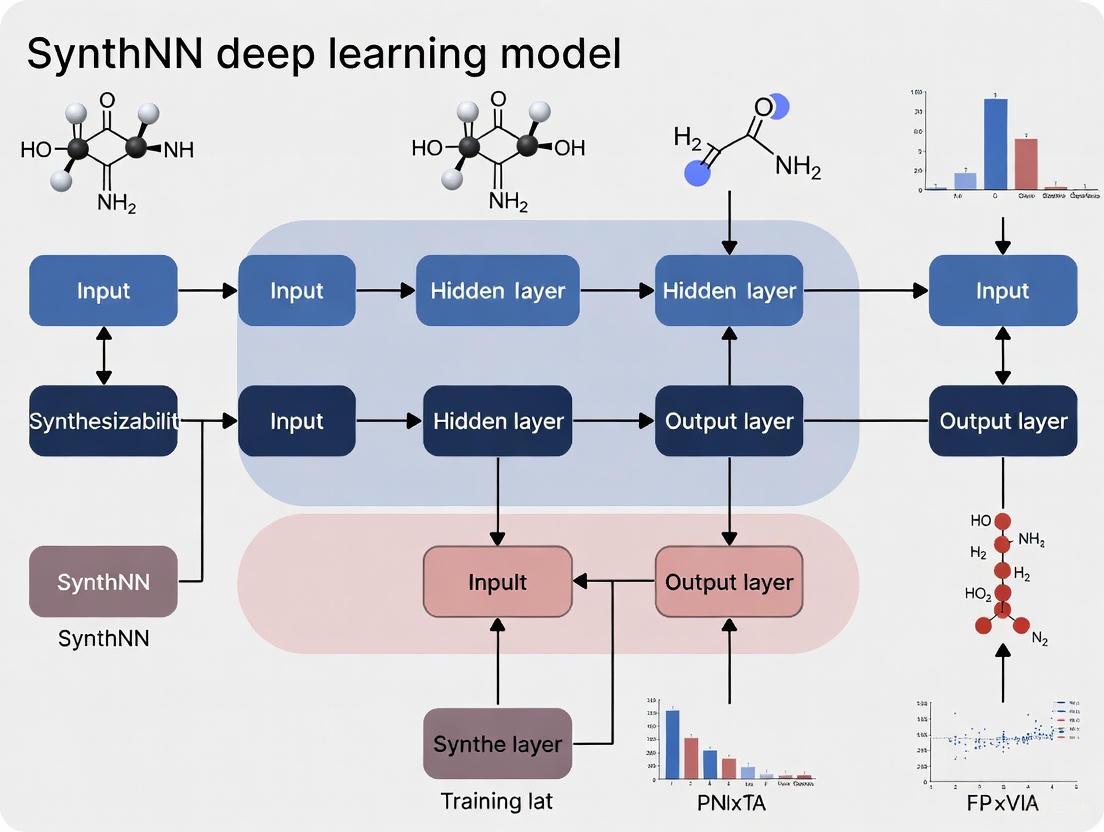
SynthNN: How Deep Learning Predicts Material Synthesizability to Accelerate Drug Discovery
This article explores SynthNN, a groundbreaking deep learning model designed to predict the synthesizability of inorganic crystalline materials—a critical challenge in materials science and drug development.
ICSD Database: The Essential Tool for Advanced Materials Synthesis and Research
The Inorganic Crystal Structure Database (ICSD) is the world's largest and most comprehensive resource for fully identified inorganic crystal structures, serving as a critical tool for researchers in materials science,...
Beyond Charge Neutrality: The Evolving Role of Charge Balancing in Predicting Inorganic Material Synthesizability
This article explores the critical yet complex role of charge balancing in predicting the synthesizability of inorganic crystalline materials, a topic of paramount importance for researchers in solid-state chemistry and...
Beyond Stability: Decoding Kinetic Synthesizability and Thermodynamic Control in Crystal Engineering for Advanced Therapeutics
This article explores the critical interplay between thermodynamic stability and kinetic synthesizability in crystal formation, a cornerstone for developing effective pharmaceuticals and materials.