Thermodynamic vs Kinetic Synthesis: A Strategic Framework for Optimized Drug Development
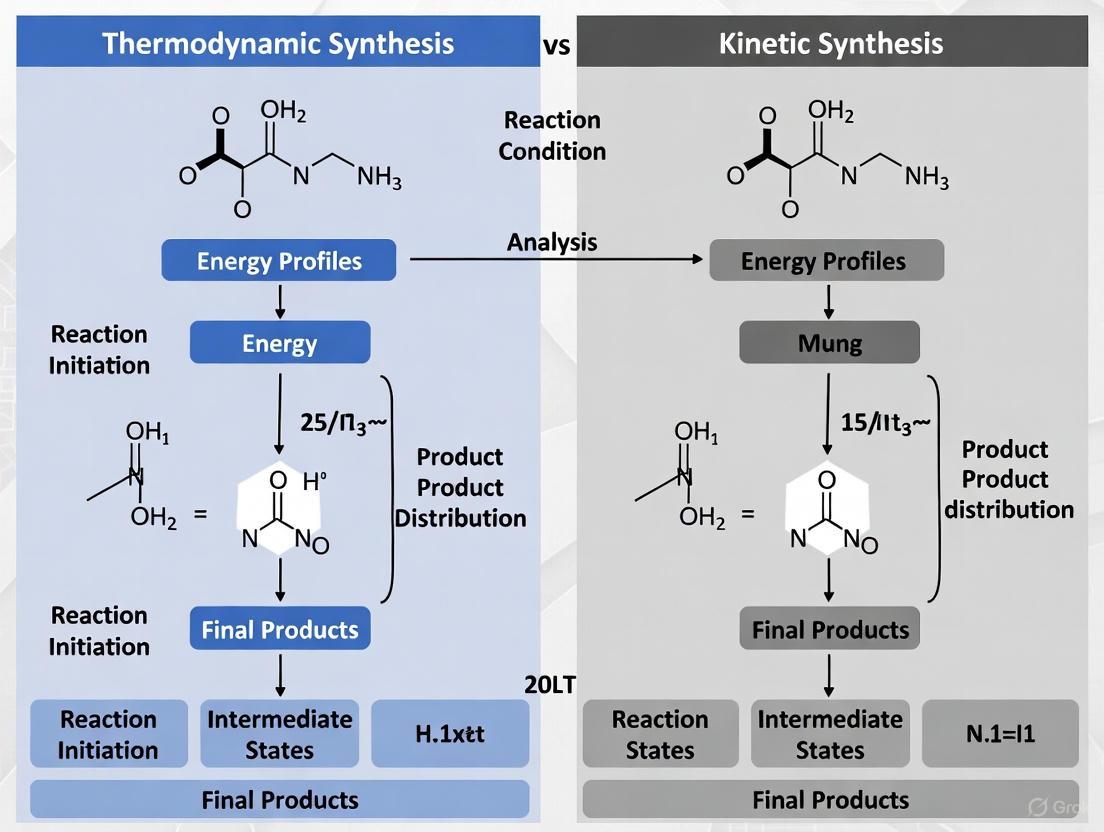
This article provides a comparative analysis of thermodynamic and kinetic synthesis approaches, tailored for researchers and drug development professionals.
Thermodynamic vs Kinetic Synthesis: A Strategic Framework for Optimized Drug Development
Abstract
This article provides a comparative analysis of thermodynamic and kinetic synthesis approaches, tailored for researchers and drug development professionals. It explores the foundational principles of binding energetics and reaction rates, examines methodological applications in drug design and materials synthesis, and addresses key challenges in troubleshooting and optimization. By integrating validation strategies and comparative insights, the content offers a practical framework for selecting and refining synthesis pathways to enhance drug efficacy, selectivity, and development efficiency, with direct implications for biomedical and clinical research.
Core Principles: Demystifying Energetic and Temporal Drivers of Synthesis
In the rational design of advanced materials and pharmaceutical compounds, the control of molecular interactions is paramount. This process is governed by two fundamental frameworks: thermodynamic control and kinetic control. A thermodynamically controlled synthesis yields the most stable product, while a kinetically controlled synthesis yields the product formed via the pathway with the lowest energy barrier, which may not be the most stable state [1]. The distinction between these scenarios is crucial for increasingly sophisticated nanosynthesis and drug development, where achieving phase-pure materials or high-affinity ligands demands a systematic approach. The Gibbs free energy change, ΔG, serves as the master variable connecting the enthalpy (ΔH) and entropy (ΔS) of a system, providing a predictive framework for the spontaneity and favorability of a process under constant temperature and pressure. The relationship is summarized by the fundamental equation: ΔG = ΔH - TΔS [2] [3] [4]. This article provides a comparative analysis of how this thermodynamic imperative guides synthesis strategies and experimental characterization, with a specific focus on its application for researchers and drug development professionals.
Core Thermodynamic Principles and the Governing Equation
The Gibbs free energy represents the energy available in a system to do work and is the ultimate determinant of process spontaneity [2] [5]. The analysis of its components reveals the driving forces behind molecular interactions.
- Spontaneity and Favorability: A spontaneous process, termed thermodynamically favorable, occurs when ΔG is negative (ΔG < 0). Conversely, a positive ΔG (ΔG > 0) indicates a non-spontaneous process, and ΔG = 0 signifies equilibrium [2] [5].
- Enthalpy (ΔH): The enthalpy change represents the heat exchange of the system with its surroundings at constant pressure. A negative ΔH (exothermic) favors spontaneity by releasing heat, while a positive ΔH (endothermic) opposes it [5].
- Entropy (ΔS): The entropy change quantifies the disorder or the number of accessible microstates in a system. A positive ΔS (increase in disorder) favors spontaneity, whereas a negative ΔS (increase in order) opposes it [5].
- The Temperature Multiplier: The entropic contribution to ΔG is scaled by the absolute temperature (T). This means that entropy becomes a progressively more dominant factor in determining spontaneity as temperature increases [2].
The interplay between ΔH and ΔS leads to four distinct scenarios for reaction spontaneity, which are critical for designing synthesis conditions.
Table 1: Thermodynamic Favorability Based on ΔH and ΔS
| ΔH | ΔS | ΔG = ΔH - TΔS | Thermodynamic Favorability |
|---|---|---|---|
| Negative (Exothermic) | Positive (Entropy Increase) | Always Negative | Spontaneous at all temperatures |
| Positive (Endothermic) | Negative (Entropy Decrease) | Always Positive | Non-spontaneous at all temperatures |
| Negative (Exothermic) | Negative (Entropy Decrease) | Negative at low T | Spontaneous at low temperatures |
| Positive (Endothermic) | Positive (Entropy Increase) | Negative at high T | Spontaneous at high temperatures |
For researchers, this framework is indispensable. For instance, an enthalpy-driven reaction is one that is spontaneous due to a strongly negative ΔH, even if ΔS is slightly negative (as long as T is low). An entropy-driven reaction is spontaneous due to a strongly positive ΔS, even if ΔH is positive (as long as T is sufficiently high) [5]. A classic example of an entropy-driven process is the dissolution of sodium nitrate (NaNO₃), which is endothermic yet spontaneous at room temperature because the entropy increase from breaking the ordered crystal lattice into mobile aqueous ions overcomes the unfavorable enthalpy change [5].
Comparative Analysis: Thermodynamic vs. Kinetic Synthesis Approaches
The choice between thermodynamic and kinetic control is a fundamental strategic decision in synthesis, with direct implications for product purity, morphology, and pathway.
Thermodynamic Control in Synthesis
Thermodynamically controlled synthesis aims to produce the most stable product, which is the state with the lowest Gibbs free energy. This approach relies on allowing the system sufficient time and energy to reach equilibrium. A powerful application of this principle is the Minimum Thermodynamic Competition (MTC) framework for aqueous materials synthesis [6].
- The MTC Hypothesis: This strategy posits that phase-pure synthesis of a target material is optimized when the difference in free energy (ΔΦ) between the target phase and its most stable competing phase is maximized. This condition is described by the equation: ΔΦ(Y) = Φtarget(Y) - min(Φcompeting(Y)) where Y represents intensive variables like pH, redox potential (E), and ion concentrations [6].
- Predictive Power: By computationally maximizing ΔΦ, researchers can identify a specific "sweet spot" in the thermodynamic parameter space (e.g., a specific pH and potential) that minimizes the kinetic formation of by-products, rather than just targeting a broad stability region from a traditional phase diagram [6].
- Experimental Validation: Systematic synthesis of LiIn(IO₃)₄ and LiFePO₄ confirmed that phase-pure products were only obtained at conditions predicted by the MTC criteria, even when other conditions were within the thermodynamic stability region of the target phase [6].
Kinetic Control in Synthesis
Kinetically controlled synthesis exploits the fact that the product with the lowest activation energy (fastest formation kinetics) forms first, even if it is not the thermodynamic ground state. This often requires carefully controlled reaction conditions to prevent the kinetically trapped product from converting to the more stable thermodynamic product over time [1]. In nanosynthesis, this approach can yield sophisticated nanostructures and hybrid materials that are not the absolute most stable configurations but have desirable functional properties [1].
Table 2: Comparison of Thermodynamic and Kinetic Synthesis Approaches
| Aspect | Thermodynamic Control | Kinetic Control |
|---|---|---|
| Governing Principle | Global free energy minimum (ΔG < 0) | Lowest activation energy pathway |
| Target Product | Most stable phase | Fastest-forming phase |
| Reaction Conditions | Often reversible, longer time, higher temperature | Often irreversible, shorter time, lower temperature |
| Key Parameter | ΔG of the final product | ΔG of the transition state (activation energy) |
| Primary Outcome | Equilibrium, stable product | Metastable, potentially complex structures |
| Application Example | Phase-pure synthesis via MTC [6] | Formation of sophisticated nanostructures [1] |
Diagram 1: Energy landscape showing thermodynamic vs kinetic control.
Experimental Protocols for Thermodynamic Profiling
Accurately measuring the thermodynamic parameters of molecular interactions is essential for rational design in fields like drug discovery. Isothermal Titration Calorimetry (ITC) is a key experimental technique that provides a complete thermodynamic profile in a single experiment [7].
Isothermal Titration Calorimetry (ITC) Protocol
ITC directly measures the heat released or absorbed when two molecules interact, allowing for the determination of binding affinity (KD), stoichiometry (n), enthalpy (ΔH), and entropy (ΔS) [7].
- Instrumentation and Setup: A microcalorimeter consists of a reference cell (typically filled with water or buffer) and a sample cell. The sample cell contains one binding partner (e.g., a protein), and a stirring syringe holds the other partner (the ligand) [7].
- Titration and Data Collection: The ligand is injected into the sample cell in a series of small aliquots (e.g., 0.5-2 μL). Each injection results in a heat pulse that is measured by the instrument to maintain zero temperature difference between the cells. The heat per injection is integrated over time and normalized for concentration [7].
- Data Analysis: The resulting titration curve (kcal/mol of injectant vs. molar ratio) is fitted to an appropriate binding model. This analysis directly yields the enthalpy change (ΔH) and the association constant (KA = 1/KD). The Gibbs free energy change is then calculated as ΔG = -RT ln(KA), and the entropic contribution is derived from the relationship ΔS = (ΔH - ΔG)/T [3] [7].
The Scientist's Toolkit: Key Reagent Solutions
The following table details essential materials and their functions in thermodynamic profiling experiments like ITC.
Table 3: Research Reagent Solutions for Thermodynamic Profiling
| Reagent/Material | Function in Experiment |
|---|---|
| High-Purity Macromolecule (e.g., protein) | The primary binding partner immobilized in the sample cell; purity is critical to avoid spurious binding signals. |
| Lyophilized Ligand | The titrating binding partner; requires high purity and accurate solubilization in a matched buffer. |
| Matched Buffer Solution | The solvent for both macromolecule and ligand; must be identical to prevent heat effects from dilution or mixing mismatches. |
| Reference Solution (e.g., water) | Fills the reference cell to establish a baseline for differential heat measurement. |
| Standard Calf Thymus DNA | (Optional) Used in validation and performance testing of the ITC instrument. |
Application in Drug Design: Interpreting Energetic and Entropic Contributions
In drug discovery, understanding the breakdown of ΔG into ΔH and ΔS provides deep insight into the molecular forces driving ligand binding and offers a roadmap for lead optimization [3] [7].
- Enthalpy-Driven Binding (ΔH < 0): This typically indicates strong, specific interactions such as the formation of hydrogen bonds, van der Waals forces, and other short-range interactions between the ligand and its target. A highly negative ΔH is often associated with strong binding affinity and selectivity [3] [7].
- Entropy-Driven Binding (TΔS > 0): This often results from the hydrophobic effect, where the release of ordered water molecules from the binding pocket and the ligand upon complex formation increases the system's disorder. It can also arise from a release of conformational strain [3].
- Enthalpy-Entropy Compensation: A common phenomenon in drug design where a favorable change in enthalpy (more negative ΔH) is offset by an unfavorable change in entropy (more negative TΔS), or vice versa. This compensation can explain why intensive optimization of a lead compound's binding interactions sometimes yields only modest improvements in the overall binding affinity (ΔG) [3]. Retrospective analyses show that first-in-class drugs are often entropically driven, while best-in-class optimizations tend to achieve stronger enthalpic binding [3].
The interpretation can be further refined by computational methods that decompose the "full" thermodynamic properties into "reduced" ligand-surrounding terms. This excludes the exactly compensating energy and entropy changes within the protein or solvent, which cancel out and do not contribute to affinity. These reduced properties converge more readily in simulations and provide clearer insights for optimizing ligand interactions [3].
The thermodynamic parameters ΔG, ΔH, and ΔS are not abstract concepts but practical tools that guide the synthesis of new materials and the development of therapeutic drugs. The choice between a thermodynamic synthesis strategy, which seeks the global energy minimum, and a kinetic strategy, which traps a metastable state, depends on the target product and its application. Experimental techniques like ITC empower researchers to move beyond simple affinity measurements and deconstruct the driving forces of molecular interactions. As the field advances, frameworks like Minimum Thermodynamic Competition (MTC) for synthesis and the analysis of reduced thermodynamic terms for drug binding are providing a more nuanced and powerful understanding of the thermodynamic imperative, enabling more rational and predictive design across the chemical sciences.
In both synthetic chemistry and pharmaceutical development, the traditional focus on thermodynamic stability—quantified by parameters like binding affinity (Kd) or equilibrium constants—is increasingly being complemented by a crucial kinetic dimension. This paradigm shift recognizes that the rates of reactions, including the formation and breakdown of drug-target complexes, are often more predictive of real-world outcomes than equilibrium measurements alone [8] [9]. Kinetic control refers to directing reactions toward products that form most rapidly, characterized by lower activation energies, rather than those that are most thermodynamically stable [10] [11]. This principle operates across scales, from determining the selectivity of organic synthesis reactions to dictating how long a drug molecule remains bound to its protein target in the body.
The concept of drug-target residence time (the reciprocal of the dissociation rate constant, 1/koff) has emerged as a particularly critical kinetic parameter in pharmaceutical research [8] [9]. Unlike thermodynamic affinity which is measured at equilibrium, residence time provides information about target occupancy under the non-equilibrium conditions of living systems, where drug concentrations fluctuate constantly [9]. Understanding and optimizing this parameter requires a fundamental grasp of transition state theory—the recognition that the energy barrier between reactants and products, not just the relative stability of endpoints, dictates reaction rates and pathways [8].
This comparative analysis examines how kinetic principles govern molecular outcomes across chemical and biological contexts, providing researchers with a framework for intentionally designing reactions and therapeutic compounds with desired kinetic profiles.
Fundamental Principles: Kinetic Versus Thermodynamic Control
Theoretical Foundations
In chemical reactions offering multiple potential products, the final composition of the product mixture depends critically on whether the system is under kinetic or thermodynamic control. Under kinetic control, the product distribution is determined by the relative rates of formation of different products, with the fastest-forming product dominating. This typically occurs when reactions are irreversible or when product equilibration is slow compared to the reaction time [11]. In contrast, thermodynamic control prevails when the reaction is reversible and equilibrium is established within the allotted time, favoring the most stable product [11].
The distinction fundamentally arises from the relationship between a reaction's transition state (kinetic control) and its final product state (thermodynamic control). The kinetic product forms faster because it has a lower activation energy barrier (ΔG‡), while the thermodynamic product is more stable because it has a lower overall free energy (ΔG) [10]. A classic illustration of this dichotomy appears in the protonation of enolate ions, where the kinetic product is the enol and the thermodynamic product is the more stable ketone or aldehyde [11].
Comparative Analysis: Key Differentiating Factors
Table 1: Characteristics of Kinetic versus Thermodynamic Control
| Factor | Kinetic Control | Thermodynamic Control |
|---|---|---|
| Governing Principle | Relative rates of product formation [10] [11] | Relative stability of products [10] [11] |
| Reaction Conditions | Low temperatures, irreversible conditions, fast reactions [11] [12] | Higher temperatures, reversible conditions, longer reaction times [11] |
| Product Outcome | Forms less stable product with lower activation energy [11] | Forms more stable product with lowest overall free energy [11] |
| Selectivity Basis | Difference in transition state energies (ΔΔG‡) [11] | Difference in product stabilities (ΔΔG) [11] |
| Time Dependence | Product ratio changes with time until reactants consumed [11] | Product ratio constant at equilibrium [11] |
| Typical Applications | Irreversible reactions, asymmetric synthesis, trapping intermediates [11] [12] | Reversible reactions, equilibrium-driven processes [11] |
Energy Landscape Visualization
The following diagram illustrates the fundamental energy relationships that distinguish kinetic from thermodynamic control in a reaction system where two competing products (A and B) can form from the same reactants:
Diagram Title: Energy Landscape for Kinetic vs Thermodynamic Control
This energy diagram visually represents why Product A forms faster under kinetic control (lower activation energy Eₐ), while Product B is more stable under thermodynamic control (lower overall free energy). The relative heights of the transition states (TS A and TS B) determine the kinetic preference, while the relative depths of the product wells determine the thermodynamic preference [10] [11].
Experimental Methodologies and Protocols
Techniques for Kinetic Analysis in Chemical Synthesis
Determining whether a reaction is under kinetic or thermodynamic control requires experimental protocols that probe the time-, temperature-, and conditions-dependence of product distributions. For organic synthesis applications, particularly in enolate chemistry, the following standardized approach can be employed:
Protocol: Determining Kinetic vs Thermodynamic Enolate Formation
Reaction Setup: Prepare a solution of the unsymmetrical ketone (e.g., 2-methylcyclohexanone) in an anhydrous aprotic solvent (THF or ether) under inert atmosphere [12].
Base Selection and Addition:
- For kinetic control: Use a strong, sterically hindered base such as lithium diisopropylamide (LDA) at low temperature (-78°C). Add the base to the ketone solution rapidly [12].
- For thermodynamic control: Use a weaker, less sterically hindered base such as lithium enolate at higher temperature (0°C to room temperature). Allow the system to reach equilibrium [12].
Trapping and Analysis: After enolate formation, trap with trimethylsilyl chloride (TMSCl) or methyl iodide. Analyze the ratio of regioisomeric enol ethers or alkylated products using GC-MS or NMR spectroscopy [12].
Time and Temperature Studies: Monitor product distribution as a function of time and at different temperatures. Under kinetic control, the product ratio remains constant after initial formation. Under thermodynamic control, the product ratio changes over time toward the more stable product [11].
Methods for Determining Drug-Target Binding Kinetics
In drug discovery, several biophysical techniques enable the quantification of binding kinetics parameters (kon and koff), which define drug-target residence time:
Protocol: Surface Plasmon Resonance (SPR) for Binding Kinetics
Immobilization: Immobilize the purified target protein on a sensor chip surface using standard amine-coupling or capture techniques [8].
Binding Experiments: Inject a range of drug concentrations over the chip surface in a continuous flow system. Monitor the association phase in real-time [8].
Dissociation Phase: Switch to buffer flow without drug to monitor dissociation of the drug-target complex [8].
Data Analysis: Fit the association and dissociation phases globally to a suitable binding model to extract kon and koff values. Calculate residence time as 1/koff [8].
Alternative Methods: Isothermal titration calorimetry (ITC) can provide kinetic parameters alongside thermodynamic data, while stopped-flow fluorescence techniques offer rapid kinetics measurement for faster binding events [13]. Advanced computational approaches, including molecular dynamics simulations enhanced by metadynamics and machine learning, can predict unbinding pathways and rates, particularly valuable for systems with very long residence times [14] [13].
Applications Across Domains: Comparative Case Studies
Organic Synthesis Applications
The principle of kinetic versus thermodynamic control manifests across various reaction classes in organic synthesis, with significant implications for product selectivity:
Table 2: Kinetic vs Thermodynamic Control in Organic Reactions
| Reaction Type | Kinetic Product | Thermodynamic Product | Controlling Conditions |
|---|---|---|---|
| Diels-Alder Reaction [11] | endo adduct (less stable) | exo adduct (more stable) | Low temperature (kinetic), high temperature with long time (thermodynamic) |
| Enolate Formation [12] | Less substituted enolate | More substituted enolate | Strong bulky base at low T (kinetic), weaker base at higher T (thermodynamic) |
| Electrophilic Addition to Dienes [11] | 1,2-addition product | 1,4-addition product | Low temperature (kinetic), higher temperature (thermodynamic) |
| Asymmetric Synthesis [11] | Enantiomer with lower activation energy | Racemic mixture (equal stability) | Chiral catalysts, irreversible conditions |
A particularly illustrative example comes from Diels-Alder reactions, such as the cycloaddition between cyclopentadiene and furan. At room temperature, kinetic control prevails and the less stable endo isomer predominates due to favorable orbital interactions in the transition state. However, at elevated temperatures (81°C) with extended reaction times, the system reaches equilibrium and the more stable exo isomer becomes the major product [11].
Drug Discovery Applications
In pharmaceutical research, the kinetic dimension profoundly impacts drug efficacy and selectivity, exemplified by these case studies:
Table 3: Kinetic Parameters for Selected Drug-Target Interactions
| Target | Drug/Inhibitor | Residence Time | Kd (Affinity) | Kinetic Mechanism |
|---|---|---|---|---|
| EGFR Kinase [9] | Gefitinib | <14 min | 0.4 nM | Simple one-step binding |
| EGFR Kinase [9] | Lapatinib | 430 min | 3 nM | Two-step induced fit |
| Btk Kinase [8] | Pyrazolopyrimidine 9 | 167 hr | N/A | Reversible covalent |
| S. aureus FabI [8] | PT119 | 12.5 hr | N/A | Substrate binding loop ordering |
| μ-Opioid Receptor [14] | Classical opioids | Minutes to hours | Variable | GPCR conformational selection |
The comparison between gefitinib and lapatinib binding to EGFR kinase demonstrates that affinity (Kd) alone does not predict residence time. Despite having slightly weaker affinity, lapatinib has a approximately 30-fold longer residence time than gefitinib, contributing to its differentiated clinical profile [9].
The following diagram illustrates how residence time translates to differential target occupancy in a dynamic physiological system:
Diagram Title: Residence Time Impact on Drug Action
This diagram illustrates the dynamic relationship between pharmacokinetics, binding kinetics, and pharmacological effect. Drugs with longer residence times maintain target occupancy even after systemic drug concentrations decline, potentially enabling less frequent dosing and improved efficacy [8] [9].
The Research Toolkit: Essential Reagents and Solutions
Successful investigation and application of kinetic principles requires specialized reagents and methodologies. The following toolkit summarizes essential resources for research in this domain:
Table 4: Research Reagent Solutions for Kinetic Studies
| Reagent/Solution | Function/Application | Key Characteristics | Representative Examples |
|---|---|---|---|
| Sterically Hindered Strong Bases [12] | Kinetic enolate formation | Bulky, strong bases that deprotonate rapidly at accessible positions | Lithium diisopropylamide (LDA), Potassium bis(trimethylsilyl)amide (KHDMS) |
| Weak Protic Solvents/Solutions [11] | Thermodynamic enolate formation | Allows equilibration to more stable enolate | Lithium enolate in THF, Alcohol/water mixtures |
| SPR Sensor Chips [8] | Drug-target binding kinetics measurement | Functionalized surfaces for protein immobilization | CM5 chips (carboxymethylated dextran), NTA chips (His-tag capture) |
| Transition State Analogs [8] | Prolong drug-target residence time | Mimic transition state geometry for tight binding | Diphenyl ether-based FabI inhibitors, Purine nucleoside phosphorylase inhibitors |
| Molecular Simulation Software [14] [13] | Predicting unbinding pathways and rates | Enhanced sampling algorithms | Metadynamics, Steered molecular dynamics, Markov state models |
| Covalent Warheads [8] | Irreversible or slowly-reversible target inhibition | Chemo-reactive groups that form covalent bonds | Acrylamides, α,β-unsaturated carbonyls, Acalabrutinib derivatives |
This comparative analysis demonstrates that the kinetic dimension provides a critical complementary perspective to traditional thermodynamic approaches across chemical and pharmaceutical domains. In synthetic chemistry, intentional manipulation of kinetic versus thermodynamic control enables selective formation of desired products that might be inaccessible under equilibrium conditions. In drug discovery, targeting kinetic parameters—particularly drug-target residence time—offers a pathway to optimize therapeutic efficacy and selectivity even when thermodynamic affinity optimization reaches diminishing returns.
The strategic implication for researchers is clear: comprehensive molecular optimization requires characterization of both thermodynamic and kinetic parameters. Relying solely on equilibrium measurements provides an incomplete picture that may fail to predict behavior in dynamic systems. As technological advances make kinetic characterization increasingly accessible—through improved biophysical instruments, sophisticated computational methods, and standardized kinetic screening protocols—integrating this kinetic dimension into research workflows will become progressively more essential for success in both chemical synthesis and pharmaceutical development.
The optimization of binding affinity represents a central challenge in rational drug design. Traditionally, this process has been guided primarily by the binding affinity (Kd) or the Gibbs free energy change (ΔG), which dictates the spontaneity of the drug-target interaction [15]. However, the pursuit of increasingly sophisticated therapeutics has revealed that this single metric provides an incomplete picture of the binding event. The recognition that ΔG factorizes into two fundamental components—the enthalpy change (ΔH) and the entropy change (TΔS)—has shifted the paradigm toward a more nuanced thermodynamic optimization strategy [16] [15]. This relationship is captured by the fundamental equation: ΔG = ΔH - TΔS.
Within this framework, Enthalpy-Entropy Compensation (EEC) emerges as a critical, albeit often frustrating, phenomenon. EEC describes the tendency for changes in ΔH to be partially or fully offset by opposing changes in TΔS (and vice versa), resulting in a much smaller than expected net change in ΔG [17] [18]. For the medicinal chemist, this can manifest as a carefully engineered hydrogen bond that provides a favorable enthalpic gain (negative ΔH) being completely nullified by a concomitant loss of conformational entropy, yielding no net improvement in affinity [17]. This comparative analysis examines the roles of thermodynamic and kinetic optimization in drug discovery, with a specific focus on navigating the pervasive challenge of EEC to drive the design of high-quality clinical candidates.
Understanding Enthalpy-Entropy Compensation
Fundamental Principles and Manifestations
Enthalpy-entropy compensation is a specific example of the broader "compensation effect," observed as a linear relationship between the enthalpy (ΔH) and entropy (ΔS) changes for a series of closely related chemical reactions or binding events [19]. The underlying principle is that a strengthening of interactions (e.g., hydrogen bonds, van der Waals forces) typically leads to a more favorable (negative) ΔH but often concurrently restricts molecular motion, resulting in a less favorable (negative) change in ΔS [18].
This phenomenon is widely associated with processes occurring in aqueous solutions, particularly those involving biological macromolecules [18]. Water plays a pivotal role; the cooperative nature of its three-dimensional hydrogen-bonded network means that the creation of a cavity for a solute and the subsequent turning on of solute-water interactions are intimately linked, often giving rise to compensatory thermodynamic effects [18]. In drug discovery, EEC is frequently encountered during the optimization of a congeneric series of compounds, where structural modifications lead to significant changes in ΔH and TΔS but disappointingly small changes in the overall binding free energy, ΔG [17].
A Critical Examination of the Evidence
The prevalence and severity of EEC remain subjects of active debate. Calorimetric studies, particularly those using Isothermal Titration Calorimetry (ITC), often provide apparent evidence of compensation. A meta-analysis of protein-ligand binding thermodynamics revealed a plot of ΔH versus TΔS with a slope near unity, suggesting a severe form of compensation where enthalpic gains are entirely offset by entropic penalties [17]. Severe cases have been documented; for instance, introducing a hydrogen bond acceptor into an HIV-1 protease inhibitor yielded a 3.9 kcal/mol enthalpic gain that was fully compensated by an entropic loss, resulting in zero net affinity gain [17].
However, a critical evaluation of the evidence suggests that the case for severe, universal compensation may be overstated. A significant challenge lies in the large magnitude of and correlation between errors in experimental measurements of ΔH and TΔS [17]. Furthermore, some observed compensation may be a statistical artifact rather than a true physical phenomenon. Analyses indicate that the observed linear correlations can be sensitive to the width of the free energy window under study, and derived parameters like the "compensation temperature" can sometimes be unrealistic or even negative, leading to questions about the physicochemical certainty of some reported EEC correlations [20]. Therefore, while a limited form of compensation is likely common, the evidence for a severe, pervasive form that universally frustrates ligand optimization is weaker when experimental uncertainties are properly considered [17].
Thermodynamic vs. Kinetic Optimization: A Comparative Analysis
The binding interaction between a drug and its target can be described through two complementary lenses: thermodynamics and kinetics. Thermodynamics informs on the spontaneity and final state of the binding interaction (affinity, Kd), while kinetics describes the time-dependent pathway to reach that state (rates, kon and koff) [15]. A comprehensive optimization strategy must consider both.
Table 1: Comparative Analysis of Thermodynamic and Kinetic Optimization Approaches
| Aspect | Thermodynamic Optimization | Kinetic Optimization |
|---|---|---|
| Primary Focus | Final bound state equilibrium; Binding Affinity (Kd) [15] | Time-dependent pathway; association/dissociation rates (kₒₙ, kₒff) [16] [15] |
| Governed by | Gibbs Free Energy (ΔG = ΔH - TΔS) [15] | Energy landscape of the binding pathway [16] |
| Key Metrics | ΔG, ΔH, TΔS, Enthalpic Efficiency (EE) [15] | Residence Time (τ = 1/kₒff), Association Rate (kₒₙ) [16] [15] |
| Role of EEC | Central challenge; modifications can yield compensatory ΔH/TΔS changes [17] | Indirect; EEC primarily an equilibrium thermodynamic phenomenon |
| Advantages | Provides deep understanding of binding forces (H-bonds, hydrophobic effect) [15] | Directly linked to in vivo efficacy, duration of action, and selectivity [16] |
| Limitations | Susceptible to EEC; does not predict duration of action [17] [15] | More complex to measure and model; requires specialized techniques [16] |
The following diagram illustrates the logical decision-making process for employing thermodynamic and kinetic strategies in lead optimization, highlighting how to navigate EEC.
The Kinetic Optimization Paradigm
When thermodynamic optimization is frustrated by EEC, focusing on binding kinetics provides a powerful alternative pathway. The dissociation rate constant (koff) and its inverse, the target residence time (τ), have emerged as critically important parameters for in vivo efficacy [16]. A drug with a long residence time remains bound to its target for an extended period, which can translate into a longer duration of pharmacological action, even after systemic drug concentrations have declined [16] [15].
A classic example is the bronchodilator tiotropium. While it binds to multiple muscarinic receptor subtypes, it dissociates ten times slower from the M3 receptor than from the M2 receptor, conferring its clinical selectivity and enabling once-daily dosing [16]. This demonstrates that kinetic selectivity, independent of pure thermodynamic affinity, can be a decisive factor in clinical success. Optimizing residence time can be achieved by either stabilizing the final drug-target complex (lowering its energy) or by destabilizing the transition state for dissociation, both strategies that can circumvent the thermodynamic constraints imposed by EEC [15].
Essential Methodologies and Experimental Protocols
Accurately measuring the parameters that define binding events is a prerequisite for successful optimization. The following workflows detail the core experimental protocols.
Protocol 1: Thermodynamic Profiling via Isothermal Titration Calorimetry (ITC)
ITC is the gold-standard technique for full thermodynamic characterization because it directly measures the heat change (enthalpy, ΔH) of a binding interaction in a single experiment [15]. From one titration, ITC directly provides the binding constant (Ka), the stoichiometry (n), and ΔH. The entropy change (ΔS) is then calculated using the fundamental relationship ΔG = ΔH - TΔS, where ΔG is derived from Ka [15].
Table 2: Key Reagent Solutions for Thermodynamic and Kinetic Profiling
| Research Reagent / Material | Function in Experiment |
|---|---|
| Highly Purified Target Protein | Ensures accurate stoichiometry and measurement; absence of contaminants is critical for clean data. |
| Ligand Compound Solution | The drug candidate or inhibitor; requires high purity and precise solubilization (e.g., DMSO stock). |
| ITC Assay Buffer | Must be matched perfectly between protein and ligand samples to avoid artifactual heat signals from dilution. |
| SPR Sensor Chip | The solid support (e.g., CM5 chip) onto which the protein target is immobilized for kinetic analysis. |
| Running Buffer (for SPR) | Maintains a consistent environment during analyte flow; crucial for minimizing nonspecific binding. |
| Regeneration Solution (for SPR) | A solution that dissociates bound ligand from the immobilized protein without denaturing it for chip reuse. |
Protocol 2: Kinetic Profiling via Surface Plasmon Resonance (SPR)
SPR is a label-free technique that excels at quantifying the kinetics of binding. It operates by detecting changes in the refractive index on a sensor surface where the target protein is immobilized. As ligand flows over the surface, binding and dissociation cause mass changes, allowing for real-time monitoring [15].
A typical SPR experiment involves:
- Immobilization: The purified protein is covalently coupled to the dextran matrix of a sensor chip.
- Association Phase: The ligand solution is flowed over the chip surface at a defined concentration, and the increasing signal (Response Units, RU) is monitored to determine the association rate constant (kₒₙ).
- Dissociation Phase: The flow is switched to buffer, and the decay of the signal as the ligand dissociates is monitored to determine the dissociation rate constant (kₒff).
- Regeneration: A mild solution is injected to remove any remaining bound ligand, regenerating the surface for the next cycle. The binding affinity (Kd) can be calculated as kₒff / kₒₙ, and the residence time is simply τ = 1 / kₒff [15]. Modern instruments allow for high-throughput analysis, making kinetic profiling feasible during lead optimization [16] [15].
Practical Applications and Efficiency Metrics in Ligand Design
To guide medicinal chemists toward higher-quality compounds, several efficiency metrics have been developed that move beyond simple potency (IC50 or Kd).
Table 3: Key Efficiency Metrics for Guiding Ligand Optimization
| Efficiency Metric | Calculation | Interpretation & Ideal Range |
|---|---|---|
| Ligand Efficiency (LE) | ΔG / NHA* | Measures "bang for the buck"; normalizes affinity by heavy atom count. Ideal: > 0.4 kcal/mol/HA for leads [15]. |
| Lipophilic Ligand Efficiency (LLE) | pKi - LogD | Penalizes high lipophilicity, linked to poor solubility and promiscuity. Ideal: > 7 [15]. |
| Enthalpic Efficiency (EE) | ΔH / NHA | Gauges the efficiency of enthalpic contributions (e.g., H-bonds). Aids in avoiding molecular obesity [15]. |
| Kinetic Efficiency (KE) | τ / NHA | Normalizes the valuable property of residence time by molecular size. Higher is better [15]. |
*NHA = Number of Non-Hydrogen Atoms
These metrics provide crucial guardrails. For instance, pursuing affinity gains solely by adding hydrophobic groups might improve ΔG but will worsen LLE, likely leading to poorer drug-like properties. Similarly, monitoring EE helps ensure that enthalpic gains are achieved efficiently rather than through brute-force increases in molecular weight [15]. When EEC is encountered, shifting focus to optimizing Kinetic Efficiency (KE) offers a productive alternative path.
The comparative analysis of thermodynamic and kinetic optimization approaches reveals that a sophisticated drug design strategy must be multi-dimensional. While thermodynamics provides deep insight into the nature of the binding forces, its utility can be limited by the enigmatic and often confounding phenomenon of enthalpy-entropy compensation. Relying solely on affinity measurements can lead to optimization dead-ends where significant chemical modifications yield minimal gains.
The forward-looking path in drug discovery lies in the integrated use of both thermodynamic and kinetic data. Characterizing a lead series with both ITC and SPR provides a comprehensive picture that neither technique can deliver alone. When EEC threatens to halt progress in a thermodynamic optimization cycle, the rational design of compounds with improved target residence time (a kinetic parameter) offers a powerful and clinically validated escape route [16]. Ultimately, escaping the constraints of compensation requires a holistic view of the drug-target interaction, leveraging all available experimental tools to design drugs that are not only potent but also efficient, selective, and effective in vivo.
The synthesis of novel materials and chemical compounds represents a cornerstone of advancement in fields ranging from drug development to energy storage. A fundamental challenge in synthesis lies in navigating the complex interplay between thermodynamic driving forces and kinetic barriers, which collectively determine the final outcome of a chemical reaction. Thermodynamics dictates the inherent stability of products and the ultimate equilibrium state of a system, while kinetics governs the pathway and rate at which that state is approached. The deliberate control over these factors enables researchers to steer reactions toward desired products, whether they are the most stable thermodynamic species or metastable kinetic intermediates with unique properties.
Understanding this balance is not merely an academic exercise; it is a practical necessity for the rational design of synthetic protocols. This comparative guide examines the core principles, experimental methodologies, and computational tools that define thermodynamic and kinetic control in synthesis. By objectively analyzing their applications across different chemical domains, this article provides a framework for researchers to select and optimize synthesis strategies for target molecules and materials, with a particular focus on implications for drug development professionals and materials scientists.
Theoretical Foundations: Kinetic vs. Thermodynamic Control
Core Principles and Energetics
In a chemical reaction with competing pathways, the final product mixture is determined by whether the reaction is under kinetic or thermodynamic control. The kinetic product is the species that forms fastest, characterized by the lowest activation energy (Ea) for its formation pathway. In contrast, the thermodynamic product is the most stable species, possessing the lowest Gibbs free energy (G°). A reaction will yield the kinetic product when the activation energy barrier to the thermodynamic product is sufficiently high that the system cannot achieve equilibrium within the allotted reaction time. The key differentiator is that kinetic control depends on the rate of product formation, while thermodynamic control depends on the relative stability of the products [11] [21].
The reaction conditions serve as the primary lever for influencing this control. Key factors include [11]:
- Temperature: Low temperatures favor kinetic control by slowing equilibration, while high temperatures favor thermodynamic control by providing the thermal energy needed to overcome activation barriers and reach equilibrium.
- Reaction Time: Short times favor kinetic products, whereas long reaction times allow the system to equilibrate to the thermodynamic product.
- Solvent and Catalysts: These can alter the relative activation energies or stabilities of the transition states and products.
Comparative Energetics Framework
The table below summarizes the key characteristics that distinguish kinetic and thermodynamic control.
Table 1: Comparative Analysis of Kinetic and Thermodynamic Control
| Feature | Kinetic Control | Thermodynamic Control |
|---|---|---|
| Governing Factor | Reaction rate & activation energy | Product stability & Gibbs free energy |
| Product Favored | Formed fastest (lowest Ea) | Most stable (lowest G°) |
| Key Influencing Conditions | Low temperature, short reaction time, irreversible conditions | High temperature, long reaction time, reversible conditions |
| Reversibility | Irreversible or slow reversal | Fast equilibration between products |
| Mathematical Relationship | ln([A]t/[B]t) = ln(kA/kB) = -ΔEa/RT [11] |
ln([A]∞/[B]∞) = ln Keq = -ΔG°/RT [11] |
| Typical Outcome | Metastable, often less substituted product | More stable, often more substituted product |
Experimental Evidence and Comparative Analysis
Empirical studies across diverse chemical systems consistently demonstrate the principles of kinetic and thermodynamic control. The following examples and data illustrate how these competing forces manifest in practice.
Case Studies in Organic and Materials Chemistry
Diels-Alder Reactions: A classic example is the reaction of cyclopentadiene with furan, which yields the endo isomer (the kinetic product) at room temperature. The exo isomer (the thermodynamic product) becomes the major product when the reaction is conducted at 81°C for an extended period. The kinetic preference for the endo isomer arises from superior orbital overlap in the transition state, while the thermodynamic stability of the exo isomer stems from its lower steric congestion [11]. A more complex tandem Diels-Alder reaction demonstrated full control, where pincer-type adducts formed exclusively at low temperatures (kinetic) and domino-type adducts (thermodynamic) dominated at elevated temperatures [11].
Synthesis of Layered Oxides: Research into sodium oxides (Na~0.67~MO~2~) reveals complex multistage crystallization pathways. In situ synchrotron X-ray diffraction shows that reactions proceed through a series of fast, non-equilibrium metastable phases (O3, O3', P3) before ultimately forming the equilibrium two-layer P2 polymorph. This demonstrates that even when a thermodynamic equilibrium phase is known, kinetic intermediates can dominate the initial stages of solid-state synthesis, influencing the choice of precursors and heating profiles [22].
Electrophilic Additions: The addition of hydrogen bromide to 1,3-butadiene shows a temperature-dependent product distribution. At low temperatures (< Room Temperature), the 1,2-adduct (3-bromo-1-butene) is favored, forming faster as the kinetic product. At higher temperatures, the reaction favors the more stable 1,4-adduct (1-bromo-2-butene) as the thermodynamic product [11].
Quantitative Metrics for Synthesis Optimization
The Minimum Thermodynamic Competition (MTC) framework provides a quantitative approach to minimizing kinetic by-products in materials synthesis, particularly in aqueous systems. The hypothesis posits that phase-pure synthesis of a target material is most likely when the difference in free energy (ΔΦ) between the target phase and its most competitive by-product phase is maximized [6].
Table 2: Synthesis Outcomes for LiFePO4 at Different Thermodynamic Conditions
| Synthesis Condition | ΔΦ (kJ/mol) | Observed Phase Purity | Key Competing Phases |
|---|---|---|---|
| Condition A (Low ΔΦ) | -5.2 | Low (Impure) | Fe~3~(PO~4~)~2~, Li~3~PO~4~ |
| Condition B (Medium ΔΦ) | -12.1 | Medium | Trace Li~3~PO~4~ |
| MTC Condition (High ΔΦ) | -25.8 | High (Phase-Pure) | None Detected |
The empirical validation for MTC comes from two sources: analysis of 331 text-mined aqueous synthesis recipes from the literature, and systematic experimental synthesis of model systems like LiFePO4 and LiIn(IO~3~)~4~. The data confirm that even within the thermodynamic stability region of a target phase (as defined by a traditional Pourbaix diagram), phase-pure synthesis occurs reliably only at conditions where the thermodynamic competition with undesired phases is minimized, corresponding to a maximally negative ΔΦ [6].
Methodologies for Controlling Synthesis Outcomes
Experimental Protocols
1. Protocol for Probing Kinetic and Thermodynamic Products in a Diels-Alder Reaction [11]
- Objective: To isolate both the kinetic (endo) and thermodynamic (exo) adducts from the reaction between cyclopentadiene and furan.
- Materials: Freshly cracked cyclopentadiene, furan, dry toluene, argon atmosphere.
- Procedure:
- Kinetic Product Synthesis: Dissolve furan (1.0 equiv) in toluene under argon and cool to 0°C. Add cyclopentadiene (1.1 equiv) dropwise. Stir at 0°C for 2 hours. Monitor by TLC. The endo-adduct precipitates first and can be collected by vacuum filtration.
- Thermodynamic Product Synthesis: Combine furan and cyclopentadiene in a sealed tube with toluene. Heat at 81°C for 72 hours. Allow the reaction mixture to cool slowly to room temperature. The exo-adduct crystallizes and is collected.
- Analysis: Characterize both products using
^1H NMRand^13C NMRspectroscopy. The endo-isomer typically shows a distinctive upfield shift for the bridgehead hydrogens compared to the exo-isomer.
2. Protocol for Solid-State Synthesis of P2-Layered Sodium Oxide [22]
- Objective: To synthesize the equilibrium P2-Na~0.67~CoO~2~ phase and identify its kinetic metastable intermediates.
- Materials: Na~2~CO~3~, Co~3~O~4~, high-energy ball mill, alumina crucibles, tube furnace.
- Procedure:
- Precursor Preparation: stoichiometrically mix Na~2~CO~3~ and Co~3~O~4~ powders. Use a high-energy ball mill for 1 hour to ensure homogeneity.
- In Situ Monitoring: Load the precursor mixture into a capillary for in situ synchrotron X-ray diffraction. Heat from room temperature to 900°C at a controlled rate (e.g., 10°C/min) under a flowing oxygen atmosphere.
- Phase Identification: Analyze the time-resolved diffraction patterns to identify the sequence of metastable intermediates (O3, O3', P3) and the temperature at which the equilibrium P2 phase first appears and becomes dominant.
- Analysis: Rietveld refinement of diffraction patterns to quantify phase fractions and lattice parameters as a function of time and temperature.
Visualization of Synthesis Pathways and Energetics
The following diagram illustrates the key concepts and decision pathways involved in controlling synthesis outcomes.
Diagram Title: Energy Landscape and Control Pathways in Chemical Synthesis
This diagram shows the divergent pathways from reactants to kinetic and thermodynamic products. The kinetic pathway has a lower activation energy (Ea) barrier, leading to faster formation of the less stable product. The final outcome is determined by applying specific reaction conditions that favor one control mechanism over the other.
The Scientist's Toolkit: Essential Reagents and Materials
Successful navigation of kinetic and thermodynamic synthesis requires specific reagents and tools. The following table lists key materials used in the experiments cited in this guide.
Table 3: Research Reagent Solutions for Synthesis Control Studies
| Reagent/Material | Function in Synthesis | Example Application |
|---|---|---|
| Cyclopentadiene | Diene reactant in cycloadditions | Kinetic vs. thermodynamic Diels-Alder reactions [11] |
| Sodium Carbonate (Na~2~CO~3~) | Sodium precursor in solid-state synthesis | Formation of layered sodium oxides (Na~x~MO~2~) [22] |
| Lithium Iron Phosphate (LiFePO~4~) Precursors | Target cathode material | Validation of MTC in aqueous synthesis [6] |
| Sterically Demanding Bases (e.g., LDA) | Selective enolate formation | Favors kinetic enolate in unsymmetrical ketone deprotonation [11] |
| Geopolymer Activator Solutions | Alkaline activation of aluminosilicates | Thermodynamic stability modeling for consistent synthesis [23] |
| In Situ Synchrotron X-ray Diffraction | Real-time phase transformation monitoring | Unraveling crystallization pathways in solid-state reactions [22] |
Emerging Trends and Computational Tools
The field is increasingly moving toward a rational synthesis paradigm, guided by computational prediction. Inverse design strategies are being developed where target material properties are specified first, and optimal synthesis conditions are computed backwards [22] [24].
Computational Prediction of Synthesis: A key development is the use of machine learning pipelines for inverse design. For instance, models can now predict the optimal metal, ligand, precursor masses, solvent volume, and temperature regimes required to achieve target adsorption characteristics in Metal-Organic Frameworks (MOFs). These models incorporate physical constraints like thermodynamics, stoichiometry, and temperature limits to ensure predictions are chemically plausible [24].
Thermodynamic Modeling for Stability: Recent work on geopolymer activator solutions demonstrates how thermodynamic modeling can predict solution stability and optimize synthesis. These models enable dynamic assessment and process design, challenging traditional practices and significantly reducing preparation times from 24 hours to about 1 minute while maintaining consistency [23].
The MTC Framework as a Predictive Tool: The Minimum Thermodynamic Competition framework represents a significant shift from using phase diagrams solely for identifying stability regions to using them as optimization tools. By computing the free energy axis, researchers can identify a single optimal point for synthesis that minimizes kinetic competition, rather than an entire stability region where by-products may still form [6].
The interplay between thermodynamic driving forces and kinetic barriers is a fundamental determinant of synthesis outcomes. As the comparative analysis in this guide demonstrates, neither thermodynamic nor kinetic control is universally superior; their strategic application depends on the target product. Thermodynamic control reliably yields the most stable product, while kinetic control provides access to metastable species with unique properties that are inaccessible at equilibrium.
The future of synthesis control lies in the integrated use of advanced computational tools, high-fidelity thermodynamic models like MTC, and sophisticated real-time characterization techniques. This combined approach enables a shift from empirical, trial-and-error optimization to a predictive and rational design of synthesis pathways. For researchers in drug development and materials science, mastering the balance between thermodynamics and kinetics is not just about controlling a reaction—it is about unlocking the full potential of chemical and materials space to discover and create the functional molecules and materials of the future.
From Theory to Bench: Implementing Energetic and Kinetic Strategies in Real-World Scenarios
In the pursuit of novel materials and pharmaceuticals, researchers navigate a fundamental dichotomy: thermodynamic versus kinetic control over synthesis outcomes. A thermodynamically controlled reaction proceeds to the most stable product, the state with the lowest Gibbs free energy. In contrast, a kinetically controlled reaction yields the product that forms most rapidly, which is the one with the lowest activation energy barrier, even if it is not the most stable state [11]. The distinction is critical because the final product mixture depends heavily on reaction conditions; lower temperatures and shorter times typically favor the kinetic product, whereas higher temperatures and longer times allow the system to equilibrate to the thermodynamic product [11]. This comparative guide explores advanced calorimetric tools and complementary methodologies essential for measuring the parameters that define these energetic landscapes—namely, Gibbs free energy (ΔG), enthalpy (ΔH), and entropy (ΔS)—enabling researchers to strategically steer reactions toward desired outcomes.
Core Calorimetric Measurement Techniques
Calorimetry, the science of measuring heat flow, provides direct insight into the energetic drivers of chemical and biological processes. The principal techniques vary in their operational principles and application domains.
Isothermal Titration Calorimetry (ITC)
Isothermal Titration Calorimetry (ITC) is a powerful and widely used method to measure the real-time heat flow associated with molecular binding events. In a typical ITC experiment, one binding partner (ligand) is titrated into a solution containing the other (macromolecule) while the instrument maintains a constant temperature. The instrument records the differential heating power required to keep the sample and reference cells at the same temperature [25]. Each injection produces a peak in the thermogram (see Diagram 1); the integrated area under these peaks yields the total heat for each injection, forming a binding isotherm. Analysis of this isotherm directly provides the enthalpy change (ΔH), binding affinity (KD), stoichiometry (n), and through temperature-dependent studies, the heat capacity change (ΔCp). A significant strength of ITC is its label-free nature and its ability to provide a full thermodynamic profile (ΔG, ΔH, and -TΔS) from a single experiment [25]. Its primary application lies in quantifying biomolecular interactions, such as protein-ligand binding [25].
Indirect Calorimetry
Indirect Calorimetry operates on a different principle, determining energy expenditure in biological systems by measuring gas exchange. Instead of direct heat measurement, it calculates metabolic rate by monitoring oxygen consumption (VO₂) and carbon dioxide production (VCO₂) [26]. This method is non-invasive and allows for serial measurements in live animals, providing flexibility for sophisticated physiological studies. The raw data is used to calculate the Energy Expenditure (EE), which is crucial for understanding metabolic phenotypes [26]. Modern analysis tools, such as the web-based CalR software, promote rigor and reproducibility by assisting with data wrangling, visualization, and statistical analysis using methods like ANCOVA to account for covariates like body mass [26]. Its main application is in metabolic research and studies of obesity and energy balance [26].
Table 1: Comparison of Core Calorimetric Techniques
| Feature | Isothermal Titration Calorimetry (ITC) | Indirect Calorimetry |
|---|---|---|
| Measurement Principle | Direct measurement of heat flow (power) | Measurement of gas exchange (O₂, CO₂) |
| Primary Measured Parameters | Heat of reaction (ΔH) | Oxygen Consumption Rate (VO₂), Respiratory Exchange Ratio (RER) |
| Derived Thermodynamic Parameters | ΔG, ΔH, ΔS, KA/KD, n, ΔCp | Energy Expenditure (EE) |
| Key Applications | Biomolecular interactions, drug discovery | Whole-animal physiology, metabolic studies |
| Sample Throughput | Low (typically 1-2 samples per run) | Medium (simultaneous multi-animal cages) |
Performance Benchmarking of Calorimetric Instruments
The selection of a calorimeter is critical, as instrument performance can directly impact the quality and reliability of the derived thermodynamic data. A comparative study of three commercial calorimeters—the Thermometric TAM, THT µRC, and Setaram HSDSC III—highlighted this point. The study used the base-catalyzed hydrolysis of methyl paraben as a test reaction to quantitatively compare the returned values for the rate constant, enthalpy of reaction, and activation energy [27].
Table 2: Performance Comparison of Commercial Calorimeters
| Instrument | Key Characteristics | Reported Enthalpy (ΔH) | Reported Rate Constant (k) | Statistical Conclusion |
|---|---|---|---|---|
| Thermometric TAM | High-sensitivity, long equilibration time [27] | Statistically similar across all instruments [27] | Reference value | High precision for k and Ea [27] |
| THT µRC | --- | Statistically similar across all instruments [27] | Not significantly different from TAM [27] | Less precise than TAM for k and Ea [27] |
| Setaram HSDSC III | Lower-sensitivity, short equilibration time [27] | Statistically similar across all instruments [27] | Significantly different from TAM and µRC [27] | Less precise than TAM for k and Ea [27] |
The statistical analysis revealed that while all instruments returned statistically similar enthalpy data, their precision in determining kinetic parameters like the rate constant and activation energy varied significantly [27]. This underscores the importance of instrument selection based on the experimental goals, whether they prioritize high-precision kinetics or robust thermodynamic profiling.
Advanced Experimental Protocols in Calorimetry
Protocol: Global Analysis of ITC Data for Proton-Linked Binding
Proton-linked binding, where a molecular interaction is coupled to the gain or loss of a proton, is a common phenomenon that can obscure the intrinsic thermodynamics of the binding interface. The following protocol outlines how to use global ITC analysis to deconvolute these effects, using the interaction between carbonic anhydrase II (CAII) and the inhibitor trifluoromethanesulfonamide (TFMSA) as a model system [25].
Step 1: Experimental Design and Titration
- Prepare the protein (CAII) and ligand (TFMSA) solutions in a series of buffers with different ionization enthalpies (ΔHion). Common buffers include phosphate (ΔHion ~ 4.7 kJ/mol), Tris (ΔHion ~ 47 kJ/mol), and MOPS (ΔHion ~ 22 kJ/mol).
- Perform separate ITC titrations for each buffer condition. The standard setup involves placing CAII in the sample cell and titrating with TFMSA from the syringe. Maintain a constant temperature throughout all experiments.
Step 2: Raw Thermogram Integration with NITPIC
- Export the raw power-versus-time data from the ITC instrument.
- Process the thermograms using the public-domain software NITPIC, which employs a global peak-shape analysis and regularization to integrate the injection peaks objectively and without bias [25]. This step converts the raw data into a series of integrated heats for each injection and provides error estimates for each data point.
Step 3: Global Analysis in SEDPHAT
- Import the integrated isotherms (from all buffer conditions) into the global analysis software SEDPHAT.
- Fit the data globally to a "proton-linked binding" model. This model accounts for the thermodynamic cycle involving the intrinsic binding constant (KA,int), the intrinsic binding enthalpy (ΔH°int), and the protonation constants and enthalpies for the free protein and the protein-ligand complex [25].
- The global analysis will return the intrinsic thermodynamic parameters, which are no longer confounded by the buffer-dependent protonation events.
Step 4: Visualization with GUSSI
- Use the GUSSI software to create publication-quality graphs of the experimental data, the global fit, and the residuals [25].
Protocol: Using Indirect Calorimetry for Metabolic Phenotyping
This protocol describes the workflow for conducting and analyzing energy expenditure experiments in mice, a common application of indirect calorimetry.
Step 1: Experimental Setup and Data Acquisition
- House mice in the calorimetry system (e.g., a CLAMS, Promethion, or PhenoMaster setup) with controlled temperature and light cycles.
- Record the fundamental data streams: O2 concentration, CO2 concentration, food intake, water intake, and animal activity over the desired period (typically 24-72 hours).
- Measure body composition (e.g., using DEXA or NMR) to determine lean and fat mass.
Step 2: Data Import and Curation in CalR
- Export the raw data files from the manufacturer's software.
- Import the CSV files into the CalR web application. For CLAMS data, CalR will automatically reverse the body weight normalization applied by the system to obtain absolute energy expenditure values [26].
- Assign subjects to their respective experimental groups within the CalR interface.
Step 3: Data Analysis and Statistical Interpretation
- Select the time region of interest for analysis (e.g., the full 24-hour cycle or the dark/light phases separately).
- For energy expenditure analysis, CalR uses a Generalized Linear Model (GLM) or Analysis of Covariance (ANCOVA) with body mass (or lean mass) as a covariate. This adjustment is critical for comparing energy expenditure between groups of animals with different body compositions [26].
- Examine the results, including plots of the data with the fitted model, to interpret the statistical differences between groups.
Beyond Calorimetry: Integrating Kinetic and Thermodynamic Analysis for Synthesis
While calorimetry excels at measuring thermodynamic properties, achieving controlled synthesis requires a synergistic understanding of both thermodynamics and kinetics. The formation of kinetic by-products is a major challenge in materials synthesis, as the first phase to nucleate is often the one with the lowest activation barrier, not the most stable phase [6].
The Minimum Thermodynamic Competition (MTC) framework is a computational strategy designed to address this. It posits that the optimal synthesis condition for a pure target phase is where the difference in free energy between the target phase and its most stable competing phase is maximized [6]. This is represented by the metric: ΔΦ(Y) = Φk(Y) - mini∈Ic Φi(Y) where Φk is the free energy of the target phase and the second term is the minimum free energy of all competing phases. The goal is to find the synthesis conditions Y* (e.g., pH, redox potential, concentration) that minimize ΔΦ, thereby giving the target phase the largest possible thermodynamic driving force relative to its competitors and reducing the kinetic likelihood of by-product formation [6]. This approach has been validated empirically, showing that literature-reported synthesis recipes for materials like LiFePO4 often cluster near conditions predicted by MTC [6].
Diagram 1: The MTC framework identifies synthesis conditions that maximize the free energy difference (ΔΦ) to the target phase, minimizing kinetic competition from by-products.
Essential Research Reagent Solutions
The following table details key reagents and materials crucial for conducting reliable calorimetric and thermodynamic studies.
Table 3: Essential Research Reagents and Materials
| Reagent/Material | Function in Experiment | Application Context |
|---|---|---|
| Buffers with Varied ΔHion | Enables deconvolution of protonation effects from intrinsic binding thermodynamics in ITC [25]. | Proton-linked binding studies (ITC). |
| Carbonic Anhydrase II (CAII) & Trifluoromethanesulfonamide (TFMSA) | Well-characterized model system for validating ITC performance and methodology [25]. | Instrument calibration, method development. |
| Methyl Paraben | Standard compound for a test reaction (base-catalyzed hydrolysis) to compare calorimeter performance [27]. | Instrument validation, kinetic studies. |
| High-Purity Gases (O₂, CO₂, N₂) | Create controlled atmospheric environments for indirect calorimetry and as carrier gases [26]. | Metabolic phenotyping (Indirect Calorimetry). |
| Standardized Animal Diet | Provides a consistent nutritional base to minimize confounding variables in metabolic studies [26]. | In vivo energy balance research. |
The strategic choice between thermodynamic and kinetic synthesis pathways hinges on the ability to accurately measure the underlying energetic parameters. As demonstrated, modern calorimetric techniques like ITC and indirect calorimetry provide direct, label-free access to these crucial values, from binding enthalpies to whole-organism energy expenditure. The performance of these instruments varies, necessitating careful selection based on the required sensitivity and precision. Furthermore, the integration of calorimetric data with advanced computational frameworks like Minimum Thermodynamic Competition (MTC) represents the cutting edge of materials design. By coupling rigorous experimental protocols—such as global ITC analysis and ANCOVA-treated metabolic data—with these powerful theoretical models, researchers can transcend traditional trial-and-error approaches, rationally designing synthesis conditions to favor either kinetic or thermodynamic products and accelerating the discovery of new functional materials and therapeutics.
In contemporary drug discovery, the detailed characterization of binding mechanisms has evolved from a specialized interest to a fundamental component of lead optimization. Traditional drug discovery primarily relied on equilibrium binding affinity measurements, which provide a thermodynamic perspective but lack temporal resolution of the binding event. High-throughput kinetics has emerged as a transformative approach, enabling the rapid determination of binding and dissociation rates across large compound libraries. This paradigm shift allows researchers to move beyond static affinity measurements toward a dynamic understanding of drug-target interactions [28] [29].
The distinction between thermodynamic and kinetic control is particularly crucial in drug discovery. While thermodynamics determines the ultimate binding affinity, kinetics governs the time-dependent behavior of drug-target interactions—how quickly a drug binds to its target and how long it remains bound [1]. This temporal dimension has profound implications for drug efficacy and duration of action, influencing dosing regimens and therapeutic windows. High-throughput kinetic platforms now span an impressive nine orders of magnitude in temporal resolution, from milliseconds to days, providing comprehensive characterization of drug-target interactions early in the discovery pipeline [28].
Comparative Analysis of High-Throughput Kinetic Platforms
Technology Platforms and Their Applications
The experimental landscape for high-throughput kinetics encompasses diverse technologies, each optimized for specific temporal ranges and sample requirements. These platforms have evolved from specialized, low-throughput methods to robust systems capable of profiling thousands of compounds in a single screen.
Table 1: High-Throughput Kinetic Measurement Platforms
| Technology | Temporal Range | Throughput Capacity | Key Applications | Label Requirement |
|---|---|---|---|---|
| Automated Stopped-Flow | Milliseconds to seconds | Moderate | Transient kinetics, pre-steady state | Typically labeled |
| Surface Plasmon Resonance (SPR) | Seconds to hours | High | Real-time binding kinetics, fragment screening | Label-free |
| Global Progress Curve Analysis | Seconds to hours | Very High | Enzyme inhibitor profiling | Can use labeled or unlabeled |
| Filtration Plate-Based Assays | Minutes to hours | High | Receptor-ligand binding studies | Radioligands or fluorescent labels |
| Jump-Dilution | Hours to days | Moderate | Very slow dissociation kinetics | Label-dependent |
| LC/MS/MS | Variable | High | Universal detection | Label-free |
Surface Plasmon Resonance (SPR) has emerged as a particularly versatile technology for high-throughput kinetics. SPR biosensors enable real-time monitoring of molecular interactions without requiring labeling, preserving the native properties of the interacting molecules. This technology provides direct measurement of association rate constants (kon) and dissociation rate constants (koff), from which the equilibrium dissociation constant (KD) can be derived [28] [30]. The integration of SPR with automated liquid handling has significantly increased throughput, making it suitable for early-stage compound profiling.
For ultra-high-throughput applications, plate-based methods utilizing radioligands or fluorescent probes remain valuable. These approaches benefit from the infrastructure and automation already established in high-throughput screening (HTS) facilities, leveraging microtiter plates with 96, 384, 1536, or even 3456 wells [31]. Recent innovations have enhanced these assays through improved detection methods and data analysis pipelines, enabling robust kinetic measurements alongside traditional endpoint data.
Quantitative Performance Comparison
A critical consideration in implementing high-throughput kinetics is understanding the performance characteristics of each platform. The selection of an appropriate technology depends on multiple factors, including the kinetic timescale of interest, compound availability, and required throughput.
Table 2: Performance Metrics of Kinetic Platforms
| Platform | Measurement Precision | Sample Consumption | Cost per Data Point | Data Richness | Automation Compatibility |
|---|---|---|---|---|---|
| SPR | High (CV < 10%) | Low (μg range) | Moderate | High (real-time curves) | Excellent |
| Stopped-Flow | Moderate (CV 10-15%) | Moderate | Moderate | High (millisecond resolution) | Good |
| Plate-Based Fluorescence | Variable (CV 5-20%) | Very Low | Low | Single time-point or limited points | Excellent |
| Radioligand Filtration | High (CV < 8%) | Low | Low to Moderate | Single time-point or limited points | Excellent |
| LC/MS/MS | High (CV < 10%) | Low | High | Multiplexed, direct quantification | Good |
The Z-factor and SSMD (Strictly Standardized Mean Difference) have emerged as critical quality assessment metrics for high-throughput kinetic assays. These statistical tools help researchers distinguish between true binding events and experimental noise, ensuring robust hit identification [31]. For kinetic studies specifically, the data quality requirements are often more stringent than for equilibrium assays, as multiple time points must be collected and analyzed with precision.
Recent advances in microfluidics and droplet-based technologies have further accelerated throughput while reducing reagent consumption. One groundbreaking approach demonstrated the capability to perform 100 million reactions in 10 hours at one-millionth the cost of conventional techniques, using dramatically reduced reagent volumes [31]. Such innovations continue to push the boundaries of what is possible in high-throughput kinetic characterization.
Experimental Protocols for High-Throughput Binding Kinetics
Surface Plasmon Resonance (SPR) Protocol
SPR has become a gold standard for label-free kinetic measurements due to its ability to provide real-time data on binding events. A robust SPR protocol for high-throughput applications involves the following key steps:
Step 1: Surface Preparation - The target molecule (typically a protein receptor) is immobilized on a biosensor chip surface using covalent coupling methods such as amine coupling, thiol coupling, or capture-based approaches. The surface density is optimized to minimize mass transport limitations while maintaining sufficient signal-to-noise ratio.
Step 2: Sample Preparation - Compounds are prepared in concentration series using automated liquid handling systems. A typical 8-point concentration series might range from 0.1 to 10 times the expected KD value. Running buffer conditions are optimized to minimize non-specific binding while maintaining protein stability.
Step 3: Kinetic Measurement Cycle - Each sample cycle consists of four phases: (1) Baseline establishment with running buffer, (2) Association phase where the compound flows over the surface, (3) Dissociation phase where running buffer replaces the compound solution, and (4) Regeneration to remove bound compound without damaging the immobilized target.
Step 4: Data Analysis - Sensorgrams are processed by subtracting reference cell signals and buffer blank injections. The resulting binding curves are fitted to appropriate kinetic models (e.g., 1:1 binding model) to extract kon and koff values. The KD is calculated as koff/kon [28] [30].
For high-throughput applications, modern SPR instruments can process 384-well plates or higher, with automated sample injection and data analysis pipelines. Quality control parameters including Rmax, χ2, and residual plots are monitored to ensure data reliability.
Plate-Based Kinetic Binding Assay Protocol
For laboratories without access to specialized instrumentation like SPR, plate-based kinetic assays offer a accessible alternative with standard HTS equipment:
Step 1: Assay Plate Preparation - A source plate containing test compounds is prepared, typically in DMSO stock solutions. Using automated liquid handlers, compounds are transferred to assay plates in nanoliter volumes to achieve the desired final concentrations [31].
Step 2: Reaction Initiation - The biological target (enzyme, receptor preparation, or cell-based system) is added to each well using multidispensors or automated pipetting systems. The timing of additions is carefully controlled to ensure consistent incubation times across the plate.
Step 3: Time-Point Sampling - Unlike endpoint assays, kinetic measurements require multiple time points. This can be achieved through either (a) sequential plate processing with fixed time intervals between plates, or (b) using quenching methods to stop reactions at specific times within a single plate.
Step 4: Detection and Analysis - Depending on the detection method (fluorescence, radiometric, or absorbance), plates are read at multiple time points. Progress curves are generated for each compound, and kinetic parameters are extracted through nonlinear regression fitting to appropriate models [28].
Software tools like phactor have been developed specifically to facilitate the design and analysis of high-throughput experiment arrays, storing chemical data, metadata, and results in machine-readable formats [32]. These platforms enable researchers to rapidly transition from experimental design to kinetic parameter estimation.
The Scientist's Toolkit: Essential Research Reagent Solutions
Implementing successful high-throughput kinetic studies requires specialized reagents and materials optimized for kinetic measurements. The following table summarizes key solutions and their applications:
Table 3: Essential Research Reagent Solutions for High-Throughput Kinetics
| Reagent/Material | Function in Kinetic Assays | Key Considerations |
|---|---|---|
| Biosensor Chips (CM5, NTA, SA) | Immobilization surface for SPR | Coupling efficiency, stability, non-specific binding |
| HTS Microplates (384, 1536-well) | Reaction vessels for plate-based assays | Well-to-well consistency, evaporation control, binding properties |
| Label-Free Detection Reagents | Signal generation in absence of direct labels | Minimal perturbation to native binding, compatibility with detection system |
| Stable Isotope-Labeled Ligands | Tracing binding events in MS-based assays | Incorporation efficiency, biochemical equivalence to native ligand |
| Reference Compounds | Assay validation and quality control | Well-characterized kinetics, chemical stability, solubility |
| - | ||
| Liquid Handling Components | Automated reagent transfer | Precision at low volumes, chemical compatibility, carryover control |
| Affinity Capture Reagents | Selective isolation of complexes | Specificity, binding capacity, elution conditions |
The selection of appropriate detection reagents is particularly critical for kinetic assays. For SPR applications, biosensor chips with various surface chemistries enable immobilization of diverse target classes, from small proteins to membrane preparations. For plate-based assays, the choice between radiometric, fluorescent, or luminescent detection depends on the required sensitivity, temporal resolution, and compatibility with the biological system [31].
Advanced software solutions have become indispensable components of the kinetic screening toolkit. Platforms like phactor facilitate rapid design of reaction arrays in standard well plate formats and provide interfaces for analyzing results through heatmaps and dose-response curves [32]. These tools integrate with chemical inventories and robotic systems, creating closed-loop workflows for efficient screening campaigns.
Kinetic versus Thermodynamic Optimization Strategies
The integration of kinetic data into drug discovery programs introduces strategic considerations beyond traditional thermodynamic optimization. While thermodynamic parameters (ΔG, ΔH, ΔS) describe the equilibrium state, kinetic parameters (kon, koff) provide insights into the pathway to reach that state [1] [33].
From a therapeutic perspective, the dissociation rate constant (koff) has emerged as particularly important for drug efficacy. Compounds with slow dissociation rates often demonstrate prolonged target occupancy, potentially allowing for lower dosing frequency and reduced off-target effects [28] [29]. This kinetic parameter can be more important than overall affinity for in vivo efficacy, particularly for targets with rapid turnover or in competitive physiological environments.
The relationship between binding kinetics and thermodynamics follows the fundamental equation KD = koff/kon, where KD is the equilibrium dissociation constant [33]. However, this simple relationship belies a complex interplay of molecular interactions. Compounds with similar KD values can have dramatically different kinetic profiles, with distinct implications for their therapeutic utility.
Diagram: Relationship Between Kinetic and Thermodynamic Parameters in Drug Action
The optimization strategy—whether focusing on kinetics or thermodynamics—depends on the specific therapeutic context. For acute conditions, rapid association (high kon) may be desirable for quick onset of action. For chronic diseases, slow dissociation (low koff) might be prioritized to maintain sustained target coverage [29]. High-throughput kinetic technologies enable this nuanced optimization by providing structure-kinetic relationships that complement traditional structure-activity relationships.
High-throughput kinetics has fundamentally transformed the landscape of binding mechanism characterization, providing researchers with powerful tools to profile compound libraries with unprecedented temporal resolution. The integration of these approaches has shifted the drug discovery paradigm from purely affinity-based optimization toward multidimensional characterization incorporating kinetic parameters.
As the field advances, several trends are poised to further elevate the role of high-throughput kinetics. The continued miniaturization of assays through microfluidic technologies and droplet-based platforms will increase throughput while reducing material requirements [31]. The integration of artificial intelligence and machine learning with kinetic data sets will enable better prediction of compound behavior from structural features. Furthermore, the application of high-throughput kinetics to complex biological systems, including cell-based assays and phenotypic screening, will provide more physiologically relevant kinetic parameters.
The ongoing challenge remains the accurate interpretation and application of kinetic data in lead optimization [29]. As noted in the research literature, the fundamental question persists: "The use of thermodynamic and kinetic data in drug discovery: decisive insight or increasing the puzzlement?" [29]. While high-throughput technologies provide unprecedented amounts of kinetic data, the translational impact depends on our ability to link these parameters to therapeutic outcomes.
The adoption of high-throughput kinetics represents more than just a technological upgrade—it signifies a fundamental evolution in how we understand and optimize molecular interactions in drug discovery. By capturing the dynamic dimension of drug-target interactions, researchers can make more informed decisions in the journey from hit identification to clinical candidate, potentially increasing the success rate of drug development programs.
The development of effective central nervous system (CNS) drugs presents a unique set of challenges, with the blood-brain barrier (BBB) acting as a formidable obstacle that severely limits the ability of many drugs to penetrate into the brain [9]. This selectively permeable barrier, rich in efflux transporter proteins such as P-glycoprotein (P-gp), represents a major impediment to the development of new CNS therapies [9]. Given that drug exposure is likely to be lower in the CNS than in systemic circulation, researchers must adopt innovative strategies that involve the design and synthesis of compounds that remain bound to their targets even when drug concentration is low [9]. This necessity has brought drug-target kinetics to the forefront of CNS drug discovery, particularly the concept of sustained target engagement through prolonged binding.
Traditional drug discovery has heavily relied on equilibrium parameters such as IC50 values to select and prioritize lead compounds. However, these static measurements cannot fully account for time-dependent changes in target engagement within the dynamic environment of the human body, where drug concentrations constantly fluctuate [9]. The limitations of this approach are reflected in the sobering statistics of CNS drug development: success rates for CNS drugs are less than half of those for non-CNS drugs (6.2% vs. 13.3%), and development times are significantly longer [34]. Furthermore, available treatments often merely address symptoms rather than underlying causes, particularly in neurodegenerative diseases [34].
This comparative analysis examines the strategic shift from purely thermodynamic-based drug design toward kinetic optimization approaches in CNS therapeutics. By directly comparing these methodologies through experimental data and practical applications, we provide a framework for researchers to leverage binding kinetics for improved therapeutic outcomes in neurological disorders.
Fundamental Principles: Thermodynamics Versus Kinetics in Drug-Target Interactions
Thermodynamic Profiling: The Equilibrium Paradigm
Thermodynamic parameters describe the spontaneity of binding interactions but provide no information about the time dimension of the process [15]. The binding affinity (Kd) represents the equilibrium constant for the drug-target interaction and is determined by the Gibbs free energy change (ΔG) during complex formation, according to the equation:
Kd = e^(ΔG/RT) = e^(ΔH/RT – ΔS/R) = koff/kon [15] [35]
Where ΔH represents the enthalpy change (heat released or absorbed during binding), ΔS represents the entropy change (change in system disorder), R is the gas constant, and T is temperature in Kelvin [36]. Isothermal Titration Calorimetry (ITC) serves as the gold standard for obtaining thermodynamic parameters, directly measuring the change in enthalpy during binding interactions and allowing calculation of the complete thermodynamic profile from a single experiment [15] [36].
Kinetic Profiling: The Time-Dependent Paradigm
Kinetic parameters describe how fast binding reactions proceed but provide no information about the final equilibrium state [15]. The key kinetic parameters are:
- Association rate (kon): The rate constant for drug-target complex formation
- Dissociation rate (koff): The rate constant for drug-target complex breakdown
- Residence time (τ): The reciprocal of the dissociation rate constant (τ = 1/koff) [15]
Surface Plasmon Resonance (SPR) has emerged as a prevalent method for obtaining kinetic parameters, enabling real-time monitoring of binding events without requiring labeling [35]. Recent advancements in ITC have also expanded its capability to determine kinetic parameters for ligand-enzyme binding [36].
Comparative Analysis: Key Distinctions
Table 1: Fundamental Comparison of Thermodynamic and Kinetic Drug Profiling Approaches
| Parameter | Thermodynamic Profiling | Kinetic Profiling |
|---|---|---|
| Primary Focus | Equilibrium state of binding | Time dimension of binding |
| Key Metrics | Kd, ΔG, ΔH, ΔS | kon, koff, Residence time (τ) |
| Measurement Technique | Isothermal Titration Calorimetry (ITC) | Surface Plasmon Resonance (SPR) |
| Information Provided | Driving forces of binding | Time-dependent target engagement |
| Clinical Correlation | Binding affinity at equilibrium | Duration of pharmacological effect |
Experimental Methodologies for Kinetic and Thermodynamic Assessment
Isothermal Titration Calorimetry (ITC) for Thermodynamic Characterization
ITC directly measures the heat change associated with binding interactions, providing a complete thermodynamic profile from a single experiment [36]. The experimental protocol involves:
Sample Preparation: Protein and ligand solutions are prepared in identical buffers to minimize artifactual heat effects from dilution. Typical protein concentrations range from 10-100 μM, with ligand concentrations 10-20 times higher [36].
Instrumentation Setup: The ITC instrument consists of two cells—a sample cell containing the protein solution and a reference cell containing buffer. The system is maintained at constant temperature [36].
Titration Protocol: The ligand solution is injected into the protein solution in a series of small aliquots (typically 2-10 μL per injection). The heat flow required to maintain temperature equality between sample and reference cells is measured after each injection [36].
Data Analysis: The resulting isotherm (plot of heat change versus molar ratio) is fitted to appropriate binding models to derive ΔH, Ka (association constant), and binding stoichiometry (n). ΔG and ΔS are then calculated using fundamental equations [36].
Recent instrumental advances have improved throughput, with modern systems capable of analyzing up to 48 binding interactions per day, facilitating more proactive implementation in hit and lead selection [15].
Surface Plasmon Resonance (SPR) for Kinetic Characterization
SPR measures kinetic parameters by monitoring changes in refractive index at a sensor surface where the target protein is immobilized [35]. The standard methodology includes:
Surface Preparation: The target protein is immobilized onto a sensor chip through appropriate coupling chemistry (e.g., amine coupling, thiol coupling, or capture methods) [35].
Ligand Binding Cycle: Compounds of interest are flowed over the immobilized protein surface in a continuous buffer stream. The process involves:
- Association phase: Ligand solution flows over the surface, binding occurs
- Dissociation phase: Ligand solution is replaced with buffer, dissociation occurs
- Regeneration: Remaining bound ligand is removed to prepare for next cycle [35]
Data Collection: The SPR signal (response units) is monitored in real-time throughout the binding cycle, generating sensorgrams that depict the association and dissociation phases [35].
Kinetic Analysis: Sensorgrams are fitted to appropriate binding models to extract kon and koff values. The binding affinity (Kd) can be calculated as koff/kon [35].
Modern SPR systems like Biacore 8K can characterize up to 64 interactions in 5 hours, significantly enhancing throughput for kinetic screening [35].
The "Mastermind Approach": Integrated PK/PD Modeling
For CNS drug development, a strategic and systematic approach termed the "Mastermind approach" integrates advanced preclinical experimental designs with mathematical modeling to predict human brain distribution, target site kinetics, and therapeutic effects [37]. This methodology acknowledges that multiple processes besides BBB transport determine the concentration-time profile of unbound drug at the brain target site, including plasma pharmacokinetics, plasma protein binding, cerebral blood flow, and intracerebral distribution [37].
Key experimental techniques in this approach include:
- Brain microdialysis: The only technique providing quantitative, time-resolved data on unbound extracellular drug concentrations in the brain [37]
- Advanced PK/PD modeling: Mathematical models that integrate drug-target kinetics into predictions of drug activity [9] [37]
- Interspecies translation: Carefully designed studies to translate target site pharmacokinetics and associated CNS effects between species [37]
Diagram: Integrated PK/PD Approach for CNS Drug Development - This workflow illustrates the "Mastermind approach" to understanding the causal path between drug dosing and CNS effects, emphasizing the role of binding kinetics and target occupancy.
Comparative Experimental Data: Kinetic Optimization in Practice
Case Study: Kinetic Selectivity in CNS Targets
Research demonstrates that compounds with similar binding affinities (Kd values) for multiple targets may exhibit dramatically different kinetic profiles, creating opportunities for kinetic selectivity even in the absence of thermodynamic selectivity [9]. Simulation studies illustrate that when a compound binds to multiple targets with identical Kd values but different association and dissociation rates, the time-dependent target occupancy varies significantly based on drug pharmacokinetics [9].
Table 2: Kinetic Selectivity Simulation for a Compound with Equal Affinity (Kd = 1 nM) for Four Different Targets [9]
| Target | kon (M⁻¹s⁻¹) | koff (s⁻¹) | Residence Time | Occupancy at 12h (T₁/₂=1h) | Occupancy at 12h (T₁/₂=5h) |
|---|---|---|---|---|---|
| Target 1 | 1.0 × 10⁵ | 1.0 × 10⁻⁴ | 2.8 hours | 5% | >95% |
| Target 2 | 1.0 × 10⁶ | 1.0 × 10⁻⁴ | 2.8 hours | 54% | >95% |
| Target 3 | 1.0 × 10⁷ | 1.0 × 10⁻⁴ | 2.8 hours | 83% | >95% |
| Covalent Target | 1.0 × 10⁵ | 0 | Infinite | 100% | 100% |
This simulation demonstrates that despite identical binding affinities, the compound shows markedly different temporal selectivity patterns, particularly when the drug half-life is short (1h versus 5h) [9]. The covalent inhibitor represents the ultimate kinetic advantage, maintaining 100% occupancy regardless of pharmacokinetics [9].
Case Study: Kinetically Differentiated EGFR Inhibitors
The quinazoline-based EGFR inhibitors gefitinib and lapatinib provide a compelling real-world example of kinetic differentiation. While both compounds show similar binding affinities for EGFR (Kiapp values of 0.4 nM and 3 nM, respectively), their kinetic profiles differ dramatically [9]. Gefitinib has a residence time of less than 14 minutes, whereas lapatinib exhibits a significantly prolonged residence time of 430 minutes [9]. This substantial difference in residence time translates to distinct pharmacological profiles and dosing regimens, with lapatinib providing more sustained target coverage.
Case Study: M3 Receptor Antagonists and Residence Time
The development of tiotropium as a once-daily bronchodilator for respiratory conditions exemplifies the therapeutic advantage of optimizing dissociation kinetics [35]. While tiotropium has binding affinities similar to other muscarinic M3 receptor antagonists, its exceptionally slow dissociation rate (koff) translates to a residence time of approximately 35 hours, compared to just 2-30 minutes for other drugs in its class [35]. This prolonged residence time directly enables the extended duration of action that permits once-daily dosing, providing a significant clinical advantage over shorter-acting alternatives.
The Scientist's Toolkit: Essential Reagents and Methodologies
Table 3: Key Research Reagent Solutions for Kinetic and Thermodynamic Profiling
| Tool/Reagent | Primary Function | Application Context | Key Considerations |
|---|---|---|---|
| Biacore SPR Systems | Label-free kinetic analysis | Determination of kon, koff, and residence time | Throughput: 64 interactions/5h (Biacore 8K) [35] |
| MicroCal ITC | Thermodynamic characterization | Direct measurement of ΔH, Kd, stoichiometry | Automated systems enable 4×96-well plate analysis [35] |
| Brain Microdialysis Probes | Unbound drug concentration measurement | Quantitative assessment of brain ECF concentrations | Only technique for direct brain ECF measurement [37] |
| PAMPA-BBB Assay | Passive BBB permeability prediction | High-throughput screening of BBB penetration | Artificial membrane model for early screening [38] |
| MDCK-MDR1 Cell Line | Active transport assessment | Evaluation of efflux transporter susceptibility | Expresses P-glycoprotein for efflux studies [38] |
| CNS PET Ligands | Target engagement measurement | Direct assessment of brain target occupancy in vivo | Non-invasive visualization of target binding [37] |
Strategic Implementation in CNS Drug Discovery Programs
Structure-Kinetic Relationships (SKR) in Lead Optimization
The rational design of compounds with optimized kinetic profiles requires understanding of Structure-Kinetic Relationships (SKR), analogous to traditional Structure-Activity Relationships (SAR) [35]. Systematic SKR studies have revealed that subtle structural modifications can profoundly impact dissociation rates without significantly affecting binding affinity [35]. For example, in a series of tertiary amine muscarinic M3 receptor antagonists, introduction of a gem-dimethyl substitution produced a greater than 38-fold effect on the dissociation rate, with minimal impact on binding affinity [35]. This specific moiety was prioritized and incorporated into a clinical candidate, providing efficacious 24-hour bronchodilation from a single inhaled dose [35].
Efficiency Metrics for Compound Prioritization
Several efficiency indices have been developed to guide the selection and optimization of compounds with increased probability of success [15]. These metrics help balance multiple parameters during lead optimization:
- Ligand Efficiency (LE): ΔG/NHA (where NHA is number of heavy atoms) [15]
- Lipophilic Ligand Efficiency (LLE): pKi - LogD [15]
- Lipophilic Efficiency/LogP (LELP): LogP/LE [15]
- Enthalpic Efficiency (EE): ΔH/NHA [15]
- Kinetic Efficiency (KE): τ/NHA (residence time per heavy atom) [15]
Ideal values for high-quality leads include LE > 0.4, LLE > 7, and 0 < LELP < 7.5 [15]. Incorporating kinetic efficiency (KE) provides an additional dimension for prioritizing compounds with favorable binding kinetics relative to molecular size.
Integrated Screening Strategy
Diagram: Integrated Screening Strategy for CNS Leads - This workflow illustrates the sequential incorporation of affinity, kinetic, and thermodynamic profiling in CNS drug discovery, with feedback loops enabling iterative optimization.
The comparative analysis of thermodynamic versus kinetic approaches in CNS drug development reveals a critical paradigm shift: while thermodynamic parameters define binding affinity at equilibrium, kinetic parameters govern the time-dependent target engagement that ultimately determines therapeutic efficacy, particularly for CNS targets where drug exposure is limited by the BBB [9] [37].
The strategic integration of both approaches provides a powerful framework for addressing the high failure rates in CNS drug development [34]. By prioritizing compounds with optimized binding kinetics—specifically prolonged residence time—research programs can increase the probability of maintaining adequate target engagement despite fluctuating drug concentrations in the CNS [9]. Furthermore, kinetic selectivity offers an additional dimension for improving therapeutic index, even when thermodynamic selectivity is limited [9].
As drug discovery technologies continue to advance, with improvements in SPR and ITC throughput, more systematic application of kinetic and thermodynamic profiling in early discovery phases becomes increasingly feasible [35] [36]. This integration, combined with the "Mastermind approach" to translational PK/PD modeling [37], represents the most promising path forward for developing effective CNS therapies that can successfully navigate the unique challenges of the brain microenvironment.
The synthesis of phase-pure materials represents a fundamental challenge in materials science, particularly for applications in catalysis, energy storage, and pharmaceuticals where impurities can drastically alter functional properties. Traditional synthesis approaches have largely followed two competing philosophies: thermodynamic control, which aims to produce the most stable phase, and kinetic control, which leverages reaction pathways to access metastable phases. While thermodynamic phase diagrams offer valuable guidance by identifying stability regions of target phases, they provide insufficient information about the kinetic competitiveness of undesired by-products that frequently persist in final products [6]. This limitation has forced researchers to rely heavily on trial-and-error optimization, a process that can require months or even years of iterative experimentation [39].
The Minimum Thermodynamic Competition (MTC) framework emerges as a computational approach designed to address this fundamental gap in materials synthesis. By introducing a quantitative, computable metric that evaluates the relative free energy differences between target and competing phases, MTC aims to identify synthesis conditions where the propensity to form kinetically competing by-products is minimized [6]. This approach does not merely identify where a target phase is stable, but rather where it enjoys the greatest thermodynamic advantage over potential competitors, thereby increasing the likelihood of phase-pure synthesis outcomes even when kinetic factors influence the nucleation process.
Theoretical Foundation: Bridging Thermodynamic Stability and Kinetic Competition
The Fundamental Limitation of Traditional Phase Diagrams
Conventional thermodynamic phase diagrams, including Pourbaix diagrams for aqueous systems, provide essential information about the stability regions of materials but conceal critical information along the free-energy axis. Within the same stability region of a thermodynamic phase diagram, the details of nucleation kinetics can drive a reaction through different intermediate phases that may persist as undesired by-products in the final product [6]. This limitation becomes particularly problematic for materials with densely populated phase spaces, such as zirconium-based metal-organic frameworks (MOFs), where energetically similar framework topologies can be accessed from the same building blocks [40].
The MTC Hypothesis and Mathematical Formulation
The MTC hypothesis proposes that phase-pure synthesis becomes most probable when the difference in free energy between a target phase and the most competitive neighboring phase is maximized [6]. This principle can be mathematically represented as:
ΔΦ(Y) = Φₖ(Y) - minᵢ∈Iₐ Φᵢ(Y)
Where:
- ΔΦ(Y) represents the thermodynamic competition experienced by the target phase
- Φₖ(Y) is the free energy of the desired target phase
- minᵢ∈Iₐ Φᵢ(Y) is the minimum free energy of all competing phases
- Y represents the intensive variables (pH, redox potential, ion concentrations)
The optimal synthesis conditions (Y*) are then identified by minimizing ΔΦ(Y) across the parameter space [6]. This transforms the synthesis optimization problem from empirical guessing to a computational optimization challenge with a clearly defined objective function.
Thermodynamic versus Kinetic Control in Synthesis
The distinction between thermodynamic and kinetic control represents a fundamental concept in materials synthesis. In thermodynamically controlled scenarios, the product forms because it represents the most stable state, while in kinetically controlled scenarios, the product forms because the pathway leading to it has the lowest energy barrier [1]. The MTC framework operates at the intersection of these paradigms by acknowledging that while nucleation is kinetically governed, the relative thermodynamic driving forces different phases experience from initial conditions significantly influence which nuclei form preferentially.
Table 1: Comparison of Synthesis Control Mechanisms
| Control Mechanism | Governing Principle | Typical Products | Limitations |
|---|---|---|---|
| Thermodynamic Control | Global free energy minimization | Most stable phases | Cannot access metastable phases |
| Kinetic Control | Reaction pathway energy barriers | Metastable phases | By-product persistence, reproducibility challenges |
| MTC Framework | Maximizing target phase driving force | Phase-pure targets (stable or metastable) | Requires accurate free energy calculations |
Computational and Experimental Methodology
Computational Implementation of MTC Analysis
The MTC framework leverages the inherent concave geometry of free-energy landscapes in electrochemical systems to enable efficient computational algorithms that scale to high-dimensional optimization spaces [6]. For aqueous synthesis systems, the key intensive variables include pH, redox potential (E), and aqueous metal ion concentrations. For a system with three metal ions, this creates a five-dimensional optimization space that can be efficiently navigated using gradient-based computational algorithms [6].
The Pourbaix potential (Ψ) serves as the fundamental free-energy metric for modeling solid-aqueous equilibrium and is calculated as:
Ψ = (1/Nₘ)[(G - NₒμH₂O) - RT×ln(10)×(2Nₒ - Nₕ)pH - (2Nₒ - Nₕ + Q)E]
Where:
- Nₘ, Nₒ, Nₕ represent the number of metal, oxygen, and hydrogen atoms
- G is the molar Gibbs free energy
- Q is the phase charge
- R and T represent the ideal gas constant and temperature, respectively
This formulation enables direct computation of free energy surfaces needed to quantify thermodynamic competition [6].
Experimental Validation Protocols
The MTC framework has been validated through complementary empirical approaches:
Large-scale literature analysis: Researchers text-mined 35,675 solution synthesis recipes from literature and analyzed 331 aqueous synthesis recipes with first-principles multielement Pourbaix diagrams from the Materials Project [6]. This analysis demonstrated that experimentally reported synthesis conditions cluster near the optimal conditions predicted by MTC criteria.
Systematic experimental validation: Direct experimental validation was performed through systematic synthesis of LiIn(IO₃)₄ and LiFePO₄ across wide ranges of aqueous electrochemical conditions [6]. These systems were specifically selected to represent different material classes with well-characterized competing phases. Phase purity was rigorously characterized using X-ray diffraction (XRD) and compared against thermodynamic competition metrics calculated from first principles.
Table 2: Key Experimental Systems for MTC Validation
| Material System | Synthesis Method | Key Competing Phases | Validation Methodology |
|---|---|---|---|
| LiIn(IO₃)₄ | Aqueous solution synthesis | In(OH)₃, In₂O₃, I₂O₅ | XRD phase analysis across pH and potential gradients |
| LiFePO₄ | Hydrothermal synthesis | FePO₄, Fe₂O₃, Li₃PO₄ | Electrochemical synthesis with in-situ monitoring |
| Zr-Porphyrin MOFs | Solvothermal synthesis | Multiple framework topologies (PCN-222, PCN-224, MOF-525) | PXRD, gas adsorption, HR-TEM |
Case Studies and Experimental Data
Aqueous Synthesis: LiIn(IO₃)₄ and LiFePO₄
The systematic experimental synthesis of LiIn(IO₃)₄ and LiFePO₄ across electrochemical conditions provided compelling validation of the MTC framework. For both systems, researchers established that phase-pure synthesis occurred exclusively when the thermodynamic competition (ΔΦ) was minimized, even when synthesis conditions remained within the thermodynamic stability region of the target phase according to conventional Pourbaix diagrams [6]. This finding underscores a critical insight: merely operating within a phase's stability region is insufficient to guarantee phase-purity; rather, the relative energy advantage over competitors determines synthetic success.
In the case of LiFePO₄, a material of significant interest for lithium-ion battery cathodes, the MTC framework identified specific combinations of pH and redox potential that maximized the free energy difference between the target phase and competing phases like FePO₄ and Fe₂O₃. Experimental results confirmed that only these MTC-predicted conditions yielded phase-pure LiFePO₄, while conditions with higher thermodynamic competition produced mixtures despite remaining within the theoretical stability field of LiFePO₄ [6] [41].
Complex Framework Materials: Zr-Porphyrin MOFs
Zr-porphyrin metal-organic frameworks represent an excellent test case for the MTC framework due to their densely populated phase space, where six different framework topologies can be accessed from the same building blocks [40]. These include PCN-224, NU-902, PCN-222, PCN-225, PCN-223, and MOF-525, each with different node connectivities and linker conformations.
The synthesis of phase-pure Zr-porphyrin MOFs has been notoriously challenging, as demonstrated by an interlaboratory study where only one out of ten syntheses successfully yielded phase-pure PCN-222, and only three out of ten for PCN-224 [40]. This poor reproducibility stems from the subtle energy differences between competing frameworks and high sensitivity to synthesis parameters.
Research has revealed that different Zr-porphyrin MOFs represent thermodynamic versus kinetic products under various conditions. Farha et al. demonstrated that MOF-525 and PCN-224 form as kinetic products, while PCN-222 is thermodynamically favored [40]. Through careful adjustment of temperature and modulator concentration, selective formation of specific phases could be achieved, consistent with the MTC principle of manipulating relative free energy differences between competing phases.
Comparative Performance Analysis
The performance of the MTC framework can be quantitatively evaluated against traditional synthesis optimization approaches. In the large-scale analysis of text-mined synthesis recipes, conditions identified through experimental optimization clustered strongly around MTC-predicted optima, providing statistical validation across diverse material systems [6]. This correlation suggests that experienced researchers implicitly converge toward minimum thermodynamic competition conditions through extensive experimentation, a process that the MTC framework can accelerate through computational guidance.
Table 3: Quantitative Comparison of Synthesis Optimization Approaches
| Optimization Method | Time Scale | Success Rate | Phase Purity | Reproducibility |
|---|---|---|---|---|
| Trial-and-Error | Months to years | Highly variable (10-30% for Zr-MOFs [40]) | Inconsistent | Poor between laboratories |
| Thermodynamic Stability Only | Weeks to months | Moderate (50-70%) | Good within stability region | Moderate |
| MTC Framework | Days to weeks | High (80-90% reported [6]) | High phase purity | Excellent |
Essential Research Reagents and Tools
Successful implementation of the MTC framework requires both computational resources and specialized experimental reagents. The following toolkit outlines essential components for MTC-guided materials synthesis:
Table 4: Research Reagent Solutions for MTC-Guided Synthesis
| Reagent/Tool | Function | Application Examples |
|---|---|---|
| Pourbaix Diagram Databases | Provide free energy data for stability calculations | Materials Project database [6] |
| Acidic/Basic Modulators | Control pH and coordination equilibrium | Benzoic acid, acetic acid for Zr-MOFs [40] |
| Redox Agents | Adjust electrochemical potential | Ascorbic acid, hydrogen peroxide |
| High-Purity Metal Precursors | Ensure precise stoichiometry and reactivity | ZrCl₄, ZrOCl₂·8H₂O for Zr-MOFs [40] |
| In-Situ Characterization | Monitor phase evolution during synthesis | In-situ XRD, electrochemical monitoring |
Comparative Analysis with Alternative Approaches
Traditional Thermodynamic Guidance
Traditional thermodynamic approaches to synthesis guidance focus exclusively on identifying stability regions in phase diagrams without considering relative energy differences between phases. While this method provides necessary conditions for target phase stability, it fails to address kinetic competition from metastable intermediates that often persist in final products [6]. The MTC framework enhances traditional thermodynamic guidance by incorporating competitive phase analysis, creating a more comprehensive predictive model for synthesis outcomes.
Empirical Kinetic Optimization
Empirical kinetic optimization approaches focus on manipulating reaction rates through parameters like temperature, concentration, and catalysts to favor desired products. While often successful, these approaches typically require extensive experimentation and provide limited transferability between different material systems [1]. The MTC framework complements kinetic optimization by providing a thermodynamic metric that predicts which phases will nucleate preferentially under given conditions, reducing the experimental search space.
Machine Learning-Guided Synthesis
Recent advances in machine learning (ML) have demonstrated promise in predicting synthesis conditions and outcomes [39]. ML approaches typically leverage patterns in existing synthesis data to recommend conditions for new materials. While powerful, these methods suffer from data scarcity challenges, particularly for novel material systems. The MTC framework provides physics-based guidance that complements data-driven ML approaches, potentially enhancing prediction accuracy, especially for materials with limited experimental data.
The Minimum Thermodynamic Competition framework represents a significant advancement in the quest for predictive materials synthesis. By introducing a computable metric that quantifies the relative free energy advantage of target phases over competitors, MTC provides principled guidance for selecting synthesis conditions that minimize kinetic by-products. The framework successfully bridges thermodynamic and kinetic considerations, acknowledging that while nucleation is kinetically governed, the relative thermodynamic driving forces different phases experience significantly influence nucleation preferences.
The empirical validation across both text-mined synthesis data and systematic experimental studies provides compelling evidence for the MTC hypothesis. In both aqueous synthesis of LiIn(IO₃)₄ and LiFePO₄ and complex Zr-porphyrin MOF systems, phase-pure synthesis occurred predominantly under conditions where thermodynamic competition was minimized [6] [40]. This consistency across diverse material systems suggests the MTC principle may represent a general guideline for synthesis optimization.
Looking forward, integration of the MTC framework with emerging machine learning approaches presents a promising direction for further enhancing predictive synthesis. ML models could leverage MTC metrics as features to improve condition recommendations, while MTC analysis could benefit from ML-accelerated free energy calculations [39]. As computational power increases and free energy databases expand, the MTC framework offers a path toward truly predictive materials synthesis, potentially accelerating the discovery and optimization of novel functional materials for energy, catalysis, and pharmaceutical applications.
Overcoming Roadblocks: Practical Strategies for Minimizing By-Products and Maximizing Efficiency
Identifying and Overcoming Entropy-Enthalpy Compensation in Lead Optimization
Entropy-enthalpy compensation (EEC) represents a significant challenge in pharmaceutical development, particularly during lead optimization stages. This thermodynamic phenomenon occurs when favorable changes in binding enthalpy (ΔH) are counterbalanced by unfavorable changes in binding entropy (TΔS), or vice versa, resulting in minimal net improvement in binding free energy (ΔG) [17]. The widespread occurrence of EEC can frustrate rational drug design efforts, as chemical modifications intended to enhance ligand affinity frequently yield disappointing results due to this compensatory effect [17] [42]. Understanding the molecular origins of EEC and developing strategies to circumvent it is therefore essential for advancing drug discovery programs.
The Gibbs free energy equation (ΔG = ΔH - TΔS) formally describes the relationship between these thermodynamic parameters [17]. During lead optimization, medicinal chemists often pursue structural modifications designed to either improve enthalpic contributions (e.g., through additional hydrogen bonds) or reduce entropic penalties (e.g., through conformational restraint) [17]. However, when EEC occurs, gains in one thermodynamic component are offset by losses in the other, resulting in what has been termed a "thermodynamic roadblock" in affinity optimization [17] [42]. This review examines the evidence for EEC, explores its physical origins, and presents experimental and computational approaches for overcoming this challenge in drug development.
Evidence and Manifestations of Compensation
Experimental Observations Across Biological Systems
Empirical evidence for EEC has been documented across diverse biological systems, from protein-ligand interactions to macromolecular complexes. Table 1 summarizes key examples where pronounced compensation effects have been observed.
Table 1: Documented Cases of Pronounced Entropy-Enthalpy Compensation
| Biological System | Range of ΔH (kJ/mol) | Range of TΔS (kJ/mol) | Net ΔG Variation | Primary Proposed Mechanism |
|---|---|---|---|---|
| Immucillin inhibitors binding to PNP [42] | -92 to -33 | +35 to -10 | Minimal (~10 kJ/mol) | Protein dynamic changes |
| Benzothiazole sulfonamides binding to HCA [42] | ~25 kJ/mol range | ~25 kJ/mol range | Nearly constant | Solvent reorganization |
| Riboswitch-effector binding [42] | ~200 kJ/mol total range | ~200 kJ/mol total range | Minimal across systems | Conformational selection & induced fit |
| Protein-DNA interactions [42] | ~130 kJ/mol range | ~130 kJ/mol range | Constant (-37.8 kJ/mol) | Solvation changes & ionic links |
Notable cases include the binding of Immucillin inhibitors to purine nucleoside phosphorylase (PNP), where the binding enthalpy varies from -92 to -33 kJ/mol and the entropic term from +35 to -10 kJ/mol, yet the overall free energy remains relatively constant between -40 to -50 kJ/mol [42]. Similarly, in human carbonic anhydrase (HCA), a series of benzothiazole sulfonamide ligands with different fluorination patterns exhibited substantial EEC over approximately 25 kJ/mol despite minimal changes in the overall binding free energy [42]. The consistency of ΔG despite large variations in its components highlights the prevalence of EEC in biomolecular recognition.
Severity and Impact on Lead Optimization
The practical consequences of EEC in drug discovery can be profound. In severe cases, engineered enthalpic gains can be completely negated by compensating entropic penalties [17]. A frequently cited example comes from HIV-1 protease inhibitor development, where the introduction of a hydrogen bond acceptor resulted in a 3.9 kcal/mol enthalpic gain that was entirely offset by an entropic penalty, yielding no net improvement in binding affinity [17]. Such observations suggest that EEC may represent a fundamental limitation in molecular optimization.
Meta-analyses of binding databases appear to support the pervasiveness of compensation. One analysis of approximately 100 protein-ligand complexes revealed a linear relationship between ΔH and TΔS with a slope接近 unity, suggesting that enthalpic changes are typically accompanied by nearly complete compensatory entropic changes [17]. This correlation persists across diverse protein families and ligand classes, indicating that EEC may be a widespread phenomenon in biomolecular recognition [17] [42].
Origins and Mechanisms of Compensation
Solvation-Based Explanations
The traditional explanation for EEC emphasizes conformational effects: tighter binding through additional molecular contacts reduces flexibility, thereby improving enthalpy at the expense of entropy [42]. However, accumulating evidence suggests that solvation effects play a predominant role in many compensation phenomena [42]. Water reorganization during binding can contribute substantially to both enthalpic and entropic components, with the thermodynamics of water release or binding often exhibiting inherent compensation [42].
The process of desorbing tightly bound water mimics the thermodynamics of melting ice, characterized by large, compensatory changes in enthalpy and entropy [42]. In the case of human carbonic anhydrase, the observed EEC across fluorinated ligands was attributed not to conformational changes but to reorganization of hydrogen-bonded water networks in the active site [42]. Similarly, for SH2 domain-phosphopeptide interactions, variations in the number of bound water molecules (3-5) correlated with compensatory thermodynamic changes [42]. Since each water molecule with ice-like properties can contribute approximately 6 kJ/mol of compensatory effects, even small changes in hydration can generate significant EEC [42].
Conformational and Dynamic Contributions
While solvation often plays a key role, conformational changes in both ligand and protein upon binding also contribute to EEC [17]. The addition of chemical groups to improve binding typically reduces rotational and translational freedom, while inducing structural adaptations in the target protein that may limit flexibility [17]. These effects manifest entropically despite producing enthalpic benefits through improved contacts.
In some systems, correlations between calorimetric entropies and local mobilities suggest conformational control of binding thermodynamics [42]. However, distinguishing conformational from solvation contributions remains challenging, as these effects are often coupled—changes in hydration frequently correlate with alterations in protein flexibility [42]. This interconnection complicates simple mechanistic interpretations of EEC phenomena.
Critical Perspectives on Compensation
Despite widespread reports of EEC, some researchers question the prevalence and significance of true compensation [17] [20]. Statistical analyses suggest that the magnitude of experimental errors in measuring ΔH and TΔS, coupled with their mathematical correlation through the Gibbs equation, may artificially exaggerate compensation effects [17]. When enthalpies and entropies are determined from the same experimental data (e.g., via van't Hoff analysis), errors naturally create compensatory patterns [17].
Additionally, the limited range of binding affinities typically studied (often 2-3 orders of magnitude) creates a "free energy window" that constrains observable ΔG values, making compensatory patterns more likely to emerge [20]. Some critics argue that EEC may represent a statistical artifact rather than a genuine physical phenomenon in many cases [20]. These concerns highlight the need for careful experimental design and interpretation when studying thermodynamic compensation.
Experimental Approaches and Methodologies
Isothermal Titration Calorimetry (ITC) Protocols
Isothermal titration calorimetry (ITC) serves as the primary experimental method for characterizing EEC, as it directly measures binding enthalpy and enables calculation of all thermodynamic parameters from a single experiment [17]. The standard protocol involves titrating a concentrated ligand solution into a protein solution while precisely measuring heat changes at constant temperature [17]. Table 2 outlines critical methodological considerations for reliable ITC experiments aimed at detecting EEC.
Table 2: Key Methodological Requirements for ITC Studies of EEC
| Parameter | Considerations for EEC Studies | Impact on Data Quality |
|---|---|---|
| Temperature control | ±0.1°C stability required | Small temperature fluctuations significantly affect measured ΔH |
| Sample preparation | Extensive dialysis matched buffer reference essential | Buffer mismatch artifacts can distort ΔH measurements |
| Concentration accuracy | Precise determination of both protein and ligand concentrations | Critical for accurate Ka and thus ΔG determination |
| Data collection | Sufficient injection points to define binding isotherm | Inadequate points increase errors in ΔH and Ka |
| Replicate measurements | Minimum of three independent experiments | Essential for assessing experimental uncertainty |
Proper experimental design must account for potential artifacts that could exaggerate compensation. The use of matched buffer systems is particularly critical, as protonation effects can significantly distort apparent binding enthalpies [17]. Additionally, performing experiments at multiple temperatures helps distinguish true compensation from artifacts of the van't Hoff relationship [17].
Supplemental Approaches for Mechanism Elucidation
While ITC provides the fundamental thermodynamic parameters, additional biophysical techniques help elucidate the structural and dynamic origins of EEC:
Crystallography and NMR: High-resolution structures of protein-ligand complexes reveal conformational changes and ordered water molecules that may contribute to compensation [42].
Mass spectrometry: Approaches such as ESI-MS can quantify water molecules bound to complexes, directly testing solvation-based explanations [42].
Computational methods: Molecular dynamics simulations and end-point free energy calculations help partition thermodynamic contributions and model the molecular determinants of EEC [43].
Integrating these complementary approaches provides a more comprehensive understanding of compensation mechanisms than thermodynamics alone can offer.
Strategies to Overcome Compensation in Lead Optimization
Targeting Solvation Effects
Since solvation contributions frequently drive EEC, explicitly targeting bound water networks represents a promising strategy for circumventing compensation [42]. The displacement of tightly bound water molecules with appropriate ligand groups can yield substantial affinity improvements without triggering compensatory penalties [42]. Structure-based design should therefore identify and target hydration sites with high entropic costs, particularly those with low enthalpy gains from protein interactions.
Computational methods that explicitly model water positions and thermodynamics facilitate this approach [43]. Techniques such as WaterMap and 3D-RISM identify unfavorable hydration sites where displacement is likely to provide significant entropic benefits [43]. Additionally, incorporating solvent structure analysis into molecular dynamics simulations helps predict the thermodynamic consequences of modifying ligand hydrophobicity or targeting specific water clusters [43].
Exploiting Electrostatic Interactions
The formation of ionic contacts represents a particularly effective strategy for improving binding affinity without triggering severe EEC [42]. Unlike hydrogen bonds and van der Waals interactions, salt bridges often provide substantial entropic benefits through the release of counterions, complementing their favorable enthalpic contributions [42].
In protein-DNA interactions, the electrostatic component of binding entropy can range from approximately 8 to 48 kJ/mol (representing 2-12 ionic bonds) without correlated enthalpic penalties [42]. This decoupling arises because counterion release primarily affects entropy rather than enthalpy [42]. In lead optimization, introducing appropriately positioned charged groups that form salt bridges with the target can therefore enhance affinity while minimizing compensation effects.
Ligand Design Considerations
Specific molecular design principles can help mitigate EEC during lead optimization:
Preorganization: Reducing ligand flexibility through conformational constraints decreases the entropic penalty upon binding, potentially without complete enthalpy compensation [17].
Conservative modification: Incremental structural changes are less likely to trigger severe compensation than dramatic alterations to binding mode [17].
Enthalpy-entropy mapping: Systematic analysis of thermodynamic profiles across compound series identifies structural features associated with favorable compensation behavior [17].
Focus on free energy: Given the challenges in predicting thermodynamic signatures, direct optimization of binding affinity (ΔG) often proves more efficient than targeting specific enthalpic or entropic improvements [17].
These approaches emphasize pragmatic optimization based on empirical structure-activity relationships rather than theoretical thermodynamic considerations alone.
Research Toolkit for EEC Studies
Essential Reagents and Instruments
Table 3: Key Research Reagent Solutions for EEC Investigations
| Reagent/Instrument | Specification | Function in EEC Studies |
|---|---|---|
| Isothermal titration calorimeter | Microcalorimeter with sub-microcal precision | Direct measurement of binding enthalpy and stoichiometry |
| High-purity protein samples | >95% purity, confirmed oligomeric state | Minimizes confounding signals from impurities |
| Matched buffer systems | Identical composition for protein and ligand | Eliminates artifactual heats from buffer mismatch |
| Chemical modification series | Congeneric ligands with systematic variations | Enables correlation of structural changes with thermodynamics |
| Stable cell lines | For membrane protein targets | Provides sufficient protein for calorimetric studies |
Computational approaches supplement experimental studies of EEC by providing atomistic insights into compensation mechanisms [43]. Molecular dynamics simulations with explicit solvent models can capture both conformational and solvation contributions to binding thermodynamics [43]. End-point free energy methods (MM/PBSA, MM/GBSA) enable rapid estimation of binding affinities and their decomposition into enthalpic and entropic components, though with significant limitations in absolute accuracy [43]. More rigorous alchemical free energy calculations provide higher accuracy but at substantially greater computational cost [43].
Conceptual Framework and Experimental Workflow
The following diagram illustrates the conceptual relationship between ligand modification strategies and their potential thermodynamic outcomes, including pathways that circumvent severe compensation.
Thermodynamic Outcomes of Ligand Modification Strategies
The experimental workflow for identifying and addressing EEC involves an integrated approach combining thermodynamic measurements with structural analysis, as illustrated below.
Integrated Workflow for EEC Investigation
Entropy-enthalpy compensation presents a substantial challenge in pharmaceutical optimization, potentially undermining rational design strategies that focus exclusively on either enthalpic or entropic improvements. The prevalence of EEC across diverse biological systems underscores the complexity of biomolecular recognition, where conformational, solvational, and dynamic factors intertwine to determine binding thermodynamics.
Successful navigation of EEC requires integrated approaches that combine precise thermodynamic measurement with structural insights and computational modeling. Strategies that explicitly target solvation effects or employ electrostatic interactions show particular promise for circumventing severe compensation. Ultimately, acknowledging the interconnected nature of thermodynamic parameters while maintaining focus on the primary goal of improving binding affinity represents the most pragmatic path forward in lead optimization campaigns.
The strategic incorporation of hydrophobic elements into drug molecules represents a critical pathway for enhancing binding affinity to biological targets, yet simultaneously introduces significant challenges for drug solubility and bioavailability. This paradox lies at the heart of modern drug development: hydrophobic interactions are integral to binding affinity and specificity at target sites, but excessive hydrophobicity can severely limit a drug's ability to reach those targets through poor aqueous solubility [44] [45]. More than 40% of New Chemical Entities (NCEs) developed in the pharmaceutical industry are practically insoluble in water, creating a fundamental formulation challenge that can compromise therapeutic potential even for highly potent compounds [46]. The balance between these competing properties—target affinity and drug-like solubility—requires careful navigation of what might be termed the "solubility limit" of hydrophobic optimization.
This guide examines the core principles and experimental approaches for balancing this critical relationship, framed within the broader context of thermodynamic versus kinetic synthesis approaches. Where thermodynamic control leads to the most stable molecular state, kinetic control exploits pathways with the lowest energy barriers to achieve desired properties [1]. In practice, successful drug design must consider both the thermodynamic endpoints of molecular stability and binding, as well as the kinetic parameters that govern synthesis, dissolution, and delivery. The following sections provide a comparative analysis of strategies, experimental data, and methodological protocols for optimizing this balance in pharmaceutical development.
Fundamental Principles: Hydrophobic Interactions and Solubility
The Dual Role of Hydrophobicity in Drug Action
Hydrophobic interactions serve as fundamental drivers in molecular recognition between drugs and their biological targets. At the atomic level, systematic structural variations at binding surfaces define affinities between drug candidates and biomolecules, guiding the optimization of safety, efficacy, and pharmacologic properties [44]. Even minimal hydrophobic modifications, such as the addition of a single methyl group, can profoundly influence binding characteristics and biological activity [44]. These interactions primarily function through the displacement of ordered water molecules from hydrophobic binding pockets, resulting in a favorable entropy change that stabilizes the drug-target complex [45].
However, these same hydrophobic characteristics that promote target binding create significant barriers to drug delivery. The Biopharmaceutics Classification System (BCS) categorizes drugs based on solubility and permeability characteristics, with Class II compounds (low solubility, high permeability) presenting particular formulation challenges [46]. For these drugs, the rate-limiting step for bioavailability is not absorption but rather drug release from the dosage form and solubility in gastric fluids. Consequently, optimized hydrophobic interactions must balance sufficient lipophilicity for target engagement with adequate hydrophilicity for dissolution and absorption [45].
Thermodynamic and Kinetic Perspectives
The competing priorities of affinity and solubility can be understood through the lens of thermodynamic versus kinetic control:
- Thermodynamic control favors the most stable molecular state, typically emphasizing strong binding through hydrophobic interactions, often at the expense of solubility.
- Kinetic control prioritizes pathways with lower energy barriers, which can be leveraged to create metastable states with improved dissolution properties while maintaining adequate target affinity [1].
Successful drug design navigates both considerations, achieving thermodynamically favorable binding while kinetically facilitating delivery to the site of action.
Table 1: Thermodynamic vs. Kinetic Considerations in Hydrophobic Optimization
| Aspect | Thermodynamic Control | Kinetic Control |
|---|---|---|
| Primary Focus | Stable binding configuration | Synthetic accessibility & dissolution |
| Hydrophobicity Role | Maximizes binding affinity through desolvation | Balanced to allow adequate dissolution rates |
| Molecular State | Global energy minimum | Metastable states with improved properties |
| Formulation Impact | May require advanced delivery systems | Often compatible with conventional dosage forms |
| Experimental Approach | Equilibrium solubility measurements | Dissolution rate testing |
Experimental Approaches and Methodologies
Solubility Prediction and Measurement Protocols
Machine Learning-Based Solubility Prediction Recent advances in computational prediction have significantly improved our ability to anticipate solubility challenges early in development. The FastSolv model, developed using machine learning, predicts how well any given molecule will dissolve in organic solvents—a key step in the synthesis of nearly any pharmaceutical [47]. The protocol utilizes:
- Input Data: Molecular structures represented as numerical embeddings incorporating atomic composition and bonding information.
- Training Set: The BigSolDB 2.0 dataset containing 103,944 experimental solubility values within a temperature range from 243 to 425 K for 1,448 organic compounds measured in 213 individual solvents [48].
- Validation: Models are tested on solutes withheld from training data, with performance compared against established benchmarks like the Abraham Solvation Model.
- Output: Prediction of solubility across different solvents and temperatures, enabling identification of less hazardous alternatives to problematic solvents [47].
Experimental Solubility Measurement For experimental validation, standardized protocols are essential:
Saturation Shake-Flask Method: The most common thermodynamic approach for solubility determination.
- Prepare excess solute in solvent of interest
- Agitate at constant temperature until equilibrium (typically 24-72 hours)
- Separate phases by filtration or centrifugation
- Analyze solute concentration in saturated solution using validated analytical methods (HPLC, UV-Vis)
- Confirm equilibrium by approaching from both undersaturation and supersaturation
Dissolution Method: Measures kinetic solubility parameters more relevant to in vivo performance.
- Potentiometric Method: For ionizable compounds, determining pH-dependent solubility [48].
Binding Affinity Assessment
In-silico Docking Studies Computational approaches provide efficient screening of hydrophobic optimization strategies:
- Software Tools: Discovery Studio modules (LigandFit, CDOCKER, ZDOCK) for investigating ligand binding affinity at hydrophobic pockets [45].
- Molecular Representation: 3D structural folding at protein-ligand groove analyzed for molecular recognition.
- Interaction Analysis: Hydrophobic and hydrogen bonding interactions of docked molecules compared using LigPlot program [45].
- Quantitative Structure-Activity Relationship (QSAR): Models developed to quantify role of weak interactions in binding affinity and drug efficacy.
Experimental Binding Assays
- Isothermal Titration Calorimetry (ITC) directly measures binding thermodynamics
- Surface Plasmon Resonance (SPR) determines binding kinetics
- Competitive binding assays validate computational predictions
Comparative Analysis of Hydrophobic Optimization Strategies
Case Studies in Hydrophobic Optimization
Nucleotide Analogue Development The evolution of antiviral nucleotide analogues provides compelling evidence for strategic hydrophobic optimization. The discovery that PMPA ((R)-9-(2-phosphonylmethoxypropyl)adenine) displayed markedly reduced toxicity compared to its predecessor PMEA despite comparable antiviral activity demonstrates how subtle hydrophobic modifications can dramatically improve therapeutic profiles [44]. Although both molecules showed similar inhibition against HIV reverse transcriptase, PMEA diphosphate efficiently incorporated into human mitochondrial DNA by DNA polymerase γ, while PMPA diphosphate did not—a remarkable 60-fold difference in host cell interference explained by hydrophobic probing of these nucleotides through systematic methyl substitutions [44].
Prodrug Strategies for Enhanced Delivery The prodrug approach represents a kinetic solution to thermodynamic solubility limitations. Tenofovir's transformation into tenofovir disoproxil fumarate (TDF) and later tenofovir alafenamide (TAF) demonstrates how strategic molecular modifications can overcome delivery barriers:
- TDF increased cellular uptake 50-fold compared to tenofovir
- TAF improved stability in circulation and achieved several hundred to one thousand-fold greater in vitro activity than tenofovir
- TAF's 8- to 10-fold dose reduction achieved equivalent clinical efficacy with improved safety profile [44]
Table 2: Quantitative Comparison of Hydrophobic Optimization Strategies
| Strategy | Affinity Enhancement | Solubility Impact | Clinical Outcome | Key Example |
|---|---|---|---|---|
| Methyl Substitution | Moderate improvement | Variable; can be negative | Improved therapeutic window for PMPA vs PMEA | PMPA (Tenofovir) [44] |
| Prodrug Approach | Minimal direct effect | 50- to 1000-fold improvement | Enabled oral dosing; reduced side effects | TAF, TDF [44] |
| Salt Formation | None | Can significantly improve | Enhanced bioavailability for ionizable drugs | Various hydrochloride salts |
| Solid Dispersion | None | Can dramatically improve dissolution | Marketed products with enhanced exposure | Numerous commercial products |
| Particle Size Reduction | None | Improves dissolution rate only | Moderate bioavailability enhancement | Fenofibrate, griseofulvin [46] |
Formulation-Based Solubility Enhancement
When molecular optimization reaches its "solubility limit," formulation strategies provide alternative pathways to adequate bioavailability:
Self Micro-Emulsifying Drug Delivery Systems (SMEDDS) These isotropic mixtures of oils, surfactants, and co-solvents form fine oil-in-water microemulsions upon contact with aqueous media like GI fluids [49]. SMEDDS improve bioavailability through:
- Enhanced drug solubilization in the gastrointestinal tract
- Increased interfacial surface area for drug absorption
- Lymphatic transport bypassing first-pass metabolism [49]
Particle Engineering Approaches
- Micronization: Increases dissolution rate through increased surface area without changing equilibrium solubility
- Nanosuspension: Reduces particle size to nanoscale to enhance dissolution rate and potentially increase saturation solubility
- Crystal Engineering: Utilizes polymorphs, amorphous forms, and cocrystallization to improve dissolution characteristics [46]
The Scientist's Toolkit: Essential Research Reagents and Materials
Table 3: Key Research Reagent Solutions for Hydrophobic Optimization Studies
| Reagent/Material | Function | Application Context |
|---|---|---|
| BigSolDB 2.0 Dataset | Training data for solubility prediction | Machine learning model development [48] |
| FastSolv Model | Predictive solubility computation | Pre-synthesis solubility screening [47] |
| Organic Solvent Library | Solubility screening medium | Experimental solubility profiling |
| SMEDDS Components | Formulation enhancement | Lipid-based delivery systems [49] |
| In-silico Docking Software | Binding affinity prediction | Virtual screening of hydrophobic modifications [45] |
| Polymer Carriers | Solid dispersion matrix | Amorphous solid dispersion preparation |
| Surfactants | Solubility enhancement | Micelle formation and wetting improvement [46] |
The optimization of hydrophobic interactions in drug design remains a fundamental challenge requiring careful navigation of competing priorities. The "solubility limit" of hydrophobic optimization represents not an absolute barrier but rather a strategic decision point where molecular design must be complemented by formulation approaches and delivery technologies. The comparative analysis presented in this guide demonstrates that successful navigation of this balance requires:
- Early integration of solubility assessment in the drug design process
- Strategic application of both thermodynamic (molecular modification) and kinetic (formulation, prodrug) approaches
- Leveraging computational tools like machine learning models for predictive guidance
- Empirical validation through robust experimental protocols
The continuing evolution of predictive models, combined with sophisticated formulation technologies, provides an expanding toolkit for addressing this fundamental challenge in drug development. Future advances will likely further blur the distinction between molecular design and delivery optimization, enabling more effective navigation of the critical balance between affinity and drug-like properties.
Navigating Kinetic versus Thermodynamic Reaction Pathways to Avoid Undesired By-Products
In synthetic chemistry, the control of reaction pathways is paramount for obtaining the desired product efficiently and with high purity. Two fundamental paradigms govern this control: kinetic control and thermodynamic control [50] [11]. These competing pathways often lead to different products, and the reaction conditions—such as temperature, pressure, and solvent—determine which pathway is favored, thereby influencing the final composition of the reaction mixture [11] [21]. Understanding the distinction is crucial for researchers and development professionals aiming to optimize synthetic routes, especially in complex fields like pharmaceutical development where selectivity impacts yield, purity, and cost.
The core difference lies in what factor dictates the product formation. Under kinetic control, the reaction product ratio is determined by the relative rates at which products are formed. This favors the product that forms the fastest, which is typically the one with the lowest activation energy (Ea) for its formation [50] [21]. Conversely, under thermodynamic control, the product ratio is determined by the relative stability of the products, favoring the most stable product with the lowest Gibbs free energy (ΔG) [50] [11]. A necessary condition for thermodynamic control is reaction reversibility, allowing the system to reach equilibrium where the most stable product predominates [11].
Comparative Analysis: Kinetic versus Thermodynamic Control
The following table summarizes the key characteristics and conditions that differentiate kinetically controlled reactions from thermodynamically controlled ones.
Table 1: Core Characteristics of Kinetic and Thermodynamic Control
| Feature | Kinetic Control | Thermodynamic Control |
|---|---|---|
| Governing Factor | Rate of product formation (kinetics) [21] | Relative stability of products (thermodynamics) [21] |
| Favored Product | Kinetic product (forms fastest) [11] | Thermodynamic product (most stable) [11] |
| Key Energy Parameter | Activation energy (Ea) [50] | Gibbs free energy (ΔG) [50] |
| Reaction Reversibility | Not required; irreversible or slow reversal [11] | Required; fast equilibration between products [11] |
| Typical Temperature | Lower temperatures [50] | Higher temperatures [50] |
| Reaction Time Dependence | Favored by shorter reaction times [11] | Favored by longer reaction times [11] |
| Product Stability | Kinetic product is often less stable [50] | Thermodynamic product is more stable [50] |
The Energy Landscape Visualization
The conceptual differences between kinetic and thermodynamic control are effectively visualized through a reaction coordinate diagram. This diagram maps the energy changes of the system from reactants to products, illustrating the critical energy barriers and stabilities that dictate the reaction's outcome.
Diagram 1: Energy landscape for competing kinetic and thermodynamic pathways. The kinetic product (A) forms via transition state TS₁ with a lower activation energy (Ea, red), while the thermodynamic product (B) is more stable overall (ΔG°, green) but requires overcoming a higher energy barrier (Ea, yellow).
Experimental Data and Product Ratios
The theoretical principles of kinetic and thermodynamic control are demonstrated by concrete experimental models. The electrophilic addition to conjugated dienes and the manipulation of enolate chemistry provide classic, quantifiable examples of how reaction conditions dictate product distribution.
Case Study: Addition to 1,3-Butadiene
The addition of hydrogen bromide (HBr) to 1,3-butadiene is a canonical example demonstrating kinetic and thermodynamic control [50] [11]. The reaction can proceed via two competing pathways: 1,2-addition and 1,4-addition, yielding different products.
Table 2: Experimental Product Distribution in HBr Addition to 1,3-Butadiene [50]
| Reaction Condition | Product Type | Control Mechanism | Approximate Ratio (1,2:1,4) |
|---|---|---|---|
| Low Temperature (0 °C) | 3-bromo-1-butene (1,2-adduct) | Kinetic Control | 80 : 20 |
| High Temperature (40 °C) | 1-bromo-2-butene (1,4-adduct) | Thermodynamic Control | 20 : 80 |
Experimental Protocol:
- Setup: A solution of pure 1,3-butadiene in an inert solvent like dichloromethane is prepared.
- Kinetic Control Pathway: The reaction vessel is cooled to 0°C (ice bath). A stoichiometric equivalent of HBr gas is bubbled through the cold solution with vigorous stirring for a short duration.
- Thermodynamic Control Pathway: A separate equivalent setup is warmed to 40°C. HBr gas is introduced with stirring for a longer reaction time (several hours).
- Work-up & Analysis: Both reaction mixtures are quenched with a saturated sodium bicarbonate solution, and the organic layers are separated, dried, and concentrated. The product ratios are determined analytically using Gas Chromatography (GC) or Nuclear Magnetic Resonance (NMR) spectroscopy [50] [11].
Rationale: At low temperatures, the 1,2-adduct is the kinetic product because it forms faster via a lower-energy transition state from a shared allylic carbocation intermediate. At elevated temperatures, the system has sufficient energy to achieve equilibrium, favoring the thermodynamic product (the 1,4-adduct), which is more stable due to extended conjugation and a less sterically congested structure [50] [11].
Case Study: Enolate Formation and Alkylation
The deprotonation of unsymmetrical ketones is another critical demonstration, particularly in complex molecule synthesis.
Table 3: Control in Deprotonation of an Unsymmetrical Ketone [11]
| Reaction Condition | Enolate Formed | Control Mechanism | Major Alkylation Product |
|---|---|---|---|
| Low Temp, Strong Bulky Base (e.g., LDA), Short Time | Less substituted enolate | Kinetic Control | Less substituted α-alkylation product |
| Higher Temp, Weaker Base, Longer Time / Equilibration | More substituted enolate | Thermodynamic Control | More substituted α-alkylation product |
Experimental Protocol:
- Setup: An unsymmetrical ketone (e.g., 2-methylcyclohexanone) is dissolved in anhydrous tetrahydrofuran (THF).
- Kinetic Enolate Formation: The solution is cooled to -78°C (dry ice/acetone bath). A strong, sterically hindered base like lithium diisopropylamide (LDA) is added dropwise. The mixture is stirred briefly.
- Thermodynamic Enolate Formation: For thermodynamic control, a weaker, less hindered base (e.g., potassium hydride) may be used at or above 0°C, allowing time for equilibration.
- Trapping: The electrophile (e.g., methyl iodide) is added directly to the enolate solution. The reaction is quenched, and the products are isolated and analyzed to determine the isomeric ratio [11].
Rationale: The kinetic enolate results from the removal of the most accessible (least sterically hindered) hydrogen atom. The thermodynamic enolate is the more stable, highly substituted enolate. The use of a strong, bulky base at low temperatures minimizes equilibration and favors the kinetic pathway [11].
The Scientist's Toolkit: Essential Reagents and Materials
Successful navigation of reaction pathways requires careful selection of reagents and materials. The following table outlines key solutions used in experiments for kinetic and thermodynamic control.
Table 4: Key Research Reagent Solutions for Pathway Control
| Reagent / Material | Function in Experimentation | Example Use-Case |
|---|---|---|
| Low-Temperature Apparatus | Enables kinetic control by slowing unwanted side reactions and preventing product equilibration. | Cooled reaction flask for 1,2-addition to 1,3-butadiene at 0°C [50]. |
| Sterically Hindered Strong Base (e.g., LDA) | Generates the kinetic enolate selectively by deprotonating the most accessible α-hydrogen. | Formation of less substituted enolate from an unsymmetrical ketone at -78°C [11]. |
| Cyclodextrin-based Chromatography Resin | Stationary phase for affinity purification; binding can be modulated by physical means like light. | Light-controlled "Excitography" for purifying Azo-tagged proteins without chemical eluents [51]. |
| Inert Atmosphere Equipment | Prevents decomposition of sensitive intermediates (e.g., enolates, organometallics) by oxygen/moisture. | Essential for all enolate chemistry protocols to ensure reproducible results [11]. |
| Analytical GC/HPLC | Quantifies product ratios from reactions under different conditions for mechanism determination. | Analysis of 1,2- versus 1,4-adduct ratios in diene addition experiments [50]. |
Strategic Workflow for Pathway Selection
Choosing and optimizing between kinetic and thermodynamic control is a systematic process. The following workflow diagram outlines a logical decision-making pathway for researchers to achieve desired product selectivity.
Diagram 2: A strategic workflow for selecting between kinetic and thermodynamic control to minimize by-products, based on the reversibility of the reaction pathway.
Advanced Applications: Kinetic and Thermodynamic Profiling in Drug Discovery
The principles of kinetic and thermodynamic control extend beyond synthetic chemistry into biophysical analysis for drug development. Kinetic and thermodynamic profiling of drug-target interactions provides a deeper layer of differentiation for candidate compounds [35].
Experimental Protocols in Drug Discovery:
- Surface Plasmon Resonance (SPR): This label-free technology is a prevalent method for obtaining kinetic parameters. The target protein is immobilized on a sensor chip, and compounds are flowed over the surface. The association rate (kon) and dissociation rate (koff) are measured in real-time, from which the binding affinity (KD) is calculated. A slow koff is often associated with long-lasting drug efficacy in vivo [35].
- Isothermal Titration Calorimetry (ITC): As the gold standard for thermodynamic profiling, ITC directly measures the enthalpy change (ΔH) upon binding. When combined with the binding constant (to yield ΔG), the entropy contribution (ΔS) can be calculated. This provides insight into the driving forces of binding (e.g., hydrogen bonding vs. hydrophobic interactions), aiding in the optimization of drug selectivity and efficacy [35].
The integration of Structure-Kinetic Relationships (SKR) and Structure-Thermodynamic Relationships (STR) into the drug discovery process allows medicinal chemists to prospectively design compounds with optimal binding profiles, moving beyond simple affinity measurements toward better-in-class drugs [35].
Navigating kinetic and thermodynamic reaction pathways is a fundamental skill in chemical synthesis and drug development. As demonstrated, kinetic control, achieved through low temperatures and short reaction times, favors the fastest-forming product. Thermodynamic control, enabled by higher temperatures, longer reaction times, and reversible conditions, favors the most stable product. The choice of pathway is not inherent to the reaction itself but is dictated by the experimenter's control over reaction conditions. By applying the strategic workflow and experimental protocols outlined—from classical organic reactions to modern biophysical profiling—researchers can make informed decisions to steer reactions toward the desired outcome, thereby efficiently avoiding undesired by-products and optimizing the synthesis of complex molecules.
Integrating Thermodynamic Optimization Plots and Enthalpic Efficiency Indexes in the Design Process
In the rational design of pharmaceutical compounds, the competition between thermodynamic and kinetic control is a fundamental principle that dictates the final outcome of a molecular interaction [11]. A chemical process is under kinetic control when the reaction pathway leading to the fastest-forming product dominates, often resulting in the formation of metastable species. In contrast, a process under thermodynamic control occurs when the reaction is reversible and has sufficient time to reach equilibrium, leading to the most stable product [1]. This distinction is critically important in drug design, where the binding of a small molecule to a biological target can proceed through different pathways with vastly different energetic profiles [52].
Historically, drug design has heavily favored kinetic optimization strategies, primarily focusing on increasing binding affinity through hydrophobic interactions that provide favorable entropy [52]. This approach, while initially successful, often leads to compounds with poor solubility and specificity, as increasing molecular hydrophobicity is a relatively straightforward but limited strategy [52]. The emerging paradigm of thermodynamic optimization offers a more nuanced approach by deliberately engineering favorable enthalpy through the precise formation of non-covalent bonds, potentially leading to drugs with superior selectivity and physicochemical properties [53].
This guide provides a comparative analysis of these competing approaches, with specific focus on the practical application of thermodynamic optimization plots and enthalpic efficiency indexes as advanced tools for the modern drug development pipeline.
Theoretical Framework: Fundamental Concepts and Energetic Principles
The Thermodynamic Basis of Molecular Interactions
The binding interaction between a drug candidate and its target is governed by the fundamental equation of Gibbs free energy:
ΔG = ΔH - TΔS [52]
Where:
- ΔG represents the change in Gibbs free energy, with negative values indicating spontaneous binding
- ΔH represents the change in enthalpy, reflecting the net making and breaking of non-covalent bonds
- TΔS represents the entropic contribution, related to changes in molecular disorder
The equilibrium binding constant (Ka) provides access to ΔG through the relationship ΔG = -RT ln Ka, allowing experimental determination of these key parameters [52]. It is crucial to recognize that similar ΔG values can mask radically different underlying contributions from ΔH and ΔS, indicating entirely different binding modes that have significant implications for drug optimization [52].
Table 1: Characteristics of Thermodynamic vs. Kinetic Optimization Approaches
| Parameter | Thermodynamic Optimization | Kinetic Optimization |
|---|---|---|
| Primary Focus | Engineering favorable enthalpy through specific interactions | Maximizing binding affinity through hydrophobic effects |
| Time Scale | Longer-term stability | Initial binding rate |
| Key Driver | Molecular stability and specific bonding | Reaction pathway accessibility |
| Ease of Engineering | Difficult (requires precise atomic positioning) | Relatively straightforward |
| Dominant Energetic Component | Enthalpy (ΔH) | Entropy (TΔS) |
| Typical Outcome | Higher selectivity, better physicochemical properties | Potential solubility issues, lower specificity |
The Challenge of Entropy-Enthalpy Compensation
A significant phenomenon complicating drug design is entropy-enthalpy compensation, where designed modifications to improve enthalpy often result in compensatory unfavorable entropy changes, or vice versa [52]. This compensation effect frequently yields little or no net improvement in the overall binding affinity (ΔG), presenting a major challenge in rational drug design [52]. This phenomenon explains why high affinity, often the primary goal in early drug discovery, does not necessarily correlate with high selectivity and specificity [52].
Experimental Methodologies: Measuring Thermodynamic Parameters
Isothermal Titration Calorimetry (ITC) Protocol
Isothermal Titration Calorimetry (ITC) serves as the gold standard for obtaining complete thermodynamic profiles of biomolecular interactions in a single experiment [53]. The methodology directly measures the heat changes (ΔH) associated with binding events, providing access to all key thermodynamic parameters without requiring chemical modification or imposing size limitations on interacting components [53].
Detailed Experimental Protocol:
Sample Preparation: Precisely dialyze both the target protein and ligand candidate into identical buffer solutions to minimize heats of dilution. Determine accurate concentrations through spectrophotometric methods.
Instrument Setup: Load the protein solution into the sample cell and the ligand solution into the syringe. Set the reference cell to contain dialysis buffer only. Establish the experimental temperature (typically 25°C) with a stirring speed of 750-1000 rpm.
Titration Procedure: Program the instrument to perform a series of sequential injections (typically 10-20 injections of 2-10 μL each) of the ligand solution into the protein solution, with adequate time between injections (180-300 seconds) for signal equilibration.
Data Collection: Record the heat flow (μcal/sec) as a function of time throughout the titration process. The instrument measures the differential power required to maintain the sample and reference cells at identical temperatures.
Data Analysis: Integrate the heat peaks to determine the total heat change per injection. Fit the binding isotherm (heat per mole of injectant vs. molar ratio) using nonlinear regression to obtain the binding affinity (Ka), stoichiometry (n), and enthalpy change (ΔH).
Parameter Calculation: Calculate the free energy change using ΔG = -RT ln Ka and the entropy change using ΔS = (ΔH - ΔG)/T to complete the thermodynamic profile [53].
Table 2: Key Thermodynamic Parameters Obtainable from ITC Experiments
| Parameter | Symbol | Interpretation | Typical Range for Drug-Target Interactions |
|---|---|---|---|
| Binding Constant | Ka | Measure of binding affinity | 10^5 - 10^9 M^-1 |
| Gibbs Free Energy | ΔG | Overall binding energy | -25 to -50 kJ/mol |
| Enthalpy | ΔH | Net heat change from bonds | -50 to +20 kJ/mol |
| Entropy | TΔS | Contribution from disorder | -20 to +30 kJ/mol |
| Heat Capacity | ΔCp | Surface area buried | -0.5 to -2.5 kJ/(mol·K) |
van't Hoff Analysis Protocol
As an alternative to direct calorimetric measurement, the van't Hoff method determines enthalpy indirectly through the temperature dependence of the binding constant:
ln Ka = -ΔH/R(1/T) + ΔS/R [52]
Detailed Experimental Protocol:
Equilibrium Constant Determination: Measure the binding constant (Ka) at multiple temperatures (typically 5-8 different temperatures spanning a 20-30°C range) using spectroscopic methods (UV-Vis, fluorescence) or surface plasmon resonance (SPR).
Data Plotting: Construct a van't Hoff plot of ln Ka versus 1/T (in Kelvin).
Parameter Extraction: Determine ΔH from the slope (-ΔH/R) and ΔS from the y-intercept (ΔS/R) of the linear regression.
It is important to note that this approach frequently yields discrepancies with direct calorimetric measurements, particularly when heat capacity changes (ΔCp) are significant and curvature in the van't Hoff plot is neglected [52].
Data Analysis Tools: Optimization Plots and Efficiency Indexes
Thermodynamic Optimization Plots
Thermodynamic optimization plots provide visualization frameworks for tracking the evolution of compound series during optimization campaigns. These typically plot ΔH against -TΔS,-TΔS, with diagonal lines representing constant ΔG values [52].
Interpretation Guidelines:
- Compounds in the upper left quadrant exhibit enthalpy-driven binding
- Compounds in the lower right quadrant exhibit entropy-driven binding
- Movement toward the upper left indicates successful enthalpic optimization
- Diagonal movement along constant ΔG lines indicates entropy-enthalpy compensation
Enthalpic Efficiency Index
The Enthalpic Efficiency (EE) index provides a normalized metric for comparing the enthalpic contribution across compounds of different sizes:
EE = ΔH / Molecular Weight [53] OR EE = ΔH / Heavy Atom Count [53]
This metric functions analogously to ligand efficiency but focuses specifically on the enthalpy per unit of molecular size, providing medicinal chemists with a quantitative yardstick to compare the net bond-forming capability of candidate molecules [53].
Table 3: Comparison of Efficiency Metrics in Drug Discovery
| Efficiency Metric | Calculation | Interpretation | Advantages |
|---|---|---|---|
| Ligand Efficiency | ΔG / Heavy Atom Count | Binding energy per atom | Normalizes affinity for molecular size |
| Enthalpic Efficiency | ΔH / Heavy Atom Count | Bond-forming capability per atom | Highlights specific interactions |
| Lipophilic Efficiency | pIC50 - LogP | Balance of potency and lipophilicity | Predictive of developability |
Comparative Experimental Data: Thermodynamic vs Kinetic Optimization
Case Study: Src SH2 Domain Inhibitors
A fragment-based screening campaign targeting the phosphotyrosine (pY) binding pocket of the Src SH2 domain demonstrates the practical application of enthalpic efficiency in lead selection [53]. Initial hits from a ~13,000 compound fragment library were evaluated using ITC, with EE values serving as a key criterion for selecting fragments for further optimization.
Key Findings:
- Fragments with higher EE values typically contained more hydrogen bond donors/acceptors
- EE-guided selection resulted in compounds with improved solubility profiles
- The most enthalpically efficient fragments served better starting points for optimization despite similar initial affinity
Diels-Alder Reaction: A Model for Kinetic vs Thermodynamic Control
The Diels-Alder reaction between cyclopentadiene and furan provides a classic illustration of the competition between kinetic and thermodynamic control [11]:
- At room temperature, kinetic control prevails, yielding the less stable endo isomer
- At 81°C with extended reaction times, thermodynamic control dominates, yielding the more stable exo isomer [11]
This principle translates to drug design, where initial binding may favor kinetically accessible but less optimal conformations, while extended interactions evolve toward thermodynamically preferred states.
Research Reagent Solutions: Essential Materials for Thermodynamic Studies
Table 4: Essential Research Reagents for Thermodynamic Characterization
| Reagent/Instrument | Specific Function | Application Notes |
|---|---|---|
| Isothermal Titration Calorimeter | Direct measurement of binding thermodynamics | Requires minimal sample modification; provides complete thermodynamic profile |
| High-Precision Dialysis Equipment | Buffer matching for sample preparation | Critical for minimizing dilution artifacts in ITC |
| UV-Vis Spectrophotometer | Protein concentration determination | Essential for accurate stoichiometry calculations |
| Surface Plasmon Resonance (SPR) | Measurement of binding kinetics | Complementary to ITC; provides kinetic parameters |
| Differential Scanning Calorimeter | Protein stability assessment | Measures melting temperature (Tm) and unfolding thermodynamics |
Workflow Visualization: Implementing Thermodynamic Optimization
The following diagram illustrates the integrated workflow for implementing thermodynamic optimization in drug discovery:
Thermodynamic Optimization Workflow in Drug Discovery
The strategic integration of thermodynamic optimization plots and enthalpic efficiency indexes represents a significant advancement in rational drug design. While kinetic optimization focusing primarily on binding affinity remains a valuable approach, its limitations in predicting developability outcomes are increasingly apparent. The thermodynamic optimization paradigm offers a complementary strategy that emphasizes the quality of molecular interactions through deliberate enthalpic engineering.
The most effective drug design platforms emerge from integrated approaches that utilize all available information from structural, thermodynamic, and biological studies [52]. Comprehensive thermodynamic evaluation early in the drug development process can accelerate progress toward compounds with optimal energetic interaction profiles while maintaining favorable pharmacological properties [52]. Practical thermodynamic approaches, including enthalpic optimization, thermodynamic optimization plots, and the enthalpic efficiency index, have now matured to provide proven utility in the design process [52].
For optimal implementation, research organizations should establish dedicated capabilities for thermodynamic characterization, particularly ITC instrumentation, and develop cross-functional expertise in interpreting thermodynamic data within structural and medicinal chemistry contexts. As these approaches continue to evolve alongside advances in computational prediction and machine learning [54], thermodynamically-driven drug design promises to deliver compounds with superior clinical potential.
Data-Driven Decisions: Validating Synthesis Approaches and Comparing Strategic Outcomes
In the synthesis of complex molecules and materials, the competition between kinetic and thermodynamic pathways fundamentally determines the identity and purity of the final product. Kinetic control yields the product formed fastest, often favored at lower temperatures, while thermodynamic control delivers the most stable product, typically favored at higher temperatures and longer reaction times. This guide provides a comparative analysis of these control mechanisms, supported by experimental data and protocols, to inform strategic decision-making in chemical synthesis and drug development.
In chemical reactions where multiple products are possible, the final outcome is governed by two distinct types of selectivity: kinetic and thermodynamic. Kinetic selectivity determines which product forms the fastest, dictated by the relative heights of the activation energy barriers (( \Delta G^\ddagger )). In contrast, thermodynamic selectivity determines which product is the most stable, dictated by the relative free energies (( \Delta G^\circ )) of the possible products [55] [21]. The distinction is critical for researchers aiming to target a specific compound, as the reaction conditions can be tuned to favor one pathway over the other.
This guide objectively compares these two mechanisms of "target engagement" by outlining their fundamental principles, providing verifiable experimental data, and detailing the protocols required to steer a reaction toward the desired kinetic or thermodynamic outcome.
Fundamental Principles and Comparative Analysis
The core difference between kinetic and thermodynamic control lies in the property being optimized: the rate of formation versus the stability of the product [55]. Table 1 summarizes the key differentiating factors.
Table 1: Comparative Analysis of Kinetic vs. Thermodynamic Control
| Feature | Kinetic Control | Thermodynamic Control |
|---|---|---|
| Governing Factor | Reaction rate / Activation energy (( \Delta G^\ddagger )) | Product stability / Free energy (( \Delta G^\circ )) [55] [21] |
| Key Parameter | Relative rate constants ((k)) | Equilibrium constant ((K_{eq})) [56] |
| Favored Product | Kinetic product (formed faster) | Thermodynamic product (more stable) [55] |
| Influence of Temperature | Favored by lower temperatures [55] [57] | Favored by higher temperatures [55] |
| Influence of Reaction Time | Favored by shorter times (prevents equilibration) [55] | Favored by longer times (allows equilibration) [55] |
| Reaction Reversibility | Operates under irreversible or slow-reversing conditions | Requires reversible reaction conditions [55] |
The following diagram illustrates the energy landscapes that give rise to kinetic and thermodynamic products.
Diagram 1: Energy landscape for competitive product formation. The kinetic product (K) forms via a pathway with a lower activation energy ((E_a)), while the thermodynamic product (T) is more stable, with a lower overall free energy.
The mathematical relationship between temperature and selectivity is formalized in the equations for the rate and equilibrium constants [55] [56]. For a reaction under kinetic control, the product ratio is determined by the difference in activation energies: [ \ln\left(\frac{[A]t}{[B]t}\right) = \ln\left(\frac{kA}{kB}\right) = -\frac{\Delta Ea}{RT} ] Under thermodynamic control, the final product ratio is a function of their relative stabilities: [ \ln\left(\frac{[A]\infty}{[B]\infty}\right) = \ln K{eq} = -\frac{\Delta G^\circ}{RT} ] Lowering the temperature increases the selectivity in both scenarios by making the (RT) term smaller, thereby amplifying the influence of the (\Delta E_a) or (\Delta G^\circ) term [55] [57].
Experimental Data and Key Examples
The following examples from peer-reviewed literature provide quantitative evidence of how reaction conditions dictate selectivity.
Diels-Alder Reactions
The Diels-Alder reaction between cyclopentadiene and furan is a classic demonstration of control inversion [55].
- Experimental Protocol: The reaction is performed at two different conditions: 1) at room temperature for a short time (kinetic control), and 2) at 81 °C for an extended period (thermodynamic control). The product ratio is analyzed via techniques like NMR spectroscopy or gas chromatography.
- Data and Outcomes: Under kinetic control (room temperature), the endo isomer is the major product. Under thermodynamic control (81 °C, long reaction time), the product mixture shifts to favor the more stable exo isomer [55]. This occurs because the endo product has a lower activation barrier due to favorable orbital interactions in the transition state, while the exo product is sterically more stable.
Electrophilic Addition to Dienes
The addition of hydrogen bromide to 1,3-butadiene shows a temperature-dependent product profile [55].
- Experimental Protocol: Hydrogen bromide gas is bubbled through 1,3-butadiene at two temperatures: below room temperature (e.g., 0 °C) and above room temperature (e.g., 40 °C).
- Data and Outcomes: At lower temperatures, the 1,2-adduct (3-bromo-1-butene) is the major product. At higher temperatures, the 1,4-adduct (1-bromo-2-butene) dominates [55]. The 1,2-adduct is the kinetic product, formed by attack at the more substituted carbon of the allylic carbocation intermediate. The 1,4-adduct is the thermodynamic product, featuring a more substituted, and thus more stable, alkene.
Competitive Imine Formation
A 2017 study investigated competitive imine formation in dynamic covalent chemistry, relevant to drug discovery and supramolecular assembly [58].
- Experimental Protocol: A mixture of different amines (e.g., aliphatic amines, hydrazides, alkoxy-amines) is reacted with an aldehyde in a competitive manner in organic solvent. The evolution of the dynamic library is monitored over time using techniques like HPLC or NMR.
- Data and Outcomes: The study found that the imine derived from the aliphatic amine was the kinetic product, forming rapidly. In contrast, the oxime and hydrazone products were the thermodynamic products, dominating the mixture at equilibrium due to their greater stability [58].
Table 2: Experimental Selectivity Data from Literature
| Reaction System | Kinetic Product (Conditions) | Thermodynamic Product (Conditions) | Key Reference |
|---|---|---|---|
| Diels-Alder (Cyclopentadiene + Furan) | endo isomer (Room temp) | exo isomer (81 °C) | [55] |
| Electrophilic Addition (HBr + 1,3-Butadiene) | 3-bromo-1-butene (Low temp) | 1-bromo-2-butene (High temp) | [55] |
| Competitive Imine Formation | Aliphatic imine (Early time points) | Oxime/Hydrazone (Equilibrium) | [58] |
Methodologies for Controlling Selectivity
Achieving the desired selectivity requires careful experimental design. The workflow below outlines the strategic decision-making process.
Diagram 2: A workflow for selecting reaction conditions based on the desired product.
Protocol for Kinetic Control
- Temperature Control: Conduct the reaction at the lowest feasible temperature that still allows the reaction to proceed at a measurable rate. This suppresses the thermal energy available to overcome the higher activation barrier leading to the thermodynamic product [55] [57].
- Reaction Time: Use short reaction times and monitor conversion closely. The kinetic product forms first, and prolonged reaction times may allow it to revert to starting materials and eventually form the thermodynamic product [55].
- Reagent Selection: Employ sterically hindered, strong bases in deprotonation reactions. This minimizes equilibration between different enolate ions by preventing re-protonation, thus trapping the kinetic enolate [55].
- Irreversible Trapping: Design the reaction so the kinetic product is chemically trapped (e.g., by precipitation or a subsequent irreversible reaction), preventing its conversion to the thermodynamic product.
Protocol for Thermodynamic Control
- Temperature Control: Conduct the reaction at elevated temperatures. This provides the thermal energy needed for the reversible reactions that allow the system to reach the global free energy minimum [55].
- Reaction Time: Allow the reaction to proceed for a long time, often until no further change in the product composition is observed (equilibrium is established) [55].
- Catalysis: Use catalysts that facilitate the reversibility of the reaction. For example, in imine chemistry, acid catalysts can accelerate both imine formation and hydrolysis, enabling the system to find the most stable product [58].
The Scientist's Toolkit: Essential Research Reagents
The following table lists key reagents and their roles in studying and controlling kinetic and thermodynamic selectivity.
Table 3: Key Reagent Solutions for Selectivity Studies
| Reagent / Material | Function in Selectivity Studies |
|---|---|
| Sterically Hindered Bases (e.g., LDA) | Generates kinetic enolates by irreversibly deprotonating the least substituted alpha-carbon in unsymmetrical ketones [55]. |
| Lewis Acid Catalysts | Can alter the selectivity in reactions like Diels-Alder by coordinating to dienophiles, changing the energy of transition states. |
| Acid/Base Catalysts (e.g., p-TsOH) | Essential for establishing thermodynamic control in reversible reactions (e.g., imine, acetal formation) by facilitating equilibration [58]. |
| Deuterated Solvents (e.g., CDCl₃, D₂O) | Used for reaction monitoring via NMR spectroscopy, allowing quantification of product ratios over time without interfering with the reaction. |
| Analytical Standards | Pure samples of suspected kinetic and thermodynamic products are required for developing and calibrating analytical methods (e.g., HPLC, GC). |
The strategic application of kinetic versus thermodynamic control is a powerful tool in chemical synthesis. Kinetic control, achieved with low temperatures and short times, provides access to the fastest-forming product. Thermodynamic control, achieved with higher temperatures and longer times, yields the most stable product. The choice is not inherent to the molecules but is dictated by the experimenter's control over reaction conditions. As demonstrated, this principle is universally applicable, from classical organic transformations to advanced materials synthesis and the development of dynamic covalent libraries in drug discovery. A deep understanding of these pathways enables the precise engagement of synthetic targets.
The synthesis of novel materials predicted computationally remains a significant bottleneck in materials science. While thermodynamic phase diagrams are routinely used to identify stability regions of target phases, they often fail to predict the persistence of kinetically competing by-products that frequently appear in experimental synthesis. This case study analyzes research that bridges this critical gap by introducing and validating the Minimum Thermodynamic Competition (MTC) hypothesis through an innovative combination of computational thermodynamics and large-scale text mining of synthesis recipes.
Traditional thermodynamic approaches provide information about where a phase is stable but offer limited insight into kinetic competition from undesired phases that often persist in final products. The MTC framework addresses this limitation by proposing that phase-pure synthesis becomes most probable when the difference in thermodynamic driving force between the target phase and its most competitive neighboring phase is maximized [6]. This analysis examines how researchers validated this hypothesis through text mining and experimental approaches, providing a novel methodology for synthesis optimization.
Theoretical Framework: Minimum Thermodynamic Competition Hypothesis
Core Principle
The MTC hypothesis posits that the thermodynamic competition a target phase experiences from competing phases can be quantified and minimized. Researchers proposed that even within a thermodynamic stability region, the likelihood of obtaining phase-pure materials varies significantly, with an optimal point where competition from kinetic by-products is minimized [6]. This represents a paradigm shift from traditional binary stability analysis (stable/unstable) to a continuous optimization of synthesis conditions within stability regions.
Mathematical Formulation
The thermodynamic competition that a target phase ( k ) experiences from other phases is defined as:
[ \Delta \Phi(Y) = \Phik(Y) - \min{i \in Ic} \Phii(Y) ]
Where:
- ( \Phi_k(Y) ) represents the free energy of the desired target phase
- ( \min{i \in Ic} \Phi_i(Y) ) represents the minimum free energy of all competing phases
- ( Y ) represents intensive variables (pH, redox potential, ion concentrations) [6]
The condition for minimum thermodynamic competition is then formulated as an optimization problem:
[ Y^* = \mathop{\mathrm{argmin}}\limits{Y} \Delta \Phi(Y) = \mathop{\mathrm{argmin}}\limits{Y} \left[ \Phik(Y) - \min{i \in Ic} \Phii(Y) \right] ]
This framework transforms synthesis optimization from empirical trial-and-error to a computable metric that can be systematically evaluated across multidimensional parameter spaces [6].
Methodology: Text Mining and Analysis Framework
Data Acquisition and Processing
The research team applied natural language processing algorithms to extract synthesis recipes from scientific literature, creating a dataset of 35,675 solution synthesis recipes. For the MTC validation study, they focused on 331 specific recipes including 200 ternary metal oxides, 64 phosphates, 29 carbonates, and 15 iodates [6]. This large-scale data collection provided the empirical foundation for hypothesis testing.
Table: Text-Mined Synthesis Recipe Composition
| Material Category | Number of Recipes | Percentage of Dataset |
|---|---|---|
| Ternary Metal Oxides | 200 | 60.4% |
| Phosphates | 64 | 19.3% |
| Carbonates | 29 | 8.8% |
| Iodates | 15 | 4.5% |
| Other Materials | 23 | 6.9% |
| Total | 331 | 100% |
Recipe Conversion to Thermodynamic Parameters
The research methodology required converting unstructured synthesis recipe text into quantifiable thermodynamic parameters through a multi-step process:
- Precursor Identification: Extracting chemical precursors and their quantities from recipe text
- Concentration Calculation: Converting precursor amounts to aqueous ion concentrations
- pH Extraction: Identifying reported pH values or calculating from precursor chemistry
- Redox Potential Estimation: Determining effective redox potential from synthesis conditions [6]
This conversion enabled the calculation of Pourbaix potentials and thermodynamic competition metrics for each reported synthesis condition.
Thermodynamic Calculations
For aqueous systems, the researchers employed a modified Pourbaix potential formulation:
[ \begin{array}{l} \bar{\Psi} = \frac{1}{N{\mathrm{M}}} \left( (G - N{\mathrm{O}}{\mu}{{\mathrm{H}}{2}{\mathrm{O}}}) - RT \times \ln(10) \times (2N{\mathrm{O}} - N{\mathrm{H}}){{\rm{pH}}} \
- (2N{\mathrm{O}} - N{\mathrm{H}} + Q)E \right) \end{array} ]
Where:
- ( NM ), ( NO ), and ( N_H ) are the number of metal, oxygen, and hydrogen atoms
- ( Q ) is the phase charge
- ( E ) is the redox potential
- ( G ) is the molar Gibbs free energy [6]
This formulation enabled the construction of multidimensional free energy surfaces for calculating thermodynamic competition across parameter spaces.
Experimental Workflow and Validation Strategy
The following diagram illustrates the integrated computational and experimental approach used to validate the MTC hypothesis:
Complementary Validation Approaches
The researchers employed two distinct but complementary validation strategies:
- Retrospective Analysis: Comparing computationally predicted optimal conditions against historically reported synthesis conditions in the text-mined dataset
- Prospective Experimental Validation: Systematic synthesis of LiIn(IO₃)₄ and LiFePO₄ across a wide range of aqueous electrochemical conditions to directly test phase purity outcomes [6]
This dual approach provided both statistical evidence from historical data and controlled experimental confirmation of the hypothesis.
Key Findings and Data Analysis
Text Mining Results
Analysis of the text-mined dataset revealed a strong correlation between reported synthesis conditions and computationally predicted MTC optima. The research demonstrated that historically reported (and likely optimized) synthesis conditions clustered near the conditions predicted by the MTC criteria, providing substantial statistical support for the hypothesis [6].
Table: Thermodynamic Competition Analysis of Text-Mined Recipes
| System Category | Number of Recipes Analyzed | Proximity to MTC Optimum | Phase Purity Success Rate |
|---|---|---|---|
| Ternary Oxides | 200 | 87% within 15% of optimum | Reported as "phase-pure" |
| Phosphates | 64 | 92% within 15% of optimum | Reported as "phase-pure" |
| Carbonates | 29 | 79% within 15% of optimum | Reported as "phase-pure" |
| Iodates | 15 | 85% within 15% of optimum | Reported as "phase-pure" |
Experimental Validation Data
Systematic experimental synthesis across thermodynamic parameter spaces provided decisive validation:
LiIn(IO₃)₄ System: Phase-pure synthesis occurred only when the thermodynamic competition metric ( \Delta\Phi ) was minimized, with by-products forming even within the thermodynamic stability region when competition was higher [6].
LiFePO₄ System: Similar results were observed, confirming that traditional thermodynamic stability boundaries were insufficient predictors of phase purity, while the MTC metric successfully identified conditions yielding pure phases [6].
Table: Experimental Synthesis Outcomes vs. Thermodynamic Competition
| Synthesis Condition | ΔΦ Value (kJ/mol) | Phase Purity Outcome | By-products Detected |
|---|---|---|---|
| Within stability region, high competition | -5.2 | Multi-phase | Fe₂O₃, Li₃PO₄ |
| Within stability region, medium competition | -12.7 | Minor impurities | <5% Li₃PO₄ |
| MTC optimum (low competition) | -25.3 | Phase-pure | None detected |
| Outside stability region | +8.4 | Multi-phase | Multiple by-products |
Research Reagents and Computational Tools
Table: Essential Research reagents and Computational Resources
| Resource Category | Specific Tools/Reagents | Function in MTC Validation |
|---|---|---|
| Text Mining Tools | Natural Language Processing Algorithms | Extraction and parsing of synthesis recipes from literature [6] |
| Thermodynamic Databases | Materials Project Pourbaix Diagrams | First-principles multielement Pourbaix diagrams for competition analysis [6] |
| Computational Frameworks | Custom Python MTC Algorithm | High-dimensional optimization of thermodynamic competition metric [6] |
| Experimental Systems | LiIn(IO₃)₄, LiFePO₄ | Model systems for experimental validation across electrochemical conditions [6] |
| Analysis Tools | XRD, Electron Microscopy | Phase purity characterization of synthesized materials [6] |
Implications for Synthesis Science
Methodological Advancements
This research demonstrates how text mining of historical synthesis data can provide valuable validation datasets for materials theory. By converting unstructured recipe information into quantifiable thermodynamic parameters, the researchers created a novel approach for testing synthesis hypotheses at scale [6]. This methodology represents a significant advancement beyond traditional trial-and-error optimization.
Thermodynamic vs. Kinetic Synthesis Optimization
The MTC framework bridges traditional thermodynamic and kinetic approaches to synthesis. While based on thermodynamic principles, it specifically addresses kinetic persistence of competing phases by maximizing differences in nucleation driving forces [6]. This integrative perspective offers a more complete description of synthesis outcomes than purely thermodynamic or kinetic models alone.
The research confirms that thermodynamic driving force serves as an effective proxy for phase transformation kinetics in nucleation-limited systems, as it appears directly in kinetic equations for nucleation, diffusion, and growth [6]. This connection enables the MTC framework to simultaneously address both thermodynamic and kinetic aspects of synthesis outcomes.
This case study demonstrates that the Minimum Thermodynamic Competition hypothesis provides a computable, quantitative metric for identifying optimal synthesis conditions that minimize kinetic by-products. The successful validation through both text mining of historical recipes and controlled experiments establishes MTC as a powerful tool for synthesis optimization. The methodology represents a significant advancement in materials design, enabling more efficient translation of computationally predicted materials to experimentally realized compounds with high phase purity.
The integration of text mining with thermodynamic modeling creates a novel paradigm for materials informatics that leverages historical knowledge systematically. This approach has particular relevance for complex multi-component systems where experimental optimization would be prohibitively time-consuming using traditional methods. As text mining capabilities continue to advance and thermodynamic databases expand, the MTC framework offers a scalable strategy for accelerating materials discovery and synthesis optimization across diverse chemical systems.
The paradigm of predicting a drug's effect time course is shifting from traditional, empirical models to mechanistic pharmacokinetic/pharmacodynamic (PK/PD) models that explicitly integrate drug-target binding kinetics. Traditional PK/PD approaches often link drug concentration and effect using variations of the Hill equation, where preclinical data serve as a starting point for modeling drug activity [59]. In contrast, next-generation mechanistic models explicitly utilize the full kinetic scheme for drug binding, enabling calculation of time-dependent changes in target occupancy using the kinetics of drug-target interactions and drug PK [59]. This approach provides a more precise picture of target engagement and drug action in the non-equilibrium environment of the human body, ultimately improving the prediction of in vivo drug efficacy and potentially reducing clinical trial failure rates [60].
This evolution mirrors a broader scientific recognition of the fundamental distinction between thermodynamic and kinetically controlled scenarios across scientific disciplines, where products form either because they represent the most stable state or because the pathway leading to them has the lowest energy barrier [1]. In drug development, this translates to a movement beyond optimizing for binding affinity (a thermodynamic parameter) alone, toward understanding and optimizing the kinetic parameters (kon and koff) that govern the drug-target interaction [61] [62].
Fundamental Concepts of Binding Kinetics in PK/PD Modeling
Key Kinetic Parameters and Their Definitions
Table 1: Fundamental Parameters of Drug-Target Binding Kinetics
| Parameter | Symbol | Units | Definition | Biological Significance |
|---|---|---|---|---|
| Association Rate Constant | kon | M⁻¹s⁻¹ | Rate of complex formation | Determines speed of target engagement |
| Dissociation Rate Constant | koff | s⁻¹ | Rate of complex dissociation | Determines duration of target occupancy |
| Dissociation Constant | KD | M | koff/kon | Equilibrium measure of binding affinity |
| Residence Time | τ = 1/koff | s | Time bound to target | Predicts duration of pharmacological effect |
| Dissociation Half-Life | t₁/₂ = ln(2)/koff | s | Time for half of complexes to dissociate | Practical metric for compound optimization |
At the molecular level, drug-target binding kinetics describes the interactions between a drug molecule (A) and its specific binding partner (B), forming the ligand-receptor complex (AB) through the fundamental reaction: A + B ⇌ AB [60]. The key parameters governing this interaction are the association rate constant (kon), which measures the rate of complex formation, and the dissociation rate constant (koff), which measures the rate of complex breakdown [60]. The dissociation constant (KD = koff/kon) represents the molar concentration at which half of the total target molecules are occupied at equilibrium and has traditionally been used as a measure of binding affinity [60]. However, the residence time (τ = 1/koff) is increasingly recognized as a critical parameter that often correlates better with in vivo efficacy than equilibrium affinity measurements [62].
The Critical Limitation of Traditional Equilibrium Models
Traditional pharmacodynamic models, such as the Emax model and its derivative, the Hill function, can be derived from simplifying assumptions based on the kinetics of drug-target binding [60]. These models typically assume that the drug, target, and their complex exist in a homogeneous system where free drug concentration remains constant and equilibrium is rapidly achieved. However, the human body represents an open system where drug concentrations change continuously over time, and targets often exist in microenvironments that hinder free three-dimensional diffusion [61]. This discrepancy explains why drugs with similar affinity (KD) in vitro can exhibit dramatically different efficacy and duration of action in vivo, as their binding kinetics (kon and koff) differentially impact target engagement under non-equilibrium conditions [59] [61].
Comparative Analysis: Traditional vs. Mechanistic PK/PD Modeling Approaches
Table 2: Comparison of Traditional and Mechanistic PK/PD Modeling Approaches
| Characteristic | Traditional PK/PD Models | Mechanistic PK/PD with Binding Kinetics |
|---|---|---|
| Theoretical Basis | Empirical linking of concentration and effect using Hill equation | Explicit integration of full kinetic scheme for drug binding |
| Key Parameters | IC₅₀, EC₅₀, Emax | kon, koff, target turnover, rebinding effects |
| Target Engagement | Assumed instantaneous equilibrium | Calculated based on kinetic parameters and local drug concentrations |
| System Representation | Homogeneous, closed system | Non-equilibrium, open system with spatial considerations |
| Prediction Capability | Extrapolation from preclinical equilibrium data | Precise prediction of time-dependent target occupancy |
| Handling of Complex Systems | Limited for target-mediated drug disposition | Incorporates target vulnerability and kinetic selectivity |
Conceptual Framework of Mechanistic Binding Kinetics Models
The following diagram illustrates the conceptual framework and key advantages of incorporating binding kinetics into mechanistic PK/PD models:
Advanced Considerations: Rebinding and Compartmental Kinetics
Beyond the fundamental kinetic parameters, advanced mechanistic models incorporate drug rebinding and compartmental kinetics, which significantly impact in vivo predictions. Rebinding refers to the phenomenon where a freshly dissociated drug molecule repeatedly encounters the same target or nearby targets before diffusing away from the target site [61]. This process is facilitated by morphological obstacles that hinder free three-dimensional diffusion in physiological environments, such as synaptic clefts, membrane microdomains, and interstitial spaces [61]. The simulations have demonstrated that under certain conditions, rebinding may produce closely the same outcome as invoking slow diffusion of the drug between the plasma compartment and a target-containing 'effect' compartment [61].
Furthermore, the binding kinetics of endogenous ligands plays a crucial role in determining cellular responses to drugs. Research using the NK1 receptor as a model system demonstrated that the kinetic binding parameters of both antagonists and endogenous agonists significantly affect signal transduction profiles, including potency values, in vitro efficacy values, and onset rates of signal transduction [63]. The antagonistic effects were most efficacious with the slowly dissociating aprepitant and slowly associating neurokinin A (NKA), while the combination of rapidly dissociating desfluoro aprepitant (DFA) and rapidly associating substance P (SP) had less significant effects on signal transduction profiles [63].
Experimental Systems for Quantifying Binding Kinetics
Essential Research Reagent Solutions and Technologies
Table 3: Essential Research Reagent Solutions and Experimental Platforms
| Technology/Reagent | Primary Function | Key Applications in Binding Kinetics |
|---|---|---|
| Surface Plasmon Resonance (SPR) | Label-free measurement of biomolecular interactions | Direct quantification of kon and koff rates |
| Radioligand Binding Assays | Measurement of receptor-ligand interactions | Determination of binding parameters using radioactive tracers |
| TR-FRET Assays | Time-resolved fluorescence resonance energy transfer | High-throughput screening of binding kinetics |
| Real-time GloSensor cAMP Assay | Functional measurement of cAMP production | Monitoring kinetic cellular responses to receptor activation |
| xCELLigence Impedance System | Label-free monitoring of cell morphology | Integrated cellular response kinetics |
| COMBINE Analysis | Computational structure-kinetics relationships | Prediction of koff from protein-ligand structures |
Experimental Workflow for Kinetic Characterization
The following diagram illustrates a comprehensive experimental workflow for characterizing drug-target binding kinetics and linking them to functional responses:
Case Studies: Experimental Validation of Kinetic Approaches
NK1 Receptor Antagonists: Binding Kinetics Translate to Functional Effects
A comprehensive study on neurokinin 1 (NK1) receptor antagonists provides compelling evidence for the critical role of binding kinetics in predicting in vivo efficacy [63]. Through screening of 87 small molecule NK1 receptor antagonists, researchers identified aprepitant (slow dissociation, KRI of 1.8 ± 0.10) and desfluoro aprepitant (DFA, faster dissociation, KRI of 1.0 ± 0.13) as chemically similar compounds with divergent binding kinetics [63].
Experimental Protocol: The kinetic binding parameters were determined using a dual-point competition association assay. Functional consequences were evaluated using two real-time assays: (1) GloSensor cAMP assay to measure cAMP production, and (2) xCELLigence impedance-based assay to measure changes in cell morphology [63]. Cells were pre-incubated with varying concentrations of antagonists prior to stimulation with endogenous agonists (substance P or neurokinin A), and concentration-response curves were generated.
Key Findings: The slowly dissociating aprepitant was significantly more effective at decreasing the maximal response (Emax) to substance P compared to the faster-dissociating DFA. In the cAMP assay, aprepitant decreased Emax by over 80% compared to control, while DFA only decreased Emax by 39% [63]. Even more strikingly, in studies of NKA-mediated receptor activation, aprepitant decreased the maximal effect to 7.8 ± 4.2% in the cAMP assay, while DFA had minimal effects on agonist potency [63]. These results demonstrate that slow dissociation kinetics translates to more efficacious antagonism across different cellular backgrounds and assay formats.
HIV-1 Protease and HSP90 Inhibitors: Computational Prediction of Kinetic Parameters
The application of COMparative BINding Energy (COMBINE) analysis to derive quantitative structure-kinetics relationships (QSKRs) represents a significant advance in computational prediction of binding kinetics [62]. This approach was successfully applied to inhibitors of heat shock protein 90 (HSP90) and HIV-1 protease, two targets with high binding site flexibility and inhibitors exhibiting both slow and fast binding kinetics.
Experimental Protocol: For COMBINE analysis, a set of 3D structures of ligand-receptor complexes were modeled and energy-minimized, followed by computation of ligand-receptor interaction energies using a classical molecular mechanics force-field [62]. These energies were partitioned and subjected to partial least-squares projection to latent structures (PLS) regression to derive a statistical model correlating dissociation rate constants (koff) with weighted selected components of the ligand-receptor interaction energy.
Key Findings: The COMBINE analysis yielded predictive models for both HSP90 and HIV-1 protease inhibitors, with cross-validated correlation coefficients (Q²) of 0.69 and 0.70, respectively [62]. For HIV-1 protease, studies of drug-resistant mutants revealed that resistance mainly resulted from increases in koff rates rather than changes in association rates, highlighting the critical importance of dissociation kinetics in clinical efficacy [62]. Similarly, the high efficacy of geldanamycin, a HSP90 inhibitor, was attributed to its slow koff rate rather than its micromolar affinity measured in vitro [62].
Implications for Drug Discovery and Development
The integration of binding kinetics into mechanistic PK/PD models has profound implications for drug discovery and development. These models generate target vulnerability functions that link target occupancy and effect, informing on the sensitivity of a target to engagement by a drug [59]. Key factors such as the rate of target turnover can be integrated into the modeling, providing additional information on the PK profile required to achieve the desired pharmacological effect and on the utility of kinetic selectivity in developing drugs for specific targets [59].
From a therapeutic perspective, the duration of the clinical action of a drug lasts longer if it dissociates slower from its target than its in vivo PK elimination [61]. However, the traditional focus solely on koff may be too restricted, as recent evidence suggests that fast drug association (high kon) also contributes significantly to clinical therapy, particularly when rebinding effects are considered [61]. Furthermore, multi-scale models that describe both PK and PD in mechanistic detail have been developed for various therapeutic areas, including treatments for bacterial and viral diseases, tumors, hypertension, and mental illnesses [60].
The transition from optimizing drug-target affinity under equilibrium conditions to optimizing binding kinetic parameters represents a paradigm shift in drug discovery that may ultimately improve the success rate of clinical trials by providing more accurate predictions of in vivo drug efficacy based on in vitro kinetic parameters [63].
In synthetic chemistry, the reaction pathway and final product distribution are often governed by two competing principles: kinetic control and thermodynamic control. The distinction between these control mechanisms represents a fundamental concept that directly influences synthetic outcomes, particularly when competing reaction pathways lead to different products [55]. Under kinetic control, the reaction favors the product that forms fastest, characterized by the lowest activation energy barrier. In contrast, thermodynamic control favors the most stable product, characterized by the lowest Gibbs free energy, and typically requires reversible reaction conditions that allow for equilibration [55] [21].
The choice between these control mechanisms has profound implications in pharmaceutical synthesis, materials science, and supramolecular chemistry, where product selectivity directly influences functionality, efficacy, and purity. This comparative guide examines specific scenarios where prioritizing kinetic control over thermodynamic control offers superior synthetic outcomes, providing researchers with evidence-based protocols for implementation.
Fundamental Principles and Energetic Relationships
Core Definitions and Energetic Distinctions
The kinetic product forms through the pathway with the lowest activation energy (Ea) and is favored when the reaction is rapid and irreversible. This product is typically formed first but may not be the most stable configuration [55] [21]. Conversely, the thermodynamic product is the most stable isomer with the lowest Gibbs free energy (ΔG) and predominates when the reaction is reversible and has reached equilibrium [55] [50].
A critical distinction lies in the temporal dynamics: all reactions begin under kinetic control, as the fastest-forming product appears first. With sufficient time and appropriate reaction conditions (typically elevated temperatures), the system may approach thermodynamic control through equilibration, provided the energy barrier for interconversion is not prohibitively high [55] [64].
Energy Diagram Visualization
The following energy diagram illustrates the fundamental relationship between kinetic and thermodynamic control, showing the divergent pathways and their corresponding energy barriers:
Diagram 1: Reaction coordinate diagram showing kinetic versus thermodynamic control pathways. TS₁ represents the transition state for the kinetic pathway with lower activation energy (Ea). TS₂ represents the transition state for the thermodynamic pathway with higher Ea. The thermodynamic product has lower overall free energy (ΔG).
Comparative Characteristics of Control Mechanisms
Table 1: Fundamental characteristics of kinetic versus thermodynamic control
| Parameter | Kinetic Control | Thermodynamic Control |
|---|---|---|
| Governing Factor | Reaction rate (lowest Ea) | Product stability (lowest ΔG) |
| Key Influence | Activation energy barrier | Gibbs free energy difference |
| Reaction Conditions | Low temperature, short times, irreversible | Higher temperature, longer times, reversible |
| Product Stability | Less stable (metastable) | More stable |
| Reversibility | Typically irreversible or slow equilibration | Fast equilibration between products |
| Time Dependence | Product ratio constant with time | Product ratio changes until equilibrium |
Experimental Protocols for Controlled Synthesis
Diels-Alder Reaction: endo versus exo Isomer Formation
The Diels-Alder reaction between cyclopentadiene and furan provides a classic experimental demonstration of reaction control, producing either the endo (kinetic) or exo (thermodynamic) isomer [55].
Protocol for Kinetic Control (endo product):
- Reagents: Cyclopentadiene (freshly cracked, 1.0 equiv), furan (1.1 equiv), anhydrous ether solvent
- Procedure: Add cyclopentadiene to furan at room temperature (20-25°C) with efficient stirring. Monitor reaction completion by TLC (hexane:ethyl acetate 4:1). Reaction typically completes within 2-4 hours.
- Workup: Concentrate under reduced pressure at room temperature. Purify by rapid column chromatography using silica gel cooled to 10°C.
- Expected Outcome: endo:exo ratio >9:1 [55]
Protocol for Thermodynamic Control (exo product):
- Reagents: Cyclopentadiene (1.0 equiv), furan (1.1 equiv), toluene solvent
- Procedure: Heat reagents at 81°C for 24-48 hours in sealed tube to prevent solvent loss. Monitor reaction by TLC until constant endo:exo ratio indicates equilibrium establishment.
- Workup: Concentrate under reduced pressure. Purify by recrystallization from methanol.
- Expected Outcome: exo:endo ratio >3:1 [55]
Electrophilic Addition to 1,3-Butadiene: 1,2 versus 1,4-Addition
The reaction of hydrogen bromide with 1,3-butadiene demonstrates temperature-dependent control, yielding either the 1,2-adduct (kinetic) or 1,4-adduct (thermodynamic) [55] [50].
Protocol for Kinetic Control (1,2-adduct):
- Reagents: 1,3-Butadiene (1.0 equiv), anhydrous HBr (1.05 equiv), dichloromethane solvent
- Procedure: Cool reaction mixture to -30°C using dry ice-acetone bath. Add HBr dropwise with vigorous stirring over 30 minutes. Maintain temperature below -20°C throughout addition. Quench immediately after complete addition by pouring into cold saturated NaHCO₃ solution.
- Workup: Separate organic layer, dry over MgSO₄, and concentrate at reduced temperature (20°C).
- Expected Outcome: 1,2:1,4 ratio approximately 4:1 [55] [50]
Protocol for Thermodynamic Control (1,4-adduct):
- Reagents: 1,3-Butadiene (1.0 equiv), anhydrous HBr (1.05 equiv), toluene solvent
- Procedure: Heat reagents to 40°C for 4-6 hours. Monitor by GC-MS until constant product ratio indicates equilibrium establishment.
- Workup: Wash with saturated NaHCO₃ solution, dry over MgSO₄, and concentrate under reduced pressure.
- Expected Outcome: 1,4:1,2 ratio approximately 4:1 [55] [50]
Enolate Formation: Regioselective Deprotonation
Unsymmetrical ketones can form two different enolates, with the kinetic enolate deriving from the least substituted α-position and the thermodynamic enolate from the more substituted position [55].
Protocol for Kinetic Enolate:
- Reagents: Unsymmetrical ketone (1.0 equiv), LDA (1.1 equiv) in THF, anhydrous THF solvent
- Procedure: Cool ketone and solvent to -78°C under inert atmosphere. Add LDA solution rapidly via cannula with vigorous stirring. Stir for 15-30 minutes at -78°C before proceeding to next synthetic step.
- Characterization: Quench aliquot with trimethylsilyl chloride for GC-MS analysis of silyl enol ether.
Protocol for Thermodynamic Enolate:
- Reagents: Unsymmetrical ketone (1.0 equiv), NaH (1.1 equiv), anhydrous THF
- Procedure: Heat reagents at 50°C for 2-4 hours in presence of trace alcohol (e.g., 0.1 equiv t-BuOH) to facilitate equilibration.
- Characterization: Quench aliquot with trimethylsilyl chloride for GC-MS analysis.
Decision Framework for Control Strategy Selection
Strategic Selection Criteria
The choice between kinetic and thermodynamic control depends on multiple experimental factors and desired outcomes. The following decision workflow provides a systematic approach for selecting the appropriate control strategy:
Diagram 2: Decision workflow for selecting between kinetic and thermodynamic control strategies in synthesis planning.
Comparative Scenarios and Applications
Table 2: Application scenarios favoring kinetic versus thermodynamic control
| Synthetic Scenario | Preferred Control | Rationale | Exemplary System |
|---|---|---|---|
| Asymmetric Synthesis | Kinetic | Thermodynamic control produces racemic mixtures; enantiomeric excess requires kinetic control [55] | Enantioselective catalysis |
| Dynamic Covalent Chemistry | Thermodynamic | Error correction favors most stable architecture [65] | Covalent organic frameworks |
| Metastable Product Isolation | Kinetic | Prevents conversion to more stable form | Endo adducts in Diels-Alder [55] |
| Process Efficiency | Kinetic | Shorter reaction times, lower temperatures | Industrial pharmaceutical synthesis |
| Self-Correcting Systems | Thermodynamic | Defective structures automatically repair | Molecular cages [65] |
| Trapped Intermediates | Kinetic | Irreversible trapping prevents equilibration | Silyl enol ether formation [55] |
Essential Research Reagents and Materials
Research Reagent Solutions
Table 3: Essential reagents for controlling reaction pathways
| Reagent | Function | Control Mechanism |
|---|---|---|
| LDA (Lithium Diisopropylamide) | Sterically hindered strong base | Kinetic: Generates less substituted enolate through rapid, irreversible deprotonation [55] |
| Lithium Hexamethyldisilazide (LiHMDS) | Bulky, non-nucleophilic base | Kinetic: Favors least sterically hindered deprotonation pathway |
| Sterically Hindered Lewis Acids | Selective catalyst | Kinetic: Differentiates transition states based on steric accessibility |
| Protic Solvents (e.g., t-BuOH) | Weak acid catalyst | Thermodynamic: Enables proton exchange and equilibration between products [55] |
| Crown Ethers | Cation complexation | Thermodynamic: Modifies counterion effects to favor more stable product |
| Dimethyl Acetylenedicarboxylate (DMAD) | Highly reactive dienophile | Kinetic: Rapid cycloaddition prevents equilibration [55] |
Quantitative Data Analysis
Temperature-Dependent Product Distributions
Table 4: Experimentally observed product ratios under different control conditions
| Reaction System | Conditions (Kinetic Control) | Product Ratio (K:T) | Conditions (Thermodynamic Control) | Product Ratio (T:K) |
|---|---|---|---|---|
| Cyclopentadiene + Furan | 25°C, 2 hours | 90:10 (endo:exo) [55] | 81°C, 48 hours | 75:25 (exo:endo) [55] |
| 1,3-Butadiene + HBr | -30°C, immediate quench | 80:20 (1,2:1,4) [55] [50] | 40°C, 6 hours | 80:20 (1,4:1,2) [55] [50] |
| Unsymmetrical Ketone Deprotonation | -78°C, LDA, 30 min | 95:5 (less:more substituted) [55] | 50°C, NaH, 4 hours | 90:10 (more:less substituted) [55] |
| Bis-furyl Dienes + DMAD | Low temperature | 100:0 (pincer:domino) [55] | Elevated temperature | 0:100 (domino:pincer) [55] |
Kinetic control emerges as the preferred strategy when synthetic objectives prioritize reaction velocity, metastable product formation, stereoselectivity, or constrained reaction times. The experimental protocols and decision framework presented herein provide researchers with validated methodologies for deliberately steering synthetic outcomes toward desired products through manipulation of temperature, catalyst selection, and reaction duration. Mastery of both control paradigms, coupled with understanding their specific application boundaries, represents an essential competency in modern synthetic chemistry, particularly in pharmaceutical development where product distribution directly influences process efficiency and therapeutic efficacy.
Conclusion
The comparative analysis reveals that an integrated approach, leveraging both thermodynamic and kinetic insights, is paramount for successful drug development. Thermodynamic profiling ensures a strong foundational binding affinity, while kinetic optimization provides control over the temporal profile of target engagement, which is critical for efficacy and selectivity, especially in challenging environments like the CNS. The emerging concept of Minimum Thermodynamic Competition (MTC) provides a powerful, computable framework to guide synthesis conditions toward phase-pure outcomes by minimizing kinetic by-products. Future directions should focus on the wider adoption of high-throughput kinetic screening and the development of more sophisticated multi-scale models that seamlessly combine thermodynamic and kinetic parameters. Embracing this dual perspective will accelerate the rational design of safer, more effective therapeutics with optimized pharmacological profiles, ultimately enhancing the success rate of clinical translation.
References
- 1. versus Thermodynamics in nanosynthesis kinetics [https://pubmed.ncbi.nlm.nih.gov/25536948/]
- 2. 18.3 Gibbs Free Energy and the Relationship between Delta G, Delta H, and Delta S - Chad's Prep® [https://www.chadsprep.com/chads-general-chemistry-videos/gibbs-free-energy/]
- 3. Binding free , energy and energy calculations using simple... entropy [https://link.springer.com/article/10.1007/s00214-012-1272-1]
- 4. 19.6: Gibbs Energy Change and Equilibrium - Chemistry LibreTexts [https://chem.libretexts.org/Bookshelves/General_Chemistry/Map:_General_Chemistry_(Petrucci_et_al.)/19:_Spontaneous_Change:_Entropy_and_Gibbs_Energy/19.6:_Gibbs_Energy_Change_and_Equilibrium]
- 5. Gibbs Free and Thermodynamic Favorability - AP Chem Energy [https://fiveable.me/ap-chem/unit-9/gibbs-free-energy-thermodynamic-favorability/study-guide/hCJVI2XJaSGmj1c3zvrO]
- 6. Optimal thermodynamic conditions to minimize... | Nature Synthesis [https://www.nature.com/articles/s44160-023-00479-0?error=cookies_not_supported&code=e6959779-73cf-43a5-ad17-dfc47b8dc0db]
- 7. Ask an Expert: Microcalorimetry | Malvern Panalytical [https://www.malvernpanalytical.com/en/learn/knowledge-center/insights/ask-an-expert-microcalorimetry]
- 8. Structure-Kinetic Relationships that Control the Residence of... Time [https://pmc.ncbi.nlm.nih.gov/articles/PMC6066427/]
- 9. Drug–Target Kinetics in Drug Discovery - PMC [https://pmc.ncbi.nlm.nih.gov/articles/PMC5767540/]
- 10. Control: The Key to Selective Organic Kinetic Synthesis [https://www.numberanalytics.com/blog/kinetic-control-selective-synthesis]
- 11. Thermodynamic and kinetic reaction control - Wikipedia [https://en.wikipedia.org/wiki/Thermodynamic_and_kinetic_reaction_control]
- 12. Enolates - (Organic Chemistry)... | Fiveable Kinetic vs Thermodynamic [https://fiveable.me/key-terms/organic-chem/kinetic-thermodynamic-enolates]
- 13. Thermodynamics and Kinetics of Drug-Target Binding by Molecular Simulation - PMC [https://pmc.ncbi.nlm.nih.gov/articles/PMC8011912/]
- 14. KBbox: Examples [https://kbbox.h-its.org/toolbox/examples/a-combination-of-machine-learning-and-infrequent-metadynamics-to-efficiently-predict-kinetic-rates-transition-states-and-molecular-determinants-of-drug-dissociation-from-g-protein-coupled-receptors/]
- 15. and Thermodynamics ... - European Pharmaceutical kinetics Review [https://www.europeanpharmaceuticalreview.com/article/8863/thermodynamics-and-kinetics-driving-quality-in-drug-discovery/]
- 16. Understanding Binding To Kinetics ... | Technology Networks Optimize [https://www.technologynetworks.com/drug-discovery/articles/understanding-binding-kinetics-to-optimize-drug-discovery-382373]
- 17. - Entropy : Role and ramifications in... enthalpy compensation [https://pmc.ncbi.nlm.nih.gov/articles/PMC4124006/]
- 18. On the Enthalpy - Entropy ... | Preprints.org Compensation [https://www.preprints.org/manuscript/202505.2454/v1]
- 19. Enthalpy–entropy compensation - Wikipedia [https://en.wikipedia.org/wiki/Enthalpy%E2%80%93entropy_compensation]
- 20. Current Status of Enthalpy – Entropy Phenomenon Compensation [https://www.academia.edu/70852420/Current_Status_of_Enthalpy_Entropy_Compensation_Phenomenon]
- 21. Kinetic Control Versus Thermodynamic Control Of A Reaction - Rate Processes In Chemical Reactions Kinetics And Equilibrium - MCAT Content [https://jackwestin.com/resources/mcat-content/rate-processes-in-chemical-reactions-kinetics-and-equilibrium/kinetic-control-versus-thermodynamic-control-of-a-reaction]
- 22. The interplay between thermodynamics and kinetics in the solid-state synthesis of layered oxides | Nature Materials [https://www.nature.com/articles/s41563-020-0688-6]
- 23. [2503.12942] Predicting the Stability of Geopolymer Activator Solutions... [https://arxiv.org/abs/2503.12942]
- 24. GitHub - DarkPrinceWarrior/adsorption_ [https://github.com/DarkPrinceWarrior/adsorption_2025]
- 25. Integration and Global Analysis of Isothermal Titration Calorimetry Data for Studying Macromolecular Interactions - PMC [https://www.ncbi.nlm.nih.gov/pmc/articles/PMC7466939/]
- 26. CalR: A Web-based Analysis Tool for Indirect Calorimetry Experiments - PMC [https://pmc.ncbi.nlm.nih.gov/articles/PMC6170709/]
- 27. A comparison of the performance of calorimeters | Journal of... [https://link.springer.com/article/10.1007/s10973-005-7488-8]
- 28. Moderate to high in vitro throughput for binding ... kinetics drug [https://pubmed.ncbi.nlm.nih.gov/27100706/]
- 29. The use of thermodynamic and kinetic data in drug discovery: decisive insight or increasing the puzzlement? - PubMed [https://pubmed.ncbi.nlm.nih.gov/25537429/]
- 30. 5.2: Techniques to Measure Binding - Biology LibreTexts [https://bio.libretexts.org/Bookshelves/Biochemistry/Fundamentals_of_Biochemistry_(Jakubowski_and_Flatt)/01:_Unit_I-_Structure_and_Catalysis/05:_Protein_Function/5.02:_Techniques_to_Measure_Binding]
- 31. High-throughput screening - Wikipedia [https://en.wikipedia.org/wiki/High-throughput_screening]
- 32. Rapid planning and analysis of high-throughput experiment arrays for reaction discovery | Nature Communications [https://www.nature.com/articles/s41467-023-39531-0]
- 33. Binding: Kinetics & Thermodynamics | Physical Lens on the Cell [https://www.physicallensonthecell.org/physical-molecular-processes/binding-kinetics-thermodynamics]
- 34. The Need for New Approaches in CNS Drug Discovery: Why Drugs Have Failed, and What Can Be Done to Improve Outcomes - PMC [https://pmc.ncbi.nlm.nih.gov/articles/PMC5820030/]
- 35. and Kinetic Profiling in Thermodynamic Discovery: Promises... Drug [https://www.americanpharmaceuticalreview.com/Featured-Articles/343796-Kinetic-and-Thermodynamic-Profiling-in-Drug-Discovery-Promises-Challenges-and-Outlook/]
- 36. Frontiers | Application of ITC-Based Characterization of... [https://www.frontiersin.org/journals/pharmacology/articles/10.3389/fphar.2018.01133/full]
- 37. The mastermind approach to CNS therapy: translational... drug [https://fluidsbarrierscns.biomedcentral.com/articles/10.1186/2045-8118-10-12]
- 38. Challenges and Opportunities in Central Nervous System Drug Discovery - ScienceDirect [https://www.sciencedirect.com/science/article/abs/pii/S2589597419301005]
- 39. How to accelerate the inorganic materials : from... synthesis [https://pmc.ncbi.nlm.nih.gov/articles/PMC11960098/]
- 40. Strategies to achieve reproducible synthesis of phase-pure Zr-porphyrin metal-organic frameworks | Communications Materials [https://www.nature.com/articles/s43246-024-00690-2]
- 41. Optimal thermodynamic conditions to minimize... | Research Square [https://www.researchsquare.com/article/rs-2398824/v1]
- 42. Enthalpy–entropy compensation: the role of solvation | European Biophysics Journal [https://link.springer.com/article/10.1007/s00249-016-1182-6]
- 43. Enthalpy-Entropy Compensation in Biomolecular Recognition: A Computational Perspective - PubMed [https://pubmed.ncbi.nlm.nih.gov/34056267/]
- 44. Selected Thoughts on Hydrophobicity in Drug Design - PMC [https://www.ncbi.nlm.nih.gov/pmc/articles/PMC7914489/]
- 45. Optimized Hydrophobic Interactions and Hydrogen Bonding at the Target-Ligand Interface Leads the Pathways of Drug-Designing | PLOS One [https://journals.plos.org/plosone/article?id=10.1371/journal.pone.0012029]
- 46. : Importance and Enhancement Techniques - PMC Drug Solubility [https://pmc.ncbi.nlm.nih.gov/articles/PMC3399483/]
- 47. A new model predicts how molecules will dissolve in different solvents [https://news.mit.edu/2025/new-model-predicts-how-molecules-will-dissolve-in-different-solvents-0819]
- 48. BigSolDB 2.0, dataset of solubility values for organic compounds in... [https://www.nature.com/articles/s41597-025-05559-8?error=cookies_not_supported&code=b13f1d20-8183-43a2-a2c0-db892660ce6b]
- 49. A Review on Novel Therapeutic Strategies for the Enhancement of... [https://scialert.net/fulltext/?doi=ajdd.2012.143.183]
- 50. Control of Kinetic | Fiveable versus Thermodynamic Reactions [https://fiveable.me/organic-chem/unit-14/kinetic-thermodynamic-control-reactions/study-guide/GlWqYXOMEYjqEKs8]
- 51. Protein purification with light – a revolution in affinity chromatography | Research Communities by Springer Nature [https://communities.springernature.com/posts/protein-purification-with-light-a-new-dimension-in-affinity-chromatography]
- 52. Studies for Drug Thermodynamic and Screening - PMC Design [https://pmc.ncbi.nlm.nih.gov/articles/PMC3496183/]
- 53. Enthalpic efficiency and the role of thermodynamic data in drug ... [https://www.europeanpharmaceuticalreview.com/article/1835/enthalpic-efficiency-and-the-role-of-thermodynamic-data-in-drug-development-possibility-or-a-pipeline-dream/]
- 54. Machine learning applications for thermochemical and kinetic property prediction [https://www.degruyterbrill.com/document/doi/10.1515/revce-2024-0027/html?lang=en]
- 55. Thermodynamic and kinetic reaction control - Wikipedia [https://en.wikipedia.org/wiki/Thermodynamic_versus_kinetic_reaction_control]
- 56. kinetiks and thermodynamics [https://www.ch.ic.ac.uk/local/projects/comiti/Report/K&T.html]
- 57. organic chemistry - How does cooling increase the selectivity of... [https://chemistry.stackexchange.com/questions/47587/how-does-cooling-increase-the-selectivity-of-a-reaction-producing-the-kinetic-vs]
- 58. Kinetic Selectivity and Thermodynamic Features of Competitive Imine Formation in Dynamic Covalent Chemistry - PubMed [https://pubmed.ncbi.nlm.nih.gov/28628248/]
- 59. Pharmacokinetic-pharmacodynamic models that incorporate... [https://pubmed.ncbi.nlm.nih.gov/31030171/]
- 60. Multi-scale modeling of drug binding to predict drug efficacy kinetics [https://link.springer.com/article/10.1007/s00018-019-03376-y]
- 61. Effects of target binding kinetics on in vivo drug efficacy: koff, kon and rebinding - PMC [https://pmc.ncbi.nlm.nih.gov/articles/PMC4945762/]
- 62. Prediction of Drug–Target Binding Kinetics by Comparative Binding Energy Analysis - PMC [https://www.ncbi.nlm.nih.gov/pmc/articles/PMC6231175/]
- 63. From receptor binding kinetics to signal transduction; a missing link in predicting in vivo drug-action | Scientific Reports [https://www.nature.com/articles/s41598-017-14257-4]
- 64. The switching point between kinetic and thermodynamic control - ScienceDirect [https://www.sciencedirect.com/science/article/abs/pii/S0098135416302204]
- 65. Kinetic and Thermodynamic Control in Dynamic Covalent Synthesis - ScienceDirect [https://www.sciencedirect.com/science/article/abs/pii/S258959742030232X]