Research Frontiers

Explore breakthrough studies in material synthesis, characterization, and applications

Research Articles

Anomaly Synthesis Recipes: Novel Methodologies for Biomedical Discovery and Drug Development

This article provides a comprehensive exploration of anomaly synthesis, a transformative methodology for generating artificial abnormal samples to overcome data scarcity in research and development. Tailored for researchers, scientists, and drug development professionals, we examine the foundational principles of teratogenesis and synthetic anomalies, detail cutting-edge techniques from hand-crafted to generative model-based approaches, and address critical troubleshooting and optimization challenges. The content further delivers a rigorous analysis of validation frameworks and comparative performance metrics, offering a roadmap for integrating these powerful recipes to accelerate insight generation and innovation in biomedical science.

Paisley Howard
Nov 25, 2025

Advanced Strategies for Optimizing Reaction Parameters in Novel Materials and Pharmaceutical Development

This article provides a comprehensive guide to modern reaction optimization strategies for researchers, scientists, and drug development professionals. It explores the evolution from traditional one-factor-at-a-time approaches to advanced machine learning-driven methodologies, including Design of Experiments (DoE), Bayesian Optimization, and High-Throughput Experimentation. Covering foundational principles, practical applications, troubleshooting techniques, and validation protocols, the content addresses key challenges in developing novel materials and active pharmaceutical ingredients (APIs). Special emphasis is placed on multi-objective optimization balancing yield, selectivity, cost, and environmental impact, with real-world case studies demonstrating successful implementation in pharmaceutical process development.

Hunter Bennett
Nov 25, 2025

Overcoming the Biggest Challenges in Predictive Inorganic Materials Synthesis

The acceleration of inorganic materials discovery is critically dependent on solving the predictive synthesis bottleneck. This article explores the fundamental and methodological challenges, from the lack of a unifying synthesis theory and the limitations of thermodynamic proxies to the rise of data-driven and AI-powered approaches. It provides a critical examination of current machine learning models for retrosynthesis and synthesizability prediction, discusses troubleshooting for common experimental and data pitfalls, and offers a comparative analysis of validation frameworks. Aimed at researchers and scientists, this review synthesizes key insights to guide the development of more reliable, generalizable, and experimentally viable predictive synthesis pipelines.

Dylan Peterson
Nov 25, 2025

Strategies for Optimizing Computational Efficiency in AI-Driven Materials Generation

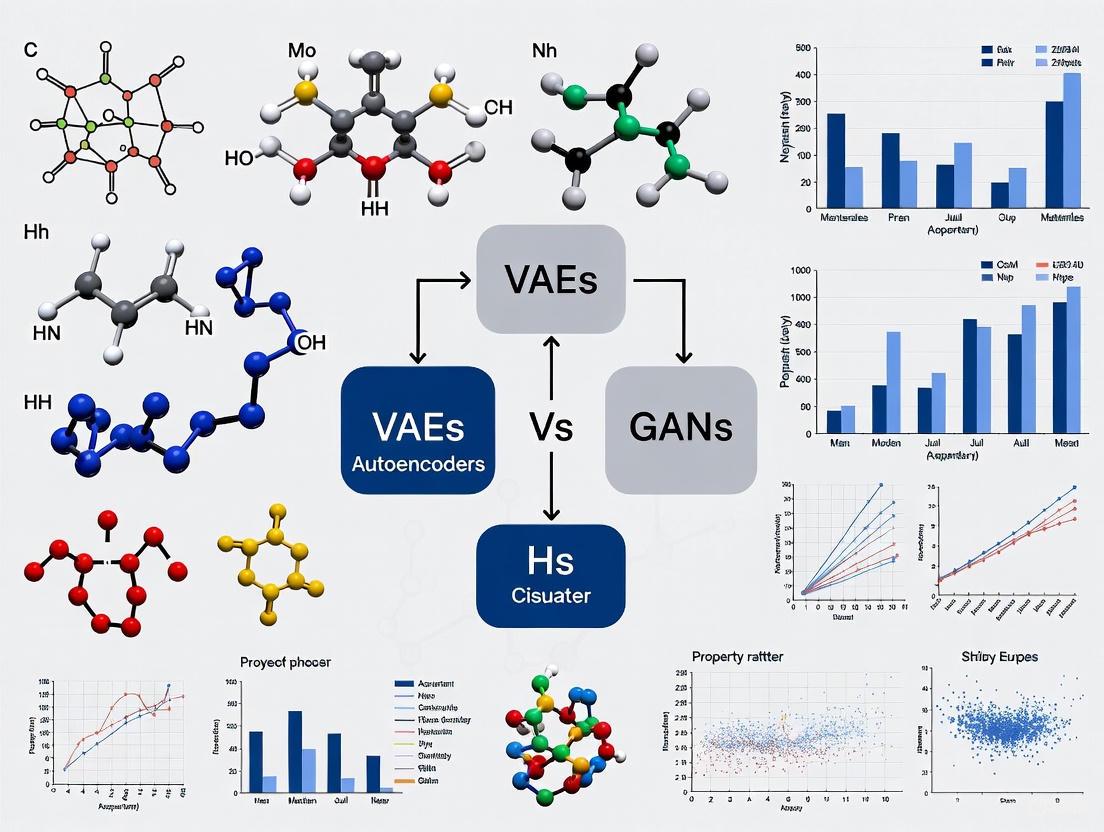
This article addresses the critical challenge of computational efficiency in the AI-driven generation of novel materials, a pivotal concern for researchers and drug development professionals. It explores the foundational computational paradigms, details cutting-edge methodological approaches like high-throughput computing and generative AI, and provides practical troubleshooting strategies for managing resource constraints. Furthermore, it establishes a framework for the rigorous validation and benchmarking of generated materials, synthesizing key insights to accelerate the discovery of functional materials for biomedical and clinical applications.
Dylan Peterson
Nov 25, 2025

Reinforcement Learning for Molecular Design Optimization: Advanced Methods and Applications in Drug Discovery

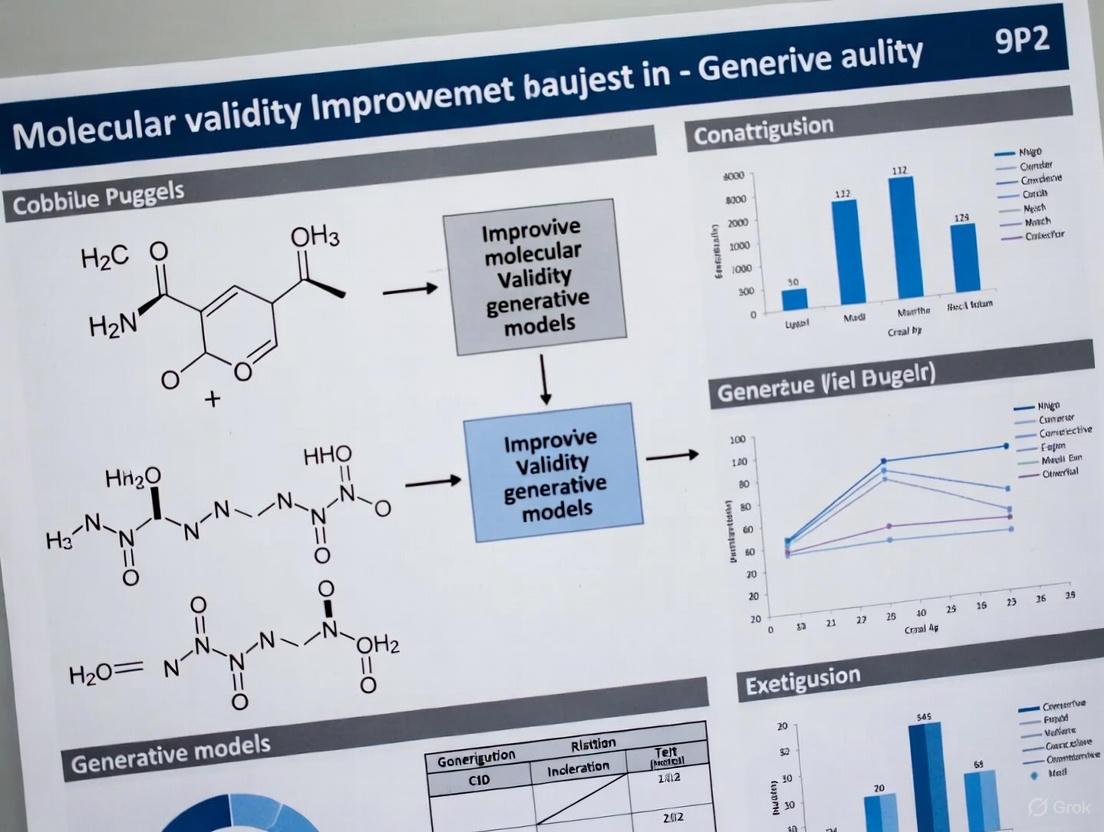
This article provides a comprehensive exploration of Reinforcement Learning (RL) applications in molecular design optimization, a transformative approach in modern drug discovery. It covers the foundational principles of framing molecular modification as a Markov Decision Process and ensuring chemical validity. The review details key methodological architectures, including transformer-based models, Deep Q-Networks, and diffusion models, integrated within frameworks like REINVENT for multi-parameter optimization. It critically addresses central challenges such as sparse rewards and mode collapse, presenting solutions like experience replay and uncertainty-aware learning. Finally, the article examines validation strategies, from benchmark performance and docking studies to experimental confirmation, highlighting how RL accelerates the discovery of novel, optimized bioactive compounds for targets like DRD2 and EGFR.
Aria West
Nov 25, 2025

Fine-Tuning Strategies for Materials Foundation Models: A Guide for Biomedical and Clinical Research

This article provides a comprehensive guide for researchers and drug development professionals on fine-tuning materials foundation models. Foundation models, pre-trained on vast and diverse atomistic datasets, offer a powerful starting point for simulating complex biological and materials systems. We explore the core concepts of these models and detail targeted fine-tuning strategies that achieve high accuracy with minimal, system-specific data. The article covers practical methodologies, including parameter-efficient fine-tuning and integrated software platforms, addresses common challenges like catastrophic forgetting and data scarcity, and presents rigorous validation frameworks. By synthesizing the latest research, this guide aims to empower scientists to reliably adapt these advanced AI tools for applications in drug discovery, biomaterials development, and clinical pharmacology.

Ethan Sanders
Nov 25, 2025

Kinetic vs. Thermodynamic Control: A Strategic Framework for Optimized Synthesis in Drug Development

This article provides a comprehensive comparison of thermodynamic and kinetic synthesis approaches, tailored for researchers and drug development professionals. It explores the fundamental principles distinguishing these pathways, using illustrative examples from organic synthesis and nanoscience. The content details advanced methodological applications, including continuous-flow microreactors and computational optimization, highlighting their role in improving efficiency and selectivity. It further offers practical troubleshooting strategies for common challenges and discusses validation through modern Model-Informed Drug Development (MIDD) frameworks. By synthesizing foundational knowledge with cutting-edge applications, this article serves as a strategic guide for selecting and optimizing synthesis routes to enhance drug development outcomes.

Brooklyn Rose
Nov 25, 2025

Kinetic vs. Thermodynamic Control: A Foundational Guide for Materials Design and Drug Development

This article provides a comprehensive exploration of kinetic and thermodynamic control principles, bridging fundamental concepts with cutting-edge applications in materials science and drug discovery. Tailored for researchers, scientists, and drug development professionals, the content delves into the core theories governing reaction pathways and stability. It further examines advanced methodological approaches for probing these phenomena, addresses common optimization challenges, and validates strategies through comparative analysis of computational and experimental techniques. By synthesizing insights from recent studies on semiconductor oxidation, metastable material synthesis, and drug-target interactions, this guide serves as a strategic resource for controlling material properties and drug efficacy.

Easton Henderson
Nov 25, 2025

Overcoming Kinetic Barriers in Organic Synthesis: Strategies, Methodologies, and Applications in Drug Development

This article provides a comprehensive exploration of kinetic barriers in organic synthesis, addressing the critical challenges and innovative solutions for researchers and drug development professionals. It covers foundational principles, including the Arrhenius equation and activation energy, and progresses to advanced methodologies like high-throughput computational analysis and kinetic decoupling-recoupling strategies. The content details practical applications for troubleshooting and optimizing reactions, alongside rigorous validation techniques through kinetic studies and isotope effects. By synthesizing current research and future directions, this review serves as an essential resource for designing efficient synthetic routes, ultimately accelerating the development of pharmaceuticals and novel materials.

Andrew West
Nov 25, 2025

Beyond Prediction: Strategies to Improve the Success Rate of Computational Material Discovery

Computational models now rapidly generate millions of candidate materials, yet the transition from digital prediction to synthesized reality remains a major bottleneck. This article addresses the critical challenge of improving the success rate of computational material discovery for researchers and drug development professionals. We explore the foundational problem of synthesizability, detailing advanced methodological approaches like neural network potentials and AI-assisted platforms. The article provides a troubleshooting guide for overcoming data and reproducibility issues, and introduces rigorous validation frameworks and metrics for comparative model assessment. By integrating computational power with experimental feasibility, this guide outlines a path to more reliable and accelerated material innovation.

Addison Parker
Nov 25, 2025

Popular Articles

Research Tags