Research Articles
The Invisible Stencil: How Membrane Projection Lithography is Shaping Our Digital World
Explore how CMOS-compatible membrane projection lithography is revolutionizing semiconductor manufacturing and enabling the next generation of computational power.
The Unsolved Case of the Wandering Atoms: Tracking Plutonium's Secret Journey Underground
Discover how plutonium and americium particles are defying scientific predictions by traveling through subsurface environments via colloid-facilitated transport.
Unshackling the Frost Giant: The Battery Breakthrough for the Icy Frontiers
Discover how Tetrahydrofuran-derived electrolytes enable lithium-metal batteries to operate efficiently at ultra-low temperatures down to -80°C.
Air-Stable Tin Perovskite Nanocrystals: The Lead-Free Future of Optoelectronics
Discover how air-stable, highly luminescent 2D tin halide perovskite nanocrystals are paving the way for environmentally friendly optoelectronics.
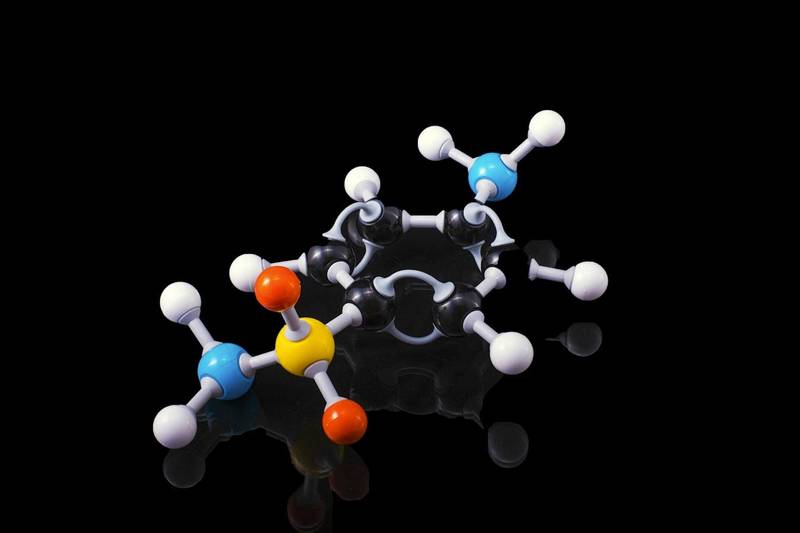
The Molecular Tango: How a Simple Twist Changes Everything in Copper Complexes
Explore how carboxylic acid geometry transforms copper complexes' properties - from color and magnetism to real-world applications in catalysis and medicine.
The Atomic Dance Floor: Predicting How Single Atoms Shuffle to Build Better Materials
Discover how scientists predict single atom movement in tin dioxide to create better materials for sensors, electronics, and solar cells.
Unlocking Zeolite Secrets: The Molecular Camera Revealing Hidden Structures
Discover how soft X-ray microscopy is revolutionizing our understanding of zeolite catalysts by revealing aluminum coordination environments at the nanoscale.

Beyond Beakers and Boredom: Reimagining the Chemistry Lab for a New Generation
Explore how Inorganic and Analytical Chemistry experiments are being transformed from cookbook procedures to inquiry-based learning experiences.
The Year Science Broke the Mold: A Look Back at 1985's Most Revolutionary Ideas
Explore the groundbreaking scientific discoveries of 1985 that shaped our modern world - PCR, the ozone hole discovery, and neural networks.
The Ultimate Power Couple: How Graphene and Inorganic Nanomaterials are Revolutionizing Our World
Explore how graphene-inorganic nanocomposites combine the strengths of 2D materials and nanoparticles to create revolutionary technologies for energy, environment, and medicine.