Strategies for Reducing Energy Dissipation in Shape Memory Alloys: From Microstructure Control to Advanced Modeling
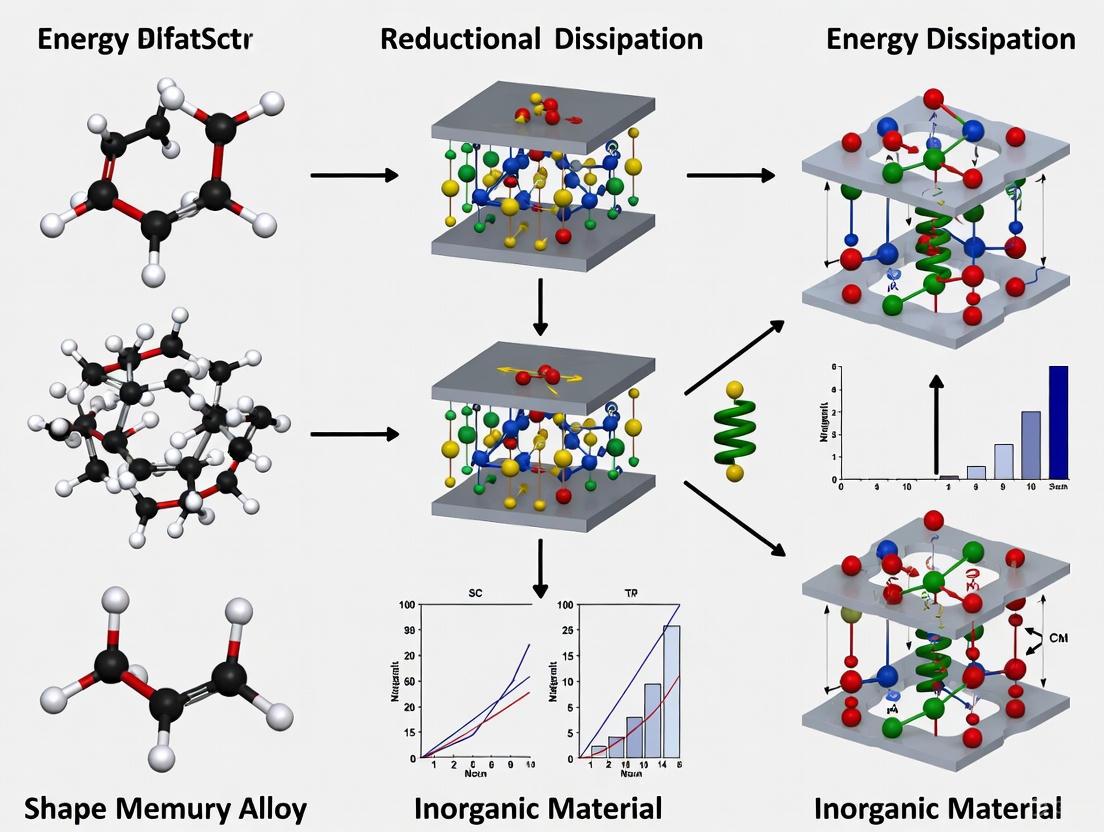
This article provides a comprehensive analysis of strategies to minimize energy dissipation in Shape Memory Alloys (SMAs), a critical factor for enhancing the efficiency and longevity of SMA-based devices in...
Strategies for Reducing Energy Dissipation in Shape Memory Alloys: From Microstructure Control to Advanced Modeling
Abstract
This article provides a comprehensive analysis of strategies to minimize energy dissipation in Shape Memory Alloys (SMAs), a critical factor for enhancing the efficiency and longevity of SMA-based devices in biomedical and industrial applications. Covering foundational mechanisms, methodological approaches, optimization techniques, and validation procedures, we explore how twin boundary dynamics, alloy composition, thermomechanical processing, and computational modeling contribute to reduced hysteretic losses. The content synthesizes current research to offer researchers and development professionals a structured framework for designing low-dissipation SMA systems with improved functional stability and performance.
Understanding Energy Dissipation: Fundamental Mechanisms in SMA Microstructures
Fundamental FAQs: Mechanisms of Energy Dissipation
What is the fundamental source of energy dissipation in Shape Memory Alloys? Energy dissipation in SMAs primarily arises from the internal friction generated during the reversible, diffusionless martensitic phase transformation. When the material cycles between its austenitic and martensitic phases, either in response to stress (superelasticity) or temperature (shape memory effect), the movement of phase boundaries and the reorientation of martensite variants encounter intrinsic resistance, converting mechanical energy into heat [1] [2]. This is manifested macroscopically as a hysteresis loop in the stress-strain curve.
How do the one-way and two-way shape memory effects differ in their energy dissipation? The One-Way Shape Memory Effect (OWSME) requires external loading to deform the material and heating to recover the strain; energy is dissipated during the deformation cycle. The Two-Way Shape Memory Effect (TWSME), achieved through thermomechanical "training," allows the material to remember both a high- and low-temperature shape, enabling reversible motion without mechanical load. However, TWSMAs typically recover about 50% less strain than OWSMAs, which can influence the total energy dissipated per cycle [1] [3].
What is the difference between pseudoelasticity and the shape memory effect? These are two distinct phenomena driven by the martensitic transformation:
- Pseudoelasticity (or Superelasticity): Occurs when an SMA above its austenite finish temperature (Af) is mechanically loaded. Stress induces a phase transformation from austenite to martensite, creating large, reversible strains (up to 8%). Upon unloading, the material transforms back to austenite, recovering its original shape. The hysteresis area of the resulting stress-strain curve represents the energy dissipated [1] [4].
- Shape Memory Effect: Occurs when an SMA in the martensitic phase is deformed. The strain remains after load removal. Upon subsequent heating above Af, the material reverses to austenite and recovers its original, pre-deformed shape. Energy dissipation is more closely tied to the internal friction during the thermally-induced transformation [1] [3].
Experimental Troubleshooting Guide
Issue 1: Unexpectedly Narrow or Wide Hysteresis Loops
- Potential Cause: Operational temperature is too close to the material's transformation temperatures or the
Mdtemperature (the threshold beyond which superelasticity is lost) [1] [3]. - Solution: Characterize the specific transformation temperatures (Ms, Mf, As, Af) of your SMA sample using Differential Scanning Calorimetry (DSC). Ensure superelastic testing is performed sufficiently above Af but well below Md for stable hysteresis [2] [4].
- Potential Cause: High loading rate causing adiabatic heating/cooling effects.
- Solution: The phase transformation is exothermic upon loading and endothermic upon unloading. Very high strain rates can cause significant temperature shifts in the sample, altering the transformation stresses and hysteresis width. Use slower, quasi-static strain rates or implement environmental temperature control to ensure isothermal conditions [4].
Issue 2: Rapid Functional Degradation and Irreversible Strain Accumulation
- Potential Cause: Introduction of dislocations and the formation of retained (stabilized) martensite during cyclic loading [5].
- Solution: For applications requiring high cyclic stability (e.g., dampers), select SMAs with microstructures resistant to dislocation slip. This includes alloys with ultra-fine grains or nano-scale precipitates. Functional degradation is often more severe under tensile loading; consider designing for compressive loading where feasible [5].
- Potential Cause: Excessive applied strain beyond the material's reversible limit.
- Solution: Determine the critical strain limit for your specific SMA composition and processing history through preliminary low-cycle tests. Design your experiment's strain amplitude to stay within this reversible regime to minimize cumulative damage [6] [2].
Issue 3: Premature Fracture or Cracking at Clamping Points
- Potential Cause: Stress concentration induced by standard transverse clamping grips [4].
- Solution: Utilize specialized grip designs, such as bollard grips, which reduce local stress concentrations and prevent triggering unintended phase transformations in the clamped region, thereby ensuring failure occurs in the gauge section rather than at the grips [4].
Issue 4: Inconsistent Damping Performance Across SMA Types
- Potential Cause: Intrinsic material properties and compositional differences between SMA families.
- Solution: Refer to the table below to understand the typical characteristics of major SMA families. Alloying and processing are key to tailoring performance [2].
Table 1: Comparison of Key SMA Families for Damping Applications
| SMA Family | Typical Composition | Key Damping Characteristics | Common Challenges |
|---|---|---|---|
| NiTi-based | NiTi, NiTiHf, NiTiPd | Excellent superelastic strain recovery (up to 8%), high damping capacity, good functional stability [2] [5]. | High cost, sensitivity to thermomechanical processing, complex machining [1]. |
| Cu-based | Cu-Al-Mn, Cu-Al-Ni, Cu-Zn-Al | Good damping capacity, lower cost than NiTi, high transformation temperatures (for some compositions) [2]. | Brittleness, low fatigue life, high sensitivity to structural defects [2]. |
| Fe-based | Fe-Mn-Si, Fe-Mn-Al-Ni, Fe-Ni-Co-Al-Ta-B | Low cost, high strength, good machinability, Fe-Mn-Si is known for its shape memory effect [6] [2]. | Generally lower superelastic strain compared to NiTi, functional properties highly dependent on composition and aging [6] [2]. |
Quantitative Data & Experimental Protocols
Key Experimental Data for Fe-SMA Dampers
Experimental data from hybrid damper studies provides benchmarks for performance expectations.
Table 2: Experimental Performance Data of Metallic Shear Plates in Dampers [6]
| Material | Shear Plate Configuration | Fatigue Life (Cycles to Failure) | Key Failure Mode |
|---|---|---|---|
| Low-Yield-Point Steel (LYP160) | Central perforation | ~10,000 | Low-cycle fatigue fracture [6]. |
| Carbon Steel (Q235) | Central perforation | ~15,000 | Low-cycle fatigue fracture [6]. |
| Iron-Based Shape Memory Alloy (Fe-17Mn-5Si-10Cr-5Ni) | Central perforation | > 40,000 | Superior low-cycle fatigue resistance; no fracture observed [6]. |
Standard Experimental Protocol: Superelasticity Testing
This protocol characterizes the fundamental stress-strain hysteresis for damping analysis.
- Sample Preparation: Machine SMA samples into standardized dog-bone or sheet specimens. Consider surface finishing (e.g., diamond smoothing) to reduce stress concentration from micro-notches [5].
- Grip Selection: Mount the specimen using bollard-style or other low-stress concentration grips to prevent premature failure at the clamps [4].
- Environmental Control: Place the specimen in a temperature chamber. Stabilize the temperature to a value significantly above the material's Af temperature to ensure full austenite at the start [2].
- Instrumentation:
- Mechanical Loading: Execute a quasi-static tensile test with multiple full loading-unloading cycles to a predetermined strain level (e.g., 6%). Maintain a low strain rate (e.g., 10⁻³ to 10⁻⁴ s⁻¹) to approximate isothermal conditions [2] [4].
- Data Analysis: Plot the stress-strain curves. Calculate the energy dissipated per cycle as the area enclosed by the hysteresis loop. Monitor the evolution of transformation stresses and residual strain over successive cycles to assess functional stability [2] [5].
Standard Experimental Protocol: Dynamic Mechanical Analysis (DMA)
DMA is used to characterize the damping factor (tan δ) as a function of temperature and frequency.
- Sample Preparation: Cut a sample of precise dimensions to fit the DMA fixture (e.g., dual cantilever or three-point bend).
- Temperature Equilibration: Cool the sample to a temperature below Mf.
- Frequency Sweep (Optional): At a fixed temperature and strain amplitude, sweep through a range of frequencies to observe the frequency-dependence of tan δ.
- Temperature Ramp: Apply a small, oscillatory strain (within the elastic range) and heat the sample at a constant rate through the transformation range to above Af. Record the storage modulus (E') and loss modulus (E'') continuously.
- Data Analysis: Calculate the damping factor as tan δ = E'' / E'. The peak in tan δ during heating and cooling corresponds to the phase transformation and indicates the maximum damping capacity [2].
Essential Visualizations
Phase Transformation and Energy Dissipation Pathway
This diagram illustrates the microstructural changes and the associated energy dissipation (hysteresis) during the superelastic cycle.
Superelastic Testing Workflow
This flowchart outlines the key steps for conducting a reliable superelasticity test, incorporating troubleshooting points.
The Researcher's Toolkit
Table 3: Essential Research Reagents and Materials for SMA Energy Dissipation Studies
| Item / Solution | Function & Technical Role in Experimentation |
|---|---|
| NiTi (Nitinol) Wires/Sheets | The benchmark SMA for research; provides excellent superelasticity and damping for fundamental studies and prototype validation [2] [4]. |
| Fe-based SMA (e.g., Fe-Mn-Si) | A cost-effective alternative for large-scale civil engineering applications (e.g., seismic dampers); studied for its good fatigue resistance [6] [2]. |
| Differential Scanning Calorimeter (DSC) | Critical Tool: Precisely measures the four characteristic transformation temperatures (Ms, Mf, As, Af) of an SMA sample, which are essential for defining its operational window [4] [5]. |
| Dynamic Mechanical Analyzer (DMA) | Critical Tool: Directly measures the damping factor (tan δ) and viscoelastic properties of SMA samples as a function of temperature, frequency, and strain [2]. |
| Digital Image Correlation (DIC) System | Provides full-field, non-contact strain mapping on the sample surface, crucial for identifying localization of transformation and strain heterogeneity [5]. |
| Infrared (IR) Thermal Camera | Monitors temperature changes on the sample surface in real-time during mechanical tests, visualizing the exothermic and endothermic nature of the phase transformation [4] [5]. |
| Low-Stress Concentration Grips | Specialized fixtures (e.g., bollard grips) that minimize stress concentration at clamping points, preventing unintended phase transformation and failure initiation in those areas [4]. |
The Role of Twin Branching and Microstructure Evolution in Energy Loss
Frequently Asked Questions
What is twin branching and why is it important in SMAs? Twin branching describes the gradual refinement of martensitic twin laminates near the interface with the austenite phase. This microstructural evolution is a key energy optimization mechanism. The system partially reduces elastic strain energy by refining the twins near the interface, at the cost of increasing interfacial energy. This competition governs the morphology and energy efficiency of the microstructure [7].
How does twin branching contribute to energy dissipation? The process of twin boundary motion during phase transformation and microstructure evolution is associated with energy dissipation. When the microstructure evolves, for instance under cyclic loading, the movement and reorientation of these fine twins and branching domains involve frictional losses, leading to dissipation of energy, which manifests as hysteresis in the stress-strain or temperature-strain response [8] [9].
What experimental factors most significantly impact energy loss in branched microstructures? Research indicates that the size of the twinned domain is a critical factor. Significant dissipation effects due to twin boundary motion are more pronounced in relatively smaller domain sizes [8] [9]. Furthermore, the specific material parameters and the thermo-mechanical loading history play a major role.
My simulations show high hysteresis. Is this a material problem or a modeling limitation? It could be both. Traditional models that only consider the chemical and elastic energy of the phases might underestimate the real-world hysteresis. Incorporating rate-independent dissipation into the model, tied to the evolution of the microstructure (like twin boundary motion), is often necessary to accurately capture the energy loss, as demonstrated in recent 1D modeling efforts [8].
Which material systems are best for studying twin branching? Cu-Al-Ni single crystals are often used for fundamental studies, as their material parameters are well-known and their microstructures can be characterized to validate models [7]. NiTi-based alloys are also extensively studied due to their commercial applications.
Troubleshooting Guide: Microstructure and Energy Dissipation
| Problem Symptom | Potential Root Cause | Diagnostic Steps | Proposed Solution |
|---|---|---|---|
| High or erratic energy dissipation (hysteresis) in cyclic loading. | Excessive dissipation from twin boundary motion in a fine branched microstructure [8] [9]. | Characterize the twin spacing and domain size via SEM. Perform DSC to check for multiple phase transformations. | Optimize heat treatment to slightly coarsen the microstructure (if application allows). Explore training cycles to stabilize the microstructure. |
| Functional fatigue: rapid degradation of shape memory properties. | Irreversible plastic slip introduced during phase transformation, damaging the branched microstructure. | Use TEM to identify dislocations and defects. Conduct functional fatigue tests with periodic property checks [10]. | Adjust processing parameters to increase yield strength. Introduce fine, coherent precipitates to pin the microstructure. |
| Model-experiment discrepancy: predicted energy loss is too low. | Model lacks a dissipation mechanism for microstructural evolution [8]. | Review model formulation for a dissipation term. Compare the simulated microstructure with an experimentally observed one. | Incorporate a rate-independent dissipation term into the constitutive model that activates with the evolution of the twin volume fractions [8]. |
| Inconsistent transformation temperatures across samples. | Variations in alloy composition or thermal processing, affecting the phase stability [10]. | Perform DSC on multiple samples [10]. Use EDS/WDS to verify chemical homogeneity. | Tighten control over raw materials and melting process. Standardize and meticulously document all heat treatment procedures. |
Experimental Data & Protocols
Table 1: Key Parameters from Twin Branching Models Data extracted from 1D and 3D models of twin branching, highlighting factors influencing energy scaling and dissipation.
| Parameter | Description | Impact on Energy & Microstructure | Typical Value/Scaling |
|---|---|---|---|
| Domain Size (L) | Size of the twinned martensitic domain. | Significant dissipation effects are more pronounced for smaller domain sizes [8] [9]. | ~ µm to mm scale |
| Twin Spacing (λ) | Width of individual twin lamellae; a function of position. | Finer spacing near the interface reduces elastic energy but increases interfacial energy [8] [7]. | λ(x) ~ x²/³ (theoretically) [7] |
| Elastic Energy Scaling | Energy from incompatibility at the austenite-martensite interface. | Scales with ~ μ¹/³ σₐᵦ²/³ L¹/³ (in a 3D, non-linear model) [7]. | ~ L¹/³ |
| Interfacial Energy Scaling | Energy associated with the total area of twin boundaries. | Increases with finer branching [7]. | ~ L²/³ |
Protocol 1: Calibrating a 1D Twin Branching Model with Dissipation
This protocol is based on the methodology presented by Stupkiewicz et al. (2025) [8] [9].
Model Setup:
- Formulate the free energy of the branched microstructure as a functional of the average twin spacing, λ(x), which is a continuous function of the distance (x) from the austenite-martensite interface.
- The total free energy (Ψ) should comprise two primary contributions:
Ψ = Ψ_elastic(λ(x)) + Ψ_interfacial(λ(x)) - Calibrate the elastic strain energy term,
Ψ_elastic, using an upper-bound estimate derived from a known discrete model (e.g., Seiner et al., 2020) [8].
Energy Minimization:
- Minimize the total free energy functional to derive the corresponding Euler-Lagrange equation.
Numerical Solution:
- Solve the Euler-Lagrange equation numerically using the Finite Element Method to obtain the equilibrium twin spacing profile, λ(x) [8].
Incorporate Dissipation (Critical Step):
- Within the incremental framework for an evolving microstructure, introduce a rate-independent dissipation term. This term accounts for the energy lost due to the motion of twin boundaries during microstructural rearrangement [8].
Analysis:
- Compare the results (twin spacing profile, total energy) with the discrete reference model to validate the approach.
- Analyze the impact of the dissipation term on the predicted microstructure and energy hysteresis, particularly for different domain sizes (L).
The workflow for this protocol is summarized in the diagram below:
Protocol 2: Experimental Characterization of Twin Microstructure
Sample Preparation:
- Select a suitable SMA single crystal (e.g., Cu-Al-Ni [7]).
- Subject the sample to a specific thermo-mechanical treatment to induce the martensitic phase and a twinned microstructure.
- Carefully polish the surface for microstructural analysis.
Microstructural Imaging:
- Use Scanning Electron Microscopy (SEM) to observe the twin laminates and the branching region near the austenite-martensite interface [10].
- Obtain high-resolution images at various magnifications to capture the scale of twin refinement.
Quantitative Metrology:
- From the SEM images, measure the twin lamellae width (λ) as a function of the distance (x) from the macroscopic interface.
- Statistically analyze the data to establish the relationship λ(x).
Phase Analysis:
- Use X-ray Diffraction (XRD) at different temperatures to identify and quantify the austenite and martensite phases present, confirming the transformation characteristics [10].
The Researcher's Toolkit
Table 2: Essential Materials & Reagents for SMA Microstructure Research
| Item | Function / Relevance | Example & Notes |
|---|---|---|
| High-Purity Alloy Elements | Fabrication of SMA samples with precise transformation temperatures. | Ni-Ti, Cu-Al-Ni, Ni-Mn-Ga master alloys. Composition must be strictly controlled (e.g., Ni:Ti ratio) [10]. |
| Single Crystal Specimens | Fundamental study of twin branching without confounding grain boundary effects. | Cu-Al-Ni single crystals are explicitly used for model validation [7]. |
| Differential Scanning Calorimeter (DSC) | Determines critical transformation temperatures (As, Af, Ms, Mf) [10]. | Essential for linking thermal properties to microstructural observations. Follow ASTM F2004. |
| Scanning Electron Microscope (SEM) | High-resolution imaging of twin laminates, branching patterns, and interface morphology [10]. | Allows for quantitative metrology of twin spacing. |
| X-ray Diffractometer (XRD) | Identifies and quantifies the crystal phases (austenite, martensite) present at a given temperature [10]. | Confirms the phase state during microstructural analysis. |
The relationship between the key concepts discussed in this guide is illustrated below:
Frequently Asked Questions & Troubleshooting Guides
This technical resource addresses common experimental challenges in characterizing martensite-austenite interfaces and energy dissipation, supporting research towards developing lower-dissipation shape memory alloys (SMAs).
FAQ 1: Why do I observe different austenite-martensite interfacial patterns under varying loading paths, and how does this affect energy dissipation?
Answer: The interfacial pattern is highly sensitive to the thermo-mechanical loading path, which directly influences energy dissipation.
- Mechanism: The austenite-martensite (A-M) interface is not sharp but a diffuse region containing twinned martensite laminates. The specific twin structure (or "interfacial pattern") depends on which martensite variant coexists with the austenite and is governed by crystallographic compatibility [11].
- Link to Dissipation: Different patterns (e.g., parallel vs. branching twins) store different amounts of energy in the diffuse interface. This interfacial energy contributes directly to the driving force for phase transformation and the overall energy dissipation, which can be measured via temperature hysteresis during a thermal cycle [11]. A branching twin structure observed during reverse transformation (heating) may be associated with different dissipation compared to a parallel structure formed during forward transformation (cooling) [11].
Troubleshooting Guide:
- Problem: Inconsistent interfacial structures between thermal cycling and mechanical testing.
- Solution: Carefully control and document the precise thermal or mechanical loading history. Characterize the interface at the same point in the cycle using high-resolution optical or SEM imaging [11].
- Problem: High and variable measured energy dissipation.
- Solution: Correlate dissipation measurements (e.g., from temperature hysteresis or stress-strain loops) with direct microstructural observation of the interfacial pattern. Consider that the pattern evolution has multiple zones (fuzzy, middle, remote) each contributing differently to the energy balance [11].
FAQ 2: What atomic-scale mechanisms are responsible for energy dissipation during the phase transformation?
Answer: The primary sources of dissipation at the atomic and microstructural scale are internal friction and the irreversible work of interface motion.
- Internal Friction: This arises from the interaction of the transformation front with crystal defects and the friction of moving interfaces, including those between martensite variants and magnetic domain walls [2].
- Interface Annihilation: A significant contribution can come from the energy released when interfaces (e.g., between martensite plates or twins) disappear during microstructural rearrangement. This energy is largely dissipated as heat rather than being recovered [12].
Troubleshooting Guide:
- Problem: Difficulty connecting macroscopic hysteresis to microstructural events.
- Solution: Employ techniques like in situ TEM to observe interface dynamics directly alongside thermodynamic measurements. Atomic-scale observations have verified models (like the BBOC model) showing how dislocations and lattice rotations at interfaces facilitate the transformation and contribute to dissipation [13].
- Problem: High dissipation that is insensitive to processing to reduce defects.
- Solution: Investigate the role of interfacial energy annihilation. Focus on characterizing the evolution of twin boundaries and variant interfaces during cycling, as their disappearance is a direct source of dissipation [12].
FAQ 3: How do I accurately measure the energy dissipation associated with the phase transformation?
Answer: The most common methods operate across nano, micro, and macro scales.
- Macro-Scale: Superelastic Cycling and DMA: For bulk samples, cyclic superelastic (stress-strain) tests directly provide the hysteresis loop area, which equals the energy dissipated per cycle [2]. Dynamic Mechanical Analysis (DMA) measures the loss factor (tan δ), which quantifies the damping capacity under cyclic loading [2].
- Micro/Macro-Scale: Thermal Hysteresis: The temperature difference between the forward and reverse transformation during a heating-cooling cycle is a direct indicator of dissipation. This can be measured via Differential Scanning Calorimetry (DSC) or by using an infrared (IR) camera [11].
- Nano-Scale: Nanoindentation: This technique probes the local superelastic response and energy dissipation in micrometric volumes, which is crucial for applications in MEMS or for studying individual grains [2].
Troubleshooting Guide:
- Problem: Discrepancy between dissipation values from mechanical vs. thermal tests.
- Solution: Ensure testing conditions (temperature, rate, material state) are equivalent. Cross-validate methods on a standard sample. Remember that thermal hysteresis measures the total dissipation, while mechanical hysteresis might be path-dependent.
- Problem: Poor reproducibility in nanoindentation dissipation measurements.
- Solution: Standardize indentation parameters (strain rate, peak load, hold time). Use a tip geometry and size appropriate for the microstructural features being investigated [2].
Experimental Data & Protocols
Table 1: Key Characteristics of Major SMA Families for Damping Applications
| SMA Family | Typical Composition | Key Strengths | Dissipation/Damping Characteristics | Common Challenges |
|---|---|---|---|---|
| NiTi-based | NiTi, NiTiHf, NiTiPd | Excellent superelastic strain (up to 8-10%), high corrosion resistance, biocompatibility, high damping capacity [2] | High energy dissipation via phase transformation; damping can be tuned by thermo-mechanical processing and alloying [2] | High cost, sensitivity to thermomechanical cycling, complex processing [2] [1] |
| Cu-based | CuAlNi, CuAlMn, CuZnAl | Lower cost, good damping properties, easier fabrication [2] | Good superelastic damping; damping capacity can be enhanced by ageing treatments [2] | Lower fatigue life, grain growth, poor cyclic stability in some compositions [2] |
| Fe-based | FeMnAlNi, FeNiCoAlTa | Low cost, high strength, good workability [2] | Exhibits superelasticity; functional fatigue properties are a key research focus [2] | Transformation temperature control, functional degradation during cycling [2] |
Table 2: Factors Affecting Damping Capacity in SMAs
| Factor | Effect on Damping | Experimental Consideration |
|---|---|---|
| Loading Frequency/Strain Rate | Dissipation is often rate-dependent due to self-heating effects. Higher rates can increase hysteresis [2]. | Control and report strain rates. Use DMA to characterize frequency dependence. |
| Operating Temperature | Maximum damping occurs during phase transformation. Performance is highly sensitive to temperature relative to transformation temperatures (Ms, Mf, As, Af) [2]. | Precisely characterize transformation temperatures via DSC before mechanical testing. |
| Cycling (Fatigue) | Dissipation and transformation stresses can evolve significantly over the first few cycles before potentially stabilizing [2]. | "Train" the material with repeated cycles before collecting data for consistent results. |
| Grain Size | A finer grain size can improve the superelastic response and cyclic stability in some alloy systems [2]. | Document the material's thermo-mechanical processing history and resulting microstructure. |
Detailed Experimental Protocol: Characterizing Interfacial Patterns and Thermal Dissipation
This protocol is adapted from methodologies used in recent studies on Ni-Mn-Ga single crystals [11].
Objective: To correlate the microstructure of the austenite-martensite interface with the energy dissipation measured via temperature hysteresis during a thermal cycle.
Materials and Reagents:
- SMA Specimen: Single crystal (e.g., Ni₅₀Mn₂₈Ga₂₂) cut along {100} planes of the austenite phase [11].
- Characterization Equipment: High-resolution optical camera, Scanning Electron Microscope (SEM).
- Thermal Measurement Equipment: Differential Scanning Calorimeter (DSC), Infrared (IR) camera.
- Environmental Control: Thermal stage capable of precise cooling and heating cycles.
Procedure:
- Specimen Preparation: Cut and polish the specimen to a suitable size (e.g., 1 x 2.5 x 20 mm³). Ensure surfaces are clean for clear microscopic observation.
- Initial Characterization:
- Use DSC at a controlled rate (e.g., 10°C/min) to determine the characteristic transformation temperatures: Ms, Mf, As, Af.
- Under an optical microscope or SEM, document the initial microstructure of the material in the martensitic state (at a temperature < Mf).
- In-Situ Thermal Cycling and Observation:
- Mount the sample on a thermal stage placed under the optical microscope or SEM.
- Cooling Cycle (Forward Transformation): Cool the sample from a temperature above Af to below Mf at a controlled rate. Record the propagation of the A-M interface and the formation of the interfacial twin microstructure (e.g., parallel laminates) [11].
- Heating Cycle (Reverse Transformation): Heat the sample from below Mf to above Af at the same rate. Observe the change in the interfacial pattern (e.g., branching laminates) during the reverse propagation [11].
- Capture high-resolution images/videos at each stage.
- Thermal Hysteresis Measurement:
- Using the IR camera (or a calibrated thermocouple), monitor the sample's surface temperature during an identical, uninterrupted heating-cooling cycle.
- Record the temperature at which the interface starts and finishes moving during both forward and reverse transformation. The difference in these temperatures for a single interface's propagation provides a measure of the local thermal dissipation [11].
- Data Analysis:
- Microstructure: Analyze the captured images to determine the type of twin structure (e.g., M1M3 vs. M2M3) and its pattern (parallel vs. branching) present at the interface during cooling and heating.
- Dissipation: Calculate the temperature hysteresis (ΔT) from the IR data. A larger ΔT indicates higher energy dissipation.
- Correlation: Correlate the specific interfacial patterns observed with the measured temperature hysteresis to understand how microstructure controls dissipation.
The Scientist's Toolkit
Table 3: Essential Research Reagents and Materials for SMA Interface Studies
| Item Name | Function/Application | Specific Example / Note |
|---|---|---|
| Ni-Mn-Ga Single Crystal | Model material for studying magnetic SMAs and interfacial patterns [11]. | Available from suppliers like Goodfellow. Composition: Ni₅₀Mn₂₈Ga₂₂ (at.%) [11]. |
| High-Viscosity/Modified Asphalt | Not an SMA, but used in composite research or for studying energy dissipation principles in other material systems [14]. | Used in damping layer composites; characterized by high loss factor [14]. |
| CuAlNi Single Crystal | Classic SMA for studying fundamental transformation kinetics and interface mobility [15]. | Used in impact-induced phase transformation studies [15]. |
| AISI 304 Stainless Steel | Model material for studying deformation-induced martensitic transformation (DIMT) mechanisms [13]. | Allows observation of γ(fcc)→ε(hcp)→α'(bcc) transformation sequence [13]. |
Experimental Workflow and Pathways
The following diagram visualizes the multi-technique approach to characterizing interfaces and dissipation, integrating protocols from the referenced research.
Fundamental FAQs on Damping in Shape Memory Alloys
FAQ 1: What is the fundamental mechanism behind the damping capacity in Shape Memory Alloys (SMAs)?
The damping capacity in SMAs stems from their ability to convert mechanical vibrational energy into thermal energy through hysteretic superelasticity during stress-induced martensitic transformation. When the material undergoes loading and unloading cycles, the reversible movement of inter-phase interfaces (between austenite and martensite) and the movement of twin boundaries within the martensite phase itself absorb a considerable amount of mechanical energy. This energy dissipation is observed as a hysteresis loop in the stress-strain curve, and the area within this loop quantifies the energy dissipated per cycle [16] [17].
FAQ 2: How is damping capacity quantitatively measured in SMAs?
The mechanical damping capacity in a superelastic cycle is typically quantified by the loss factor (η), which is defined as η = ΔW / (W × π). In this formula:
- ΔW is the dissipated energy per unit volume (corresponding to the area enclosed by the superelastic stress-strain hysteresis loop).
- W is the maximum stored elastic energy per unit volume during the loading cycle [16]. The internal friction (IF) or tan δ, which is often measured using Dynamic Mechanical Analysis (DMA), is also a common metric to describe the damping properties of SMAs [18] [17].
FAQ 3: Why is the stress hysteresis (Δσhys) important for damping performance?
The stress hysteresis is a dominant factor influencing energy dissipation. A larger stress hysteresis during a loading-unloading cycle results in a larger area of the hysteresis loop (ΔW), leading to greater energy dissipation per cycle. The stress hysteresis is well-correlated with the thermal hysteresis (ΔThys) of the martensitic transformation; enhancing ΔThys through element doping is a common strategy to enlarge Δσhys and consequently improve damping capacity [16].
The following diagram illustrates the core mechanism of energy dissipation in superelastic SMAs, linking the material's microstructural behavior to its macroscopic damping properties.
The Scientist's Toolkit: Key Reagents & Materials
Table 1: Essential Materials and Reagents for SMA Damping Research
| Item Name | Function/Description | Key Considerations |
|---|---|---|
| High-Purity Elements (Cu, Al, Mn, Fe, Ni, Ti, Co, Nb, Ag) | Base materials for alloy fabrication. Purity is critical to avoid unintended precipitates that can hinder transformation and damping. | Use high purity (e.g., 3N to 4N). Elemental composition directly controls transformation temperatures and damping metrics [18] [16] [17]. |
| Vacuum Arc Remelter (VAR) | Standard equipment for melting high-purity, reactive elements in a controlled atmosphere to produce homogeneous SMA ingots. | Prevents oxidation; allows re-melting (6+ times) for homogeneity [18] [17]. |
| Bridgman Directional Solidification Furnace | Creates SMA samples with a coarse, columnar-grained microstructure and a strong preferred crystal orientation (e.g., <001>A). | Mitigates intergranular cracking; extends transformation plateau; enhances superelasticity and damping capacity [16]. |
| Dynamic Mechanical Analyzer (DMA) | Primary instrument for measuring damping capacity (tan δ / internal friction) under controlled temperature, frequency, and strain. | Use single cantilever clamp; typically performed with temperature sweeps at constant frequency and strain [18] [17]. |
| Differential Scanning Calorimeter (DSC) | Determines martensitic transformation temperatures (Ms, Mf, As, Af) and thermal hysteresis (ΔThys). | Heating/cooling rate (e.g., 10 °C/min) must be standardized. ΔThys correlates with stress hysteresis [16] [17]. |
Quantitative Guide: Alloying Element Effects on Damping
Table 2: Comparative Effects of Alloying Elements on Damping Properties in Cu-Based SMAs
| Alloy System | Key Doping Element & Effect | Impact on Damping Capacity | Quantitative Performance (Typical Values) |
|---|---|---|---|
| Cu-Al-Mn | Mn (in Cu-Al-Mn): Stabilizes β-phase, improves ductility, decreases transformation temperature. | Positive. Enhances damping by improving interface mobility and increasing lattice mismatch [18] [17]. | Loss factor (η): ~0.212 (with Fe doping). ΔW: 11.19 MJ m⁻³ (Cu70.5Al17Mn11.5Fe1, 8% strain) [16]. |
| Cu-Al-Mn-Fe | Fe (substituting for Al): Increases thermal & stress hysteresis by reducing structural compatibility. | Significantly Positive. Greatly enhances energy dissipation per cycle (ΔW) [16]. | ΔW increases from ~4-7 MJ m⁻³ (ternary) to >11 MJ m⁻³ (Fe-doped) [16]. |
| Cu-Al-Fe-Mn | Mn (in Cu-Al-Fe): Lowers transformation temperature; enhances atomic lattice mismatch. | Positive. Increases internal friction peak by lowering energy barriers for twin boundary movement [17] [19]. | Damping capacity (tan δ) increases gradually with Mn content [17]. |
| Cu-Al-Fe-Co | Co (in Cu-Al-Fe): Increases transformation temperature; causes grain refinement and precipitate formation. | Negative. Significantly reduces damping capacity [17] [19]. | Damping capacity (tan δ) decreases significantly with increasing Co content [17]. |
| Cu-Al-Mn-Ag/Nb | Ag & Nb: Typically added to improve mechanical properties and shape memory effect. | Variable/Context-Dependent. Effect on intrinsic damping (IFI) requires further study [18]. | Scant quantitative data on direct damping performance; primary benefit is improved ductility [18]. |
Experimental Protocols for Damping Capacity Analysis
Protocol: Sample Preparation via Directional Solidification
Objective: To produce textured SMA samples with optimized superelastic and damping properties by mitigating brittle intergranular fracture [16].
- Alloy Fabrication: Weigh high-purity raw elements (e.g., Cu, Al, Mn, Fe) according to the target composition (e.g., Cu70.5Al18−xMn11.5Fex).
- Arc-Melting: Melt the constituents in a vacuum arc remelter (VAR). Re-melt the ingot at least six times, flipping between melts, to ensure chemical homogeneity.
- Homogenization: Seal the as-cast ingot in a quartz tube under argon atmosphere. Heat at a high temperature (e.g., 1173 K) for an extended period (e.g., 24 hours), then quench in cold water.
- Directional Solidification: Process the homogenized alloy using the Bridgman method. Place the ingot in a alumina crucible and solidify it at a controlled growth speed (e.g., 50 μm/s) to create a highly textured microstructure with a <001>A preferred orientation.
- Post-Processing: Cut the directionally solidified rod into specimens of desired dimensions for subsequent testing using a precision saw (e.g., diamond saw).
Protocol: Characterizing Damping Performance via DMA
Objective: To measure the temperature-dependent internal friction (tan δ) of SMA samples, identifying peaks associated with phase transformation and intrinsic damping [18] [17].
- Sample Preparation: Cut the SMA sample to the dimensions required by the DMA clamp (e.g., 20.0 mm × 6.0 mm × 2.5 mm for a single cantilever clamp).
- Instrument Setup: Secure the sample in the DMA. Equip the instrument with a liquid nitrogen cooling system for sub-ambient temperature measurements.
- Parameter Definition:
- Clamp Type: Single Cantilever
- Oscillation Frequency: 1.0 Hz
- Strain Amplitude: 1.0 × 10⁻⁴
- Temperature Range: Typically from -50 °C to 150 °C, or as required to cover the transformation.
- Heating/Cooling Rate: 3 °C/min
- Execution: Run the temperature sweep experiment and record the values of storage modulus, loss modulus, and tan δ (internal friction) as a function of temperature.
- Analysis: Identify the internal friction peak corresponding to the martensitic transformation. Analyze the stable-temperature damping background (IFI + IFPT) for applications where the material is used isothermally.
The workflow below outlines the key stages of a comprehensive experimental procedure for evaluating the damping capacity of a newly developed shape memory alloy.
Troubleshooting Guides for Common Experimental Issues
Problem 1: Insufficient Energy Dissipation (ΔW) per Cycle
- Potential Cause: The structural compatibility between the austenite and martensite phases is too high, resulting in a narrow stress hysteresis (Δσhys).
- Solution: Dope with elements that reduce structural compatibility to widen the hysteresis.
- Action: In Cu-Al-Mn systems, partially substitute Al with Fe. This significantly increases both thermal (ΔThys) and stress hysteresis, leading to a larger hysteresis loop area and higher ΔW [16].
Problem 2: Poor Cyclic Stability and Fatigue Life
- Potential Cause: Coarse, randomly oriented grains and stress concentration at triple-junction grain boundaries lead to intergranular cracking.
- Solution: Implement directional solidification to create a textured microstructure.
- Action: Use the Bridgman solidification method to produce a coarse columnar-grained structure with a <001>A preferred orientation. This mitigates cracking and enhances the fatigue life [16].
Problem 3: Low Damping Capacity at Application Temperature (Isothermal Conditions)
- Potential Cause: The material's damping is overly reliant on the transformation peak (IFTr), which is only active during temperature changes. The intrinsic damping (IFI) of the martensite phase might be low.
- Solution: Select/compose alloys to maximize intrinsic damping and ensure the material is in the martensitic phase during use.
Problem 4: Deterioration of Damping Performance After Thermal or Mechanical Processing
- Potential Cause: The formation of undesirable precipitates (e.g., γ₁-Cu₉Al₄) or microstructural defects (dislocations, vacancies) that pin phase boundaries and martensite variants, restricting their movement.
- Solution: Optimize post-casting heat treatments and avoid certain alloying elements.
- Action: Perform solution treatment followed by quenching to dissolve precipitates and obtain a supersaturated solid solution. In Cu-Al-Fe systems, avoid excessive Co addition, as it promotes grain refinement and precipitate formation, which reduces damping [17].
Shape Memory Alloys (SMAs) are a class of active materials that recover their original shape after deformation when subjected to specific thermal or stress conditions [1]. This distinctive ability, rooted in reversible martensitic transformations, makes them invaluable across biomedical, aerospace, and automotive industries. However, a significant challenge impedes their broader application: energy dissipation and the accumulation of irreversible strains during transformation cycles, phenomena intrinsically linked to the thermodynamics of their phase transformations [20].
This technical support center is framed within a broader thesis on reducing energy dissipation in SMA research. It provides researchers and scientists with troubleshooting guides and FAQs focused on the thermodynamic principles governing transformation pathways. Understanding these principles—particularly the role of Gibbs free energy and the topology of transformation pathways—is crucial for designing next-generation SMAs with enhanced functional stability and reduced energy loss [21].
Essential Thermodynamic Principles & FAQ
This section addresses frequently asked questions about the core thermodynamic concepts governing energy dissipation in SMAs.
FAQ 1: What is the fundamental thermodynamic cause of energy dissipation and residual strain during phase transformation?
Energy dissipation and the formation of irreversible residual strains during stress-induced martensitic transformation are primarily caused by transformation-induced dislocation emission [20].
- Thermodynamic Mechanism: From a Gibbs free energy perspective, during reverse transformation, the system can follow one of two pathways:
- A fully reversible pathway without defect generation.
- An irreversible pathway that involves the emission of dislocations.
- Pathway Selection: While both pathways obey the first law of thermodynamics, the second law dictates a preference for the irreversible path. This is because the irreversible pathway achieves the critical condition for spontaneous reverse transformation at a higher stress level during unloading, causing it to initiate earlier and thus be thermodynamically selected [20].
- Consequence: The emitted dislocations accommodate the lattice mismatch between phases but also lead to permanent, residual strain. The driving forces for this phenomenon stem from the interplay between elastic strain energy, work-interaction, and the lattice-friction barrier [20].
FAQ 2: How does the network of transformation pathways influence functional fatigue and dimensional instability?
The global connectivity of all possible structural states (variants) of the parent and product phases during forward and backward transformations is critical. This network, best described by a Phase Transformation Graph (PTG), dictates functional performance [21].
- Defect Generation: The topology of the PTG is closely related to the generation of defects like dislocations and grain boundaries during thermal or stress cycling. These are "inevitable byproducts" of the transformation in many systems and lead to dimensional instability and functional fatigue [21].
- Symmetry Breaking: During a martensitic transformation, symmetry is broken, leading to multiple equivalent transformation pathways and variants. The global interconnectivity of these states through multiple pathways means that during cycling, the material may not return to its exact original microstructural state. This "walking" through different states across cycles is a fundamental crystallographic reason for dimensional instability [21].
- Design Implication: By analyzing the PTG topology, strategies can be developed to engineer transformation pathways that minimize these detrimental shifts, thereby enhancing reversibility and functional fatigue resistance [21].
FAQ 3: What specific material properties contribute to high energy dissipation during the pseudoelastic cycle?
High energy dissipation during pseudoelastic cycling is evidenced by a wide stress-strain hysteresis [1]. This is influenced by:
- Lattice Friction: The energy required to overcome the resistance to phase boundary movement during transformation contributes directly to dissipation [20].
- Defect-Domain Interactions: The emission of dislocations and their subsequent interaction with martensite variants creates internal friction, converting mechanical work into heat [20] [21].
- Self-Accommodating Variants: The formation and reorientation of martensite variants involve internal stresses, and the efficiency of this process affects the amount of energy dissipated [1].
The Scientist's Toolkit: Research Reagent Solutions
The following table details key materials and their roles in experimental SMA research focused on thermodynamics and dissipation.
Table 1: Essential Materials for SMA Thermodynamics Research
| Item | Primary Function & Rationale |
|---|---|
| Nickel-Titanium (NiTi/Nitinol) Alloys | The benchmark material for fundamental studies due to its excellent pseudoelasticity, biocompatibility, and corrosion resistance. Its well-characterized transformation behavior makes it ideal for investigating dissipation mechanisms [22] [1]. |
| Copper-Based Alloys (e.g., Cu-Al-Ni, Cu-Zn-Al) | A cost-effective model system for studying transformation pathways. While performance may be inferior to NiTi, their simpler processing and lower cost facilitate high-throughput experimentation on the effects of composition on thermodynamic stability [22] [1]. |
| Iron-Based SMAs (e.g., Fe-Mn-Si) | Key for research into developing low-cost, high-strength SMAs for large-scale civil/industrial applications. Studies focus on improving their shape memory effect by understanding and controlling defect generation during transformation [1] [21]. |
| High-Temperature SMAs (HTSMAs) | Essential for investigating dissipation mechanisms under high-stress, high-temperature conditions (e.g., for aerospace actuators). Research focuses on stabilizing phase transformation behavior against functional degradation [1]. |
| Sputtering Deposition Targets | Used in physical vapor deposition to create thin-film SMA samples for micro-electro-mechanical systems (MEMS) and fundamental studies on size effects in phase transformation thermodynamics and dissipation [1]. |
| Gas-Atomized Pre-Alloyed Powders | The feedstock for Additive Manufacturing (AM). Enables research into how complex geometries and non-equilibrium microstructures from AM influence transformation pathways and energy dissipation [1]. |
Experimental Protocols & Data Presentation
This section provides detailed methodologies for key experiments cited in the FAQs.
Protocol: Characterizing Transformation-Induced Dissipation
Aim: To quantify energy dissipation and identify irreversible residual strain during thermo-mechanical cycling.
Workflow Diagram: Dissipation Analysis Workflow
Methodology:
- Sample Preparation: Prepare a NiTi wire or dog-bone polycrystalline sample with well-documented composition and initial heat treatment [1].
- Instrumentation: Mount the sample in a servo-hydraulic or electromechanical test frame equipped with an environmental chamber for precise temperature control. Ensure synchronized data acquisition for load, displacement, and temperature.
- Isothermal Cycling: At a constant temperature above Austensite finish (A_f), conduct multiple load-unload cycles to a predetermined strain level (e.g., 6-8%) to observe pseudoelasticity.
- Data Collection: Record the full stress-strain curve for each cycle. Precisely measure the residual strain (ε_res) after each unloading step [20].
- Dissipation Calculation: For each cycle, calculate the area between the loading and unloading paths on the stress-strain curve. This area represents the mechanical energy dissipated per unit volume during that cycle.
- Functional Fatigue Analysis: Plot the residual strain (ε_res) and dissipated energy as a function of the number of cycles (N) to track material degradation [21].
Table 2: Quantitative Data from Dissipation Analysis Hypothetical data based on concepts from [20] & [21]
| Cycle Number (N) | Residual Strain, ε_res (%) | Dissipated Energy (MJ/m³) | Critical Transformation Stress (MPa) |
|---|---|---|---|
| 1 | 0.15 | 4.5 | 450 |
| 10 | 0.35 | 5.2 | 445 |
| 50 | 0.85 | 6.1 | 430 |
| 100 | 1.20 | 6.8 | 420 |
Protocol: Analyzing Transformation Pathways via PTG Topology
Aim: To apply Phase Transformation Graph (PTG) analysis to understand microstructural state evolution and defect generation.
Workflow Diagram: PTG Analysis Workflow
Methodology:
- Crystallographic Definition: Determine the space groups of the parent (austenite) and product (martensite) phases using techniques like X-ray or neutron diffraction [21].
- Symmetry Analysis: Verify the group-subgroup relationship between the phases. Identify the specific symmetry elements broken during the forward (cubic to tetragonal) and backward transformations [21].
- Variant Enumeration: Using group theory and the defined lattice correspondence, calculate the number of crystallographically equivalent variants of martensite that can form from a single austenite grain. Also, determine how many austenite variants can form back from each martensite variant [21].
- PTG Construction: Model the transformation as a graph where nodes represent structural states (austenite and martensite variants) and edges represent the possible transformation pathways between them. The topology of this graph reveals the global connectivity [21].
- Topology Analysis: Use the PTG to predict whether repeated transformation cycles will force the material to "walk" through different microstructural states (leading to instability) or return to a stable reference state. A cyclic PTG topology is desirable for enhanced reversibility [21].
- Experimental Correlation: Correlate the PTG predictions with direct microstructural observations (e.g., using TEM to measure dislocation density) after a set number of cycles to validate the model [21].
Visualization of Core Concepts
Phase Transformation and Dissipation Pathways
This diagram illustrates the thermodynamic competition between reversible and irreversible transformation pathways, which is central to understanding energy dissipation.
Diagram: Transformation & Dissipation Pathways
This diagram synthesizes concepts from the thermodynamic framework explaining why the irreversible path is selected during reverse transformation, leading to residual strain [20].
Advanced Methods for Controlling and Characterizing Dissipation
FAQs: Twin Boundaries and Hysteresis in Shape Memory Alloys
1. What is the fundamental relationship between twin boundaries and energy dissipation (hysteresis) in Shape Memory Alloys (SMAs)?
In SMAs, the motion of twin boundaries during phase transformation or martensite reorientation is the primary source of energy dissipation, which manifests as mechanical hysteresis [23] [24]. When an external field (stress or magnetic field) is applied, these interfaces move to accommodate the new variant. However, this movement is resisted by internal friction and defects, such as precipitates or other twin variants, requiring extra energy to proceed. This energy is lost as heat, creating the hysteresis loop [23] [25]. Therefore, controlling the density and mobility of twin boundaries is a direct way to manage hysteresis levels.
2. I am working with a Ni-Mn-Ga single crystal. My goal is to minimize thermal hysteresis during the phase transformation. What interfacial patterns should I aim for?
You should aim for an interfacial structure characterized by parallel twinning laminates [25]. Recent research on Ni-Mn-Ga single crystals has demonstrated that the pattern of the austenite-martensite (A-M) interface is not unique and depends on the thermo-mechanical path.
- Forward transformation (cooling): Typically results in an A-M interface with a parallel laminate pattern. This configuration is associated with lower energy accumulation at the interface and, consequently, lower dissipation and a smaller thermal hysteresis loop [25].
- Reverse transformation (heating): Often leads to a branching laminate pattern at the interface. This branched structure accumulates more elastic energy, leading to higher energy dissipation and a larger thermal hysteresis [25]. By controlling your experimental protocol to favor the parallel laminate pattern, you can effectively reduce hysteresis.
3. During thermomechanical processing of a polycrystalline alloy, what microstructural feature is most critical for disrupting the random boundary network and improving properties?
The most critical feature is a high frequency of special twin boundaries, particularly Σ3ⁿ (n=1, 2, 3) boundaries [26]. In Grain Boundary Engineering (GBE), the objective is not just to increase the proportion of these special boundaries but also to ensure they effectively disrupt the connectivity of the random high-angle grain boundary network [26] [27]. This disrupted network hinders the propagation of cracks and other forms of intergranular degradation, which is crucial for enhancing performance and potentially reducing path-dependent energy losses.
4. My composite with magnetic shape-memory (MSM) particles in a polymer matrix shows very low induced strain and large hysteresis. What are the key parameters I should adjust?
The performance of MSM-polymer composites is highly sensitive to several design parameters. You should investigate the following [23]:
- Stiffness of the polymer matrix: A softer matrix allows for easier reorientation of the MSM particles.
- Size, shape, and density of the MSM particles: These factors determine the internal constraints within the composite. Particles of intermediate size that contain few twin boundaries are often the most effective [23].
- Dissipation coefficient of the MSM material: A material with intrinsically high dissipation will lead to a composite with large hysteresis [23].
- Experimental protocol: Applying external fields in two orthogonal directions can enhance the deformation strain [23].
Troubleshooting Guides
Issue: Excessive Thermal Hysteresis in Ni-Mn-Ga Single Crystals
Observed Problem: The temperature difference between the forward (cooling) and reverse (heating) phase transformation is too large, leading to high energy dissipation.
Investigation & Resolution Protocol:
| Step | Investigation/Action | Rationale & Expected Outcome |
|---|---|---|
| 1 | Characterize InterfaceUse high-resolution optical microscopy or SEM to observe the structure of the austenite-martensite interface during transformation. | To determine if the interface has a parallel or branching twin laminate structure. A branching pattern is linked to higher hysteresis [25]. |
| 2 | Control Loading PathEnsure the thermal cycle (cooling/heating) is performed under minimal external stress. | The interfacial structure is path-dependent. A stress-free thermal cycle is more likely to promote the parallel laminate pattern observed during cooling, which minimizes hysteresis [25]. |
| 3 | Measure Macroscopic ResponseUse an IR camera or DSC to accurately measure the temperature hysteresis of the transformation. | Correlates the microscopic interface observation with the macroscopic energy dissipation measurement [25]. |
Issue: Inadequate Twin Boundary Density in a GBE Process
Observed Problem: After thermomechanical processing (TMP), the fraction of Σ3ⁿ twin boundaries is too low to effectively disrupt the random boundary network.
Investigation & Resolution Protocol:
| Step | Investigation/Action | Rationale & Expected Outcome |
|---|---|---|
| 1 | Verify Initial StateCharacterize the initial microstructure (grain size, stored energy) via EBSD. | A fine-grained starting material with a uniform distribution of stored energy provides more nucleation sites for recrystallization and twin formation [26]. |
| 2 | Optimize Strain LevelSystematically vary the cold deformation level (e.g., 5-20% thickness reduction) while keeping annealing parameters constant. | There is a critical strain level for optimal GBE. Too little strain does not provide enough driving force; too much leads to excessive nucleation and limited twin boundary formation via grain growth [26]. A strain of ~5-10% is often a good starting point. |
| 3 | Adjust Annealing ParametersIncrease the annealing temperature or time within a suitable range to promote grain growth. | The formation of annealing twins is closely linked to grain boundary migration during recrystallization and grain growth. Higher temperatures/longer times facilitate this process [26]. |
| 4 | Consider Multiple PassesImplement a multi-step TMP process (e.g., deformation + annealing, repeated 2-3 times). | Iterative processing can progressively increase the fraction of twin boundaries and improve the connectivity of the boundary network [26]. |
Experimental Protocols & Data
Protocol 1: Characterizing Austenite-Martensite Interfacial Patterns
This protocol is for observing the twin microstructure at the phase interface in a single-crystal SMA like Ni-Mn-Ga [25].
Objective: To visualize the interfacial twin pattern (parallel vs. branching) and correlate it with transformation hysteresis.
Materials:
- Ni-Mn-Ga single crystal specimen
- Precision temperature control stage (e.g., Peltier stage)
- High-resolution optical microscope or Scanning Electron Microscope (SEM)
- Differential Scanning Calorimeter (DSC) or Infrared (IR) camera
Procedure:
- Mounting: Place the specimen on the temperature stage and ensure a clear, polished surface is available for imaging.
- Forward Transformation: Cool the specimen at a controlled rate (e.g., 1-5 °C/min) through its martensite start (Ms) and finish (Mf) temperatures while recording the microstructure.
- Imaging: Once the specimen is fully martensitic, capture high-resolution images of the A-M interface (if still present) or the internal twin structure.
- Reverse Transformation: Heat the specimen at a controlled rate through its austenite start (As) and finish (Af) temperatures, recording the interfacial evolution.
- Hysteresis Measurement: Simultaneously or in a separate experiment, use an IR camera to map the temperature distribution or DSC to measure the total thermal hysteresis (Af - Ms).
Expected Outcome: You will identify whether the interface is composed of parallel or branching laminates and directly link this morphology to the measured energy dissipation.
Protocol 2: Basic Thermo-Mechanical Processing for GBE
This is a foundational protocol for introducing a high density of twin boundaries in a low-SFE FCC material like austenitic stainless steel or a Cu-based SMA [26].
Objective: To achieve a microstructure with a high fraction of Σ3ⁿ boundaries that disrupt the random boundary network.
Materials:
- Sheet or plate sample of the target material.
- Rolling mill or compression tester for deformation.
- Tube furnace with inert atmosphere for annealing.
- Equipment for standard metallographic preparation and EBSD.
Procedure:
- Initial Preparation: Solution-treat the material to create a uniform, coarse-grained initial microstructure with minimal stored energy.
- Deformation: Subject the material to a low level of cold work. A critical strain of 5-10% is often optimal to create a sufficient but not excessive number of nucleation sites [26].
- Annealing: Anneal the deformed sample at a temperature typically between 0.6-0.8 of the melting point (in Kelvin) for a duration ranging from minutes to hours. The exact parameters require optimization.
- Microstructural Analysis: Prepare the annealed sample for EBSD analysis. Quantify the Grain Boundary Character Distribution (GBCD), specifically the fraction of Σ3ⁿ boundaries and the connectivity of the random boundary network.
Expected Outcome: A significantly increased proportion of special boundaries (e.g., >50%) compared to the initial state.
Table 1: Key Material & Processing Parameters and Their Impact on Hysteresis/Microstructure
| Parameter | System | Typical Value/Type | Effect on Hysteresis/Microstructure |
|---|---|---|---|
| A-M Interface Pattern [25] | Ni-Mn-Ga Single Crystal | Parallel Laminate | Lower energy dissipation and smaller thermal hysteresis. |
| Branching Laminate | Higher energy accumulation and larger thermal hysteresis. | ||
| Critical Strain for GBE [26] | FCC Materials (e.g., 316L SS) | 5-10% | Optimizes driving force for recrystallization, leading to a high fraction of Σ3ⁿ boundaries. |
| Polymer Matrix Stiffness [23] | MSM-Polymer Composite | ~1 MPa (soft) | Softer matrix allows larger strain and can reduce constraints that contribute to hysteresis. |
| MSM Particle Size [23] | MSM-Polymer Composite | Intermediate (few twins) | Particles too small have no twins; too large have complex twins. Intermediate size optimizes reorientation. |
The Scientist's Toolkit: Essential Research Reagents & Materials
Table 2: Key Materials and Their Functions in Twin Boundary Engineering Experiments
| Item | Function in Research | Example / Specification |
|---|---|---|
| Ni-Mn-Ga Single Crystals | Model material for studying magnetic shape memory effects, phase transformation, and twin boundary dynamics [25]. | Ni₅₀Mn₂₈Ga₂₂ (at. %) is a common composition with transformation temperatures near room temperature [25]. |
| Low-Stacking Fault Energy (SFE) FCC Alloys | Base materials for Grain Boundary Engineering via thermomechanical processing [26]. | Austenitic stainless steels (e.g., 316L), Nickel-based alloys, Cu-Zn-Al, Cu-Al-Ni. |
| Precision Temperature Stage | To apply controlled thermal cycles for inducing phase transformations and studying interface kinetics [25]. | Peltier stage or liquid nitrogen-cooled stage with ±0.1 °C stability. |
| Electron Backscatter Diffraction (EBSD) System | The primary tool for quantifying grain boundary character distribution (GBCD), twin boundary types (Σ3, Σ9, Σ27), and network connectivity [26] [27]. | System coupled with a Scanning Electron Microscope (SEM). |
| Differential Scanning Calorimeter (DSC) | To measure the characteristic transformation temperatures (Ms, Mf, As, Af) and the thermal hysteresis of the phase transformation [25]. | Standard power-compensation or heat-flux DSC. |
| Infrared (IR) Camera | For non-contact mapping of temperature fields and identification of local transformation fronts and their associated dissipation [25]. | High-resolution (e.g., 640 x 512 pixels) thermal imager. |
Conceptual Diagrams
GBE Process Flow
Transformation Hysteresis Loop
Troubleshooting Guide: Common Experimental Challenges
Problem 1: Excessive Energy Dissipation During Phase Transformation
- Observed Issue: The shape memory alloy (SMA) exhibits large transformation hysteresis, leading to high energy loss per cycle during superelastic testing or thermal cycling.
- Potential Cause & Solution:
- Cause: High internal friction due to resistive interfaces, such as incoherent second-phase particles or high interfacial energy at austenite-martensite interfaces, can cause significant energy dissipation [28] [29].
- Troubleshooting Steps:
- Microstructural Analysis: Perform scanning electron microscopy (SEM) or transmission electron microscopy (TEM) to identify non-coherent precipitates or other microstructural defects.
- Interfacial Energy Assessment: If incoherent precipitates are found, consider adjusting the heat treatment process (e.g., aging temperature and time) to promote the formation of finer, more coherent precipitates.
- Compositional Adjustment: Explore alloying elements that reduce interfacial energy between the second phase and the matrix. A reduction in interfacial energy can promote a more uniform dispersion of ultra-fine second phases, potentially decreasing internal friction and improving both strength and ductility simultaneously [29].
Problem 2: Inadequate Strain Recovery (Low Superelasticity)
- Observed Issue: The alloy does not fully recover its original shape upon unloading, showing significant residual strain.
- Potential Cause & Solution:
- Cause: Introduction of irreversible slip or plastic deformation due to high critical stress for phase transformation, often linked to insufficient strength of the austenite phase [1].
- Troubleshooting Steps:
- Strength Verification: Check the yield strength of the austenite phase. It should be high enough to prevent plastic yielding before the stress-induced martensitic transformation begins.
- Alloying Strategy: Consider solid solution strengthening of the austenite phase. In NiTi-based alloys, elements like Hf or Pd can be added to increase strength and widen the superelastic temperature window [30].
- Thermomechanical Processing: Apply appropriate cold working and annealing cycles to create a microstructure that resists dislocation motion.
Problem 3: Degradation of Functional Properties Over Cycles
- Observed Issue: The energy dissipation capacity and strain recovery of the SMA deteriorate after repeated thermomechanical cycles.
- Potential Cause & Solution:
- Cause: Accumulation of plastic deformation and formation of stable defects during cyclic transformation, which pin the phase boundaries and hinder complete transformation [28].
- Troubleshooting Steps:
- Cyclic Training: Subject the alloy to a series of thermal and/or mechanical cycles (training) to stabilize the microstructure before formal testing.
- Compositional Refinement: Alloying with elements that increase the alloy's resistance to plastic slip can enhance cyclic stability. For example, in NiTiHfPd alloys, the addition of Pd has been shown to contribute to a perfect superelastic response with 6% strain and no permanent deformation under high compressive loads [30].
Frequently Asked Questions (FAQs)
Q1: What is the fundamental metallurgical principle behind reducing energy dissipation in SMAs? The core principle involves minimizing energy losses during the martensitic transformation. This is achieved by optimizing the microstructure to reduce internal friction. Key strategies include controlling twin branching to balance interfacial and elastic strain energy [28] and reducing interfacial energy to promote coherent, low-resistance phase boundaries that facilitate reversible phase transformation with minimal hysteresis [29].
Q2: Which alloying elements are known to be effective in improving the superelastic performance and reducing hysteresis in NiTi-based SMAs? Research indicates that quaternary additions to NiTi alloys, such as Hafnium (Hf) and Palladium (Pd), are effective. For instance, NiTiHfPd alloys have demonstrated a wide superelastic temperature window of about 100°C and a large 6% strain recovery under high compressive stress without plastic deformation [30].
Q3: How can I quickly estimate the mechanical properties of a newly designed high-entropy shape memory alloy? For high-entropy alloys, a composition design strategy based on predicting elastic modulus can be employed. The Rule of Mixtures (ROM) method provides an estimate of the Young's modulus, which scales with intrinsic strength. This involves calculating a weighted average of the elemental moduli of the constituent elements, offering a preliminary screening tool for identifying high-strength compositions [31].
Q4: What are some advanced experimental techniques for characterizing energy dissipation in SMAs? Beyond standard mechanical testing, researchers use:
- Digital Image Correlation (DIC): To study localized strain fields and crack recovery in SMA composites [30].
- Acoustic Emission Analysis: To monitor the formation and propagation of microstructural defects during phase transformation [30].
- Impulse Excitation of Vibration (IEV) Test: For precise, non-destructive measurement of elastic modulus, which is crucial for understanding the material's stiffness and its relationship to strength and damping [31].
Experimental Protocols for Key Methodologies
Protocol 1: Assessing Twin Branching and Interfacial Energy Effects
Objective: To characterize the twin branching microstructure and its impact on energy dissipation at the austenite-martensite interface.
Sample Preparation:
- Prepare a suitable SMA specimen (e.g., NiMnGa single crystal) with a well-defined austenite-twinned martensite interface.
- Metallographically polish the surface for microstructural analysis.
Microstructural Imaging:
- Use high-resolution SEM or Atomic Force Microscopy (AFM) to observe the laminate structure of the twinned martensite.
- Capture images at multiple locations from the interface into the martensite domain.
Quantitative Analysis:
- Measure the twin spacing
has a function of distancexfrom the austenite-martensite interface. - Plot
h(x)which typically shows a gradually reduced thickness of individual twins towards the interface.
- Measure the twin spacing
Energy Disipation Modeling (Optional):
- Model the system using a 1D continuum approach where twin spacing
his a continuous function of positionx. - The total free energy density (
ψ) of the branched zone can be modeled as a function ofhand its gradienth', incorporating interfacial energy and elastic strain energy contributions [28]. - Solve the governing ordinary differential equation (ODE) through numerical methods like the finite element method to predict the equilibrium microstructure and associated energy dissipation.
- Model the system using a 1D continuum approach where twin spacing
Protocol 2: Thermomechanical Cycling to Measure Hysteresis and Energy Dissipation
Objective: To quantify the energy loss per cycle and the stability of superelastic response.
Specimen Configuration:
- Use wire, bar, or dog-bone shaped specimens of the SMA.
Mechanical Testing:
- Conduct cyclic tensile tests on a servo-hydraulic or electromechanical testing system at a constant strain rate.
- For superelasticity, perform tests at a temperature above
A_f(austenite finish temperature). - Apply a strain amplitude large enough to induce stress-induced martensite (typically 4-8% strain) and then unload completely.
Data Analysis:
- Plot the stress-strain curve for multiple cycles.
- Calculate Energy Dissipation: For each cycle, measure the area enclosed between the loading and unloading paths. This area represents the energy dissipated per unit volume of material per cycle.
- Monitor the evolution of dissipation energy, residual strain, and transformation stress levels over dozens to hundreds of cycles to assess functional degradation.
Data Presentation: Material Systems and Properties
Table 1: Selected Shape Memory Alloys and Key Properties for Low Energy Dissipation
| Alloy System | Compositional Tweaks | Key Functional Property | Reported Performance Metric | Relevance to Reduced Energy Loss |
|---|---|---|---|---|
| NiTi-based | Addition of Hf and Pd (NiTiHfPd) [30] | Wide-hysteresis SME, High-strength Superelasticity | 6% superelastic strain; No plastic deformation up to 2.5 GPa; 100°C superelastic window [30] | Increased strength of austenite phase prevents plastic deformation, a source of energy loss. Wide window allows for high-temperature operation. |
| NiMnGa | -- (Model system for microstructure) [28] | Tunable Twin Branching | Gradual reduction of twin spacing (h) towards the A–MM interface minimizes total free energy [28] |
Optimized twin branching reduces elastic strain energy at the interface, directly related to dissipation. |
| General Strategy | Reduction of Interfacial Energy [29] | Uniform Dispersion of Precipitates | Improves strength, ductility, and conductivity simultaneously [29] | Low-interfacial energy phases create less resistance to moving phase boundaries, reducing hysteresis. |
Table 2: Characterization Techniques for Energy Dissipation Analysis
| Technique | Measured Parameter | Application in SMA Energy Loss Research |
|---|---|---|
| Uniaxial Tensile Test | Stress-Strain Hysteresis Loop Area | Direct measurement of energy dissipated per mechanical cycle during superelastic or pseudoelastic deformation. |
| Impulse Excitation of Vibration (IEV) | Young's Modulus (E), Damping Capacity |
Non-destructive evaluation of stiffness and intrinsic damping, which relates to microstructural friction [31]. |
| Digital Image Correlation (DIC) | Full-field Surface Strain Maps | Visualizes localized transformation bands, strain inhomogeneity, and crack recovery, which are linked to energy dissipation paths [30]. |
| 1D Continuum Model (FEM) | Twin Spacing Profile h(x), Total System Energy |
Predicts the equilibrium twin microstructure that minimizes total energy (interfacial + elastic), providing insight into dissipation sources [28]. |
The Scientist's Toolkit: Research Reagent Solutions
Table 3: Essential Materials and Computational Tools
| Item | Function / Application |
|---|---|
| NiTi-based Alloy Ingots (e.g., NiTi, NiTiHf, NiTiHfPd) | Base material for developing high-performance SMAs with low hysteresis and high cyclic stability [30]. |
| High-Resolution SEM/TEM | For microstructural characterization, including observing twin morphology, precipitate coherence, and measuring twin spacing. |
| Servo-Hydraulic Test Frame with Environmental Chamber | For conducting thermomechanical cyclic tests under controlled temperature and load to measure stress-strain hysteresis and energy dissipation. |
| Finite Element Analysis (FEA) Software (e.g., Abaqus, COMSOL) | To implement custom 1D/3D models for simulating phase transformation, twin branching, and energy minimization [28]. |
| Rule of Mixtures (ROM) Calculator | A simple computational tool for the preliminary estimation of elastic modulus and intrinsic strength of new HEA compositions from their elemental constituents [31]. |
Experimental Workflow and Microstructure Diagrams
Diagram Title: Experimental Workflow for Low-Dissipation SMA Design
Diagram Title: Twin Branching at Austenite-Martensite Interface for Energy Minimization
Thermomechanical Processing and 'Training' Protocols for Stable Performance
This technical support guide provides researchers and scientists with practical methodologies for the thermomechanical processing and "training" of Shape Memory Alloys (SMAs) to achieve stable, low-energy dissipation performance. These protocols are essential for applications ranging from seismic dampers in civil infrastructure to precision actuators in aerospace and medical devices, where consistent cyclic performance and minimal energy loss are critical. The following sections address common experimental challenges and provide detailed, actionable guidance.
Core Concepts: FAQs for Researchers
FAQ 1: What is the fundamental goal of "training" in Shape Memory Alloys?
Training refers to a series of controlled thermomechanical cycles applied to an SMA to optimize its functional properties, namely the Shape Memory Effect (SME) and Pseudoelasticity [1] [3]. The primary goal is to stabilize the material's hysteresis response under cyclic loading, which is vital for reducing unpredictable energy dissipation and ensuring reliable performance in actuators and damping devices [32]. A well-trained alloy exhibits a repeatable stress-strain curve with minimal residual strain accumulation and a consistent transformation plateau.
FAQ 2: How does thermomechanical processing influence energy dissipation in SMAs?
Energy dissipation in SMAs is directly linked to the hysteresis observed in their stress-strain curves during phase transformation between austenite and martensite. Thermomechanical processing modifies the alloy's microstructure to control this hysteresis [1]. Processing parameters such as heat treatment temperature, pre-strain level, and cycling frequency directly affect the phase transformation stresses and the latent heat released/absorbed during these transitions. Proper control of these parameters allows researchers to tailor the damping capacity and self-centering capability of the material for specific applications, thereby optimizing energy efficiency [33].
FAQ 3: What are the common signs of an unstable or poorly trained SMA in experimental results?
Researchers should be alert to these key indicators of an unstable SMA:
- Accumulation of Residual Strain: A gradual increase in permanent deformation after each loading-unloading cycle [32].
- Degradation of the Transformation Plateau: A reduction in the length and definition of the stress plateau associated with the martensitic transformation [32].
- Shifting Hysteresis Loop: Changes in the size and shape of the stress-strain hysteresis loop over successive cycles, indicating varying energy dissipation [32].
- Significant Temperature Dependence: Drastic changes in mechanical response with slight variations in ambient temperature or loading frequency, pointing to unmanaged thermomechanical coupling [33].
Troubleshooting Experimental Protocols
Issue: Inconsistent Strain Recovery During Thermal Cycling
- Problem: The SMA component does not fully return to its original shape upon heating after being deformed.
- Solution: Implement a structured training protocol. The following table summarizes a generalized training methodology derived from research on iron-based and NiTi-based SMAs [34] [32].
Table 1: Generalized Thermomechanical Training Protocol for Stable SME
| Step | Parameter | Description | Objective |
|---|---|---|---|
| 1. Pre-Straining | Strain Level | Apply a fixed pre-strain (e.g., 2-4%) in the martensitic state [34]. | To introduce a defined starting amount of detwinned martensite. |
| Strain Rate | Use a quasi-static strain rate (e.g., 0.15%/s) [34]. | To avoid adiabatic heating effects during initial deformation. | |
| 2. Constrained Heating | Temperature | Heat the specimen to a temperature well above the austenite finish (Af) under strain-controlled conditions [34]. | To generate recovery stress and initiate the reverse transformation. |
| Method | Use controlled oven or resistive heating while monitoring the generated recovery stress. | To simulate prestress activation and stabilize the microstructure. | |
| 3. Cooling | Method | Air-cool or furnace cool back to ambient temperature while maintaining the constraint [34]. | To complete the thermal cycle and allow the formation of thermal martensite. |
| 4. Repetition | Cycles | Repeat steps 1-3 for multiple cycles (e.g., 10-100 cycles, depending on the alloy) [32]. | To "train" the material by creating a stable path for phase transformation. |
Issue: Unstable Hysteresis and High Residual Strain Under Cyclic Loading
- Problem: During pseudoelastic cycling, the SMA's stress-strain curve shifts, and residual strain builds up, compromising self-centering capability.
- Solution: Employ a "training" regimen specifically for superelastic alloys. This often involves pre-cycling the material at a constant strain amplitude under controlled thermal conditions. Research on NiTi plates shows that pre-cycling at 2-3% strain for 20-30 cycles can lead to a stable hysteresis loop [32]. Furthermore, applying appropriate heat treatment after cold working (e.g., 8-12 hours at 850°C for homogenization) is critical for optimizing atomic dislocations and promoting the formation of precipitates that inhibit permanent slip [32].
Issue: Performance Discrepancy Between Quasi-Static and Dynamic Loading
- Problem: An SMA device designed using quasi-static test data fails to perform as expected under rapid dynamic loading, such as during an seismic event.
- Solution: Account for thermomechanical coupling. Under high frequencies, the exothermic (austenite→martensite) and endothermic (martensite→austenite) phase transformations cause significant temperature changes in the specimen, altering transformation stresses [33]. Characterize the SMA's stress-strain response at loading frequencies relevant to the application (e.g., 0.001 Hz to 5 Hz for seismic loads) [33]. The constitutive model must incorporate temperature evolution, as shown in the following experimental workflow.
Dynamic SMA Characterization Workflow
The Scientist's Toolkit: Essential Research Reagents and Materials
Table 2: Key Materials and Equipment for SMA Thermomechanical Research
| Item | Function in Research | Example from Literature |
|---|---|---|
| Fe-17Mn-5Si-10Cr-4Ni-1(V,C) Alloy | A low-cost, iron-based SMA for large-scale civil engineering applications like prestressing [34]. | Used in low-cycle fatigue experiments to investigate recovery stress for prestress applications [34]. |
| NiTi-based SMA Plates | Used in developing structural elements like beam-column connections for seismic resistance due to their ability to bear compression [32]. | Studied under cyclic tension-compression to understand hysteretic performance and self-centering capability [32]. |
| NiTiHfPd High-Performance SMA | Explored for its wide superelastic temperature window (up to 100°C) and perfect superelastic response under high compressive loads [30]. | Characterized for use in applications requiring large energy dissipation over a large temperature range [30]. |
| SMA Cables (e.g., 7x7 structure) | Provide enhanced stiffness and strength over single wires; used in seismic dampers and restrainers [32] [30]. | Their thermomechanical behavior under varying loading frequencies is critical for bridge seismic design [33]. |
| Vacuum Induction Melting Furnace | Used for producing high-purity SMA ingots with strict control over oxygen, nitrogen, and carbon content [32]. | Employed in the manufacturing of NiTi plates for experimental studies [32]. |
| Differential Scanning Calorimeter (DSC) | Determines the critical phase transformation temperatures (Ms, Mf, As, Af) of the SMA material [33]. | Used to characterize SMA cables before mechanical testing [33]. |
| Servo-hydraulic Testing System (e.g., MTS, Instron) | Used to conduct tensile tests, low-cycle fatigue tests, and cyclic loading under strain or load control [34] [33]. | Equipped with environmental chambers or induction heaters for thermomechanical testing [34]. |
Frequently Asked Questions (FAQs)
Q1: What makes predicting energy dissipation in Shape Memory Alloys (SMAs) with complex geometries particularly challenging for computational models?
Predicting dissipation in complex geometries is difficult due to the interplay between the material's intrinsic hysteresis and the shape of the component itself. The phase transformation between austenite and martensite is the primary source of energy dissipation [3]. In a complex geometry, this transformation does not happen uniformly; stress and strain concentrations in features like sharp corners or thin walls can cause localized and sequential phase transformations, making the overall energy dissipation hard to capture. Models must accurately resolve these local stress states and their evolution, which requires sophisticated meshing and a material model that correctly captures the transformation kinetics [25] [35].
Q2: My model shows inaccurate hysteresis loop shapes under cyclic loading. What could be the cause?
Inaccurate hysteresis loops often stem from an oversimplified material model. The basic flag-shaped hysteresis loop assumes ideal superelasticity, but several factors can modify its shape in reality. Key aspects to check in your model include:
- Transformation Hardening: The phase transformation plateau often has a slope, not a flat line. This kinematic hardening effect can be incorporated by adding a parallel spring element in your rheological model [35].
- Internal Friction and Slip: Irreversible plastic slip can cause open loops and residual strain, reducing the amount of energy recovered in each cycle [3].
- Incomplete Transformation: For non-isothermal conditions, ensure that the local stress state allows the transformation to reach completion, as defined by the four critical temperatures (Ms, Mf, As, Af) [3].
Q3: How can I effectively model the austenite-martensite interface within a complex SMA component?
The austenite-martensite (A-M) interface is not mathematically sharp but a diffuse interfacial region that often contains twinned martensite structures [25]. Modeling this accurately is key to predicting dissipation.
- Macroscopic (Phenomenological) Models: These are most practical for engineering analysis of complex components. They use internal variables to represent the average martensite volume fraction and do not explicitly track the interface. The model's dissipation function is calibrated to experimental hysteresis data [35].
- Micro/Macro Models: These are more computationally intensive but offer higher fidelity. They describe behavior at the grain level and use homogenization techniques to derive the macroscopic response, providing a more physical representation of the evolving interface [35]. For most complex geometries, a well-calibrated macroscopic model integrated into Finite Element Method (FEM) software provides the best balance of accuracy and computational cost [35].
Q4: What are the best practices for validating a computational model's prediction of energy dissipation?
Validation requires a multi-step approach comparing simulation results against experimental data:
- Material-Level Calibration: First, calibrate your model's parameters using a simple uniaxial tension test on a standard SMA sample. Ensure the simulated stress-strain curve matches the experimental hysteresis loop, including the transformation plateaus and dissipation energy (area inside the loop) [35].
- Component-Level Validation: Once calibrated, simulate a component with a more complex geometry under a known load. Use techniques like Digital Image Correlation (DIC) or InfraRed (IR) thermography to measure full-field strains and temperature changes (which relate to dissipation) experimentally [25]. Compare these field results with your simulation outputs.
- Global Response Check: Finally, compare key global metrics like the total energy dissipated per cycle or the load-displacement response of the entire component [35].
Troubleshooting Guides
Issue: Simulation Divergence or Non-Convergence During Phase Transformation
Problem: The finite element analysis aborts or fails to find a solution when the SMA material begins its stress-induced phase transformation.
| Possible Cause | Diagnostic Steps | Solution |
|---|---|---|
| Sharp Material Property Change | Check the solver error log for messages related to "matrix singularity" or "excessive iterations." | Gradually ramp the applied load in smaller increments. Use an automatic time-stepping algorithm that can reduce the step size when it detects rapid changes in the material stiffness [35]. |
| Poorly Converged Material Subroutine (UMAT) | Run a single-element test with controlled strain input. Output the stress and the internal state variables (e.g., martensite fraction) to ensure they change smoothly and without oscillation. | Debug and refine the user-defined material subroutine. Implement a robust time integration scheme within the UMAT and ensure the consistent tangent stiffness matrix is correctly derived and coded [35]. |
| Insufficient Mesh Refinement | Identify regions of high stress concentration in your complex geometry where the phase transformation will initiate. | Refine the mesh in these critical areas to ensure the steep strain gradients during phase transformation can be adequately resolved by the finite elements. |
Issue: Inaccurate Prediction of Dissipation Energy
Problem: The model runs to completion, but the computed energy dissipation (hysteresis area) is significantly higher or lower than experimental measurements.
| Possible Cause | Diagnostic Steps | Solution |
|---|---|---|
| Incorrect Calibration of Model Parameters | Compare the simulated superelastic hysteresis loop from a single element with the experimental calibration data. Check if the transformation stresses and the loop's width (dictating dissipation) match. | Re-calibrate the material parameters, paying close attention to the parameters controlling the transformation stresses (e.g., ( P0 ), ( T0 ) in rheological models) and the hardening modulus [35]. |
| Neglecting Thermo-Mechanical Coupling | Monitor the temperature change in the model during the cycle. If the simulation is isothermal, it will miss the self-heating/cooling effects of the exothermic/endothermic phase transformation. | For dynamic or high-strain-rate loading, use a fully coupled thermo-mechanical analysis. The latent heat of transformation affects the local temperature, which in turn shifts the transformation stresses, altering the dissipation [25]. |
| Overly Simplified Kinematics | In the complex geometry, check if large deformations or rotations are occurring that are not accounted for in the material model formulation. | Switch from a small-strain to a finite-strain (large deformation) material model framework to accurately capture the geometric nonlinearities interacting with the material nonlinearity. |
Key Experimental Protocols for Model Validation
Protocol: Characterizing Austenite-Martensite Interfacial Patterns
Objective: To experimentally observe and characterize the microstructure of the A-M interface, which is critical for understanding and modeling local dissipation mechanisms [25].
Materials and Equipment:
- Ni-Mn-Ga or Ni-Ti single crystal specimen
- High-resolution optical microscope
- Scanning Electron Microscope (SEM)
- Precision temperature control stage
- In-situ tensile/compressive loading stage (optional)
Methodology:
- Sample Preparation: Prepare a single crystal sample with faces cut along the {100} planes of the parent austenite phase [25].
- Thermal Cycling: Place the sample on the temperature stage. For forward transformation, cool the specimen from a temperature above Af to below Mf. For reverse transformation, heat from below Mf to above Af [25].
- In-situ Observation: Use the optical microscope and SEM to observe the surface of the specimen during the thermal cycle. Document the nucleation and propagation of the A-M interface.
- Pattern Analysis: You will typically observe two types of patterns [25]:
- Parallel Twinning Laminates: Often seen during cooling (forward transformation).
- Branching Twinning Laminates: Often seen during heating (reverse transformation).
- Data Recording: Measure the width of the diffuse interfacial zone and the spacing of the twinning laminates. These microstructural features are direct indicators of energy stored in the interface, which contributes to dissipation.
Protocol: Measuring Thermal Hysteresis for Macroscopic Dissipation
Objective: To quantify the energy dissipation of a phase transformation cycle by measuring the temperature hysteresis, which relates directly to the required driving force [25].
Materials and Equipment:
- SMA specimen
- Infrared (IR) camera
- Thermocouples
- Environmental chamber for thermal cycling
Methodology:
- Setup: Affix thermocouples to the specimen for point temperature validation. Position the IR camera to capture the full-field temperature distribution.
- Thermal Cycling: Subject the specimen to a full heating and cooling cycle between temperatures well above Af and well below Mf.
- Data Acquisition: Use the IR camera to record the temperature evolution across the specimen's surface throughout the cycle. Track the propagation of the A-M interface by observing the temperature front (transformation is associated with latent heat release/absorption).
- Analysis: Plot the temperature at a specific point (or an average over a region) versus time. The difference in the temperature paths during heating and cooling at a given point of the transformation represents the thermal hysteresis, (\Delta T). This hysteresis is a direct measure of the energy dissipated during the transformation cycle [25].
The Scientist's Toolkit: Research Reagent Solutions
Table: Essential Materials and Models for Computational SMA Research
| Item | Function in Research | Specification / Notes |
|---|---|---|
| Ni-Ti (Nitinol) Alloys | The most common SMA system for research and application; provides a benchmark for superelastic and shape memory behavior. | prized for excellent corrosion resistance, biocompatibility, and stable cyclic properties [3]. |
| Ni-Mn-Ga Single Crystals | Model material for studying magnetic shape memory effects and detailed interfacial patterns due to its well-defined twin structures [25]. | Often used in fundamental studies of martensite variant reorientation and A-M interface compatibility [25]. |
| Macroscopic Phenomenological Model | A practical constitutive model for implementing in FEM software to simulate the behavior of SMA components under mechanical loading [35]. | Often based on rheological structures (springs, sliders) [35]. Parameters have a direct physical interpretation and are easily calibrated from mechanical tests. |
| Micro/Macro Model | A higher-fidelity model used to understand and simulate the evolution of microstructures, such as martensite variants and A-M interfaces [35]. | Uses scale-bridging techniques (e.g., Mori-Tanaka method); requires numerous material parameters that can be challenging to determine [35]. |
| Rheological Model (Basic) | A simplified model representing the core superelastic hysteresis, useful for understanding fundamental SMA mechanics and for initial design calculations [35]. | Composed of a spring ((k2)) in series with a slider ((T0)), and a pre-stressed spring ((P_0)) in parallel. Produces a basic flag-shaped loop [35]. |
Workflow and Pathway Diagrams
Additive Manufacturing Approaches for Optimized SMA Structures
Frequently Asked Questions (FAQs)
FAQ 1: What is the most suitable additive manufacturing (AM) method for creating complex NiTi shape memory alloy structures? Laser Powder Bed Fusion (L-PBF) is widely regarded as the most common and suitable AM method for producing complex NiTi structures [36]. It enables the creation of intricate geometries with high density, good surface quality, and chemical homogeneity [37]. The process occurs in a controlled atmosphere, which is crucial for minimizing oxidation of the reactive NiTi elements. Its layer-by-layer approach allows for the fabrication of porous lattice structures and other architected metamaterials that are essential for optimizing functional properties like energy dissipation [38].
FAQ 2: How do AM process parameters affect the functional properties of NiTi SMAs? AM parameters directly influence microstructural evolution, which governs phase transformation temperatures and mechanical performance. Key parameters include laser power, scanning speed, and hatch distance, which together define the volumetric energy density [39].
- Nickel Evaporation: Higher energy densities can cause excessive nickel evaporation. Since phase transformation temperatures are highly sensitive to Ni/Ti balance, a loss of just 0.1 at.% Ni can shift transformation temperatures by approximately 10 °C [39].
- Porosity: Lower energy densities may result in insufficient melting, leading to internal porosity that reduces the material's density and functional stability [39].
- Microstructure: Parameters affect grain size, formation of precipitates, and residual stress, all of which impact the superelastic response and damping capacity [37] [39].
FAQ 3: Why are my AM-fabricated NiTi structures showing poor superelasticity or shape memory effect? Poor functional properties typically stem from three main issues:
- Incorrect Phase Transformation Temperatures: This is often due to deviations in the Ni/Ti ratio caused by Ni evaporation or contamination during printing. The austenite finish (Af) temperature must be below the testing temperature for superelasticity to occur [37] [39].
- Formation of Undesirable Phases: Non-optimized parameters can lead to the formation of brittle intermetallic phases (e.g., Ti₂Ni, Ni₃Ti) that hinder the reversible martensitic transformation [37] [36].
- High Defect Density: High thermal gradients can cause cracking, high residual stresses, and porosity, which prevent full strain recovery [37]. Post-processing heat treatments are often required to relieve stress and homogenize the microstructure [36].
FAQ 4: Can other SMAs besides NiTi be processed with AM for energy dissipation applications? Yes. Fe-Mn-Si-based SMAs are a promising, lower-cost alternative family of alloys that can be processed via L-PBF [40]. Their shape memory mechanism is based on a reversible γ (FCC austenite) to ε (HCP martensite) martensitic transformation. Key challenges include inhibiting the formation of non-reversible α′ (BCC) martensite and carefully designing alloy composition to avoid interference from magnetic transitions [40]. Successful AM of these alloys has demonstrated significant reversible transformation, making them relevant for damping applications [40].
FAQ 5: What post-processing steps are critical for AM-fabricated SMAs?
- Heat Treatment: Stress-relief annealing is almost always necessary to reduce residual stresses from the AM process. Further aging treatments can be used to precipitate specific phases (like Ni₄Ti₃ in Ni-rich alloys) to tailor transformation temperatures and improve functional stability [39] [36].
- Surface Finishing: Techniques like laser shock peening (LSP) can be used to enhance surface properties. LSP has been shown to reduce porosity, increase ultimate tensile strength, and refine grains in AM NiTi, which improves ductility and functional stability [41].
- Chemical Etching: This may be required to remove adhered powder particles and improve surface finish, particularly for biomedical applications [36].
Troubleshooting Guide
Common Problems and Solutions
| Problem Category | Specific Issue | Potential Causes | Recommended Solutions |
|---|---|---|---|
| Geometrical Defects | Part warping or cracking. | High residual thermal stresses from rapid cooling [37]. | - Pre-heat the build platform [36]. - Optimize support structures. - Apply stress-relief annealing after printing [36]. |
| Poor dimensional accuracy. | Non-optimized scanning strategy or parameters. | - Calibrate laser offset and compensation. - Use contour scanning strategies. | |
| Functional Properties | Low superelastic strain recovery. | Af temperature above test temperature; presence of undesirable phases; high dislocation density [37] [39]. | - Adjust Ni/Ti ratio via composition or parameters to lower Af [39]. - Apply appropriate post-build heat treatment [36]. |
| Inconsistent shape memory effect between cycles. | Insufficient thermomechanical training; functional fatigue. | - Implement training cycles (repeated deformation and heating) [1]. - Design structures to avoid local stress concentrations. | |
| Microstructural Issues | Formation of brittle intermetallics. | Non-equilibrium cooling; incorrect composition. | - Strictly control oxygen/carbon impurities in powder and build chamber [37]. - Use parameter sets that promote a homogeneous melt pool. |
| Excessive porosity. | Low volumetric energy density; poor powder quality [39]. | - Increase laser power or decrease scan speed within optimal window. - Use spherical, high-quality powder with good flowability. |
Quantitative Data for Process Optimization
The table below summarizes key quantitative relationships from research to guide the initial setup of L-PBF processes for NiTi SMAs.
| Influencing Factor | Effect on SMA Properties | Quantitative Relationship / Target | Citation |
|---|---|---|---|
| Ni Content | Phase Transformation Temperatures | A variation of 0.1 at.% Ni can shift transformation temperatures by ~10 °C. Ni-rich compositions (e.g., 50.8 at.%) are common for room-temperature superelasticity [39]. | [39] |
| Volumetric Energy Density | Ni Evaporation & Porosity | High energy density increases Ni loss, raising transformation temperatures. Low energy density increases porosity. An optimal balance must be found [39]. | [39] |
| Cu Addition (NiTi-Cu) | Thermal Hysteresis | Adding Cu (e.g., ~17 at.%) can significantly reduce thermal hysteresis to 3.5-4.5 °C, compared to ~10 °C for binary NiTi, enhancing functional stability [41]. | [41] |
| Recoverable Strain | Functional Performance | LPBF-produced NiTi architected structures have demonstrated substantial recoverable deformation strains of up to 3.8% under cycling conditions [38]. | [38] |
Experimental Protocols
Protocol: Laser Powder Bed Fusion of a NiTi Lattice Structure for Damping
This protocol outlines the key steps for fabricating and validating a NiTi lattice structure designed for energy dissipation, based on the methodology described in [39].
1. Design and File Preparation:
- Objective: Design an octahedral unit cell or other bend-dominated lattice structure. Such architectures absorb energy through strut bending coupled with the material's pseudoelastic effect [39].
- Software: Use CAD software to model the lattice.
- File Export: Convert the model to a standard tessellation language (STL) file format.
2. Powder Preparation:
- Material: Use pre-alloyed, gas-atomized NiTi powder. A typical starting composition is 50.8 at.% Ni, balance Ti [39].
- Powder Characteristics: Ensure a spherical particle morphology with a size distribution between 20-50 µm [39].
- Handling: Store powder in a dry environment and sieve before use to prevent agglomeration.
3. L-PBF Machine Setup:
- Machine: Use a commercial L-PBF system (e.g., Renishaw AM400 [39]).
- Atmosphere: Purge the build chamber with argon or another inert gas to maintain an oxygen content below 500 ppm during the entire process [39].
- Base Plate: Use a stainless steel or titanium base plate. Pre-heating the platform to approximately 100-200°C can help reduce residual stress.
4. Printing Parameters:
- Core Parameters: A representative parameter set from literature [39] can be used as a baseline. These parameters must be optimized for specific machine and powder.
- Laser Power: 150 - 250 W
- Scan Speed: 500 - 1500 mm/s
- Hatch Spacing: 50 - 120 µm
- Layer Thickness: 30 - 50 µm
- Scanning Strategy: Use a stripe or island scanning strategy to reduce residual stress and control texture.
5. Post-Processing:
- Stress-Relief Heat Treatment: Subject the as-built part to a heat treatment in a vacuum or inert atmosphere furnace. A typical cycle is 500-600°C for 1-2 hours, followed by furnace cooling [36].
- Support Removal: Carefully remove the part from the base plate and detach any support structures.
- Surface Finishing (Optional): Apply electropolishing or chemical etching to improve surface finish.
6. Functional Validation:
- Cyclic Compression Testing: Test the lattice structure under cyclic compression at a temperature above its Af to evaluate its pseudoelastic damping behavior [38] [39].
- Data Recording: Record the force-displacement curves for each cycle.
- Key Metrics:
- Energy Dissipation: Calculated as the area within the stress-strain hysteresis loop.
- Recoverable Strain: The maximum strain from which the structure fully recovers upon unloading.
- Functional Fatigue: Monitor the stability of the hysteresis loop over multiple cycles (e.g., 10-100 cycles).
Protocol: Thermal Characterization of AM NiTi to Determine Transformation Temperatures
Objective: To determine the critical phase transformation temperatures (Ms, Mf, As, Af) of an AM-fabricated NiTi sample using Differential Scanning Calorimetry (DSC).
Materials and Equipment:
- DSC instrument
- AM-produced NiTi sample (mass ~20-50 mg)
- Reference pan (empty alumina pan)
Procedure:
- Sample Preparation: Cut a small, flat piece from the bulk AM sample. Ensure it fits properly in the DSC sample pan. Weigh the sample accurately.
- Instrument Calibration: Calibrate the DSC for temperature and heat flow using standard reference materials (e.g., Indium).
- Loading: Place the sample in a DSC pan and crimp it with a lid. Place an empty reference pan on the reference side.
- Method Programming:
- Equilibrate at -50°C.
- Heat the sample to 150°C at a constant rate of 10°C/min.
- Hold for 2 minutes.
- Cool back to -50°C at 10°C/min.
- Repeat for at least 2 full cycles to ensure consistency.
- Data Analysis:
- On the heating curve, identify the start and finish of the endothermic peak corresponding to the martensite to austenite transformation. These are the As and Af temperatures, respectively.
- On the cooling curve, identify the start and finish of the exothermic peak corresponding to the austenite to martensite transformation. These are the Ms and Mf temperatures, respectively.
Visualization Diagrams
Diagram 1: AM-SMA Process-Structure-Property Relationship
Diagram 2: LPBF Workflow for NiTi SMA
The Scientist's Toolkit: Research Reagent Solutions
| Essential Material / Tool | Function / Role in Experiment | Key Considerations |
|---|---|---|
| Pre-alloyed NiTi Powder | The primary feedstock material for PBF processes. Its composition directly determines the base transformation temperatures. | Use gas-atomized powder for spherical morphology. Control Ni content (e.g., 50.8 at.%) precisely. Minimize oxygen and carbon impurities [39]. |
| Inert Gas Supply (Argon) | Creates a protective atmosphere during the L-PBF process to prevent oxidation and contamination of the reactive NiTi melt pool. | Purity is critical. Oxygen levels in the build chamber must be maintained below 500 ppm [39]. |
| Binder Jetting Additive Manufacturing (BJAM) | A non-fusion AM alternative for NiTi-Cu alloys. Uses a liquid binder and subsequent sintering, mitigating thermal stress and cracking seen in fusion-based methods [41]. | Mitigates issues like high thermal gradients. Particularly promising for NiTi-Cu systems where Cu segregation is a challenge in fusion AM [41]. |
| Laser Shock Peening (LSP) | A post-processing surface treatment that uses laser-induced shockwaves to introduce compressive residual stresses, refine grains, and reduce porosity [41]. | Can enhance ductility, increase ultimate tensile strength, and stabilize the austenitic phase in AM NiTi [41]. |
| Computational Tools (CALPHAD/ML) | Used for predictive alloy design and process optimization. Machine Learning models can help navigate the complex parameter space to achieve target properties [41]. | Enables a data-driven approach to design alloys and printing parameters, reducing experimental time and cost [41]. |
Optimization Strategies and Problem-Solving for Low-Dissipation SMAs
Frequently Asked Questions
What are the primary intrinsic sources of energy dissipation in SMAs? The main sources are the internal friction and hysteresis that occur during the phase transformation between austenite and martensite. This transformation is a diffusionless, displacive mechanism where atoms collectively shift positions, and the work required to drive this change, which is not fully recovered, manifests as dissipated energy. The hysteresis loop observed in stress-strain curves is a direct measure of this energy loss [1].
Why is my SMA component not returning to its original shape after a thermal cycle, and how does this relate to energy dissipation? This "stuck austenite" problem indicates that the alloy is not transforming back to martensite upon cooling, preventing shape recovery. This failure to transform halts the shape memory cycle and its associated energy dissipation mechanisms. This issue can be caused by an imbalance in matrix composition or a lack of favorable nucleation sites for martensite. An aging heat treatment can often resolve this by promoting precipitates that either alter the local composition or act as stress concentrators to facilitate nucleation [42].
How can I experimentally diagnose transformation-related problems in my SMA samples? A combination of thermal, mechanical, and microstructural characterization is recommended [42]:
- Differential Scanning Calorimetry (DSC): Measures the enthalpy change and identifies the transformation temperatures (Ms, Mf, As, Af) of the phase transition. A missing or shifted martensite peak can pinpoint transformation issues.
- Thermo-Mechanical Characterization: Involves conducting tensile tests at different temperatures to assess superelasticity and transformation stresses, helping to identify abnormal hysteresis or incomplete strain recovery.
- Electron Microscopy: Allows for direct observation of the microstructure, including the presence and distribution of precipitates, and the different phases (twinned/detwinned martensite, austenite).
My SMA-based damper is underperforming. What are common material-level causes? Beyond transformation problems, performance issues can stem from:
- Inadequate Thermo-Mechanical Training: SMAs, especially those exhibiting the Two-Way Shape Memory Effect (TWSME), often require training cycles to stabilize their performance and improve strain recovery rates [1].
- Unoptimized Processing: The functional properties of SMAs are profoundly influenced by their manufacturing and machining history. Techniques like additive manufacturing can create novel geometries but may introduce microstructural defects or residual stresses that affect damping capacity [1].
Troubleshooting Guides
Problem: SMA Remains "Stuck" in Austenite Phase After High-Temperature Exposure
Description After heating to a high temperature, the sample fails to transform back to martensite upon cooling, remaining in the austenite phase and losing its shape memory effect [42].
Diagnosis and Resolution
- Confirm the Problem: Use DSC to analyze the thermal transformation behavior. A "stuck" sample will show no endothermic peak upon cooling, indicating the martensite transformation is not occurring [42].
- Investigate Microstructure: Perform electron microscopy and chemical analysis on both a "stuck" sample and a properly functioning aged sample. Compare the microstructures for differences in precipitate formation and distribution [42].
- Apply Aging Treatment: Subject the alloy to an appropriate aging heat treatment (e.g., 100 hours at a specific temperature). This treatment promotes the precipitation of particles that can either deplete the matrix of certain elements to re-balance composition or provide heterogeneous nucleation sites for martensite [42].
- Verify the Fix: Re-run the DSC analysis on the aged sample. A clear martensite transformation peak upon cooling confirms the restoration of the transformation cycle [42].
Diagram: Diagnostic workflow for a "stuck" austenite problem.
Problem: Inefficient Energy Dissipation in SMA Dampers
Description An SMA-based damping device, such as a Pounding Tuned Mass Damper (PTMD), shows reduced effectiveness in suppressing vibrations, leading to larger displacement amplitudes and longer settling times in the primary structure [43].
Diagnosis and Resolution
- Characterize Current Damping: Conduct free vibration tests on the system with the SMA damper installed. Measure key metrics like the time taken to reduce the vibration amplitude by a certain percentage (e.g., 90%) and the magnitude of frequency response under forced vibration [43].
- Check SMA Material State: Ensure the SMA elements (e.g., wires, sponges) are in their superelastic state at the operating temperature. The operating temperature should be above Af to utilize the hysteresis of stress-induced martensite transformation for optimal energy dissipation [1] [43].
- Inspect for Slip or Irreversible Deformation: Examine the SMA components for signs of permanent deformation, which indicates that the material was stressed beyond its superelastic limit and underwent plastic deformation via slip, reducing its energy dissipation capacity [1].
- Optimize and Compare: Replace or retrain the SMA elements. Compare performance against other damping materials. Experimental studies have shown that SMA sponges in PTMDs can reduce vibration mitigation time to 6-11% of the uncontrolled case and lower forced vibration response magnitudes to 38-44% [43].
Table: Quantitative Performance of SMA in Damping Applications
| Performance Metric | Uncontrolled Baseline | With SMA-PTMD Control | Improvement |
|---|---|---|---|
| Time to mitigate 90% of free vibration amplitude [43] | 100% | 6% (spring steel), 11% (pendulum) | Reduction to a fraction of original time |
| Magnitude of frequency response in forced vibration [43] | 100% | 38% (spring steel), 44% (pendulum) | Reduction to over one-third of original magnitude |
| Maximum output voltage in thermal energy harvesting [44] | N/A | 2.12 V (at 100°C with 1mm wire) | Demonstrates work output from thermal energy |
The Scientist's Toolkit: Key Research Reagent Solutions
Table: Essential Materials and Equipment for SMA Energy Dissipation Research
| Item | Function / Relevance |
|---|---|
| Ni-Ti (Nitinol) Alloy Wires | The most common SMA; used for its excellent superelasticity and shape memory effect in actuators and dampers [44] [43]. |
| SMA Sponge Structures | Porous SMA structures used as energy dissipating material in pounding tuned mass dampers (PTMDs) for enhanced damping through hysteresis [43]. |
| Polyvinylidene Fluoride (PVDF) | A flexible piezoelectric film often combined with SMA in composite energy harvesters to convert mechanical strain from SMA actuation into electrical energy [44]. |
| Differential Scanning Calorimeter (DSC) | Critical for measuring phase transformation temperatures (Ms, Mf, As, Af) and enthalpy changes, which are fundamental to understanding energy dissipation [42]. |
| Thermomechanical Testing System | A frame for applying mechanical load to SMA samples under controlled temperature conditions to characterize superelastic hysteresis loops and recovery stresses [1]. |
Experimental Protocol: Characterizing the Superelastic Hysteresis Loop
This protocol outlines the methodology for quantifying energy dissipation by measuring the stress-strain behavior of a superelastic SMA.
Objective: To obtain the hysteresis loop of an SMA sample, calculate the energy dissipated per cycle, and identify key transformation parameters.
Materials and Equipment:
- Thermomechanical tensile testing machine
- Temperature chamber or bath for precise temperature control
- Dog-bone shaped NiTi SMA sample (e.g., 1 mm diameter wire)
- Data acquisition system
Procedure:
- Sample Preparation: Mount the SMA sample in the grips of the testing machine. Ensure the temperature environment is stable and set to a temperature well above the sample's Af temperature to ensure it is fully austenite at the start [1].
- Loading Phase: Deform the sample at a constant strain rate. The stress will initially increase elastically. Upon reaching the critical stress for martensite transformation ((\sigma_{M})), the curve will plateau as the material undergoes a stress-induced transformation to detwinned martensite, accumulating significant strain [1].
- Unloading Phase: Reverse the crosshead direction to unload the sample. After an initial elastic recovery, the curve will plateau again at a lower critical stress ((\sigma_{A})) as the martensite transforms back to austenite, recovering most of the induced strain [1].
- Data Collection: Record the stress and strain data throughout the complete loading-unloading cycle.
Data Analysis:
- Transformation Stresses: Identify the upper and lower plateau stresses, (\sigma{M}) and (\sigma{A}).
- Transformation Strains: Determine the recoverable strain window.
- Energy Dissipation: Calculate the area enclosed within the hysteresis loop. This area represents the energy dissipated per cycle [1]. The larger the area, the greater the damping capacity.
Diagram: Idealized superelastic stress-strain curve with key parameters.
Frequently Asked Questions (FAQs)
1. What is functional fatigue in Shape Memory Alloys? Functional fatigue refers to the gradual degradation of key superelastic properties in SMAs under repeated mechanical loading cycles. This includes a decrease in transformation stresses, accumulation of residual strain, and reduction in energy dissipation capacity. Unlike structural fatigue (which leads to fracture), functional fatigue describes the loss of material performance while the material remains intact [45].
2. Why does energy dissipation decrease over cycles? The narrowing of hysteresis loops and subsequent reduction in energy dissipation is primarily caused by the accumulation of dislocations and the formation of residual martensite during cyclic phase transformations. This creates internal stress fields that hinder complete reverse transformation, leading to stabilized hysteresis with lower dissipated energy per cycle [46] [47].
3. How can I stabilize the hysteresis loop in my experiments? Implementing a mechanical "training" protocol is the most effective method. Subject your SMA specimens to a series of controlled deformation cycles (typically 10-100 cycles) at strain amplitudes relevant to your application before formal testing. This allows the material to reach a stabilized state where further cyclic degradation is minimized [46] [45].
4. What factors most significantly affect cyclic degradation? The key factors are: strain amplitude, number of cycles, ambient temperature, loading rate, and material composition. Higher strain amplitudes and increased cycling accelerate degradation, while optimized training protocols and temperature control can enhance stability [47] [48].
5. How does temperature affect cyclic degradation? Elevated ambient temperatures significantly accelerate functional degradation due to increased transformation stresses governed by the Clausius-Clapeyron relationship (approximately 6-8 MPa/°C increase for NiTi SMAs). This leads to more rapid accumulation of residual strain and faster reduction in energy dissipation capacity [47].
Troubleshooting Guides
Problem: Rapid Decline in Energy Dissipation During Cyclic Testing
Symptoms:
- Noticeable narrowing of hysteresis loops within first 10-20 cycles
- Progressive decrease in transformation stress plateaus
- Increasing residual strain accumulation
Solutions:
- Implement Pre-training Protocol
- Conduct 20-100 training cycles at your target strain amplitude before data collection
- Use strain amplitudes between 4-7% for NiTi wires based on recent research [46]
- Ensure consistent loading rates during training and actual testing
Optimize Strain Amplitude
- Consider reducing strain amplitude if possible, as higher strains accelerate functional degradation
- Determine the minimum effective strain amplitude for your application
Control Testing Temperature
- Maintain constant ambient temperature using environmental chamber
- Implement active cooling for high-rate tests to mitigate self-heating effects
- Account for temperature effects using Clausius-Clapeyron relationship in your analysis
Problem: Inconsistent Results Between SMA Specimens
Symptoms:
- Variable cyclic degradation rates between identical tests
- Different stabilized hysteresis characteristics
- Inconsistent number of cycles to reach stable response
Solutions:
- Standardize Training Protocol
- Apply identical pre-strain conditions (typically 2-4%) to all specimens
- Use consistent training cycle count (minimum 20 cycles recommended) [46]
- Document training history for each specimen
Verify Material Composition and History
- Obtain certified material documentation from suppliers
- Ensure consistent thermomechanical processing history
- Consider material lot variations in your experimental design
Calibrate Testing Equipment
- Verify strain measurement accuracy, particularly at small displacements
- Ensure proper specimen alignment to avoid bending stresses
- Confirm temperature measurement and control system accuracy
Experimental Data Reference
Table 1: Cyclic Degradation Parameters for NiTi SMA Wires Under Various Conditions
| Condition | Initial Dissipated Energy (MJ/m³) | Stabilized Dissipated Energy (MJ/m³) | Cycles to Stabilization | Residual Strain at Stabilization (%) |
|---|---|---|---|---|
| 4% Strain, 20°C | 12.5 | 8.7 | ~20 | 0.45 |
| 6% Strain, 20°C | 19.2 | 12.1 | ~35 | 0.85 |
| 4% Strain, 50°C | 11.8 | 6.3 | ~15 | 1.20 |
| 6% Strain, 50°C | 18.5 | 9.8 | ~25 | 1.65 |
| Trained (20 cycles @ 5%) | 13.1 | 12.9 | ~5 | 0.25 |
Table 2: Effects of Training Protocols on Cyclic Stability [46]
| Training Protocol | Residual Strain Reduction (%) | Dissipation Stability Improvement | Recommended Applications |
|---|---|---|---|
| 20 cycles @ 4% strain | 42% | Moderate | Low-cycle fatigue applications |
| 50 cycles @ 5% strain | 58% | High | Seismic damping devices |
| 100 cycles @ 6% strain | 65% | Very High | Precision actuators |
| Stress-controlled training | 48% | Moderate-High | Constant force applications |
Experimental Protocols
Standardized Training Procedure for Cyclic Stabilization
Purpose: To achieve stable hysteresis response and minimize cyclic degradation during experimental testing.
Materials Required:
- Universal testing machine with temperature chamber
- Extensometer or strain gauges
- Temperature measurement system
- NiTi SMA specimens (trained and untrained)
Procedure:
- Specimen Preparation
- Measure initial specimen dimensions accurately
- Mount specimen in testing machine ensuring proper alignment
- Attach strain measurement device
- Set environmental chamber to target temperature (typically 20-25°C above Af)
Training Phase
- Apply 20-100 loading cycles at target strain amplitude (4-7%)
- Use constant strain rate (0.001-0.01 s⁻¹ recommended)
- Record full hysteresis data for cycles 1, 5, 10, 20, 50, 100
- Monitor temperature changes during cycling
Stabilization Verification
- Compare hysteresis loops from consecutive cycles
- Calculate dissipated energy for each cycle
- Confirm when energy variation between cycles is <5%
- Document residual strain values
Experimental Testing
- Proceed with main experimental protocol once stabilization is achieved
- Maintain identical temperature and loading conditions
- Continue monitoring for any further degradation
Data Analysis:
- Plot dissipated energy vs. cycle number
- Calculate degradation rate during training phase
- Determine transformation stress evolution
- Quantify residual strain accumulation
Research Reagent Solutions
Table 3: Essential Materials for SMA Cyclic Degradation Research
| Material/Equipment | Function | Specification Guidelines |
|---|---|---|
| NiTi SMA Wires | Primary test material | Diameter: 0.5-2.0mm; Af: 0-20°C; Superelastic grade |
| Cu-Al-Be SMA | Alternative material study | Lower cost alternative; different degradation characteristics |
| Environmental Chamber | Temperature control | Range: -50°C to 150°C; ±0.5°C stability |
| Extensometer | Strain measurement | ±10% strain capacity; high-temperature variant |
| Data Acquisition | Response monitoring | Minimum 100Hz sampling; simultaneous stress-strain-temperature |
Visualization of Experimental Relationships
Process Parameter Optimization in Manufacturing and Heat Treatment
Troubleshooting Guides
Machining and Surface Quality
Issue: Poor Surface Finish on NiTi SMA after Turning
- Problem Description: The machined surface of a NiTi component is rough, exceeding the required roughness tolerance (Ra > 0.5 μm), potentially compromising its superelastic performance.
- Primary Cause: Inappropriate combination of cutting speed, feed rate, and depth of cut during the turning process. Excessive feed rate is often the dominant factor.
- Solution:
- Optimize Cutting Parameters: Implement the parameters derived from Response Surface Methodology and Genetic Algorithm optimization: cutting speed of 126 m/min, feed rate of 0.11 mm/rev, and depth of cut of 0.14 mm. This combination has been experimentally verified to achieve a surface roughness (Ra) of 0.489 μm [49].
- Validate Superelasticity: Use nano-indentation testing to measure the remnant depth ratio (ηp). The optimized parameters should yield a value around 64.13%, confirming that the superelastic property is maintained post-machining [49].
- Tool Selection: Use a VNMG160408-SM1105 PVD insert with a TiAlN coating to minimize tool wear and improve surface finish [49].
Issue: Excessive Tool Wear when Machining SMAs
- Problem Description: Rapid degradation of cutting tools occurs during the machining of NiTi or other SMAs, leading to increased cost and inconsistent results.
- Primary Cause: The phase transformation behavior and work hardening of SMAs during cutting, combined with inappropriate cutting parameters [3] [49].
- Solution:
- Control Cutting Temperature: Ensure cutting temperatures do not induce unwanted phase transformations. For NiTi, monitor temperature to prevent it from exceeding ranges that promote excessive austenite or martensite formation during machining [49].
- Parameter Adjustment: For micro-milling, use a cutting speed of less than 30 m/min and a low feed rate. The general order of influence for reducing cutting force and burr size is cutting speed, feed, and then depth of cut [49].
- Non-Conventional Methods: For complex geometries or hard-to-machine SMAs like Ni-Ti-Hf, consider non-conventional machining such as Wire Electric Discharge Machining (Wire-EDM), which is effective for precision machining and can be optimized with techniques like Particle Swarm Optimization [3] [50].
Heat Treatment and Functional Properties
Issue: Inconsistent Superelasticity in NiTi Bars
- Problem Description: NiTi SMA bars with large diameters (e.g., 8-14 mm) intended for civil engineering applications do not exhibit stable or repeatable superelastic hysteresis loops.
- Primary Cause: Lack of or incorrect heat treatment, which is necessary to develop the Ni₄Ti₃ precipitates that enable superelasticity. The size effect of large bars requires specific heat-treatment strategies [51].
- Solution:
- Apply Optimal Heat Treatment: For a Ti-55.8wt% Ni bar, heat treatment at 400°C for 15 minutes followed by water quenching has been shown to produce optimal superelastic properties with high phase transformation stress [51].
- Avoid Excessive Temperatures: Do not exceed 450°C for annealing, as higher temperatures can cause the alloy to lose its superelasticity [51].
- Ensure Adequate Time: Heat-treatment time should be at least 15 minutes to obtain a stable phase transformation [51].
Issue: Low Damping Capacity in CuAlNi SMA
- Problem Description: CuAlNi SMA components do not achieve the expected level of energy dissipation (damping), which is linked to the martensitic transformation.
- Primary Cause: Unsuitable microstructure, potentially due to the as-cast state or an incorrect heat treatment procedure that does not promote a fully martensitic microstructure with the desired variants [52].
- Solution:
- Perform Solution Annealing: Heat the sample to 885°C with a retention time of 60 minutes, followed by water quenching. This promotes a fully martensitic microstructure, enhancing damping characteristics [52].
- Consider Tempering: Subsequent tempering at 300°C for 60 minutes can further modify the microstructure, potentially increasing hardness and influencing the damping capacity [52].
Frequently Asked Questions (FAQs)
Q1: Why is parameter optimization critical for SMA research focused on energy dissipation? Parameter optimization in manufacturing and heat treatment directly controls the microstructural features (e.g., grain size, precipitates, martensite variants) that govern phase transformation behavior. A well-optimized process creates a material structure that maximizes the hysteresis area during mechanical cycling, thereby enhancing energy dissipation capacity. This is fundamental for applications like seismic dampers and reusable energy absorption structures [3] [53].
Q2: What is a key quantitative measure for superelasticity after machining, and how is it tested? The remnant depth ratio (ηp) is a key metric. It is quantified using a nano-indentation test, which measures the force-displacement curve. A higher remnant depth ratio indicates better superelasticity, as a larger portion of the indentation depth is recovered upon unloading. For a well-machined NiTi SMA, this value should be maximized, with optimized processes achieving over 64% [49].
Q3: How does heat treatment affect the mechanical properties of Cu-based SMAs like CuAlNi? Heat treatment significantly alters the microstructure and properties of CuAlNi SMAs. Solution annealing and tempering can increase the damping capacity but may reduce tensile strength while increasing hardness. These processes also change the fracture mechanism from transgranular in as-cast samples to a mix of transgranular and intergranular after solution annealing, and predominantly intergranular after tempering [52].
Q4: What is the role of additive manufacturing in SMA processing? Additive Manufacturing (AM) revolutionizes SMA fabrication by enabling intricate geometries and multi-material compositions unattainable through traditional methods. This is particularly valuable for creating functionally graded SMAs (FG-SMAs) and complex structures for MEMS devices. However, research on AM for Fe-based and Cu-based SMAs remains limited compared to NiTi [3].
Experimental Protocols & Data
Protocol 1: Optimized Turning of NiTi SMA
This protocol is designed to achieve a superior surface finish while preserving the superelasticity of NiTi SMA [49].
- Material Preparation: Obtain a Ni₅₀.₈Ti SMA solid cylindrical bar.
- Machine Setup: Secure the bar on a lathe (e.g., CDS6132) using the tailstock.
- Tool Installation: Install a new VNMG160408-SM1105 PVD insert with TiAlN coating for each test to avoid tool wear effects.
- Parameter Setting: Set the lathe to the optimized parameters:
- Cutting Speed (vc): 126 m/min
- Feed Rate (f): 0.11 mm/rev
- Depth of Cut (ap): 0.14 mm
- Execution: Perform the turning operation.
- Validation:
- Surface Roughness: Measure the average surface roughness (Ra) using a mobile surface roughness meter (e.g., TR200). The target value is approximately 0.489 μm.
- Superelasticity: Cut a small sample (5x5x5 mm³) via EDM and perform a nano-indentation test using a system like HYSITRON TI 980 to confirm a remnant depth ratio of about 64.13%.
Protocol 2: Heat Treatment of Large-Diameter NiTi Bars for Superelasticity
This protocol is tailored for inducing stable superelasticity in large-diameter NiTi bars for structural applications [51].
- Sample Preparation: Use large-diameter NiTi bars (e.g., 14 mm) made of Ti-55.8wt% Ni, machined into dog-bone-shaped coupons.
- Furnace Setup: Pre-heat an electric furnace (e.g., RJ2-60-9) to a target temperature of 400°C. Maintain this temperature for 10 minutes to ensure stability.
- Heat Treatment: Quickly place the SMA bar inside the furnace and heat-treat at 400°C for 15 minutes.
- Quenching: After the holding time, immediately remove the bar and quench it in water.
- Mechanical Testing: Perform cyclic tensile tests using a universal test machine (e.g., UTM CMT5205) at a displacement rate of 1 mm/min to characterize the superelastic stress-strain hysteresis and confirm the absence of significant residual strain.
Table 1: Optimized Machining Parameters for NiTi SMA Turning
| Parameter | Symbol | Unit | Optimized Value |
|---|---|---|---|
| Cutting Speed | v_c | m/min | 126 |
| Feed Rate | f | mm/rev | 0.11 |
| Depth of Cut | a_p | mm | 0.14 |
| Resulting Output | |||
| Surface Roughness | Ra | μm | 0.489 |
| Remnant Depth Ratio | η_p | % | 64.13 |
Source: [49]
Table 2: Heat Treatment Parameters for Different SMAs
| Alloy System | Treatment | Temperature | Time | Cooling | Key Outcome |
|---|---|---|---|---|---|
| NiTi (Bar) | Aging | 400 °C | 15 min | Water Quench | Optimal superelasticity [51] |
| CuAlNi | Solution Annealing | 885 °C | 60 min | Water Quench | Fully martensitic microstructure, improved damping [52] |
| CuAlNi | Tempering | 300 °C | 60 min | Water Quench | Modified microstructure, increased hardness [52] |
Workflow and Relationship Visualizations
The Scientist's Toolkit: Research Reagent Solutions
Table 3: Essential Materials and Reagents for SMA Experimentation
| Item | Function / Application |
|---|---|
| NiTi Alloy (Ni₅₀.₈Ti) | Primary material for studying superelasticity and the shape memory effect; widely used in medical and aerospace applications [49] [51]. |
| CuAlNi Alloy (e.g., Cu-12.8Al-4.1Ni) | A copper-based SMA known for its high thermal stability and damping capacity; a model system for studying martensitic phase transformations [52]. |
| VNMG160408-SM1105 PVD Insert (TiAlN Coating) | Coated cutting tool for dry turning of NiTi SMA, selected for its wear resistance and ability to produce a good surface finish [49]. |
| TiAlN Coating | Physical Vapor Deposition (PVD) coating on cutting tools that provides high hardness and thermal stability, reducing wear during machining of hard SMAs [49]. |
| Water Quenching Medium | A fast-cooling medium used after heat treatment of SMAs (e.g., NiTi, CuAlNi) to "freeze" the high-temperature microstructure and achieve the desired phase (e.g., martensite) [52] [51]. |
Geometric Optimization of SMA Components for Enhanced Efficiency
FAQs: Core Principles of SMA Geometric Optimization
Q1: What is the fundamental goal of geometric optimization in Shape Memory Alloy (SMA) research, particularly concerning energy dissipation?
The primary goal is to design SMA components and structures in a way that maximizes their intrinsic functional properties, such as the pseudoelastic effect, to enhance energy dissipation capacity. By optimizing the geometry, researchers can tailor how a component deforms and undergoes stress-induced martensitic transformation, leading to greater mechanical hysteresis and more efficient energy absorption through reversible phase changes, rather than permanent plastic deformation [53] [39]. This is crucial for creating lightweight, high-performance damping devices for aerospace, automotive, and biomedical applications.
Q2: How does "topology optimization" specifically apply to SMA design?
Topology optimization is a computational, density-based design framework used to find the optimal material layout within a given design space. For SMAs, this means creating structures that best utilize the pseudoelastic behavior to dissipate energy under specific design constraints [53]. The process involves:
- Defining a Design Domain: The space where the material can be placed.
- Setting Constraints: Such as maximum volume or displacement limits.
- Objective Function: Often to maximize energy dissipation, which is characterized by metrics like strain energy or end compliance [53].
- Solving with Numerical Methods: Using techniques like the Solid Isotropic Material with Penalization (SIMP) method and sensitivity analysis derived via the adjoint method to iteratively find the best structure [53].
Q3: What are the key geometric parameters we need to consider when designing an SMA component for damping?
When designing for damping, focus on parameters that influence stress distribution and phase transformation:
- Overall Shape and Topology: The fundamental layout of the material, often optimized for maximum energy dissipation [53].
- Feature Size and Cross-Section: In lattice structures, the diameter of struts directly affects the stress levels and the activation of the pseudoelastic plateau [39].
- Cell Type in Lattices: Choosing between bend-dominated (e.g., octahedral) and stretch-dominated structures. Bend-dominated structures can provide an additional dissipation mechanism alongside the material's pseudoelasticity [39].
Q4: Our lab has successfully optimized an SMA structure in simulation, but its performance is poor after manufacturing. What could be wrong?
This is a common issue often stemming from the manufacturing process itself. Key factors to investigate include:
- Manufacturing Defects: Additively manufactured SMAs can have defects like porosity, which decreases density and impairs functional properties [39].
- Compositional Shifts: In Laser Powder Bed Fusion (L-PBF), high energy densities can cause evaporation of nickel, altering the Ni/Ti ratio. A variation of just 0.1 at.% Ni can shift transformation temperatures by approximately 10°C, drastically changing the pseudoelastic window [39].
- Microstructural Changes: The AM process creates unique grain structures and precipitates that differ from those in wrought material, affecting transformation behavior and mechanical performance [39].
Troubleshooting Guides
Poor Energy Dissipation in Optimized SMA Lattices
Problem: A topologically optimized SMA lattice structure shows lower-than-expected energy dissipation (low loss factor) during mechanical testing.
| Possible Cause | Diagnostic Steps | Corrective Action |
|---|---|---|
| Incorrect Transformation Temperatures | Perform Differential Scanning Calorimetry (DSC) to check Af temperature. | Adjust the alloy composition or apply an appropriate post-manufacturing heat treatment to set the Af temperature correctly for the application environment [39]. |
| Sub-optimal Lattice Geometry | Numerically analyze the stress distribution in the struts under load. | Redesign the lattice to ensure stress levels are sufficient to induce martensitic transformation. Consider reducing strut diameters or switching to a bend-dominated cell type like an octahedral cell [39]. |
| Excessive Porosity from AM | Analyze the relative density of the printed part using microscopy. | Optimize L-PBF parameters (e.g., laser power, scan speed) to increase energy density and reduce porosity [39]. |
Machining and Fabrication Challenges for SMA Components
Problem: Traditional machining of SMA raw material or a finished component leads to high tool wear, poor surface quality, or micro-cracks.
Solution: Employ non-traditional machining methods like Electrical Discharge Machining (EDM).
EDM Experimental Protocol for Fe-based SMAs [54]:
- Workpiece: Fe-based SMA (e.g., containing Cr, Ni, Mn, Si).
- Tool Electrode: Copper-Tungsten (Cu-W), 10mm diameter.
- Dielectric Fluid: Hydrocarbon-based EDM oil (commercial kerosene).
- Key Parameters: Optimize for balance between material removal and tool wear.
- Pulse on time (
Ton) - Pulse off time (
Toff) - Peak current (
Ip) - Gap voltage (
GV)
- Pulse on time (
- Output Response: Monitor Workpiece Wear (
WOWin mm³/min) and Tool Electrode Wear (WOTEin g/min). - Optimization: Use Response Surface Methodology (RSM) with a Central Composite Design (CCD) to find parameter sets that minimize wear and improve surface integrity.
Expected Outcomes: WOW ranges from 11.30 to 65.17 mm³/min and WOTE from 0.0062 to 0.01127 g/min have been achieved with optimized parameters [54]. SEM analysis will show surface features like craters and a recast layer, which are characteristic of EDM [54].
The Scientist's Toolkit: Research Reagent Solutions
Table: Essential Materials and Equipment for SMA Geometric Optimization Research
| Item | Function in Research | Example & Notes |
|---|---|---|
| NiTi Powder | Raw material for additive manufacturing of complex geometries. | Gas-atomized powder, 20-50 µm size, precise composition (e.g., 50.8 at.% Ni). Composition controls transformation temperatures [39]. |
| L-PBF System | Fabricates optimized SMA geometries unattainable by traditional methods. | Enables exploration of intricate lattices and topologically optimized structures [39]. |
| Cu-W Electrode | Tool for EDM machining of hard-to-cut SMAs. | Used for creating fine features or preparing specimens with minimal residual stress [54]. |
| Computational Software | Performs topology optimization and finite element analysis. | Used to implement density-based optimization frameworks (e.g., via SIMP method) and simulate pseudoelastic response [53]. |
| CNC EDM Machine | Precisely machines SMA components without mechanical contact stress. | Essential for creating high-precision features in tough SMA materials [54]. |
Experimental Protocols & Workflows
Protocol: Topology Optimization of an SMA Energy Dissipator
This protocol is based on the density-based framework described in research [53].
Define the Problem:
- Design Domain: Specify the allowable space for the structure.
- Boundary Conditions: Define fixed supports and loading conditions.
- Objective Function: Maximize energy dissipation, often formulated as maximizing strain energy or minimizing end compliance under a given load.
- Constraint: Typically a volume fraction (e.g., material usage limited to 30-50% of the domain).
Material Model:
- Implement a phenomenological constitutive model that can accurately simulate the pseudoelastic behavior of the SMA, including the superelastic plateau and hysteresis.
Optimization Loop:
- Initialization: Discretize the domain with finite elements and assign an initial density of 1 to all.
- Analysis: Perform a finite element analysis to compute the mechanical response.
- Sensitivity Analysis: Calculate the sensitivity of the objective function (e.g., end compliance) to changes in element density using the adjoint method.
- Update: Use an optimization algorithm (e.g., Method of Moving Asymptotes) to update the element densities based on the sensitivities and constraints.
- Filtering: Apply a filter to avoid numerical instabilities like checkerboarding and ensure mesh-independence.
- Convergence Check: Repeat the loop until the change in the objective function or design variables between iterations falls below a set tolerance.
Post-processing & Manufacturing:
- Interpret the resulting density map to create a smooth, manufacturable CAD model.
- Fabricate the optimized geometry using L-PBF for SMAs [39].
Topology Optimization Workflow for SMA Structures
Protocol: Functional Validation of an Additively Manufactured SMA Lattice
This protocol outlines the testing of a structure, like an octahedral cell, to validate its damping performance [39].
Specimen Fabrication:
- Manufacture the lattice structure using L-PBF from NiTi powder (e.g., 50.8 at.% Ni).
- Maintain oxygen content below 500 ppm during printing to prevent oxidation.
- Subject the as-built parts to appropriate heat treatments to set the desired phase transformation temperatures.
Thermal Characterization:
- Use Differential Scanning Calorimetry (DSC) to determine the characteristic transformation temperatures (Ms, Mf, As, Af) of the printed material.
Mechanical Testing:
- Setup: Perform quasi-static compression tests on the lattice structure at a temperature above its Af (to ensure pseudoelasticity).
- Procedure: Load the specimen to a predetermined displacement (e.g., 0.8 mm) and then unload completely.
- Data Collection: Record the force-displacement data throughout the cycle.
Data Analysis:
- Hysteresis Loop: Plot the force-displacement curve. A large, distinct hysteresis loop indicates high energy dissipation.
- Energy Dissipation: Calculate the area inside the hysteresis loop. This represents the energy absorbed by the structure in one cycle.
- Loss Factor: Quantify the damping capacity using metrics like the loss factor (η).
Workflow for Validating SMA Lattice Damping
Frequently Asked Questions (FAQs)
Q1: What are the primary conflicting properties in Shape Memory Alloy (SMA) research? The core conflict in SMA research lies between achieving high strength, large transformation strain, and low energy dissipation simultaneously. These properties are often mutually exclusive. For instance, strategies that increase strength (like work hardening or introducing precipitates) can pin phase boundaries and hinder martensitic transformation, thereby reducing the achievable transformation strain and increasing the stress required for transformation, which often manifests as wider hysteresis and higher dissipation [24] [20] [55].
Q2: Why is reducing energy dissipation important for SMA applications? Energy dissipation, observed as hysteresis in the stress-strain or temperature-strain curves, is a critical factor in many applications. High dissipation leads to functional fatigue, where the transformation temperatures and stresses shift over repeated cycles, compromising device reliability. In applications like actuators or seismic dampers, lower hysteresis provides more predictable and efficient performance and reduces self-heating during cyclic operation [24] [55].
Q3: What is the thermodynamic origin of dissipation and residual strain in superelastic SMAs? Recent research establishes that dissipation and residual strain arise from transformation-induced dislocation emission. During the phase transformation between austenite and martensite, dislocations are emitted to accommodate the lattice mismatch. A thermodynamic framework shows that the pathway involving dislocation emission is thermodynamically preferred during reverse transformation, even though it leads to irreversible residual strain. This irreversible path initiates at a higher stress level during unloading and is selected because it obeys the second law of thermodynamics, despite creating a higher lattice-friction barrier [20].
Q4: How does the selection of SMA composition (Ni-Ti, Cu-based, Fe-based) influence this property balance? The base alloy system fundamentally dictates the performance envelope:
- Ni-Ti (Nitinol): Offers the best balance, with high recovery strain, excellent corrosion resistance, superior fatigue life, and biocompatibility. However, it is expensive and difficult to machine [24] [56].
- Copper-based (Cu-Zn-Al, Cu-Al-Ni): Lower cost and suitable for higher temperature applications. Their main drawbacks include inherent brittleness, significant thermal hysteresis, and low fatigue life, which limits their use in high-reliability applications [24] [56].
- Iron-based (Fe-Mn-Si): Very low cost, high strength and stiffness, and good machinability. They are suitable for large-scale civil engineering applications but exhibit smaller recovery strains and less pronounced superelasticity compared to Ni-Ti [1] [55] [56].
Q5: What is "training" in the context of SMAs, and how does it affect properties? Training is a thermomechanical treatment process used to stabilize the SMA's functional properties. It typically involves applying cyclic thermal loads under constant stress. This process introduces controlled internal defects and stress fields that "teach" the alloy to behave in a specific way, such as enabling the two-way shape memory effect [24]. Training can improve strain recovery rates but may also influence functional fatigue and hysteresis, depending on the specific cycles used [24] [1].
Troubleshooting Guides
Issue 1: Progressive Accumulation of Residual Strain During Cyclic Loading
Problem: Your superelastic SMA component does not fully recover its original shape after unloading in each cycle, and this residual strain accumulates with an increasing number of cycles.
| Potential Cause | Diagnostic Steps | Recommended Solution |
|---|---|---|
| Insufficient thermal activation (for SME) | Verify the material is heated above the austenite finish temperature (Af) after deformation [24] [55]. | Ensure the heating source is adequate and the entire sample reaches a temperature above Af. |
| Applied stress exceeding slip resistance | Check if the stress during loading exceeds the critical stress for slip-induced plastic deformation (above σf) [24] [20]. | Reduce the maximum applied stress or use an SMA grade with higher yield strength. |
| Thermodynamically preferred dislocation emission | Analyze the hysteresis loop. A widening loop and increasing residual strain confirm this intrinsic mechanism [20]. | Focus on alloy design and processing to modify the interplay of driving forces (elastic strain-energy, work-interaction, lattice-friction). |
Issue 2: Unstable Transformation Temperatures (Functional Fatigue)
Problem: The characteristic transformation temperatures (As, Af, Ms, Mf) and critical stresses shift after repeated thermal or mechanical cycles, leading to unpredictable performance.
| Potential Cause | Diagnostic Steps | Recommended Solution |
|---|---|---|
| Incomplete transformation | Use differential scanning calorimetry (DSC) to check for broad or incomplete transformation peaks [24]. | Adjust the thermal cycle to ensure complete transformation in both directions. |
| Microstructural instability | Metallographic analysis to observe defect accumulation (dislocations) or precipitate evolution [20]. | Optimize the training procedure and thermal treatment to create a stable microstructure. |
| Over-training | Monitor performance degradation against the number of training cycles. | Find the optimal number of training cycles that stabilizes performance without introducing excessive damage. |
Issue 3: Inadequate Transformation Strain or Recovery Force
Problem: The SMA actuator produces less stroke or force than required by the application.
| Potential Cause | Diagnostic Steps | Recommended Solution |
|---|---|---|
| Incomplete phase transformation | Check if the operating temperature range fully spans Af to Mf [24] [55]. | Re-select an SMA with transformation temperatures suitable for the application's operating environment. |
| Incorrect initial "memory" shape setting | The high-temperature shape-setting heat treatment was not performed correctly [56]. | Re-apply the shape-setting heat treatment (typically >500°C) with the part firmly constrained in the desired shape. |
| Inherent limitations of the SMA type | Compare the theoretical recovery strain of the alloy (e.g., Ni-Ti vs. Fe-based) with measured values [56]. | Switch to an SMA with higher inherent recovery strain (e.g., Ni-Ti) or optimize the component geometry to leverage its full strain capacity. |
Quantitative Data for Common SMAs
Table 1: Key Properties of Different SMA Compositions for Comparison [55] [56].
| SMA Alloy | Typical Recovery Strain | Key Strengths | Key Limitations | Typical Applications |
|---|---|---|---|---|
| Nickel-Titanium (Ni-Ti) | Up to 8% | Excellent biocompatibility, high fatigue life, superior corrosion resistance, best overall properties | High cost, difficult machining | Medical stents, guidewires, orthodontic wires, aerospace actuators |
| Copper-Based (Cu-Zn-Al, Cu-Al-Ni) | ~4-5% | Lower cost, higher transformation temperatures | Brittleness, high hysteresis, low fatigue life | Thermostats, electrical connectors, low-cycle actuators |
| Iron-Based (Fe-Mn-Si) | ~2-3% | Very low cost, high strength & stiffness, good weldability | Lower recovery strain, less pronounced superelasticity | Pipe couplings, civil engineering dampers, structural connectors |
Table 2: Experimental Parameters Influencing Key Properties.
| Experimental Parameter | Impact on Strength | Impact on Transformation Strain | Impact on Dissipation (Hysteresis) |
|---|---|---|---|
| Increasing work hardening | Increases | Decreases | Generally Increases |
| Thermomechanical "Training" | Can Increase | Can Decrease or Stabilize | Can Modify (increase or decrease) |
| Alloy Composition (doping) | Can Increase | Typically Decreases | Can be Tailored |
| Grain Size Refinement | Increases | Can Decrease | Can be Reduced |
Detailed Experimental Protocol: Characterizing Superelastic Hysteresis and Residual Strain
This protocol outlines the methodology for isothermal tensile testing of SMA wires to quantify superelastic hysteresis and residual strain, key metrics for energy dissipation studies.
1. Objective: To obtain the stress-strain response of a superelastic SMA sample at a constant temperature above its Af and calculate the energy dissipation per cycle and residual strain.
2. Research Reagent Solutions & Essential Materials
| Item | Function / Specification |
|---|---|
| Superelastic Ni-Ti Wire | Test material, diameter ~0.5mm, Af well below test temperature. |
| Universal Tensile Tester | To apply and measure precise displacement and load. Equipped with an environmental chamber. |
| Environmental Chamber | To maintain a constant, elevated temperature (e.g., 35-40°C for many Ni-Ti alloys) around the sample. |
| Temperature Controller & Thermocouple | To monitor and control the chamber temperature accurately. |
| Extensometer | To measure local strain on the sample with high accuracy. |
| Data Acquisition System | To record load, displacement, and temperature data simultaneously. |
3. Procedure: 1. Sample Preparation: Cut a segment of SMA wire to the required length. Measure the exact gauge length and diameter. 2. Mounting: Carefully mount the sample in the tensile tester's grips. Attach the extensometer to the sample's gauge section. 3. Temperature Stabilization: Enclose the sample in the environmental chamber. Set the temperature to a value significantly above the material's documented Af temperature (e.g., Af + 10°C). Allow the sample to equilibrate at this temperature for at least 15 minutes. 4. Mechanical Testing: * Loading: Initiate the test and load the sample in displacement control at a constant strain rate (e.g., 0.001 s⁻¹) until the target strain (e.g., 6%) is reached. Observe the upper stress plateau indicating stress-induced martensite formation. * Unloading: Immediately reverse the crosshead movement to unload the sample back to zero stress at the same strain rate. Observe the lower stress plateau for reverse transformation. 5. Cycling: Repeat the loading-unloading cycle for a predetermined number of cycles (e.g., 10-100 cycles) to observe the stabilization of the hysteresis loop and the potential accumulation of residual strain.
4. Data Analysis: * Residual Strain (εres): For each cycle, measure the strain remaining at zero stress after unloading. * Dissipated Energy (Wd): Calculate the area enclosed by the loading and unloading curves for each cycle. This area represents the energy dissipated as heat per unit volume of material per cycle. * Transformation Stresses: Record the critical stress for the start of martensite formation (σs) and the start of austenite reversion (σas) [24].
Visualization of SMA Phase Transformation Behavior
Validation Techniques and Comparative Analysis of SMA Performance
FAQs and Troubleshooting Guides
Differential Scanning Calorimetry (DSC)
Q: What are common issues in DSC experiments for SMA characterization and how are they resolved?
A: The table below summarizes frequent problems, their potential causes, and recommended solutions.
Table 1: Troubleshooting Guide for DSC Experiments
| Issue | Potential Cause | Recommended Solution |
|---|---|---|
| Unstable Sample Weight [57] | Presence of oxides or moisture on the sample surface [57]. | Dry samples before experimentation; utilize an inert atmosphere to protect samples [57]. |
| Inaccurate Experimental Results [57] | Inappropriate experimental conditions or instrument malfunctions [57]. | Verify correctness of experimental conditions (sample weight, temperature, flow rate); ensure proper instrument function [57]. |
| Obscure Thermal Decomposition Process [57] | Excessively high or low thermal decomposition temperatures [57]. | Adjust the sample's thermal decomposition temperature to clarify the process [57]. |
| Anomalous Peaks (e.g., asymmetric/unclear) [57] | Impurities in the sample, inadequate instrument sensitivity, or noise interference [57]. | Enhance sample purity; adjust instrument sensitivity; minimize noise interference [57]. |
| No Thermal Peak Detected | Protein already denatured prior to DSC; incorrect filling technique; thermal history not established [58]. | Ensure proper sample preparation and handling; establish correct thermal history protocol [58]. |
Dynamic Mechanical Analysis (DMA)
Q: Why might phase transformation temperatures measured by DMA differ from those obtained by DSC, and how can this be mitigated?
A: A primary cause is temperature heterogeneity within the sample during DMA testing. Research indicates that even at low heating rates of 1 °C·min⁻¹, significant temperature gradients can exist between the sample and the clamps, leading to inaccurate readings [59].
Mitigation Strategies:
- Acknowledge the Discrepancy: Be aware that transformation temperatures (Ms, Mf, As, Af) measured via DMA may not be directly comparable to values from DSC or Electrical Resistance tests [59].
- Controlled Heating Rates: Use slower, controlled heating rates during temperature sweeps to minimize thermal lag.
- Validation: For precise determination of transformation temperatures, corroborate DMA results with DSC measurements.
Q: What are key parameters to report from a DMA test for SMAs?
A: When publishing DMA results for SMAs, include these key parameters:
- Storage Modulus: The elastic (stiffness) component, reported as a function of temperature. A typical turning point in the curve indicates phase transformation [60].
- Shape Fixity Ratio (Rf): The ability to fix the temporary shape. Calculated as ( Rf = \frac{\varepsilon{fix}}{\varepsilon_{load}} \times 100\% ) [60].
- Shape Recovery Ratio (Rr): The ability to recover the permanent shape. Calculated as ( Rr = \frac{\varepsilon{fix} - \varepsilon{rec}(N)}{\varepsilon{load} - \varepsilon_{rec}(N-1)} \times 100\% ) [60].
- Testing Mode and Frequency: Specify the deformation mode (e.g., tension, single cantilever) and oscillation frequency [60].
- Heating/Cooling Rates: The rates used in the temperature sweep program [60].
Mechanical and Low-Cycle Fatigue Testing
Q: For seismic applications, how do I characterize the energy dissipation of SMA rebars?
A: Energy dissipation is typically evaluated through quasi-static cyclic tension-compression tests or dynamic tests using a split Hopkinson pressure bar (SHPB). Key metrics to report include [55] [48]:
- Hysteretic Loop Parameters: Measure the loading ((\sigma{Ls}), (\sigma{Lf})) and unloading ((\sigma{ULs}), (\sigma{ULf})) transformation stresses, and the residual strain ((\varepsilon_R)) [48].
- Energy Dissipated per Cycle (E_D): The area enclosed by the hysteresis loop [48].
- Equivalent Viscous Damping Ratio ((\zeta{eq})): A measure of damping capacity. For a given cycle, it is defined by: [ \zeta{eq} = \frac{ED}{2\pi \frac{\epsilon{max}}{\sigma{max}} V} ] where (\epsilon{max}) and (\sigma_{max}) are the maximum strain and stress in the cycle, and (V) is a reference volume [48].
- Fatigue Life: The number of cycles to failure under a given strain amplitude [55] [48].
Q: What factors influence the low-cycle fatigue life of SMAs?
A: The fatigue life of SMAs is critically influenced by:
- Strain Amplitude: Higher strain amplitudes lead to shorter fatigue life [48].
- Loading History: The response stabilizes after initial "training" cycles, with transformation stresses and dissipated energy per cycle reaching a steady state [48].
- Strain Rate: Higher strain rates can cause self-heating of the material, leading to a narrowing of the hysteresis loops, reduced energy dissipation per cycle, and a lower equivalent viscous damping ratio [48].
- Inelastic Buckling: For slender rebars under compression, buckling can lead to premature fracture and is a common failure mode in seismic events [55].
Experimental Protocols
Protocol: DMA for Shape Memory and Storage Modulus
Objective: To determine the shape memory properties (Rf, Rr) and temperature-dependent storage modulus of an SMA composite [60].
Workflow Diagram:
Methodology:
- Sample Preparation: Prepare specimens with dimensions 30 mm × 10 mm × 2 mm [60].
- Instrument Setup: Use a DMA (e.g., TA Instruments Q-800) in tension mode. For storage modulus, a single cantilever mode from 30.0 °C to 80.0 °C with a heating rate of 5.0 K/min and an oscillation frequency of 1 Hz is typical [60].
- Shape Memory Test: a. Heat the sample at 5.0 K/min to 80 °C (above Af). b. Apply a constant stress (e.g., 0.3 MPa) and cool from 80 °C to 25 °C at 10.0 K/min. c. Hold the temperature at 25 °C for 5 min under the load. d. Remove the stress (unload). e. Heat the sample back to 80 °C to observe shape recovery [60].
- Data Analysis: Use the recorded strain to calculate the shape fixity ratio (Rf) and shape recovery ratio (Rr) using the equations provided in Section 1.2 [60].
Protocol: Low-Cycle Fatigue of SMA Rebars
Objective: To evaluate the hysteretic behavior, energy dissipation capacity, and low-cycle fatigue life of large-diameter SMA bars under cyclic tension-compression loading [55] [48].
Workflow Diagram:
Methodology:
- Sample Preparation: Use large-diameter SMA bars (e.g., 12.7 mm). Ensure the test temperature is above the austenite finish temperature (Af) to exploit superelasticity [48].
- Quasi-Static Testing: a. Use a servo-hydraulic testing system. b. Apply fully reversed strain-controlled cycles (e.g., strain amplitude of ±6-8%). c. Use a constant strain rate (e.g., 0.01/s) or varying frequencies to study strain rate effects [55] [48].
- Dynamic Testing (SHPB): a. Use a Split Hopkinson Pressure Bar apparatus for high-strain-rate testing. b. The apparatus consists of a striker bar, an incident bar, and a transmitted bar, with the specimen placed between the incident and transmitted bars. c. Strain gauges on the bars record incident, reflected, and transmitted stress waves to determine the dynamic stress-strain response [60].
- Data Recording: For each cycle, record the stress-strain hysteresis loop. Monitor key parameters: transformation stresses, residual strain, and dissipated energy [48].
- Failure Definition: Continue testing until the specimen fractures. Record the total number of cycles to failure for the given strain amplitude [48].
Research Reagent Solutions
Table 2: Essential Materials for SMA Composite Fabrication and Testing
| Material / Equipment | Function / Relevance | Specification Example |
|---|---|---|
| Ni-Ti SMA Bars/Ribbons | Primary material for seismic applications due to excellent superelasticity, corrosion resistance, and fatigue life [55] [48]. | Large diameter (e.g., 12.7 mm) for structural applications [48]. |
| Iron-based (Fe-) SMA Bars | A cost-effective alternative for prestressing in civil structures; offers good energy dissipation and self-centering [61] [55]. | Prestressing bars for segmental bridge columns [61]. |
| Low-Melting-Point Alloy (LMPA) | Additive in SMA composites to achieve variable stiffness and enhance shape fixity ratio [60]. | Composition: Bi 49.2%, Pb 22.6%, In 15.8%, Sn 10.3%, Cd 2.1% (Melts at 47°C) [60]. |
| Epoxy Resin (e.g., E-51) | Matrix material for fabricating shape memory polymer (SMP) composites or for embedding SMA wires [60]. | Bisphenol-A epoxy resin, cured with D-230 agent [60]. |
| Dynamic Mechanical Analyzer (DMA) | Characterizes viscoelastic properties, storage modulus, and quantifies shape memory effect (Rf, Rr) under thermo-mechanical cycles [60] [59]. | E.g., TA Instruments Q-800 [60]. |
| Split Hopkinson Pressure Bar (SHPB) | Investigates the dynamic mechanical properties and deformation mechanisms of materials at high strain rates [60]. | Used for impact and shock load simulation [60]. |
Characterization and Energy Dissipation Data
The following table summarizes key performance metrics for different SMA systems, relevant to the thesis on reducing energy dissipation.
Table 3: Energy Dissipation and Performance Metrics of SMA Systems
| SMA System / Parameter | Performance Metric | Value / Observation | Context |
|---|---|---|---|
| Fe-SMA Prestressed Column [61] | Equivalent Viscous Damping Ratio (EVDR) | > 10% | Strong energy dissipation behavior. |
| Conventional Segmental Column [61] | Equivalent Viscous Damping Ratio (EVDR) | 5–6% | Baseline for comparison. |
| NiTi Bar (Low-Cycle Fatigue) [48] | Energy Dissipation Relationship | Linear log-log relationship between cycles to failure and energy dissipated per cycle. | Allows for fatigue life prediction. |
| LMPA/EP Composite [60] | Shape Recovery Ratio ((R_r)) | Exhibits "excellent" shape recovery ratio. | Indicates good self-centering capability. |
| Superelastic NiTi Bar [48] | Key Hysteresis Parameter | Stabilized hysteresis after initial cycles; strain rate narrows loops. | Critical for reliable seismic device design. |
Shape Memory Alloys (SMAs) are a class of smart materials that can recover their original shape after deformation, either upon heating (Shape Memory Effect) or upon unloading (Superelasticity) [1]. This unique behavior is driven by a reversible, diffusionless martensitic phase transformation between a high-symmetry austenite phase and a low-symmetry martensite phase [62]. For researchers aiming to reduce energy dissipation in applications like seismic damping, biomedical devices, and actuators, the choice of SMA system is critical. Energy loss, often observed as mechanical hysteresis in stress-strain curves or thermal hysteresis in temperature-induced transformations, is a key parameter influencing the efficiency and controllability of SMA-based systems. This technical guide provides a comparative analysis of the two primary SMA families—NiTi-based and Cu-based alloys—to help you select the appropriate material and troubleshoot common experimental challenges.
SMA Comparison Tables: NiTi vs. Cu-Based Alloys
Table 1: Fundamental Characteristics and Functional Properties
| Property | NiTi-Based Alloys | Cu-Based Alloys (e.g., Cu-Al-Mn, Cu-Al-Ni) |
|---|---|---|
| Primary Alloys | NiTi (Nitinol), Ni-Ti-Cu [63] | Cu-Al-Mn, Cu-Al-Ni, Cu-Zn-Al, Cu-Al-Be-Mn [64] |
| Key SMA Effects | Shape Memory Effect (SME), Pseudoelasticity (PE) [62] | Shape Memory Effect (SME), Pseudoelasticity (PE) [64] |
| Typical Transformation Hysteresis | Relatively larger hysteresis (NiTi); Can be reduced with Cu addition (Ni-Ti-Cu) [63] | Much smaller hysteresis than Ni-Ti binary alloys [63] |
| Biocompatibility | Excellent [65] [62] | Not typically highlighted for biomedical use |
| Corrosion Resistance | Excellent [65] [62] | Good [64] |
| Ductility & Workability | Good ductility [65]; Machining and welding are difficult [65] [62] | Cu-Al-Mn offers excellent workability, can be rolled into sheets/foils [66] |
| Relative Cost | Higher [64] | Lower, a cost-effective alternative [64] |
Table 2: Quantitative Mechanical and Thermal Properties
| Property | NiTi-Based Alloys | Cu-Based Alloys |
|---|---|---|
| Hardness (HV) | ~231 HV (Ni-Ti); ~199 HV (Ni-Ti-Cu) [63] | Information not available in search results |
| Recoverable Strain | Up to ~8% [62] | Information not available in search results |
| Typical Actuation Strain | Up to 5% [63] | Information not available in search results |
| Effect of Cu Addition | Reduces hardness, eliminates R-phase, narrows hysteresis [63] | Lowers phase transformation temperatures (e.g., with Be addition) [64] |
Experimental Protocols: Fabrication and Characterization
Protocol 1: Fabrication of SMA Specimens via Plasma Skull Push-Pull (PSPP) Process
This methodology is suitable for producing high-quality Ni-Ti and Ni-Ti-Cu alloys for comparative studies [63].
- Raw Material Preparation: Weigh raw nickel (Ni), titanium (Ti), and copper (Cu) elements according to the desired atomic percentages (e.g., 50Ni-50Ti or Ti-45Ni-5Cu). Pile them on a water-cooled copper crucible.
- Melting: Create a protective argon atmosphere around the materials. Rapidly melt the raw elements using a rotating plasma torch.
- Casting: Push the molten material into a continuous copper mold using a plasma arc to form an ingot.
- Homogenization (for Cu-based alloys): For Cu-Al-Mn alloys, a homogenization process is typically carried out at high temperatures (e.g., 1173 K) within the β-phase range to refine the ingots [64].
Protocol 2: Characterizing Transformation Temperatures via Differential Scanning Calorimetry (DSC)
DSC is a standard technique for measuring the critical transformation temperatures of SMAs [63].
- Sample Preparation: Obtain a small sample (a few milligrams) from the fabricated SMA.
- Equipment Setup: Load the sample and an inert reference into the DSC apparatus.
- Thermal Cycling: Subject the sample to a controlled heating and cooling cycle (e.g., from -100°C to 100°C) at a constant rate (e.g., 10°C/min).
- Data Analysis: Identify the four key transformation temperatures from the resulting heat flow plot:
- Martensite Start ((Ms)) and Finish ((Mf)): On the cooling curve, the start and end of the exothermic peak indicate the transition from austenite to martensite.
- Austenite Start ((As)) and Finish ((Af)): On the heating curve, the start and end of the endothermic peak indicate the transition from martensite to austenite [1].
Protocol 3: Evaluating Mechanical and Functional Properties
This protocol assesses the force generation and superelastic behavior critical for actuator design.
- Force Generation Measurement:
- Develop a specific mechanical assembly to hold a small strip of the SMA.
- Deform the sample at a temperature below (M_f).
- Heat the sample while restricting its recovery. The force generated during this constrained recovery is measured as a function of temperature [63].
- Superelasticity Cycling:
- Conduct tensile tests on a sample at a temperature above its (A_f).
- Apply load to induce stress-induced martensite, and then unload to observe the recovery of the strain.
- Cycle the loading multiple times to assess the stability of the superelastic effect and energy dissipation (hysteresis) [64].
Troubleshooting Guide and FAQs
Q1: Our SMA actuator exhibits low efficiency and poor controllability. What could be the cause? A: This is a common challenge often linked to the material's inherent large thermal hysteresis and nonlinear behavior [65]. The large hysteresis loop indicates significant energy dissipation during each thermal cycle, reducing efficiency.
- Solution: Consider switching to a ternary alloy system. For instance, Ni-Ti-Cu alloys are known to exhibit a much smaller thermal hysteresis compared to binary Ni-Ti, which can improve controllability and efficiency [63]. For Cu-based systems, Cu-Al-Mn shows promising superelastic properties [66].
Q2: We are experiencing premature fracture in our Cu-Al-Ni SMA components during testing. How can we improve ductility? A: Cu-Al-Ni alloys are known for poor workability [66]. Fracture often initiates at grain boundaries.
- Solution: Explore alternative Cu-based systems with better intrinsic ductility. Cu-Al-Mn alloys have been developed with microstructures that suppress grain boundary fractures, significantly improving workability and allowing them to be processed into sheets and foils [66]. For Cu-Al-Be alloys, adding Chromium (Cr) as a grain-refining agent can reduce grain size and enhance tensile properties [64].
Q3: The transformation temperatures of our fabricated SMA are not suitable for our target application. How can we adjust them? A: Transformation temperatures are highly sensitive to alloy composition.
- Solution:
- In Ni-Ti alloys, adding a third element like Copper (Cu) can lower the phase transformation temperatures. Excess Nickel (Ni) content also strongly depresses these temperatures [65].
- In Cu-based alloys, adding Beryllium (Be) has been shown to cause a substantial decrease (approx. 100°C) in phase transformation temperatures [64].
Q4: The superelastic recovery of our Cu-based SMA is inconsistent. What should we check? A: Inconsistent recovery can stem from improper thermomechanical processing.
- Solution: Ensure the alloy has undergone a proper homogenization heat treatment (e.g., at 1173 K for Cu-Al-Mn) to achieve a uniform β-phase microstructure, which is crucial for stable superelasticity [64]. Also, verify that mechanical testing is performed at a temperature sufficiently above the (A_f) temperature of the alloy.
The Scientist's Toolkit: Research Reagent Solutions
Table 3: Essential Materials for SMA Research
| Material / Equipment | Function in Research |
|---|---|
| Ni-Ti and Ni-Ti-Cu Alloys | The benchmark materials for high-performance applications, used to study force generation, superelasticity, and fatigue resistance [63] [62]. |
| Cu-Al-Mn Alloy Sheets/Foils | A cost-effective, workable alternative to NiTi for developing superelastic components in dampers and actuators [66]. |
| Cu-Al-Be-Mn Alloys | Used to study low-transformation-temperature SMAs for applications like pipe joints, with good vibration absorption capacity [64]. |
| Differential Scanning Calorimeter (DSC) | The primary instrument for characterizing the phase transformation temperatures ((Ms, Mf, As, Af)) of SMA samples [63]. |
| Plasma Skull Push-Pull (PSPP) System | An advanced fabrication method for producing high-quality, reactive SMA ingots like Ni-Ti and Ni-Ti-Cu under an inert atmosphere [63]. |
| Additive Manufacturing Systems | Used for fabricating complex, ready-to-use NiTi parts with tailored geometries and properties, overcoming traditional machining difficulties [65]. |
Experimental Workflow and Property Relationships
The following diagram illustrates the logical workflow for selecting and characterizing an SMA with low energy dissipation for a specific application.
This technical support center provides troubleshooting guides and FAQs for researchers working to reduce energy dissipation in Shape Memory Alloys (SMAs). The content supports the broader thesis goal of developing low-dissipation SMA systems by ensuring computational models accurately predict real-world material behavior.
Frequently Asked Questions (FAQs)
Q1: My finite element model does not accurately capture the deformation of my SMA-integrated composite, especially when using non-straight wire profiles. What could be wrong? This is a common issue when simulating irregular SMA geometries like U-shaped wires embedded in soft composites. Many standard constitutive models, including the Souza-Auricchio (SA) model in ANSYS, have a known limitation: they cannot easily apply the necessary pre-stretch to complex wire profiles during simulation setup [67].
- Solution: Consider using a model that explicitly incorporates this capability, such as the Woodworth and Kaliske (WK) model. This model allows for the application of pre-strain in SMA wires with irregular profiles, which is crucial for accurately predicting the deformation of the surrounding composite structure when the SMA is activated [67].
Q2: The stroke of my SMA actuator decreases over its lifecycle, but my model does not predict this functional fatigue. How can I improve it? Functional fatigue, including the degradation of maximum stroke and shifts in phase transformation temperatures, is a major source of energy dissipation and model inaccuracy over time [68]. Standard models often assume constant material properties.
- Solution: Implement an extended energy model that accounts for the long-term behavior of phase transformation temperatures. The Oelschläger model, for instance, can be extended to simulate how the austenite start (
As) and finish (Af) temperatures change with an increasing number of activation cycles. Incorporating these degradation dynamics is essential for predicting stroke progression and energy efficiency throughout the actuator's lifespan [68].
Q3: I need to predict transformation strain for a new SMA composition before I synthesize it to screen for low dissipation. Are there efficient methods? Yes, performing high-throughput computational screening is a cost-effective strategy. Experimental characterization of every potential alloy is prohibitively expensive and time-consuming [69].
- Solution: Use a composition-based predictive model for theoretical transformation strain. Machine learning models, such as the CatBoost algorithm, have been developed to accurately estimate transformation strain for NiTi-based SMAs in both tension and compression based solely on their chemical composition. This allows for rapid virtual screening of new alloy designs aimed at minimizing energy dissipation [69].
Q4: The hysteresis in my SMA actuator's response makes precise control difficult. How can AI controllers help? The pronounced non-linearities and hysteresis in SMA behavior pose significant control challenges. Artificial Intelligence (AI) controllers are particularly effective because they can model and adapt to these complex, path-dependent dynamics without requiring a perfect analytical model of the system [70].
- Solution: Employ a hybrid AI-linear control architecture. This is the dominant and often most effective approach. In such a system, an AI component (like a neural network) compensates for the non-linear hysteresis, while a conventional linear controller (like a PID) handles the fundamental tracking and stability. Studies have shown that online-trained neural networks in these hybrid setups can achieve superior accuracy in controlling SMA actuators [70].
Troubleshooting Guides
Issue: Discrepancy Between Simulated and Experimental Hysteresis Loops
A poorly calibrated material model is a likely cause. The hysteresis loop is a fingerprint of the SMA's energy dissipation and superelastic behavior.
Steps to Resolve:
- Verify Material Parameters: Ensure that the parameters you input into your constitutive model (e.g., transformation stresses, Young's moduli for austenite and martensite) are derived from experimental tests on your specific SMA material, not just literature values [35].
- Calibrate with a Basic Model: Start with a fundamental rheological model to ensure you can replicate the classic flag-shaped hysteresis. The basic structure consists of a spring (
k2) in series with a slider (T0), in parallel with a pre-stressed spring (P0). The force-displacement relationship is given byS(t) = k2 * [x(t) - x_tr(t)], wherex_tris the transformation displacement [35]. - Introduce Hardening: If your experimental plateaus are inclined, your model must account for kinematic hardening. Modify the basic model by adding a spring (
k1) in parallel. This changes the internal force calculation toS(t) = S1(t) + S2(t) = k1*x(t) + k2*[x(t) - x_tr(t)]and requires updating the critical transformation forces [35]. - Iterative Calibration: Use an optimization algorithm to iteratively adjust model parameters until the simulated hysteresis loop (including loop size, plateau slopes, and transformation stresses) closely matches the experimental data.
Issue: Inaccurate Prediction of Heat Transfer Regulation in Adaptive SMA Heat Exchangers
The performance of an adaptive heat exchanger depends on the fluid dynamics and the precise thermomechanical response of the SMA structure [71].
Steps to Resolve:
- Validate the Fluid Domain Independently: Before coupling, ensure your CFD model accurately predicts flow and heat transfer without the SMA deformation. Use a rigid model of the vortex generator or lattice structure to calibrate against baseline experimental data.
- Confirm SMA Activation Temperature: Verify that the austenite start temperature (
As) of your SMA element is correctly set in the model and that it is being uniformly achieved in the experiment. The deformation and subsequent heat transfer enhancement are triggered when the hot fluid reaches this temperature [71]. - Quantify Regulation Coefficient: Calculate the experimental heat transfer adjustment coefficient (
η). For an Adaptive Vortex Generator Heat Exchanger (AVGHE), this is defined asη = (K_A-VG - K_No-VG) / K_No-VG, whereKis the total heat transfer coefficient. Compare this value directly with your simulation results. Experimental studies have shown regulation capabilities can reach up to 80-125% [71].
Experimental Protocols for Validation
Protocol 1: Characterizing Superelasticity in Large-Diameter SMA Wires
This protocol is designed to gather data for validating models used in self-centering structural components, where low energy dissipation per cycle is critical [72].
- Objective: To investigate the effects of cyclic training, strain amplitude, loading rate, and pre-strain on the superelastic mechanical properties of Ni-Ti SMA wires.
- Materials:
- Ni-Ti SMA wires (e.g., 3 mm diameter).
- Servo-hydraulic or electromechanical testing machine.
- Extensometer or strain gauge.
- Temperature chamber (if testing under non-isothermal conditions).
- Methodology:
- Mounting: Secure the SMA wire in the testing machine's grips, ensuring minimal slippage.
- Cyclic Training (Stabilization): Subject the wire to multiple (e.g., 10-50) full transformation cycles at a predetermined strain amplitude (e.g., 6%). This stabilizes the stress-strain hysteresis.
- Parameter Variation:
- Strain Amplitude: Perform tests at different maximum strains (e.g., 4%, 5%, 6%).
- Loading Rate: Conduct tests at various strain rates or crosshead speeds.
- Pre-strain: Apply a constant tensile pre-strain to the wire and perform cyclic tests.
- Data Recording: For each cycle, record the complete stress-strain curve, noting key parameters like transformation stresses, residual strain, and energy dissipation (area of the hysteresis loop).
Table 1: Key Quantitative Data from Superelasticity Tests
| Influencing Factor | Impact on Mechanical Properties | Typical Quantitative Findings |
|---|---|---|
| Cyclic Training | Stabilizes hysteresis; reduces property attenuation. | After initial cycles, the attenuation rate of properties approaches 0% [72]. |
| Loading Rate | Minor impact compared to other factors. | Relatively small changes in transformation stresses observed [72]. |
| Applied Pre-strain | Enhances load-carrying capacity and self-centering ability. | Increased transformation stress plateaus and improved recentering [72]. |
| Effective Length | Affects overall mechanical response. | For a given constitutive model, mechanical properties diminish with increased effective length [72]. |
Protocol 2: Validating an Adaptive SMA Heat Exchanger Prototype
This protocol outlines the experimental verification of an SMA-based heat exchanger's ability to adaptively regulate heat transfer, a key to efficient thermal management [71].
- Objective: To quantify the heat transfer regulation capability of an adaptive heat exchanger prototype in response to changes in hot fluid inlet temperature.
- Materials:
- Adaptive heat exchanger prototype (e.g., with SMA vortex generators or latticework structures).
- Two constant-temperature water baths (for hot and cold fluid streams).
- High-precision flow meters (for both fluid sides).
- Thermocouples at all inlets and outlets.
- Data acquisition system.
- Methodology:
- System Setup: Connect the prototype to the hot and cold fluid loops from the constant-temperature baths.
- Baseline Test: With the SMA structure in its non-activated state (e.g., at a hot fluid inlet temperature below
As), set fixed flow rates and measure the inlet and outlet temperatures for both streams. Calculate the baseline heat transfer coefficient (K_No-VG). - Activation Test: Increase the hot fluid inlet temperature to a level above the SMA's austenite finish temperature (
Af). This will cause the SMA structure to deploy. Maintain the same flow rates and record the new set of inlet and outlet temperatures. Calculate the enhanced heat transfer coefficient (K_A-VG). - Data Analysis: Compute the heat transfer adjustment coefficient,
η = (K_A-VG - K_No-VG) / K_No-VG, to quantify the performance enhancement. Plot the relationship between hot fluid inlet temperature and outlet temperature for both activated and non-activated states [71].
Table 2: Research Reagent Solutions for SMA Experimental Characterization
| Item | Function / Explanation |
|---|---|
| Nitinol (Ni-Ti) Wires | The most common SMA; provides the shape memory effect and superelasticity for actuators and structural elements. Biocompatible and corrosion-resistant [67] [68]. |
| Polydimethylsiloxane (PDMS) | A silicone-based organic polymer used as a matrix material in SMA-integrated soft composites due to its high flexibility and thermal stability [67]. |
| Constant-Temperature Water Baths | Provide precise and stable temperature control for fluid streams in thermal experiments, such as testing adaptive heat exchangers or measuring phase transformation temperatures [71] [68]. |
| High-Precision Flow Meters | Accurately measure the volumetric or mass flow rate of fluids in thermal systems, which is critical for calculating heat transfer coefficients and energy balances [71]. |
Workflow Visualization
SMA Model Validation Workflow
AI-Enhanced SMA Control
Frequently Asked Questions (FAQs)
Q1: What are the key performance metrics for evaluating energy dissipation in Shape Memory Alloys (SMAs) for seismic applications? The primary metrics for quantifying SMA energy dissipation in seismic applications include residual drift, energy dissipation capacity, load-carrying capacity, stiffness degradation, and low-cycle fatigue performance [73] [6]. These metrics help researchers evaluate how effectively SMA-based devices can reduce structural damage and enable functional recovery after earthquakes. Residual drift is particularly critical as it directly indicates a structure's ability to return to its original position post-earthquake [74].
Q2: Why is low-cycle fatigue performance important for SMA bars in seismic design? Earthquakes cause high-strain, low-cycle fatigue damage to structures. SMA bars must withstand repeated cyclic loading without significant degradation in their superelasticity or energy dissipation capacity [75]. Excellent low-cycle fatigue resistance ensures that SMA-based structural elements remain functional through multiple earthquake events and aftershocks, which is crucial for maintaining structural safety and reducing repair costs [6].
Q3: How do different SMA types (Ni-Ti, Cu-based, Fe-based) compare for energy dissipation applications? Different SMA types offer distinct advantages depending on application requirements. Ni-Ti SMAs provide superior superelasticity and corrosion resistance but are more expensive. Fe-based SMAs (such as Fe-17Mn-5Si-10Cr-5Ni) offer excellent fatigue resistance and are more cost-effective for large-scale civil engineering applications [73] [6]. Cu-based SMAs provide a middle ground in terms of cost and performance but may have different transformation characteristics [73].
Q4: What are the benefits of hybrid SMA damper systems compared to single-mechanism dampers? Hybrid SMA dampers combine the advantages of multiple energy dissipation mechanisms while overcoming their individual limitations. For example, Fe-SMA shear-friction hybrid dampers integrate the fatigue-resistant energy dissipation of SMAs via superelastic phase transformation with the instantaneous response of friction units at minimal displacements [6]. This parallel configuration provides dual-stage cooperative dissipation, enhancing overall energy dissipation efficiency while simplifying installation complexity [6].
Troubleshooting Guides
Issue 1: Inconsistent Energy Dissipation Performance in SMA Bars
Problem: SMA bars exhibit varying energy dissipation capacity and residual strain during low-cycle fatigue testing.
Solution:
- Verify heat treatment parameters: Ensure precise temperature and timing control during thermal processing. Standardized heat treatment at 400°C for 30 minutes has shown stable superelasticity in 14mm diameter bars [75].
- Control testing conditions: Maintain consistent strain amplitudes (±2.5%, ±3.5%, ±3.75%) and loading frequency (0.01 Hz) during cyclic tests [75].
- Monitor environmental temperature: Conduct tests at stable ambient temperature (20°C ± 3°C) to ensure SMA specimens remain in austenite state [75].
- Implement pre-training cycles: Apply preliminary cyclic loading to stabilize the superelastic properties before formal testing [75].
Prevention: Establish standardized material certification protocols including chemical composition verification (particularly for Ni-Ti and Fe-Mn-Si-Cr-Ni alloys) and documentation of transformation temperatures [6] [75].
Issue 2: Numerical Simulation Inaccuracies in SMA Constitutive Modeling
Problem: Finite element analysis using standard constitutive models fails to accurately capture SMA hysteresis behavior.
Solution:
- Implement improved constitutive models: Utilize multi-linear models that account for residual deformation, stress degradation at martensitic transformation initiation, and differences between loading/unloading paths during martensite hardening [74].
- Incorporate historical strain dependence: Modify models to reflect how hysteresis characteristics vary with maximum historical strain, dividing response into elastic, phase-transformation, and transformation-hardening stages [74].
- Validate with experimental data: Compare simulation results with cyclic tensile tests at multiple strain amplitudes to calibrate model parameters [75].
- Platform-specific development: For OpenSees users, develop custom material models since built-in self-centering materials may not accurately describe SMA mechanical behavior [74].
Prevention: Always couple numerical simulations with physical testing at development stages, particularly when modeling complex phenomena such as transformation-hardening stages where stiffness remains constant during unloading [74].
Issue 3: Hybrid Damper Performance Limitations
Problem: Hybrid dampers exhibit insufficient energy dissipation capacity or premature functional failure during seismic events.
Solution:
- Optimize component configuration: For FSMA-SFHD designs, employ parallel mechanical configurations where Fe-SMA shear units provide stable energy dissipation under large displacements while friction units ensure immediate response at minor vibrations [6].
- Address metallic component fatigue: Utilize Fe-SMA components with exceptional fatigue resistance (Fe-17Mn-5Si-10Cr-5Ni composition) to prevent low-cycle fatigue fracture under beyond-design-basis earthquakes [6].
- Eliminate force-displacement coupling: Implement functionally independent operation of SMA and friction units instead of conventional series systems to prevent interaction effects [6].
- Simplify complex designs: Reduce multi-component configurations that escalate fabrication costs and installation complexity while impeding practical engineering implementation [6].
Prevention: Conduct quasi-static cyclic loading experiments to verify staged energy dissipation characteristics, ensuring friction units activate during frequent earthquakes while both SMA and friction mechanisms engage cooperatively during intense seismic events [6].
Performance Metrics Data Tables
Table 1: Low-Cycle Fatigue Performance of SMA Bars under Different Strain Amplitudes
| Heat Treatment | Strain Amplitude | Cycles Tested | Energy Dissipation Capacity | Residual Strain | Fatigue Life |
|---|---|---|---|---|---|
| 350°C, 30 min | 2.5% | 30 | Moderate | <0.5% | >100 cycles |
| 350°C, 30 min | 3.5% | 30 | High | 0.5-1.0% | 50-100 cycles |
| 350°C, 30 min | 3.75% | 30 | Very High | 1.0-1.5% | 30-50 cycles |
| 400°C, 15 min | 2.5% | 30 | Moderate | <0.5% | >100 cycles |
| 400°C, 30 min | 2.5% | 30 | High | <0.3% | >100 cycles |
Source: Experimental data from low-cycle fatigue tests on SMA bars with diameter of 14mm [75]
Table 2: Comparative Performance of SMA Types in Seismic Applications
| SMA Type | Superelasticity | Energy Dissipation | Low-Cycle Fatigue Resistance | Corrosion Resistance | Cost Effectiveness |
|---|---|---|---|---|---|
| Ni-Ti | Excellent | High | Excellent | Excellent | Low |
| Cu-based | Good | Moderate | Good | Moderate | Medium |
| Fe-based | Good | High | Excellent | Good | High |
Source: Synthesis from multiple experimental studies on seismic resilience of RC structures with SMAs [73]
Table 3: Hybrid Damper Performance Comparison
| Damper Type | Energy Dissipation Mechanism | Residual Drift Reduction | Fatigue Life | Implementation Complexity |
|---|---|---|---|---|
| FSMA-SFHD | SMA superelasticity + friction | >50% | Excellent | Low |
| Conventional Metallic | Mild steel yielding | 30-40% | Poor | Medium |
| Friction Only | Surface friction | 20-30% | Good | Low |
| Self-Centering Friction SMA | SMA re-centering + friction | >60% | Excellent | Medium |
Source: Experimental studies on hybrid dampers and seismic performance of multistory frames [6] [74]
The Scientist's Toolkit: Research Reagent Solutions
Essential Materials for SMA Energy Dissipation Research
| Material/Component | Specification | Function in Experimentation |
|---|---|---|
| Ni-Ti SMA Bars | Diameter: 14-20mm, Af = 10°C±5°C | Primary superelastic element providing energy dissipation through phase transformation [75] |
| Fe-SMA Shear Plates | Fe-17Mn-5Si-10Cr-5Ni composition | Fatigue-resistant energy dissipation component in hybrid dampers [6] |
| Non-Asbestos Friction Units | Custom manufactured | Provide instantaneous energy dissipation at minimal displacements in hybrid configurations [6] |
| Low-Yield-Point Steel (LYP160) | Reference material | Comparative material for evaluating SMA performance advantages [6] |
| Carbon Steel (Q235) | Standard structural steel | Baseline material for conventional seismic performance comparison [6] |
Experimental Protocols
Protocol 1: Low-Cycle Fatigue Testing of SMA Bars
Objective: Determine the energy dissipation capacity and residual strain of SMA bars under cyclic loading conditions simulating seismic events.
Equipment Requirements:
- Electro-hydraulic servo test system (e.g., MTS Landmark) with 250KN capacity [75]
- Environmental chamber for temperature control (20°C ± 3°C) [75]
- Extensometers for strain measurement
- Data acquisition system
Procedure:
- Prepare SMA bar specimens according to GBT3075-2008 "Metallic Materials-Fatigue testing-Axial force-controlled method" [75]
- Apply heat treatment based on experimental variables (350°C/30min, 400°C/15min, or 400°C/30min) [75]
- Mount specimen in testing machine ensuring proper alignment
- Apply sinusoidal cyclic loading at 0.01Hz frequency with predetermined strain amplitudes (±2.5%, ±3.5%, ±3.75%) [75]
- Conduct 30 cycles for each strain amplitude while recording stress-strain data
- Calculate energy dissipation capacity as the area within hysteresis loops
- Measure residual strain after complete unloading at cycle completion
Data Analysis:
- Plot stress-strain hysteresis curves for each cycle
- Calculate cumulative energy dissipation per cycle
- Determine degradation of superelasticity over cycles
- Evaluate effect of different heat treatments on performance [75]
Protocol 2: Hybrid Damper Performance Evaluation
Objective: Quantify the energy dissipation efficiency and fatigue resistance of Fe-SMA shear-friction hybrid dampers (FSMA-SFHD).
Equipment Requirements:
- Quasi-static cyclic loading frame
- Load cells and displacement transducers
- Data acquisition system
- Environmental controls
Procedure:
- Fabricate FSMA-SFHD with parallel configuration of Fe-SMA shear plates and friction units [6]
- Mount damper in testing frame with appropriate boundary conditions
- Apply displacement-controlled cyclic loading protocol simulating seismic demands
- Record force-displacement hysteresis loops throughout testing
- Continue testing until damper failure or significant performance degradation
- Conduct post-test inspection of components
Performance Metrics Calculation:
- Energy dissipation per cycle: Calculate area enclosed by hysteresis loops
- Residual drift: Measure permanent deformation after complete unloading
- Stiffness degradation: Track secant stiffness reduction over cycles
- Fatigue life: Record number of cycles until failure or performance criteria violation [6]
Experimental Workflow and Material Behavior Diagrams
SMA Energy Dissipation Research Workflow
SMA Phase Transformation and Energy Dissipation
Frequently Asked Questions (FAQs)
Q1: What are the most common causes of unstable damping performance in a Shape Memory Alloy (SMA) component during cyclic testing?
Unstable damping performance, often observed as a shift in the stress-strain hysteresis loop or a change in the dissipation energy, is frequently caused by incomplete phase transformation or functional fatigue. This can be due to several factors:
- Inadequate Thermo-Mechanical Training: SMAs often require a series of controlled loading-unloading or heating-cooling cycles to stabilize their microstructure and functional properties before testing or use. Insufficient training leads to drift in the transformation stresses and strain recovery.
- Mismatch Between Test Temperature and Alloy's Transformation Temperatures: The superelastic damping effect is most effective when testing is conducted at a temperature slightly above the Austenite finish (Af) temperature. If the test temperature is too close to Ms (Martensite start), the material may not fully transform to austenite, leading to incomplete recovery and erratic damping [1].
- Overloading and Plastic Deformation: Applying stresses beyond the yield strength of the martensite phase can introduce irreversible plastic deformation. This creates permanent defects in the crystal structure that impede the reversible martensitic transformation, degrading damping capacity over cycles [1].
Q2: How can I improve the biocompatibility and corrosion resistance of my NiTi-based biomedical device to prevent nickel ion release?
Improving biocompatibility is critical for implantable SMA devices. Key strategies include:
- Surface Modification: Creating a stable, passive oxide layer (primarily TiO₂) on the surface is the most effective method. This can be achieved through techniques like thermal oxidation, electrophishing, or plasma immersion ion implantation. A high-quality TiO₂ layer acts as a effective barrier against nickel ion release [76].
- Alloying with Ternary Elements: Developing ternary alloys by adding elements like Chromium (Cr) to the NiTi base composition has been shown to enhance corrosion resistance. NiTiCr alloys demonstrate an increased pitting potential and a stronger passivation layer, which significantly suppresses nickel ion release, a crucial consideration for patients with nickel allergies [76].
- Material Selection: Ensure you are using high-purity, medical-grade NiTi stock from reputable suppliers, as impurities can create localized sites for corrosion initiation.
Q3: My SMA-based actuator demonstrates a significantly lower strain recovery than expected. What could be the issue?
Low strain recovery points to a problem with the fundamental shape memory effect. Troubleshoot using the following checklist:
- Verify Transformation Temperatures: Use Differential Scanning Calorimetry (DSC) to confirm the Austenite finish (Af) temperature of your specific alloy batch. The heating stimulus you are applying must exceed this Af temperature for complete transformation to the parent austenite phase and full strain recovery [1].
- Check for Permanent (Plastic) Deformation: The initial deformation imposed on the martensitic phase might have exceeded its recoverable limit. Examine the stress applied during deformation; if it surpassed the yield strength of the martensite, permanent slip has occurred, and that portion of the strain will not be recovered [1].
- Inspect Constraint Forces: Ensure that the actuator is not mechanically constrained in a way that prevents it from recovering its shape. Even a fully transformed SMA cannot recover its shape if external forces are too high.
Q4: What are the key differences in material properties between NiTi-based and Cu-based SMAs for damping applications?
The choice of SMA system significantly impacts performance and feasibility. The table below summarizes the key differences.
| Property | NiTi-Based Alloys (e.g., NiTi, NiTiNb, NiTiCu) | Cu-Based Alloys (e.g., Cu-Al-Ni, Cu-Zn-Al) |
|---|---|---|
| Recovery Strain | High (up to 8%) [76] | Moderate |
| Biocompatibility | Excellent (with surface treatment) [76] | Poor (copper ion toxicity causes inflammation) [76] |
| Fatigue Life | High | Low (prone to intergranular brittleness) [76] |
| Cost | Higher | Lower |
| Damping Capacity | Excellent due to significant hysteresis | Good, but limited by lower strain recovery and fatigue |
| Primary Application Context | Biomedical implants, precision dampers [76] | Non-medical, industrial dampers (where biocompatibility is not a concern) [76] |
Troubleshooting Guides
Issue: Inconsistent Superelastic Hysteresis in Mechanical Testing
Problem: The force-displacement curve of your superelastic NiTi sample varies significantly from cycle to cycle, making damping energy calculations unreliable.
Investigation and Resolution Protocol:
Calibrate Temperature Control:
- Action: Verify and tightly control the ambient temperature of your test environment. Use a calibrated thermocouple in direct contact with the sample or the fixture very close to it.
- Rationale: The superelastic plateau stress is highly sensitive to temperature, with a typical increase of 5-14 MPa/°C for NiTi. Fluctuations of even 1-2°C can cause noticeable shifts in the hysteresis loop [1].
Implement a Thermo-Mechanical Training Protocol:
- Action: Subject the SMA component to a series of mechanical cycles (e.g., 20-50 cycles) at a constant temperature above its Af point, up to the desired strain level, before commencing formal data collection.
- Rationale: The initial cycles of a superelastic alloy often show an evolution in the hysteresis loop as the microstructure stabilizes. "Training" the alloy minimizes this drift and ensures consistent data in subsequent cycles [1].
Check for Strain Rate Sensitivity:
- Action: Repeat the test at different, controlled strain rates while keeping temperature constant.
- Rationale: While SMAs are less rate-sensitive than polymers, very high strain rates can generate adiabatic heating, which locally increases the sample's temperature and alters the transformation stress. If your results are strain-rate dependent, you must standardize this parameter.
Issue: Poor Signal Quality from an SMA-based Sensor in a Biomedical Prototype
Problem: An SMA wire used as a micro-actuator or sensor in a wearable or implantable bioelectronic device produces noisy or drifting signals, likely corrupted by motion artifacts.
Investigation and Resolution Protocol:
Decouple Mechanical and Electrical Signals:
- Action: Review the mechanical integration of the SMA element. Is it firmly and consistently coupled to the biological tissue? Implement strain-isolating structural designs, such as serpentine interconnects or "island-bridge" geometries, around the sensitive SMA component [77].
- Rationale: Motion artifacts often arise from unstable mechanical interfaces. These designs localize strain to non-critical, flexible regions, shielding the active SMA element from erratic deformations and the resulting electrical noise [77].
Integrate a Selective Damping Material:
- Action: Consider incorporating a thin, viscoelastic polymer or hydrogel layer between the moving substrate (e.g., skin) and the device housing the SMA.
- Rationale: Emerging selective-damping materials are engineered to absorb and dissipate mechanical vibrations in the specific low-frequency range typical of human motion (e.g., from body movements). This reduces the transmission of mechanical noise to the bioelectronic device, leading to a cleaner signal [77].
Implement Signal Processing:
- Action: Apply a band-pass filter in your data acquisition software, tailored to the expected frequency of the physiological signal of interest.
- Rationale: This post-processing step can help to electronically filter out high-frequency noise and low-frequency drift that remains after the mechanical stabilization efforts, further refining the signal quality [77].
The Scientist's Toolkit: Research Reagent Solutions
The table below lists essential materials and their functions for experiments focused on developing low-energy-dissipation SMAs.
| Item | Function in Research | Key Consideration |
|---|---|---|
| High-Purity NiTi Pre-alloyed Ingots | The base material for fabricating test specimens with controlled composition. | Purity is critical for reproducible transformation temperatures and mechanical properties. |
| Differential Scanning Calorimeter (DSC) | Precisely characterizes transformation temperatures (Ms, Mf, As, Af) and enthalpy. | Fundamental for linking thermal properties to damping performance. |
| Thermo-Mechanical Fatigue (TMF) Tester | Subjects SMA samples to simultaneous thermal and mechanical cycling to assess functional degradation and energy dissipation over time. | Essential for quantifying functional fatigue and long-term stability. |
| Electropolishing Apparatus | Creates a smooth, uniform TiO₂ surface layer to enhance corrosion resistance and reduce friction in actuator applications. | Reduces a major source of energy loss (friction) and improves biocompatibility [76]. |
| X-ray Diffractometer (XRD) | Identifies the present phases (Austenite, Martensite) and their crystallographic orientation in situ during loading. | Provides microstructural validation of phase transformation behavior. |
Experimental Workflow for Characterizing Damping Performance
The following diagram visualizes a standardized experimental protocol for characterizing the damping performance and energy dissipation of a new SMA composition.
Conclusion
Reducing energy dissipation in SMAs requires a multifaceted approach that integrates fundamental understanding of microstructure mechanisms with advanced material design and processing techniques. Key strategies include controlling twin boundary motion through microstructure engineering, optimizing alloy composition to enhance intrinsic damping properties, implementing precise thermomechanical training protocols, and leveraging computational models for predictive design. The convergence of these approaches enables the development of SMAs with minimized hysteretic losses, crucial for applications requiring high cyclic stability and energy efficiency. Future directions should focus on multi-scale modeling that bridges atomic-scale transformation mechanisms with macroscopic performance, development of novel composite SMA architectures, and exploration of high-temperature SMA systems with stable low-dissipation characteristics. These advances will significantly impact biomedical implant durability, precision actuator design, and energy-efficient damping systems across multiple industries.
References
- 1. Shape memory alloys in modern engineering - RSC Publishing [https://pubs.rsc.org/en/content/articlehtml/2025/ra/d5ra04560f]
- 2. Energy damping in shape memory alloys: A review [https://www.sciencedirect.com/science/article/abs/pii/S092583882301589X]
- 3. Shape memory alloys in modern engineering [https://pmc.ncbi.nlm.nih.gov/articles/PMC12424394/]
- 4. Superelasticity in Shape Memory Alloys—Experimental ... [https://www.mdpi.com/1996-1944/18/14/3333]
- 5. Characterization of Thin NiTi-Based Shape Memory Alloy ... [https://link.springer.com/article/10.1007/s40830-025-00561-w]
- 6. Experimental study on Fe-SMA shear-friction hybrid dampers [https://www.sciencedirect.com/science/article/abs/pii/S0263823125012297]
- 7. Branching of twins in shape memory alloys revisited [https://www.sciencedirect.com/science/article/abs/pii/S0022509620301964]
- 8. Twin branching in shape memory alloys: a 1D model with ... [https://arxiv.org/abs/2409.07382]
- 9. 1D model of twin branching in shape memory alloys ... [https://indico3.conference4me.psnc.pl/event/73/contributions/7358/]
- 10. Shape Memory Alloy QA [https://iiqedu.org/shape-memory-alloy-qa/]
- 11. Austenite-martensite interfacial patterns and energy ... [https://www.sciencedirect.com/science/article/abs/pii/S1359645424007687]
- 12. Interfacial energy and dissipation in martensitic phase ... [https://www.sciencedirect.com/science/article/abs/pii/S0022509609001690]
- 13. Dissecting the Mechanism of Martensitic Transformation ... [https://www.nature.com/articles/srep06141]
- 14. Optimizing Acoustic Performance of Semi-Dense Asphalt ... [https://pmc.ncbi.nlm.nih.gov/articles/PMC12429408/]
- 15. On the kinetics of an austenite → martensite phase ... [https://www.sciencedirect.com/science/article/pii/S1359645496002765]
- 16. Enhanced mechanical damping capacity in Fe-doped Cu ... [https://www.sciencedirect.com/science/article/abs/pii/S0925838825020201]
- 17. Effects of the alloying Mn and Co on the martensitic ... [https://www.nature.com/articles/s41598-025-21608-z]
- 18. Effect of alloying elements (Nb, Ag) on the damping ... [https://www.sciencedirect.com/science/article/abs/pii/S0925838822038294]
- 19. Effects of the alloying Mn and Co on the martensitic ... [https://pubmed.ncbi.nlm.nih.gov/41152366/]
- 20. Thermodynamic rationale for transformation-induced ... [https://www.sciencedirect.com/science/article/pii/S1359645424003501]
- 21. Phase Transformation Graph and Transformation Pathway ... [https://link.springer.com/article/10.1007/s40830-020-00271-5]
- 22. Shape Memory Alloys Market Size to Hit USD 46.44 ... [https://www.towardschemandmaterials.com/insights/shape-memory-alloys-market]
- 23. Hysteresis in magnetic shape memory composites [https://www.sciencedirect.com/science/article/abs/pii/S0022509615303641]
- 24. Shape-memory alloy [https://en.wikipedia.org/wiki/Shape-memory_alloy]
- 25. Austenite-martensite interfacial patterns and energy ... [https://www.sciencedirect.com/science/article/pii/S1359645424007687?dgcid=rss_sd_all]
- 26. A Review on Controlling Grain Boundary Character ... [https://pmc.ncbi.nlm.nih.gov/articles/PMC10342337/]
- 27. Unraveling the origin of twin related domains and grain ... [https://engineering.jhu.edu/dcg/publication/unraveling-the-origin-of-twin-related-domains-and-grain-boundary-evolution-during-grain-boundary-engineering/]
- 28. Twin branching in shape memory alloys: A 1D model with ... [https://www.sciencedirect.com/science/article/abs/pii/S0997753825001056]
- 29. Alloy design strategies to increase strength and its trade- ... [https://www.sciencedirect.com/science/article/pii/S0079642520300840]
- 30. Shape Memory Alloys [https://engineering.virginia.edu/labs-groups/resilient-and-advanced-infrastructure-laboratory/research/shape-memory-alloys]
- 31. A Composition Design Strategy for Refractory High-Entropy ... [https://pmc.ncbi.nlm.nih.gov/articles/PMC12525334/]
- 32. Experimental study of shape memory alloy plates under ... [https://www.sciencedirect.com/science/article/abs/pii/S0141029623014177]
- 33. Influence of Thermomechanical Coupling Effects of ... [https://aben.springeropen.com/articles/10.1186/s43251-025-00172-6]
- 34. Thermomechanical Fatigue Testing on Fe-Mn-Si Shape ... [https://pmc.ncbi.nlm.nih.gov/articles/PMC9821989/]
- 35. Equation-Based Modeling of Shape Memory Alloys for ... [https://www.mdpi.com/1996-1944/18/13/3124]
- 36. A Review on Additive Manufacturing Methods for NiTi ... [https://www.mdpi.com/1996-1944/17/6/1248]
- 37. Additive manufacturing of NiTi shape memory alloy and its ... [https://pmc.ncbi.nlm.nih.gov/articles/PMC10757013/]
- 38. Additive manufacturing of NiTi architected metamaterials [https://www.sciencedirect.com/science/article/pii/S2772369024000252]
- 39. Design and optimization of a new NiTi-based shape ... [https://link.springer.com/article/10.1007/s40964-025-00962-4]
- 40. Additive Manufacturing of Fe-Mn-Si-Based Shape Memory ... [https://www.mdpi.com/1996-1944/16/24/7517]
- 41. A Short Review | Shape Memory and Superelasticity [https://link.springer.com/article/10.1007/s40830-025-00538-9]
- 42. Shape memory alloy transformation problem [https://www.physicsforums.com/threads/shape-memory-alloy-transformation-problem.681770/]
- 43. Implementation of Shape Memory Alloy Sponge as Energy ... [https://www.mdpi.com/2076-3417/9/6/1079]
- 44. Design and Experimental Study of Shape Memory Alloy ... [https://pmc.ncbi.nlm.nih.gov/articles/PMC10385014/]
- 45. Mechanical Behavior of NiTi Shape Memory Alloy Under ... [https://www.newswise.com/articles/mechanical-behavior-of-niti-shape-memory-alloy-under-cyclic-loading-a-state-of-the-art-review2]
- 46. Cyclic response and stability of shape memory alloy cables ... [https://www.sciencedirect.com/science/article/abs/pii/S0950061824028423]
- 47. Cyclic functional degradation of NiTi shape memory alloy ... [https://www.sciencedirect.com/science/article/abs/pii/S0142112324005425]
- 48. Hysteretic Behavior and Ultimate Energy Dissipation ... [https://www.mdpi.com/2075-4701/9/10/1099]
- 49. Understanding Machining Process Parameters and ... [https://pmc.ncbi.nlm.nih.gov/articles/PMC10488984/]
- 50. Optimization of wire-EDM process parameters for Ni–Ti-Hf ... [https://www.sciencedirect.com/science/article/pii/S2590123023002682]
- 51. Investigation of Mechanical Properties of Large Shape ... Memory Alloy [https://pmc.ncbi.nlm.nih.gov/articles/PMC7504284/]
- 52. The Effect of Heat Treatment on Damping Capacity and ... [https://pmc.ncbi.nlm.nih.gov/articles/PMC8911558/]
- 53. Topology optimization for energy structures based on... dissipation [https://link.springer.com/article/10.1007/s00158-023-03491-2]
- 54. EDM-based analysis of Fe-based shape memory alloys ... [https://www.nature.com/articles/s41598-025-14013-z]
- 55. Mechanical properties and constitutive models of shape ... [https://pmc.ncbi.nlm.nih.gov/articles/PMC10638093/]
- 56. Memory Alloys Reshape the Future of Mechanical ... [https://www.samaterials.com/content/memory-alloys-reshape-the-future-of-mechanical-engineering.html]
- 57. 4 Troubleshooting Common Errors in DSC Experiments [https://www.betterceramic.com/4-troubleshooting-common-errors-in-dsc-experiments/]
- 58. Troubleshooting | Biomolecular Interactions Facility [https://www.huck.psu.edu/core-facilities/automated-biological-calorimetry-facility/technical-guides/troubleshooting]
- 59. Use of Dynamic Mechanical Analysers to Characterize Shape ... Memory [https://colab.ws/articles/10.1007%2Fs10765-023-03249-4]
- 60. Dynamic Response and Deformative Mechanism of the ... [https://pmc.ncbi.nlm.nih.gov/articles/PMC9865720/]
- 61. Self-centering and energy dissipation behavior of Fe-SMA ... [https://www.sciencedirect.com/science/article/pii/S2352012424022811]
- 62. Advancing engineering frontiers with NiTi shape memory ... [https://www.sciencedirect.com/science/article/abs/pii/S0925838823045309]
- 63. A comparative study of Ni–Ti and Ni–Ti–Cu shape memory ... [https://www.sciencedirect.com/science/article/abs/pii/S026130691100402X]
- 64. Mechanical, fatigue and super plasticity properties of Cu–Al ... [https://pmc.ncbi.nlm.nih.gov/articles/PMC11443500/]
- 65. Application of NiTi in Assistive and Rehabilitation Devices [https://pmc.ncbi.nlm.nih.gov/articles/PMC6630524/]
- 66. Cu-based Shape Memory alloys [https://www.furukawa-ftm.com/tokusyu/english/technical/%E6%8A%80%E8%A1%93%E8%B3%87%E6%96%99-5/]
- 67. Investigation and Validation of a Shape Memory Alloy ... [https://pmc.ncbi.nlm.nih.gov/articles/PMC10934932/]
- 68. The Development and Verification of a Simulation Model ... [https://www.mdpi.com/2073-4352/12/8/1121]
- 69. A composition-based predictive model for the ... [https://www.sciencedirect.com/science/article/abs/pii/S1359645425001533]
- 70. Artificial Intelligence Control Methodologies for Shape ... [https://pmc.ncbi.nlm.nih.gov/articles/PMC12300600/]
- 71. Experimental verification of enhanced heat transfer in ... [https://www.sciencedirect.com/science/article/abs/pii/S1359431125031850]
- 72. Experimental Study of Superelasticity of Ni-Ti Shape Memory ... [https://ui.adsabs.harvard.edu/abs/2025JMEP...3415691Z/abstract]
- 73. Seismic resilience of RC structures with shape memory alloys [https://www.sciencedirect.com/science/article/pii/S0141029625020292]
- 74. Seismic performance of multistory frames with novel self- ... [https://www.nature.com/articles/s41598-025-08120-0]
- 75. Research on Fatigue Performance of Shape-Memory Alloy ... [https://www.mdpi.com/2075-5309/13/6/1553]
- 76. Shape Memory Alloys in Biomedical Applications [https://www.samaterials.com/content/shape-memory-alloys-in-biomedical-applications.html]
- 77. Selectively damping materials for next-generation motion ... [https://pubs.rsc.org/en/content/articlehtml/2025/mh/d5mh00700c]