Pre-Steady State Kinetics: Uncovering Transient Intermediates for Advanced Enzyme Analysis and Drug Discovery
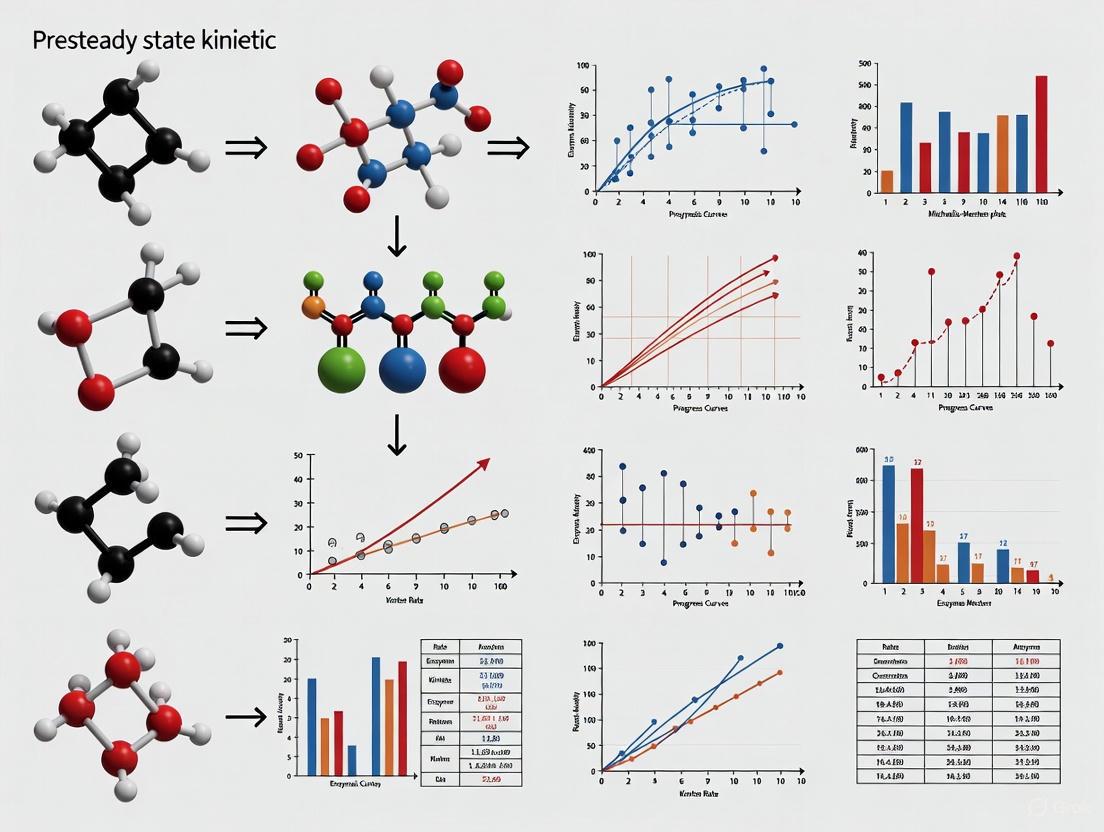
This article provides a comprehensive overview of pre-steady state kinetic methods, a powerful suite of techniques for analyzing the rapid, initial phases of enzymatic reactions that are invisible to traditional...
Pre-Steady State Kinetics: Uncovering Transient Intermediates for Advanced Enzyme Analysis and Drug Discovery
Abstract
This article provides a comprehensive overview of pre-steady state kinetic methods, a powerful suite of techniques for analyzing the rapid, initial phases of enzymatic reactions that are invisible to traditional steady-state analysis. Aimed at researchers, scientists, and drug development professionals, we explore the foundational principles that distinguish pre-steady state from steady-state kinetics, detailing key methodologies like stopped-flow spectroscopy and rapid-mixing mass spectrometry. The content covers practical applications in elucidating complex catalytic mechanisms and hysteretic behavior, offers troubleshooting and optimization strategies for robust experimental design, and validates the power of this approach through comparative case studies in antiviral and anticancer drug development. The goal is to equip practitioners with the knowledge to leverage these methods for uncovering transient intermediates and precise kinetic constants, thereby accelerating mechanistic studies and rational drug design.
Beyond Steady-State: Foundational Principles of Pre-Steady State Kinetics
Contrasting Pre-Steady State and Steady-State Kinetic Regimes
Enzyme kinetics is the study of the rates of enzyme-catalysed chemical reactions, fundamental to understanding catalytic mechanisms, metabolic roles, and regulatory processes [1] [2]. Kinetic analysis reveals how enzyme activity is controlled and how drugs or modifiers might affect reaction rates. The complete reaction process typically occurs in three temporal phases: pre-steady-state, steady-state, and post-steady-state [3] [2]. Pre-steady-state kinetics, also called transient-state kinetics, examines reactions before equilibrium is established, characterizing the system's dynamics through early reaction events [3] [4]. Steady-state kinetics studies the phase where intermediate concentrations remain relatively constant, forming the basis for classical Michaelis-Menten analysis [1] [2]. For researchers investigating enzymatic mechanisms, particularly in drug discovery, distinguishing between these regimes is essential for identifying rate-limiting steps, determining intrinsic kinetic parameters, and elucidating complex catalytic pathways beyond what steady-state analysis alone can reveal.
Theoretical Foundations
Fundamental Reaction Pathway
Enzyme catalysis follows a defined pathway where an enzyme (E) binds substrate (S) to form an enzyme-substrate complex (ES), which is transformed into product (P) via a transition state. The general mechanism can be represented as: E + S ⇄ ES ⇄ ES* ⇄ EP ⇄ E + P [3] [1] In this series of steps, ES* represents the transition state complex with higher free energy than both substrate and product [2]. The enzyme's active site stabilizes this transition state, reducing the activation energy required and increasing the reaction rate [2].
Phase Characteristics and Kinetic Trajectories
The following diagram illustrates the sequential phases and characteristic kinetic profiles of enzyme-catalyzed reactions:
Comparative Framework of Kinetic Regimes
Table 1: Essential Characteristics of Kinetic Regimes
| Parameter | Pre-Steady-State Regime | Steady-State Regime |
|---|---|---|
| Temporal Domain | Milliseconds to seconds after mixing [5] | Seconds to minutes after pre-steady-state phase [2] |
| ES Complex Concentration | Rapidly changes as complexes form [3] | Remains relatively constant [2] |
| Product Formation Rate | Initially slow, then accelerates rapidly ("burst phase") [3] | Constant rate, faster than pre-steady-state [2] |
| Enzyme:Substrate Ratio | [E] > [S] (single-turnover) or [E] ≈ [S] (multiple turnovers) [4] | [E] << [S] [4] |
| Primary Information Obtained | Intrinsic rate constants, chemical mechanism, transient intermediates [4] | Steady-state parameters (kcat, KM), catalytic efficiency [1] |
| Rate-Limiting Step Probed | Chemical conversion and conformational changes preceding chemistry [4] | Product release or steps following chemistry [4] |
| Experimental Techniques | Stopped-flow, rapid quench-flow [6] [5] | Manual mixing, continuous monitoring [1] |
Experimental Approaches and Methodologies
Pre-Steady-State Kinetic Analysis Protocol
Pre-steady-state kinetic analysis provides a powerful method to obtain multiple kinetic parameters during the early phase of enzymatic reactions [6]. The following protocol outlines the key steps for single-nucleotide incorporation by a DNA polymerase, adaptable for various enzyme systems.
DNA Substrate Preparation
For nucleic acid enzymes, begin with substrate preparation:
- Dissolve single-stranded DNA primer or template to 1 mM final concentration in nuclease-free H2O [6]. The primer may contain a fluorescent dye (FAM, cy3, cy5) or 32P label for detection [6].
- Mix DNA primer stock (6 μL), DNA template stock (6 μL), and H2O (18 μL) in a nuclease-free Eppendorf tube to achieve 200 μM final DNA duplex concentration [6].
- Heat the mixture at 95°C for 5 minutes in a dry block heater, then slowly cool to room temperature (~25°C) [6].
- After reaching room temperature, briefly centrifuge the tube to collect all sample at the bottom [6]. The annealed DNA duplex substrate is stable at 4°C for up to 2 weeks [6].
Reaction Mixture Preparation
Prepare two pre-mixtures on ice as follows:
Table 2: Pre-Mixture I Composition for DNA Polymerase Assay
| Reagent | Stock Concentration | Volume to Add | Final Concentration |
|---|---|---|---|
| Tris-HCl, pH 7.5 | 500 mM | 72 μL | 40 mM |
| BSA | 2 mg/mL | 45 μL | 0.1 mg/mL |
| DTT | 100 mM | 90 μL | 10 mM |
| Glycerol | 50% (v/v) | 90 μL | 5% (v/v) |
| KCl | 2.5 M | 36 μL | 100 mM |
| hpol η (R61M) | 22 μM | 20 μL | 500 nM |
| Annealed DNA duplex | 200 μM | 4.5 μL | 1 μM |
| H2O | - | 542 μL | - |
| Total | - | 900 μL | - |
Table 3: Pre-Mixture II Composition for DNA Polymerase Assay
| Reagent | Stock Concentration | Volume to Add | Final Concentration |
|---|---|---|---|
| dNTP | 100 mM | 9.0 μL | 1 mM |
| MgCl2 | 25 mM | 360 μL | 10 mM |
| H2O | - | 531 μL | - |
| Total | - | 900 μL | - |
Gently mix each pre-mixture by inverting the tube 5 times and maintain on ice until use [6].
Rapid Quench-Flow Instrument Operation
The RQF-3 rapid quench-flow instrument enables measurements at time points as short as 0.005 seconds [6]:
- Equilibrate the water bath connected to the RQF-3 instrument at the desired reaction temperature (25°C or 37°C) 30 minutes before use [6].
- Prepare drive syringes with appropriate buffers: fill Drive Syringes A and C with 25 mM Tris-HCl buffer (pH 7.5) and Drive Syringe B with 500 mM EDTA [6].
- Wash and dry sample loops and reaction loops thoroughly using the instrument's flush system with H2O and methanol [6].
- Enter the desired reaction time on the keypad, which will indicate the corresponding Reaction Loop number [6].
- Set the 8-way Reaction Loop Valve to the appropriate number and load Pre-mixtures I and II into 1-mL Luer Lock disposable syringes [6].
- Load Pre-mixture I through Sample Load D to the edge of the 8-way Reaction Loop Valve, ensuring no bubbles are present and the mixture does not cross the valve edge [6].
- Similarly load Pre-mixture II through Sample Load E, then initiate the reaction using the instrument controls [6].
Steady-State Kinetic Analysis Protocol
Steady-state kinetics offers a simple and rapid means of evaluating substrate specificity and, combined with mutagenesis, can reveal roles of specific amino acids in substrate recognition and catalysis [3].
Sample Preparation and Reaction Monitoring
For OGG1 glycosylase analysis, typical procedures include:
- Prepare enzyme and DNA substrate solutions separately in reaction buffer (50 mM HEPES, pH 7.5, 20 mM KCl, 0.5 mM EDTA, 0.1% BSA) in 1.5 mL microfuge tubes on ice [4].
- Use substrate concentration greatly exceeding enzyme concentration (e.g., 200 nM DNA with 15-60 nM OGG1) to enable multiple enzymatic turnovers [4].
- Pre-incubate enzyme and DNA substrate solutions separately at 37°C for 1 minute [4].
- Initiate reaction by mixing equal volumes of enzyme and substrate solutions by pipetting [4].
- Remove aliquots at time intervals and quench with 1 M NaOH [4].
- For DNA glycosylases, heat reaction samples at 90°C for 5 minutes to cleave the resulting AP-site product, then neutralize with HCl [4].
- Analyze products using denaturing polyacrylamide gel electrophoresis followed by quantitation of product formation [6] [4].
Data Analysis and Interpretation
Quantitative Parameters and Kinetic Constants
Table 4: Key Kinetic Parameters in Pre-Steady-State and Steady-State Analyses
| Parameter | Definition | Kinetic Regime | Interpretation |
|---|---|---|---|
| Burst Amplitude | y-intercept from extrapolation of steady-state phase | Pre-Steady-State | Concentration of active enzyme engaged with substrate [4] |
| Burst Rate (kobs) | First-order rate constant of exponential phase | Pre-Steady-State | Intrinsic rate of chemical conversion [4] |
| Steady-State Rate (kss) | Slope of linear phase following burst | Steady-State | Rate of product release (koff) when product release is rate-limiting [4] |
| KM | Substrate concentration at half Vmax | Steady-State | Measure of enzyme affinity for substrate [1] [2] |
| Vmax | Maximum reaction rate at saturating substrate | Steady-State | kcat[E]tot; defines catalytic capacity [1] |
| kcat | Catalytic constant (Vmax/[E]tot) | Steady-State | Turnover number: substrate molecules converted per enzyme per second [1] |
Data Analysis Workflow
The following diagram illustrates the decision pathway for interpreting kinetic data from time-course experiments:
Interpreting Burst Kinetics
For enzymes exhibiting burst kinetics, the biphasic time course reveals mechanistic information:
- The exponential burst phase amplitude corresponds to the concentration of active enzyme properly engaged with substrate [4].
- The first-order rate constant of the burst (kobs) represents the intrinsic rate of the chemical step when chemistry is faster than product release [4].
- The linear steady-state phase that follows the burst measures the rate of product release when this step is rate-limiting for catalytic cycling [4].
- The active enzyme concentration can be determined from the burst amplitude, allowing calculation of intrinsic koff from the steady-state rate where koff = vss/[Eactive] [4].
Research Applications and Case Studies
The Scientist's Toolkit: Essential Research Reagents and Instruments
Table 5: Key Research Reagent Solutions for Kinetic Studies
| Reagent/Instrument | Function/Purpose | Application Context |
|---|---|---|
| RQF-3 Rapid Quench-Flow | Measures reactions from 0.005 s to minutes by rapid mixing and quenching | Pre-steady-state kinetics for chemical step determination [6] |
| Stopped-Flow Spectrometer | Monitors rapid spectral changes (absorbance/fluorescence) in milliseconds | Pre-steady-state kinetics for binding events and conformational changes [5] |
| Fluorescent-Labeled Oligonucleotides | Enable sensitive detection of reaction products at low concentrations | Substrate for nucleic acid enzymes (polymerases, glycosylases) [6] [4] |
| Modified DNA Substrates | Contain specific lesions to study DNA repair enzymes | Mechanistic studies of DNA glycosylases like OGG1 [6] [4] |
| Rapid Chemical Quenchers | Stop reactions at precise time points (e.g., EDTA, NaOH) | Quench-flow experiments and manual steady-state assays [6] [4] |
Case Study: Human 8-Oxoguanine DNA Glycosylase (OGG1)
Analysis of OGG1 provides an excellent example of integrating both kinetic approaches:
- Under multiple-turnover conditions ([E] < [S]), OGG1 exhibits biphasic kinetics: a rapid exponential burst phase followed by a linear steady-state phase [4].
- The burst amplitude corresponds to the concentration of OGG1 actively engaged with 8-oxoG-containing substrate, while the burst rate measures the intrinsic 8-oxoG excision rate [4].
- The slower steady-state phase reports on the rate of product release (product DNA dissociation), which limits overall turnover [4].
- Using single-turnover conditions ([E] > [S]) prevents catalytic cycling and isolates the chemical step for precise measurement of the excision rate constant [4].
Case Study: Formaldehyde Ferredoxin Oxidoreductase (FOR)
Pre-steady-state and steady-state analysis of FOR from Pyrococcus furiosus reveals complex multi-step catalysis:
- Steady-state studies at 80°C established a substrate-substituted enzyme mechanism for three substrates (formaldehyde plus two ferredoxin molecules) with KM values of 21 μM for formaldehyde and 14 μM for ferredoxin [7].
- Pre-steady-state difference spectra at 50°C revealed peak shifts and lack of isosbestic points, indicating multiple simultaneous processes in early reaction phases [7].
- Four distinct kinetic processes were identified: two fast processes (kobs1 = 4.7 s-1, kobs2 = 1.9 s-1) interpreted as substrate oxidation and active site rearrangement, and two slower processes (kobs3 = 0.061 s-1, kobs4 = 0.0218 s-1) representing product release and electron shuffling in absence of external electron acceptor [7].
- This combination of approaches enabled proposal of a complete catalytic cycle, demonstrating how transient kinetics can elucidate complex enzymatic mechanisms [7].
Technical Considerations and Method Selection
Experimental Design Guidelines
Selecting the appropriate kinetic approach depends on the research question:
- Use pre-steady-state kinetics to elucidate chemical mechanisms, identify transient intermediates, measure intrinsic rate constants for specific steps, and determine active enzyme concentrations [4] [5].
- Apply steady-state kinetics to determine overall catalytic efficiency (kcat/KM), screen substrate specificity, evaluate inhibitors for drug discovery, and establish enzymatic efficiency under physiological conditions [3] [1].
- Implement single-turnover conditions ([E] > [S]) to isolate specific steps in the catalytic cycle, particularly when catalytic cycling interferes with pre-steady-state analysis or when the magnitudes of rates for chemistry and product release are similar [4].
Practical Implementation Notes
Successful kinetic studies require attention to several technical aspects:
- For pre-steady-state measurements, proper calibration and maintenance of rapid mixing instruments is essential for accurate time resolution [6] [5].
- Active enzyme concentration determination via burst amplitude provides more accurate kinetic parameters than using total protein concentration [4].
- Temperature control is critical as many intrinsic steps have strong temperature dependence; physiological (37°C) versus optimized (e.g., 25°C) temperatures may be selected based on enzyme origin and stability [6].
- Substrate purity and accurate concentration determination are vital for reliable kinetic parameter estimation, particularly for specialized substrates containing DNA lesions or modifications [6] [4].
- The detection method should be sufficiently sensitive (fluorescence, radioactivity) to monitor small amounts of product formed during early reaction phases, especially at low enzyme concentrations [6] [4] [1].
The Critical Role of Transient Intermediates and Burst Phases
Enzyme kinetics has traditionally relied on steady-state analysis, which provides averaged parameters like kcat and Km but obscures the rapid, transient events that define catalytic efficiency and specificity. Pre-steady-state kinetics resolves this limitation by examining the first milliseconds to seconds of a reaction, allowing researchers to directly observe burst phases, transient intermediates, and the individual rate constants of multi-step enzymatic mechanisms [8]. This approach is critical because it reveals the actual chemical and conformational steps that precede the steady state, offering insights that are fundamental to understanding enzyme evolution, specificity, and inhibition [8]. The presence of a burst phase—an initial rapid burst of product formation followed by a slower, linear steady-state rate—is a classic signature of a reaction mechanism involving a rate-limiting step after initial catalysis, such as the release of a product or a conformational change [9] [10]. This article details the application of pre-steady-state methods to characterize these critical transient phenomena, providing protocols and data analysis techniques for researchers in enzymology and drug development.
Key Experimental Observations and Quantitative Data
Burst Phase Kinetics in Hydrolytic Enzymes
The hydrolysis of the arylacylamide drug Mirabegron by butyrylcholinesterase (BChE) exhibits a pronounced burst phase, indicative of hysteretic behavior where the enzyme exists in two slowly interconverting forms, E and E' [9]. Progress curves show an initial rapid product release (burst) followed by a slower, linear steady-state phase. The duration of this pre-steady-state phase, known as the induction time (τ), increases with substrate concentration, reaching approximately 18 minutes at the maximum velocity for this system [9].
Table 1: Kinetic Parameters for BChE-Catalyzed Hydrolysis of Mirabegron
| Enzyme Form | kcat (min⁻¹) | Km (μM) | kcat/Km (μM⁻¹min⁻¹) |
|---|---|---|---|
| Initial Burst Form (E) | 7.3 | 23.5 | 0.31 |
| Final Steady-State Form (E') | 1.6 | 3.9 | 0.41 |
The data in Table 1 reveal that the transition from the high-activity E form to the lower-activity E' form results in a significantly higher substrate affinity (lower Km) but a slower turnover rate (lower kcat) [9]. This hysteretic behavior is thought to arise from a slow conformational change, such as a flip of the catalytic histidine residue (His438), which alters the efficiency of proton transfer within the catalytic triad [9].
Transient-State Analysis of Aminomutases and Nitrogenases
Beyond burst phases, pre-steady-state kinetics is instrumental in trapping and quantifying covalent enzyme intermediates. Burst phase analysis of a phenylalanine aminomutase from Taxus was used to determine the deamination rate of a covalent aminated-methylidene imidazolone (NH₂-MIO) adduct, a key catalytic intermediate [11]. By using a non-natural chromophoric substrate, (S)-styryl-α-alanine, researchers could monitor the reactivation of the enzyme via deamination, validating the kinetic model for the natural isomerization reaction [11].
Similarly, transient kinetic studies of a nanocrystal:molybdenum nitrogenase biohybrid used electron paramagnetic resonance (EPR) spectroscopy to monitor intermediate populations during light-driven dinitrogen reduction [12]. By fitting this data to a pre-steady-state kinetic model, the study distinguished productive reaction pathways from non-productive ones and identified that the efficiency of the sacrificial electron donor (a "hole-scavenger") was critical for outcompeting a parasitic hydride protonation reaction, thereby favoring N₂ reduction [12].
Table 2: Pre-Steady-State Kinetic Parameters from Various Enzyme Systems
| Enzyme System | Observed Transient | Key Measured Parameter | Technique |
|---|---|---|---|
| Butyrylcholinesterase [9] | Burst phase from hysteretic transition | Induction time (τ) = ~18 min | Stopped-Flow Spectrophotometry |
| Phenylalanine Aminomutase [11] | Deamination of NH₂-MIO adduct | Rate constant of deamination | Burst Phase Analysis |
| Nitrogenase-CdS Biohybrid [12] | Catalytic intermediate populations | Rates of electron transfer vs. hydride protonation | EPR Spectroscopy |
| DNA Polymerase η [6] | Single-nucleotide incorporation | Rate of nucleotide incorporation (kpol) | Rapid Quench-Flow |
Detailed Experimental Protocols
Protocol 1: Pre-Steady-State Burst Phase Kinetics using Stopped-Flow
This protocol is adapted from studies of hysteretic enzymes like BChE [9] and utilizes a stopped-flow instrument for rapid mixing and observation.
3.1.1 Principle A stopped-flow apparatus rapidly mixes enzyme and substrate solutions and forces them into an observation cell. The flow is abruptly stopped, and the spectroscopic signal (e.g., absorbance, fluorescence) from the reacting mixture in the cell is monitored as it "ages" on a millisecond-to-minute timescale. This allows for the detection of rapid burst phases before the steady state is established [10].
3.1.2 Materials and Reagents
- Enzyme of Interest: Purified and quantified (e.g., BChE).
- Substrate: Mirabegron or another chromogenic/fluorogenic substrate.
- Stopped-Flow Spectrophotometer: For example, an Applied Photophysics SX18MV system, thermostatted [10].
- Assay Buffer: 0.1 M phosphate buffer, pH 7.0.
- Data Analysis Software: Such as GraphPad Prism.
3.1.3 Step-by-Step Procedure
- Sample Preparation: Prepare solutions of enzyme and substrate in assay buffer. Filter all solutions to remove particulates that could interfere with mixing or light path.
- Instrument Setup: Turn on and thermostat the stopped-flow instrument to the desired temperature (e.g., 25°C). Equilibrate the drive syringes and observation cell with buffer.
- Loading: Load one syringe with enzyme solution and the other with substrate solution. The concentration of substrate should be significantly higher than that of the enzyme to ensure pseudo-first-order conditions.
- Data Acquisition: Initiate the mixing sequence. The instrument will automatically mix equal volumes from each syringe, stop the flow, and record the change in absorbance or fluorescence over time. Perform multiple replicates for averaging.
- Data Analysis: Fit the resulting progress curve to the integrated rate equation for a burst phase [9]:
( [P] = v{ss}t + (vi - v{ss})(1 - \exp(-k{obs}t))/k{obs} )
Where:
- ( [P] ) is the product concentration.
- ( v{ss} ) is the steady-state velocity.
- ( vi ) is the initial velocity.
- ( k{obs} ) is the observed first-order rate constant for the burst.
- ( τ = 1/k_{obs} ) is the induction time.
Protocol 2: Rapid Quench-Flow Kinetics for Nucleotide Incorporation
This protocol, derived from the analysis of DNA polymerases, is used to study reactions on timescales as short as 5 milliseconds [6].
3.2.1 Principle A rapid quench-flow instrument (e.g., RQF-3 from KinTek) mixes an enzyme-substrate complex with a second reactant (e.g., dNTP) and, after a precisely controlled reaction time, forcibly quenches the reaction with a strong acid or base (e.g., EDTA). The quenched sample is then analyzed to determine the amount of product formed during that specific time interval [6].
3.2.2 Materials and Reagents
- DNA Polymerase: Purified (e.g., hpol η R61M mutant).
- DNA Duplex Substrate: Fluorescently labeled primer annealed to a template.
- Nucleotide Substrate: dNTP solution.
- Rapid Quench-Flow Instrument: RQF-3 or equivalent.
- Quenching Solution: 0.5 M EDTA.
- Analysis Materials: Denaturing polyacrylamide gel electrophoresis (PAGE) equipment, typhoon imager.
3.2.3 Step-by-Step Procedure
- DNA Substrate Annealing: Mix fluorescently labeled primer and template DNA in nuclease-free water. Heat the mixture to 95°C for 5 minutes and allow it to cool slowly to room temperature to form the duplex [6].
- Reaction Mixture Preparation:
- Pre-mixture I (Enzyme-DNA Complex): Contains Tris-HCl (pH 7.5), BSA, DTT, glycerol, KCl, polymerase, and the annealed DNA duplex [6].
- Pre-mixture II (Initiation Solution): Contains dNTP and MgCl₂.
- Instrument Priming: Wash and dry all fluidic paths (drive syringes, sample loops, and reaction loops) of the RQF-3 instrument according to the manufacturer's instructions [6].
- Loading and Reaction:
- Load Pre-mixture I into one sample syringe and Pre-mixture II into another.
- Enter the desired reaction time on the instrument keypad.
- Initiate the experiment. The instrument will mix the two pre-mixtures, hold the reaction in a loop for the set time, and then quench it by mixing with EDTA from a third drive syringe.
- Product Analysis: Collect the quenched sample and analyze it using denaturing PAGE. Quantify the product formation using a fluorescence imager (e.g., Typhoon System) and ImageJ software [6].
- Data Fitting: Plot product concentration versus time for multiple time points and fit the data to an appropriate kinetic model (e.g, a single-exponential rise) to determine the rate constant for the catalytic step (kpol) [6].
Visualization of Kinetic Mechanisms and Workflows
Hysteretic Enzyme Mechanism
The following diagram illustrates the kinetic mechanism of a hysteretic enzyme, such as BChE with Mirabegron, where a slow conformational change (E ⇄ E') gives rise to the observed burst phase kinetics [9].
Rapid Quench-Flow Experimental Workflow
This diagram outlines the core operational workflow of a rapid quench-flow experiment, from loading the samples to analyzing the final data [6].
The Scientist's Toolkit: Essential Research Reagents and Materials
Successful pre-steady-state kinetic experiments require specialized instruments and high-quality reagents. The following table lists key solutions and their functions.
Table 3: Research Reagent Solutions for Pre-Steady-State Kinetics
| Reagent / Material | Function / Application | Example from Literature |
|---|---|---|
| Rapid Quench-Flow Instrument | Mechanically mixes reactants and quenches reactions after precise millisecond intervals. | RQF-3 instrument for studying single-nucleotide incorporation by DNA polymerase [6]. |
| Stopped-Flow Spectrophotometer | Rapidly mixes solutions and initiates spectroscopic monitoring in a static observation cell. | Applied Photophysics SX18MV for observing burst phase kinetics [10]. |
| Fluorescently Labeled DNA | Serves as a substrate for polymerases; enables sensitive product detection after gel electrophoresis. | 5'-FAM-labeled primer used in DNA polymerase η kinetics [6]. |
| Chromogenic/Fluorogenic Substrate | A substrate whose reaction product has distinct spectroscopic properties, allowing real-time monitoring. | Mirabegron hydrolysis monitored by absorbance change at 247 nm [9]. |
| Sacrificial Electron Donor | In photochemical systems, rapidly "scavenges" holes to prevent back-reaction and sustain electron flow. | Critical for enhancing N₂ reduction efficiency in nitrogenase-CdS biohybrids [12]. |
Understanding Hysteretic Behavior and Slow Conformational Equilibria
In enzymology, hysteretic behavior refers to a phenomenon where enzymes respond slowly to rapid changes in substrate or modulator concentration, displaying a lag phase before reaching their catalytic steady state [13]. This behavior arises from slow conformational changes within the enzyme's structure, where the molecule transitions between multiple metastable states with different catalytic activities [13]. These transitions occur on timescales ranging from milliseconds to hours, comparable to many biological network processes, suggesting they may represent an evolutionarily selected regulatory mechanism [13]. The study of these slow conformational equilibria falls naturally within the scope of pre-steady state kinetic analysis, which captures the transient kinetic phases before the establishment of the steady state, providing crucial insights into the enzyme's mechanistic and regulatory properties.
The theoretical foundation for hysteretic enzyme behavior was established decades ago, with early studies noting that such behavior is frequently observed in regulatory enzymes [13]. These enzymes exhibit what has been termed "dynamic disorder" or "heterogeneity," where their catalytic rate constant fluctuates over time as the enzyme slowly transitions between conformations [13]. Single-molecule enzymology and NMR studies have directly confirmed these slow conformational fluctuations, revealing that they are not an exception but rather a common feature of many enzyme systems [13] [14].
# Quantitative Analysis of Hysteretic Enzyme Kinetics
Hysteretic enzymes display distinctive kinetic signatures that deviate from classical Michaelis-Menten behavior. The table below summarizes key kinetic parameters and characteristics observed in hysteretic enzyme systems:
Table 1: Kinetic Parameters and Characteristics of Hysteretic Enzymes
| Parameter/Characteristic | Description | Experimental Observation |
|---|---|---|
| Response Lag Time | Delay in reaching steady-state activity after substrate concentration change | Ranges from milliseconds to hours depending on enzyme and conditions [13] |
| Conformational Transition Rates | Rates of interconversion between enzyme conformers | β-galactosidase: milliseconds to seconds; alkaline phosphatase: hours [13] |
| Dynamic Disorder | Fluctuation of catalytic rate constants over time | Directly demonstrated by single-molecule enzymology [13] |
| Non-Michaelis-Menten Behavior | Complex kinetics with plateaus, maxima, or minima | Observed in dissociating enzyme systems with slow oligomeric equilibrium [15] |
| Adaptation Behavior | Transient response to sustained stimulus before returning to baseline | Achievable through slow conformational changes in single enzymatic reactions [13] |
The kinetic behavior of hysteretic enzymes can be remarkably complex. In slowly dissociating enzyme systems where equilibrium between oligomeric forms establishes slowly compared to the enzymatic reaction rate, the initial rate of enzymatic reaction versus substrate concentration plots may show intermediate plateaus, maxima and minima simultaneously, or S-shaped curves preceding plateaus [15]. Similarly, plots of reaction rate versus effector concentration may display intermediate plateaus, reflecting the complex allosteric regulation in these systems [15].
# Experimental Protocols for Pre-Steady-State Kinetic Analysis
# Rapid Chemical Quench-Flow Protocol
The following protocol adapts standard pre-steady-state kinetic methods for investigating hysteretic enzymes, based on established procedures for DNA polymerases and other enzyme systems [6] [16]:
Table 2: Key Research Reagent Solutions for Pre-Steady-State Kinetics
| Reagent | Function | Typical Concentration |
|---|---|---|
| Enzyme Solution | Catalyst for the reaction of interest | Varies (e.g., 500 nM hpol η mutant [6]) |
| Annealed DNA Duplex | Substrate for DNA-modifying enzymes | 1 µM in final reaction mixture [6] |
| dNTP Solution | Nucleotide substrate | 1 mM in final reaction mixture [6] |
| MgCl₂ Solution | Essential cofactor for many enzymes | 10 mM in final reaction mixture [6] |
| Tris-HCl Buffer | Maintenance of physiological pH | 25-40 mM, pH 7.5 [6] |
| BSA | Stabilization of enzyme activity | 0.1 mg/mL [6] |
| DTT | Reduction of disulfide bonds | 10 mM [6] |
| EDTA Solution | Quenching agent (chelates Mg²⁺) | 500 mM [6] |
| HCl Quenching Solution | Alternative quenching agent (denatures enzyme) | 1.2 M [16] |
Equipment Setup:
- RQF-3 Rapid Quench-Flow Instrument (KinTek Corporation) with three drive syringes [6]
- Temperature-controlled water bath (typically 25°C or 37°C) [6]
- Syringe pumps for reagent delivery
- HPLC system with appropriate detection method for product quantification [16]
Procedure:
- Instrument Preparation: Turn on the water bath 30 minutes before experimentation to equilibrate the system. Set drive syringe load valves to the Load position. Fill drive syringes A and C with reaction buffer (e.g., 25 mM Tris-HCl, pH 7.5) and drive syringe B with quenching solution (500 mM EDTA or 1.2 M HCl) [6] [16].
Reaction Mixture Preparation: Prepare Pre-mixture I containing enzyme, DNA substrate (if applicable), and cofactors in reaction buffer. Prepare Pre-mixture II containing nucleotide substrate and MgCl₂. Keep both mixtures on ice until use [6].
Sample Loading: Enter desired reaction time on instrument keypad (as short as 0.005 s). Set the 8-way Reaction Loop Valve to the corresponding position. Load Pre-mixtures I and II into designated sample loops using 1-mL Luer Lock disposable syringes, ensuring no bubbles are introduced and solutions do not cross the valve edge [6].
Reaction Execution: Initiate the reaction sequence. The instrument automatically mixes the pre-mixtures from the two sample loops, allows reaction to proceed for the specified time in the reaction loop, then mixes with quench solution from drive syringe B [6].
Product Analysis: Collect quenched samples and analyze products using appropriate methods such as denaturing polyacrylamide gel electrophoresis followed by quantitation with a phosphorimager or HPLC with UV/Vis or fluorescence detection [6] [16].
Data Analysis: Fit the time course of product formation to the appropriate kinetic model. For hysteretic enzymes, this may require models incorporating slow conformational transitions in addition to catalytic steps [13] [16].
The following workflow diagram illustrates the key steps in the rapid quench-flow protocol:
# NMR Methods for Studying Slow Conformational Dynamics
Nuclear Magnetic Resonance (NMR) spectroscopy provides powerful approaches for characterizing slow conformational dynamics in proteins:
Backbone NH Bond Dynamics:
- Perform NMR spin relaxation experiments including Carr-Purcell-Meiboom-Gill (CPMG) relaxation dispersion measurements [14]
- Apply Lipari-Szabo "model-free" analyses of relaxation parameters to identify residues experiencing slow dynamics [14]
- Quantify R₂ (transverse relaxation rate) and Rex (exchange contribution to relaxation) values [14]
- For Pin1-WW domain, Arg-12 showed the largest Rex contribution (~15 s⁻¹), indicating significant millisecond dynamics [14]
Integration with Computational Approaches:
- Combine NMR relaxation data with molecular dynamics simulations and Markov State Models (MSM) [14]
- Construct hierarchical representations of free energy landscapes with metastable macrostates and rapidly interconverting microstates [14]
- Validate computational models against experimental NMR data, particularly chemical shift calculations correlated with Rex values [14]
# Functional Roles and Network Implications
Slow conformational changes in enzymes serve important biological functions beyond their immediate catalytic effects. When analyzed in the context of regulatory networks, hysteretic enzymes exhibit properties typically associated with larger intermolecular networks [13]:
Table 3: Network-Level Functions of Hysteretic Enzymes
| Function | Mechanism | Biological Utility |
|---|---|---|
| Noise Filtering | Attenuation of high-frequency stochastic fluctuations in substrate concentration | Maintenance of metabolic stability despite upstream network noise [13] |
| Frequency-Selective Response | Resonant response to system stimulus at specific frequencies | Selective activation based on oscillation frequency in signaling networks [13] |
| Adaptation | Transient response to sustained input signal followed by return to baseline | Homeostatic adjustment to environmental changes [13] |
| Kinetic Insulation | Buffering against fluctuations in metabolic networks | Prevention of propagation of metabolic disturbances [13] |
The adaptive capabilities of hysteretic enzymes are particularly noteworthy. As shown in Figure 2,f-h of the research by (PMC, 2012), upon a sudden and sustained increase in substrate concentration [S], the product concentration [P] can exhibit complex dynamics—initially increasing then decreasing, effectively returning toward the original steady state [13]. This adaptation behavior, quantified by sensitivity (difference between peak response and initial value) and precision (difference between final and initial values), requires slower conformational changes and represents a network-level property achievable by a single enzymatic reaction [13].
The following diagram illustrates how slow conformational changes enable key network-level functions:
# Computational Approaches and Advanced Modeling
# Markov State Models for Conformational Ensembles
The integration of molecular dynamics simulations with experimental data enables the construction of detailed models of slow conformational dynamics:
Methodology:
- Generate extensive molecular dynamics simulations starting from multiple configurations [14]
- Construct Markov State Models (MSM) with microstates (rapidly interconverting) and macrostates (metastable, slowly interconverting) [14]
- Cluster MSM macrostates into exchange states that correlate with NMR relaxation data [14]
- Identify "kinetic hubs" - conformational basins visited by most pathways between macrostates [14]
Application to Pin1-WW Domain:
- MSM analysis revealed a low-population state consisting primarily of holo-like conformations that serves as a hub for transitions between macrostates [14]
- This suggests pre-existing conformational equilibria in the intrinsic dynamics of apo Pin1-WW, including slow transitions between apo and holo conformations [14]
- Mutual information analysis identified correlated motions between Loop 1 residues and key residues at the catalytic domain interface [14]
# Free Energy Landscape Analysis
The conformational dynamics of hysteretic enzymes can be conceptualized as transitions on a complex free energy landscape:
- Proteins navigate high-dimensional energy landscapes with multiple potential minima corresponding to different stable conformations [13]
- Thermal fluctuations drive transitions between conformations, with rates affected by environmental factors (temperature, pH, ligand binding) [13]
- The slow end of the conformational timescale distribution (up to hours) overlaps with network-level processes, enabling functional integration [13]
The study of hysteretic behavior and slow conformational equilibria provides crucial insights into enzyme regulation that extends beyond traditional steady-state kinetics. By employing pre-steady-state kinetic methods combined with structural and computational approaches, researchers can characterize the complex dynamics of these systems and understand their functional roles in biological networks.
For drug development professionals, targeting hysteretic enzymes offers unique opportunities for therapeutic intervention. The slow conformational transitions provide potential allosteric control points that might be leveraged for more specific modulation of enzyme activity compared to traditional active-site inhibitors. Furthermore, understanding how these enzymes filter noise and process information in signaling networks could inform strategies for manipulating pathological network behaviors in disease states.
The continued development of pre-steady-state kinetic methods, particularly when integrated with single-molecule approaches and advanced computational modeling, promises to further illuminate the rich dynamical behavior of hysteretic enzymes and their roles in cellular regulation.
This application note provides a detailed protocol for deriving fundamental enzymatic rate constants, culminating in the calculation of catalytic efficiency. Aimed at researchers in enzymology and drug development, we focus on the pre-steady state kinetic method of monitoring a single enzyme turnover to obtain the observed rate constant ((k{obs})). We then demonstrate how (k{obs}) is utilized to determine the catalytic rate constant ((k{cat})) and the Michaelis constant ((KM)), which are combined to yield the specificity constant ((k{cat}/KM)), a critical measure of enzymatic efficiency [17]. The document includes a complete experimental workflow for a model enzyme, structured data tables, and essential tools for data visualization and analysis, providing a practical framework for rigorous enzyme kinetic analysis.
Enzyme kinetics provides a quantitative framework for understanding catalytic efficiency, substrate specificity, and mechanism. In pre-steady state kinetics, reactions are analyzed within the first few milliseconds to seconds, allowing for the direct observation of transient intermediates and the determination of individual rate constants that are masked under steady-state conditions [18]. The journey to catalytic efficiency begins with the observed rate constant ((k{obs})), an experimentally determined first-order rate constant for a single turnover event [17]. The maximum value of (k{obs}) across a range of substrate concentrations defines the catalytic rate constant ((k{cat})), which is the theoretical maximum number of substrate molecules converted to product per enzyme molecule per second (turnover number) [17]. The Michaelis constant ((KM)) is the substrate concentration at which the reaction rate is half of (V{max}) and provides an inverse measure of the enzyme's apparent affinity for the substrate [17]. The ratio (k{cat}/K_M), known as the specificity constant, is the second-order rate constant that describes the efficiency of an enzyme operating at low substrate concentrations [17].
Experimental Protocol: From Reaction Setup to (k_{obs})
This section details a generalized protocol for a pre-steady state kinetic experiment, using the hydrolysis of a substrate as a model. The workflow can be adapted for other enzyme systems with appropriate modifications to the assay.
The following diagram illustrates the complete experimental journey from initial setup to the final determination of catalytic efficiency.
Materials and Reagents
Table 1: Essential Research Reagent Solutions
| Reagent/Material | Function/Description | Example Specification |
|---|---|---|
| Purified Enzyme | The catalyst whose kinetics are being characterized. | e.g., Yeast cystathionine β-synthase (yCBS), >95% purity [18]. |
| Substrate Stock Solution | The molecule upon which the enzyme acts. | e.g., 0.4 M sucrose in distilled water [19]. |
| Reaction Buffer | Maintains constant pH and ionic strength. | e.g., 100 mM HEPES, pH 7.4 [18]. |
| Cofactors | Non-protein chemical compounds required for activity. | e.g., Pyridoxal Phosphate (PLP), 100 µM [18]. |
| Stopped-Flow Instrument | Apparatus for rapid mixing and data acquisition. | Enables monitoring reactions on a millisecond timescale [18]. |
| Spectrophotometer | Detects changes in analyte concentration. | Measures absorbance change (e.g., at 465 nm for an aminoacrylate intermediate) [18]. |
Step-by-Step Procedure
Preparation of Enzyme and Substrate Solutions:
- Prepare a concentrated stock solution of the purified enzyme in an appropriate storage buffer. Determine the exact concentration spectrophotometrically.
- Prepare a dilution series of the substrate in the reaction buffer. For example, create concentrations ranging from below to above the expected (K_M) using serial dilutions (e.g., 0.2 M, 0.1 M, 0.05 M, etc.) [19].
- Pre-incubate all substrate solutions and the enzyme solution in a water bath at the desired reaction temperature (e.g., 30°C) for at least 10 minutes [19].
Rapid Mixing and Reaction Initiation:
- Load the enzyme and one substrate concentration into separate syringes of a stopped-flow spectrophotometer.
- Initiate the reaction by rapid mixing of equal volumes (e.g., 1 mL each) of enzyme and substrate [19]. The final concentration of enzyme in the reaction mixture (([E]_0)) must be known and is typically in the nanomolar to micromolar range.
Data Acquisition (Absorbance Monitoring):
- Observe the reaction in real-time using the stopped-flow instrument's photodiode array or a fixed wavelength. For reactions releasing p-nitrophenol (PNP), monitor absorbance at 420 nm [17]. For other intermediates, such as an aminoacrylate, monitor at its specific absorbance maximum (e.g., 465 nm) [18].
- Collect data at a high frequency (e.g., every millisecond) for a duration that captures the single turnover event.
Data Analysis: Obtaining (k_{obs})
- Plot the absorbance vs. time data. The initial, steepest slope of this curve (δA/δt) represents the initial velocity ((v_0)) of the reaction [17].
- Convert the initial velocity in absorbance units to a concentration change per time (e.g., mM/min) using the Beer-Lambert law ((A = εlc)), where (ε) is the molar extinction coefficient of the product, (l) is the path length, and (c) is concentration [17].
- Calculate the observed rate constant ((k{obs})) using the formula: (k{obs} = \frac{v0}{[E]0}) where (v0) is the initial velocity in units of concentration per time, and ([E]0) is the initial enzyme concentration in the reaction mixture [17]. Ensure unit consistency (e.g., M/s divided by M yields s⁻¹).
Data Analysis: From (k_{obs}) to Catalytic Efficiency
The relationship between the observed rate constant ((k{obs})) and substrate concentration ([S]) is used to determine the fundamental constants (k{cat}) and (K_M).
Conceptual Relationship of Kinetic Constants
The following diagram illustrates the logical and mathematical relationships between the key kinetic constants derived from the experiment.
Data Processing and Calculations
Plotting and Curve Fitting:
- For each substrate concentration tested, you will have a corresponding (k_{obs}) value.
- Plot (k_{obs}) on the y-axis against substrate concentration ([S]) on the x-axis. The data should form a hyperbola that saturates at high [S] [17].
- Fit the data to the Michaelis-Menten-like equation for (k{obs}): (k{obs} = \frac{k{cat} \cdot [S]}{KM + [S]}) Use non-linear regression analysis in software such as GraphPad Prism, SigmaPlot, or Python (SciPy) to perform the curve fitting. This will provide the best-fit values for (k{cat}) and (KM) [17].
Determining (k{cat}) and (KM):
Calculating Catalytic Efficiency:
- The specificity constant or catalytic efficiency is calculated directly as: (\text{Catalytic Efficiency} = \frac{k{cat}}{KM}) This value has units of M⁻¹s⁻¹ and represents the enzyme's effectiveness at low substrate concentrations [17].
Data Presentation
Table 2: Exemplary Kinetic Data for a Model Enzyme (e.g., Invertase)
| [S] (mM) | v₀ (μmol/min/mL) | [E]₀ (nM) | k_obs (min⁻¹) | Notes |
|---|---|---|---|---|
| 0.06 | 0.45 | 5.0 | 90 | |
| 0.12 | 0.55 | 5.0 | 110 | |
| 0.25 | 0.80 | 5.0 | 160 | |
| 0.50 | 1.18 | 5.0 | 236 | |
| 1.00 | 1.49 | 5.0 | 298 | |
| 2.00 | 1.87 | 5.0 | 374 | (k{cat}) ≈ 500 min⁻¹, (KM) ≈ 0.01 M [17] |
Table 3: Derived Kinetic Parameters from Fitted Data
| Kinetic Parameter | Value | Units | Interpretation |
|---|---|---|---|
| (k_{cat}) | 500 | min⁻¹ | Each enzyme site turns over ~500 substrate molecules per minute at saturation. |
| (K_M) | 0.01 | M | The substrate concentration required for half-maximal velocity is 10 mM. |
| (k{cat}/KM) | 50,000 | M⁻¹min⁻¹ | The efficiency of the enzyme at low substrate concentrations. |
The Scientist's Toolkit
Essential Materials and Reagents
Table 4: Key Research Reagent Solutions
| Item | Function in Experiment |
|---|---|
| Stopped-Flow Spectrophotometer | Essential apparatus for rapid mixing and high-temporal-resolution data collection in pre-steady state kinetics [18]. |
| HEPES Buffer (100 mM, pH 7.4) | A common biological buffer that maintains a stable physiological pH throughout the reaction [18]. |
| Pyridoxal Phosphate (PLP) | A crucial cofactor for many enzymes, including CBS; must be included in all reaction mixtures for full activity [18]. |
| Dilution Buffer | A consistent buffer matrix (e.g., distilled water or reaction buffer) used for preparing accurate serial dilutions of substrate stocks [19]. |
| Microcentrifuge Tubes & Pipettes | For precise handling and mixing of small volumes of enzyme, substrate, and buffer solutions [19]. |
Visualization Best Practices
Effective data presentation is crucial. Adhere to the following color palette and guidelines [20] [21]:
- Color Palette: Use
#4285F4(blue),#EA4335(red),#FBBC05(yellow),#34A853(green),#FFFFFF(white),#F1F3F4(light gray),#202124(dark gray),#5F6368(medium gray). - Sequential Data: Use a single hue (e.g.,
#4285F4) in varying lightness to represent ordered, numeric values [21]. - Categorical Data: Use distinct, easily distinguishable hues (e.g.,
#EA4335,#FBBC05,#34A853) for unrelated categories [21]. - Accessibility: Always check contrast and simulate your visualizations for common color vision deficiencies (e.g., using Coblis simulator). Avoid red-green contrasts [21].
Methodologies in Action: Techniques and Real-World Applications
Stopped-flow spectroscopy is a foundational technique in pre-steady state kinetic analysis, enabling researchers to investigate enzymatic reactions on timescales ranging from milliseconds to seconds. This capability is crucial for elucidating rapid reaction mechanisms that occur before the steady-state phase, including substrate binding, product release, and intermediate catalytic steps [5]. By rapidly mixing enzyme and substrate solutions and monitoring subsequent chromophoric changes, this method provides direct insight into individual reaction steps that are typically too fast to observe with conventional kinetic methods [5]. The technique finds particular utility in drug discovery and development, where understanding rapid drug-target interactions is paramount for mechanistic insight and lead optimization [22].
Key Applications in Enzyme Kinetics
Stopped-flow spectroscopy enables the detailed investigation of several critical aspects of enzyme function through observable changes in spectroscopic signals (absorbance or fluorescence) that occur as reactions proceed [5].
Table 1: Key Applications of Stopped-Flow Spectroscopy in Pre-Steady State Enzyme Kinetics
| Application Area | Measurable Parameters | Biological Significance |
|---|---|---|
| Multi-Step Enzyme Mechanisms | Rate constants for individual steps; Identification of rate-limiting steps [5] | Elucidates complex catalytic cycles with transient intermediates [5] |
| Cofactor-State Analysis | Spectral changes of flavin, heme, or other cofactors [5] | Reveals redox mechanisms in flavoproteins and metalloenzymes [5] |
| Protein-Ligand Interactions | Association ((k{on})) and dissociation ((k{off})) rate constants; Binding affinity ((K_D)) [22] | Quantifies binding mechanisms and kinetics for drug discovery [22] |
| Inhibitor Characterization | Potency ((IC_{50})); Inhibition mechanism (competitive, non-competitive) [22] | Critical for evaluating and optimizing potential therapeutic compounds [22] |
Investigating Antioxidant Activity
The stopped-flow technique is particularly valuable for studying extremely fast reactions, such as those involving antioxidants and free radicals. Traditional assays often miss the rapid electron transfer processes that occur within seconds. A recent kinetic-based stopped-flow DPPH• method enables the determination of absolute rate constants for fast antioxidants like ascorbic acid, which reacts with the DPPH• radical with a second-order rate constant of (k1 = 21,100 ± 570\ M^{-1}s^{-1}) [23]. This approach can also identify side reactions ((k2)) in compounds like catechin, quercetin, and tannic acid ((k_2) values ranging from 15 to (60\ M^{-1}s^{-1})) and has been successfully applied to characterize antioxidant profiles in fruit juices, revealing strawberry as the fastest and red plum as the slowest among those tested [23].
Capturing Transient Intermediates
Advanced applications of stopped-flow spectroscopy extend to capturing reactive intermediates in complex enzymatic reactions. For P450 enzymes like CYP175A1, which catalyzes the oxidative dimerization of 1-methoxynaphthalene, the technique helps monitor multiple transient intermediates that emerge sequentially during the reaction pathway [24]. These intermediates, including resonating radical forms, can be temporally resolved and characterized, providing unprecedented insight into the complete catalytic cycle [24].
Experimental Protocols
Protocol 1: Investigating Pre-Steady State Enzyme Kinetics
This protocol outlines the procedure for studying the early kinetic phases of an enzymatic reaction using the Applied Photophysics SX20 stopped-flow spectrometer, using the hydrolysis of p-Nitrophenyl acetate by α-chymotrypsin as a model system [5].
Research Reagent Solutions
| Reagent/Material | Function/Description | Example Specifications |
|---|---|---|
| Stopped-Flow Spectrometer | Rapid mixing and detection instrument | Applied Photophysics SX20 [5] |
| Enzyme Solution | Catalytic protein of interest | α-Chymotrypsin in suitable buffer [5] |
| Substrate Solution | Reactant molecule | p-Nitrophenyl acetate in buffer [5] |
| Reaction Buffer | Maintains optimal pH and ionic conditions | 20 mM Tris-HCl, 30 mM KCl, 200 μM EDTA [25] |
| Detection System | Monitors chromophoric changes | UV-Vis absorbance or fluorescence detector [5] |
Procedure
Sample Preparation: Prepare purified enzyme (α-chymotrypsin) and substrate (p-Nitrophenyl acetate) solutions in an appropriate reaction buffer. The enzyme concentration should be in the nM-μM range, depending on the strength of its optical signature [22]. The substrate is typically prepared at a higher concentration to achieve pseudo-first-order conditions when mixed.
Instrument Setup: Load the enzyme solution into one drive syringe and the substrate solution into another. The SX20 instrument is fitted with a 20 μL optical cell, and each drive volume is approximately 100 μL [22]. Set the temperature control to the desired reaction temperature [22].
Data Acquisition: Initiate the experiment by activating the pneumatic drive. The instrument rapidly mixes equal volumes from both syringes (typical dead time of ~1 ms) and pushes the mixture into the observation flow cell [22]. The flow is abruptly stopped, and the spectroscopic signal (e.g., absorbance change associated with product formation) is monitored continuously in the now-static solution. For adequate signal-to-noise ratio, typically 4-8 time traces are averaged [22].
Data Analysis: Fit the resulting kinetic trace to appropriate mathematical models using nonlinear least-squares algorithms [25]. Plot the observed rate constants ((k{obs})) versus substrate concentration to determine the individual rate constants (k{on}) and (k{off}), which can be used to derive the catalytic efficiency ((k{cat}/KM)) and binding affinity ((KD)) [5] [22].
Protocol 2: Kinetic-Based Stopped-Flow DPPH• Assay for Antioxidant Activity
This protocol describes a specialized method for determining the absolute rate constants of fast-reacting antioxidants, addressing a significant challenge in antioxidant research [23].
Procedure
Reagent Preparation: Prepare a 2.5 mM stock solution of DPPH• radical in methanol. Dilute this to a 200 μM working solution. Prepare antioxidant standards (e.g., ascorbic acid, phenols) at concentrations ranging from 20-200 μM in methanol [23].
Stopped-Flow Configuration: Load one syringe with the 200 μM DPPH• solution and the other with the antioxidant solution. The system is configured for a 1:1 mixing ratio, so solutions are prepared at double the desired final concentration [23].
Rapid Mixing and Monitoring: Activate the drive to mix the reagents. The resulting absorbance at 515 nm is recorded immediately (e.g., every 18 ms) as the purple DPPH• radical is reduced to a yellow product [23]. The molar extinction coefficient of DPPH• (ε₅₁₅ = 11,200 ± 400 M⁻¹cm⁻¹) is used to calculate concentration changes from the absorbance data [23].
Kinetic Analysis: Model the experimental data using a reaction mechanism comprising a second-order reaction between the antioxidant and DPPH• (rate constant (k1)) and, for some antioxidants, a subsequent side reaction (rate constant (k2)) [23]. Use software like Copasi to simulate the DPPH• consumption and perform iterative fitting to obtain optimal values for (k1), (k2), and the reaction stoichiometry ((n)) [23].
Workflow Visualization
Stopped-flow spectroscopy remains an indispensable tool for pre-steady state kinetic analysis, providing unparalleled temporal resolution for dissecting complex enzymatic mechanisms. Its applications span from fundamental enzyme characterization to advanced drug discovery efforts, enabling researchers to quantify rate constants, identify transient intermediates, and understand the detailed kinetics of biomolecular interactions. The continuous development of this technology, including integration with various spectroscopic detection methods and microfluidic sampling, ensures its ongoing relevance in elucidating the rapid dynamics of biochemical systems.
Rapid-Mixing Techniques with Electrospray Mass Spectrometry (ESI-MS)
The complete understanding of enzyme mechanisms requires kinetic experiments in the pre-steady-state regime, which captures the short time period (milliseconds to seconds) immediately after reaction initiation where short-lived intermediates become populated successively [26]. Unlike steady-state kinetics that provides combined constants like (Km) and (k{cat}), pre-steady-state studies enable researchers to determine individual rate constants and identify transient intermediates along the reaction pathway [26]. Electrospray Ionization Mass Spectrometry (ESI-MS) has emerged as a powerful technique for such studies due to its conceptual simplicity, high sensitivity, ability to detect multiple species simultaneously without artificial labeling, and applicability to protein assemblies of virtually unlimited size [27] [26]. The coupling of rapid-mixing devices with ESI-MS enables researchers to monitor biochemical reactions in real-time, providing unprecedented insight into reaction mechanisms that were previously inaccessible through traditional methods like stopped-flow spectroscopy or chemical quench-flow techniques [27] [26].
Rapid-Mixing Device Configurations for ESI-MS
Continuous-Flow Capillary Mixers
The continuous-flow capillary mixer represents one of the most established designs for time-resolved ESI-MS studies. This apparatus typically consists of two concentric capillaries—an inner capillary inserted through an outer capillary of larger diameter [27]. Two reactants (Sample A and B) are supplied separately through each capillary, mixing at a notch approximately 3 mm from the plugged tip of the inner capillary where the inner solution escapes into the intercapillary space [27]. The reaction time is controlled by both the applied flow rate and the distance between the mixing point and the tip of the outer capillary, which modulates the reaction volume [27]. This design enables reaction monitoring in "spectral mode," where the mixer is fixed at various positions within the main channel to acquire high signal-to-noise mass spectra at defined time points [27]. Recent improvements to this design have focused on minimizing metal-solution interfaces to reduce undesirable electrochemical reactions and incorporating a sheath flow of nitrogen gas for stable, continuous spray, significantly enhancing signal-to-noise ratios and reducing experimental repeat errors to approximately 4.2% [27].
Theta-Glass ESI Emitters for Ultrafast Mixing
Theta-glass capillaries represent a cutting-edge approach for achieving ultrafast mixing times, with demonstrated capability to reach equilibrium in complexation reactions during the electrospray process, suggesting complete mixing occurs within microseconds [28]. These double-barrel wire-in-a-capillary electrospray emitters are fabricated from borosilicate glass divided into two separate barrels by a central glass divider that extends to the tip end [28]. Solutions loaded into opposite barrels remain separated until electrospray initiation, with typical tip outer diameters of approximately 1.7 μm perpendicular to the divider and 1.4 μm along the divider axis [28]. The extraordinarily short mixing times achievable with theta-glass emitters (2-3 orders of magnitude faster than conventional mixers coupled to mass spectrometers) enable investigation of exceptionally fast biological reactions previously inaccessible to MS analysis [28]. A simplified diffusion model suggests mixing occurs in less than a millisecond, with turbulent contributions from coalescing ballistic microdroplets indicating complete mixing within few microseconds [28].
Stopped-Flow ESI-MS Systems
While continuous-flow methods dominate rapid-mixing ESI-MS applications, stopped-flow techniques adapted for mass spectrometry detection offer complementary advantages for certain experimental designs. These systems utilize pneumatically or stepper motor-driven syringes to expel reactant solutions into a mixer where the reaction initiates, with the fresh mixture rapidly transferred to an observation point [26]. The flow is then abruptly halted, allowing time-dependent monitoring of reaction progression. Although the current time resolution of stopped-flow ESI-MS (tens of milliseconds) typically does not match that of the most advanced continuous-flow systems, ongoing technical developments continue to improve its capabilities for studying enzymatic reactions in the pre-steady-state regime [26].
Table 1: Comparison of Rapid-Mixing Techniques for ESI-MS
| Mixing Technique | Time Resolution | Sample Consumption | Key Applications | Advantages |
|---|---|---|---|---|
| Continuous-Flow Capillary Mixers | ~0.4 seconds to minutes [27] | Moderate to High | Protein folding/unfolding [27], Enzymatic catalysis [26] | Adjustable reaction time, stable spray, high signal-to-noise |
| Theta-Glass ESI Emitters | <1 millisecond (μs range) [28] | Low (~1.4 nL/s) [28] | Ultrafast complexation, Redox reactions, Protein unfolding [28] | Exceptional time resolution, minimal sample volume |
| Stopped-Flow ESI-MS | Tens of milliseconds [26] | Moderate | Enzymatic reactions [26] | Familiar methodology, compatible with various reaction types |
Experimental Protocols
Protocol 1: Continuous-Flow Rapid Mixing for Protein Folding Studies
Purpose: To monitor the acid-induced unfolding of cytochrome C (Cyt c) using a continuous-flow capillary mixer coupled to ESI-MS [27].
Materials and Equipment:
- Q-TOF Synapt mass spectrometer (or comparable ESI-MS system)
- Custom-built capillary mixing device with Delrin adaptor [27]
- Fused silica capillaries (inner and outer)
- Syringe pumps for controlled flow delivery
- Cytochrome C sample (folded native state)
- Acidic denaturant solution (e.g., 10-100 mM acetic acid)
Procedure:
- Device Setup: Mount the capillary mixing device onto the mass spectrometer using the custom adaptor to replace the commercial nanoflow ESI source. Ensure proper electrical connections using silver paint at the tip interface [27].
- Capillary Positioning: Set the initial capillary configuration with the inner capillary tip positioned close to the outer capillary ending for minimal reaction time. Precisely measure the distance as this determines the initial reaction time point [27].
- Solution Preparation: Prepare a 2-10 μM solution of cytochrome C in appropriate buffer (Sample A) and acidic denaturant solution (Sample B).
- Flow Rate Calibration: Set a constant flow rate of 2.75 μL/min for both capillaries using syringe pumps. Higher flow rates will shorten reaction times, while lower rates extend them [27].
- Nitrogen Sheath Gas: Apply a sheath flow of nitrogen gas to assist nebulization and desolvation, enhancing signal stability [27].
- Data Acquisition: Operate the mass spectrometer in positive ion mode with capillary voltage optimized for stable spray (typically 2000-4000 V). Begin with the shortest reaction time (minimum capillary distance) and collect mass spectra [27].
- Time Course Experiment: Incrementally increase the distance between the inner and outer capillaries to progressively extend reaction time from 0.4 seconds to several seconds or minutes. Acquire mass spectra at each position [27].
- Data Analysis: Monitor changes in charge state distribution. Compact, folded states display lower charge states (7+ to 10+ for Cyt c), while unfolded states show higher charge states (centered at 15+ for Cyt c) [27]. Plot relative intensities of key charge states versus reaction time to derive kinetic parameters.
Troubleshooting Notes:
- Unstable spray: Check capillary alignment and silver paint connections; ensure nitrogen sheath flow is properly directed [27].
- High noise: Verify minimal metal-solution interfaces are maintained throughout the flow path [27].
- Inconsistent kinetics: Confirm constant flow rates and proper capillary distance measurements.
Protocol 2: Theta-Glass ESI Emitters for Microsecond Reaction Monitoring
Purpose: To monitor fast complexation and redox reactions using theta-glass ESI emitters with microsecond mixing times [28].
Materials and Equipment:
- Fourier-transform ion cyclotron resonance mass spectrometer (or other high-resolution MS)
- Theta-glass capillaries (Warner Instruments, LLC)
- Micropipette puller (e.g., Sutter Instruments P-87)
- Platinum wires for electrical contact
- Backing pressure system (CO₂, ~10 psi)
- Internal standard peptides (Leu-enkephalin, Met-enkephalin)
- Reaction components: 18-crown-6, KCl, l-ascorbic acid, 2,6-dichloroindophenol
Procedure:
- Emitter Preparation: Pull theta-glass capillaries into tips using a micropipette puller to achieve tip outer diameters of approximately 1.7 μm. Verify tip geometry using scanning electron microscopy [28].
- Solution Loading: Prepare solutions in opposite barrels:
- Barrel 1: 10 μM Leu-enkephalin + 18-crown-6 (500 μM) in acidified water (pH = 2)
- Barrel 2: 10 μM Met-enkephalin + KCl (for complexation studies) OR l-ascorbic acid (for redox studies)
- Flow Rate Calibration: Measure relative flow rates from each barrel using the enkephalin peptides as internal standards. Typical total flow rate is ~1.4 nL/s [28].
- Electrical Connection: Place platinum wires connected to ground into contact with solutions in each barrel.
- ESI Initiation: Apply backing pressure of ~10 psi and initiate electrospray with ~-700 V potential to the heated capillary of the nanoESI interface [28].
- Complexation Reaction Monitoring: For 18-crown-6/K⁺ complexation, monitor the appearance of [18C6 + K]⁺ complex relative to [18C6 + Na]⁺ and [18C6 + H]⁺ species to assess mixing completeness [28].
- Redox Reaction Kinetics: For the reduction of 2,6-dichloroindophenol by l-ascorbic acid, monitor the decrease in oxidized dye (m/z 290) and increase in reduced product (m/z 292) over time. Calculate apparent reaction time using known bulk solution rate constants [28].
- Droplet Lifetime Estimation: Based on measured reaction rates and known acceleration factors in microdroplets (1-3 orders of magnitude faster than bulk), estimate true droplet lifetimes between 27 μs and 270 ns [28].
Technical Notes:
- The apparent reaction time of 274 ± 60 μs for the redox reaction represents an upper limit to droplet lifetime due to rate acceleration in microdroplets [28].
- Complete mixing efficiency is confirmed when complexation reactions reach equilibrium during the electrospray process [28].
The Scientist's Toolkit: Essential Research Reagents and Materials
Table 2: Key Research Reagent Solutions and Materials for Rapid-Mixing ESI-MS
| Item | Function/Application | Example Specifications |
|---|---|---|
| Theta-Glass Capillaries | Dual-barrel emitter for ultrafast mixing | Borosilicate, tip o.d. ~1.7 μm, divider thickness 0.16 μm [28] |
| Fused Silica Capillaries | Conventional continuous-flow mixer construction | Various diameters for concentric assembly [27] |
| Ammonium Acetate Buffer | Volatile buffer for native ESI-MS conditions | 10-100 mM, pH 6.8-7.0 [29] |
| Internal Standard Peptides | Flow rate calibration and signal normalization | Leu-enkephalin, Met-enkephalin (10 μM in acidified water) [28] |
| Cytochrome C | Model protein for folding/unfolding studies | 2-10 μM in ammonium acetate buffer [27] |
| 18-Crown-6 Ether | Model host for complexation kinetics | 500 μM in water [28] |
| l-Ascorbic Acid | Reductant for fast reaction kinetics | Varying concentrations in aqueous solution [28] |
| Silver Conductive Paint | Electrical connectivity at capillary tips | For stable electrospray current [27] |
Application Examples in Enzyme Kinetics
DNA Polymerase β Kinetic Mechanism Elucidation
Pre-steady-state kinetic analysis of human DNA polymerase β incorporation into single-nucleotide gapped DNA substrates has revealed essential microscopic rate constants, including correct dNTP association (k₂ = 4.5 × 10⁶ M⁻¹ s⁻¹) and dissociation (k₋₂ = 118 s⁻¹), as well as DNA product release (k₇ = 0.93 s⁻¹) [30]. Through careful analysis of sulfur elemental effects and comparison with time-resolved X-ray crystallographic data, researchers determined that the chemistry step limits mismatched—but not matched—nucleotide incorporation [30]. Furthermore, a 2.1-fold difference in reaction amplitudes between pulse-quench and pulse-chase assays provided definitive evidence that a protein conformational change step prior to chemistry is rate-limiting for correct nucleotide incorporation [30]. This work demonstrates how rapid-mixing techniques combined with ESI-MS analysis can resolve long-standing controversies in enzymatic mechanisms.
Butyrylcholinesterase-Catalyzed Hydrolysis of Mirabegron
The hydrolysis of the arylacylamide drug Mirabegron by butyrylcholinesterase (BChE) exhibits a distinctive hysteretic behavior characterized by a long pre-steady-state phase with a pronounced burst (τ ≈ 18 min at maximum velocity) [9]. Kinetic analysis revealed this behavior results from a slow equilibrium between two enzymatically active forms (E and E'), with the initial burst phase corresponding to the more active E form (kcat = 7.3 min⁻¹, Km = 23.5 μM) and the steady-state phase corresponding to the less active E' form (kcat = 1.6 min⁻¹, Km = 3.9 μM) [9]. The downward-curved hyperbolic dependence of k_obs on substrate concentration fits the Frieden model for hysteretic enzymes, providing insight into the structural basis of this behavior, potentially involving a flip of the His438 ring within the catalytic triad [9].
Visualization of Experimental Workflows
Optimization Strategies and Technical Considerations
ESI Source Parameter Optimization
Systematic optimization of ESI source parameters is crucial for maintaining solution-phase equilibrium concentrations during the transfer to gas-phase ions. The design of experiments (DoE) approach with response surface methodology (RSM) provides a statistically rigorous framework for this optimization [29]. Key parameters requiring optimization include:
- Capillary Voltage: Typically 2000-4000 V, lower voltages reduce electrochemical side reactions [27] [31]
- Nebulizer Gas Pressure: 10-50 psi, assists droplet formation [32]
- Drying Gas Flow Rate: 4-12 L/min, enhances desolvation [32]
- Drying Gas Temperature: 200-340°C, facilitates solvent evaporation [32]
- Capillary Exit Voltage: Aff ion transfer efficiency [29]
For protein-ligand systems, optimization should maximize the relative ionization efficiency of the complex over free protein while minimizing complex dissociation during the ESI process [29]. Even structurally similar ligands may require distinct optimal ESI conditions for accurate K_D determination [29].
Solvent and Flow Rate Considerations
Solvent selection significantly impacts ESI performance in rapid-mixing experiments. Reversed-phase solvents (water, acetonitrile, methanol) are preferable as they support ion formation and transfer to the gas phase [31]. Solvents with low surface tension (methanol, isopropanol) enable stable Taylor cone formation at lower voltages, potentially increasing sensitivity [31]. The addition of 1-2% (v/v) methanol or isopropanol to highly aqueous eluents can improve instrument response by lowering surface tension [31].
Flow rate optimization balances time resolution with sample consumption. Theta-glass emitters operate at ~1.4 nL/s, enabling minimal sample consumption [28], while conventional capillary mixers typically use 2.75 μL/min [27]. Higher flow rates generally improve time resolution but increase sample consumption, requiring careful experimental design based on sample availability and analytical requirements.
Rapid-mixing techniques coupled with ESI-MS have revolutionized the study of pre-steady-state kinetics, enabling researchers to probe enzymatic mechanisms with unprecedented temporal resolution and molecular specificity. From continuous-flow capillary mixers providing subsecond resolution to theta-glass emitters achieving microsecond mixing times, these methodologies continue to expand the frontiers of kinetic analysis. The integration of systematic optimization approaches, such as design of experiments, further enhances the reliability and quantitative capabilities of these techniques. As rapid-mixing ESI-MS methodologies continue to evolve, their application to increasingly complex biochemical systems promises to yield fundamental new insights into enzyme mechanisms, protein folding, and drug interactions, solidifying their role as indispensable tools in modern biochemical research.
The study of enzyme mechanisms requires the direct observation of transient intermediates and the measurement of individual rate constants for each catalytic step. Pre-steady-state kinetic analysis provides this detailed information by examining the short time period immediately after a reaction is initiated, before the system reaches steady-state conditions [26]. Among the techniques available for such investigations, chemical quench-flow (CQF) has emerged as a powerful method for trapping and analyzing labile intermediates that are invisible to conventional steady-state kinetics. This application note details the implementation of CQF methodologies, framed within the context of pre-steady-state kinetic analysis for enzyme mechanism research, with specific applications in pharmaceutical and biochemical research.
Chemical quench-flow instruments mechanically mix enzyme and substrate solutions with a quenching agent after precisely controlled reaction intervals, effectively "freezing" the reaction at specific time points for subsequent analysis [33] [34]. This approach is particularly valuable for investigating enzymatic reactions that lack convenient chromogenic signals or involve highly unstable intermediates that would otherwise decompose during manual processing. The technique has been successfully applied to diverse systems, from protein kinases [35] to complex biosynthetic pathways involving vitamin B12 [36] and RNA polymerases [37].
Fundamental Principles of Chemical Quench-Flow
Pre-Steady-State Kinetics and the Need for Rapid Methods
Traditional steady-state kinetic analysis provides parameters such as kcat and Km, which represent combinations of individual rate constants along the reaction pathway. To elucidate detailed enzymatic mechanisms—including the number and structure of transient intermediates, along with their associated rate constants—investigations must focus on the pre-steady-state phase, typically lasting from milliseconds to seconds [26]. During this brief period, the concentration of enzyme-bound intermediates changes rapidly as the system approaches steady state.
The high enzyme concentrations required for pre-steady-state experiments (often micromolar range) make the enzyme a stoichiometric reactant rather than a catalyst in trace amounts. This necessitates rapid mixing and quenching techniques capable of operating on millisecond timescales to capture reaction intermediates before they transform or decay [26].
Quench-Flow Instrumentation and Operating Modes
Modern quench-flow instruments employ three principal modes of operation, each optimized for different time ranges and sample volumes:
Table 1: Quench-Flow Operational Modes
| Mode | Time Range | Principle | Advantages | Limitations |
|---|---|---|---|---|
| Continuous Flow | 2-300 ms | Solutions mixed continuously at constant flow rate; aging time = delay line volume / flow rate [34] | Simple principle, rapid mixing | Limited time range, requires turbulent flow (1-12 ml/s) |
| Interrupted Flow | 300 ms - seconds/minutes | Delay line filled, incubated for defined time, then expelled to quench [34] | Extended time range, homogeneous samples | Limited sample volume per experiment |
| Pulse Flow | 5 ms - seconds/minutes | Delay line filled with micro-pulses separated by incubation periods [34] | Large time range with single delay line, minimal sample consumption | Complex pulse parameter optimization |
These instruments typically feature multiple syringes (3-4) and mixers arranged to enable either single mixing (two reactants plus quench) or double mixing (three reactants plus quench) experimental designs [34]. The dead time—the minimum achievable reaction time—is primarily determined by mixer volume and flow path geometry, with modern instruments achieving dead times as short as 2 milliseconds [33].
Figure 1: Chemical Quench-Flow Instrument Workflow. The diagram illustrates the sequential stages of a quench-flow experiment, from rapid mixing of enzyme and substrate to controlled aging, chemical quenching, and final sample analysis. Different operational modes enable time resolution from milliseconds to minutes.
Experimental Design and Applications
Instrument Selection and Configuration
Choosing the appropriate quench-flow instrument depends on several factors, including the required time resolution, sample availability, and experimental complexity. The following systems represent current technological options:
Table 2: Quench-Flow Instrument Comparison
| Instrument Model | Syringes/Mixers | Mixing Capability | Sample Consumption | Time Range |
|---|---|---|---|---|
| SFM-3000/Q | 3 syringes, 2 mixers | Single mixing only [34] | Medium (depends on delay line) | 2 ms - minutes |
| SFM-4000/Q | 4 syringes, 3 mixers | Single and double mixing [34] | Medium (depends on delay line) | 2 ms - minutes |
| QFM-4000 | 4 syringes, 2 mixers | Single mixing only, pulse-flow optimized [34] | Low (10-15 µl per shot) | 5 ms - seconds |
For laboratories requiring maximum flexibility, the SFM-4000/Q supports double-mixing experiments such as pulse-chase designs, where an initial mixture is allowed to react for a controlled period before being mixed with a third reactant (e.g., a chase solution or inhibitor) [34]. The QFM-4000 is particularly advantageous for precious samples or screening applications due to its minimal consumption (10-15 µl per injection) and extended time range with a single aging line [34].
Key Applications in Enzyme Mechanism Elucidation
Protein Kinase Catalytic Mechanism
CQF analysis provided the first chemical observation of phosphoryl transfer at the active site of cAMP-dependent protein kinase. When the catalytic subunit was mixed with Kemptide (LRRASLG) and [γ-32P]ATP, a rapid "burst" of phosphopeptide formation (250 s⁻¹) preceded the slower steady-state phase (21 s⁻¹) at 100 µM Kemptide [35]. The burst amplitude corresponded to approximately 100% of the enzyme concentration, indicating stoichiometric conversion of enzyme-bound substrate to product before rate-limiting ADP release. This experiment established a comprehensive kinetic mechanism distinguishing the chemical phosphorylation step from product dissociation.
RNA Polymerase Elongation Kinetics
CQF has been essential for quantifying the impact of RNA primer length on transcription elongation by yeast RNA polymerase I (Pol I). Researchers assembled elongation complexes with 8-mer, 9-mer, or 10-mer RNA primers hybridized to template DNA, then rapidly mixed with NTPs and heparin (to sequester unbound polymerase) [37]. Quenching with 1M HCl at time points from ≥5 ms allowed resolution of nine sequential nucleotide addition events. The 9-mer primer yielded optimal rate constants (26-200 s⁻¹), revealing that heterogeneity in nucleotide addition is influenced more by template sequence than by RNA position in the exit channel [37].
Trapping Biosynthetic Intermediates in Vitamin B12 Pathway
In the complex aerobic pathway to cobalamin (vitamin B12), researchers employed an innovative "enzyme-trap" approach by serial reconstruction in E. coli with His-tagged terminal enzymes [36]. This allowed isolation of unstable intermediates as tightly-bound enzyme-product complexes. For example, CobJ* purified with bound precorrin-4 (yellow under anaerobic conditions, turning blue upon oxidation to factor IV) [36]. Similarly, CobK* isolated with precorrin-6B, which could be converted to hydrogenobyrinic acid by downstream enzymes. This strategy demonstrated how enzymes naturally stabilize labile intermediates, providing evidence for metabolite channeling in complex biosynthesis.
Detailed Experimental Protocols
General Quench-Flow Procedure for Enzyme Kinetics
Materials:
- Chemical quench-flow instrument (e.g., RQF-3, SFM-4000/Q, or QFM-4000)
- Purified enzyme and substrate solutions
- Quenching solution (appropriate to system: 1M HCl, acid, base, or organic solvent)
- Analytical equipment (HPLC, gel electrophoresis, scintillation counter)
Protocol:
Instrument Preparation: Equilibrate the quench-flow instrument at desired temperature (typically 25-37°C). Pre-load syringes with enzyme, substrate, and quench solutions according to manufacturer specifications.
Delay Line Selection: Choose appropriate delay line volumes based on desired time points. For continuous flow mode, select lines yielding 2-300 ms; for longer times, use interrupted or pulse flow modes [34].
Reaction Initiation: Program instrument to mix enzyme and substrate solutions (typically 1:1 ratio) in first mixer. For double-mixing experiments, program additional mixing step with third reactant after defined delay.
Aging and Quenching: Allow mixed solution to age in delay line for precisely controlled time before mixing with quench solution in second mixer. Collect quenched samples.
Sample Analysis: Analyze quenched samples using appropriate methodology:
Data Processing: Quantitate reaction intermediates and products at each time point. Plot concentration versus time to determine observed rate constants for each step.
Specific Protocol: Pre-Steady-State Analysis of Kinase Activity
This protocol adapts the methodology used for cAMP-dependent protein kinase [35] for general kinase applications:
Solutions:
- Buffer A: 40 mM KCl, 20 mM Tris-acetate pH 8.4, 2 mM DTT, 0.2 mg/ml BSA [37]
- Enzyme: Catalytic subunit in Buffer A (10-50 µM)
- Substrate: Peptide substrate (e.g., Kemptide) + [γ-32P]ATP in Buffer A
- Quench: 1M HCl or 5% trifluoroacetic acid
Procedure:
- Load enzyme solution (15-50 µl) into one syringe and substrate/ATP mixture into another.
- Program instrument for time points from 2-1000 ms using appropriate delay lines or pulse parameters.
- Initiate reactions; collect quenched samples in microcentrifuge tubes.
- Neutralize samples (if using acid quench) and separate phosphopeptide using reverse-phase HPLC or electrophoretic methods.
- Quantify radioactivity by scintillation counting; correct for quenching effects using internal standards or quench curves [38].
- Plot phosphopeptide formation versus time; fit data to appropriate kinetic model (e.g., burst equation).
The Scientist's Toolkit: Essential Research Reagents
Table 3: Key Reagents for Quench-Flow Experiments
| Reagent Category | Specific Examples | Function | Application Notes |
|---|---|---|---|
| Quenching Solutions | 1M HCl, 5% TFA, 1M NaOH, EDTA, organic solvents | Rapidly denatures enzyme and stops reaction | Acid effective for most enzymes; base for acid-stable intermediates |
| Radiolabeled Substrates | [γ-32P]ATP, [³H]-labeled ligands, 14C-compounds | Enables sensitive detection of product formation | Requires quench correction for accurate quantification [38] |
| Scintillation Cocktails | Ultima Gold, toluene-based cocktails | Detects radiolabeled compounds after separation | Match cocktail to sample type for optimal counting efficiency [38] |
| Trapping Reagents | Heparin, specific antibodies | Sequester free enzyme for single-turnover conditions | Essential for distinguishing enzyme-bound from free substrates [37] |
| Stabilizing Additives | BSA (0.2 mg/ml), DTT (1-2 mM) | Maintains enzyme stability during experiment | Prevents non-specific adsorption and oxidative damage [37] |
| Internal Standards | ³H- or 14C-labeled standards of known DPM | Corrects for quenching effects in radiolabel detection | Enables accurate DPM calculation from measured CPM [38] |
Data Analysis and Interpretation
Quantitation Methods and Quench Correction
Accurate quantification of reaction intermediates is essential for meaningful kinetic analysis. For radiolabeled substrates, proper quench correction is necessary to account for variable counting efficiency:
Counting Efficiency Calculation:
- Counting Efficiency = (CPMmeasured / DPMactual) × 100% [38]
- Where CPM is counts per minute measured by instrument, DPM is disintegrations per minute (actual radioactivity)
Quench Correction Methods:
- Internal Standardization: Add known DPM of standard to sample; calculate efficiency from CPM increase [38]
- Quench Curves: Prepare standards with constant DPM but increasing quench; plot QIP (Quench Indicating Parameter) versus counting efficiency [38]
- Direct DPM: Instrument-based calculation using spectral analysis (requires >1000 CPM for accuracy) [38]
Kinetic Modeling
Pre-steady-state data typically reveal multiphasic kinetics, as exemplified by the burst phase observed in protein kinase reactions [35]. The time course of product formation often follows the equation:
[ [P] = A(1 - e^{-k1t}) + k2t ]
Where A is burst amplitude, k₁ is the observed burst rate constant, and k₂ is the steady-state rate constant. Nonlinear regression analysis using specialized software (e.g., MENOTR, KinTek Explorer) allows extraction of individual rate constants for complex mechanisms [37].
Figure 2: Intermediate Trapping Strategies in Enzyme Catalysis. The diagram compares two approaches for capturing transient intermediates: enzyme trapping (using engineered terminal enzymes) and chemical quench-flow (using denaturing conditions). Each method applies to different experimental systems and time resolutions.
Chemical quench-flow methodology represents an essential tool in the pre-steady-state kinetic arsenal, enabling researchers to trap and characterize labile intermediates across diverse enzymatic systems. The technique's unique capacity to operate on millisecond timescales provides unprecedented insight into catalytic mechanisms that remain obscured in steady-state analysis. Through appropriate instrument selection, careful experimental design, and rigorous data analysis, CQF can elucidate complex kinetic mechanisms, identify rate-determining steps, and reveal the existence of transient species central to enzymatic catalysis. As exemplified by its applications to protein kinases, RNA polymerases, and complex biosynthetic pathways, CQF continues to advance our understanding of enzyme function at the most fundamental level, with significant implications for drug development and biotechnology.
The SARS-CoV-2 main protease (Mpro), also known as 3-chymotrypsin-like protease (3CLpro), represents one of the most attractive antiviral drug targets due to its indispensable role in the viral replication cycle and its high conservation among coronaviruses [39]. As a key enzyme processing viral polyproteins pp1a and pp1ab into functional non-structural proteins, Mpro activity is essential for viral replication and transcription [40] [41]. The absence of closely related human homologues and the conserved substrate-binding pocket across coronaviruses make Mpro an ideal target for developing broad-spectrum antiviral agents [40] [41]. This case study employs pre-steady state kinetic analysis to elucidate the inhibition mechanisms of diverse compound classes, providing critical insights for rational antiviral drug design.
Structural and Functional Characteristics of Mpro
SARS-CoV-2 Mpro functions as a homodimer, with each protomer comprising three distinct domains [39]. Domains I (residues 8-101) and II (residues 102-184) form an antiparallel β-barrel structure housing the catalytic dyad (Cys145-His41), while domain III (residues 201-303) mediates dimerization [39]. The substrate-binding cleft located between domains I and II contains multiple subsites (S1', S1, S2, S3, S4) that recognize specific amino acid residues (P1'-P4) of the viral polyprotein [41]. The protease exhibits absolute specificity for glutamine at the P1 position, cleaving peptide bonds with the consensus sequence Leu-Gln↓(Ser/Ala/Gly) [39].
The catalytic mechanism proceeds through a nucleophilic addition pathway where Cys145 attacks the carbonyl carbon of the scissile peptide bond, forming a thiohemiketal intermediate that collapses to an acyl-enzyme complex before final hydrolysis [39] [42]. This cysteine-mediated catalysis provides the mechanistic basis for both covalent and non-covalent inhibition strategies.
Classification of Mpro Inhibitors
Mpro inhibitors are broadly categorized based on their mechanism of action:
- Covalent inhibitors: Form irreversible or slowly reversible covalent bonds with the catalytic Cys145, typically through electrophilic warheads including Michael acceptors, aldehydes, and α-ketoamides [40].
- Non-covalent inhibitors: Bind reversibly through strong complementary interactions with substrate-binding subsites without forming covalent attachments [41].
- Selenium-based inhibitors: Organoselenium compounds that exploit the unique reactivity of selenium toward biological thiols, forming selenyl sulfide adducts with Cys145 [43] [42].
Pre-Steady State Kinetic Analysis of Mpro Inhibition
Fundamental Principles of Pre-Steady State Kinetics
Pre-steady state kinetic analysis examines the transient phase of enzymatic reactions before the establishment of steady-state conditions, typically covering millisecond to second timescales [6]. This approach enables direct observation of individual catalytic steps, including substrate binding, chemical transformation, and product release. For inhibition studies, pre-steady state kinetics provides critical parameters such as the initial binding constant (K(i)), the rate constant for covalent bond formation (k({inact})), and the overall second-order rate constant for inactivation (k({inact})/K(i)).
Experimental Framework for Mpro Inhibition Kinetics
The rapid quench-flow technique represents the cornerstone methodology for pre-steady state analysis of Mpro inhibition [6]. This approach enables precise reaction initiation and termination at defined time intervals, capturing reaction intermediates and transient states. The general protocol encompasses several critical phases:
- Enzyme-inhibitor pre-incubation: Mpro is mixed with inhibitor for varying durations before reaction initiation with substrate.
- Rapid reaction quenching: Reactions are terminated at precise timepoints using acid, denaturants, or specific quenching agents.
- Product quantification: Separation and measurement of reaction products via chromatographic or electrophoretic techniques.
- Data analysis: Nonlinear regression of time-dependent product formation to extract kinetic parameters.
Table 1: Key Kinetic Parameters Obtainable from Pre-Steady State Analysis
| Parameter | Description | Significance for Inhibition |
|---|---|---|
| K(_i) | Initial enzyme-inhibitor dissociation constant | Measures affinity of initial non-covalent complex |
| k(_{inact}) | First-order rate constant for covalent adduct formation | Measures maximum rate of irreversible inhibition |
| k({inact})/K(i) | Second-order rate constant for enzyme inactivation | Overall efficiency of covalent inhibitor |
| K(_m) | Michaelis constant for substrate | Measures enzyme-substrate affinity |
| k(_{cat}) | Catalytic turnover number | Measures maximum enzymatic rate |
Detailed Experimental Protocols
Rapid Quench-Flow Assay for Covalent Inhibition Kinetics
This protocol adapts established pre-steady state methodologies for analyzing time-dependent inhibition of Mpro by covalent inhibitors [6].
Reagent Preparation
- Mpro Storage Buffer: 25 mM Tris-HCl (pH 7.5), 100 mM KCl, 1 mM DTT, 5% (v/v) glycerol, 0.1 mg/mL bovine serum albumin
- Reaction Buffer: 25 mM Tris-HCl (pH 7.5), 100 mM KCl, 1 mM DTT
- Quench Solution: 500 mM EDTA or 5% (v/v) formic acid
- Fluorogenic Substrate: Mca-AVLQSGFRK(Dnp)-K, resuspended in DMSO and diluted in reaction buffer
- Inhibitor Stocks: Prepared in appropriate solvents at 100× final concentration
Instrument Setup and Calibration
- System Equilibration: Activate the rapid quench-flow instrument water bath 30 minutes before experiments, maintaining temperature at 25°C or 37°C [6].
- Drive Syringe Preparation: Load Drive Syringes A and C with reaction buffer and Drive Syringe B with quench solution [6].
- System Purge: Thoroughly wash all sample loops and reaction lines with purified water followed by methanol, drying completely with vacuum [6].
- Reaction Loop Selection: Program appropriate reaction times and select corresponding reaction loops (1-7) on the 8-way Reaction Loop Valve [6].
Reaction Execution
- Pre-mixture I Preparation: Combine Mpro (final concentration 500 nM) with annealed DNA duplex (if applicable) or fluorogenic substrate in reaction buffer [6].
- Pre-mixture II Preparation: Prepare inhibitor solutions at varying concentrations in reaction buffer supplemented with 10 mM MgCl(_2) if required for inhibition chemistry [6].
- Sample Loading: Load Pre-mixtures I and II into 1-mL Luer Lock syringes and attach to Sample Load ports D and E, respectively [6].
- Injection Sequence: Carefully inject pre-mixtures to the edge of the 8-way Reaction Loop Valve without introducing air bubbles [6].
- Reaction Initiation and Quenching: Activate automated mixing and quenching sequence for predetermined time intervals.
- Sample Collection: Collect quenched reactions in labeled microcentrifuge tubes for subsequent analysis.
Product Analysis and Data Processing
- Chromatographic Separation: Resolve reaction products by reverse-phase HPLC or denaturing polyacrylamide gel electrophoresis.
- Fluorescence Quantification: Measure product formation using appropriate detection methods (fluorescence, radioactivity, or absorbance).
Kinetic Parameter Extraction: Fit time-dependent product formation data to the appropriate inhibition model:
For single-step irreversible inhibition: [ [P] = A(1 - e^{-k{obs}t}) ] where ( k{obs} = k{inact}[I]/(Ki + [I]) )
For two-step irreversible inhibition: [ [P] = A(1 - \frac{k{inact}e^{-k{obs}t} - k{obs}e^{-k{inact}t}}{k{inact} - k{obs}}) ] where ( k{obs} = k1[I] + k_2 )
Data Visualization: Plot k({obs}) versus inhibitor concentration to determine K(i) and k(_{inact}) values.
Continuous Fluorescence Assay for Reversible Inhibition
For non-covalent inhibitors exhibiting rapid binding kinetics, continuous monitoring of substrate hydrolysis provides real-time inhibition data.
Assay Configuration
- Excitation/Emission: 320-340 nm/440-460 nm for Mca/Dnp FRET pair
- Reaction Volume: 100 μL in quartz microcuvette or black 96-well plate
- Temperature Control: Maintain at 25°C or 37°C with thermostatted holder
- Data Acquisition: Collect fluorescence measurements at 5-10 second intervals for 30-60 minutes
Procedure
- Prepare reaction mixtures containing Mpro (10-50 nM) with varying inhibitor concentrations in reaction buffer.
- Pre-incubate enzyme-inhibitor mixtures for 10-30 minutes at assay temperature.
- Initiate reactions by addition of fluorogenic substrate (10-100 μM final concentration).
- Monitor fluorescence increase continuously, converting to product concentration using substrate calibration curves.
- Determine initial velocities from linear regression of early timepoints (<10% substrate conversion).
Data Analysis
- Plot initial velocity versus substrate concentration at fixed inhibitor concentrations.
- Fit data to appropriate inhibition models (competitive, non-competitive, uncompetitive) to extract K(_i) values.
- For tight-binding inhibitors, employ Morrison's quadratic equation to account for significant enzyme depletion.
Case Studies of Mpro Inhibitor Mechanisms
Covalent Inhibition by Michael Acceptors (N3 Inhibitor)
The Michael acceptor inhibitor N3 exemplifies covalent inhibition strategy, demonstrating potent time-dependent inactivation of Mpro [40]. Pre-steady state analysis reveals a two-step mechanism: rapid initial docking followed by slower covalent bond formation.
Table 2: Kinetic Parameters for Covalent Mpro Inhibitors
| Inhibitor | K(_i) (μM) | k(_{inact}) (min(^{-1})) | k({inact})/K(i) (M(^{-1})s(^{-1})) | Inhibition Type |
|---|---|---|---|---|
| N3 | Not determined | Not determined | 11,300 ± 880 | Irreversible covalent |
| Ebselen | 0.67 (IC(_{50})) | Not determined | Not determined | Covalent (selenyl sulfide) |
| Boceprevir | 0.95 (K(_d)) | Not determined | Not determined | Covalent (ketoamide) |
| PF-07321332 | 0.027 (K(_i)) | 0.028 (k(_{inact})) | 1,030 | Covalent (nitrile) |
The crystal structure of Mpro in complex with N3 reveals extensive interactions throughout the substrate-binding cleft, with the vinyl group forming a covalent bond with the Sγ atom of Cys145 (1.8 Å) [40]. The inhibitor backbone establishes an antiparallel β-sheet with residues 164-168 and 189-191, while the P1 lactam hydrogen bonds with His163 in the S1 subsite [40].
Diagram 1: Covalent inhibition mechanism of N3
Organoselenium Inhibition (Ebselen and Derivatives)
Ebselen (2-phenyl-1,2-benzisoselenazol-3-one) represents the prototypical organoselenium Mpro inhibitor, demonstrating potent inhibition (IC(_{50}) = 0.67 μM) through selenyl sulfide bond formation with Cys145 [43] [42]. Pre-steady state analysis of ebselen analogues reveals structure-dependent inhibition kinetics, with aliphatic side chain derivatives exhibiting enhanced potency.
Table 3: Inhibition Parameters of Selenium-Containing Compounds
| Compound | Structure Class | IC(_{50}) (μM) | Antiviral EC(_{50}) (μM) | Mechanistic Features |
|---|---|---|---|---|
| Ebselen (1a) | Benzisoselenazolone | 0.67 | 4.67 | Covalent modification of Cys145 |
| Compound 1k | Benzisoselenazolone (aliphatic) | 0.016 (16 nM) | Not determined | Enhanced potency vs ebselen |
| Compound 1i | Benzisoselenazolone (aliphatic) | 0.023 (23 nM) | Not determined | Enhanced potency vs ebselen |
| Selenocystine (6) | Diselenide | >100 | Not determined | Weak inhibition |
| Diphenyl diselenide (8) | Diselenide | Low micromolar | Not determined | Moderate inhibition |
The inhibition mechanism involves nucleophilic attack by Cys145 on the selenium atom of ebselen, resulting in ring opening and formation of a selenyl sulfide adduct [42]. Density functional theory calculations indicate this process proceeds through a transition state stabilized by interactions with the oxyanion hole and His41 [42]. Notably, benzisoselenazolones demonstrate superior inhibitory activity compared to their diselenide counterparts, highlighting the importance of the heterocyclic scaffold for potent inhibition [43].
Diagram 2: Selenyl sulfide adduct formation by ebselen
Non-Covalent Inhibition Strategies
Non-covalent inhibitors offer potential advantages in pharmacokinetic properties and reduced off-target effects [41]. Virtual screening approaches identified ML188 as a representative non-covalent inhibitor that occupies the substrate-binding cleft without covalent attachment [41]. Molecular dynamics simulations reveal the critical role of van der Waals interactions in stabilizing non-covalent complexes, with excessive buried hydrogen bonds potentially reducing binding affinity due to increased desolvation penalties [41].
Pre-steady state analysis of non-covalent inhibitors typically demonstrates rapid equilibrium binding without time-dependent inactivation, consistent with reversible inhibition mechanisms. Isothermal titration calorimetry provides complementary data on binding thermodynamics, with favorable enthalpy often driving association.
The Scientist's Toolkit: Essential Research Reagents
Table 4: Key Research Reagents for Mpro Kinetic Analysis
| Reagent/Category | Function/Application | Specific Examples |
|---|---|---|
| Recombinant Mpro | Enzyme source for kinetic assays | SARS-CoV-2 Mpro (residues 1-306) with native termini expressed in E. coli [40] |
| Fluorogenic Substrates | Continuous activity monitoring | Mca-AVLQ↓SGFRK(Dnp)-K (FRET substrate) [40] |
| Covalent Inhibitors | Irreversible inactivation studies | N3 (Michael acceptor), Ebselen (organoselenium), Boceprevir (α-ketoamide) [40] |
| Non-Covalent Inhibitors | Reversible inhibition mechanisms | ML188, PF-00835231 (non-covalent binding) [41] |
| Rapid Quench-Flow Instrument | Pre-steady state kinetic measurements | RQF-3 Rapid Quench-Flow Instrument (KinTek) [6] |
| Chromatography Systems | Product separation and analysis | Reverse-phase HPLC, denaturing PAGE [6] |
| Thiol Reagents | Investigation of cysteine-dependent inhibition | Dithiothreitol (DTT), glutathione (GSH) [42] |
| Crystallization Reagents | Structural studies of enzyme-inhibitor complexes | PEG-based screening kits, cryoprotectants [40] |
Pre-steady state kinetic analysis provides indispensable insights into the temporal progression of Mpro inhibition, distinguishing initial binding events from subsequent chemical steps. The mechanistic case studies presented herein demonstrate the diversity of inhibition strategies, from irreversible covalent modification by Michael acceptors and organoselenium compounds to reversible binding by non-covalent inhibitors. The quantitative parameters derived from these analyses (K(i), k({inact}), k({inact})/K(i)) establish critical structure-activity relationships that guide rational inhibitor optimization.
Future directions include extending pre-steady state methodologies to inhibitor residence time measurements, investigating allosteric inhibition mechanisms, and applying kinetic principles to emerging viral variants. The integrated experimental framework presented in this case study provides a robust foundation for advancing antiviral discovery targeting SARS-CoV-2 Mpro and related coronavirus proteases.
Within the broader investigation of pre-steady-state kinetic methods for enzyme analysis, the study of hysteretic enzymes provides a fascinating frontier. Hysteresis, characterized by a slow transition between enzyme conformational states with distinct catalytic activities, presents a significant challenge and opportunity for accurate kinetic characterization. This phenomenon is critical in drug metabolism, where an enzyme's kinetic behavior can directly impact a drug's pharmacokinetic profile. This case study focuses on the hysteretic hydrolysis of the β-adrenergic drug Mirabegron by human butyrylcholinesterase (BChE), a promiscuous enzyme present in plasma. Mirabegron, initially developed for overactive bladder treatment and now investigated for new indications like anti-obesity therapy, is one of the few known arylacylamide (AAA) drugs metabolized by BChE [9] [44]. Recent pre-steady-state kinetic analysis has revealed a complex hysteretic mechanism, underscoring the necessity of advanced kinetic methods for complete mechanistic elucidation beyond standard steady-state approximations [9].
Kinetic Analysis and Data Presentation
Comprehensive kinetic analysis of BChE-catalyzed Mirabegron hydrolysis at pH 7.0 and 25°C reveals distinctive hysteretic behavior characterized by a slow transition between two kinetically different enzyme forms [9] [45]. The table below summarizes the catalytic parameters for the two active forms of BChE involved in the hysteretic mechanism.
Table 1: Catalytic parameters for the hydrolysis of Mirabegron by the two forms of BChE
| BChE Form | kcat (min⁻¹) | Km (μM) | kcat/Km (μM⁻¹ min⁻¹) | Catalytic Phase |
|---|---|---|---|---|
| Initial Form (E) | 7.3 | 23.5 | 0.31 | Pre-steady-state (burst) |
| Final Form (E′) | 1.6 | 3.9 | 0.41 | Steady-state |
The hysteretic nature of the reaction is further defined by a pronounced concentration-dependent induction time (τ) preceding the establishment of the steady state, reaching a maximum of approximately 18 minutes at the maximum velocity condition [9] [44].
Key Kinetic Features and Observations
- Burst Kinetics: Progress curves for the hydrolysis reaction consistently display an initial burst phase where the initial velocity (vᵢ) is faster than the subsequent steady-state velocity (vₛₛ) [9] [44].
- Substrate Dependence: The duration of the pre-steady-state phase increases with substrate concentration [9].
- First-Order Rate Constant: The observed first-order rate constant (kₒbₛ) for the transition from the burst to the steady state exhibits a monophasic, descending hyperbolic dependence on the substrate concentration [S] [9].
- Michaelian Steady-State: Despite the complex pre-steady-state phase, the overall steady-state behavior of the enzyme with Mirabegron is Michaelian [9] [45].
Experimental Protocol: Pre-Steady-State and Steady-State Kinetic Analysis
Research Reagent Solutions
Table 2: Essential research reagents and materials for studying BChE-catalyzed hydrolysis
| Reagent/Material | Specifications/Function |
|---|---|
| Butyrylcholinesterase (BChE) | Highly purified human plasma enzyme (tetramer) [46]. |
| Mirabegron Substrate | Racemic Mirabegron (CAS 223673-61-8), an arylacylamide drug [9] [44]. |
| Assay Buffer | Phosphate buffer, pH 7.0, to maintain physiological pH for reaction [9] [46]. |
| Spectrophotometer | For continuous monitoring of the reaction product formation via absorbance change. |
| Cuvettes | For housing the reaction mixture in the spectrophotometer. |
| Temperature Controller | To maintain a constant temperature of 25.0 °C ± 0.1 °C [9]. |
Detailed Step-by-Step Methodology
Step 1: Reaction Mixture Preparation Prepare the reaction mixture in a spectrophotometric cuvette containing the assay buffer (e.g., 50 mM phosphate buffer, pH 7.0) and Mirabegron substrate across a concentration range (e.g., 5-50 μM). The final volume should be suitable for the instrument's light path, typically 1 mL [9].
Step 2: Baseline Acquisition and Reaction Initiation Place the cuvette in the temperature-controlled spectrophotometer compartment set to 25.0 °C and allow it to equilibrate. Monitor the absorbance at the relevant wavelength (λ) for the reaction product to establish a stable baseline. Initiate the reaction by adding a small volume of purified BChE solution to achieve a final concentration in the nanomolar range, and mix rapidly and thoroughly [9].
Step 3: Continuous Data Collection Immediately after enzyme addition, begin continuous measurement of absorbance at wavelength λ. Collect data points at frequent intervals (e.g., every 5-10 seconds) for a duration sufficient to capture the entire pre-steady-state burst phase and the subsequent linear steady-state phase (typically 60-90 minutes) [9] [44].
Step 4: Progress Curve Analysis
Fit the resulting progress curve (product concentration vs. time) to the integrated rate equation for hysteretic burst kinetics [9]:
P₁ = vₛₛ * t + ( (vᵢ - vₛₛ) / kₒbₛ ) * (1 - exp(-kₒbₛ * t) )
Where:
P₁is the concentration of the product at timet.vᵢis the initial velocity.vₛₛis the steady-state velocity.kₒbₛis the observed first-order rate constant for the transition, with the induction timeτ = 1/kₒbₛ.
Step 5: Determination of Catalytic Parameters
- Plot
vₛₛversus substrate concentration[S]for multiple substrate concentrations. - Fit the resulting plot to the standard Michaelis-Menten equation using non-linear regression to determine the apparent
kcatandKmfor the steady-state phase. - For a full hysteretic analysis, fit the dependence of
kₒbₛon[S]to Frieden's equation for a two-state model to extract the microscopic rate constants and dissociation constants for the E and E' forms [9].
Mechanistic Interpretation and Visualization
Proposed Hysteretic Mechanism
The kinetic data are consistent with a hysteretic mechanism where BChE exists in two slowly interconverting active forms, E and E' [9]. The initial burst phase corresponds to the catalytically more active E form (kcat = 7.3 min⁻¹), which has a lower substrate affinity (Km = 23.5 μM). As the reaction proceeds, substrate binding shifts the slow pre-equilibrium toward the E' form, which has a higher substrate affinity (Km = 3.9 μM) but lower catalytic activity (kcat = 1.6 min⁻¹), resulting in the observed slower steady-state rate [9] [44]. The structural basis for this hysteresis is proposed to involve a flip of the His438 ring in the catalytic triad, which alters the efficiency of proton transfer during catalysis [9].
Mechanism and Workflow Diagrams
Diagram 1: Two-state hysteretic mechanism for BChE and Mirabegron.
Diagram 2: Experimental workflow for hysteretic kinetic analysis.
Discussion and Research Implications
Significance in Drug Metabolism
The hysteretic behavior of BChE toward Mirabegron has profound implications for predicting its in vivo metabolism. The very slow steady-state rate (kcat = 1.6 min⁻¹), coupled with the high affinity of the E' form, suggests that BChE-catalyzed hydrolysis in blood is too slow to significantly impact Mirabegron's plasma concentration or its pharmacological activity under normal therapeutic conditions [9] [45]. This case highlights that for hysteretic enzymes, the pharmacologically relevant catalytic efficiency is not a single kcat/Km value, but a complex function of time and enzyme history.
Broader Context in Pre-Steady-State Kinetics
This study on Mirabegron hydrolysis underscores the critical importance of pre-steady-state kinetic methods. Relying solely on steady-state measurements would have completely missed the initial burst of activity and the underlying two-state mechanism, leading to an incomplete and potentially misleading kinetic model [9]. The observation of hysteresis is not unique to BChE and Mirabegron; it has been documented for other BChE substrates, including the charged arylacylamide ATMA [47]. For researchers in drug development, incorporating pre-steady-state analysis is essential for fully characterizing the metabolism of new chemical entities, especially when dealing with promiscuous enzymes like BChE known for complex kinetics.
Optimizing Experimental Outcomes: Troubleshooting and Best Practices
Within the framework of pre-steady state kinetic methods for enzyme analysis, the fidelity of catalytic measurements is paramount. Artifacts such as incomplete reactions and unexpected cleavage patterns introduce significant noise, compromising the accurate determination of fundamental kinetic parameters like k~cat~ and K~M~. These artifacts, if unaddressed, can lead to flawed interpretations of enzyme mechanism, efficacy, and inhibition, particularly in the context of high-throughput drug screening. This application note provides a structured, practical guide to identify, troubleshoot, and prevent these common issues, ensuring the integrity of data derived from sensitive pre-steady state experiments.
Understanding and Troubleshooting Common Artifacts
The following sections detail the two primary classes of artifacts, their root causes, and recommended solutions.
Incomplete or No Digestion
Incomplete DNA digestion occurs when restriction enzymes fail to completely cut at all recognition sites, resulting in a mixture of fully digested, partially digested, and undigested DNA fragments [48]. In gel electrophoresis, this manifests as additional bands at unexpected molecular weights, corresponding to various intermediate digestion products [48]. This artifact severely impacts downstream cloning and analytical processes.
Table 1: Troubleshooting Incomplete or No Digestion
| Possible Cause | Recommendations for Correction |
|---|---|
| Inactive Enzyme | Check expiration date; store at –20°C without multiple freeze-thaw cycles; avoid frost-free freezers [48]. |
| Suboptimal Protocol | Use the manufacturer's recommended buffer and cofactors (e.g., DTT, Mg²⁺); incubate at specified temperature; prevent evaporation during incubation [48]. |
| Enzyme Dilution | Avoid pipetting volumes <0.5 µL; use manufacturer's dilution buffer, not water or 10X reaction buffer [48]. |
| Excess Glycerol | Keep final glycerol concentration <5%; ensure enzyme volume is ≤10% of total reaction volume [48]. |
| DNA Contaminants | Purify DNA via silica spin-column or phenol-chloroform extraction to remove SDS, EDTA, salts, or proteins; for PCR products, ensure the mixture is ≤1/3 of the final reaction volume [48]. |
| Methylation Effects | Propagate plasmids in E. coli hosts that are dam–/dcm– if the enzyme is methylation-sensitive; use an isoschizomer insensitive to methylation [48]. |
| Substrate DNA Structure | For supercoiled plasmids, use certified enzymes and increase amount (5–10 units/µg DNA); for sites near DNA ends, check for required flanking bases [48]. |
Unexpected Cleavage Patterns
Unexpected cleavage patterns are characterized by DNA fragments that deviate from the anticipated sizes after restriction digestion [48]. This can appear as extra bands, missing bands, or smearing on an electrophoretic gel. A primary cause of this artifact is star activity, where the enzyme loses specificity and cleaves at non-canonical sites under suboptimal conditions [48].
Table 2: Troubleshooting Unexpected Cleavage Patterns
| Possible Cause | Recommendations for Correction |
|---|---|
| Star Activity | Use no more than 10 units of enzyme per µg DNA; avoid prolonged incubation; use recommended buffer and ensure glycerol concentration is <5% [48]. |
| Enzyme Contamination | Use new tubes of enzyme and/or buffer to avoid cross-contamination from improper handling [48]. |
| Slower DNA Migration | Heat digested DNA for 10 minutes at 65°C in loading buffer with 0.2% SDS to dissociate enzyme bound to DNA, which can alter electrophoretic mobility [48]. |
| Unexpected DNA Sequences | Re-check cloning strategies and confirm DNA sequence integrity by Sanger sequencing; consider methylation effects [48]. |
A Pre-Steady State Kinetic Protocol for Analyzing Fidelity
This protocol utilizes a rapid chemical quench-flow instrument to capture the early phases of the enzymatic reaction, providing a direct measurement of the single-turnover kinetics and allowing for the detection of aberrant cleavage events that might be obscured in steady-state assays [6] [16].
Experimental Workflow
The following diagram illustrates the key stages of the pre-steady state kinetic analysis protocol.
Detailed Methodology
DNA Substrate Preparation
- Annealing: Dissolve fluorescently-labeled (e.g., FAM) primer and template (which may contain a lesion of interest) to 1 mM in nuclease-free H~2~O [6].
- Mixing: Mix 6 µL of primer, 6 µL of template, and 18 µL H~2~O in a nuclease-free tube for a final duplex concentration of 200 µM [6].
- Thermal Cycling: Heat the mixture at 95 °C for 5 minutes in a dry block heater, then allow it to cool slowly to room temperature (~25 °C) [6].
- Storage: Briefly centrifuge the tube and store the annealed DNA duplex at 4°C for up to two weeks [6].
Pre-Steady State Kinetic Reaction on RQF-3 Instrument
- Instrument Preparation: Turn on the circulating water bath (e.g., 25°C or 37°C) 30 minutes prior to use. Wash and prime the instrument's drive syringes and reaction loops with appropriate buffers (e.g., Tris-HCl, pH 7.5) and quenching solution (e.g., 0.5 M EDTA or 1.2 M HCl) [6] [16].
- Pre-mixture Preparation (On Ice):
- Pre-mixture I (Enzyme•DNA Complex): Combine Tris-HCl (pH 7.5, 40 mM final), BSA (0.1 mg/mL), DTT (10 mM), Glycerol (5%), KCl (100 mM), enzyme (e.g., 500 nM), and annealed DNA duplex (1 µM) [6].
- Pre-mixture II (Initiation Solution): Combine dNTP (1 mM final) and MgCl~2~ (10 mM final) [6]. Note: Mg²⁺ is often included here to initiate the reaction.
- Reaction Execution:
- Enter the desired reaction time on the instrument keypad.
- Load the Pre-mixtures into 1 mL Luer Lock syringes and attach to the designated sample ports.
- Carefully load Pre-mixture I and II into their respective sample loops, ensuring no bubbles are introduced and the solutions do not cross the valve edge [6].
- Initiate the reaction. The instrument will automatically mix the pre-mixtures, incubate for the set time, and then quench the reaction with the acidic or EDTA solution [6] [16].
- Product Analysis:
- Collect the quenched sample.
- Analyze the products by denaturing polyacrylamide gel electrophoresis (PAGE).
- Quantify the product formation using a fluorescence imaging system (e.g., Typhoon Scanner) and ImageJ software [6].
- Fit the time-dependent product formation curve to the appropriate kinetic model to derive the rate constants for the cleavage reaction [16].
The Scientist's Toolkit: Key Research Reagent Solutions
Table 3: Essential Reagents for Pre-Steady State Kinetic Analysis of Cleavage Fidelity
| Reagent / Material | Function / Rationale |
|---|---|
| Rapid Quench-Flow Instrument (e.g., RQF-3) | Allows for precise mixing and quenching of enzymatic reactions on millisecond timescales, enabling observation of pre-steady state kinetics [6] [16]. |
| High-Purity, Well-Characterized Enzyme | Ensures reproducible kinetic data; titrate active enzyme concentration using a tight-binding inhibitor for accurate molarity [16]. |
| Fluorescently-Labeled DNA Duplex | Provides a high-sensitivity substrate for detection; the lesion site in the template allows investigation of fidelity and unexpected cleavage [6]. |
| Ultra-Pure dNTPs and Cofactors | Prevents contamination by metal ions or nucleases that could cause spurious cleavage or inhibit the intended enzyme activity. |
| Dithiothreitol (DTT) | A reducing agent that maintains enzyme stability by preventing the oxidation of cysteine residues critical for activity or structure [6]. |
| Bovine Serum Albumin (BSA) | Stabilizes enzymes at low concentrations, preventing their loss via adsorption to tube surfaces [6]. |
| Specific Quenching Solution (e.g., HCl, EDTA) | Rapidly and completely halts the enzymatic reaction at precise time points by denaturing the enzyme (HCl) or chelating essential Mg²⁺ ions (EDTA) [6] [16]. |
Incorporating these troubleshooting guidelines and high-fidelity kinetic protocols is critical for robust enzyme analysis. By systematically addressing artifacts like incomplete digestion and star activity, researchers can obtain cleaner, more reliable pre-steady state kinetic data. This rigorous approach is foundational for accurate mechanistic studies and for the valid assessment of therapeutic compounds targeting enzymatic activity in drug development pipelines.
Ensuring Enzyme Viability and Purity for High-Concentration Experiments
For researchers employing pre-steady state kinetic methods, the quality of the enzyme preparation is paramount. These experiments, which aim to capture the transient steps of catalytic turnover, demand enzymes of the highest purity and viability to ensure that the observed kinetics reflect the true mechanistic pathway rather than artifacts from a heterogeneous or partially inactive sample [49]. Achieving this requires a meticulous approach to enzyme engineering, purification, and characterization, framed within the context of obtaining a homogeneous, fully active population of enzyme molecules. This application note details standardized protocols and strategic considerations to ensure enzyme integrity for the most demanding kinetic analyses.
Strategic Enzyme Engineering for Enhanced Stability
Before purification, consider whether the innate properties of the wild-type enzyme are sufficient for your experimental goals. Enzyme engineering offers powerful tools to enhance stability and function, which can be crucial for withstanding the conditions of high-concentration experiments or extended data collection periods.
Advanced Engineering Strategies
- Short-Loop Engineering: Target rigid "sensitive residues" within short-loop regions. Mutating these to hydrophobic residues with large side chains can fill internal cavities, leading to significant gains in thermal stability. This strategy has been successfully applied to enzymes like lactate dehydrogenase, boosting its half-life by up to 9.5-fold compared to the wild-type [50].
- Machine Learning-Guided Engineering: For complex challenges, strategies like iCASE (isothermal compressibility-assisted dynamic squeezing index perturbation engineering) construct hierarchical modular networks to identify key mutation sites. This multi-dimensional conformational dynamics approach helps balance the common stability-activity trade-off and has been validated on enzymes of varying complexity, including monomeric protein-glutaminase and hexameric glutamate decarboxylase [51].
- Systematic Mutagenesis: Site-directed mutagenesis (SDM) and site-saturated mutagenesis are foundational techniques for reprogramming existing enzymes to overcome the limitations of naturally occurring variants, such as low thermostability or poor activity under non-physiological conditions [52] [53].
A Standardized Protocol for High-Yield Enzyme Purification
The following protocol is adapted from a high-yield purification of Streptococcus mutans topoisomerase I, which reliably produces >20 mg of enzyme per liter of culture at over 95% purity and is designed to be rapidly completed within a single day [54]. This general approach can be tailored for other enzymes.
Materials and Reagents
- Expression Host: E. coli ArcticExpress(DE3) Competent Cells or similar.
- Plasmid: Champion pET SUMO Protein Expression System (or other suitable vector with an affinity tag).
- Growth Media: Terrific Broth or similar rich medium.
- Lysis Buffer: 50 mM Tris-HCl, pH 8.0, 500 mM NaCl, 10% glycerol, 0.5% Triton X-100, 1 mg/mL lysozyme, and one tablet of EDTA-free protease inhibitor.
- Purification Buffers:
- Binding Buffer: 50 mM Tris-HCl, pH 8.0, 500 mM NaCl, 10% glycerol, 20 mM Imidazole.
- Elution Buffer: 50 mM Tris-HCl, pH 8.0, 500 mM NaCl, 10% glycerol, 250 mM Imidazole.
- Equipment: Sonicator, high-speed centrifuge, ÄKTA start or similar FPLC system, Ni-Sepharose affinity column, size-exclusion chromatography (SEC) column.
Step-by-Step Purification Procedure
Diagram 1: Enzyme purification workflow.
Cell Lysis and Homogenization:
- Resuspend the cell pellet from a 1L culture in 40 mL of cold Lysis Buffer.
- Incubate on ice for 30 minutes.
- Sonicate on ice (e.g., 4 cycles of 10-second pulses at 150 W with 20-second rests).
- Add DNase I to a final concentration of 10 µg/mL and incubate for an additional 15 minutes on ice to reduce viscosity [54] [55].
Crude Extract Clarification:
- Centrifuge the lysate at 30,000 g for 45 minutes at 4°C to pellet cell debris.
- Carefully collect the supernatant, which contains the soluble enzyme.
Affinity Chromatography:
- Equilibrate a 5 mL Ni-Sepharose column with 10 column volumes (CV) of Binding Buffer.
- Load the clarified supernatant onto the column at a flow rate of 2 mL/min.
- Wash the column with 10 CV of Binding Buffer to remove unbound proteins.
- Elute the target enzyme with 5 CV of Elution Buffer. Collect 2 mL fractions.
Buffer Exchange and Concentration:
- Pool the fractions containing the enzyme (confirmed by SDS-PAGE).
- Use a centrifugal concentrator (e.g., 30,000 MWCO) to exchange the enzyme into SEC Buffer (e.g., 20 mM Tris-HCl, pH 7.5, 150 mM NaCl) and concentrate to >5 mg/mL for subsequent steps.
Size-Exclusion Chromatography (SEC):
- Inject the concentrated sample onto a pre-equilibrated SEC column (e.g., Superdex 200).
- Run isocratically with SEC Buffer and collect the peak corresponding to the monomeric enzyme. This is a critical polishing step that separates the target enzyme from aggregates or residual contaminants, ensuring a homogeneous sample for kinetics [55].
Quantitative Assessment of Enzyme Viability and Purity
After purification, rigorous quantification is essential. The following table summarizes key metrics and methods for assessing enzyme quality.
Table 1: Key Assessment Metrics for Enzyme Quality
| Metric | Target | Assay Method | Protocol Summary |
|---|---|---|---|
| Purity | >95% | SDS-PAGE & Denistometry | Analyze 5 µg of enzyme on 4-20% gradient gel; stain with Coomassie; scan and quantify band intensity. |
| Concentration | >5 mg/mL | UV Absorbance (A280) | Use nanodrop with calculated extinction coefficient for protein of interest. |
| Structural Integrity | Single, Symmetric Peak | Size-Exclusion Chromatography (SEC) | Inject 100 µg onto analytical SEC column; analyze elution profile. |
| Specific Activity | Consistent with Literature | Coupled Spectrophotometric Assay | Measure initial velocity under saturating substrate; express as µmol product/min/mg enzyme. |
| Viability (Active Fraction) | >98% | Burst-Phase Kinetics [49] | Pre-steady state chemical quench/stopped-flow; rapid mixing of enzyme & substrate to measure active site concentration. |
For pre-steady state kinetics, determining the active fraction is critical. A burst-phase kinetics experiment, where enzyme is rapidly mixed with a high concentration of substrate, can distinguish the concentration of active sites from the total protein concentration. A burst amplitude corresponds to the concentration of catalytically competent enzyme, while the steady-state rate reflects turnover [49].
The Scientist's Toolkit: Essential Reagent Solutions
Table 2: Key Research Reagent Solutions for Enzyme Purification & Analysis
| Reagent / Kit | Function | Application Notes |
|---|---|---|
| pET SUMO Expression System | High-yield, tag-assisted expression | Enhances solubility; tag allows for high-affinity purification and can be cleaved post-purification. |
| Protease Inhibitor Cocktail (EDTA-free) | Prevents proteolytic degradation | Maintains enzyme integrity during lysis and purification; EDTA-free allows for metal-dependent enzymes. |
| DNase I | Nucleic acid degradation | Reduces lysate viscosity, significantly improving flow rates and binding efficiency in chromatography [54]. |
| Ni-Sepharose Affinity Resin | Immobilized metal affinity chromatography (IMAC) | Captures His-tagged recombinant proteins; offers high binding capacity and specificity. |
| Superdex 200 Increase SEC Column | Final polishing step | Resolves oligomeric states and removes final contaminants based on hydrodynamic radius. |
| Centrifugal Concentrator | Buffer exchange and concentration | Rapidly concentrates dilute enzyme samples to the high concentrations required for kinetics. |
Integrated Workflow for Pre-Steady State Sample Preparation
The entire process, from gene to validated enzyme, is summarized in the following workflow, highlighting the critical checkpoints for pre-steady state kinetics.
Diagram 2: Integrated enzyme preparation workflow.
Successful pre-steady state kinetic analysis hinges on the quality of the enzyme preparation. By integrating modern engineering strategies to enhance stability, following a rigorous two-step purification protocol, and employing stringent quantitative assessments of purity and viability, researchers can procure enzyme samples that are both highly concentrated and functionally pristine. This disciplined approach ensures that the resulting kinetic data provides an accurate, high-resolution view of enzymatic mechanism, thereby de-risking downstream steps in drug development and fundamental research.
Optimizing Substrate Concentrations and Avoiding Glycerol Inhibition
Within the framework of pre-steady-state kinetic methods for enzyme analysis, the precise optimization of reaction conditions is paramount for elucidating catalytic mechanisms and for the accurate screening of potential therapeutic inhibitors. A critical, yet often overlooked, aspect of this optimization is the composition of the enzyme storage buffer and reaction mixture. Glycerol is ubiquitously employed as a stabilizing agent for enzymes; however, its capacity to alter enzyme structure and function can inadvertently compromise kinetic experiments. This Application Note provides detailed methodologies for the systematic optimization of substrate concentrations while identifying and mitigating the confounding effects of glycerol inhibition, thereby ensuring the acquisition of robust and reliable kinetic data.
The Dual Nature of Glycerol: Stabilizer and Inhibitor
Glycerol and other polyhydric alcohols are frequently used to stabilize enzymes during storage, preventing denaturation and maintaining activity. Nevertheless, a foundational study demonstrated that these stabilizers can induce significant conformational changes near the enzyme's active site. Research on potassium-dependent aldehyde dehydrogenase from yeast revealed that high concentrations of glycerol (≥30% v/v) markedly altered the enzyme's kinetic and structural properties [56]:
- Substrate Binding: The
K_mvalue for DPN decreased by 3-fold, and the binding constant for benzaldehyde decreased 10-fold in glycerol-containing buffers compared to fully aqueous media [56]. - Structural Protection: Essential sulfhydryl groups, which were easily carboxymethylated in aqueous buffers, became less accessible in the presence of glycerol or mannitol, suggesting a topography change that displaced these groups to a more protected environment [56].
- Inhibition Profile: Competitive inhibition by trivalent arsenicals was no longer observed; the inhibition became mixed, and
K_ivalues increased significantly [56].
These findings underscore a critical principle: components added for stability can directly interfere with the kinetic parameters a researcher aims to measure. The induced structural changes can lead to inaccurate determinations of substrate affinity (K_m) and catalytic efficiency (k_cat), potentially misleading research and development efforts.
Integrated Experimental Strategy
A modern approach to assay optimization moves beyond the traditional "one-factor-at-a-time" (OFAT) method, which is inefficient and fails to uncover interactions between factors. This protocol integrates the Design of Experiments (DoE) methodology with pre-steady-state kinetic techniques to efficiently identify optimal conditions and parse apart the specific effects of glycerol.
Initial DoE Screening for Factor Identification
Objective: To rapidly identify which factors (e.g., substrate concentration, glycerol concentration, Mg²⁺, pH, temperature) significantly impact enzyme activity and to screen for potential glycerol-substrate interactions.
Recommended Method: A Fractional Factorial Design can evaluate multiple factors simultaneously with a minimal number of experiments. As demonstrated in a case study, this approach can condense a 12-week optimization process into less than 3 days [57].
Protocol Summary:
- Select Factors and Ranges: Choose relevant factors based on prior knowledge. For this study, include:
- Substrate Concentration: A range spanning suspected
K_m. - Glycerol Concentration: A range from 0% to typical storage buffer concentrations (e.g., 10-20%).
- Cofactor Concentration (if applicable).
- pH.
- Enzyme Concentration.
- Substrate Concentration: A range spanning suspected
- Generate Experimental Design: Use statistical software (e.g., JMP, Minitab, R) to create a fractional factorial design matrix.
- Execute Experiments: Perform the enzyme activity assays as dictated by the design matrix.
- Statistical Analysis: Fit the data to a linear model and use Analysis of Variance (ANOVA) to identify factors and two-factor interactions (e.g., Glycerol × Substrate) that have a statistically significant effect on the initial velocity.
Detailed Kinetic Analysis Using Pre-Steady-State Methods
Objective: To obtain precise kinetic parameters for the enzyme under defined conditions and to directly observe the effect of glycerol on the individual steps of the catalytic cycle.
Recommended Method: Rapid Chemical Quench-Flow, as exemplified in studies of DNA polymerases [6]. This technique allows reactions to be stopped on millisecond timescales, capturing the kinetics of single-nucleotide incorporation.
Protocol Summary: This protocol is adapted from the pre-steady-state analysis of human DNA polymerase η [6].
Table 1: Reagent Setup for Pre-Steady-State Kinetics
| Reagent | Stock Concentration | Final Concentration in Pre-mixture I | Function |
|---|---|---|---|
| Tris-HCl, pH 7.5 | 500 mM | 40 mM | Buffering, pH control |
| Bovine Serum Albumin (BSA) | 2 mg/mL | 0.1 mg/mL | Protein stabilizer |
| Dithiothreitol (DTT) | 100 mM | 10 mM | Reducing agent, protects thiols |
| Glycerol | 50% (v/v) | 5% (v/v) or as tested | Variable of interest; stabilizer |
| Potassium Chloride (KCl) | 2.5 M | 100 mM | Ionic strength adjustment |
| Enzyme (e.g., hpol η) | 22 µM | 500 nM | Catalyst |
| DNA Duplex Substrate | 200 µM | 1 µM | Primary substrate |
| Reagent | Stock Concentration | Final Concentration in Pre-mixture II |
|---|---|---|
| dNTP (e.g., dCTP) | 100 mM | 1 mM |
| Magnesium Chloride (MgCl₂) | 25 mM | 10 mM |
- DNA Substrate Preparation: Anneal the fluorescently labelled primer to the template (which may contain a lesion of interest) by heating the mixture to 95°C for 5 minutes and allowing it to cool slowly to room temperature [6].
- Rapid Quench-Flow Instrument Setup:
- Equilibrate the RQF-3 instrument and associated water bath to the desired reaction temperature (e.g., 25°C or 37°C) [6].
- Load the drive syringes with appropriate buffers and a quenching solution (e.g., 500 mM EDTA to chelate essential metal ions) [6].
- Meticulously wash and dry the sample loops and reaction lines to prevent cross-contamination [6].
- Reaction Execution:
- Prepare Pre-mixture I (Table 1) containing enzyme, DNA substrate, and a defined concentration of glycerol.
- Prepare Pre-mixture II (Table 1) containing the nucleoside triphosphate substrate and MgCl₂.
- Load the pre-mixtures into the instrument's syringes and program a range of reaction times (e.g., 5 ms to several seconds).
- The instrument rapidly mixes the two pre-mixtures, allows the reaction to proceed for the set time in a delay line, and then quenches it.
- Product Analysis:
- Analyze the quenched samples using denaturing polyacrylamide gel electrophoresis (PAGE).
- Quantify the proportion of extended primer using a fluorescence imaging system (e.g., Typhoon Scanner) and ImageJ software [6].
- Data Fitting:
- Plot the concentration of product formed versus time.
- Fit the data to a single-exponential equation to obtain the observed rate of nucleotide incorporation (
k_obs). - Perform the experiment at several dNTP concentrations and plot
k_obsvs. [dNTP] to determine the maximum rate constant (k_pol) and the apparent dissociation constant for the nucleotide (K_d,app).
Key Comparison: Repeat the entire protocol using Pre-mixture I prepared with 0% glycerol and compare the derived k_pol and K_d,app values. A significant change in K_d,app suggests glycerol is interfering with substrate binding, aligning with the historical findings on aldehyde dehydrogenase [56].
Workflow for Optimization and Inhibition Avoidance
The following diagram illustrates the integrated experimental strategy, from initial screening to mechanistic insight.
The Scientist's Toolkit: Essential Reagents and Materials
Table 2: Key Research Reagent Solutions for Pre-Steady-State Kinetics
| Item | Function | Example from Protocol |
|---|---|---|
| Rapid Quench-Flow Instrument | Mechanically mixes reagents and quenches reactions on millisecond timescales. | RQF-3 Instrument (KinTek) [6] |
| Homogeneous Enzyme Preparation | Essential for unambiguous interpretation of kinetic data; purity should be >95%. | Human DNA polymerase η R61M mutant [6] |
| Defined Substrate (e.g., DNA duplex) | The molecule upon which the enzyme acts; must be of high purity and accurately characterized. | FAM-labelled primer with lesion-containing template [6] |
| Glycerol (Variable) | Serves as a cryoprotectant and stabilizer in stock solutions; concentration is a key variable in optimization. | Final concentration tested from 0% to 20% (v/v) [56] [6] |
| Dithiothreitol (DTT) | Reducing agent that maintains cysteine residues in a reduced state, preserving enzyme activity. | 10 mM final concentration in Pre-mixture I [6] |
| Bovine Serum Albumin (BSA) | Stabilizes enzymes in dilute solution by preventing non-specific surface adsorption. | 0.1 mg/mL final concentration [6] |
| MgCl₂ Solution | Provides essential divalent cations for many enzymes, particularly nucleotidyl-transferring enzymes. | 10 mM final concentration in Pre-mixture II [6] |
| EDTA Quench Solution | Rapidly stops the reaction by chelating essential metal ions (e.g., Mg²⁺). | 500 mM in Drive Syringe B [6] |
The integration of high-throughput DoE screening with the mechanistic power of pre-steady-state kinetics provides a robust framework for optimizing enzyme assays. This approach efficiently uncovers inhibitory effects of common additives like glycerol that are invisible to traditional, sequential methods. The following best practices are recommended:
- Characterize Storage Buffers: Always note the final concentration of glycerol, DMSO, or other stabilizers carried over from enzyme stock solutions into the reaction mixture.
- Establish a Glycerol-Free Baseline: Where possible, perform key kinetic experiments using enzyme that has been dialyzed or desalted into a glycerol-free buffer to establish a true baseline for activity.
- Use the Right Tool for the Job: Employ DoE for efficient factor screening and optimization, and reserve pre-steady-state methods for detailed mechanistic studies and definitive parameter determination.
- Document and Report: Clearly state all final reaction conditions, including the type and concentration of any stabilizers or additives, to ensure the reproducibility of the research.
By adopting these protocols, researchers in enzymology and drug development can generate more accurate and reliable kinetic data, leading to better-informed conclusions about enzyme mechanism and inhibitor potency.
Validating Data with Catalytically Inactive Mutants (e.g., C145A Mpro)
Within rigorous enzymology research, particularly pre-steady state kinetic analysis, catalytically inactive mutants serve as indispensable controls for validating experimental data and deconvoluting complex catalytic mechanisms. Pre-steady state kinetics examines the early, transient phases of an enzymatic reaction—typically the first few milliseconds—allowing for the direct observation and characterization of reaction intermediates and individual kinetic steps [58]. The use of site-directed mutagenesis to create inactive variants, such as the SARS-CoV-2 main protease (Mpro) mutant C145A, enables scientists to dissect enzyme function, confirm the identity of detected signals, and rule out non-enzymatic background processes. This approach is fundamental to a robust thesis on pre-steady state methods, as it underpins the credibility of mechanistic conclusions. In drug development, especially against targets like viral proteases, these mutants are vital for confirming that observed inhibition is on-target and for understanding resistance mechanisms [59].
Scientific Rationale and Key Applications
Mechanistic Insights from Pre-Steady State Kinetics
Pre-steady state kinetics provides a window into the formation and decay of short-lived enzyme intermediates, such as the aminoacrylate intermediate in cystathionine β-synthase (CBS) catalysis, which has a characteristic absorption maximum at 465 nm [18]. In such studies, a catalytically dead mutant confirms that observed spectral shifts are truly due to enzyme-catalyzed formation of covalent intermediates, rather than non-specific substrate degradation or instrument artifact.
Validation in Drug Discovery and Resistance Profiling
The chimeric VSV-Mpro system, a safe BSL-2 model for studying SARS-CoV-2 Mpro inhibitor resistance, relies on the virus's dependence on active Mpro for replication [59]. A C145A Mpro mutant would be incapable of polyprotein processing, definitively proving that viral replication inhibition by a compound is due to specific Mpro targeting. This validation is crucial when characterizing new protease inhibitors like nirmatrelvir and ensitrelvir, and for understanding how mutations like L167F confer resistance [59].
Experimental Protocols and Application Notes
Protocol 1: Validating Signal Origin in Pre-Steady State Stopped-Flow Spectroscopy
This protocol uses a catalytically inactive mutant to confirm that a observed transient signal originates from an enzymatic intermediate.
Procedure:
- Prepare Enzyme Solutions: Purify wild-type (WT) and catalytically inactive mutant (e.g., C145A Mpro) enzymes to high homogeneity (>95% pure by SDS-PAGE) using appropriate chromatography methods (e.g., Q-sepharose, hydroxylapatite) [18].
- Set Up Stopped-Flow Spectrophotometer: Equilibrate the instrument (e.g., Applied Photophysics or Hi-Tech Scientific stopped-flow) to the desired temperature (e.g., 20°C). Use a circulating water bath for precise control [18].
- Load Syringes:
- Syringe A: WT or mutant enzyme (70-145 µM, final concentration after mixing) in reaction buffer (e.g., 100 mM HEPES, pH 7.4).
- Syringe B: Substrate (e.g., cysteine or homocysteine) at various concentrations in the same buffer.
- Execute Experiment: Rapidly mix equal volumes from both syringes. Monitor the reaction in photodiode array mode or at a single wavelength with a 1.5 ms integration time [18].
- Analyze Data:
- Fit the resulting kinetic traces from the WT enzyme to appropriate exponential models to determine observed rate constants (
kobs). - Compare traces from the WT and mutant enzymes. A true catalytic intermediate (e.g., the aminoacrylate in CBS) will be absent in traces from the inactive mutant.
- Fit the resulting kinetic traces from the WT enzyme to appropriate exponential models to determine observed rate constants (
Protocol 2: Confirming On-Target Inhibition in a Viral Replication System
This protocol uses an inactive Mpro mutant to verify that an antiviral compound's effect is specifically through protease inhibition.
Procedure:
- Generate Chimeric Virus: Create a chimeric vesicular stomatitis virus (VSV) where replication is dependent on SARS-CoV-2 Mpro (VSV-Mpro) [59]. In parallel, create a control virus dependent on a catalytically dead Mpro (e.g., VSV-C145A-Mpro).
- Cell Culture and Infection: Plate susceptible cells (e.g., Vero E6) and pre-treat with serial dilutions of the protease inhibitor (e.g., nirmatrelvir) or a DMSO control.
- Infect and Quantify: Infect pre-treated cells with a standardized titer of either VSV-Mpro or VSV-C145A-Mpro.
- Measure Replication: Quantify viral replication after 24-48 hours using a plaque assay, TCID50, or by measuring reporter gene expression.
- Interpret Results: A potent, dose-dependent inhibition of VSV-Mpro replication, with no inhibition of VSV-C145A-Mpro replication, provides definitive evidence of on-target Mpro inhibition.
Data Presentation and Analysis
Table 1: Representative Pre-Steady State Kinetic Parameters for Yeast CBS with Cysteine [18]
| Kinetic Step | Rate Constant | Experimental Conditions |
|---|---|---|
Aminoacrylate formation (kobs at low [Cysteine]) |
1.61 ± 0.04 mM⁻¹s⁻¹ | 20 °C, 100 mM HEPES, pH 7.4 |
Aminoacrylate formation (kobs at high [Cysteine]) |
2.8 ± 0.1 mM⁻¹s⁻¹ | 20 °C, 100 mM HEPES, pH 7.4 |
| Condensation with Homocysteine | 142 mM⁻¹s⁻¹ | 20 °C, 100 mM HEPES, pH 7.4 |
Table 2: Essential Research Reagent Solutions for Mpro Mutant Studies [59]
| Reagent / Solution | Function and Description |
|---|---|
| Chimeric VSV-Mpro Virus | A BSL-2 safe, replication-competent virus used for high-throughput screening of Mpro inhibitors and resistance studies. |
| Nirmatrelvir | A potent, clinically available SARS-CoV-2 Mpro inhibitor used as a positive control in inhibition assays. |
| Catalytically Inactive Mpro (C145A) | A negative control enzyme or virus used to validate the specificity of inhibitors and experimental signals. |
| HEPES Buffer (100 mM, pH 7.4) | A standard physiological buffer for maintaining pH during enzyme kinetic assays. |
Workflow and Pathway Visualizations
Validation and Comparative Insights Across Biological Systems
Inhibitor potency quantification is a cornerstone of enzymology and drug development, providing critical insights for therapeutic agent optimization. The half-maximal inhibitory concentration (IC50) serves as a fundamental metric for comparing substance potency in inhibiting biological functions [60]. This parameter represents the concentration of an inhibitor required to reduce a biological or biochemical process by 50% in vitro [60]. Within pre-steady state kinetic analysis, IC50 determination reveals intricate details of inhibition mechanisms and binding kinetics that steady-state approaches cannot capture [18]. This application note details rigorous methodologies for IC50 determination through functional and binding assays, contextualized within pre-steady state kinetic frameworks for sophisticated enzyme analysis.
Theoretical Foundations
IC50 and its Relationship to Binding Affinity
The IC50 value provides a functional measure of inhibitor potency but does not directly represent the true binding affinity. The Cheng-Prusoff equation establishes the mathematical relationship for competitive inhibitors, converting IC50 to the inhibition constant (Ki), which is an absolute affinity value independent of experimental conditions [60]:
Table 1: Cheng-Prusoff Equations for Different Experimental Systems
| System Type | Equation | Parameters |
|---|---|---|
| Enzymatic Reactions | ( Ki = \frac{IC{50}}{1 + \frac{[S]}{K_m}} ) | [S] = fixed substrate concentration; Km = Michaelis constant [60] |
| Cellular Receptors | ( Ki = \frac{IC{50}}{\frac{[A]}{EC_{50}} + 1} ) | [A] = fixed agonist concentration; EC50 = half-maximal effective agonist concentration [60] |
IC50 values exhibit significant dependence on experimental conditions, particularly agonist or substrate concentrations [60]. This relationship becomes especially critical in pre-steady state kinetic analysis, where the focus is on transient reaction phases before the system reaches equilibrium [18].
Defining the 50% Inhibition Point
Proper IC50 determination requires precise definition of the 100% and 0% response values, which varies depending on experimental design [61]:
- Relative IC50: The most common definition, representing the concentration that reduces response halfway between the top (uninhibited) and bottom (maximally inhibited) plateaus of the specific experimental curve [61].
- Absolute IC50: Less commonly used, this refers to the concentration that reduces response halfway between the uninhibited control and the negative control defined by a maximally inhibitory standard [61].
For pre-steady state kinetics, the relative IC50 typically provides more meaningful information about inhibitor mechanism, as it reflects the compound's behavior within the specific experimental context without assuming complete inhibition [18].
Experimental Protocols
Surface Plasmon Resonance (SPR) for Direct Binding IC50 Determination
SPR enables precise IC50 determination for individual ligand-receptor interactions without cellular context complications [62]. This approach provides molecular resolution for distinguishing inhibitors targeting specific complexes.
Protocol: SPR-Based IC50 Determination for BMP-4/Cerberus Interaction [62]
Table: Key Research Reagent Solutions
| Reagent | Specifications | Function in Protocol |
|---|---|---|
| BMP-4 (ligand) | Recombinant human, carrier-free (R&D Systems) | Target cytokine for inhibition studies |
| Cerberus (inhibitor) | Human, Fc-free, with C206A and R82G mutations | Model inhibitor for BMP-4 |
| Receptor-Fc Fusion Proteins | ActRIIA-Fc, BMPRII-Fc, ALK3-Fc | Immobilized receptors for binding studies |
| CM5 Sensor Chip | Functionalized with anti-human IgG Fc | Capture surface for receptor-Fc fusion proteins |
| HBS-EPS/BSA Running Buffer | 0.01 M HEPES, 0.5 M NaCl, 3 mM EDTA, 0.005% Tween 20, 0.1% BSA, pH 7.4 | Maintains optimal binding conditions and reduces nonspecific interactions |
Methodology:
- Surface Preparation: Immobilize anti-human IgG Fc antibody onto CM5 chip using amine-coupling chemistry [62].
- Receptor Capture: Dilute receptor-Fc fusion proteins to optimal concentration and capture approximately 200-300 response units (RU) onto experimental flow channels [62].
- Binding Analysis: Inject 60 nM BMP-4 pre-incubated with varying Cerberus concentrations (0.1-100 nM) over experimental and reference flow channels at 50 μL/min [62].
- Regeneration: Remove bound ligand-receptor complexes with MgCl2 regeneration solution between cycles [62].
- Data Analysis: Determine IC50 values by fitting concentration-response data using non-linear regression in GraphPad Prism [62].
Functional Antagonist Assays in Pre-Steady State Kinetics
Functional assays measure IC50 through dose-response curves examining antagonist effects on reversing agonist activity [60]. Pre-steady state approaches provide superior mechanistic information about transient intermediates.
Protocol: Pre-Steady State Analysis of Cystathionine β-Synthase (CBS) Inhibition [18]
Table: Essential Research Reagents
| Reagent | Specifications | Function in Protocol |
|---|---|---|
| Yeast CBS (yCBS) | Full-length, heme-free, >95% pure | Model enzyme for pre-steady state analysis |
| L-cysteine Substrate | High-purity, prepared fresh | Primary substrate for H2S generation |
| DL-homocysteine | Reaction cosubstrate | CBS reaction partner |
| PLP Cofactor | 100 μM in assay buffer | Essential enzymatic cofactor |
| Stopped-Flow Instrument | Applied Photophysics SX.MV18 or Hi-Tech SF-61DX | Rapid kinetic measurements |
Methodology:
- Enzyme Preparation: Purify yCBS to homogeneity (>95% purity) via Q-sepharose and hydroxylapatite chromatography [18].
- Rapid Kinetics Setup: Load syringes with yCBS (70-145 μM) and substrate/inhibitor mixtures in 100 mM HEPES, pH 7.4 [18].
- Single-Mixing Experiments: Rapidly mix enzyme with varying inhibitor concentrations to observe transient intermediate formation [18].
- Double-Mixing Experiments: Pre-mix yCBS with cysteine (30 mM) for 20-200 ms, then rapidly mix with homocysteine and inhibitor to trap aminoacrylate intermediate [18].
- Data Collection: Monitor reaction at 465 nm for aminoacrylate intermediate formation using photodiode array detection [18].
- IC50 Calculation: Determine inhibitor concentration reducing aminoacrylate formation by 50% through global fitting of kinetic trajectories [18].
Data Analysis and Interpretation
Quantitative Comparison of Inhibition Modalities
Table 2: Comparative IC50 Values for BMP-4 Receptor Interactions with Cerberus Inhibition [62]
| Receptor Interaction | IC50 at 150s (nM) | IC50 at 500s (nM) | Inhibition Mechanism |
|---|---|---|---|
| BMP-4:ActRIIA | 1.97 ± 0.12 | 1.85 ± 0.11 | Competitive inhibition at type II receptor |
| BMP-4:BMPRII | 2.45 ± 0.39 | 2.25 ± 0.24 | Competitive inhibition at alternative type II receptor |
| BMP-4:ALK3 | 0.87 ± 0.09 | 0.83 ± 0.07 | Competitive inhibition at type I receptor |
| BMP-4:Cerberus | 2.73 nM (Kd) | N/A | Direct binding affinity measurement |
The data reveal that Cerberus most potently inhibits BMP-4 interaction with its type I receptor ALK3, providing mechanistic insight into its inhibitory preference [62]. The consistent IC50 values across different timepoints (150s vs. 500s) indicate stable complex formation.
Advanced Considerations for Pre-Steady State Analysis
Pre-steady state kinetic analysis of CBS reveals transient aminoacrylate intermediate formation with characteristic absorption at 465 nm [18]. The observed rate constant (kobs) for intermediate formation varies with cysteine concentration: 1.61 ± 0.04 mM-1s-1 at low cysteine and 2.8 ± 0.1 mM-1s-1 at high cysteine concentrations (20°C) [18]. Homocysteine subsequently binds to the E•aminoacrylate intermediate with a bimolecular rate constant of 142 mM-1s-1 [18]. These precise kinetic measurements enable more accurate IC50 determination for inhibitors targeting specific catalytic steps.
Technical Considerations and Optimization
Establishing Valid Initial Velocity Conditions
For reliable IC50 determination, enzymatic reactions must maintain initial velocity conditions where less than 10% of substrate has been converted to product [63]. Critical factors include:
- Enzyme Concentration Optimization: Use time-course experiments at multiple enzyme concentrations to identify conditions maintaining linear product formation [63].
- Substrate Concentration: Employ substrate concentrations at or below Km values for competitive inhibitor identification [63].
- Detection System Validation: Verify instrument linearity across expected product concentration ranges to prevent signal saturation artifacts [63].
Addressing Common Experimental Challenges
Defining 100% and 0% Response: Clearly establish uninhibited (100%) and maximally inhibited (0%) controls. For incomplete curves, constrain top and bottom plateaus to control values during curve fitting [61].
Mass Transport Limitations: In SPR experiments, use high flow rates (50 μL/min) and low surface loading (200-300 RU) to minimize mass transport artifacts that distort kinetic measurements [62].
Enzyme Stability: Monitor progress curves for enzyme inactivation, indicated by different maximum product levels across enzyme concentrations [63].
Accurate IC50 determination through pre-steady state kinetic methods provides unparalleled insight into inhibitor mechanism and potency. The integrated approaches detailed herein—spanning direct binding measurements via SPR and functional analyses through rapid kinetics—enable comprehensive inhibitor characterization beyond conventional steady-state analysis. These protocols establish rigorous frameworks for advancing therapeutic development through precise quantification of inhibitory interactions at the molecular level.
Within drug metabolism and development, understanding the enzymatic hydrolysis of drug molecules is a critical determinant of their efficacy and safety. This analysis contrasts the kinetic behaviors of two major classes of substrates: arylacylamide drugs, which contain an amide bond, and traditional ester substrates. The investigation is framed within the context of pre-steady state kinetics, a methodology essential for elucidating transient intermediates and individual rate constants that are often masked in steady-state analyses [26]. Enzymes such as butyrylcholinesterase (BChE), carboxylesterases (CES), and arylacetamide deacetylase (AADAC) play pivotal roles in the metabolism of these compounds [64] [9] [47]. A comparative kinetic profile reveals that arylacylamides often exhibit complex hysteretic behavior and slower acylation rates, presenting unique challenges and considerations for drug development professionals [9] [47].
The intrinsic chemical structure of a substrate—specifically, the size of its acyl and alcohol/amine moieties—dictates its interaction with hydrolytic enzymes. The table below summarizes the established substrate preferences for three key human hydrolytic enzymes.
Table 1: Substrate Specificity of Human Hydrolytic Enzymes
| Enzyme | Preferred Acyl Moiety | Preferred Alcohol/Amino Moiety | Exemplary Substrates |
|---|---|---|---|
| CES1 | Large | Small | Clopidogrel, Oseltamivir [64] |
| CES2 | Small | Large | Procaine [64] |
| AADAC | Very Small | Large | Flutamide, Phenacetin, Rifamycins [64] |
AADAC demonstrates a preference for compounds with notably small acyl moieties, such as fluorescein diacetate and propanil, which overlaps with but is distinct from the CES2 profile. For instance, AADAC cannot hydrolyze procaine, a known CES2 substrate with a moderately small acyl group, suggesting AADAC has a more stringent requirement for minimal acyl group size [64] [65]. This specificity is crucial for ADMET (Absorption, Distribution, Metabolism, Excretion, and Toxicity) profiling, as it helps predict which enzymes are responsible for the hydrolysis of new chemical entities [64].
Kinetic Parameters and Catalytic Mechanisms
Pre-steady state kinetic analysis unveils fundamental differences in how enzymes process ester and amide bonds. The hydrolysis of esters typically follows a classical Michaelis-Menten mechanism with a fast acylation step. In contrast, arylacylamide hydrolysis is often characterized by slow acylation, making it the rate-determining step, and frequently exhibits hysteretic behavior with a pronounced burst phase during the pre-steady state [9] [47].
Table 2: Comparative Kinetic Parameters for BChE-Catalyzed Hydrolysis
| Substrate | Bond Type | Kinetic Behavior | Catalytic Constant (kcat) | Michaelis Constant (Km) | Rate-Limiting Step |
|---|---|---|---|---|---|
| Mirabegron | Amide (Arylacylamide) | Hysteretic (Two Form) | Form E: 7.3 min⁻¹Form E': 1.6 min⁻¹ | Form E: 23.5 µMForm E': 3.9 µM | Acylation [9] |
| Acetanilides (e.g., ATMA) | Amide (Arylacylamide) | Hysteretic (Burst) | Not Specified | Low Affinity | Acylation [47] |
| Homologous Esters | Ester | Michaelian | Fast | Not Specified | Not Acylation [47] |
The hysteretic mechanism for arylacylamide hydrolysis involves a slow equilibrium between two active enzyme forms, E and E'. The initial burst phase corresponds to the more active E form, which then slowly transitions to the less active E' form as the steady state is established [9]. This mechanism can be described by the following model and is visualized in the diagram below.
Hysteretic Model for Arylacylamide Hydrolysis: E ⇄ E' (Slow Equilibrium) E + S ⇄ ES → EA → E + P E' + S ⇄ E'S → E'A → E' + P Where Ks < K's (E has higher affinity for substrate than E') [9].
Experimental Protocols for Pre-Steady State Analysis
Protocol 1: Investigating Hysteretic Kinetics via Stopped-Flow Absorbance
This protocol is designed to characterize the burst kinetics and hysteretic behavior observed during the hydrolysis of arylacylamide drugs like mirabegron by BChE [9].
- Objective: To determine the pre-steady state and steady-state kinetic parameters for the hydrolysis of an arylacylamide drug.
- Materials:
- Recombinant Enzyme: Purified human BChE or AADAC.
- Substrate: Mirabegron or other arylacylamide drug dissolved in DMSO or buffer.
- Buffer: 0.1 M Phosphate buffer, pH 7.0.
- Equipment: Stopped-flow spectrophotometer equipped with a UV-Vis detector and a temperature-controlled cabinet.
- Procedure:
- Solution Preparation: Prepare solutions of the enzyme and substrate in the reaction buffer. The substrate should be varied across a concentration range (e.g., 5 to 150 µM), while the enzyme concentration is kept high enough for detection but low relative to substrate (typically micromolar range).
- Rapid Mixing: Load the enzyme and substrate solutions into separate syringes of the stopped-flow instrument. Initiate the reaction by rapid mixing at a constant temperature (e.g., 25°C).
- Data Collection: Monitor the change in absorbance at a wavelength specific to the reaction product (e.g., 247 nm for mirabegron hydrolysate) over time. Collect data at a high sampling rate to capture the pre-steady state burst phase.
- Data Analysis:
- Fit the progress curves to the integrated rate equation for hysteretic enzymes:
Product = v_ss * t + (v_i - v_ss)/k_obs * (1 - exp(-k_obs * t))wherev_iis the initial velocity,v_ssis the steady-state velocity, andk_obsis the observed first-order rate constant for the transient phase [9]. - Analyze the dependence of
k_obson substrate concentration using the Frieden equation for hysteretic enzymes to derive kinetic constants for the E and E' forms [9].
- Fit the progress curves to the integrated rate equation for hysteretic enzymes:
Protocol 2: Active Site Mapping via Targeted Mutagenesis
This protocol confirms the identity of the catalytic site responsible for both esterase and arylacylamidase activities [47].
- Objective: To verify that a single active site (e.g., catalytic serine S198 in BChE) is responsible for hydrolyzing both ester and amide bonds.
- Materials:
- Enzyme Variants: Wild-type and mutant forms of the enzyme (e.g., S198A, S198C, D70G BChE).
- Substrates: A representative ester (e.g., o-nitrophenyl acetate) and an arylacylamide (e.g., o-nitroacetanilide).
- Inhibitors: Irreversible active-site inhibitors like echothiophate or diisopropylfluorophosphate (DFP).
- Equipment: Standard spectrophotometer and fluorometer.
- Procedure:
- Enzyme Incubation: Incimate wild-type and mutant enzymes with an irreversible active-site inhibitor.
- Activity Assay: Measure the residual hydrolytic activity of both inhibited and non-inhibited enzymes against the ester and arylacylamide substrates.
- Kinetic Analysis: Determine the steady-state kinetic parameters (
k_cat,K_m) for each enzyme variant with both substrate types. - Data Interpretation: A parallel loss of both esterase and amidase activities in a catalytic triad mutant (e.g., S198A) or identical inhibition profiles confirms a common active site. Altered kinetics in a peripheral site mutant (e.g., D70G) can provide insights into allosteric regulation [47].
The Scientist's Toolkit: Research Reagent Solutions
Table 3: Essential Reagents and Materials for Hydrolytic Enzyme Kinetics
| Reagent/Material | Function/Application | Example Use Case |
|---|---|---|
| Recombinant Enzymes (BChE, CES1, CES2, AADAC) | Catalytic agent for hydrolysis studies; allows for use of pure, well-characterized protein. | Heterologous expression in systems like E. coli or Sf21 insect cells for functional studies [64] [66]. |
| Arylacylamide Drugs (Mirabegron, Flutamide) | Prototypical amide-containing substrates for kinetic and metabolic studies. | Investigating slow acylation kinetics and hysteretic behavior in pre-steady state assays [64] [9]. |
| p-Nitrophenyl Acetate (pNPA) | Chromogenic ester substrate for rapid, colorimetric activity assays. | High-throughput screening of esterase activity or initial enzyme characterization [66]. |
| Irreversible Inhibitors (Echothiophate, DFP) | Covalently modifies the catalytic serine residue; used for active-site titration and mapping. | Confirming the identity of the catalytic nucleophile for esterase and amidase activities [47]. |
| Stopped-Flow Spectrophotometer | Instrument for rapid mixing and data acquisition on millisecond timescales. | Capturing the pre-steady state burst phase during arylacylamide hydrolysis [9] [26]. |
The comparative analysis between arylacylamide drugs and traditional ester substrates reveals a complex kinetic landscape governed by substrate specificity and catalytic mechanism. Arylacylamides, with their slower acylation rates and propensity for inducing hysteretic behavior in enzymes like BChE, present a distinct profile from the more rapidly hydrolyzed esters. The application of pre-steady state kinetic methods is not merely an academic exercise but a critical tool for drug development professionals. It enables the precise dissection of reaction mechanisms, informs the prediction of drug metabolism, and guides the design of drugs with optimized pharmacokinetic properties. Understanding these nuances ensures that enzymes like AADAC and BChE receive appropriate attention in ADMET studies, ultimately contributing to the development of safer and more effective therapeutics.
Validating Catalytic Cycles in Diverse Enzymes (e.g., FOR from Pyrococcus furiosus)
Understanding an enzyme's catalytic mechanism requires more than just steady-state kinetics, which provides composite constants like k_cat and K_m. Pre-steady-state kinetics allows researchers to dissect the individual steps of the catalytic cycle—such as substrate binding, chemical conversion, and product release—by observing the first moments of the reaction, typically within milliseconds to seconds after initiation [67]. This approach is indispensable for identifying transient intermediates, determining individual rate constants, and elucidating the actual reaction mechanism [67] [4]. For enzymes from extremophiles like Pyrococcus furiosus, which exhibit unique stability and catalytic features, pre-steady-state analysis is particularly valuable for understanding how these proteins function under extreme conditions and for exploiting their potential in biocatalysis and drug development [68] [69].
This application note provides a consolidated guide on employing pre-steady-state methods, featuring a case study of a Pyrococcus furiosus enzyme and detailed protocols for experimental design and analysis.
Case Study: Methionine Adenosyltransferase fromPyrococcus furiosus
Methionine adenosyltransferases (MATs) catalyze the synthesis of S-adenosylmethionine (SAM), a primary methyl group donor in biochemical reactions. Structural analysis of the MAT from Pyrococcus furiosus (PfMAT) has provided profound insights into its catalytic mechanism [68].
Researchers captured PfMAT in unliganded, substrate-bound, and product-bound states using X-ray crystallography. The analysis revealed that the enzymatic cycle involves significant conformational changes that are allosterically propagated across the dimer interface. A key finding was that the enzyme operates via half-site reactivity, where the two active sites within the functional dimer are not equivalent [68]. This asymmetry is induced by product-induced negative cooperativity, meaning that binding of the product in one subunit reduces the binding affinity or catalytic activity in the other subunit. This distinct molecular mechanism for SAM synthesis in Archaea is likely an evolutionary adaptation for maintaining protein stability and function under extreme environmental conditions [68].
Table 1: Key Structural Insights into PfMAT Catalysis
| Feature | Description | Implication for Catalysis |
|---|---|---|
| Asymmetric Dimer | The two subunits of the enzyme adopt different conformations during the cycle. | Enables half-site reactivity and negative cooperativity. |
| Negative Cooperativity | Product binding in one active site negatively influences the other. | Creates a distinct, step-wise catalytic cycle different from many bacterial orthologues. |
| Allosteric Propagation | Conformational changes are communicated via conserved archaeal residues. | Ensures coordinated activity and may contribute to extreme thermostability. |
Quantitative Kinetic Analysis: From Theory to Practice
Pre-steady-state kinetic experiments are characterized by a rapid initial phase (the burst phase) where the enzyme-substrate complex and subsequent intermediates are formed, followed by a linear steady-state phase. The burst phase amplitude corresponds to the concentration of active enzyme engaged with substrate, while its rate constant (k_obs) reflects the intrinsic chemical conversion rate. The linear steady-state phase is typically limited by product release (k_off) [4].
Table 2: Key Kinetic Parameters in Pre-Steady-State Analysis
| Parameter | Definition | Experimental Interpretation |
|---|---|---|
| Burst Amplitude | The y-intercept of the linear steady-state phase extrapolated to time zero. | Represents the concentration of active enzyme molecules productively bound to substrate. |
Burst Rate Constant (k_obs) |
The first-order rate constant for the exponential burst phase. | Corresponds to the rate of the chemical step (e.g., 8-oxoG excision in OGG1). |
Steady-State Rate (v_ss) |
The slope of the linear phase after the burst. | Measures the rate-limiting step for catalytic cycling, often product release (k_off). |
| Active Enzyme Concentration ([E]) | Determined from the burst amplitude when product release is slow. | Used to calculate the intrinsic rate constant k_off = v_ss / [E]. |
Experimental Protocol: Pre-Steady-State Kinetics with Rapid Quench-Flow
The following protocol, adapted from studies on human 8-oxoguanine DNA glycosylase (OGG1), can be modified for analyzing diverse enzymatic mechanisms, including those of thermostable archaeal enzymes [4].
Reagent Preparation
- Enzyme Solution: Purify the enzyme (e.g., recombinant PfMAT or OGG1) to homogeneity. Determine protein concentration and store in an appropriate storage buffer. The active concentration must be determined experimentally via active site titration [4].
- Substrate Solution: Prepare a solution of the substrate (e.g., double-stranded DNA oligonucleotide containing a specific lesion for glycosylases, or methionine and ATP for MATs) in reaction buffer. For accurate pipetting and mixing, substrate concentration should be sufficiently high [4].
- Reaction Buffer: Use a buffer that maintains enzyme stability and activity (e.g., 50 mM HEPES, pH 7.5, 20 mM KCl, 0.5 mM EDTA). The inclusion of 0.1% bovine serum albumin (BSA) can help prevent enzyme loss from adhesion [4].
- Quench Solution: Prepare a solution that instantly stops the reaction. For many enzymes, this is 1 M sodium hydroxide (NaOH), which denatures the enzyme and can also cleave abasic sites in DNA for subsequent analysis [4].
Instrument Setup and Procedure
- Load Syringes: Load the enzyme solution and substrate solution into separate syringes of the rapid quench-flow instrument. Load the quench solution (e.g., 1 M NaOH) into a third syringe.
- Program the Instrument: Set the instrument to perform a three-step sequence:
- Mix 1: Simultaneously push enzyme and substrate solutions into a mixing loop to initiate the reaction.
- Delay: Hold the reaction mixture in a delay line for a predetermined time (from milliseconds to seconds).
- Mix 2: Push the reaction mixture and quench solution into a second mixing loop to stop the reaction.
- Collect Quenched Samples: Collect the quenched reaction mixture from the outlet tube. For the OGG1 protocol, the sample is then heated at 90°C for 5 minutes to ensure complete cleavage of the abasic site product [4].
- Analyze Products: Analyze the products based on the specific assay. For DNA-modifying enzymes, this often involves denaturing polyacrylamide gel electrophoresis (PAGE) to separate the product oligonucleotide from the substrate, followed by quantification using fluorescence or radiography [4].
Data Analysis and Interpretation
- Plot Product vs. Time: Plot the amount of product formed against time for a series of very short time points.
- Fit the Curve: Fit the data to a burst equation,
[Product] = A * (1 - exp(-k_obs * t)) + v_ss * t, where:Ais the burst amplitude (active enzyme concentration).k_obsis the observed first-order rate constant for the burst phase.v_ssis the steady-state rate.
- Calculate Intrinsic Rate Constants: Derive the intrinsic rate constant for product release (
k_off) from the steady-state rate and the burst amplitude:k_off = v_ss / A[4].
Diagram 1: Rapid quench-flow experimental workflow.
Table 3: Key Research Reagent Solutions for Pre-Steady-State Analysis
| Reagent/Resource | Function in Experiment | Example Application |
|---|---|---|
| Recombinant Enzyme Libraries | Provides a source of purified, sequence-verified enzymes for study. | P. furiosus recombinant expression library for functional and structural genomics [69]. |
| Rapid Quench-Flow Instrument | Mechanically mixes and stops reactions on millisecond timescales. | Studying the single-turnover kinetics of DNA glycosylases like OGG1 [4]. |
| Fluorescently-Labeled Substrates | Enables sensitive detection and quantification of low product amounts. | 5'-6-FAM labeled oligonucleotide for OGG1 kinetics [4]. |
| λ Exonuclease-based LIC Cloning | High-throughput method for constructing recombinant expression plasmids. | Generating the P. furiosus expression library [69]. |
| Design of Experiments (DoE) | Statistical approach for efficient optimization of multiple assay parameters. | Speeding up the identification of optimal enzyme assay conditions [57]. |
Advanced Concepts: Allostery and Conformational Ensembles in Catalysis
Directed evolution studies on the tryptophan synthase β-subunit from Pyrococcus furiosus (PfTrpB) have shown that activating mutations can mimic allosteric regulation by progressively altering the enzyme's conformational ensemble [70]. The evolution of stand-alone PfTrpB catalysts was achieved not by major structural changes, but by stepwise stabilization of a closed conformational state. This shifts the steady-state distribution of catalytic intermediates and changes the rate-limiting step, effectively recapitulating the effects of native allosteric activation by its partner protein [70]. This principle is crucial for understanding and engineering complex enzyme mechanisms.
Diagram 2: Catalytic cycle with conformational change.
The comprehensive understanding of enzyme mechanisms requires insights that no single analytical technique can provide. This application note details a framework for the cross-technique validation of pre-steady-state enzyme kinetics, integrating the rapid mixing capabilities of stopped-flow spectrophotometry, the structural elucidation power of mass spectrometry (MS), and the predictive strength of computational design. We present validated protocols that, when used in concert, provide a multidimensional view of enzymatic activity, from initial millisecond transients to the identification of transient intermediates and the rational design of minimized enzyme scaffolds. This integrated approach is essential for accelerating research in drug development and biocatalyst engineering.
Enzyme kinetics in the pre-steady-state regime—the transient phase immediately following the mixing of enzyme and substrate—reveals the individual rate constants and short-lived intermediates that define a reaction mechanism [26]. Steady-state parameters alone, such as kcat and Km, are composites of these fundamental constants and provide little direct mechanistic insight [26]. The investigation of this phase therefore requires specialized techniques capable of probing events on the millisecond to second timescale.
However, a singular technique often yields an incomplete picture. Stopped-flow spectrophotometry offers excellent time resolution but typically requires chromophoric substrates, which are often artificial and may not reflect the native mechanism [26]. Mass spectrometry can identify species directly but has traditionally faced challenges with time resolution. Computational design allows for the creation of novel enzyme forms, such as miniaturized variants, but requires robust experimental data for validation [71]. This document outlines protocols that synergistically combine these methods to overcome their individual limitations, providing a robust workflow for cross-technique validation in enzyme analysis.
The Scientist's Toolkit: Research Reagent Solutions
The following table details key reagents and materials essential for the experiments described in this note.
Table 1: Essential Research Reagents and Materials
| Item | Function/Application |
|---|---|
| High-Efficiency Ball Mixer (Stopped-Flow) | Ensures rapid and complete mixing of reactant solutions in milliseconds to initiate fast kinetics [72]. |
| Cryogenically Cooled NMR/Mass Spectrometry Probes | Increases sensitivity in NMR and MS detection by reducing electronic noise, crucial for analyzing low-abundance intermediates [73]. |
| Electrospray Ionization (ESI) Source | Gently ionizes biomolecules from solution, enabling the analysis of labile enzyme-substrate complexes by mass spectrometry [26]. |
| Sparse Autoencoders (SAEs) / Cross-Layer Transcoder (CLT) | Computational tools used in mechanistic interpretability to decompose model (or complex system) computations into human-understandable features and circuits [74]. |
| Data Independent Acquisition (DIA) Software (e.g., DIA-NN) | Uses machine learning models to identify and quantify proteins and peptides from complex LC-MS/MS data without pre-defined spectral libraries [75]. |
| POROS CaptureSelect AAVX Affinity Chromatography Resin | Used for the high-efficiency purification of recombinant adeno-associated virus (rAAV) vectors, critical for preparing clean samples for residual host cell protein (HCP) analysis by MS [75]. |
Comparative Analysis of Technical Methods
Integrating data from diverse techniques requires an understanding of their respective strengths and outputs. The table below summarizes the role of each method in the validation workflow.
Table 2: Cross-Technique Comparison for Pre-Steady-State Analysis
| Technique | Key Measurable Parameters | Typical Time Resolution | Primary Application in Validation |
|---|---|---|---|
| Stopped-Flow Spectrophotometry | Burst amplitude (A), observed rate constant (kobs), initial velocity (Vi), steady-state velocity (Vss) [76] [9]. | Milliseconds to seconds [72]. | Provides the initial kinetic "truth," defining transient phases and hysteretic behavior for subsequent MS and computational studies. |
| Stopped-Flow Mass Spectrometry | Molecular mass of intermediates, stoichiometry of complexes, direct identification of acyl-enzyme or other covalent species [26]. | Tens of milliseconds and improving [26]. | Directly identifies the chemical structures of intermediates observed as kinetic transients in stopped-flow data. |
| Computational Enzyme Design & Analysis | Predicted stability (ΔΔG), catalytic residue geometry, feature attribution graphs in complex models [74] [71]. | N/A (Structure-based prediction) | Rationalizes kinetic data by revealing structural bases for hysteresis and enables the design of miniaturized enzymes with retained function. |
Experimental Protocols
Protocol 1: Investigating Hysteretic Kinetics Using Stopped-Flow Absorbance
Principle: Many enzymes exhibit hysteretic behavior, characterized by a slow transition (lag or burst phase) before reaching a steady-state velocity. This protocol uses stopped-flow absorbance to characterize such mechanisms [76] [9].
Materials:
- Purified enzyme (e.g., Butyrylcholinesterase).
- Substrate (e.g., Mirabegron or other target).
- Stopped-flow instrument with absorbance detector (e.g., BioLogic SFM).
- Appropriate buffer.
Procedure:
- Sample Preparation: Prepare separate solutions of enzyme and substrate in the same degassed buffer. The enzyme concentration must be significantly higher than in standard steady-state assays (typically micromolar range) to act as a stoichiometric reactant [26].
- Instrument Setup: Load the enzyme and substrate solutions into the instrument's drive syringes. Set the temperature controller (e.g., to 25°C). For a 1:1 mixing ratio, configure the software accordingly.
- Dead Time Determination: Record the instrument's dead time (typically 0.5-2 ms). This is the time taken for the solution to travel from the mixer to the observation cell and defines the earliest observable event [72].
- Data Acquisition: Program the instrument to perform rapid mixing and acquisition. For each substrate concentration, average 3-5 individual shots to improve the signal-to-noise ratio. Collect data for a duration sufficient to capture the entire pre-steady-state burst/lag and the subsequent linear steady-state phase (see Figure 2).
- Data Analysis:
- Fit the progress curves to the integrated rate equation for a hysteretic enzyme with a burst [9]:
[P] = V_ss * t + (V_i - V_ss)(1 - exp(-k_obs * t)) / k_obswhere[P]is product concentration,V_iis initial velocity,V_ssis steady-state velocity, andk_obsis the observed first-order rate constant for the transition. - Plot
k_obsagainst substrate concentration[S]. A hyperbolic dependence indicates a slow equilibrium between enzyme forms [9]. - Analyze the
k_obsvs.[S]data using a model for hysteretic enzymes (e.g., Frieden's model) to extract the individual rate constants for the interconversion of enzyme forms and their respective catalytic parameters [9].
- Fit the progress curves to the integrated rate equation for a hysteretic enzyme with a burst [9]:
Protocol 2: Direct Intermediate Trapping and Identification by Mass Spectrometry
Principle: This protocol uses rapid mixing coupled directly to ESI-MS to identify and characterize the transient intermediates whose formation and decay are kinetically monitored in Protocol 1 [26].
Materials:
- Purified enzyme and substrate.
- Rapid-mixing device coupled to an ESI-MS instrument.
- Solvents compatible with MS (e.g., volatile buffers like ammonium acetate).
Procedure:
- On-line Rapid Mixing: Utilize a continuous-flow or stopped-flow setup directly interfaced with the ESI source of the mass spectrometer. The enzyme and substrate are mixed and the reaction mixture flows directly into the ion source [26].
- Time-Resolved Sampling: Vary the distance between the mixer and the ESI tip, or use a stopped-flow approach where the reaction is quenched at specific times before MS analysis. This allows sampling of the reaction mixture at defined time points after mixing.
- MS Data Acquisition: Operate the mass spectrometer in a mode suitable for detecting intact proteins/complexes (e.g., high mass-to-charge range with gentle ionization conditions). Monitor the mass spectrum for the appearance and disappearance of species corresponding to the enzyme, enzyme-substrate complex, acyl-enzyme, and enzyme-product complex.
- Data Integration: Correlate the time-dependent concentrations of the intermediates identified by MS with the kinetic phases defined by the stopped-flow absorbance data. The mass increase of an acyl-enzyme intermediate, for example, provides direct structural validation for a kinetic burst phase [26].
Protocol 3: Computational Workflow for Enzyme Miniaturization and Mechanism Interpretation
Principle: Computational models can interpret complex kinetic data and guide the design of minimal, functional enzyme scaffolds, which can then be validated using the experimental techniques above [74] [71].
Materials:
- High-performance computing cluster.
- Software for molecular dynamics (e.g., GROMACS), protein design (e.g., Rosetta), and mechanistic interpretability.
- Protein structure files (e.g., from PDB).
Procedure:
- Mechanism Analysis with Attribution Graphs:
- Train a Replacement Model: Train a cross-layer transcoder (CLT) to approximate the function of the enzyme's computational model (or a relevant complex subsystem). This creates an interpretable proxy [74].
- Generate Attribution Graphs: For a specific input (e.g., a substrate structure), run the replacement model and trace the contributions of individual features to the output. Prune the resulting graph to highlight the nodes and edges most critical for the function [74].
- Validation: Perform perturbation experiments, such as activating or suppressing key features identified in the graph, and measure the impact on the model's output to validate the proposed mechanism [74].
- Rational Miniaturization Design:
- Identify Redundant Regions: Use the attribution graphs, evolutionary analysis (multiple sequence alignment), and structural analysis to identify loops, termini, or domains not critical for the active site architecture or catalytic function [71].
- In Silico Truncation & Stabilization: Design deletion mutants in silico. Use protein design software to introduce stabilizing mutations (e.g., proline substitutions) at newly created termini or to rigidify flexible regions [71].
- Stability Prediction: Perform molecular dynamics simulations and calculate the predicted free energy of folding (ΔΔG) for the designed mini-enzymes to select the most stable candidates for experimental expression and testing (as per Protocols 1 and 2).
Integrated Data Interpretation and Workflow
The true power of this methodology lies in the synergistic interpretation of data from all three techniques. Stopped-flow kinetics identifies when things happen, mass spectrometry identifies what is formed, and computational models explain why and enable forward engineering.
The following diagram illustrates the integrated experimental workflow for cross-technique validation:
Case Study: Hysteresis in Butyrylcholinesterase
A study on the hydrolysis of the drug Mirabegron by butyrylcholinesterase (BChE) exemplifies this integrated approach. Stopped-flow analysis revealed a pronounced burst phase, where the initial velocity (Vi) was higher than the steady-state velocity (Vss) [9]. The induction time (τ = 1/kobs) increased with substrate concentration, reaching ~18 minutes, which is characteristic of hysteretic behavior [9]. This kinetic data was interpreted using Frieden's model, postulating a slow equilibrium between two active enzyme forms, E and E' [9]. Computational QM/MM studies on BChE suggest such hysteresis may arise from a flip of the catalytic histidine ring (His438), altering proton transfer efficiency [9]. While not yet performed for this specific case, stopped-flow MS could directly test this by attempting to trap and distinguish the proposed E and E' conformations, thereby validating the computational model with experimental structural data.
Conclusion
Pre-steady state kinetic methods provide an indispensable window into the true mechanistic complexity of enzymatic catalysis, moving beyond the averaged parameters of steady-state analysis to reveal the individual steps, transient intermediates, and conformational dynamics that define enzyme function. As demonstrated in critical drug discovery efforts against targets like SARS-CoV-2 Mpro and in understanding drug metabolism, these techniques are pivotal for accurately defining inhibition mechanisms and binding constants for therapeutic candidates. The future of the field is deeply intertwined with technological advancements, including the integration of computer-aided design, artificial intelligence for kinetic modeling, and novel materials for enzyme immobilization. This powerful synergy between sophisticated kinetic analysis and cutting-edge technology will continue to drive innovations in biomedicine, enabling the development of more effective, precisely targeted drugs and the engineering of novel enzymes for industrial and clinical applications.
References
- 1. Enzyme kinetics [https://en.wikipedia.org/wiki/Enzyme_kinetics]
- 2. Enzyme Kinetics - Structure - Function - Michaelis-Menten ... [https://teachmephysiology.com/biochemistry/molecules-and-signalling/enzyme-kinetics/]
- 3. Pre-Steady State Kinetics [https://unacademy.com/content/neet-ug/study-material/biology/pre-steady-state-kinetics/]
- 4. Steady-state, Pre-steady-state, and Single-turnover Kinetic ... [https://pmc.ncbi.nlm.nih.gov/articles/PMC3855924/]
- 5. Investigate enzymatic mechanisms using stopped-flow [https://www.photophysics.com/applications/stopped-flow-applications/enzyme-kinetics/]
- 6. Pre-Steady-State Kinetic Analysis of Single-Nucleotide ... [https://pmc.ncbi.nlm.nih.gov/articles/PMC4903026/]
- 7. A steady-state and pre-steady-state kinetics study of the ... [https://pmc.ncbi.nlm.nih.gov/articles/PMC2099461/]
- 8. New standards for collecting and fitting steady state kinetic ... [https://www.beilstein-journals.org/bjoc/articles/15/2]
- 9. Pre-Steady-State and Steady-State Kinetic Analysis of ... [https://www.mdpi.com/1420-3049/29/10/2356]
- 10. Rapid reaction kinetics - Department of Biology, University of York [https://www.york.ac.uk/biology/technology-facility/molecular-interactions/mi-equipment/mi-rr-kinetics/]
- 11. Assessing the deamination rate of a covalent aminomutase adduct by... [https://pubmed.ncbi.nlm.nih.gov/22686417/]
- 12. Pre-steady-state kinetics of nanocrystal:molybdenum ... [https://www.sciencedirect.com/science/article/pii/S2666386425003315]
- 13. Functional Roles of Slow Enzyme Conformational Changes in ... [https://pmc.ncbi.nlm.nih.gov/articles/PMC3433601/]
- 14. Modeling Conformational Ensembles of Slow Functional ... [https://pmc.ncbi.nlm.nih.gov/articles/PMC2996313/]
- 15. The theoretical analysis of kinetic behaviour of “hysteretic ... [https://www.sciencedirect.com/science/article/pii/0022519376900606]
- 16. Pre-Steady State Kinetic Analysis. [https://bio-protocol.org/exchange/minidetail?id=7462273&type=30]
- 17. Data | Kinetics Calculations [https://www.d2dcure.com/data/kinetics_calculations.php]
- 18. Pre-Steady-State Kinetic Analysis of Enzyme-monitored ... [https://pmc.ncbi.nlm.nih.gov/articles/PMC3070160/]
- 19. Educational activity of enzyme kinetics in an ... [https://pmc.ncbi.nlm.nih.gov/articles/PMC11360556/]
- 20. Your Data Visualization Color Guide: 7 Best Practices | Sigma [https://www.sigmacomputing.com/blog/7-best-practices-for-using-color-in-data-visualizations]
- 21. How to choose colors for data visualizations [https://www.atlassian.com/data/charts/how-to-choose-colors-data-visualization]
- 22. Stopped Flow Services [https://2bind.com/technologies/stopped-flow/]
- 23. A kinetic-based stopped-flow DPPH• method [https://www.nature.com/articles/s41598-023-34382-7]
- 24. Real-time capture of reactive intermediates in an enzymatic ... [https://pubs.rsc.org/en/content/articlehtml/2025/sc/d5sc02240a]
- 25. Kinetic analysis by stopped-flow spectroscopy [https://bio-protocol.org/exchange/minidetail?id=10319753&type=30]
- 26. Pre-Steady-State Kinetics of Enzymatic Reactions Studied ... [https://www.sciencedirect.com/science/article/abs/pii/S0076687902540052]
- 27. An Improved Rapid Mixing Device for Time-Resolved ... [https://pmc.ncbi.nlm.nih.gov/articles/PMC4101726/]
- 28. Theta-Glass Capillaries in Electrospray Ionization [https://pmc.ncbi.nlm.nih.gov/articles/PMC4165459/]
- 29. Optimization of Electrospray Ionization by Statistical Design of ... [https://pmc.ncbi.nlm.nih.gov/articles/PMC4972871/]
- 30. Pre-Steady-State Kinetic Studies of Nucleotide Incorporation ... [https://pubmed.ncbi.nlm.nih.gov/39931791/]
- 31. 10 Tips for Electrospray Ionisation LC-MS [https://www.elementlabsolutions.com/uk/chromatography-blog/post/10-tips-for-electrospray-ionisation-lc-ms]
- 32. Optimization of the Electrospray Ionization Source with ... [https://www.spectroscopyonline.com/view/optimization-electrospray-ionization-esi-source-use-design-experiments-doe-approach-lc-ms-ms-determi]
- 33. Methods | The Stopped-Flow, The Chemical Quench-Flow ... [https://kintekcorp.com/methods]
- 34. Which quench flow for my lab? [https://www.biologic.net/topics/which-quench-flow-for-my-lab/]
- 35. Pre-steady-state kinetic analysis of cAMP-dependent ... [https://pubmed.ncbi.nlm.nih.gov/8639687/]
- 36. An enzyme-trap approach allows isolation of intermediates in ... [https://pmc.ncbi.nlm.nih.gov/articles/PMC3480714/]
- 37. Quantifying the impact of initial RNA primer length on ... [https://pmc.ncbi.nlm.nih.gov/articles/PMC11043954/]
- 38. Quench, Counting Efficiency, and Quench Correction [https://www.revvity.com/ask/quench-counting-efficiency-and-quench-correction]
- 39. Inhibition of the main protease of SARS-CoV-2 (Mpro) by ... [https://pmc.ncbi.nlm.nih.gov/articles/PMC8920478/]
- 40. Structure of Mpro from SARS-CoV-2 and discovery of its ... [https://www.nature.com/articles/s41586-020-2223-y]
- 41. Identification of and Mechanistic Insights into SARS-CoV-2 ... [https://pmc.ncbi.nlm.nih.gov/articles/PMC9959744/]
- 42. Mechanistic Insight into SARS-CoV-2 Mpro Inhibition by ... [https://www.mdpi.com/2076-3417/11/14/6291]
- 43. New insights in the mechanism of the SARS-CoV-2 Mpro ... [https://www.nature.com/articles/s41598-024-75519-6]
- 44. Pre-Steady-State and Steady-State Kinetic Analysis of ... [https://pmc.ncbi.nlm.nih.gov/articles/PMC11124411/]
- 45. Pre-Steady-State and Steady-State Kinetic Analysis of ... [https://pubmed.ncbi.nlm.nih.gov/38792217/]
- 46. Human Plasma Butyrylcholinesterase Hydrolyzes Atropine [https://www.mdpi.com/1420-3049/29/9/2140]
- 47. Kinetic analysis of butyrylcholinesterase-catalyzed ... [https://www.sciencedirect.com/science/article/abs/pii/S157096390700129X]
- 48. Restriction enzyme troubleshooting guide [https://www.thermofisher.com/us/en/home/life-science/cloning/cloning-learning-center/invitrogen-school-of-molecular-biology/molecular-cloning/restriction-enzymes/restriction-enzyme-troubleshooting-guide.html]
- 49. Pre-Steady State Kinetic Analysis of cis-3-Chloroacrylic ... [https://pmc.ncbi.nlm.nih.gov/articles/PMC2790542/]
- 50. Short-loop engineering strategy for enhancing enzyme ... [https://www.sciencedirect.com/science/article/pii/S2589004225004638]
- 51. Tailoring industrial enzymes for thermostability and activity ... [https://www.nature.com/articles/s41467-025-55944-5]
- 52. Current status and emerging frontiers in enzyme engineering [https://www.sciencedirect.com/science/article/pii/S2405844024087048]
- 53. Optimizing single and cascade microbial enzyme systems ... [https://pubmed.ncbi.nlm.nih.gov/41223902/]
- 54. A Simplified Protocol for High-Yield Expression and ... [https://pmc.ncbi.nlm.nih.gov/articles/PMC4946245/]
- 55. Enzyme Purification - an overview [https://www.sciencedirect.com/topics/immunology-and-microbiology/enzyme-purification]
- 56. Glycerol as an Enzyme-Stabilizing Agent [https://pmc.ncbi.nlm.nih.gov/articles/PMC426943/]
- 57. A General Guide for the Optimization of Enzyme Assay ... [https://www.sciencedirect.com/science/article/pii/S247255522206779X]
- 58. Pre-Steady-State Kinetics [https://www.creative-enzymes.com/service/presteadystate-kinetics_628.html]
- 59. A comprehensive study of SARS-CoV-2 main protease (Mpro ... [https://pmc.ncbi.nlm.nih.gov/articles/PMC10557589/]
- 60. IC50 [https://en.wikipedia.org/wiki/IC50]
- 61. 50% of what? How exactly are IC50 and EC50 defined? [https://www.graphpad.com/support/faq/50-of-what-how-exactly-are-ic50-and-ec50-defined/]
- 62. Determination of half-maximal inhibitory concentration ... [https://pmc.ncbi.nlm.nih.gov/articles/PMC4955526/]
- 63. Basics of Enzymatic Assays for HTS - NCBI - NIH [https://www.ncbi.nlm.nih.gov/books/NBK92007/]
- 64. Comparison of substrate specificity among human ... [https://pubmed.ncbi.nlm.nih.gov/26164127/]
- 65. Comparison of substrate specificity among human ... [https://www.ovid.com/journals/ejops/pdf/10.1016/j.ejps.2015.07.006~comparison-of-substrate-specificity-among-human]
- 66. Unravelling the hidden power of esterases for ... [https://www.nature.com/articles/s41598-023-37542-x]
- 67. Pre-Steady-State Kinetics of Enzymatic Reactions Studied ... [https://www.sciencedirect.com/science/article/pii/S0076687902540052]
- 68. Structures of catalytic intermediates of the cycle ... Pyrococcus [https://pubmed.ncbi.nlm.nih.gov/31962159/]
- 69. Frontiers | Recombinant expression library of Pyrococcus ... furiosus [https://www.frontiersin.org/journals/microbiology/articles/10.3389/fmicb.2015.00943/full]
- 70. 6AM7: Engineered tryptophan synthase b-subunit from Pyrococcus ... [https://www.rcsb.org/structure/6AM7]
- 71. Enzyme Miniaturization: Revolutionizing Future Biocatalysts [https://pmc.ncbi.nlm.nih.gov/articles/PMC12226312/]
- 72. What are stopped-flows and how do they help chemists ... [https://www.biologic.net/topics/what-are-stopped-flows-and-how-do-they-help-chemists-and-biochemists-understand-high-speed-chemical-reactions/]
- 73. Fully Integrated Analysis of Metabolites, Impurities, and ... [https://www.spectroscopyonline.com/view/fully-integrated-analysis-metabolites-impurities-and-degradants-using-lc-nmr-ms]
- 74. Circuit Tracing: Revealing Computational Graphs in ... [https://transformer-circuits.pub/2025/attribution-graphs/methods.html]
- 75. A comparison of SWATH-MS methods for measurement ... [https://pmc.ncbi.nlm.nih.gov/articles/PMC12081442/]
- 76. Time-Dependent Kinetic Complexities in Enzyme Assays [https://pmc.ncbi.nlm.nih.gov/articles/PMC12108978/]