Beyond the Crystal
Picture a mineral, and you likely imagine something crystalline—perhaps the perfect geometric facets of a diamond or the hexagonal columns of quartz. But what if some of nature's most fascinating minerals lacked this rigid organization entirely?
Enter the mysterious world of hydrous non-crystalline phosphates, materials that defy our traditional concepts of mineral structure while performing crucial functions in technology, biology, and environmental science.
These unusual compounds, with their water-integrated and disordered atomic arrangements, are revolutionizing fields from cosmetics to cellular biology. Recent discoveries have revealed their astonishing capabilities, including a newly discovered organelle that stores phosphate in fruit flies and an innovative white pigment derived from cerium phosphate that's safer and more effective than conventional alternatives.
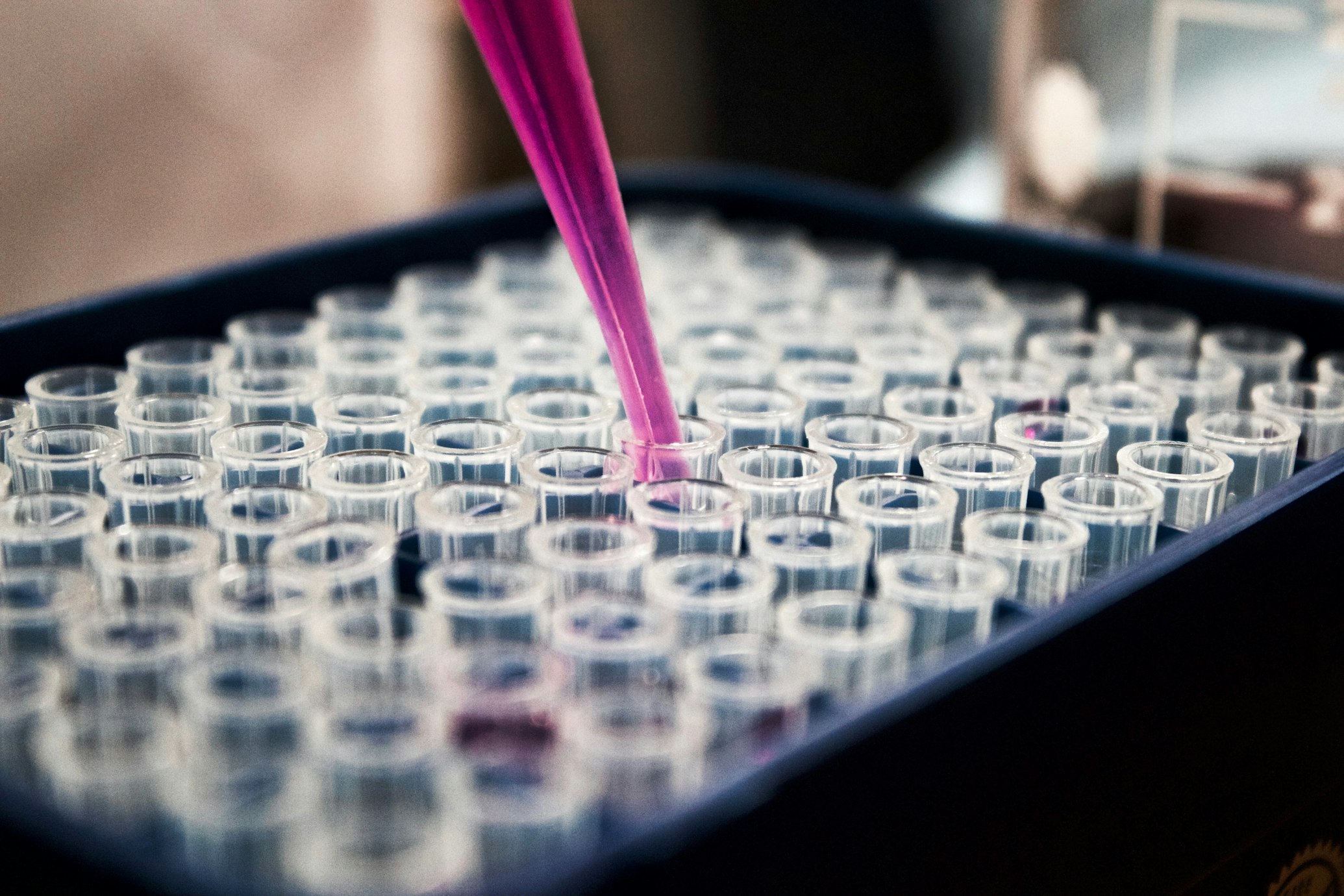
Traditional crystalline structures have defined our understanding of minerals, but non-crystalline forms challenge these concepts.
The Basics: Phosphate Fundamentals
To understand the exceptional nature of non-crystalline phosphates, we must first grasp phosphate basics. In chemistry, a phosphate is an anion, salt, or ester derived from phosphoric acid, most commonly appearing as the orthophosphate ion [PO₄]³⁻ 1 . This tetrahedral arrangement of one phosphorus atom surrounded by four oxygen atoms forms the building block for countless phosphate compounds.
The pH-Dependent Chameleon
What makes phosphate particularly fascinating is its behavior in water solution, where it undergoes a series of dissociation equilibria that allow it to transform between different forms depending on acidity or alkalinity 1 :
- H₃PO₄ (phosphoric acid) pH ≤ 1
- H₂PO₄⁻ (dihydrogen phosphate ion) pH ≈ 4.7
- HPO₄²⁻ (hydrogen phosphate ion) pH ≈ 9.8
- PO₄³⁻ (phosphate ion) pH ≥ 13
This chameleon-like quality means that phosphate can serve different functions across varying environmental conditions, making it exceptionally versatile in both nature and technology.
Phosphate in Living Systems
In biological systems, phosphates are nothing short of essential. They form the structural framework of our bones and teeth as crystalline hydroxyapatite 1 .
ATP Energy
Cellular energy currency
DNA/RNA
Genetic backbone
Signaling
Cellular communication
More dynamically, they serve as the fundamental currency of cellular energy in ATP (adenosine triphosphate), drive cellular communication through phosphorylation, and form the backbone of DNA and RNA 1 . At physiological pH, inorganic phosphate primarily exists as a mixture of HPO₄²⁻ and H₂PO₄⁻ ions, with their proportions shifting between intracellular and extracellular environments to maintain homeostasis 1 .
Phosphate Species Distribution vs. pH
What Are Non-Crystalline Phosphates?
Most people are familiar with crystalline phosphates like those in our bones, but non-crystalline phosphates represent a different class altogether. Also called amorphous phosphates, these materials lack the long-range repeating atomic order that characterizes crystalline structures. Instead, their components are arranged more randomly, often with water molecules (hydrous) integrated throughout their structure.
The hydrous nature of many amorphous phosphates contributes significantly to their properties. Water molecules can be incorporated between phosphate chains or clusters, creating flexible structures with unique chemical behaviors.
Crystalline vs. Non-Crystalline Phosphates
| Property | Crystalline Phosphates | Non-Crystalline Phosphates |
|---|---|---|
| Atomic Arrangement | Long-range repeating order | Short-range order, random arrangement |
| Water Content | Typically anhydrous or stoichiometrically hydrated | Often contain variable, loosely-bound water |
| Solubility | Generally lower solubility | Typically higher solubility |
| Stability | Thermodynamically stable | Metastable, may crystallize over time |
| Surface Properties | Defined crystal faces | High surface area, reactive surfaces |
| Examples | Hydroxyapatite in bones, fluoroapatite in teeth | Cerium phosphate pigment, PXo bodies in cells |
This combination of structural disorder and water content creates materials with enhanced solubility, reactivity, and functional versatility compared to their crystalline counterparts.
Cerium Phosphate: The New White in Pigments
One of the most exciting technological applications of non-crystalline phosphates emerges from the world of cosmetics and materials science. Traditional white pigments like titanium dioxide and cerium dioxide have limitations—cerium dioxide, for instance, possesses strong catalytic activity that can cause unwanted oxidation on skin in cosmetic applications 2 .
The Innovation
Researchers have developed an innovative solution: cerium phosphate white pigments synthesized from cerium carbonate through hydrothermal treatment 2 . Unlike their crystalline counterparts, these hydrous non-crystalline cerium phosphates offer exceptional performance without the drawbacks.
Why It Matters
The absence of photocatalytic and oxidation catalytic activity in cerium phosphate makes it particularly valuable for cosmetics 2 . When applied to skin, pigments shouldn't promote chemical reactions that could irritate or damage tissue.
Performance Comparison of White Pigments
| Pigment Type | Photocatalytic Activity | Oxidation Catalytic Activity | Brightness (L* Value) | Smoothness |
|---|---|---|---|---|
| Cerium Dioxide (CeO₂) | High | High | >89 | Lower |
| Cerium Phosphate Hydrate | None detected | None detected | >89 | Higher |
| Ideal White Pigment | None | None | >89 | High |
Functional Advantages
Cerium phosphate provides the desired optical properties—high reflectance across visible light wavelengths with specific absorption in the 300-330 nm ultraviolet range—without the oxidative drawbacks 2 .
The smoothness advantage further enhances its suitability for cosmetic applications, providing a superior tactile experience on skin. This combination of visual, chemical, and sensory properties demonstrates how the unique atomic structure of non-crystalline phosphates can yield functional advantages that crystalline materials cannot match.
No Photocatalytic Activity
Does not promote light-induced chemical reactions on skin
Enhanced Smoothness
Provides superior tactile experience in cosmetic applications
High Brightness
Excellent reflectance properties with L* value >89
A Biological Breakthrough: The Phosphate-Storing Organelle
While the pigment application showcases human ingenuity with non-crystalline phosphates, a stunning biological discovery reveals how nature has already been utilizing similar principles at the cellular level.
The Unexpected Discovery
In 2023, scientists at Harvard Medical School made a remarkable discovery while studying phosphate transport in fruit fly intestines—a previously unknown organelle they named PXo bodies . This finding was particularly surprising because organelles—specialized structures within cells that perform specific functions—were thought to be fully cataloged after decades of cellular biology research.
The research team initially set out to understand how phosphate starvation affects fruit fly digestive systems. They observed that inorganic phosphate deprivation triggered hyperproliferation and increased production of enterocytes (gut absorption cells), suggesting a survival mechanism to enhance phosphate uptake capacity .

Fruit flies (Drosophila melanogaster) served as the model organism for discovering the phosphate-storing PXo bodies.
The PXo Protein Key
The real breakthrough came when researchers investigated the role of a specific protein called PXo (CG10483). Through a series of meticulous experiments, they discovered that:
Phosphate Starvation Effect
Phosphate starvation reduced PXo expression
PXo Inhibition
Inhibiting or deleting PXo produced the same effects as phosphate starvation
Structural Localization
Immunostaining and structural analyses revealed PXo localized to previously unidentified multi-lamellar membranes
These findings pointed to PXo as a key regulator in phosphate transport and storage . Most significantly, the protein operated specifically within a newly discovered membrane structure—the PXo body.
The Phosphate Storage Mechanism
PXo bodies represent a sophisticated cellular adaptation for phosphate management. These organelles function as phosphate reservoirs, storing inorganic phosphate within their multi-lamellar membranes. When cellular phosphate levels drop, the PXo bodies degrade, releasing their stored phosphate to meet metabolic needs .
This discovery fundamentally expands our understanding of cellular biology and phosphate homeostasis. It reveals that cells have specialized compartments specifically dedicated to phosphate storage, organized in a non-crystalline, hydrous state that allows for rapid mobilization when needed.
Experimental Findings in Fruit Fly Phosphate Organelle Research
| Experimental Condition | Observed Effect on Gut Cells | Effect on PXo Bodies | Phosphate Availability |
|---|---|---|---|
| Normal phosphate levels | Standard proliferation | Stable, intact | Normal |
| Phosphate starvation | Hyperproliferation, increased differentiation | Not initially observed | Low |
| PXo inhibition/deletion | Hyperproliferation, increased differentiation | Degradation | Increased (from stores) |
| PXo overexpression | (Not specified in research) | Presumed stabilized | Sequestered in storage |
The Scientist's Toolkit: Research Reagent Solutions
Studying hydrous non-crystalline phosphates requires specialized approaches and reagents. Scientists investigating these materials employ a diverse toolkit of analytical methods and chemical reagents to probe their structure, function, and behavior.
Essential Research Tools for Phosphate Studies
| Tool/Reagent | Primary Function | Application Examples |
|---|---|---|
| Hydrothermal Synthesis | Material preparation under controlled T/P | Cerium phosphate preparation from cerium carbonate 2 |
| X-ray Diffraction (XRD) | Determining crystalline vs. amorphous structure | Identifying non-crystalline nature of cerium phosphate hydrate 2 |
| Spectrophotometry | Measuring phosphate concentration | Molybdenum blue method for water quality testing 5 |
| Electron Microscopy | Visualizing ultrastructure | Identifying PXo bodies in fruit fly gut cells |
| Ion Chromatography | Separating and quantifying ionic species | Simultaneous determination of nitrate and phosphate in milk powder 5 |
| Liquid Waveguide Capillary Cells | Enhancing detection sensitivity | Nanomolar phosphate detection in ocean waters 5 |
This diverse methodological toolkit enables researchers to explore non-crystalline phosphates from multiple angles—from synthesizing new materials with tailored properties to detecting minute quantities in environmental samples and visualizing their distribution within biological systems.
Conclusion: The Future of Formless Phosphates
Hydrous non-crystalline phosphates represent a fascinating frontier in materials science, biology, and technology. From the practical innovation of safer cosmetic pigments to the fundamental biological discovery of phosphate-storing organelles, these amorphous materials continue to reveal remarkable capabilities that challenge our traditional crystalline-centric view of minerals.
Medical Implications
The discovery of PXo bodies in fruit flies suggests similar phosphate-storing organelles might exist in other organisms, potentially including humans . This could open new avenues for understanding and treating phosphate-related disorders.
Technological Applications
The development of cerium phosphate pigments demonstrates how embracing amorphous structures can solve practical problems that crystalline materials cannot.
As research continues, we can anticipate even more innovative applications of these versatile materials—perhaps in drug delivery, environmental remediation, energy storage, or computing. The world of non-crystalline phosphates reminds us that in science, what appears disordered at one scale may reveal extraordinary functionality at another, and that nature's solutions are often more creative than our conventional categories would predict.