Particle Size Control in Solid-State Battery Materials: Synthesis Strategies, Performance Impacts, and Optimization Guidelines
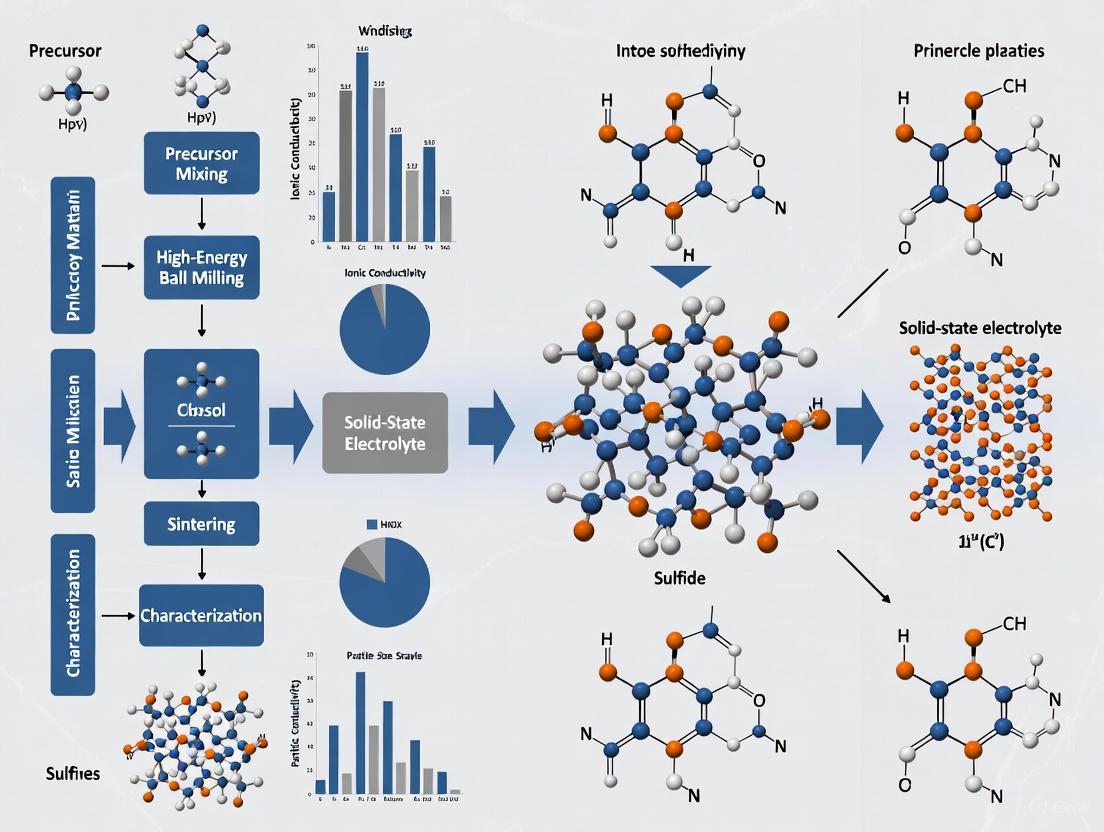
This article provides a comprehensive analysis of particle size control strategies for solid-state battery materials, addressing a critical need for researchers and scientists developing next-generation energy storage.
Particle Size Control in Solid-State Battery Materials: Synthesis Strategies, Performance Impacts, and Optimization Guidelines
Abstract
This article provides a comprehensive analysis of particle size control strategies for solid-state battery materials, addressing a critical need for researchers and scientists developing next-generation energy storage. It explores the fundamental relationship between particle size and key electrochemical properties, including ionic conductivity, tortuosity, and interfacial contact. The content details scalable synthesis methods like liquid-phase processing and ball milling, alongside practical optimization guidelines for electrode and electrolyte design. By integrating advanced characterization techniques and performance validation metrics, this resource serves as a strategic guide for overcoming reproducibility challenges and accelerating the development of high-performance, commercially viable solid-state batteries.
Why Particle Size Matters: The Fundamental Role in Ionic Conduction and Electrode Microstructure
The Critical Link Between Particle Size, Tortuosity, and Ionic Conduction Pathways
In the pursuit of next-generation solid-state batteries (SSBs), the optimization of ionic conduction pathways represents a fundamental materials challenge. The performance of an electrode is not solely dictated by the intrinsic conductivity of its materials but is profoundly governed by its microstructure. Within this context, particle size emerges as a critical variable, directly influencing the tortuosity of the pore network through which ions must travel. A more tortuous path impedes ionic flux, leading to increased resistance and limiting the rate capability of the battery. This application note, framed within broader research on controlling particle size in solid-state battery material synthesis, delineates the quantitative relationships between these factors and provides validated experimental protocols for their characterization. The principles discussed are universally critical for designing high-performance electrodes, impacting key metrics from energy density to fast-charging capability [1] [2].
Quantitative Data on Particle Size, Synthesis, and Resulting Properties
The synthesis route directly dictates active material particle size and morphology, which in turn defines the electrode's microstructural and electrochemical properties. The following tables summarize key relationships and data.
Table 1: Impact of Synthesis Method on Particle Size and Morphology
| Synthesis Method | Typical Particle Size Outcome | Crystallinity | Key Challenges |
|---|---|---|---|
| Solid-State Synthesis [3] | Several micrometers with uncontrolled agglomeration | High | Requires aggressive post-synthesis pulverization (e.g., ball milling) to achieve cyclable particles <200 nm |
| Mechanochemistry [3] | Secondary particles with low size/shape control | Low | Inherently results from ball milling, leading to low crystallinity and defects |
| Nucleation-Promoting Molten-Salt (NM) [3] | Highly crystalline, well-dispersed primary particles <200 nm | High | Requires careful selection of salt flux (e.g., CsBr) and precise two-stage calcination protocol |
Table 2: Microstructural and Performance Properties of LMTO Cathodes via Different Syntheses
| Property | Pulverized Solid-State (PS-LMTO) [3] | NM-Synthesized (NM-LMTO) [3] |
|---|---|---|
| Primary Particle Size | Not directly controlled; result of milling | ~200 nm, well-dispersed |
| Electrode Film Homogeneity | Inferior, due to irregular morphology | Homogeneous distribution of active material |
| Capacity Retention (after 100 cycles) | 38.6% | 85% |
| Average Discharge Voltage Loss | 7.5 mV per cycle | 4.8 mV per cycle |
Experimental Protocols
Protocol 1: Nucleation-Promoting Molten-Salt Synthesis of Sub-200 nm Li₁.₂Mn₀.₄Ti₀.₄O₂ (LMTO) Particles
This protocol details a method to directly synthesize cyclable, disordered rock-salt cathode particles with controlled size and high crystallinity, avoiding destructive pulverization [3].
- Objective: To synthesize highly crystalline, sub-200 nm LMTO particles for the fabrication of high-performance, low-tortuosity electrodes.
Materials:
- Precursors: Lithium carbonate (Li₂CO₃), Manganese(III) oxide (Mn₂O₃), Titanium(IV) oxide (TiO₂).
- Molten-Salt Flux: Cesium Bromide (CsBr). Note: Cs-based salts promote higher phase purity than K-based alternatives [3].
- Solvent: Deionized Water.
- Equipment: High-energy mixer mill, furnace, vacuum oven, filter setup.
Procedure:
- Precursor Mixing: Weigh the metal oxide precursors in the stoichiometric ratio for Li₁.₂Mn₀.₄Ti₀.₄O₂. Add a large excess of CsBr flux (e.g., 10:1 mass ratio of salt to precursors).
- Dry Mixing: Mix the precursor and salt powder blend thoroughly using a high-energy mixer mill to ensure homogeneity.
- First Calcination (Molten-Salt): Load the mixture into an alumina crucible and place it in a furnace. Ramp the temperature at 1°C/s to a target between 800-900°C. Hold at this temperature for a brief period (e.g., 1-2 hours) to promote nucleation in the molten flux while limiting particle growth.
- Cooling and Crushing: After the first calcination, cool the crucible to room temperature. Gently crush the resulting solidified cake into a fine powder.
- Second Calcination (Annealing): Transfer the crushed powder back to an alumina crucible. Anneal it at a temperature below the melting point of CsBr (636°C), typically between 500-600°C, for several hours. This step completes the crystallization without significant particle growth.
- Washing: Wash the final calcined powder multiple times with deionized water to completely remove the CsBr salt. Filter the suspension after each wash.
- Drying: Dry the purified LMTO powder in a vacuum oven at approximately 120°C overnight.
The workflow for this synthesis method is outlined below:
Protocol 2: Electrode Tortuosity Factor Measurement via Symmetric Cell Method (eSCM)
This protocol describes a frequency-domain electrochemical impedance technique to characterize the effective tortuosity of a porous electrode, a critical metric linked to its particle-size-derived microstructure [2].
- Objective: To determine the tortuosity factor of a porous, electronically conducting battery electrode.
Materials:
- Electrodes: Two identical electrodes on current collector foils.
- Separator: A single piece of porous separator (e.g., Celgard).
- Electrolyte: Liquid electrolyte with a salt that is non-intercalating under the test conditions (e.g., LiClO₄ in EC/DMC for a fully lithiated electrode).
- Equipment: Glove box, electrochemical impedance spectrometer, cell crimper, coin cell hardware.
Procedure:
- Cell Assembly: In an argon-filled glove box, assemble a symmetric cell in the following sequence: Current Collector | Electrode | Separator | Electrode | Current Collector. Ensure precise alignment. Add a precise volume of electrolyte to fully wet the separator and electrodes. Crimp the coin cell to seal it.
- Conditioning: After assembly, let the cell rest for a sufficient period (e.g., 6-12 hours) to ensure complete wetting and stabilization of the system.
- Impedance Measurement: Transfer the cell to a potentiostat. Perform Electrochemical Impedance Spectroscopy (EIS) measurement at room temperature over a frequency range from 100 kHz to 0.1 Hz with a small AC amplitude (e.g., 10 mV).
- Data Analysis:
- The high-frequency intercept of the impedance spectrum with the real axis represents the total ohmic resistance (Rohm) of the cell.
- This resistance includes contributions from the electrolyte in the separator and in both porous electrodes: Rohm = Rsep + 2 * Relec.
- The resistance of the separator (Rsep) can be calculated from its known dimensions, porosity, and the intrinsic conductivity of the electrolyte (κ₀).
- Calculate the effective conductivity of the electrolyte in the electrode pores: κeff = (Lelec / Aelec) / Relec, where Lelec and Aelec are the thickness and area of the electrode.
- Calculate the MacMullin number (NM) and the tortuosity factor (τ) using the electrode's porosity (ε): NM = κ₀ / κeff = τ / ε.
The workflow and underlying relationships for this measurement are as follows:
The Scientist's Toolkit: Research Reagent Solutions
Table 3: Essential Materials for Synthesis and Characterization
| Item Name | Function / Rationale | Application Context |
|---|---|---|
| CsBr Molten-Salt Flux | Lowers synthesis temperature, enhances nucleation kinetics, and suppresses agglomeration for size-controlled particles. | NM Synthesis of DRX Cathodes [3] |
| Non-Intercalating Electrolyte Salt | Creates a blocking condition at the electrode/electrolyte interface, allowing isolation of pore phase ionic transport. | Electrode Tortuosity Measurement (eSCM) [2] |
| Carbon Black (CB) Additive | Provides electronic wiring percolation network through the electrode, crucial for insulating active materials like LFP. | Electrode Formulation & Modeling [4] |
| FIB-SEM Tomography | Destructive 3D imaging technique for nanoscale microstructural analysis and digital reconstruction of electrode networks. | Microstructure Validation & Network Modeling [4] |
Impact on Electrode Density and Active Material Utilization
Controlling particle size during the synthesis of solid-state battery (SSB) materials is a fundamental research focus, as it directly dictates two critical parameters for cell performance: electrode density and active material utilization [5] [6]. In conventional composite electrodes, which are comprised of active materials (AMs), solid electrolytes (SEs), and conductive carbon, the size, morphology, and distribution of the solid phases determine the tortuosity of ion transport paths and the intimacy of interfacial contact [7]. Inefficient packing of polydisperse particles or the presence of large agglomerates creates voids and high-tortuosity pathways, which lower the electrode's density and limit the proportion of electrochemically accessible active material [5] [6]. Consequently, meticulous control over particle synthesis is not merely a materials science challenge but a prerequisite for achieving the high energy density and power performance promised by SSBs. This document outlines specific protocols and data quantifying the relationship between synthesis-controlled particle attributes and the resulting electrode properties.
The following tables consolidate key quantitative findings from recent studies on how particle size and electrode architecture influence performance metrics.
Table 1: Impact of Synthesis Method on Solid Electrolyte Properties
| Material System | Synthesis Method | Key Particle Size Outcome | Ionic Conductivity (mS cm⁻¹) | Performance Impact | Source |
|---|---|---|---|---|---|
| Li₅.₅PS₄.₅Cl₁.₅ (Sulfide) | Size-controlled wet-chemical [8] | Uniform distribution, avg. 7 μm | 4.98 | Reduced interfacial resistance, high discharge capacity at 2C | [8] |
| Li₇₋ₓPS₆₋ₓClₓ (Sulfide) | Conventional wet-chemical [8] | N/A (Baseline) | ~0.1 | Low conductivity due to impurities/defects | [8] |
| Oxide-based SEs | Solid-state processing [1] | N/A | Varies | High-temp. processing, potential for coarser particles | [1] |
| Oxide-based SEs | Vapor deposition [1] | N/A | Varies | Enables ultra-thin films, high electrode density | [1] |
Table 2: Impact of Active Material Particle Size and Electrode Design on Performance
| Material System | Electrode Architecture / Particle Size | Areal Loading / Capacity | Capacity Retention / Cycle Life | Volumetric Energy Density | Source |
|---|---|---|---|---|---|
| Li₁.₂Mn₀.₄Ti₀.₄O₂ (LMTO) | NM Synthesis: Sub-200 nm, dispersed [3] | N/A | 85% (after 100 cycles) | N/A | [3] |
| Li₁.₂Mn₀.₄Ti₀.₄O₂ (LMTO) | Solid-State + Pulverization: Agglomerated [3] | N/A | 38.6% (after 100 cycles) | N/A | [3] |
| Graphite/NMC811 (Liquid Li-ion) | Conventional composite (Benchmark) [6] | ~5 mAh/cm² (optimal) | N/A | ~750 Wh/L (cell-level) | [6] |
| All-Electrochem-Active (AEA) | 100 wt% Active Material (No SE/C) [7] | High (Theoretical) | Potential for high stability | Zero gap from material to electrode | [7] |
Experimental Protocols
Protocol 1: Size-Controlled Wet-Chemical Synthesis of Sulfide Solid Electrolytes
This protocol describes a scalable wet-chemical method to synthesize sulfide-based argyrodite solid electrolytes (Li₅.₅PS₄.₅Cl₁.₅) with controlled particle size and high ionic conductivity [8].
- Objective: To synthesize sulfide SEs with a uniform particle size of ~7 μm and ionic conductivity >4 mS cm⁻¹.
- Primary Materials:
- Precursors: Lithium sulfide (Li₂S, 99.9%), Phosphorus pentasulfide (P₂S₅, 99%), and Lithium chloride (LiCl, 99%).
- Solvent: Anhydrous Tetrahydrofuran (THF).
- Equipment: Schlenk line, Argon-filled glove box (H₂O, O₂ < 0.1 ppm), Centrifuge, Vacuum oven, Planetary ball mill.
- Step-by-Step Procedure:
- Precursor Preparation: To control final particle size, first subject Li₂S precursor to mechanical milling to achieve a desired starting particle size [8].
- Solution Preparation: In an argon-filled glove box, dissolve stoichiometric amounts of Li₂S, P₂S₅, and LiCl in anhydrous THF. Stir the mixture vigorously for 24 hours to form a homogeneous solution.
- Nucleation and Growth: Carefully control the nucleation rate by manipulating temperature and stirring speed during the reaction. Using pre-milled Li₂S seeds promotes a more uniform particle size distribution [8].
- Precipitation and Washing: Remove the solvent by centrifugation. Wash the resulting precipitate multiple times with anhydrous THF to eliminate by-products and unreacted precursors.
- Drying and Annealing: Dry the final product in a vacuum oven at a moderate temperature (e.g., 150-200 °C) for several hours to remove residual solvent. A final mild annealing step may be applied to enhance crystallinity without promoting excessive particle growth.
- Key Validation Metrics:
Protocol 2: Nucleation-Promoting Molten-Salt Synthesis of Disordered Rock-Salt Cathodes
This protocol is for synthesizing Ni/Co-free disordered rock-salt cathode materials (e.g., Li₁.₂Mn₀.₄Ti₀.₄O₂) as highly crystalline, sub-200 nm single particles to maximize active material utilization and cycling stability [3].
- Objective: To directly synthesize cyclable, sub-200 nm DRX cathode particles without the need for destructive post-synthesis pulverization.
- Primary Materials:
- Precursors: Li₂CO₃, Mn₂O₃, TiO₂.
- Molten Salt Flux: Cesium Bromide (CsBr).
- Equipment: High-temperature tube furnace, Mortar and pestle or mixer, Centrifuge, Washing equipment.
- Step-by-Step Procedure:
- Precursor Mixing: Weigh and thoroughly mix the metal oxide precursors and CsBr flux. A CsBr:precursor mass ratio of 4:1 is suggested [3].
- High-Temperature Calcination (Nucleation): Load the mixture into an alumina crucible and heat in a tube furnace under an inert atmosphere. Rapidly ramp the temperature (e.g., 1 °C/s) to a high temperature (e.g., 800-900 °C) and hold for a short duration (e.g., 5 minutes). This high-temperature pulse promotes rapid nucleation of the DRX phase within the molten CsBr flux [3].
- Annealing (Crystallization): Immediately after the high-temperature step, lower the furnace temperature to a target below the melting point of CsBr (e.g., 600 °C) and hold for several hours (e.g., 12 hours). This step allows the nuclei to grow into highly crystalline particles while suppressing excessive growth and agglomeration [3].
- Washing and Recovery: After the furnace cools to room temperature, retrieve the product. Wash the powder multiple times with deionized water to completely dissolve and remove the CsBr salt flux. Recover the purified Li₁.₂Mn₀.₄Ti₀.₄O₂ powder by filtration or centrifugation, followed by drying.
- Key Validation Metrics:
Workflow and Pathway Diagrams
Synthesis Workflow for Size-Controlled Particles
The following diagram illustrates the logical workflow and decision points for selecting a synthesis route based on the target particle characteristics and material system.
Electrode Architecture Evolution
This diagram contrasts the traditional composite electrode with the emerging All-Electrochem-Active (AEA) design, highlighting the fundamental shift in managing transport pathways.
The Scientist's Toolkit: Key Research Reagent Solutions
Table 3: Essential Materials for Synthesis Protocols
| Reagent / Material | Function in Synthesis | Critical Notes for Control |
|---|---|---|
| Lithium Sulfide (Li₂S) | Precursor for sulfide solid electrolytes [8]. | Particle size of Li₂S is a critical control parameter for final SE particle size [8]. |
| Cesium Bromide (CsBr) | Molten salt flux for DRX oxide synthesis [3]. | Low melting point (636°C) and high dielectric constant promote nucleation and phase purity [3]. |
| Anhydrous Tetrahydrofuran (THF) | Solvent for wet-chemical sulfide synthesis [8]. | Must be rigorously purified and kept anhydrous to prevent hydrolysis of sulfide precursors. |
| Lithium Metal (Foil) | Counter electrode for half-cell validation [3]. | Essential for evaluating the intrinsic performance of new active materials. |
| N-Methyl-2-pyrrolidone (NMP) | Solvent for electrode slurry preparation. | Standard for processing electrodes with PVDF binder. |
| Poly(vinylidene fluoride) (PVDF) | Binder for electrode fabrication. | Ensues mechanical integrity of the composite electrode layer. |
| Conductive Carbon (e.g., Super P) | Electronic conductive additive in composite electrodes [7]. | Not required for All-Electrochem-Active (AEA) electrode designs [7]. |
Particle Size Effects on Interfacial Contact and Charge Transfer Kinetics
In the pursuit of high-performance solid-state batteries (SSBs), interfacial engineering has emerged as a critical discipline. Interface chemistry profoundly determines the efficiency, stability, and overall performance of SSBs by governing ionic transport and charge transfer kinetics [9]. Among various interfacial engineering strategies, controlling the particle size of electrode and electrolyte materials represents a fundamental and powerful approach. The scale of particulate materials directly influences the real surface area available for electrochemical reactions, the mechanical stress at interfaces, and the ionic diffusion pathways, thereby dictating the ultimate battery performance [10] [11]. This Application Note systematically examines the role of particle size in solid-state battery material synthesis, providing quantitative data, standardized protocols, and visual frameworks to guide research and development efforts aimed at enhancing interfacial properties through precision particle design.
Quantitative Data on Particle Size Effects
Electrode Material Particle Size and Performance Correlation
Table 1: Particle Size Effects on Electrode Materials and Their Electrochemical Performance
| Material | Particle Size Range | Specific Surface Area | Key Performance Findings | Primary Mechanism |
|---|---|---|---|---|
| Graphite (Anode) [10] | Varying (Different grades) | 6.0, 12.3, 25.2 m²/g | Lower SEI resistance with smaller surface area at optimal formation current | Reduced parasitic reactions and more stable SEI formation |
| LiMn₂O₄ (LMO, Cathode) [10] | < 0.5 µm | 11.7 m²/g | Higher CEI resistance compared to larger particles | Increased surface area leading to thicker CEI |
| LiMn₂O₄ (LMO, Cathode) [10] | < 5 µm | 3.3 m²/g | Lower CEI resistance | Reduced interfacial side reactions |
| Aluminum (Anode) [11] | Micron-sized (Smaller fraction) | Not Specified | Poor conductivity and limited capacity utilization | Thicker insulating oxide surface layer relative to particle volume |
| Silicon (Anode) [12] | Micron-sized (μ-Si) | Not Specified | Stable cycling (>300 cycles) with LSPSC electrolyte | Mitigated continuous interfacial reaction compared to Li metal |
Solid Electrolyte Particle Size and Processing Parameters
Table 2: Particle Size Effects on Solid Electrolyte Processing and Properties
| Electrolyte Material | Particle Size/Spray Parameter | Key Processing Finding | Impact on Property/Performance |
|---|---|---|---|
| LATP (NASICON-type) [13] | 30-50 µm (Powder A) | Achieved dense electrolyte deposits at 42 kW arc power | Critical for obtaining high-quality, functional electrolyte layers |
| LATP (NASICON-type) [13] | < 25 µm | Significant P loss due to preferential evaporation | Non-stoichiometric composition affecting ionic conductivity |
| LATP (NASICON-type) [13] | 34.3 - 48.5 µm (Fully-molten) | Fraction of fully-molten particles increases with arc power (32.9% to 53.5%) | Determines coating density and integrity |
| Li₇₋ₓPS₆₋ₓClₓ (Argyrodite) [14] | Micro-level (Cold-pressed) | Small grain boundary resistance, a typical feature of sulfides | Enables high ionic conductivity up to 8.8 mS/cm |
Experimental Protocols for Particle Size Analysis and Interface Characterization
Protocol: Establishing Particle Size - Surface Area - SEI/CEI Resistance Relationships
Objective: To quantitatively correlate the particle size and specific surface area of electrode materials with the resistance of the formed Solid Electrolyte Interphase (SEI) or Cathode Electrolyte Interphase (CEI).
Materials:
- Electrode materials with varying particle sizes (e.g., Graphite SL 20, SL 1520, 2939 APH; LiMn₂O₄ <0.5µm & <5µm) [10]
- Lithium foil counter electrode (0.75 mm thickness)
- 1 M LiPF₆ in EC:DMC (1:1 v/v) electrolyte
- Poly(vinylidene fluoride) (PVdF) binder and carbon black (CB) conductive additive
- Copper foil (anode) and gold current collector (cathode)
- Glass micro-fiber separator (Whatman GF/A)
Procedure:
- Electrode Fabrication:
- Prepare slurries of active material, CB, and PVdF binder in NMP solvent at mass ratios of 85:10:5 for anodes and 85:5:10 for cathodes.
- Coat slurries onto appropriate current collectors (Cu for anode, Au for cathode).
- Dry electrodes at 120°C under vacuum to remove residual NMP.
Cell Assembly:
- Assemble Swagelok-type cells in an argon-filled glove box.
- Use lithium metal as the counter/reference electrode.
- Separate electrodes with a glass microfiber separator soaked with electrolyte.
Electrochemical Formation & Testing:
- After a 12-hour OCV period for electrolyte wetting, perform galvanostatic charging/discharging.
- Cycle graphite cells between 0.001 V and 2.500 V vs. Li/Li⁺.
- Cycle LiMn₂O₄ cells between 3.300 V and 4.300 V vs. Li/Li⁺.
- Apply varying formation current densities (e.g., 5 to 100 mA g⁻¹) to different cells.
Impedance Spectroscopy:
- Perform Electrochemical Impedance Spectroscopy (EIS) at OCV after formation.
- Use frequency range of 100 kHz to 10 mHz with 10 mV amplitude.
- Fit impedance spectra using equivalent circuit modeling to extract SEI/CEI resistance (RSEI/RCEI).
Surface Area & Morphology:
- Determine specific surface area of starting materials via BET nitrogen adsorption.
- Characterize particle morphology and electrode surface using Scanning Electron Microscopy (SEM).
Data Analysis:
- Plot RSEI or RCEI versus specific surface area for each material.
- Determine the optimal formation current density normalized to both mass (mA g⁻¹) and surface area (mA cm⁻²).
Protocol: Cryo-TEM Characterization of Electrode-Electrolyte Interfaces
Objective: To atomically resolve the interphase layer structure between electrode and sulfide-based solid electrolytes and correlate its properties with electrochemical performance.
Materials:
- Silicon (μ-Si) negative electrodes, Li₁₀GeP₂S₁₂ (LGPS) and Li₁₀Si₀.₃PS₆.₇Cl₁.₈ (LSPSC) solid electrolytes, NMC811 positive electrodes [12]
- Cryogenic Focused Ion Beam (Cryo-FIB) system
- Cryogenic Transmission Electron Microscope (Cryo-TEM)
- Argon-filled glove box (H₂O, O₂ < 0.1 ppm)
Procedure:
- Cell Assembly and Electrochemical Testing:
- Assemble Si|LGPS|NMC811 and Si|LSPSC|NMC811 all-solid-state batteries.
- Cycle batteries and select samples at desired state-of-charge or after performance degradation.
Cryo-FIB Sample Preparation:
- Transfer cycled batteries into an argon glove box without air exposure.
- Extract cross-section samples containing the electrode-electrolyte interface.
- Use Cryo-FIB to prepare electron-transparent lamellae (~100 nm thick), maintaining cryogenic conditions to prevent beam damage and preserve native interface structures.
Cryo-TEM Imaging and Analysis:
- Transfer lamellae to Cryo-TEM using a cryo-holder to prevent warming and crystallization.
- Acquire high-resolution TEM (HRTEM) images, Selected Area Electron Diffraction (SAED) patterns, and Energy-Dispersive X-ray Spectroscopy (EDS) maps at the interface.
- Identify different phases (e.g., Li₂S nanocrystals, amorphous matrix, LiGe precipitates) and measure interphase layer thickness.
Correlation with Electrochemical Data:
- Correlate the atomic-scale interface structure (e.g., thin/sharp vs. thick/diffuse interphase) with the battery's cycling stability and impedance evolution.
Visualization of Particle Size - Interface Relationships
Particle Size Optimization Logic
Interphase Formation Workflow
The Scientist's Toolkit: Essential Research Reagents & Materials
Table 3: Key Research Reagents and Materials for Particle Size and Interface Studies
| Category | Material/Reagent | Key Function/Application | Specific Example/Note |
|---|---|---|---|
| Anode Materials | Graphite (Various grades) | Model anode for SEI formation studies | Use varying surface areas (6.0-25.2 m²/g) to study size effects [10] |
| Silicon (Micron-sized, μ-Si) | High-capacity anode for interface stability studies | Enables stable cycling in ASSBs; mitigates side reactions [12] | |
| Aluminum (Micron-sized powder) | Study of anomalous size effects | Demonstrates oxide layer impact on conductivity [11] | |
| Cathode Materials | LiMn₂O₄ (LMO) | Model cathode for CEI formation studies | Available in <0.5µm and <5µm sizes for comparative studies [10] |
| LiNi₀.₈Mn₀.₁Co₀.₁O₂ (NMC811) | High-energy cathode for full cell studies | Paired with μ-Si anodes in ASSB configurations [12] | |
| Solid Electrolytes | Li₁₀Si₀.₃PS₆.₇Cl₁.₈ (LSPSC) | Chlorine-rich sulfide electrolyte | Forms thin (100-200 nm), stable interphase with Si [12] |
| Li₁₀GeP₂S₁₂ (LGPS) | High-conductivity sulfide electrolyte | Forms thick (10-20 µm) interphase with continuous reactions [12] | |
| Li₇₋ₓPS₆₋ₓClₓ (Argyrodite) | Halogen-rich argyrodite electrolytes | LiCl-rich interphase improves cycling performance [14] | |
| Li₁.₃Al₀.₃Ti₁.₇(PO₄)₃ (LATP) | NASICON-type oxide electrolyte | Particle size affects stoichiometry during plasma spraying [13] | |
| Characterization Tools | Cryo-FIB/Cryo-TEM | Atomic-scale interface characterization | Reveals interphase structure and composition [12] |
| BET Surface Area Analyzer | Specific surface area measurement | Quantifies real surface area of particulate materials [10] | |
| Electrochemical Impedance Spectrometer | Interface resistance measurement | Distinguishes SEI/CEI resistance from other processes [10] |
In the development of next-generation solid-state batteries (SSBs), the transition from a single active material particle to a high-performance composite electrode is a fundamental challenge. The control of particle size and size distribution (PSD) stands as a critical foundational principle governing ionic transport efficiency, electrochemical utilization, and ultimately, the rate capability and cycle life of the final device. This application note details the quantitative relationships between particle characteristics and electrode performance, providing researchers with structured protocols and data to guide the rational design of electrode microstructures. The content is framed within a broader research thesis on controlling particle size in solid-state battery material synthesis, highlighting how deliberate particle engineering at the nanoscale and microscale dictates macroscopic battery behavior.
Foundational Principles and Quantified Particle-Effects
The performance of a composite electrode is not merely the sum of its parts; it is determined by the complex interplay between the active material's particle size, the ionic and electronic conductivity of the matrix, and the integrity of the interfaces formed between them. The following principles and data underpin this relationship.
Core Principles of Particle Size Impact
- Shortened Diffusion Pathways: Reducing the particle size of the active material directly decreases the solid-state diffusion path length for lithium ions within the particle. This is particularly critical for materials with intrinsically low Li+ diffusivity, such as disordered rock-salt oxides (10−16 to 10−14 cm²/s), and for enabling high-rate charging and discharging. [3]
- Increased Interfacial Contact Area: Smaller particles provide a greater surface area for contact with the solid electrolyte (SE) within the composite electrode. This enhanced interfacial area is vital for facilitating efficient charge transfer and reducing local current densities, which mitigates degradation at the electrode-electrolyte interface. [15]
- Mitigation of Chemomechanical Failure: Smaller particles are better able to accommodate the strain associated with lithium insertion and extraction (lithiation/delithiation), reducing the propensity for particle cracking and the consequent loss of electrical contact that accelerates capacity fade. [16]
- Influence of Particle Size Distribution (PSD): A well-controlled PSD is essential for optimal particle packing density. A bimodal distribution, for instance, can improve Li+ transport by creating a more homogeneous porous network compared to a monomodal distribution, but an excessively broad PSD can lead to inhomogeneous current distribution and localized over-lithiation. [16]
Quantitative Data on Particle Size Effects
The tables below consolidate key quantitative findings from recent studies, illustrating the direct impact of particle size and distribution on electrochemical performance.
Table 1: Effect of Active Particle Size on Solid-State Battery Performance
| Active Material | Particle Size / Diameter | Key Performance Metric | Result & Impact |
|---|---|---|---|
| FeS₂ (Conversion Cathode) [15] | ~10 nm | Initial Discharge Capacity | ~760 mAh/g |
| ~35 nm | Initial Discharge Capacity | Significantly lower than 10 nm sample | |
| FeS₂ (Conversion Cathode) [15] | ~10 nm | Rate Performance | Improved capacity retention at higher C-rates |
| ~35 nm | Rate Performance | Rapid capacity loss with increasing C-rate | |
| Disordered Rock-Salt LMTO [3] | < 200 nm (Primary) | Capacity Retention (100 cycles) | ~85% |
| Pulverized Micron-Sized | Capacity Retention (100 cycles) | ~38.6% | |
| NMC111 (Liquid Electrolyte) [16] | Small Particles (Modeled) | Depth of Discharge (DOD) | Higher DOD, especially at high C-rates |
| Large Particles (Modeled) | Depth of Discharge (DOD) | Rapid decrease in DOD with increasing C-rate |
Table 2: Influence of Particle Size Distribution (PSD) in Composite Electrodes [16]
| Particle Size Parameter | Electrode Property | Optimal Finding / Effect |
|---|---|---|
| Standard Deviation (Width of PSD) | Li+ Concentration Homogeneity | An optimal standard deviation exists; too low or too high reduces performance. |
| Spatial Distribution of Sizes | Ionic Transport Pathway | Graded structures (small particles near separator) can enhance Li+ transport. |
| Random Mixing (Large & Small) | Particle Packing & Porosity | Superior to large particles alone, improving ionic transport and utilization. |
Particle Size to Performance Pathway
Experimental Protocols
Protocol: Nucleation-Promoting and Growth-Limiting Synthesis of Disordered Rock-Salt Nanoparticles
This protocol describes a modified molten-salt synthesis method to produce highly crystalline, sub-200 nm Li₁.₂Mn₀.₄Ti₀.₄O₂ (LMTO) particles, overcoming the limitations of solid-state methods that require aggressive post-synthesis pulverization. [3]
3.1.1 Research Reagent Solutions
Table 3: Essential Materials for NM-LMTO Synthesis
| Reagent / Material | Function in Synthesis |
|---|---|
| Li₂CO₃, Mn₂O₃, TiO₂ | Metal oxide precursors for the target LMTO composition. |
| CsBr (Cesium Bromide) | Molten-salt flux. Low melting point (636°C) enhances nucleation; high Cs⁺ polarizability improves precursor solubility. |
| Argon or Nitrogen Gas | Inert atmosphere for controlled high-temperature calcination. |
| Deionized Water | Washing solvent to remove the CsBr flux after synthesis. |
| Vacuum Filtration Apparatus | For efficient separation of synthesized nanoparticles from the wash solution. |
3.1.2 Step-by-Step Procedure
- Precursor Mixing: Weigh and combine Li₂CO₃, Mn₂O₃, and TiO₂ powders in the stoichiometric molar ratio for Li₁.₂Mn₀.₄Ti₀.₄O₂. Add a large excess of CsBr flux (e.g., 10:1 mass ratio of CsBr to precursor oxides).
- Grinding: Mechanically grind the mixture using an agate mortar and pestle or a mill for at least 20 minutes to ensure a homogeneous mixture.
- High-Temperature Calcination (Nucleation): Transfer the mixture to an alumina crucible. Place in a tube furnace under an inert atmosphere. Rapidly heat the furnace (e.g., 1 °C/s) to a high temperature (800–900 °C) and hold for a very short duration (minutes). This step promotes rapid nucleation of LMTO while limiting particle growth.
- Low-Temperature Annealing (Crystallization): Immediately after the short high-temperature hold, cool the sample to a lower annealing temperature (e.g., 650 °C) and hold for several hours (e.g., 12 h). This step completes the crystallization process without significant particle growth or agglomeration.
- Washing: After the furnace cools to room temperature, collect the solid product. Wash it repeatedly with copious amounts of deionized water to completely remove the CsBr salt.
- Drying: Dry the final product, now consisting of well-dispersed, sub-200 nm LMTO particles, in an oven at ~120 °C.
NM Synthesis Workflow
Protocol: Solvothermal Synthesis of Size-Tuned FeS₂ Nanoparticles
This protocol allows for precise control over FeS₂ nanoparticle size by adjusting the surfactant ratio during solvothermal synthesis. [15]
3.2.1 Research Reagent Solutions
Table 4: Essential Materials for FeS₂ Nanoparticle Synthesis
| Reagent / Material | Function in Synthesis |
|---|---|
| Iron Precursor (e.g., FeCl₃) | Source of Fe³⁺ ions. |
| Sulfur Source (e.g., Elemental S) | Source of S²⁻ for FeS₂ formation. |
| Oleylamine (OAm) | Surfactant and reaction solvent. Coordinates metal ions to control growth. |
| Oleic Acid (OAc) | Co-surfactant. Competes with OAm to modulate nucleation/growth kinetics. |
| High-Purity Solvents (e.g., Hexane, Ethanol) | For purification and dispersion of synthesized nanoparticles. |
3.2.2 Step-by-Step Procedure
- Reaction Mixture Preparation: Dissolve the iron precursor (e.g., FeCl₃) and sulfur source in a mixture of oleylamine (OAm) and oleic acid (OAc). The OAc:OAm ratio is the critical parameter for size control.
- A lower OAc:OAm ratio (e.g., 1:2) promotes the formation of the smallest nanoparticles (~10 nm).
- A higher OAc:OAm ratio leads to larger particles (e.g., >30 nm).
- Solvothermal Reaction: Transfer the solution to a sealed autoclave and heat to a reaction temperature (e.g., 180-220 °C) for a defined period (e.g., 12-24 hours).
- Precipitation and Washing: After cooling, precipitate the nanoparticles by adding a non-solvent like ethanol. Re-disperse and wash the particles in a solvent like hexane/ethanol several times to remove excess surfactants and reaction by-products.
- Characterization: Characterize the final particle size and distribution using X-ray diffraction (XRD) and Transmission Electron Microscopy (TEM). The crystallite size can be estimated from XRD peak broadening using the Scherrer equation or a Pawley fit. [15]
Protocol: Electrode Fabrication and Reproducibility Testing for SSBs
This protocol, informed by a major interlaboratory study, outlines critical steps for fabricating and testing composite cathodes for solid-state batteries to ensure reproducible results. [17]
3.3.1 Research Reagent Solutions
Table 5: Essential Materials for SSB Cathode Fabrication & Testing
| Reagent / Material | Function |
|---|---|
| Active Material (e.g., NMC622, LMTO, FeS₂) | Primary Li⁺ storage component. |
| Solid Electrolyte (e.g., Li₆PS₅Cl) | Ionic conduction matrix within the composite electrode. |
| Conductive Carbon (e.g., Super C45) | Electronic conduction additive. |
| Binder (e.g., PVDF in NMP for wet processing) | Provides mechanical integrity to the electrode film. |
| Indium Foil & Lithium Metal | Common reference/counter electrode materials for lab-scale SSB testing. |
3.3.2 Step-by-Step Procedure
- Composite Electrode Preparation: Manually grind the active material, solid electrolyte, and conductive carbon in the desired mass ratio (e.g., 70:30:0 for no carbon, or 60:30:10 for a standard composite). For lab-scale press cells, no binder is required.
- Cell Assembly (Uniaxial Press Cell):
- Step 1 - Separator Pellet: Weigh the solid electrolyte powder (e.g., ~70 mg cm⁻²) into a die and apply a first pressure (e.g., 100 MPa) for a defined time (e.g., 1-2 minutes) to form a pellet.
- Step 2 - Cathode Layer Distribution: Uniformly distribute the positive composite electrode mixture (e.g., 10 mg cm⁻² of active material) on top of the separator pellet.
- Step 3 - Cathode Compression: Apply a second, higher pressure (e.g., 250–500 MPa) for a defined time to integrate the cathode composite with the separator. Document pressure and time precisely.
- Step 4 - Anode Integration: Add the negative electrode material (e.g., Indium foil with a Li source) to the other side of the pellet.
- Step 5 - Final Stack Pressing: Apply the stack pressure (cycling pressure, typically 10–70 MPa) that will be maintained during cycling and secure the cell.
- Electrochemical Testing and Quality Control:
- Open Circuit Voltage (OCV) Check: Measure the initial OCV. For an In|Li₆PS₅Cl|NMC622 cell, an OCV between 2.5 and 2.7 V vs Li⁺/Li is a strong indicator of a properly assembled cell with a high likelihood of cycling successfully. [17]
- Cycling Protocol: Follow a standardized protocol, for example: 3 formation cycles at 0.1C (e.g., 15 mA/g) within a specified voltage window, followed by cycling at higher C-rates for rate capability tests.
- Reporting: Report all processing parameters (pressures, durations) and electrochemical data in triplicate to ensure statistical significance and reproducibility. [17]
The Scientist's Toolkit
This section lists key reagent solutions and instrumentation essential for research into particle-controlled solid-state battery materials.
Table 6: Essential Research Toolkit
| Tool / Reagent | Specific Example(s) | Research Function |
|---|---|---|
| Molten-Salt Fluxes | CsBr, KCl | Solvent media for high-temperature synthesis to enhance nucleation and limit particle growth. [3] |
| Surfactant Systems | Oleylamine, Oleic Acid | To control nucleation and growth kinetics in solution-based synthesis (e.g., solvothermal). [15] |
| Solid Electrolytes | Li₆PS₅Cl (Argyrodite) | High-conductivity sulfide-based electrolyte for the composite cathode and separator in SSBs. [17] |
| Inert Atmosphere Tools | Glovebox (H₂O & O₂ < 0.1 ppm) | For handling air-sensitive materials like sulfide solid electrolytes and assembling SSB cells. [17] |
| Uniaxial Press | Lab-scale hydraulic press | To fabricate reproducible pellet-based SSB cells under controlled pressure. [17] |
| Particle Size Analysis | TEM, XRD Scherrer/Pawley Analysis | To quantitatively determine primary particle size, distribution, and crystallite size. [3] [15] |
| Modeling Software | MATLAB, COMSOL | To construct heterogeneous particle packing models and simulate Li⁺ concentration distributions. [16] |
Synthesis and Processing: Techniques for Controlling Particle Size in Solid Electrolytes and Electrodes
Liquid-Phase Synthesis for Fine, Homogeneous Solid Electrolyte Particles
Controlling particle size and ensuring homogeneity are central challenges in the synthesis of solid-state battery materials. Solid-state batteries (SSBs) promise enhanced safety and higher energy density compared to conventional lithium-ion batteries, largely due to the replacement of flammable organic liquid electrolytes with non-flammable solid electrolytes [18]. Among the various types of solid electrolytes, sulfide-based materials are particularly notable for their high room-temperature ionic conductivity, which can approach or even exceed that of liquid organic electrolytes, and their favorable mechanical properties that enable good interfacial contact [19] [20].
The preparation methods for sulfide solid electrolytes are generally divided into three categories: solid-state sintering, mechanochemical ball milling, and liquid-phase synthesis [19]. While conventional solid-state and ball-milling routes are widely used, they are often time-consuming, involve high energy consumption, and can result in large, non-uniform particle sizes, which severely limits their practicality for large-scale application [19] [21]. In contrast, liquid-phase synthesis, which uses organic solvents as a reaction medium, emerges as a promising alternative. This method offers a simpler, more time-efficient process capable of producing solid electrolytes with controlled particle sizes and is considered more suitable for large-scale production [19]. This application note details the protocols and guidelines for implementing liquid-phase synthesis to achieve fine, homogeneous solid electrolyte particles, contextualized within the broader research objective of precise particle size control.
Liquid-phase synthesis, a wet-chemical method, involves dissolving or suspending precursor materials in a suitable organic solvent. The subsequent reaction and controlled removal of the solvent yield the desired solid electrolyte. The primary advantage of this method lies in its superior control over the final product's characteristics at the nanoscale.
Key benefits include:
- Particle Size Control: The method facilitates the synthesis of nanosized solid electrolyte particles [20]. This is advantageous for achieving a homogeneous distribution when compositing with electrode active materials.
- Enhanced Homogeneity: The liquid medium allows for intimate mixing of precursors at the molecular level, leading to highly homogeneous products and reduced presence of unreacted starting materials [19].
- Low-Temperature Processing: Reactions proceed at relatively low temperatures, reducing energy consumption and minimizing the risk of undesirable phase separations or decompositions [20].
- Scalability: The process is inherently more adaptable to large-scale, continuous manufacturing compared to batch-based solid-state methods [19] [20].
The following diagram illustrates the general workflow for the liquid-phase synthesis of solid electrolytes, highlighting the critical decision points that influence the final particle characteristics.
Figure 1: General workflow for the liquid-phase synthesis of solid electrolytes, outlining key procedural steps from precursor selection to final product formation.
Experimental Protocols
Synthesis of Li₃PS₄ via Liquid-Phase Method
This protocol describes the synthesis of Li₃PS₄ using ethyl propionate as the solvent, based on the procedure from Matsuda et al. [21].
Materials:
- Lithium sulfide (Li₂S)
- Phosphorus pentasulfide (P₂S₅)
- Anhydrous ethyl propionate (C₅H₁₀O₂)
- Zirconia balls (for mixing)
Procedure:
- Precursor Weighing: Weigh Li₂S and P₂S₅ powders at a molar ratio of 3:1 inside an argon-filled glovebox (H₂O and O₂ levels < 0.1 ppm).
- Slurry Preparation: Transfer the powder mixture and a quantity of zirconia balls into a sealed zirconia pot. Add anhydrous ethyl propionate as the solvent.
- Mechanical Shaking: Place the sealed pot on a mechanical shaker and shake at 1500 rpm for a predetermined time (e.g., from 5 to 360 minutes). The shaking time is a critical parameter affecting reaction completeness [21].
- Solvent Removal: After shaking, separate the resulting precursor from the zirconia balls. Remove the residual solvent by centrifugation followed by reduced-pressure drying at room temperature.
- Annealing: Transfer the dried precursor to a furnace and anneal it under an inert atmosphere (e.g., argon). The annealing temperature and time must be optimized; for Li₃PS₄, temperatures between 80°C and 170°C for 1-2 hours are common [21].
Synthesis of Li₇P₃S₁₁ via Liquid-Phase Method
This protocol outlines the synthesis of the high-conductivity Li₇P₃S₁₁ solid electrolyte, highlighting the importance of solvent selection [20].
Materials:
- Lithium sulfide (Li₂S)
- Phosphorus pentasulfide (P₂S₅)
- Anhydrous acetonitrile (ACN, CH₃CN)
Procedure:
- Precursor Weighing: Weigh Li₂S and P₂S₅ powders at a molar ratio of 70:30 (Li₂S:P₂S₅) in an argon-filled glovebox.
- Stirring: Combine the powder mixture with anhydrous ACN in a sealed vessel. Stir the suspension at 50°C for 3 days.
- Solvent Evaporation: After the reaction, evaporate the solvent at 100°C to obtain a dry precursor powder.
- Heat Treatment: Subject the precursor to a final heat treatment at 270°C for 1 hour under vacuum to crystallize the Li₇P₃S₁₁ phase.
Key Parameter Optimization
The ionic conductivity of the final solid electrolyte is highly dependent on synthesis parameters. The table below summarizes quantitative findings from the literature on optimizing Li₃PS₄ synthesis [21].
Table 1: Effect of Synthesis Parameters on Ionic Conductivity of Li₃PS₄ [21]
| Parameter | Conditions Tested | Key Finding | Optimal Value/Outcome |
|---|---|---|---|
| Shaking Time | 5, 10, 30, 60, 120, 240, 360 min | Peaks of unreacted Li₂S and P₂S₇⁴⁻ disappeared after 30 min. | ≥30 min for complete reaction |
| Annealing Temperature | 80, 100, 120, 170°C | Higher temperature increases crystallinity but may lower conductivity if unreacted Li₂S remains. | 170°C (for 2 h) |
| Annealing Time | Varied at 170°C | Sufficient time is needed to remove solvent and achieve optimal structure. | 2 hours |
The Scientist's Toolkit: Essential Reagents and Materials
Successful liquid-phase synthesis requires careful selection of reagents and solvents, as their properties directly impact the reaction pathway and product quality.
Table 2: Essential Research Reagents for Liquid-Phase Synthesis
| Reagent/Material | Function | Key Considerations | Example Use Case |
|---|---|---|---|
| Lithium Sulfide (Li₂S) | Lithium ion source. | High purity is critical; moisture-sensitive. | Core precursor in Li₃PS₄ and Li₇P₃S₁₁ synthesis [21] [20]. |
| Phosphorus Pentasulfide (P₂S₅) | Phosphorus and sulfur source. | Moisture-sensitive; handles in inert atmosphere. | Core precursor in Li₃PS₄ and Li₇P₃S₁₁ synthesis [21] [20]. |
| Acetonitrile (ACN) | Polar aprotic solvent. | High dielectric constant (ε ≈ 37.5), linear structure, low boiling point (82°C) [20]. | Optimal for synthesizing high-purity, crystalline Li₇P₃S₁₁ [20]. |
| Ethyl Propionate | Organic solvent for reaction medium. | Medium polarity; suitable for specific sulfide phases. | Used in the synthesis of Li₃PS₄ [21]. |
| Tetrahydrofuran (THF) | Organic solvent for reaction medium. | Cyclic ether structure; can cause steric hindrance. | Can be used but may lead to lower purity compared to ACN [20]. |
Solvent Selection Guidelines
The choice of solvent is a critical factor in liquid-phase synthesis, as it governs reactant solubility, reaction kinetics, and the formation of intermediate phases. Research on synthesizing Li₇P₃S₁₁ has provided clear guidelines [20].
- Dielectric Constant/Polarity: Solvents with a high dielectric constant (e.g., ACN, ε ≈ 37.5) promote stronger interactions with Li⁺ ions, enhancing reactant dissolution and leading to higher-purity crystalline products. Low-polarity solvents often result in incomplete reactions and residual unreacted Li₂S [20].
- Molecular Structure: Linear solvent molecules (e.g., ACN) are preferred over those with cyclic or bulky structures (e.g., THF, ethylene carbonate). Linear molecules experience less steric hindrance, allowing for more efficient coordination with cations and easier removal during drying, minimizing solvent residue in the final product [20].
- Boiling Point: Solvents with a low boiling point (e.g., ACN at 82°C) are easier to remove through simple evaporation or low-temperature drying, reducing the risk of introducing defects or impurities during the solvent removal step [20].
The following diagram synthesizes these concepts into a logical decision tree for selecting an appropriate solvent for liquid-phase synthesis.
Figure 2: A logical decision tree to guide the selection of an optimal solvent for liquid-phase synthesis, based on key physical and chemical properties.
Liquid-phase synthesis represents a powerful and scalable pathway for producing fine, homogeneous solid electrolyte particles, directly addressing the core challenge of particle size control in solid-state battery research. The success of this method hinges on a deep understanding and careful optimization of several interconnected factors: the choice of solvent (prioritizing high dielectric constant, linear structure, and low boiling point), the mechanical mixing parameters, and the post-processing annealing conditions. By adhering to the detailed protocols and guidelines outlined in this application note, researchers can systematically engineer sulfide solid electrolytes with tailored particle characteristics, paving the way for the development of high-performance, commercially viable solid-state batteries.
In the synthesis of solid-state battery materials, achieving optimal particle size is a critical determinant of electrochemical performance. Ball milling has emerged as a predominant mechanochemical method for particle size reduction and nanomaterial synthesis, offering a solvent-free, scalable pathway to engineer materials with enhanced ionic transport properties [22]. The core challenge lies in optimizing milling parameters to achieve target particle sizes while minimizing contamination from milling media, which can compromise material purity and battery performance. This application note provides a structured framework for balancing these competing factors, with specific emphasis on solid-state electrolyte and electrode fabrication.
The fundamental principle of mechanochemistry involves using mechanical energy to initiate chemical reactions and structural transformations. As described in recent research, "mechanochemistry offers an alternative pathway to activate chemical reactions by applying mechanical energy directly to the reactants" [22]. In ball milling processes, this energy transfer occurs through collisions and friction, generating impact energy that can overcome activation barriers for phase transformations and particle size reduction.
Fundamental Ball Milling Parameters and Their Effects
Key Parameter Interrelationships
Table 1: Critical Ball Milling Parameters and Their Influence on Product Characteristics
| Parameter Category | Specific Parameters | Impact on Particle Size Reduction | Impact on Contamination Risk |
|---|---|---|---|
| Energy Input | Milling time, speed, energy intensity | Directly correlates with size reduction up to grinding limit [23] | Increases with higher energy input due to media wear |
| Media Properties | Material hardness, density, size distribution | Higher density media transfers more impact energy [24] | Softer media increases contamination; chemical compatibility critical |
| Physical Conditions | Ball-to-powder ratio (BPR), temperature control | Optimal BPR maximizes collision frequency [24] | Higher BPR may increase contamination but reduces processing time |
| Environment | Atmosphere control, dry vs. wet milling | Prevents unwanted surface reactions; affects agglomeration [23] | Reduces oxidative contamination; controls tribochemical reactions |
Quantitative Parameter Optimization
Table 2: Experimentally-Determined Parameter Ranges for Battery Materials
| Material System | Optimal Speed (rpm) | Optimal Time (hours) | Ball-to-Powder Ratio | Resulting Particle Size | Key Findings |
|---|---|---|---|---|---|
| β-Li₃N Solid Electrolyte [25] | 400 | 16-24 | 30:1 | N/A | Achieved ionic conductivity of 2.14 × 10⁻³ S cm⁻¹ |
| LiMnPO₄ Cathode [26] | 250 | 8 | N/A | ~127 nm | Single-phase powder with homogeneous semi-sphere particles |
| LiBH₄–ZrO₂ Composite [27] | 300 (mixture) 480 (pre-milling) | 0.5 (mixture) 2 (pre-milling) | 30:1 | N/A | Li-ion conductivity of 3.32 × 10⁻⁴ S cm⁻¹ at 60°C |
| Quartz (Reference) [23] | 300 | 4-32 | N/A | Grinding limit: ~10 µm | Demonstrated agglomeration onset at specific time points |
Experimental Protocols for Parameter Optimization
Protocol 1: Systematic Media Selection and Contamination Testing
Objective: Identify optimal milling media composition to minimize contamination while achieving target particle size distributions.
Materials:
- Test materials: Zirconia (ZrO₂), Alumina (Al₂O₃), Tungsten Carbide (WC), Stainless Steel
- Powder samples (representative of battery material)
- Planetary ball mill with compatible milling jars
- ICP-MS or XRF instrumentation for contamination analysis
- Laser diffraction particle size analyzer
Procedure:
- Media Characterization:
- Document density, hardness, and particle size distribution of each media type
- Calculate theoretical impact energy: Eimpact = ½mbveffective² [22]
Controlled Milling Trials:
- Maintain constant BPR (10:1 initial recommendation), speed (300 rpm), and time (2 hours)
- Use identical powder charge (1-5g recommended) for all media comparisons
- Implement consistent pause cycles (e.g., 10 min milling, 2 min pause) to prevent overheating [27]
Post-Processing Analysis:
- Determine particle size distribution using laser diffraction
- Quantify contamination levels through ICP-MS analysis of milled powders
- Calculate contamination rate per unit energy input
Media Selection Decision Matrix:
- Prioritize media with contamination levels below application threshold
- Select media providing target particle size with lowest contamination
- Consider multi-modal media approaches for complex powder systems [24]
Protocol 2: Energy Input Optimization for Particle Size Control
Objective: Establish correlation between milling energy input and resulting particle size distribution for specific battery materials.
Materials:
- High-energy planetary ball mill with variable speed control
- Precision balance (±0.0001g)
- Single-media type (selected from Protocol 1)
- BET surface area analyzer
- SEM with image analysis capability
Procedure:
- Energy Input Calculation:
- Establish baseline parameters using equation: Etotal = φEimpactNbfbt [22]
- Calculate impact energy using ball mass and effective velocity
- Determine total energy input through controlled variation of speed, time, and ball loading
Stepwise Parameter Variation:
- Speed gradient: 200, 300, 400, 500 rpm (constant time and BPR)
- Time gradient: 2, 4, 8, 16, 24 hours (constant speed and BPR)
- BPR gradient: 5:1, 10:1, 20:1, 30:1 (constant speed and time)
Particle Characterization Suite:
- Laser diffraction for size distribution
- BET analysis for specific surface area
- SEM imaging for morphology and agglomeration assessment
- XRD for crystallinity and phase analysis
Grinding Limit Determination:
- Identify point where size reduction plateaus despite increased energy
- Note agglomeration onset through BET-surface area correlation [23]
- Document "apparent grinding limit" for material system
Contamination Mitigation Strategies
Media Selection Framework
The selection of milling media represents the most significant factor in controlling contamination. Recent studies emphasize that "if even ppm-level Fe or WC is unacceptable, zirconia or high-grade alumina are your first choices" [24]. The framework for media selection should consider:
Chemical Compatibility Analysis:
- Assess reactivity between media material and powder system
- Prioritize media with thermodynamic stability against powder composition
- Consider potential for tribochemical reactions under high-energy impact
Wear Resistance Prioritization:
- Select media with hardness significantly exceeding powder material
- Balance between density requirements and wear resistance
- Consider composite media with wear-resistant coatings
Multi-Media Strategy:
- Implement staged milling with different media for coarse and fine grinding
- Utilize zirconia or alumina for final milling stages to reduce contamination
- Consider media size distribution to optimize energy transfer efficiency [24]
Process Parameter Optimization for Minimal Contamination
Beyond media selection, specific process parameters can significantly reduce contamination:
Energy Dosage Control:
- Identify minimum energy required for target particle size
- Avoid excessive milling beyond "grinding limit" where contamination increases without particle size benefit [23]
- Implement progressive milling strategies with intermediate characterization
Atmosphere Control:
- Use inert gas atmospheres (Argon) to prevent oxidative contamination [27]
- Control humidity levels to prevent hydrate formation and surface reactions
- Consider vacuum milling for highly reactive materials
Temperature Management:
- Implement pause cycles to prevent thermal buildup [27]
- Use cooling systems to maintain near-ambient temperatures
- Monitor temperature to identify tribothermal reaction thresholds
Advanced Process Modeling and Characterization
Particle Size Reduction and Agglomeration Dynamics
The grinding process involves competing mechanisms of particle size reduction and agglomeration. As documented in quartz grinding studies, "the onset of agglomeration occurred earlier for clear quartz (4 h) than for milky quartz (16 h)" [23], demonstrating material-specific behavior. The dynamics can be modeled through:
Population Balance Modeling:
- Track particle size distribution evolution through milling process
- Identify transition point between fracture-dominated and agglomeration-dominated regimes
- Correlate specific energy input with size distribution parameters
Agglomeration Onset Prediction:
- Monitor specific surface area changes relative to particle size
- Identify inflection points in surface area-to-size relationships
- Use advanced characterization (EPR) to detect surface reactivity changes [23]
The Scientist's Toolkit: Research Reagent Solutions
Table 3: Essential Materials and Equipment for Ball Milling Optimization
| Category | Specific Items | Functional Purpose | Selection Criteria |
|---|---|---|---|
| Milling Media | Yttria-stabilized Zirconia, High-purity Alumina, Tungsten Carbide | Energy transfer medium for size reduction | Chemical compatibility, density, hardness, wear resistance [24] |
| Milling Equipment | Planetary Ball Mill, WC jars, Temperature control system | Controlled application of mechanical energy | Speed range, atmosphere control, cooling capability [27] |
| Characterization Tools | Laser diffraction analyzer, BET surface area analyzer, ICP-MS | Quantification of particle size and contamination | Size range, detection limits, accuracy [23] |
| Process Aids | Process control agents, Inert atmosphere boxes | Contamination and oxidation prevention | Purity, compatibility, functionality |
The optimization of ball milling parameters for solid-state battery materials requires a systematic approach balancing particle size reduction against contamination introduction. Through controlled experimentation and comprehensive characterization, researchers can identify ideal parameter sets that maximize performance while maintaining material purity. The protocols outlined herein provide a framework for achieving this balance, with emphasis on media selection, energy management, and contamination control. As battery materials evolve toward more complex architectures, the principles of controlled mechanochemical synthesis will remain fundamental to achieving target electrochemical performance.
Tailoring Particle Size Ratios Between Active Materials and Solid Electrolyte
In the development of high-performance solid-state batteries (SSBs), the optimization of ionic conduction pathways within composite electrodes is a fundamental challenge. The particle sizes of the active materials (AM) and solid electrolyte (SE), and the ratio between them, are critical design parameters that directly govern the microstructural, tortuosity, and overall electrochemical performance [28]. Tailoring these particle sizes is not merely a morphological adjustment but a core strategy to enhance interfacial contact area, reduce Li-ion transport limitations, and improve mechanical stability under operational pressures. Research indicates that moving beyond the properties of individual components to engineer their composite morphology is essential for unlocking the full potential of SSBs, particularly for demanding applications such as electric vehicles [1] [28]. This document outlines the key quantitative findings, detailed protocols, and strategic relationships for optimizing AM/SE particle size ratios, providing a practical framework for researchers.
Quantitative Data on Particle Size Impact
The following tables consolidate key quantitative findings from recent research on how particle size influences the properties and performance of solid-state battery components and composites.
Table 1: Impact of Solid Electrolyte (Li₃PS₄) Particle Size on Electrode Microstructure and Performance [28]
| Particle Size of Li₃PS₄ | Electrode Tortuosity (at 160 MPa) | Void Characteristics | Capacity Retention |
|---|---|---|---|
| Fine particles (1-5 µm) | Lower | Fewer spherical voids; less interference with Li-ion pathways | Enhanced performance, especially at high C-rates and pressure |
| Large particles (10-50 µm) | Higher | More spherical voids under pressure, blocking ionic pathways | Inferior rate capability |
Table 2: Effect of Microwave Treatment on Li-Rich Cathode (LNCM) Particle Homogeneity and Electrochemistry [29]
| Microwave Treatment Duration | Particle Size Homogeneity | Structural Ordering (Cation Mixing) | Specific Capacity (mAh/g) | Capacity Retention (after 200 cycles) |
|---|---|---|---|---|
| 0 minutes (Control) | Low | Higher | < 230 | ~67% |
| 20 minutes (Optimum) | High | Lower | 259.8 | 80.6% |
Table 3: Influence of Precursor Synthesis Parameters on Ultra-Small NCM Particle Size and Morphology [30]
| Synthesis Parameter | Impact on Precursor Particle Size & Morphology |
|---|---|
| Reactor Impeller Type & Elevation | Determines mixing efficiency and uniform flow field distribution, critical for achieving narrow particle size distribution (PSD). |
| Baffle Quantity | Influences fluid flow patterns to prevent localized supersaturation and agglomeration. |
| pH & Temperature | Regulates primary particle growth and agglomeration degree during co-precipitation. |
| Stirring Speed & Feed Rate | Controls shear rate and nucleation density, impacting final particle size and sphericity. |
Experimental Protocols for Particle Size Control
Protocol: Investigating SE Particle Size Impact on Electrode Tortuosity
This protocol is adapted from a study that used in situ X-ray computed tomography to visualize and quantify the effect of SE particle size on electrode microstructure under pressure [28].
- Objective: To correlate solid electrolyte particle size with the tortuosity of Li-ion conduction pathways and the electrochemical performance of composite electrodes.
- Materials:
- Solid Electrolyte: Li₃PS₄, synthesized via two methods to achieve fine (1-5 µm) and large (10-50 µm) particle sizes.
- Active Material: Graphite.
- Equipment: In situ X-ray CT setup, uniaxial press, Swagelok-type cell, electrochemical tester.
- Methodology:
- SE Synthesis:
- Large Li₃PS₄: Ball-mill a stoichiometric mixture of Li₂S and P₂S₅ powders at 600 RPM for 15 hours.
- Fine Li₃PS₄: Synthesize via a liquid-phase synthesis method, dissolving Li₂S and P₂S₅ in anhydrous ethanol and stirring for 3 hours, followed by solvent removal and heat treatment [28].
- Electrode Fabrication: Create a homogeneous composite electrode by mixing graphite and each type of Li₃PS₄ powder.
- In situ X-ray CT: Place the composite electrode in the CT setup and subject it to increasing uniaxial pressures (e.g., from 40 MPa to 160 MPa). Acquire 3D tomographic images at each pressure step.
- Image Analysis: Reconstruct 3D models from the CT data. Use software to segment the phases (SE, AM, voids) and calculate the tortuosity factor of the SE phase. Analyze the Zingg diagram to classify the shape and statistical distribution of voids.
- Electrochemical Testing: Assemble symmetric cells (Gr/SE/Gr) and full cells. Perform galvanostatic cycling at various C-rates to evaluate rate capability and long-term cycling stability.
- SE Synthesis:
- Key Analysis: Correlate the calculated tortuosity and void shape distribution from step 4 with the electrochemical performance metrics from step 5.
Protocol: Optimized Synthesis of Ultra-Small Particle Size Cathode Precursors
This protocol details a systematic approach for synthesizing ultra-small, highly spherical Ni-rich cathode precursors via co-precipitation, utilizing Computational Fluid Dynamics (CFD) for reactor optimization [30].
- Objective: To prepare highly dispersed Ni-rich small-sized precursors (e.g., Ni₀.₉₄Co₀.₀₄Mn₀.₀₂(OH)₂) with excellent sphericity and crystallinity using a stirred tank reactor.
- Materials:
- Precursors: Transition metal sulfates (Ni, Co, Mn).
- Reagents: Sodium citrate or sodium lactate as a chelating agent, sodium hydroxide (NaOH) solution.
- Equipment: Stirred-tank reactor with configurable internals (impellers, baffles), CFD simulation software, pH and temperature controllers.
- Methodology:
- CFD Reactor Optimization:
- Model different reactor configurations (impeller type, impeller elevation, baffle quantity) to simulate mixing efficiency and flow field distribution.
- Identify the optimal reactor configuration that ensures a uniform flow field to avoid localized supersaturation, which triggers secondary nucleation and agglomeration.
- Co-precipitation Synthesis:
- Use the optimized reactor configuration.
- Maintain precise control over process parameters:
- pH: Tightly control to manage supersaturation and particle growth.
- Temperature: Optimize for reaction kinetics and crystallinity.
- Stirring Speed: Adjust to control shear rate and particle agglomeration.
- Feed Rate: Control the addition rate of metal salt and chelating agent solutions to govern nucleation density.
- Precursor Characterization: Analyze the synthesized precursor particles for morphology (SEM), particle size distribution (PSA/Laser Diffraction), tap density, and crystallinity (XRD).
- CFD Reactor Optimization:
Strategic Workflows and Logical Relationships
The optimization of particle ratios requires an understanding of the cause-and-effect relationships from synthesis to final performance. The diagram below illustrates this strategic workflow.
Diagram 1: Particle size optimization strategy from synthesis to performance. The strategy begins with selecting synthesis methods like CFD reactor optimization or microwave treatment, which directly create superior microstructural properties. These properties are the direct cause of enhanced battery performance.
The Scientist's Toolkit
Successful research in this field relies on specific reagents, instruments, and software for synthesis, analysis, and simulation.
Table 4: Essential Research Reagents, Instruments, and Software
| Category | Item / Technique | Primary Function in Research |
|---|---|---|
| Synthesis | Sodium Lactate / Citrate | Environmentally friendly chelating agent to replace ammonia, suppressing localized supersaturation for uniform nucleation [30]. |
| Particle Analysis | Laser Diffraction / Particle Size Analyzer (PSA) | Measures particle size distribution (PSD) of precursors and synthesized powders [31] [29]. |
| Dynamic Image Analysis (e.g., CAMSIZER 3D) | Characterizes 3D particle morphology (length, width, thickness), shape, and distribution, replacing sieve analysis [32]. | |
| Desktop SEM with Particle Analysis Software (e.g., Phenom ParticleMetric) | Provides automated measurement of particle morphology and size for sub-micron particles via SEM imaging [33]. | |
| True Density & Tap Density Analyzers | Guides material selection and predicts electrode packing quality and uniformity [31]. | |
| Structural & Microstructural Analysis | In situ X-ray Computed Tomography (X-ray CT) | Visualizes and quantifies morphological changes (e.g., tortuosity, void shape) within composite electrodes under operating conditions (e.g., pressure) [28]. |
| Scanning Electron Microscopy (SEM) | Analyzes primary and secondary particle morphology, agglomeration, and surface features [29]. | |
| X-ray Diffraction (XRD) with Rietveld Refinement | Determines crystal structure, phase purity, and quantifies structural disorders (e.g., cation mixing) [29]. | |
| Simulation & Workflow | Computational Fluid Dynamics (CFD) Software | Simulates and optimizes reactor configurations (impellers, baffles) for uniform flow fields and mixing efficiency during co-precipitation [30]. |
| Glovebox-Integrated Workflows | Enables safe handling and accurate characterization of air- and moisture-sensitive materials (e.g., sulfide-based electrolytes) [31]. |
The transition from laboratory-scale innovation to commercially viable all-solid-state batteries (ASSBs) is critically dependent on advanced manufacturing techniques. Within this framework, controlling the particle size of solid electrolytes (SEs) and active materials has emerged as a fundamental research frontier. Tailoring particle size is not merely a materials synthesis challenge; it is a central determinant of both electrochemical performance and scalability of downstream electrode and cell manufacturing processes. As future electric vehicles (EVs) will rely on next-generation battery technology, innovation in particle size control is essential for improving driving range and reducing charging time [1]. This document outlines application notes and protocols for controlling particle size, framing it within the broader thesis that precise particle engineering is key to unlocking the commercial potential of ASSBs.
The Impact of Particle Size on Electrode and Cell Performance
Particle size of the solid electrolyte directly influences the microstructural properties of composite electrodes, which in turn governs ionic transport and overall cell performance. The following quantitative data summarizes key findings from recent investigations.
Table 1: Impact of Solid Electrolyte Particle Size on Electrode Properties and Performance
| Particle Size Characteristic | Synthesis Method | Key Finding on Electrode Microstructure | Impact on Electrochemical Performance |
|---|---|---|---|
| Fine SE Particles (1-5 µm) [28] | Liquid-phase synthesis [28] | Lower electrode tortuosity under high pressure; better packing that suppresses spherical void formation [28] | Enhanced performance, especially at high C-rate and under high uniaxial pressure [28] |
| Large SE Particles (10-50 µm) [28] | Ball-milling [28] | Higher electrode tortuosity; promotes formation of spherical voids that block ionic pathways under pressure [28] | Lower performance at high C-rate [28] |
| Large SE Particles for Sheet Conductivity [34] | Information not specified | Higher ionic conductivity in freestanding SE sheets; smaller inter-particle grain boundary effects [34] | Higher Li-ion diffusivity and sheet conductivity, beneficial for separator performance [34] |
The data in Table 1 reveals a critical trade-off: while fine SE particles are superior for constructing low-tortuosity, high-performance composite electrodes, larger SE particles can be beneficial for maximizing the ionic conductivity of a standalone electrolyte sheet [28] [34]. This dichotomy underscores the thesis that the "optimal" particle size is application-specific and must be defined by its role within the final cell architecture.
Experimental Protocols for Particle Size Control and Analysis
Protocol 1: Liquid-Phase Synthesis of Fine Solid Electrolyte Particles
This protocol is adapted from studies producing fine (1-5 µm) Li₃PS₄ particles for optimal electrode packing [28].
- Objective: To synthesize fine, homogeneous solid electrolyte particles via a liquid-phase route to minimize particle size and achieve a uniform distribution.
- Materials:
- Precursors: Li₂S (99.99%), P₂S₅ (99%)
- Solvent: Ethyl acetate (anhydrous)
- Inert Atmosphere: Argon-filled glovebox (H₂O < 0.1 ppm)
- Procedure:
- Precursor Preparation: In an argon glovebox, weigh Li₂S and P₂S₅ powders in a molar ratio of 3:1. Mix manually in an agate mortar for 20 minutes.
- Dissolution: Transfer the precursor mixture to a sealed vessel containing anhydrous ethyl acetate. Stir continuously at room temperature for 24 hours to fully dissolve the precursors.
- Precipitation & Washing: Separate the precipitated solid from the liquid phase via vacuum filtration. Wash the solid product multiple times with fresh anhydrous ethyl acetate to remove any residual reactants.
- Drying: Dry the resulting fine powder under dynamic vacuum at room temperature for 12 hours to remove all traces of solvent.
- Expected Outcome: A fine powder of Li₃PS₄ with a particle size distribution of 1-5 µm, suitable for fabricating composite electrodes with low tortuosity.
Protocol 2: Ball-Milling for Larger Solid Electrolyte Particles
This protocol describes a common solid-state method for producing larger solid electrolyte particles.
- Objective: To synthesize solid electrolyte particles via mechanical milling, typically resulting in a broader particle size distribution (10-50 µm).
- Materials:
- Precursors: Li₂S (99.99%), P₂S₅ (99%)
- Milling Equipment: Zirconia pot and zirconia balls (e.g., 4mm diameter)
- Procedure:
- Precursor Preparation: In an argon glovebox, weigh Li₂S and P₂S₅ powders in a 3:1 molar ratio and mix manually in an agate mortar.
- Mechanical Milling: Transfer the mixture to a zirconia pot with zirconia balls. Seal the pot.
- Milling Process: Perform ball-milling at a defined speed (e.g., 600 RPM) for a set duration (e.g., 15 hours).
- Collection: After milling, retrieve the resulting powder inside the argon glovebox.
- Expected Outcome: A powder of Li₃PS₄ with a particle size range of 10-50 µm, which may be suitable for forming highly conductive standalone electrolyte sheets [34].
Protocol 3: In Situ X-Ray Computed Tomography for Tortuosity Analysis
This protocol details the procedure for visualizing and quantifying microstructural changes in composite electrodes under realistic processing conditions.
- Objective: To investigate the effect of solid electrolyte particle size and external pressure on electrode morphology, void shape, and tortuosity.
- Materials:
- Composite electrode sample
- In situ X-ray CT loading stage capable of applying uniaxial pressure
- Procedure:
- Sample Loading: Mount the composite electrode sample in the in situ loading stage.
- Pressure Application: Apply a series of increasing uniaxial pressures (e.g., 40, 80, 120, 160 MPa) to the sample.
- Image Acquisition: At each pressure step, acquire a 3D X-ray CT scan of the sample's microstructure.
- Image Analysis:
- Segmentation: Process the 3D images to distinguish between solid phases (active material, SE) and voids.
- Void Shape Classification: Use a Zingg diagram to classify voids based on shape parameters (elongation and flatness). Track the statistical evolution from plate-like to spherical voids with increasing pressure.
- Tortuosity Calculation: Calculate the tortuosity factor of the solid electrolyte phase within the composite electrode using computational methods on the 3D image data.
- Expected Outcome: Quantitative data linking SE particle size, applied pressure, void geometry, and electrode tortuosity, providing direct insight into ionic conduction pathways [28].
Visualization of Particle Size Impact on Battery Manufacturing
The following diagram illustrates the logical relationships between solid electrolyte particle size, the resulting electrode microstructure, and the final battery performance, integrating findings from recent studies.
Diagram 1: The logical pathway from synthesis and particle size to battery performance, highlighting key trade-offs.
The Scientist's Toolkit: Research Reagent Solutions
The table below catalogs essential materials used in the synthesis and processing of solid electrolytes and electrodes, as featured in the cited protocols and studies.
Table 2: Essential Research Reagents for Solid Electrolyte Processing
| Reagent / Material | Function / Application | Key Considerations |
|---|---|---|
| Li₂S and P₂S₅ Precursors [28] | Primary reactants for synthesizing thiophosphate solid electrolytes (e.g., Li₃PS₄). | High purity (≥99.99%) is critical for achieving high ionic conductivity. Must be handled in an inert atmosphere. |
| Hydrogenated Nitrile Butadiene Rubber (HNBR) [34] | Binder for slurry-based processing of SEs. | Polarity matters; HNBR-17 is less polar and favorable for forming homogeneous sheets with well-defined edges [34]. |
| Polyisobutene (PIB) [34] | Alternative binder for slurry-based processing. | Compatible with solvents like p-xylene and toluene, resulting in homogeneous SE-sheets [34]. |
| Aprotic Solvents (Toluene, p-Xylene) [34] | Solvents for slurry-based processing of thiophosphate SEs. | Low donor number (<15 kcal mol⁻¹) is essential to minimize chemical decomposition of the SE [34]. Toluene is preferred for its higher vapor pressure. |
| Ethyl Acetate [28] | Solvent for liquid-phase synthesis of fine SE particles. | Enables dissolution of precursors and precipitation of fine, homogeneous SE particles. Must be anhydrous. |
| Zirconia Milling Media [28] | Used in ball-milling for solid-state synthesis of SE particles. | Determines contamination levels and energy transfer during milling, influencing final particle size and distribution. |
Solving Practical Challenges: Pressure, Contact Loss, and Performance Degradation
Optimizing Uniaxial Pressure to Densify Electrodes Without Fracturing Particles
In the synthesis of solid-state battery (SSB) materials, the imperative to maximize energy density compels the fabrication of thick, densely packed electrodes. Uniaxial pressing is a critical unit operation for achieving the requisite high electrode density and intimate interfacial contact necessary for efficient ion transport. However, the application of pressure presents a fundamental trade-off: insufficient pressure results in high porosity and inadequate particle-to-particle contact, elevating interfacial resistance, while excessive pressure induces mechanical degradation in active material particles, such as microcracking and fracture. These defects sever ionic and electronic conduction pathways and accelerate capacity fade, undermining the very performance benefits solid-state batteries promise [35] [36].
This application note, framed within a broader thesis on controlling particle size in battery material synthesis, provides a detailed protocol for optimizing uniaxial pressure. The objective is to achieve a high relative density (>85%) in composite electrodes while preserving the mechanical integrity of the active material particles, with a specific focus on mitigating diffusion-induced stresses (DIS) that occur during electrochemical cycling [35].
The following tables consolidate key quantitative findings from recent literature, providing a reference for setting experimental parameters and benchmarking performance.
Table 1: Impact of Processing Parameters on Electrode Properties and Performance
| Processing Parameter | Impact on Electrode Properties | Quantitative Performance Outcome | Citation |
|---|---|---|---|
| Transient Liquid-Assisted Densification (120°C, uniaxial pressure) | Relative density of 85.5%; Ultimate Tensile Strength: 4.49 MPa; Material Toughness: 22,850 J m⁻³ | Volumetric capacity: 420 mAh cm⁻³; Areal capacity: 23 mAh cm⁻² | [36] |
| High Discharge Rate (2C) | exacerbated mechanical damage and capacity decline | 8.5% capacity increase at 2C achieved via particle-size gradient optimization | [35] |
| Increased Active Particle Volume Ratio | induces additional damage in the solid electrolyte matrix | Capacity fade strongly correlated with particle damage | [35] |
| Pressure Solution Creep (with LiTFSI, PVDF-HFP, Ionic Liquid) | Formation of a ductile secondary boundary phase; Enhanced damage tolerance & charge transport | Active material content: 92.7 wt%; Volumetric capacity elevated to 497 mAh cm⁻³ | [36] |
Table 2: Material Property and Damage Model Input Parameters
| Parameter | Symbol | Typical Range / Value | Note |
|---|---|---|---|
| NMC811 Secondary Particle Size | - | 3-15 μm | Primary particle size is smaller [37] |
| Target Electrode Relative Density | - | >85% | Achievable with transient liquid process [36] |
| Solid Electrolyte Matrix Damage Variable | D | 0 (intact) to 1 (fully damaged) | Coupled with ionic conductivity reduction [35] |
| Elastic Modulus (NMC811-PILG Composite) | E | ~4.49 GPa (from UTS & strain) | Derived from stress-strain data [36] |
Experimental Protocols
Protocol 1: Transient Liquid-Assisted Densification for Dense Thick Electrodes
This geology-inspired protocol leverages pressure solution creep to densify composite electrodes at low temperatures, minimizing damage and forming a multifunctional synthetic boundary phase [36].
1. Reagent Preparation:
- Active Material: LiNi₀.₈Mn₀.₁Co₀.₁O₂ (NMC811) secondary particles.
- Polymeric Binder: Poly(vinylidene fluoride-co-hexafluoropropylene) (PVDF-HFP).
- Lithium Salt: Lithium bis(trifluoromethylsulfonyl)imide (LiTFSI).
- Transient Solvents: Anhydrous Dimethylformamide (DMF), Acetone.
- Conductive Additives: Graphene flakes, Carbon Nanofiber (CNF).
- Ionic Liquid (IL): 1-Ethyl-3-methylimidazolium bis(trifluoromethylsulfonyl)imide (EMIM-TFSI).
2. Slurry Formulation:
- Dissolve PVDF-HFP polymer and LiTFSI salt in a miscible solution of DMF and Acetone.
- Add EMIM-TFSI ionic liquid to the mixture to form a poly(ionic liquid) gel (PILG) precursor.
- Integrate NMC811 particles, graphene, and CNF into the solution to form a homogeneous slurry. Ensure the mixture has appropriate viscosity for processing.
3. Electrode Fabrication & Densification:
- Cast the slurry onto a current collector to form a green (un-densified) electrode film.
- Transfer the electrode into a uniaxial pressing die.
- Apply a uniaxial pressure (specific value to be optimized, e.g., 100-500 MPa) while gradually heating the die to 120°C.
- Critical Step: Maintain pressure and temperature for a defined duration (e.g., 30-60 minutes). This creates a solvothermal microenvironment where the transient solvents (DMF, Acetone) facilitate mass transfer of soluble species from compressed particle contacts to pore surfaces via pressure solution creep.
- Slowly cool the system to room temperature and release the pressure. The evaporation of the transient solvents leaves behind a densified composite with a PILG-based secondary boundary phase integrating the NMC811 particles.
4. Quality Control:
- Measure the relative density of the extracted electrode via Archimedes' principle or cross-sectional image analysis. Target >85%.
- Perform mechanical tensile testing on strips of the electrode to confirm Ultimate Tensile Strength (>4 MPa) and toughness.
- Use scanning electron microscopy (SEM) to inspect for the absence of large-scale particle fractures and to observe the formed boundary phase.
Protocol 2: Modeling Diffusion-Induced Stress & Damage Evolution
This computational protocol allows researchers to predict the risk of particle fracture and optimize electrode microstructure (e.g., via dual-gradient designs) before resource-intensive fabrication [35].
1. Model Geometry Definition:
- Construct a 2D or 3D Representative Volume Element (RVE) of the composite electrode microstructure using finite element software.
- Populate the RVE with circular or polygonal shapes representing active material particles. The particles should be embedded within a matrix representing the solid electrolyte and conductive binder domain (CBD).
- For gradient optimization, define regions with different particle sizes or volume fractions, e.g., a "larger particle near separator" (LS) configuration.
2. Material Property Assignment:
- Assign constitutive laws to the active particles (elastic or elasto-plastic) and the matrix.
- Define coupling parameters: Partial molar volume of Li (a key driver of stress), diffusion coefficients of Li in the active material, and the electrochemical reaction kinetics at the particle/matrix interface.
- Implement a damage model (e.g., a non-local damage model or phase-field fracture model) for the solid electrolyte matrix. This model should couple a damage variable (D) to the degradation of ionic conductivity.
3. Simulation Setup & Execution:
- Apply electrochemical boundary conditions to simulate a constant current (C-rate) discharge/charge cycle.
- Solve the coupled system of equations: Li diffusion in particles, stress equilibrium, and damage evolution.
- Run the simulation for multiple cycles to study fatigue-driven damage.
4. Post-Processing and Analysis:
- Quantify the evolution of the damage variable (D) within the solid electrolyte matrix.
- Plot the distribution of hydrostatic stress and principal stresses within active particles to identify locations prone to fracture.
- Extract the simulated voltage-capacity response of the RVE and compare the capacity retention between homogeneous and gradient electrode designs.
The Scientist's Toolkit: Essential Research Reagents & Materials
Table 3: Key Reagents and Materials for Electrode Densification Research
| Reagent/Material | Function in the Protocol | Key Considerations |
|---|---|---|
| NMC811 Secondary Particles | Primary Li-ion host active material providing capacity. | Particle size distribution (e.g., 3-15 μm) and sphericity influence packing density and stress concentration. |
| PVDF-HFP Copolymer | Binder providing mechanical cohesion and ductility. | The HFP component enhances elasticity and processability compared to standard PVDF. |
| LiTFSI Salt | Lithium-ion source enhancing ionic conductivity in the boundary phase. | High electrochemical stability and promotes ion transport in the polymer matrix. |
| EMIM-TFSI Ionic Liquid | Plasticizer and ion-conducting medium forming the poly(ionic liquid) gel (PILG). | Improves toughness and ionic conductivity of the secondary boundary phase; lowers processing temperature. |
| DMF & Acetone (Transient Solvents) | Create a solvothermal environment for low-temperature pressure solution creep. | Low boiling points allow for easy removal during heating, "freezing" the densified structure. |
Workflow and Damage Mechanism Visualization
The following diagram illustrates the integrated experimental and computational workflow for optimizing uniaxial pressure, highlighting the critical decision points and feedback loops.
Optimization Workflow for Electrode Densification. The process integrates experimental fabrication (Protocol 1) with computational modeling (Protocol 2). Results from characterization and electrochemical testing are compared against model predictions. Discrepancies trigger a parameter adjustment loop (e.g., modifying pressure, temperature, or particle size distribution) until experimental and computational results converge on an optimized, validated design.
The core mechanical challenge in densified electrodes is managing the stress arising from the constraint of active particle volume change, as depicted below.
Damage Mechanism in Solid-State Composite Electrodes. The sequence of (de)lithiation causes active material particles to swell and shrink. This volume change is constrained by the surrounding solid electrolyte matrix, generating significant diffusion-induced stresses. These stresses drive various mechanical failure modes—including particle fracture, electrolyte cracking, and interfacial debonding—which collectively degrade electrochemical performance by disrupting ion and electron transport pathways.
Strategies to Mitigate Contact Loss from Volume Changes During Cycling
In the pursuit of next-generation all-solid-state lithium-ion batteries (ASS-LiBs), managing the severe volume changes in high-capacity electrode materials during electrochemical cycling is a fundamental challenge [38]. These volume changes, particularly pronounced in alloying-type anodes like silicon, can lead to particle pulverization, loss of interfacial contact, and rapid capacity decay [38]. This document frames these challenges and solutions within the broader thesis of controlling particle size in solid-state battery material synthesis, as precise particle size control is critical for mitigating mechanical degradation and ensuring durable battery performance [39]. The following application notes and protocols provide detailed methodologies for researchers to address contact loss issues.
Background and Core Challenge
Silicon-based anodes offer a high theoretical specific capacity (approximately 4200 mAh g⁻¹) but undergo massive volume expansion (>300%) during lithiation [38]. This expansion generates significant internal stress, causing the pulverization of active material particles, rupture of the solid electrolyte interface (SEI), and ultimately, a loss of electrical and ionic contact within the electrode structure [38]. In ASS-LiBs, where inorganic solid electrolytes replace liquid ones, maintaining intimate interfacial contact between the solid electrolyte and electrode particles is paramount for performance [39]. Interstitial voids from poor particle packing or contact loss deteriorate battery capacity, making particle size control and intelligent electrode architecture design critical research areas [39].
The following tables summarize key performance data and characteristics for different mitigation strategies.
Table 1: Comparison of Anode Materials and Their Properties
| Anode Material | Theoretical Capacity (mAh g⁻¹) | Volume Expansion (%) | Key Challenges |
|---|---|---|---|
| Graphite | 372 | < 10 | Limited capacity [38] |
| Silicon (Si) | ~4200 | >300 | Particle pulverization, unstable SEI, contact loss [38] |
| Silicon/Carbon (Si/C) Composites | 500 - 2000+ | Mitigated (100 - 200%) | Balancing Si content, capacity, and structural stability [38] |
Table 2: Performance Metrics of Different Si-C Composite Structures
| Composite Structure | Typical Capacity Retention | Mechanism for Mitigating Volume Expansion |
|---|---|---|
| Coated Core-Shell | Improved | Carbon layer acts as a buffering shell and conductive network [38] |
| Hollow Core-Shell | High | Internal void space accommodates Si expansion [38] |
| Porous Structure | High | Porous carbon matrix absorbs mechanical stress [38] |
| Embedded Structure | Improved | Si nanoparticles dispersed in a continuous carbon buffer [38] |
Experimental Protocols
Protocol: Synthesis of Size-Controlled Sulfide Solid Electrolyte (Li₃PS₄) Particles
Objective: To synthesize nano-sized Li₃PS₄ (LPS) particles via a liquid-phase shaking method for improved particle packing in composite electrodes [39].
Materials:
- Lithium Sulfide (Li₂S) Powder: Precursor material.
- Phosphorus Pentasulfide (P₂S₅): Precursor material.
- Anhydrous Ethanol or Dimethyl Carbonate: Solvent for liquid-phase synthesis.
- Zirconia Beads: For milling and shaking.
- Planetary Ball Mill: For pre-treatment of Li₂S.
- Centrifuge Tubes & Shaking Apparatus.
Procedure:
- Pre-treatment of Li₂S Precursor:
- Wet Milling: Place raw Li₂S powder and zirconia beads in a planetary ball mill with anhydrous ethanol. Mill at a rotation speed of 600 rpm to reduce the median particle size to below 2 µm [39].
- Dissolution-Precipitation (Alternative): Dissolve Li₂S in ethanol. Subsequently, remove the ethanol at 500°C to precipitate fine, plate-like Li₂S particles of submicron size [39].
- Liquid-Phase Shaking Synthesis:
- Combine the fine Li₂S powder and P₂S₅ in an anhydrous solvent within a centrifuge tube containing zirconia beads [39].
- Seal the tube under an inert atmosphere (e.g., Argon) to prevent moisture degradation.
- Shake the suspension vigorously for a defined period (e.g., 1-4 hours) to facilitate the reaction. The surface of the suspended fine Li₂S particles acts as the reaction field [39].
- Post-processing:
- Separate the resulting LPS precursor from the beads and solvent.
- Heat the precursor at a specified temperature (e.g., 200-300°C) to crystallize the plate-shaped LPS particles [39].
- The resulting LPS particles will be in the nano-size order, with their final size controlled by the initial particle size of the Li₂S raw material [39].
Protocol: Fabrication of a Coated Core-Shell Si/C Composite Anode
Objective: To create a silicon-carbon composite where a carbon coating buffers silicon's volume expansion and maintains electrical contact [38].
Materials:
- Silicon Nanoparticles (Si NPs): High-capacity active material.
- Carbon Precursor: e.g., Sucrose, glucose, or phenolic resin.
- Inert Atmosphere Furnace: For pyrolysis.
- High-Energy Mixer or Mill.
Procedure:
- Dispersion and Mixing:
- Disperse a defined mass of Si NPs in a solvent (e.g., water or ethanol).
- Add the carbon precursor to the dispersion to form a homogeneous mixture, ensuring the precursor uniformly coats the Si NPs [38].
- Core-Shell Formation:
- Remove the solvent through evaporation under stirring, resulting in a solid powder where Si NPs are coated with the carbon precursor.
- Carbonization:
- Transfer the powder to a tube furnace.
- Pyrolyze the material under an inert gas (Argon/Nitrogen) at a temperature between 600°C and 1000°C for 1-4 hours. This process converts the organic precursor into a conductive, amorphous carbon layer surrounding the Si core [38].
- Post-treatment:
- The resulting coated core-shell powder (Si@C) can be ground and sieved to the desired particle size for electrode fabrication.
Visualization of Strategies and Workflows
Si-C Composite Mitigation Mechanisms
LPS Particle Size Control Workflow
The Scientist's Toolkit: Research Reagent Solutions
Table 3: Essential Materials for Synthesizing Size-Controlled Solid Electrolytes and Si-C Anodes
| Item | Function/Benefit | Key Consideration for Research |
|---|---|---|
| Li₂S (Lithium Sulfide) | Precursor for sulfide solid electrolytes (e.g., Li₃PS₄). Purity and initial particle size critically impact final product size and reactivity [39]. | Use fine, submicron powders. Pre-treatment via milling or dissolution-precipitation is recommended for particle size control [39]. |
| P₂S₅ (Phosphorus Pentasulfide) | Precursor for sulfide solid electrolytes. Reacts with Li₂S in solution-based methods [39]. | Handle in an inert, moisture-free atmosphere (e.g., Ar-filled glovebox) due to high sensitivity to humidity. |
| Silicon Nanoparticles | High-capacity active material for anodes. Size and morphology influence volume change management [38]. | Nanoparticles (< 100 nm) are preferred to mitigate pulverization. Surface chemistry can be modified for better carbon integration. |
| Carbon Precursors (e.g., Resins, Sucrose) | Source for conductive carbon matrix in composites. Buffers volume expansion and enhances electronic conductivity [38]. | Choice of precursor and pyrolysis conditions determine carbon structure (e.g., graphitic vs. amorphous) and coating quality. |
| Anhydrous Organic Solvents (e.g., Ethanol, DMC) | Medium for liquid-phase synthesis of solid electrolytes and dispersion for composite fabrication [39]. | Strictly control water content (< 10 ppm) to prevent hydrolysis of sensitive precursors like Li₂S and P₂S₅. |
Controlling Particle Size Distribution to Minimize Voids and Bottlenecks
In the pursuit of high-performance all-solid-state batteries (ASSBs), the architecture of the composite cathode—a mixture of cathode active material (CAM) and solid-state electrolyte (SSE)—is paramount. Ionic percolation within this composite is a primary limiting factor for achieving high energy density and performance. Research conclusively demonstrates that strategic control of particle size distribution is a critical and effective method for minimizing voids and ionic transport bottlenecks. By intentionally optimizing the relative sizes of the CAM and SSE particles, manufacturers can create denser, more efficient composite structures with enhanced ionic conduction pathways, thereby facilitating the development of ASSBs with higher active material loadings and improved rate capability [40] [41].
Measurement Methodologies for Particle Size Distribution
Accurate characterization of Particle Size Distribution (PSD) is the foundational step for any optimization protocol. Laser Diffraction Method (LDM) has become a prevalent technique due to its high precision, speed, and simplicity [42]. However, its results, which are based on volume distribution, are not always directly comparable to those from traditional sieve-sedimentation methods (SSMs) that provide mass distribution [42]. Adherence to standardized methodological protocols is essential for obtaining reliable and reproducible data.
Laser Diffraction Analysis Protocol
The following protocol is adapted from established guidelines for laser diffraction particle-size analysis [43].
- Equipment: Laser diffraction analyzer (e.g., Malvern's Laser Diffraction system).
Sample Preparation:
- Dispersant Selection: Choose a dispersant that is chemically compatible with the sample and instrument, does not dissolve the particles, and has a refractive index sufficiently different from that of the particles. Common dispersants range from polar (water) to non-polar (long-chain alkanes). Surfactants may be added to improve wetting [43].
- Dispersion Stability: To achieve a stable dispersion of primary particles, utilize a combination of agitation (via a stirrer in the dispersion cell), pumping, and application of ultrasound. The optimal sonication time and energy should be determined empirically by monitoring particle size over time until a stable minimum is reached, indicating de-agglomeration without fracturing primary particles. Cross-validation with microscopy is recommended [43].
- Sample Concentration: Use an "obscuration titration" to identify the ideal concentration range. Measure particle size at varying obscuration levels (the percentage of light lost by scattering/absorption). Select a concentration where the measured particle size remains constant, indicating the avoidance of multiple scattering effects. For submicron particles, obscuration is typically kept below 5% [43].
Measurement & Analysis:
- Use Mie theory for data deconvolution, especially for fine materials or a wide dynamic size range, as it provides superior accuracy compared to the Fraunhofer approximation [43].
- Ensure the sample is representative of the bulk material, as sampling errors are a major source of inaccuracy, particularly for coarse particles [43].
Experimental Protocols for Particle Size Optimization
The following protocols detail specific methods for designing and fabricating high-performance solid-state battery composites through particle size control.
Protocol: Optimizing Particle Size Ratio for High-Loading Cathodes
This protocol is based on work demonstrating that high cathode utilization in the high-loading regime depends heavily on the particle size ratio of CAM to SSE [40].
- Objective: To achieve over 50 vol% CAM loading with high utilization in a cold-pressed solid-state composite cathode.
- Materials:
- Cathode Active Material (e.g., NCM or similar).
- Solid-State Electrolyte (e.g., sulfide-based SSE like Li₆PS₅Cl).
- Binder (e.g., PTFE or alternatives with better reduction stability).
- Conductive additive (e.g., Vapor-Grown Carbon Fiber, VGCF).
- Procedure:
- SSE Particle Size Reduction: Subject the SSE powder to a size-reduction process such as ball-milling to produce fine particles. The goal is to achieve a small, uniform SSE particle size distribution [41] [40].
- CAM Particle Size Selection: Use a CAM with a larger particle size. Single-crystalline CAM (e.g., SC-NCM with a size of 3-5 μm) is preferred over large poly-crystalline CAM (e.g., 5-15 μm), as the latter is prone to cracking during processing [41].
- Composite Mixture Preparation: Mix the CAM and SSE powders to the desired volume ratio (e.g., >50 vol% CAM). A small amount of binder (0.5 - 1 wt%) and conductive additive can be added.
- Cold-Pressing: Consolidate the composite mixture under high pressure (e.g., 300-500 MPa) to form a dense pellet electrode [41] [40].
- Key Insight: The guiding principle is to increase the ratio of the CAM particle size to the SSE particle size. This configuration improves ionic percolation by creating a more continuous SSE network, even at high CAM loadings [40].
Protocol: Co-Rolling Dry-Process for Robust Electrodes
This protocol describes a scalable dry-process method for fabricating integrated cathode-SSE films with intimate interfacial contact, enabling operation at low stack pressures [41].
- Objective: To fabricate a thin (e.g., 50 μm), robust SSE layer integrated with a high-loading positive electrode (e.g., 5 mAh cm⁻²) without solvents.
- Materials:
- Positive electrode feed (CAM, SSE, VGCF, binder).
- SSE feed (SSE, binder).
- Procedure:
- Feed Preparation: Form two separate feeds:
- Co-Rolling Assembly: Layer the thick SSE feed onto the positive electrode feed.
- Thermo-Mechanical Reduction: Pass the layered feeds through rollers heated to an elevated temperature (e.g., 120 °C). The heat lowers the binder's modulus, allowing for uniform elongation and thinning of the feeds without mechanical failure. Continue rolling until the desired final thickness is achieved (e.g., 50 μm SSE layer) [41].
- Pressing: Subject the co-rolled film to a final press (e.g., 500 MPa) to ensure intimate particle contact and a dense structure [41].
The workflow for this co-rolling dry process is as follows:
Implementation in Solid-State Battery Manufacturing
The optimized particle size distributions must be integrated into practical cell designs and manufacturing workflows. The primary goal is to engineer composite electrodes that facilitate efficient ion and electron transport while maintaining mechanical integrity.
Composite Electrode Design and Cell Architecture
A well-designed composite cathode minimizes ionic and electronic bottlenecks. This is achieved by creating a bi-continuous network where both the SSE and the conductive carbon form percolating pathways around the larger CAM particles. The strategic use of larger CAM particles and finer SSE particles, as outlined in the protocols, directly enables this architecture by providing ample space for the SSE network to form, even at high CAM loadings [40]. This design is crucial for supporting high areal capacities (>5 mAh cm⁻²) and is a key step towards achieving commercial viability for ASSBs [41].
The co-rolling dry-process is a specific manufacturing innovation that builds on this principle. It simultaneously achieves a thin SSE layer and a thick, high-loading cathode layer while forming a robust interface between them. This integrated structure is particularly effective at reducing the required stack pressure during cell operation to as low as 2 MPa, mitigating issues related to volume changes and contact loss [41].
Data Presentation and Guidelines
Table 1: Particle Size Guidelines for Solid-State Battery Composites
| Component | Target Particle Size | Rationale & Impact | Key References |
|---|---|---|---|
| Cathode Active Material (CAM) | 3-5 μm (Single-crystalline, small); Larger than SSE | Prevents cracking during pressing; a larger CAM:SSE size ratio improves ionic percolation and enables high active material loading (>50 vol%). | [41] [40] |
| Solid-State Electrolyte (SSE) in Cathode Composite | <1 μm | Reduces tortuosity, fills voids between larger CAM particles, and establishes a continuous ionic conduction network. | [41] [40] |
| Solid-State Electrolyte (SSE) Separator Layer | 2-5 μm | Balances processability for forming a dense, thin layer (e.g., 50 μm) with good mechanical properties and ionic conductivity. | [41] |
Table 2: The Scientist's Toolkit: Essential Materials for Particle Optimization
| Material / Reagent | Function in Research & Development | Application Note | |
|---|---|---|---|
| Single-Crystalline NCM (e.g., SC-NCM) | Cathode Active Material (CAM) with high structural integrity. | Resists cracking during high-pressure consolidation (500 MPa), maintaining intimate interface with SSE. | [41] |
| Sulfide SSE (e.g., Li₆PS₅Cl) | Solid-State Electrolyte providing Li⁺ ion conduction. | Soft nature allows for cold-pressing; small particle size is crucial for forming percolating networks. | [41] [44] |
| PTFE Binder | Binding agent for dry-powder processing. | Provides mechanical cohesion; used in minimal amounts (e.g., 0.5 wt%) to avoid blocking ion/electron transport. | [41] |
| Vapor-Grown Carbon Fiber (VGCF) | Conductive additive. | Establishes electronic percolation network within the composite cathode. | [41] |
| Ball Mill | Equipment for particle size reduction. | Critical for processing SSE powders to achieve the required sub-micron particle sizes. | [41] [40] |
Controlling particle size distribution is not merely a supplementary step but a central design strategy for overcoming the fundamental challenges of ionic transport and mechanical stability in all-solid-state batteries. The experimental protocols and data summarized herein provide a clear roadmap: the intentional use of larger CAM particles combined with finer SSE particles directly minimizes voids and bottlenecks, leading to composites with high active material loading and efficient ionic percolation. When combined with advanced manufacturing techniques like the co-rolling dry-process, this approach paves the way for the realization of practical, high-energy-density ASSBs. Future work will undoubtedly refine these guidelines and explore synergies with emerging electrolyte and active material chemistries.
Addressing Chemo-Mechanical Degradation in Alloy Anodes via Microstructure Design
Alloy anodes are promising candidates for solid-state batteries due to their high theoretical capacity and enhanced safety profile compared to lithium metal. However, their widespread application is hindered by chemo-mechanical degradation during electrochemical cycling. This degradation primarily stems from the substantial volume changes that alloy materials undergo during lithium insertion and extraction processes. In the context of a broader thesis on controlling particle size in solid-state battery material synthesis, it is crucial to understand that the microstructural design of alloy anodes directly influences how these volume changes are managed at both the particle and electrode levels.
When lithium alloys with materials such as silicon, tin, or antimony, the resulting volume expansion can exceed 300% for some compositions. These repeated volume changes generate significant mechanical stresses within the rigid solid-state battery structure, leading to particle cracking, contact loss at electrode-electrolyte interfaces, and overall structural degradation of the composite anode. Research has demonstrated that these processes result in megapascal-level stress changes during cycling, with the specific signatures and hysteresis being strongly dependent on electrode structure and active material properties [45]. The resulting mechanical failure modes represent critical barriers to realizing practical high-energy solid-state batteries with long cycle life.
Quantitative Analysis of Stress Evolution in Alloy Anodes
Experimental Stress Measurements
Recent studies have employed in situ stack pressure measurements to quantify the stress evolution in alloy-anode solid-state batteries during electrochemical cycling. The measured stress changes are directly dependent on the amount of lithium transferred and exhibit characteristic hysteresis between charge and discharge cycles [45].
Table 1: Stress Evolution Parameters in Alloy-Anode Solid-State Batteries
| Parameter | Silicon-Based Anodes | Tin-Based Anodes | Antimony-Based Anodes |
|---|---|---|---|
| Stress Change per mAh/cm² | ~1-1.5 MPa/(mAh/cm²) | ~0.8-1.2 MPa/(mAh/cm²) | ~0.9-1.3 MPa/(mAh/cm²) |
| Stress Hysteresis | Significant | Moderate | Significant |
| Cycle Life | 50-100 cycles | 100-150 cycles | 80-120 cycles |
| Critical Current Density | < 0.5 mA/cm² | < 0.8 mA/cm² | < 0.6 mA/cm² |
The data reveal that different alloy systems exhibit distinct stress signatures during cycling. Silicon-based anodes show particularly large stress changes, while tin-based systems demonstrate more moderate stress evolution with improved cycle life. These variations can be attributed to differences in the fundamental alloying mechanisms, crystallographic phase transitions, and mechanical properties of the respective intermetallic compounds formed during lithiation.
Comparative Analysis of Degradation Mechanisms
Table 2: Chemo-Mechanical Degradation Mechanisms in Alloy Anode Systems
| Degradation Mechanism | Impact on Performance | Microstructural Influence | Mitigation Strategy |
|---|---|---|---|
| Particle Cracking | Capacity fade, impedance rise | Larger particles more susceptible | Size control, morphology engineering |
| Interfacial Contact Loss | Increased polarization, power loss | Particle size distribution, shape | Optimized composite structure |
| Solid Electrolyte Fracture | Safety concerns, failure | Local stress concentrations | Gradient architectures, buffer layers |
| Current Collector Delamination | Active material isolation | Adhesion strength, binder selection | Surface treatments, compliant interlayers |
The comparative analysis indicates that particle cracking represents the most significant degradation mechanism for high-capacity alloy materials. This phenomenon is strongly influenced by particle size, with larger particles exhibiting greater susceptibility to fracture due to the longer diffusion paths and higher absolute volume changes.
Microstructure Design Strategies for Mitigating Degradation
Particle Size and Morphology Control
Controlling particle size represents a fundamental approach to mitigating chemo-mechanical degradation in alloy anodes. The synthesis of size-tunable active materials enables systematic investigation of size-dependent degradation phenomena. Research on cathode materials has demonstrated that variations in synthesis parameters, including surfactant concentrations and reaction conditions, significantly impact the average particle size and size distribution of the resulting materials [46]. These principles can be directly translated to alloy anode systems.
The emulsion-based synthesis route has shown particular promise for controlling particle size in energy storage materials. This method utilizes micelle formation within an emulsion to control nucleation and growth processes, with parameters such as surfactant concentration directly influencing the final particle size distribution [46]. For alloy anode materials, this approach could enable the precise tuning of particle dimensions to optimize mechanical stability while maintaining sufficient kinetics for high-rate performance.
Composite Architecture Design
Beyond individual particle control, the design of the overall composite anode architecture plays a critical role in managing chemo-mechanical degradation. Composite anodes containing active alloy material, solid electrolyte, and conductive additives must be engineered to accommodate volume changes while maintaining percolation pathways for both ions and electrons.
Recent studies have highlighted that the electrode structure significantly affects stress evolution during cycling [45]. Optimized composite architectures distribute mechanical stresses more evenly throughout the electrode, reducing localized stress concentrations that lead to fracture and contact loss. This can be achieved through careful control of the relative fractions of constituent materials, their spatial distribution, and the processing conditions used to fabricate the electrode.
Crystallographic Orientation and Texture Engineering
While more commonly explored in cathode systems, crystallographic orientation, and texture engineering represent emerging strategies for managing chemo-mechanical behavior in battery electrodes. Research on model textured electrodes has demonstrated that crystallographic orientation significantly influences stress evolution during cycling [47].
For alloy anode materials, which often undergo anisotropic volume changes during lithiation, controlling crystallographic orientation could provide a powerful mechanism for directing strain along preferred directions. This approach would involve synthesizing particles with specific crystallographic textures or aligning existing particles within the composite electrode to optimize the electrode's mechanical response to cycling-induced strains.
Experimental Protocols for Microstructure Design and Characterization
Protocol: Size-Tunable Synthesis of Alloy Anode Particles via Emulsion-Based Route
Principle: This protocol adapts an emulsion-based synthesis method to produce size-tunable alloy anode particles with controlled size distributions [46]. The approach utilizes micelle formation to control nucleation and growth processes.
Materials:
- Metal precursors (e.g., SiCl₄, SnCl₄, SbCl₃)
- Oleic acid (surfactant)
- Organic solvent (toluene or octadecene)
- Reducing agent (e.g., LiBH₄ in appropriate solvent)
- Ethanol (for washing)
Procedure:
- Prepare the organic phase by dissolving oleic acid in toluene (concentration: 0.1-0.5 M).
- Add metal precursor to the organic phase with vigorous stirring.
- Prepare the aqueous phase with reducing agent in deoxygenated water.
- Slowly add the aqueous phase to the organic phase under high-shear mixing (1000-5000 rpm) to form a stable emulsion.
- Maintain the reaction at 60-80°C for 2-6 hours with continuous stirring.
- Allow the mixture to cool to room temperature and separate phases.
- Recover particles by centrifugation at 8000 rpm for 10 minutes.
- Wash particles sequentially with ethanol and deionized water (3 times each).
- Dry particles under vacuum at 60°C for 12 hours.
Key Parameters for Size Control:
- Oleic acid concentration: Higher concentrations yield smaller particles (2-5 nm shift per 0.1 M increase)
- Stirring speed during emulsion formation: Higher speeds reduce particle size and distribution width
- Reaction temperature: Higher temperatures increase growth rate, favoring larger particles
- Reaction time: Extended times allow Ostwald ripening, increasing average size
Protocol: In Situ Stress Measurement in Alloy-Anode Solid-State Batteries
Principle: This protocol describes the measurement of stress evolution during electrochemical cycling of alloy-anode solid-state batteries using in situ stack pressure monitoring [45].
Materials:
- Electrochemical cell with integrated load cell
- Data acquisition system for continuous pressure monitoring
- Battery cycler with potentiostat/galvanostat capabilities
- Alloy anode composite electrode
- Solid electrolyte separator (e.g., argyrodite-type Li₆PS₅Cl)
- Cathode (e.g., LiNi₀.₃₃Mn₀.₃₃Co₀.₃₃O₂)
Procedure:
- Assemble solid-state battery in pressure-monitoring cell with integrated load cell.
- Apply initial stack pressure of 1-5 MPa to ensure good interfacial contact.
- Connect cell to battery cycler and pressure data acquisition system.
- Program electrochemical protocol (e.g., constant current charge/discharge at C/10 to 1C rate).
- Simultaneously record electrochemical data and stack pressure at 1-10 Hz sampling rate.
- Cycle between voltage limits appropriate for the specific alloy system.
- Continue cycling for multiple cycles to observe evolution of stress signatures.
- Correlate stress changes with specific electrochemical events.
Data Analysis:
- Calculate stress change per mAh/cm² of lithium transferred
- Quantify hysteresis between charge and discharge stress profiles
- Identify irreversible stress accumulation over multiple cycles
- Correlate stress evolution with capacity retention and impedance rise
Protocol: Microstructural Characterization of Cycled Alloy Anodes
Principle: This protocol outlines the characterization of microstructural evolution in alloy anodes after electrochemical cycling to identify degradation mechanisms.
Materials:
- Focused ion beam/scanning electron microscope (FIB/SEM)
- Transmission electron microscope (TEM)
- X-ray diffraction (XRD) system
- Argon-filled glove box for sample transfer
Procedure:
- Disassemble cycled cells in argon-filled glove box.
- Carefully extract alloy anode composite.
- For cross-sectional analysis: a. Transfer sample to FIB/SEM using air-free transfer module b. Deposit protective Pt or C layer over region of interest c. Mill cross-sections using Ga⁺ ion beam at 30 kV, 0.1-50 nA d. Image cross-section using SEM at 1-10 kV
- For TEM analysis: a. Prepare thin lamella using FIB lift-out technique b. Transfer lamella to TEM grid using micromanipulator c. Thin lamella to electron transparency (<100 nm) d. Image using TEM/STEM at 200-300 kV
- For XRD analysis: a. Seal powder sample between Kapton tapes in glove box b. Transfer to XRD using air-tight sample holder c. Collect patterns with Cu Kα radiation, 2θ range 10-80°
- Analyze images and patterns for:
- Particle cracking and fracture
- Interfacial decomposition products
- Phase distribution and crystallographic changes
- Contact loss at interfaces
Visualization of Microstructure-Property Relationships
Microstructure Design Impact on Degradation and Performance
The diagram illustrates the fundamental relationships between microstructure design parameters, degradation mechanisms, mitigation strategies, and ultimate performance outcomes in alloy anode systems. The interconnected nature of these elements highlights the importance of a holistic design approach that considers multiple length scales and phenomena simultaneously.
The Scientist's Toolkit: Essential Research Reagents and Materials
Table 3: Research Reagent Solutions for Alloy Anode Microstructure Research
| Reagent/Material | Function | Application Example | Considerations |
|---|---|---|---|
| Oleic Acid | Surfactant for size control | Emulsion-based synthesis of size-tuned particles [46] | Concentration directly controls final particle size |
| Argyrodite Solid Electrolyte (Li₆PS₅Cl) | Ionic conduction in composite | Solid-state battery testing [45] | Sensitive to moisture, requires dry room processing |
| Ammonium Hydroxide | pH control in co-precipitation | Hydroxide co-precipitation for precursors [48] | Concentration affects nucleation vs. growth balance |
| Ni₀.₈Co₀.₁Mn₀.₁(OH)₂ Precursor | Model cathode material | Counter electrode in full-cell testing [48] | Enables study of anode-limited cell performance |
| Atomic Layer Deposition System | Conformal coating application | Surface modification of alloy particles [49] | Essential for pinhole-free protective layers |
| Amorphous Nb₂O₅ | Protective coating material | Surface stabilization of active materials [49] | Provides mechanical compliance and ionic conduction |
The research reagents and materials listed represent essential components for investigating and optimizing alloy anode microstructures. The selection of appropriate materials, particularly surfactants for size control and solid electrolytes for composite fabrication, is critical for meaningful experimental outcomes in chemo-mechanical degradation studies.
The strategic design of alloy anode microstructures represents a promising pathway for addressing chemo-mechanical degradation in solid-state batteries. Through precise control of particle size, morphology, composite architecture, and crystallographic texture, it is possible to manage the substantial volume changes that occur during cycling while maintaining essential ionic and electronic conduction pathways.
The experimental protocols and characterization methods outlined provide a framework for systematic investigation of microstructure-property relationships in alloy anode systems. The integration of in situ stress measurements with advanced microstructural analysis enables researchers to directly correlate mechanical behavior with electrochemical performance and degradation mechanisms.
Future research directions should focus on multiscale modeling approaches that connect atomistic mechanisms with macroscopic performance, development of novel synthesis routes for complex hierarchical architectures, and exploration of advanced characterization techniques that can probe interface evolution under operating conditions. By addressing the fundamental chemo-mechanical challenges through intelligent microstructure design, alloy anodes can realize their potential as high-performance, durable electrodes for next-generation solid-state batteries.
Benchmarking Performance: Characterizing Microstructure and Validating Cell Outcomes
In Situ X-ray Computed Tomography for 3D Visualization of Ionic Pathways
Application Notes
In situ X-ray Computed Tomography (X-ray CT) has emerged as a pivotal technique for the non-destructive, three-dimensional analysis of solid-state battery (SSB) materials. It enables the direct visualization of ionic transport pathways and their dynamic evolution under operating conditions. This capability is critical for optimizing electrode morphologies, particularly the active material (AM) particle size and distribution, which are key determinants of ionic conductivity and overall cell performance [50]. Research has demonstrated that three-dimensional simulations utilizing real electrode structures derived from X-ray CT can reproduce experimental results with higher accuracy than conventional models, especially in capturing the gradient of discharge curves associated with lithium diffusion [50]. This makes in situ X-ray CT an indispensable tool for validating computational models and guiding the synthesis of next-generation battery materials with tailored properties.
The relationship between particle size and ionic pathways is a primary focus. Studies using 3D simulations based on X-ray CT data reveal that smaller AM particles support higher lithium diffusion efficiency, which contributes to higher capacity [50]. Conversely, larger AM particles tend to accumulate high lithium concentrations only on their surfaces, which can suppress lithium diffusivity and lead to reduced cell performance [50]. Furthermore, the particle size distribution, not just the absolute size, is a key factor. In situ X-ray CT allows researchers to quantify this heterogeneity and correlate it directly with electrochemical performance, providing unprecedented insights for the rational design of electrodes [50]. This aligns with the broader thesis of controlling particle size in synthesis research, as it provides the critical, data-driven feedback necessary to refine synthesis parameters for optimal morphological outcomes [51].
Experimental Protocols
Protocol for In Situ X-ray CT Experiment on Solid-State Batteries
Objective: To capture the 3D morphological evolution of a solid-state battery electrode under operating conditions and correlate it with electrochemical performance, with a focus on ionic pathway formation and particle size effects.
Materials:
- All-solid-state battery cell: A custom-designed electrochemical cell with X-ray transparent windows (e.g., beryllium or polymer-based).
- Synchrotron or laboratory X-ray source: A high-flux source is preferred for rapid data acquisition.
- X-ray detector: A high-resolution flat-panel or CCD detector.
- Potentiostat/Galvanostat: For applying electrical loads and monitoring cell response.
- Computational workstation: For 3D data reconstruction and analysis.
Methodology:
Cell Preparation:
- Fabricate the SSB electrode, ensuring a representative distribution of active material (AM), solid electrolyte, and conductive additives.
- Assemble the SSB into the specialized in situ cell, ensuring mechanical stability and electrical contact while maintaining compatibility with the X-ray beam path.
Data Acquisition Setup:
- Mount the in situ cell in the X-ray CT scanner and connect it to the potentiostat.
- Align the cell to ensure the region of interest is within the field of view and the rotation axis.
- Define the electrochemical protocol (e.g., galvanostatic charge/discharge at a specific C-rate) to be run concurrently with CT scanning.
In Situ Scanning:
- Begin the electrochemical cycling protocol.
- At predefined states of charge (SoC) or voltage points, pause the cycling and acquire a CT tomogram.
- For each tomogram, collect several hundred to thousands of X-ray radiographs (projections) over a 180° or 360° rotation of the sample.
- Key scanning parameters are summarized in Table 1.
Table 1: Typical In Situ X-ray CT Acquisition Parameters
Parameter Typical Specification Notes Source Voltage 50-100 kV Dependent on sample density and thickness. Beam Current 70-150 μA For laboratory sources. Exposure Time per Projection 500 ms - 2 s Balances signal-to-noise with scan duration. Number of Projections 720 - 1440 Determines angular resolution. Total Scan Duration 10 - 60 minutes Must be short relative to electrochemical timescales. Voxel Size (Resolution) 0.5 - 2.0 μm Determines the smallest observable feature. Data Reconstruction:
- Use filtered back-projection or iterative reconstruction algorithms (e.g., in software like Octopus Reconstruction or Avizo) to convert the 2D projection images into a 3D volume (stack of cross-sectional images).
Post-processing and Analysis:
- Apply image processing techniques (e.g., filtering, segmentation) to distinguish different phases (AM, electrolyte, pores) within the 3D volume.
- Calculate critical microstructural parameters, such as phase volume fractions, particle size distributions, and tortuosity of ionic pathways.
- Correlate the 3D structural changes observed at different SoCs with the electrochemical performance data.
Protocol for Correlative 3D Performance Simulation
Objective: To integrate the real microstructure from X-ray CT into a 3D finite element model for predicting localized electrochemical behavior and ionic fluxes [50].
Methodology:
Microstructure Import:
- Import the segmented 3D volume from the CT data into finite element analysis (FEA) software (e.g., COMSOL Multiphysics).
Physics Setup:
- Define the governing equations for ion transport (Fick's law of diffusion) and charge conservation within the different material phases.
- Assign material properties (e.g., diffusion coefficients, conductivity) to each phase based on literature or experimental measurements.
Simulation and Validation:
- Run the 3D simulation to predict performance metrics such as capacity, voltage profile, and lithium concentration gradients.
- Validate the simulation output against the actual electrochemical data from the in situ experiment [50].
- Use the model to probe "what-if" scenarios, such as the effect of a narrower AM particle size distribution on power density.
Data Presentation
Table 2: Quantitative Insights from 3D Simulation of All-Solid-State Batteries Using X-ray CT Data [50]
| Parameter Investigated | Observation | Impact on Battery Performance |
|---|---|---|
| AM Particle Size | Relatively smaller AM particles exhibit higher lithium diffusion efficiency. | Leads to higher capacity and better rate capability. |
| AM Particle Size | Relatively larger AM particles accumulate high Li+ concentration only on the surface. | Suppresses Li+ diffusivity, reducing cell performance. |
| Particle Size Distribution | A wider distribution leads to heterogeneous current and Li+ flux. | 3D simulation with real structure captures performance more accurately than pseudo-2D models. |
| Simulation Dimensionality | 3D simulation with real structure provided higher accuracy than P2D simulation. | Particularly accurate in capturing discharge curve gradients at high C-rates. |
Table 3: Key Research Reagent Solutions and Materials
| Item | Function/Application |
|---|---|
| Solid Electrolyte (e.g., LLZO, LGPS) | Facilitates ionic transport between anode and cathode; key component for all-solid-state batteries. |
| Active Material (AM) Particles (e.g., NMC, Graphite, Silicon) | Stores and releases lithium ions; particle size and distribution are critical for performance [50]. |
| Conductive Carbon Additives | Enhances electronic conductivity within the composite electrode. |
| X-ray Transparent Cell Components (e.g., Beryllium disks, Kapton capillary) | Allows penetration of X-rays for in situ and operando studies without significant attenuation. |
| Binder Solution (e.g., PVDF in NMP) | Provides mechanical integrity to the electrode structure. |
Workflow and Pathway Visualization
In the pursuit of high-performance solid-state batteries, the synthesis of solid electrolytes and electrode materials with optimal particle size distribution is a critical research focus. The tortuosity factor (τ) of a porous electrode is a key microstructural parameter that quantifies the convoluted path ions must traverse through the pore network, significantly influencing ionic transport and overall electrochemical performance [2]. This Application Note provides a detailed quantitative framework for correlating the tortuosity factor with key battery performance metrics, offering standardized protocols for researchers and scientists. The content is framed within the broader thesis that controlling particle size during material synthesis is a fundamental lever for tailoring electrode microstructure, thereby dictating tortuosity and its subsequent impact on ion transport kinetics, rate capability, and energy density.
The following tables consolidate experimental data on the relationship between tortuosity, electrode architecture, and electrochemical performance.
Table 1: Influence of Electrode Formulation and Architecture on Tortuosity and Performance
| Active Material | Porosity (ε) | Tortuosity (τ) / MacMullin No. (NM) | Mass Loading (mg cm⁻²) | Key Performance Finding | Citation |
|---|---|---|---|---|---|
| NMC622 | 50% | Higher NM | 11.5 - 25.0 | Lower porosity (35%) improves rate performance due to shorter Li-ion diffusion path vs. 50% porosity. | [52] |
| NMC622 | 35% | Lower NM | 11.5 - 25.0 | Optimal performance: 11.5 mg cm⁻², 35% porosity, 5C charge (CCCV, 10 min). | [52] |
| SiOx/C (D50: 22.7 µm) | N/A | Lower | N/A | Narrow PSD enables 84.31% capacity retention over 100 cycles. | [53] |
| SiOx/C (D50: 13.5 µm) | N/A | Higher | N/A | Smaller particles with worse sphericity lead to higher tortuosity. | [53] |
Table 2: Impact of Particle Size Distribution on Electrode Structure
| Particle Size Characteristic | Theoretical Effect on Porosity | Theoretical Effect on Tortuosity | Practical Implication |
|---|---|---|---|
| Uniform particle size (single size) | Remains relatively constant | Lower (larger, more open pores) | Faster ion diffusion, better rate capability |
| Wide PSD (multiple sizes) | Reduced (improved particle packing) | Higher (smaller, more constricted pores) | Increased ionic resistance, potential for mass transport limitations |
| Optimized, narrow PSD | Balanced for density and transport | Optimized for specific application | Enhanced cycling stability and capacity retention |
Experimental Protocols
Protocol A: Electrode Tortuosity Factor Determination via Electrochemical Impedance Spectroscopy (eSCM)
This frequency-domain technique is suitable for characterizing tortuosity in porous, electronically conductive electrodes [2].
Workflow Overview:
Detailed Methodology:
Cell Assembly:
- Prepare two identical electrodes backed by their current collector foils.
- Sandwich a porous separator (e.g., Celgard 2300) between the two electrodes to create a symmetric cell [2] [53].
- Infiltrate the cell with an ionically conductive electrolyte of known bulk conductivity (κ₀). A common example is 1M LiPF₆ in a mixture of ethylene carbonate (EC), diethyl carbonate (DEC), and ethyl methyl carbonate (EMC) (1:1:1 v/v) [53].
Blocking Condition:
- Ensure a non-Faradaic (blocking) condition exists at the electrode-electrolyte interface. This prevents ion insertion and isolates the impedance response of the pore network. This can be achieved by:
- Using a non-intercalating electrolyte salt.
- Using electrodes in a fully lithiated/delithiated (non-intercalating) state [2].
- Ensure a non-Faradaic (blocking) condition exists at the electrode-electrolyte interface. This prevents ion insertion and isolates the impedance response of the pore network. This can be achieved by:
Impedance Measurement:
- Perform Electrochemical Impedance Spectroscopy (EIS) on the assembled symmetric cell.
- Instrument Settings:
- Frequency Range: Typically from 100 kHz to 10 mHz [53].
- AC Perturbation: A small amplitude signal, typically 5-10 mV, to maintain linearity.
Data Analysis:
- Fit the obtained impedance spectrum to an appropriate equivalent circuit model to separate the electrolyte resistance within the pores (Relectrolyte) from other contributions.
- Calculate the effective ionic conductivity (κeff) of the electrolyte-filled pore network using the cell geometry and the extracted resistance.
- Calculate the tortuosity factor using the formula derived from the MacMullin number: τ = ε × (κ₀ / κeff) where ε is the electrode porosity [2].
Protocol B: Correlating Tortuosity with Fast-Charging Performance
This protocol outlines the experimental steps to evaluate how tortuosity impacts performance under extreme fast-charging (XFC) conditions.
Workflow Overview:
Detailed Methodology:
Electrode Fabrication Matrix:
- Fabricate a series of electrodes with systematically varied architecture.
- Independent Variables:
- Dependent Variable: The tortuosity factor (τ), which can be determined experimentally via Protocol A or estimated from microstructural analysis.
Electrochemical Testing:
- Assemble test cells (e.g., half-cells vs. lithium metal or full-cells) with the fabricated electrodes.
- Rate Capability Test: Subject the cells to a series of charge-discharge cycles at increasing C-rates, including extreme fast-charging (XFC) rates such as 5C (which corresponds to a 12-minute charge) [52].
- Performance Metrics: Record the specific discharge capacity and energy density at each C-rate.
Post-Test Analysis:
- Perform EIS on the tested cells to correlate the tortuosity factor with the charge-transfer resistance and diffusion impedances.
- Key Correlation: Link low tortuosity to maintained high capacity and energy density at high C-rates, as mass transport limitations are reduced [52].
The Scientist's Toolkit: Essential Research Reagents & Materials
Table 3: Key Materials for Electrode Fabrication and Tortuosity Analysis
| Item / Reagent Solution | Function / Role | Example from Literature |
|---|---|---|
| Active Materials | Primary host for Li-ion storage/release; particle size and distribution dictate packing and pore structure. | LiNi0.6Mn0.2Co0.2O2 (NMC622), Micro-sized SiOx/C composites [52] [53]. |
| Conductive Additives | Enhance electronic conductivity within the electrode matrix. | Carbon Black (e.g., Denka, Super-P), VGCF (Vapor Grown Carbon Fibers) [53] [52]. |
| Binders | Provide mechanical integrity and adhesion of electrode components to the current collector. | Polyvinylidene Fluoride (PVDF), Water-soluble SBR-CMC-PAA blends [53] [52]. |
| Solvents | Disperse active materials, conductive agents, and binders to form a homogeneous slurry for coating. | N-Methyl-2-pyrrolidone (NMP) for PVDF, Deionized Water for aqueous binders [52]. |
| Liquid Electrolyte | Medium for ionic transport; its bulk properties are the reference for calculating tortuosity. | 1 M LiPF6 in EC:DEC:EMC (1:1:1 v/v) [53]. |
| Porous Separator | Electronically insulates anode and cathode while allowing ionic conduction. | Celgard 2300 membrane [53]. |
| Current Collectors | Provide electronic pathway to external circuit. | Aluminum Foil (cathode), Copper Foil (anode). |
Within the development of next-generation solid-state batteries (SSBs), the control of active material and solid electrolyte particle size is a critical parameter influencing interfacial contact, ionic transport pathways, and overall electrochemical performance [39]. This application note provides detailed protocols for the comparative electrochemical testing of rate capability and cycle life, specifically framed within a research thesis investigating the impact of particle size control in solid-state battery material synthesis. The standardized methodologies outlined herein are designed to enable researchers to quantitatively assess how synthetic control over particle size translates to enhancements in key battery performance metrics, thereby bridging fundamental materials research with practical application.
The Impact of Particle Size on Solid-State Battery Performance
In solid-state batteries, the packing density of solid electrolyte (SE) and active material (AM) particles within the composite electrodes is a paramount determinant of energy density and performance. Interstitial voids between particles deteriorate battery capacity and hinder efficient ion transport [39]. A straightforward yet critical solution is to fill these voids using smaller particles. For instance, when 5 μm sphere particles are closely packed, voids of approximately 1.1 μm are generated. The synthesis of fine, submicron-sized SE particles is therefore essential to completely fill these voids and achieve high-density electrodes [39].
Beyond simple packing, particle size control is fundamental to optimizing the interfacial contact area between the solid electrolyte and the electrode active materials. This intimate contact is crucial for reducing interfacial resistance, a significant challenge in SSBs. Furthermore, controlled particle size can mitigate space charge layer effects, which are dynamic regions of ion depletion or accumulation that form at the solid-solid interfaces, creating additional resistance to ion flow. Recent research has quantified that this space charge layer, which forms predominantly at the positive electrode and can be less than 50 nanometers thick, can account for approximately 7% of a battery's total resistance [54].
Experimental Protocols for Electrochemical Assessment
Protocol 1: Synthesis of Size-Controlled Sulfide Solid Electrolytes
The following protocol details the liquid-phase synthesis of nano-sized Li~3~PS~4~ (LPS) particles, a typical sulfide-based solid electrolyte, with a focus on particle size control [39].
- Objective: To synthesize nano-sized Li~3~PS~4~ solid electrolyte particles with high ionic conductivity through precise control of raw material particle size.
- Principle: The nucleation rate of LPS during liquid-phase synthesis is hypothesized to occur on the surface of suspended Li~2~S raw material particles. Reducing the particle size of Li~2~S increases its surface area, thereby promoting the surface reaction and increasing the nucleation rate of LPS, which leads to the formation of smaller LPS particles [39].
- Materials:
- Lithium sulfide (Li~2~S)
- Phosphorus pentasulfide (P~2~S~5~)
- Anhydrous Ethanol
- Zirconia beads
- Equipment:
- Planetary Ball Mill
- Centrifuge Tubes
- Shaking Machine
- Vacuum Oven
- Scanning Electron Microscope (SEM)
- Laser Diffraction/Scattering Particle Size Analyzer
- Procedure:
- Preparation of Fine Li~2~S Powder: a. Wet Milling: Load raw Li~2~S particles and ethanol into a planetary ball mill with zirconia beads. Mill at a rotation speed of 600 rpm. b. Dissolution-Precipitation: Dissolve the wet-milled Li~2~S in ethanol. Subsequently, remove the ethanol at 500 °C to precipitate fine, plate-like Li~2~S particles. This process can achieve Li~2~S particles with a median diameter of 0.6 μm.
- Liquid-Phase Shaking Synthesis: a. Weigh the prepared fine Li~2~S powder and P~2~S~5~ in a stoichiometric ratio for Li~3~PS~4~. b. Add the mixture along with a solvent (e.g., dimethyl carbonate) and zirconia beads to a centrifuge tube. c. Shake the suspension using a shaking machine to facilitate the reaction and form the LPS precursor on the surface of the Li~2~S particles.
- Heat Treatment: a. Heat the obtained precursor at 250 °C for 1 hour in a vacuum oven to crystallize the plate-shaped LPS particles.
- Key Analysis:
- Characterize the particle size and morphology of both the synthesized Li~2~S and final LPS particles using SEM and laser diffraction.
- Measure the ionic conductivity of the resulting LPS pellets via electrochemical impedance spectroscopy.
Protocol 2: Extremely Lean Electrolytic Testing (ELET) for Cycle Life
This protocol describes a standardized coin-cell testing method designed to replicate the lean electrolyte conditions of commercial pouch cells, enabling accelerated and relevant cycle life assessment [55].
- Objective: To evaluate the cycle life of battery cells under rigorously defined lean-electrolyte conditions that mimic industrial testing standards, facilitating a direct link between academic research and industrial application.
- Principle: Commercial cells operate with a low electrolyte-to-capacity (E/C) ratio, typically below 2 μl mAh⁻¹. When the electrolyte volume is lean, its eventual decomposition and depletion become the failure point of the cell. The ELET methodology uses a coin cell with an E/C ratio of < 2 μl mAh⁻¹ to emulate the "capacitive plunging" behavior observed in large-format pouch cells, providing a sensitive and standardized measure of a cell's cycle life by directly linking capacity fade to electrolyte decomposition kinetics [55].
- Materials:
- Electrode materials (e.g., Silicon-Carbon composite anodes, NMC cathodes)
- Solid electrolyte or liquid electrolyte (in controlled, small amounts)
- Polydopamine or other coating materials for interface engineering (optional)
- Equipment:
- Coin Cell Crimper
- Glove Box (with controlled atmosphere)
- Battery Cycler
- High-Precision Battery Tester (current/voltage accuracy of at least 1/10,000)
- Procedure:
- Cell Fabrication: a. Prepare electrode sheets, which may be coated with interface layers (e.g., polydopamine) to suppress electrolyte decomposition. b. In an inert atmosphere glove box, assemble coin cells with the prepared electrodes, a separator or solid electrolyte layer, and a precisely controlled volume of electrolyte. The E/C ratio must be calculated and set to be less than 2 μl mAh⁻¹.
- Electrochemical Cycling: a. Cycle the constructed coin cells using standard charge/discharge protocols. b. Monitor capacity and Coulombic Efficiency (CE) with high-precision equipment.
- Key Analysis:
- Coulombic Efficiency (CE) Analysis: Precisely track CE for each cycle. A high-precision tester (accuracy ≥1/10,000) is mandatory to detect subtle differences in side reactions, as CE differences between stable and unstable cells can be as small as 0.003 [56]. Early-cycle CE can be used for rapid lifespan prediction.
- Modeling: Fit the capacity fade data to a kinetics model for electrolyte decomposition to generate quantitative parameters (e.g., rate constant R~f,0~ and SEI growth indicator D) that describe the cell's cycle life. These parameters can be used to create 3D contour plots for standardized performance comparison [55].
Protocol 3: Rate Capability Testing for Solid-State Batteries
This protocol assesses the battery's power performance by measuring its capacity retention under varying charge and discharge currents.
- Objective: To determine the influence of particle size and interfacial engineering on the high-rate performance of solid-state battery cells.
- Principle: Smaller particle sizes in the solid electrolyte and active materials can shorten lithium-ion diffusion pathways and increase the contact area, thereby reducing overall resistance and improving rate capability. This test quantifies that improvement.
- Equipment:
- Battery Cycler with thermal chamber
- High-Precision Tester
- Procedure:
- Condition the cell with a few initial formation cycles at a low, standardized rate (e.g., C/10).
- Charge the cell at a constant standard current (e.g., C/3) to the upper voltage limit for every cycle.
- Discharge the cell at progressively increasing current rates (e.g., C/10, C/5, C/2, 1C, 2C, 3C), with a set of cycles at each rate.
- Return to the initial low rate (e.g., C/10) to measure and confirm the recoverable capacity.
- Maintain a constant temperature throughout the test (e.g., 30 °C).
- Key Analysis:
- Calculate the capacity retention at each discharge rate relative to the capacity at the initial low rate.
- Plot the discharge capacity as a function of C-rate to visualize the rate capability.
- Use electrochemical impedance spectroscopy (EIS) on cells before and after rate testing to correlate performance with changes in bulk and interfacial resistance.
Data Presentation and Analysis
Quantitative Performance Metrics
Table 1: Key Electrochemical Metrics for Comparative Analysis.
| Metric | Definition | Significance in Particle Size Research | Target Value (Example) |
|---|---|---|---|
| Ionic Conductivity | Conductivity of the solid electrolyte pellet (S/cm) | Determines bulk ion transport efficiency; finer particles may improve sinterability and density. | > 10⁻⁴ S/cm [39] |
| Capacity Retention (%) | Discharge capacity at cycle N / Discharge capacity at cycle 1 | Indicates cycle life; controlled particle size improves interfacial stability, reducing degradation. | > 80% after 500 cycles [18] |
| Coulombic Efficiency (CE) | Ratio of discharge to charge capacity per cycle (Q~D~(n)/Q~C~(n)) | High-precision CE (>0.999) is a sensitive probe for parasitic side reactions at interfaces. | > 99.9% [56] |
| Rate Capability | Capacity delivered at high C-rate relative to low C-rate | Smaller particles reduce ion/electron transport distances, enhancing power density. | > 80% at 1C (vs. C/10) |
Table 2: Exemplary Dataset: Impact of LPS Particle Size on Cell Performance. Based on synthesis methods from [39].
| Synthesis Method | Li~2~S Raw Material Size | LPS Particle Size | Ionic Conductivity (S/cm) | Relative Electrode Density |
|---|---|---|---|---|
| Liquid-Phase Shaking (Standard) | ~5-10 μm | 1-10 μm | ~10⁻⁵ to 10⁻⁴ | Baseline |
| Liquid-Phase Shaking (Optimized) | ~0.6 μm (submicron) | 100-500 nm | ~10⁻⁴ (high) | High [39] |
Visualizing the Workflow and Rationale
The following diagrams illustrate the logical relationship between particle size control and its electrochemical consequences, as well as the integrated experimental workflow.
Diagram 1: Rationale for particle size control. This diagram outlines the cause-effect relationship showing how controlled particle size in solid electrolytes and active materials leads to improved electrochemical performance in solid-state batteries.
Diagram 2: Integrated experimental workflow. This flowchart details the sequential protocol from material synthesis through electrochemical testing to final data analysis, highlighting key steps like the ELET protocol and high-precision analysis.
The Scientist's Toolkit: Research Reagent Solutions
Table 3: Essential Materials for Solid-State Battery Electrochemical Testing.
| Reagent/Material | Function | Example Application & Rationale |
|---|---|---|
| Li~3~PS~4~ (LPS) | Sulfide-based Solid Electrolyte | Model electrolyte for studying particle size effects; high ionic conductivity and deformability [39]. |
| Fine Li~2~S Powder | Precursor for LPS Synthesis | Submicron-sized particles (e.g., 0.6 μm) are crucial for nucleating nano-sized LPS with high conductivity [39]. |
| Polydopamine (PD) | Electrolyte-Blocking Coating | Polymer coating for electrodes to suppress electrolyte decomposition, extending cycle life under ELET conditions [55]. |
| High-Precision Battery Tester | Equipment for Charge/Discharge | Detects subtle CE variations (>0.999) and small voltage shifts, enabling early prediction of cycle life [56]. |
| Atomic Layer Deposition (ALD) | Coating Technique | Applies conformal thin films on electrodes to mitigate side reactions and improve cycle life [57]. |
The transition to all-solid-state batteries (ASSBs) represents a pivotal shift in energy storage technology, promising enhanced safety and higher energy density. A cornerstone of this development is the synthesis of solid electrolyte materials with precisely controlled particle sizes, which is critical for optimizing interfacial contact and ionic transport within the cell. However, the lack of standardized testing protocols across research laboratories has led to significant challenges in comparing and reproducing electrochemical performance data, ultimately hindering the pace of innovation and commercial adoption. This application note addresses this critical gap by presenting a standardized benchmarking framework for the interlaboratory comparison of solid-state battery materials and cell performance, with a specific focus on the context of particle size control in material synthesis. The protocols outlined herein are designed to provide researchers with a unified methodology for evaluating new materials, ensuring that data generated from different sources is comparable, reliable, and actionable.
The Reproducibility Challenge in ASSB Research
Recent large-scale studies have quantified the severe reproducibility issues plaguing ASSB research. A landmark interlaboratory study investigated this by providing identical, commercially sourced battery materials—LiNi0.6Mn0.2Co0.2O2 (NMC622) as the cathode active material, Li6PS5Cl as the solid electrolyte, and indium as the negative electrode—to 21 independent research groups [17] [58]. Each group was instructed to assemble and test cells using their own established protocols while following a specific electrochemical cycling procedure.
The results revealed profound variability in assembly conditions and outcomes. Key findings include:
- Variability in Assembly: The pressures applied during cell assembly, a critical parameter for ensuring good ionic contact, varied enormously between groups. The average pressure used to compress the positive composite electrode ranged from 250 to 520 MPa, while the stack pressure applied during cycling typically fell between 10 and 70 MPa [17].
- Variability in Processing Time: The duration of compression steps differed by several orders of magnitude across laboratories, a factor known to influence the ionic conductivity of sulfide-based solid electrolytes and the mechanical integrity of active material particles [17].
- Impact on Success Rate: Of the 68 cells attempted in the study, only 39 (57%) cycled successfully to the 50th cycle. 31% of cells failed during preparation due to issues like broken pellets or inhomogeneous electrode distribution, underscoring the sensitivity of ASSBs to manual assembly techniques [17].
Table 1: Key Parameters and Their Variability in an Interlaboratory ASSB Study
| Parameter | Observed Range | Impact on Performance |
|---|---|---|
| Positive Electrode Compression Pressure | 250 - 520 MPa | Affects particle fracture & electrode density [17] |
| Cell Stack (Cycling) Pressure | 10 - 70 MPa | Influences interfacial contact during operation [17] |
| Compression Time | Several orders of magnitude | Impacts solid electrolyte densification & conductivity [17] |
| Initial Open Circuit Voltage | 2.5 - 2.7 V vs Li+/Li | Predictor of successful cycling [17] |
This study conclusively demonstrated that even with identical materials, non-standardized assembly protocols lead to large discrepancies in reported performance, making it difficult to discern the intrinsic value of new material synthesis breakthroughs, such as particle size control.
Standardized Electrochemical Protocol for Benchmarking
To enable direct comparison of new solid electrolytes or composite electrodes—particularly those engineered with controlled particle size—the following standardized cycling protocol is recommended. This protocol is adapted from the methodology employed in the referenced interlaboratory study to ensure a consistent basis for evaluation [17].
Materials and Cell Assembly
- Cell Configuration: The benchmark test should utilize a simple press cell configuration, such as a positive electrode composite pellet pressed onto a solid electrolyte separator pellet, with a lithium or lithium-alloy negative electrode.
- Positive Electrode Composition: The positive composite electrode should have a fixed mass ratio of active material (e.g., NMC622) to solid electrolyte of 70:30, prepared by hand grinding without conductive additives [17].
- Loading: The areal loading of the active material should be standardized at 10 mg cm⁻² [17].
- Assembly Pressure: While the ideal pressure is still under investigation, the applied pressure for each step (separator compression, electrode distribution, final stacking) must be meticulously recorded and reported to allow for cross-comparison.
Electrochemical Cycling Procedure
The following step-by-step procedure should be adhered to for the battery cycling test.
- Cell Assembly and Rest: After assembly, allow the cell to rest for a defined period (e.g., 2 hours) to stabilize.
- Initial Open Circuit Voltage (OCV) Measurement: Record the initial OCV. A value between 2.5 and 2.7 V vs Li+/Li has been identified as a strong predictor of successful cycling for the In/Li|Li6PS5Cl|NMC622 system and should be verified [17].
- Formation Cycle: Perform a single charge/discharge cycle at a slow C-rate of 0.1C (where 1C is the current required to charge/discharge the nominal capacity in one hour) within a voltage window of 1.7 V to 3.6 V vs Li+/Li [17].
- Cycling Stability Test: Cycle the cell for 50 cycles at a 0.1C rate, maintaining the same voltage window [17].
- Data Recording: For all cycles, record the charge and discharge capacity, coulombic efficiency, and voltage profiles.
Synthesis and Particle Size Control of Solid Electrolytes
The performance of an ASSB is profoundly influenced by the particle size and morphology of the solid electrolyte, which affects densification, interfacial contact, and ionic transport paths. Controlling particle size is therefore not merely a materials synthesis goal but a critical parameter that must be reproducibly evaluated using the benchmarking protocol above.
Wet-Chemical Synthesis for Size Control
Wet-chemical synthesis methods are advantageous due to their scalability, cost-effectiveness, and flexibility [8]. A primary challenge, however, has been achieving high ionic conductivity while simultaneously controlling particle size.
- Novel Wet Synthesis Approach: Recent work has demonstrated a wet synthesis method for producing argyrodite Li5.5PS4.5Cl1.5 solid electrolytes that addresses both challenges. This method involves:
- Elemental Substitution: Tuning the composition of Li7-xPS6-xClx to optimize Li+ hopping mechanisms and crystal stability [8].
- Nucleation Rate Control: Using pre-existing seed Li2S particles to control the nucleation rate during synthesis, allowing for precise control over the final particle size [8].
- Resulting Properties: This approach yields SSEs with a uniform particle size distribution (average diameter of 7 μm) and a high ionic conductivity of 4.98 mS cm⁻¹, which is comparable to or exceeds materials produced via dry processes [8].
Solvent Exchange Recrystallization
Another innovative technique for particle size control is a solvent exchange-induced recrystallization.
- Methodology: This technique involves dissolving an SSE (e.g., Li6PS5Cl) in a polar solvent like ethanol and then injecting this solution into a heated non-polar solvent (e.g., n-decane at 100 °C). This process causes instantaneous recrystallization, and the particle size can be finely controlled by adjusting process parameters [59].
- Resulting Properties: Using this method, the average particle size of commercial Li6PS5Cl was successfully reduced from 8 μm to 0.88 μm while retaining a high Li-ion conductivity of 1.54 mS cm⁻¹ (approximately 85% of the pristine material's conductivity) after annealing [59].
Impact of Particle Size on Electrochemical Performance
The benefits of precise particle size control are directly observable in full-cell performance:
- Improved Interface: Sub-micron SSE particles integrated into a composite cathode with NMC811 improved the utilization and interfacial robustness of the active material [59].
- Enhanced Performance: Cells incorporating size-controlled SSEs demonstrated an increase in initial discharge capacity from 179 to 197 mAh g⁻¹ at 0.05C, and capacity retention improved from 79% to 85% after 50 cycles at 0.1C and 55 °C [59].
Table 2: Particle Size Control Methods and Their Outcomes
| Synthesis Method | Key Technique | Resulting Particle Size | Reported Ionic Conductivity | Key Advantage |
|---|---|---|---|---|
| Wet-Chemical Synthesis [8] | Nucleation control via seed Li₂S & composition tuning | 7 μm (uniform) | 4.98 mS cm⁻¹ | Combines high conductivity with controlled size for scalability |
| Solvent Exchange Recrystallization [59] | Polar-to-nonpolar solvent exchange | 0.88 μm (from 8 μm) | 1.54 mS cm⁻¹ | Achieves sub-micron sizes, improves electrode interface |
| Liquid-Phase Shaking [39] | Using sub-micron Li₂S precursor from dissolution-precipitation | Nano-sized Li₃PS₄ | ~10⁻⁴ S/cm (0.1 mS/cm) | Enables nano-scale particle synthesis |
The Scientist's Toolkit: Essential Research Reagents & Materials
For researchers aiming to conduct reproducible benchmarking of solid-state battery materials, the following key reagents and materials are essential. The table below lists the core components used in the cited interlaboratory study, which can serve as a reference baseline.
Table 3: Key Research Reagent Solutions for ASSB Benchmarking
| Reagent/Material | Specification / Function | Role in Benchmarking |
|---|---|---|
| Cathode Active Material (CAM) | LiNi₀.₆Mn₀.₂Co₀.₂O₂ (NMC622), Single Crystal | Benchmark positive electrode for comparing solid electrolyte performance [17]. |
| Solid Electrolyte (SE) | Li₆PS₅Cl (Argyrodite) | Sulfide-based SE with high ionic conductivity; the benchmark electrolyte [17] [8]. |
| Negative Electrode | Indium (In) Foil | Forms a lithium alloy (InLi) during cycling, serving as a stable counter electrode [17]. |
| Lithium Metal | High-purity foil (e.g., 0.45 mm thick) | Source of Li for the alloy negative electrode; crucial for cell balancing [17]. |
| Solvents for Synthesis | Ethanol, n-decane, etc. | Used in wet synthesis and solvent exchange methods for particle size control [8] [59]. |
| Lithium Sulfide (Li₂S) | High-purity precursor (99.9%) | Key starting material for the wet-chemical synthesis of sulfide solid electrolytes [8] [39]. |
Data Reporting and Recommendations for Reproducible Research
To enhance the reproducibility and comparability of ASSB research, particularly when introducing new materials with controlled particle sizes, the following reporting standards are strongly recommended:
- Report Data in Triplicate: Cell cycling data should never be based on a single cell. Reporting results from at least three identical cells is essential to demonstrate the reliability of the reported performance [17].
- Detailed Assembly Protocols: Publications must include a comprehensive description of cell assembly conditions, including the specific pressures (in MPa) and durations for all compression steps, the type of cell hardware used, and the atmospheric conditions (e.g., glovebox H₂O and O₂ levels) [17].
- Material Characterization: Full characterization of the solid electrolyte particles, including median particle size (D50), particle size distribution, crystal structure (XRD), and ionic conductivity, must be provided.
- Electrochemical Data Transparency: Provide full access to charge/discharge voltage profiles, capacity retention data, and coulombic efficiency for all cycles, not just selected data points.
By adhering to these standardized protocols and reporting guidelines, the research community can accelerate the development of high-performance, reliably manufactured all-solid-state batteries.
Conclusion
Mastering particle size control is a cornerstone for advancing solid-state battery technology, directly dictating ionic transport efficiency, mechanical stability, and overall cell performance. The synthesis of foundational knowledge, methodological advances, and rigorous validation presented here underscores that a holistic approach—integrating tailored synthesis, optimized processing parameters, and advanced characterization—is essential. Future progress hinges on developing standardized, scalable manufacturing protocols that ensure reproducibility. For researchers, the immediate path forward involves deepening the understanding of nanoscale interfaces and exploiting particle engineering to create more robust, high-energy-density batteries for a sustainable energy future.
References
- 1. Emerging processing guidelines for solid electrolytes in the ... [https://pubs.rsc.org/en/content/articlehtml/2025/cs/d5cs00358j]
- 2. The electrode tortuosity factor: why the conventional ... [https://www.nature.com/articles/s41524-020-00386-4]
- 3. Nucleation-promoting and growth-limiting synthesis of ... [https://www.nature.com/articles/s41467-025-60946-4]
- 4. Modeling single-crystal electrodes as a network of primary ... [https://pubs.rsc.org/en/content/articlehtml/2025/ee/d5ee04131g]
- 5. Active material utilization and capacity of fiber-based ... [https://www.sciencedirect.com/science/article/pii/S0013468619318006]
- 6. Energy density: Active materials & electrode loading [https://www.quantumscape.com/resources/blog/energy-density-active-materials-electrode-loading/]
- 7. All-Electrochem-Active All Solid State Batteries [https://www.sciencedirect.com/science/article/abs/pii/S2405829725003289]
- 8. Size-controlled wet-chemical synthesis of sulfide ... [https://www.sciencedirect.com/science/article/abs/pii/S2405829724000801]
- 9. Interface chemistry in solid-state batteries [https://www.sciencedirect.com/science/article/pii/S2211715625008161]
- 10. the effect of real surface area and particle size of electrode ... [https://link.springer.com/article/10.1007/s10008-025-06347-5]
- 11. 锂离子电池微米级颗粒铝阳极中离子和电荷传输的异常尺寸效应 [https://paper.sciencenet.cn/htmlpaper/2022/7/202271012291950674100.shtm]
- 12. Revealing interfacial failure mechanism of silicon based all ... [https://www.nature.com/articles/s41467-025-64697-0]
- 13. The effect of particle size on the composition ... [https://esst.cip.com.cn/EN/10.19799/j.cnki.2095-4239.2024.0325]
- 14. Promoting favorable interfacial properties in lithium-based ... [https://www.nature.com/articles/s41467-022-29596-8]
- 15. Influence of Iron Sulfide Nanoparticle Sizes in Solid‐State ... [https://pmc.ncbi.nlm.nih.gov/articles/PMC8456928/]
- 16. Understanding the effect of particle size and size standard ... [https://www.sciencedirect.com/science/article/abs/pii/S0013468625005389]
- 17. Benchmarking the reproducibility of all-solid-state battery ... [https://www.nature.com/articles/s41560-024-01634-3]
- 18. A comprehensive review of solid-state batteries [https://www.sciencedirect.com/science/article/pii/S0306261925002764]
- 19. Sulfide solid electrolyte synthesized by liquid phase ... [https://www.sciencedirect.com/science/article/abs/pii/S1000681824000043]
- 20. The effect of solvent on reactivity of the Li2S–P2S5 system ... [https://www.nature.com/articles/s41598-021-00662-3]
- 21. Synthesis of Sulfide Solid Electrolytes through the Liquid ... [https://pmc.ncbi.nlm.nih.gov/articles/PMC7557990/]
- 22. Mechanochemical Synthesis of Advanced Materials for All- ... [https://www.mdpi.com/2073-4360/17/17/2340]
- 23. Evaluation of particle size reduction and agglomeration in ... [https://www.sciencedirect.com/science/article/abs/pii/S0032591020303387]
- 24. Ball Mill Media & Powder Processing: What Scientists Have ... [https://www.msesupplies.com/blogs/access-by-email/ball-mill-media-powder-processing-what-scientists-have-been-saying?srsltid=AfmBOoqNPa_YFuzhILzrbULG7sceW-CQ0IT5wWcnFSRrLXM17-kxeYv6]
- 25. Superionic conducting vacancy-rich β-Li3N electrolyte for ... [https://www.nature.com/articles/s41565-024-01813-z]
- 26. Structural and electrical properties of high energy ball ... [https://www.sciencedirect.com/science/article/abs/pii/S0272884223031759]
- 27. Solid-state lithium-ion battery employing LiBH 4 –ZrO 2 as a ... [https://pubs.rsc.org/en/content/articlehtml/2025/ra/d5ra00916b?page=search]
- 28. Investigating the impact of solid electrolyte particle size ... [https://www.sciencedirect.com/science/article/abs/pii/S0167273825001948]
- 29. Improving the Structural Ordering and Particle-Size ... [https://www.mdpi.com/2313-0105/9/1/31]
- 30. Optimized synthesis of ultra-small particle size Ni 0.94 Co ... [https://www.sciencedirect.com/science/article/abs/pii/S000925092501231X]
- 31. [Webinar] Top Scientists Reveal the Secrets Behind High- ... [https://www.wric.com/business/press-releases/ein-presswire/868130978/webinar-top-scientists-reveal-the-secrets-behind-high-performance-solid-state-batteries]
- 32. Particle Size and Shape Analyzer CAMSIZER 3D [https://www.microtrac.com/products/particle-size-shape-analysis/dynamic-image-analysis/camsizer-3d/]
- 33. ParticleMetric software - Desktop SEM [https://www.thermofisher.com/us/en/home/electron-microscopy/products/software-em-3d-vis/particle-software.html]
- 34. Effect of particle size on the slurry-based processability and ... [https://pubs.rsc.org/en/content/articlehtml/2025/eb/d5eb00005j]
- 35. Investigation on damage mechanism and optimization ... [https://www.sciencedirect.com/science/article/abs/pii/S0927025624008310]
- 36. Unveiling multifunctional synthetic boundaries for ... [https://www.nature.com/articles/s41467-025-65257-2]
- 37. A sequential multi-scale study on mechanical damage and ... [https://www.sciencedirect.com/science/article/abs/pii/S0378775325013205]
- 38. Strategies for Controlling or Releasing the Influence Due to ... [https://pmc.ncbi.nlm.nih.gov/articles/PMC9228666/]
- 39. Size control of sulfide-based solid electrolyte particles ... [https://www.sciencedirect.com/science/article/pii/S0032591021003314]
- 40. High Active Material Loading in All-Solid-State Battery ... [https://sciencedatabase.strategian.com/?p=745]
- 41. Robust interface and reduced operation pressure enabled ... [https://www.nature.com/articles/s41467-025-59363-4]
- 42. Laser Diffractometry in the Measurements of Soil and ... [https://www.sciencedirect.com/science/article/abs/pii/S0065211318300439]
- 43. Method Development for Laser-Diffraction Particle-Size ... [https://www.pharmtech.com/view/method-development-laser-diffraction-particle-size-analysis]
- 44. Towards practical all-solid-state batteries: structural ... [https://www.oaepublish.com/articles/energymater.2024.219]
- 45. Stress evolution during cycling of alloy-anode solid-state ... [https://www.sciencedirect.com/science/article/pii/S2542435121003147]
- 46. Size tuneability of highly efficient li-rich cathode materials ... [https://www.sciencedirect.com/science/article/abs/pii/S0021979725025743]
- 47. Cathode chemomechanics controls Li metal solid-state ... [https://www.nature.com/articles/s41467-025-64358-2]
- 48. Synthetic control guided by growth mechanism insights ... [https://pubs.rsc.org/en/content/articlehtml/2025/sc/d5sc04432d]
- 49. Eliminating chemo-mechanical degradation of lithium solid ... [https://pmc.ncbi.nlm.nih.gov/articles/PMC11599776/]
- 50. 3D simulation of all-solid-state batteries with real electrode ... [https://www.sciencedirect.com/science/article/pii/S037877532501657X]
- 51. Transfer Learning-Based Modeling of Synthesis-Particle ... [https://www.sciencedirect.com/science/article/pii/S2666978125000820]
- 52. Correlating the influence of porosity, tortuosity, and mass ... [https://www.sciencedirect.com/science/article/abs/pii/S0378775320309058]
- 53. Effect of particle size distribution on the electrochemical ... [https://pmc.ncbi.nlm.nih.gov/articles/PMC9078586/]
- 54. Higher, faster, further with all-solid-state batteries [https://www.mpip-mainz.mpg.de/1062165/PM2025-33]
- 55. Standardized cycle life assessment of batteries using ... [https://www.nature.com/articles/s43246-024-00463-x]
- 56. Battery Lifespan Prediction With High-Precision Charge ... [https://iestbattery.com/case/predicting-the-lithium-ion-battery-lifespan/]
- 57. Battery Materials Synthesis | Transportation and Mobility ... [https://www.nrel.gov/transportation/battery-materials-synthesis]
- 58. Benchmarking the reproducibility of all-solid-state battery ... [https://collaborate.princeton.edu/en/publications/benchmarking-the-reproducibility-of-all-solid-state-battery-cell-]
- 59. Solvent exchange-induced facile recrystallisation and ... [https://pubs.rsc.org/en/content/articlelanding/2022/ta/d2ta06632g]