Particle Size Control in Ceramic Synthesis: Theory, Methods, and Biomedical Applications
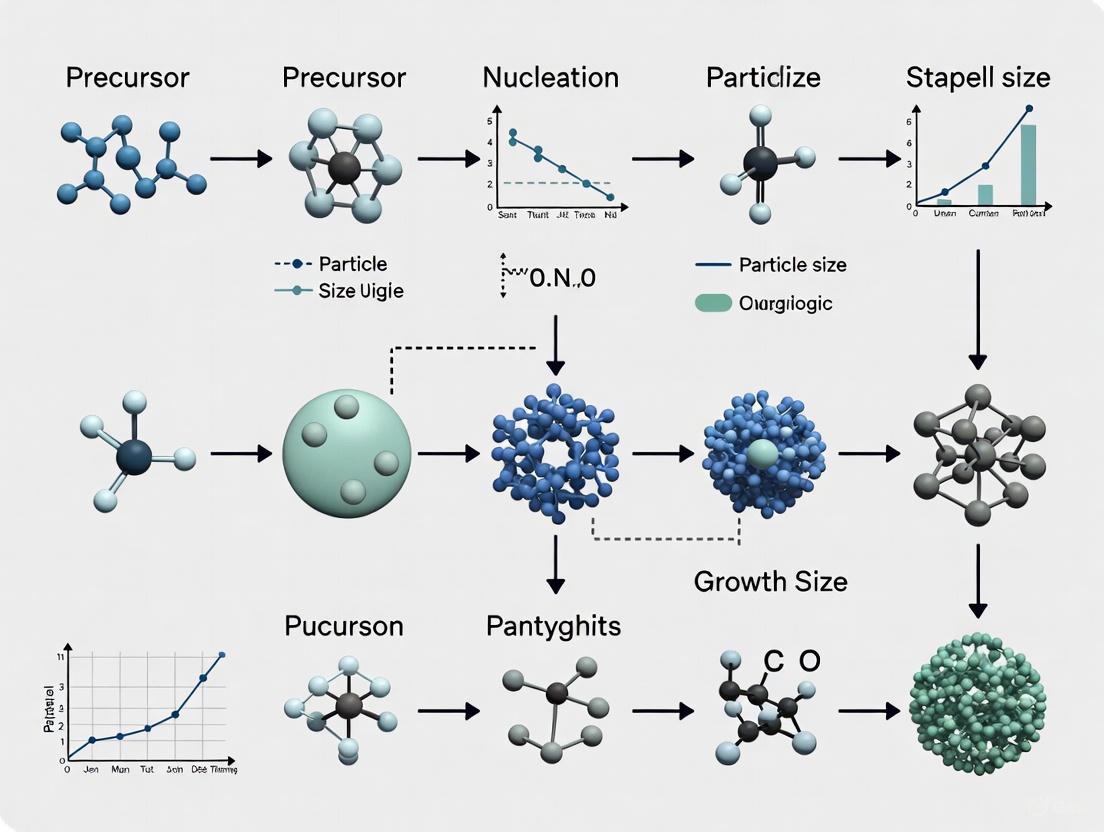
This article provides a comprehensive examination of the scientific principles and practical methodologies for controlling particle size in advanced ceramic synthesis.
Particle Size Control in Ceramic Synthesis: Theory, Methods, and Biomedical Applications
Abstract
This article provides a comprehensive examination of the scientific principles and practical methodologies for controlling particle size in advanced ceramic synthesis. Tailored for researchers and drug development professionals, it explores the fundamental relationship between particle size and material properties, details innovative chemical and mechanical control strategies, and offers frameworks for troubleshooting and performance validation. By synthesizing the latest research, this review serves as a critical resource for designing ceramic materials with tailored microstructures for enhanced performance in biomedical applications, including drug delivery systems and implantable devices.
The Fundamental Science: How Particle Size Governs Ceramic Properties
Quantum Confinement and Size-Dependent Property Transitions
The phenomenon of quantum confinement represents a foundational principle in modern materials science, governing the transition of material properties from the macroscopic bulk scale to the nanoscale regime. As particle dimensions decrease below a critical threshold comparable to the excitonic Bohr radius, the spatial confinement of charge carriers leads to discrete energy levels and a widening of the fundamental band gap [1] [2]. This review examines quantum confinement within the specific context of ceramic synthesis research, where precise particle size control enables targeted manipulation of optical, electronic, and mechanical properties for advanced applications.
The theoretical framework of quantum confinement extends beyond simple band gap engineering to encompass surface chemistry effects, defect states, and interparticle interactions, all of which contribute to the emergent properties of nanoscale ceramics [1]. In ceramic synthesis, the interplay between quantum size effects and surface-dominated phenomena creates a complex landscape where property transitions become highly dependent on the synthesis route and processing parameters. This article explores these relationships through contemporary research findings, with particular emphasis on silicon quantum dots (Si QDs), high-entropy ceramics, and functional oxide ceramics, providing a technical guide for researchers seeking to harness quantum confinement for materials design.
Theoretical Foundations of Quantum Confinement
Quantum confinement effects manifest when material dimensions approach the de Broglie wavelength of charge carriers, fundamentally altering their density of states and energy distribution. The Bohr radius represents the critical dimension below which these effects become significant, typically ranging from 2-10 nm for most semiconductor materials [2]. In ceramic systems, this transition follows distinct theoretical pathways depending on the degree of confinement:
Strong Confinement: Occurs when the particle radius (R) is significantly smaller than the Bohr radius (aB), leading to discrete electronic states and a size-dependent blue shift in optical absorption and emission spectra according to the Brus equation: ΔE = ħ²π²/(2μR²) - 1.8e²/(εR), where μ represents the reduced mass of the exciton and ε the dielectric constant [2].
Weak Confinement: Arises when R is comparable to or slightly larger than aB, producing moderate modifications to the density of states while maintaining some characteristics of bulk behavior, particularly relevant for ceramic oxides with large dielectric constants [1].
For silicon, with an excitonic Bohr radius of approximately 5 nm, the transition from indirect to direct bandgap behavior occurs below this threshold, enabling efficient photoluminescence that is otherwise absent in bulk silicon [1]. The quantum confinement mechanism in Si QDs synthesized via mechanochemical routes demonstrates that emission wavelength tuning across the visible spectrum (blue: ~467 nm to red: ~746 nm) depends critically on both particle size and surface chemistry, with smaller dots (≤3 nm) exhibiting blue emission and larger dots (≥5 nm) emitting red light [1].
Table 1: Quantum Confinement Effects in Different Material Systems
| Material | Bohr Radius (nm) | Confinement Regime | Size-Tunable Properties | Key Applications |
|---|---|---|---|---|
| Silicon QDs | ~5 nm [1] | Strong (≤5 nm) | Photoluminescence wavelength [1], Charge carrier mobility [2] | Optoelectronics [2], Bioimaging [2] |
| Ceramic Oxides | 2-10 nm [2] | Weak to Strong | Band gap engineering [3], Catalytic activity [3] | Photocatalysis [3], Sensors [3] |
| High-Entropy Ceramics | N/A | Composition-driven | Phase stability [3], Mechanical properties [3] | Thermal barrier coatings [3], Extreme environments [3] |
| Perovskite QDs | ~2-8 nm [2] | Strong (≤8 nm) | Emission linewidth [2], Quantum yield [2] | displays [2], Lighting [2] |
Experimental Evidence and Property Transitions
Silicon Quantum Dots via Mechanochemical Synthesis
Recent advances in sustainable synthesis routes have demonstrated precise control over quantum confinement effects in Si QDs. A room-temperature mechanochemical approach using hydrogen silsesquioxane ((HSiO₁.₅)ₙ) as a precursor achieves tunable photoluminescence across the visible spectrum through controlled ball-milling and subsequent processing [1]. Discrete element method simulations reveal that cumulative supra-critical impact energy (Esup) drives Si–H bond cleavage and radical-initiated crystallite growth, with high-energy milling conditions producing larger QDs through more efficient solid-state reactions [1].
The photoluminescence evolution in these systems follows a size–surface coupling mechanism rather than pure quantum size effects. For smaller Si QDs (<3 nm), photoluminescence originates from quantum-confined band-edge transitions facilitated by high alkyl chain coverage, while larger QDs (>5 nm) exhibit red-shifted, excitation-independent emission dominated by deep oxide-related surface states due to enhanced oxidation and reduced organic passivation [1]. This interplay between core size and surface chemistry highlights the complex nature of property transitions in confined systems.
Table 2: Size-Dependent Properties of Silicon Quantum Dots [1]
| QD Size (nm) | Dominant Emission Color | Photoluminescence Origin | Surface Ligand Coverage | Oxidation State |
|---|---|---|---|---|
| <3 nm | Blue (~467 nm) | Quantum-confined band-edge transitions | High alkyl chain coverage | Low |
| 3-5 nm | Green (~530 nm) | Mixed quantum confinement and shallow surface states | Moderate | Moderate |
| >5 nm | Red (~746 nm) | Deep oxide-related surface states | Reduced organic passivation | Enhanced |
High-Entropy Ceramics and Compositional Control
The emerging field of high-entropy ceramics (HECs) extends the concept of property control through compositional complexity rather than pure size effects. These multicomponent systems, comprising five or more principal elements in near-equimolar ratios, exhibit unique configurational entropy contributions to stability and property tuning [3]. While not exclusively governed by quantum confinement, HECs demonstrate how entropy-driven stabilization at the nanoscale enables tailored mechanical, thermal, and functional properties for extreme environment applications [3].
The design principles for HECs incorporate first-principles calculations and phase stability predictions to identify composition spaces where high-entropy effects dominate, enabling precise control over structural characteristics such as phase purity, defect concentration, and grain boundary chemistry [3]. This approach represents a complementary strategy to size control for achieving targeted property profiles in advanced ceramic systems.
Ceramic Composites from Waste Valorization
Research on kaolin-glass cullet ceramics modified with transition metal oxides demonstrates how property transitions in complex ceramic systems depend on both composition and microstructure. Incorporating glass cullet waste (0-50 wt%) with Egyptian kaolin followed by sintering at 900-1200°C produces ceramics with tunable porosity, density, and mechanical properties [4]. The addition of Co₃O₄ or CuO (up to 30 wt%) further modifies these characteristics, with Co₃O₄ achieving the highest density (2.44 g/cm³) and lowest porosity (13%), while CuO encourages anorthite formation with slightly higher porosity (~4%) and density of 2.46 g/cm³ [4].
These compositional modifications induce optical property transitions relevant to functional applications, with Co₃O₄ causing color changes from light to dark and CuO producing dark brown to black ceramics with reflectance values below 40%, suggesting potential use in antireflection coatings for solar cells [4]. This demonstrates how waste-derived ceramics can exhibit quantum-inspired property tuning through controlled microstructural development.
Methodologies for Size-Controlled Synthesis
Mechanochemical Synthesis of Si QDs
The synthesis of size-tuned Si QDs via mechanochemical processing follows a meticulously optimized protocol [1]:
Precursor Preparation: Lab-synthesized (HSiO₁.₅)ₙ polymer from HSiCl₃ serves as the starting material, providing a consistent molecular framework for subsequent size control.
Mechanochemical Treatment: One gram of polymer is loaded into an 80 mL zirconia milling vessel with 40 g of ZrO₂ balls of varying diameters (5 mm and 10 mm). The vessel is sealed under argon atmosphere and processed using a high-energy planetary ball mill (Pulverisette 7 Premium Line, Fritsch) at 400 rpm for 3 hours at ambient temperature (~25°C).
Size Control Parameters: Different ball size distributions achieve distinct size profiles: Sample A1 (101 balls, 5 mm diameter), A2 (69 balls of 5 mm + 4 balls of 10 mm), and A3 (45 balls of 5 mm + 8 balls of 10 mm). DEM simulations confirm that larger balls generate higher-energy impacts exceeding the critical threshold (ecrit) for Si–H bond cleavage, promoting crystallite growth.
Post-Processing: The mechanochemically treated powder undergoes chemical etching with HF acid to remove oxide layers, followed by hydrosilylation with 1-decene to passivate surface states with alkyl chains, enabling colloidal stability and tunable photoluminescence.
Diagram 1: Si QD Synthesis Workflow (Size: 760px)
Emulsion Polymerization for Polystyrene Reflectance Rulers
While not ceramic, the synthesis of monodisperse polystyrene particles for photonic crystals exemplifies precise size control methodologies with relevance to ceramic templating approaches [5]:
Monomer Purification: Styrene monomer is purified by washing with 10% aqueous sodium hydroxide solution followed by multiple rinses with deionized water to remove inhibitors.
Emulsion Polymerization: In a 500 mL three-necked round-bottomed flask, 200 mL DI water, 125 mg NaHCO₃, and varying amounts of SDS (20-100 mg) are combined under nitrogen atmosphere with mechanical stirring at 300 rpm. The reactor is maintained at 70°C in an oil bath.
Particle Growth: After 10 minutes, 250 mg KPS (dissolved in 50 mL DI water at 40°C) and 25 g purified styrene are added. Nucleation begins immediately, indicated by a milky white appearance, and continues for 24 hours under constant stirring.
Size Control Mechanism: Varying SDS concentration while keeping other parameters constant enables precise diameter control from 200-550 nm, with higher SDS producing smaller particles due to increased nucleation sites.
This methodology demonstrates the fundamental principles of colloidal size control that can be adapted to ceramic nanoparticle synthesis through similar surfactant-mediated approaches.
Characterization Techniques for Size-Property Relationships
Structural Characterization
Advanced characterization methodologies provide critical insights into size-property relationships in quantum-confined systems:
X-ray Diffraction (XRD): Determines crystallite size via Scherrer analysis (D = Kλ/βcosθ) and phase composition in ceramic systems [4]. For kaolin-glass cullet ceramics, XRD identifies anorthite formation in CuO-doped samples, explaining mechanical property variations [4].
Transmission Electron Microscopy (TEM): Directly images quantum dot dimensions and crystallinity, with high-resolution TEM (HRTEM) resolving lattice fringes to confirm crystal structure and measure core sizes [1] [2].
Field Emission Scanning Electron Microscopy (FESEM): Characterizes surface morphology and particle size distribution in colloidal crystals, with FESEM of polystyrene photonic crystals showing highly ordered arrangements with particle sizes matching those calculated from Bragg's law [5].
Optical Characterization
Photoluminescence (PL) Spectroscopy: Measures emission spectra and quantum yields, with Si QDs exhibiting tunable PL from blue to red depending on size and surface chemistry [1]. Time-resolved PL further elucidates carrier recombination dynamics.
UV-Visible Spectroscopy: Determines absorption onset and band gap through Tauc plot analysis, confirming quantum confinement through blue-shifted absorption edges relative to bulk materials [2].
Reflectance Spectroscopy: Quantifies photonic band gaps in structured materials, with polystyrene photonic crystals showing reflectance exceeding 80% at specific wavelengths determined by particle size [5].
The Scientist's Toolkit: Research Reagent Solutions
Table 3: Essential Materials for Quantum Confinement Studies
| Reagent/Material | Function | Application Example | Key Characteristics |
|---|---|---|---|
| Hydrogen Silsesquioxane ((HSiO₁.₅)ₙ) | Silicon precursor | Si QD synthesis [1] | Provides controlled Si:O ratio for subsequent reduction |
| Zirconia Milling Media | Mechanochemical energy transfer | Ball-mill synthesis of Si QDs [1] | High density for efficient energy impact, chemical inertness |
| Hydrofluoric Acid (HF) | Etching agent | Surface oxide removal from Si QDs [1] | Selective silicon oxide dissolution |
| 1-Decene | Surface passivation ligand | Hydrosilylation of Si QDs [1] | Forms stable alkyl monolayer for dispersion and PL control |
| Sodium Dodecyl Sulfate (SDS) | Surfactant | Emulsion polymerization [5] | Controls particle size through nucleation regulation |
| Potassium Persulfate (KPS) | Radical initiator | Polystyrene particle synthesis [5] | Thermal decomposition generates radicals for polymerization |
| Transition Metal Oxides (Co₃O₄, CuO) | Dopants for property modification | Kaolin-glass cullet ceramics [4] | Modifies optical, mechanical, and structural properties |
Property Transitions and Application Pathways
The strategic implementation of quantum confinement principles enables targeted material design for specific technological applications:
Optoelectronic Devices
Quantum dots exhibit exceptional properties for optoelectronics, including high quantum yield, size-tunable emission, and solution processability [2]. Silicon QDs with emission spanning the visible spectrum (467-746 nm) enable potential applications in displays, lighting, and integrated photonics, overcoming silicon's inherent indirect bandgap limitation [1]. Quantum dot light-emitting diodes (QLEDs) leverage these characteristics for high-color-purity displays with wide gamut coverage, while quantum dot-sensitized solar cells (QDSSCs) achieve enhanced power conversion efficiencies through tailored band gaps [2].
Ceramic Design and Processing
In conventional ceramics, property transitions linked to particle size control include sintering behavior, mechanical strength, and phase stability. Kaolin-glass cullet ceramics demonstrate how particle size distribution and composition influence densification, porosity, and hardness, with optimal formulations achieving 7.9 GPa hardness at specific cullet content [4]. For high-entropy ceramics, configurational entropy stabilizes single-phase structures despite diverse elemental constituents, enabling exceptional mechanical properties, thermal stability, and corrosion resistance for extreme environment applications [3].
Sensing and Biomedical Applications
The size-dependent optical properties of quantum-confined materials provide responsive signaling mechanisms for sensing applications. Si QDs offer advantages of biocompatibility, minimal toxicity, and surface functionalization capability for biological detection and imaging [1] [2]. Similarly, polystyrene photonic crystals with highly reproducible reflectance signatures function as optical reflectance rulers for quantitative sensing applications, with reflectance peaks systematically shifting with particle size changes from 200-550 nm [5].
Diagram 2: Property Transition Pathways (Size: 760px)
Quantum confinement and size-dependent property transitions represent a fundamental paradigm in ceramic synthesis research, enabling precise control over material behavior through nanoscale dimension manipulation. The experimental evidence from silicon quantum dots, high-entropy ceramics, and functional composites demonstrates that property tuning requires integrated consideration of both quantum size effects and surface chemistry modifications. The methodologies and characterization techniques outlined provide researchers with a comprehensive toolkit for designing and synthesizing advanced ceramics with tailored properties for specific applications. As synthesis approaches evolve toward greener, more sustainable routes like room-temperature mechanochemical processing, the fundamental principles of quantum confinement will continue to enable innovative material solutions across optoelectronics, energy, sensing, and biomedical domains.
Domain Theory and Microstructural Control in Non-Graphitizable Carbons
Non-graphitizable carbons (NGCs), also known as hard carbons, represent a fundamental class of solid carbon materials that cannot be transformed into crystalline graphite even when heated to extreme temperatures exceeding 3000°C [6]. This stands in direct contrast to graphitizing carbons (GCs), which readily form ordered graphite structures under high-temperature treatment. The historical foundation for understanding these materials was established by Rosalind Franklin in the 1950s, who first classified carbons based on their graphitization behavior and proposed initial structural models [6]. NGCs are characterized by their hard, dense nature, relatively low densities, and nanoscale porosity that confers enormously high surface areas, making them invaluable for applications ranging from energy storage in lithium-ion and sodium-ion batteries to purification systems for air and water supplies [6].
The enduring scientific challenge surrounding NGCs lies in elucidating their precise atomic structure. As Harris describes, "Despite decades of research, the detailed atomic structures of these materials has still not been fully established" [6]. The prevailing modern theory suggests these structures contain non-hexagonal carbon rings similar to those found in fullerenes, which create curved graphene sheets that prevent the formation of flat, aligned graphite planes [6]. This structural characteristic fundamentally differentiates them from graphitizing carbons and dictates their unique material properties and applications.
Domain Theory: Structural Fundamentals
Historical Development of Structural Models
The evolution of structural models for non-graphitizable carbons reveals a progressive refinement of our understanding of their complex architecture. Franklin's pioneering models proposed that both graphitizing and non-graphitizing carbons consist of small graphitic domains joined by crosslinks, with the key distinction being the arrangement of these domains and the strength of their interconnections [6]. In her model, graphitizing carbons contained approximately parallel domains with weak crosslinks, facilitating reorganization into graphite at high temperatures, while non-graphitizing carbons featured randomly oriented domains connected by strong crosslinks that impeded structural rearrangement [6].
Subsequent models proposed in the 1970s by Ban, Crawford, and Marsh introduced ribbon-like structures based on transmission electron microscopy studies, suggesting twisted and curved graphite ribbons enclosing randomly shaped pores [6]. However, these models faced significant challenges, as thin graphite sheets are inherently flexible and such structures would likely collapse at high temperatures to reduce surface energy. Oberlin later questioned the interpretation of the electron micrographs supporting these ribbon models, further undermining their validity [6].
Modern Fullerene-Based Domain Theory
Contemporary understanding of NGC structure has evolved toward fullerene-related models that incorporate non-hexagonal carbon rings. This perspective resolves several limitations of earlier theories by explaining the inherent stability of NGCs against graphitization. Harris and Tsang proposed that "the structure contains non-hexagonal rings, as in the fullerenes and fullerene-related structures," with studies using aberration-corrected transmission electron microscopy providing important support for this concept [6].
The critical insight of this model is that the foundation for non-graphitizing character is established during early synthesis stages, particularly during stabilization of polymer precursors. As one study explains, during stabilization of polyacrylonitrile (a common NGC precursor), "the polymer backbone chains tend to lose nitrogen groups in the cyclization process, resulting in sp3 hybridized carbon bonds," which leads to formation of penta- and hepta-carbon rings [7]. These non-hexagonal rings create curved structures that preferentially form fullerenes rather than flat graphite planes during pyrolysis. The thermodynamic stability of these fullerene structures subsequently inhibits graphitization even at extremely high temperatures, effectively "setting" the non-graphitizing microstructure early in the formation process [7].
Table: Evolution of Structural Models for Non-Graphitizable Carbons
| Model/Theory | Key Proponents | Structural Description | Limitations/Advancements |
|---|---|---|---|
| Cross-linked Domains | Franklin (1951) | Randomly oriented graphitic domains with strong cross-links | Explained basic distinction but lacked atomic-level detail |
| Ribbon-like Structure | Ban et al. (1970s) | Twisted graphite ribbons enclosing random pores | Inherently unstable at high temperatures; questionable TEM interpretation |
| Fullerene-Related Structure | Harris & Tsang (1990s+) | Curved graphene sheets with pentagonal/heptagonal rings | Explains thermal stability and non-graphitizing behavior; supported by ACTEM |
Microstructural Control Through Processing Parameters
Precursor Particle Size Engineering
The particle size of carbon precursors represents a critical control parameter for directing microstructural evolution during pyrolysis, with demonstrated impacts on the resulting carbon's properties and performance, particularly in electrochemical applications. Systematic investigation of semi-coke precursors with controlled particle sizes (median sizes of 3, 7, 11, 15, and 19 μm) revealed profound influences on final carbon structure [8]. As precursor particle size increased from 3 μm to 19 μm, the highly-disordered carbon content in the resulting carbon materials decreased from 41.27% to 30.94%, while the content of pseudo-graphitic carbon associated with plateau capacity in battery applications remained nearly constant [8].
The particle size effect extends beyond merely final composition to impact practical electrochemical performance. When implemented as anodes in sodium-ion batteries, the initial coulombic efficiency (ICE) increased from 77.4% to 82.3% with increasing precursor particle size, primarily due to enhanced ICE in the slope region of the voltage profile [8]. However, this improvement in initial efficiency came with trade-offs in rate capability and cycling performance, highlighting the need for balanced optimization of precursor particle size based on application requirements.
The underlying mechanism relates to heat and mass transfer dynamics during pyrolysis. Smaller precursor particles exhibit enhanced heat/mass transfer rates during thermal processing, while gas release rates during pyrolysis show strong correlation with precursor particle size [8]. These differences in transformation kinetics directly influence the development of microcrystalline structure and defect concentration in the final carbon material.
Table: Effect of Semi-Coke Precursor Particle Size on Derived Carbon Properties [8]
| Precursor Size (μm) | Disordered Carbon Content (%) | Initial Coulombic Efficiency (%) | Reversible Capacity | Rate Performance |
|---|---|---|---|---|
| 3 | 41.27 | 77.4 | High | Excellent |
| 7 | 37.45 | 79.1 | High | Good |
| 11 | 34.86 | 80.5 | Moderate | Moderate |
| 15 | 32.77 | 81.6 | Moderate | Moderate |
| 19 | 30.94 | 82.3 | Lower | Reduced |
Stress-Induced Molecular Alignment
Strategic application of mechanical stresses during processing provides a powerful route to overcome the inherent non-graphitizing tendency of certain carbon precursors. Research has demonstrated that electrohydrodynamic forces combined with mechanical compression can significantly enhance graphitization in traditionally non-graphitizing polymers like polyacrylonitrile (PAN) [7].
The process employs electrospinning to apply electrohydrodynamic forces that unwind and orient polymer molecular chains. In this method, "electrohydrodynamic forces offer a powerful tool to manipulate the configuration of polymer molecules embedded in electrically charged liquids" [7]. The addition of multi-walled carbon nanotubes (MWCNTs) introduces dielectrophoresis phenomena that generate additional shear force zones at CNT surfaces, further enhancing polymer chain alignment [7].
A critical innovation involves applying mechanical compressive stress (approximately 200 kPa) during the stabilization phase, which preserves and enhances molecular alignment when the polymer microstructure is most formative. This mechanical treatment suppresses the formation of curved surfaces in the polymer microstructure, reducing fullerene formation and enabling development of more graphitic carbon planes during subsequent pyrolysis [7]. This approach demonstrates that graphitizability is not solely an intrinsic chemical property of organic precursors but can be substantially modified through physical processing conditions.
Pre-oxidation Control of Microcrystalline Parameters
Controlled pre-oxidation of carbon precursors enables precise tuning of microcrystalline parameters in non-graphitizable carbons, particularly for optimizing electrochemical performance in battery applications. Using Hami lignite as a precursor, air-oxidation in the temperature range of 190-230°C followed by carbonization at 1400°C allows systematic regulation of key structural parameters [9].
With increasing air-oxidation temperature, the resulting non-graphitizable carbons exhibit progressively decreased microcrystalline dimensions, including both a-axis length (La) and c-axis length (Lc), alongside increased interlayer spacing (d-spacing) and defect concentration (ID/IG ratio from Raman spectroscopy) [9]. This precise control enables optimization of sodium storage performance, with one study identifying critical values of La = 3.67 nm and Lc = 1.18 nm that delivered an exceptionally high initial coulombic efficiency of 85.3% [9].
The mechanism involves conversion of aliphatic carbons distributed uniformly in lignite into -COOH and C=O groups during air-oxidation, which form cross-linked structures during subsequent carbonization that suppress graphitization and promote development of pseudo-graphitic carbon with tailored dimensions [9]. This approach demonstrates how precursor chemistry can be manipulated to control the microstructure of non-graphitizable carbons for specific application requirements.
Experimental Methodologies
Stress-Induced Graphitization Protocol
The following protocol details the methodology for achieving enhanced graphitization in non-graphitizing carbon precursors through electrospinning and mechanical stress application, based on published procedures [7]:
Electrospinning Solution Preparation: Prepare a solution of polyacrylonitrile (PAN) in dimethylformamide (DMF) with a concentration of 8-10 wt%. Add 0.5-1.0 wt% multi-walled carbon nanotubes (MWCNTs) relative to PAN mass to enhance dielectrophoretic effects.
Electrospinning Parameters:
- Voltage: 15-25 kV
- Flow rate: 0.5-1.0 mL/h
- Collector distance: 15-20 cm
- Ambient conditions: 25-30°C, 30-40% relative humidity
Stabilization Under Mechanical Stress:
- Place electrospun PAN mats between graphite plates
- Apply uniform compressive stress of approximately 200 kPa
- Heat treatment in air atmosphere at 275°C for 2-4 hours
- Controlled heating rate of 1-2°C/min to target temperature
Pyrolysis:
- Perform under inert atmosphere (argon or nitrogen)
- Heat to 1000°C with controlled heating rate of 5°C/min
- Maintain at target temperature for 1-2 hours
- Cool naturally to room temperature under continued inert gas flow
This methodology produces carbon materials with uniformly graphitized structure rich in edge planes, significantly enhancing electrochemical kinetics compared to conventionally processed PAN-derived carbons [7].
Particle Size Control and Precursor Optimization
For systematic investigation of precursor particle size effects on carbon microstructure, the following experimental approach has been employed [8]:
Precursor Fractionation:
- Begin with raw semi-coke material
- Utilize mechanical crushing and vibratory sieving
- Prepare distinct fractions with median particle sizes of 3, 7, 11, 15, and 19 μm
- Verify size distributions by laser diffraction analysis
Purification Process:
- Acid-assisted washing with 10 wt% HCl solution at 70°C for 2 hours
- Subsequent treatment with 10 wt% HF solution using identical conditions
- Filtration and washing with deionized water until neutral pH
- Drying at 80°C for 4-6 hours
Carbonization:
- Heat treatment under inert atmosphere to 1100-1300°C
- Controlled heating rate of 3-5°C/min
- Maintain at peak temperature for 2-4 hours
- Natural cooling under continuous inert gas flow
This methodology enables direct correlation between precursor particle size and resulting carbon microstructure, particularly the balance between disordered carbon and pseudo-graphitic carbon content [8].
Analytical Techniques for Microstructural Characterization
Comprehensive characterization of non-graphitizable carbons requires multi-modal analytical approaches to elucidate their complex microstructure:
Raman Spectroscopy: Primary tool for evaluating graphitization degree through D and G band intensity ratios (ID/IG). Over 100 spectra should be collected and averaged across each carbon fiber type to ensure statistical significance [7]. The G peak (1560-1600 cm⁻¹) corresponds to vibration of carbon atoms in sp² hybridization, while the D peak (approximately 1350 cm⁻¹) indicates structural defects and disorder [7].
Transmission Electron Microscopy (TEM): Aberration-corrected TEM (ACTEM) provides critical insights into atomic-scale structure, particularly for identifying fullerene-like features and curved graphene sheets [6]. High-resolution imaging can resolve the 0.34 nm interlayer spacing characteristic of graphitic structures.
X-ray Diffraction (XRD): Used to determine key microstructural parameters including interlayer spacing (d₀₀₂), crystallite sizes along a-axis (La) and c-axis (Lc) through Scherrer analysis of diffraction peak broadening [9].
Electrochemical Characterization: For energy storage applications, evaluation of sodium storage performance including initial coulombic efficiency, reversible capacity, and rate capability provides indirect but practical assessment of carbon microstructure [8].
The Scientist's Toolkit: Essential Research Reagents and Materials
Table: Key Research Materials for Non-Graphitizable Carbon Synthesis and Characterization
| Material/Reagent | Function/Application | Technical Specifications | Research Context |
|---|---|---|---|
| Polyacrylonitrile (PAN) | Non-graphitizing polymer precursor | Molecular weight: 150,000-200,000 g/mol | Stress-induced graphitization studies [7] |
| Multi-walled Carbon Nanotubes (MWCNTs) | Dielectrophoretic alignment enhancer | Diameter: 10-20 nm, Length: 1-10 μm | Electrospinning additive for chain orientation [7] |
| Semi-coke Precursor | Carbon source for anode materials | Median particle size: 3-19 μm, Ash content: <5% | Particle size effect studies [8] |
| Lignite | Low-rank coal precursor for NGC | Hami lignite, purified by acid washing | Pre-oxidation control of microstructure [9] |
| La₂O₃ | Desiliconization agent | Purity: ≥99.9% | Impurity removal in precursor synthesis [10] |
| 1-(2-pyridylazo)-2-naphthol (PAN) | Iron-binding scavenger | Purity: ≥99.9% | Metal impurity control [10] |
| Hydrochloric Acid (HCl) | Demineralization treatment | 10 wt% solution, 70°C | Precursor purification [8] |
| Hydrofluoric Acid (HF) | Silica removal | 10 wt% solution, 70°C | Ash reduction in coal precursors [8] |
The domain theory of non-graphitizable carbons has evolved substantially from Franklin's initial cross-linked domain model to contemporary fullerene-based structural concepts that better explain the unique properties and thermal stability of these materials. This theoretical framework provides the foundation for sophisticated microstructural control strategies that enable tailoring of NGC properties for specific applications, particularly in energy storage systems.
The research findings synthesized in this review demonstrate that precursor particle size represents a powerful, yet frequently overlooked, parameter for directing microstructural evolution in carbon materials. Coupled with stress-induced alignment techniques and chemical pre-treatment methods, particle size control enables precise manipulation of critical microstructural parameters including crystallite dimensions, defect density, and phase composition. These control strategies effectively bridge the theoretical understanding of non-graphitizable carbon structure with practical methodologies for optimizing performance in applications ranging from sodium-ion battery anodes to specialized adsorbent materials.
Future research directions will likely focus on multi-parameter optimization approaches that simultaneously control particle size, molecular alignment, and chemical composition through advanced processing techniques. Additionally, the development of in situ characterization methods will provide deeper insights into the structural transformations occurring during carbonization, enabling more precise control over the resulting carbon microstructure and properties.
The Critical Link Between Particle Size, Sintering Kinetics, and Final Density
Sintering is a fundamental thermal treatment process employed to transform a powdered material into a solid, dense body by atomic diffusion, without reaching the material's melting point. The driving force for sintering is the reduction of the total interfacial energy of the system, primarily located at the particle surfaces and grain boundaries. In the context of ceramic synthesis, the starting powder's particle size and size distribution are among the most critical parameters controlling the thermodynamics and kinetics of this densification process. The intrinsic relationship is governed by the increase in specific surface area as particle size decreases, which exponentially amplifies the driving force for diffusion-based mass transport. This technical guide explores the fundamental mechanisms through which particle size governs sintering kinetics and dictates the final microstructure and properties of ceramic materials, providing a scientific foundation for research and industrial development.
The control over particle size is not merely a preparatory step but a central strategy in the broader thesis of advanced ceramic synthesis. As ceramic technologies advance towards more complex geometries via additive manufacturing and demand higher performance in applications from solid-state batteries to high-temperature structural components, the precision of particle size control becomes paramount. This guide synthesizes current research to establish a clear, quantitative understanding of how engineered particle systems can be leveraged to predictably control densification behavior, minimize energy consumption, and achieve targeted material properties.
The Science of Particle Size in Sintering Kinetics
Thermodynamic and Kinetic Foundations
The influence of particle size on sintering is rooted in basic materials thermodynamics. The sintering stress (σ), which acts as the driving force for densification, is inversely proportional to the particle size. This relationship can be conceptually summarized as σ ∝ γ/R, where γ is the surface energy and R is the particle radius. Consequently, reducing the particle size from micrometre to nanometre scale dramatically increases the sintering stress. For instance, a tenfold decrease in particle size results in a tenfold increase in the driving force for densification. This enhanced driving force directly lowers the activation energy required for initial-stage sintering mechanisms, such as surface and grain boundary diffusion, thereby accelerating the onset and rate of densification.
Experimental studies on various ceramic systems consistently validate this principle. In boron carbide (B4C) ceramics, the use of nano-sized powders (200 nm) versus conventional micron-sized powders (3.5 μm) resulted in a marked decrease in both the densification initial temperature and the diffusion activation energy [11]. The nano-sized powder exhibited a shorter time for plastic flow in the initial sintering stage and a higher relative densification rate, culminating in a final relative density of 90.5% when sintered at 1850°C for 1 hour. This is a clear demonstration of how particle size reduction activates sintering mechanisms at lower thermal budgets, a crucial consideration for energy-efficient manufacturing and for systems susceptible to deleterious phase transformations or volatile component loss at high temperatures.
The Critical Role of Particle Size Distribution
While the mean particle size is a vital parameter, the particle size distribution (PSD) plays an equally critical and complex role in sintering kinetics and microstructural evolution. A broad PSD can enhance the initial packing density of the green body (pre-sintered compact) because smaller particles can fill the interstices between larger particles. However, this does not always translate to superior sintered density. Research on alumina (Al2O3) ceramics has shown that different PSDs significantly influence post-sintering properties including flexural strength, porosity, and shrinkage anisotropy [12].
The sintering behavior of powders with a broad PSD is characterized by a complex interplay of different driving forces for particles of varying sizes. Studies on zinc oxide and alumina powders have revealed that during the early stages of sintering, a broad PSD can lead to a significant reduction in specific surface area with only a minimal increase in ultrasonic velocity, an indicator of stiffness and densification. This suggests that the apparent elastic moduli of the compact are dominated by the larger particles, while the finer particles undergo surface area reduction without substantially contributing to the development of bulk mechanical integrity [13]. In contrast, powders with a narrow particle size distribution exhibit a more linear and predictable relationship between surface area reduction and the development of mechanical strength, offering greater control over the sintering trajectory [13].
Table 1: Comparative Sintering Behavior of Different Particle Size Distributions in Alumina Ceramics [12]
| Particle Size Group (μm) | Sintering Temperature (°C) | Flexural Strength (MPa) | Open Porosity (%) |
|---|---|---|---|
| 30/5 | 1650 | ~70 | ~25 |
| 20/3 | 1650 | ~110 | ~18 |
| 5/0.8 | 1650 | ~240 | ~7 |
| 2/0.3 | 1650 | ~320 | ~3 |
Quantitative Data and Experimental Evidence
Enhanced Properties in Additively Manufactured Ceramics
Additive Manufacturing (AM) of ceramics imposes unique demands on powder characteristics, where particle size control is critical for both printability and final properties. In Direct Ink Writing (DIW) of alumina, reducing the particle size of boehmite powder to below 1 μm via ball milling enabled a 20% enhancement in solid loading of the printing ink. This optimization led to a higher viscosity and superior shear-thinning behavior, which resulted in an enhanced printing resolution of 250 μm and improved dimensional accuracy of the printed green bodies [14]. Crucially, the structures derived from ball-milled powder exhibited a 68% enhancement in compressive strength over structures made from non-ball-milled powder, despite having a lower relative density [14]. This counter-intuitive result underscores that particle size influences not just density but also the microscopic uniformity and defect structure, which are paramount for mechanical performance.
In stereolithography-based AM, the influence of particle size distribution on alumina ceramics is pronounced. A systematic study using seven different bimodal distributions demonstrated that finer particle sizes (e.g., 2 μm/0.3 μm) yielded significantly higher flexural strength and lower porosity at the same sintering temperature compared to coarser distributions (e.g., 30 μm/5 μm) [12]. Furthermore, the shrinkage behavior was also affected; when the particle size was comparable to the feature size of the sample (e.g., 30 μm particles in a 5 mm wide sample), shrinkage was isotropic. In contrast, with much finer particles (2 μm/0.3 μm), in-plane and out-of-plane shrinkage behaviors diverged [12]. This highlights the critical need to match the particle size distribution to the intended design scale for precision components.
Table 2: Effect of Powder Characteristics on Sintered Properties of Ga-doped LLZO Solid Electrolytes [15]
| Powder Type | Avg. Particle Size | Green Density (%) | Sintered Relative Density (%) | Ionic Conductivity (S·cm⁻¹) |
|---|---|---|---|---|
| M0h (Soft Agglomerate) | 1.09 μm | 60.6 | 95.2 | 5.57 × 10⁻⁴ |
| M6h (Hard Agglomerate) | 0.12 μm | 58.6 | Lower than M0h | ~20% of M0h |
| M12h (Nanocrystalline) | 0.39 μm | Not Specified | Not Specified | 4.93 × 10⁻⁴ |
The "Finer is Not Always Better" Paradigm
A critical nuance in the particle-size-sintering relationship is that excessively fine powders, particularly nanoscale ones, can present significant challenges. The extremely high surface area of nanoparticles leads to strong interparticle forces, promoting the formation of hard agglomerates. These agglomerates can behave as large, consolidated units during pressing, leading to poor green density and creating large, irregular pores that are difficult to eliminate during sintering [15].
This phenomenon was meticulously documented in the sintering of Li6.25Ga0.25La3Zr2O12 (LLZO) solid electrolytes. While ball milling reduced the primary particle size, prolonged milling (6 hours) created ultrafine hard-agglomerated powder (0.12 μm) that resulted in a lower initial green density and numerous fine pores after sintering. This microstructural defectology led to an ionic conductivity of only 20% of that achieved with a softly agglomerated, larger micron-sized powder (1.09 μm) [15]. Similarly, nanocrystalline powder (0.39 μm) suffered from rapid grain growth and severe lithium volatilization during sintering. These findings challenge the conventional belief that smaller particle size inherently favors sintering and demonstrate that the agglomeration state of a powder is often as important as its primary particle size. The optimal powder for sintering is typically one with a small primary particle size but minimal agglomeration, or with a tailored agglomerate structure that facilitates high green density.
Essential Methodologies for Particle Control and Sintering Analysis
Particle Size Reduction and Control Protocols
Ball Milling is a widely used technique for particle size reduction and achieving a homogeneous mixture of starting powders. The experimental protocol for ball milling boehmite powder, as described by Joseph et al., involves using a planetary ball mill with yttria-stabilized zirconia (YSZ) grinding media and a solvent like ethanol or isopropanol [14] [15]. Key controllable parameters include:
- Rotation Speed: Ranging from 200 to 500 rpm.
- Milling Duration: From a few hours to over 12 hours, depending on the target size.
- Ball-to-Powder Weight Ratio (BPR): Typically maintained between 2:1 and 10:1 [15].
- Solvent Type and Volume: Used to prevent excessive heating and cold welding.
The process must be optimized for each material system, as over-milling can lead to contamination from the grinding media or the formation of hard agglomerates, which are detrimental to sintering [15].
Chemical Synthesis routes offer a bottom-up approach for producing fine, high-purity powders with controlled morphology. The co-precipitation method for synthesizing α-alumina nanoparticles, as detailed by Zannat et al., involves dissolving a precursor salt like aluminum nitrate nonahydrate in deionized water [16]. The solution is stirred continuously, and a base (e.g., NaOH, KOH, NH4OH) is slowly added to adjust the pH to a specific value (e.g., 9.0) to precipitate the hydroxide. The precipitate is then washed, dried, and calcined at high temperatures (e.g., 1200 °C for 4 hours) to form the final oxide phase [16]. The choice of base can influence the resulting particle size, with NH4OH yielding the smallest crystallite sizes (∼55 nm) and highest specific surface area (28.36 m²/g) [16].
Sintering Analysis and Characterization Techniques
Dilatometry is a fundamental technique for monitoring sintering kinetics in real-time. A dilatometer measures the dimensional changes (shrinkage) of a powder compact as a function of temperature and time under a controlled atmosphere. The resulting shrinkage curve provides critical data, including the onset temperature of sintering, shrinkage rate, and information about the dominant diffusion mechanisms. This data is essential for determining the kinetic constants required for sintering models, as employed in the study of binder-jetted stainless steel [17].
Microstructural and Property Characterization of sintered samples is crucial for validating the effectiveness of particle size control.
- X-ray Diffraction (XRD): Used for phase identification, crystallite size estimation via the Scherrer equation, and analysis of microstrain [16].
- Electron Microscopy (SEM/TEM): Provides direct visualization of grain size, pore distribution, and overall microstructure [14] [12].
- Archimedes' Method: A standard technique for measuring the bulk density and open/closed porosity of sintered bodies [12].
- Mechanical Testing: Such as flexural strength and compressive strength measurements, to correlate microstructure with macroscopic properties [14] [12].
- Ionic Conductivity Measurements: For functional ceramics like solid electrolytes, often performed by electrochemical impedance spectroscopy [15].
Diagram 1: Ceramic Sintering R&D Workflow
The Scientist's Toolkit: Key Research Reagents and Materials
Table 3: Essential Materials for Ceramic Synthesis and Sintering Research
| Material/Reagent | Function in Research | Application Example |
|---|---|---|
| Boehmite Powder (AlOOH) | Precursor for high-surface-area alumina catalysts and structures [14]. | Used as a starting material for DIW ink in catalytic monoliths [14]. |
| Aluminum Isopropoxide | Metal-organic precursor for sol-gel and co-precipitation synthesis [10]. | Hydrolyzed to produce high-purity, nanoscale alumina powders [10]. |
| La₂O₃ (Lanthanum Oxide) | Dopant for stabilizing crystal phases and scavenging silicon impurities [10] [15]. | Used in Ga-doped LLZO solid electrolytes and to remove Si from alumina [10] [15]. |
| 1-(2-pyridylazo)-2-naphthol (PAN) | Chelating agent for selective removal of metal impurities [10]. | Reduces iron content in high-purity alumina synthesis [10]. |
| Yttria-Stabilized Zirconia (YSZ) Balls | Grinding media for mechanical ball milling [14] [15]. | Used for particle size reduction and homogenization of ceramic powders [14]. |
| Ga₂O₃ (Gallium Oxide) | Dopant to enhance ionic conductivity and sinterability [15]. | Stabilizes the cubic phase and promotes densification in LLZO electrolytes [15]. |
The critical link between particle size, sintering kinetics, and final density is unequivocally established. A reduction in particle size enhances the driving force for sintering, lowering activation energies and facilitating densification at lower temperatures, which is evidenced by superior mechanical properties and density in systems from alumina to boron carbide. However, a sophisticated understanding must account for the particle size distribution and the agglomeration state, where an optimal balance—rather than a simplistic "smaller is better" approach—yields the best results. The case of LLZO electrolytes demonstrates that a softly agglomerated micron-sized powder can outperform a hard-agglomerated nanoscale powder.
Future research in ceramic synthesis will continue to refine particle engineering techniques, particularly for additive manufacturing and advanced functional ceramics like solid-state electrolytes. The development of novel, scalable synthesis routes for de-agglomerated nanoscale powders, coupled with advanced sintering techniques like flash sintering [18], represents the frontier of this field. The ability to precisely control particle size and architecture at multiple scales will remain the cornerstone of designing and fabricating the next generation of high-performance ceramic materials.
Impact on Mechanical Strength, Dielectric, and Piezoelectric Performance
The control of particle size stands as a foundational principle in the synthesis of advanced functional ceramics, directly governing critical performance metrics across mechanical, dielectric, and piezoelectric applications. In the context of ceramic synthesis research, particle size is not merely a physical characteristic but a fundamental design parameter that influences microstructural evolution, defect chemistry, and interfacial phenomena. The pursuit of miniaturization and enhanced performance in technologies ranging from multilayer ceramic capacitors (MLCCs) to energy-harvesting devices and structural catalyst supports has intensified the need for precise particle size control. This whitepaper synthesizes current research to establish the theoretical and practical relationships between particle size and functional properties, providing researchers with a comprehensive framework for material design and optimization. By examining quantitative data across multiple material systems and detailing corresponding synthesis methodologies, this guide aims to equip scientists with the knowledge to strategically manipulate particle characteristics for targeted application performance.
Theoretical Foundations of Particle Size Effects
The influence of particle size on material properties originates from several fundamental physical principles that become increasingly pronounced at the nanoscale. The overarching theory connects size reduction to an increase in surface-area-to-volume ratio, which amplifies the role of surface energy and interfacial phenomena in determining macroscopic behavior.
In mechanical strength, the Hall-Petch relationship describes how reducing grain size increases yield strength by impeding dislocation motion through grain boundary strengthening. However, this relationship may reverse at extremely small grain sizes (inverse Hall-Petch effect) when grain boundary sliding becomes dominant. For ceramic systems, research on 3D-printed alumina monoliths demonstrates that reducing boehmite particle size to below 1 µm enabled higher solid loading in direct ink writing (DIW) inks, resulting in a 68% enhancement in compressive strength despite a lower relative density. This counterintuitive result highlights how particle size controls microstructural homogeneity and defect distribution, which often outweighs the influence of bulk density in determining mechanical performance [14].
For dielectric properties, particle size influences both intrinsic and extrinsic polarization mechanisms. Nanoscale particles exhibit increased interface density, which enhances interface polarization but can also introduce detrimental space charge effects if not properly controlled. In polyimide/ZnO composite films, the aggregation tendency of nanofillers is strongly size-dependent, with smaller particles exhibiting higher activity and greater aggregation potential at equivalent doping levels. This aggregation behavior non-linearly affects dielectric constant and breakdown strength, with optimal performance achieved at specific size-concentration combinations (e.g., 90nm particles at 0.2 wt%) [19].
In piezoelectric systems, the size-property relationship becomes particularly complex due to the interplay between ferroelectric domain dynamics and dimensional constraints. The finite element analysis of PDMS/ piezoelectric nanocomposites reveals that nanoscale particles (50-100 nm) generate substantially higher power densities than microscale counterparts (2-5 µm), with peak performance observed at 15-20 wt% particle concentration. This enhancement stems from reduced charge carrier transport distances and more efficient stress transfer at the nanoscale, though the specific mechanisms are highly dependent on the percolation behavior within the composite matrix [20].
Quantitative Analysis of Property Relationships
Mechanical Property Dependencies
Table 1: Particle Size Effects on Mechanical Properties
| Material System | Particle Size Range | Mechanical Property | Performance Change | Reference |
|---|---|---|---|---|
| 3D Printed Alumina (Boehmite) | <1 µm (ball milled) vs. larger | Compressive Strength | 68% enhancement | [14] |
| Red Sandstone (Numerical Model) | Variable (L/dave = 25-100) | Uniaxial Compressive Strength | 62.7% increase with decreasing size | [21] |
| Red Sandstone (Numerical Model) | Variable (L/dave = 25-100) | Elastic Modulus | Increased with decreasing particle size | [21] |
Dielectric and Piezoelectric Properties
Table 2: Particle Size Effects on Functional Properties
| Material System | Particle Size/Parameters | Key Performance Metrics | Optimal Conditions | Reference |
|---|---|---|---|---|
| PI/ZnO Composite Films | 30nm, 50nm, 90nm | Dielectric Constant, Breakdown Strength | 90nm particles at 0.2 wt%: Ud = 4.05 J·cm⁻³ | [19] |
| PDMS/ Piezoelectric Nanocomposites | 50nm, 100nm, 2µm, 5µm | Power Density | Nanoscale (50-100nm) at 15-20 wt% concentration | [20] |
| BaTiO₃ Powder | 90nm, 160nm | Tetragonality (c/a ratio) | 160nm: c/a = 1.0095 | [22] |
| ZnO Piezoelectric Catalysts | Varying with precursor anion | Piezocatalytic Degradation Efficiency | 91% degradation in 25 min (smallest hydration radius) | [23] |
The data reveals consistent trends across material systems. In mechanical performance, strength and stiffness generally increase with decreasing particle size, though the relationship is mediated by processing parameters and microstructural evolution. For functional properties, optimal particle size exists that balances beneficial interface effects against detrimental phenomena such as aggregation and space charge accumulation.
Experimental Protocols for Particle Control and Characterization
Particle Size Reduction via Ball Milling
Objective: To reduce ceramic powder particle size for enhanced sinterability and performance in additive manufacturing.
Materials: Boehmite powder (CATAPAL D ALUMINA), ball milling equipment, nitric acid, dispersing agents.
Methodology:
- Milling Parameter Optimization: Systematically vary rotation speed and milling time to achieve target particle size distributions. Higher rotation speeds and extended durations generally yield smaller particles but risk introducing contaminants.
- Particle Size Analysis: Characterize resulting powders using Dynamic Light Scattering (DLS). Confirm particle size distribution with multiple measurements to ensure reproducibility.
- Ink Formulation: Incorporate milled powders into DIW inks at maximized solid loading (20% enhancement achievable with <1µm particles). Adjust nitric acid content to control rheology through electrostatic stabilization.
- Rheological Optimization: Characterize ink viscosity and shear thinning behavior to ensure optimal printability. Ball-milled inks typically exhibit higher viscosity with reduced slumping behavior.
- Printing and Sintering: Fabricate structures using optimized printing parameters (250µm resolution demonstrated). Implement controlled thermal treatment to achieve desired phase transformation (boehmite to alumina) while minimizing defects [14].
Low-Pressure Solid-State Synthesis
Objective: To synthesize nanometer-sized BaTiO₃ powders with high tetragonality for MLCC applications.
Materials: Submicron BaCO₃ (SBET = 20.15 m²/g), TiO₂ (SBET = 25.65 m²/g), high-temperature furnace with pressure control.
Methodology:
- Raw Material Preparation: Pre-dry raw materials to remove moisture. Pre-mix BaCO₃ and TiO₂ in equimolar ratios with deionized water using sand milling for 30 minutes to achieve homogeneous mixing.
- Low-Pressure Calcination: Transfer mixture to furnace capable of pressure control (0.01 MPa). Heat to target temperature (750-900°C) with heating rate of 5°C/min. Low-pressure environment promotes BaCO₃ decomposition and accelerates solid-state reaction.
- Phase and Morphology Characterization: Analyze phase purity and tetragonality via XRD. Determine particle size and morphology using SEM. Optimal results demonstrate phase-pure BaTiO₃ with particle size of ~160nm and c/a ratio of 1.0095 at 900°C [22].
Base-Mediated Co-Precipitation
Objective: To synthesize α-alumina nanoparticles with controlled size and high purity using different alkaline bases.
Materials: Aluminum nitrate nonahydrate, sodium hydroxide, potassium hydroxide, ammonium hydroxide, methanol, deionized water.
Methodology:
- Precursor Solution Preparation: Dissolve 5.0g Al(NO₃)₃·9H₂O in 100mL DI water with continuous stirring for 30 minutes at ambient temperature.
- Controlled Precipitation: Slowly add base solution (NaOH, KOH, or NH₄OH, 0.01M) to adjust pH to 9.0. Maintain continuous stirring during addition to ensure homogeneous nucleation.
- Aging and Washing: Allow precipitate to stand for 12 hours for complete settling. Wash repeatedly with DI water (3×) and ethanol (3×) to remove impurities and counterions.
- Drying and Calcination: Dry at 110°C for 12 hours to remove moisture. Calcine at 1200°C for 4 hours with heating rate of 5°C/min to form α-phase.
- Characterization: Evaluate crystallite size using multiple models (Scherrer, Williamson-Hall, Monshi-Scherrer). NH₄OH yields smallest crystallite size (54.67nm) and highest specific surface area (28.36 m²/g) [16].
Diagram 1: Experimental workflow for particle size control in ceramic synthesis, covering mechanical, solid-state, and chemical approaches with corresponding characterization methods.
Research Reagent Solutions
Table 3: Essential Materials for Particle Size-Controlled Ceramic Synthesis
| Reagent/Material | Function in Synthesis | Application Examples | Critical Parameters |
|---|---|---|---|
| Ball Milling Equipment | Mechanical particle size reduction through impact and attrition | Boehmite powder size reduction for DIW | Rotation speed, milling time, ball-to-powder ratio |
| La₂O₃ | Silicon scavenger through formation of high-boiling-point complexes | High-purity alumina synthesis | 1 wt% reduces Si from 99.7 ppm to 16.4 ppm |
| 1-(2-pyridylazo)-2-naphthol (PAN) | Iron-binding agent through chelation | Impurity removal in high-purity alumina | 0.6 wt% reduces Fe from 66.4 ppm to 20.7 ppm |
| Phenolphthalein | Alternative iron-complexing agent | Impurity control in alumina synthesis | 0.2 wt% reduces Fe to 9.7 ppm |
| NH₄OH Base | Precipitation agent with minimal contamination | α-alumina nanoparticle synthesis | Produces smallest crystallite size (54.67nm) |
| Submicron BaCO₃ | Reactant for solid-state synthesis with high surface area | BaTiO₃ powder production | Specific surface area = 20.15 m²/g, D₅₀ = 1.403µm |
Advanced Theoretical Framework
Molecular-Level Size Control Mechanisms
At the molecular level, particle size control is governed by nucleation kinetics and precursor chemistry. Research on ZnO catalysts demonstrates that the hydration radius of precursor anions directly influences final particle size, with smaller hydration radii (NO₃⁻ < Cl⁻ < SO₄²⁻) yielding smaller catalyst particles due to reduced ionic mobility and faster nucleation rates [23]. This fundamental relationship provides a predictive framework for selecting precursor materials based on their hydrated ionic radii when targeting specific particle size ranges.
In doped systems such as Gd-modified BaTiO₃, the substitution mechanism creates lattice strain and charge imbalances that must be compensated by vacancy formation. These defects directly influence grain growth kinetics during sintering, enabling finer microstructural control. FE-SEM analysis confirms reduced particle size with increasing Gd content, demonstrating how dopant chemistry can be leveraged as a secondary particle size control mechanism beyond primary synthesis parameters [24].
Size-Property Relationships in Composite Systems
In composite material systems, the relationship between particle size and functional properties becomes increasingly complex due to interface phenomena. For PI/ZnO composite films, positron annihilation lifetime spectroscopy (PALS) reveals a direct correlation between interface free volume characteristics and electrical breakdown performance. This sophisticated characterization technique provides insights into how nanofiller size influences free volume holes at polymer-ceramic interfaces, which subsequently governs charge trapping and breakdown behavior [19].
Diagram 2: Multiscale relationships between reduced particle size and enhanced functional properties in ceramic materials, showing interconnected structural and interface effects.
The strategic control of particle size emerges as a universal paradigm for enhancing functional properties across diverse ceramic material systems. Theoretical frameworks and experimental evidence consistently demonstrate that reduced particle size improves mechanical strength through microstructural refinement, optimizes dielectric performance by balancing interface and space charge effects, and enhances piezoelectric response through improved charge transport and stress transfer efficiency. The synthesis methodologies detailed herein—from mechanical milling and low-pressure solid-state reactions to chemically controlled precipitation—provide researchers with multiple pathways to achieve targeted particle characteristics. As ceramic technologies continue to evolve toward smaller feature sizes and higher performance demands, the principles of particle size engineering will remain fundamental to advancing materials for electronic, energy, and structural applications. Future research directions should focus on developing more precise in-situ characterization techniques to better understand nucleation and growth mechanisms, while also exploring multivariate optimization approaches that simultaneously control particle size, composition, and architecture across multiple length scales.
Synthesis in Action: Strategic Control of Particle Size and Morphology
Precursor engineering represents a foundational methodology in advanced materials science, enabling precise control over the physicochemical properties of ceramic powders and nanostructures. Within this domain, alkoxide-based green synthesis has emerged as a powerful technique for producing high-purity materials with tailored characteristics through controlled hydrolysis and condensation reactions. The theoretical framework for particle size control in ceramic synthesis research hinges upon manipulating precursor chemistry, reaction kinetics, and purification protocols to achieve predictable nucleation and growth dynamics. This technical guide examines the fundamental principles and experimental methodologies underlying hydrolysis control and alkoxide-mediated pathways for synthesizing ceramic materials with engineered particle sizes, with particular emphasis on applications spanning advanced ceramics to biomedical systems.
The strategic importance of alkoxide precursors stems from their molecular-level control, moderate reaction requirements, and compatibility with sustainable synthesis principles. Unlike conventional solid-state routes that often require extreme temperatures and yield irregular morphologies, alkoxide hydrolysis operates through sol-gel processes that facilitate atomic-scale mixing and homogeneous nucleation [25]. This approach aligns with green chemistry principles by enabling closed-loop solvent recovery and reducing energy consumption compared to traditional ceramic processing methods [26]. The following sections provide a comprehensive technical examination of the mechanisms, control parameters, and implementation protocols for harnessing alkoxide chemistry in precision ceramic powder synthesis.
Theoretical Foundations of Alkoxide Hydrolysis
Chemical Mechanisms and Reaction Pathways
Alkoxide-based synthesis operates through two primary reaction classes: hydrolysis and condensation. The hydrolysis step involves nucleophilic attack of water molecules on metal alkoxide bonds, replacing alkoxy groups with hydroxyl functionalities:
[ \text{Al(OR)}3 + \text{H}2\text{O} \rightarrow \text{Al(OR)}_2(\text{OH}) + \text{ROH} ]
Subsequent condensation reactions form metal-oxygen-metal bridges through either alcoxolation (liberating alcohol) or olation (liberating water), building the extended oxide network that constitutes the final ceramic material [26] [25]. The kinetics of these competing reactions directly govern nucleation rates, growth mechanisms, and ultimately, the particle size and morphology of the resultant powder.
The sol-gel transition represents a critical phase in this process, wherein colloidal dispersions (sols) evolve into continuous, three-dimensional networks (gels) encapsulating the liquid phase. This transition is governed by the relative rates of hydrolysis and condensation, which in turn depend on precursor reactivity, catalyst type, pH, temperature, and solvent system [25]. Understanding these interdependent parameters enables researchers to manipulate gelation kinetics, pore structure, and ultimately, the particle characteristics of the calcined ceramic powder.
Relationship Between Synthesis Parameters and Particle Characteristics
Particle size control in alkoxide-derived systems hinges upon managing the competition between nucleation and growth processes. Rapid hydrolysis typically produces numerous small nuclei, leading to finer particles, while controlled, slow hydrolysis favors growth on existing nuclei, yielding larger, more uniform particles [27]. The following parameters exert primary influence on particle size distribution:
- Water-to-alkoxide ratio: Higher ratios generally accelerate hydrolysis, increasing nucleation rates and reducing final particle size [26]
- Catalyst type and concentration: Acidic conditions promote extended linear chains and softer gels, while basic conditions favor branched clusters and particulate gels [25]
- Reaction temperature: Elevated temperatures accelerate both hydrolysis and condensation, potentially leading to broader particle size distributions without careful control
- Precursor concentration: Dilute systems minimize interparticle interactions and aggregation, favoring discrete nanoparticle formation [27]
The theoretical basis for particle size control rests upon the LaMer model, which describes the separation of nucleation and growth stages. By maintaining monomer concentration above the critical nucleation threshold for a brief period, a discrete nucleation burst occurs, followed by diffusion-controlled growth on these nuclei without secondary nucleation events. Alkoxide systems are particularly amenable to this approach due to the controlled release of reactive species through regulated hydrolysis [26] [27].
Experimental Methodologies for Hydrolysis Control
Controlled Hydrolysis of Aluminum Isopropoxide
The synthesis of high-purity alumina via aluminum isopropoxide hydrolysis demonstrates the application of precursor engineering principles for particle size control. The following protocol, adapted from current research, yields high-purity alumina (≥99.99%) with tunable particle sizes [26]:
Materials and Equipment
Table 1: Essential Research Reagent Solutions for Alkoxide-Mediated Alumina Synthesis
| Reagent/Category | Specific Examples | Function/Purpose |
|---|---|---|
| Aluminum Precursor | Aluminum particles (99.5% purity, ~1mm) | Primary reactant for aluminum isopropoxide synthesis |
| Solvent System | Isopropanol (≥99.9%) | Reaction medium for alkoxide synthesis |
| Catalyst | Anhydrous aluminum chloride (≥99.9%) | Lewis acid catalyst for alkoxide formation |
| Hydrolysis Agent | Deionized water | Controlled hydrolysis of aluminum isopropoxide |
| Silicon Scavengers | La₂O₃ (≥99.9%) | Forms high-boiling complexes with silicon impurities |
| Iron Scavengers | PAN, Phenolphthalein, EDTA, CDTA | Chelating agents for iron impurity removal |
| Processing Equipment | Reflux condensers, Oil bath, Vacuum distillation apparatus | Reaction control and solvent recovery |
Step-by-Step Experimental Protocol
Alkoxide Synthesis: In a dry environment, dissolve anhydrous AlCl₃ in isopropanol at room temperature with continuous stirring. Add aluminum particles (1mm diameter) to the solution. Attach reflux condensers to prevent solvent loss and flash boiling. Heat the reaction mixture in an oil bath at 80°C until aluminum particles are completely consumed, yielding a black mixed-phase liquid [26].
Purification and Scavenging: During alkoxide synthesis, introduce impurity scavengers—La₂O₃ (1 wt%) for silicon removal and PAN (0.6 wt%) or phenolphthalein (0.2 wt%) for iron complexation. These agents form stable complexes with impurities that can be separated during distillation [26].
Solvent Recovery and Distillation: Distill the reaction mixture to recover excess isopropanol. Perform vacuum distillation (0.01 MPa) to collect the 130-140°C fraction, obtaining transparent, colorless aluminum isopropoxide colloids [26].
Controlled Hydrolysis: Implement dropwise addition of deionized water to the purified alkoxide under continuous stirring. The hydrolysis rate critically influences particle nucleation and growth; slower addition rates promote more uniform particle size distributions [26] [27].
Drying and Calcination: Oven-dry the hydrolyzed product at 100°C, then calcine in a muffle furnace at 1200°C for 4 hours to obtain phase-pure α-alumina with controlled particle characteristics [26].
This methodology has demonstrated efficacy in producing alumina powders with tunable sizes ranging from 274 nm to 832 nm while reducing silicon impurities from 99.7 ppm to 16.4 ppm and iron impurities from 66.4 ppm to below 20.7 ppm [26].
Base-Mediated Crystallization for Particle Size Control
An alternative approach utilizing base-mediated crystallization demonstrates how pH manipulation during precipitation controls resultant particle characteristics. Recent comparative studies investigating NaOH, KOH, and NH₄OH as precipitation agents for alumina synthesis reveal significant differences in morphological outcomes [16]:
Table 2: Effect of Base Selection on Alumina Nanoparticle Properties
| Base Used | Crystallite Size (nm) | Specific Surface Area (m²/g) | Phase Purity | Colloidal Stability |
|---|---|---|---|---|
| NaOH | 65-85 | 18.5 | α-phase pure | Enhanced stability |
| KOH | 70-95 | 15.2 | Minor K₂O impurities | Moderate stability |
| NH₄OH | 55-75 | 28.4 | α-phase pure | Enhanced stability |
The experimental protocol involves dissolving aluminum nitrate nonahydrate in deionized water, followed by slow addition of base solution (0.01M concentration) until pH 9.0 is achieved. The resulting precipitate is aged for 12 hours, washed repeatedly with deionized water and ethanol, dried at 110°C, and calcined at 1200°C for 4 hours [16]. The choice of base significantly impacts nucleation density and growth kinetics, with NH₄OH yielding the smallest crystallite size (54.67-94.74 nm) and highest surface area due to improved dispersion and reduced particle agglomeration during precipitation [16].
Advanced Particle Size Control Strategies
Multimodal Particle Distribution Design
Engineering particle size distributions represents a sophisticated approach to optimizing packing density and sinterability in ceramic powders. Research demonstrates that intentionally designing multimodal distributions can significantly enhance green density and final mechanical properties [27]:
- For alumina ceramics, blending coarse (1-5μm) and fine (0.1-1μm) particles in a 7:3 volume ratio increases green density from 2.1 g/cm³ to 2.6 g/cm³ while reducing sintering shrinkage by 3% [27]
- Silicon carbide ceramics benefit from a three-level size distribution (0.5μm:1μm:3μm = 2:5:3), boosting flexural strength from 350MPa to 480MPa compared to monodisperse systems [27]
- Controlling the particle size span (D90/D10 ≤ 5) for BNBT lead-free piezoelectric ceramics increases the dielectric constant from 1200 to 1800 and piezoelectric coefficient d₃₃ from 125pC/N to 160pC/N [27]
These approaches leverage particle packing theory to minimize interstitial voids and enhance mass transport during sintering, demonstrating that strategic particle size distribution engineering can yield substantial improvements in final ceramic properties.
Post-Synthesis Particle Size Modification
Mechanical processing represents a complementary approach to achieving target particle size distributions. Ball milling serves as an effective method for reducing particle size and enhancing distribution homogeneity, with parameters critically influencing final outcomes [14] [28]:
- Milling time must balance particle refinement against agglomeration risks; extending ball milling from 8 to 24 hours reduced D50 of (Bi,Na)TiO₃-based ceramics from 3.2μm to 0.8μm, but beyond 20 hours, increased surface energy caused secondary agglomeration (>1.5μm clusters) [27]
- Planetary ball milling of Si powders in anhydrous ethanol or hexane at 300 rpm successfully produced ~1μm powders with controlled width of particle size distribution (WPSD), significantly impacting the thermal conductivity of resultant silicon nitride ceramics [28]
- Selection of milling fluid affects surface properties; hexane (lacking -O radicals) inhibits oxidation of Si surfaces during milling compared to ethanol, preserving powder purity [28]
Advanced classification processes, including air classification and centrifugal sedimentation, provide additional control over distribution breadth. Centrifugal classification of alumina powder has demonstrated reduction of D90 from 15μm to below 5μm, subsequently enhancing sintering density [27].
Characterization and Analytical Methods
Comprehensive characterization of ceramic powders encompasses multiple complementary techniques to assess particle size, distribution, morphology, and phase composition:
- Laser Diffraction Analysis: Static laser light scattering (SLS) measures particles from 10s of nanometers to millimeters, with smaller particles scattering light at larger angles and larger particles at smaller angles relative to the laser source. Mie theory calculations determine size distribution from angular scattering intensity data [29]
- X-ray Diffraction (XRD): Provides crystallite size estimation via Scherrer equation analysis, phase identification, and structural characterization. Modern instruments with Cu Kα radiation (30kV, 20mA) scanning 2θ range 10°-80° enable precise phase identification [26] [16]
- Dynamic Light Scattering (DLS): Characterizes particle size distribution in colloidal suspensions, particularly useful for nanoscale powders [16]
- Electron Microscopy: SEM and TEM deliver direct morphological assessment and particle size validation, with resolution down to nanometer scale [26] [30]
- Inductively Coupled Plasma Mass Spectrometry (ICP-MS): Quantifies elemental impurities at parts-per-million levels, critical for verifying purity in high-performance applications [26]
These characterization methodologies provide the analytical foundation for correlating synthesis parameters with particle characteristics, enabling iterative refinement of processing protocols.
Applications and Performance Relationships
Ceramic Microstructure and Properties
The controlled particle sizes achieved through precursor engineering directly influence microstructure development during sintering and the resultant mechanical, thermal, and functional properties of ceramic materials:
- In 3D printed alumina monoliths via direct ink writing, reducing boehmite particle size to <1μm through ball milling enabled 20% enhancement in solid loading, improved print resolution to 250μm, and increased compressive strength by 68% over non-ball-milled structures [14]
- Silicon powder particle size distribution homogeneity directly impacted the thermal conductivity of sintered reaction-bonded silicon nitride (SRBSN), with narrower width of particle size distribution (WPSD) increasing thermal conductivity from 67 to 81 W/mK due to enhanced grain growth and reduced impurity content [28]
- For barium titanate-nickel nanocomposites synthesized via alkoxide-mediated routes, primary BaTiO₃ particle sizes of approximately 40nm with Ni particles of 200nm yielded unique dielectric properties attributable to percolation effects near the critical threshold [30]
These structure-property relationships underscore the critical importance of particle size control in tailoring ceramic materials for specific application requirements.
Biomedical Applications of Engineered Ceramics
Nanoporous architectures derived from sol-gel processes exemplify the application of controlled hydrolysis in biomedical domains. The tunable pore sizes (1-100nm) and high surface areas (>1000 m²/g) of these materials enable advanced drug delivery systems, tissue engineering scaffolds, and diagnostic platforms [25]:
- Mesoporous silica nanoparticles functionalized with folic acid ligands demonstrate targeted drug delivery to cancer cells, leveraging elevated folate receptor expression for selective therapeutic action [25]
- Hydroxyapatite-based nanoporous scaffolds support bone tissue engineering through osteoconductivity and bone cell integration, with pore dimension control critical for nutrient transport and waste exchange [25] [31]
- Composite filaments incorporating hydroxyapatite particles (<40μm, <100μm, >125μm) in poly(lactic acid) matrices at varying ratios (0-50%) exhibit enhanced wettability (contact angles reduced from ~70° to 21°) and mechanical reinforcement for bone tissue engineering applications [31]
These applications demonstrate how precise control over ceramic particle and pore size directly modulates biological interactions and therapeutic efficacy.
Workflow and Parameter Relationships
The following diagram illustrates the integrated experimental workflow for alkoxide-based synthesis and the critical relationships between process parameters and final material properties:
Synthesis Workflow and Parameter-Property Relationships
This integrated workflow demonstrates how sequential processing stages—each with specific control parameters—collectively determine the characteristics of the final ceramic powder. The systematic approach enables researchers to strategically manipulate experimental conditions to achieve target material properties.
Alkoxide-based green synthesis through controlled hydrolysis represents a sophisticated platform for engineering ceramic powders with tailored particle sizes and distributions. The theoretical framework presented herein establishes direct relationships between precursor chemistry, reaction kinetics, and resultant material properties, providing researchers with principled methodologies for particle size control. The experimental protocols, characterization techniques, and application relationships detailed in this technical guide offer a comprehensive foundation for advancing ceramic materials research across diverse technological domains. As materials requirements continue to evolve toward greater precision and functionality, precursor engineering strategies rooted in fundamental chemical principles will remain essential for developing next-generation ceramic materials with optimized performance characteristics.
In the field of ceramic synthesis and advanced material research, precise particle size control is a fundamental determinant of final product properties. Mechanical milling stands as a primary method for achieving particle size reduction and microstructural refinement. Within this domain, ball milling and jet milling represent two pivotal technologies with distinct mechanisms and application landscapes. Ball milling operates on the principle of impact and attrition from grinding media, enabling both comminution and mechanical alloying. Jet milling, conversely, utilizes high-velocity gas streams to achieve particle size reduction purely through particle-on-particle impact, offering a contamination-free pathway. The selection between these methods is critical for researchers, as it influences not only the final particle size distribution and morphology but also the chemical purity, crystal structure, and energy efficiency of the process. This guide provides an in-depth technical examination of both methodologies, focusing on optimizing their efficiency for producing sub-micron powders within the context of modern ceramic research.
The core distinction between ball milling and jet milling lies in their fundamental operating principles and the resulting capabilities for particle size reduction.
Ball Milling is a traditional and widely adopted method that uses a rotating cylindrical drum filled with grinding media, such as ceramic or steel balls [32]. The material is crushed and ground through a combination of impacts from falling balls and attrition between them. This method is highly effective for a wide range of materials, including ceramics, minerals, and metals, and is particularly suited for larger, harder particles [32]. In dry configurations, ball milling can typically achieve a median particle size (d50) of around 5 μm, making it ideal for medium to coarse particle size requirements [32].
Jet Milling, specifically fluidized-bed jet milling, uses high-velocity compressed air or steam to accelerate particles within a chamber, causing them to collide with each other and fracture [33] [32]. This is a contact-free process where no milling media touches the product, drastically reducing the risk of contamination [33]. This makes it exceptionally suitable for high-purity applications in industries like pharmaceuticals and advanced ceramics. Jet milling excels at producing ultra-fine particles, capable of reaching a d50 of 2.5 μm with air and less than 1 μm when using steam, thus entering the true sub-micron range [32].
Table 1: Fundamental Characteristics of Ball Milling and Jet Milling
| Feature | Ball Milling | Jet Milling |
|---|---|---|
| Operating Principle | Impact & attrition from grinding media | Particle-to-particle collisions via high-speed gas |
| Typical d50 (Dry) | ~5 μm [32] | ~2.5 μm (Air), <1 μm (Steam) [32] |
| Contamination Risk | Moderate (from media & liner wear) [34] | Very Low (no moving parts contact material) [33] |
| Heat Generation | Can be significant | Minimal (adiabatic expansion cools grind chamber) [33] |
| Suitability | Hard materials, mechanical alloying, coarse to medium fines [32] | Heat-sensitive, brittle materials; ultra-fine, high-purity powders [33] |
Optimizing Ball Milling for Efficiency
Achieving high efficiency in ball milling requires a systematic optimization of several interconnected parameters to minimize energy consumption and achieve the target particle size.
Key Optimization Parameters
Media Selection and Loading: The choice of grinding media is crucial. Media material should be selected based on the required final purity; high-purity ceramics like zirconia or alumina are preferred when even ppm-level contamination from steel or WC is unacceptable [34]. Media density should be matched to material grindability; a mid-density media (~5.8 g/cm³) can sometimes achieve similar or better grinding than heavier media (e.g., steel at 7.8 g/cm³) with up to 25% lower energy consumption [34]. Furthermore, using a multi-size ball charge (e.g., a mix of Φ60mm, Φ50mm, and Φ30mm balls) has been demonstrated to improve breakage rates across different particle size classes and enhance overall grinding kinetics compared to a single-size charge [35] [34].
Operational Parameters: The media filling ratio (the percentage of the mill volume filled with media) and the material-ball ratio are critical. An optimized media filling ratio of 25% has been shown to significantly improve grinding rates in industrial tests [35]. The grinding concentration, particularly in wet milling, also plays a key role; a concentration of 75% has been identified as optimal in certain mineral processing applications [35]. Grinding time and rotation speed must be balanced, as increasing them generally produces finer particles but with exponentially higher energy input [36] [37].
Experimental Protocol for Ball Mill Optimization
A typical protocol for optimizing a ball milling process, based on recent research, involves the following steps [35] [36]:
- Feedstock Preparation: Pre-crush the raw material to a defined feed size (e.g., -3 + 0.1 mm).
- Single Media Size Kinetics Test: Conduct grinding tests using single sizes of grinding media (e.g., Φ30mm, Φ50mm, Φ60mm) to determine the most efficient ball size for specific target particle size ranges.
- Determine Optimal Media Ratio: Based on the kinetics tests, establish a multi-level mixed ball loading scheme. One optimized ratio reported is Φ60:Φ50:Φ30 = 25%:35%:40% [35].
- Parameter Optimization via DOE: Employ a design of experiments (DOE), such as single-factor and multi-factor orthogonal tests, to fine-tune the grinding parameters. Key parameters to optimize include media filling ratio (e.g., 25%), material-ball ratio (e.g., 0.4), and grinding concentration (e.g., 75% for wet milling) [35].
- Validation and Scaling: Conduct industrial-scale tests to verify the scientific validity and superiority of the optimized ball loading method.
Ball Mill Optimization Workflow
Table 2: Key Research Reagents and Materials for Ball Milling
| Item | Function/Description | Research Application Note |
|---|---|---|
| Zirconia (Yttria-Stabilized) Grinding Media | High-density, high-wear-resistance, chemically inert media. | Preferred for contamination-sensitive applications like battery materials or biomaterials [34]. |
| Alumina (Al2O3) Grinding Media | High-purity, cost-effective ceramic media. | Suitable for general ceramic powder preparation where Al contamination is acceptable [34]. |
| Tungsten Carbide (WC) Media | Very high-density media for mechanical alloying. | Risks introducing W and C traces; use when extreme energy is needed and contamination is tolerable [34]. |
| Stainless Steel Media | Durable, high-density media for robust applications. | Can be used for recycling materials (e.g., Al chips) where trace Fe is acceptable [34]. |
Advanced Jet Milling for Sub-Micron Powders
Jet milling, particularly spiral jet milling (SJM) and fluidized-bed jet milling, is the preferred technology for achieving sub-micron particle sizes without the risk of metallic contamination.
Dispersion and Particle Size Control
The primary challenge in jet milling sub-micron powders, especially those with primary particles in the nanometer range, is overcoming strong agglomerate forces. Recent research highlights that pre-processing with dispersion aids is critical for achieving optimal dispersibility. A study on spiral jet mills demonstrated that the addition of aids like diethylene glycol monomethyl ether (DEGME) was more effective and stable than water or diethylene glycol (DEG) in breaking down aggregates, leading to a particle size distribution closely aligned with that of the primary particles [38]. The mechanism is believed to involve the formation of coarser aggregates with concavities during pre-processing; as the aid evaporates in the milling chamber, particles are more easily detached from the edges of these aggregates [38].
The design of the jet mill itself impacts performance. Fluidized-bed jet mills are noted for their high efficiency and controlled particle size distribution, making them ideal for grinding active pharmaceutical ingredients (APIs) and chemical powders [39]. Operational parameters such as grinding pressure, feed rate, and classifier speed are adjusted to control the particle size and distribution of the final product.
Experimental Protocol for Jet Milling with Dispersion Aids
A protocol for dispersant-assisted jet milling, derived from current research, involves [38]:
- Dispersion Aid Selection: Choose a suitable liquid dispersion aid. Diethylene glycol monomethyl ether (DEGME) has shown superior performance for silica and alumina powders.
- Pre-Processing / Powder Conditioning: Mix the raw powder with a selected concentration of the dispersion aid. This step is crucial for modifying the aggregate structure before milling.
- Jet Milling Operation: Process the conditioned powder in a spiral jet mill (SJM) or fluidized-bed jet mill. The superior dispersibility without aids in an SJM compared to an ejector has been documented [38].
- Particle Size and Shape Analysis: Characterize the milled product using laser diffraction for particle size distribution and image analysis for shape factor to validate the dispersion mechanism.
Jet Milling with Dispersion Aids
Table 3: Key Parameters and Outcomes in Jet Milling Studies
| Parameter / Material | Optimal Condition / Result | Research Context |
|---|---|---|
| Dispersion Aid (DEGME) | Superior dispersibility and stability for SiO₂ [38]. | Spiral Jet Mill (SJM) study on sub-micron powders [38]. |
| Grinding Mechanism | Contamination-free, particle-on-particle collisions [33]. | General jet milling principle for heat-sensitive & high-purity materials [33]. |
| Market Driver | Rising demand for submicron powders in pharma and electronics [39]. | Fluidized-bed jet mill market growth analysis [39]. |
Comparative Analysis and Selection Framework
Choosing between ball milling and jet milling requires a holistic view of project goals and material characteristics. The following table provides a direct comparison to guide this decision.
Table 4: Technology Selection Guide: Ball Milling vs. Jet Milling
| Criterion | Ball Milling | Jet Milling |
|---|---|---|
| Target Particle Size (d50) | ~5 μm and above (can reach sub-μm with long times) [32] | 2.5 μm down to <1 μm (true sub-micron) [32] |
| Ideal Application | Mechanical alloying, coarse/medium grinding, hard materials [34] [32] | Ultra-fine powders, heat-sensitive materials, absolute purity requirements [33] |
| Energy Consumption | Generally more cost-effective for coarse grinding [32] | Higher energy consumption, but faster for ultra-fine grind [32] |
| Contamination Control | Managed by media selection (e.g., Zirconia) [34] | Inherently low; no moving parts contact material [33] |
For researchers in ceramic synthesis, the choice often hinges on the specific phase and property requirements of the final product. Ball milling is indispensable for mechanochemical synthesis and creating composite powders. However, when the research goal is to produce a high-purity, single-phase ceramic powder with a consistent sub-micron size for applications like transparent ceramics or precise catalyst supports, jet milling is the unequivocal choice. The integration of dispersion aid pre-processing in jet milling now provides a powerful method to de-agglomerate nano-powders effectively, pushing the boundaries of what is achievable with mechanical methods alone [38].
Ball milling and jet milling are both powerful, yet distinct, technologies for particle size control in ceramic synthesis. Ball milling offers versatility and effectiveness for a wide range of materials, with its efficiency being highly dependent on the optimization of media and operational parameters. Jet milling stands out for its ability to deliver contamination-free, ultra-fine powders, with recent advances in dispersion aid technology significantly enhancing its capability to produce truly nano-dispersed particles. The choice between these methods is not a matter of superiority but of strategic alignment with research objectives, particularly the target particle size, purity requirements, and the nature of the material being processed. As the demand for advanced ceramics with precisely engineered microstructures continues to grow, the sophisticated application of these mechanical methods, informed by a deep understanding of their principles and optimization strategies, will remain a cornerstone of materials research and development.
The properties of advanced ceramic materials—including their catalytic activity, mechanical strength, and electrochemical performance—are intrinsically linked to their microstructure. Precise control over particle size, morphology, and crystallinity during synthesis is therefore paramount for tailoring these properties for specific applications in energy storage, electronics, and biomedical devices [40] [14] [41]. Traditional ceramic methods, which often involve high-temperature solid-state reactions, typically yield coarse, agglomerated particles with limited control over the final microstructure [42]. This technical guide explores three advanced chemical synthesis routes—Sol-Gel, Molten-Salt, and Nucleation-Promoting synthesis—that offer superior manipulation of material architecture at the nanoscale. Framed within the broader context of particle size control theory, this document provides researchers and scientists with an in-depth analysis of the mechanisms, protocols, and applications of these pivotal techniques.
Synthesis Methods: Mechanisms and Particle Control Theory
Sol-Gel Processing
The sol-gel process is a versatile, low-temperature chemical route for producing ceramic materials, particularly metal oxides, with high purity and homogeneity. The process involves the transition of a system from a liquid "sol" (a colloidal suspension of solid particles in a liquid) into a solid "gel" phase [43] [44]. Subsequent drying and heat treatments are then used to drive off the liquid phase and crystallize the final ceramic material. The core chemical reactions are hydrolysis and polycondensation of molecular precursors, typically metal alkoxides [44].
Particle Size Control Theory: The sol-gel method provides exceptional control over particle size and morphology at low processing temperatures. Key control parameters include:
- Precursor Concentration and Reactivity: Determines the nucleation density.
- pH and Catalyst: Profoundly influence the relative rates of hydrolysis and condensation, affecting the network structure.
- Temperature and Aging Time: Control the growth and coarsening of particles within the gel network.
- Dopant Incorporation: Magnetic or catalytic dopants can be introduced at the molecular level, achieving homogeneous distribution within the host matrix [43].
This method is ideal for synthesizing thin films, nanoparticles, and porous monoliths, and is widely used in applications ranging from spintronics to photocatalytic membranes [43] [44].
Molten-Salt Synthesis (MSS)
Molten-Salt Synthesis utilizes a salt (or eutectic salt mixture) with a low melting point as a high-temperature reaction medium. The solid precursors are dispersed in the salt, which is then heated above its melting point. The resulting liquid phase enhances the diffusion rate of reactants, facilitating the formation of the desired crystalline phase at a lower temperature and in a shorter time compared to solid-state reactions [42].
Particle Size Control Theory: The MSS approach primarily controls particle size by manipulating the interplay between nucleation and growth within the liquid medium.
- Nucleation and Growth in a Liquid Medium: The molten salt acts as a solvent, dissolving the reactant precursors and promoting the nucleation of the product phase. The high diffusivity in the liquid state leads to high reaction rates and high product crystallinity.
- Key Control Parameters: The type of salt, its melting point, the reaction temperature, and soaking time are critical. A lower reaction temperature and shorter duration can favor nucleation over growth, leading to finer particles. The salt also acts as a barrier, reducing agglomeration and allowing for the formation of well-defined, crystalline morphologies [42]. This method is exceptionally effective for synthesizing crystalline, chemically purified, single-phase powders of oxides, carbides, and nitrides [45] [42].
Nucleation-Promoting and Growth-Limiting Synthesis
This is an advanced modification of the molten-salt method, specifically designed to achieve ultra-fine, sub-micron particles. Conventional high-temperature syntheses of materials like disordered rock-salt cathodes for lithium-ion batteries often result in large particles that require aggressive post-synthesis pulverization, which introduces defects [46]. The nucleation-promoting strategy directly addresses this challenge.
Particle Size Control Theory: This method decouples the nucleation and growth stages to achieve a high number density of nuclei while suppressing their subsequent growth.
- Decoupling Nucleation and Growth: The synthesis involves a brief, high-temperature step to rapidly generate a large number of nucleation sites, followed by a lower-temperature annealing step to complete the reaction and improve crystallinity without significant particle coarsening [46].
- Key Control Parameters: The choice of a low-melting-point salt flux (e.g., CsBr, melting point 636°C) is crucial for enabling the initial low-temperature nucleation. The duration of the high-temperature step and the annealing temperature/time are meticulously controlled to limit Ostwald ripening and particle agglomeration [46]. This results in highly crystalline, well-dispersed particles with sizes often below 200 nm, which are ideal for electrochemical applications where small diffusion path lengths are critical [46].
Table 1: Comparative Analysis of Advanced Ceramic Synthesis Methods
| Feature | Sol-Gel | Conventional Molten-Salt | Nucleation-Promoting Molten-Salt |
|---|---|---|---|
| Typical Particle Size | Nanoscale (can be tuned from a few nm to 100s of nm) [43] | Sub-micron to several microns [45] [42] | Sub-200 nm [46] |
| Primary Particle Control Mechanism | Control of hydrolysis/condensation kinetics and gel network formation [43] | Enhanced diffusion and reaction kinetics in a liquid medium; control of temperature/time [42] | Decoupled nucleation (brief high-T) and growth-limiting annealing (low-T) [46] |
| Crystallinity | Requires post-treatment calcination; can be amorphous or crystalline [44] | High crystallinity directly from synthesis [42] | High crystallinity achieved via low-T annealing [46] |
| Key Advantages | High purity, homogeneity, low processing T, versatile shapes (films, monoliths) [40] [43] | Simple, cost-effective, high crystallinity, low agglomeration [42] | Excellent size control, suppressed agglomeration, high crystallinity in small particles [46] |
| Limitations | Shrinkage during drying, possible residual porosity, scalability [44] | Washing step required to remove salt, may involve high temperatures [42] | Requires precise thermal control, specific salt selection [46] |
| Example Application | Spintronic coatings (Co-doped ZnO), photocatalytic membranes [43] [44] | High-entropy carbide-SiC composites [45] | Disordered rock-salt Li-ion cathodes (e.g., Li₁.₂Mn₀.₄Ti₀.₄O₂) [46] |
Experimental Protocols
Detailed Protocol: Nucleation-Promoting Molten-Salt Synthesis of LMTO
The following is a detailed methodology for synthesizing Li₁.₂Mn₀.₄Ti₀.₄O₂ (LMTO), a representative disordered rock-salt cathode material, as described in the literature [46].
1. Objective: To directly synthesize highly crystalline LMTO particles with an average primary particle size of less than 200 nm and suppressed agglomeration.
2. Materials and Reagents:
- Precursors: Li₂CO₃, Mn₂O₃, TiO₂ (all high purity ≥99%).
- Molten Salt Flux: CsBr (chosen for its low melting point of 636°C and high dielectric constant).
- Equipment: High-energy ball mill, alumina crucibles, tube furnace, centrifuge, vacuum oven.
3. Step-by-Step Procedure:
- Step 1: Precursor Mixing. Weigh the metal oxide precursors in the stoichiometric molar ratio corresponding to Li₁.₂Mn₀.₄Ti₀.₄O₂. Add a large excess of CsBr salt (e.g., precursor-to-salt mass ratio of 1:10). Mechanically mix the precursors and salt thoroughly using a ball mill for 30-60 minutes to ensure homogeneity.
- Step 2: Two-Stage Calcination.
- Stage 1 - Nucleation: Transfer the mixture to an alumina crucible. Place the crucible in a tube furnace and heat rapidly (e.g., at 1 °C/s) to a high temperature (e.g., 800-900°C). Hold at this temperature for a very short duration (on the order of minutes) to promote rapid nucleation of LMTO without significant grain growth.
- Stage 2 - Growth-Limiting Annealing: After the brief high-temperature hold, quickly cool the sample to a lower annealing temperature (e.g., 600-700°C, below the melting point of CsBr). Soak at this temperature for several hours (e.g., 12 hours) to improve the crystallinity of the nucleated particles while limiting further growth and agglomeration.
- Step 3: Product Recovery. After the furnace cools to room temperature, remove the solidified cake. To remove the CsBr flux, wash the product multiple times with deionized water (or hot water for faster dissolution), using centrifugation to separate the insoluble LMTO powder after each wash cycle.
- Step 4: Drying. Dry the purified LMTO powder in a vacuum oven at 80-120°C overnight to remove residual moisture.
4. Characterization: The final product should be characterized by X-ray Diffraction (XRD) to confirm phase purity and crystallinity. Scanning Electron Microscopy (SEM) and Transmission Electron Microscopy (TEM) are used to verify particle size, morphology, and dispersion.
Detailed Protocol: Molten-Salt Synthesis of High-Entropy Carbide-SiC Composites
This protocol outlines the synthesis of (TiNbTaV)C–SiC composite powders, demonstrating the application of MSS for non-oxide ceramics [45].
1. Objective: To synthesize fine, high-purity composite powders for high-performance structural ceramics.
2. Materials and Reagents:
- Precursors: Commercial Ti, Ta, Nb, V, and Si powders (purity ≥99.9%, particle size 1–3 μm), graphitic carbon microspheres.
- Molten Salt: KCl–NaCl eutectic mixture (molar ratio 1:1, melting point ~650°C).
- Equipment: Ball mill, graphite crucible, furnace, hot water for washing.
3. Step-by-Step Procedure:
- Step 1: Slurry Preparation. Mix the metal powders, Si powder, and carbon source in the molar ratio of Ti:Ta:Nb:V:Si:C = 1:1:1:1:1:5. Add the KCl-NaCl salt mixture. Use a ball mill to blend the raw materials and salt into a homogeneous slurry.
- Step 2: Calcination. Transfer the slurry to a graphite crucible. Heat the crucible in an argon atmosphere furnace to a temperature of 1200-1400°C. Hold at this temperature for 1-2 hours to allow for the carbothermal reduction reaction and formation of the carbide phases.
- Step 3: Washing and Drying. After cooling, crush the solidified product and wash repeatedly with hot deionized water to completely dissolve and remove the KCl-NaCl salt. Dry the resulting (TiNbTaV)C–SiC composite powder at 80°C in a vacuum oven.
4. Characterization: The synthesized powders are characterized by XRD and particle size analysis (e.g., laser diffraction), showing median particle sizes (D50) around 1.19 μm [45].
Synthesis Workflow and Pathways
The following diagram illustrates the logical workflow and comparative pathways for the three advanced synthesis methods discussed, highlighting their role in particle size control.
Diagram 1: Workflow of advanced chemical synthesis routes for ceramics
The Scientist's Toolkit: Essential Research Reagents
Table 2: Key Reagent Solutions for Advanced Ceramic Synthesis
| Reagent / Material | Function in Synthesis | Example Use Case |
|---|---|---|
| Metal Alkoxides (e.g., Titanium isopropoxide, Silicon ethoxide) | Molecular precursors for the sol-gel process; undergo hydrolysis and condensation to form the metal oxide network [43]. | Synthesis of doped metal oxide nanostructures for spintronics (e.g., Co-doped ZnO) [43]. |
| CsBr Salt | Low-melting-point (636°C) flux in nucleation-promoting synthesis; enhances nucleation kinetics and allows for subsequent low-T annealing [46]. | Synthesis of sub-200 nm Li₁.₂Mn₀.₄Ti₀.₄O₂ particles for Li-ion batteries [46]. |
| KCl-NaCl Eutectic | Common, low-cost molten salt medium with a melting point of ~650°C; acts as a high-temperature solvent to enhance reaction kinetics and reduce particle agglomeration [45] [42]. | Synthesis of (TiNbTaV)C–SiC high-entropy carbide composite powders [45]. |
| Transition Metal Oxides/Carbon (e.g., Mn₂O₃, TiO₂, graphitic carbon) | Solid precursors providing the metal and carbon sources for the formation of carbide or oxide phases via solid-state or carbothermal reactions [45] [46]. | Starting materials for high-entropy carbides and oxide cathode materials [45] [46]. |
| Nitric Acid (HNO₃) | Catalyst and peptizing agent in sol-gel chemistry; controls the pH of the sol, which strongly influences the kinetics of hydrolysis and condensation, and the final gel structure [14] [43]. | Preparation of stable boehmite (AlOOH) sols for direct ink writing of alumina structures [14]. |
The strategic selection and refinement of chemical synthesis routes are fundamental to advancing the field of materials science. Sol-gel, molten-salt, and nucleation-promoting syntheses provide powerful toolkits for exerting precise control over the microscopic architecture of ceramic materials. By understanding and manipulating the underlying principles of nucleation and growth, researchers can design materials with optimized properties for a myriad of applications, from high-energy-density batteries and robust structural composites to efficient catalytic systems. The continued development and meticulous application of these advanced chemical routes will undoubtedly play a critical role in the creation of next-generation advanced ceramics.
In advanced ceramic synthesis, achieving precise control over particle size, morphology, and purity represents a fundamental challenge that directly influences material performance in applications ranging from magneto-optical devices to pharmaceutical formulations. The controlled integration of specific additives and dispersants, particularly La2O3 and specialized chelating agents, provides a powerful methodological approach to address these challenges. This technical guide examines the underlying theories and practical mechanisms through which these chemical agents direct microstructural evolution during synthesis, enabling researchers to systematically engineer material properties for specific application requirements. The theoretical framework centers on manipulating interfacial energies, colloidal forces, and sintering kinetics to overcome inherent processing limitations in nanomaterial fabrication.
Theoretical Foundations of Particle Control
Stabilization Mechanisms in Colloidal Systems
The stabilization of particles in colloidal systems during ceramic processing primarily occurs through two well-established mechanisms: electrostatic stabilization and steric hindrance. Electrostatic stabilization operates through the development of repulsive forces between similarly charged particle surfaces, preventing agglomeration through Coulombic repulsion. The effectiveness of this mechanism is quantitatively assessed through zeta potential measurements, with values exceeding ±30 mV typically indicating stable suspensions [47]. Steric stabilization utilizes adsorbed polymer chains or surfactants on particle surfaces to create physical barriers that prevent particle approach through volume restriction and osmotic effects [48]. Chelating agents often function through a combination of these mechanisms, with their molecular structure containing specific functional groups—such as carboxyl, hydroxyl, phosphonate, or amino groups—that anchor to particle surfaces while projecting stabilizing moieties into the dispersion medium [10] [49].
Sintering Thermodynamics and Kinetics
The incorporation of sintering aids like La2O3 directly influences the thermodynamic and kinetic parameters governing microstructural development during thermal processing. These additives function primarily by lowering activation energies for mass transport mechanisms—including surface diffusion, grain boundary diffusion, and lattice diffusion—that control densification rates [50]. Additionally, La2O3 can form secondary phases at grain boundaries, which impede boundary mobility through Zener pinning effects, thereby suppressing exaggerated grain growth and facilitating pore elimination during intermediate and final-stage sintering [51]. The formation of low-melting-point transient phases at grain boundaries can further enhance densification through liquid-phase sintering mechanisms, significantly improving mass transfer rates compared to solid-state diffusion alone [52].
La2O3 as a Multifunctional Additive
Sintering Aid and Microstructural Control
La2O3 serves as an effective sintering aid in various ceramic systems, particularly in sesquioxide-based magneto-optical ceramics where it enhances densification and optical characteristics. Research demonstrates that in (Tb₀.₈Y₀.₂₋ₓLaₓ)₂O₃ ceramics, La₂O₃ doping significantly reduces pore size and number while controlling grain growth. With 4 at.% La₂O₃ doping, ceramics achieve exceptional transmittance of 73.3% at 1400 nm wavelength alongside a high Verdet constant of -352 rad/T·m at 633 nm, approximately 2.63 times greater than conventional terbium gallium garnet (TGG) [50]. The mechanism involves La³⁺ ions segregating to grain boundaries, where they reduce grain boundary energy and mobility, resulting in more controlled microstructural development.
Table 1: Effect of La₂O₃ Addition on Microstructural and Optical Properties of (Tb₀.₈Y₀.₂₋ₓLaₓ)₂O₃ Ceramics
| La₂O₃ Content (at.%) | Average Grain Size (μm) | Transmittance at 1400 nm (%) | Verdet Constant at 633 nm (rad/T·m) |
|---|---|---|---|
| 0 | Not reported | <73.3 | -352 (at 4 at.%) |
| 3 | Not reported | <73.3 | Not reported |
| 4 | 5-13 (with holding time) | 73.3 | -352 |
In zirconia-based systems, La₂O₃ addition promotes the formation of pyrochlore phases (La₂Zr₂O₇) at grain boundaries, which significantly affects mechanical properties. Studies on 8 mol% yttria-stabilized zirconia (8YSZ) with La₂O₃ additions show that relative density decreases from 95.5% to 92.5% as La₂O₃ content increases from 9 wt% to 15 wt% in microwave-sintered samples, while Vickers hardness correspondingly decreases from 10.2 GPa to 8.5 GPa [51]. This density reduction occurs despite enhanced grain growth, indicating that La₂O₃ primarily functions through boundary pinning rather than densification enhancement in these systems.
Purity Enhancement Agent
In high-purity alumina synthesis, La₂O₃ serves as an effective scavenging agent for silicon impurities. During the hydrolysis of alkyl aluminum precursors, the addition of just 1 wt% La₂O₃ reduces silicon content from 99.7 ppm to 16.4 ppm through the formation of high-boiling-point lanthanum-silicon complexes that can be separated via distillation [10]. The mechanism involves La₂O₃ reacting with silicon-containing impurities to form lanthanum silicates or other complexes that are either removed during subsequent processing steps or concentrated at grain boundaries where they have reduced impact on functional properties.
Chelating Agents for Particle Size and Stability Control
Size Control Mechanisms
Chelating agents exert precise control over nanoparticle size through surface coordination during nucleation and growth phases. Research on Fe₃O₄ nanoparticles demonstrates that anionic chelating agents—including oxalic, citric, stearic, and lauric acids—effectively limit particle growth when applied at optimal concentrations. For all chelating agents studied, 2 vol% concentration produced minimal hydrodynamic particle size, with oxalic and citric acids yielding the smallest particles and highest stability as evidenced by zeta potential measurements [47]. The mechanism involves the formation of protective layers on nanoparticle surfaces through coordination bonding, which simultaneously stabilizes nanoparticles against agglomeration and limits Oswald ripening during growth.
Table 2: Performance Comparison of Chelating Agents for Fe₃O₄ Nanoparticle Synthesis
| Chelating Agent | Optimal Concentration (vol%) | Hydrodynamic Size at Optimal Concentration | Zeta Potential | Stabilization Mechanism |
|---|---|---|---|---|
| Oxalic Acid | 2 | Smallest | Highest | Electrostatic |
| Citric Acid | 2 | Small | High | Electrostatic |
| Stearic Acid | 2 | Larger | Moderate | Steric |
| Lauric Acid | 2 | Larger | Moderate | Steric |
Purity Enhancement Functions
Beyond size control, chelating agents significantly enhance final product purity through selective complexation of impurity ions. In high-purity alumina synthesis, specific chelating agents demonstrate remarkable efficiency in iron removal: 0.6 wt% 1-(2-pyridylazo)-2-naphthol (PAN) reduces iron content from 66.4 ppm to 20.7 ppm, while 0.2 wt% phenolphthalein further decreases iron to 9.7 ppm [10]. The selectivity arises from molecular recognition elements within the chelator structure that preferentially bind target impurity ions through coordination geometries matching the ion's characteristics, forming stable complexes that can be removed through subsequent washing, distillation, or extraction steps.
Experimental Protocols
Synthesis of (Tb₀.₈Y₀.₂₋ₓLaₓ)₂O₃ Transparent Ceramics
Materials: High-purity Tb₂O₃, Y₂O₃, and La₂O₃ commercial powders; nitric acid (GR grade); NH₄HCO₃; NH₄OH.
Method:
- Dissolve Tb₂O₃ and Y₂O₃ in hot nitric acid to form Tb(NO₃)₃ and Y(NO₃)₃ mixed solutions
- Add La(NO₃)₃ to the mother solution at calculated stoichiometries (x = 0, 0.03, 0.04 in (Tb₀.₈Y₀.₂₋ₓLaₓ)₂O₃)
- Use NH₄HCO₃ and NH₄OH as alkaline precipitants in a co-precipitation process
- Filter, wash, and dry the precipitated precursor
- Calcine the precursor in a muffle furnace to obtain TbO₁.₈₁ crystalline powders
- Post-treat calcined powders in flowing H₂ atmosphere at 800°C for 5 hours to obtain Tb₂O₃ nanocrystalline powders
- Consolidate powders via pressure-less sintering in flowing H₂ atmosphere at 1750°C for 8-15 hours [50]
Key Parameters: H₂ atmosphere maintenance is critical to preserve Tb³⁺ valence state; sintering time controls final grain size (5-13 μm range).
Iron Oxide Nanoparticle Synthesis with Chelating Agents
Materials: FeCl₂·4H₂O, FeCl₃·6H₂O (>99%), NH₄OH, chelating agents (oxalic acid, citric acid, stearic acid, lauric acid, all >98% purity).
Method:
- Prepare aqueous solutions of FeCl₂·4H₂O and FeCl₃·6H₂O with molar ratio of Fe²⁺:Fe³⁺ = 1:2
- Add NH₄OH solution dropwise under vigorous stirring at room temperature until pH = 10-11
- Simultaneously add chelating agents (0.5-5 vol%) during precipitation process
- Maintain reaction at 70°C for 1 hour with continuous stirring
- Separate black magnetite precipitates by magnetic decantation
- Wash repeatedly with deionized water and ethanol
- Dry at 60°C for 12 hours in vacuum oven [47]
Key Parameters: Chelating agent concentration optimization is critical; 2 vol% consistently produces minimal particle size across all agents studied.
High-Purity Alumina Synthesis with Scavenging Agents
Materials: Aluminum particles (99.5%), isopropanol (≥99.9%), AlCl₃ (≥99.9%), La₂O₃ (≥99.9%), PAN (≥99.9%), phenolphthalein (≥99.9%).
Method:
- React aluminum pellets with isopropanol using AlCl₃ catalyst at 80°C until complete consumption
- Add 1 wt% La₂O₃ as silicon-scavenging agent during synthesis
- Introduce iron-scavenging agents (0.6 wt% PAN or 0.2 wt% phenolphthalein)
- Distill mixture to recover excess isopropanol
- Collect 130-140°C fraction at 0.01 MPa via vacuum distillation
- Hydrolyze aluminum isopropoxide colloids via dropwise water addition
- Dry precipitate at 100°C
- Calcinate at 1200°C for 4 hours in muffle furnace [10]
Key Parameters: Controlled dropwise hydrolysis prevents aggressive particle agglomeration; scavenging agents must be added during initial synthesis stages.
Visualization of Synthesis Pathways and Mechanisms
The Researcher's Toolkit: Essential Materials and Reagents
Table 3: Essential Research Reagents for Ceramic Synthesis with La₂O₃ and Chelating Agents
| Reagent Category | Specific Examples | Function | Application Notes |
|---|---|---|---|
| Lanthanum Sources | La₂O₃ powder, La(NO₃)₃·6H₂O | Sintering aid, phase stabilizer, purity enhancer | Use 2-4 at.% for optimal densification; protects Tb³⁺ valence in reducing atmospheres [50] |
| Anionic Chelating Agents | Oxalic acid, Citric acid | Electrostatic stabilization, size control | 2 vol% optimal concentration; produces smallest particles with highest zeta potential [47] |
| Iron-Scavenging Agents | PAN, Phenolphthalein | Selective iron complexation | 0.6 wt% PAN or 0.2 wt% phenolphthalein reduces Fe from 66.4 ppm to <21 ppm [10] |
| Silicon-Scavenging Agents | La₂O₃ | Silicon impurity removal | 1 wt% reduces Si content from 99.7 ppm to 16.4 ppm [10] |
| Processing Atmospheres | H₂ gas | Valence state control | Critical for Tb₂O₃ systems to maintain Tb³⁺ state during sintering [50] |
| Precipitation Agents | NH₄HCO₃/NH₄OH | Precursor synthesis | Alkaline precipitants in co-precipitation methods [50] |
The strategic implementation of La₂O₃ and chelating agents provides researchers with powerful tools for directing microstructural evolution during ceramic synthesis. La₂O₃ serves multiple functions—as a sintering aid that enhances densification, a grain growth modifier that controls microstructural development, and a scavenging agent that improves final product purity. Simultaneously, chelating agents enable precise nanoparticle size control through electrostatic and steric stabilization mechanisms while further enhancing purity through selective impurity complexation. The experimental protocols and mechanistic insights presented in this technical guide establish a foundation for rational design of ceramic materials with tailored properties for specific advanced applications. Future research directions include developing multifunctional hybrid additives that combine the benefits of both approaches and optimizing additive combinations for emerging material systems including high-entropy ceramics and nanostructured composites.
Beyond Synthesis: Troubleshooting Defects and Optimizing Processes
In the realm of ceramic synthesis research, the theoretical foundation of particle size control is paramount for determining the ultimate properties and performance of ceramic materials. Agglomeration and impurity incorporation represent two critical, often interlinked, defects that can severely compromise ceramic quality. Agglomeration, the unwanted clustering of primary particles, and impurity incorporation, the introduction of foreign elements or phases, fundamentally alter sintering behavior, microstructure development, and mechanical properties [53] [54]. Controlling these defects is not merely a processing challenge but a core scientific pursuit rooted in manipulating interparticle forces and reaction kinetics to achieve predictable, high-performance materials. This guide provides researchers and scientists with a detailed examination of the origins, characterization, and mitigation strategies for these pervasive issues, framed within the broader thesis of precise particle engineering.
Agglomeration in Ceramic Powders
Origins and Impact on Sintering and Microstructure
Agglomeration refers to the assembly of primary powder particles into clusters held together by van der Waals forces, capillary pressures, or solid bridges. In ceramic processing, fine particles, with their high surface area and concomitant molecular gravity, are particularly prone to aggregate [53] [55]. The presence of agglomerates introduces microstructural heterogeneities that persist through the sintering process.
During sintering, the driving force for densification decreases with increasing particle size [53]. Agglomerates, effectively acting as large, poorly packed entities, create differential sintering rates between the agglomerate interior and the surrounding matrix. This results in localized porosity, pore trapping, and the formation of microcracks [53] [55]. Research has demonstrated that agglomeration "significantly decreases the density of green body" and the final sintered product, directly leading to a decline in the final product's strength and reliability [53]. The mechanism of sintering, which involves bonding between particles and shrinkage, is thus critically dependent on a uniform starting structure free of large agglomerates [53].
Quantitative Analysis and Detection Methodologies
Accurate detection and quantification of agglomeration are essential for effective control. Laser diffraction and dynamic image analysis are widely employed techniques. For instance, the Bettersizer S3 Plus instrument combines these methods, utilizing a patented optical system (DLOI) and an integrated high-resolution CCD camera to observe aggregates in real-time during particle size measurements [53] [55].
Table 1: Particle Size Distribution of an Aluminium Oxide Ceramic Powder
| Sample | D10 (μm) | D50 (μm) | D90 (μm) |
|---|---|---|---|
| Aluminum Oxide | 5.333 | 11.49 | 20.50 |
Data such as that in Table 1, showing the spread between D10, D50, and D90 values, can indicate polydispersity and potential agglomeration [53]. The span, calculated as (D90-D10)/D50, is a useful metric for distribution breadth. A high span may suggest the presence of fine and coarse populations, including agglomerates. Furthermore, a bimodal size distribution, as observed in sol-gel derived PZT powders with populations in the 60–200 nm and 200–800 nm ranges, is a direct signature of agglomerate formation [56].
Figure 1: The progressive impact of agglomerates on ceramic microstructure and properties, from powder to sintered body.
Impurity Incorporation in Ceramics
Impurity incorporation can occur at multiple stages, from the raw material synthesis to powder processing and sintering. Common sources include chemical precursors with metallic cations, grinding media contamination (e.g., tungsten from high-energy ball milling), and environmental contaminants [57] [54]. In non-oxide ceramics, the presence of oxide impurities on powder surfaces can severely impede densification [57].
The impact of impurities is multifaceted. They can alter diffusion coefficients, modify grain boundary energy, and form low-melting-point secondary phases. For example, in the ball milling of TiB₂ powder, the incorporation of a tungsten-rich phase led to the formation of a core-shell grain structure after hot pressing, with a shell composed of (Ti, W)B₂ and a core of TiB₂ [57]. While in this case it contributed to high hardness (30 GPa) and fracture toughness (5.7 MPa·m¹/²), impurities often degrade mechanical properties, particularly at high temperatures, by promoting creep and weakening grain boundaries [57]. Furthermore, the strength of brittle ceramics is fundamentally determined by the size and number of pre-existing microcracks and flaws, which are often initiated by impurity particles [54].
Experimental Protocol: Tracing Tungsten Impurity in TiB₂
The following protocol is adapted from a study on TiB₂ ceramics [57].
- 1. Objective: To investigate the effect of high-energy ball milling on impurity incorporation and the subsequent microstructure evolution in TiB₂ ceramics.
- 2. Materials:
- As-received TiB₂ powder (e.g., Grade D from H.C. Starck).
- High-energy planetary ball mill (e.g., Fritsch model) with tungsten carbide milling media.
- 3. Methodology:
- Ball Milling: Subject the as-received TiB₂ powder to high-energy planetary ball milling for a predetermined duration to reduce particle size.
- Powder Characterization: Characterize the as-received and ball-milled powders using:
- X-ray Diffraction (XRD): Identify phase composition and detect foreign phases (e.g., tungsten-rich phases). Analyze peak shifts to identify changes in lattice parameters.
- Particle Size Analysis: Measure particle size distribution (e.g., via laser diffraction). The as-received powder had a size of 6.5 ± 3.5 μm, which was reduced to 1.1 ± 0.6 μm after milling [57].
- Sintering: Consolidate powders using hot pressing, with and without sintering additives (e.g., B₄C).
- Microstructural Analysis: Analyze sintered samples using:
- Scanning Electron Microscopy (SEM): Examine grain morphology.
- Compositional Analysis (EDS/WDS): Perform compositional mapping to identify core-shell structures, confirming the shell as (Ti, W)B₂ and the core as TiB₂.
- Electron Backscatter Diffraction (EBSD): Further analyze crystallographic orientation.
- 4. Outcome: The protocol successfully reveals how milling introduces W impurities, which subsequently diffuse during sintering to form a core-shell microstructure, critically influencing densification and mechanical properties.
Advanced Measurement and Characterization Techniques
Monitoring and controlling particle characteristics throughout the production process is vital. The following table summarizes key reagents and instruments used in related research.
Table 2: Research Reagent Solutions and Essential Materials
| Item | Function/Application | Specific Example |
|---|---|---|
| Polyvinylpyrrolidone (PVP) | Agglomeration control agent in sol-gel synthesis; acts via steric hindrance. | Used to control agglomerate size of PZT powder; lower MW PVP (10,000) produced smaller agglomerates [56]. |
| B₄C (Boron Carbide) | Sintering additive for transition metal borides; reduces oxide surface impurities. | Enabled full densification of ball-milled TiB₂ powder when used as an additive [57]. |
| Sodium Dodecyl Sulfate (SDS) | Dispersant for aqueous ceramic slurries; reduces viscosity and suppresses hard agglomerates. | Adding 0.5 wt% to alumina slurry reduced viscosity from 1200 to 400 mPa·s [27]. |
| Bettersizer S3 Plus | Instrument for particle size and shape analysis via laser diffraction and dynamic image analysis. | Used for accurate measurement of fine ceramic powders (e.g., 0.4 μm alumina) and real-time monitoring of agglomerates [53] [55]. |
Advanced techniques like machine learning (ML) are now being applied to predict final properties based on initial parameters. One study used ensemble ML models (e.g., CatBoost) on a dataset of 312 ceramic samples, finding that clay mineral content and SiO₂ concentration were the most influential factors for water absorption, while firing temperature and Al₂O₃ content were key for bending strength [58]. SHAP analysis further quantified these relationships, providing a data-driven path for defect minimization.
Mitigation Strategies and Process Optimization
Agglomeration Control
Effective strategies for agglomeration control span chemical and mechanical approaches.
- Dispersant Selection: Using surfactants and polymers like PVP or ammonium polyacrylate can create electrostatic or steric barriers between particles. For zirconia powders, PVP helps maintain a nanoparticle dispersion of 30–80 nm [27].
- Optimized Milling: Ball milling time must balance particle refinement against the risk of agglomeration due to increased surface energy. One study on (Bi,Na)TiO₃ ceramics showed that extending milling from 8 to 24 hours reduced D50 from 3.2 μm to 0.8 μm, but beyond 20 hours, agglomeration increased [27].
- Particle Size Distribution Design: Intentionally engineering a multimodal particle size distribution can improve packing and reduce sintering pores. For Al₂O₃, mixing coarse (1–5 μm) and fine (0.1–1 μm) particles in a 7:3 volume ratio increased green density from 2.1 g/cm³ to 2.6 g/cm³ [27]. Controlling the particle size span (D90/D10 ≤ 5) is also recommended for improved property consistency [27].
Impurity Minimization
Minimizing impurity incorporation requires careful attention to material sources and processing history.
- Raw Material Purity: Sourcing high-purity precursors is the first line of defense. For critical applications, specifying impurity levels (e.g., Na⁺ content < 50 ppm) is necessary [27].
- Process-Adapted Sintering Additives: Using appropriate sintering aids can counteract impurities. For instance, B₄C is a suitable reducing additive for TiB₂ that helps eliminate oxide impurities during sintering [57].
- Advanced Sintering Techniques: Methods like two-step sintering and Hot Isostatic Pressing (HIP) can achieve full density while limiting grain growth driven by impurities. HIP of silicon nitride at 150 MPa and 1600°C increased relative density from 92% to 99.5% [27].
Figure 2: Logical relationships between common ceramic defects and their primary mitigation strategies.
The control of agglomeration and impurity incorporation is a cornerstone of modern ceramic synthesis, directly underpinning the theoretical and practical goals of particle size engineering. As this guide has detailed, these defects are not merely processing nuisances but fundamental factors that govern microstructural evolution and final material performance. The integration of sophisticated characterization techniques, such as real-time particle size analysis with in-situ imaging, coupled with data-driven modeling and targeted mitigation protocols, provides researchers with a powerful toolkit. By systematically applying these principles—from optimized dispersant selection and powder engineering to the use of predictive ML models—scientists can advance the frontier of ceramic research, enabling the reliable production of next-generation materials with tailored properties for demanding applications from electronics to armor.
Particle Size Distribution (PSD) stands as a fundamental property in materials science, critically influencing the performance and processing behavior of particulate materials across industries ranging from advanced ceramics to pharmaceutical development. Effective PSD control transcends mere average particle size measurement, encompassing the precise management of particle size range (span) and the strategic combination of multiple particle populations (multimodal distributions). In ceramic synthesis, PSD optimization directly determines critical outcome parameters including sintering density, mechanical strength, and functional properties of the final product. The theoretical foundation of PSD control rests upon the understanding that particle packing efficiency, surface energy, and interparticle friction can be systematically manipulated through span control and multimodal approaches to achieve desired material characteristics.
The strategic importance of PSD management continues to grow as industries demand higher performance materials with tightly controlled microstructures. This technical guide provides a comprehensive examination of span control and multimodal design strategies, supported by experimental protocols, quantitative data, and visualization tools to equip researchers with practical methodologies for implementing these advanced particle engineering approaches.
Span Control Strategy for Monodisperse Systems
Theoretical Foundation of Span Control
Span control refers to the practice of narrowing the particle size distribution to achieve a more monodisperse system, typically quantified by the span value calculated as (D90 - D10)/D50. A lower span value indicates a narrower distribution, which promotes uniform packing behavior and reduces variability in interparticle spacing. This uniformity translates to more predictable sintering kinetics, reduced porosity, and enhanced microstructural homogeneity. In ceramic processing, controlled span distributions minimize differential sintering rates between fine and coarse particles that can lead to warping, cracking, or incomplete densification.
The theoretical basis for span control originates from packing theory, which demonstrates that maximum packing density occurs with monodisperse spheres, while variations in particle size introduce packing defects that reduce density. Additionally, narrow PSD ensures consistent surface area-to-volume ratios across particles, promoting uniform reaction rates in chemical processes and homogeneous microstructural development during thermal treatment. For functional ceramics including piezoelectric materials, span control directly influences dielectric and electromechanical properties by minimizing microstructural heterogeneity that disrupts domain wall motion and polarization uniformity.
Quantitative Impact of Span Optimization
Table 1: Impact of Span Reduction on Functional Ceramic Properties
| Material System | Span Reduction | Dielectric Constant | Piezoelectric Coefficient (d33) | Mechanical Strength |
|---|---|---|---|---|
| BNBT Lead-free Piezoelectric | 8 → 3 | 1200 → 1800 [27] | 125 pC/N → 160 pC/N [27] | Not reported |
| Alumina Structural Ceramic | Not specified | Not applicable | Not applicable | 350 MPa → 480 MPa [27] |
The data in Table 1 demonstrates that span reduction alone can significantly enhance functional properties without changes to composition. For BNBT lead-free piezoelectric ceramics, reducing span from 8 to 3 increased the dielectric constant from 1200 to 1800 and piezoelectric coefficient d33 from 125 pC/N to 160 pC/N [27]. This improvement stems from more uniform poling behavior and reduced charge leakage paths through homogeneous microstructure. Similarly, silicon carbide ceramics with optimized span exhibited flexural strength improvements from 350MPa to 480MPa due to more uniform stress distribution and reduced critical flaw sizes [27].
Experimental Protocol for Span Control
Protocol 1: Mechanical Milling for Span Control
- Initial Characterization: Determine baseline PSD using laser diffraction analysis (e.g., BT-9300S) [27].
- Milling Parameter Optimization:
- Employ ball milling with varying durations (8-24 hours documented)
- Optimize rotation speed (300-800 rpm) and ball-to-powder ratio
- Implement real-time PSD monitoring with PID control algorithms to adjust mill speed based on D50 fluctuations [27]
- Classification Process:
- Separate coarse particles using air classification or centrifugal sedimentation
- For alumina powder, centrifugal classification reduced D90 from 15μm to below 5μm [27]
- Dispersant Optimization:
- Incorporate sodium dodecyl sulfate (SDS) at 0.5wt% to reduce slurry viscosity from 1200mPa·s to 400mPa·s, suppressing hard agglomerates [27]
- Utilize polyvinylpyrrolidone (PVP) for steric stabilization of nanoparticles
- Validation:
- Confirm span value ≤5 using laser diffraction analysis
- Verify absence of agglomeration via SEM imaging
- Correlate with improved sintering density and functional properties
Multimodal Distribution Design
Theoretical Basis for Multimodal Distributions
Multimodal particle size distributions strategically combine discrete particle populations to maximize packing density by enabling smaller particles to fill interstices between larger particles. This approach leverages the principles of particle packing geometry, where optimal combinations of different particle sizes can achieve significantly higher packing densities than monodisperse systems. The theoretical maximum density for binary mixtures occurs at approximately 30% fine content by volume, while ternary systems can achieve even higher packing efficiencies through more complex interstitial filling.
Beyond packing density, multimodal distributions offer advantages for processing behavior and sintered microstructure. The inclusion of coarser particles improves powder flowability and reduces drying stress, while finer particles enhance sintering activity and final density. In ceramic processing, properly designed multimodal systems can simultaneously optimize green density, sintering shrinkage, and fired properties through careful selection of particle size ratios and population fractions.
Quantitative Analysis of Multimodal Systems
Table 2: Performance of Optimized Multimodal Distributions in Ceramic Systems
| Material System | Size Distribution Ratio | Green Density | Sintering Shrinkage Reduction | Final Strength |
|---|---|---|---|---|
| Alumina (Al₂O₃) | Coarse (1-5μm):Fine (0.1-1μm) = 7:3 [27] | 2.1 → 2.6 g/cm³ [27] | 3% reduction [27] | Not reported |
| Silicon Carbide | 0.5μm:1μm:3μm = 2:5:3 [27] | Not reported | Not reported | 350 → 480 MPa [27] |
| Spark Plasma Sintered SiC | 35nm:75nm = 25:75 or 75:25 [59] | Not applicable | Not applicable | Hardness up to 24 GPa [59] |
Research demonstrates that alumina ceramics with a bimodal distribution of coarse particles (1-5μm) and fine particles (0.1-1μm) in a 7:3 volume ratio increased green density from 2.1g/cm³ to 2.6g/cm³ while reducing sintering shrinkage by 3% [27]. For silicon carbide ceramics, a three-level size distribution (0.5μm:1μm:3μm = 2:5:3) boosted flexural strength from 350MPa to 480MPa [27]. In spark plasma sintered SiC ceramics, mixing 35nm and 75nm powders in specific ratios (25/75 and 75/25) enabled full densification over 99% of theoretical density with hardness up to 24 GPa [59].
Experimental Protocol for Multimodal Distribution Design
Protocol 2: Developing Optimized Multimodal Distributions
Particle Population Selection:
- Characterize available powder fractions for size, shape, and surface area
- For ternary systems: Identify coarse (3-5μm), medium (1-2μm), and fine (<1μm) fractions
- Pre-process powders through classification or milling to achieve target sizes
Mixture Optimization:
- Prepare binary mixtures varying from 60:40 to 80:20 coarse:fine ratios
- For ternary systems, apply statistical mixture design (e.g., simplex centroid)
- Evaluate packing density for each mixture using tap density measurements
Processing and Validation:
- Formulate suspensions with appropriate dispersants (e.g., 0.5wt% SDS for alumina)
- Cast or form test specimens using optimized mixtures
- Measure green density and sintering behavior
- Characterize mechanical and functional properties
Advanced Characterization and Monitoring Techniques
Particle Size Analysis Methods
Accurate PSD characterization forms the foundation of effective span control and multimodal design. Laser diffraction has emerged as the predominant technique for particle size analysis across pharmaceutical and ceramic industries, offering rapid results (typically under one minute), excellent reproducibility, and the ability to analyze both wet and dry samples [60]. This technique measures particle size distributions by analyzing the angular variation in light intensity scattered as a laser beam passes through a dispersed sample, with detection ranges from approximately 0.02 micrometers to 3500 micrometers [60].
For nanoscale particles or complex formulations, Dynamic Light Scattering (DLS) provides complementary characterization capabilities, particularly for submicron particles in suspension. Additionally, analytical centrifugation using instruments such as the LUMiSizer offers quantitative assessment of suspension stability by measuring transmission profiles and calculating instability indexes under accelerated gravitational conditions [61]. This technique has demonstrated particular utility for characterizing highly loaded ceramic suspensions, with instability indices below 0.05 indicating excellent stability in corundum suspensions with optimized dispersant [61].
Real-time Monitoring and Process Control
The implementation of Process Analytical Technology (PAT) for particle size monitoring represents a significant advancement in manufacturing processes. Real-time particle size analysis enables continuous process monitoring and control, facilitating Quality by Design (QbD) approaches particularly at critical process stages where particle properties directly impact final product quality [60]. For ceramic processing, in-process particle size analysis proves valuable after milling operations, during suspension preparation, and before forming processes.
Advanced implementations employ PID control algorithms to adjust milling parameters based on real-time PSD data. Research demonstrates that using PID algorithms to adjust ball mill speed (300-800rpm) can reduce batch-to-batch D50 deviation of ZrO₂ powders from ±0.5μm to ±0.1μm [27]. This level of control ensures consistent powder characteristics essential for reproducible multimodal distribution preparation and reliable span control.
Research Reagent Solutions and Materials
Table 3: Essential Materials for PSD Optimization Research
| Material/Reagent | Function | Application Example |
|---|---|---|
| Sodium Dodecyl Sulfate (SDS) | Anionic dispersant that reduces slurry viscosity and suppresses hard agglomerates | Alumina suspensions: 0.5wt% SDS reduced viscosity from 1200mPa·s to 400mPa·s [27] |
| Polyvinylpyrrolidone (PVP) | Steric stabilizer for nanoparticles through polymer adsorption | Zirconia powders: Maintained 30-80nm dispersion via steric hindrance [27] |
| Ammonium Polyacrylate | Polyelectrolyte dispersant for colloidal processing | Silicon carbide powder dispersion [27] |
| Dolapix CE64 | Commercial dispersant for ceramic suspensions | Highly loaded corundum suspensions achieving instability index <0.05 [61] |
| Cellulose Particles (200-400 mesh) | Combustible spacer particles that reduce agglomeration | Added at 5-10% during wet-chemical synthesis, reducing agglomerated Y₂O₃-stabilized ZrO₂ from 2μm to 0.8μm after calcination [27] |
Implementation Considerations Across Applications
Ceramic-Specific Processing Adaptations
The implementation of PSD optimization strategies requires specific adaptations for different ceramic material systems. For electronic ceramics including piezoelectric compositions, stringent span control (recommended span ≤5) takes precedence to ensure uniform electrical properties and consistent performance [27]. The reduced span minimizes microstructural heterogeneity that can disrupt domain wall motion and polarization behavior, directly enhancing dielectric and piezoelectric coefficients.
For structural ceramics including alumina and silicon carbide, multimodal distribution design offers significant advantages for mechanical performance. The combination of particle populations enables higher green density, which reduces sintering shrinkage and minimizes distortion while developing stronger sintered necks between particles. Research demonstrates that silicon carbide with optimized three-level distribution (0.5μm:1μm:3μm = 2:5:3) exhibited 37% higher flexural strength compared to poorly distributed compositions [27].
Additive Manufacturing Applications
PSD optimization proves particularly critical in additive manufacturing applications, where particle characteristics directly influence both processability and final properties. In direct ink writing of alumina structures, particle size reduction through ball milling enabled 20% enhancement in solid loading of boehmite in printing ink [14]. The reduced particle size (<1μm) improved ink rheology, allowing enhanced printing resolution of 250μm and significantly better dimensional accuracy in the printed structures [14].
Despite having lower relative density, structures printed with ball-milled boehmite exhibited 68% enhancement in compressive strength over non-ball-milled structures [14]. This counterintuitive result demonstrates the profound influence of PSD on microstructural development and mechanical performance in additively manufactured ceramics, where optimized particle characteristics can compensate for inherent limitations of the manufacturing process.
Span control and multimodal distribution design represent complementary approaches to Particle Size Distribution optimization, each offering distinct advantages for specific material systems and performance requirements. Span control through mechanical milling, classification, and dispersion stabilization enables production of monodisperse powders essential for functional ceramics requiring microstructural homogeneity and consistent property development. Multimodal distribution design through strategic combination of discrete particle populations maximizes packing density and enables synergistic performance enhancements in structural ceramics.
Implementation of these strategies requires sophisticated characterization capabilities, particularly laser diffraction for PSD analysis and analytical centrifugation for suspension stability assessment. The integration of real-time monitoring and process control algorithms further enhances reproducibility and quality assurance in powder processing. As advanced ceramics continue to evolve toward more demanding applications, precise PSD optimization through span control and multimodal design will remain essential for achieving target performance characteristics across electronic, structural, and functional material systems.
This technical guide explores advanced sintering protocols, with a focus on two-step sintering (TSS), as a pivotal methodology for achieving dense ceramic materials with suppressed grain growth. Effective particle size control is a cornerstone of ceramic synthesis, directly influencing the mechanical, optical, and functional properties of the final product. Conventional sintering (CS) often faces a fundamental trade-off between densification and coarsening, where high temperatures necessary for eliminating porosity simultaneously drive excessive grain growth, thus compromising material strength. This whitepaper delineates how TSS protocols decouple these processes, providing researchers and scientists with a robust framework for synthesizing advanced ceramics with tailored microstructures and enhanced performance, as evidenced by applications in high-strength dental zirconia.
In ceramic synthesis research, the ultimate goal is to achieve a high-density sintered body with a fine, uniform microstructure. The central challenge lies in navigating the competing kinetics of densification, which eliminates pores, and coarsening (or grain growth), which increases the average grain size. During CS, the high temperature required for the final stage of pore removal also provides a strong driving force for grain boundary migration, leading to rapid grain growth. This is often described by the classic model where grain growth follows the relationship ( G^n = k t ), where ( G ) is the average grain size, ( k ) is a temperature-dependent rate constant, ( t ) is time, and ( n ) is the kinetic grain growth exponent.
Large grains can be detrimental to mechanical properties; for instance, they can act as critical flaws that initiate fracture, thereby reducing flexural strength. The paradigm of Two-Step Sintering was developed to overcome this limitation. Its theoretical foundation is built upon decoupling the densification and grain growth processes by exploiting differences in their kinetic mechanisms. Densification is governed by diffusion mechanisms that have a lower activation energy compared to grain boundary migration. By carefully selecting a high first temperature to initiate densification and a lower second temperature to hold and complete it, TSS maintains the driving force for pore shrinkage while suppressing the mobility of grain boundaries. This protocol effectively "freezes" the grain size, resulting in a dense ceramic with a fine-grained microstructure.
Quantitative Data Comparison: Conventional vs. Two-Step Sintering
The efficacy of TSS is demonstrated through comparative studies on yttria-partially stabilized zirconia (Y-PSZ), a critical material in biomedical and structural applications. The data below, synthesized from a recent study on dental zirconia, quantifies the performance differences [62].
Table 1: Comparative Properties of Y-PSZ Processed via Conventional and Two-Step Sintering
| Material & Property | Conventional Sintering (CS) | Two-Step Sintering (TSS) | Impact of TSS |
|---|---|---|---|
| 3Y-PSZ Relative Density | High (Reference) | Similar to CS | Achieves full densification |
| 5Y-PSZ Relative Density | High (Reference) | Lower than CS | Challenge in densifying high Y-content compositions |
| Grain Size | Larger grains | Suppressed grain growth, promoting smaller grains (p < 0.05) | Effectively limits coarsening |
| Cubic Phase Content | Higher | Lower, especially for 3Y-PSZ and at higher temperatures | Alters phase stability |
| Biaxial Flexural Strength | Reference strength | Significantly higher (p ≤ 0.0002) | Direct mechanical improvement |
| Translucency Parameter | Reference translucency | Lower for most Y-PSZ (p ≤ 0.0001), except 3Y-PSZ | Slight trade-off for some compositions |
Table 2: Effect of Yttria Content on Sintering Outcomes and Material Properties
| Yttria Content | Sintering Protocol | Optimal For | Key Characteristic |
|---|---|---|---|
| 3Y-PSZ | TSS & CS | High Strength | TSS significantly increases strength without major optical trade-offs. |
| 4Y-PSZ | TSS & CS | Balanced Properties | TSS improves strength while controlling grain size. |
| 5Y-PSZ | Primarily CS | High Translucency | TSS struggles to achieve full density, limiting its application. |
Experimental Protocols: Methodologies for Two-Step Sintering
A detailed experimental methodology for implementing TSS, as applied to Y-PSZ, is outlined below. This protocol can be adapted for other ceramic systems with optimization of temperature and time parameters.
Specimen Preparation
- Powder Processing: Begin with commercially available, characterized ceramic powders (e.g., from Tosoh Corp. for zirconia). The powder should have a well-defined yttria dopant concentration (e.g., 3, 4, or 5 mol% Y₂O₃).
- Forming: Subject the powder to uniaxial pressing in a die to form a green body of the desired shape (e.g., disc-shaped specimens).
- Cold Isostatic Pressing (CIP): To increase the green density and ensure a more uniform particle packing, thus reducing large pores, the uniaxially pressed body is further compacted using CIP.
Two-Step Sintering Densification Protocol
- First Sintering Step (High Temperature, T₁): Rapidly heat the specimen to a relatively high temperature (T₁). This temperature is typically close to, but slightly below, the peak temperature used in CS. The purpose of this step is to achieve an intermediate-to-high density and to create a "critical density" where the grain boundaries are pinned by pores, but the microstructure is not yet dominated by coarsening. The sample is not held at this temperature for a long duration to prevent the onset of rapid grain growth.
- Second Sintering Step (Lower Temperature, T₂): Immediately after reaching T₁, rapidly cool the furnace to a lower temperature (T₂). This temperature is significantly lower than the standard sintering temperature. Hold the specimen at T₂ for an extended period (several hours). During this prolonged hold, densification proceeds via diffusion mechanisms to full density (>99%), while the lower temperature kinetically suppresses grain boundary migration, effectively freezing the grain size achieved at the end of the first step.
It is critical to note that the specific temperatures (T₁, T₂) and holding times must be optimized for each material composition. For instance, the study showed that 5Y-PSZ could not achieve the same final density as CS with the tested TSS protocols, indicating a narrower processing window for high-yttria compositions [62].
The Scientist's Toolkit: Essential Research Reagent Solutions
The following table details key materials and reagents used in advanced ceramic synthesis and sintering research, as exemplified by both sintering and precursor synthesis studies [62] [10].
Table 3: Key Reagents and Materials for Ceramic Synthesis and Sintering Research
| Reagent/Material | Function in Research | Technical Notes |
|---|---|---|
| Yttria-Doped Zirconia Powder | Primary ceramic precursor for studies on mechanical and optical properties. | Commercially available from suppliers like Tosoh Corp.; yttria content (3-5 mol%) determines phase stability. |
| Aluminum Isopropoxide | Metal-organic precursor for the sol-gel synthesis of high-purity alumina. | Enables controlled hydrolysis and condensation reactions for nanoscale powders [10]. |
| Scavenging Agents (e.g., La₂O₃, PAN) | Used to remove specific metallic impurities (Si, Fe) from precursors. | Improves final ceramic purity; 1 wt% La₂O₃ can reduce Si content from ~100 ppm to ~16 ppm [10]. |
| Cold Isostatic Press (CIP) | Equipment for achieving high and uniform green density in powder compacts. | Essential for minimizing density gradients before sintering, which can lead to differential sintering and defects. |
| Programmable High-Temperature Furnace | Equipment for executing precise thermal profiles (CS, TSS). | Must be capable of rapid heating and cooling between defined temperature setpoints. |
Workflow and Microstructural Evolution
The following diagram illustrates the logical sequence of the TSS process and its profound impact on microstructural evolution compared to the conventional route.
Diagram 1: Sintering Pathways Comparison
The fundamental mechanism behind the microstructural differences is the kinetic decoupling of densification and coarsening, as shown in the conceptual model below.
Diagram 2: Sintering Kinetic Mechanisms
The pursuit of precision in ceramic synthesis is fundamentally rooted in the explicit control of particle size distribution (PSD), a primary variable dictating the ultimate properties and quality of ceramic components. In advanced manufacturing, the transition from passive characterization to real-time monitoring and active feedback control represents a paradigm shift, enabling the production of defect-free, high-performance ceramics. This technical guide delineates the integration of laser diffraction, scanning electron microscopy (SEM), and X-ray diffraction (XRD) within a cohesive framework for real-time analysis and defect mitigation. The theoretical foundation rests on the principle that particle size and distribution directly influence packing density, sintering behavior, and microstructural evolution. For instance, uniform powders with smaller particle sizes facilitate the control of large pores, whereas a polydisperse distribution can be engineered where fine particles fill the voids between larger ones, optimizing green body density [63]. The detrimental impact of agglomerates, which can lead to large persistent pores and defective final products, makes their detection and elimination a central goal of in-process control [63].
Theoretical Foundations of Particle Size Analysis
The Critical Link Between PSD and Ceramic Properties
Particle size distribution is not a mere descriptor but a foundational parameter that governs the entire ceramic manufacturing workflow, from the "green body" formation to the final sintered product's mechanical and functional properties. The relationship between PSD and ceramic quality is quantitative and predictable.
- Sintering Dynamics: Ceramic powders with a proportion of smaller particles, owing to their larger aggregate surface area, typically require reduced sintering times for the green body to achieve its optimal density. This is driven by enhanced diffusion pathways during thermal treatment [63].
- Pore Structure Control: A direct correlation exists between the ceramic powder's particle size and the pore size within the green body prior to sintering. Coarse powders with low surface area combine ineffectively, leading to the formation of large pores that persist through sintering and compromise mechanical integrity [63].
- Defect Genesis: Non-uniform PSDs and the presence of oversized agglomerates are primary precursors to defects such as cracks, large voids, and inhomogeneous shrinkage, which can cause complete product rejection [64] [63].
Table 1: Impact of Particle Size Distribution on Ceramic Manufacturing Outcomes
| Particle Characteristic | Impact on Green Body | Impact on Sintered Ceramic |
|---|---|---|
| Broad PSD / Agglomerates | Large pores, low packing density [63] | Cracks, reduced strength, property inhomogeneity [64] |
| Uniform, Fine Particles | High packing density, small pores [63] | High density, uniform microstructure, improved performance [65] |
| Controlled Bimodal PSD | Optimized packing factor [63] | Tailored porosity and properties |
Advanced Monitoring and Control Theory
The theoretical model for modern ceramic synthesis extends beyond static measurement to dynamic process control. This involves using real-time data as a feedback signal to adjust process parameters actively, thereby compensating for material and process variability.
- Real-Time Feedback Control: In processes like vat photopolymerization of ceramics, the degree of monomer conversion, a critical reaction parameter, can be measured in-situ using techniques like infrared spectroscopy. This measurement can serve as the input for a feedback controller that adjusts UV light intensity in real-time to maintain the desired reaction pathway, even when material perturbations are introduced [66].
- Predictive Modeling: Artificial intelligence approaches, such as neural networks, can model and predict the evolution of PSD during synthesis steps like mechanical milling. These models achieve high accuracy (R² > 0.98) in predicting key characteristics like the D50, providing a digital twin for process optimization [67].
Core Analytical Techniques
Laser Diffraction for PSD Analysis
Laser diffraction operates on the principle that particles scatter light in a manner that is quantitatively related to their size. The angular intensity of the scattered light is measured, and the PSD is derived using algorithms based on Mie scattering theory, which is applicable for particles ranging from 10 nanometers to 3 millimeters [68].
Experimental Protocol for Laser Diffraction Analysis [63]:
- Sample Dispersion: A representative ceramic powder sample is dispersed in a suitable liquid medium (e.g., ethanol) to ensure a stable, de-agglomerated suspension. The dispersant must be chosen to be chemically compatible with the powder.
- Instrument Calibration: The laser diffraction instrument (e.g., Bettersizer 2600) is calibrated according to manufacturer specifications. The background measurement of the pure dispersant is performed.
- Measurement Execution: The dispersed sample is circulated through the instrument's measurement cell, where a laser beam passes through it. The detector array records the scattering pattern over a wide angular range.
- Data Analysis: The instrument software inverts the scattering pattern using Mie theory to calculate the volume-based PSD. Key parameters such as D10, D50, and D90 are reported.
- Repeatability Verification: Multiple measurements (typically ≥ 3) are performed to establish repeatability. High-quality instruments achieve repeatability values for D10, D50, and D90 well below 1.0% [63].
Table 2: Quantitative Laser Diffraction Data for Ceramic Powders [63]
| Sample | D10 (µm) | D50 (µm) | D90 (µm) | Key Observation | Repeatability (D50) |
|---|---|---|---|---|---|
| A | - | - | - | Wide distribution, coarse particles & agglomerates | 0.86% |
| B | - | - | - | Wide distribution, coarse particles & agglomerates | 0.15% |
| C | - | - | - | More uniform distribution, fewer agglomerates | 0.09% |
Scanning Electron Microscopy (SEM) for Defect Analysis
SEM provides high-resolution topographical and morphological information that is complementary to the volumetric data from laser diffraction. It is indispensable for visually confirming the presence of defects, agglomerates, and the primary particle shape.
Experimental Protocol for SEM Defect Analysis [64] [65]:
- Sample Preparation: A small amount of powder is deposited onto an adhesive conductive carbon tape mounted on an aluminum stub. For consolidated ceramics, a solid fragment is mounted similarly.
- Conductive Coating: The sample is coated with a thin layer (a few nanometers) of a conductive material like gold or platinum using a sputter coater to prevent charging under the electron beam.
- Microscopy and Imaging: The sample is placed in the vacuum chamber of the SEM. The electron beam is focused on the area of interest, and images are captured at various magnifications (e.g., 1,000x to 50,000x) to assess particle morphology, surface texture, and the nature of defects.
- Elemental Analysis (EDS): An Energy Dispersive X-ray Spectrometer (EDS) attached to the SEM can be used to perform elemental analysis on specific features, such as impurity phases or inclusions, confirming their chemical identity [65].
X-Ray Diffraction (XRD) for Crystallographic Analysis
XRD is used to identify crystalline phases, measure lattice parameters, determine crystal size, and analyze residual stress. In the context of defect analysis, it is crucial for detecting undesirable impurity phases that arise from incomplete reactions or contaminated raw materials.
Experimental Protocol for XRD Analysis [65]:
- Sample Preparation: The ceramic powder is ground gently to minimize preferred orientation and packed uniformly into a sample holder.
- Data Acquisition: The sample is placed in the XRD instrument, and a scan is performed over a defined 2θ range (e.g., 20° to 80°) using Cu Kα radiation. Parameters like voltage (e.g., 40 kV), current (e.g., 40 mA), and step size are set.
- Phase Identification: The resulting diffraction pattern is compared to standard reference patterns from databases (e.g., JCPDS) to identify all present crystalline phases, such as BaTiO3, unreacted TiO2, or impurity phases like BaTi4O9 [65].
- Crystallite Size and Tetragonality Calculation: The average crystallite size can be estimated from the broadening of diffraction peaks using the Scherrer equation. For materials like barium titanate, the tetragonality (c/a ratio), a key performance metric, is calculated by refining the lattice parameters
aandcfrom the peak positions [65].
Integrated Workflows for Real-Time Monitoring
The power of these techniques is fully realized when they are integrated into automated, closed-loop systems for process control.
Diagram 1: Real-time PSD monitoring and feedback loop.
In-Line PSD Monitoring and Feedback
Laser diffraction is uniquely suited for integration into real-time monitoring workflows due to its speed and reliability. An application of this is in the mechanical milling of composite powders, where a neural network can predict PSD evolution. The workflow involves:
- Continuous Sampling: A side stream of the powder slurry is continuously extracted from the milling chamber.
- In-line Analysis: The stream passes through a flow cell in a laser diffraction analyzer, providing near-instantaneous PSD measurements [67].
- Intelligent Control: The PSD data is fed to a control system or a pre-trained neural network model. If the PSD deviates from the target (e.g., D50 is too high), the system automatically adjusts milling parameters like time or speed to correct the trajectory [67].
Automated Visual Defect Detection
For formed ceramic pieces, an automated computer vision system can replace manual inspection.
Diagram 2: Automated visual defect detection workflow.
Experimental Protocol for Automated Defect Detection [64]:
- Image Acquisition: A system comprising an industrial camera, customized housing, and dedicated lighting (e.g., using Raspberry Pi) is installed in the production line. Images of every ceramic piece are captured post-forming.
- Dataset Curation: A large dataset of images is collected and labeled into categories such as "defect" and "no-defect". This dataset is preprocessed and balanced.
- Model Training: A Convolutional Neural Network (CNN), such as a variant of AlexNet, VGG, or ResNet, is trained on the dataset. Techniques like transfer learning and fine-tuning are employed to optimize performance.
- Real-Time Inference: The trained model is deployed on the production system. New images are fed to the model, which performs binary classification in real-time, achieving high accuracy (e.g., 98.00%) and F1-Scores (e.g., 97.29%) [64].
- Actionable Feedback: Based on the model's prediction, a mechanical actuator automatically accepts or rejects the piece, creating a fully closed-loop quality control system.
The Scientist's Toolkit: Essential Research Reagents and Materials
The synthesis of high-purity, controlled-size ceramics necessitates the use of specific raw materials and chemical agents.
Table 3: Key Research Reagents for Advanced Ceramic Synthesis
| Reagent / Material | Function / Application | Exemplary Use Case |
|---|---|---|
| Aluminum Isopropoxide | Organometallic precursor for high-purity alumina via hydrolysis [10]. | Green synthesis of high-purity alumina (≥99.99%) [10]. |
| Nanoscale TiO2 & BaCO3 | Raw materials for solid-state synthesis, enabling smaller final particle sizes [65]. | Production of fine, high-tetragonality BaTiO3 (≈170 nm) [65]. |
| La₂O₃ (Lanthanum Oxide) | Scavenging agent for removing silicon impurities [10]. | Reduces Si content from 99.7 ppm to 16.4 ppm in alumina synthesis [10]. |
| PAN (1-(2-pyridylazo)-2-naphthol) | Chelating agent for removing iron impurities [10]. | Reduces Fe content from 66.4 ppm to 20.7 ppm in alumina synthesis [10]. |
| Phenolphthalein | Iron-binding agent in purification processes [10]. | Acts as a scavenger to lower iron impurity levels [10]. |
The integration of laser diffraction, SEM, and XRD into real-time monitoring and feedback systems marks a significant advancement in ceramic materials engineering. This synergistic approach moves quality control from a post-mortem inspection to an active, in-situ process that prevents defects at their origin. By leveraging the speed of laser diffraction for PSD control, the visual power of SEM and AI for defect detection, and the crystallographic precision of XRD for phase purity, researchers and manufacturers can achieve unprecedented levels of control over ceramic synthesis. This framework, grounded in the fundamental theory of particle size control, paves the way for the reliable production of next-generation ceramics for high-performance applications in electronics, energy, and aerospace.
Validation and Selection: Comparing Materials and Methods for Targeted Outcomes
The synthesis of advanced ceramic materials is a cornerstone of modern industrial and technological progress. The performance benchmarks of alumina (Al₂O₃), zirconia (ZrO₂), and silicon carbide (SiC) are intrinsically linked to the fundamental principles of particle size control during their synthesis. Precise manipulation of particle size, distribution, and morphology at the nanoscale and microscale directly dictates the sintering behavior, microstructural evolution, and ultimate mechanical, thermal, and functional properties of the final ceramic component. This whitepaper delves into recent case studies that exemplify how advanced synthesis and processing routes—including solution combustion synthesis (SCS), sol-gel processes, and spark plasma sintering (SPS)—are being leveraged to achieve unprecedented control over particle characteristics, thereby pushing the performance boundaries of these critical ceramic systems. The ensuing data, methodologies, and analyses are framed within the broader thesis that particle size control is not merely a processing parameter but the fundamental determinant of property optimization in ceramic science.
Material-Specific Performance Benchmarks & Case Studies
Alumina (Al₂O₃)
Alumina ceramics are widely valued for their exceptional mechanical properties, electrical insulation, and thermal stability. Recent research has focused on enhancing these properties through doping and advanced sintering.
Case Study: Transparent Alumina with Triplex Sintering Aids A 2025 study demonstrated a breakthrough in transparent alumina ceramics using a novel triplex sintering aid system of magnesium oxide (MgO), lanthanum oxide (La₂O₃), and zirconium oxide (ZrO₂) via Spark Plasma Sintering (SPS) [69].
- Experimental Protocol: Researchers used a high-purity α-alumina powder (200 nm particle size) as the starting material. Sintering aids were introduced via a chemical precipitation process using nitrate and chloride salts. The slurry was dried and calcined, and the powder was consolidated using SPS at 1350°C for 10 minutes under 70 MPa pressure [69].
- Key Finding: The synergistic effect of the triple sintering aids significantly enhanced densification and refined the microstructure. The sample with 100 ppm La₂O₃, 100 ppm MgO, and 300 ppm ZrO₂ achieved a near-theoretical density of 3.94 g/cm³ (99.9%) [69].
Performance Benchmarks for Alumina Ceramics Table 1: Mechanical and Optical Properties of Advanced Alumina Ceramics
| Property | Standard Alumina [70] | Transparent Alumina (Triplex Aids) [69] | Test Method / Conditions |
|---|---|---|---|
| Vickers Microhardness | 9.8 - 14.7 GPa | 19.34 ± 0.1 GPa | Not Specified |
| Fracture Toughness | Not Reported | 5.24 MPa·m¹/² | Not Specified |
| Flexural Strength | Not Reported | 356.83 MPa | Not Specified |
| Bulk Density | Not Reported | 3.94 g/cm³ (99.9% TD) | Archimedes' Method |
| Visible Transmittance | Opaque | 32% (at 750 nm) | Not Specified |
| Infrared Transmittance | Opaque | 71.4% (at 5 μm) | Not Specified |
Silicon Carbide (SiC)
Silicon carbide is renowned for its high hardness, thermal conductivity, and chemical stability, making it suitable for abrasive, refractory, and semiconductor applications.
Case Study: Oxide-Bonded SiC from Template SCS Powders A key 2025 study explored a lower-temperature route to produce high-performance SiC ceramics using a template-assisted solution combustion synthesis (SCS) method to create SiC@Al₂O₃ core-shell structures [70].
- Experimental Protocol: Silicon carbide template particles (3-5 μm) were dispersed in an aqueous solution containing aluminum nitrate (oxidizer) and urea (fuel). The exothermic redox reaction of the SCS process resulted in the direct formation of a nanodisperse alumina shell on the SiC core. The resulting core-shell powders were then consolidated, with the alumina shell reacting with the native SiO₂ on the SiC to form a mullite (nAl₂O₃·mSiO₂) bond phase [70].
- Key Finding: This approach promoted mullite bond formation at a reduced temperature of 1335°C, leading to lower porosity and improved mechanical properties. Subsequent cold isostatic pressing further increased density, yielding a microhardness of 5.2 GPa and a bending strength of nearly 50 MPa [70].
Performance Benchmarks for Silicon Carbide Ceramics Table 2: Properties of Silicon Carbide-Based Ceramics and Composites
| Property | Solid-Phase Sintered SiC [70] | Oxide-Bonded SiC (SCS Core-Shell) [70] | SiC MOSFET (Semiconductor Application) | Test Method / Conditions |
|---|---|---|---|---|
| Vickers Hardness | Up to 24.5 GPa | 5.2 GPa | Not Applicable | Not Specified |
| Bending Strength | Not Reported | ~50 MPa | Not Applicable | Not Specified |
| Sintering Temperature | 1900 - 2100 °C | ~1335 °C | Not Applicable | Not Specified |
| On-Resistance (RDS(on)) | Not Applicable | Not Applicable | Reduced by up to 21% at high temperature [71] | 175°C, 1200V rating |
Zirconia (ZrO₂) and Other Ultra-High Temperature Ceramics (UHTCs)
Zirconia-based ceramics are characterized by high strength and toughness, primarily due to transformation toughening mechanisms.
Case Study: Archimedean Polyhedral Boride Nanoparticles While not zirconia, a 2025 study on (Zr₀.₅Hf₀.₅)B₂ nanoparticles provides a relevant benchmark for advanced UHTCs synthesized via sol-gel and carbon/boron thermal reduction. The study achieved high crystallinity Archimedean polyhedral morphologies through controlled growth mechanisms [72].
- Experimental Protocol: The process involved a sol-gel method to create a molecularly mixed precursor, followed by carbothermal/borothermal reduction at controlled temperatures. The use of dispersants like polyethylene glycol (PEG) and oleic acid was critical to control particle size and prevent agglomeration [72].
- Key Finding: The high-crystallinity, polyhedral morphology of the synthesized nanoparticles reduced weak grain boundary effects and avoided preferential oxidation at the boundaries. Composites prepared from these powders exhibited superior oxidation resistance, with an oxide layer thickness of only 86.43 μm after oxidation at 1400°C for 3 hours, significantly outperforming literature counterparts [72].
The Scientist's Toolkit: Essential Research Reagents & Materials
Successful synthesis of high-performance ceramics relies on a suite of specialized reagents and materials. The following table details key items used in the cited research.
Table 3: Essential Research Reagents and Materials for Advanced Ceramic Synthesis
| Reagent/Material | Example Function in Synthesis | Specific Use Case |
|---|---|---|
| Urea (CO(NH₂)₂) | Acts as a fuel in Solution Combustion Synthesis (SCS). | Produced well-dispersed Al₂O₃ particles on SiC templates for core-shell powders [70]. |
| Aluminum Nitrate Nonahydrate (Al(NO₃)₃·9H₂O) | Serves as an oxidizer and aluminum source in SCS and precipitation reactions. | Used for depositing an alumina coating on SiC particles and in transparent alumina studies [70] [69]. |
| Magnesium Nitrate (Mg(NO₃)₂) | Precursor for MgO, a sintering aid that suppresses abnormal grain growth. | Employed as a triplex sintering aid to enhance densification and optical properties of transparent alumina [69]. |
| Lanthanum Nitrate (La(NO₃)₃) | Precursor for La₂O₃, a sintering aid that improves fracture toughness and curbs grain growth. | Used as a component of the triplex sintering aid system in transparent alumina [69]. |
| Zirconium Oxychloride (ZrOCl₂) | Precursor for ZrO₂, which contributes to transformation toughening and grain refinement. | Utilized in the triplex sintering aid system for alumina and in the synthesis of ZrB2-based UHTCs [72] [69]. |
| Polyethylene Glycol (PEG) | A dispersant and steric stabilizer to prevent particle agglomeration in solutions and slurries. | Critical for controlling particle size and reducing agglomeration during the synthesis of boride ceramic nanoparticles [72]. |
| α-Alumina Powder (200 nm) | The primary ceramic matrix material for fabricating alumina components. | Used as the base material for the synthesis of transparent alumina ceramics via SPS [69]. |
| Silicon Carbide Powder (3-5 μm) | Acts as a template core and the primary structural phase for SiC ceramics. | Served as the core material in the template SCS process for creating SiC@Al₂O₃ core-shell structures [70]. |
Experimental Protocols in Detail
Protocol 1: Template-Assisted Solution Combustion Synthesis (SCS) for Core-Shell Powders
This protocol is adapted from the synthesis of SiC@Al₂O₃ powders [70].
- Solution Preparation: Prepare an aqueous solution containing aluminum nitrate (Al(NO₃)₃·9H₂O) as the oxidizer and urea (CO(NH₂)₂) as the fuel.
- Template Dispersion: Disperse the silicon carbide (SiC) template particles (3-5 μm) into the solution with constant stirring to create a homogeneous suspension.
- Combustion Synthesis: Heat the mixture in a preheated furnace (~500°C). The solution undergoes a self-sustaining, exothermic redox reaction, resulting in the formation of a nanodisperse alumina (δ-Al₂O₃) shell on the surface of the SiC core particles.
- Powder Collection: The resulting porous powder is collected and can be lightly ground to break up any large agglomerates.
- Consolidation and Reaction Sintering: The core-shell powder is compacted and sintered. During sintering, the alumina shell reacts with the native silica (SiO₂) layer on the SiC core to form a mullite bonding phase, enhancing the density and strength of the final ceramic component.
Protocol 2: Spark Plasma Sintering of Transparent Alumina with Triplex Sintering Aids
This protocol is adapted from the 2025 study on transparent alumina [69].
- Precursor Synthesis and Co-Precipitation:
- Disperse 2.2 g of nano-sized α-alumina powder (200 nm) in 50 mL of deionized water.
- Add calculated amounts of magnesium nitrate, lanthanum nitrate, and zirconium oxychloride to the slurry to achieve the desired doping levels (e.g., 100 ppm MgO, 100 ppm La₂O₃, 300 ppm ZrO₂).
- Add ammonia to adjust the pH to 9.5, precipitating the metal hydroxides (Mg²⁺, La³⁺, Zr⁴⁺) onto the suspended alumina particles.
- Drying and Calcination:
- Dry the resulting slurry in an oven at 60°C for 8 hours.
- Calcinate the dried powder at 800°C to convert the metal hydroxides into their corresponding oxide phases (MgO, La₂O₃, ZrO₂).
- Spark Plasma Sintering (SPS):
- Load the powder into a graphite die.
- Sinter the powder using an SPS system under the following parameters:
- Temperature: 1350°C
- Holding Time: 10 minutes
- Pressure: 70 MPa
- Heating Rate: 50°C/min
- Sinter under vacuum or inert atmosphere.
- Post-Sintering Annealing (Optional): The sintered transparent ceramic may be annealed in air at a lower temperature to relieve internal stresses and optimize optical properties.
Synthesis Workflow and Particle Growth Mechanisms
The synthesis of advanced ceramics follows a logical progression from raw materials to a finished, dense component, with particle size control being a central theme throughout. The workflow and key mechanisms involved in particle formation and growth, as described in the case studies, can be visualized below.
The growth mechanisms for achieving specific particle morphologies, such as the Archimedean polyhedra noted in [72], are complex and involve multiple stages, as illustrated below.
The presented performance benchmarks and case studies for alumina, zirconia, and silicon carbide unequivocally demonstrate that theoretical principles of particle size and morphology control are directly translatable to tangible advancements in ceramic properties. The application of sophisticated synthesis methods like template-assisted SCS and advanced consolidation techniques like SPS, guided by a deep understanding of growth mechanisms such as oriented attachment and spiral growth, enables scientists to engineer ceramics with tailored microstructures. This synergy between fundamental theory and practical synthesis is pushing the limits of what is possible, resulting in materials with unprecedented density, strength, hardness, and functional properties such as optical transparency and superior oxidation resistance. The ongoing research in this field continues to validate the central thesis that precise command over the initial particle architecture is the most critical factor in determining the final performance benchmarks of advanced structural and functional ceramics.
This technical guide details the core analytical techniques—Laser Diffraction, Scanning Electron Microscopy (SEM), Inductively Coupled Plasma Mass Spectrometry (ICP-MS), and Rheology—for validating processes and products in ceramic synthesis research. Effective particle size control is a cornerstone of ceramic science, directly influencing the sintering behavior, final density, mechanical strength, and optical properties of the finished ceramic.
Laser Diffraction for Particle Size Analysis
Laser diffraction is a dominant method for measuring the particle size distribution of ceramic powders. The technique operates on the principle that particles scatter laser light at an angle inversely proportional to their size [73]. The resulting diffraction pattern is analyzed using light scattering models, such as Mie Theory or Fraunhofer Approximation, to calculate a volume-based size distribution [73].
Key Quantitative Data and Sensitivity
Laser diffraction is highly sensitive to the presence of oversized particles or agglomerates, which are critical to detect as they can act as defects during sintering. The following table summarizes data from sensitivity studies.
Table 1: Laser Diffraction Sensitivity for Detecting Oversized Particles in Ceramic Powders [74]
| Sample Base Material | Added Oversized Material | Concentration (wt%) | Detection Result |
|---|---|---|---|
| Ceramic Powder | Coarse Particle Fraction (>90 µm) | 1% | Successfully Detected |
| Ceramic Powder | Coarse Particle Fraction (>90 µm) | >1% | Successfully Detected and Quantified |
| Ceramic Powder | 225 µm Glass Beads | 1% | Successfully Detected |
Experimental Protocol for Dry Powder Analysis
Materials and Equipment:
- Laser Diffraction Particle Size Analyzer (e.g., Beckman Coulter LS 13 320 with Tornado Dry Powder System) [73] [74].
- Ceramic powder sample.
- Balance.
Methodology:
- Calibration: Ensure the instrument is calibrated according to standards such as ASTM E2651 or ISO 13320 [73].
- Sample Loading: Load approximately 10-30 mL of dry ceramic powder into the dry powder feeder (Tornado DPS) [73].
- Measurement: Initiate the analysis. The system will disperse the powder in an air stream and pass it through the laser beam. A typical measurement requires about 10 seconds of run time [73].
- Data Analysis: The software uses Mie or Fraunhofer theory to calculate the particle size distribution based on the scattered light pattern. Key parameters to report include Dv10, Dv50, Dv90, and Dv99, which represent the particle diameters at the 10th, 50th, 90th, and 99th percentile of the volume distribution [75].
Validation and Considerations
For non-spherical particles like plant cell structures, validation against a direct imaging method like Static Image Analysis (SIA) is recommended. Studies show that while laser diffraction can accurately capture the size of the largest particles (Dv99), which are critical for sensory properties and physical stability, correlation for other characteristic sizes (Dv90, D4,3) may have a lower coefficient of determination [75].
Scanning Electron Microscopy (SEM) for Microstructural Analysis
SEM provides high-resolution images of a ceramic's surface microstructure and morphology. A focused beam of electrons scans the sample surface, and detectors collect signals from electron-matter interactions, such as secondary electrons, to form an image [76].
Experimental Protocol for Microstructure Imaging
Materials and Equipment:
- Scanning Electron Microscope.
- Ceramic sample.
- Sputter coater (for non-conductive samples).
- Mounting stub and conductive adhesive.
Methodology:
- Sample Preparation: For bulk ceramics, the sample may be embedded in epoxy and mechanically polished to a fine finish (e.g., 1-µm diamond abrasive) [77]. For non-conductive ceramics, a thin layer of platinum or gold is applied via sputter coating to prevent charging.
- Loading: Secure the prepared sample onto a mount using conductive adhesive.
- Imaging: Place the mount in the SEM chamber and evacuate. Select an appropriate accelerating voltage (e.g., 5-15 kV) and working distance. Adjust the focus and astigmatism to obtain a clear image. Capture micrographs at various magnifications to assess the general microstructure, grain size, and the presence of pores or agglomerates.
Advanced 3D Analysis: Focused Ion Beam-SEM (FIB-SEM)
FIB-SEM allows for the 3D reconstruction of nanometre-scale pore space. This involves sequentially milling away thin layers of the material with a focused ion beam and imaging each newly exposed cross-section with the electron beam [77]. The resulting image stack can be processed to create a 3D model for quantitative analysis of pore connectivity, volume, and other petrophysical properties. This technique is particularly valuable for analyzing homogeneous nanometre-scale porous ceramics used in digital rock physics [77].
ICP-MS for Elemental and Isotopic Analysis
ICP-MS is a highly sensitive technique used to determine the elemental and isotopic composition of ceramic materials, including trace impurities and dopants. The sample is introduced into a high-temperature argon plasma (~6000-10000 K) where it is atomized and ionized. The resulting ions are then separated and quantified by a mass spectrometer [78].
Experimental Protocol for Analyzing Refractory Ceramics
Materials and Equipment:
- ICP-MS instrument.
- Closed-vessel microwave digestion system.
- High-purity acids: HNO₃, HF, H₂O₂.
- Certified standard solutions for calibration.
Methodology:
- Digestion: Refractory ceramics like SrTiO₃ and CeO₂ require aggressive digestion.
- Calibration: Prepare a series of calibration standards from certified stock solutions, covering the expected concentration range of the target analytes.
- Analysis: Introduce the digested and appropriately diluted sample into the ICP-MS. The method can detect elements at trace levels, with demonstrated detection limits as low as 0.02 μg per filter for Sr and 0.04 μg per filter for Ce [78].
- Validation: Validate the method by comparing results with a reference technique like Instrumental Neutron Activation Analysis (INAA) to ensure accuracy [78].
Rheology for Additive Manufacturing Inks
Rheology characterizes the flow and deformation of materials, which is critical for developing inks for additive manufacturing of ceramics. Key parameters include viscosity, yield stress, shear-thinning behavior, thixotropy, and viscoelastic moduli (storage modulus G' and loss modulus G'') [79].
Key Rheological Properties for Ceramic Ink Formulation
Table 2: Key Rheological Properties and Their Impact on Ceramic Additive Manufacturing [80] [79]
| Rheological Property | Role in Ceramic Ink Formulation and Printing | Target Profile for Direct Ink Writing (DIW) |
|---|---|---|
| Shear-Thinning Behavior | Reduces viscosity under shear stress during extrusion, enabling flow through the nozzle. | High shear-thinning exponent. |
| Yield Stress | Provides a solid-like behavior at rest, allowing the printed structure to retain its shape without slumping. | Sufficiently high to support the weight of subsequent layers. |
| Viscoelastic Moduli (G', G'') | G' > G'' indicates solid-like, self-supporting behavior post-deposition. | G' > G'' in the linear viscoelastic region. |
| Thixotropy | The ink recovers its viscosity and structure after the shear stress is removed (after extrusion). | Fast recovery time to prevent sagging. |
Experimental Protocol for Rheological Characterization
Materials and Equipment:
- Rheometer (e.g., TA Instruments Discovery HR-30) with parallel plate geometry [80].
- Ceramic composite ink sample.
Methodology:
- Loading: Load the ink between crosshatched parallel plates (e.g., 25 mm diameter) to minimize wall slip. Trim the sample and set the measuring gap (e.g., 500 µm) [80].
- Amplitude Sweep: At a constant frequency, measure G' and G'' as a function of increasing strain (e.g., 0.0001% to 160%). This determines the linear viscoelastic region (LVR) and the critical strain/stress where the structure begins to break down (yield point) [80].
- Flow Ramp: Measure viscosity as a function of shear rate (e.g., from 0.01 s⁻¹ to 4 s⁻¹). This identifies shear-thinning behavior and allows modeling of flow curves [80].
- Thixotropic Recovery: A three-interval thixotropy test (3ITT) can be used: a low-shear rest interval, a high-shear deformation interval, and a final low-shear recovery interval. The recovery of G' over time in the final interval quantifies the thixotropy [79].
Integrated Workflow and Research Reagent Solutions
The synergy of these techniques provides a comprehensive validation framework. For instance, laser diffraction ensures the starting powder's quality, rheology tailors the ink for printing, SEM characterizes the green body and sintered microstructure, and ICP-MS verifies the chemical composition.
Research Reagent Solutions for Ceramic Synthesis
Table 3: Essential Materials for Ceramic Synthesis and Additive Manufacturing Experiments
| Material / Reagent | Function and Application |
|---|---|
| Y₂O₃ and Al₂O₃ Powders | Precursor oxides for the solid-state synthesis of Yttrium Aluminum Garnet (YAG) ceramics [81]. |
| Neodymium (Nd) compounds | Dopant to introduce optical properties, e.g., in Nd:YAG laser ceramics [81]. |
| Preceramic Polymer (e.g., SPR-688) | Polysiloxane-based resin that converts to a ceramic upon pyrolysis; acts as a binder and matrix in composite inks [80]. |
| Short Carbon Fibers | Reinforcement filler in Ceramic Matrix Composites (CMCs) to improve fracture toughness [80]. |
| Fumed Silica | Rheological modifier (thixotropic agent) to control the flow behavior and stability of ceramic inks [80]. |
| Carbon Black | Additive to adjust electrical properties or as a susceptor in certain processing techniques [80]. |
| HF, HNO₃, H₂O₂ | High-purity acids for the microwave-assisted digestion of refractory ceramic powders prior to ICP-MS analysis [78]. |
Analytical Workflow for Ceramic Synthesis
The following diagram illustrates the logical relationship and workflow of these analytical techniques within the context of ceramic synthesis research.
Diagram: Integrated analytical workflow for ceramic synthesis, showing how techniques validate each process stage.
The pursuit of advanced ceramics and inorganic materials with tailored properties for applications ranging from solid-state batteries to ultra-high-temperature structures is fundamentally linked to the synthesis methods employed. The ability to control particle characteristics—such as size, morphology, and agglomeration state—directly influences the performance and viability of the final material. Within ceramic synthesis research, the theory behind particle size control revolves around manipulating nucleation and growth kinetics, diffusion pathways, and interfacial energies during powder formation. This whitepaper provides a comparative analysis of three prominent synthesis techniques—Solid-State, Molten-Salt, and Sol-Gel—framed within the context of particle size control theory. It offers an in-depth technical guide for researchers and scientists seeking to select and optimize synthesis protocols for specific material requirements, with a particular focus on the needs of the energy storage and advanced ceramics sectors.
Synthesis Methodologies: Principles and Particle Control Mechanisms
Solid-State Synthesis
Principle: Solid-state synthesis is a conventional, high-temperature method involving the direct reaction of solid precursors, such as oxides, carbonates, or hydroxides, through diffusion at particle contacts [82] [83]. The process typically requires repeated cycles of mechanical mixing (e.g., mortar and pestle or ball milling) and calcination at elevated temperatures (often 800–1000°C) to achieve a homogeneous product [82] [83].
Particle Size Control Theory: In solid-state reactions, particle size is primarily influenced by the initial precursor particle size and the sintering temperature and duration. High temperatures and long reaction times facilitate Ostwald ripening and particle coarsening, typically resulting in large, micron-sized particles with broad size distributions and hard agglomerates [83] [46]. Control is inherently limited as the process relies on solid-state diffusion, making it difficult to prevent agglomeration and achieve sub-micron or nanoparticles directly. Post-synthesis pulverization (e.g., ball milling) is often required to reduce particle size, but this can introduce contaminants and crystal defects [46].
Molten-Salt Synthesis (MSS)
Principle: Molten-salt synthesis utilizes a salt (e.g., chlorides, sulfates) with a low melting point as a liquid reaction medium. Precursors are dispersed in the salt, which is heated above its melting point, facilitating a faster reaction through a solution-precipitation or dissolution-diffusion mechanism [84] [85]. After the reaction, the salt is removed by washing with an appropriate solvent [84].
Particle Size Control Theory: The molten salt acts as a liquid medium that enhances diffusion and can control particle size and morphology by separating growing crystallites. Key control parameters include:
- Salt Composition and Amount: The type of salt (e.g., NaCl, KCl, CsBr) and its molar ratio to reactants influence particle size and morphology by altering the solubility of reactants and the viscosity of the medium [86]. Eutectic salt mixtures are often used to lower the liquid formation temperature [84].
- Reaction Temperature and Time: Higher temperatures and longer times generally promote particle growth via Ostwald ripening [84]. A novel "Nucleation-Promoting and Growth-Limiting" approach uses brief high-temperature steps to maximize nucleation followed by lower-temperature annealing to complete crystallization while limiting growth, enabling the synthesis of sub-200 nm particles [46].
- Template Mechanism: In some systems, the product particles retain the size and morphology of the reactant particles, acting as a template [85].
Sol-Gel Synthesis
Principle: The sol-gel process is a wet-chemical technique where a "sol" (colloidal suspension of solid particles in a liquid) is transformed into a "gel" (a three-dimensional network enclosing a liquid phase) through hydrolysis and polycondensation reactions of molecular precursors, typically metal alkoxides [87]. The gel is then dried and thermally treated to yield the final oxide material [88] [87].
Particle Size Control Theory: Sol-gel offers exceptional control at the molecular level, with particle size dictated by the kinetics of hydrolysis and condensation.
- Precursor Chemistry and Concentration: The choice of precursor (e.g., TEOS for silica, zirconium oxychloride for zirconia) and its concentration directly affect the size of the primary particles in the sol [88] [87].
- Catalyst and pH: Acid or base catalysts profoundly influence the gel structure. Base catalysis tends to yield dense, discrete colloidal particles, while acid catalysis promotes highly branched, polymeric networks [87].
- Drying and Calcination Conditions: The drying method (e.g., conventional heating, freeze-drying) critically impacts the degree of agglomeration. Freeze-drying has been shown to produce ultrafine powders with minimal agglomeration and narrow size distribution [88]. Subsequent calcination temperature and time control crystallinity and final particle size.
Table 1: Comparative Analysis of Key Synthesis Method Characteristics
| Characteristic | Solid-State Synthesis | Molten-Salt Synthesis | Sol-Gel Synthesis |
|---|---|---|---|
| Typical Particle Size | Micrometers (often requires pulverization) [46] | Nanometers to micrometers [85] [46] | Nanometers [88] |
| Particle Size Distribution | Broad [83] | Can be narrow with optimization [86] | Narrow, with careful process control [88] |
| Particle Morphology Control | Low, irregular | High, can produce anisotropic particles (platelets, rods) [84] | High, can produce spheres, fibers, monoliths [87] |
| Chemical Homogeneity | Low, requires repeated grinding and calcination [82] [83] | High, due to liquid-phase diffusion [84] | Very high, molecular-level mixing [87] |
| Reaction Temperature | High (800–1000°C) [83] | Moderate to High (e.g., 650–900°C) [84] [86] | Low (room temp) for gelation, moderate for calcination [87] |
| Cost & Scalability | Low cost, highly scalable [83] | Moderate cost, good scalability [84] | Higher cost, scalability can be challenging |
| Common Applications | Commercial battery materials (e.g., LiCoO₂) [83], simple oxides | Complex oxides (e.g., CaZrO₃, LiNiO₂) [85] [86], textured ceramics | Thin films, nanoparticles, composite powders (e.g., ZrC-SiC) [88] [87] |
Experimental Protocols for Key Methodologies
Molten-Salt Synthesis of Nano-CaZrO₃
This protocol demonstrates the synthesis of single-phase calcium zirconate nanoparticles using a eutectic salt mixture, highlighting the template mechanism for particle size control [85].
- Step 1: Precursor Preparation. Dry Na₂CO₃ and CaCl₂ completely at 150°C for 12 hours to remove moisture. Gently grind the dried mixture to break up agglomerates.
- Step 2: Reactant Mixing. Combine the Na₂CO₃/CaCl₂ mixture with nano-ZrO₂ (D₅₀ = 60 nm) or micro-ZrO₂ (D₅₀ = 250 nm) in a stoichiometric ratio. A typical salt mixture is 0.5NaCl–0.5KCl (eutectic composition), though in this specific synthesis, the NaCl is formed in situ from the reaction of Na₂CO₃ and CaCl₂.
- Step 3: Heat Treatment. Place the mixture in a covered alumina crucible. Heat in a furnace to 800°C for nano-ZrO₂ precursors (or 1000°C for micro-ZrO₂ precursors) with a holding time of 3 hours.
- Step 4: Washing and Drying. After cooling to room temperature, the reacted mass is washed repeatedly with hot distilled water to remove the soluble salt byproducts. The resulting powder is then filtered and dried to obtain phase-pure CaZrO₃.
- Key Outcome: The final CaZrO₃ particle size is directly related to the initial ZrO₂ size, yielding particles of 70–90 nm when using nano-ZrO₂ and 400–450 nm with micro-ZrO₂ [85].
Sol-Gel Synthesis of ZrC–SiC Composite Powders
This protocol details the synthesis of ultrafine composite powders via sol-gel and carbothermal reduction, emphasizing control over agglomeration [88].
- Step 1: Hybrid Sol Preparation. Completely dissolve Tetraethoxysilane (TEOS) and Zirconium Oxychloride Octahydrate (ZrOCl₂·8H₂O) in ethanol to form a homogeneous hybrid sol.
- Step 2: Introduction of Carbon Source. Add the carbon source (e.g., phenolic resin) before the gelation step to ensure uniform distribution at the molecular level.
- Step 3: Gelation and Drying. Allow the solution to gel. Subject the gel to freeze-drying instead of conventional heating to minimize particle agglomeration and coalescence during the drying process.
- Step 4: Carbothermal Reduction. Place the dried gel in a furnace and heat to 1600°C under an inert atmosphere for 1 hour to convert the oxide gel into ZrC–SiC composite powder.
- Key Outcome: This procedure, utilizing pre-gelation carbon introduction and freeze-drying, produces ZrC–SiC composite powders with a median particle diameter as small as 0.174 μm and a narrow size distribution [88].
Nucleation-Promoting Molten-Salt Synthesis of Disordered Rock-Salt Cathodes
This advanced protocol is designed to promote nucleation while limiting crystal growth for battery materials requiring small particle sizes [46].
- Step 1: Precursor and Salt Mixing. Mix Li₂CO₃, Mn₂O₃, and TiO₂ precursors for Li₁.₂Mn₀.₄Ti₀.₄O₂ (LMTO) with a CsBr molten salt flux.
- Step 2: Two-Stage Heat Treatment.
- Stage 1 (Nucleation): Rapidly heat the mixture (e.g., at 1°C/s) to a high temperature (e.g., 800–900°C) with a very short hold time (minutes) to maximize nucleation in the molten salt medium while limiting particle growth.
- Stage 2 (Annealing): Cool the mixture and subsequently anneal it at a temperature below the melting point of CsBr (636°C). This step completes the crystallization process without the particle growth that would occur in a liquid medium.
- Step 3: Washing. After annealing, wash the product with water to remove the CsBr salt.
- Key Outcome: This method yields highly crystalline, well-dispersed single particles of LMTO with an average primary particle size of less than 200 nm, making them directly suitable for battery electrodes without post-synthesis pulverization [46].
Synthesis Workflow and Particle Size Control Logic
The following diagrams illustrate the fundamental workflows and the underlying logic of particle size control for each synthesis method.
Diagram 1: Synthesis Workflow Comparison
Diagram 2: Logic of Particle Size Control
The Scientist's Toolkit: Essential Research Reagent Solutions
Table 2: Key Reagents and Their Functions in Ceramic Synthesis
| Reagent Category & Examples | Primary Function in Synthesis | Key Considerations for Particle Control |
|---|---|---|
| Solid Precursors (e.g., Oxides: TiO₂, ZrO₂; Carbonates: Li₂CO₃, Na₂CO₃) [82] [85] [83] | Act as the source of cationic species in solid-state and molten-salt reactions. | Particle size and reactivity of the precursor directly influence reaction kinetics, final product particle size, and homogeneity [85] [83]. |
| Salt Fluxes (e.g., NaCl, KCl, CsBr) [84] [86] [46] | Create a low-melting-point liquid medium in molten-salt synthesis to enhance diffusion and reaction rates. | Salt cation size, melting point, and amount influence product particle size, morphology, and agglomeration state. Eutectic mixtures lower reaction temperatures [84] [86] [46]. |
| Molecular Precursors (e.g., Metal Alkoxides: TEOS, Zirconium(IV) propoxide; Metal Salts: ZrOCl₂·8H₂O) [88] [87] | Provide molecular-level mixing in sol-gel processes, leading to high homogeneity. | Reactivity and concentration determine the kinetics of hydrolysis/condensation, impacting the pore structure and particle size of the resulting gel [87]. |
| Carbon Sources (e.g., Phenolic Resin) [88] | Used as a reactant in carbothermal reduction reactions (e.g., for non-oxide ceramics like ZrC, SiC). | Timing of introduction (e.g., before or after gelation) is critical for achieving a uniform mixture and controlling final composite particle size and distribution [88]. |
| Drying Control Chemical Additives (e.g., for Freeze-Drying) | Modify the gel structure and surface tension to prevent collapse and agglomeration during solvent removal. | Drying method is paramount; freeze-drying can produce powders with minimal agglomeration and narrower size distributions compared to conventional heating [88]. |
The selection of a synthesis method is a critical determinant in the successful development of advanced ceramic materials. Solid-state synthesis offers simplicity and scalability but provides limited control over particle size and morphology. Molten-salt synthesis strikes a balance, enabling the production of morphologically complex and size-controlled particles through the strategic use of a liquid reaction medium. Sol-gel processing provides the highest degree of chemical homogeneity and particle size control at the nanoscale, albeit often with higher complexity and cost. The theoretical underpinning of particle size control across all these methods revolves around the precise manipulation of nucleation and growth kinetics. As material requirements become increasingly stringent, especially in fields like energy storage, the development of hybrid and novel synthesis strategies—such as the nucleation-promoting molten-salt method—that offer direct control over particle characteristics will be essential for driving future innovation.
In biomedical engineering, ceramic powders are foundational to manufacturing advanced implants, scaffolds, and devices. The performance of these medical products is intrinsically linked to the properties of the starting ceramic powders, with particle size and size distribution acting as primary determinants of final material behavior [89]. Controlling these parameters is not merely a processing step but a core theoretical principle in ceramic synthesis, enabling the precise tailoring of biomaterials for specific clinical requirements [90].
The intrinsic brittleness of ceramics presents a significant challenge for load-bearing biomedical applications such as dental implants and artificial joints [91] [92]. Strategic control of particle size, along with careful selection of composition and manufacturing technique, provides a pathway to mitigate these limitations. Through methods like particle size reduction, scientists can enhance sintering density, mechanical strength, and overall reliability of biomedical ceramic components [14] [93]. This guide details the relationship between ceramic powder properties, synthesis methods, and the performance requirements of key biomedical applications.
Ceramic Powder Properties and Biomedical Performance
Key Properties and Their Interrelationships
The properties of ceramic powders that influence biomedical application performance are interconnected. The table below summarizes these key properties and their functional impacts.
Table 1: Key Ceramic Powder Properties and Their Impact on Biomedical Performance
| Property | Functional Impact on Performance | Influence on Manufacturing |
|---|---|---|
| Particle Size | Influences densification, mechanical strength, biodegradation rate, and surface area for cell attachment [14] [89]. | Affects slurry viscosity for 3D printing, sintering kinetics, and green body density [14] [94]. |
| Particle Size Distribution | A bimodal distribution can enhance packing density, improving mechanical properties [90]. | Critical for controlling shrinkage and preventing defects during sintering [89] [90]. |
| Particle Morphology | Irregular, polyhedral shapes with microporous surfaces can improve mechanical interlocking in composites [31]. | Impacts powder flowability and packing behavior in additive manufacturing [94]. |
| Chemical Purity | High purity (e.g., 99.99% Al₂O₃) ensures biocompatibility and prevents adverse biological reactions [10]. | Influences sintering temperature and final microstructure; impurities can act as failure points [10]. |
Property Trade-offs and Optimization
Optimizing one property often involves trade-offs with others. For example, while reducing particle size enhances sinterability and strength, it also increases the powder's specific surface area, which can promote agglomeration and hinder flowability during processing [90]. Furthermore, increasing the content of bioactive ceramic particles in a polymer composite, such as hydroxyapatite (HA) in poly(lactic acid) (PLA), improves bioactivity and wettability but can lead to brittleness if the interface is not well-controlled [31]. Therefore, a systems-based approach is essential for material selection.
Material Selection for Specific Biomedical Applications
The selection of ceramic materials and their powder characteristics must be driven by the specific demands of the biomedical application. The following table provides a targeted selection guide.
Table 2: Ceramic Powder Selection Guide for Key Biomedical Applications
| Application | Recommended Ceramic Materials | Target Particle Size Range | Optimal Powder Characteristics | Rationale |
|---|---|---|---|---|
| Bone Tissue Engineering Scaffolds | Hydroxyapatite (HA), Beta-Tricalcium Phosphate (β-TCP), Bioactive Glasses (e.g., 45S5) [91] [94] [31]. | Nanoscale to < 100 μm [31]. | High specific surface area, controlled porosity, bioresorbable [91]. | Mimics native bone mineral; promotes osteoconduction and bone ingrowth; tailored resorption rate to match bone regeneration [91]. |
| Dental Restorations & Implants | Yttria-Stabilized Tetragonal Zirconia Polycrystal (3Y-TZP), Alumina (Al₂O₃) [91] [95]. | Submicron to a few microns (e.g., < 1 μm for high-strength zirconia) [95]. | High purity, fine and uniform particle size for high density and strength [95] [92]. | Requires high fracture toughness, wear resistance, and esthetics; fine grains resist low-temperature degradation in zirconia [95] [92]. |
| Joint Replacements | Alumina, Zirconia-toughened Alumina (ZTA) [91]. | Submicron (e.g., Al₂O₃ ~ 0.5 μm) [90]. | Ultra-high density (>99.5%), excellent surface finish, high chemical inertness [91]. | Essential for extreme wear resistance and long-term stability in bearing surfaces like femoral heads [91]. |
| Drug Delivery & Catalytic Carriers | Porous Alumina, Bioactive Glasses [14]. | Tunable, with high surface area (e.g., boehmite with 220 m²/g) [14]. | High surface area, mesoporous structure, functionalizable surface [14]. | Large surface area enables high drug/catalyst loading and controlled release kinetics [14]. |
Experimental Protocols for Powder Synthesis and Control
Particle Size Reduction via Ball Milling
Ball milling is a common mechanical method for reducing particle size and de-agglomerating ceramic powders.
- Objective: To reduce the particle size of boehmite (AlOOH) powder from 40 μm to <1 μm for enhanced printability and mechanical properties in Direct Ink Writing (DIW) [14].
- Materials: Coarse boehmite powder, milling media (e.g., zirconia balls), milling vessel.
- Methodology:
- Loading: Charge the milling vessel with the powder and milling media. The ball-to-powder weight ratio is a critical parameter.
- Milling: Seal the vessel and operate the ball mill. Key controlled variables include rotation speed and milling time [14].
- Analysis: Periodically characterize the particle size distribution using Laser Diffraction or Dynamic Light Scattering (DLS) to track progress [14].
- Outcome: Successful milling produces powder with a monomodal size distribution below 1 μm, enabling the preparation of high-solid-loading inks with enhanced viscosity and printing resolution of 250 μm [14].
Sol-Gel Synthesis with Compositional Control
The sol-gel method offers precise control over chemical composition and powder morphology at the molecular level.
- Objective: To synthesize high-purity, doped zirconia (ZrO₂-CeO₂-Y₂O₃-Al₂O₃) powders for dental prosthetics with controlled metastable phase stability [95].
- Materials: Zirconium n-propoxide (precursor), 2-propanol (solvent), Cerium Nitrate Hexahydrate (CeO₂ precursor), Yttrium Nitrate (Y₂O₃ precursor) [95].
- Methodology:
- Precursor Mixing: Dissolve metal alkoxide precursors in an alcoholic solvent under an inert atmosphere to form a homogeneous sol.
- Hydrolysis & Condensation: Initiate gelation through controlled addition of water (hydrolysis) and catalyst, leading to the formation of a metal-oxygen polymer network (gel) [95].
- Aging & Drying: The gel is aged to strengthen its network and then dried to remove the solvent.
- Calcination: The dried gel is heat-treated at elevated temperatures (e.g., 500-800°C) to crystallize the desired ceramic phase [95].
- Outcome: This process yields nanocrystalline, highly homogeneous powders with a tailored phase composition that resists low-temperature degradation [95].
Green Synthesis and Impurity Scavenging
This protocol focuses on achieving high chemical purity, a non-negotiable requirement for biomedical implants.
- Objective: To synthesize 99.99% pure alumina (4N) through the hydrolysis of alkyl aluminum while controlling particle size and agglomeration [10].
- Materials: Aluminum isopropoxide, isopropanol, La₂O₃ (silicon scavenger), 1-(2-pyridylazo)-2-naphthol (PAN, iron scavenger) [10].
- Methodology:
- Synthesis: React aluminum particles with isopropanol using AlCl₃ as a catalyst to produce aluminum isopropoxide.
- Purification: Introduce scavenging agents (e.g., 1 wt% La₂O₃) during synthesis. These agents form complexes with impurities like silicon and iron, which are removed during subsequent vacuum distillation [10].
- Controlled Hydrolysis: Hydrolyze the purified alkoxide via dropwise addition of water. Parameters like water-to-alkoxide ratio and addition rate control the final particle size and morphology [10].
- Calcination: Heat the dried precipitate at 1200°C for 4 hours to convert it to phase-pure, nanosized alumina powder [10].
- Outcome: Production of high-purity alumina powders with controlled particle sizes between 274–832 nm and minimal agglomeration [10].
Property Control and Workflow in Ceramic Synthesis
The process of developing a biomedical ceramic component, from powder synthesis to final performance, involves a logical sequence of decisions and controls. The following diagram visualizes this integrated workflow and the cause-effect relationships within it.
The Scientist's Toolkit: Essential Reagents and Materials
Successful synthesis and control of ceramic powders for biomedical applications requires specific reagents and analytical tools.
Table 3: Essential Research Reagents and Tools for Ceramic Powder R&D
| Reagent / Tool | Function / Purpose | Example in Use |
|---|---|---|
| Metal Alkoxides (e.g., Zirconium n-propoxide, Aluminum isopropoxide) | High-purity molecular precursors for sol-gel and hydrolysis synthesis routes [95] [10]. | Zirconium n-propoxide serves as the ZrO₂ source in sol-gel synthesis of dental zirconia [95]. |
| Scavenging Agents (e.g., La₂O₃, PAN, Phenolphthalein) | Selective chelation and removal of metallic impurities (Si, Fe) to achieve high purity (4N-5N) [10]. | 1 wt% La₂O₃ reduces silicon content in alumina from 99.7 ppm to 16.4 ppm [10]. |
| Polymeric Binders/Gelling Agents (e.g., Pluronic F-127, PVA, HPMC) | Provide desired rheology for Direct Ink Writing (DIW); enable shape retention of 3D printed structures [94]. | Pluronic F-127 is a thermoreversible gelling agent used in robocasting of bioactive glass scaffolds [94]. |
| Laser Diffraction Particle Size Analyzer | Measures particle size distribution (PSD) for quality control; essential for correlating PSD with performance [89] [90]. | Automated systems (e.g., Bettersizer S3 Plus) enable high-throughput PSD analysis of multiple alumina batches [90]. |
| Dynamic Image Analysis | Captures actual images of particles; used to detect agglomerates and analyze particle shape and morphology [90]. | Visual confirmation of oversized agglomerates in an otherwise fine alumina powder batch [90]. |
The path to high-performance biomedical ceramics is paved with precise control over powder properties. Particle size, distribution, and purity are not mere specifications but powerful levers that researchers can pull to dictate the sintering behavior, mechanical integrity, and biological performance of the final medical device. As additive manufacturing and composite technologies continue to evolve, the principles outlined in this guide will remain central to innovating the next generation of patient-matched ceramic implants and scaffolds that are stronger, more reliable, and more biologically active.
Conclusion
Mastery over particle size is a cornerstone of modern ceramic science, directly enabling the design of materials with precision-tuned properties for biomedical innovation. The synthesis of foundational theory, advanced methodological control, rigorous troubleshooting, and comparative validation creates a robust framework for developing next-generation ceramics. Future directions point toward intelligent, closed-loop synthesis systems and the application of these principles to create more effective drug delivery vehicles, bioactive implants with optimized integration, and high-purity diagnostic components, ultimately pushing the boundaries of what is possible in clinical research and therapeutic applications.
References
- 1. Photoluminescence evolution of functional silicon quantum ... [https://pubs.rsc.org/en/content/articlehtml/2025/mr/d5mr00054h]
- 2. Quantum dot nanomaterials: Empowering advances in ... [https://www.sciencedirect.com/science/article/pii/S2666821125000018]
- 3. Recent advances in high-entropy ceramics: Design ... [https://www.sciencedirect.com/science/article/pii/S3050628X25000267]
- 4. Synthesis and characterization of kaolin glass cullet ... [https://www.nature.com/articles/s41598-025-03908-6]
- 5. Investigation of optical properties of three dimensional ... [https://www.nature.com/articles/s41598-025-22161-5]
- 6. Structural Models of Non-Graphitising Carbon: A Brief History [https://www.mdpi.com/2311-5629/11/4/78]
- 7. Graphitizing Non-graphitizable Carbons by Stress-induced ... [https://www.nature.com/articles/s41598-017-16424-z]
- 8. Effect of precursor particle size on the microstructure and ... [https://www.sciencedirect.com/science/article/abs/pii/S2352152X24030032]
- 9. Non-graphitic carbon with controllable microstructure ... [https://www.sciencedirect.com/science/article/abs/pii/S2352152X2404790X]
- 10. Green Synthesis and Particle Size Control of High-Purity ... [https://www.mdpi.com/1996-1944/18/9/2100]
- 11. Effect of Particle Size on Densification and Mechanical ... [https://www.jim.org.cn/EN/10.3724/SP.J.1077.2013.13004]
- 12. The effect of particle size distribution on the microstructure ... [https://www.sciencedirect.com/science/article/abs/pii/S0272884222012950]
- 13. Effect of particle size distribution upon specific surface area ... [https://www.sciencedirect.com/science/article/pii/S0921509397007570]
- 14. Particle size-controlled resolution enhancement and ... [https://www.sciencedirect.com/science/article/abs/pii/S0272884225047340]
- 15. Influence of particle size distribution on the microstructure ... [https://www.sciencedirect.com/science/article/abs/pii/S0272884225027579]
- 16. Sustainable synthesis of α-alumina nanoparticles [https://pubs.rsc.org/en/content/articlehtml/2025/ma/d5ma01083g]
- 17. Analytical models for initial and intermediate stages of ... [https://www.sciencedirect.com/science/article/pii/S1359645423001532]
- 18. Particle size effect on the microstructure and the aging ... [https://pubs.rsc.org/en/content/articlelanding/2023/tc/d3tc02143b]
- 19. Particle size effect of nano-ZnO fillers on the dielectric and ... [https://www.sciencedirect.com/science/article/abs/pii/S0925838825001823]
- 20. [PDF] Finite Element Analysis of Particle Size Effects on ... [https://www.citedrive.com/en/discovery/finite-element-analysis-of-particle-size-effects-on-piezoelectric-nanogenerator-performance/]
- 21. Numerical Analysis of the Effect of the Rock Particle Size ... [https://www.mdpi.com/2076-3417/15/9/4882]
- 22. Low-pressure solid-state synthesis of nanometer-sized ... [https://www.sciencedirect.com/science/article/abs/pii/S027288422503250X]
- 23. Molecular scale influence mechanism of reaction raw ... [https://www.sciencedirect.com/science/article/abs/pii/S0272884223037641]
- 24. The impact of Gd on structural, morphology, dielectric ... [https://www.nature.com/articles/s41598-025-93014-4]
- 25. Functionalized nanoporous architectures derived from sol–gel ... [https://pubs.rsc.org/en/content/articlehtml/2025/tb/d5tb00958h?page=search]
- 26. Green Synthesis and Particle Size Control of High-Purity ... [https://pmc.ncbi.nlm.nih.gov/articles/PMC12073804/]
- 27. How to Control Particle Size in Ceramic Powder Preparation? [https://www.epic-powder.com/how-to-control-particle-size-in-ceramic-powder-preparation/]
- 28. Controlling the width of particle size distribution of Si ... [https://www.sciencedirect.com/science/article/abs/pii/S0272884220303254]
- 29. How is Particle Size Analysis Used in Ceramics? [https://www.azom.com/article.aspx?ArticleID=20411]
- 30. Ni composite nanopowders from alkoxide-mediated ... [https://www.sciencedirect.com/science/article/abs/pii/S0955221909003288]
- 31. Influence of Ceramic Particles Size and Ratio on Surface— ... [https://pmc.ncbi.nlm.nih.gov/articles/PMC9590078/]
- 32. Ball vs. Jet Milling: Dry Techniques Explained [https://www.intoceramics.com/blog/ball-vs-jet-milling-techniques/]
- 33. Understanding Jet Milling: When Precision Particle ... [https://www.aveka.com/understanding-jet-milling-when-precision-particle-reduction-matters-most/]
- 34. Ball Mill Media & Powder Processing: What Scientists Have ... [https://www.msesupplies.com/blogs/access-by-email/ball-mill-media-powder-processing-what-scientists-have-been-saying?srsltid=AfmBOor3xw1F61i-XIwoKYgCrz-y2ECUOaW1yRqTTTeNDNh-xYt1T9qD]
- 35. An optimization method for accurate ball loading in ... [https://www.sciencedirect.com/science/article/abs/pii/S0892687525001074]
- 36. Optimization of the Ball Milling Process for Producing ... [https://pmc.ncbi.nlm.nih.gov/articles/PMC11989055/]
- 37. Optimizing key parameters for grinding energy efficiency ... [https://www.nature.com/articles/s41598-025-87229-8]
- 38. Performance evaluation of dispersibility of submicron ... [https://www.sciencedirect.com/science/article/abs/pii/S0921883124004370]
- 39. Future Prospects for Fluidized-bed Jet Mill Growth [https://www.datainsightsmarket.com/reports/fluidized-bed-jet-mill-27070]
- 40. Sol-gel processing for advanced ceramics, a perspective [https://www.sciencedirect.com/science/article/pii/S2666539523001499]
- 41. Advancements in Ceramic Materials for High-Performance ... [https://www.sciencedirect.com/science/article/pii/S2950477525000230]
- 42. Ceramic synthesis from condensed phases | ChemTexts [https://link.springer.com/article/10.1007/s40828-016-0024-6]
- 43. Sol–Gel-Synthesized Metal Oxide Nanostructures [https://pmc.ncbi.nlm.nih.gov/articles/PMC12385869/]
- 44. A review of synthesis methods, and characterization ... [https://link.springer.com/article/10.1007/s43939-024-00119-0]
- 45. Molten salt synthesis and spark plasma sintering of ... [https://www.sciencedirect.com/science/article/abs/pii/S0272884225055440]
- 46. Nucleation-promoting and growth-limiting synthesis of ... [https://www.nature.com/articles/s41467-025-60946-4]
- 47. Investigation of stabilization mechanism and size ... [https://www.sciencedirect.com/science/article/abs/pii/S0169433216305128]
- 48. The Chemistry of Dispersing Agents: From Molecular Structure ... [https://surfactant.alfa-chemistry.com/the-chemistry-of-dispersing-agents-from-molecular-structure-to-practical-use.html]
- 49. What are the uses and functions of chelating dispersants? [https://www.sylicglobal.com/What-Are-The-Uses-And-Functions-of-Chelating-Dispersants-id43174996.html]
- 50. Effect of La 2 O 3 on the microstructure and optical ... [https://www.sciencedirect.com/science/article/abs/pii/S027288422203560X]
- 51. Effect of La2O3 addition and sintering mode on the ... [https://www.sciencedirect.com/science/article/abs/pii/S0272884218331171]
- 52. La 2 O 3 -ZnO glass-ceramic/Al 2 O 3 composites for LTCC ... [https://www.sciencedirect.com/science/article/abs/pii/S002230932300265X]
- 53. Particle Size Measurement and Agglomerates Detection of ... [https://www.bettersizeinstruments.com/learn/knowledge-center/particle-size-measurement-and-agglomerates-detection-of-ceramic-materials-during-production-process/]
- 54. Critical Roles of Impurities and Imperfections in Various ... [https://pmc.ncbi.nlm.nih.gov/articles/PMC9960772/]
- 55. Characterizing Particle Size and Monitoring Agglomeration [https://www.azom.com/article.aspx?ArticleID=21680]
- 56. An investigation of the parameters effecting ... [https://www.sciencedirect.com/science/article/abs/pii/S0955221906004079]
- 57. Effect of particle size and sintering additive on densification ... [https://www.sciencedirect.com/science/article/abs/pii/S0263436823002809]
- 58. Advanced machine learning models for the prediction of ... [https://www.nature.com/articles/s41598-025-12011-9]
- 59. (PDF) Multimodal particle size distribution by mixing ... [https://www.academia.edu/108053220/Multimodal_particle_size_distribution_by_mixing_nanopowders_for_full_densification_of_spark_plasma_sintered_SiC_ceramics]
- 60. Particle Size Control: Balancing Solubility, Safety and ... [https://www.tabletscapsules.com/3641-Technical-Articles/619657-Particle-Size-Control/]
- 61. Ceramics, Volume 8, Issue 3 (September 2025) – 40 articles [https://www.mdpi.com/2571-6131/8/3]
- 62. Two-step sintering suppresses grain growth and improves ... [https://pubmed.ncbi.nlm.nih.gov/39638704/]
- 63. The Application of Laser Particle Size Analyzers in ... [https://www.azom.com/article.aspx?ArticleID=20332]
- 64. A Real-Time Automated Defect Detection System for Ceramic ... [https://pmc.ncbi.nlm.nih.gov/articles/PMC10781230/]
- 65. Solid-State Synthesis for High-Tetragonality, Small-Particle ... [https://www.mdpi.com/1996-1944/17/22/5655]
- 66. Real-time feedback controlled conversion in vat ... [https://www.sciencedirect.com/science/article/abs/pii/S2214860419304804]
- 67. An Innovative Artificial Intelligence Approach for Predicting ... [https://www.sciencedirect.com/science/article/pii/S2352492825022585]
- 68. Particle Size Analysis and Distribution [https://h-and-m-analytical.com/particle-analysis/]
- 69. Enhanced mechanical and optical properties of alumina ... [https://www.nature.com/articles/s41598-025-06197-1]
- 70. Oxide-bonded silicon carbide and alumina ceramics ... [https://www.sciencedirect.com/science/article/abs/pii/S0272884224061455]
- 71. 第4 代碳化硅技术:重新定义高功率应用的性能和耐久性 [https://www.ednchina.com/news/a14073.html]
- 72. 固体所在超高温陶瓷粉体研制方面取得新进展2025-02-17 [http://www.issp.cas.cn/gts/xwzx/kyjz/202502/t20250217_823148.html]
- 73. Laser Diffraction – Ebatco Lab Services [https://www.ebatco.com/laboratory-services/particle-size-testing/laser-diffraction/]
- 74. Detecting oversized particles in ceramic powders using ... [https://www.malvernpanalytical.com/en/learn/knowledge-center/application-notes/an101104oversizedparticlesceramicpowders]
- 75. Evaluation of laser diffraction as a fast method for particle ... [https://www.sciencedirect.com/science/article/pii/S0963996925011196]
- 76. of SEM - FILAB analysis ceramics [https://filab.fr/en/our-services/our-analysis-services/polymer-materials-analysis-laboratory/laboratory-material-characterization/sem-analysis-of-ceramics/]
- 77. High-Resolution 3D FIB- SEM Image Analysis and Validation of... [https://link.springer.com/article/10.1007/s11242-017-0860-x]
- 78. Validation of an inductively coupled plasma mass ... [https://www.sciencedirect.com/science/article/abs/pii/S0003267007003200]
- 79. From rheological concepts to additive manufacturing ... [https://pubs.rsc.org/en/content/articlehtml/2025/ma/d5ma00019j]
- 80. Additive manufacturing and rheological characterization of ... [https://link.springer.com/article/10.1557/s43579-025-00780-3]
- 81. Synthesis and Characterization of Nd:YAG Ceramics for ... [https://www.mdpi.com/2571-6131/6/3/102]
- 82. Ceramics Synthesis - an overview [https://www.sciencedirect.com/topics/materials-science/ceramics-synthesis]
- 83. Synthesis strategies and in situ characterization of layered ... [https://link.springer.com/article/10.1557/s43578-025-01710-8]
- 84. Molten Salt Synthesis of Ceramic Powders [https://www.intechopen.com/chapters/17600]
- 85. The effects of raw materials particle size and salt type on ... [https://www.sciencedirect.com/science/article/abs/pii/S0272884212003306]
- 86. Effect of salt selection and molar ratio in molten salt synthesis ... [https://pubs.rsc.org/en/content/articlehtml/2024/ta/d3ta07840j]
- 87. Sol–gel process [https://en.wikipedia.org/wiki/Sol%E2%80%93gel_process]
- 88. The effect of sol-gel process on the microstructure and ... [https://www.sciencedirect.com/science/article/abs/pii/S0272884219331475]
- 89. Understanding Ceramic Powder Particle Sizes [https://www.preciseceramic.com/blog/ceramic-powder-particle-sizes-techniques-and-applications.html]
- 90. Quality control of medical ceramics through particle size ... [https://www.news-medical.net/whitepaper/20230119/Quality-control-of-medical-ceramics-through-particle-size-analysis.aspx]
- 91. Ceramic Materials for Biomedical Applications [https://pmc.ncbi.nlm.nih.gov/articles/PMC10052110/]
- 92. Ceramic Toughening Strategies for Biomedical Applications [https://www.frontiersin.org/journals/bioengineering-and-biotechnology/articles/10.3389/fbioe.2022.840372/full]
- 93. Particle Size Reduction & Distribution in the Ceramics ... [https://www.pion-inc.com/blog/particle-size-reduction-distribution-in-the-ceramics-industry]
- 94. Ceramics and ceramic composites for biomedical ... [https://www.sciencedirect.com/science/article/abs/pii/S0927796X24000718]
- 95. Experimental investigation of particle size distribution and ... [https://www.sciencedirect.com/science/article/abs/pii/S0208521616303205]