Overcoming Data Scarcity in Generative AI for Materials Science: Strategies for Drug Discovery and Biomedical Innovation
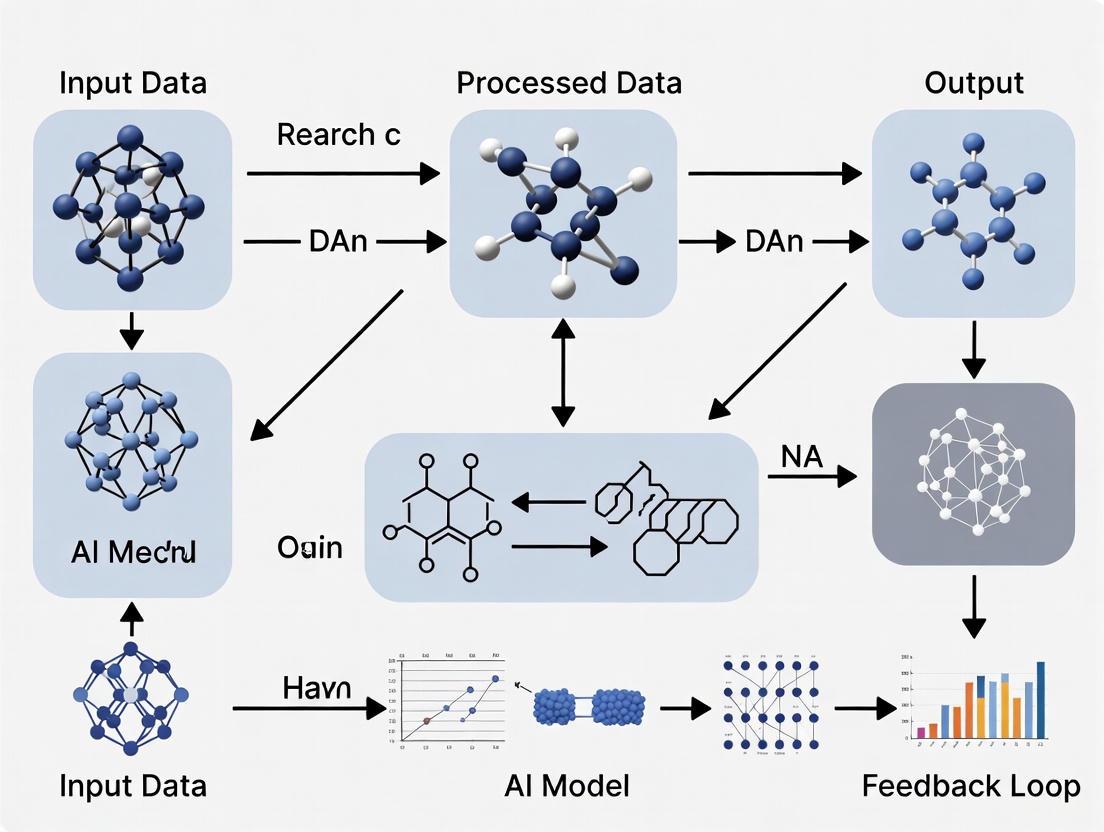
This article addresses the critical challenge of data scarcity that constrains the development of robust generative AI models in materials science and drug discovery.
Overcoming Data Scarcity in Generative AI for Materials Science: Strategies for Drug Discovery and Biomedical Innovation
Abstract
This article addresses the critical challenge of data scarcity that constrains the development of robust generative AI models in materials science and drug discovery. It provides a comprehensive guide for researchers and drug development professionals, exploring the roots of the data scarcity problem, detailing current methodological solutions like transfer learning and federated learning, offering strategies for troubleshooting model performance, and establishing frameworks for the rigorous validation and comparative analysis of different approaches. The synthesis of these intents provides a actionable roadmap for leveraging generative AI to accelerate the design of novel therapeutics and materials, even in data-limited environments.
The Data Scarcity Challenge: Why Generative AI for Materials and Drugs Hits a Wall
FAQs on Data Scarcity in Materials AI
What exactly is meant by "data scarcity" in the context of generative AI for materials science? Data scarcity is a multi-faceted challenge. It refers not only to a simple lack of data volume but also to critical issues with data quality, diversity, and accessibility that can limit the performance of AI models. In materials science, this often manifests as a lack of data for novel material classes, outdated information, inaccessible data locked in silos, or datasets that are incomplete or inconsistent [1] [2] [3].
Why are generative AI models particularly susceptible to problems caused by poor data quality? Generative AI models learn patterns and relationships directly from their training data. If this data is flawed, the models will produce flawed outputs. Key issues include:
- Inaccurate Outputs: Models trained on incomplete or outdated data can produce misleading results [2].
- AI Hallucinations: Models might generate materials that appear valid but are physically implausible or incorrect upon verification [3].
- Bias and Reduced Reliability: Skewed or non-diverse datasets can lead models to reinforce existing biases and produce inconsistent or unfair results [2].
How can we generate reliable training data when real-world experimental data is limited? Synthetic data generation is a key strategy to overcome data volume limitations. Techniques like Generative Adversarial Networks (GANs) and Diffusion Models can create artificial, statistically realistic datasets [4] [5]. This is especially useful for simulating rare events or generating data for hypothetical material structures that have not yet been synthesized, thus augmenting scarce real-world data [4].
What role does data "context" play in mitigating data scarcity for scientific AI? Providing rich context is crucial for accurate AI inference. When an AI model processes data, a scarcity of proper context can lead to misinterpretations [3]. Techniques like Retrieval-Augmented Generation (RAG) integrated with knowledge graphs can provide models with necessary background information and relationships from scientific literature, grounding their generations in established knowledge [6] [7].
Troubleshooting Guides
Problem: Generative AI Model Producing Physically Implausible Materials
This is a common issue where the AI "hallucinates" and generates material structures that are unstable or violate known physical laws.
Diagnosis Steps:
- Check Training Data: Audit the dataset for coverage. Does it adequately represent the target material domain and properties? [2]
- Verify Data Quality: Profile the data for inconsistencies, missing values, or inaccuracies that the model may have learned [3].
- Assess Physics Integration: Determine if the model is purely data-driven or incorporates physical constraints.
Solutions:
- Integrate Physical Constraints: Use a Physics-Informed Neural Network (PINN) that encodes governing equations, thermodynamic constraints, and microstructural symmetries directly into the model. This ensures predictions are physically consistent, even in data-scarce regimes [6].
- Apply Structural Constraints: For crystal structure generation, use a tool like SCIGEN to enforce specific geometric design rules (e.g., Kagome or Lieb lattices) at each step of the generation process, steering the AI toward structurally valid quantum materials [8].
- Implement Automated Reasoning: Use validation tools that employ formal logic to check the accuracy of AI-generated structures against established scientific facts, helping to constrain uncertain outputs [7].
Problem: AI Model Performance is Poor Due to Small or Siloed Datasets
When data is insufficient, inaccessible, or locked in legacy systems, model performance plateaus.
Diagnosis Steps:
- Identify Data Silos: Map data sources across departments or legacy systems that are not integrated [2].
- Evaluate Data Architecture: Determine if the current data infrastructure can handle diverse, multimodal data required for generative AI [7].
- Profile Data Volume: Quantify the available data for the specific material property or class of interest.
Solutions:
- Leverage Transfer Learning: Start with a base model pre-trained on a large, general materials database (e.g., MatterGen, trained on 608,000 stable materials), then fine-tune it on your smaller, domain-specific dataset [9].
- Build a Unified Data Architecture: Adopt modern data infrastructure like vector databases and semantic frameworks (e.g., knowledge graphs) to manage diverse data types and break down silos, creating a comprehensive dataset for AI training [7] [2].
- Augment with Synthetic Data: Use generative models to create synthetic data that mimics the statistical properties of real materials data, addressing volume and diversity gaps while preserving privacy [4] [5].
Experimental Protocols for Data-Scarce Research
Protocol 1: Fine-Tuning a Generative Foundation Model for Targeted Property Generation
This protocol uses models like MatterGen, a diffusion model for 3D material structures, to discover materials with specific properties without requiring massive private datasets [9].
Methodology:
- Base Model Selection: Start with a pre-trained foundation model (e.g., MatterGen) that has learned general material representations from a large public database [9].
- Prepare Fine-Tuning Dataset: Curate a smaller, labeled dataset with the desired property constraints (e.g., bulk modulus > 200 GPa). Data quality is critical; perform data cleaning and validation [3].
- Model Fine-Tuning: Re-train (fine-tune) the base model on the targeted dataset. This process adjusts the model's parameters to specialize in generating materials that meet the specified conditions.
- Generation and Screening: Use the fine-tuned model to generate novel candidate materials. Screen these candidates for stability.
- Validation: Run detailed simulations (e.g., using an AI emulator like MatterSim) and proceed to experimental synthesis for validation, as demonstrated with the novel material TaCr2O6 [9].
Protocol 2: Implementing a Physics-Informed Generative Model
This methodology integrates physical laws directly into the AI model to guide learning where data is scarce [6].
Methodology:
- Problem Formulation: Define the physical governing equations (e.g., for energy transport, mechanical deformation) and constraints relevant to the material system.
- Model Architecture: Design a neural network that incorporates these equations as part of its loss function—this is the core of a Physics-Informed Neural Network (PINN) [6].
- Training: Train the network on the available (scarce) experimental or simulation data. The model is penalized not only for deviations from the data but also for violating the physical laws.
- Coupling with Generative AI: Use the PINN as a predictor or critic for a generative model (e.g., a VAE or GAN). The generator is conditioned to produce structures that the PINN evaluates as physically plausible.
- Active Learning Loop: Use Bayesian optimization to identify the most informative data points for future experiments, closing the loop between AI prediction and physical validation in a sample-efficient manner [6].
Data and Technique Summaries
Table 1: Comparison of Constraint Integration Methods in Generative AI
| Method / Tool | Core Principle | Application Context | Key Advantage |
|---|---|---|---|
| SCIGEN [8] | Applies user-defined geometric structural rules at each generation step. | Generating materials with specific lattice structures (e.g., Archimedean lattices). | Directly steers generation toward structurally exotic materials with target quantum properties. |
| Physics-Informed Neural Networks (PINNs) [6] | Encodes physical laws (PDEs, constraints) directly into the model's loss function. | Predicting material properties in data-scarce regimes where physics is well-understood. | Ensures physically consistent predictions and provides calibrated uncertainty. |
| Knowledge Graph Conditioning [6] [7] | Uses structured knowledge from scientific literature to provide context. | Conditioning both prediction and generation on established scientific facts. | Enriches learning when data are limited by integrating existing domain knowledge. |
Table 2: Data Augmentation Techniques for Materials AI
| Technique | Description | Key Benefit |
|---|---|---|
| Synthetic Data (GANs/VAEs) [4] [5] | AI-generated data that mimics the statistical properties of real data. | Scalably creates vast amounts of labeled data, including rare events, while preserving privacy. |
| Transfer Learning [9] | Fine-tuning a model pre-trained on a large, general dataset for a specific task. | Reduces the need for large, task-specific datasets by leveraging pre-existing knowledge. |
| Data Ontologies & Taxonomies [7] | Using a structured "language" to standardize concepts and tag data. | Improves precision in context retrieval during inference, reducing errors from context overlap. |
Research Workflow Visualizations
Diagram 1: Constrained Materials Generation Workflow
Diagram 2: Data Augmentation and Integration Strategy
The Scientist's Toolkit: Research Reagent Solutions
Table 3: Essential Tools for Data-Scarce Materials AI Research
| Tool / Solution | Type | Primary Function |
|---|---|---|
| MatterGen [9] | Generative AI Model | A diffusion model for direct, property-constrained generation of novel 3D material structures. |
| SCIGEN [8] | Generative AI Tool | A method for applying strict structural constraints to steer existing generative models toward target geometries. |
| Physics-Informed Neural Network (PINN) [6] | AI Model Architecture | Encodes physical laws into neural networks to ensure predictions are consistent and reliable despite scarce data. |
| Knowledge Graph [6] [7] | Data Structuring Framework | Organizes scientific knowledge into a semantic network to provide contextual information for AI models. |
| Generative Adversarial Network (GAN) [4] [5] | Synthetic Data Generator | Creates artificial data by pitting a generator and discriminator network against each other. |
| Retrieval-Augmented Generation (RAG) [7] | Information Retrieval Technique | Enhances AI generation by retrieving relevant information from a knowledge base before producing an output. |
Technical Support Center: Troubleshooting Data Scarcity in Generative AI
This technical support center provides targeted troubleshooting guides and FAQs for researchers and scientists grappling with data scarcity in AI-driven drug discovery and material design. The guidance is framed within the broader thesis that strategic computational methods can overcome data limitations to accelerate generative AI research.
Troubleshooting Guides
Guide 1: Poor Model Performance on Small Datasets
Symptoms: Your AI model has high error rates in property prediction, generates non-novel or invalid molecular structures, or fails to generalize to unseen data.
Diagnosis and Solutions:
| Step | Action | Technical Rationale | Expected Outcome |
|---|---|---|---|
| 1 | Implement Transfer Learning (TL) | Leverage a pre-trained model from a large, source dataset (e.g., general molecular structures) and fine-tune its last few layers on your small, target dataset. [10] | Rapid model convergence and improved accuracy on the target task, even with limited data. [10] |
| 2 | Apply Data Augmentation (DA) | Systematically create modified versions of your existing data. For materials, this could be rotations of atomistic images; for molecules, use valid atomic perturbations or stereochemical variations. [10] | Effectively increases the size and diversity of your training set, reducing overfitting and improving model robustness. [10] |
| 3 | Utilize Multi-Task Learning (MTL) | Train a single model to predict several related properties simultaneously (e.g., solubility, toxicity, and binding affinity). [10] | The model learns a more generalized representation by sharing knowledge across tasks, which regularizes the model and boosts performance on each individual task. [10] |
Visual Workflow for Diagnosis:
Guide 2: Generating Non-Novel or Invalid Outputs
Symptoms: Your generative model produces molecular structures that are too similar to training data, are chemically invalid, or have poor synthetic feasibility.
Diagnosis and Solutions:
| Step | Action | Technical Rationale | Expected Outcome |
|---|---|---|---|
| 1 | Switch to Advanced Architectures | Use a Conditional GAN (cGAN) or CycleGAN to gain finer control over generation. Condition the model on specific desired properties (e.g., high solubility) to guide the output. [11] | Generation of novel structures that adhere to target constraints and exhibit higher validity and diversity. [11] |
| 2 | Implement Robust Validation | Integrate rule-based chemical checkers (e.g., for valency) and use oracle models to predict key properties of generated candidates, filtering out poor ones. [10] | Ensures generated materials or molecules are physically plausible and have a high potential for success in downstream testing. [10] |
| 3 | Explore One-Shot Learning (OSL) | Frame the problem as learning from one or a few examples by transferring prior knowledge from a related, larger dataset. [10] | The model can learn to recognize or generate new classes of compounds from very few examples, promoting novelty. [10] |
Visual Workflow for Output Validation:
Frequently Asked Questions (FAQs)
Q1: What is the most data-efficient method for starting a new project with virtually no target data?
A: Transfer Learning (TL) is the most recommended starting point. [10] Begin with a model pre-trained on a large, public dataset (e.g., QM9 for quantum properties or ChEMBL for drug-like molecules). Then, fine-tune this model on your small, specific dataset. This approach leverages generalized knowledge from the broad domain, allowing you to achieve meaningful results with as little as hundreds of data points instead of millions.
Q2: How can we collaborate across institutions if data sharing is restricted due to privacy or IP concerns?
A: Federated Learning (FL) is designed specifically for this scenario. [10] In FL, a global model is trained by aggregating updates (like gradient information) from models trained locally on each institution's private data. The raw data itself never leaves the original institution, preserving privacy and IP, while all participants benefit from a model trained on a much larger, virtual dataset.
Q3: We have a small dataset. When should we use synthetic data generation, and what are the risks?
A: Use synthetic data generation (e.g., with GANs) when you need to augment your dataset for specific scenarios, such as simulating rare material phases or generating molecules with a desired property profile. [10] [11]
Risks and Mitigations:
- Risk: The generative model may memorize training data instead of learning the underlying distribution, leading to a lack of novelty and privacy concerns. [10]
- Mitigation: Use architectures like Wasserstein GAN (wGAN), which have been shown to be more robust and less prone to mode collapse (a form of memorization). [12]
- Risk: The quality of synthetic data is highly dependent on the size and quality of the original training data. GANs can perform poorly on very small datasets. [12]
- Mitigation: Start with a pre-trained generative model or use it in conjunction with other methods like TL.
Q4: How do we reliably benchmark our model's performance against others in the field?
A: Use open-source, community-driven benchmarking platforms like JARVIS-Leaderboard for materials informatics or MoleculeNet for drug discovery. [13] These platforms provide standardized tasks and datasets, ensuring fair and reproducible comparisons of different algorithms and methods. This helps validate your approach and identify the true state-of-the-art.
Comparative Analysis of Low-Data Handling Methods
The table below summarizes the core strategies for handling data scarcity, helping you choose the right tool for your challenge. [10]
| Method | Core Principle | Ideal Use Case | Key Advantage | Key Limitation |
|---|---|---|---|---|
| Transfer Learning (TL) | Knowledge transfer from a large source task to a small target task. | New research area with small datasets; leveraging existing public data. | Rapid model development with minimal target data. | Risk of negative transfer if source and target domains are too dissimilar. |
| Active Learning (AL) | Iterative selection of the most informative data points for labeling. | Scenarios where data labeling (e.g., experimental testing) is expensive. | Optimizes resource allocation by reducing labeling costs. | Requires an iterative loop with experimental validation; initial model may be weak. |
| One-Shot Learning (OSL) | Learning from one or a very few examples per class. | Identifying or generating new classes of materials/molecules from few examples. | Extreme data efficiency for classification/generation tasks. | High dependency on the quality and representativeness of the single example. |
| Multi-Task Learning (MTL) | Jointly learning multiple related tasks in a single model. | Predicting several physicochemical or biological properties simultaneously. | Improved generalization and data efficiency via shared representations. | Model complexity increases; requires curated datasets for multiple tasks. |
| Data Augmentation (DA) | Artificially creating new training data from existing data. | Universally applicable to increase dataset size and diversity. | Simple to implement; effective for preventing overfitting. | For molecules/materials, must ensure generated data is physically valid. |
| Data Synthesis (GANs) | Using generative models to create new, synthetic data samples. | Augmenting datasets for rare events; balancing imbalanced datasets. | Can generate large volumes of data for exploration. | Can generate unrealistic data; training can be unstable. [12] |
| Federated Learning (FL) | Training a model across decentralized data sources without sharing data. | Multi-institutional collaborations with privacy/IP concerns. | Enables collaboration while preserving data privacy. | Increased communication overhead; complexity in implementation. |
Experimental Protocol: Benchmarking a TL Model
Objective: To evaluate the effectiveness of a Transfer Learning approach for predicting molecular properties with a small dataset.
The Scientist's Toolkit: Research Reagent Solutions
| Item | Function in Experiment |
|---|---|
| Source Model | A pre-trained deep learning model (e.g., a Graph Neural Network) on a large public dataset like ZINC (commercial compound library) or QM9 (quantum properties corpus). |
| Target Dataset | A small, curated dataset (< 1000 samples) specific to your research, containing molecular structures (as SMILES strings or graphs) and the target property (e.g., solubility, binding affinity). |
| Fine-Tuning Framework | A deep learning library (e.g., PyTorch, TensorFlow) with the capability to load a pre-trained model and modify its final layers for the new task. |
| Benchmarking Platform | An integrated platform like JARVIS-Leaderboard to ensure reproducible and comparable results against standard baselines. [13] |
Methodology:
- Baseline Establishment: Train a model from scratch on your small target dataset. Evaluate its performance using a suitable metric (e.g., Root Mean Squared Error (RMSE) for regression).
- Model Adaptation: Load the pre-trained source model. Replace its final output layer(s) to match the output dimension of your target task.
- Fine-Tuning: Re-train the model on your target dataset. It is common practice to use a lower learning rate for the pre-trained layers and a higher one for the new layers to avoid catastrophic forgetting.
- Performance Comparison: Compare the performance of the fine-tuned TL model against the baseline model from Step 1. A significant improvement in metrics like RMSE demonstrates the success of TL.
Visual Workflow for Transfer Learning Protocol:
Technical Support Center: Troubleshooting Guides and FAQs
This technical support center is designed for researchers leveraging Generative AI (GenAI) in materials science and biomedical research. It addresses common pitfalls stemming from data scarcity, organizational silos, and biological complexity, framed within the broader thesis of advancing materials GenAI research.
Frequently Asked Questions (FAQs)
Q1: How can we use generative AI to predict useful new genetic or material sequences? Generative AI models, trained on vast biological or material datasets, can be prompted to autocomplete genetic or structural sequences. They can generate novel, functional sequences that may not exist in nature, which are then validated through lab experiments [14] [15] [16]. For instance, a model like Evo 2 can be prompted with the beginning of a gene sequence, and it will autocomplete it, sometimes creating improved versions [14].
Q2: Our AI model for protein design is producing unrealistic or non-functional outputs. What could be wrong? This is a classic sign of the High-Dimensional, Low-Sample-Size problem. Your model might be overfitting due to insufficient or fragmented training data. Scientific data often has billions of features (e.g., pixels, genes) but only thousands of samples, and current AI architectures can struggle to capture the long-range interactions essential for function [17]. Prioritize data quality and diversity over sheer volume.
Q3: What are the primary data-related barriers to achieving robust AI models in science? The main barriers are data fragmentation and a lack of standardized formats. Research data is often scattered across disconnected sources in incompatible formats, making integration and reuse difficult. A 2020 survey indicated that data scientists spend about 45% of their time on data preparation tasks like loading and cleaning data [17].
Q4: How can we mitigate the risk of "AI hallucinations" or biased outputs in our research? Always treat AI outputs as unvalidated hypotheses [15]. Implement a rigorous fact-checking and experimental validation protocol. Be aware that natural language models like ChatGPT are trained on existing literature and thus inherit its biases and inaccuracies; for less biased results, consider models trained directly on raw biological data [15]. Furthermore, disclose the use of AI in your methods section as per publisher guidelines [18].
Q5: Our organization is struggling to move GenAI projects from pilot to full production. What are we missing? Successful deployment requires more than just technology. You need a strategic partner to help with selecting the right use case, optimizing KPIs, preparing data assets, and, crucially, winning buy-in from people across the organization. Employees need training to understand what the AI can and cannot do [19].
Troubleshooting Guide
| Problem | Root Cause | Solution & Validation Protocol |
|---|---|---|
| Non-Functional Generated Sequences | - Data Scarcity & Bias: Model trained on small, non-diverse datasets.- Architectural Limitation: Inability to model long-range interactions in sequences or structures. | Solution: Augment training data with multi-source, standardized datasets. Use models with longer context windows.Validation: Synthesize generated sequences (e.g., DNA, material structures) and test function in wet-lab experiments (e.g., assay binding affinity, measure tensile strength) [14] [17] [15]. |
| AI-Generated Hypotheses Are Consistently Wrong | - "AI Hallucination": Model generating plausible but fabricated information.- Training Data Bias: Model is replicating biases and inaccuracies present in its training corpus (e.g., published literature). | Solution: Use AI as a hypothesis generator, not a source of truth. Fine-tune models on raw, unbiased experimental data where possible.Validation: Design controlled experiments specifically to test the AI-generated hypothesis. Use the results to reinforce or correct the model [18] [15]. |
| Inability to Integrate Disparate Datasets | - Proprietary Silos & Fragmentation: Data locked in incompatible formats across departments or institutions.- Lack of Metadata Standards. | Solution: Advocate for and adopt community-wide data standards. Implement internal data governance that rewards curation and sharing.Validation: Benchmark model performance on a unified, curated dataset versus fragmented sources. Measure the time saved in data preparation [17] [20]. |
| Failed Organizational Adoption of AI Tools | - Human Resistance: Lack of understanding and trust in AI systems among researchers.- Misaligned Incentives: Academic and career rewards do not value data curation and tool-building. | Solution: Run targeted training sessions to demonstrate AI capabilities and limitations. Create internal showcases of successful AI-assisted discoveries.Validation: Track and report key adoption metrics: employee usage rates, reduction in process cycle times, and ROI from AI-driven projects [17] [19]. |
Quantitative Data on Challenges and AI Impact
The tables below summarize key quantitative data on the costs of inefficiency and the demonstrated benefits of AI integration in scientific and organizational contexts.
Table 1: The Economic Cost of Organizational Friction and Disengagement This table quantifies the financial impact of the silos and inefficiencies that hinder research progress.
| Metric | Financial Impact | Context / Source |
|---|---|---|
| Global Employee Disengagement | $8.8 Trillion (9% of global GDP) |
Annual lost productivity (Gallup, 2024) [21]. |
| U.S. Workplace Incivility | $2.1 Billion daily ($766 Billion annually) |
Cost of unnecessary meetings, duplicated processes, and communication breakdowns [21]. |
| Internal Friction per Employee | $15,000 per employee / year |
Cost of ineffective meetings, redundant approvals, and information silos [21]. |
| Operational Inefficiency | 20-30% of revenue lost |
Loss due to data silos alone [21]. |
Table 2: Documented Returns on AI Investment in Operations This table provides evidence of the potential efficiency gains from successfully implemented AI.
| Key Performance Indicator | Improvement | Context / Source |
|---|---|---|
| Return on Investment (ROI) | 200% - 300% |
Reported by companies on AI investments [21]. |
| Operational Cost Savings | 35% - 50% |
Savings achieved through AI-powered automation [21]. |
| Cycle Time Reduction | 50% - 70% |
Reduction in process times [21]. |
| AI Tool Adoption | 78% of global organizations |
Use AI in at least one business function [21]. |
Experimental Protocol: Validating a Generative AI Model for Novel Material Design
This methodology outlines the key steps for developing and validating a generative AI model to design a new bioinspired material with enhanced mechanical properties.
1. Problem Formulation & Data Curation
- Objective: Design a material with a target property (e.g., high strength-to-weight ratio).
- Data Aggregation: Compile a dataset from public repositories (e.g., the Materials Project [17]) and internal experiments. Data must include structural information (e.g., topology, crystal structure) and corresponding measured properties.
- Data Standardization: Overcome fragmentation by converting all data into a unified format with rich, standardized metadata. This step is critical for data scarcity mitigation [17].
2. Model Selection & Training
- Algorithm Choice: Employ a Generative Adversarial Network (GAN) or Genetic Algorithm to explore the material design space and generate novel structures [16].
- Training Regime: Train the model on the curated dataset to learn the complex relationships between material structure and its resulting properties.
3. Generation & In-Silico Validation
- Generation: Prompt the trained model to generate new material structures that predictively meet the target property.
- Computational Validation: Use physics-based simulations (e.g., Finite Element Analysis) to screen the generated structures for viability and predicted performance before moving to costly physical experiments [16].
4. Physical Validation & Model Refinement
- Additive Manufacturing: Fabricate the top-performing generated designs using 3D printing. The AI can also be used here to optimize printing parameters [16].
- Experimental Testing: Conduct mechanical tests (e.g., tension, compression) on the fabricated samples to measure actual properties.
- Feedback Loop: Use the experimental results to fine-tune and correct the AI model, creating a continuous improvement cycle [15].
Workflow Visualization
AI-Driven Material Discovery Workflow
The Scientist's Toolkit: Research Reagent Solutions
| Tool / Reagent | Function in AI-Assisted Research |
|---|---|
| Generative AI Models (e.g., Evo 2, GANs) | Core engine for generating novel genetic sequences, protein structures, or material architectures that are informed by all known biological or material data [14] [16]. |
| CRISPR-Cas9 Gene Editing | Critical validation tool. Used to synthesize and insert AI-generated DNA sequences into living cells to test their function and therapeutic potential in real-life biological systems [14]. |
| Additive Manufacturing (3D Printing) | Enables the physical fabrication of complex, AI-generated material designs (e.g., bioinspired scaffolds) that would be impossible to make with traditional methods [16]. |
| Smart Contracts / DAOs | A digital tool to reduce organizational silos. Automates and enforces collaboration agreements and data sharing terms between different research institutions, ensuring transparency and trust [21]. |
| Multimodal AI Systems | An emerging class of AI that combines models trained on different types of data (e.g., raw biological sequences and scientific literature) to generate less biased and more comprehensive hypotheses [15]. |
Core Concepts: Data Scarcity in Materials AI
Data scarcity is a fundamental challenge in materials generative AI research. Unlike domains with abundant data, each data point in materials science—representing a synthesized compound or a measured property—can cost months of time and tens of thousands of dollars to produce [22]. This scarcity creates a ripple effect, impacting model accuracy, its ability to generalize to new situations, and the overall speed of scientific innovation.
The table below summarizes the primary causes and immediate consequences of data scarcity in this field.
Table: Fundamental Causes and Direct Effects of Data Scarcity
| Cause of Data Scarcity | Direct Consequence for AI Models |
|---|---|
| High cost and time of experiments [22] | Models are trained on insufficient data, leading to poor performance. |
| Bias towards successful results in literature (lack of "failed" data) [22] | Models never learn to predict failures, limiting their real-world utility. |
| Complexity and diversity of data formats (images, formulas, spectra) [22] | Difficulty in creating large, unified datasets for training. |
| Stringent data privacy and IP protection requirements [22] | Limits data sharing and pooling of resources across organizations. |
The Ripple Effect: Quantifying the Consequences
The initial challenges of data scarcity trigger a cascade of downstream effects that can stall a research program. The following troubleshooting guide addresses the most common issues researchers face.
FAQ 1: My Model's Predictions Are Inaccurate and It Hallucinates New Materials
Problem: The AI model generates material suggestions that are physically implausible or makes property predictions that are wildly inaccurate.
Diagnosis: This is a classic symptom of a model that has been trained on a small, incomplete dataset. Without sufficient examples, the model cannot learn the underlying physical rules of materials science and instead "hallucinates" by making unsupported inferences [23].
Solution:
- Incorporate Physical Knowledge: Use AI platforms that allow for the integration of domain knowledge and scientific constraints to guide the model, preventing it from suggesting impossible structures [22].
- Implement Uncertainty Quantification: Employ models that provide an uncertainty estimate with each prediction. This allows researchers to gauge the reliability of a prediction and focus experimental efforts on the most promising candidates [22].
- Leverage Sequential Learning: Use an active learning loop where the AI model itself suggests the next most informative experiment to perform. This maximizes the value of each new data point, systematically reducing uncertainty [22].
FAQ 2: My Model Fails to Generalize to New Experimental Conditions
Problem: The model performs well on data that resembles its training set but fails miserably when applied to new chemical spaces or synthesis conditions.
Diagnosis: The model has overfit to the limited, and potentially biased, data it was trained on. It has memorized the training examples rather than learning the generalizable relationships between a material's structure and its properties [24].
Solution:
- Data Augmentation: Create modified versions of your existing data to artificially increase diversity. For structural or image data, this can involve techniques like rotation, flipping, or adding noise [24]. For numerical data, generative AI can create realistic synthetic variations [25].
- Use Transfer Learning: Begin with a model pre-trained on a large, general-purpose chemical or materials dataset (even if from a different domain) and fine-tune it on your specific, smaller dataset. This leverages broader chemical knowledge [22].
- Generate Synthetic Data: Use Generative AI models, such as Generative Adversarial Networks (GANs) or Diffusion Models, to create high-quality synthetic data that fills gaps in your training set, particularly for rare material classes or edge cases [23] [26].
FAQ 3: My Research Workflow Is Too Slow, Stifling Innovation
Problem: The pace of iterating between AI-led prediction and experimental validation is too slow, creating a bottleneck in the discovery pipeline.
Diagnosis: This is a direct consequence of the core data scarcity problem. The high cost and slow speed of each experimental cycle fundamentally limit the speed of innovation.
Solution:
- Develop a Lab Assistant AI: Use natural language processing tools to automatically mine millions of existing research papers and build structured databases [27]. This can be used to pre-train a domain-specific question-answering tool to help researchers quickly get insights and guide experiments [27].
- Adopt a Hybrid AI Approach: Combine data-driven AI models with physics-based simulations. This hybrid approach can achieve accuracy close to high-fidelity simulations at a fraction of the computational cost, allowing for rapid in-silico screening [28].
- Automate with Autonomous Labs: Implement closed-loop systems where AI models directly control robotic laboratory equipment, planning and executing experiments with real-time feedback and adaptive experimentation [28].
Experimental Protocols for Mitigating Data Scarcity
Protocol 1: Generating Synthetic Data with a Diffusion Model
This protocol outlines the steps for using a generative diffusion model to create synthetic molecular structures or microstructural images to augment a small dataset.
Methodology:
- Data Collection and Preprocessing: Gather and clean all available real-world data (e.g., molecular structures, spectra, or micrograph images). Normalize and transform the data into a format suitable for training [25].
- Model Fine-Tuning: Take a pre-trained diffusion model (e.g., Stable Diffusion for images) and fine-tune it on your specific, domain-limited dataset. This teaches the model the specific style and content of your field [26].
- Prompt-Driven Generation: Use text prompts to generate new, diverse samples. For example, "a polycrystalline microstructure with high porosity" or "an organic molecule with a high photovoltaic efficiency" [26].
- Validation: Rigorously evaluate the generated synthetic data. This can involve:
- Visual Inspection: Domain experts should assess the physical plausibility.
- Statistical Analysis: Compare the statistical properties (e.g., distributions, correlations) of the synthetic data with the original data [25].
- Model Performance Test: Use the synthetic data to augment training and validate that it improves the performance and robustness of a downstream AI model [26].
Protocol 2: Implementing an Active Learning Loop
This protocol uses Sequential Learning to minimize the number of experiments needed to achieve a research goal.
Methodology:
- Initial Model Training: Train an initial AI model on all existing historical data.
- Acquisition Function: Use the model to predict outcomes for a vast number of candidate materials in a search space. An acquisition function (e.g., "upper confidence bound") identifies the candidate(s) that provide the highest potential information gain or performance improvement [22].
- Experiment and Data Addition: Perform the wet-lab or simulation experiment on the top candidate(s) identified in Step 2.
- Model Update: Add the new experimental results (both successes and failures) to the training dataset and update the AI model [22].
- Iterate: Repeat steps 2-4 until a material with the desired target properties is discovered or the research budget is exhausted.
Visualizing the Solution Workflow
The following diagram illustrates the integrated workflow for combating data scarcity, combining synthetic data generation, human expertise, and active learning.
Integrated Workflow to Overcome Data Scarcity
The Scientist's Toolkit: Research Reagent Solutions
Table: Essential "Reagents" for a Modern AI-Driven Materials Lab
| Tool / Solution | Function |
|---|---|
| Generative AI Models (GANs, Diffusion) | Creates synthetic data to augment small datasets, simulates edge cases, and protects privacy [23] [26]. |
| Text-Mining Tools (e.g., ChemDataExtractor) | Automatically builds structured databases from millions of research papers, providing a foundational dataset [27]. |
| Uncertainty Quantification (UQ) Methods | Provides a confidence level for each AI prediction, crucial for deciding which experiments to run [22]. |
| Sequential Learning Platform | Implements the active learning loop to optimize the choice of the next experiment, maximizing research efficiency [22]. |
| Physics-Informed Neural Networks (PINNs) | Embeds physical laws and constraints directly into the AI model, improving accuracy and preventing unphysical predictions [28]. |
| Human-in-the-Loop (HITL) Review | Integrates domain expert knowledge to validate AI suggestions and synthetic data, preventing model collapse and ensuring relevance [23]. |
In the frontiers of scientific research, such as rare disease treatment and novel material discovery, generative AI holds the promise of accelerating breakthroughs. However, its application is fundamentally constrained by a common, critical challenge: data scarcity. In rare diseases, the small patient populations lead to limited clinical data [29] [30]. In material science, the experimental synthesis and characterization of new compounds are inherently time-consuming and resource-intensive, creating a bottleneck of verified data [8]. This technical support center is designed to provide researchers, scientists, and drug development professionals with practical methodologies to overcome these specific hurdles, framing solutions within the broader thesis of addressing data scarcity in generative AI research.
Troubleshooting Guides & FAQs
→ Data Acquisition and Quality
Q1: Our generative model for a novel quantum material is producing structurally unstable candidates. How can we guide it toward more plausible outputs?
- Problem: The AI model lacks sufficient examples of stable material structures in its training data, leading to physically implausible suggestions.
- Solution: Implement a constraint-based generation approach. Use a tool like SCIGEN to impose specific geometric or structural rules during the AI's generation process. This steers the model to create candidates that conform to known principles of stability or possess desired lattice structures (e.g., Kagome lattices for quantum properties) [8].
- Protocol:
- Define Constraints: Identify the key structural parameters for your target material (e.g., specific Archimedean lattice types, bond lengths, or coordination numbers).
- Integrate SCIGEN: Apply the SCIGEN code to your generative diffusion model (e.g., DiffCSP). This tool blocks generation steps that deviate from your defined rules.
- Generate & Screen: Run the constrained model to produce candidates. Follow with stability screening using computational simulations (e.g., Density Functional Theory) before proceeding to synthesis [8].
Q2: For our ultra-rare disease study, we lack sufficient patient data to train a predictive model. What are our options?
- Problem: The small number of affected individuals makes it impossible to assemble a large, statistically powerful dataset.
- Solution: Leverage synthetic data generation and data augmentation techniques.
- Protocol:
- Audit Data Gaps: Identify the specific "weak" or under-represented classes in your existing dataset (e.g., a particular genetic variant or disease subtype) [23].
- Generate Synthetic Data: Use generative AI models to create synthetic patient data that mimics the statistical properties of your real-world data. This can fill volume gaps and create specific "edge cases" [23] [1].
- Augment with Advanced ML: Employ transfer learning by pre-training your model on a related, data-rich domain (e.g., a common disease with similar pathways) before fine-tuning it on your rare disease dataset. Few-shot learning techniques can also be applied to learn from very few examples [1].
- Implement HITL Review: Establish a Human-in-the-Loop (HITL) review process where domain experts (e.g., clinicians) validate the quality and clinical relevance of the synthetic data to prevent model collapse and ensure ground truth integrity [23].
→ Model Training and Implementation
Q3: Our generative AI model shows bias, performing well only for the majority genetic ancestry in our dataset and failing on underrepresented groups.
- Problem: The training data does not adequately represent the full genetic diversity of the disease population, leading to biased and inequitable models.
- Solution: Actively address dataset imbalance and promote diversity from the outset.
- Protocol:
- Diversity by Design: Intentionally source data from diverse populations, geographic locations, and ancestry groups, as rare disease genetic variation tends to cluster in these groups [29].
- Generate for Balance: Use synthetic data to specifically create data points for underrepresented ancestries or genetic variants, rebalancing the training dataset [23].
- Global Collaboration: Consider designing global clinical trials or data collection efforts from the beginning to maximize inclusivity and access to diverse patient populations [29].
Q4: Our enterprise generative AI pilot for drug discovery is stalled and has shown no measurable impact on our R&D pipeline. What went wrong?
- Problem: The AI tool has been deployed as a static "science project" and has failed to integrate into actual researcher workflows.
- Solution: Focus on integration and adaptability, not just model deployment.
- Protocol:
- Integrate into Workflows: Ensure the AI tool is embedded directly into the scientists' daily tools and processes, rather than being a stand-alone application. It must retain context and learn from user feedback [31].
- Partner Strategically: MIT research indicates that purchasing solutions from specialized vendors or building partnerships succeeds about 67% of the time, far more often than internal builds. Consider partnering with proven AI providers instead of building everything in-house [32] [31].
- Empower Line Managers: Drive adoption from the bottom up by empowering line managers and research teams to experiment and integrate the tools into their specific projects, rather than relying solely on a central AI lab [32].
The tables below summarize key quantitative challenges and resource considerations in these fields.
Table 1: Rare Disease Landscape and Data Challenges (2025)
| Metric | Value | Implication for AI Research |
|---|---|---|
| Global Prevalence | 300-400 million people [30] | Collectively a large problem, but data is fragmented across ~6,000+ distinct diseases [30]. |
| Diseases with Approved Treatment | ~5% [30] | For ~95% of diseases, there is no approved drug, creating a vast space for AI-driven discovery but with little prior data. |
| Average Diagnostic Delay | ~4.5 years (25% wait >8 years) [30] | Highlights the difficulty of data collection and the "diagnostic odyssey" that delays the creation of clean, curated datasets. |
| Genetically-Based Rare Diseases | 72-80% [30] | Confirms the primary data type for AI is genetic and molecular, but with high variability. |
Table 2: AI Model Resource Intensity & Environmental Impact
| Resource | Consumption Context | Scale & Impact |
|---|---|---|
| Electricity | Data center power demand, partly driven by AI [33]. | Global data center electricity consumption projected to be 536 TWh in 2025, potentially doubling to 1,065 TWh by 2030 [34]. |
| Water | Cooling for AI-optimized data centers [33] [34]. | AI data centers may demand up to ~6.4 trillion liters annually by 2027, often located in water-stressed areas [34]. |
| Hardware Lifespan | AI servers in data centers [34]. | Useful lives average only a few years before becoming e-waste, contributing to a fast-growing toxic waste stream [34]. |
Experimental Protocol: SCIGEN for Novel Material Discovery
This protocol details the methodology cited from MIT's research on using the SCIGEN tool to discover new quantum materials [8].
Objective: To generate and synthesize novel materials with specific geometric lattices (e.g., Archimedean lattices) that are associated with exotic quantum properties.
Materials & Workflow: The workflow begins with defining geometric constraints and culminates in the synthesis of predicted stable candidates, with iterative computational screening and validation throughout.
Research Reagent Solutions:
- SCIGEN Code: A computational tool that enforces user-defined structural constraints during the generative process of a diffusion model. Its function is to steer the AI away from random sampling and toward the creation of materials with specific, target geometries [8].
- Generative Diffusion Model (e.g., DiffCSP): The base AI model that generates new material structures by learning from a dataset of known crystals. It is the engine for candidate creation [8].
- High-Performance Computing (HPC) Cluster: Essential for running the stability screenings and detailed electronic structure simulations (e.g., using Density Functional Theory) to predict properties like magnetism before synthesis [8].
- Laboratory Synthesis Equipment: This includes furnaces for solid-state reaction synthesis, arc-melters, and other chemistry-specific tools required to physically create the AI-predicted compounds (e.g., TiPdBi and TiPbSb as synthesized in the MIT study) [8].
Experimental Protocol: Synthetic Data for Rare Disease Research
This protocol outlines the use of synthetic data to overcome data scarcity in rare disease research, incorporating a Human-in-the-Loop (HITL) review to ensure quality [23].
Objective: To augment a small, real-world dataset of rare disease patients with high-quality synthetic data to train a more robust and less biased predictive AI model.
Materials & Workflow: The process is a continuous cycle of data generation and expert validation, ensuring the synthetic data remains clinically relevant and accurate.
Research Reagent Solutions:
- Synthetic Data Generation Platform: A software platform (often based on Generative Adversarial Networks or VAEs) that creates artificial datasets with the same statistical patterns as the real, sensitive patient data without containing any identifiable information, thus addressing privacy concerns [23].
- Human-in-the-Loop (HITL) Annotation Interface: A software tool that allows domain experts (e.g., clinical researchers) to efficiently review, validate, and correct the AI-generated synthetic data or model outputs. This is critical for maintaining data quality and preventing model collapse [23].
- Active Learning Framework: A machine learning system that identifies the data points (real or synthetic) where the model is most uncertain or performing poorly. This prioritizes which data should be sent for HITL review, optimizing the use of expert time [23].
- Federated Learning Infrastructure: A distributed AI approach that allows models to be trained across multiple decentralized data sources (e.g., different hospitals) without sharing the raw data. This can be a complementary strategy to access more diverse data while preserving privacy and security.
Building with Less: A Toolkit of Technical Solutions for Data-Efficient AI
Troubleshooting Common Transfer Learning Issues
FAQ: My model is performing poorly after fine-tuning. What could be wrong?
Answer: Poor performance after fine-tuning often stems from task misalignment or negative transfer. This occurs when the knowledge from the source domain is not sufficiently relevant to your target task, or when the transfer mechanism harms performance [35]. To address this:
- Re-evaluate Source Task Relevance: Ensure your pre-trained model comes from a domain fundamentally related to your target task. For instance, a model pre-trained on general molecular structures is more relevant for a new drug property prediction task than one pre-trained on image classification [36] [37].
- Adjust Fine-tuning Rigor: If the tasks are very similar, you can fine-tune more layers of the pre-trained model. If they are less similar, try fine-tuning only the final few layers to avoid overfitting to your smaller target dataset [35].
- Incorporate Domain Knowledge: For multi-fidelity data (e.g., mixed computational and experimental results), use a difference architecture that can model the systematic discrepancies between data sources, which has been shown to improve accuracy in materials science applications [38].
FAQ: How can I effectively use transfer learning when my high-fidelity dataset is very small?
Answer: This is a common scenario in fields like drug discovery. The key is to leverage a large, low-fidelity dataset to pre-train a model, then transfer its representations to the small high-fidelity task [36].
- Strategy 1: Feature Augmentation. Train a model on the large, low-fidelity data. Use the predictions or intermediate features from this model as additional input features for a separate model trained on your small, high-fidelity dataset [36].
- Strategy 2: Pre-training and Fine-tuning.
- Pre-training: Pre-train a model (e.g., a Graph Neural Network) on the large, low-fidelity dataset. This allows the model to learn generalizable features and patterns [36] [35].
- Fine-tuning: Use your small, high-fidelity dataset to fine-tune the pre-trained model. Employ adaptive readouts (neural network-based aggregation functions) instead of simple sum or mean operations when fine-tuning, as this has been shown to significantly enhance transfer learning performance on sparse tasks [36].
FAQ: What are the primary technical challenges when implementing transfer learning for scientific data?
Answer: The main challenges include:
- Data Heterogeneity: Combining datasets where "equivalent" properties are measured differently introduces hidden errors. Transfer learning architectures must be chosen to preserve these contextual differences [38].
- Negative Transfer: This occurs when transferring knowledge from an irrelevant source task degrades performance on the target task. Careful selection of the pre-trained model is critical [35].
- Readout Function Limitations: In Graph Neural Networks, standard readout functions (e.g., for aggregating atom-level embeddings into a molecule-level representation) can be a bottleneck. Upgrading to adaptive, neural readouts is often necessary for effective knowledge transfer [36].
- Computational Cost: While transfer learning reduces total training time for the target task, the initial pre-training phase on a large dataset can be computationally intensive [35].
Quantitative Data on Transfer Learning Performance
The following table summarizes empirical results from recent studies on transfer learning in scientific domains, demonstrating its effectiveness in overcoming data scarcity.
| Application Domain | Transfer Learning Approach | Reported Performance Improvement | Key Experimental Condition |
|---|---|---|---|
| Drug Discovery & Quantum Properties [36] | GNNs with Adaptive Readouts & Fine-tuning | Up to 8x improvement in accuracy; required an order of magnitude less high-fidelity data | Sparse high-fidelity tasks with large low-fidelity datasets (e.g., 28M+ protein-ligand interactions) |
| Molecular Property Prediction [36] | Transductive Learning (using actual low-fidelity labels) | Performance improvements between 20% and 60% | Low and high-fidelity labels available for all data points |
| Multi-fidelity Band Gaps (DFT & Exp.) [38] | Difference Architectures | Most accurate model for mixed-fidelity data | Handling systematic differences between data sources (e.g., DFT vs. experimental values) |
| Pharmacokinetics Prediction [39] | Homogeneous Transfer Learning (multi-task model) | Matthews Correlation Coefficient (MCC) of 0.53; AUC of 0.85 for regression | Integrated 53 prediction tasks for ADME properties |
Experimental Protocol: Transfer Learning with Graph Neural Networks for Molecular Property Prediction
This protocol outlines the methodology for leveraging transfer learning to predict molecular properties using a large, low-fidelity dataset (e.g., high-throughput screening data) to improve performance on a small, high-fidelity dataset (e.g., experimental results) [36].
1. Problem Formulation and Data Preparation
- Define Fidelities: Clearly define your low-fidelity (source) and high-fidelity (target) tasks (e.g., primary vs. confirmatory screening in drug discovery) [36].
- Data Collection: Assemble your datasets. The low-fidelity dataset should be large (e.g., millions of data points), while the high-fidelity dataset is typically small and sparse [36].
- Data Partitioning: Split your high-fidelity data into standard training, validation, and test sets. The training set for the high-fidelity task will be intentionally small to simulate data scarcity.
2. Model Pre-training on Low-Fidelity Data
- Architecture Selection: Choose a suitable Graph Neural Network (GNN) architecture, as molecules are naturally represented as graphs (atoms as nodes, bonds as edges) [36].
- Pre-training: Train the GNN on the entire large, low-fidelity dataset to predict the low-fidelity property. The goal is for the model to learn general chemical representations [36] [35].
3. Knowledge Transfer and Model Fine-tuning
- Strategy Selection: Choose a transfer strategy:
- Feature Augmentation: Use the pre-trained low-fidelity model to generate features or predictions for the high-fidelity dataset. Train a new model on the high-fidelity data using these features as input [36].
- Fine-tuning (Recommended): Take the pre-trained GNN and replace its output layer. Fine-tune the entire network or a subset of its layers on the small, high-fidelity training dataset [36] [35].
- Critical Modification: Implement an adaptive readout function (e.g., an attention-based mechanism) in the GNN during fine-tuning. This step is crucial for achieving high performance in the transfer, as fixed readouts (like sum or mean) are a common bottleneck [36].
4. Model Evaluation
- Benchmarking: Evaluate the fine-tuned model on the held-out high-fidelity test set.
- Comparison: Compare its performance against a baseline model trained from scratch only on the small high-fidelity dataset. Key metrics include Mean Absolute Error (MAE) and R² [36].
Workflow: Transfer Learning for Sparse Data
The following diagram illustrates the logical workflow for a pre-training and fine-tuning transfer learning strategy, as applied to a molecular property prediction task.
This table details essential "research reagents" – in this context, key computational tools and data types – required for implementing transfer learning in data-scarce scientific domains.
| Item / Resource | Function / Role in the Experiment |
|---|---|
| Graph Neural Network (GNN) | A deep learning architecture that operates directly on graph-structured data, making it ideal for representing molecules (atoms=bonds) and materials [36]. |
| Pre-trained Model | A model (e.g., a GNN) that has already been trained on a large, data-rich source task. This model contains the generalizable knowledge to be transferred [36] [35]. |
| Low-Fidelity Dataset | A large, often noisier or less precise dataset (e.g., from high-throughput screening or approximate calculations) used for the initial pre-training of the model [36]. |
| High-Fidelity Dataset | The small, expensive-to-acquire, and high-quality target dataset (e.g., from precise experiments or high-level theory calculations) on which the pre-trained model is fine-tuned [36]. |
| Adaptive Readout Function | A neural network component in a GNN that learns how to best aggregate atom-level embeddings into a molecule-level representation, crucial for effective transfer learning [36]. |
FAQs: Troubleshooting Generative Models for Materials Science
1. Why are my synthetic material microstructures visually convincing but scientifically inaccurate? This is a common problem known as model "hallucination," where outputs violate fundamental physical or biological principles [40]. To address this:
- Action: Incorporate domain-expert validation into your evaluation protocol. Standard quantitative metrics (like FID or SSIM) alone are insufficient for capturing scientific relevance [40].
- Action: For Diffusion Models, ensure your training data is large and diverse enough to represent all essential material properties, as these models can overlook infrequent but critical details [41].
- Action: For VAEs, which can produce blurry outputs, the inaccuracies might stem from their probabilistic nature and pixel-based loss functions. They are better suited for scenarios where such inaccuracies can be tolerated [41] [42] [43].
2. My GAN training for generating composite fiber images is unstable. What can I do? GANs are prone to instability and mode collapse, where the generator produces a limited variety of samples [42] [43].
- Action: Implement techniques to enforce a Lipschitz constraint, such as gradient penalty or spectral normalization, on your discriminator. This has been shown to significantly improve training stability [43].
- Action: Consider using a variant like StyleGAN, which has demonstrated high perceptual quality and structural coherence in generating scientific images like microCT scans [40].
3. How can I use a pre-trained text-to-image diffusion model for a niche material concept it wasn't trained on? Full fine-tuning on a small, specialized dataset is often ineffective. Instead, use a parameter-efficient method.
- Action: Optimize a "pseudo-prompt" in the model's text encoder to represent your new material concept. This approach adapts the model to new domains from just a few labelled examples without disturbing its ability to generate other concepts [44].
4. The computational cost of generating high-resolution synthetic images is too high. What are my options? This is a key challenge, particularly for Diffusion Models [43].
- Action: For speed and lower inference cost, GANs are a strong choice once trained, as they generate new content quickly without probabilistic assessment [41].
- Action: If using a Diffusion Model, consider a Latent Diffusion approach (like Stable Diffusion), which operates in a compressed latent space rather than pixel space, drastically reducing computational demands [40].
- Action: VAEs are often computationally less intensive than both GANs and Diffusion Models and can perform better with limited or low-quality training data, making them a good option for initial experiments [41].
5. How do I ensure my synthetic data for a weed classification task actually improves model performance? Merely generating more data is not enough; the data must be diverse and semantically meaningful.
- Action: Move beyond basic transformations (flips, rotations). Use an image-editing technique like SDEdit with a pre-trained diffusion model to create variations that alter high-level semantic attributes (e.g., weed species in a scene) while respecting their inherent invariances [44].
- Action: Systematically evaluate your model's performance on a held-out real-world test set after augmenting your training data with synthetics, as demonstrated in few-shot classification tasks [44].
Comparative Analysis of Generative Models
The table below summarizes the core characteristics, strengths, and weaknesses of the three primary generative models to help you select the right one for your application.
| Feature | Generative Adversarial Networks (GANs) | Variational Autoencoders (VAEs) | Diffusion Models |
|---|---|---|---|
| Core Principle | Two neural networks (generator & discriminator) compete in an adversarial game [41] [43]. | Encoder-decoder architecture that learns a probabilistic latent space of the data [40] [41]. | Iterative noising (forward process) and denoising (reverse process) [44] [43]. |
| Best For | High-fidelity, high-resolution image synthesis; fast inference [41] [42]. | Scenarios with limited or poor-quality data; applications requiring diversity over sharpness [41]. | High-fidelity and diverse sample generation; state-of-the-art image quality [40] [42]. |
| Key Strengths | High sharpness and detail in outputs [41] [42]. | Stable training, good data coverage, and meaningful latent space [42] [43]. | High-quality, diverse outputs; less prone to mode collapse than GANs [44] [42]. |
| Common Challenges | Training instability, mode collapse, vanishing gradients [42] [43]. | Often generates blurry or low-fidelity images [42] [43]. | Computationally intensive and slow inference speed [41] [43]. |
| Ideal Materials Science Use Case | Generating high-resolution, perceptually realistic microCT scans or composite fiber images [40]. | Exploring a wide range of potential molecular structures in a low-data regime [41] [45]. | Augmenting a dataset with diverse and high-quality variations of material microstructures [40] [44]. |
Experimental Protocol: Data Augmentation with Diffusion Models (DA-Fusion)
This protocol is adapted from a method designed to address data scarcity by editing images to change their semantics using a pre-trained diffusion model [44].
Objective: To enhance a small dataset of material images (e.g., crystal structures, micrographs) for improved performance in a downstream classification or regression task.
Workflow: The following diagram illustrates the key steps in the DA-Fusion data augmentation methodology.
Materials & Methodology:
- Input: A small, labeled dataset of material images (e.g., 50-100 images per class).
- Model: A pre-trained text-to-image diffusion model (e.g., Stable Diffusion).
- Concept Adaptation:
- Instead of fine-tuning the entire model, which requires massive data, optimize a "pseudo-prompt" for each material concept or class in your dataset [44].
- This pseudo-prompt is a set of latent vectors fed into the model's text encoder. It is fine-tuned using your small image set to better represent your specific domain, guiding the diffusion process more effectively.
- Image Generation:
- Use an image-editing technique like SDEdit [44]. Feed your original image into the reverse diffusion process partway through the Markov chain. The model, guided by the fine-tuned pseudo-prompt, will "denoise" your image into a novel variation, altering semantics like texture, morphology, or structure while preserving the core object.
- Validation:
- Crucially, subject the synthetic images to expert validation by a materials scientist to ensure the generated variations are physically plausible and accurate [40].
- Downstream Task:
- Combine the validated synthetic data with your original dataset to train a property prediction model (e.g., a CNN). Evaluate its performance on a held-out test set of real images to measure the improvement gained from augmentation.
The table below lists essential computational tools and datasets for conducting generative materials science research.
| Resource Name | Type | Function in Research |
|---|---|---|
| Matminer Database [46] | Materials Database | Provides curated datasets on material properties; used as a benchmark for training and evaluating generative models in data-scarce scenarios. |
| International Crystal Structure Database (ICSD) [47] | Materials Database | A comprehensive repository of inorganic crystal structures used for training models on high-thermal-stability materials. |
| CoRE MOF Database [47] | Materials Database | Contains thousands of computed metal-organic framework structures; essential for generative tasks focused on porous materials. |
| Stable Diffusion [44] | Pre-trained Model | An off-the-shelf, open-source diffusion model that can be adapted via fine-tuning or prompt-engineering for material image augmentation. |
| CGCNN [46] | Predictive Model | A Crystal Graph Convolutional Neural Network; used as a downstream property predictor to evaluate the quality of synthetic data. |
| Con-CDVAE [46] | Generative Model | A conditional generative model based on a VAE; used specifically for generating crystal structures conditioned on target properties. |
| Expert Validation Protocol [40] | Evaluation Method | A qualitative assessment where domain experts verify the scientific integrity and physical plausibility of generated synthetic images. |
Frequently Asked Questions
FAQ 1: What is the primary goal of Active Learning in materials informatics? The primary goal is to maximize model performance while minimizing the cost of data acquisition. AL achieves this by iteratively selecting the most informative data points from a large pool of unlabeled data for expert labeling, thus substantially reducing the volume of labeled data required to build robust predictive models [48].
FAQ 2: My generative model for molecules struggles with synthetic accessibility. Can AL help? Yes. AL can be integrated directly into a generative AI workflow to address this. By using a "chemoinformatic oracle" within an active learning cycle, generated molecules can be automatically evaluated for properties like synthetic accessibility. Molecules that meet a set threshold are selected and used to fine-tune the model, guiding future generations toward more synthesizable compounds [49].
FAQ 3: How do I choose the best AL query strategy for my regression task? The optimal strategy often depends on your data budget. In the early stages of learning with very little data, uncertainty-based (e.g., LCMD, Tree-based-R) and diversity-hybrid (e.g., RD-GS) strategies have been shown to clearly outperform random sampling and geometry-only heuristics [48]. As the labeled set grows, the performance gap between different strategies typically narrows [48].
FAQ 4: What are the consequences of ignoring data diversity in my AL strategy? Focusing solely on uncertainty without considering diversity can lead the model to select very similar, highly uncertain data points from a single region of the feature space. This is inefficient. Incorporating diversity ensures a broader exploration of the chemical space, which helps build more generalizable and robust models and prevents the model from getting stuck on a specific type of difficult sample [48].
FAQ 5: How does AL fit into an Automated Machine Learning (AutoML) pipeline? In an AutoML pipeline, the surrogate model that the AL strategy uses to query new data is no longer static. The AutoML optimizer might switch between different model families (e.g., from linear regressors to tree-based ensembles) across AL iterations. Therefore, it's crucial to choose an AL strategy that remains robust and effective even when the underlying model and its uncertainty calibration are dynamically changing [48].
Experimental Protocols & Workflows
Protocol 1: Benchmarking AL Strategies for Small-Sample Regression
This protocol is based on a comprehensive benchmark study for materials science regression tasks [48].
- Problem Setup: Define a pool-based AL scenario. Start with an initial dataset
Lcontaining a small number of labeled samples(x_i, y_i)and a large poolUof unlabeled samplesx_i[48]. - Initialization: Randomly select
n_initsamples fromUto form the initial labeled training set [48]. - Iterative Active Learning Loop: For a predetermined number of steps, perform the following:
- Model Training: Fit an AutoML model on the current labeled set
L. The AutoML should automatically handle model selection and hyperparameter tuning [48]. - Query Strategy: Apply one or more AL strategies (see Table 1) to select the most informative sample
x*from the unlabeled poolU[48]. - Expert Labeling: Obtain the target value
y*for the selected sample (e.g., through experimental synthesis or characterization). - Dataset Update: Expand the labeled set:
L = L ∪ {(x*, y*)}and removex*fromU[48].
- Model Training: Fit an AutoML model on the current labeled set
- Evaluation: In each iteration, test the model's performance on a held-out test set using metrics like Mean Absolute Error (MAE) and the Coefficient of Determination (R²). Compare the learning curves of different AL strategies against a random sampling baseline [48].
Protocol 2: Integrating AL with a Generative AI Model for Drug Design
This protocol outlines a nested AL workflow for generative molecular design [49].
- Initial Model Training: Train a generative model (e.g., a Variational Autoencoder) on a general set of molecules. Fine-tune it on a small, target-specific training set [49].
- Molecule Generation: Sample the model to generate a new set of candidate molecules [49].
- Inner AL Cycle (Chemical Property Optimization):
- Use chemoinformatic oracles (drug-likeness, synthetic accessibility, similarity filters) to evaluate generated molecules.
- Molecules passing the thresholds are added to a "temporal-specific" set.
- Use this set to fine-tune the generative model.
- Repeat for a set number of cycles to improve chemical properties [49].
- Outer AL Cycle (Affinity Optimization):
- After inner cycles, evaluate molecules from the "temporal-specific" set using a physics-based oracle (e.g., molecular docking simulations).
- Molecules with favorable docking scores are promoted to a "permanent-specific" set.
- Use this set to fine-tune the generative model, pushing it to generate molecules with higher predicted affinity [49].
- Candidate Selection: After multiple outer cycles, apply stringent filtration (e.g., advanced molecular dynamics simulations like PELE) to select the most promising candidates for synthesis and experimental testing [49].
Diagram 1: Core Active Learning Workflow
Diagram 2: Nested AL for Generative AI
Performance Data & Strategy Comparison
Table 1: Comparison of Active Learning Strategy Principles [48]
| Principle | Description | Key Insight from Benchmark |
|---|---|---|
| Uncertainty Estimation | Selects data points where the model's prediction is most uncertain (e.g., using Monte Carlo Dropout for regression). | Most effective in early, data-scarce stages; outperforms random sampling. |
| Diversity | Selects a diverse batch of points to maximize coverage of the feature space. | Pure diversity heuristics (e.g., GSx) can be outperformed by hybrid methods. |
| Hybrid (Uncertainty + Diversity) | Combines uncertainty and diversity criteria to select points that are both informative and representative. | Methods like RD-GS clearly outperform other strategies early in the acquisition process [48]. |
| Expected Model Change | Selects data points that would cause the greatest change to the current model parameters. | Evaluated in benchmarks; performance is context-dependent. |
Table 2: Benchmark Performance of Selected AL Strategies in AutoML (Small-Sample Regime) [48]
| AL Strategy | Underlying Principle | Early-Stage Performance (Data-Scarce) | Late-Stage Performance (Data-Rich) |
|---|---|---|---|
| Random Sampling | Baseline (Random Selection) | Baseline | All methods converge, showing diminishing returns from AL [48]. |
| LCMD | Uncertainty | Clearly outperforms baseline [48] | Converges with other methods. |
| Tree-based-R | Uncertainty | Clearly outperforms baseline [48] | Converges with other methods. |
| RD-GS | Hybrid (Diversity) | Clearly outperforms baseline [48] | Converges with other methods. |
| GSx | Diversity (Geometry-only) | Outperformed by uncertainty and hybrid methods [48] | Converges with other methods. |
The Scientist's Toolkit: Research Reagents & Solutions
Table 3: Essential Components for an AL-Driven Generative AI Pipeline [49]
| Item | Function in the Experiment |
|---|---|
| Variational Autoencoder (VAE) | The core generative model that learns a continuous latent representation of molecules and can generate novel molecular structures [49]. |
| Chemoinformatic Oracle | A computational tool (or set of rules) that evaluates generated molecules for key properties like drug-likeness (e.g., Lipinski's Rule of 5) and synthetic accessibility (SA) score [49]. |
| Physics-based Oracle | A molecular modeling tool, such as a molecular docking program, that predicts the binding affinity and pose of a generated molecule against a target protein. This provides a more reliable, physics-guided evaluation of target engagement [49]. |
| Target-Specific Training Set | A (often small) curated set of molecules known to interact with the biological target of interest. This is used for the initial fine-tuning of the generative model to impart some target-specific knowledge [49]. |
| Automated Machine Learning (AutoML) | A framework that automates the process of selecting the best machine learning model and its hyperparameters. This is particularly valuable in AL where the underlying model may change iteratively [48]. |
Embracing Few-Shot and One-Shot Learning (OSL) for Ultra-Low-Data Scenarios
Frequently Asked Questions
Q: My model is memorizing the few samples I have instead of learning general patterns. What can I do? A: You are describing overfitting, a primary challenge in few-shot learning [50]. To address this:
- Use Data-Level Approaches: Apply extensive data augmentation to artificially expand your dataset. Alternatively, integrate synthetic data generated by models like Conditional Variational Autoencoders (cVAE) or Generative Adversarial Networks (GANs), which have shown promise in materials science for generating realistic data points [51] [52].
- Apply Regularization: Use techniques like dropout and weight decay to prevent the model from becoming overly complex for the small dataset [50].
- Leverage a Base Dataset: Perform meta-training on a large, related base dataset (e.g., common material properties) before fine-tuning on your specific, small-scale target task. This teaches the model to extract general features first [52].
Q: How can I make a model trained on general data work for my specific material property prediction task? A: The key is to learn or create an embedding space that generalizes.
- Metric-Based Learning: Use approaches like Prototypical Networks or Matching Networks. These methods learn a feature space where samples from the same class are close, and samples from different classes are far apart. Classification is done by comparing new query examples to the few support examples in this space [53] [52].
- Fine-Tuning with Caution: While transfer learning is an option, it often requires more data for fine-tuning than true few-shot scenarios. Optimization-based meta-learning algorithms like MAML are designed to find a good initial parameter set that can adapt to a new task with very few gradient steps [54] [52].
Q: My model works in testing but fails on real-world data from different sources. Why? A: This is often due to task variability or distribution shift [50].
- Strategy: Incorporate domain adaptation techniques during training. This involves designing your model to separate task-agnostic knowledge (which should be robust) from task-specific features. Ensure your meta-training tasks are as diverse as possible, covering various conditions you might encounter in deployment [50].
Troubleshooting Guides
Problem: Poor Generalization from Limited Samples
- Step 1: Verify your data quality. Ensure your few samples are high-quality and representative. In materials science, noisy or biased data will severely limit performance [55].
- Step 2: Choose the right algorithm. Select a method aligned with your data and goal.
- Step 3: Apply data augmentation. Generate variations of your existing samples. For image data, this can be rotations and flips. For material data, this could involve parameterized variations in structure [52].
- Step 4: Incorporate synthetic data. Use generative models like cVAE or GANs to create plausible additional training data, a technique successfully applied in frameworks like MatWheel for material property prediction [46] [51].
- Step 5: Re-evaluate your model's embeddings. Use visualization techniques to check if your model creates a well-clustered embedding space. If not, consider switching to or tuning a metric-based approach [53].
Problem: Slow or Unstable Model Training
- Step 1: Check your task sampler. In meta-learning, ensure the episodic training tasks (N-way, K-shot) are being created correctly and that the classes between tasks are non-overlapping [53] [52].
- Step 2: Tune the inner-loop learning rate. For optimization-based methods like MAML, the inner-loop learning rate is a critical hyperparameter. If it's too high, the adaptation will be unstable; if it's too low, the model won't learn to adapt quickly [52].
- Step 3: Simplify your model. Start with a simpler model architecture (e.g., a smaller network) to ensure it can be trained effectively with your limited data, then gradually increase complexity [50].
The table below summarizes the core quantitative setup and performance metrics used to evaluate few-shot learning models, as identified in the literature.
Table 1: Key Performance Metrics for Few-Shot Learning
| Metric | Calculation | Interpretation in Materials Science Context |
|---|---|---|
| Accuracy (ACC) | (TP + TN) / (P + N) [56] | The fraction of correct material property predictions (e.g., identifying a crystal structure). Ideal model has higher scores [56]. |
| F₁-Score (F₁) | 2 × (Precision × Recall) / (Precision + Recall) [56] | A balanced measure of a model's precision and recall in classifying rare material phases or anomalies [56]. |
| Dice Similarity Coefficient (DSC) | 2|m ∩ g| / (|m| + |g|) [56] | Evaluates the similarity between a predicted segmentation mask (m) and the ground truth (g), useful in analyzing material microstructures [56]. |
Detailed Experimental Protocols
Protocol 1: Implementing a Prototypical Network for Material Classification
This is a metric-based meta-learning approach ideal for classification tasks with very few samples per class [52].
- Define the Few-Shot Task: Choose your N (number of material classes) and K (number of samples per class for training). A common setup is 5-way 5-shot.
- Gather Support and Query Sets: For each task, sample a support set (N × K labeled examples) and a query set (additional examples from the same N classes).
- Create Embeddings: Pass each sample in the support and query sets through a convolutional neural network (CNN) embedding function,
f(x), to map them to a feature space [52]. - Compute Prototypes: Calculate the prototype (mean vector) for each class
cusing its support embeddings:p_c = (1/|S_c|) ∑ f(x_i)whereS_cis the support set for classc[52]. - Classify Query Samples: For each query example, calculate the Euclidean (or cosine) distance between its embedding and all class prototypes. Assign the query to the class with the nearest prototype [52].
- Train the Model: Update the parameters of the embedding function
f(x)to minimize the negative log-probability of the true class, computed over the query set.
Table 2: Research Reagent Solutions for Prototypical Networks
| Item | Function |
|---|---|
| Base Dataset (e.g., Matminer) | A large dataset of diverse materials for initial meta-training of the embedding function [46]. |
| Target Dataset | The small, specific dataset for your final few-shot task (e.g., novel metamaterials) [51]. |
| Embedding Network (f(x)) | A CNN (e.g., ResNet) that converts raw input (e.g., material structure images) into feature vectors [52]. |
| Distance Metric | A function (e.g., Euclidean distance) to measure similarity between query embeddings and class prototypes in the learned space [52]. |
Prototypical Network Workflow
Protocol 2: Applying Model-Agnostic Meta-Learning (MAML) for Rapid Adaptation
This optimization-based method finds a model initialization that can quickly adapt to new tasks [52].
- Sample a Batch of Tasks: Randomly select a batch of tasks from your meta-training dataset. Each task has its own support and query sets.
- Inner Loop (Task-Specific Adaptation): For each task
i, compute updated parametersθ'_iby taking one or a few gradient steps on the loss calculated from the support set. This is the adaptation step:θ'_i = θ - α ∇_θ L_{T_i}(f_θ)[52]. - Outer Loop (Meta-Optimization): Evaluate the performance of each adapted model
f_{θ'_i}on its respective query set. The meta-objective is to minimize the total loss across all tasks after adaptation. Update the original model parametersθby differentiating through the inner-loop process:θ = θ - β ∇_θ ∑_{T_i} L_{T_i}(f_{θ'_i})[52]. - Test on New Tasks: For a new, unseen few-shot task, you can now adapt the meta-trained model
θusing its support set in a single inner-loop step.
Table 3: Research Reagent Solutions for MAML
| Item | Function |
|---|---|
| Meta-Training Task Distribution | A diverse collection of tasks used to simulate the few-shot problems the model will encounter [52]. |
| Inner-Loop Learning Rate (α) | Controls the step size for task-specific adaptation. A key hyperparameter [52]. |
| Outer-Loop Learning Rate (β) | Controls the step size for updating the master model parameters θ during meta-training [52]. |
MAML Training Loop
Adopting Multi-Task Learning (MTL) to Improve Generalization from Shared Representations
FAQs & Troubleshooting Guide
This section addresses common challenges researchers face when implementing Multi-Task Learning (MTL) in data-scarce environments, particularly in materials generative AI and drug discovery.
FAQ 1: Why should I use MTL for my research when I have limited data for my primary task?
MTL is specifically beneficial in low-data regimes. By jointly learning multiple related tasks, an MTL model can leverage the domain-specific information contained in the training signals of these tasks. This acts as a form of implicit data augmentation and introduces an inductive bias that helps the model learn a more generalizable representation, reducing the risk of overfitting to your small primary dataset [57]. In practice, a foundational multi-task model in biomedical imaging maintained its performance with only 1% of the original training data for in-domain classification tasks, and compensated for a 50% data reduction in out-of-domain tasks [58].
FAQ 2: My model performance is worse with MTL than with single-task learning. What is the cause and how can I fix it?
This is a common problem, often stemming from two key issues: negative transfer and imbalanced task losses.
- Problem: Negative Transfer. This occurs when tasks are not sufficiently related, and sharing a representation ends up hurting performance. The shared model might learn a representation that is too general and fails to capture critical, task-specific features.
Solution:
- Task Relationship Analysis: Before training, empirically validate the relatedness of your tasks. You might conduct preliminary experiments to see if learning task A improves performance on task B.
- Adaptive Architectures: Move beyond simple hard parameter sharing. Consider soft parameter sharing methods, where each task has its own model but the distances between their parameters are regularized [57], or architectures that allow for more flexible sharing patterns [59].
Problem: Loss Imbalance. The losses for different tasks may have different scales or rates of convergence. A task with a larger loss can dominate the gradient update, leading to poor performance on other tasks.
- Solution: Implement loss balancing strategies. Instead of using a simple sum of losses, use dynamic weighting methods. These algorithms automatically adjust the contribution of each task's loss during training to ensure all tasks are learned effectively [59].
FAQ 3: How do I choose good auxiliary tasks for my MTL model in drug discovery?
The selection of auxiliary tasks is critical for successful MTL. A good auxiliary task should be related to your primary task and provide a useful learning signal.
- Key Principle: Focus on tasks that force the model to learn fundamental, domain-relevant representations. In drug discovery, this could include [10]:
- Predicting multiple molecular properties simultaneously (e.g., solubility, toxicity, binding affinity).
- Combining different types of learning tasks, such as using classification (e.g., active/inactive), regression (e.g., IC50 values), and even segmentation or object detection tasks if dealing with complex imaging data, as this has been shown to greatly benefit related tasks [58].
- What to Avoid: Using tasks that are completely unrelated to your primary objective, as this can introduce noise and lead to negative transfer.
FAQ 4: How can I structure my MTL model? I'm only familiar with a single task head.
The two most common architectural paradigms in deep learning are hard and soft parameter sharing.
- Hard Parameter Sharing: This is the most common and straightforward approach. The model shares hidden layers across all tasks, but each task has its own specific output layer. This is highly effective and reduces the risk of overfitting [57].
- Soft Parameter Sharing: Each task has its own model with its own parameters. The distance between the parameters of these models is then regularized to encourage them to be similar. This can be more flexible but is also more complex to train [57].
The following diagram illustrates the data flow and core components of a typical hard parameter sharing MTL architecture.
Experimental Protocols & Performance Data
This section provides a detailed methodology for a published MTL experiment and summarizes quantitative results to set performance expectations.
Detailed Protocol: UMedPT Foundational Model
The following protocol is adapted from a study that trained a universal biomedical pretrained model (UMedPT) to overcome data scarcity in biomedical imaging using an MTL strategy [58].
- Objective: To train a foundational model for biomedical imaging that generalizes well across diverse modalities (tomographic, microscopic, X-ray) and task types (classification, segmentation, object detection), even with limited data.
- Model Architecture:
- Shared Blocks: A common encoder and two shared decoders (one for segmentation, one for object detection).
- Task-Specific Heads: Individual output heads for each of the 17 pretraining tasks to handle label-specific loss computation.
- Training Strategy:
- Multi-Task Database: The model was trained on a combined database of 17 different tasks with their original annotations.
- Memory Management: A gradient accumulation-based training loop was used to decouple the number of training tasks from GPU memory constraints.
- Evaluation:
- The model was evaluated on in-domain and out-of-domain benchmarks.
- Performance was tested in data-scarce scenarios by training with only 1%, 5%, 50%, and 100% of the original training data for target tasks.
- Two settings were compared: using a frozen UMedPT encoder (i.e., using it as a feature extractor) and full fine-tuning.
Table 1: Performance Summary of UMedPT Foundational Model vs. ImageNet Pretraining
| Task Domain | Specific Task | Model & Training Data | Performance Metric | Result |
|---|---|---|---|---|
| In-Domain | CRC Tissue Classification (CRC-WSI) | ImageNet (100% data, fine-tuned) | F1 Score | 95.2% [58] |
| UMedPT (1% data, frozen) | F1 Score | 95.4% [58] | ||
| In-Domain | Pediatric Pneumonia (Pneumo-CXR) | ImageNet (100% data, fine-tuned) | F1 Score | 90.3% [58] |
| UMedPT (1% data, frozen) | F1 Score | >90.3% (matched) [58] | ||
| UMedPT (5% data, frozen) | F1 Score | 93.5% [58] | ||
| In-Domain | Nuclei Detection (NucleiDet-WSI) | ImageNet (100% data, fine-tuned) | mAP | 0.710 [58] |
| UMedPT (50% data, frozen) | mAP | 0.710 (matched) [58] | ||
| UMedPT (100% data, fine-tuned) | mAP | 0.792 [58] | ||
| Out-of-Domain | Various Classification Tasks | ImageNet (100% data, fine-tuned) | (Average across datasets) | Baseline [58] |
| UMedPT (frozen encoder) | Data needed to match baseline | ≤50% [58] |
Experimental Protocol: Anomaly Detection in Sensor Systems
This protocol details the application of MTL for a different, non-imaging problem: detecting anomalies in multivariate time-series data from industrial sensors [60].
- Objective: To improve anomaly detection by modeling both global sensor relationships and localized patterns within groups of similar sensors.
- Workflow: The MLAD framework consists of four key modules, with MTL applied in the forecasting stage. The logical flow is illustrated below.
- Methodology:
- Sensor Clustering: Perform unsupervised clustering on sensors based on similarities in their time-series data to group them into behaviorally similar clusters.
- Representation Learning: A Cluster-Constrained Graph Neural Network (GNN) is built, where graph edges are restricted to connections within each sensor cluster. This allows the model to learn relationships specific to each cluster.
- Multi-Task Learning: The learned representations are passed to a forecasting module structured as an MTL system. It contains:
- Shared layers to capture global patterns across all sensors.
- Cluster-specific (task-specific) layers to learn the local temporal dynamics unique to each sensor cluster.
- Anomaly Detection: Anomalies are detected based on reconstruction errors from a forecasting model.
The Scientist's Toolkit: Research Reagent Solutions
This table outlines key computational "reagents" and their functions for building and training MTL models, especially in contexts like AI-driven drug discovery.
Table 2: Essential Components for a Multi-Task Learning Framework
| Component / "Reagent" | Function & Explanation | Example Application |
|---|---|---|
| Hard Parameter Sharing Architecture | The foundational MTL structure; shares hidden layers across tasks to reduce overfitting and learn a generalized representation [57] [59]. | Base model for most deep learning-based MTL applications, such as predicting multiple molecular properties from a shared molecular encoder [10]. |
| Dynamic Loss Weighting Algorithms | Automatically balances the contribution of multiple loss functions during training to prevent one task from dominating the learning process [59]. | Critical when training a model on a mix of task types (e.g., classification of drug activity and regression of binding affinity) which have inherently different loss scales. |
| Gradient Accumulation | A training technique that allows for the simulation of a larger batch size by accumulating gradients over several mini-batches before updating weights. | Enables training on a large number of tasks (e.g., the 17 tasks in UMedPT) without being limited by GPU memory [58]. |
| Cluster-Constrained Graph | A graph structure where connections (edges) are limited to within pre-defined clusters of similar nodes. | Used to model relationships within groups of similar sensors or molecular features, capturing local patterns before applying MTL [60]. |
| Task-Specific Output Heads | Small, specialized neural network modules attached to the shared encoder, each responsible for making predictions for a single task. | Allows a single model with a shared representation to output different types of predictions (e.g., a toxicity classification and a solubility value) simultaneously [58] [59]. |
Ensuring Privacy and Collaboration with Federated Learning (FL) Across Institutions
Federated Learning Technical Support Center
Frequently Asked Questions (FAQs)
Q1: What happens if an FL client crashes or disconnects during training? The FL server uses a heartbeat mechanism to monitor client status. If a client crashes and the server does not receive a heartbeat for a configurable timeout period (default is typically 10 minutes), the server will automatically remove that client from the training client list [61]. Training continues with the remaining active clients.
Q2: Can clients join a federated learning experiment after it has started? Yes, an FL client can join the training at any time. As long the maximum number of clients has not been reached, the newly joined client will receive the current global model and begin participating in the training [61].
Q3: How is data privacy maintained when sharing model updates? While raw data never leaves the local device, model updates can potentially leak information. To mitigate this, techniques like Secure Aggregation (SecAgg) and Differential Privacy are used [62] [63]. SecAgg is a cryptographic protocol that ensures the server can only decipher the aggregated update from multiple clients, not any single client's update [62]. Differential Privacy adds a controlled amount of noise to the updates, making it difficult to reverse-engineer any individual data point [62] [64].
Q4: What occurs if the number of clients submitting updates falls below the required minimum? The FL server will not proceed to the next training round until it has received updates from the minimum number of clients. Clients that have already finished their local training will wait until the server aggregates enough updates and distributes the next global model [61].
Q5: Are there common security threats to FL systems? Yes, decentralized nature of FL introduces specific threats. A common taxonomy of attacks includes [65] [63]:
- Poisoning Attacks: Malicious clients submit corrupted model updates to degrade the global model's performance or insert a backdoor.
- Inference Attacks: Adversaries attempt to deduce sensitive information about the training data from the shared model updates.
- Backdoor Attacks: A type of poisoning where the model is manipulated to behave normally on most inputs but produce a specific, incorrect output on a trigger input.
Q6: How can I continue training from a pre-existing model in an FL setup?
Most FL frameworks, like NVIDIA Clara, support this through a configuration option (e.g., MMAR_CKPT) that points to the pre-trained model, allowing the federation to use it as the initial global model [61].
Troubleshooting Guides
Issue: Slow or Unreliable Client-Server Communication
- Cause: High network latency or frequent client disconnections.
- Solution: Utilize asynchronous communication protocols that do not require all clients to be synchronized at every step [62]. Implement model update compression techniques to reduce bandwidth usage [62].
Issue: Poor Global Model Performance (Low Accuracy)
- Cause 1: Data Heterogeneity. Data distributions across clients can be non-IID (not Independent and Identically Distributed), leading to a model that does not generalize well.
- Cause 2: Malicious Clients (Poisoning).
- Solution: Implement robust aggregation algorithms that can detect and filter out anomalous model updates before they are incorporated into the global model [63].
Issue: Concerns About Data Privacy and Security
- Cause: Model updates may inadvertently reveal information about local data.
- Solution: Implement a layered privacy-preserving approach [62] [64]:
Experimental Protocols for Addressing Data Scarcity
The following protocol is inspired by frameworks like MatWheel, which uses synthetic data to overcome data scarcity in materials science [46].
Objective: To enhance a material property prediction model using Federated Learning in a data-scarce environment.
Step-by-Step Methodology:
- Initialization: A central server initializes a global model (e.g., a CGCNN for property prediction) [46].
- Local Synthetic Data Generation (on each client):
- Each client uses a conditional generative model (e.g., Con-CDVAE) to create synthetic data that complements its small, local, real dataset [46].
- The generation can be conditioned on known material properties or structures.
- Local Model Training:
- Each client trains the received global model on a combined dataset of its local real data and the generated synthetic data.
- The local training produces an updated set of model parameters.
- Secure Update Transmission:
- Clients send their model updates to the aggregator. Privacy-preserving techniques like differential privacy can be applied at this stage [46].
- Model Aggregation:
- Iteration: Steps 2-5 are repeated for multiple rounds until the global model converges.
Workflow Visualization
The following diagram illustrates the core federated learning process, which can be integrated with a synthetic data generation loop.
The table below summarizes key quantitative findings from the search results related to FL performance and adoption.
Table 1: Federated Learning Performance and Market Data [62] [66]
| Metric | Finding | Context / Model |
|---|---|---|
| Model Accuracy Improvement | 5-10% increase | Reported by Google AI for models using FL compared to centralized training [66]. |
| Enterprise Data Privacy Concern | 87% of enterprises | Cite data privacy as a top concern for AI implementation [62]. |
| Projected Market Growth | USD 2.9 Billion by 2027 | Global federated learning market forecast (MarketsandMarkets) [66]. |
| Training Time Reduction | 30-50% | Achieved via Federated Transfer Learning while maintaining accuracy (Google AI) [66]. |
The Scientist's Toolkit: Research Reagent Solutions
Table 2: Essential Components for a Federated Learning System
| Component | Function | Example / Note |
|---|---|---|
| Central Server | Coordinates training, distributes model, aggregates updates. | Can be run on cloud instances (e.g., AWS) without a GPU [61]. |
| Client Nodes | Hold local data and perform local model training. | Can be smartphones, IoT devices, or institutional servers [62]. |
| Federated Averaging (FedAvg) | Core algorithm for combining client model updates on the server. | Weights updates by the size of each client's dataset [62] [63]. |
| Conditional Generative Model | Generates synthetic data to augment scarce local datasets. | Con-CDVAE as used in the MatWheel framework [46]. |
| Secure Aggregation (SecAgg) | Cryptographic protocol that prevents server from seeing individual client updates. | Ensures privacy during the aggregation phase [62]. |
| Differential Privacy Library | Adds calibrated noise to model updates to provide a mathematical privacy guarantee. | A key technique to defend against inference attacks [62] [64]. |
Artificial Intelligence (AI) is fundamentally reshaping drug discovery and development. For researchers and scientists, this shift introduces a new set of technical challenges and opportunities, particularly concerning data. AI models, especially generative models for molecular design, are notoriously data-hungry. A significant obstacle faced by the industry is data scarcity, which threatens to restrict the growth and potential of AI by limiting the availability of high-quality data needed to teach machines how real-world processes work [1]. This technical support center is designed to help you, the research professional, navigate these challenges. The following guides and FAQs provide actionable solutions for common technical issues, enabling you to leverage AI effectively in your experiments despite data constraints.
Troubleshooting Guides & FAQs
Data Scarcity and Quality
Q: My generative AI model for de novo molecular design is producing chemically invalid or nonsensical structures. What steps can I take to improve output quality with my limited dataset?
- Problem Diagnosis: This is a classic symptom of a model that has either overfitted to a small training set or has failed to learn the underlying chemical rules and patterns.
- Recommended Actions:
- Data Augmentation: Systematically augment your existing dataset of molecular structures. For a given molecule, you can generate valid:
- Tautomers
- Different protonation states at physiological pH
- Stereoisomers (if not specified)
- SMILES strings (a string-based representation of molecules) using different atomic ordering to teach the model that the same molecule can have multiple valid representations [67].
- Implement Transfer Learning:
- Start with a model pre-trained on a large, general chemical library (e.g., ZINC, ChEMBL). This model has already learned fundamental chemical principles.
- Fine-tune this pre-trained model on your smaller, specific dataset related to your target of interest (e.g., IDO1 inhibitors) [67]. This approach significantly reduces the amount of high-quality, domain-specific data required for effective learning.
- Utilize Hybrid Models: Combine rule-based systems with your AI model. For example, integrate basic chemical valency checks and functional group compatibility filters as a post-processing step to reject invalid structures generated by the AI [4].
- Data Augmentation: Systematically augment your existing dataset of molecular structures. For a given molecule, you can generate valid:
Q: I am working on a rare target and lack sufficient bioactivity data for training. How can I generate reliable predictive models?
- Problem Diagnosis: The scarcity of labeled bioactivity data (e.g., IC50, Ki) prevents the use of standard supervised learning approaches.
- Recommended Actions:
- Employ Few-Shot Learning Techniques: Design your model training to work with very few examples. Techniques like meta-learning, where the model is trained on a variety of related tasks (e.g., predicting activity for different protein families), can help it generalize from only a handful of examples for your specific target [1].
- Generate High-Quality Synthetic Data: Use Generative Adversarial Networks (GANs) or Variational Autoencoders (VAEs) to create synthetic data that preserves the statistical properties of your real, limited dataset.
- Procedure:
- Train the generative model on your available experimental data.
- Use the trained model to generate a larger, synthetic dataset of molecules and their predicted properties.
- Validate the synthetic data by ensuring generated molecules are chemically reasonable and that a small subset, when tested, confirms the predicted trends. This synthetic data can then be used to augment your training set [4].
- Procedure:
- Leverage Multi-Task Learning: Train a single model to predict multiple related endpoints simultaneously (e.g., binding affinity, solubility, toxicity). This allows the model to learn generalized features from correlated tasks, improving performance on your primary task of interest even with sparse data [68].
Model Training and Implementation
Q: My model performs well on training and validation data but fails drastically when applied to external test sets or real-world data. What could be the cause?
- Problem Diagnosis: This is likely a case of overfitting and a problem with out-of-distribution (OOD) data. The model has memorized the specifics of your training set rather than learning generalizable patterns, and it struggles with data that comes from a different distribution [1].
- Recommended Actions:
- Detect OOD Data: Before making predictions, implement a framework to detect if a new input is significantly different from the training data. Techniques include:
- Measuring the Mahalanobis distance in the feature space.
- Using uncertainty quantification methods (e.g., Monte Carlo Dropout) to flag high-uncertainty predictions [1].
- Enhance Regularization:
- Increase the strength of L1/L2 regularization in your model.
- Implement dropout layers in neural networks.
- Use early stopping during training to halt the process once performance on a held-out validation set stops improving [67].
- Improve Data Representativeness: Actively curate your training set to include a wider diversity of chemical space and experimental conditions, even if simulated, to make the model more robust [67].
- Detect OOD Data: Before making predictions, implement a framework to detect if a new input is significantly different from the training data. Techniques include:
Q: My deep learning model's training process is unstable (e.g., loss values oscillating wildly or diverging). How can I stabilize it?
- Problem Diagnosis: Unstable training is common in complex models like GANs and can manifest as mode collapse (generator produces limited varieties of outputs) or vanishing gradients [67].
- Recommended Actions:
- Tune Your Loss Function and Optimizer:
- For GANs, use a more stable variant like Wasserstein GAN with Gradient Penalty (WGAN-GP).
- Adjust the learning rate; a high learning rate often causes oscillation. Consider using a learning rate scheduler.
- Switch to optimizers like Adam or RMSprop that are more adaptive than basic Stochastic Gradient Descent (SGD) [67].
- Apply Gradient Clipping: Enforce a maximum ceiling on the norm of the gradients during backpropagation. This prevents exploding gradients and stabilizes the training steps [67].
- Use Batch Normalization: Incorporate batch normalization layers in your network. This normalizes the inputs to each layer, reducing internal covariate shift and accelerating and stabilizing training [67].
- Tune Your Loss Function and Optimizer:
Experimental Protocols & Workflows
AI-DrivenDe NovoMolecular Generation Workflow
This protocol outlines a standard workflow for generating novel, target-specific small molecules using a generative AI model, incorporating solutions for limited data scenarios.
Diagram Title: AI Molecular Generation Workflow
Step-by-Step Methodology:
- Define Target Product Profile (TPP): Establish the critical parameters for your desired molecule upfront. This includes target potency (e.g., IC50 < 100 nM), selectivity against related targets, ADMET properties (e.g., high permeability, no CYP inhibition), and synthetic accessibility [69].
- Data Curation and Pre-processing:
- Gather Data: Collect all available chemical structures with data related to your target (e.g., active/inactive compounds, binding affinities). Public sources include ChEMBL, PubChem, and BindingDB.
- Standardize Structures: Standardize molecular representations (e.g., using RDKit), removing duplicates and salts.
- Handle Data Scarcity: If data is scarce, proceed to Step 3. If sufficient, move to Step 4.
- Implement Transfer Learning:
- Source a generative model (e.g., a VAE) pre-trained on a large, diverse chemical library (millions of compounds).
- Use your smaller, curated dataset from Step 2 to fine-tune the pre-trained model. This allows the model to specialize in the chemical space around your target without forgetting general chemistry [67].
- Train the Generative Model:
- Choose a model architecture suitable for your data type (e.g., VAE for a continuous latent space, GAN for high diversity).
- Train the model to generate molecular structures that are optimized for the properties defined in the TPP. This can be done using reinforcement learning or Bayesian optimization, where the model is rewarded for generating molecules that score well on predictive models of the TPP criteria [70].
- Generate and Filter Novel Molecules:
- Use the trained model to generate a large library of novel molecules (e.g., 10,000 - 100,000 compounds).
- Apply rigorous in-silico filters: first for drug-likeness (e.g., Lipinski's Rule of Five), then using more accurate predictive QSAR/QSPR models for ADMET and potency [68].
- Experimental Validation:
- Select a top-ranked, diverse subset of compounds (e.g., 20-50) for synthesis and in vitro testing.
- The results from this experimental validation are fed back into the dataset (Step 2), creating a closed-loop learning system that iteratively improves the model with high-quality, real-world data [69].
AI-Enhanced Clinical Trial Optimization Protocol
This protocol describes how to integrate AI for optimizing patient recruitment and predicting placebo response, common bottlenecks in clinical trials.
Diagram Title: Clinical Trial Optimization Workflow
Step-by-Step Methodology:
- Data Aggregation and Harmonization:
- Data Sources: Aggregate and harmonize data from Electronic Health Records (EHRs), genomic databases, medical imaging archives, and previous clinical trial data [71].
- Feature Engineering: Use NLP to extract key information from unstructured clinical notes. Create standardized features for patient demographics, diagnoses, medications, and lab results.
- AI Predictive Modeling for Cohort Identification:
- Train a machine learning model (e.g., Gradient Boosting models like XGBoost) on the aggregated data to identify patients who match the complex inclusion/exclusion criteria of your trial [71].
- The model output is a ranked list of potential participants, significantly accelerating recruitment, which is a factor in approximately 37% of trial delays [71].
- AI Modeling for Placebo Response Prediction:
- Specifically for CNS or other subjective endpoint trials, train a separate model to predict a patient's likelihood of being a placebo responder. This can be done using baseline characteristics and historical data, as demonstrated in Major Depressive Disorder trials [70].
- Trial Optimization and Stratification:
- Use the predictions from Steps 2 and 3 to optimize the trial design. This can involve:
- Stratified Randomization: Balancing known risk factors and predicted placebo responders across treatment arms.
- Adaptive Trial Design: Using AI-powered simulations to pre-plan adjustments to trial arms based on interim results [71].
- Use the predictions from Steps 2 and 3 to optimize the trial design. This can involve:
- Real-Time Monitoring and Safety:
- Implement AI tools for real-time safety monitoring. Use models to analyze incoming data for early signals of Adverse Events (AEs), allowing for proactive management [71].
- Monitor patient adherence to treatment regimens via digital tools, with AI flagging any concerning patterns.
The Scientist's Toolkit: Essential Research Reagents & Solutions
Table 1: Key Research Reagents and Computational Tools for AI-Driven Molecular Generation.
| Reagent / Tool Name | Function / Application | Key Consideration for Data Scarcity |
|---|---|---|
| Public Compound Databases (e.g., ChEMBL, PubChem) | Provide large-scale bioactivity and chemical data for pre-training models and establishing baseline structure-activity relationships. | Foundational for transfer learning; essential for building initial models when proprietary data is limited [70]. |
| Pre-trained AI Models (e.g., Chemistry-specific VAEs/GANs) | Models already trained on millions of compounds that can be fine-tuned for specific tasks, drastically reducing data and computational needs. | The primary tool for overcoming data scarcity. Fine-tuning requires careful management of learning rates to avoid catastrophic forgetting [67]. |
| Synthetic Data Generators (e.g., GANs, VAEs) | Artificially generate new, realistic molecular data that mimics the statistical properties of a small, real dataset to augment training sets. | Critical for simulating rare events or expanding small datasets. Generated data must be rigorously validated against known chemical principles [4]. |
| Automated Validation Suites (e.g., RDKit, Schrodinger's Suite) | Computational tools to automatically check generated molecules for chemical validity, synthetic accessibility, and desired properties. | Acts as a crucial safeguard when training data is limited, ensuring model outputs are physically plausible and useful [69]. |
| Multi-omics Data Platforms (e.g., Genomics, Proteomics DBs) | Integrate diverse biological data types to provide a richer context for target identification and patient stratification. | AI can uncover patterns across these datasets even with relatively small sample sizes, informing more precise experimental design [68] [70]. |
Table 2: Case Study Performance Metrics in AI-Driven Drug Discovery. This table summarizes quantitative data from real-world applications, demonstrating the impact of AI. [69]
| Company / Platform | AI Application | Key Metric | Traditional Benchmark | AI-Driven Outcome |
|---|---|---|---|---|
| Exscientia | Generative AI for small-molecule design | Compounds synthesized to identify clinical candidate | Thousands of compounds | 136 compounds for a CDK7 inhibitor program [69] |
| Exscientia | End-to-end discovery timeline | Time from program start to clinical candidate | ~5 years | < 2 years for multiple programs [69] |
| Insilico Medicine | Generative AI for Idiopathic Pulmonary Fibrosis drug | Time from target discovery to Phase I trials | Several years | 18 months [69] |
| AI Industry Aggregate | Clinical pipeline growth | Number of AI-derived molecules in clinical stages | ~0 in 2018 | >75 molecules by the end of 2024 [69] |
Beyond the Basics: Refining Data-Efficient Models for Real-World Deployment
Identifying and Mitigating Bias in Small and Synthetic Training Datasets
A technical guide for materials research professionals
This support center provides practical guidance for identifying and mitigating bias when working with small or synthetic datasets in materials generative AI research, addressing a key challenge in the context of data scarcity.
Frequently Asked Questions
FAQ: How can a dataset be biased if it is synthetically generated?
Synthetic data is generated by models that learn the probability distribution of an original dataset. If the original data contains biases—such as under-representation of certain material classes or historical measurement preferences—the generative model will learn and replicate these patterns, propagating the bias into the synthetic data [72]. For instance, a generative model trained primarily on inorganic crystal structures might struggle to generate plausible metal-organic frameworks.
FAQ: What are the most common types of bias I might encounter in a small materials dataset?
- Selection Bias: Occurs when your dataset is not representative of the real-world chemical space you intend to explore, often due to practical constraints in data acquisition [73] [74]. For example, a dataset might be skewed towards materials that are easier to synthesize or characterize.
- Historical Bias: This happens when your data reflects past research focus or historical inequities in scientific exploration [73]. Your dataset might over-represent materials studied in the last decade, under-representing older but valid discoveries.
- Reporting Bias: Arises when the frequency of events in the dataset does not reflect their true real-world frequency. In materials science, this could mean that successful synthesis outcomes are documented far more often than failed experiments, creating a non-representative data landscape [73].
FAQ: Are there specific metrics to quantify fairness in a materials science context?
While fairness metrics like demographic parity and equality of opportunity are common in societal AI applications [75], they can be adapted for materials science. The core principle is to evaluate your model's performance across different sub-groups of your data. You can assess whether your generative model produces high-quality outputs for all material classes in your training set, not just the majority or most common ones.
Troubleshooting Guides
Problem: Model Performance is Poor on Under-Represented Material Classes
Diagnosis: Your training data is likely suffering from selection or coverage bias, where certain material types are insufficiently represented.
Solution: Use Quality-Diversity (QD) Generative Sampling to strategically augment your dataset.
- Step 1: Identify the features or dimensions where diversity is lacking (e.g., bandgap range, elemental composition, crystal symmetry).
- Step 2: Employ a QD algorithm, such as the one detailed by USC researchers, to guide your generative model. This algorithm iteratively generates synthetic data to fill gaps in the feature space [76].
- Step 3: Retrain your model on the augmented dataset that now includes a more balanced representation across the specified features.
Experimental Protocol: This method was validated in image generation, creating ~50,000 images in 17 hours with 20x greater efficiency than traditional rejection sampling. The approach successfully increased model accuracy on underrepresented groups (e.g., darker skin tones) while maintaining overall performance [76]. For materials science, adapt the feature descriptors to your domain, such as electronic properties or structural motifs.
Problem: Generative Model Reinforces Historical Data Imbalances
Diagnosis: The model is learning and amplifying historical biases present in the original dataset, rather than discovering novel, high-performing materials.
Solution: Implement a Shortcut Hull Learning (SHL) framework to diagnose and control for unintended correlations.
- Step 1: Formally define the "shortcut features" in your data—these are unintended, simple correlations the model might exploit (e.g., associating a specific space group with a target property, while ignoring other predictive physical characteristics) [77].
- Step 2: Use a suite of models with different inductive biases (e.g., CNNs, Transformers, Graph Neural Networks) to collaboratively learn the "Shortcut Hull" (SH)—the minimal set of these shortcut features [77].
- Step 3: Establish a shortcut-free evaluation framework. Using the insights from the SH, you can construct a balanced test set or apply regularization techniques to penalize the model for relying on the identified shortcuts.
Experimental Protocol: As validated in Nature Communications, SHL was used to create a shortcut-free topological dataset. This framework revealed that under biased evaluation, Transformers appeared superior to CNNs in global tasks. However, under the SHL-based evaluation, CNNs actually outperformed Transformers, challenging prior beliefs and demonstrating the framework's ability to uncover true model capabilities [77].
Problem: Synthetic Data Lacks Fidelity and Adversely Affects Model Performance
Diagnosis: The generated synthetic data does not accurately capture the statistical properties and complexity of the real materials space, a problem known as a lack of fidelity.
Solution: Rigorously validate synthetic data fidelity and model fairness before deployment.
- Step 1: Generate synthetic data using advanced models like Generative Adversarial Networks (GANs) or Variational Autoencoders (VAEs) [72] [75].
- Step 2: Evaluate fidelity using statistical tests like the Kolmogorov-Smirnov (KS) test and Kullback-Leibler (KL) divergence to compare the distribution of synthetic and real data. Use the Inception Score to assess diversity [75].
- Step 3: Train your target model on the validated synthetic data and evaluate its performance using fairness metrics. Compare these results against a baseline model trained only on the original, potentially biased, data.
Experimental Protocol: A study leveraging GANs on the COMPAS dataset demonstrated the efficacy of this approach. The results, summarized in the table below, show that synthetic data can significantly improve fairness without compromising predictive accuracy [75].
| Dataset | Metric | Original Data | Synthetic Data | Notes |
|---|---|---|---|---|
| COMPAS | Demographic Parity | 0.72 | 0.89 | Closer to 1.0 is better [75] |
| COMPAS | Equality of Opportunity | 0.65 | 0.83 | Closer to 1.0 is better [75] |
| COMPAS | Predictive Accuracy (AUC-ROC) | 0.83 | 0.82 | Maintained with synthetic data [75] |
The Scientist's Toolkit
| Research Reagent / Solution | Function in Bias Mitigation |
|---|---|
| Generative Adversarial Networks (GANs) | A class of generative models used to create high-fidelity synthetic data to balance underrepresented groups in training datasets [72] [75]. |
| Quality-Diversity (QD) Algorithms | Algorithms that generate a diverse set of high-performing solutions; used to create synthetic datasets that strategically "plug the gaps" in real-world data across multiple features [76]. |
| Shortcut Hull Learning (SHL) | A diagnostic paradigm that unifies shortcut representations to identify unintended correlations (shortcuts) in datasets, enabling the creation of a bias-free evaluation framework [77]. |
| AI Fairness 360 (AIF360) | An open-source toolkit (from IBM) containing a comprehensive set of metrics and algorithms to check for and mitigate bias in machine learning models and datasets [74]. |
| Kolmogorov-Smirnov (KS) Test | A statistical test used to evaluate the fidelity of synthetic data by comparing its distribution to that of the original, real-world data [75]. |
Troubleshooting Guide: FAQs on Regularization in Low-Data Regimes
Q1: Why is overfitting particularly problematic in low-data regimes, such as in early-stage drug discovery?
Overfitting occurs when a model learns the noise and specific details of the training data instead of the underlying patterns, leading to poor performance on new, unseen data [78] [79]. In low-data regimes, this is a fundamental challenge because the limited number of data points makes it easier for complex models to memorize the entire dataset, including irrelevant noise and outliers [80]. In fields like materials generative AI research, where data can be scarce and expensive to produce, an overfit model can misguide research by producing unreliable predictions, wasting valuable resources [81].
Q2: What are the core regularization techniques I should implement first in a low-data scenario?
For low-data regimes, the most fundamental regularization techniques are L1 (Lasso) and L2 (Ridge) regularization, and Dropout for neural networks [78] [82] [83].
- L1 Regularization: Adds a penalty equal to the absolute value of the magnitude of weights to the loss function. This can drive some weights to exactly zero, effectively performing feature selection and creating sparser models [78].
- L2 Regularization: Adds a penalty equal to the square of the magnitude of weights. This shrinks the weights towards zero but not exactly to zero, promoting smaller and more distributed weight values [78].
- Dropout: Randomly "drops out" a percentage of neurons during training, preventing the network from becoming overly reliant on any single neuron and forcing it to learn more robust features [82] [83].
Q3: How do I choose between L1 and L2 regularization for my project?
The choice depends on your goal and the nature of your dataset [78].
- Choose L1 regularization if you suspect that many of your input features are irrelevant and you want to perform feature selection to create a simpler, more interpretable model. The sparsity it induces can be advantageous for high-dimensional data [78].
- Choose L2 regularization if you believe most of your features have some predictive power and you want to maintain all features while constraining their influence. It is often the default choice for preventing overfitting in neural networks [78] [83].
For scenarios where both feature selection and weight shrinkage are desirable, a combination of L1 and L2, known as Elastic Net, can be considered [78].
Q4: My model's performance is highly sensitive to the train-validation split. How can I get a more reliable estimate of performance?
This is a common issue in low-data regimes. The recommended solution is to use k-fold cross-validation [79] [80]. This method divides your dataset into k equally sized folds. In each iteration, k-1 folds are used for training, and the remaining fold is used for validation. This process is repeated until each fold has served as the validation set. The final performance is the average across all iterations, providing a more robust estimate of how your model generalizes [79]. For even greater stability in low-data scenarios, repeated k-fold cross-validation (e.g., 10x 5-fold CV) is advised [80].
Q5: Beyond traditional regularization, what advanced strategies can combat overfitting with limited data?
Recent research emphasizes automated workflows and strategic data usage [81] [80].
- Automated Hyperparameter Optimization with Overfitting Metrics: Use Bayesian optimization to tune hyperparameters, but with an objective function that explicitly penalizes overfitting. This can involve a combined metric that evaluates both interpolation performance (via k-fold CV) and extrapolation performance (via sorted splits) [80].
- Active Learning: This iterative strategy allows the model to select the most informative data points to be labeled next from a large pool of unlabeled data. This is highly effective for maximizing knowledge gain from a limited labeling budget, achieving up to a sixfold improvement in hit discovery in drug screening [81].
- Data Augmentation: If your data type allows (e.g., images, molecular structures), apply label-preserving transformations to artificially expand your training set. This can include rotations, flips, or adding noise, making the model invariant to irrelevant variations [84] [83].
Experimental Protocols & Methodologies
Protocol 1: Implementing a Regularized Workflow for Low-Data ML in Chemistry
This protocol is adapted from benchmarking studies on chemical datasets with 18-44 data points [80].
Data Preparation and Splitting:
- Reserve a minimum of 20% of the data (or at least 4 data points) as an external test set. Use an "even" split to ensure the test set is representative of the target value range and to prevent data leakage [80].
- Use the remaining data for training and validation within the hyperparameter optimization loop.
Hyperparameter Optimization with a Combined Metric:
- Objective Function: Use a combined Root Mean Squared Error (RMSE) calculated from two cross-validation (CV) methods as the objective for Bayesian optimization [80].
- Interpolation Metric: Perform a 10-times repeated 5-fold CV on the training/validation data [80].
- Extrapolation Metric: Perform a sorted 5-fold CV. Sort data by the target value (y); the highest RMSE from the top or bottom partition is used [80].
- Combined Score: The objective function is the average of the interpolation and extrapolation RMSEs. This directly penalizes models that overfit and cannot extrapolate [80].
Model Training and Final Evaluation:
- Train the model with the best hyperparameters on the entire training/validation set.
- Perform the final, single evaluation of model performance on the held-out external test set.
Protocol 2: Active Deep Learning for Low-Data Drug Discovery
This protocol outlines the active learning cycle as applied to virtual screening [81].
Initialization:
- Start with a very small set of labeled compounds (e.g., with known activity from high-throughput screening).
- Have a large library of unlabeled compounds available.
Active Learning Cycle:
- Step 1 - Model Training: Train a deep learning model (e.g., Graph Neural Network) on the current set of labeled compounds.
- Step 2 - Prediction: Use the trained model to predict the activity of all compounds in the unlabeled library.
- Step 3 - Acquisition: Select a batch of compounds from the unlabeled library based on a chosen strategy (e.g., highest uncertainty, or highest predicted activity).
- Step 4 - Labeling: "Label" the acquired compounds (e.g., obtain their activity data through experimental assays or high-fidelity simulations).
- Step 5 - Expansion: Add the newly labeled compounds to the training set and remove them from the unlabeled library.
- Repeat Steps 1-5 for a set number of cycles or until a performance target is met.
Workflow Visualization
Low-Data Model Regularization Workflow
The Scientist's Toolkit: Research Reagent Solutions
The following table details key computational "reagents" and their functions for implementing regularization in low-data research environments.
| Research Reagent | Function & Purpose |
|---|---|
| L1 (Lasso) Regularizer | Applies an absolute value penalty to model weights; promotes sparsity and performs implicit feature selection, ideal for high-dimensional data with many potential descriptors [78] [85]. |
| L2 (Ridge) Regularizer | Applies a squared value penalty to model weights; shrinks weights towards zero to prevent any single feature from dominating, improving model stability [78] [83]. |
| Dropout Layer | Randomly deactivates neurons during training to prevent complex co-adaptations, effectively training an ensemble of networks and improving generalization [82] [83]. |
| K-fold Cross-Validation | A resampling procedure used to evaluate models on limited data; provides a robust estimate of model performance and generalization error by leveraging different data splits [79] [80]. |
| Bayesian Optimizer | A strategy for efficiently tuning hyperparameters; navigates the parameter space to maximize model performance while using an objective function that can incorporate overfitting penalties [80]. |
| Data Augmentation Functions | A set of transformations (e.g., rotation, noise injection) applied to training data to artificially increase dataset size and diversity, teaching the model to be invariant to irrelevant variations [84] [83]. |
| Early Stopping Callback | A monitoring technique that halts training when validation performance stops improving, preventing the model from overfitting to the training data over many epochs [84] [83]. |
Technical Support Center
Troubleshooting Guides
Guide: Diagnosing Unreliable Model Explanations under Data Scarcity
Problem: In a low-data regime, your explainability tools (e.g., SHAP, LIME) produce unstable or nonsensical feature attributions for a generative materials model.
Investigation & Resolution:
| Step | Action | Expected Outcome |
|---|---|---|
| 1. Verify Data Integrity | Check for high correlation between the few available features using Variance Inflation Factor (VIF). A VIF > 10 indicates harmful multicollinearity that distorts explanations [86]. | Identify and remove redundant predictor variables. |
| 2. Validate Explanation Method | Use multiple explanation techniques (e.g., both SHAP and LIME). Consistent results across methods increase confidence, while divergence signals instability [87] [88]. | A coherent, consistent story about key predictive features emerges. |
| 3. Check for Violated Assumptions | If using a linear model, test for homoscedasticity and normality of errors. Broken assumptions make coefficients and their interpretations unreliable [86]. | Model residuals show no patterns and approximate a normal distribution. |
| 4. Prioritize Global Explanations | In low-data contexts, favor global interpretability methods like Partial Dependence Plots (PDPs) that show the overall relationship between a feature and the predicted outcome [87]. | A stable, big-picture view of the model's behavior is obtained. |
Guide: Handling a Non-Interpretable State-of-the-Art Model
Problem: Your most accurate generative model for molecule design is a deep neural network, but its black-box nature makes the results unpublishable and scientifically untrustworthy.
Investigation & Resolution:
| Step | Action | Expected Outcome |
|---|---|---|
| 1. Employ Model-Agnostic Tools | Apply tools like SHAP or LIME that are designed to explain any black-box model post-hoc. LIME, for instance, approximates the model locally with an interpretable surrogate [87] [88]. | Get a local explanation for a single prediction or a global summary of feature importance. |
| 2. Create a Surrogate Model | Train a simple, intrinsically interpretable model (like a decision tree or linear regression) on the inputs and predictions of the black-box model. This surrogate provides an approximate, but understandable, view of its logic [87]. | A flowchart or simple equation that mimics the complex model's decision process. |
| 3. Use Counterfactual Explanations | Generate "what-if" scenarios. Ask: What minimal change in the input features would alter the model's prediction? This is particularly insightful for material property prediction [87] [89]. | A set of examples showing how specific feature changes lead to different outcomes. |
| 4. Leverage Mechanistic Interpretability | For advanced analysis, use techniques like Sparse Autoencoders (SAEs) to reverse-engineer the neural network's internal activations and identify circuits corresponding to core concepts [90]. | Identification of specific model components (e.g., neurons) responsible for representing specific material properties. |
Frequently Asked Questions (FAQs)
Q1: What is the practical difference between model interpretability and explainability in a research context? A1: In practice, interpretability often refers to the use of models that are inherently understandable by design, such as linear models or decision trees, where you can directly see coefficients or decision rules [86] [91]. Explainability, on the other hand, typically involves using post-hoc techniques and tools to explain the decisions of complex, black-box models (e.g., deep neural networks) that are not intrinsically transparent [88] [86]. For your research, you might choose an interpretable model for initial discovery and a explainable AI (XAI) technique to validate a more complex, high-performing model.
Q2: Our generative model for polymers is highly accurate but a black box. How can we convince fellow scientists to trust its predictions? A2: Trust is built through transparency and evidence. Implement a multi-pronged strategy:
- Provide Local Explanations: Use SHAP or LIME to show, for a specific polymer candidate, which features (e.g., chain length, functional groups) most contributed to its predicted high tensile strength [87] [86].
- Offer Counterfactuals: Show what changes in the polymer's structure would have led to a different prediction (e.g., "If the polarity were 10% higher, the predicted stability would drop below the threshold") [87] [89].
- Validate with Domain Knowledge: Ensure the model's explanations align with established chemical principles. If a known correlation is not reflected in the explanations, it may indicate a problem with the model or data [92].
Q3: With scarce materials data, are some explainability techniques more reliable than others? A3: Yes. Techniques that require less data or are more robust to instability are preferable.
- Be Cautious with Permutation Importance: Shuffling features to measure importance can be unreliable with small datasets [87].
- Consider Accumulated Local Effects (ALE) Plots: ALE plots are less biased than Partial Dependence Plots (PDPs) when features are correlated, which is common in small, high-dimensional datasets [88].
- Start Simple: Begin with simple, interpretable models. Their explanations are more straightforward and reliable when data is limited. If you move to a complex model, use its explanations to complement, not replace, domain expertise [87] [86].
Q4: We are building a model to predict new photovoltaic materials. Are we legally required to make it explainable? A4: While materials science may not have the same explicit, strict regulations as finance or healthcare (e.g., GDPR's "right to explanation"), the regulatory landscape is evolving rapidly [91]. Furthermore, for scientific validation, peer review, and securing research funding, the ability to explain your model's decisions is a de facto requirement for accountability and scientific rigor [87] [92]. Proactively adopting explainability best practices is strongly recommended.
Experimental Protocols & Data
Detailed Methodology: Applying SHAP for Material Property Prediction
This protocol details using SHAP to explain a black-box model predicting the bandgap of a novel semiconductor.
1. Prerequisites:
- A trained predictive model (e.g., a Gradient Boosting Regressor).
- A held-out test set of material features and target bandgap values.
2. Procedure:
- Step 1: Tool Installation. Install the
shapPython library via pip:pip install shap. - Step 2: Explainer Initialization. Select an explainer suitable for your model. For tree-based models, use
shap.TreeExplainer(model). For model-agnostic explanations, useshap.KernelExplainer(model.predict, X_background)whereX_backgroundis a representative sample of your data [86] [89]. - Step 3: Value Calculation. Compute SHAP values for your test set:
shap_values = explainer(X_test). - Step 4: Visualization & Interpretation. Use standard plots:
- Summary Plot:
shap.summary_plot(shap_values, X_test)shows global feature importance. - Force Plot:
shap.force_plot(explainer.expected_value, shap_values[0,:], X_test.iloc[0,:])provides a detailed local explanation for a single material.
- Summary Plot:
3. Interpretation of Results:
- The summary plot ranks features by their average impact on model output.
- The force plot shows how each feature for a specific sample pushed the predicted bandgap higher (red) or lower (blue) than the baseline average prediction.
Quantitative Data on Explainability Techniques
The table below summarizes key post-hoc explainability techniques. ALE plots are often preferred over PDPs when working with correlated features in small datasets [88].
| Technique | Scope | Best For Model Type | Key Advantage |
|---|---|---|---|
| SHAP [87] [86] | Global & Local | Any (Model-Agnostic) | Based on game theory, provides consistent and fair feature attribution. |
| LIME [87] [88] | Local | Any (Model-Agnostic) | Creates simple, local surrogate models that are easy to understand. |
| Partial Dependence Plots (PDP) [87] [88] | Global | Any (Model-Agnostic) | Shows the global relationship between a feature and the prediction. |
| Accumulated Local Effects (ALE) [88] | Global | Any (Model-Agnostic) | More reliable than PDPs when features are correlated. |
| Counterfactual Explanations [87] [89] | Local | Any (Model-Agnostic) | Intuitive "what-if" scenarios that are actionable for design. |
The Scientist's Toolkit
Research Reagent Solutions
This table lists essential software tools for implementing interpretability and explainability in your AI-driven materials research.
| Tool / Library Name | Primary Function | Key Strength |
|---|---|---|
| SHAP [86] [89] | Explains any ML model's output using Shapley values from game theory. | Unifies several existing explanation methods, providing a consistent approach. |
| LIME [87] [89] | Explains individual predictions of any classifier/regressor by perturbing the input. | Model-agnostic and highly accessible for getting started with local explanations. |
| InterpretML [87] [89] | An open-source package that offers a unified API for a wide variety of interpretability techniques. | Allows you to train interpretable glass-box models and explain black-box systems in one library. |
| ELI5 [87] [89] | Debugs and inspects machine learning classifiers, explaining their predictions. | Provides unified support for multiple ML frameworks and offers easy-to-read text explanations. |
| Alibi [87] | A library for model inspection and explanation, with a focus on black-box models. | Includes advanced techniques like Anchor explanations (high-precision rule-based explanations) and Counterfactual Instances. |
Workflow Visualization
Diagram: XAI in Materials Research Workflow
Diagram: SHAP Explanation Mechanism
Ensuring Synthetic Data Fidelity and Downstream Utility for Critical Tasks
Frequently Asked Questions (FAQs)
Q1: What are the core dimensions for evaluating synthetic data quality? Synthetic data quality is measured against three key dimensions: Fidelity (statistical similarity to real data), Utility (performance on downstream tasks), and Privacy (protection of sensitive information from the original dataset) [93]. These dimensions often involve trade-offs; for instance, strong privacy measures like Differential Privacy can sometimes reduce data fidelity and utility [94].
Q2: My synthetic data looks statistically similar but performs poorly in AI models. What's wrong? This is a classic utility problem. High statistical fidelity doesn't guarantee model performance. To diagnose:
- Check Feature Relationships: Use the Mutual Information Score to see if non-linear dependencies between variables are preserved. A low score indicates these critical relationships are lost [93].
- Analyze Feature Importance: Compare the Feature Importance (FI) score of your synthetic data with the original. A different order of important features indicates the synthetic data doesn't support the same predictive patterns [93].
- Validate with TSTR: Implement the Train Synthetic Test Real (TSTR) protocol. If an AI model trained on your synthetic data performs poorly on real test data, but a model trained on real data (TRTR) performs well, your synthetic data lacks utility [93].
Q3: How can I prevent my generative model from "forgetting" the real data distribution? You are likely describing model collapse, where a generative model's performance degrades after being trained on its own synthetic data over generations [95]. To prevent this:
- Ground in Real Data: Continuously ground the synthetic data generation process in original, real-world data [95].
- Use a Taxonomy: Drive data generation with a taxonomy that defines the domains and topics of the source data, preventing the model from diverging into unrealistic outputs [95].
- Implement Phased Training: Use protocols that systematically combine real and synthetic data to reinforce the model's knowledge of the true data distribution [95].
Q4: What is the most common cause of poor synthetic data quality? Often, the issue starts with inadequate preparation of the source data [95]. The original dataset must be carefully cleaned (errors corrected, duplicates removed, missing values handled) and should include relevant edge cases or outliers to properly represent real-world variability [95]. The quality of synthetic data is directly dependent on the quality of the data used to generate it.
Troubleshooting Guides
Problem 1: Low Statistical Fidelity (Data Doesn't Look Real)
Symptoms: Your synthetic data has different statistical properties (e.g., mean, distribution, correlation) compared to the original hold-out dataset [93].
| Diagnostic Check | Tool/Metric | Target Value & Interpretation |
|---|---|---|
| Compare Marginal Distributions | Histogram Similarity Score [93] | Target: Close to 1. A score of 1 indicates the distributions of synthetic and real data perfectly overlap. |
| Check Variable Dependencies | Correlation Score [93] | Target: Close to 1. Measures how well correlations between features are preserved. A score of 1 is a perfect match. |
| Check Non-Linear Relationships | Mutual Information Score [93] | Target: Close to 1. Assesses if complex, non-linear dependencies between variables are captured. |
Solution Protocols:
- Retrain with Different Parameters: The generative model may need architectural adjustments or different hyperparameters to better capture the source data's complexity [93].
- Enhance Source Data: Revisit the original dataset. Ensure it is diverse and includes edge cases. Blending data from multiple sources can help create a more representative synthetic dataset [95].
- Consider Advanced Methods: For data involving treatments (e.g., in medical AI), use specialized methods like STEAM, which is explicitly designed to preserve the treatment assignment and outcome generation mechanisms [96].
Problem 2: Poor Downstream Utility (Models Train Badly)
Symptoms: Machine learning models trained on your synthetic data show significantly lower accuracy (TSTR score) compared to models trained on real data (TRTR score) [93].
Solution Protocols:
- Run a Utility Benchmark: Systematically train a suite of ML classifiers or regressors on both synthetic and real data. Compare their performance (e.g., F1 Score) on a withheld real-world test set. A significant gap indicates a utility problem [93].
- Verify with the QScore: Run numerous random aggregation-based queries on both synthetic and original datasets. The results should be similar. A high QScore confirms the data is useful for analytical querying [93].
- Inspect for Model Collapse: If your model was trained on previous synthetic data, it may have collapsed. Return to the original, real data and restart the generation process, ensuring it remains grounded in true source material [95].
Problem 3: Data Privacy Risks
Symptoms: Concerns that the synthetic data could leak sensitive information about individuals in the original training set.
| Privacy Risk Metric | What It Measures | Ideal Outcome |
|---|---|---|
| Exact Match Score [93] | Counts how many real records are exactly copied in the synthetic data. | 0 (Zero copies found) |
| Neighbors' Privacy Score [93] | Measures the ratio of synthetic records that are dangerously similar to real ones. | As low as possible |
| Membership Inference Score [93] | Measures the risk of determining if a specific record was in the training data. | High (Attack is unlikely to succeed) |
Solution Protocols:
- Apply Privacy Techniques: For non-DP models showing privacy risks, implement techniques like masking, anonymization, or differential privacy (DP) to add noise and protect against inference attacks [95].
- Understand the Trade-off: Note that enforcing strong DP can have a "detrimental effect on feature correlations," potentially reducing fidelity and utility [94]. Choose a balance appropriate for your project's risk tolerance.
- Conduct a Manual Audit: Take 5-10 random samples from the synthetic dataset and manually appraise them to check for any obvious leakage of sensitive information [95].
Experimental Protocols & Methodologies
Protocol 1: The Fidelity, Utility, and Privacy (FUP) Evaluation Framework
This protocol provides a standard methodology for a comprehensive quality assessment of your generated synthetic data.
Protocol 2: The TSTR (Train Synthetic Test Real) Workflow
This specific workflow is critical for quantifying the downstream utility of your synthetic data for machine learning tasks.
The Scientist's Toolkit: Research Reagent Solutions
| Tool / Reagent | Function & Explanation |
|---|---|
| STEAM (Synthetic Data for Treatment Effect Analysis in Medicine) | A generative method optimized for data containing treatments. It specifically preserves the treatment assignment and outcome generation mechanisms, which is crucial for causal inference tasks in medical and materials research [96]. |
| SDMetrics (Python Library) | An open-source library for assessing the quality of tabular synthetic data. It provides standardized metrics for measuring fidelity (e.g., statistical similarity) and can be integrated into validation pipelines [95]. |
| Differential Privacy (DP) | A mathematical framework for privacy preservation. It adds calibrated "noise" to the data or training process to prevent the leakage of individual records, though it may trade off with fidelity and utility [94]. |
| Generative Adversarial Networks (GANs) | A deep learning architecture where two neural networks (a generator and a discriminator) compete. Ideal for generating complex synthetic data like images or intricate tabular data [95]. |
| Transformer Models | Advanced models that excel at understanding patterns in sequential and structured data. Can be used to generate high-quality synthetic text or tabular data [95]. |
Navigating Ethical and Regulatory Landscapes for AI in Clinical and Biomedical Settings
Technical Support Center: FAQs & Troubleshooting Guides
FAQ: Ethical and Responsible AI Use
Q1: What core ethical principles should guide our AI research and development? The National Academy of Medicine's AI Code of Conduct provides a foundational framework built on six commitments and ten principles. The commitments are: Advance Humanity, Ensure Equity, Engage Impacted Individuals, Improve Workforce Well-Being, Monitor Performance, and Innovate and Learn [97] [98]. The supporting principles ensure AI systems are Engaged, Safe, Effective, Equitable, Efficient, Accessible, Transparent, Accountable, Secure, and Adaptive [97]. These should serve as a shared compass for aligning different users across the field.
Q2: How can we address data scarcity while protecting privacy and minimizing bias? Generative AI can create synthetic data to overcome data scarcity, but requires careful ethical implementation [25]. Key considerations include:
- Bias Mitigation: Synthetic data can perpetuate existing biases. Evaluate how well generated data reflects real-world diversity versus amplifying biases from source data [25].
- Privacy Protection: Ensure synthetic data cannot be linked to real individuals or used for re-identification [25].
- Transparency: Maintain clear documentation of data generation processes and intended uses [25].
- Validation: Rigorously test synthetic data across scenarios to ensure it accurately represents real-world conditions without causing harm [25].
Q3: What are the emerging regulatory restrictions for AI in therapeutic applications? Several states have enacted specific bans and restrictions, particularly in mental health:
- Illinois prohibits AI from making independent therapeutic decisions, directly interacting with clients in therapeutic communication, or generating unsupervised treatment plans [99].
- Nevada bans AI providers from offering services constituting professional mental or behavioral healthcare and prohibits conversational features that simulate human therapy [99].
- California targets misleading representations, prohibiting AI systems from using professional terminology or interface elements that suggest licensed medical oversight where none exists [99].
Q4: What disclosure requirements exist for AI use in clinical care? Regulatory requirements are evolving rapidly:
- Texas requires healthcare providers to disclose AI use in diagnosis or treatment to patients before or during clinical interactions, with emergencies requiring disclosure as soon as reasonably possible [99].
- California mandates disclaimers on generative AI-produced clinical communications with instructions for contacting human providers [99].
- FDA oversight requires appropriate premarket pathways (510(k), De Novo, or PMA) for AI/ML medical devices, with recent guidance emphasizing lifecycle management and predetermined change control plans [100].
Troubleshooting Guide: Common Ethical & Regulatory Challenges
| Challenge | Symptoms | Resolution Steps | Prevention Tips |
|---|---|---|---|
| Algorithmic Bias | Performance disparities across demographic groups; skewed synthetic data outputs | 1. Audit training data for representation gaps [25]2. Implement bias detection metrics [97]3. Use diverse validation datasets4. Document mitigation steps transparently | Establish standardized bias assessment metrics from project inception [97] |
| Regulatory Non-Compliance | Legal warnings; product deployment barriers; investigation notices | 1. Conduct state-by-state regulatory analysis [99]2. Review marketing materials for prohibited terms [99]3. Implement disclosure mechanisms where required [99]4. Utilize cure periods if available (e.g., Texas' 60-day period) [99] | Integrate compliance checkpoints throughout development lifecycle; maintain regulatory change monitoring |
| Insufficient Clinical Validation | Limited adoption; physician skepticism; regulatory delays | 1. Design randomized trials measuring patient outcomes [101]2. Establish ongoing performance monitoring systems [97]3. Collect real-world evidence post-deployment4. Document performance across diverse populations | Plan for post-market surveillance during initial design; adopt continuous monitoring frameworks [97] |
| Workflow Integration Issues | Staff resistance; productivity loss; alert fatigue | 1. Engage end-users early in design [97]2. Redesign workflows to complement human skills [102]3. Provide comprehensive training programs4. Implement change management strategies | Design with human-AI collaboration focus; prioritize workforce well-being in implementation plans [97] |
Table: State-Level AI Healthcare Regulations (Effective 2025-2026)
| State | Regulation | Key Requirements | Prohibitions | Enforcement |
|---|---|---|---|---|
| California | AB 489 | Professional terminology restricted without licensed oversight | Implying medical authority via "Virtual Physician," "AI Doctor," or similar terms | Investigation by licensing boards; separate offenses per violation [99] |
| Illinois | WOPRA | AI limited to administrative/supplementary support tasks | Independent therapeutic decisions; direct therapeutic client interaction | Penalties up to $10,000 per violation [99] |
| Nevada | AB 406 | AI permitted for administrative tasks (scheduling, records management) | Providing professional mental/behavioral healthcare; simulated therapy conversations | Civil penalties up to $15,000 per instance [99] |
| Texas | TRAIGA | Disclosure of AI use in diagnosis/treatment before or during interaction | None specified, but requires oversight of AI-generated records | 60-day cure period for violations; attorney general enforcement [99] |
Table: AI Medical Device Approval Trends & Evidence Quality
| Metric | 2022-2023 Status | 2024-2025 Status | Trend Analysis |
|---|---|---|---|
| FDA-Cleared AI/ML Devices | ~691 devices (Oct 2023) [101] | ~950 devices (Mid-2024) [101] | Rapid growth: ~100 new approvals annually |
| Clinical Evidence Quality | Limited RCTs; minimal patient-outcome data [101] | Some improvement but still insufficient randomized trials [101] | Evidence quality lagging behind adoption rates |
| Reported Adverse Events | Limited public data | ~5% of devices reported adverse events by mid-2025 [101] | Post-market monitoring increasingly crucial |
| Global Market Value | Not specified in sources | $13.7B (2024) to $255B (projected 2033) [101] | Exponential growth projected (CAGR ~30-40%) |
Experimental Protocols & Methodologies
Synthetic Data Generation for Addressing Data Scarcity
Protocol Objective: Generate ethically-sound synthetic data to augment limited biomedical datasets while preserving privacy and minimizing bias.
Materials & Workflow:
Step-by-Step Methodology:
- Data Collection & Preprocessing
- Gather representative dataset of existing examples
- Clean, normalize, and transform data to ensure suitability for generative model training
- Document source data characteristics and limitations [25]
Generative Model Training
- Select appropriate architecture (GAN, VAE, or diffusion models)
- Train model to learn underlying data distribution
- Adjust hyperparameters to ensure output quality matches original data characteristics [25]
Sample Generation
- Generate new synthetic samples with similar statistical properties to original data
- Control sample quantity based on research needs
- Maintain randomness to ensure diversity [25]
Quality Evaluation
- Conduct visual inspection (for image/data)
- Perform statistical analysis to compare with original data
- Test suitability for intended research applications [25]
Ethical Validation
- Assess for bias propagation using standardized metrics
- Verify privacy protection through re-identification tests
- Document generation process transparently [25]
AI Model Validation Framework for Regulatory Compliance
Protocol Objective: Establish comprehensive validation methodology meeting regulatory standards for AI in clinical and biomedical settings.
Validation Stages & Requirements:
Pre-Market Validation
- Bench Testing: Verify technical performance under controlled conditions
- Analytical Validation: Establish scientific validity and analytical performance
- Computational Modeling: Assess algorithm robustness and failure modes [100]
Clinical Trial Design
- Implement randomized controlled trials measuring patient outcomes
- Include diverse population representation to assess equity
- Compare against current standard of care [101]
Post-Market Surveillance
Continuous Monitoring & Improvement
- Deploy standardized quality and safety metrics
- Monitor for performance drift across patient subgroups
- Maintain version control and change documentation [97]
The Scientist's Toolkit: Research Reagent Solutions
Table: Essential Components for Ethical AI Research in Biomedicine
| Research Component | Function | Ethical/Regulatory Considerations |
|---|---|---|
| Synthetic Data Generators (GANs/VAEs) | Creates artificial datasets to address data scarcity while preserving privacy [25] | Must validate for bias propagation; ensure statistical fidelity to real-world distributions; maintain transparency in generation process |
| Bias Assessment Metrics | Quantifies performance disparities across demographic groups to ensure equity [97] | Should be standardized across industry; integrated throughout development lifecycle; include both statistical and social bias measures |
| Predetermined Change Control Plans | Documents intended modifications and validation approaches for iterative AI improvements [100] | Required by FDA for certain AI/ML devices; enables safe adaptation while maintaining regulatory compliance |
| Transparency Documentation Frameworks | Tracks AI lifecycle from development through deployment and monitoring [97] | Essential for accountability; should include data provenance, model limitations, and performance characteristics |
| Multi-Stakeholder Governance Boards | Ensures diverse perspectives in AI development and deployment decisions [97] | Should include patients, clinicians, ethicists, and community representatives; establishes oversight for ethical implementation |
Implementation Checklist for AI Research Projects
- Conduct state-specific regulatory analysis before deployment
- Establish bias metrics and monitoring from project inception
- Implement transparency documentation protocols
- Design synthetic data generation with privacy safeguards
- Create stakeholder engagement plan including patients and clinicians
- Develop predetermined change control plan for model updates
- Establish ongoing performance monitoring framework
- Plan for post-market surveillance and real-world validation
Measuring Success: How to Validate and Choose the Right Data-Scarcity Solution
Establishing Robust Benchmarks and Performance Metrics for Low-Data AI Models
Frequently Asked Questions (FAQs)
Q1: What are the most critical performance metrics for evaluating low-data AI models in scientific research? For low-data regimes, standard metrics like accuracy can be misleading. A robust evaluation should include a suite of metrics to provide a complete picture [103] [104]. Essential metrics include Precision (to minimize false discoveries), Recall (to ensure critical patterns are not missed), and the F1 Score which balances the two [104]. For regression tasks, Mean Absolute Error (MAE) is preferred as it is more robust to outliers than Mean Squared Error (MSE) [103]. The Area Under the ROC Curve (AUC) is also valuable for measuring the model's ability to distinguish between classes across different thresholds [104].
Q2: Our model performs well on validation data but poorly in production. What could be the cause? This is a common issue often stemming from a discrepancy between benchmark conditions and real-world application. Performance on clean, well-scoped benchmark tasks can overestimate a model's capability in production environments, which often involve complex, implicit requirements and higher quality standards [105]. This highlights the need for robust benchmarks that mirror real-world complexity. Furthermore, it is crucial to investigate data quality. Issues like inconsistent data, biases, and "cascading errors" from poor data are primary reasons AI projects fail, with failure rates estimated between 42% and 85% [106]. Implementing rigorous data validation checks is essential.
Q3: What are the most effective techniques for training AI models with limited labeled data? Several advanced techniques have shown significant promise in low-data settings [1] [107].
- Few-Shot and Zero-Shot Learning: Utilize pre-trained foundation models that can perform tasks with very few or no labeled examples. Recent benchmarks in medical imaging, a field often facing data scarcity, found that models like BiomedCLIP (trained on medical data) excel with very few samples, while very large models like CLIP perform well with slightly more data [107].
- Transfer Learning: Leverage knowledge from models pre-trained on large, general datasets, and fine-tune them on your specific, smaller dataset [1].
- Data Augmentation: Artificially create more training data by applying realistic transformations to your existing data [1].
Q4: How can we reliably benchmark our model against others when data is scarce? Establishing a robust benchmark involves more than just comparing metric scores. You should:
- Use Multiple Datasets: If possible, benchmark your model on multiple public or internal datasets to ensure its performance is consistent and not tailored to one specific data distribution [107].
- Report a Comprehensive Set of Metrics: As outlined in the table above, provide a range of metrics to give a full view of model performance, including confidence intervals where possible to account for variance in small datasets [103] [104].
- Compare Against Strong Baselines: Always include simple baseline models (e.g., fine-tuning a ResNet on ImageNet) in your comparison. In some cases, these can be surprisingly competitive with more complex foundation models [107].
Troubleshooting Guides
Problem: Model shows high accuracy but poor F1 score or AUC.
- Explanation: This is a classic sign of an imbalanced dataset [104]. High accuracy can be achieved by simply correctly predicting the majority class, while failing on the minority class. The F1 score and AUC are better indicators in such scenarios.
- Solution:
- Analyze the Confusion Matrix: This will immediately show if the model is biased towards one class and has high false positive or false negative rates [103] [108].
- Focus on the F1 Curve: Use the F1 curve across different classification thresholds to find an optimal balance between precision and recall for your application [108].
- Resample Data: Consider techniques like oversampling the minority class or undersampling the majority class to create a more balanced training set.
Problem: Model performance degrades significantly when applied to real-world experimental data.
- Explanation: This is often a data drift or domain shift problem. The training data (e.g., clean, idealized lab data) does not adequately represent the production data (e.g., noisy, variable experimental data) [106] [105].
- Solution:
- Implement Data Quality Checks: Before deployment, run automated validation tools to check for inconsistencies, anomalies, and duplicates in the incoming data stream [106].
- Employ Continual Learning: Design your system to continuously learn from new, real-world data to adapt to changing conditions and prevent performance degradation [106].
- Redesign Workflows: Integrate human oversight into the workflow for validating critical model outputs. This is a practice commonly used by organizations that successfully capture value from AI [102].
Problem: Our low-data model fails to generalize to unseen but related materials classes.
- Explanation: The model is likely overfitting to the limited data it was trained on and has not learned generalizable features.
- Solution:
- Utilize Foundation Models: Adopt a foundation model pre-trained on a broad corpus of scientific data (e.g., BiomedCLIP for life sciences). These models have inherent generalizable knowledge that can be tapped into with minimal fine-tuning [107].
- Apply Strong Regularization: Techniques like dropout and weight decay can prevent the model from becoming too specialized to the small training set.
- Explore Zero-Shot Learning: Frame your problem to leverage the model's innate knowledge without any fine-tuning, testing its ability to generalize based on semantic descriptions of the new materials classes [107].
Performance Metrics for Low-Data AI Models
The tables below summarize key metrics for different model types, crucial for benchmarking in low-data scenarios.
Table 1: Core Classification & Regression Metrics
| Metric | Formula | Interpretation | Use Case in Low-Data Regimes | ||
|---|---|---|---|---|---|
| Precision [104] | TP / (TP + FP) | Measures the accuracy of positive predictions. High precision means fewer false positives. | Critical when the cost of a false discovery (e.g., pursuing a flawed drug candidate) is high. | ||
| Recall [104] | TP / (TP + FN) | Measures the ability to find all relevant positive instances. High recall means fewer false negatives. | Essential when missing a positive case (e.g., a promising material) is unacceptable. | ||
| F1 Score [104] | 2 * (Precision * Recall) / (Precision + Recall) | Harmonic mean of precision and recall. Provides a single balanced score. | The preferred metric when a balance between false positives and false negatives is needed on imbalanced data [104]. | ||
| AUC-ROC [104] | Area under the ROC curve | Measures the model's class separation capability across all thresholds. A value of 1 indicates perfect separation. | Useful for evaluating model performance without committing to a single classification threshold. | ||
| Mean Absolute Error (MAE) [103] | (1/N) * ∑ | yi - ŷi | The average magnitude of errors, robust to outliers. Easily interpretable in the units of the target variable. | More reliable than MSE in low-data settings where outliers can disproportionately influence the model's overall error score [103]. | |
| R-Squared (R²) [103] | 1 - (SSres / SStot) | The proportion of variance in the dependent variable that is predictable from the independent variables. | Indicates how well the model captures the underlying trend in a sparse dataset, beyond simply fitting the noise. |
Table 2: Object Detection & Advanced Metrics (e.g., for Material Imaging)
| Metric | Interpretation | Relevance to Low-Data Scenarios |
|---|---|---|
| Intersection over Union (IoU) [108] | Measures the overlap between a predicted bounding box and the ground truth box. Crucial for evaluating localization accuracy. | Ensures the model is not just detecting features but localizing them precisely, even with few examples. |
| Average Precision (AP) [108] | The area under the precision-recall curve for a single class. Summarizes the trade-off for that class. | Allows for per-class performance analysis, which is vital when some material classes have fewer samples than others. |
| Mean Average Precision (mAP) [108] | The average of AP over all object classes. The standard benchmark for multi-class object detection models. | Provides a holistic view of model performance across all classes, preventing a model from excelling only on common materials. |
| mAP@0.50 [108] | mAP at an IoU threshold of 0.50. A "lenient" measure of detection. | A good initial benchmark to see if the model can find objects with a reasonable overlap. |
| mAP@0.50:0.95 [108] | The average mAP over IoU thresholds from 0.50 to 0.95. A "strict" and comprehensive measure. | The key metric for high-stakes applications where precise localization of material boundaries is critical. |
Experimental Protocols for Benchmarking
Protocol 1: Benchmarking Few-Shot and Zero-Shot Learning Approaches
Objective: To systematically evaluate the performance of various pre-trained foundation models on a target task with very limited labeled data [107].
Methodology:
- Model Selection: Select a range of foundation models. This should include models pre-trained on general data (e.g., CLIP on LAION-2B) and models pre-trained on domain-specific data (e.g., BiomedCLIP for medical or biological data) [107].
- Data Splitting: Divide your dataset into a small training set (for few-shot learning) and a held-out test set. For a true zero-shot test, the training set is not used for fine-tuning.
- Experimental Arms:
- Zero-Shot Learning (ZSL): Directly evaluate the models on the test set without any task-specific training.
- Few-Shot Learning (FSL): Fine-tune each model using the very small training set (e.g., 1, 5, or 10 samples per class).
- Evaluation: Compare the performance of all models using the comprehensive metrics listed in Tables 1 and 2. The goal is to identify which model type provides the strongest baseline for your specific low-data task [107].
Protocol 2: Evaluating Real-World Robustness and Data Cascades
Objective: To identify how data quality issues lead to performance degradation ("data cascades") in production [106].
Methodology:
- Introduce Controlled Data Degradation: To a clean validation dataset, intentionally introduce small, realistic anomalies that mirror production data issues (e.g., sensor noise, missing values, label inconsistencies).
- Monitor Metric Divergence: Run your model on both the clean and degraded datasets. Monitor how key metrics (Precision, Recall, F1, MAE) change.
- Root Cause Analysis: A significant drop in performance pinpoints the model's vulnerability to specific data quality issues. This informs where to focus data cleaning and validation efforts before deployment [106].
Benchmarking Workflow and Data Cascade Diagram
Diagram Title: Low-Data AI Benchmarking and Data Cascade Workflow
The Scientist's Toolkit: Research Reagent Solutions
Table 3: Essential "Reagents" for Low-Data AI Research
| Item / Solution | Function in the Experiment |
|---|---|
| Pre-trained Foundation Models (e.g., CLIP, BiomedCLIP) [107] | Provides a powerful feature extractor and prior knowledge, serving as the foundational "scaffold" on which to build a task-specific model with minimal data. |
| Data Augmentation Pipelines | Acts as a "catalyst" to artificially expand the effective training dataset by creating realistic variations of existing samples, reducing overfitting [1]. |
| Automated Data Validation Tools [106] | Functions as a "quality control assay" to automatically detect and flag data inconsistencies, biases, and anomalies before they corrupt the model. |
| Standardized Benchmark Suites (e.g., customized versions of MMLU, SWE-bench) [109] | Provides a "calibrated measurement instrument" to ensure model performance is evaluated consistently and comparably against established baselines. |
| Transfer Learning Frameworks [1] | Serves as the "protocol" for effectively adapting knowledge from a large, source dataset to a small, target dataset, maximizing information transfer. |
Frequently Asked Questions (FAQs)
FAQ 1: Under what conditions is transfer learning the most suitable approach? Transfer learning is highly effective when high-quality, pre-trained models exist for a related task or domain. Its strength lies in leveraging generalized knowledge from a data-rich source task to jumpstart learning on a data-scarce target task [38]. This method is particularly valuable when computational resources for training large models from scratch are limited or when the target dataset is very small. For instance, in materials science, a model pre-trained on a large dataset of computed band gaps can be fine-tuned to predict experimental band gaps with high accuracy, even with limited labeled experimental data [38]. Performance is optimal when the source and target tasks are closely related, minimizing negative transfer.
FAQ 2: What are the primary risks associated with using synthetic data, and how can I mitigate them? The key risks of synthetic data include a lack of realism, privacy leaks, and bias propagation [110].
- Lack of Realism: Synthetic data may not capture all the complex nuances of real-world data, leading to models that fail in practical applications. Mitigation: Rigorously validate synthetic data by ensuring a model trained on it performs well on a held-out test set of real data.
- Bias Propagation: If the generative model is trained on biased real data, it will produce synthetic data that amplifies those biases. Mitigation: Audit and curate the source training data for biases before training the generative model. Intentionally design synthetic datasets to be more balanced and representative [110].
- Privacy Leaks: There is a risk that generative models could memorize and output elements of the real data used to train them. Mitigation: Use techniques like differential privacy during the training of the generative model to prevent memorization [110].
- Model Collapse: Training new generative models exclusively on synthetic data can cause a progressive degradation in quality. Mitigation: Maintain a steady supply of new real-world data to anchor the models to reality [110].
FAQ 3: My Active Learning loop seems to have stopped improving model performance. What could be wrong? This is a common issue known as diminishing returns from AL. Several factors can contribute to this [48]:
- Saturation: The model may have already learned most of the patterns it can from the available data pool. Further sampling provides redundant information.
- Inadequate Query Strategy: Your AL strategy (e.g., uncertainty sampling) may be selecting outliers or noisy data points that do not help generalize. Solution: Switch to a hybrid strategy that balances uncertainty with diversity or representativeness, such as RD-GS [48].
- Model Drift in an AutoML Pipeline: If you are using AutoML, the underlying surrogate model may change between AL iterations (e.g., switching from a linear model to a tree-based ensemble). An AL strategy that worked for one model type may be ineffective for another. Solution: Adopt AL strategies known to be robust under model drift or use a static model for the selection process [48].
FAQ 4: Can these techniques be combined? Yes, combining these techniques can be very powerful. A prominent example is using synthetic data to overcome the "cold start" problem in active learning. An initial model can be pre-trained on a large amount of synthetic data, and then active learning can be used to strategically select the most valuable real data points to label and fine-tune the model. This hybrid approach maximizes the benefits of both abundant, cost-effective data and targeted, informative real-world data [111].
FAQ 5: How do I choose between a multi-task, difference, or explicit latent variable architecture for transfer learning? The choice depends on your specific data structure and end goal [38]:
- Multi-task architectures are well-suited when you have multiple related prediction tasks and aim to improve generalization on all of them simultaneously by sharing representations.
- Difference architectures are most accurate in multi-fidelity scenarios, such as when your dataset contains a mix of computational (e.g., DFT) and experimental data, as they explicitly model the differences between data sources [38].
- Explicit latent variable methods are highly effective when you need to model underlying, unmeasured factors that affect multiple tasks. They can lead to a cancellation of errors in functions that depend on multiple predictions, making them both accurate and robust [38].
Technical Performance & Methodology Guide
Table 1: Comparative Overview of Data Scarcity Solutions
| Feature | Transfer Learning | Data Synthesis | Active Learning |
|---|---|---|---|
| Core Principle | Leverages knowledge from a pre-trained model on a source task for a target task [38]. | Generates artificial data from scratch that mimics real data [110]. | Iteratively selects the most informative data points to be labeled from an unlabeled pool [48]. |
| Ideal Use Case | Small target datasets; existence of related, large source datasets [112]. | Data is expensive, dangerous, or private to collect; need for edge cases [110]. | Labeling budget is limited; unlabeled data is abundant. |
| Key Advantage | Reduces data needs and training time; leverages existing models [112]. | Solves data privacy issues; generates perfect labels; creates rare scenarios [110]. | Maximizes model performance for a given labeling budget. |
| Primary Challenge | Risk of "negative transfer" if tasks are too dissimilar [38]. | Ensuring synthetic data realism and avoiding bias propagation [110]. | Performance can diminish as the labeled set grows; strategy must be robust [48]. |
| Data Requirements | A (small) labeled dataset for the target task. | An existing dataset to train the generative model, or a simulation engine. | A large pool of unlabeled data and a budget for labeling. |
| Notable Techniques | Multi-task, Difference, Explicit Latent Variable architectures [38]. | GANs, VAEs, Diffusion Models, LLMs, Simulation [110]. | Uncertainty Sampling, Diversity Sampling, Hybrid methods (e.g., RD-GS) [48]. |
Table 2: Benchmark Performance of Active Learning Strategies in AutoML [48]
This table summarizes the early-stage and overall performance of various AL strategies in a small-sample regression task for materials science, as compared to a random sampling baseline.
| Active Learning Strategy | Principle | Early-Stage Performance (Data-Scarce) | Overall Performance |
|---|---|---|---|
| Random Sampling (Baseline) | N/A | Baseline | Baseline |
| LCMD | Uncertainty | Clearly Outperforms Baseline | Converges with others |
| Tree-based-R | Uncertainty | Clearly Outperforms Baseline | Converges with others |
| RD-GS | Diversity-Hybrid | Clearly Outperforms Baseline | Converges with others |
| GSx | Geometry-only | Underperforms | Converges with others |
| EGAL | Geometry-only | Underperforms | Converges with others |
Experimental Protocol 1: Implementing a Pool-Based Active Learning Loop with AutoML This protocol is designed for a regression task, such as predicting a material's property [48].
- Initialization: Start with a small, randomly selected initial labeled dataset (L = {(xi, yi)}{i=1}^l) and a large pool of unlabeled data (U = {xi}_{i=l+1}^n).
- Model Training: Fit an AutoML model on the current labeled set (L). The AutoML system should automatically handle model selection (e.g., choosing between linear models, tree-based ensembles, or neural networks) and hyperparameter tuning, typically using 5-fold cross-validation.
- Querying: Use an active learning strategy (e.g., an uncertainty-based method like LCMD) to select the most informative sample (x^*) from the unlabeled pool (U).
- Labeling: Obtain the target value (y^*) for the selected sample (simulating an experiment or computation).
- Update: Augment the labeled set: (L = L \cup {(x^, y^)}) and remove (x^*) from (U).
- Iteration: Repeat steps 2-5 for a pre-defined number of iterations or until a performance plateau is observed.
- Evaluation: Monitor model performance (e.g., Mean Absolute Error (MAE) or R²) on a held-out test set after each iteration to evaluate the efficiency of the AL strategy.
Experimental Protocol 2: Transfer Learning with a Generative Model for Object Detection This protocol is for adapting a pre-trained generative model to create data for a new, data-scarce domain without fine-tuning the generative model itself [111].
- Model Selection: Choose a generative model (e.g., a diffusion model) that has been pre-trained on a large, generic dataset (e.g., ImageNet).
- Target Domain Specification: Provide the model with a small dataset (e.g., a few hundred images) from your specific target domain (e.g., images of underwater fishes or cars).
- Data Generation: Use the pre-trained generative model to create a large synthetic dataset of images relevant to the target domain. The study shows that fine-tuning the generative model on the target domain is not necessary for it to produce useful data [111].
- Annotation: The synthetic images will come with automatically generated, perfect bounding box annotations, as they are created programmatically.
- Detector Training: Train an object detection model (e.g., a YOLO or R-CNN model) on the combination of real data and generated synthetic data.
- Validation: Evaluate the performance of the object detector on a held-out test set of real images from your target domain. The protocol has been shown to achieve performance comparable to models trained on thousands of real images using only a few hundred real input data points [111].
Workflow Visualizations
Active Learning with AutoML Workflow
Generative Transfer Learning for Object Detection
Research Reagent Solutions: Essential Tools for Data Scarcity Experiments
Table 3: Key Research Tools and Algorithms
| Tool / Algorithm | Function | Typical Use Case |
|---|---|---|
| Automated Machine Learning (AutoML) | Automates the process of model selection and hyperparameter tuning, reducing manual effort and optimizing performance for a given dataset [48]. | Building robust predictive models with minimal manual intervention; used as the surrogate model in Active Learning loops [48]. |
| Generative Adversarial Network (GAN) | A framework where two neural networks (generator and discriminator) compete to produce highly realistic synthetic data [110]. | Generating realistic synthetic images and data; can suffer from training instability and mode collapse [110]. |
| Diffusion Model | A generative model that creates data by progressively adding noise to a data sample and then learning to reverse the process [110]. | State-of-the-art image and audio synthesis; known for high-quality and diverse sample generation [110] [111]. |
| Variational Autoencoder (VAE) | A generative model that learns a probabilistic latent representation of the input data, allowing for the generation of new data samples [113]. | Provides better control over feature manipulation in the generated data compared to GANs [110]. |
| Multi-task Architecture | A transfer learning architecture that trains a model on multiple related tasks simultaneously, allowing for shared representations [38]. | Improving generalization and performance across several related material property predictions [38]. |
| Uncertainty Sampling (e.g., LCMD) | An Active Learning strategy that queries the data points for which the model's current prediction is most uncertain [48]. | Highly effective in the early, data-scarce stages of an AL loop for selecting informative points [48]. |
Frequently Asked Questions
1. What is the fundamental purpose of using a hold-out test set? A hold-out test set is an independent data set that follows the same probability distribution as the training data but is never used during model training or validation. Its sole purpose is to provide an unbiased evaluation of a model's final performance and its ability to generalize to unseen data [114]. Using a separate test set is the standard practice to assess the generalization of your final model before real-world deployment [115].
2. My model performs well on the test set but fails on new, external data. What could be wrong? This typically indicates a data distribution problem. The hold-out test set may not have been truly independent or may have shared underlying biases with your training data. Success on a test set only confirms generalization to data that follows the same probability distribution as your training set [114]. Performance can drop on real-world external datasets due to factors like covariate shift (changes in input data distribution) or concept drift (changes in the relationship between inputs and outputs over time) which the model did not encounter during training [116].
3. How should I partition my dataset when data is scarce? With limited data, a simple training/test split may be insufficient and lead to overfitting. In such cases, consider using techniques like k-fold cross-validation or bootstrapping [114]. These methods generate multiple simulated data sets by randomly sampling from the original data, allowing for a more robust estimate of model performance without requiring a large, single hold-out set.
4. What is the difference between a validation set and a test set?
- A validation set is used to tune a model's hyperparameters and compare different candidate models during the development phase [114] [115].
- A test set is used only once, for a final, unbiased evaluation of the model that has already been selected [114]. Using the same dataset for both tuning and final evaluation gives an over-optimistic and biased performance estimate.
5. How can Generative AI help with data scarcity in materials science? Generative AI can create synthetic data to overcome the challenge of data scarcity. Frameworks like MatWheel use conditional generative models to create synthetic materials data. Experiments show that using this synthetic data can achieve performance "close to or exceeding that of real samples" in data-scarce scenarios, effectively building a "materials data flywheel" [46]. This synthetic data can be used to augment your original dataset, potentially improving model generalization.
Troubleshooting Guides
Problem: High Performance on Test Set, Poor Real-World Generalization
| Symptom | Potential Cause | Corrective Action |
|---|---|---|
| Accuracy drops significantly on external data. | Data Mismatch: Test set and external data are from different distributions. | Re-evaluate data collection; ensure training/test data is representative of the real-world environment. |
| Model has memorized dataset (overfitting). | Model Complexity: Model is too complex for the available data. | Apply regularization (e.g., dropout, weight decay), simplify the model architecture, or increase training data (e.g., via synthetic data) [46]. |
| Performance is excellent on all known data splits but fails in practice. | Evaluation Flaw: Test set was used for model selection or tuning, not just final evaluation [115]. | Strictly partition data: use a validation set for tuning and a final, untouched test set for a single evaluation. |
| Model uses spurious correlations in data. | Bias in Training Data: The model learned shortcuts based on biased data. | Perform bias detection testing; use techniques like data augmentation to create more diverse training examples [116]. |
Problem: Managing Model Performance with Non-Deterministic Outputs
Generative AI applications can produce different, yet equally valid, outputs for the same input, breaking traditional testing methods [116].
| Challenge | Solution |
|---|---|
| You cannot write a test for one "correct" output. | Shift to intent-based testing. Evaluate if the response is appropriate, relevant, and aligns with the user's intent [116]. |
| Automated pass/fail criteria are meaningless. | Implement human evaluation and qualitative assessment. Plan for 60-70% human evaluation in your testing budget to judge quality, coherence, and appropriateness [116]. |
| Quality varies across different use cases. | Establish performance benchmarking with metrics that balance objective measures (e.g., latency) with subjective scores (e.g., expert ratings) [116]. |
Experimental Protocols & Benchmarking
1. Standard Protocol for Hold-Out Model Evaluation
This methodology is used to get a final, unbiased estimate of a model's performance [115].
2. Protocol for Model Selection and Hyperparameter Tuning
This more robust method involves three data splits to both select the best model and estimate its generalization error [114] [115].
3. Quantitative Performance Benchmarks
The table below summarizes key metrics and target benchmarks for evaluating model generalization.
Table 1: Benchmarking Model Generalization Performance
| Metric | Description | Good Performance Indicator | Notes |
|---|---|---|---|
| Test Set Accuracy | Accuracy on the held-out test set. | Should be close to (within ~1-5% of) training accuracy. | A large gap suggests overfitting. |
| External Validation Accuracy | Accuracy on a completely external, real-world dataset. | Should be close to test set accuracy. | A large drop indicates poor real-world generalization [116]. |
| Performance Variance | Standard deviation of performance across multiple data splits or folds. | Low variance. | High variance suggests model instability, often due to data scarcity. |
| Synthetic Data Effectiveness | Performance achieved using generative AI-synthesized data. | Can match or exceed performance with real data in data-scarce scenarios [46]. | Critical for fields like materials science with expensive data acquisition. |
The Scientist's Toolkit: Research Reagent Solutions
Table 2: Essential Components for Generalization Experiments
| Research Reagent | Function in Experiment |
|---|---|
| Training Data Set | A set of examples used to fit the parameters (e.g., weights) of the model. It is the primary data on which the model learns [114]. |
| Validation (Development) Set | A data set used to tune model hyperparameters and select the best-performing model during development. It helps prevent overfitting to the training set [114] [115]. |
| Hold-Out Test Set | An independent data set used only once to provide an unbiased evaluation of the final model's generalization performance [114]. |
| External Test Set | A dataset collected from a different source or distribution than the training data. It is the ultimate test for real-world generalization. |
| Synthetic Data | Data generated by AI models (e.g., Con-CDVAE in MatWheel) to augment small datasets and combat data scarcity, helping to improve model robustness [46]. |
| Cross-Validation Folds | Multiple splits of the training data used to obtain a more reliable estimate of model performance when data is limited, reducing the variance of the estimate [114]. |
Frequently Asked Questions
Q1: What are the core success metrics for evaluating Generative AI in materials and drug discovery R&D? The core success metrics form an interconnected framework for assessing R&D value. Probability of Technical and Regulatory Success (PTRS) is a pivotal metric, calculated as PTRS = PTS × PRS. It evaluates the likelihood a drug candidate will meet clinical endpoints and gain regulatory approval [117]. AI impacts this by dynamically updating these probabilities with new data. Furthermore, AI aims to double the pace of R&D and can unlock significant value by accelerating discovery cycles [118]. It also addresses R&D productivity decline (known as "Eroom's Law" in pharma) by generating a higher volume and variety of design candidates, making the research process more efficient and less costly over time [118].
Q2: Our research is stalled due to a lack of high-quality training data. How can Generative AI help? Generative AI can create synthetic data to overcome data scarcity. This approach offers several benefits [25] [119]:
- Cost-Effectiveness: Generating data is often cheaper than collecting and annotating real-world data.
- Data Augmentation: It can expand and diversify existing datasets, improving model generalization.
- Privacy Protection: Synthetic data can preserve statistical properties of sensitive data (e.g., medical records) without containing actual personal information.
- Scenario Generation: It can simulate rare or dangerous real-world scenarios that are difficult or impossible to test physically.
The standard methodology involves: 1) Collecting and preprocessing original data, 2) Training a generative model (like a GAN or VAE), 3) Generating new data samples, and 4) rigorously Evaluating the synthetic data quality before use [25].
Q3: We are concerned about the "black box" nature of AI and potential biases. How can we troubleshoot these issues? These are valid limitations that require active management [120]:
- Black Box Nature: Implement AI surrogate models to accelerate the evaluation of design candidates. These models act as faster, more interpretable proxies for complex physics-based simulations or biological assays, providing clearer insight into system behavior [118].
- Bias and Ethical Concerns: Bias can be perpetuated in synthetic data. Mitigation strategies include [25]:
- Transparency: Documenting the synthetic data generation process.
- Validation: Rigorously testing synthetic data to ensure it accurately represents real-world scenarios and does not introduce harm.
- Governance: Establishing clear ethical guidelines and auditing procedures for AI use.
Q4: What are the key data privacy and security protocols when using public Generative AI tools? Protecting confidential data is paramount. You should not enter data classified as confidential (e.g., non-public research data, patient information) into publicly-available generative AI tools using default settings, as this information is not private [121]. Sensitive data should only be processed in generative AI tools that have been formally assessed and approved by your organization's information security office, as these tools have contractual protections for data privacy and security [121].
Troubleshooting Guides
Problem: Inaccurate or Fabricated AI Outputs ("Hallucinations")
- Issue: AI-generated content is factually incorrect or misleading.
- Solution:
- Implement Human Review: You are responsible for any content you publish or share. Always have a subject matter expert review AI-generated material before use [121].
- Verify Original Sources: When using AI for literature reviews, never rely on its output alone. Always locate and read the original source material to verify correctness and ensure proper attribution [122].
- Use AI as an Assistant, Not an Author: Treat AI as a tool for ideation and initial drafting. The final responsibility for accuracy, originality, and scientific integrity remains with the researcher [122].
Problem: High Computational Costs and Resource Intensity
- Issue: Training and running generative AI models is prohibitively expensive.
- Solution:
- Leverage Surrogate Models: Replace computationally intensive simulations (e.g., CFD, FEA) with AI-based surrogate models that can predict outcomes much faster, reducing the need for heavy computing power [118].
- Optimize Portfolio with AI: Use AI for dynamic PTRS scoring to better allocate R&D resources, focusing expensive experimental work only on the highest-potential candidates and avoiding costly late-stage failures [117] [118].
- Focus on High-Value Tasks: Apply generative AI to the most impactful parts of the R&D cycle, such as initial candidate generation, where it can create a greater volume and variety of designs (e.g., novel molecules or materials) than humans alone [118].
Problem: Inability to Generalize AI Models to New, Unseen Data
- Issue: A model performs well on its training data but fails with novel research problems.
- Solution: This is a known limitation where AI systems struggle with tasks that deviate from their training scenarios [120]. To address this:
- Continuous Retraining: Establish a process for periodically updating and retraining models with new, diverse datasets to maintain relevance [120].
- Diverse Data Sources: Utilize AI to integrate and learn from a wider variety of data sources, including real-world evidence (RWE) and data from decentralized clinical trials (DCTs), to improve model robustness [117].
Quantitative Impact of AI on R&D Metrics
The following table summarizes key quantitative data on how AI is transforming R&D productivity and success metrics.
Table 1: Impact of AI on R&D Efficiency and Success Probabilities
| Metric | Impact of AI | Context & Evidence |
|---|---|---|
| R&D Pace | Can double the pace of R&D [118]. | AI accelerates the entire R&D lifecycle from target identification to regulatory approval, unlocking up to half a trillion dollars in value annually [118]. |
| Probability of Technical & Regulatory Success (PTRS) | Increases through more accurate forecasting and dynamic updates [117]. | AI/ML models analyze vast datasets from past trials and regulatory decisions to identify patterns and provide more accurate, data-driven PTRS estimates [117]. |
| Research Effort (Semiconductors) | Required 18x more real R&D spending in 2014 than in 1971 to maintain Moore's Law [118]. | This illustrates the pre-AI trend of declining R&D productivity. AI is identified as the key technology to "bend this curve" and reverse this trend [118]. |
| Drug Discovery Cost & Speed | Counters "Eroom's Law" (the inverse of Moore's Law) [118]. | AI speeds up target identification, compound screening, and efficacy prediction, helping to avoid costly late-stage failures and focus on high-potential candidates [117] [118]. |
| Data Generation | Creates synthetic data to overcome data scarcity [25]. | Generative AI can augment limited datasets, improving model performance and generalizability where real data is expensive, scarce, or privacy-sensitive [25] [119]. |
The Scientist's Toolkit: Research Reagent Solutions
Table 2: Essential Components for a Generative AI Research Workflow in Materials Science and Drug Discovery
| Item | Function in Research |
|---|---|
| Generative Adversarial Network (GAN) | A deep learning model architecture used to create synthetic data. It consists of a generator that creates data and a discriminator that evaluates it, leading to increasingly high-quality synthetic outputs [25]. |
| Large Language Model (LLM) | A type of foundation model trained on vast text data. In R&D, it can scan millions of research papers and patents to extract information, identify trends, and generate hypotheses, saving researchers thousands of hours [117] [118]. |
| Foundation Model | A large AI model trained on broad data that can be adapted for various tasks. It can be trained to generate outputs beyond text, including chemical compounds, drug candidates, and physical designs for materials [118]. |
| AI Surrogate Model | A neural network trained to act as a fast, approximate proxy for a slower, computationally intensive physics-based simulation (e.g., CFD, FEA). This allows for rapid in-silico testing of design candidates [118]. |
| Synthetic Dataset | An AI-generated dataset that mimics the statistical properties of a real-world dataset. It is used to train and validate machine learning models when real data is scarce or cannot be used due to privacy concerns [25] [119]. |
Experimental Protocol: Generating and Validating Synthetic Data for Material Properties
This protocol outlines a standard methodology for using Generative AI to overcome data scarcity in materials science research [25].
Objective: To generate a validated synthetic dataset of material properties to augment a limited experimental dataset for training machine learning models.
Step-by-Step Methodology:
Collection and Preprocessing of Original Data
- Gather all available experimental data (e.g., from internal experiments, published literature, public databases).
- Clean and normalize the data. This includes handling missing values, removing outliers, and transforming data into a consistent format suitable for model training.
Training the Generative Model
- Select a generative model architecture, such as a Generative Adversarial Network (GAN) or a Variational Autoencoder (VAE) [25].
- Train the model on the preprocessed original data. The model learns the underlying distribution and complex relationships within the data. In a GAN, the generator and discriminator networks are trained adversarially until the generator produces convincing synthetic samples [25].
- Adjust hyperparameters to ensure the output synthetic data is high-quality and accurately represents the characteristics of the original data.
Generation of New Synthetic Samples
- Use the trained generative model to produce new samples of material properties. The number of generated samples can be controlled to create a dataset of the desired size [25].
Evaluation and Validation of Generated Data
- This is a critical step to ensure the synthetic data's utility and reliability.
- Statistical Analysis: Compare the distribution of the synthetic data with the original data using statistical tests and metrics.
- Visual Inspection: Use visualization techniques (e.g., PCA plots, t-SNE plots) to see if the synthetic data clusters with the original data.
- Validation via Downstream Task: Use the synthetic data (alone or augmented with real data) to train a separate machine learning model for a specific predictive task (e.g., predicting material strength). The performance of this model on a held-out set of real experimental data is the ultimate test of the synthetic data's quality [25].
Workflow Diagrams for AI-Augmented R&D
AI-Augmented R&D Workflow
Synthetic Data Generation Process
Technical Support Center
This support center provides troubleshooting guides and FAQs to help researchers, scientists, and drug development professionals address common challenges when implementing AI in environments with limited data, a core concern in materials generative AI research.
Troubleshooting Guides
Issue: Model Performance is Poor on Scarce or Small Datasets
- Problem: AI models fail to achieve acceptable accuracy or generate viable candidates when trained on small, proprietary materials data.
- Diagnosis: This is a fundamental challenge in materials AI. The model is likely overfitting to the limited examples and cannot generalize to new, unseen data.
- Solution:
- Implement Data Augmentation: Use generative models, like Variational Autoencoders (VAEs) or Generative Adversarial Networks (GANs), to create synthetic data points that expand your training set meaningfully. In materials science, this can involve generating plausible crystal structures or polymer compositions.
- Leverage Transfer Learning: Start with a pre-trained foundation model that has been trained on a large, general corpus of scientific data (e.g., protein sequences, small molecule structures, or inorganic crystal data). Fine-tune this model on your small, specific dataset. This allows the model to apply broad, pre-learned patterns to your niche problem [123].
- Utilize a "Lab in the Loop": Design a closed-loop system where the AI model's predictions directly inform the next round of physical experiments. The results from these wet-lab experiments are then fed back into the model, creating a continuous cycle of learning and data generation [124].
Issue: Inability to Attribute Model Outputs to Specific Data Inputs or Interventions
- Problem: In a complex training run testing multiple hypotheses, it is impossible to determine which change led to an improvement or failure in the model.
- Diagnosis: The experimental design lacks causal interpretability, a common pitfall when teams multiplex experiments to save on computational costs [125].
- Solution:
- Isolate Variables: Design experiments that test a single hypothesis or a minimal set of interventions per training run. While computationally more expensive, this preserves the ability to attribute outcomes to specific causes.
- Incorporate Statistical Rigor: Apply principles from classical statistics to your experimental design. This includes using proper randomization, running enough experimental repeats (random seeds) to account for variance, and calculating confidence intervals for your results to avoid overstating findings [125].
- Maintain Meticulous Experiment Tracking: Use a dedicated platform to log every detail of each experiment—including hyperparameters, code versions, dataset hashes, and environmental variables—to ensure full reproducibility.
Issue: High Computational (GPU) Costs for Model Training and Inference
- Problem: The computational resources required for training generative AI models are prohibitively expensive, straining budgets and slowing research.
- Diagnosis: Large models and inefficient training/inference processes lead to high electricity and cloud computing costs [33].
- Solution:
- Optimize for Inference Early: Recognize that the long-term cost of a model is dominated by inference (using the model), not just training. Design and select models that are efficient at inference time [33].
- Implement Predictive Scaling: Use predictive analytics to forecast computational needs, preventing over-provisioning of expensive GPU resources [126].
- Explore Efficient Model Architectures: Prioritize research into model architectures that achieve high performance with fewer parameters, reducing the computational footprint for both training and deployment.
Frequently Asked Questions (FAQs)
Q: Our organization is siloed, and data is fragmented across teams. How can we build a high-quality dataset for AI? A: Leading AI-native companies treat data as core infrastructure, not a byproduct. The most effective strategy is to implement a centralized AI and data platform designed to integrate and harmonize disparate data sources without requiring a complete data overhaul. Building proprietary, structured data infrastructure from day one is a key competitive advantage, as demonstrated by companies like Recursion, which generates billions of cellular images explicitly for AI training [124] [123].
Q: We lack personnel with both AI and domain expertise. What's the best way to address this skills gap? A: This is a common bottleneck. A dual-pronged approach is most effective:
- Reskilling: Invest in upskilling existing domain scientists (e.g., chemists, biologists) in data science fundamentals. This is often more cost-effective and improves retention. Companies like Johnson & Johnson have trained tens of thousands of employees in AI skills [127].
- Hiring "Translators": Actively recruit or develop "AI translator" roles—professionals who can bridge the communication gap between computational and pharmaceutical teams, ensuring AI tools solve relevant scientific problems [127].
Q: How can we trust the output of a generative AI model when exploring new areas of the chemical space with little existing data? A: Trust is built through validation and human oversight. In these data-scarce environments, it is critical to maintain a "human-in-the-loop" model.
- Role of AI: Use AI to automate routine tasks, mine vast scientific literature, and propose novel candidates or hypotheses by extrapolating from limited data.
- Role of Human Expertise: Rely on scientists to interpret complex results, design the overall experimental strategy, apply ethical standards, and provide creative intuition, especially for validating AI-generated proposals through physical experiments [124].
Q: Our AI experiments are unstable and often fail. How can we improve reproducibility? A: The root cause is often insufficient experiment design and tracking. Implement a formal framework for experimentation:
- Stronger Evaluation Methods: Move beyond single, static benchmarks. Develop dynamic evaluation suites that reflect real-world tasks and are resistant to model "gaming" [125].
- End-to-End Experiment Management: Use software tools to track every aspect of an experiment, from the initial hypothesis and code version to the final result. This makes it possible to debug failures and precisely reproduce successful runs [125].
Performance Data from AI-Native Implementations
The following table summarizes quantitative performance gains reported by leading AI-native biotech companies, which serve as benchmarks for the field.
| Company / Approach | Reported Efficiency Gain | Key Metric | Contextual Data & Methodology |
|---|---|---|---|
| Recursion Pharmaceuticals [123] | 10-50x lower cost-per-compound | Throughput: 136 optimized drug candidates annually. | Methodology: AI-driven phenomics; generates ~8 billion cellular images to train models for target identification. |
| AI-Native Industry Average [123] | 80-90% Phase I success rate | Timeline: 3-6 years from discovery to clinical trials. | Comparison: Traditional pharma Phase I success rate is 40-65%, with 10+ year timelines. |
| Insilico Medicine [123] | ~50% reduction in discovery time | Timeline: 18 months from concept to Phase I trials for a novel anti-fibrotic drug. | Methodology: Used its end-to-end Pharma.AI platform (PandaOmics for target discovery, Chemistry42 for molecule generation). |
| Unlearn.AI [128] | Significant reduction in control arm size | Cost Saving: Potential savings of >£300,000 per subject in areas like Alzheimer's trials. | Methodology: Creates "digital twins" of patients in clinical trials to generate synthetic control arms, reducing required patient recruitment. |
Experimental Protocol: Implementing a "Lab-in-the-Loop" for Materials Discovery
This protocol outlines the methodology for creating a closed-loop system between AI prediction and physical experimentation, crucial for overcoming data scarcity.
1. Hypothesis Generation & Initial Model Training
- Input: Start with a small, curated dataset of known materials and their properties (e.g., tensile strength, conductivity).
- Model Training: Train a generative model (e.g., a Graph Neural Network or a Transformer adapted for molecular structures) on this seed data. The model's objective is to generate new molecular structures predicted to have desired properties.
2. AI-Driven Candidate Selection & Design
- The trained model generates a large set of candidate materials.
- Filtering: Use a separate predictive model or a multi-parameter optimization algorithm to rank and filter these candidates based on criteria like synthetic feasibility, stability, and property scores.
- Output: A shortlist of the most promising candidate structures for physical synthesis.
3. Automated / Wet-Lab Synthesis & Testing
- Synthesis: The shortlisted candidates are synthesized in the lab. Automation is key here to ensure data quality and repeatability [124].
- Testing & Data Capture: The synthesized materials are subjected to high-throughput testing to measure their actual properties. Crucially, all process parameters and outcomes are captured in a structured, machine-readable format.
4. Data Integration & Model Retraining
- The results from the wet-lab experiments—both successes and failures—are added to the central database.
- The generative model is then retrained on this newly enlarged and enriched dataset.
- This feedback loop allows the model to learn from experimental outcomes, continuously improving its predictions for the next iteration.
Experimental Workflow: "Lab-in-the-Loop" for Materials AI
The diagram below visualizes the continuous feedback loop of the experimental protocol.
The Scientist's Toolkit: Research Reagent Solutions
The following table details key computational and data "reagents" essential for building and running an AI-driven materials discovery pipeline.
| Item / Solution | Function | Application in Data-Scarce Research |
|---|---|---|
| Pre-trained Foundation Models (e.g., for molecules or proteins) | A model already trained on a vast public dataset, capturing general patterns of chemistry or biology. | Serves as a starting point for transfer learning, allowing researchers to fine-tune the model on their small, specific dataset, significantly improving performance with limited data [123]. |
| Automated Experimentation & Lab Information Systems | Hardware and software that automate lab processes and capture all experimental data and metadata in a structured way. | Creates high-quality, consistent data for the "lab-in-the-loop," ensuring the feedback data used to retrain AI models is reliable and rich with context [124]. |
| Synthetic Data Generation Platform | Software that uses generative AI to create realistic, synthetic data points. | Augments small real-world datasets, providing more examples for the AI model to learn from and helping to prevent overfitting in the early stages of research. |
| End-to-End Experiment Tracking Platform | A digital system that logs every parameter, code version, and result for each experiment. | Ensures reproducibility and enables researchers to diagnose failed experiments and understand which changes led to success, which is critical for efficient iteration [125]. |
| AI "Translator" or Cross-Functional Team | Professionals who bridge the gap between computational AI and domain science. | Ensures that the AI system is addressing scientifically relevant problems and that its outputs are correctly interpreted and validated by domain experts, maximizing the impact of AI tools [127]. |
Conclusion
Addressing data scarcity is not a single-technique problem but requires a strategic, multi-faceted toolkit. As summarized from the intents, the path forward involves a deep understanding of the problem's roots, skillful application of a suite of data-efficient methods like transfer learning and federated learning, vigilant troubleshooting of model robustness and ethics, and rigorous, comparative validation. For biomedical research, successfully implementing these strategies will be foundational to unlocking generative AI's full potential—dramatically accelerating the discovery of novel therapeutics, personalizing medicine, and tackling diseases with currently limited treatment options. The future will be shaped by increased automation, more sophisticated synthetic data generation, and deeper collaboration across institutions, ultimately creating a new paradigm for AI-driven scientific discovery.
References
- 1. The Future of Artificial Intelligence in the Face of Data ... [https://www.sciencedirect.com/org/science/article/pii/S1546221825005375]
- 2. How Poor Data Quality Limits Generative AI - Thrive's NextGen [https://thrivenextgen.com/how-poor-data-quality-limits-generative-ai/]
- 3. The Fusion of Data Quality and Generative AI: Crucial ... [https://www.expressanalytics.com/blog/generative-ai-data-quality-management]
- 4. Synthetic Data in AI: Solving Data Scarcity and Privacy ... [https://medium.com/@hybrid.minds/synthetic-data-in-ai-solving-data-scarcity-and-privacy-challenges-824d8a380c10]
- 5. : a new approach to overcome Generative AI data scarcity [https://hellofuture.orange.com/en/generative-ai-a-new-approach-to-overcome-data-scarcity/]
- 6. Contextual AI for Materials : Integrating PINNs, Generative Models... [https://engineering.purdue.edu/Engr/Research/GilbrethFellowships/ResearchProposals/2025-26/contextual-ai-for-materials-integrating-pinns-generative-models-and-nlp-for-datascarce-discovery]
- 7. Four data and model quality challenges tied to generative AI [https://www.deloitte.com/us/en/insights/topics/digital-transformation/data-integrity-in-ai-engineering.html]
- 8. New tool makes generative AI models more likely to create ... [https://news.mit.edu/2025/new-tool-makes-generative-ai-models-likely-create-breakthrough-materials-0922]
- 9. MatterGen: A new paradigm of materials design with ... [https://www.microsoft.com/en-us/research/blog/mattergen-a-new-paradigm-of-materials-design-with-generative-ai/]
- 10. Current strategies to address data scarcity in artificial ... [https://www.sciencedirect.com/science/article/abs/pii/S0010482524008199]
- 11. Generative Adversarial Networks for Synthetic Data ... [https://www.artificialintelligencepub.com/jairi/article/view/jairi-aid1004/5887]
- 12. Data efficiency assessment of generative adversarial ... [https://www.sciencedirect.com/science/article/pii/S2666546825000333]
- 13. JARVIS-Leaderboard: a large scale benchmark of ... [https://www.nature.com/articles/s41524-024-01259-w]
- 14. Generative AI tool marks a milestone in biology | Stanford Report [https://news.stanford.edu/stories/2025/02/generative-ai-tool-marks-a-milestone-in-biology-and-accelerates-the-future-of-life-sciences]
- 15. Q&A: How generative AI could help accelerate biomedical ... [https://www.broadinstitute.org/news/qa-how-generative-ai-could-help-accelerate-biomedical-research]
- 16. Enhancing mechanical and bioinspired materials through ... [https://www.sciencedirect.com/science/article/pii/S2949822824001722]
- 17. AI for Scientific Discovery is a Social Problem [https://arxiv.org/html/2509.06580v3]
- 18. Ten simple rules for optimal and careful use of generative ... [https://pmc.ncbi.nlm.nih.gov/articles/PMC12561928/]
- 19. How to Overcome Five Key GenAI Deployment Challenges [https://www.dataversity.net/articles/how-to-overcome-five-key-genai-deployment-challenges/]
- 20. Don't Let AI Reinforce Organizational Silos [https://hbr.org/2025/09/dont-let-ai-reinforce-organizational-silos]
- 21. How AI helps superfluid enterprises reshape organizations [https://www.ey.com/en_us/megatrends/how-superfluid-enterprises-reshape-organizations-for-competitive-edge]
- 22. Top 10 Challenges in Artificial Intelligence for Materials ... [https://citrine.io/top-10-challenges-in-artificial-intelligence-for-materials-and-chemicals/]
- 23. Why Synthetic Data Is Taking Over in 2025: Solving AI's Data ... [https://humansintheloop.org/why-synthetic-data-is-taking-over-in-2025-solving-ais-data-crisis/]
- 24. Data Augmentation: The Ultimate Guide for 2025 [https://www.ultralytics.com/blog/the-ultimate-guide-to-data-augmentation-in-2025]
- 25. Data Scarcity? Generative AI to the Rescue [https://www.evalueserve.com/blog/data-scarcity-generative-ai-to-the-rescue/]
- 26. The Next Level of Data Augmentation: Training AI with AI- ... [https://ferit.ai/the-next-level-of-data-augmentation-training-ai-with-ai-generated-images/]
- 27. Turning materials data into AI-powered lab assistants [https://www.anl.gov/article/turning-materials-data-into-aipowered-lab-assistants]
- 28. Advancing materials discovery through artificial intelligence [https://www.sciencedirect.com/science/article/pii/S2352940725003981]
- 29. Challenges and Innovations in Rare Disease in 2025 [https://www.centerwatch.com/insights/challenges-and-innovations-in-rare-disease-in-2025/]
- 30. Rare Diseases in 2025: Diagnosis, Treatment & Policy [https://intuitionlabs.ai/articles/rare-disease-landscape-2025]
- 31. Why most AI products fail: Key findings from MIT's 2025 AI ... [https://www.mindtheproduct.com/why-most-ai-products-fail-key-findings-from-mits-2025-ai-report/]
- 32. MIT report: 95% of generative AI pilots at companies are ... [https://fortune.com/2025/08/18/mit-report-95-percent-generative-ai-pilots-at-companies-failing-cfo/]
- 33. Explained: Generative AI's environmental impact [https://news.mit.edu/2025/explained-generative-ai-environmental-impact-0117]
- 34. AI data center revolution sucks up world's energy, water, ... [https://news.mongabay.com/2025/11/ai-data-center-revolution-sucks-up-worlds-energy-water-materials/]
- 35. Overcoming Data Scarcity in AI Model Training | Medium [https://ongraphtech.medium.com/data-scarcity-in-ai-model-training-1a7559554ed3]
- 36. Transfer learning with graph neural networks for improved ... [https://www.nature.com/articles/s41467-024-45566-8]
- 37. Transfer Learning for Drug Discovery [https://pubmed.ncbi.nlm.nih.gov/32672961/]
- 38. Overcoming data scarcity with transfer learning [https://citrine.io/overcoming-data-scarcity-with-transfer-learning/]
- 39. Transfer learning empowers accurate pharmacokinetics ... [https://www.sciencedirect.com/science/article/abs/pii/S1359644624000710]
- 40. Synthetic Scientific Image Generation with VAE, GAN, and ... [https://pmc.ncbi.nlm.nih.gov/articles/PMC12387873/]
- 41. Generative Models: VAEs, GANs, Diffusion, Transformers, ... [https://www.techtarget.com/searchenterpriseai/tip/Generative-models-VAEs-GANs-diffusion-transformers-NeRFs]
- 42. Comparing Diffusion, GAN, and VAE Techniques [https://generativeailab.org/l/generative-ai/a-tale-of-three-generative-models-comparing-diffusion-gan-and-vae-techniques/569/]
- 43. Generative AI in depth: A survey of recent advances, model ... [https://journalofbigdata.springeropen.com/articles/10.1186/s40537-025-01247-x]
- 44. Effective Data Augmentation With Diffusion Models [https://arxiv.org/html/2302.07944v3]
- 45. Artificial Intelligence and Generative Models for Materials ... [https://arxiv.org/abs/2508.03278]
- 46. MatWheel: Addressing Data Scarcity in Materials Science ... [https://arxiv.org/abs/2504.09152]
- 47. Artificial Intelligence-Powered Materials Science - PMC [https://pmc.ncbi.nlm.nih.gov/articles/PMC11803041/]
- 48. A comprehensive benchmark of active learning strategies ... [https://www.nature.com/articles/s41598-025-24613-4]
- 49. Optimizing drug design by merging generative AI with a ... [https://www.nature.com/articles/s42004-025-01635-7]
- 50. What are the main challenges in few-shot learning? [https://milvus.io/ai-quick-reference/what-are-the-main-challenges-in-fewshot-learning]
- 51. Few-shot learning-based generative design of ... [https://www.sciencedirect.com/science/article/pii/S0264127524005999]
- 52. A Step-by-step Guide to Few-Shot Learning [https://www.v7labs.com/blog/few-shot-learning-guide]
- 53. Few-Shot Learning & Meta-Learning | Tutorial [https://rbcborealis.com/research-blogs/tutorial-2-few-shot-learning-and-meta-learning-i/]
- 54. Few-Shot Learning for Data-Scarce Problems [https://medium.com/@amit25173/few-shot-learning-for-data-scarce-problems-0a63698edd56]
- 55. AI Explained: Data Scarcity and How It Impacts Innovation [https://www.pymnts.com/artificial-intelligence-2/2024/ai-explained-data-scarcity-and-how-it-impacts-innovation/]
- 56. Challenges and Opportunities of Few-Shot Learning [https://arxiv.org/html/2504.04017v1]
- 57. An Overview of Multi-Task Learning in Deep Neural Networks [https://www.ruder.io/multi-task/]
- 58. Overcoming data scarcity in biomedical imaging with a ... [https://www.nature.com/articles/s43588-024-00662-z]
- 59. What is Multi-Task Learning? - LibMTL - Read the Docs [https://libmtl.readthedocs.io/en/latest/docs/user_guide/mtl.html]
- 60. A Multi-Task Learning Framework for Anomaly Detection [https://www.mdpi.com/1424-8220/25/13/4115]
- 61. Federated learning FAQ [https://docs.nvidia.com/clara/clara-train-archive/3.1/federated-learning/fl_faq.html]
- 62. Federated Learning: Benefits, Uses & Best Practices [https://kanerika.com/blogs/federated-learning/]
- 63. A Survey of Security Strategies in Federated Learning [https://www.mdpi.com/1999-5903/16/10/374]
- 64. Privacy preservation for federated learning in health care - PMC [https://pmc.ncbi.nlm.nih.gov/articles/PMC11284498/]
- 65. Security and Privacy Issues of Federated Learning [https://arxiv.org/abs/2307.12181]
- 66. Federated Learning and Generative AI [https://www.xcubelabs.com/blog/federated-learning-and-generative-ai-ensuring-privacy-and-security/]
- 67. Debugging and Troubleshooting Generative AI Applications [https://dev.to/gauri1504/debugging-and-troubleshooting-generative-ai-applications-57h7]
- 68. Artificial Intelligence in Clinical and Translational Science [https://pmc.ncbi.nlm.nih.gov/articles/PMC12580936/]
- 69. Leading AI-Driven Drug Discovery Platforms [https://www.sciencedirect.com/science/article/abs/pii/S0031699725075118]
- 70. Integrating artificial intelligence into small molecule ... [https://www.nature.com/articles/s44386-025-00029-y]
- 71. AI In clinical trials in 2025: the edge of tech [https://clinicaltrialrisk.org/clinical-trial-design/ai-in-clinical-trials-the-edge-of-tech/]
- 72. Bias Mitigation via Synthetic Data Generation: A Review [https://www.mdpi.com/2079-9292/13/19/3909]
- 73. Fairness: Types of bias | Machine Learning [https://developers.google.com/machine-learning/crash-course/fairness/types-of-bias]
- 74. What is Data Bias? [https://www.ibm.com/think/topics/data-bias]
- 75. Leveraging Synthetic Data as a Tool to Combat Bias ... [https://papers.ssrn.com/sol3/papers.cfm?abstract_id=5082577]
- 76. Diversifying Data to Beat Bias in AI [https://viterbischool.usc.edu/news/2024/02/diversifying-data-to-beat-bias/]
- 77. Mitigating data bias and ensuring reliable evaluation of AI ... [https://www.nature.com/articles/s41467-025-60801-6]
- 78. Mastering L1 and L2 Regularization: The Ultimate Guide to ... [https://www.lunartech.ai/blog/mastering-l1-and-l2-regularization-the-ultimate-guide-to-preventing-overfitting-in-neural-networks]
- 79. Overfitting in Machine Learning Explained [https://aws.amazon.com/what-is/overfitting/]
- 80. Machine learning workflows beyond linear models in low-data ... [https://pubs.rsc.org/en/content/articlehtml/2025/sc/d5sc00996k]
- 81. Traversing chemical space with active deep learning for ... [https://www.nature.com/articles/s43588-024-00697-2]
- 82. Simplifying Machine Learning and Deep Learning Models [https://medium.com/@piyushkashyap045/mastering-regularization-simplifying-machine-learning-and-deep-learning-models-e5d4324b9669]
- 83. Regularization in Deep Learning with Python code [https://www.analyticsvidhya.com/blog/2018/04/fundamentals-deep-learning-regularization-techniques/]
- 84. 8 Simple Techniques to Prevent Overfitting [https://towardsdatascience.com/8-simple-techniques-to-prevent-overfitting-4d443da2ef7d/]
- 85. Understanding Overfitting: Strategies and Solutions [http://www.lyzr.ai/glossaries/overfitting/]
- 86. ⭐ **The Ultimate 2025 Guide to Model Interpretability [https://medium.com/@dewasheesh.rana/the-ultimate-2025-guide-to-model-interpretability-29a297adf51a]
- 87. Model Interpretability Techniques Explained [https://builtin.com/articles/model-interpretability-techniques]
- 88. Explainability and Auditability in ML [https://neptune.ai/blog/explainability-auditability-ml-definitions-techniques-tools]
- 89. Explainable AI: 5 Open-Source Tools You Should Know [https://tdan.com/explainable-ai-5-open-source-tools-you-should-know/31589]
- 90. A Guide to AI Interpretability [https://ari.us/policy-bytes/a-guide-to-ai-interpretability/]
- 91. Mastering Explainable AI in 2025: A Beginner's Guide to ... [https://superagi.com/mastering-explainable-ai-in-2025-a-beginners-guide-to-transparent-and-interpretable-models/]
- 92. AI FAQS: The Data Science of Explainability [https://finreglab.org/research/ai-faqs-the-data-science-of-explainability/]
- 93. How to evaluate the quality of the synthetic data [https://aws.amazon.com/blogs/machine-learning/how-to-evaluate-the-quality-of-the-synthetic-data-measuring-from-the-perspective-of-fidelity-utility-and-privacy/]
- 94. On the fidelity versus privacy and utility trade-off of ... [https://www.sciencedirect.com/science/article/pii/S2589004225006431]
- 95. Synthetic Data Generation [https://www.ibm.com/think/insights/synthetic-data-generation]
- 96. Improving the Generation and Evaluation of Synthetic Data ... [https://arxiv.org/abs/2510.18768]
- 97. Health Care Artificial Intelligence Code of Conduct [https://nam.edu/our-work/programs/leadership-consortium/health-care-artificial-intelligence-code-of-conduct/]
- 98. AI Code of Conduct for Health and Medicine Presented in ... [https://www.nationalacademies.org/news/2025/05/ai-code-of-conduct-for-health-and-medicine-presented-in-new-nam-special-publication]
- 99. The New Regulatory Reality for AI in Healthcare - Fenwick [https://www.fenwick.com/insights/publications/the-new-regulatory-reality-for-ai-in-healthcare-how-certain-states-are-reshaping-compliance]
- 100. Artificial Intelligence in Software as a Medical Device [https://www.fda.gov/medical-devices/software-medical-device-samd/artificial-intelligence-software-medical-device]
- 101. AI Medical Devices: 2025 Status, Regulation & Challenges [https://intuitionlabs.ai/articles/ai-medical-devices-regulation-2025]
- 102. The State of AI: Global Survey 2025 [https://www.mckinsey.com/capabilities/quantumblack/our-insights/the-state-of-ai]
- 103. Performance Metrics in Machine Learning [Complete Guide] [https://neptune.ai/blog/performance-metrics-in-machine-learning-complete-guide]
- 104. Performance Metrics in Data Science: A Comprehensive ... [https://medium.com/@data-overload/performance-metrics-in-data-science-a-comprehensive-guide-7b036e0e18e4]
- 105. Measuring the Impact of Early-2025 AI on Experienced ... [https://metr.org/blog/2025-07-10-early-2025-ai-experienced-os-dev-study/]
- 106. Poor Data Quality to Cause 42-85% AI Project Failures in ... [https://www.webpronews.com/poor-data-quality-to-cause-42-85-ai-project-failures-in-2025/]
- 107. Navigating Data Scarcity using Foundation Models: A ... [https://arxiv.org/abs/2408.08058]
- 108. Performance Metrics Deep Dive [https://docs.ultralytics.com/guides/yolo-performance-metrics/]
- 109. The 2025 AI Index Report | Stanford HAI [https://hai.stanford.edu/ai-index/2025-ai-index-report]
- 110. How Generative AI Is Revolutionizing Training Data with ... [https://www.dataversity.net/articles/how-generative-ai-is-revolutionizing-training-data-with-synthetic-datasets/]
- 111. Transfer learning with generative models for object ... [https://arxiv.org/abs/2402.06784]
- 112. Comparative Analysis of Transfer Learning in Deep ... [https://arxiv.org/abs/2310.04982]
- 113. Artificial Intelligence and Generative Models for Materials ... [https://arxiv.org/html/2508.03278v1]
- 114. Training, validation, and test data sets [https://en.wikipedia.org/wiki/Training,_validation,_and_test_data_sets]
- 115. Understanding Hold-Out Methods for Training Machine ... [https://www.comet.com/site/blog/understanding-hold-out-methods-for-training-machine-learning-models/]
- 116. Testing Generative AI Applications: QA for AI Systems Guide [https://testfort.com/blog/testing-generative-ai-applications]
- 117. How AI Can Accelerate Clinical Trials' Probabilities Of ... [https://www.clinicalleader.com/doc/how-ai-can-accelerate-clinical-trials-probabilities-of-technical-and-regulatory-success-ptrs-0001]
- 118. The next innovation revolution—powered by AI [https://www.mckinsey.com/capabilities/quantumblack/our-insights/the-next-innovation-revolution-powered-by-ai]
- 119. Data Scarcity Challenges? Enter Generative AI [https://www.dataversity.net/articles/data-scarcity-challenges-enter-generative-ai/]
- 120. Understanding the Limitations and Challenges of ... [https://www.arionresearch.com/blog/understanding-the-limitations-and-challenges-of-generative-ai]
- 121. Generative AI Guidelines [https://www.huit.harvard.edu/ai/guidelines]
- 122. Guidelines for Generative AI Usage [http://www.ieee-ras.org/publications/guidelines-for-generative-ai-usage]
- 123. 7 Lessons from AI-Native Pharma Startups Achieving 10x ... [https://www.itonics-innovation.com/blog/ai-native-pharma-startups]
- 124. Best Practices for AI Adoption in Pharmaceutical Research [https://www.pharmtech.com/view/best-practices-for-ai-adoption-in-pharmaceutical-research]
- 125. The AI research experimentation problem [https://amplifypartners.com/blog-posts/the-ai-research-experimentation-problem]
- 126. AI in Pharmaceutical Industry: 2025 Guide & Use Cases [https://sranalytics.io/blog/ai-in-pharmaceutical-industry/]
- 127. Pharma's AI Skills Gap: A 2025 Data-Driven Analysis [https://intuitionlabs.ai/articles/pharma-ai-skills-gap]
- 128. How AI will reshape pharma in 2025 [https://www.drugtargetreview.com/article/154981/how-ai-will-reshape-pharma-by-2025/]