Controlled Nucleation in Lyophilization: Mastering the Freezing Step for Robust Drug Manufacturing
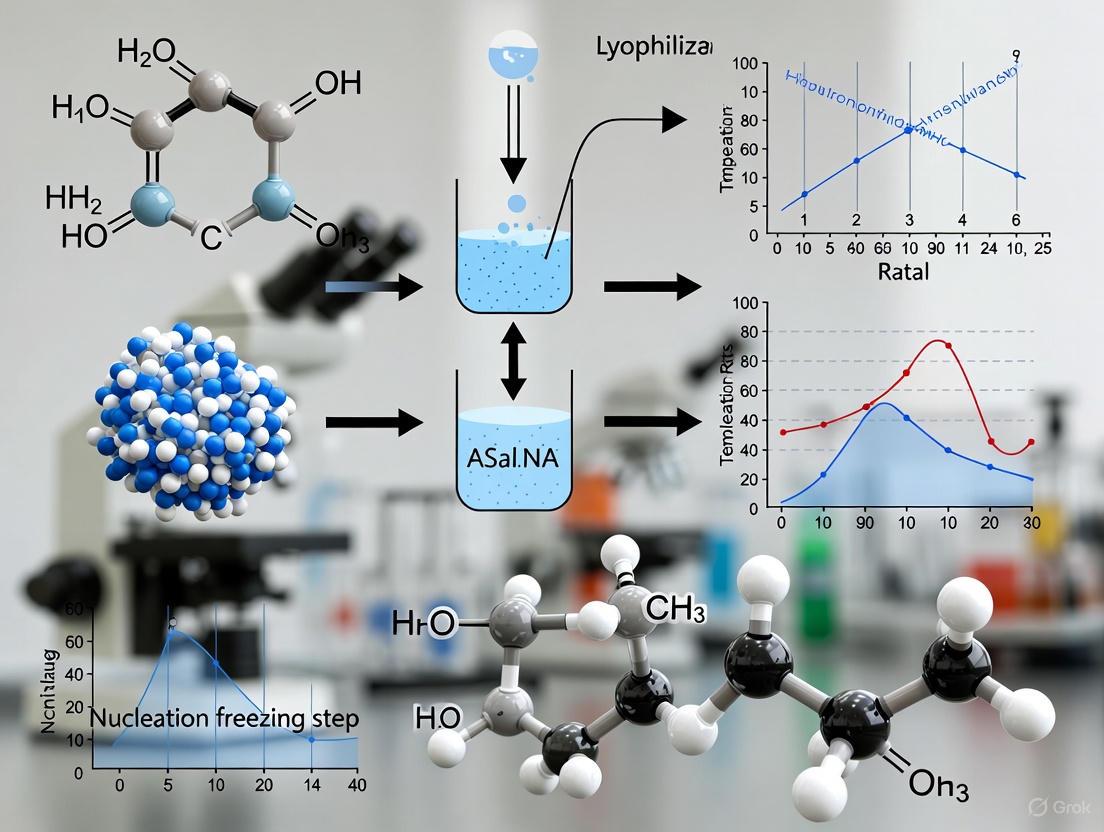
This article provides a comprehensive guide to controlled ice nucleation, a pivotal advancement in the lyophilization of pharmaceuticals.
Controlled Nucleation in Lyophilization: Mastering the Freezing Step for Robust Drug Manufacturing
Abstract
This article provides a comprehensive guide to controlled ice nucleation, a pivotal advancement in the lyophilization of pharmaceuticals. Tailored for researchers and drug development professionals, it explores the foundational science behind nucleation, details current commercial-scale methodologies, and offers practical strategies for troubleshooting and process optimization. Further, it validates the technology through real-world case studies and comparative analysis, synthesizing key insights to empower the development of more efficient, uniform, and high-quality lyophilized injectables.
The Science of Ice Nucleation: Why the Freezing Step is Foundational to Lyophilization Success
Frequently Asked Questions (FAQs)
1. What is nucleation in the context of lyophilization? Nucleation is the initial step in the freezing phase of lyophilization where the first stable ice crystals form in a supercooled liquid drug formulation. The solution is cooled below its thermodynamic freezing point but remains liquid (a metastable state) until a nucleation event triggers the formation of microscopic ice nuclei, which then grow into larger ice crystals [1].
2. Why is nucleation considered a "stochastic" or random process? Nucleation is stochastic because, in a typical, uncontrolled freeze-dryer, the exact moment and temperature at which ice crystals form in each vial are unpredictable. The nucleation temperature across a set of vials can vary widely, often over a range of 10°C to 20°C or more below the formulation's equilibrium freezing point [1] [2].
3. What are the main negative impacts of uncontrolled, stochastic nucleation? Uncontrolled nucleation leads to several significant issues in manufacturing and product quality [1] [2]:
- Batch Heterogeneity: Vials have different ice crystal structures, leading to inconsistent product.
- Longer Drying Cycles: Vials that nucleate at colder temperatures form smaller ice crystals, which slow down the primary drying sublimation process. Cycles must be designed for these "worst-case" vials.
- Reduced Product Yield: The increased ice surface area from small crystals can stress and denature sensitive proteins.
- Quality Issues: It can cause variations in final product attributes like moisture content, cake appearance, and reconstitution time.
4. What is Controlled Nucleation, and what are its benefits? Controlled Nucleation is a set of techniques used to induce ice formation simultaneously and at a defined, warmer temperature in all vials within a freeze-dryer. The primary benefits include [1] [3] [2]:
- Batch Uniformity: All vials have a similar ice crystal structure and drying history.
- Faster Process: Warmer nucleation creates larger ice crystals, leading to larger pores and faster sublimation, potentially reducing primary drying time by 20-40%.
- Improved Product Quality: Enhanced consistency in critical quality attributes and often a better cosmetic appearance of the final dried "cake."
5. What are the common techniques for implementing Controlled Nucleation? Two main techniques have been developed for commercial application [2]:
- Vacuum-Induced Surface Freezing (VISF): The product is cooled to a desired temperature, the chamber is briefly pressurized with an inert gas, and then rapidly depressurized. This causes instantaneous and uniform nucleation across the batch [3].
- Ice Fog (Seeding): The chamber is cooled and pressurized with a cold, sterile inert gas, creating a suspension of tiny ice crystals ("ice fog") that settles onto the supercooled solution in each vial, seeding crystal growth.
Troubleshooting Guides
Problem 1: Excessive Variation in Primary Drying Times and Final Cake Appearance
Symptoms:
- Some vials complete drying much faster than others within the same batch.
- The final lyophilized cakes have different physical structures (e.g., some are collapsed, some are elegant).
Investigation & Resolution:
| Investigation Step | Observation | Likely Cause & Corrective Action |
|---|---|---|
| Review Nucleation Data | Wide range of nucleation temperatures recorded or observed. | Cause: Stochastic nucleation. Action: Implement a Controlled Nucleation technique (e.g., VISF or Ice Fog) to ensure all vials nucleate at the same, defined temperature [1] [2]. |
| Check Vial Type | Variation is consistent across different vial lots or suppliers. | Cause: Differences in vial inner surface properties (roughness) acting as random nucleation sites [1]. Action: Standardize vial type and consider vendor pre-screening. Controlled nucleation mitigates this variability. |
| Analyze Formulation | Problem occurs with specific formulations, especially those containing crystallizing excipients like mannitol. | Cause: Uncontrolled nucleation increases the likelihood of forming undesirable, metastable excipient phases that can crack vials or alter structure [1]. Action: Optimize formulation and apply controlled nucleation to ensure consistent excipient crystallization. |
Problem 2: Scaling Up a Lyophilization Process with Uncontrolled Nucleation
Symptoms:
- A process that worked perfectly in the laboratory scale fails or performs inconsistently in a pilot or commercial-scale freeze-dryer.
- Nucleation temperatures are systematically colder at larger scales.
Investigation & Resolution:
| Investigation Step | Observation | Likely Cause & Corrective Action |
|---|---|---|
| Compare Scale Environments | Cleaner environment in cGMP production freezer, leading to fewer particulate nucleation sites [2]. | Cause: Reduced heterogeneous nucleation sites in a cleaner environment cause deeper supercooling. Action: Implement a scale-independent Controlled Nucleation method. Studies show techniques like VISF can be successfully transferred from lab to GMP scale without equipment modification [3]. |
| Monitor Scale-Up Parameters | Difficulty in achieving uniform ice fog distribution in a larger chamber [1]. | Cause: The "ice fog" nucleation method may not distribute uniformly in a large chamber. Action: Consider switching to a different controlled nucleation method, such as the depressurization-based VISF technique, which is less dependent on spatial distribution [2]. |
Experimental Protocols & Data
Protocol: Implementing Vacuum-Induced Surface Freezing (VISF)
This protocol outlines the steps for conducting controlled nucleation via the VISF method, as demonstrated in scale-up studies [3].
1. Objective: To induce uniform ice nucleation at a defined product temperature in all vials within a lyophilizer.
2. Materials:
- Vials containing the supercooled liquid product.
- Production-scale lyophilizer with programmable vacuum control.
- Source of sterile inert gas (e.g., Nitrogen or Argon).
3. Methodology:
- Step 1 - Cooling: Cool the shelf temperature to bring all product vials to the target nucleation temperature. This temperature is selected to be below the equilibrium freezing point but significantly warmer than the spontaneous nucleation point (e.g., between -2°C and -5°C) [2].
- Step 2 - Equilibration: Hold the shelf at the target temperature to ensure thermal equilibrium across all vials.
- Step 3 - Pressurization: Rapidly pressurize the lyophilizer chamber with an inert gas to a predefined pressure (e.g., 300-400 mbar above the initial pressure) [3].
- Step 4 - Depressurization: Immediately and rapidly release the chamber pressure (depressurize) back to its original value. This action causes instantaneous nucleation at the solution surface, which propagates throughout the vial within seconds.
- Step 5 - Freezing: Continue holding or further lowering the shelf temperature to complete the freezing of the entire product mass.
Visual Workflow for VISF Protocol
Quantitative Impact of Controlled Nucleation
The table below summarizes key quantitative benefits observed from implementing controlled nucleation.
| Parameter | Uncontrolled (Stochastic) Nucleation | Controlled Nucleation (e.g., VISF) | Impact & Source |
|---|---|---|---|
| Nucleation Temperature Range | Can span 10°C to 20°C or more [2] | Precise control, typically within a 1-2°C window [3] | Eliminates vial-to-vial freezing heterogeneity. |
| Primary Drying Time | Baseline (long, designed for coldest-nucleating vials) | Reduction of 20% to 40% [2] | Increases manufacturing throughput and reduces energy costs. |
| Drying Time vs. Nucleation Temp | ~1-3% longer drying time per 1°C decrease in nucleation temp [1] | N/A (Fixed, warmer temp) | Provides a direct rationale for cycle time reduction. |
| Batch Uniformity (Cake Appearance) | Variable and unpredictable | "Much better" and highly consistent [3] | Leads to a more professional product and fewer rejected batches. |
| Scale-Up Success | Challenging due to environmental differences | Successfully transferred from lab to GMP scale [3] | Reduces tech transfer time and risk. |
The Scientist's Toolkit: Research Reagent Solutions
The following table lists key excipients and materials used in developing stable lyophilized formulations, particularly in conjunction with controlled nucleation studies.
| Reagent / Material | Function / Explanation | Example from Literature |
|---|---|---|
| Trehalose | A non-reducing disaccharide sugar that acts as a cryoprotectant and lyoprotectant. It stabilizes proteins during freezing and drying by forming a glassy matrix and replacing water molecules around the protein [4]. | Used at 75 mM in a lyophilized RT-LAMP diagnostic kit to stabilize enzymes during room-temperature storage [4]. |
| Polyethylene Glycol (PEG) | A polymer used to improve the structural properties of the lyophilized "cake." It helps create a more structurally sound and pharmaceutically elegant pellet [4]. | PEG 8000 at 5% concentration was identified as optimal for cake formation in a diagnostic reagent lyophilization study [4]. |
| Mannitol | A crystallizing bulking agent. It provides a rigid crystalline framework to the lyophilized cake, which helps prevent collapse. This is especially important in formulations with low protein concentration [1] [5]. | Mentioned as a common crystallizing excipient. Uncontrolled nucleation can lead to its undesirable phase transitions, potentially cracking vials [1]. |
| Arginine | An amino acid that can act as a stabilizer in formulations. It helps suppress protein aggregation by interacting with hydrophobic patches on the protein surface [4]. | Tested at 10 mM as a protective reagent in the lyophilization of a colorimetric RT-LAMP assay [4]. |
What is the fundamental problem of uncontrolled nucleation in lyophilization?
During the freezing step of lyophilization, the aqueous solution in each vial must be cooled below its thermodynamic freezing point (typically near 0°C) to initiate ice formation. However, in a clean manufacturing environment, this nucleation—the onset of ice crystallization—occurs stochastically. The solution remains in a "subcooled" or "supercooled" metastable liquid state until a nucleation event happens randomly [1]. This means that individual vials in the same batch can nucleate at widely different temperatures, spanning a range from just below 0°C down to as low as -30°C [1] [2]. This random, vial-to-vial variation in the nucleation temperature is the core problem of uncontrolled nucleation.
What are the direct impacts of uncontrolled nucleation on my lyophilization process and product?
Uncontrolled nucleation negatively affects nearly every aspect of the lyophilization process and the final product quality. The table below summarizes the key impacts.
Table 1: Consequences of Uncontrolled Nucleation in Lyophilization
| Aspect | Impact of Uncontrolled Nucleation | Underlying Reason |
|---|---|---|
| Drying Time | Primary drying time increases by 1-3% for every 1°C decrease in nucleation temperature [1] [2]. Cycles must be designed for the worst-case (coldest nucleating) vials, leading to excessively long cycles [1]. | Colder nucleation produces smaller ice crystals. Upon sublimation, these leave behind smaller pores, increasing resistance to vapor flow and slowing drying [2] [6]. |
| Product Quality & Uniformity | Significant vial-to-vial heterogeneity in cake appearance, pore structure, specific surface area, and reconstitution time [2] [6]. | Random nucleation temperatures impart different freezing histories and ice crystal structures to each vial [1]. |
| Process Yield | Increased risk of protein aggregation and vial cracking [1] [2]. | Smaller ice crystals from cold nucleation have greater surface area, promoting protein denaturation at the ice-water interface. Uncontrolled nucleation can also promote excipient phase transitions that crack vials [1] [2]. |
| Process Development & Scale-up | Complicates development and undermines Quality by Design (QbD) principles. Requires extra formulation work and non-optimal cycles to account for variability [1]. | The expanding range of critical process parameters makes it difficult to establish a robust, science-based design space [1]. |
How can I implement controlled nucleation in my experiments? What are the common methods?
Controlled nucleation techniques allow you to induce ice formation simultaneously and uniformly across all vials in a batch at a defined, warmer temperature. The two most common and scalable methods are the Ice Fog technique and the Depressurization technique.
Table 2: Comparison of Controlled Nucleation Methods
| Method | Basic Principle | Key Steps (Protocol Overview) | Considerations |
|---|---|---|---|
| Ice Fog Technique [2] [7] | An ice fog of tiny crystals is created in the chamber to "seed" the supercooled solution in each vial. | 1. Cool all vials to the desired nucleation temperature (below freezing point but above spontaneous nucleation).2. Reduce chamber pressure (e.g., to ~50 Torr).3. Introduce a stream of cold, sterile nitrogen gas into the humid chamber to form an ice fog.4. Hold for 1-2 minutes to allow ice crystals to fall into vials, inducing nucleation. | Vials may nucleate over a minute or two, not instantaneously. Uniform distribution of the ice fog in large dryers can be a challenge [2]. |
| Depressurization (e.g., ControLyo) [1] [2] [6] | Rapid pressure release causes instantaneous nucleation at the solution's surface. | 1. Cool all vials to the selected nucleation temperature.2. Pressurize the freeze-dryer chamber with an inert gas (e.g., nitrogen or argon).3. Allow the product to reach thermal equilibrium.4. Rapidly evacuate the chamber (depressurize). Nucleation occurs in seconds across the entire batch. | Induces nucleation at essentially the same time for all vials. Does not introduce any foreign material into the vials [2]. |
The following diagram illustrates the general workflow for implementing a controlled nucleation process and how it corrects the issues caused by stochastic nucleation.
Troubleshooting Common Issues in Controlled Nucleation
Table 3: Troubleshooting Guide for Controlled Nucleation Experiments
| Problem | Potential Cause | Solution |
|---|---|---|
| Incomplete or Partial Batch Nucleation | Ice Fog Method: Non-uniform distribution of the ice fog, especially in commercial-scale dryers [1].Depressurization Method: Inadequate pressure release rate or thermal gradients across the shelf [3]. | Ensure proper technique for fog distribution. For depressurization, verify the functionality of pressure release valves and ensure sufficient product equilibration time after pressurization [3]. |
| Cake Appearance Defects (e.g., stratification) | The nucleation event was successful, but the subsequent ice crystal growth was not uniform [2]. | Ensure precise control of shelf temperature after nucleation. The rate of cooling after the nucleation event is critical for uniform crystal growth throughout the vial [2]. |
| No Significant Reduction in Drying Time | Nucleation temperature may have been set too low, resulting in a degree of supercooling that still produces relatively small crystals [6]. | Aim to induce nucleation at a temperature only slightly below the formulation's thermodynamic freezing point to maximize ice crystal size [6]. |
The Scientist's Toolkit: Key Technologies and Reagents
Table 4: Essential Research Tools for Controlled Nucleation Studies
| Item / Technology | Function / Description | Application Note |
|---|---|---|
| Freeze-Dryer with Controlled Nucleation Accessory | A lyophilizer equipped with hardware/software for ice fog generation or rapid depressurization. | Systems are offered by various manufacturers (e.g., Millrock's FreezeBooster, IMA Life, SP Scientific). Ensure the technology is compatible with your scale of operation [2]. |
| Inert Gas (N2 or Argon) | High-purity gas used as a medium for pressure manipulation in the depressurization method or for creating ice fog. | Essential for the depressurization technique. Must be sterile and of pharmaceutical grade for GMP applications [1] [7]. |
| Model Monoclonal Antibody (mAb) Formulation | A well-characterized protein (e.g., in a sucrose-based buffer) used as a model system to study the impact of nucleation. | Allows for the systematic study of nucleation on protein stability, aggregation, and other CQAs [6]. |
| Manometric Temperature Measurement (MTM) | A PAT tool used to determine product temperature and dry layer resistance in situ during primary drying. | Critical for quantifying the reduction in product resistance (Rp) and the increase in sublimation rate achieved with controlled nucleation [6]. |
| Scanning Electron Microscope (SEM) | Used to image the microstructure of the lyophilized cake. | Provides visual proof of the larger, more open pore structure resulting from controlled nucleation compared to the small, sponge-like structure from uncontrolled nucleation [6]. |
Within the framework of a thesis on controlling the nucleation freezing step in lyophilization research, a deep understanding of the key physical principles—supercooling, ice crystal morphology, and pore structure—is paramount. The freezing step is the foundational event in lyophilization that dictates the efficiency of the subsequent primary and secondary drying stages and ultimately determines the critical quality attributes of the final product [8]. This guide synthesizes these principles into a practical troubleshooting resource, providing researchers and drug development professionals with the knowledge to diagnose issues, optimize processes, and ensure the consistent production of high-quality lyophilized products.
Core Principles and Quantitative Relationships
Fundamental Concepts
- Supercooling: This is the process of lowering the temperature of a material below its equilibrium freezing point without ice crystal formation [9]. It is a metastable state and the degree of supercooling (ΔT) is defined as the difference between the equilibrium freezing point (Tf) and the actual temperature at which ice nucleation occurs (Tn): ΔT = Tf - Tn [8]. The stochastic nature of ice nucleation makes this a critical control point.
- Ice Crystal Morphology: This refers to the size, shape, and arrangement of ice crystals formed during the freezing step. The morphology is a direct result of the nucleation and growth conditions [10].
- Pore Structure: The three-dimensional network of voids and channels left behind after the sublimation of ice crystals during primary drying [11]. This structure is a direct negative replica of the ice morphology formed during freezing.
Interrelationships and Impact on Process and Product
The relationship between these principles is sequential and deterministic. The degree of supercooling governs the ice nucleation rate and the number of ice crystals, which in turn controls the ice crystal morphology. Finally, the ice morphology dictates the pore structure of the dried cake, which directly impacts mass transfer resistance and drying efficiency [8] [10]. The quantitative relationships between process parameters and outcomes are summarized in the table below.
Table 1: Quantitative Impact of Freezing Parameters on Ice Morphology and Drying Performance
| Process Parameter | Impact on Supercooling & Ice Nucleation | Resulting Ice Crystal Morphology | Impact on Pore Structure & Drying |
|---|---|---|---|
| High Cooling Rate | Increases degree of supercooling [12] | Small, numerous crystals [12] | Small pores, high mass transfer resistance, longer primary drying time [12] [8] |
| Low Cooling Rate | Decreases degree of supercooling | Larger, fewer crystals | Larger pores, lower mass transfer resistance, shorter primary drying time |
| Controlled Ice Nucleation (High Tn) | Reduces supercooling, induces nucleation at a defined, warmer temperature [8] | Larger, more uniform crystals [8] | Larger, more open pores, improved drying efficiency and batch homogeneity [8] [11] |
| Annealing | Allows for ice crystal ripening via Ostwald ripening | Larger, more interconnected crystals | More open pore structure, reduced drying time [11] |
| High Solid Content | Alters freezing point and solution viscosity | Smaller, lamellar pores [11] | Higher product resistance, lower porosity (ε), longer drying [11] |
Troubleshooting FAQs and Guides
This section addresses common challenges encountered during the lyophilization freezing step.
Frequently Asked Questions
FAQ 1: Why is the primary drying time for my batch so long and variable between vials?
- Root Cause: This is typically caused by random, heterogeneous ice nucleation during the conventional shelf-ramped freezing. This leads to a high degree of supercooling, resulting in small ice crystals and a dense, fine-pored structure that offers high resistance to vapor flow [8]. The stochastic nature of nucleation also causes significant vial-to-vial variation.
- Solution: Implement a Controlled Ice Nucleation (CIN) technique. By actively inducing nucleation at a defined, higher temperature (e.g., -5°C to -7°C), you reduce supercooling, create larger ice crystals, and a more porous structure, thereby decreasing primary drying time and improving inter-vial homogeneity [8].
FAQ 2: My lyophilized cake appears collapsed or has poor elegance. What went wrong during freezing?
- Root Cause: Cake collapse can be a downstream effect of the freezing step. An overly fine pore structure from high supercooling can impede vapor flow during primary drying, potentially leading to localized melting and collapse if the product temperature exceeds its collapse temperature [8]. Microstructural changes post-freezing can also contribute.
- Solution: Optimize the freezing protocol to create a more robust pore structure. Using CIN or introducing an annealing step can produce larger, more interconnecting pores that facilitate efficient vapor transport, reducing the risk of collapse [8] [11]. Ensure primary drying parameters are appropriately set for the specific ice morphology.
FAQ 3: How does the concentration of my solute (e.g., sucrose, dextran) impact the freeze-drying process?
- Root Cause: Higher solute concentrations increase the viscosity of the solution and reduce the amount of freezable water. This physically restricts the growth of ice crystals during freezing [11].
- Solution: Understand that formulation dictates process. For high-concentration solutions, expect a finer pore structure and plan for potentially longer drying times. Techniques like annealing become more critical to modify the ice morphology in viscous systems [11].
Advanced Troubleshooting Guide
- Problem: Inconsistent Product Quality Despite Controlled Nucleation
- Observation: A CIN process is used, but an inverse relationship is observed where a higher ice nucleation temperature (e.g., -5°C) leads to lower primary drying efficiency compared to a lower nucleation temperature (e.g., -7°C), contrary to established theory [8].
- Investigation & Resolution:
- Analyze Post-Freezing Microstructure: Use advanced techniques like micro-CT imaging to check for microstructural anomalies post-freezing, such as cake wall deformation, which can alter vapor flow paths and product resistance [8].
- Review Drying Parameters: The advantages of CIN may only be realized with a robust process design that considers primary and secondary drying parameters. A high nucleation temperature alone is insufficient if the subsequent drying conditions are not optimized for the resulting structure [8].
- Check for Bimodal Pore Distribution: In non-CIN cycles, a bimodal distribution of air voids (very small and very large) can develop. The small pores dominate resistance, leading to lower process efficiency despite the presence of some large pores [8].
Essential Experimental Protocols
Protocol for Implementing Controlled Ice Nucleation via Pressurization-Depressurization
This protocol is based on the widely used ControLyo technology [8].
- Objective: To induce simultaneous, homogeneous ice nucleation across all vials in a lyophilizer batch at a predetermined temperature to reduce supercooling and create a uniform ice morphology.
- Materials:
- Lyophilizer equipped with controlled nucleation system (e.g., pressurization capability)
- Partially stoppered vials containing product solution
- Data logging system for product temperature
- Methodology:
- Loading and Cooling: Load the vials onto the lyophilizer shelf and initiate the freeze cycle. Cool the shelf to the target nucleation temperature (e.g., -5°C to -10°C, determined during development) and hold until all vials equilibrate.
- Pressurization: Rapidly pressurize the lyophilization chamber with an inert gas (e.g., nitrogen) to a predefined pressure (e.g., 15-30 psig). Hold the pressure for a short period (e.g., 5-30 minutes) to allow the pressure to stabilize and transfer through the vial stoppers.
- Rapid Depressurization: Quickly vent (depressurize) the chamber back to atmospheric pressure. This rapid pressure drop causes significant supercooling at the liquid surface, inducing instantaneous and uniform ice nucleation across the batch.
- Completion of Freezing: After nucleation is confirmed by the observed exotherm, continue to lower the shelf temperature to the final freeze temperature (e.g., -40°C) to fully solidify the product.
- Key Considerations:
- The optimal nucleation temperature and pressure setpoints are product-specific and must be determined experimentally.
- Confirm nucleation by monitoring vial temperatures for a uniform exothermic event.
Protocol for Pore Structure Analysis via Micro-Computed Tomography (µ-CT)
This protocol provides a non-destructive, 3D method for quantifying the pore structure of a lyophilized cake [8] [11].
- Objective: To obtain high-resolution, three-dimensional data on the pore size distribution, porosity, and tortuosity of a lyophilized product.
- Materials:
- High-resolution micro-CT scanner
- Lyophilized product in vial
- Image processing software (e.g., ImageJ, Avizo, ORS Dragonfly)
- Methodology:
- Sample Mounting: Secure the lyophilized cake or vial in the scanner sample holder to prevent movement during rotation.
- Image Acquisition: Set the appropriate X-ray voltage, current, and exposure time. Rotate the sample through 360 degrees, capturing several thousand 2D projection images.
- Image Reconstruction: Use dedicated software to reconstruct the 2D projections into a 3D volumetric image (voxel size can be as low as 1-10 µm).
- Image Segmentation & Analysis:
- Import the 3D volume into analysis software.
- Apply filters to reduce noise.
- Segment the image to digitally separate the solid phase (cake) from the void phase (pores).
- Calculate key parameters:
- Porosity (ε): Volume fraction of voids.
- Pore Size Distribution: Statistical distribution of pore diameters.
- Tortuosity (τ): A measure of the convoluted path of the pores.
The Scientist's Toolkit: Key Research Reagents and Materials
Table 2: Essential Materials for Lyophilization Freezing Step Research
| Material / Reagent | Function in Research | Key Considerations |
|---|---|---|
| Sucrose / Dextran | Model solute for studying pore structure and drying kinetics [13] [11]. Sucrose is amorphous, while dextran helps form rigid porous structures. | Concentration directly influences ice morphology and glass transition temperature (Tg') [11]. |
| Tubing Glass Vials | Primary container with consistent bottom thickness [12]. | Promotes uniform heat transfer and reduces vial-to-vial supercooling variability compared to molded vials [12]. |
| Annealing-Compatible Excipients | Formulation components (e.g., crystalline glycine, mannitol) that allow for and benefit from an annealing step. | Annealing promotes ice crystal growth and recrystallization, leading to larger pores and more efficient drying [11]. |
| Nucleation-Promoting Agents | Substances (e various ice-nucleating bacteria or minerals) used to study the fundamental effects of heterogeneous nucleation. | Helps decouple the effects of nucleation from crystal growth in fundamental studies. |
Process Visualization and Workflows
The following diagram illustrates the logical relationship between the freezing parameters, the resulting ice and pore morphology, and the final product quality, integrating the core principles discussed.
Figure 1: The Causal Pathway from Freezing Parameters to Final Product Quality. This workflow shows how the freezing step is deterministic for the entire lyophilization process and final product attributes.
Technical Support Center
Troubleshooting Guides & FAQs
FAQ: What is the fundamental connection between the nucleation step and the Critical Quality Attributes (CQAs) of a lyophilized product?
The nucleation step is the initial and a critical determinant of the entire lyophilization process and the resulting product quality. It directly influences the size and morphology of the ice crystals formed during freezing [14]. This ice crystal structure, in turn, sets the pore structure of the final lyophilized cake, which impacts several key CQAs [14]:
- Cake Resistance: The size of the ice crystals defines the pore structure in the lyophilized cake. A low nucleation temperature (high degree of supercooling) leads to many small ice crystals, resulting in small pores and a high dry layer resistance that slows down sublimation during primary drying [14].
- Reconstitution Time: Cakes with small pores and high resistance tend to have longer reconstitution times because the diluent penetrates the cake structure more slowly [15].
- Protein Stability: The stochastic nature of uncontrolled nucleation leads to vial-to-vial heterogeneity. This means proteins in different vials may experience different freezing environments (e.g., varying levels of cryoconcentration, ice surface area, and pH shifts), which can compromise protein stability and yield [1].
FAQ: My primary drying times are excessively long and variable from vial to vial. Could the nucleation step be the cause?
Yes, this is a classic symptom of uncontrolled nucleation. When nucleation occurs stochastically, the degree of supercooling varies significantly between vials [1]. Vials that nucleate at much colder temperatures form much smaller ice crystals. These small crystals create a dried cake structure with very small pores and high resistance, severely limiting the rate of water vapor sublimation during primary drying [14]. To accommodate these "slowest-drying" vials, the primary drying phase must be extended for all vials, leading to inefficient and costly cycles [1].
FAQ: How can I reduce the reconstitution time of my high-concentration protein formulation?
Long reconstitution times are a common challenge for high-concentration lyophilized products. Several strategies have been proven effective, as summarized in the table below [15]:
| Strategy | Experimental Approach | Quantitative Impact on Reconstitution Time |
|---|---|---|
| Reducing Headspace Pressure | Backfilling vials with nitrogen to a pressure <10 Torr after lyophilization. | Reduction of >60% compared to 250 Torr [15] |
| Reducing Diluent Volume | Using a smaller volume of diluent to achieve a higher final protein concentration. | Reduction of up to 83% [15] |
| Incorporating an Annealing Step | Holding the frozen product at a specific temperature (e.g., -3°C) for a period (e.g., 3 hours) during the freezing step. | Reduction of 38% compared to a non-annealing process [15] |
| Optimizing Reconstitution Conditions | Using a warmer diluent (37°C) and employing high-frequency swirling. | Reduction of 56% [15] |
| Increasing Cake Surface Area | Using a vial size that provides a high surface-area-to-height ratio for the cake. | Reduction of up to 46% [15] |
Troubleshooting Guide: Inconsistent Cake Appearance and Protein Stability
Problem: The lyophilized cakes have inconsistent appearance (e.g., varying cake structure, shrinkage) across vials in the same batch, and analytical testing shows variable protein stability.
Potential Root Cause: Uncontrolled, stochastic nucleation is causing significant vial-to-vial heterogeneity in ice crystal size and morphology [1] [14]. This creates different local environments for the protein during freezing, leading to variations in the final cake structure and potentially subjecting the protein to different levels of stress, resulting in stability issues.
Solutions:
- Implement Controlled Nucleation: Utilize technologies such as the ice fog method or pressure shift nucleation to induce nucleation at a consistent, predetermined temperature in all vials [1] [14]. This reduces inter-vial heterogeneity, leading to more uniform cake appearance, more consistent drying performance, and reduced stress on the protein [14].
- Optimize Formulation with Cryoprotectants: Ensure your formulation includes appropriate cryoprotectants (e.g., sucrose) and bulking agents. These excipients protect the protein structure during the freezing process by stabilizing the protein molecules and providing a matrix for the cake, mitigating the risks posed by variations in the freezing environment [16] [17].
- Apply an Annealing Step: Introduce an annealing step in the freezing protocol. This involves holding the product at a sub-freezing temperature for a specified time, which allows for the growth and re-crystallization of ice crystals. This results in larger, more uniform ice crystals and a more consistent pore structure in the final cake [15].
Experimental Protocols
Protocol 1: Incorporating an Annealing Step to Improve Cake Properties
This protocol is based on the methodology used to achieve a 38% reduction in reconstitution time [15].
- Loading: Load filled vials onto the lyophilizer shelf at a temperature of 5°C. Hold for 30 minutes.
- Cooling: Cool the shelf to -5°C at a rate of 1°C/min and hold for 60 minutes.
- Freezing: Cool the shelf to -45°C at 1°C/min and hold for 3 hours.
- Annealing: Raise the shelf temperature to the desired annealing temperature (e.g., -3°C, -10°C, or -15°C) at a ramp rate of 1°C/min. Hold at this temperature for 3 hours.
- Final Freeze: Cool the shelf back to -45°C at 1°C/min and hold for 3 hours.
- Drying: Proceed with primary and secondary drying according to the established cycle (e.g., primary drying at 100 mTorr and -10°C for 40h, followed by secondary drying at 35°C for 10h) [15].
Protocol 2: Investigating the Effect of Headspace Pressure on Reconstitution
This protocol details how to test the impact of headspace pressure, which can reduce reconstitution time by over 60% [15].
- Lyophilization: Complete the lyophilization cycle, including secondary drying, according to your standard process.
- Backfilling: Before stoppering, backfill the vials with an inert gas (e.g., nitrogen) to different, predetermined pressure levels. Typical test points include 0.1 Torr, 10 Torr, 50 Torr, 100 Torr, and 250 Torr.
- Stoppering: Stoppered the vials fully under the assigned vacuum level.
- Analysis: Perform reconstitution time tests on vials from each pressure group and compare the results.
Process Relationships and Experimental Workflows
The Scientist's Toolkit: Research Reagent Solutions
The following table lists key materials and reagents essential for experiments investigating nucleation and its impact on lyophilized product quality.
| Item | Function & Application in Research |
|---|---|
| mAb (e.g., Trastuzumab) | A typical model protein (monoclonal antibody) used in lyophilization studies to represent a sensitive biologic and assess the impact of process parameters on protein stability [15]. |
| Sucrose | A common cryoprotectant and lyoprotectant. It protects proteins during freezing and drying by stabilizing their native structure, preventing denaturation and aggregation [15] [16]. |
| Polysorbate 80 | A surfactant used to mitigate protein aggregation at interfaces, which can occur during the freezing and reconstitution steps [15]. |
| L-Histidine / L-Histidine HCl | A buffering agent used to maintain the pH of the formulation, which is critical for protein stability throughout the lyophilization process [15]. |
| Mannitol | A crystallizing bulking agent. It provides structural integrity to the lyophilized cake. Its crystallization behavior is highly dependent on the nucleation step [1]. |
| Type 1 Borosilicate Glass Vials | The primary container for lyophilization. Vial characteristics (size, finish) can influence heat transfer and, in some cases, nucleation behavior [15]. |
Implementing Controlled Nucleation: A Guide to Commercial-Scale Technologies and Protocols
Core Principles of Ice Fog Nucleation Technology
The Nucleation Problem in Traditional Lyophilization
In conventional freeze-drying processes, the freezing step occurs stochastically, meaning vials nucleate randomly at different times and temperatures. This happens because formulations in clean manufacturing environments lack natural nucleation sites, causing solutions to supercool significantly - sometimes 10-15°C or more below their thermodynamic freezing point before ice crystals spontaneously form [2]. This random nucleation leads to inconsistent ice crystal sizes across the batch, which directly impacts the pore structure of the final lyophilized cake and creates variability in critical quality attributes [2] [1].
How Ice Fog Technology Works
Ice fog nucleation introduces controlled nucleation sites into the lyophilizer chamber to ensure all vials nucleate simultaneously at a defined temperature. The technology generates a sterile cryogenic ice fog, typically by mixing liquid nitrogen with water vapor or sterile water [18] [19]. This creates microscopic ice crystals that circulate throughout the chamber and settle onto the supercooled liquid in each vial, providing uniform nucleation sites across the entire batch [2] [20].
The process follows these fundamental steps:
- Product Cooling: Vials are cooled to a predetermined nucleation temperature below the equilibrium freezing point but above the temperature where spontaneous nucleation would occur
- Equilibration: The product is held at this temperature until thermal stability is achieved across all vials
- Ice Fog Generation: A sterile ice fog is created and introduced into the chamber
- Nucleation: Ice crystals from the fog contact the supercooled solutions, triggering simultaneous nucleation across the batch
- Freezing Completion: The freezing process continues to completion after nucleation [18] [20] [21]
Comparative Analysis: VERISEQ vs. FreezeBooster
Technology Implementation and Specifications
Table 1: System Specifications and Implementation Requirements
| Feature | VERISEQ Nucleation (IMA Life/Linde) | FreezeBooster (Millrock Technology) |
|---|---|---|
| Core Technology | Ice fog generated by mixing liquid nitrogen with WFI (Water for Injection) | Ice fog injection under optimized conditions |
| Sterilization | Sanitary, easily sterilizable design [18] | H₂O₂ sterilization capability; steam sterilizable options (NSS100) [20] |
| Installation | Easily retro-fitted to any lyophilizer; compatible with pre-existing access ports [18] | Portable; replaces lyophilizer door; easily installed on any freeze dryer [20] |
| Pressure Requirements | No need to pressurize the product chamber [18] | Does not require high positive pressures or ASME-rated vessels [20] |
| System Variants | Not specified in search results | NS20 (lab scale), NS100 (production), NSS100 (ASME rated production) [20] |
| Control Integration | Software easily integrates with existing control systems; stand-alone control for non/semi-automated systems [18] | PC/PLC controlled system with remote access capability [20] |
Performance Benefits and Quantitative Outcomes
Table 2: Documented Performance Improvements with Ice Fog Nucleation
| Performance Metric | VERISEQ Results | FreezeBooster Compatible Results | Testing Conditions |
|---|---|---|---|
| Process Time Reduction | Up to 30% shorter [18] | Primary drying times reduced by up to 40% reported with controlled nucleation [2] | Commercial production environments |
| Nucleation Temperature Range | Reduced to 0.5°C in most cases [21] | Creates uniform starting point for crystal growth [20] | 3% mannitol solution; various vial sizes |
| Nucleation Time Frame | < 2 minutes [21] | Simultaneous nucleation across batch [20] | Production scale testing |
| Primary Drying Acceleration | 12.4 hours earlier onset; 5.4 hours earlier completion [21] | Significant reduction in primary drying time [20] | 39-m² freeze dryer with 45,540 vials |
| Batch Uniformity | Significant improvement in vial-to-vial temperature profiles [18] | Provides common ice crystal structure across batch [20] | Tests with water, Mannitol, Sucrose, Vancomycin HCl |
Troubleshooting Guide: Common Implementation Challenges
Ice Fog Distribution and Nucleation Failures
Problem: Incomplete nucleation across the batch, particularly in production-scale lyophilizers.
Root Cause: Thermal gradients within large freeze-dryer chambers create zones where some vials remain above the required supercooling temperature. Computational modeling of a 56-m² shelf area freeze dryer showed thermal gradients as high as 2°C across the vial pack [21]. Radiation from warmer chamber walls can prevent sufficient supercooling of vials in certain locations.
Solutions:
- Pre-cool chamber walls: Reduce wall temperature to minimize radiative heating (successfully demonstrated by cooling walls to 10°C vs. 16°C) [21]
- Optimize ice fog distribution: Ensure proper port sizing (3-inch ports recommended for production scales to promote recirculation) [21]
- Extended equilibration: Allow sufficient time (e.g., 90 minutes) for all vials to reach target nucleation temperature [21]
- Strategic port placement: Position inlet and outlet ports to account for buoyant forces and promote uniform fog distribution [21]
Scale-Up Challenges from Laboratory to Production
Problem: Process works reliably at lab scale but fails in production environments.
Root Cause: Laboratory-scale lyophilizers have minimal thermal gradients, while production-scale units (35-56 m²) exhibit significant variations in temperature distribution.
Solutions:
- Characterize thermal profile: Map temperature distribution across the production lyophilizer shelves under typical operating conditions
- Adapt nucleation parameters: Adjust shelf temperature, equilibration time, and ice fog injection parameters based on scale
- Utilize modeling: Employ computational fluid dynamics to predict thermal behavior and optimize process parameters [21]
- Validate with extensive monitoring: Place thermocouples throughout the batch (top, middle, bottom shelves) to verify uniform nucleation [21]
Product Formulation Challenges
Problem: Variable success with different formulations, fill volumes, or container types.
Root Cause: Different formulations have varying nucleation characteristics, and fill height impacts heat transfer.
Solutions:
- Formulation-specific optimization: Determine optimal nucleation temperature for each formulation (typically between -3°C to -15°C) [22]
- Challenge the process: Test with various vial sizes (2mL to 100mL) and fill volumes during development [19] [22]
- Characterize crystal structure: Verify ice crystal morphology and drying performance for new formulations
Frequently Asked Questions (FAQs)
Q1: What is the typical nucleation temperature range for ice fog technology? A: The optimal nucleation temperature depends on the specific formulation and concentration, but generally falls between -3°C to -15°C. Warmer temperatures within this range are typically preferred as they produce larger ice crystals and more efficient drying. The exact temperature should be determined experimentally for each product [22] [21].
Q2: Can ice fog technology be used with non-aqueous solvents? A: The search results specifically address aqueous solutions, which are most common in biopharmaceutical applications. The technology relies on the formation of ice crystals, so its effectiveness with non-aqueous solvents would require specific evaluation and may not be directly applicable [1].
Q3: How does ice fog technology compare to other controlled nucleation methods? A: Research comparing ice fog with depressurization methods (like ControLyo) and partial vacuum techniques has shown that when nucleated at the same temperature, different technologies produce products with comparable quality attributes and stability behavior [22]. The primary differences lie in implementation requirements, equipment compatibility, and operational considerations rather than final product quality.
Q4: What are the validation requirements for implementing ice fog technology in GMP environments? A: Implementation requires adherence to regulatory standards and comprehensive validation. This includes installation qualification, operational qualification, and performance qualification demonstrating consistent nucleation across the batch. Additionally, sterilization validation (for sterilizable components) and software validation for automated controls are essential [18] [23].
Q5: Does ice fog technology require changes to existing lyophilization cycles? A: While the freezing step is modified to incorporate the nucleation event, existing primary and secondary drying parameters may need optimization to fully leverage the benefits. The more uniform ice crystal structure often enables more aggressive drying conditions, potentially reducing cycle times [18] [21].
Experimental Protocols for Technology Evaluation
Protocol: Nucleation Efficiency Testing
Objective: Quantify the nucleation uniformity across a batch using ice fog technology.
Materials:
- Lyophilizer equipped with ice fog system (VERISEQ or FreezeBooster)
- 3% w/w mannitol solution as a model formulation [21]
- Vials (recommend 10cc tubing vials)
- Thermocouples (internal and external)
- Data acquisition system
Methodology:
- Place clusters of vials with thermocouples throughout the lyophilizer (top, middle, bottom shelves)
- Load vials with standardized fill volume (e.g., 3mL)
- Equilibrate vials at target nucleation temperature (e.g., -6°C) for 90 minutes
- Implement ice fog nucleation according to system specifications
- Record nucleation events via temperature exotherms
- Calculate nucleation temperature range and time span across all monitored vials
Success Criteria: Nucleation temperature range ≤0.5°C and nucleation time span <2 minutes across the batch [21].
Protocol: Drying Performance Assessment
Objective: Compare primary drying times between controlled and stochastic nucleation.
Materials:
- Test formulation (e.g., monoclonal antibody solution)
- Production-scale lyophilizer
- Pressure measurement system (Pirani gauge, capacitance manometer)
Methodology:
- Run identical cycles with and without ice fog nucleation
- Monitor primary drying progression using pressure ratio (Pirani/CM)
- Record time until pressure ratio indicates transition to secondary drying
- Compare cake appearance and structure
- Measure residual moisture content
Expected Outcome: Primary drying time reduction of 20-30% with ice fog nucleation [18] [21].
Essential Research Reagent Solutions
Table 3: Key Materials and Reagents for Ice Fog Nucleation Research
| Material/Reagent | Function/Application | Specification Considerations |
|---|---|---|
| Liquid Nitrogen | Cryogenic fluid for ice fog generation | Pharmaceutical grade; consistent purity [18] |
| WFI (Water for Injection) | Steam generation for ice fog | Sterile, endotoxin-controlled [18] |
| Model Formulations | Process development and optimization | 3% mannitol; sucrose solutions; monoclonal antibodies [18] [22] |
| Vials/Containers | Representative container systems | Various sizes (2mL-100mL); standardized heat transfer characteristics [22] [21] |
| Thermal Validation Tools | Mapping temperature distribution | Thermocouples (internal/external); data loggers [21] |
Process Workflow Visualization
Technical Implementation Considerations
Facility and Equipment Requirements
Successful implementation of ice fog technology requires specific facility considerations:
Liquid Nitrogen Supply: Both VERISEQ and FreezeBooster systems require liquid nitrogen, with VERISEQ specifically noting that "a Dewar will suffice" without needing large-scale infrastructure [18]. This makes implementation feasible in diverse manufacturing environments.
Port Access: Retrofit installation requires appropriate access ports on the lyophilizer chamber. VERISEQ notes compatibility with pre-existing ports, while FreezeBooster typically interfaces with the chamber door [18] [20]. Production-scale implementation (≥39-m²) may require multiple or larger ports (2-3 inch) for optimal ice fog distribution [21].
Sterilization Compatibility: For GMP applications, verify compatibility with preferred sterilization methods. Both systems offer sterilization options - VERISEQ features a "sanitary, easily sterilizable design" while FreezeBooster offers H₂O₂ and steam sterilization variants [18] [20].
Integration with Quality by Design (QbD) Frameworks
Ice fog nucleation aligns perfectly with QbD principles by providing control over a critical process parameter that was previously stochastic. Implementation supports:
Design Space Expansion: Controlled nucleation enables more predictable scale-up and process transfer by reducing the variability introduced by stochastic freezing [23] [22].
Reduced Product Variability: The technology directly addresses FDA Q10 guidance on identifying and controlling sources of variation, resulting in more consistent critical quality attributes [21].
Enhanced Process Understanding: By controlling nucleation, scientists can more accurately determine the relationship between process parameters and product attributes, supporting more science-based process development [23] [1].
Core Mechanism and Principle
Q: What is the fundamental working principle of the ControLyo depressurization technology?
ControLyo technology addresses the stochastic nature of ice nucleation in conventional lyophilization by transforming it from a passive, random event into an active, controlled process. The technology relies on Rapid Depressurization to uniformly induce ice nucleation across all vials in a batch at a precisely selected temperature [24] [2]. The workflow is as follows:
- Cooling and Pressurization: The product vials are cooled on the lyophilizer shelf to a desired, predefined nucleation temperature that is below the solution's equilibrium freezing point but above the temperature at which spontaneous, random nucleation would occur. The freeze-dryer chamber is then pressurized with an inert ballast gas (such as nitrogen or argon) [25] [2].
- Equilibration: The system is held under pressure to allow thermal equilibrium to be achieved throughout the batch of vials [2].
- Rapid Depressurization: The chamber is rapidly depressurized. This sudden pressure release causes adiabatic expansion and cooling of the gas within the vial headspace, instantly inducing ice crystal formation at the top of the solution in each vial. This nucleation front then propagates uniformly throughout the entire vial within seconds [25] [2].
The following diagram illustrates this sequence and its direct effect on the product's ice crystal structure:
Q: How does the choice of ballast gas affect the nucleation process?
Research has demonstrated that the ballast gas composition is a Critical Process Parameter (CPP). The thermodynamic properties of the gas directly influence the temperature drop in the vial headspace during rapid depressurization, which is the driving force for nucleation [25].
- Monatomic gases (e.g., Argon): Produce the most favorable conditions for nucleation. Due to their high heat capacity ratio (γ = Cp/Cv), they undergo a more significant temperature drop during adiabatic expansion compared to diatomic gases [25].
- Diatomic gases (e.g., Nitrogen): Result in a less pronounced cooling effect upon depressurization and are therefore less efficient at inducing nucleation [25].
Troubleshooting Guide: Common Experimental Issues
Q: What should I do if nucleation is incomplete, with some vials remaining liquid after the depressurization cycle?
Incomplete nucleation is a primary failure mode that compromises batch uniformity.
- Potential Cause 1: The selected nucleation temperature is too low. Although the solution is supercooled, the magnitude of cooling from depressurization may be insufficient to cross the nucleation energy barrier.
- Potential Cause 2: Inadequate pressure differential during the depressurization step.
- Solution: Verify and potentially increase the initial charge pressure. Studies show that a higher initial pressure leads to a greater temperature drop upon depressurization, making nucleation more robust [25].
- Potential Cause 3: Unsuitable ballast gas.
- Solution: Switch from nitrogen to a monatomic gas like argon, which has been proven to create a more significant temperature drop and more reliable nucleation [25].
Q: Why are there visible cracks in the lyophilized cake, or why does the cake appearance vary between vials?
Defects in the final cake often originate from inconsistencies during the freezing step.
- Potential Cause: Uncontrolled or varied ice crystal morphology. While ControLyo eliminates the primary source of variation (nucleation temperature), crystal growth can still be influenced by thermal gradients across the shelf or within the vial.
- Solution: Ensure a consistent post-nucleation hold time and controlled ramp rate to the final freeze temperature. This allows for uniform ice crystal growth throughout the batch. Implementing Controlled Nucleation has been shown to produce cakes with much better appearance and no visible collapse [24] [26].
Q: The primary drying time is not reduced as expected after implementing controlled nucleation. Why?
The primary benefit of controlled nucleation is the ability to create a more uniform and open pore structure, which reduces resistance to vapor flow.
- Potential Cause: The primary drying parameters (shelf temperature and chamber pressure) were not re-optimized for the new, more uniform cake structure.
- Solution: After implementing ControLyo, perform cycle development studies to optimize primary drying. With reduced dry layer resistance, you can potentially use a lower shelf temperature to prevent collapse while still achieving a significant reduction in drying time, or a higher temperature to maximize time savings [1] [2]. The relationship between nucleation temperature and drying time is quantified in the table below.
Quantitative Impact of Controlled Nucleation
Table 1: Documented Benefits of Controlled Ice Nucleation Technologies like ControLyo
| Performance Metric | Impact of Controlled Nucleation | Source |
|---|---|---|
| Primary Drying Time | Reduction of 3% for every 1°C increase in nucleation temperature. | [24] |
| Primary Drying Time | Overall reductions of up to 40% have been reported. | [2] |
| Batch Uniformity | Transforms nucleation from a stochastic to a controlled event, enabling vial-to-vial and batch-to-batch consistency. | [24] [1] |
| Product Quality | Improves cake appearance, reduces protein aggregation, and increases reconstitution speed. | [24] [2] |
Experimental Protocols and Workflow
Q: What is a detailed step-by-step protocol for a lyophilization run using the ControLyo technology?
The following workflow integrates the ControLyo nucleation step into a standard lyophilization cycle.
Table 2: Key Reagents and Equipment for ControLyo Experiments
| Category | Item | Function / Specification | |
|---|---|---|---|
| Equipment | Lyophilizer | Must be compatible with or retrofitted for ControLyo. Requires precise pressure control and rapid venting capability. | [24] |
| Consumables | Pharmaceutical Vials | Type 1 borosilicate glass tubing vials. Various sizes (2cc to 50cc) validated. | [22] |
| Reagents | Ballast Gas | High-purity inert gas. Argon is preferred for its superior nucleation efficiency over Nitrogen. | [25] |
| Reagents | Drug Formulation | Aqueous solution of the active pharmaceutical ingredient (API) and stabilizers (e.g., sucrose, histidine buffer). | [22] |
Experimental Workflow:
- Preparation: Fill vials with the liquid drug formulation and partially stopper them. Load them onto the lyophilizer shelf.
- Initial Freezing: Cool the shelves to a temperature above the target nucleation temperature (e.g., +5°C) and hold to ensure thermal equilibrium of the entire batch.
- Nucleation Phase:
- Cool the shelves to the target nucleation temperature (e.g., -5°C to -10°C).
- Pressurize the chamber with the selected ballast gas (e.g., Argon) to the predefined setpoint (e.g., 2-3 bar).
- Hold for a set time (e.g., 5-15 minutes) to ensure thermal equilibrium under pressure.
- Trigger rapid depressurization of the chamber.
- Freezing Completion: After successful nucleation, hold at the nucleation temperature for an additional period (e.g., 30-60 minutes) to allow for complete ice crystal growth. Then, ramp the shelf temperature to the final freezing temperature (e.g., -40°C to -50°C) and hold until completely solidified.
- Drying Phases: Proceed with standard primary and secondary drying steps, which may now be optimized for shorter times due to the more open cake structure.
Technology Implementation and Scale-Up
Q: Is ControLyo suitable for scaling up from R&D to GMP production?
Yes. A key advantage of depressurization-based technologies like ControLyo is their scalability. The mechanism—applying a uniform pressure change to the entire chamber—is inherently scalable across different lyophilizer sizes [1] [26].
- Regulatory Compliance: The technology conforms to the framework for Quality by Design (QbD) by providing direct control over a critical process parameter (nucleation temperature) [24] [23].
- Equipment Impact: The technology can be retrofitted into most existing commercial freeze-dryers without the need to purchase entirely new equipment, making it a cost-effective upgrade [24].
Frequently Asked Questions (FAQs)
Q: How does ControLyo compare to "ice fog" nucleation techniques?
Table 3: Comparison of Controlled Nucleation Technologies
| Feature | Depressurization (ControLyo) | Ice Fog Techniques | |
|---|---|---|---|
| Mechanism | Rapid pressure release causing adiabatic cooling. | Introduction of ice crystals to seed nucleation. | |
| Nucleation Speed | Very rapid; occurs in seconds for the entire batch. | Slightly slower; can take up to a minute, risking Ostwald ripening in early-nucleating vials. | [27] |
| Product Quality | Produces equivalent solid-state properties and stability when nucleated at the same temperature. | Produces equivalent solid-state properties and stability when nucleated at the same temperature. | [22] |
| Key Consideration | Dependent on ballast gas properties and vial characteristics. | Dependent on uniform distribution of the ice fog across the entire shelf. |
Q: Does controlled nucleation require changes to my formulation?
No. A significant advantage of ControLyo and other physical methods is that they induce nucleation without requiring any changes to the drug formulation or the introduction of foreign materials or additives, which is highly desirable for regulated pharmaceuticals [24] [1].
Q: Is there a regulatory precedent for using this technology in approved products?
While adoption has been gradual, yes, there are FDA-approved products that utilize controlled ice nucleation technologies [28]. The regulatory barrier is lower than in the past as the technology is recognized and its benefits for process control and product quality are aligned with modern QbD principles [28] [23].
Core Technology Comparison: Retrofitting vs. New Systems
For researchers aiming to integrate controlled nucleation technology, the decision between retrofitting an existing lyophilizer or purchasing a new system is pivotal. The table below summarizes the key technical and operational considerations for each pathway.
Table 1: Comparison of Controlled Nucleation Integration Pathways
| Feature | Retrofitting Existing Lyophilizers | New System Specifications |
|---|---|---|
| Technology Principle | Ice fog generation to create sterile ice crystals that circulate in the chamber, seeding nucleation in supercooled product vials. [19] [2] | Often designed for pressurization-depressurization (Vacuum-Induced Surface Freezing) or integrated ice fog systems. [3] [2] |
| Implementation | Add-on module (e.g., nucleation station) attached to the existing chamber, often by replacing the door. [19] [20] | Built into the lyophilizer's original design, potentially including pressure-rated chambers for depressurization methods. [3] [20] |
| Primary Cost | Lower initial investment; one portable nucleation station can serve multiple freeze dryers. [20] | Higher capital cost for a complete new system. [20] |
| Key Advantage | Enables adoption of controlled nucleation without a major capital equipment replacement; easily retrofit to any freeze dryer brand. [19] [20] | Optimized, seamless integration of the nucleation technology with the lyophilizer's controls and hardware. [3] |
| GMP/Validation | Retrofitted systems are available with sterilizable options (e.g., via H₂O₂) for GMP applications. [20] | Designed from the ground up to meet GMP standards, including full validation support. [3] |
| Impact on Process | Promotes batch uniformity, larger ice crystals, and reduced primary drying times. [19] [2] [29] | Aims for the same benefits as retrofitting, with potential for enhanced process control and homogeneity across scales. [3] |
Troubleshooting Guides and FAQs
Frequently Asked Questions
Q1: What are the most significant benefits of implementing controlled nucleation in my lyophilization process?
The primary benefits are threefold:
- Reduced Primary Drying Time: By inducing nucleation at a higher temperature (lower supercooling), larger ice crystals form. This creates a porous cake structure with lower resistance to vapor flow during sublimation, potentially cutting primary drying time by 20-40%. [2] [29]
- Improved Batch Uniformity: Controlled nucleation ensures all vials in a batch nucleate at the same time and temperature. This creates a consistent ice crystal structure from vial to vial, leading to more uniform product quality, drying rates, and final cake appearance. [3] [2] [20]
- Enhanced Product Quality: The technology can reduce instances of glass fogging (eclosion), shorten reconstitution times, and for sensitive biologics like monoclonal antibodies, may reduce aggregation induced by ice-surface adsorption. [29]
Q2: We retrofitted our lyophilizer for controlled nucleation but are not seeing the expected reduction in drying time. What could be wrong?
An unexpected inverse relationship between ice nucleation temperature and drying efficiency has been observed in some cases. [8] Potential causes and solutions include:
- Microstructural Changes Post-Freezing: The primary drying parameters (shelf temperature, pressure) may need re-optimization for the new frozen structure. The advantages of controlled nucleation are best realized through a robust process design that considers both primary and secondary drying parameters. [8]
- Unsuccessful Nucleation Induction: Use Process Analytical Technology (PAT) tools, such as heat flux sensors, to confirm that nucleation was successfully and uniformly induced across the batch at the target temperature. [8]
- Cake Morphology Issues: High-resolution imaging (e.g., micro-CT) can reveal cake wall deformation or other microstructural defects that increase product resistance, counteracting the benefits of larger pores. [8]
Q3: After implementing a controlled nucleation process, we notice higher residual moisture. Is this a known issue?
Yes, some studies have reported that while controlled nucleation improves primary drying efficiency, it can sometimes reduce secondary drying efficiency, leading to a final product with a slightly higher moisture content. [8] This underscores the need to re-optimize the entire lyophilization cycle, including the secondary drying step, after implementing a new freezing protocol. [8]
Q4: How does controlled nucleation help with common lyophilizer problems like ice buildup in the condenser?
Controlled nucleation itself does not directly prevent ice buildup in the condenser. However, by creating a more uniform and predictable sublimation rate, it can make the process more stable. The most common causes of excessive ice buildup are inadequate condenser cooling, overloading the system, improper shelf temperature control, and vacuum leaks. [30] Addressing these through preventive maintenance is key. [30]
Troubleshooting Common Equipment Issues
Problem: Insufficient Vacuum or High Leak Rate A strong vacuum is fundamental to the sublimation process. A leak rate worse than 20-30 milliTorr per hour (mTorr/hr) indicates a problem. [31] [32]
- Solution Protocol:
- Isolate the Pump: Cap the vacuum inlet at the freeze dryer chamber and activate the pump. If it pulls a strong vacuum alone, the problem is in the lyophilizer, not the pump. [32]
- Inspect Pump Oil: Check the oil in the vacuum pump. Dark brown or black oil indicates breakdown and need for replacement. Milky white oil signals water contamination, which may be remedied by running the pump with the gas ballast open (temporarily) to boil out the water. [31]
- Locate the Leak: Perform a leak rate test on the empty and dry lyophilizer. [31] Use isopropyl alcohol applied to common leak points (door gaskets, seals, fittings, welds) while under vacuum; a sudden change in the vacuum reading pinpoints the leak. [32]
- Inspect and Tighten: Check all fittings, hose clamps, and the door seal for tightness and integrity. Ensure the door is properly aligned with the chamber. [32]
Problem: Uneven Frost Patterns on Condenser Coils An even frost layer indicates proper operation. Uneven frost suggests issues with refrigerant, vacuum integrity, or condenser functionality. [32]
- Solution Protocol:
- Check for Vacuum Leaks: Follow the leak testing protocol above, as leaks can introduce moisture unevenly. [30] [32]
- Defrost and Clean: Perform a complete defrost cycle and thoroughly clean the condenser coils of any ice or debris. [30] [33]
- Verify Refrigeration System: If leaks are ruled out, the issue may lie with the refrigeration system itself, which likely requires service by a qualified technician. [32]
Experimental Protocols for Controlled Nucleation Research
Protocol: Scaling Up a Vacuum-Induced Surface Freezing (VISF) Process
This protocol outlines the methodology for translating a controlled nucleation process from laboratory to GMP production scale, as demonstrated in peer-reviewed research. [3]
Diagram: Workflow for VISF Scale-Up
Step-by-Step Methodology:
- Laboratory-Scale Process Development:
- Cool the product vials on the shelf to the desired nucleation temperature (e.g., -5°C to -7°C). [3] [2]
- Rapidly reduce the chamber pressure according to the developed VISF recipe. This rapid depressurization causes supercooling at the liquid surface, inducing instantaneous and uniform nucleation across all vials. [3] [2]
- Complete the freezing and proceed with primary and secondary drying.
- Pilot and GMP Scale Transfer:
- Transfer the defined VISF parameters to the larger-scale lyophilizer.
- Key Adjustment: Characterize and adjust the pressure reduction rate and any necessary degassing steps specific to the larger equipment to ensure full nucleation is achieved without vial defects. [3]
- The VISF method can be implemented on all scales of freeze dryers without equipment adaptation. [3]
- Product Characterization and Stability:
- Characterize the lyophilized cakes for morphology (e.g., using micro-CT imaging). [8]
- Analyze Critical Quality Attributes (CQAs) such as residual moisture, reconstitution time, and protein stability (e.g., via SEC-HPLC for aggregates). [3] [29] [8]
- Conduct a stability study (e.g., 6 months) to confirm product quality and comparability between batches produced with and without controlled nucleation. [3]
The Scientist's Toolkit: Essential Research Reagents & Materials
Table 2: Key Materials for Controlled Nucleation Research
| Item | Function in Research | Application Note |
|---|---|---|
| Model Formulation (e.g., 5% Sucrose) | A well-characterized, amorphous model system to study the impact of freezing parameters on cake morphology and drying efficiency without the complexity of an active ingredient. [8] | Allows for isolation of freezing effects. The low glass transition temperature makes it sensitive to process changes. |
| Therapeutic Antibody Formulation | Critical for evaluating the protective effect of different ice crystal morphologies on a sensitive biologic, assessing stability indicators like aggregation and biological activity. [3] [29] | Highly concentrated monoclonal antibody solutions can show significant benefits in reconstitution time and reduced aggregation with CIN. [29] |
| Heat Flux Sensor (PAT Tool) | Placed on the lyophilizer shelf, it measures the energy flow during freezing and drying. It provides direct, in-line data to confirm the nucleation event, solidification time, and completion of primary drying. [8] | Essential for scaling up and troubleshooting, as it reveals differences in heat transfer between laboratory and production equipment. |
| Micro-CT Imager | Provides high-resolution, non-destructive 3D imaging of the lyophilized cake's microstructure. It can quantify pore size distribution, cake wall thickness, and identify defects. [8] | Can be combined with AI-based image analysis to objectively link process parameters to microstructural outcomes. |
| Water Activity Analyzer | Provides a rapid, automated measurement of water activity in the final lyophilized product, a critical quality attribute that can be influenced by the freezing step. [8] | Useful for assessing batch homogeneity and the effectiveness of the secondary drying step post-controlled nucleation. |
In lyophilization process development, the freezing step is arguably the most critical yet variable stage that impacts every subsequent phase of production. The stochastic nature of ice nucleation in conventional freeze-drying creates significant challenges in scaling processes from laboratory to commercial manufacturing. Controlled ice nucleation (CN) technologies have emerged as powerful tools to address these challenges by inducing ice formation at a defined product temperature across entire batches. This technical guide provides a systematic approach to developing, optimizing, and troubleshooting lyophilization processes with controlled nucleation, enabling researchers and drug development professionals to achieve enhanced product quality and manufacturing efficiency.
Core Concepts: Understanding Controlled Nucleation
Why Control Ice Nucleation?
In conventional freeze-drying, ice nucleation occurs randomly across a batch, with individual vials nucleating over a broad temperature range spanning 10-20°C below the formulation's thermodynamic freezing point [2]. This variability creates fundamental challenges:
- Product Inhomogeneity: Vials that nucleate at different temperatures develop different ice crystal structures, pore sizes, and resistance to vapor flow [2]
- Process Inefficiency: Primary drying times increase by 1-3% for every 1°C increase in supercooling, potentially extending cycles by 10-30% [2]
- Scale-up Challenges: Laboratory environments typically have higher particulate matter, causing earlier nucleation (less supercooling) compared to GMP production environments [27]
Principal Controlled Nucleation Technologies
Two main technological approaches have been developed to control ice nucleation:
Table 1: Comparison of Controlled Nucleation Technologies
| Technology | Mechanism | Nucleation Time | Key Advantages |
|---|---|---|---|
| Ice Fog | Cold nitrogen gas introduced into chamber creates ice crystals that seed supercooled solutions | <1 minute to 5 minutes | Compatible with various freeze-dryer designs [27] |
| Depressurization (VISF) | Chamber pressurized then rapidly depressurized, inducing instantaneous nucleation | Seconds | Simultaneous nucleation across entire batch [3] |
Troubleshooting Guide: Common Issues and Solutions
FAQ: Addressing Controlled Nucleation Challenges
Q1: Our nucleation appears inconsistent across the batch, with some vials showing different cake structures. What could be causing this?
A: Inconsistent nucleation typically stems from insufficient ice fog distribution or incomplete depressurization. For ice fog methods, ensure proper distribution systems with uniformly positioned delivery ports above the shelf. With vacuum-induced surface freezing (VISF), verify that pressure release is rapid and uniform across the chamber. Also check that all vials have reached the target nucleation temperature before initiating the process, as thermal gradients across the shelf will cause sequential rather than simultaneous nucleation [3] [27].
Q2: During technology transfer from lab to GMP, our nucleation performance changed significantly. What scale-up factors should we investigate?
A: Scale-up challenges commonly involve differences in chamber geometry, pressure control systems, and thermal mass. Key considerations include:
- Pressure sensor calibration and location: Ensure comparable response times and measurement accuracy between scales
- Degassing requirements: Production-scale solutions may contain more dissolved gases requiring pre-nucleation degassing steps
- Shelf temperature uniformity: Verify thermal performance across larger shelves
- Gas flow distribution: For ice fog methods, optimize distributor design for larger chambers [3]
Documented scale-up of VISF technology successfully maintained product quality and comparability in a 6-month stability study across laboratory, pilot, and GMP scales without equipment modification [3].
Q3: We're experiencing vial cracking after implementing controlled nucleation. Is this related to the nucleation method?
A: Vial cracking can occasionally occur with controlled nucleation if formulation components are improperly frozen into metastable states that rearrange during heating in primary drying. While the exact mechanisms are not fully understood, cracking appears related to the kinetics of freezing and can be influenced by nucleation temperature. Evaluate whether your controlled nucleation temperature aligns with the formulation's thermal properties, particularly for crystalline excipients. Implementing an annealing step after nucleation may help alleviate this issue by enabling complete crystallization [2].
Q4: Can controlled nucleation address the batch inhomogeneity we observe between edge and center vials?
A: While controlled nucleation significantly improves vial-to-vial uniformity, it doesn't completely eliminate the edge vial effect caused by different radiation heat transfer from chamber walls. However, by establishing consistent ice structure across the batch, controlled nucleation reduces structural variability. For complete uniformity, combine controlled nucleation with proper vial shielding or chamber wall temperature control to minimize radiation effects [34].
Experimental Protocols: Method Development and Optimization
Protocol 1: Establishing Baseline Nucleation Characteristics
Purpose: Characterize the inherent nucleation behavior of your formulation without controlled nucleation to establish a baseline for comparison.
Materials:
- Lab-scale freeze dryer with temperature monitoring capabilities
- Model formulation (e.g., 5-10% sucrose solution)
- Appropriate vials and stoppers
- Thermocouples (28 gauge copper/constantan recommended)
Methodology:
- Prepare solution and filter through 0.22-μm membrane filter
- Fill vials with 2-4 mL solution
- Load onto temperature-controlled shelves with thermocouples positioned at bottom center of select vials
- Cool shelves to -40°C at 0.5-1.0°C/min
- Record nucleation temperatures indicated by sudden temperature spikes due to latent heat release
- Continue cooling to -50°C
- Complete lyophilization cycle with standard primary and secondary drying parameters
Data Analysis:
- Calculate mean nucleation temperature and standard deviation
- Determine degree of supercooling (ΔT = equilibrium freezing point - nucleation temperature)
- Correlate nucleation temperature with drying rate and product morphology
Protocol 2: Implementing Reduced Pressure Ice Fog Technique
Purpose: Achieve rapid, uniform ice nucleation using the reduced pressure ice fog method.
Materials:
- Freeze dryer with capability to isolate chamber from condenser
- Liquid nitrogen source
- Copper coils for nitrogen cooling
- Sucrose model compound at target concentration
Methodology:
- Prepare solutions and fill vials as in Protocol 1
- Load vials onto shelves and cool to desired nucleation temperature (-8° to -12°C recommended for sucrose)
- Once target temperature is reached, activate vacuum to achieve chamber pressure of 48-50 Torr
- Isolate chamber by closing valve to condenser
- Introduce cold nitrogen gas (passed through LN2-cooled copper coils) into chamber
- Maintain ice fog for 30-60 seconds until nucleation is visually confirmed
- Restore normal vacuum and continue standard freezing to -50°C
- Proceed with primary drying at shelf temperature of -30°C and chamber pressure of 100 mTorr
Validation:
- Compare product resistance using manometric temperature measurement
- Determine specific surface area of freeze-dried cakes
- Assess vial-to-vial uniformity by comparing cake appearance and structure [27]
Protocol 3: Scale-Up Validation for GMP Implementation
Purpose: Verify consistent performance of controlled nucleation technology across scales.
Materials:
- Freeze dryers at laboratory, pilot, and production scales
- Therapeutic antibody formulation
- Qualified vials and stoppers for GMP
Methodology:
- Develop controlled nucleation process at laboratory scale using Protocol 2
- Transfer process to pilot scale, adjusting for equipment-specific parameters:
- Validate pressure control system response times
- Optimize degassing steps if required
- Confirm ice fog distribution or depressurization uniformity
- Execute engineering runs at pilot scale
- Characterize lyophilized products for critical quality attributes:
- Residual moisture content
- Reconstitution time
- Cake appearance
- Protein purity and charge variance
- Sub-visible particulates
- Implement at GMP production scale with identical nucleation parameters
- Conduct comparative analysis and 6-month stability study [3]
Process Workflow and Decision Pathways
The following workflow illustrates the systematic approach to developing and scaling up a controlled nucleation process:
Diagram 1: Process Development Workflow
Quantitative Benefits and Performance Metrics
Implementation of controlled nucleation technology delivers measurable improvements in process efficiency and product quality:
Table 2: Documented Benefits of Controlled Nucleation
| Performance Metric | Conventional Process | With Controlled Nucleation | Improvement |
|---|---|---|---|
| Primary Drying Time | Baseline | 10-30% reduction [2] | Significant |
| Nucleation Temperature Range | 10-20°C spread [2] | <2°C spread [27] | 5-10X more consistent |
| Batch Homogeneity | High vial-to-vial variability | Uniform cake appearance [35] | Visual and functional improvement |
| Process Robustness | Sensitive to environmental factors | Reduced sensitivity to particulate matter [3] | More predictable scale-up |
The Scientist's Toolkit: Essential Research Reagents and Materials
Table 3: Key Materials for Controlled Nucleation Research
| Item | Function | Application Notes |
|---|---|---|
| Sucrose (5-10% solutions) | Model compound for process development | Provides consistent baseline for nucleation studies [27] |
| Therapeutic antibody formulations | Representative biopharmaceutical | Validate with target molecule [35] |
| 28-gauge copper/constantan thermocouples | Product temperature monitoring | Position at bottom center of vials [27] |
| 5 mL tubing vials with 20mm stoppers | Standard container system | Use consistent vial type for valid comparisons |
| Liquid nitrogen source | Ice fog generation | Required for ice fog technique [27] |
| Copper coils | Nitrogen gas cooling | Immerse in LN2 for ice fog production [27] |
| Nitrogen/Argon gas | Inert gas for pressurization | High purity for consistent results |
Controlled nucleation technology represents a significant advancement in lyophilization process development, offering researchers and pharmaceutical manufacturers the ability to overcome fundamental limitations of conventional freeze-drying. By following the systematic development approach outlined in this guide—from baseline characterization through scale-up validation—teams can successfully implement these technologies to achieve more efficient, robust, and reproducible lyophilization processes. The documented benefits of 10-30% reduction in primary drying time, significantly improved product uniformity, and more predictable scale-up justify the investment in mastering these techniques for pharmaceutical development, particularly for high-value biologics where product quality and process efficiency are paramount.
## Frequently Asked Questions (FAQs)
1. How do excipient interactions impact the stability of my lyophilized biologic? Excipient interactions directly affect the physical state of the freeze-concentrate, which is critical for the stability of the active pharmaceutical ingredient (API). For instance, the crystallization behavior of common excipients like mannitol and trehalose is influenced by the presence of the protein API and other excipients in a concentration-dependent manner. Unfolding of a model protein (BSA) has been observed concurrent with trehalose crystallization. Furthermore, the API itself can delay and reduce the extent of excipient crystallization. The presence of other components, such as low concentrations of polysorbate 20, can also influence the physical state of the freeze concentrate and help retain the protein's native conformation. [36]
2. Why is the freezing step considered so critical in lyophilization cycle development? The freezing step is foundational because it determines the ice crystal morphology, which subsequently defines the pore structure of the final lyophilized cake. This structure directly impacts the resistance to vapor flow during primary drying and the specific surface area of the dried product. The temperature at which ice first nucleates (the nucleation temperature) is a key variable. A higher degree of supercooling (colder nucleation) generally produces smaller ice crystals, leading to higher product resistance and longer primary drying times. Controlling this step is essential for batch uniformity and process efficiency. [2] [37]
3. What are the practical consequences of uncontrolled ice nucleation in my lyophilization process? Uncontrolled nucleation leads to significant vial-to-vial heterogeneity. Vials in the same batch can nucleate at vastly different temperatures and times, resulting in different ice crystal structures, drying rates, and final cake properties. This non-uniformity makes it difficult to design an efficient and robust cycle, often forcing a "worst-case" scenario approach with excessively long drying times to ensure all vials dry completely. This variability can also manifest in inconsistent product appearance (e.g., cake structure) and potentially impact protein stability due to varying surface area exposure. [2]
4. My formulation contains both sucrose and mannitol. What is a key interaction I should be aware of? A key consideration is the potential for mannitol to crystallize. When it crystallizes completely, it can act as a bulking agent, providing an elegant cake structure. However, if other formulation components, such as sucrose or the protein itself, inhibit or delay mannitol crystallization, it may remain amorphous. This amorphous mannitol can crystallize later during storage, releasing bound water into the microenvironment and potentially destabilizing the protein API. The choice of buffer salts can also influence mannitol crystallization. [38]
5. How can controlled nucleation technology benefit my lyophilization process? Controlled nucleation techniques, such as vacuum-induced surface freezing (VISF) or ice fog, allow you to initiate ice formation at a defined, consistent temperature across all vials in a batch. The primary benefits include:
- Increased Batch Uniformity: All vials share a common thermal history and ice structure. [3]
- Shorter Primary Drying Times: By inducing nucleation at a warmer temperature (lower supercooling), larger ice crystals form, creating a less resistant cake structure and potentially reducing primary drying time by 20-40%. [2] [23]
- Improved Cake Appearance: A more uniform ice structure leads to a consistent and elegant cake morphology. [3]
- Easier Scale-Up: It mitigates one of the major sources of variability when transferring a process from laboratory to GMP production. [3]
6. What are the most critical temperature parameters I need to determine for my formulation? The most critical temperature parameters are those that define the maximum allowable product temperature during primary drying to maintain cake structure. These must be characterized experimentally for each unique formulation. The key parameters are: [16] [23]
- Collapse Temperature (Tc): The temperature at which the amorphous freeze-concentrate softens and loses its structural rigidity, leading to collapse of the lyophilized cake. This is the most common limiting factor for amorphous formulations.
- Eutectic Temperature (Teu): The melting temperature of a crystalline frozen system. Drying above this temperature will cause melting.
- Glass Transition Temperature of the Freeze Concentrate (Tg'): The temperature at which the maximally freeze-concentrated amorphous phase undergoes a glass transition.
The following table summarizes these critical temperatures and their impact.
Table 1: Critical Temperature Parameters in Lyophilization
| Parameter | Symbol | Description | Impact of Exceeding | Common Measurement Techniques |
|---|---|---|---|---|
| Collapse Temperature | Tc | Temperature at which the amorphous solute structure softens and loses support, causing cake collapse. | Loss of pharmaceutical elegance, increased residual moisture, prolonged reconstitution time, potential stability issues. | Freeze-Dry Microscopy (FDM) [16] |
| Eutectic Temperature | Teu | The melting point of the crystalline components (e.g., NaCl, mannitol) in the frozen system. | Melting of the frozen matrix, resulting in a total loss of structure and potentially degrading the API. | Modulated Differential Scanning Calorimetry (mDSC) [16] [23] |
| Glass Transition (Freeze Concentrate) | Tg' | The temperature at which the amorphous, unfrozen fraction transitions from a brittle glassy state to a viscous rubbery state. | Can lead to collapse if the viscosity drops sufficiently; impacts mobility and chemical stability. | Modulated Differential Scanning Calorimetry (mDSC) [16] [23] |
## Experimental Protocol: Characterizing Excipient Crystallization and Protein Stability in Frozen Systems
Objective: To investigate the concentration-dependent effects of excipient interactions (e.g., mannitol and trehalose) on their crystallization behavior and the concomitant stability of a model protein in a frozen solution. [36]
Materials:
- Model Protein (e.g., Bovine Serum Albumin - BSA)
- Excipients: Mannitol, Trehalose, Polysorbate 20
- Buffer (e.g., Phosphate, Histidine)
- Deuterium Oxide (D₂O)
- Laboratory-scale freeze dryer
- Differential Scanning Calorimeter (DSC)
- X-ray Diffractometer (XRD)
- Fourier-Transform Infrared Spectrometer (FTIR)
- Circular Dichroism (CD) Spectrometer
Methodology:
- Formulation Preparation: Prepare a series of solutions with varying mass ratios of protein to trehalose and mannitol. For example, vary the BSA-to-trehalose ratio while keeping mannitol constant, and vice versa. Include formulations with and without low concentrations (e.g., ≤0.2% w/w) of polysorbate 20 and with different D₂O concentrations. [36]
- Freezing: Subject the formulated solutions to a controlled freezing protocol, typically cooling to at least -40°C to -50°C.
- Analysis of Frozen Solutions:
- DSC: Use hermetically sealed pans to characterize the thermal events (e.g., Tg', Tc, Teu, crystallization exotherms) during freezing and thawing. Analyze the heat flow to detect and quantify crystallization events and glass transitions. [36]
- XRD: Place the frozen solution sample on a cooled stage. Perform X-ray diffraction to identify the presence and form (e.g., α, β, δ) of crystalline mannitol. An amorphous system will show a halo pattern, while a crystalline one will show distinct peaks. [36]
- FTIR: Use a specialized setup with a cooled cell. Monitor the protein's amide I band (1600-1700 cm⁻¹) to detect changes in secondary structure (e.g., unfolding) in the frozen state. Also, specific spectral regions can be used to track the crystallization of excipients like trehalose. [36]
- Analysis of Thawed Solutions:
- CD Spectroscopy: After thawing the frozen samples, use CD spectroscopy to assess the protein's higher-order structure in solution, comparing it to a non-frozen control to determine any irreversible changes. [36]
Expected Outcomes: This protocol allows for the correlation of excipient physical state (crystalline vs. amorphous) with protein stability (native vs. unfolded) in both the frozen and thawed states. You may observe that high protein concentrations inhibit trehalose crystallization, which can be either stabilizing or destabilizing depending on the system. The data will inform the selection of optimal excipient types and ratios to ensure a stable physical state of the freeze concentrate.
## The Scientist's Toolkit: Key Research Reagent Solutions
Table 2: Essential Materials and Their Functions in Lyophilization Development
| Category / Reagent | Primary Function | Key Considerations |
|---|---|---|
| Stabilizers / Protectants | ||
| Sucrose / Trehalose | Lyoprotectants and cryoprotectants; form an amorphous matrix that protects protein structure during drying and replacement of water molecules. | Non-reducing sugars are preferred to avoid Maillard reaction. They impart a high Tg to the solid cake. [38] [39] |
| Mannitol | Crystalline bulking agent; provides structural elegance and mechanical support to the lyophilized cake. | Must be formulated to ensure complete crystallization; incomplete crystallization can lead to stability issues. [38] [36] |
| Surfactants | ||
| Polysorbate 20 / 80 | Protect proteins from interfacial stresses at ice-water and air-water interfaces during freezing and drying, minimizing aggregation. | Monitor for peroxides and other trace impurities that can induce oxidation. Use at minimal effective concentrations. [38] [36] |
| Buffers | ||
| Histidine / Citrate / Tris | Maintain pH during freezing and after reconstitution; proteins have "pH memory" from the pre-lyophilization solution. | Avoid phosphate buffers (especially sodium phosphate) which can undergo significant pH shifts during freezing due to selective crystallization. [38] |
| Controlled Nucleation | ||
| Vacuum-Induced Surface Freezing (VISF) | A technique to induce simultaneous, controlled ice nucleation at a defined temperature in all vials, improving batch uniformity. | Involves pressurizing the chamber with an inert gas and then rapidly depressurizing. Successful scale-up to GMP production has been demonstrated. [3] [7] |
| Ice Fog (FreezeBooster) | A technique to induce nucleation by introducing a stream of cold, sterile nitrogen to create an "ice fog" that seeds the vials. | Requires a specific technology interface on the lyophilizer. [2] [7] |
## Workflow: Integrating Formulation and Process Development
The following diagram illustrates the logical relationship and iterative process between formulation characterization and lyophilization cycle development, with a specific focus on the freezing step.
Solving Real-World Challenges: Strategies for Optimizing and Scaling Your Nucleation Process
Troubleshooting Guides
Guide: Mitigating Inconsistent Drying Times During Scale-Up
Observed Problem: Primary drying takes significantly longer in the production lyophilizer compared to the laboratory-scale unit, despite using the same recipe, leading to inefficient cycles and potential product quality issues.
Investigation & Diagnosis:
| Question to Investigate | Data to Collect | Indicates |
|---|---|---|
| Is the heat input to the vials equivalent at both scales? | Heat transfer coefficient (Kv) for the specific vial type on both lab and production shelves [40]. | Lower Kv values in the production unit mean less efficient heat transfer, requiring a higher shelf temperature to achieve the same sublimation rate. |
| Is the chamber pressure truly equivalent? | Simultaneous pressure readings from a capacitance manometer (CM) and a Pirani gauge [28]. | A significant discrepancy between the two gauges at production scale can indicate uncontrolled chamber pressure or the presence of non-condensable gases. |
| Is the equipment operating at its limit? | Maximum sublimation rate for the production lyophilizer, often found in the equipment qualification records [41]. | Operating near or beyond the lyophilizer's maximum vapor handling capacity can cause a pressure rise and slow down drying. |
Solution Actions:
- Characterize Heat Transfer: Perform gravimetric or manometric tests to determine the vial heat transfer coefficient (Kv) in the commercial lyophilizer. Adjust the shelf temperature upward to compensate for a lower Kv [40] [41].
- Optimize Pressure Set Point: Use a capacitance manometer for accurate pressure control. Ensure the pressure set point is well below the level that causes "choked flow," a condition where vapor flow chokes at the duct to the condenser, leading to uncontrolled pressure rises [40] [41].
- Implement Modeling: Use a "lyocalculator" or similar heat and mass transfer model. Input the measured Kv and product resistance (Rp) to simulate and optimize the shelf temperature and pressure profile for the commercial equipment before a full-scale run [40] [28].
Guide: Resolving Intra-Batch Product Non-Uniformity
Observed Problem: Vials within the same batch show significant variation in cake appearance (e.g., some collapsed, some intact) and residual moisture content.
Investigation & Diagnosis:
| Question to Investigate | Data to Collect | Indicates |
|---|---|---|
| Is the freezing step consistent across all vials? | Ice nucleation temperatures for vials in different locations (center, edge, door) using thermocouples [41] [28]. | A high and variable degree of supercooling leads to many small ice crystals, creating a dense cake structure with high resistance to vapor flow (Rp) and uneven drying. |
| Are there shelf "hot spots" or "cold spots"? | Shelf surface temperature mapping under full load, provided by the equipment manufacturer or via validation studies [40] [41]. | A non-uniform shelf surface temperature causes vials in different locations to experience different heat inputs, leading to different drying rates. |
| Is vial placement affecting heat transfer? | Record the vial loading configuration (e.g., tightly packed "honeycomb" vs. spaced trays) [41]. | Different configurations alter the contribution of radiant heat from the shelf above, causing edge vials to dry faster than center vials. |
Solution Actions:
- Control Ice Nucleation: Implement a Controlled Ice Nucleation (CIN) technology, such as the rapid pressure drop (ControLyo) or ice fog (VERISEQ) techniques. CIN standardizes the freezing step, creating a more uniform ice crystal structure and lower, more consistent product resistance (Rp) across the entire batch [40] [28].
- Implement an Annealing Step: During freezing, hold the product at a specific sub-freezing temperature to allow for the growth and homogenization of ice crystals. This creates larger pores, which reduces Rp and improves drying uniformity [17] [41].
- Optimize Vial Loading: If possible, use loading configurations that minimize radiative heat transfer disparities. Characterizing the lyophilizer's performance with different tray types is essential for process robustness [41].
Frequently Asked Questions (FAQs)
Q1: Why does a lyophilization cycle that works perfectly in the lab fail in a commercial lyophilizer? A: Direct scale-up without modification often fails due to fundamental differences in equipment dynamics [40]. The main reasons are:
- Heat Transfer: Lab-scale dryers transfer heat primarily by radiation, while production-scale units rely more on conduction. This results in a different effective heat transfer coefficient (Kv) [40] [41].
- Freezing: The nucleation temperature is typically lower and more variable in the cleaner environment of a production lyophilizer, leading to a different ice crystal structure and, consequently, different product resistance (Rp) [41] [28].
- Pressure & Vapor Flow: Commercial equipment has a longer vapor flow path to the condenser. High sublimation rates can lead to "choked flow," causing an uncontrolled pressure rise in the chamber that slows down drying and risks product collapse [40] [41].
Q2: What are the most critical parameters to monitor for successful scale-up of the primary drying phase? A: The most critical parameters are product temperature and sublimation rate.
- Product Temperature: Must remain below the product's critical temperature (e.g., collapse temperature, Tg') throughout primary drying. This is the primary scaling factor, not shelf temperature [17] [41].
- Sublimation Rate: Monitoring this (e.g., via tunable diode laser absorption spectroscopy (TDLAS) or pressure rise tests) allows you to determine the endpoint of primary drying accurately and avoid terminating the phase too early or too late [40] [28]. Using comparative pressure measurement (a Pirani gauge alongside a capacitance manometer) is a cost-effective and highly reliable method for endpoint determination and process monitoring [28].
Q3: How can Controlled Ice Nucleation (CIN) benefit the scale-up of my lyophilization process? A: Framed within nucleation research, CIN is a powerful tool to de-risk scale-up by making the freezing step a controlled unit operation instead of a stochastic event. Benefits include [40] [28]:
- Reduced Inter-Vial Variability: By initiating nucleation at a defined, higher temperature, CIN creates a more uniform ice structure across all vials, leading to consistent product resistance (Rp) and drying times.
- Improved Process Efficiency: Larger, more uniform ice crystals formed by CIN create a less resistant cake structure, often allowing for higher shelf temperatures during primary drying and shorter cycle times.
- Enhanced Product Quality: A more uniform cake can improve reconstitution time, reduce the risk of collapse, and for biologics, potentially lower aggregation rates.
Q4: Our commercial-scale batches have high residual moisture. What should we check? A: High residual moisture often points to an issue with the secondary drying phase.
- Incomplete Primary Drying: Ensure primary drying is fully complete before initiating secondary drying. Use PAT tools (e.g., pressure rise test, comparative pressure) to confirm the endpoint [42] [28].
- Insufficient Secondary Drying Ramp: The temperature ramp into secondary drying may be too aggressive, causing the product to overheat and the cake to collapse, trapping moisture. Alternatively, the hold temperature may be too low or the duration too short to effectively desorb bound water [42] [43].
- Non-uniform Shelf Temperature: Verify that the shelf temperature is uniform across the entire batch during the sensitive secondary drying phase [41].
Quantitative Data for Scale-Up
Typical Heat Transfer Coefficient (Kv) Ranges
This table provides reference values for the vial heat transfer coefficient, a critical parameter for scaling shelf temperature [40].
| Scale of Equipment | Typical Kv Range (kcal/s/m²/°C) | Primary Heat Transfer Mechanism | Impact on Scale-Up |
|---|---|---|---|
| Laboratory Scale | 40 - 60 | Predominantly Radiation | Higher Kv means less shelf temperature is needed to achieve the same product temperature. A lab recipe will be under-drying at production scale if not adjusted. |
| Pilot / Production Scale | 20 - 40 | Predominantly Conduction | Lower Kv means a higher shelf temperature is required to achieve the same heat input as at the lab scale. |
Pressure Sensor Comparison for Process Control
This table compares the two main types of pressure gauges used in lyophilization. Using them together is a recommended best practice [40] [28].
| Gauge Type | Principle | Measures | Pros & Cons for Scale-Up |
|---|---|---|---|
| Capacitance Manometer (CM) | Mechanical diaphragm deflection | Total pressure (independent of gas composition) | Pro: Provides the true, absolute pressure for accurate process control. Con: More expensive. |
| Pirani Gauge | Thermal conductivity of gas | "Total thermal pressure" (reading is gas composition dependent) | Pro: Less expensive. Con: Reads higher than true pressure in primary drying (due to water vapor); reading drops to match CM at end of primary drying. This difference is a powerful PAT tool. |
Experimental Protocol: Scaling Up a Lyophilization Cycle
The following workflow outlines a systematic, experiment-driven protocol for scaling up a lyophilization cycle from laboratory to commercial equipment.
Detailed Methodologies:
Characterize Product Thermal Properties:
- Objective: Determine the product's critical temperatures to define the safe operating space.
- Protocol:
- Use Modulated Differential Scanning Calorimetry (mDSC) to measure the glass transition temperature of the maximally freeze-concentrated solute (Tg').
- Use Freeze-Dry Microscopy (FDM) to visually determine the collapse temperature (Tc).
- Application: The lower of Tg' or Tc sets the maximum allowable product temperature during primary drying for both lab and commercial scales [17] [41].
Determine Equipment Capabilities & Parameters:
- Objective: Understand the operational limits of the commercial lyophilizer.
- Protocol:
- Request the Equipment Qualification Package from the manufacturer, which includes data on shelf temperature uniformity (mapping) and minimum controllable pressure.
- Perform an ice slab test to measure the equipment's maximum sublimation rate and identify the chamber pressure at which "choked flow" begins [41].
- Perform gravimetric tests to determine the vial heat transfer coefficient (Kv) for the specific vials and trays used in the commercial unit [40].
Perform Small-Scale Engineering Runs:
- Objective: Gather product-specific data (Rp) and test the scaled-up parameters.
- Protocol:
- Run the lab-scale cycle in a pilot-scale lyophilizer.
- Use the Pressure Rise Test (Manometric Temperature Measurement) during primary drying to determine the average product resistance (Rp) and product temperature [40].
- If available, use Tunable Diode Laser Absorption Spectroscopy (TDLAS) to measure the mass flow rate of water vapor and monitor the progression of the sublimation front in real-time [40].
Develop & Validate a Predictive Model:
- Objective: Simulate and optimize the commercial cycle before committing a full batch.
- Protocol:
- Input the measured parameters (Kv, Rp, critical temperature) into a heat and mass transfer model (a "lyocalculator").
- Run simulations to find the combination of shelf temperature and chamber pressure that maximizes drying rate while keeping the product temperature safely below its critical limit [40] [28]. This defines the design space for the commercial cycle.
Execute Commercial-Scale Batch with PAT:
- Objective: Confirm the model predictions and ensure batch quality.
- Protocol:
- Run the commercial cycle using the optimized recipe.
- Use comparative pressure monitoring (Pirani and Capacitance Manometer) to accurately determine the endpoint of primary drying in real-time [28].
- Use the data collected to fine-tune the model and document the process for regulatory filings.
The Scientist's Toolkit: Key Research Reagent Solutions
This table lists critical materials and technologies used in advanced lyophilization research and process development.
| Item | Function in Research / Scale-Up |
|---|---|
| Cryoprotectants (e.g., Sucrose, Trehalose) | Stabilize the active pharmaceutical ingredient (API), particularly biologics, during freezing and drying by forming an amorphous glassy matrix that protects molecular structure [17] [44]. |
| Bulking Agents (e.g., Mannitol, Glycine) | Provide cake structure and elegance, particularly in low-concentration drug formulations. Mannitol can crystallize, providing a robust scaffold, but requires careful control of freezing to prevent vial breakage [17] [41]. |
| Controlled Ice Nucleation Technology | Standardizes the initial freezing step by triggering ice formation at a defined, higher temperature. This reduces supercooling, creates larger ice crystals, and decreases product resistance (Rp), leading to more efficient drying and uniform batches [40] [28]. |
| Process Analytical Technology (PAT) | A category of tools for real-time monitoring. Includes Pirani Gauges, TDLAS, and wireless temperature sensors (e.g., Tempris). These tools provide the critical data (sublimation rate, product temperature) needed for endpoint determination and scale-up modeling [40] [44] [28]. |
Troubleshooting Guides
Cake Collapse and Shrinkage
Question: What causes cake collapse or shrinkage during lyophilization, and how can it be prevented?
Cake collapse, shrinkage, and the formation of dense top layers are often observed in lyophilized products, particularly those with low solid content and high fill volumes. These defects are primarily linked to the freezing step and the primary drying conditions.
Root Causes:
- Inefficient Freezing Process: An unoptimized freezing step can lead to small ice crystals and a pore structure that offers high resistance to vapor flow during primary drying [45]. This can cause the product temperature to rise above its collapse temperature.
- High Product Resistance: A dense cake structure with small pores increases resistance to water vapor sublimation. This resistance can lead to localized overheating and structural failure if the product temperature exceeds its critical formulation properties [45].
- Aggressive Primary Drying: Applying too high a temperature during primary drying, before the majority of ice has sublimed, can cause the viscous amorphous formulation to flow and collapse [46].
- Unfriendly Excipients: The presence of certain excipients, like sodium chloride (NaCl), can lower the collapse temperature of the formulation. If not properly supported by bulking agents, this can lead to collapse [47].
Mitigation Strategies:
- Optimize the Freezing Step: Implement controlled ice nucleation to create larger, more uniform ice crystals. This results in a cake with larger pores and lower resistance to vapor flow [35] [3]. Studies show that a slow cooling rate (≤0.3 °C/min) combined with a high annealing temperature (≥-10 °C) can significantly improve cake structure and batch homogeneity [45].
- Employ Annealing: Annealing, which involves holding the frozen product at a specific temperature above the glass transition (Tg') but below the eutectic/collapse temperature, promotes the growth of ice crystals. This reduces product resistance and shortens primary drying time, creating a more stable porous structure [45] [2].
- Formulation Engineering: For formulations containing NaCl, incorporate bulking agents like mannitol in an appropriate ratio to provide mechanical support and raise the effective collapse temperature. The molar ratio between crystallizing components is critical [47].
Table 1: Freezing Parameters for Preventing Cake Collapse
| Parameter | Suboptimal Condition | Optimized Condition | Impact on Cake Quality |
|---|---|---|---|
| Cooling Rate | Fast (>1°C/min) | Slow (≤0.3°C/min) | Promotes larger ice crystals, lower product resistance, and uniform structure [45] |
| Annealing | No annealing / Low temperature | High temperature (≥-10°C) | Facilitates ice crystal growth and mannitol crystallization, reducing shrinkage [45] |
| Nucleation Control | Uncontrolled (stochastic) | Controlled (e.g., VISF) | Ensures batch homogeneity, larger pores, and elegant appearance [35] [3] |
Vial Breakage
Question: Why do vials break during lyophilization, and what strategies can mitigate this risk?
Vial breakage is a multi-factorial problem often incorrectly attributed solely to crystallizing excipients like mannitol. A systematic approach is required for effective mitigation [48] [49].
Root Causes:
- Formulation-Induced Stress: Crystallization of excipients such as mannitol during freezing or thawing can generate mechanical stress on the vial walls. Higher fill volumes and higher concentrations of crystallizing agents increase this strain [48] [49].
- Process-Induced Flaws: The fill-finish process itself can weaken vials. This includes surface scratching from rubbing against equipment or other vials during depyrogenation, loading, and unloading. These micro-flaws act as points of origin for fractures [48].
- Vial Design and Ruggedness: The intrinsic mechanical strength of the vial, including its resistance to compression (burst strength) and geometric design, is a key factor. Some vial types have demonstrably higher mechanical performance [48].
Mitigation Strategies:
- Multi-Pronged Process Assessment: Investigate the entire manufacturing chain, including vial handling, shelf loading, and lyophilization, to identify and minimize practices that cause surface flaws [48] [49].
- Formulation and Fill Volume Adjustment: Where possible, reduce the concentration of crystallizing excipients or use alternative amorphous stabilizers like sucrose or trehalose [48]. Optimizing the fill volume can also reduce mechanical strain [49].
- Vial Selection: Select vial types with higher documented mechanical ruggedness and compression resistance. Collaboration with vial suppliers to understand the performance characteristics of different containers is essential [48].
Table 2: Factors Contributing to Vial Breakage and Mitigation Approaches
| Factor Category | Specific Risk | Mitigation Strategy |
|---|---|---|
| Formulation | High concentration of crystallizing excipient (e.g., mannitol) | Use amorphous stabilizers (sucrose, trehalose); optimize excipient ratio [48] [47] |
| Process | High fill volume; Vial handling causing scratches/chips | Optimize fill volume; Review and gentleness loading/unloading procedures [48] [49] |
| Primary Container | Vial with low compression resistance (burst strength) | Source vials with higher mechanical ruggedness and superior design [48] |
Cake Glazing and Fogging
Question: What causes fogging or glazing on the cake or vial walls, and how can it be prevented?
Glazing (a glassy, often dense layer on the cake surface) and fogging (a haze of dried powder on the vial walls above the cake) are primarily related to the behavior of the liquid formulation before and during freezing.
Root Causes:
- Product Creep: During lyophilization, some liquid formulations can creep up the side of the vial due to capillary action. This liquid then dries on the glass wall, creating the "fogging" effect [50].
- Rapid Freezing at High Supercooling: Uncontrolled nucleation at very low temperatures (high supercooling) can lead to the formation of a fine, dense skin or microstructure at the top of the cake, manifesting as glazing [2].
- Surface Morphology: The interaction between the liquid formulation and the vial's inner surface is a key determinant of creep.
Mitigation Strategies:
- Use Hydrophobic Vials: Employing vials with a smooth, hydrophobic internal coating can repel the liquid and prevent it from creeping up the walls, effectively reducing or eliminating fogging [50].
- Controlled Nucleation: Implementing controlled ice nucleation at a defined, warmer temperature reduces the degree of supercooling. This promotes a more uniform and open cake structure from the top to the bottom, preventing the formation of a dense glaze [35] [2].
- Hydrophobic Stoppers: Using stoppers with a hydrophobic laminated surface on the plug can also help prevent liquid from sticking in that area [50].
Experimental Protocols & Methodologies
Protocol for Implementing Controlled Nucleation via Vacuum-Induced Surface Freezing (VISF)
Controlled nucleation is a powerful technique to standardize the freezing step. Below is a generalized protocol for implementing VISF, which can be adapted for laboratory and GMP-scale freeze dryers [3].
Objective: To induce uniform ice nucleation across all vials in a batch at a defined product temperature.
Materials:
- Lyophilizer capable of precise pressure and temperature control
- Vials filled with the product solution
- Pure, sterile nitrogen or argon gas supply
Method:
- Loading and Cooling: Load the filled vials onto the lyophilizer shelf and initiate the cycle. Cool the shelves to a defined nucleation temperature. This temperature should be below the equilibrium freezing point of the formulation but above the temperature where spontaneous nucleation would occur (typically between -2°C and -10°C, formulation dependent).
- Pressurization: Once the product temperature in all vials has stabilized at the target nucleation temperature, pressurize the lyophilization chamber with an inert gas (e.g., nitrogen) to a predetermined pressure above the vapor pressure of ice at that temperature (e.g., 100-200 mbar above).
- Equilibration: Hold the pressure for a brief period (e.g., 5-15 minutes) to allow for thermal equilibrium across the batch.
- Rapid Depressurization: Rapidly vent (depressurize) the chamber to its base pressure for primary drying. This sudden pressure drop causes the supercooled solution to nucleate instantaneously and uniformly at the top air-liquid interface. Ice formation propagates throughout the vial within seconds.
- Cycle Continuation: After a short holding period to ensure complete freezing, proceed with the pre-defined primary and secondary drying steps.
Scale-Up Considerations: During technology transfer, pay close attention to the performance of pressure sensors and the efficiency of the degassing step, as these can vary across different lyophilizer models and scales [3].
Protocol for Freezing Process Optimization Using a Design of Experiment (DoE)
For challenging formulations (e.g., low solid content, high fill volume), a systematic DoE is recommended to optimize freezing parameters [45].
Objective: To identify the critical freezing parameters and their optimal ranges for achieving elegant cake appearance.
Materials:
- Laboratory-scale lyophilizer
- Instruments for characterizing cake structure (e.g., X-ray micro-computed tomography)
- Lyophilization vials and the formulation of interest
Method:
- Select Critical Parameters: Identify the independent variables to study. For freezing, these typically include:
- Shelf Cooling Rate (e.g., from 0.1 °C/min to 1.0 °C/min)
- Annealing Temperature (e.g., from -20 °C to -5 °C)
- Annealing Hold Time (e.g., from 0 to 5 hours)
- Define Response Variable: Instead of running full, multi-day cycles, use a quantitative surrogate marker. A robust response is the slope of product resistance (Rp) vs. dried layer thickness (Ldry) during the initial phase of primary drying. An elegant cake appearance correlates with a lower initial Rp and a positive slope [45].
- Execute Partial Lyophilization Runs: Execute the DoE runs, but terminate the primary drying after about 1/6th of the estimated total time. This allows for the Rp vs. Ldry slope to be established, enabling rapid screening.
- Model and Analyze: Use statistical software to build a model correlating the freezing parameters with the Rp response. The model will identify significant factors and their interactions.
- Verify with Full Cycles: Confirm the model's predictions by running full lyophilization cycles at the predicted optimal and worst-case conditions. Analyze the cakes for appearance, moisture content, and other CQAs.
Visual Workflows and Diagrams
Defect Mitigation Decision Workflow
The following diagram outlines a systematic troubleshooting approach for the three common lyophilization defects, connecting them back to root causes and primary mitigation strategies centered on nucleation and freezing control.
Controlled Nucleation Experimental Setup
This diagram illustrates the key steps and decision points in the Vacuum-Induced Surface Freezing (VISF) protocol, providing a visual guide for its implementation.
The Scientist's Toolkit: Key Research Reagents and Materials
Table 3: Essential Materials for Advanced Lyophilization Research
| Material / Reagent | Function / Application | Key Considerations |
|---|---|---|
| Controlled Nucleation System (e.g., Vacuum-Induced, Ice Fog) | Induces uniform ice nucleation at a defined temperature to improve batch homogeneity, cake structure, and process efficiency [3] [2]. | Compatibility with GMP-scale lyophilizers; requires process parameter adjustment during scale-up [3]. |
| Hydrophobically-Coated Vials (e.g., EVERIC lyo, TopLyo) | Prevents "fogging" by repelling the liquid formulation from the vial wall, ensuring a neat cake and preserving container closure integrity [50]. | The internal coating is covalently bonded (Si-O-C-H) to provide a smooth, inert, and hydrophobic surface. |
| Mannitol | A crystallizing bulking agent that provides structural support to the lyophilized cake, preventing collapse, especially in formulations with NaCl [47]. | Prone to forming metastable polymorphs (e.g., hemihydrate); crystallization must be controlled via annealing [47]. |
| Amorphous Stabilizers (Sucrose, Trehalose) | Act as lyoprotectants, forming an amorphous matrix that stabilizes proteins during freezing and drying. Also used as non-crystallizing alternatives to mannitol [48] [47]. | Their amorphous nature does not contribute to vial breakage and they have a well-understood stabilizing mechanism. |
| Strain Gauge Instrumentation | Measures mechanical stress (strain) exerted on vial walls during freezing and thawing, helping to quantify breakage risk from formulations and processes [48] [49]. | Critical for a systematic, data-driven root cause analysis of vial breakage, moving beyond simplistic assumptions. |
Frequently Asked Questions (FAQs)
Q1: What is the fundamental principle behind using comparative pressure measurement to determine the endpoint of primary drying?
A1: Comparative pressure measurement uses two different types of pressure gauges: a Pirani gauge and a capacitance manometer (e.g., MKS Baratron). The principle relies on the fact that these gauges measure pressure differently. The capacitance manometer measures absolute pressure and is used for the process setpoint. The Pirani gauge measures thermal conductivity of the gas, which depends on gas composition. During primary drying, the chamber atmosphere is predominantly water vapor, which has a higher thermal conductivity than nitrogen. This causes the Pirani gauge to read about 60% higher than the capacitance manometer. As primary drying concludes and water vapor is replaced by nitrogen used for pressure control, the Pirani reading decreases sharply and converges with the capacitance manometer reading. This convergence point indicates the endpoint of primary drying for the entire batch [51] [52].
Q2: Why is controlled nucleation critical in the freezing step of lyophilization, and how can its success be monitored?
A2: Controlled nucleation is critical because it addresses the stochastic (random) nature of ice crystal formation. In uncontrolled freezing, vials nucleate at different times and temperatures (often spanning a 10-20°C range), leading to batch heterogeneity. This results in different ice crystal sizes, pore structures, and consequently, different drying rates and product qualities among vials in the same batch. Controlled nucleation techniques, such as vacuum-induced surface freezing (VISF) or ice-fog methods, induce nucleation simultaneously in all vials at a defined, higher temperature [3] [2].
Success can be monitored post-lyophilization using camera-supported optical inspection. This method analyzes the superficial cake structure of the lyophilized product. Vials that underwent controlled nucleation exhibit a distinct, more uniform cake morphology compared to randomly nucleated vials. By quantifying image characteristics like "average edge brightness," this technique allows for non-invasive, automatable 100% monitoring of nucleation success after the process is complete [53].
Q3: What are the advantages of hyperspectral imaging (HSI) as a PAT tool for lyophilized products?
A3: Hyperspectral imaging (HSI) offers several key advantages as a Process Analytical Technology (PAT) tool:
- Non-Destructive Chemical Analysis: It can identify subtle chemical deviations, such as early oxidation or sucrose degradation, that are not visible to conventional cameras [54].
- Rapid Multi-Parameter Assessment: Systems like the HypeReal can analyze multiple quality attributes, such as residual moisture content, cake homogeneity, and physical defects (cracks, melt-back), simultaneously and non-destructively through the glass vial in about two minutes for a 96-well microtiter plate [55].
- Spatial Distribution Mapping: Unlike point measurements, HSI provides a chemical map of the entire lyophilized cake, revealing heterogeneity in composition [56] [55].
Q4: My lyophilizer has a small, persistent pressure leak. Beyond the inability to control pressure, what is the primary product quality risk?
A4: While a small leak might be compensated for by the vacuum system, the primary risk shifts from process control to sterility assurance. A leak represents a potential breach of the sterile boundary. If the leak is located in an area exposed to non-sterile air (e.g., a mechanical space), there is a risk of microbial and particulate contamination of the entire batch. Even if the leak is in a controlled area, a rigorous assessment based on leak rate, chamber volume, and environmental bioburden is required to evaluate the risk to product sterility [57].
Troubleshooting Guides
Troubleshooting Primary Drying Endpoint Detection
Problem: Inconsistent or unreliable detection of the primary drying endpoint using comparative pressure (Pirani vs. Capacitance Manometer).
| Symptom | Possible Cause | Recommended Action |
|---|---|---|
| Pirani and capacitance manometer readings never converge. | 1. Pirani gauge malfunction or drift.2. Significant and continuous vacuum leak.3. Very high residual moisture in the product, leading to prolonged water vapor evolution. | 1. Calibrate or service the Pirani gauge. The filament may be degraded, especially if not designed for repeated sterilization cycles [51].2. Perform a detailed leak test of the lyophilizer chamber and seals [57].3. Extend the primary drying time and use an alternative method (e.g., Pressure Rise Test) for endpoint confirmation [52]. |
| Pirani reading drops prematurely before drying is complete. | 1. Non-uniform batch freezing (high nucleation variability), causing a large portion of vials to finish early while others are still drying.2. Pirani gauge is located in an area with poor gas mixing. | 1. Implement controlled nucleation to create a more uniform ice structure and drying rate across the batch [3] [2].2. Verify vial heat transfer and shelf temperature uniformity. |
| Convergence point is clear, but vials show signs of collapse. | The endpoint was detected correctly, but the product temperature during primary drying was too high, exceeding the collapse temperature (Tc). | 1. Re-evaluate the critical formulation temperatures (Tg', Tc).2. Adjust the primary drying parameters (shelf temperature, chamber pressure) to ensure the product temperature remains below the collapse temperature [52]. |
Troubleshooting Lyophilized Cake Defects Identified by Advanced Imaging
Problem: Automated visual inspection (AVI) or hyperspectral imaging (HSI) systems detect high rates of cake defects.
| Defect Type | Root Cause | Corrective and Preventive Actions |
|---|---|---|
| Cake Collapse (Loss of porosity) | Product temperature during primary drying exceeded the collapse temperature (Tc) or glass transition (Tg') of the frozen formulation [54] [52]. | • Lower shelf temperature or reduce chamber pressure during primary drying.• Implement controlled nucleation, which can lead to larger ice crystals and a more robust cake structure [2].• Formulate with stabilizers (e.g., sucrose, trehalose) to increase Tc. |
| Melt-Back | Localized or general melting of the frozen product due to insufficient freezing or a significant temperature excursion during the transition from freezing to primary drying [57]. | • Ensure complete solidification during the freezing step.• Review the freezing protocol for stability and control.• Investigate equipment malfunctions (e.g., power outages, shelf temperature control errors) [57]. |
| Cracking | Mechanical stress induced during drying, stoppering, or due to rapid freezing [54]. | • Optimize the freezing rate; consider an annealing step to reduce internal stresses.• Adjust primary drying parameters to create a less brittle cake structure.• Review stoppering mechanism and sequence. |
| Heterogeneous Residual Moisture | Non-uniform drying across the batch, often linked to uncontrolled nucleation and variable ice crystal sizes [3] [53]. | • Implement controlled nucleation to ensure batch homogeneity from the start of the process [3] [53].• Verify shelf temperature uniformity and vial placement.• Use HSI for at-line verification of moisture distribution to identify the root cause of the heterogeneity [55]. |
Experimental Protocols for Key Techniques
Protocol: Validating Primary Drying Endpoint Using Comparative Pressure Measurement
Objective: To confirm that the convergence point of Pirani and capacitance manometer readings corresponds to the completion of ice sublimation in a representative number of vials.
Materials:
- Lyophilizer equipped with a Pirani gauge and a capacitance manometer.
- Vials filled with the product solution.
- Sample thief (if available) or protocol for aseptic manual withdrawal.
- Karl Fischer titrator or gravimetric balance for moisture analysis.
Methodology:
- Process Initiation: Start the lyophilization cycle with a standard freezing and primary drying recipe.
- Data Monitoring: Continuously record the pressure readings from both the Pirani gauge and the capacitance manometer.
- Sample Withdrawal: Aseptically withdraw sets of sample vials at three key points:
- Onset: When the Pirani pressure first begins its sharp descent.
- Midpoint: When the Pirani pressure is halfway to the capacitance manometer reading.
- Offset/Convergence: When the Pirani and capacitance manometer readings have fully converged.
- Analysis:
- Immediately seal the withdrawn vials.
- Determine the residual moisture content of the cakes gravimetrically (loss on drying) or via Karl Fischer titration.
- Visually inspect the cake structure for signs of collapse.
- Interpretation: The true endpoint is confirmed at the stage where withdrawn samples show low, consistent residual moisture and intact cake structure. This validates the use of the pressure convergence point for future batches [52].
Protocol: Camera-Based Verification of Controlled Nucleation Success
Objective: To perform 100% inspection of lyophilized vials to confirm successful controlled nucleation.
Materials:
- Lyophilized batch produced using a controlled nucleation technique.
- High-resolution camera system with controlled, structured lighting (e.g., LED arrays at 30-60° angles).
- Image analysis software capable of grayscale analysis.
Methodology:
- Image Acquisition: Capture high-resolution images of every vial's cake structure under consistent lighting conditions.
- Reference Standard: Establish a reference set of images from vials known to be nucleated under controlled and random conditions.
- Feature Extraction: Analyze the images to extract distinguishing features. The "average edge brightness" of the cake surface has been shown to be a reliable criterion, as controlled nucleation produces a characteristically different superficial structure [53].
- Classification: Use a simple algorithm or a trained machine learning model to classify each vial as "Controlled" or "Random" based on the extracted image features.
- Reporting: Generate a report detailing the percentage of vials that successfully underwent controlled nucleation, providing direct evidence of process control for the critical freezing step [53].
The Scientist's Toolkit: Key Research Reagent Solutions
Table: Essential Monitoring Technologies for Lyophilization R&D
| Technology | Primary Function | Key Application in Nucleation & Drying Control |
|---|---|---|
| Pirani Gauge | Measures pressure based on gas thermal conductivity. | Used in tandem with a capacitance manometer for batch-level endpoint detection of primary drying by tracking the change in chamber gas composition [51] [52]. |
| Capacitance Manometer | Measures absolute pressure independent of gas composition. | Serves as the accurate pressure setpoint controller; provides the reference signal for comparison with the Pirani gauge [51] [52]. |
| Tunable Diode Laser Absorption Spectroscopy (TDLAS) | Optically measures water vapor concentration and gas flow velocity in the duct between chamber and condenser. | Provides real-time sublimation rate data; allows for precise determination of primary drying endpoint and enables design space development [51] [52]. |
| Hyperspectral Imaging (HSI) | Captures spectral and spatial data of a sample, typically in the near-infrared (NIR) range. | Non-destructive, rapid analysis of residual moisture, chemical homogeneity, and physical defects in lyophilized cakes through the glass vial [55] [54]. |
| Controlled Nucleation System (e.g., via Depressurization or Ice Fog) | Actively induces ice nucleation at a defined temperature in all vials simultaneously. | Eliminates vial-to-vial heterogeneity from random nucleation, leading to shorter drying times, better batch uniformity, and improved product morphology [3] [2]. |
| Wireless Temperature Sensors (e.g., Tempris) | Measure product temperature without physical connection to the lyophilizer. | Provides accurate product temperature data without acting as an unintended nucleation site, allowing for better process understanding and scale-up [51]. |
Process Integration Diagrams
PAT Integration for Nucleation-Controlled Lyophilization
Advanced Defect Detection & Analysis Workflow
Frequently Asked Questions (FAQs)
Q1: Why is controlling the nucleation step considered critical within a QbD framework for lyophilization? Uncontrolled, stochastic nucleation is a major source of batch inhomogeneity and a key variable that undermines process robustness [1]. Within Quality by Design (QbD), the goal is to understand and control all sources of variation to ensure consistent product quality. As nucleation temperature directly impacts ice crystal size, primary drying rate, and final product microstructure, it is a Critical Process Parameter (CPP) that must be managed to establish a reliable design space [1] [3]. Controlling nucleation allows for a more predictable and scalable process, aligning with the QbD principles outlined in ICH Q8 and Q9 [58] [59].
Q2: What are the primary benefits of implementing controlled nucleation? Implementing controlled nucleation provides several key benefits:
- Enhanced Batch Homogeneity: Promotes consistent ice crystal structure across all vials, leading to uniform drying behavior and product morphology [3] [53].
- Improved Process Efficiency: Nucleating at a higher, defined temperature creates larger ice crystals, which facilitates faster sublimation during primary drying. It is estimated that for every degree increase in nucleation temperature, there is a 1–3% decrease in drying time [1].
- Superior Product Quality: Results in a more consistent cake appearance, reduces the risk of vial-to-vial variability in critical quality attributes (CQAs) like residual moisture and reconstitution time, and can improve stability [35] [3].
Q3: How does controlled nucleation integrate with the overall QbD workflow for lyophilization process development? Controlled nucleation is a vital component of the risk-based, scientific approach mandated by QbD. The workflow integrates as follows:
Q4: What are the common technologies available for controlled ice nucleation, and how do they compare? Several technologies have been developed to control nucleation. The following table summarizes the most prominent ones mentioned in recent literature.
Table 1: Comparison of Controlled Ice Nucleation Technologies
| Technology | Basic Principle | Key Advantages | Reported Challenges |
|---|---|---|---|
| Vacuum-Induced Surface Freezing (VISF) | A brief pressure drop is applied to the chamber, inducing simultaneous nucleation via evaporative cooling [3]. | Non-invasive (uses only inert gas/ vacuum); highly scalable and adaptable to existing GMP freeze-dryers; no formulation contact [1] [3]. | Requires precise pressure control; scale-dependent adjustments for degassing may be needed [3]. |
| Pressure Shift (Controlled Nucleation) | The chamber is pressurized with an inert gas, then rapidly depressurized, causing supercooling and uniform nucleation [1]. | A practical, scalable "plug-and-play" option for many freeze-dryers; requires minimal equipment additions [1]. | Relies on specific equipment capabilities for pressure manipulation. |
| Ice Fog (Ice Nucleation) | A suspension of ice particles is introduced into the chamber to seed nucleation in product vials [1]. | A well-researched laboratory method. | Achieving uniform ice distribution and simultaneous nucleation in a commercial-scale freeze-dryer is challenging [1]. |
Troubleshooting Guides
Problem 1: Inconsistent or Failed Nucleation Across the Batch
Issue: After initiating a controlled nucleation cycle, a portion of vials fails to nucleate at the target temperature, leading to a mixed batch of controlled and randomly nucleated vials.
| Possible Cause | Investigation & Verification | Corrective & Preventive Actions |
|---|---|---|
| Inadequate process parameter setting | Review the protocol for the nucleation method (e.g., pressure drop rate/level for VISF, pressure shift magnitude). Confirm that the parameters are within the proven acceptable range (PAR) of your design space. | Re-optimize the critical parameters of the nucleation technique using Design of Experiments (DoE). Ensure the scale-up from laboratory to GMP considers differences in equipment performance [3]. |
| Improper vial load or configuration | A non-uniform load can create microenvironments with varying heat transfer, affecting the consistency of the nucleation trigger. | Ensure vials are evenly spaced and loaded according to the validated protocol. Avoid overloading shelves. |
| Residual gas in the product solution | Dissolved gases can come out of solution during the pressure drop, potentially insulating the product and delaying nucleation. | Implement a degassing step for the formulation before filling, or integrate a specific degassing step (pre-hold) into the lyophilization cycle [3]. |
Problem 2: Vial Breakage or Cake Collapse After Implementing Controlled Nucleation
Issue: The implementation of a new controlled nucleation protocol leads to an increase in visible defects like cracked vials or collapsed cakes.
| Possible Cause | Investigation & Verification | Corrective & Preventive Actions |
|---|---|---|
| Unoptimized primary drying parameters | Controlled nucleation creates a different ice crystal structure and cake resistance, which can alter the sublimation rate. Existing primary drying parameters may now be too aggressive. | Re-characterize the product's critical temperature (e.g., collapse temperature) post-controlled nucleation. Use PAT tools (e.g., Manometric Temperature Measurement) to determine the new endpoint of primary drying and adjust shelf temperature and chamber pressure accordingly [17]. |
| Formulation incompatibility | The formulation may contain crystallizing excipients (e.g., mannitol) whose behavior is sensitive to the changed freezing kinetics, potentially leading to phase transitions that cause cracks [1]. | Conduct a thorough thermal characterization (e.g., via mDSC) of the formulation frozen with controlled nucleation. Consider adjusting excipient ratios or incorporating amorphous stabilizers if necessary [17]. |
Problem 3: Inability to Verify Successful Controlled Nucleation in 100% of Vials
Issue: There is a need for a quality control method to confirm that every vial in a batch was processed with controlled nucleation.
Solution: Implement a camera-supported optical inspection system.
- Principle: Controlled nucleation typically produces a lyophilized cake with a uniform, fine-pored structure and a smooth top surface. In contrast, random nucleation often results in a irregular, spongy surface with larger pores [53].
- Protocol:
- After lyophilization, transport vials on an inspection conveyor under a high-resolution camera.
- Illuminate the cakes from the side to enhance texture contrast.
- Capture images and analyze them based on distinguishing criteria like the "average edge brightness"—a metric derived from grayscale analysis where controlled nucleation cakes show a distinct, brighter edge due to their structure [53].
- Use automated software to classify each vial as "controlled" or "random" based on this metric, enabling 100% in-process monitoring without invasive testing [53].
The Scientist's Toolkit: Essential Materials & Reagents
Table 2: Key Reagents and Materials for Controlled Nucleation Research
| Item | Function/Application in Research |
|---|---|
| Model Biologic Formulations (e.g., Monoclonal Antibodies, Bovine Serum Albumin) | Used as a representative, sensitive drug substance to study the impact of nucleation on the stability and CQAs of biological products [53]. |
| Stabilizing Excipients (e.g., Sucrose, Trehalose) | Amorphous cryoprotectants and stabilizers that protect the API during freezing and drying. Their concentration and ratio are critical factors studied in QbD-based formulation design [17]. |
| Crystallizing Excipients (e.g., Mannitol, Glycine) | Bulking agents that crystallize during freezing. Their crystallization behavior is highly dependent on the nucleation temperature, making them a key model for studying nucleation-induced phase transitions [1]. |
| Modulated Differential Scanning Calorimetry (mDSC) | An essential analytical tool for thermal characterization. It determines critical temperatures like glass transition (Tg') and eutectic melt, which define the boundaries of the design space for primary drying [17]. |
| Freeze-Drying Microscopy (FDM) | Allows direct visual observation of the product during freezing and drying to determine the collapse temperature, a fundamental parameter for establishing the design space [17]. |
| Process Analytical Technology (PAT) Tools (e.g., Pirani gauge, MTM) | Enables real-time monitoring of the lyophilization process (e.g., determining primary drying endpoint), which is crucial for verifying process performance within the design space and for continuous improvement [44] [17]. |
FAQs: Economic and Process Benefits of Controlled Nucleation
Q1: How does controlling ice nucleation directly reduce primary drying time? Controlling ice nucleation reduces primary drying time by creating a more favorable ice crystal structure. In conventional, uncontrolled freezing, the solution becomes highly supercooled, leading to small, numerous ice crystals and a dense dried product structure with high resistance to vapor flow. Controlled nucleation initiates ice formation at a warmer, defined temperature, resulting in larger ice crystals. Upon sublimation, these leave behind larger pores, significantly reducing the resistance of the dried product layer to water vapor flow. This allows for more efficient sublimation, shortening primary drying times by 10% to 40% [2].
Q2: What are the quantifiable economic benefits of reducing primary drying time? Reducing primary drying time, the longest step in lyophilization, leads to direct and indirect cost savings:
- Increased Throughput: Shorter cycles enable more batches per year, maximizing the utilization of expensive lyophilization equipment and cleanroom facilities.
- Lower Operational Costs: Every hour of cycle reduction saves significant amounts of energy required to run shelf refrigeration, vacuum systems, and condensers [60] [61].
- Reduced Labor Costs: Optimized cycles free up skilled personnel for other tasks.
Q3: Beyond time savings, how does controlled nucleation improve product quality and reduce costs? Controlled nucleation enhances several Critical Quality Attributes (CQAs), which mitigates the risk of batch failure and associated financial losses:
- Improved Cake Appearance and Uniformity: It produces lyophilized cakes with consistent structure and volume across all vials in a batch, reducing variability and the risk of cosmetic defects [35].
- Enhanced Reconstitution Properties: A more porous structure allows the diluent to penetrate the cake faster, leading to shorter reconstitution times [35].
- Improved Stability: A uniform and optimized cake structure can contribute to better long-term stability of the drug product, potentially extending shelf-life [35].
Q4: What operational expenses are affected by improved process efficiency from controlled nucleation? The efficiency gains impact several cost centers:
- Energy Consumption: Shorter cycles directly reduce electricity usage. Furthermore, controlled nucleation can allow for higher shelf temperatures during primary drying without risking product collapse, which is more energy-efficient than maintaining very low temperatures for extended periods [61].
- Maintenance and Equipment Wear: Reduced overall runtime can decrease wear-and-tear on critical components like vacuum pumps and compressors, lowering maintenance frequency and costs.
- Freight and Storage Costs: The lyophilization process itself reduces product weight by removing water. While true for all lyophilization, the process efficiency gained through controlled nucleation makes this weight reduction more cost-effective to achieve. The resulting lightweight, stable products are cheaper to ship and store, as they often do not require cold-chain logistics [62].
Troubleshooting Guide: Primary Drying Endpoint and Cycle Optimization
Problem: Inconsistent or Excessively Long Primary Drying Times
| Potential Cause | Diagnostic Steps | Corrective Actions |
|---|---|---|
| Uncontrolled Ice Nucleation | Analyze the freezing step. Monitor the product temperature during freezing; a wide spread in nucleation temperatures (e.g., from -7°C to -18°C) indicates uncontrolled nucleation [2]. | Implement a controlled nucleation technology (e.g., ice fog, depressurization) to ensure all vials nucleate at a consistent, defined temperature [35] [2]. |
| Incorrect Primary Drying Parameters | Use mechanistic modeling (e.g., a Kv-Rp model) to build a design space. This model identifies optimal shelf temperature and chamber pressure combinations that prevent collapse while minimizing drying time [60]. | Adjust the shelf temperature and chamber pressure to values within the verified design space that minimize primary drying time while keeping the product temperature below the collapse temperature [60]. |
| Inaccurate Endpoint Determination | Use a PAT tool to detect the endpoint for the entire batch. The Pirani vs. Capacitance Manometer convergence test is a robust and widely available method [52] [63]. | Integrate a PAT method like the Pirani convergence test into the cycle recipe to automatically transition to secondary drying only when primary drying is truly complete, avoiding unnecessary time extensions [52]. |
Experimental Protocol: Determining End of Primary Drying via Pirani-Capacitance Manometer Convergence
Purpose: To accurately identify the endpoint of primary drying for an entire batch, enabling cycle optimization and preventing premature progression to secondary drying.
Principle: A capacitance manometer measures true total pressure, while a Pirani gauge reading is influenced by gas composition. During primary drying, the chamber atmosphere is predominantly water vapor, which has a higher thermal conductivity than nitrogen, causing the Pirani to read higher than the manometer. As sublimation ends and water vapor is replaced by nitrogen, their pressure readings converge [52] [63].
Methodology:
- System Characterization: With an empty, dry, and refrigerated lyophilizer, stabilize the system at operating vacuum. Record the pressure readings from both the Pirani gauge (Ppirani) and the capacitance manometer (Pmks). Calculate the baseline differential (ΔPbase = Ppirani - P_mks) [63].
- Process Monitoring: During the primary drying phase, monitor the pressure readings from both gauges in real-time. The Pirani gauge will initially show a significantly higher pressure.
- Endpoint Detection: The endpoint of primary drying is indicated when the differential between the two gauges (ΔPprocess) approaches the pre-determined ΔPbase value (e.g., within 10-20 mTorr). This convergence signifies that the gas composition has shifted from water vapor to nitrogen [52].
Visual Workflow:
The following table consolidates key performance metrics reported for lyophilization processes utilizing controlled nucleation.
Table 1: Quantified Benefits of Implementing Controlled Nucleation
| Performance Metric | Improvement with Controlled Nucleation | Source |
|---|---|---|
| Primary Drying Time | Reduction of 10% to 40% | [2] [35] |
| Ice Nucleation Temperature Range | Narrow, controlled range vs. uncontrolled spread of 10-20°C or more | [2] |
| Batch Uniformity | Significant improvements in product appearance, microstructure, and specific surface area | [35] |
| Process Efficiency | Notable reduction in primary drying time, enhancing overall lyophilization efficiency | [35] |
| Product Quality (CQAs) | Improved cake appearance, reconstitution time, and stability | [35] |
The Scientist's Toolkit: Key Technologies for Advanced Lyophilization
Table 2: Essential Research Reagents and Technologies for Controlled Nucleation Studies
| Item | Function in Research |
|---|---|
| Controlled Nucleation Device | Enables the intentional initiation of ice formation at a specified temperature, either via an ice fog or rapid depressurization technique, which is the core intervention being studied [2]. |
| Pirani Gauge & Capacitance Manometer | A pair of vacuum gauges used together as a Process Analytical Technology (PAT) tool to non-invasively determine the endpoint of primary drying for the entire batch [52] [63]. |
| Mechanistic Modeling Software (Kv-Rp Model) | Software that uses heat and mass transfer principles to create a predictive model of the primary drying phase. This is crucial for building a design space and identifying optimal, robust process parameters [60]. |
| Tunable Diode Laser Absorption Spectroscopy (TDLAS) | A PAT tool that provides real-time measurement of water vapor concentration and flow velocity in the drying chamber, allowing for direct calculation of the sublimation rate [52]. |
| Model System (e.g., 5% Sucrose/Mannitol) | A well-characterized formulation used during method development and cycle optimization to understand the impact of process changes without using valuable API [52]. |
Visual Workflow: Integrating Controlled Nucleation and PAT for an Optimized Cycle
Proven Efficacy and Future Horizons: Data-Driven Validation and Emerging Trends in Nucleation Control
Technical Support Center: Troubleshooting & FAQs
This technical support center addresses common challenges encountered during the development and scale-up of a lyophilization process employing Vacuum-Induced Surface Freezing (VISF) for a therapeutic antibody.
Frequently Asked Questions (FAQs)
Q1: What is the primary advantage of using Controlled Nucleation, like VISF, over uncontrolled freezing? Controlled Nucleation techniques, such as VISF, induce ice formation at a defined product temperature across the entire batch. This solves the core issue of conventional freezing, where the stochastic (random) nature of nucleation leads to significant vial-to-vial variation in ice crystal structure, size, and morphology. This variation can cause batch inhomogeneity, inconsistent drying rates, and challenges during process transfer between different freeze-dryers. Implementing VISF ensures all vials in a batch freeze under nearly identical conditions, leading to a more uniform product with a better cake appearance and comparable critical quality attributes [3].
Q2: We are planning to transfer a VISF process from lab to GMP scale. What are the critical scale-dependent factors we must consider? The scale-up of the VISF method can be successfully achieved without equipment adaptation. However, your process transfer plan must account for scale-dependent factors in pressure control and the potential need for a degassing step to achieve uniform nucleation in all vials and avoid defects. The type and sensitivity of pressure sensors used can also influence the consistency of the nucleation event across different equipment. It is crucial to characterize and adjust these parameters at each scale [3].
Q3: During a lyophilization run, a brief power outage caused a shelf temperature excursion. What is the potential impact and how should we investigate? Temperature excursions are a common process deviation. The impact depends entirely on the lyophilization phase in which the excursion occurred.
- During Initial Freezing: A disruption can affect the formation of uniform ice crystals. Check if an annealing step was completed, as this can help correct ice structure via "Ostwald ripening." A theoretical assessment is often insufficient; additional testing across the lyophilizer (e.g., using a comprehensive sampling scheme) is typically required to confirm product quality [57].
- Prior to Primary Drying: The key is to determine if the product temperature exceeded critical formulation properties like the glass transition temperature (Tg') or collapse temperature (Tc). If these were exceeded, product collapse could occur. Use historical heat transfer data or modeling to estimate the product temperature during the event [57].
- During Secondary Drying: The main concern is the final residual moisture content. Compare the deviation duration to the total secondary drying time. Test additional samples for moisture content to ensure they meet specifications and align with historical data [57].
Q4: Our freeze-dried protein cake sometimes has poor appearance or collapses. How can VISF help? A poor cake appearance is often linked to different product morphology caused by freeze-concentration during the freezing step. Because VISF standardizes the freezing step, it promotes a more consistent and finer ice crystal structure throughout the batch. Upon sublimation, this leads to a more uniform and robust cake structure with a superior appearance, as confirmed in stability studies [3].
Q5: What is the impact of formulation on the lyophilization cycle? The formulation is the foundation of a successful lyophilization process. The choice of excipients and stabilizers directly impacts the behavior of the drug during freezing and drying. For example, sugars like sucrose or trehalose are used as cryoprotectants to prevent protein denaturation, while bulking agents like mannitol influence the cake structure. The formulation determines critical thermal properties (e.g., Tg', Tc) which, in turn, define the acceptable temperature and pressure parameters for primary drying. An optimal formulation ensures efficient sublimation and reduces the risk of collapse or degradation [44] [64].
Troubleshooting Guide: Common VISF Scale-Up Issues
| Problem | Potential Cause | Investigative Steps & Solution |
|---|---|---|
| Incomplete Nucleation (Not all vials freeze simultaneously) | Inadequate vacuum pull rate or control; Insufficient degassing of the solution prior to freezing. | Verify the performance and calibration of chamber pressure sensors. Incorporate and optimize a degassing step of the liquid formulation before filling. Ensure the vacuum release mechanism is rapid and uniform [3]. |
| Cake Collapse or Melt-Back | The product temperature exceeded the collapse temperature (Tc) during primary drying. This may be due to non-uniform nucleation causing some vials to dry slower than others. | Confirm the critical temperature (Tc) of the formulation. Review the nucleation data to ensure batch homogeneity. Adjust the primary drying shelf temperature and chamber pressure to ensure the product temperature in all vials remains below Tc [57]. |
| Inter-vial Heterogeneity (Variation in cake appearance, moisture, or reconstitution time) | The primary cause is often uncontrolled nucleation. During scale-up, differences in heat transfer or the implementation of the VISF method can reintroduce variation. | Implement a robust controlled nucleation technique like VISF at all scales. Characterize the cake morphology and drying rates across the batch. Follow a defined scale-up strategy that accounts for differences in pressure control and shelf temperature uniformity [3]. |
| Pressure Control Instability during VISF | Scale-dependent sensitivity of pressure control systems; minor leaks. | Perform a leak test before the batch. Compare pressure control valve cycling frequency to historical data from successful runs. Adjust control parameters for the larger chamber volume at manufacturing scale [3] [57]. |
Detailed Experimental Protocol: VISF Implementation & Scale-Up
This protocol outlines the methodology for applying Vacuum-Induced Surface Freezing (VISF) from laboratory through GMP scale.
Objective: To induce controlled ice nucleation in a therapeutic antibody formulation at a defined product temperature, ensuring batch homogeneity and successful process scale-up.
Materials & Reagents:
- Therapeutic Antibody Formulation: Optimized with appropriate stabilizers and bulking agents (e.g., sucrose, mannitol).
- Vials: Standard lyophilization vials (e.g., 6R type).
- Lyophilizer: Equipped with controllable shelf temperature, vacuum system, and pressure control capabilities.
- Data Logging System: For recording shelf temperature, product temperature (if using thermocouples), and chamber pressure.
Procedure:
- Preparation & Freezing:
- Fill vials with the specified volume of formulated drug product.
- Load the vials onto the lyophilizer shelf, which has been pre-cooled to a temperature above the target nucleation temperature (e.g., +5°C).
- Cool the shelves to the target nucleation temperature (e.g., -3°C to -5°C) and hold until the product temperature equilibrates.
Vacuum-Induced Surface Freezing (VISF):
- Once equilibrated, rapidly lower the chamber pressure according to a predefined recipe. This pressure drop encourages supercooled water to nucleate at the liquid-air interface.
- Hold the chamber at this low pressure for a short, defined period (e.g., 1-3 minutes) to ensure nucleation propagates across all vials.
- After the hold, immediately release the vacuum by back-filling the chamber with an inert gas (e.g., nitrogen) to atmospheric pressure.
Completion of Freezing:
- After nucleation is confirmed, continue lowering the shelf temperature to the final freezing temperature (e.g., -45°C) and hold for a defined time to ensure complete solidification.
Primary & Secondary Drying:
- Initiate primary drying by reducing the chamber pressure to the target level and raising the shelf temperature according to the optimized lyophilization cycle.
- Proceed to secondary drying by further increasing the shelf temperature under continued vacuum to desorb bound water and achieve the target residual moisture.
Scale-Up Considerations:
- The VISF methodology itself does not require hardware modification of the freeze-dryer.
- Critical: The parameters for the vacuum pull (rate, target pressure, hold time) and the degassing step may require optimization across different lyophilizer models and scales to ensure nucleation in 100% of vials [3].
- Pressure sensor type and location can affect process consistency and must be characterized.
The successful scale-up and implementation of VISF were confirmed through extensive characterization and stability studies. The data below summarizes key findings comparing products made with and without VISF.
Table 1: Comparative Analysis of Lyophilized Product Attributes with and without VISF
| Quality Attribute | Conventional (Uncontrolled) Nucleation | VISF (Controlled Nucleation) | Result of Stability Study (6-months) |
|---|---|---|---|
| Cake Appearance | Variable; often poor, uneven | Much better; uniform | VISF cakes maintained superior appearance [3] |
| Batch Homogeneity | Lower (vial-to-vial variation) | High | Improved consistency confirmed across scales [3] |
| Critical Quality Attributes (CQAs) e.g., Potency, Purity | Within specification | Within specification and comparable to conventional | All CQAs were comparable and stable over 6 months [3] |
| Product Morphology | Irregular due to random freeze-concentration | Consistent and defined | Linked to improved cake structure [3] |
| Process Scalability | Challenging; nucleation differs between scales | Successfully transferred lab → pilot → GMP | No equipment adaptation needed [3] |
Process Visualization
The following diagrams illustrate the core workflow for implementing VISF and its critical control points during scale-up.
VISF Process Flow
VISF Scale-Up Pathway
The Scientist's Toolkit: Essential Research Reagents & Materials
Table 2: Key Reagents and Materials for Lyophilization Development with VISF
| Item | Function / Role in the Process |
|---|---|
| Therapeutic Antibody | The Active Pharmaceutical Ingredient (API) whose stability and efficacy must be preserved. |
| Stabilizers (e.g., Sucrose, Trehalose) | Act as cryoprotectants and lyoprotectants; protect the protein's native structure during freezing and drying by forming an amorphous stabilizing matrix, preventing denaturation and aggregation [44] [64]. |
| Bulking Agents (e.g., Mannitol) | Provide bulk to the formulation and help form an elegant and pharmaceutically elegant cake. Mannitol often crystallizes during freezing, providing structural integrity [64]. |
| Buffer Systems | Maintain the pH of the formulation in the liquid state, which is critical for protein stability. |
| Standard Lyophilization Vials | The primary container for the drug product; vial type and size can affect heat transfer and thus the freezing and drying rates. |
| Lyophilizer with Programmable Controls | Equipment must allow for precise control and programming of shelf temperature and chamber pressure, which is essential for executing the VISF method [3]. |
Within the framework of advanced lyophilization research, controlling the ice nucleation temperature during the freezing step is a paramount objective. The stochastic nature of conventional nucleation leads to significant vial-to-vial heterogeneity, impacting drying efficiency and final product quality [2]. This technical support document provides a comparative analysis of two primary technologies for achieving controlled nucleation: the Ice Fog technique and the Depressurization technique. The following sections offer detailed protocols, performance data, and troubleshooting guidance to support researchers in the selection and optimization of these methods.
Core Concepts: Ice Fog and Depressurization
The Ice Fog Technique
This method involves introducing a sterile, cryogenic fog of microscopic ice crystals into the lyophilization chamber after the product has been cooled to a defined target temperature [65]. This "seeds" the supercooled solution, inducing simultaneous nucleation across the entire batch.
The Depressurization Technique
This method involves cooling the product to a target temperature, pressurizing the chamber with an inert gas (e.g., argon or nitrogen), and then rapidly releasing the pressure [66]. The sudden depressurization induces nucleation, postulated to occur through mechanisms such as adiabatic cooling and gas bubble formation [66].
Quantitative Performance Comparison
The following table summarizes key quantitative and qualitative data for both techniques, essential for experimental design and decision-making.
Table 1: Comparative Analysis of Ice Fog and Depressurization Techniques
| Parameter | Ice Fog Technique | Depressurization Technique |
|---|---|---|
| Basic Principle | Introduction of sterile ice crystals to seed nucleation [65] | Rapid pressure release to induce nucleation [66] |
| Reported Primary Drying Time Reduction | Up to 40% [2] | Data specific to sucrose model: Higher than uncontrolled nucleation [66] |
| Nucleation Temperature Control | Precise, at a user-defined setpoint (e.g., -3°C to -5°C) [65] | Precise, at a user-defined setpoint (e.g., -3°C) [66] |
| Ice Crystal Size & Morphology | Large, uniform ice crystals [2] | Large ice crystals [66] |
| Direction of Freezing Front | From top (seeded surface) through the solution | From top of the solution downwards [66] |
| Impact on Dry Layer Resistance (Rp) | Lower Rp due to larger pores [2] | Lower Rp compared to uncontrolled nucleation [66] |
| Scalability | Demonstrated from lab to production scale [65] | Challenging on large scale due to need for rapid gas evacuation [66] |
| Key Hardware Requirements | System for generating and distributing sterile ice fog [65] | Chamber capable of withstanding over-pressure and rapid venting [66] |
Detailed Experimental Protocols
Protocol for Controlled Nucleation via Ice Fog
This protocol is adapted for a laboratory-scale lyophilizer equipped with an ice fog system [65].
Key Research Reagent Solutions:
- Glycine/NaCl Solution: A 5% glycine and 1% NaCl solution is a common model formulation for process development and scaling studies [65].
- Filter Sterilized Water: Pure water, sterilized through a 0.22 µm filter, is used for fundamental nucleation studies and system qualification [65].
Methodology:
- Loading & Equilibration: Load the filled vials onto the precooled shelf. Equilibrate the system for at least 30 minutes to minimize vial-to-vial temperature variation [67].
- Cooling: Cool the shelf to the target nucleation temperature. This temperature is typically selected to be slightly below the equilibrium freezing point of the solution (e.g., -3°C to -5°C) but above the temperature where spontaneous nucleation would occur [2].
- Ice Fog Introduction: Once the product temperature is stable at the target, introduce the cryogenic ice fog into the chamber for a period of 30-50 seconds [65].
- Nucleation Confirmation: Monitor for nucleation, which can be confirmed via a combination of visual observation (if using a viewport) and an exothermic temperature rise recorded by product thermocouples [65].
- Completion of Freezing: After nucleation is confirmed, lower the shelf temperature to the final freezing temperature (e.g., -40°C to -45°C) and hold for a sufficient time to ensure complete solidification [68].
Protocol for Controlled Nucleation via Depressurization
This protocol is for a lyophilizer capable of rapid pressurization and depressurization [66].
Methodology:
- Loading & Equilibration: Load and equilibrate vials as described in Section 4.1.
- Cooling: Cool the product to the target nucleation temperature, typically slightly below its equilibrium freezing point.
- Pressurization: Pressurize the lyophilization chamber with an inert gas (e.g., argon) to a significant over-pressure, approximately 2.0 - 2.9 bar (28 - 42 psig) [66].
- Equilibration & Depressurization: Hold the pressure briefly to achieve thermal equilibrium, then release the over-pressure extremely rapidly, typically within 10 seconds or less [66].
- Nucleation Confirmation & Freezing: Confirm nucleation, evidenced by a uniform freezing front progressing from the top of the solution downward. Subsequently, reduce the shelf temperature to complete the freezing process.
Technical Support: Troubleshooting FAQs
FAQ 1: We implemented controlled nucleation, but are experiencing incomplete or non-uniform nucleation across the batch. What could be the cause?
- For Ice Fog Systems:
- Insufficient Fog Density/Distribution: The ice fog may not be dense enough or may not have uniformly reached all vials, particularly those in the center of the shelf. Verify the performance and distribution pattern of the ice fog generator [65].
- Incorrect Trigger Temperature: If the product is either too warm or too cold when the fog is introduced, nucleation may not initiate. Re-calibrate thermocouples and confirm the trigger temperature is optimally set for your specific formulation [65].
- For Depressurization Systems:
- Slow Depressurization Rate: The effectiveness of this method relies on an extremely rapid pressure release. If the venting valve is too small or the exhaust line is restrictive, the pressure drop will be too slow to induce nucleation reliably. Inspect the venting system for bottlenecks [66].
- Insufficient Over-pressure: The magnitude of the applied over-pressure may be too low. The pressure change must be at least 0.5 bar (7 psi) for reliable nucleation [66].
FAQ 2: After switching to a controlled nucleation process, we have observed an increase in vial breakage/cracking. Why is this happening?
- Root Cause: Vial breakage is often related to mechanical stresses imposed during the freezing of the solution. Controlled nucleation fundamentally alters the ice crystal structure and the dynamics of the freezing front [2].
- Investigation & Resolution:
- Freezing Direction: The depressurization technique causes freezing from the top down, which is opposite to conventional shelf-ramped freezing. This new thermal and expansion stress profile may require vial type evaluation [66].
- Formulation Metastable States: For some crystalline formulations (e.g., those containing mannitol), the nucleation temperature can influence the solid-state form achieved during freezing. An unstable or metastable form (e.g., mannitol hemihydrate) may undergo a phase change during primary drying, generating sufficient stress to crack the vial [2]. Characterization of the frozen state using techniques like Differential Scanning Calorimetry (DSC) is recommended.
FAQ 3: How does controlled nucleation impact the secondary drying phase?
- Impact: While controlled nucleation significantly accelerates primary drying by creating a more open cake structure, it can also lead to a lower Specific Surface Area (SSA) of the dried product [66].
- Consequence: A lower SSA can reduce the rate of moisture desorption during secondary drying [66].
- Process Adjustment: You may need to extend the secondary drying time or slightly increase the shelf temperature during this phase to achieve your target residual moisture content. Monitor moisture content (e.g., via Karl Fischer titration) to validate the new cycle.
The Scientist's Toolkit: Essential Research Reagents & Materials
Table 2: Key Reagents and Materials for Controlled Nucleation Research
| Item | Function in Research |
|---|---|
| Model Formulations (e.g., Sucrose, Glycine/NaCl) | Well-characterized systems for studying the fundamental impact of nucleation on cake morphology, resistance, and drying kinetics without the variability of a novel API [65] [66]. |
| Instrumented Vials (Thermocouples) | Critical for monitoring product temperature in real-time to determine key events like nucleation temperature, freezing point, and completion of primary drying [65]. |
| Sterile Filtration Units (0.22 µm) | Used to prepare particulate-free solutions, which is essential for creating a controlled, aseptic environment that mimics cGMP production and ensures clean nucleation studies [65]. |
| Inert Gas (Nitrogen or Argon) | Required for the depressurization technique to pressurize the chamber. High-purity gas is necessary to avoid introducing contaminants [66]. |
| Lyophilizer with Viewport | Allows for direct visual observation of the nucleation event, ice fog distribution, and cake structure during and after the process, providing invaluable qualitative data [65]. |
Experimental Workflow and Decision Pathway
The following diagram outlines a logical workflow for selecting and implementing a controlled nucleation technique within a research setting.
Frequently Asked Questions (FAQs)
1. What is the quantitative impact of controlled nucleation on primary drying time? Research demonstrates that controlled nucleation significantly reduces primary drying time. One study on monoclonal antibody formulations showed a notable decrease, while modeling indicates that for every 1°C reduction in the degree of supercooling, primary drying time can be shortened by 1-3% [2]. In extreme cases, comparing uncontrolled nucleation (-15°C supercooling) to controlled nucleation (-5°C supercooling) can lead to a potential 10-30% reduction in primary drying time [2]. Some research groups have reported reductions as high as 40% [2].
2. How does controlled nucleation improve inter-vial variability? In an uncontrolled freezing step, nucleation is stochastic, meaning individual vials in the same batch can nucleate at vastly different temperatures and times—differences of 10°C or more are common [2]. This leads to different ice crystal sizes, pore structures, and therefore, different drying rates and product attributes from vial to vial. Controlled nucleation techniques, such as Vacuum-Induced Surface Freezing (VISF) or ice fog, induce nucleation simultaneously and at a defined temperature for all vials in the batch [3] [2]. This creates a uniform ice structure across the batch, which is the foundation for consistent product quality and performance.
3. What product quality attributes are improved by reduced inter-vial variability? Implementing controlled nucleation leads to more consistent critical quality attributes (CQAs), including:
- Cake Appearance: A much more uniform and consistent visual appearance across the batch [3] [35].
- Reconstitution Time: Improved and more consistent reconstitution properties [35].
- Stability: Enhanced product stability, crucial for therapeutic efficacy and safety [35].
- Morphology: Consistent microscopic morphology and specific surface area due to uniform freeze-concentration [3].
Troubleshooting Guide
Problem: Inconsistent cake appearance and drying rates within a single batch.
| Potential Cause | Diagnostic Steps | Corrective Action |
|---|---|---|
| Uncontrolled Ice Nucleation | Monitor and record the product temperature of multiple vials during the freezing step. A wide spread in nucleation temperatures (e.g., over a 5°C range) confirms the issue. | Implement a controlled nucleation technology (e.g., Vacuum-Induced Surface Freezing, ice fog) to induce nucleation at a defined temperature for all vials simultaneously [3] [2]. |
| Variability in Vial Geometry | Perform sublimation tests using pure water on a sample of vials from your batch. Calculate the vial heat transfer coefficient (Kv) for each. A high standard deviation in Kv indicates significant vial geometry differences [69]. | Source vials from a supplier with tight tolerance controls for critical geometrical dimensions, particularly the vial bottom curvature and the contact area with the shelf [69]. |
| Non-uniform Heat Transfer Environment | Use temperature sensors (e.g., thermocouples) to map the shelf temperature during operation. Compare the heat transfer coefficients of vials in the center of the shelf to those at the edge (border vials) [70]. | Consider using a rack system, which has been shown to reduce inter-vial variability by promoting more uniform heat transfer among central vials, even though it may lower the overall heat transfer coefficient [70]. |
Table 1: Documented Reductions in Primary Drying Time Using Controlled Nucleation This table summarizes key quantitative findings from the literature.
| Study Focus | Nucleation Method | Primary Drying Time Reduction | Key Mechanism |
|---|---|---|---|
| Monoclonal Antibody Formulations [35] | Controlled Nucleation | Significant reduction reported | Larger ice crystals creating larger pores, reducing mass transfer resistance. |
| General Lyophilization Modeling [2] | Controlled Nucleation | 1-3% per 1°C increase in nucleation temperature | Reduced degree of supercooling. |
| General Lyophilization Modeling [2] | Controlled Nucleation (from -15°C to -5°C supercooling) | 10-30% potential reduction | Reduced degree of supercooling. |
| Various Research Groups [2] | Controlled Nucleation | Up to 40% reduction reported | Larger ice crystal structure and more open pore network. |
Table 2: Documented Improvements in Inter-Vial Variability This table summarizes the impact of controlled nucleation and other factors on batch uniformity.
| Factor | Metric of Variability | Impact on Variability | Reference |
|---|---|---|---|
| Uncontrolled vs. Controlled Nucleation | Nucleation Temperature Range | Reduced from a 10-15°C (or greater) spread to a simultaneous nucleation event. | [2] |
| Vial Geometry (Contact Area) | Product Temperature Distribution | Can generate approximately a 2°C distribution in product temperature during sublimation at low pressures (<10 Pa). | [69] |
| Loading Configuration (Rack System) | Heat Transfer Coefficient (Kv) Uniformity | Promoted higher uniformity in the heat transfer coefficients of central vials compared to direct-shelf loading. | [70] |
Experimental Protocols
Protocol 1: Determining the Vial Heat Transfer Coefficient (Kv) This protocol is used to quantify heat transfer heterogeneity, a root cause of inter-vial variability, and is adapted from published methodologies [70] [69].
1. Objective: To individually determine the heat transfer coefficient (Kv) for a set of vials to assess the impact of vial geometry and position on heat transfer efficiency.
2. Materials:
- Freeze-dryer
- Vials under investigation (e.g., 3-4 mL tubing vials)
- Distilled or deionized water
- Precision balance
- (Optional) T-type thermocouples
3. Methodology:
- Preparation: Weigh each empty, clean vial and record its weight.
- Filling: Fill each vial with a known, identical volume of water (e.g., 2 mL for a 4-cc vial [70]).
- Weighing: Weigh each filled vial to determine the exact mass of water.
- Loading: Load the vials onto the freeze-dryer shelf in the configuration to be studied (e.g., direct contact on shelf or nested in a rack).
- Sublimation Test: Initiate a freeze-drying cycle.
- Freeze the product to a sufficiently low temperature (e.g., -45°C [70]).
- Begin primary drying by setting the shelf temperature (Ts) and chamber pressure (Pc) to the desired experimental conditions. Use a range of pressures (e.g., 5-30 Pa) and shelf temperatures (e.g., -10°C to +30°C) for a comprehensive analysis [70].
- Sublime the ice for a fixed duration (e.g., 4 hours [70]).
- Weighing after Sublimation: After the set time, carefully remove the vials and weigh them again to determine the mass of ice sublimed (Δm).
4. Data Analysis:
Calculate the individual Kv value for each vial using the following equation [70]:
Kv = (Δm • ΔHs) / [S • ∫(Ts - Tb)dt]
Where:
Δm= mass of ice sublimed (kg)ΔHs= latent heat of sublimation of ice (J/kg)S= internal cross-sectional area of the vial (m²)Ts= shelf temperature (K)Tb= product temperature at the vial bottom (K). If not measured, it can be estimated or the term∫(Ts - Tb)dtcan be approximated [69]. The distribution and standard deviation of the Kv values quantify the heat transfer heterogeneity of the vial set.
Protocol 2: Implementing Vacuum-Induced Surface Freezing (VISF) This protocol describes a common method for achieving controlled nucleation at various scales [3].
1. Objective: To induce ice nucleation simultaneously across all vials in a batch at a defined product temperature.
2. Materials:
- Freeze-dryer capable of precise pressure control
- Product vials filled with solution
3. Methodology:
- Freezing: Cool the shelf and the product vials to the desired nucleation temperature. This temperature should be below the equilibrium freezing point but above the temperature where spontaneous, uncontrolled nucleation would occur.
- Pressurization: Briefly pressurize the chamber with an inert gas (e.g., Nitrogen or Argon).
- Equilibration: Hold for a short period to allow thermal equilibrium.
- Rapid Depressurization: Rapidly release the chamber pressure (depressurize). This pressure drop causes supercooled water at the solution surface to evaporate, absorbing energy and cooling the surface further until ice crystals nucleate homogeneously [2].
- Completion of Freezing: After nucleation is confirmed, continue the standard freezing protocol to solidify the entire cake.
Process Visualization
The Scientist's Toolkit: Key Research Reagent Solutions
Table 3: Essential Materials for Controlled Nucleation Studies
| Item | Function in Research | Example Application in Protocol |
|---|---|---|
| Tubing Glass Vials | Standard primary packaging for pharmaceutical lyophilization. Their consistent geometry is critical for reducing heat transfer variability [70] [69]. | Used as the container in both the Kv determination and VISF protocols [70] [69]. |
| Excipients (e.g., Sucrose, Mannitol) | Serve as stabilizers, cryoprotectants, and bulking agents. They protect the Active Pharmaceutical Ingredient (API) during freezing and drying and influence the product's collapse temperature [44] [71]. | A 5% sucrose or mannitol solution can be used as a model formulation to study the impact of nucleation on cake morphology and drying efficiency [70] [35]. |
| Vacuum Pump Oil (High Quality) | Essential for maintaining the vacuum required for sublimation and for the function of the vacuum pump itself. Contaminated oil is a common cause of process failure [31]. | Required for all freeze-drying runs, including Kv and VISF experiments. Regular inspection and changing are part of equipment maintenance. |
| Inert Gas (e.g., Nitrogen, Argon) | Used in pressure-based controlled nucleation techniques like VISF. The gas is used to pressurize the chamber before the rapid depressurization step [2]. | Specifically required as the pressurizing agent in Protocol 2 for implementing Vacuum-Induced Surface Freezing [3] [2]. |
Regulatory Landscape and Documentation for Technology Implementation
Core Concepts: Nucleation Control in Lyophilization
What is the nucleation problem in lyophilization? During the freezing step of lyophilization, the aqueous solution in each vial is cooled below its freezing point and enters a metastable liquid state until ice nucleation occurs spontaneously and randomly [1]. This stochastic nucleation means vials in the same batch freeze at different temperatures, distributing randomly between 0°C and as low as -30°C [1]. This lack of control creates significant heterogeneity in the final product.
Why is controlling nucleation critical? Controlling nucleation is fundamental to implementing Quality by Design (QbD) principles in lyophilization [1]. Uncontrolled nucleation undermines science-based QbD by expanding the range of critical process parameters, making it difficult to ensure consistent product quality. Controlled nucleation enables:
- Reduced primary drying time by 1-3% per degree increase in nucleation temperature [1]
- Improved product quality and uniformity [1]
- Enhanced process robustness and scalability [44]
- Better compliance with regulatory requirements for consistent manufacturing [44]
Troubleshooting Guides
Temperature Excursions During Initial Freezing
Problem: A power outage occurs during the initial freezing step, causing shelf temperature to deviate from the set point of -13.2 ± 3°C to a maximum of 2.5°C before returning to the target temperature [57].
Assessment & Resolution:
- Step 1: Determine if the cycle includes an annealing step, which can help form uniform ice crystals through "Ostwald ripening" and mitigate the impact [57]
- Step 2: Implement additional testing with comprehensive shelf coverage sampling (see Figure 1)
- Step 3: Compare test results against historical performance data from validation runs [57]
- Step 4: If additional testing confirms product quality matches historical data, the lot can be released
Sampling Scheme for Temperature Excursions: Implement a sampling plan that provides entire shelf coverage, repeated for all impacted shelves [57]. Collect samples from multiple locations including front, middle, and back positions across the shelf to assess potential heterogeneity.
Pressure Leak in Lyophilizer System
Problem: A pressure leak is detected in the lyophilizer system, potentially compromising vacuum control and product sterility [57].
Assessment & Resolution:
- Scenario A: Leak in controlled aseptic area (e.g., door leak)
- Calculate theoretical maximum bioburden concentration using known HEPA-filtered air bioburden levels, leak rate, and lyophilizer volume
- Compare against acceptance criteria (e.g., 1 CFU per 10 ft³ limit)
- If within limits, product release may be possible [57]
Scenario B: Leak at condenser from uncontrolled environment
- Risk of product contamination is low due to constant negative pressure difference and distance between condenser and chamber
- Low condenser temperature and pressure hinder particle movement
- Theoretical assessment should be confirmed with product quality data [57]
Scenario C: Vacuum leak from uncontrolled environment (e.g., mechanical area)
- Difficult to assess sterility risk conclusively
- Pressure difference and water vapor flow may prevent contaminant ingress
- Theoretical assessment with product quality review is essential
- Lot salvage may be difficult due to sterility concerns [57]
Sample Bumping During Lyophilization
Problem: Samples spontaneously boil or "bump" during the run, causing violent ejection of material from containers [72].
Assessment & Resolution:
- Cause: Insufficient freezing before vacuum application or temperature ramp [72]
- Solution: Ensure specified minimum freezing temperature is below sample freezing point with sufficient hold time for complete freezing [72]
- Prevention: Implement proper protocol with adequate freezing step duration before pressure reduction
Table 1: Impact of Controlled Nucleation on Lyophilization Parameters
| Parameter | Uncontrolled Nucleation | Controlled Nucleation | Impact Measurement |
|---|---|---|---|
| Nucleation Temperature Range | Random between 0°C to -30°C [1] | Precise control within narrow range [1] | Eliminates stochastic behavior |
| Primary Drying Time | Extended to accommodate slowest-drying vials [1] | Optimized for all vials [1] | 1-3% reduction per °C nucleation temperature increase [1] |
| Product Quality | Significant heterogeneity [1] | Improved uniformity [1] | Consistent API activity, moisture, cake appearance [1] |
| Process Scalability | Challenging with variable nucleation [44] | Predictable and reproducible [44] | Consistent quality across scales [44] |
Table 2: Troubleshooting Response Matrix for Common Deviations
| Deviation Type | Immediate Assessment | Additional Testing | Lot Disposition Criteria |
|---|---|---|---|
| Temperature Excursion (Freezing) | Check for annealing step; compare to critical thermal properties (Tg', Tc) [57] | Comprehensive shelf sampling; historical comparison [57] | Meets specifications and matches historical data [57] |
| Pressure Leak | Location identification; sterility risk assessment [57] | Bioburden calculation; product quality review [57] | Theoretical assessment supported by product data [57] |
| Power Outage | Duration and cycle phase impact evaluation [57] | Residual moisture testing; stability indicators [57] | Additional testing confirms quality maintenance [57] |
Experimental Protocols
Pressure-Based Nucleation Control Methodology
Principle: Manipulate pressure to uniformly and simultaneously induce nucleation in all vials using inert gas already present in the process [1].
Equipment Requirements:
- Laboratory or commercial-scale freeze-dryer
- Pressure manipulation system
- Temperature monitoring capability
- Standard vials or containers (2mL to 60mL demonstrated) [1]
Procedure:
- Load vials containing liquid drug formulation on temperature-controlled shelves
- Cool shelves to appropriate subcooling temperature
- Implement pressure manipulation to induce simultaneous nucleation across all vials
- Continue with standard primary and secondary drying cycles
- Monitor and document nucleation consistency
Validation:
- Demonstrate nucleation within precise temperature range across vial positions [1]
- Confirm improved drying rate consistency
- Verify final product quality attributes meet specifications [1]
Lyophilization Protocol for Biological Tissues
Sample Preparation:
- Cut tissue samples into small pieces (~20 mm³)
- Arrange in open containers to maximize surface area
- Snap-freeze samples at -80°C [73]
Lyophilization Cycle:
- Pre-freezing: Duration depends on initial sample temperature and volume [73]
- Primary Drying: 10-20 hours at controlled temperature and pressure [73]
- Secondary Drying: 3-10 hours at higher temperature and lower pressure [73]
- Endpoint Determination: Use Pt100 probe to monitor ice sublimation; extend slightly beyond indicated endpoint to ensure complete drying [73]
Post-Processing:
- Manually smash dried tissue with 20G needles
- Pulverize with stainless steel balls using TissueLyser [73]
- Store powder at 4°C for long-term preservation [73]
Technology Implementation Workflow
Research Reagent Solutions
Table 3: Essential Materials for Nucleation Control Research
| Reagent/Material | Function | Application Notes |
|---|---|---|
| Crystallizing Excipients (e.g., Mannitol) | Bulking agent; cryoprotectant [1] [44] | May undergo phase transitions during freezing; requires controlled nucleation [1] |
| Sugars (e.g., Sucrose) | Cryoprotectant for protein stabilization [44] | Prevents denaturation/aggregation of API during freezing [44] |
| Inert Gas | Pressure manipulation for nucleation control [1] | Already present in process; evacuated during cycle [1] |
| Model Protein APIs | Formulation stability assessment [44] | Evaluate preservation of tertiary structure [44] |
Frequently Asked Questions
Q: What are the regulatory documentation requirements for implementing nucleation control technology? A: Regulatory compliance requires comprehensive documentation including formulation development data, process validation, quality control testing, GMP adherence evidence, risk management plans, and post-market surveillance data [44]. Controlled nucleation supports QbD implementation by providing consistent process parameters [1].
Q: How does nucleation control impact process validation? A: Controlled nucleation reduces parameter variability, making process validation more robust and predictable. It enables definition of narrower operating ranges and provides more consistent product quality attributes across batches [1] [44].
Q: Can nucleation control technology be retrofitted to existing lyophilizers? A: Yes, some pressure-based nucleation technologies are designed as plug-and-play options that can be implemented on most existing freeze-dryers with minor equipment additions and controls integration [1].
Q: What formulation considerations are important when implementing nucleation control? A: Characterization of thermal properties (Tg', Tc), excipient behavior during freezing, and API sensitivity to freezing rate are critical. Controlled nucleation may reduce the need for certain stabilizers by providing more consistent freezing conditions [44].
Q: How does nucleation control address capacity constraints in manufacturing? A: By reducing primary drying time (1-3% per °C nucleation temperature increase) and eliminating the need to accommodate slowest-drying vials, nucleation control significantly shortens cycle times, increasing manufacturing capacity and reducing costs [1].
Technical Support Center
Troubleshooting Guides
Guide 1: Addressing Inconsistent Nucleation and Freezing
Reported Issue: High vial-to-vial variability in ice crystal size, leading to inconsistent primary drying rates and final product attributes.
Root Cause: Stochastic (random) ice nucleation during the freezing step. Vials nucleate at different times and temperatures, resulting in a wide distribution of ice crystal sizes and, consequently, pore structures in the dried product [1].
Solutions:
- Implement Controlled Nucleation: Utilize technologies like pressure-based nucleation or ice fog methods (e.g., LyoCoN) to induce nucleation simultaneously in all vials at a defined, warm temperature [74] [1].
- Apply Annealing: After the initial freeze, raise the shelf temperature to allow for ice crystal growth and maturation. This reduces variability in pore size by creating a more uniform ice structure [74].
Advanced Diagnostics:
- Use non-invasive imaging (e.g., X-ray) to quantitatively assess microstructure attributes like microporosity and cake wall thickness, correlating them to nucleation parameters [75].
Guide 2: Troubleshooting Digital Twin and Model Inaccuracies
Reported Issue: Digital twin predictions of product temperature or drying endpoint do not match experimental data.
Root Cause:
- Incorrect Model Parameters: Inaccurate inputs for vial heat transfer coefficient (Kv) or dry layer resistance.
- Poor Data Quality: Noisy or uncalibrated sensor data from Process Analytical Technology (PAT) tools.
- Unaccounted Process Variability: The model does not adequately address edge vial effects or variability in nucleation.
Solutions:
- Re-calibrate Heat Transfer Coefficients: Perform ice sublimation tests to determine the precise Kv for your vial type and location (center vs. edge vials) [74].
- Protocol: Fill vials with water. During primary drying, vary shelf temperature and chamber pressure. Weigh selected vials before and after drying to calculate Kv using the provided equation [74].
- Validate PAT Tools: Ensure the accuracy of tools like Manometric Temperature Measurement (MTM) for determining dry layer resistance and product temperature. Use comparative pressure measurement for endpoint detection [74].
- Incorporate Edge Vial Effects: Configure the digital twin to use different Kv values for vials at the edge and center of the shelf to account for radiation heating [74] [76].
Guide 3: Overcoming Poor Machine Learning (ML) Model Generalization
Reported Issue: The ML model performs well on training data but poorly on new, unseen experimental data.
Root Cause: Overfitting, where the model learns the noise in the training data rather than the underlying process.
Solutions:
- Hyperparameter Optimization: Use advanced algorithms like the Dragonfly Algorithm (DA) to tune model parameters, focusing on improving the model's performance on test data (generalization) [77].
- Robust Data Preprocessing: Clean your dataset by removing outliers, for instance, using the Isolation Forest algorithm. Normalize features to a consistent scale [77].
- Model Selection: Evaluate different algorithms. Research has shown that for certain lyophilization modeling tasks, Support Vector Regression (SVR) optimized with DA can achieve exceptionally high generalization (R² test score >0.999) and low error (RMSE ~1.26E-03) [77].
Frequently Asked Questions (FAQs)
Q1: Does AI/ML modeling completely replace the need for laboratory experiments in lyophilization development?
A: No. AI and ML are powerful tools that make experimental work more efficient and targeted. They provide a highly accurate starting point and identify the most promising conditions to test physically. A limited number of verification runs are still essential to confirm model predictions and finalize process parameters for a specific product [78].
Q2: What is the tangible benefit of using a digital twin for an existing, seemingly functional lyophilization process?
A: A digital twin can reveal significant optimization potential in conventional processes. Studies have demonstrated that a digital twin approach can increase productivity by up to 300%, while simultaneously reducing costs by 74% and the Global Warming Potential by 64%. It enables processes to operate within adaptable "proven acceptable ranges" rather than at fixed, often conservative, set points [74] [76].
Q3: What kind of data is required to build an accurate AI-powered predictive model for lyophilization?
A: High-quality data is fundamental. This includes:
- Formulation composition (excipients, buffers, API concentration).
- Molecule-specific characteristics.
- Data from previous lyophilization runs, including process parameters (temperature, pressure) and critical quality attributes (moisture content, cake appearance, activity) [78]. The more relevant data the model is trained on, the more robust its predictions will be.
Q4: How do controlled nucleation strategies fit into a Quality by Design (QbD) framework?
A: Uncontrolled nucleation is a major source of process variability that undermines QbD principles. Controlled nucleation strategies provide complete, reproducible command over the freezing step. This ensures a consistent starting point for every vial in a batch and across different manufacturing scales, which is a fundamental requirement for a science- and risk-based QbD approach [1].
Table 1: Performance Gains from Digital Twin Implementation [74] [76]
| Metric | Improvement vs. Trial-and-Error | Key Enabler |
|---|---|---|
| Productivity | Increased by up to 300% | Dynamic optimization of primary drying |
| Cost | Reduced by 74% | Reduced experimental workload and cycle time |
| Global Warming Potential | Reduced by 64% | Reduced energy consumption |
Table 2: Predictive Accuracy of Machine Learning Models for a Pharmaceutical Drying Process [77]
| Machine Learning Model | R² Train Score | R² Test Score | RMSE | MAE |
|---|---|---|---|---|
| Support Vector Regression (SVR) | 0.999187 | 0.999234 | 1.2619E-03 | 7.78946E-04 |
| Decision Tree (DT) | Information Not Provided | Information Not Provided | Information Not Provided | Information Not Provided |
| Ridge Regression (RR) | Information Not Provided | Information Not Provided | Information Not Provided | Information Not Provided |
Experimental Protocols
Protocol 1: Determination of Vial Heat Transfer Coefficient (Kv) [74]
- Preparation: Fill representative vials with purified water. Weigh a selection of these vials accurately.
- Loading: Load the vials onto the lyophilizer shelf.
- Sublimation Test: Initiate primary drying with varying shelf temperature setpoints (e.g., -25°C, -12.5°C, 0°C) and chamber pressures (e.g., 0.05, 0.1, 0.15, 0.3 mbar).
- Termination: Stop the primary drying process after approximately 4 hours.
- Measurement: Thaw and re-weigh the selected vials.
- Calculation: Calculate Kv using the following equation, where Δm is the mass of sublimed ice, ΔHsubl is the heat of sublimation, Av is the cross-sectional area of the vial, Ts is the shelf temperature, and Tp is the product temperature.
Kv = (Δm · ΔHsubl) / (Av · (Ts - Tp))
Protocol 2: Controlled Nucleation via Ice Fog Method [74]
- Cooling: Lower the shelf temperature to the desired nucleation temperature (e.g., -8°C).
- Equilibration: Hold the temperature for 30 minutes to ensure all vials reach thermal equilibrium.
- Nucleation: Evacuate the chamber to a moderate pressure (e.g., 4 mbar) and then immediately aerate it with the sterile, moisture-saturated air or nitrogen to introduce the ice fog.
- Completion: Nucleation should occur nearly simultaneously across all vials. Proceed with the standard freezing and annealing protocol.
Workflow Diagrams
Digital Twin and ML Workflow
Nucleation Control Impact
The Scientist's Toolkit: Key Research Reagent Solutions
Table 3: Essential Materials for Controlled Nucleation and Lyophilization Research
| Item | Function | Example / Note |
|---|---|---|
| Saccharides (Cryoprotectants) | Protect biomolecule structure during freezing and drying; form stable glassy matrix. | Saccharose (Sucrose), Trehalose [74] [78]. |
| Polyols (Bulking Agents) | Provide cake structure and elegance; can act as cryoprotectants. | Mannitol (Note: can crystallize, requires careful control) [1] [17]. |
| Controlled Nucleation System | Induces simultaneous ice nucleation across a batch for uniformity. | Pressure-based nucleation technology or Ice Fog (LyoCoN) systems [74] [1]. |
| Wireless Temperature Sensors | Measure product temperature without physical wires, reducing contamination risk. | WTMplus sensors placed on vial bottom [74]. |
| PAT Tools for Model Calibration | Provide real-time data for digital twin accuracy (endpoint, resistance, rate). | Manometric Temperature Measurement (MTM), Comparative Pressure Measurement [74]. |
Conclusion
Controlled nucleation has unequivocally transitioned from a theoretical concept to a practical, scalable technology that directly addresses critical challenges in lyophilization, including batch heterogeneity, inefficient drying cycles, and variable product quality. By providing a uniform starting point for ice crystal growth, it enables significant reductions in primary drying time—often by 20-40%—and enhances the consistency of critical quality attributes across vials and batches. The successful implementation of methods like vacuum-induced surface freezing (VISF) and ice fog at GMP scale, as validated by recent studies, paves the way for broader industry adoption. For biomedical and clinical research, mastering this foundational step means accelerating the development of stable biologics, improving the robustness of the drug supply chain, and ultimately delivering more reliable and effective therapeutics to patients. The future of lyophilization lies in the deeper integration of these controlled processes with digital modeling and advanced PAT for fully automated, intelligent freeze-drying systems.
References
- 1. A Practical Method for Resolving the Nucleation Problem in ... [https://www.bioprocessintl.com/formulation/a-practical-method-for-resolving-the-nucleation-problem-in-lyophilization]
- 2. Controlling Ice Nucleation During the Freezing Step of ... [https://www.pharmtech.com/view/controlling-ice-nucleation-during-freezing-step-lyophilization]
- 3. Scaling up controlled nucleation in freeze drying [https://www.sciencedirect.com/science/article/pii/S0928098724002811]
- 4. Development and evaluation of a lyophilization protocol for ... [https://www.nature.com/articles/s41598-024-61163-7]
- 5. Lyophilization Process Design and Development: A Single- ... [https://www.sciencedirect.com/science/article/abs/pii/S0022354918307251]
- 6. Impact of controlled ice nucleation on process performance ... [https://www.sciencedirect.com/science/article/abs/pii/S0378517313003426]
- 7. Controlled Nucleation in Lyophilization [https://www.lyophilizationworld.com/post/2019/11/25/controlled-nucleation-in-lyophilization]
- 8. Root Cause Analysis of An Inverse Relationship Between ... [https://www.sciencedirect.com/science/article/abs/pii/S0022354923003386]
- 9. Supercooling preservation technology in food and ... [https://pmc.ncbi.nlm.nih.gov/articles/PMC7105587/]
- 10. Impact of Ice Morphology on Design Space ... [https://pubmed.ncbi.nlm.nih.gov/27238489/]
- 11. Experimental Study of the Impact of Pore Structure on ... [https://pmc.ncbi.nlm.nih.gov/articles/PMC9332246/]
- 12. Reducing Supercooling during the Lyophilization of ... [https://www.pharmtech.com/view/reducing-supercooling-during-lyophilization-biologicals]
- 13. The impact of process parameters on the lyophilized ... [https://www.sciencedirect.com/science/article/pii/S0022354924006233]
- 14. Effect of the Freezing Step on Primary Drying Experiments ... [https://www.mdpi.com/2227-9717/11/5/1404]
- 15. Multiple approaches to reduce reconstitution time of ... [https://pmc.ncbi.nlm.nih.gov/articles/PMC10873283/]
- 16. A Guide to Lyophilization Cycle Development [https://pci.com/resources/optimizing-pharmaceutical-processes-a-guide-to-lyophilization-cycle-development/]
- 17. Lyo 101: Challenges & Solutions in Lyophilization Cycle ... [https://drug-dev.com/lyophilization-lyo-101-challenges-solutions-in-lyophilization-cycle-development/]
- 18. Ice Fog Nucleation • Pharma [https://ima.it/pharma/product-insights/lyophilization-process/ice-fog-nucleation/]
- 19. VERISEQ® Nucleation: Better Control of ... [https://ima.it/pharma/veriseq-nucleation-better-control-of-nucleation-in-lyophilization/]
- 20. FreezeBooster® Controlled Nucleation Technology [https://www.millrocktech.com/freezebooster-controlled-nucleation-technology/]
- 21. Increasing Vial-to-Vial Homogeneity: An Analysis of Using ... [https://www.biopharminternational.com/view/increasing-vial-vial-homogeneity-analysis-using-veriseq-nucleation-production-scale-freeze-dryers]
- 22. Comparison of Techniques to Control Ice Nucleation ... [https://www.mdpi.com/2227-9717/8/11/1439]
- 23. Recommended Best Practices for Lyophilization Validation ... [https://pmc.ncbi.nlm.nih.gov/articles/PMC8373746/]
- 24. ControLyo® Nucleation Technology - Scientific Products [https://scientificproducts.com/products/controlyo-nucleation-technology/]
- 25. Rapid Depressurization Based Controlled Ice Nucleation in ... [https://pubmed.ncbi.nlm.nih.gov/34303673/]
- 26. Scaling up controlled nucleation in freeze drying [https://pubmed.ncbi.nlm.nih.gov/39579940/]
- 27. Reduced Pressure Ice Fog Technique for Controlled ... [https://pmc.ncbi.nlm.nih.gov/articles/PMC2799604/]
- 28. Critical Needs and Opportunities for Advanced ... [https://pmc.ncbi.nlm.nih.gov/articles/PMC12222488/]
- 29. Unexplored benefits of controlled ice nucleation [https://pubmed.ncbi.nlm.nih.gov/30261214/]
- 30. How To Troubleshoot Industrial Lyophilizer Ice Buildup? - News [https://www.achievechem.com/news/how-to-troubleshoot-industrial-lyophilizer-ice-85016713.html]
- 31. Freeze Dryer Vacuum Pump Maintenance and ... [https://www.millrocktech.com/tech-note-vacuum-pump-maintenance-and-troubleshooting-2/]
- 32. Troubleshooting a Freeze Dryer and Vacuum Pump [https://newlifescientific.com/blogs/new-life-scientific-blog/troubleshooting-your-freeze-dryer-vacuum-pump?srsltid=AfmBOoqPEd_dJn7sE9kT0wSNPN5ZGAdtNRSkpQYn2ZscBIL9aH5fY3n0]
- 33. Freeze Dryer's Problem: Common Solutions [https://aelabgroup.com/freeze-dryer-problems-and-solutions/]
- 34. Overcoming Common Issues during Lyophilization [https://www.austarunion.com/index.php?c=news&a=center&id=153]
- 35. Improving the CQAs and Lyophilization Process Efficiency ... [https://pubmed.ncbi.nlm.nih.gov/41193929/]
- 36. Effects of Excipient Interactions on the State of the Freeze- ... [https://pubmed.ncbi.nlm.nih.gov/27981449/]
- 37. Emerging Freeze-Drying Process Development and Scale- ... [https://pmc.ncbi.nlm.nih.gov/articles/PMC3066344/]
- 38. For Lyophilization, Excipients Really Do Matter [https://www.biopharminternational.com/view/lyophilization-excipients-really-do-matter]
- 39. Review Excipients in freeze-dried biopharmaceuticals: ... [https://www.sciencedirect.com/science/article/abs/pii/S0378517320300119]
- 40. Overcoming Common Lyophilization Scale-Up Issues [https://www.pharmtech.com/view/overcoming-common-lyophilization-scale-issues]
- 41. From pilot to production: Scaling lyophilization with ... [https://www.pharmaceutical-technology.com/sponsored/from-pilot-to-production-scaling-lyophilization-with-confidence/]
- 42. Understanding the Freeze-Drying Process [https://www.jublhs.com/articles/demystifying-lyophilization/]
- 43. Part 3 - Quality Control in Lyophilization [https://www.argonautms.com/blog/quality-control-in-lyophilization/]
- 44. What's hot in freeze drying? Your lyophilization questions ... [https://www.patheon.com/us/en/insights-resources/blog/your-lyophilization-questions-answered.html]
- 45. Freezing process influences cake appearance of a ... [https://www.sciencedirect.com/science/article/abs/pii/S0378517323002235]
- 46. Lyo cake collapse: causes and prevention strategies [https://www.linkedin.com/posts/dr-karim-maarif-pharma-d-mba-leadership-and-management-7638443a_this-photo-shows-lyo-cake-collapsed-during-activity-7395532518634188800-x2WV]
- 47. Strategies of formulation and lyophilization process for ... [https://www.sciencedirect.com/science/article/abs/pii/S002235492500005X]
- 48. Freeze Drying and Vial Breakage: Misconceptions, Root ... [https://www.sciencedirect.com/science/article/abs/pii/S0022354923005336]
- 49. Freeze Drying and Vial Breakage: Misconceptions, Root ... [https://pubmed.ncbi.nlm.nih.gov/38103690/]
- 50. What to Consider when Freeze Drying in the Vial [https://adelphi-hp.com/en-us/resources/guides/tips-for-freeze-drying-in-the-vial]
- 51. LYOPHILIZATION - Process Monitoring During Freeze-Drying [https://drug-dev.com/lyophilization-process-monitoring-during-freeze-drying/]
- 52. Determination of End Point of Primary Drying in Freeze- ... [https://pmc.ncbi.nlm.nih.gov/articles/PMC2850457/]
- 53. 100% Control of Controlled Ice Nucleation Vials by Camera ... [https://journal.pda.org/content/76/2/120]
- 54. Addressing Challenges In Automated Visual Inspection Of ... [https://www.pharmaceuticalonline.com/doc/addressing-challenges-in-automated-visual-inspection-of-lyophilized-vials-0001]
- 55. Hyperspectral imaging solution for the pharmaceutical and ... [https://www.specim.com/hyperspectral-imaging-solution-for-the-pharmaceutical-and-biotech-industry/]
- 56. Hyperspectral imaging combined with artificial intelligence ... [https://www.sciencedirect.com/science/article/abs/pii/S0263224123008102]
- 57. Troubleshooting During the Manufacture of Lyophilized ... [https://www.americanpharmaceuticalreview.com/Featured-Articles/126958-Troubleshooting-During-the-Manufacture-of-Lyophilized-Drug-Product-Being-Prepared-for-the-Unexpected/]
- 58. Quality by Design: Current Regulatory Status and Future ... [https://www.bioprocessintl.com/regulatory-affairs/quality-by-design-current-regulatory-status-and-future-challenges]
- 59. Aspects and Implementation of Pharmaceutical Quality by ... [https://pmc.ncbi.nlm.nih.gov/articles/PMC12114689/]
- 60. Optimization and transfer of robust primary drying protocols for ... [https://aapsopen.springeropen.com/articles/10.1186/s41120-025-00115-5]
- 61. How to reduce the production cost of freeze-drying machine [https://www.guanfengfreezedry.com/blog_detail/How_to_reduce_the_production_cost_of_freeze-drying_machine.html]
- 62. How does Freeze Drying save on Freight costs? [https://parkerfreezedry.com/freeze-dry-industry-news/save-on-freight]
- 63. Methods Used To Detect The End Of Primary Drying in ... [https://www.millrocktech.com/tech-note-some-common-methods-to-detect-the-end-of-primary-drying/]
- 64. Lyophilization FAQs [https://www.betalifesci.com/pages/lyophilization-faqs?srsltid=AfmBOorXydCkovUpdSnTz2wscRRVs5QJg6fW2FoxAI9DAS-SihGHuifk]
- 65. Ice Fog as a Means to Induce Uniform Ice Nucleation ... [https://www.biopharminternational.com/view/ice-fog-means-induce-uniform-ice-nucleation-during-lyophilization-peer-reviewed]
- 66. Controlled nucleation in freeze-drying [https://www.europeanpharmaceuticalreview.com/article/15427/controlled-nucleation-in-freeze-drying/]
- 67. Practical Advice on Scientific Design of Freeze-Drying Process [https://pmc.ncbi.nlm.nih.gov/articles/PMC10661802/]
- 68. 浅谈冷冻干燥 [https://pharm.jgvogel.cn/c1484254.shtml]
- 69. How Vial Geometry Variability Influences Heat Transfer ... [https://www.sciencedirect.com/science/article/abs/pii/S0022354916418459]
- 70. The Freeze-Drying of Pharmaceuticals in Vials Nested in a ... [https://pmc.ncbi.nlm.nih.gov/articles/PMC10674193/]
- 71. An Introduction to Lyophilization: Process, Benefits & ... [https://www.promegaconnections.com/an-introduction-to-lyophilization-process-benefits-possibilities/]
- 72. ExperimentLyophilize Documentation [https://www.emeraldcloudlab.com/helpfiles/experimentlyophilize]
- 73. Lyophilization and homogenization of biological samples ... [https://pmc.ncbi.nlm.nih.gov/articles/PMC8128086/]
- 74. Digital Twin Enabled Process Development, Optimization ... [https://www.mdpi.com/2227-9717/12/1/211]
- 75. Lyo Controlled Ice Nucleation [https://www.digimsolution.com/resources/case-studies/lyo-controlled-ice-nucleation]
- 76. Digital Twin Approach Triples Productivity for Lyophilization [https://www.genengnews.com/topics/bioprocessing/digital-twin-approach-triples-productivity-for-lyophilization/]
- 77. Machine learning analysis and simulation of ... [https://www.nature.com/articles/s41598-025-22276-9]
- 78. How AI Optimizes Lyophilization Cycle Development [https://www.leukocare.com/blog/how-ai-optimizes-lyophilization-cycle-development]