Advanced Strategies for Reducing Particle Size Distribution in Ceramic Powders: A Guide for Pharmaceutical and Biomedical Research
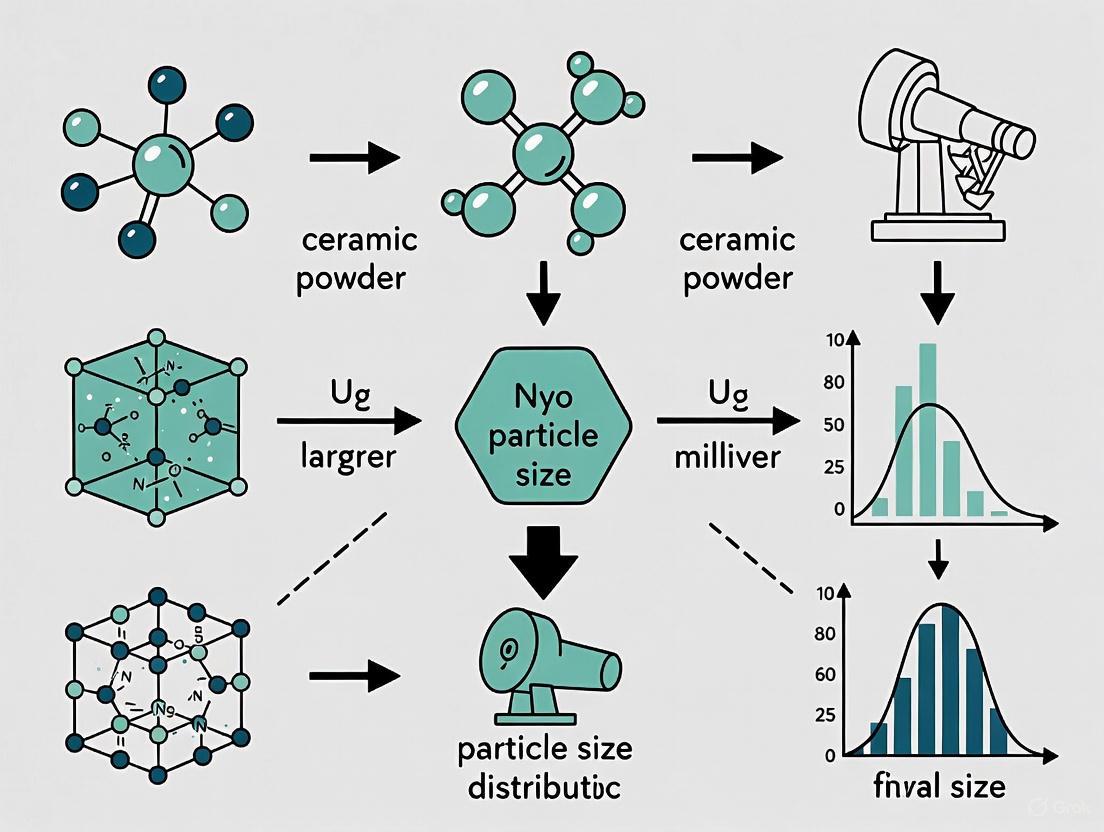
This article provides a comprehensive guide for researchers and drug development professionals on controlling particle size distribution in ceramic powders, a critical parameter for enhancing drug bioavailability and performance.
Advanced Strategies for Reducing Particle Size Distribution in Ceramic Powders: A Guide for Pharmaceutical and Biomedical Research
Abstract
This article provides a comprehensive guide for researchers and drug development professionals on controlling particle size distribution in ceramic powders, a critical parameter for enhancing drug bioavailability and performance. Covering foundational principles, practical methodologies, common challenges, and validation techniques, it bridges materials science with pharmaceutical applications. The content explores how precise particle size engineering can improve dissolution rates, solubility, and ultimately the therapeutic efficacy of ceramic-based drug formulations, with specific focus on micronization and nanonization techniques relevant to biomedical research.
Why Particle Size Distribution Matters: Fundamentals for Ceramic Powder Performance in Drug Formulations
Key Metrics FAQ
1. What do D10, D50, and D90 represent in a particle size distribution?
These are cumulative distribution parameters that describe the fineness and range of particle sizes in a powder sample. They are read from a curve where the horizontal axis is particle size and the vertical axis is the cumulative percentage of particles [1].
- D10: The particle size at which 10% of the total particles are smaller than this value. It is an indicator of the fine end of the distribution [1] [2].
- D50: Also known as the median diameter, it is the particle size where half (50%) of the population is smaller and half is larger. It is commonly used to represent the average particle size of the powder [1] [2].
- D90: The particle size at which 90% of the total particles are smaller than this value. It is a key indicator of the coarse end of the distribution [1] [2].
2. How are these metrics significant in ceramic powder research?
In ceramic research, these metrics directly influence processability and final product properties. Controlling D50 helps manage the sintering temperature and densification behavior, as finer powders typically sinter at lower temperatures [3]. The relationship between D10, D50, and D90 provides critical information about the distribution width, which affects powder packing density, green body formation, and the uniformity of the final ceramic microstructure [4] [5]. A narrow distribution (small span) often leads to better densification and fewer defects.
3. What is the "Span" and why is it important?
The Span is a dimensionless number that quantifies the width of the particle size distribution. It is calculated as follows [6]:
Span = (D90 - D10) / D50
A smaller span indicates a narrower, more uniform particle size distribution, while a larger span signifies a broader range of sizes. In ceramic research, reducing the span is a key strategy for improving product consistency and performance. For example, one study on BNBT lead-free piezoelectric ceramics showed that reducing the span from 8 to 3 significantly increased the dielectric constant and piezoelectric coefficient [4].
4. What is the difference between intensity, volume, and number distributions?
The same powder sample can be described by different distribution types depending on the measurement principle [6]:
- Intensity Distribution: Derived directly from Dynamic Light Scattering (DLS) measurements, it is weighted by the light scattering intensity of each particle, which is biased towards larger sizes.
- Volume Distribution: Calculated from the intensity distribution, it represents the volume (or mass) of particles in each size class. The D10, D50, and D90 metrics discussed in this guide are most commonly reported based on the volume distribution [6].
- Number Distribution: Represents the number of particles in each size class.
It is critical to know which type of distribution is being reported, as the values for D10, D50, and D90 can differ significantly between them.
Troubleshooting Common Experimental Issues
Problem: Inconsistent sintering results despite consistent D50 values.
- Potential Cause: The particle size distribution span may be too broad or variable between batches. A consistent D50 can mask changes at the distribution's tails (D10 and D90) [4].
- Solution: Monitor and control the entire distribution. Implement a span control strategy, targeting a span of ≤5 for more uniform sintering behavior. Use laser diffraction for robust quantitative distribution analysis rather than relying solely on DLS-derived volume distributions, which have higher inherent error for this purpose [6] [4].
Problem: Agglomeration in ultra-fine ceramic powders.
- Potential Cause: High surface energy in fine particles (e.g., with a D50 < 100nm) drives them to clump together to reduce surface area [5].
- Solution:
- Use Dispersants: Add surfactants like sodium dodecyl sulfate (SDS) or polymers like polyvinylpyrrolidone (PVP) to reduce slurry viscosity and stabilize particles via steric hindrance [4].
- Optimize Milling: For ball milling, find the optimal time through experimentation. While extending milling from 8 to 24 hours can reduce D50 from 3.2μm to 0.8μm, over-milling can cause secondary agglomeration due to increased surface energy [4].
Problem: Broad particle size distribution after chemical synthesis.
- Potential Cause: Uncontrolled reaction kinetics, such as a rapid hydrolysis rate in sol-gel processes [4].
- Solution: Precisely control reaction parameters. In sol-gel synthesis, using a slow drop rate (e.g., 0.5 mL/h) for precursors can yield uniform particles of 20–50nm, whereas fast hydrolysis can result in a broad distribution from 10–200nm [4].
Essential Workflow for Particle Size Analysis in Ceramics
The following diagram illustrates the core decision-making pathway for characterizing particle size distribution in ceramic powder research.
The Scientist's Toolkit: Research Reagent & Material Solutions
Table 1: Essential materials and reagents for controlling particle size in ceramic powder synthesis.
| Item | Function/Application | Key Consideration |
|---|---|---|
| Sodium Dodecyl Sulfate (SDS) [4] | Dispersant in alumina slurries; reduces viscosity and breaks agglomerates. | Adding 0.5 wt% can significantly reduce slurry viscosity, improving processability. |
| Polyvinylpyrrolidone (PVP) [4] | Steric stabilizer for nano-powders like zirconia; prevents agglomeration. | Maintains nanoparticle dispersion (e.g., 30–80 nm) during synthesis and storage. |
| Cellulose Particles [4] | Combustible additive in wet-chemical synthesis. | During calcination, cellulose burns out, reducing agglomerate size (e.g., from 2μm to 0.8μm for Y₂O₃-ZrO₂). |
| Ammonium Polyacrylate [4] | Dispersant for silicon carbide (SiC) slurries. | Effective for stabilizing non-oxide ceramic suspensions against flocculation. |
Particle Size Measurement Techniques Comparison
Table 2: Overview of common particle size analysis techniques used in ceramic research.
| Technique | Typical Size Range | Key Advantages | Key Limitations |
|---|---|---|---|
| Laser Diffraction [4] [3] [7] | ~0.1 μm to several mm | Fast, robust, high reproducibility; supported by ISO/ASTM standards. | Assumes spherical particles; provides no direct shape information. |
| Dynamic Light Scattering (DLS) [6] [3] | ~1 nm to 1 μm | Ideal for nanoparticles in suspension; requires minimal sample. | Volume distribution is derived and can have high error; sensitive to agglomeration and dust. |
| Image Analysis [7] [3] | ~0.5 μm and larger | Provides direct morphological data (size and shape). | Time-consuming sample preparation; lower statistical count. |
The Critical Link Between Particle Size and Bioavailability in Drug Formulations
In the development of modern pharmaceuticals, controlling the particle size of Active Pharmaceutical Ingredients (APIs) is a fundamental strategy for overcoming solubility challenges. This is particularly crucial for drugs in Biopharmaceutics Classification System (BCS) Class II (low solubility, high permeability) and Class IV (low solubility, low permeability), which constitute over 80% of new chemical entities in development pipelines [8] [9]. The principles of particle size control, extensively researched in ceramic powder technology, translate directly to pharmaceutical formulation, where precise manipulation of particle size distribution (PSD) directly dictates dissolution rates, absorption efficiency, and ultimate therapeutic efficacy [10] [4].
Troubleshooting Guides: Addressing Common Experimental Challenges
FAQ 1: How does particle size directly affect drug bioavailability?
Answer: Particle size influences bioavailability through two primary mechanisms governed by fundamental physical principles:
Increased Specific Surface Area: Reducing particle size increases the surface area available for dissolution. According to the Nernst-Brunner/Noyes-Whitney equation, dissolution rate (dX/dt) is directly proportional to the surface area (A) available for dissolution:
dX/dt = (A * D * (Cs - C))/hwhere D is the diffusion coefficient, Cs is saturation solubility, C is bulk concentration, and h is the effective boundary layer thickness [9]. This means smaller particles provide more surface area for interaction with dissolution media, significantly accelerating dissolution rates.Enhanced Membrane Permeation: The intestinal mucus layer contains pores ranging from 10 nm to 200 nm [11]. Drug particles with sizes below 200 nm can more readily traverse this mucus layer, penetrate epithelial cells, and be absorbed into systemic circulation. Studies demonstrate that particles in the 50-100 nm range are particularly efficient at intestinal absorption [11].
Supporting Data: Clinical evidence confirms this relationship. For example, in beagle dogs, a 0.12 µm aprepitant formulation achieved a Cmax four times higher than a 5.5 µm formulation [11]. Similarly, rosuvastatin calcium nanoparticles in rabbits demonstrated twice the Cmax and 1.5 times the AUC (Area Under the Curve) compared to untreated drug [11].
FAQ 2: Why is my drug formulation exhibiting inconsistent dissolution rates despite particle size reduction?
Answer: Inconsistent dissolution often stems from issues with particle size distribution (PSD) rather than the average particle size alone. This is a well-documented phenomenon in ceramic powder processing that applies equally to pharmaceuticals [12] [4].
PSD Span Problems: A wide PSD (large difference between D90 and D10 values) leads to variable dissolution behavior. The "span" of a distribution, calculated as (D90 - D10)/D50, should ideally be ≤5 for consistent performance [4]. In ceramics, reducing the span of BNBT lead-free piezoelectric ceramics from 8 to 3 significantly increased both dielectric constant and piezoelectric coefficient [4].
Particle Agglomeration: Fine particles have high surface energy and tend to agglomerate to reduce this energy, effectively behaving as larger particles during dissolution. This is analogous to the challenges observed in sintering ceramic powders, where fine particles agglomerate during processing [4].
Solution: Implement precise PSD control strategies similar to those used in advanced ceramic powder preparation, such as optimized milling parameters and use of dispersants like sodium dodecyl sulfate (SDS) or polyvinylpyrrolidone (PVP) to prevent agglomeration [4].
FAQ 3: Which particle size reduction method should I select for my API?
Answer: Selection depends on your target particle size, API properties, and scalability requirements. The following table compares common techniques:
| Method | Target Size Range | Advantages | Disadvantages |
|---|---|---|---|
| Ball Milling [11] | ~1000 nm | Simple principle, wide PSD | High energy consumption, potential contamination |
| High-Pressure Homogenization [11] | ~100 nm | Avoids amorphous transformation, no metal contamination | May require pre-micronization steps |
| Spray Drying [11] | ~1000 nm | Adjustable parameters for PSD control | Potential chemical/thermal degradation |
| Liquid Antisolvent Technique [11] | ~100 nm | Overcomes degradation issues | Solvent recovery and disposal challenges |
| Supercritical Fluid Micronization [11] | ~100 nm | Narrow PSD, mild conditions | High cost, limited scalability |
| Focused Ultrasonication [11] | ~100 nm | Precise control, no thermal degradation | Processing time can be lengthy |
FAQ 4: How can I accurately measure particle size and distribution for nanoscale formulations?
Answer: Accurate particle size analysis requires selecting appropriate techniques based on your size range and formulation characteristics:
| Technique | Effective Size Range | Working Principle | Best For | Limitations |
|---|---|---|---|---|
| Laser Diffraction [13] [14] | 0.01 µm - 3500 µm | Angular scattering intensity of laser light | Broad size range, high reproducibility, quality control | Assumes spherical particles |
| Dynamic Light Scattering (DLS) [13] [14] | 0.3 nm - 10 µm | Brownian motion analysis via light scattering | Nanoparticles, proteins, colloids, stability studies | Limited for polydisperse samples |
| Dynamic Image Analysis [13] [14] | ~1 µm - several mm | Direct imaging and software analysis | Shape information, aggregates, fibers | Slower analysis, complex interpretation |
| Nanoparticle Tracking Analysis (NTA) [14] | 30 nm - 1000 nm | Single particle tracking of Brownian motion | Polydisperse nanoscale systems, concentration | Time-consuming, lower reproducibility |
Experimental Protocols: Methodologies for Particle Size Optimization
Protocol 1: Nanoparticle Preparation via Focused Ultrasonication
This protocol adapts ceramic powder dispersion techniques for pharmaceutical applications, using focused ultrasonication to achieve nanoscale drug particles [11].
Workflow Overview:
Materials and Equipment:
- API (Active Pharmaceutical Ingredient)
- Appropriate solvent system
- Antisolvent
- Focused ultrasonication system (e.g., Covaris with Adaptive Focused Acoustics)
- Laser diffraction particle size analyzer (e.g., Malvern Panalytical)
- Temperature control bath
Step-by-Step Procedure:
- API Preparation: Dissolve the API in an appropriate solvent to create a saturated solution.
- Precipitation: Rapidly mix the API solution with an antisolvent (typically 1:10 ratio) under continuous stirring to induce precipitation.
- Ultrasonication Processing:
- Transfer the suspension to the ultrasonication system
- Set processing parameters: Duration = 4500 seconds, Bath Temperature = 10°C
- Use frequency sweeping power mode with continuous degassing
- Particle Size Analysis:
- Withdraw sample and dilute appropriately for analysis
- Measure particle size distribution using laser diffraction
- Target median particle size (X50) of approximately 200 nm
Expected Outcomes: Successful implementation should yield a particle size distribution ranging from 10 nm to 1000 nm, with a median particle size (X50) of approximately 200 nm [11].
Protocol 2: Quality-by-Design (QbD) Approach to Particle Size Optimization
This protocol applies ceramic powder QbD principles to pharmaceutical development for robust particle size control [8] [4].
Workflow Overview:
Key Steps:
- Define Quality Target Product Profile (QTPP): Establish target particle size range based on desired dissolution profile and bioavailability requirements.
- Identify Critical Quality Attributes (CQAs): Particle size distribution (D10, D50, D90), specific surface area, crystal form, and dissolution rate.
- Determine Critical Process Parameters (CPPs): Milling time/speed, homogenization pressure, solvent/antisolvent ratios, and temperature controls.
- Design of Experiments (DOE): Systematically vary CPPs to understand their impact on CQAs.
- Establish Design Space: Define the multidimensional combination of CPPs that ensure CQAs meet specifications.
- Implement Control Strategy: Set appropriate monitoring and controls for consistent particle size distribution.
The Scientist's Toolkit: Essential Research Reagent Solutions
| Reagent/Equipment | Function in Particle Size Research | Application Notes |
|---|---|---|
| Polyvinylpyrrolidone (PVP) [4] | Polymer stabilizer preventing nanoparticle aggregation via steric hindrance | Particularly effective for zirconia and oxide-based pharmaceutical compounds |
| Sodium Dodecyl Sulfate (SDS) [4] | Ionic dispersant reducing slurry viscosity and suppressing hard agglomerates | Added at 0.5 wt% to alumina powder reduces viscosity from 1200 to 400 mPa·s |
| Ball Mill System [11] | Mechanical particle size reduction through impact and attrition | Extended milling (8-24h) reduces D50 but risks agglomeration beyond 20h |
| Focused Ultrasonication System [11] | Non-contact, isothermal acoustic processing for nanoscale particle production | Covaris systems with AFA technology enable precise energy control |
| Laser Diffraction Analyzer [13] [11] | Rapid particle size distribution analysis across broad dynamic range | Assumes spherical particles; requires appropriate sample dispersion |
| Dynamic Light Scattering Instrument [13] [14] | Hydrodynamic diameter measurement for nanoparticles in suspension | Ideal for proteins, liposomes, and colloidal systems; requires dilution |
The precise control of particle size distribution represents a critical intersection between materials science and pharmaceutical development. By applying the systematic approaches and troubleshooting strategies outlined in this guide—adapted from both ceramic powder technology and pharmaceutical science—researchers can effectively overcome bioavailability challenges associated with poorly soluble APIs. The integration of robust particle engineering techniques, appropriate analytical methods, and Quality-by-Design principles provides a solid foundation for developing formulations with optimized therapeutic performance.
Fundamental Concepts: FAQs for Researchers
FAQ 1: What is the fundamental distinction between micronization and nanonization? Micronization and nanonization are particle size reduction processes defined by the resulting particle size range. Micronization produces particles typically less than 10 microns in diameter [15]. Nanonization creates particles in the submicron range, specifically less than 1 micron (1000 nanometers) [16].
FAQ 2: How do micronization and nanonization differentially impact equilibrium solubility and dissolution rate? This is a critical distinction for research outcomes:
- Micronization primarily increases the surface area-to-volume ratio, which accelerates the dissolution rate but does not change the drug's fundamental equilibrium solubility [16].
- Nanonization can enhance both the dissolution rate and the equilibrium solubility. For particles below the critical size of approximately 1 µm, the solubility is no longer independent of surface area, leading to an increase in the concentration of the saturated solution [16].
FAQ 3: Why is particle size control crucial in ceramic powder research? In ceramics, particle size distribution directly influences key material properties:
- Densification: Smaller particles enhance densification during sintering, leading to improved mechanical properties [17].
- Microstructure Heterogeneity: Aggregates and agglomerates in submicron powders can lead to heterogeneous microstructures if not properly disintegrated during compaction [18].
- Processing Behavior: Nanopowders are difficult to compact due to dominant adhesive forces, which act as a barrier to particle rearrangement [18].
Quantitative Data Comparison
The table below summarizes the core differences in the impacts of these two techniques, based on experimental findings.
Table 1: Comparative Analysis of Micronization vs. Nanonization
| Characteristic | Micronization | Nanonization |
|---|---|---|
| Particle Size Range | 1 - 10 μm [15] | < 1 μm (submicron) [16] |
| Primary Impact on Solubility/Dissolution | Increases dissolution rate only [16] | Increases both equilibrium solubility and dissolution rate [16] |
| Theoretical Basis | Noyes-Whitney equation (increased surface area) [19] [20] | Noyes-Whitney equation plus increased saturation solubility for ultrafine particles [16] |
| Typical Equipment | Spiral Jet Mills, Fluidized Bed Jet Mills [15] | High-Pressure Homogenization, Wet Milling [20] |
| Strength of Agglomerates | Moderate (inversely related to particle size) [18] | High for nanoparticles (approximately inverse linear relationship with primary particle size) [18] |
| Common Challenges | Agglomeration, non-homogenous particle distribution [19] | Particle aggregation, physical instability, need for stabilizers [20] [16] |
Experimental Protocols & Methodologies
Experimental Protocol 1: Dry Milling for Size Reduction This protocol is adapted from a study investigating the effect of particle size on solubility and dissolution [16].
- Objective: To produce micronized and nanonized samples of a powder for comparative studies.
- Equipment: Ball Mill (e.g., Retsch Ball Mill) [16].
- Method:
- Micronization: Place the pure powder in the milling chamber. Mill at a predetermined speed (e.g., 400 rpm) and time (e.g., 2 hours) [16].
- Nanonization: Mix the pure powder with a polymer excipient (e.g., PVPK-25 or PVA) in a 1:1 mass ratio. Subject the mixture to the same milling conditions (e.g., 400 rpm for 2 hours) [16]. The polymer acts as a stabilizer to inhibit particle aggregation.
- Note: The selection of stabilizer is crucial. Studies show that PVPK-25 can more effectively inhibit aggregation and may have a greater increasing effect on solubility compared to PVA, likely due to its molecular structure [16].
Experimental Protocol 2: Saturation Shake-Flask (SSF) Solubility Measurement This is the "gold standard" method for determining equilibrium solubility [16].
- Objective: To measure the equilibrium solubility of a powder in a selected medium.
- Equipment: Shaker, water bath, syringe filters, analytical equipment (e.g., HPLC or UV-Vis) [16].
- Method:
- Prepare the solvent medium (e.g., buffer or biorelevant media).
- Add an excess of the powder to the medium to create a suspension.
- Vigorously stir the suspension at a controlled temperature (e.g., 37°C) for a set period (e.g., 6-24 hours) to reach equilibrium.
- Filter the suspension to separate the saturated solution from the undissolved solid.
- Analyze the concentration of the drug in the saturated solution.
- Critical Step: Analyze the remaining solid phase (e.g., via PXRD) to check for potential polymorphic transformations during the test [16].
The workflow for planning and executing a particle size reduction study is outlined below.
Diagram 1: Experimental Workflow for Particle Size Studies
Troubleshooting Common Experimental Issues
Issue 1: Aggregation of Nanonized Particles
- Problem: After nanonization, particles rapidly aggregate, negating the benefits of size reduction.
- Solution: Use effective stabilizers or polymers during the nanonization process. Cellulose ethers like HPMC or polymers like PVPK-25 have shown good stabilizing effects by adsorbing onto the hydrophobic crystal surface, providing steric stabilization [19] [16]. The choice of stabilizer is drug-specific.
Issue 2: Low Dissolution Rate Despite Micronization
- Problem: The dissolution rate of a micronized BCS Class II drug is lower than expected.
- Potential Causes & Solutions:
- Poor Wettability: The drug powder may have hydrophobic surfaces. Solution: Incorporate surfactants or use surface-stabilized crystals to improve wetting [19].
- Agglomeration: Fine particles may have agglomerated due to adhesive forces. Solution: Use co-processed excipients or employ nanonization with stabilizers to break apart strong agglomerates [18] [16].
Issue 3: Sedimentation and Instability in Ceramic Suspensions
- Problem: In vat polymerization for ceramics, suspensions with larger particles sediment quickly, leading to incomplete layers and failed prints [21].
- Solution: Optimize the particle size distribution. While larger particles generally result in faster polymerization rates, they sediment faster. A balance must be struck between polymerization kinetics and suspension stability. Smaller particles sediment slower and offer better sintering behavior but attenuate UV light more, slowing the polymerization rate [21].
The Scientist's Toolkit: Essential Research Reagents & Materials
Table 2: Key Reagents and Materials for Particle Size Research
| Reagent/Material | Function in Research | Application Context |
|---|---|---|
| Polyvinylpyrrolidone (PVP K-25) | Polymer stabilizer for nanonization; inhibits aggregation and can improve equilibrium solubility [16]. | Drug Nanocrystals, Powder Processing |
| Hydroxypropyl Methylcellulose (HPMC) | Cellulose ether stabilizer; adsorbs onto hydrophobic surfaces to sterically stabilize particles against growth [19]. | Controlled Crystallization, Inhalation Powders |
| Biorelevant Media (FaSSIF/FeSSIF) | Dissolution media containing bile salts & lecithin to simulate intestinal conditions; provides more physiologically relevant solubility data [16]. | Solubility and Dissolution Testing |
| Alpha-Aluminum Oxide Powders | Model ceramic material for studying the effect of particle size distribution on processes like vat polymerization [21]. | Ceramic Processing, Sintering Studies |
| Jet Mill (Spiral/Fluidized Bed) | Equipment using compressed air for particle-to-particle impact milling to achieve micron-scale particles with steep size distribution [15]. | Micronization of APIs and Ceramic Powders |
The following diagram illustrates the logical relationship between particle size, key material properties, and final performance outcomes, which is fundamental to troubleshooting.
Diagram 2: Particle Size Impact on Material Properties
How Particle Size Influences Green Density, Sintering Behavior, and Final Ceramic Properties
Troubleshooting Guide: Common Particle Size-Related Issues
| Problem Observed | Likely Cause | Recommended Solution |
|---|---|---|
| Low Green Density of powder bed or compact | Poor particle packing due to a very narrow or unimodal particle size distribution (PSD) [5]. | Optimize PSD by using a bimodal mixture of coarse and fine particles; the finer particles can fill voids between larger ones [22]. |
| Defects (cracks, warping) and non-uniform shrinkage during sintering | Irregular particle packing and density gradients in the green body, often from broad or inappropriate PSD [5] [3]. | Ensure a more uniform PSD and employ tape casting or other forming methods that promote homogeneous particle arrangement [22]. |
| Insufficient Sintering Densification; high final porosity | Using powder that is too coarse, which reduces the sintering driving force [23]. | Reduce the mean particle size to increase surface area and sintering activity, or increase sintering temperature/time [23] [24]. |
| Sedimentation in vat polymerization resin, leading to failed prints | Use of large, heavy particles in the ceramic-filled resin [21] [25]. | Use finer particles and/or add dispersants to improve suspension stability [25]. |
| Slow Polymerization Rate in vat photopolymerization | Using powder that is too fine, which excessively scatters and attenuates UV light [21] [25]. | Optimize powder selection; larger particles generally allow faster curing but require a balance with sedimentation stability [25]. |
| Agglomeration of ultra-fine powders, causing defects | High surface energy of fine particles promotes clumping [5]. | Use dispersing agents and advanced mixing processes like ultrasonication [5] [25]. |
Frequently Asked Questions (FAQs)
Q1: What is the fundamental relationship between particle size and sintering activity? A1: Smaller particles have a higher surface area-to-volume ratio, which significantly increases the driving force for densification during sintering. This enhanced thermodynamic driving force allows for lower sintering temperatures and shorter times to achieve high density [17] [3] [24]. For instance, in stainless steel MIM, powder with a smaller mean particle size (6.87 µm vs. 9.65 µm) demonstrated a greater sintering driving force and better densification [24].
Q2: If finer powder sinters better, why not always use the finest powder available? A2: There is a critical trade-off because finer powders can compromise processability. Key challenges include:
- Poor Flowability: Ultra-fine powders do not flow well, leading to low and inconsistent packing in the green state (e.g., in binder jet printing), which is difficult to overcome in later stages [23].
- Agglomeration: High surface energy causes particles to clump, introducing defects [5].
- Handling and Safety: Nano-sized powders pose respiratory risks and potential dust explosion hazards [5].
- Light Scattering: In vat photopolymerization, very fine powders can excessively scatter light, inhibiting the curing process [25].
Q3: How does Particle Size Distribution (PSD) affect the green density of a ceramic compact? A3: The PSD is crucial for achieving high packing efficiency. A bimodal (or multimodal) distribution, where smaller particles fit into the interstices between larger particles, results in significantly higher green density compared to a unimodal distribution [22] [3]. This principle was demonstrated in tape-cast GDC films, where a 50/50 mixture of coarse and fine powders yielded higher green and sintered densities than either powder alone [22].
Q4: How does particle size influence the properties of ceramics made by Vat Photopolymerization? A4: Particle size creates a delicate balancing act in this additive manufacturing process:
- Curing Behavior: Larger particles generally result in faster polymerization rates because they scatter and absorb less UV light, allowing it to penetrate deeper and cure the resin more effectively [21] [25].
- Sedimentation Stability: Finer particles sediment more slowly in the resin vat, providing better structural stability during the often lengthy printing process [25].
- Sintering: After printing, finer particles within the printed part exhibit better sintering behavior [21]. Therefore, selecting a PSD involves optimizing for both printing reliability and final part performance.
Q5: Is there an "ideal" particle size for ceramic powders? A5: No, there is no universal ideal size. The optimal particle size is always application-specific and must be determined by considering the specific forming process (e.g., pressing, tape casting, 3D printing) and the required final properties [23] [3]. For example, a study on binder jet printing of tungsten found that a 2 µm powder offered the best compromise between printability and sinterability, outperforming both 1 µm and 3 µm powders [23].
Quantitative Data on Particle Size Effects
Table 1: Influence of Particle Size on Sintering and Mechanical Properties
Data from Binder Jet Printing of Tungsten (Citation 4)
| Average Particle Size | Relative Sintered Density | Flexural Strength | Key Observation |
|---|---|---|---|
| 1 µm | Not Highest | -- | Tends to cause printing defects, poor flowability |
| 2 µm | 96.4 % (at 2300°C) | 316 MPa | Optimal balance between printability and sinterability |
| 3 µm | Lower than 2µm | -- | Insufficient sintering densification |
Table 2: Influence of Particle Size on Glaze Properties
Data from Celsian-Based Glaze Study (Citation 10)
| Average Particle Size (d50) | Sintering / Softening Temperature | Whiteness Index | Glossiness | Microstructure |
|---|---|---|---|---|
| 10.9 µm | Higher | Lower | Lower | Fewer crystals |
| 5.8 µm | Lower | Higher | Higher | Increased number of crystals |
Key Experimental Protocols
Protocol 1: Optimizing PSD for Enhanced Green Density and Sintering
Based on Tape Casting of Gadolinia-Doped Ceria (GDC) Electrolytes [22]
- Powder Preparation: Source or synthesize ceramic powders with different particle sizes and morphologies. The referenced study used oxalate co-precipitated powder (finer) and gelcast powder (coarser).
- Powder Mixing: Create powder mixtures with varying ratios (e.g., 100/0, 70/30, 50/50, 0/100) of the fine and coarse powders.
- Slurry Preparation: Mix the powder blends with a solvent, binder, and dispersant to form a stable slurry for tape casting.
- Tape Casting: Cast the slurry using a doctor blade to form uniform thin films.
- Drying and Sintering: Dry the green tapes and sinter them over a range of temperatures.
- Characterization:
- Measure the apparent density of the loose powder mixes.
- Measure the green density of the cast tapes.
- Measure the sintered density (e.g., using Archimedes' principle).
- Analyze the microstructure using Scanning Electron Microscopy (SEM).
- Measure functional properties (e.g., electrical conductivity via impedance spectroscopy for electrolytes).
Protocol 2: Evaluating Particle Size Effects in Vat Photopolymerization
Based on Research by Yared and Gadow [21] [25]
- Material Selection: Select several grades of the same ceramic material (e.g., alpha-alumina) with different PSDs.
- Slurry Characterization:
- PSD Analysis: Measure the particle size distribution using Laser Diffraction Spectroscopy (LDS).
- Light Attenuation: Use UV/Vis Spectrophotometry with an integrating sphere to measure how much light is scattered and absorbed by each slurry.
- Rheology & Sedimentation: Perform viscosity and sedimentation stability tests on the ceramic-filled resins.
- Curing Behavior Analysis: Use photo-rheology to measure the polymerization kinetics (curing rate and degree of conversion) of the resins when exposed to UV light.
- Printing and Sintering: Fabricate test parts using vat photopolymerization, then debind and sinter them according to a optimized thermal cycle.
- Final Part Analysis: Measure the density, mechanical strength, and dimensional accuracy of the final sintered ceramics.
Experimental Workflow and Decision Pathway
The following diagram illustrates the logical process for optimizing ceramic properties through particle size control, integrating key trade-offs and decision points.
The Scientist's Toolkit: Essential Research Reagents & Materials
Table 3: Key Materials for Ceramic Powder Research
| Item | Function in Research | Example from Context |
|---|---|---|
| Alpha-Alumina (α-Al2O3) Powders | A widely used model material for studying structural ceramics and AM processes due to its stability and well-understood properties [21] [25]. | Used in vat photopolymerization studies to correlate PSD with curing behavior [25]. |
| Jet-Milled Tungsten (W) Powders | Essential for researching refractory metals and additive manufacturing of high-density components for extreme environments [23]. | Powders with D50 of 1, 2, and 3 µm were used to optimize BJP for tungsten [23]. |
| Doped Ceria Powders (e.g., GDC) | Key materials for developing electrolytes in intermediate-temperature solid oxide fuel cells (IT-SOFCs) [22]. | Oxalate co-precipitated and gelcast powders were mixed to optimize tape cast electrolyte density [22]. |
| Acrylate-Based Photopolymer Resin | Acts as the photosensitive matrix in vat photopolymerization additive manufacturing [25]. | Served as the base resin for creating ceramic-filled suspensions in curing behavior studies [25]. |
| Polymeric Dispersants | Chemically adsorb onto particle surfaces to prevent agglomeration and ensure a stable, homogeneous suspension in solvents or resins [25]. | Critical for preparing well-dispersed ceramic resins for reliable 3D printing and accurate PSD measurement [5] [25]. |
The Role of Surface Area and Energy in Powder Processing and Performance
Troubleshooting Guides
Guide 1: Troubleshooting Agglomeration and Flow Issues
| Problem | Potential Causes | Solutions & Proposed Experiments |
|---|---|---|
| Powder Agglomeration [5] | High surface energy of ultra-fine particles [5] [26] | • Use dispersing agents (deflocculants) in solvents [5] [26].• Employ precision milling techniques (e.g., wet jet milling) [5]. |
| Powder Lump Formation [27] | High storage temperature and humidity; powder past expiration date [27] | • Reduce storage temperature and control humidity [27].• Sieve powder coating before use [27].• Use new, in-date material [27]. |
| Poor Powder Flow & Feed [3] [27] | Compacted powder; insufficient fluidizing air; powder too fine [27] | • Fluidize powder with clean, dry air [27].• Adjust virgin/reclaim powder mixture to control fineness [27].• For ceramic powders, use spray drying to create spherical, free-flowing granules [3] [28]. |
Guide 2: Troubleshooting Sintering and Final Product Defects
| Problem | Potential Causes | Solutions & Proposed Experiments |
|---|---|---|
| Inconsistent Sintering & Densification [3] [12] | Broad Particle Size Distribution (PSD); powder agglomeration [3] [12] [26] | • Use powders with a narrow PSD for more linear sintering behavior [12].• Optimize PSD to improve green body packing density and reduce pore formation [3] [5]. |
| Low Mechanical Strength in Final Part [29] | Insufficient solid loading in green body; irregular particle packing [29] [26] | • Reduce particle size via ball milling to increase solid loading in formulations [29].• Maximize particle packing efficiency by using a bimodal PSD [3] [5]. |
| Defects (Cracks, Voids) [3] [5] | Irregular particle size distribution; hard agglomerates in powder [3] [5] [26] | • Implement strict PSD control for uniformity [3] [5].• Use chemical synthesis methods to produce unagglomerated, high-purity powders [26]. |
Frequently Asked Questions (FAQs)
Q1: Why is a smaller particle size often targeted in ceramic research, and what are the trade-offs?
Smaller particles have higher specific surface area, which lowers the required sintering temperature and promotes faster densification, leading to a finer microstructure and improved mechanical properties [3] [26]. The trade-offs include a higher tendency for agglomeration due to increased surface energy, greater processing complexity, and higher cost of powder production and handling [5] [26].
Q2: How does Particle Size Distribution (PSD) differ from average particle size, and why is it critical?
The average particle size is a single value, while the PSD describes the range and proportion of different particle sizes in a powder [3]. A narrow PSD leads to more uniform packing in the green body, resulting in consistent shrinkage during sintering and fewer defects like pores or warping. A broad PSD can improve flowability but often at the cost of sintering uniformity and final product density [3] [12].
Q3: What are the best techniques for measuring the particle size and surface area of ceramic powders?
Common techniques include:
- Laser Diffraction: Fast and accurate for a wide range of particle sizes [3] [5].
- Dynamic Light Scattering (DLS): Ideal for submicron and nano-sized particles [3] [5].
- SEM/Image Analysis: Provides direct visual confirmation of particle size and morphology [3].
- Specific Surface Area Analysis: Techniques like BET analysis measure surface area, which correlates with particle fineness [12].
Q4: How can particle size optimization specifically benefit functional ceramics like magnetic ferrites?
In magnetic ceramics, a tightly controlled, uniform particle size is crucial. It influences the final grain size after sintering, which directly affects magnetic domain wall movement. Optimization leads to reduced magnetic losses, higher permeability, and improved frequency stability [3].
Experimental Protocols for Particle Size Reduction and Analysis
Protocol 1: Particle Size Reduction via Ball Milling
This protocol is adapted from research on optimizing boehmite ink for 3D printing, which achieved a particle size of <1 µm [29].
- Objective: To reduce the particle size of a ceramic powder to enhance surface area, improve sintering activity, and allow for higher solid loading in suspensions.
- Materials & Equipment:
- Ceramic powder (e.g., Boehmite, Alumina).
- Ball mill and milling media (e.g., zirconia balls).
- Drying oven.
- Methodology:
- Loading: Place the ceramic powder and the milling media into the ball mill jar. The size, material, and number of milling media should be consistent.
- Milling: Run the ball mill, varying critical parameters such as rotation speed and milling time systematically. For example, test speeds from 200 to 500 rpm and times from 1 to 10 hours [29].
- Collection: After milling, carefully separate the powder from the milling media.
- Analysis: Analyze the resulting particle size distribution using a technique like Laser Diffraction or Dynamic Light Scattering (DLS) to determine the optimal milling parameters [29].
Protocol 2: Assessing Powder Characteristics and Sintering Behavior
- Objective: To correlate the physical characteristics of a powder with its sintering behavior and the final ceramic's properties.
- Materials & Equipment:
- Powder samples with different PSDs.
- Tap Density Tester, Laser Diffraction Particle Size Analyzer, Specific Surface Area Analyzer (BET).
- Uniaxial or Isostatic Press.
- High-temperature furnace.
- Ultrasonic velocity measurement setup (optional) [12].
- Methodology:
- Powder Characterization: For each powder sample, measure:
- Green Body Formation: Press each powder into pellets under consistent pressure and dimensions.
- Sintering: Sinter the pellets over a range of temperatures.
- Post-Sintering Analysis: Measure the density, shrinkage, and ultrasonic wave velocity of the sintered pellets [12].
- Analysis: Correlate the pre-sintering powder properties (PSD, surface area) with the post-sintering properties (density, ultrasonic velocity). Powders with narrow PSDs will typically show a more linear relationship between surface area reduction and ultrasonic velocity increase during sintering [12].
Process Visualization
Particle Size Reduction and Performance Enhancement Workflow
The Scientist's Toolkit: Key Research Reagents & Equipment
| Item | Function in Research |
|---|---|
| Ball Mill [29] [5] | A mechanical method for top-down particle size reduction, crucial for preparing fine powders with controlled size distributions. |
| Dispersant (Deflocculant) [26] | An organic additive that modifies particle surface charge in suspensions to prevent agglomeration and ensure a homogeneous mixture. |
| Spray Dryer [28] | Converts slurries into free-flowing, spherical granules, improving powder handling and flowability for subsequent processing steps. |
| Laser Diffraction Particle Size Analyzer [3] [30] | Provides rapid and accurate measurement of Particle Size Distribution (PSD), a key parameter for quality control. |
| Specific Surface Area Analyzer (BET) [12] [30] | Measures the specific surface area of powders, which is directly related to particle fineness and reactivity. |
| SEM (Scanning Electron Microscope) [3] [28] | Offers direct visual imaging of powder morphology, particle size, and the presence of agglomerates. |
Practical Techniques for Particle Size Control: From Mechanical Milling to Chemical Synthesis
This technical support center provides troubleshooting and methodological guidance for researchers working on particle size reduction in ceramic powders. Mechanical comminution is a critical step for achieving the desired microstructure and final properties in ceramic components. This guide focuses on two predominant techniques: ball milling and jet milling.
The choice between milling methods significantly impacts the final powder characteristics. The following table provides a direct comparison to guide initial method selection.
Table 1: Comparison of Ball Milling and Jet Milling Techniques
| Feature | Ball Milling | Jet Milling |
|---|---|---|
| Mechanism | Impact/attrition using grinding media (balls) [31] | Particle-to-particle collisions via compressed gas [32] |
| Typical Particle Size Range | 1–100 microns [32] | Sub-10 micron to sub-5 micron, down to 200 nanometers [32] [33] |
| Heat Generation | Yes, can be significant [32] | Minimal to none (adiabatic expansion cools the system) [32] [33] |
| Contamination Risk | Moderate (from wear of media and liners) [32] | Very Low (no moving parts contact the product) [32] [33] |
| Particle Size Distribution | Can be wide [33] | Narrow, controllable distribution [32] |
| Ideal Material Type | Robust, hard materials [32] | Brittle, friable, heat-sensitive, or abrasive materials [32] [34] |
| Suitability for Ceramics | Common for various ceramics; can induce strain [35] | Excellent for advanced ceramics (e.g., Al₂O₃, SrFe₁₂O₁₉) requiring purity [32] [35] |
For ceramic research, jet milling is often superior for applications demanding extreme purity, minimal lattice strain, and ultra-fine powders, as evidenced by its use in producing high-performance strontium hexaferrite (SrFe₁₂O₁₉) powders [35]. Ball milling is a versatile, high-volume workhorse but may introduce contamination and processing-induced strain.
Troubleshooting Guides
Ball Mill Troubleshooting
Table 2: Common Ball Mill Issues and Solutions
| Problem | Potential Causes | Solutions |
|---|---|---|
| Low Grinding Efficiency [36] | Clogged feed (moisture/fines), incorrect ball size, improper mill speed [36] | Use clean, dry feed; adjust ball size to material; optimize mill speed [36]. |
| Overheating [36] | Excessive load, poor ventilation, inadequate lubrication [36] | Avoid overloading; ensure proper ventilation and cooling; check lubrication system [36]. |
| Excessive Noise/Vibration [31] [36] | Worn-out bearings, misalignment, imbalanced grinding media [36] | Shut down and inspect; replace worn bearings; ensure proper alignment and media balance [31] [36]. |
| Mill Jamming/Blockage [36] | Material accumulation, improper feed rate, incorrect speed [36] | Clean mill regularly; ensure proper feed system function; adjust material flow rate [36]. |
| Poor Product Quality (e.g., broad size distribution) [36] | Incorrect mill speed, improper grinding media, faulty operation [36] | Operate at correct speed; use appropriate media type and size; monitor and adjust process parameters [36]. |
Jet Mill Troubleshooting
Table 3: Common Fluidized-Bed Jet Mill Issues and Solutions
| Problem | Potential Causes | Solutions |
|---|---|---|
| Inconsistent Particle Size Distribution [37] | Variations in feed rate, gas flow, or operational parameters [37] | Ensure consistent feed rate; monitor and adjust gas flow; calibrate operational parameters [37]. |
| Reduced Grinding Efficiency [37] | Worn-out nozzles, improper gas pressure, clogged filters [37] | Inspect and replace nozzles regularly; ensure gas pressure is within specified range; clean/replace filters [37]. |
| Blockages in the Mill [37] | Accumulation of material, contaminants in feed [37] | Regularly inspect and clear blockages; ensure feed material is free of contaminants; adjust feed rate and gas flow [37]. |
| Inadequate Fluidization [37] | Improper gas flow, incorrect initial particle size [37] | Adjust gas flow to achieve proper fluidization; use a classifier for feed material to ensure optimal size range [37]. |
| Temperature Control Issues [37] | Ambient or process temperature fluctuations [37] | Implement a temperature control system; insulate mill and equipment [37]. |
Frequently Asked Questions (FAQs)
Q1: What are the key advantages of jet milling for ceramic powder research? Jet milling offers contamination-free processing due to the absence of grinding media, which is critical for precise ceramic research. It generates no heat, preserving heat-sensitive phases, and provides excellent control over particle size distribution, yielding ultra-fine, uniform powders essential for advanced ceramics [32] [33].
Q2: How can I control the final particle size in a jet mill? Particle size is primarily adjusted by changing the feed rate. A slower feed rate makes more energy available per particle, resulting in finer sizes and more violent collisions. Gas pressure and temperature can also be increased to achieve finer grinds for harder materials [33].
Q3: My ball-milled ceramic powders are showing high levels of strain and defects. What can I do? Milling-induced strain is a known issue in ball milling, which can degrade functional properties like magnetic coercivity in ferrites [35]. The standard solution is to implement a post-milling annealing step. The annealing temperature and time must be optimized to relieve this strain without causing excessive particle agglomeration or grain growth [35].
Q4: What materials are NOT suitable for jet milling? Materials that are elastic, wet, sticky, fluffy, or easily deformed (e.g., polymers, certain organics) are generally poor candidates. Their particles absorb impact energy rather than fracturing, leading to poor size reduction [34].
Q5: What daily checks are critical for stable ball mill operation? Before startup, complete a physical inspection, check the lubrication and cooling water systems, and ensure the classifier system is clear. During operation, continuously monitor motor power draw, mill sound, bearing temperatures, and vibration for signs of instability [31].
Optimization of Process Parameters: A Ceramic Powder Case Study
Optimizing milling is crucial for achieving target powder properties. The following workflow outlines a systematic approach for parameter optimization, applicable to both ball and jet milling.
Experimental Protocol: Ball Milling Optimization for Ceramic Powders
This protocol is adapted from studies optimizing the ball milling of functional ceramic powders like SrFe₁₂O₁₉[strontium hexaferrite] and superfine food powders [35] [38].
Objective: To determine the optimal ball milling parameters (grinding time, rotation speed, and ball-to-material ratio) for achieving target particle size and minimizing contamination-induced strain.
Materials and Equipment:
- Material: Pre-synthesized ceramic powder (e.g., calcined SrFe₁₂O₁₉).
- Mill: Planetary ball mill.
- Grinding Media: Zirconia (or stainless steel) balls of varying diameters (e.g., 5-15mm mix). Zirconia is preferred for minimal contamination.
- Milling Containers (Vials): Zirconia or hardened steel.
- Characterization: Laser particle size analyzer, X-ray Diffraction (XRD) for strain analysis, SEM.
Procedure:
- Experimental Design: Use a statistical method like Response Surface Methodology (RSM) to design a set of experiments varying three key parameters [38]:
- Grinding Time: Test a range (e.g., 2 to 8 hours).
- Rotation Speed: Test a range (e.g., 300 to 500 rpm).
- Ball-to-Material Ratio (BPR): Test ratios (e.g., 5:1 to 15:1).
- Milling: For each experimental run, load the powder and balls into the vial according to the designed BPR. Seal the vial and mount it on the planetary mill. Run for the specified time and speed. Use a sequence of forward and reverse rotation with rest intervals to prevent overheating (e.g., 10 min forward, 10 min reverse, 1 min rest) [38].
- Post-Processing: After milling, carefully collect the powder. If using wet milling, dry the slurry in an oven (e.g., at 100°C for 24-48 hours) [35].
- Annealing (if required): To relieve milling-induced strain, anneal a portion of the powder at an optimized temperature (e.g., 1000°C for SrFe₁₂O₁₉) [35].
- Characterization: Analyze the particle size distribution, specific surface area, and crystal structure/strain (via XRD line broadening analysis) for each sample.
Expected Outcome: A model that identifies the optimal combination of time, speed, and BPR to achieve the target particle size with minimal strain. Research shows the ball-to-material ratio often has the most significant effect, followed by grinding time and rotation speed [38].
The Scientist's Toolkit: Essential Research Reagents and Materials
Table 4: Key Materials for Milling Experiments in Ceramic Research
| Item | Function in Research | Example Application |
|---|---|---|
| Zirconia Grinding Media | High-hardness balls and vial liners for ball milling to minimize metallic contamination. | Milling high-purity oxide ceramics like alumina (Al₂O₃) or zirconia (ZrO₂) [4]. |
| Ceramic-Lined Jet Mill | Lining for the jet mill grinding chamber to prevent product contamination when processing abrasive powders. | Micronizing abrasive ceramics like silicon carbide (SiC) or alumina [33]. |
| Dispersants (e.g., PVP, SDS) | Added during or after milling to prevent re-agglomeration of fine particles in slurries via steric or electrostatic hindrance. | Preparing stable suspensions of nano-zirconia for tape casting [4]. |
| Inert Milling Gas (N₂) | Provides an inert atmosphere during jet milling to prevent oxidation of sensitive or non-oxide ceramic powders. | Milling nitride-based ceramics (e.g., Si₃N₄) or reactive metal powders [33]. |
| Flux Agent (e.g., NaCl) | Added to milled powder before annealing to act as a physical barrier, reducing re-agglomeration and sintering during heat treatment. | Annealing jet-milled SrFe₁₂O₁₉ to improve magnetic remanence by maintaining particle separation [35]. |
This technical support guide provides troubleshooting and methodological support for researchers focused on reducing particle size distribution in ceramic powders. Controlling particle size is paramount for achieving desired densification, mechanical strength, and functional properties in advanced ceramics for applications from electronics to drug development. This document details the two predominant chemical synthesis methods—Sol-Gel Processing and Hydrothermal Techniques—offering structured protocols, troubleshooting guides, and essential resource lists to enhance experimental reproducibility and success.
Experimental Protocols & Workflows
The following section provides detailed, step-by-step workflows for each synthesis method, highlighting the critical control points for managing particle size and distribution.
Sol-Gel Processing Workflow
Sol-gel processing is a versatile chemical route for producing ceramic materials with high homogeneity and controlled nanostructure at relatively low temperatures [39]. The following workflow is adapted from a general method for producing oxide ceramics.
Detailed Protocol:
- Precursor Preparation: Select high-purity metal alkoxides (e.g., aluminum tri-sec-butoxide for alumina, tetraethylorthosilicate (TEOS) for silica) and dissolve in a suitable solvent (e.g., ethanol) [40].
- Controlled Hydrolysis: Add water slowly to the precursor solution at a controlled rate (e.g., 0.5 mL/h) under vigorous stirring. The hydrolysis rate, often regulated by an acid catalyst like nitric acid (HNO₃) or hydrochloric acid (HCl), is critical. Slow hydrolysis yields uniform particles in the 20–50 nm range, while fast hydrolysis can lead to a broad size distribution of 10–200 nm [4].
- Condensation and Aging: The hydrolyzed species condense to form a metal-oxo polymer network, forming a sol. This sol is then aged for several hours to allow the network to develop, which influences the final particle morphology and porosity [40].
- Drying: The solvent is removed, resulting in a gel. This can be done under ambient conditions or with controlled humidity.
- Calcination: The dried gel is heat-treated at a defined temperature profile to remove organic residues and form the desired crystalline oxide phase. The ramp rate and final temperature must be controlled to prevent excessive grain growth and agglomeration [39].
Hydrothermal Synthesis Workflow
Hydrothermal synthesis involves crystallizing ceramic powders from an aqueous solution at elevated temperature and pressure. This method offers direct crystallization and excellent control over particle size and morphology [40].
Detailed Protocol:
- Precursor Solution Preparation: Prepare an aqueous solution of metal salts or alkoxides. Adjust the pH of the solution using an acid (e.g., HCl) or an alkali (e.g., KOH). pH is a critical parameter; for example, in boehmite (γ-AlOOH) synthesis, changing pH from acid to alkaline alters particle morphology from "needle-like" to "platelet" structures with dimensions of about 40 nm [40].
- Load and Seal Reactor: Transfer the solution to a sealed hydrothermal reactor (autoclave) designed to withstand high pressures.
- Hydrothermal Reaction: Heat the reactor to a target temperature (typically between 200°C and 300°C), resulting in autogenous pressure well above 1 atm. Maintain this temperature for a specific duration (soak time) to allow for nucleation and crystal growth [40]. Temperature and time directly influence the final particle size.
- Cooling and Product Recovery: After the reaction, cool the reactor. The method (quenching vs. slow cooling) can affect particle characteristics. The resulting precipitate is then centrifuged, washed to remove impurities, and dried to obtain the crystalline powder [41].
Troubleshooting Guides
This section addresses common challenges encountered during synthesis, their potential causes, and solutions to achieve a narrow particle size distribution.
Sol-Gel Processing Troubleshooting
Table: Troubleshooting for Sol-Gel Processing
| Problem | Possible Causes | Recommended Solutions |
|---|---|---|
| Broad Particle Size Distribution [4] | Rapid hydrolysis reaction; Inefficient mixing; Incorrect catalyst concentration. | Slow the rate of water addition (e.g., using a dropper); ensure vigorous and uniform stirring; optimize the type (acid vs. base) and concentration of catalyst. |
| Hard Agglomeration in Final Powder [5] [4] | High surface energy of fine particles; Capillary forces during drying; Excessive calcination temperature. | Use dispersants (e.g., 0.5 wt% Sodium Dodecyl Sulfate); employ controlled drying methods (e.g., spray drying); optimize calcination profile to use the lowest effective temperature and duration. |
| Gelation Occurs Too Rapidly | Precursor solution is too concentrated; Localized excess of water during hydrolysis. | Dilute the precursor solution; improve mixing efficiency during water addition to ensure homogeneous hydrolysis. |
| Low Yield or Incomplete Reaction | Non-stoichiometric precursor ratios; Insufficient aging time; Purity of raw materials. | Double-check molar ratios of precursors; extend the aging time of the sol; use high-purity (>99%) starting chemicals. |
Hydrothermal Synthesis Troubleshooting
Table: Troubleshooting for Hydrothermal Synthesis
| Problem | Possible Causes | Recommended Solutions |
|---|---|---|
| Irregular Particle Morphology [40] | Incorrect pH for the target material; Unstable temperature during reaction. | Systematically study and adjust the pH of the precursor solution; ensure the hydrothermal reactor has precise temperature control and minimal gradients [41]. |
| Wide Range of Particle Sizes | Non-uniform nucleation; Fluctuating reaction temperature; Inadequate mixing. | Use stirring-assisted hydrothermal reactors if available; ensure a consistent heating rate and stable soak temperature; consider a seeding agent to promote uniform nucleation. |
| Low Crystallinity | Reaction temperature too low; Reaction time too short. | Increase the reaction temperature within the safe limits of the reactor; extend the hydrothermal treatment time. |
| Reactor Corrosion or Product Contamination [41] | Highly acidic or basic conditions; Use of reactive salt precursors (e.g., chlorides). | Use reactors with protective linings (e.g., PTFE); where possible, switch to precursor salts with less corrosive anions (e.g., nitrates). |
Frequently Asked Questions (FAQs)
Q1: Why is a narrow particle size distribution (PSD) important for my ceramic sintered body? A narrow PSD improves packing density in the green body, which leads to more uniform shrinkage and higher final density during sintering. It reduces the risk of defects like cracks and voids, and promotes a homogeneous microstructure, which is critical for consistent mechanical and functional properties [3] [5].
Q2: How can I accurately measure the particle size distribution of my sub-micron ceramic powders? Common techniques include:
- Laser Diffraction: Fast and provides a volume-based distribution over a wide size range, but may assume spherical particles [3] [42].
- Dynamic Light Scattering (DLS): Ideal for nano-sized particles (in suspension) and offers high precision for sub-micron sizes [3] [42].
- SEM/Image Analysis: Provides direct visual confirmation and information on particle shape, but can be time-consuming and less statistical [3].
Q3: What are the main advantages of these chemical methods over solid-state reaction for particle size control? Solid-state reactions typically require high calcination temperatures, which lead to large particle sizes, wide size distributions, and hard agglomerates [39]. Sol-gel and hydrothermal methods are performed in solution, allowing for atomic-level mixing, higher homogeneity, and the formation of fine, often nanoscale, particles at significantly lower temperatures [39] [40].
Q4: My ultra-fine powders are agglomerating. How can I prevent this? Agglomeration is common due to the high surface energy of fine particles. Solutions include:
- Using dispersants (e.g., Sodium Dodecyl Sulfate, Polyvinylpyrrolidone) to create electrostatic or steric stabilization [4].
- Applying surface modification techniques.
- Using gentle drying methods like spray drying or supercritical drying [5].
- Adding combustible additives (e.g., cellulose) that burn out during calcination, preventing hard agglomerates [4].
The Scientist's Toolkit: Essential Reagents & Equipment
Table: Key Research Reagents and Equipment
| Item | Function / Application | Example Use-Case |
|---|---|---|
| Metal Alkoxides (e.g., TEOS, Aluminium tri-sec-butoxide) | High-purity precursors for sol-gel synthesis; form the metal-oxide network upon hydrolysis and condensation. | Tetraethylorthosilicate (TEOS) is used as a silica source in the sol-gel synthesis of mullite ceramics [40]. |
| Dispersants (e.g., SDS, PVP, Ammonium Polyacrylate) | Reduce agglomeration by modifying particle surface charge (electrostatic) or creating a physical barrier (steric hindrance). | Adding 0.5 wt% SDS to alumina powder slurry reduces viscosity and suppresses hard agglomerate formation [4]. |
| Hydrothermal Reactor (Autoclave) | A pressure vessel that enables synthesis in aqueous solutions at temperatures above the normal boiling point of water. | Used for the direct crystallization of nano-sized zirconia or boehmite powders at temperatures of 200-300°C [40]. |
| pH Modifiers (e.g., KOH, HNO₃, HCl) | Control the acidity/alkalinity of the precursor solution, which critically influences reaction kinetics and particle morphology. | In hydrothermal boehmite synthesis, a pH of 10 yields platelet-shaped particles ~40 nm in size [40]. In sol-gel, acid catalysts control hydrolysis rate [4]. |
| Calcination Furnace | Provides controlled high-temperature treatment to remove organics and develop the crystalline phase from amorphous gels or precursors. | Used to convert hydrothermally synthesized boehmite (γ-AlOOH) into high-purity, sub-micrometer grain size α-alumina [40]. |
Quantitative Data for Particle Size Control
Table: Summary of Key Control Parameters and Their Effects
| Synthesis Method | Control Parameter | Quantitative Effect on Particle Size | Recommended Strategy |
|---|---|---|---|
| Sol-Gel [4] | Hydrolysis Rate | Slow hydrolysis (0.5 mL/h): 20-50 nm. Fast hydrolysis: 10-200 nm. | Use a syringe pump for controlled water addition. |
| Sol-Gel [4] | Ball Milling of Precursors | Milling (Bi,Na)TiO₃ for 24h vs. 8h: D50 reduced from 3.2μm to 0.8μm. | Optimize milling time to balance size reduction and agglomeration. |
| Hydrothermal [40] | Solution pH | For Boehmite: Acidic pH -> Needles. pH=10 -> Platelets (~40nm). | Systematically explore pH space for target material. |
| Hydrothermal [40] | Temperature / Time | Higher T/shorter time can yield similar sizes to lower T/longer times; affects crystallinity. | Establish Time-Temperature-Transformation (TTT) diagrams for the system. |
| General [4] | Particle Size Distribution (Span) | For BNBT ceramics, reducing span from 8 to 3 increased piezoelectric coefficient d33 from 125 to 160 pC/N. | Aim for a span (D90/D10) of ≤5 through classification or process optimization. |
The Role of Dispersants and Surface Modifiers in Preventing Agglomeration
In ceramic powder research, dispersants and surface modifiers are both crucial for preventing agglomeration, but they function through distinct mechanisms and provide different types of stability [43].
Dispersants primarily work through physical adsorption to provide short- to medium-term stability against agglomeration in liquid suspensions (e.g., slurries). Their main functions are wetting, grinding aid, and stabilization, which increase free water between particles and improve slurry fluidity [44]. Mechanisms include electrostatic repulsion (using ionic groups to create same-charge repulsion between particles) and steric hindrance (where polymer chains physically prevent particle approach) [43] [45]. However, this adsorption can be reversible, and the effect may be lost upon drying or under high-temperature processing [43].
Surface Modifiers, such as coupling agents (silanes, titanates), create a more permanent barrier by chemically bonding to particle surfaces. This alters the surface chemistry of the powder, enhancing long-term compatibility with the final matrix (e.g., a polymer or ceramic body) and imparting new properties like hydrophobicity. The effects are durable and persist through subsequent processing steps like drying and sintering [43].
The table below summarizes the core differences:
| Feature | Dispersants | Surface Modifiers |
|---|---|---|
| Primary Mechanism | Physical Adsorption (Electrostatic, Steric) | Chemical Bonding/Coating |
| Nature of Effect | Short-term, process-oriented | Long-term, product-oriented |
| Key Functions | Wetting, grinding aid, suspension stability [44] | Compatibility, lubricity, hydrophobicity [43] |
| Persistence | Condition-dependent; may be reversible [43] | Stable; persists through drying and sintering [43] |
| Typical Applications | Slurry preparation, coating production [43] | Filler treatment in plastics, rubber reinforcement [43] |
FAQs and Troubleshooting Guides
Q1: Why is my ceramic slurry experiencing high viscosity or gelation, and how can I resolve this?
High viscosity often indicates insufficient dispersion or flocculation of particles. This can be caused by an incorrect dispersant dosage, poor dispersant selection for your specific powder, or adverse interactions with other additives [46].
Troubleshooting Steps:
- Check Dispersant Dosage: Both insufficient and excessive dispersant can increase viscosity. Systematically adjust the dosage while monitoring viscosity [46].
- Optimize Dispersant Selection: Ensure the dispersant's chemistry (ionic, non-ionic, polymeric) is compatible with your ceramic powder's surface charge and the slurry's pH. The HLB (Hydrophile-Lipophile Balance) value can be a useful guide for selection [45].
- Review Additive Compatibility: Check for interactions with other additives, such as thickeners or binders. Introduce additives sequentially and ensure thorough mixing before adding the next [46].
- Verify the Dispersion Process: Use high-shear mixing equipment to ensure adequate de-agglomeration and uniform distribution of the dispersant [46].
Q2: My dispersed powder re-agglomerates after drying. What is the cause, and how can this be prevented?
This is a classic limitation of dispersants that rely solely on electrostatic repulsion, as their effect is lost once the liquid medium is removed [43]. The drying process allows particles to come close enough for attractive van der Waals forces to dominate, causing hard agglomerates to form [47].
Troubleshooting Steps:
- Switch to a Steric Stabilizer: Use a polymeric dispersant that provides steric hindrance. The long polymer chains maintain a physical barrier between particles, which can remain effective during drying [45].
- Employ a Surface Modifier: For a permanent solution, use a coupling agent (e.g., silane) that forms stable covalent bonds with the particle surface. This creates a durable, hydrophobic coating that prevents re-agglomeration even in a dry state [43].
- Optimize Drying Parameters: Techniques like freeze-drying (lyophilization) can prevent agglomeration by sublimating moisture without forming liquid bridges between particles [47].
Q3: What are the most effective methods for characterizing particle size and monitoring agglomeration in my suspensions?
Accurate characterization is essential for diagnosing dispersion problems. The key is to use techniques that can measure primary particle size and detect the presence of agglomerates.
Recommended Methods:
- Laser Diffraction: This is a widely used method for determining particle size distribution. Modern instruments can accurately measure fine ceramic powders and provide data on D10, D50, and D90 values [48].
- In-Imaging Analysis: Instruments equipped with integrated, high-resolution CCD cameras allow for real-time observation of aggregates during the measurement process, providing direct visual confirmation of agglomeration [48].
- Scanning Electron Microscopy (SEM): SEM provides high-resolution images to visually confirm the primary particle size, shape, and the structure of any agglomerates, serving as a validation for other techniques [48].
Experimental Protocols for Dispersant Evaluation
Protocol 1: Dispersant Screening and Optimization via Sedimentation Stability Test
This simple but effective bottle test is used to quickly screen the performance of different dispersants or dosages.
Workflow:
Methodology:
- Slurry Preparation: Weigh equal masses of your agglomerated ceramic powder into several glass vials.
- Dispersant Addition: To each vial, add a different dispersant candidate or the same dispersant at different concentrations (e.g., 0.5%, 1.0%, 2.0% by weight of powder).
- Mixing: Add a controlled volume of the dispersion medium (e.g., deionized water) and subject all vials to identical high-shear mixing (e.g., magnetic stirring or probe ultrasonication) for a fixed time.
- Sedimentation: Allow the vials to stand undisturbed for a predetermined period (e.g., 24 hours).
- Analysis: The most stable dispersion will have the smallest sediment volume (most dispersed particles remain suspended) and the clearest supernatant. The formulation that achieves this is the optimal choice [46].
Protocol 2: Quantitative Assessment of Particle Size Distribution
This protocol uses laser diffraction to quantitatively measure the effectiveness of a dispersion process in reducing agglomerate size.
Workflow:
Methodology:
- Sample Preparation: Prepare a dilute slurry of your ceramic powder using the optimized dispersant and dosage identified in Protocol 1.
- Measurement: Circulate the sample through the measurement cell of a laser diffraction particle size analyzer (e.g., a Bettersizer S3 Plus) [48].
- Data Collection: The instrument measures the angular variation in intensity of light scattered by the particles and calculates the size distribution based on Mie or Fraunhofer scattering theories [48].
- Data Analysis: Key parameters to report are:
- D50: The median particle size.
- D10 and D90: The sizes at the 10th and 90th percentiles, indicating the distribution's breadth.
- A successful dispersion will show a lower D50 and D90 and a narrower distribution compared to a poorly dispersed sample. The repeatability of the D50 measurement (should be <0.55%) confirms analysis accuracy [48].
The Scientist's Toolkit: Essential Reagents & Materials
The table below lists key materials used in the prevention of ceramic powder agglomeration.
| Item | Function & Rationale |
|---|---|
| Polymeric Dispersant(e.g., polycarboxylic acid) | Provides steric hindrance via adsorbed polymer chains, leading to long-term dispersion stability in suspensions [45]. |
| Surfactant Dispersant(e.g., SDS, Sodium Hexametaphosphate) | Reduces interfacial tension, improving wetting. Ionic types create electrostatic repulsion between particles [43] [45]. |
| Coupling Agent(e.g., Silane, Titanate) | Acts as a surface modifier by forming covalent bonds with powder surfaces, enhancing compatibility with matrices and providing durable anti-agglomeration properties [43]. |
| Grinding Media(e.g., Zirconia Beads) | Used in ball milling to apply mechanical energy for breaking down hard agglomerates into primary particles [47]. |
| Ultrasonic Probe | Applies ultrasonic energy to suspensions, using cavitation forces to break apart weak agglomerates [47]. |
| Particle Size Analyzer | Quantifies the effectiveness of dispersion protocols by measuring particle size distribution and detecting agglomerates [48]. |
Designing Bimodal and Multimodal Distributions for Enhanced Packing Density
Troubleshooting Guides
Common Issues in Bimodal Powder Processing
Problem: Poor Powder Flowability and Spreading
- Symptoms: Uneven powder bed, streaking during spreading, low apparent density.
- Root Cause: High fraction of fine particles, particularly those below 1μm, which exhibit strong cohesive forces and moisture retention [49].
- Solutions:
- Optimize the coarse-to-fine particle ratio. For alumina powders, a blend of 5μm and 20μm particles can improve flow over 1μm powder alone [49].
- Consider modest heating of the powder feedstock to reduce moisture-related agglomeration [49].
- Implement characterization of flowability using powder rheometers to quantitatively assess improvements [49].
Problem: Insufficient Packing Density
- Symptoms: Final sintered parts exhibit higher than expected porosity and reduced mechanical strength.
- Root Cause: Suboptimal particle size ratio or volume fraction mixing ratio [4] [50].
- Solutions:
- Target a particle size ratio where fine particles can effectively fill interstices between coarse particles.
- Experiment with different mixing ratios. A 7:3 volume ratio of coarse (1-5μm) to fine (0.1-1μm) particles has been shown to increase Al₂O₃ green density from 2.1 g/cm³ to 2.6 g/cm³ [4].
- For silicon carbide, a three-level distribution (0.5μm:1μm:3μm = 2:5:3) significantly improved flexural strength [4].
Problem: Particle Segregation or Preferential Deposition
- Symptoms: Inconsistent density within the powder bed, variation in part properties.
- Root Cause: Different particle sizes and masses respond differently to spreading forces, leading to separation [49].
- Solutions:
- Review and optimize powder spreading speed and mechanism.
- Use discrete element method (DEM) simulations to predict segregation behavior before physical trials [49].
- Consider modifying powder morphology or applying minor surface modifications to improve mixing stability.
Problem: Excessive Sintering Shrinkage or Warping
- Symptoms: Parts do not meet dimensional tolerances after sintering.
- Root Cause: Uncontrolled particle size distribution span or high surface area of fine powders [4] [3].
- Solutions:
- Control the particle size span (D90/D10). A span of ≤5 is recommended, as reducing it from 8 to 3 in BNBT ceramics increased the dielectric constant significantly [4].
- Employ a two-step sintering profile: rapid heating to a high temperature followed by a prolonged hold at a lower temperature to achieve densification while suppressing abnormal grain growth [4].
Experimental Protocol: Developing a Bimodal Distribution
Objective: Create and characterize a bimodal alumina powder mixture to maximize green packing density for a binder jetting additive manufacturing process.
Materials and Equipment:
- Coarse alumina powder (e.g., D₅₀ ≈ 20µm)
- Fine alumina powder (e.g., D₅₀ ≈ 5µm)
- Laser diffraction particle size analyzer (e.g., Malvern Panalytical)
- Powder mixer (e.g., tubular mixer)
- Apparatus for powder density measurement (e.g., Hall Flowmeter)
Procedure:
- Primary Powder Characterization:
- Disperse samples of each starting powder in a suitable liquid (e.g., water with a dispersant).
- Using a laser diffraction particle size analyzer, measure and record the particle size distribution of each powder, noting key values (D₁₀, D₅₀, D₉₀) [13].
- Calculate and record the span ( (D₉₀ - D₁₀) / D₅₀ ) for each distribution.
Mixture Design and Preparation:
- Design mixtures based on volume percentages. A suggested starting point is a 70:30 ratio of coarse to fine powder [4].
- Weigh the required mass of each powder component.
- Blend the powders in a mixer for a minimum of 30 minutes to ensure homogeneity.
Mixture Performance Evaluation:
- Flowability: Measure the flowability of the mixture using a standardized funnel or powder rheometer. Compare the value to those of the individual components [49].
- Packed Density: Measure the apparent density of the powder mixture when spread in a simulated powder bed or using a standardized density cup [49].
- Segregation Test: Spread the powder mixture over a surface and collect samples from the front, middle, and back. Analyze the particle size distribution of each sample to check for consistency and signs of segregation [49].
Data Analysis:
- Correlate the mixture's flowability with its achieved packing density.
- Use statistical methods to determine if the differences in density between mixtures are significant.
- The optimal mixture is the one that provides the highest packing density while maintaining acceptable flowability for the process.
Frequently Asked Questions (FAQs)
What is the fundamental advantage of a bimodal distribution over a unimodal one? A bimodal distribution combines larger (coarse) and smaller (fine) particles. The fine particles can fill the voids between the coarse particles, leading to a higher packing density in the green body. This often translates to reduced shrinkage and higher final density after sintering [4] [3].
Is there an ideal size ratio between coarse and fine particles? Yes, for optimal packing, the fine particles should be small enough to fit into the interstices of the coarse particle matrix. While the ideal ratio can depend on particle shape, a significant difference in size (e.g., a factor of 5-10x between the mean sizes) is generally targeted to maximize density [4] [50].
How does a multimodal distribution differ from a bimodal one, and when should it be used? A bimodal distribution uses two distinct particle size fractions, while a multimodal distribution uses three or more (e.g., coarse, medium, and fine). Multimodal distributions can achieve even higher packing densities and are used when the highest possible density is required for superior mechanical properties, such as in silicon carbide ceramics where a three-level distribution boosted flexural strength from 350MPa to 480MPa [4].
What is the "span" of a particle size distribution, and why is it important? The span is a measure of the width of the distribution, calculated as (D90 - D10) / D50. A narrower span (e.g., ≤5) indicates a more uniform size distribution, which can lead to more predictable and uniform sintering behavior. Controlling the span is critical for functional properties; for example, reducing the span in BNBT piezoelectric ceramics increased the piezoelectric coefficient [4].
My fine powders are agglomerating. How can I achieve a true bimodal mixture? Agglomeration of fine powders is a common challenge. Solutions include:
- Using Dispersants: Adding chemical dispersants like sodium dodecyl sulfate (SDS) or polyvinylpyrrolidone (PVP) in slurry-based mixing can break apart weak agglomerates [4].
- Mechanical Milling: Subjecting the powder mixture to ball milling can de-agglomerate fines and coat coarse particles, though milling time must be optimized to avoid re-agglomeration [4] [29].
- Surface Modification: Treating powders with surfactants or coupling agents can reduce inter-particle attractive forces [4].
Quantitative Data for Ceramic Powder Systems
Table 1: Optimized Bimodal/Multimodal Distributions for Different Ceramics
| Ceramic Material | Size Distribution Type | Optimal Ratio (by volume) | Key Property Improvement |
|---|---|---|---|
| Alumina (Al₂O₃) | Bimodal (Coarse:Fines) | 7:3 [4] | Green density increased from 2.1 g/cm³ to 2.6 g/cm³ [4] |
| Silicon Carbide (SiC) | Trimodal | 0.5μm:1μm:3μm = 2:5:3 [4] | Flexural strength increased from 350 MPa to 480 MPa [4] |
| BNBT Piezoelectric | Controlled Span | Span (D90/D10) ≤ 5 [4] | Piezoelectric coefficient (d33) increased from 125 pC/N to 160 pC/N [4] |
| Y₂O₃-stabilized ZrO₂ | With Combustible Additive | 5-10% cellulose [4] | Agglomerate size reduced from ~2μm to 0.8μm; Specific surface area increased from 8 m²/g to 25 m²/g [4] |
Table 2: Characterization Techniques for Bimodal Powders and Packing
| Technique | Principle | Key Application in Bimodal Powders | Considerations |
|---|---|---|---|
| Laser Diffraction [13] [14] | Measures scattered light angle from particles in dispersion. | Rapid analysis of the overall particle size distribution (PSD) and span. | Assumes spherical particles; sample dispersion is critical to avoid measuring agglomerates as single particles [51]. |
| Dynamic Image Analysis (DIA) [13] [14] | Captures and analyzes images of individual particles. | Provides direct data on particle shape and can distinguish between primary particles and agglomerates based on morphology [51]. | Slower than laser diffraction; requires careful sample preparation to avoid particle overlap. |
| SEM/Image Analysis [3] | High-resolution imaging of powder samples. | Gold standard for visual confirmation of particle size, morphology, and the state of agglomeration. | Time-consuming; can be subjective; not ideal for routine high-throughput analysis. |
Research Reagent Solutions
Table 3: Essential Materials for Bimodal Powder Experiments
| Item | Function | Example & Notes |
|---|---|---|
| Ball Mill / Jar Mill | To reduce particle size, de-agglomerate powders, and homogenize mixtures [4] [29]. | Can be used with alumina or zirconia grinding media. Milling time and speed must be optimized. |
| Dispersants | To prevent re-agglomeration of fine particles in suspensions and ensure a stable mixture [4]. | Sodium dodecyl sulfate (SDS) for alumina; Polyvinylpyrrolidone (PVP) for zirconia [4]. |
| Laser Diffraction Particle Size Analyzer | To accurately measure the particle size distribution of initial powders and final mixtures [13] [3]. | Instruments comply with ISO 13320; provides D-values and span for quality control. |
| Powder Rheometer | To quantitatively measure powder flowability and aeration characteristics [49]. | Essential for predicting powder spreading behavior in processes like binder jetting. |
| Combustible Pore Formers | To create controlled porosity or reduce agglomerate size during calcination [4]. | Cellulose particles (200-400 mesh); burn out during heating, leaving minimal residue [4]. |
Experimental Workflow for Bimodal Powder Design
The following diagram outlines the systematic workflow for designing and optimizing a bimodal ceramic powder distribution.
Bimodal Powder Design Workflow
Technical Troubleshooting Guide
Frequently Asked Questions
Q1: We performed micronization, but our equilibrium solubility has not improved. Is this expected? Yes, this is an expected outcome. Micronization (particle size reduction to 1–1000 µm) primarily increases the surface area of the drug particles, which leads to a faster dissolution rate. However, it does not typically change the fundamental equilibrium solubility of the compound. For improving equilibrium solubility itself, nanonization (reducing particle size to the submicron range, <1 µm) is often required [52].
Q2: Our nano-sized particles are aggregating during solubility measurements. How can we prevent this? Particle aggregation is a common challenge. The selection of an appropriate stabilizer is critical. Research indicates that polymers like polyvinylpyrrolidone (PVP-K25) can inhibit aggregation more effectively than others, such as polyvinyl alcohol (PVA), due to differences in their molecular structure. Using stabilizers in a 1:1 mass ratio with the Active Pharmaceutical Ingredient (API) during the nanonization process (e.g., via milling) is an effective strategy to prevent aggregation [52].
Q3: Why is the bioavailability of our BCS Class IV drug still low despite achieving a fast dissolution rate? BCS Class IV drugs have two inherent limitations: low solubility and low permeability. While particle size reduction successfully addresses the solubility and dissolution challenges, it does not directly improve the drug's ability to permeate the gastrointestinal membrane. For these drugs, a dual strategy is necessary: enhancing solubility (e.g., via nanonization) and incorporating permeation enhancers or other technologies to address the permeability barrier [53] [54].
Q4: How does the choice of biorelevant media affect our solubility measurements? Using standard buffers (e.g., pH 6.5 to simulate fasted-state intestine) alone is insufficient for predicting in vivo performance. Biorelevant media (BRM), such as FaSSIF (Fasted State Simulated Intestinal Fluid) and FeSSIF (Fed State Simulated Intestinal Fluid), contain bile salts and lecithin that can solubilize drug molecules. This provides a more accurate prediction of bioavailability, as the solubility in these media can be significantly higher than in simple buffers [52] [55].
Q5: Which particle size reduction technique should we select for a preclinical study? The choice depends on the desired particle size, API properties, and technical constraints. Below is a comparison of common techniques:
Table: Comparison of Particle Size Reduction Techniques
| Method | Advantages | Disadvantages | Typical Particle Size Limit |
|---|---|---|---|
| Ball Milling | Simple principle | Wide particle size distribution; high energy consumption | ~1000 nm [11] |
| High-Pressure Homogenization | Avoids polymorphic transformation | May require a pre-micronization step | ~100 nm [11] |
| Spray Drying | Parameters adjustable to control size | Potential chemical/thermal degradation | ~1000 nm [11] |
| Liquid Antisolvent Crystallization | Overcomes thermal degradation | Organic solvent recovery and disposal | ~100 nm [11] |
For a preclinical setting where flexibility and minimal heat generation are key, a combination of liquid antisolvent crystallization with focused ultrasonication is often a suitable and effective approach [11].
Experimental Protocols
Protocol 1: Preparation of Nano-Sized Formulations via Milling This protocol is adapted from a research study investigating particle size reduction of model BCS Class II/IV compounds [52].
- Objective: To prepare nano-sized drug particles using dry ball milling with polymer stabilizers.
- Materials:
- Active Pharmaceutical Ingredient (API) (e.g., Furosemide, Niflumic Acid)
- Polymer stabilizers (e.g., PVPK-25, PVA)
- Ball mill (e.g., Retsch Ball Mill)
- Method:
- For nanonization, combine the API and a selected polymer stabilizer in a 1:1 mass ratio.
- Load the mixture into the ball mill.
- Mill at 400 rpm for 2 hours.
- For comparison, micronized samples can be prepared by milling the pure API without excipients using the same time and rpm parameters.
- Key Note: The choice of polymer is critical. Studies show that PVPK-25 is more effective than PVA at inhibiting particle aggregation and can have an increasing effect on equilibrium solubility [52].
Protocol 2: Solubility Measurement Using the Saturation Shake-Flask (SSF) Method This is the "gold standard" for determining equilibrium solubility [52].
- Objective: To determine the equilibrium solubility of a size-reduced drug in biorelevant media.
- Materials:
- Prepared micro- or nano-sized drug sample
- Biorelevant media (e.g., FaSSIF pH 6.5, FeSSIF pH 5.0)
- Water bath or incubator with shaking capability
- UV spectrophotometer or HPLC system
- Method:
- Add an excess of the drug sample to a vial containing the desired biorelevant medium to form a suspension.
- Vigorously stir the suspension for at least 6 hours at a controlled temperature of 37.0 ± 0.1 °C.
- Allow the suspension to sediment for 18 hours under the same temperature conditions.
- After the equilibration period, carefully separate the saturated solution from the solid phase (e.g., by filtration or centrifugation).
- Analyze the concentration of the drug in the saturated solution using a validated analytical method (e.g., UV spectroscopy).
- Crucially, analyze the remaining solid phase using techniques like Powder X-ray Diffraction (PXRD) to check for any polymorphic transformations during the test [52].
Workflow and Logical Diagrams
Experimental Workflow for Particle Size Reduction and Evaluation
The following diagram illustrates the logical workflow for a particle size reduction study, from preparation to final evaluation.
Research Reagent Solutions
This table lists key materials and reagents essential for conducting particle size reduction and solubility experiments for poorly soluble drugs.
Table: Essential Research Reagents for Solubility Enhancement Studies
| Reagent / Material | Function / Application | Examples / Notes |
|---|---|---|
| Polymer Stabilizers | Inhibit aggregation of nanoparticles; can enhance solubility. | PVPK-25, PVA (Polyvinyl Alcohol). PVPK-25 is often more effective [52]. |
| Surfactants | Enhance solubility through micelle formation; improve wettability. | Sodium Lauryl Sulfate (SLS), Poloxamers (P188, P407). Effect is concentration and pH-dependent [55]. |
| Biorelevant Media Powders | Prepare media that simulate human intestinal fluids for predictive solubility testing. | FaSSIF (Fasted State), FeSSIF (Fed State). Contains bile salts & lecithin [52] [55]. |
| Model BCS Class II/IV Drugs | Used as benchmark compounds for method development and validation. | Acids: Furosemide, Niflumic Acid. Base: Papaverine HCl. Ampholyte: Niflumic Acid [52] [53]. |
Solving Common Challenges: Strategies for Agglomeration, Uniformity, and Process Control
Identifying and Preventing Particle Agglomeration During Processing and Drying
In the research of ceramic powders for advanced applications, controlling particle size distribution is paramount. A significant challenge in this field is particle agglomeration, where fine primary particles cluster together to form larger, secondary particles. These agglomerates can severely compromise the quality and performance of the final ceramic product by leading to inconsistent packing density, defects during sintering, and ultimately, reduced mechanical strength and functional properties [47]. For researchers and scientists, understanding the root causes of agglomeration and implementing effective prevention and elimination strategies is a critical step in ensuring reproducible and high-quality experimental results. This guide provides a detailed troubleshooting framework to identify, prevent, and resolve agglomeration issues within the context of ceramic powder research.
Understanding the Causes and Effects of Agglomeration
What causes particles to agglomerate?
Agglomeration is primarily driven by interparticle forces that cause fine powders to adhere to one another. The key mechanisms include:
- Electstatic Effects: During processing steps like mixing or drying, powder particles can develop electrostatic charges through friction. In dry, low-humidity environments, these charges cause particles to attract each other, forming loose agglomerates. This is particularly pronounced in micron- and nano-scale powders [47].
- Van der Waals Forces: These are weak intermolecular attractions that become significant when dealing with ultra-fine powders. As particle size decreases, the surface area increases, amplifying the effect of these forces and making agglomeration more likely [47].
- Surface Energy: Ceramic powders inherently possess high surface energy. To minimize this energy, particles tend to cluster together, forming strong, hard agglomerates that are difficult to break apart. This tendency is exacerbated in dry or high-temperature conditions [47].
- Humidity and Capillary Forces: In high-humidity environments, moisture can form liquid bridges between particles. As the material dries, these bridges solidify, creating powerful bonds known as "sintering necks" that cement the particles together [56] [47].
What are the consequences of agglomeration in research?
The presence of agglomerates directly undermines the goal of a narrow particle size distribution and leads to several critical issues:
- Reduced Mechanical Properties: Agglomerates act as defects in the green body, leading to non-uniform compaction. During sintering, these areas can evolve into large pores or cracks, significantly weakening the final ceramic component and degrading its mechanical reliability [47] [21].
- Poor Sintering Behavior: A homogeneous, fine powder sinters at a lower temperature and achieves higher final density. Agglomerates, however, pack poorly and densify at different rates compared to the surrounding matrix, leading to warping, differential shrinkage, and a porous, non-uniform microstructure [3].
- Compromised Functional Properties: For functional ceramics (e.g., dielectrics, ferroelectrics, magnetic ceramics), agglomeration-induced microstructural inhomogeneities can adversely affect key properties like dielectric constant, magnetic permeability, and piezoelectric response [57] [3].
- Poor Processability and Flow: Agglomerated powders exhibit poor flowability, making it difficult to achieve consistent and uniform filling of dies in dry pressing or to prepare stable, high-solid-loading slurries for tape casting or additive manufacturing [29] [47].
Troubleshooting Guide: Preventing Particle Agglomeration
Prevention is the most effective strategy for managing agglomeration. The following table summarizes the key parameters to control and the corresponding preventive measures.
Table: Strategies for Preventing Ceramic Powder Agglomeration
| Parameter to Control | Preventive Measure | Mechanism of Action | Key Considerations |
|---|---|---|---|
| Particle Surface Charge | Use of Dispersants [47] | Adsorb onto particle surfaces, creating electrostatic or steric repulsion to prevent adhesion. | Select dispersants compatible with your solvent (aqueous vs. non-aqueous) and ceramic material. |
| Drying Process | Freeze-Drying [47] | Removes moisture via sublimation from a frozen state, avoiding liquid phase and capillary forces. | Ideal for high-value, heat-sensitive nano-powders; can be costlier than other methods. |
| Slurry/Suspension Conditions | Control of pH, Temperature, Concentration [47] | Adjusts particle surface charge to maximize electrostatic repulsion between particles. | The optimal pH is often near the isoelectric point of the specific ceramic powder. |
| Environmental Conditions | Control of Humidity and Temperature [47] | Minimizes electrostatic effects and prevents moisture-induced capillary bonding. | Store powders in a controlled environment with moderate humidity. |
Experimental Protocol: Optimizing Slurry Dispersion
A common starting point for preventing agglomeration is to prepare a well-dispersed slurry. The following methodology outlines a systematic approach for a ceramic powder like alumina or zirconia.
Objective: To prepare a stable, de-agglomerated ceramic suspension with high solid loading for subsequent shaping (e.g., spray drying, tape casting).
Materials:
- Ceramic powder (e.g., Alumina, ZrO₂)
- Dispersant (e.g., ammonium polyacrylate, Dolapix CE64)
- Deionized water or organic solvent
- Milling media (e.g., Yttria-Stabilized Zirconia (YSZ) beads)
- pH adjustment solutions (e.g., HNO₃, NH₄OH)
Procedure:
- Dispersant Screening: Prepare a series of suspensions with a fixed solid loading (e.g., 10 vol%). Vary the type and concentration of dispersant (e.g., 0.5, 1.0, 1.5 wt% relative to powder weight) [47].
- Mixing: Mix the powder, solvent, and dispersant using a magnetic stirrer for 30 minutes.
- Ball Milling: Transfer the suspension to a ball mill pot with YSZ milling media. Mill for a defined period (e.g., 12-24 hours) to break down any existing soft agglomerates [29].
- Viscosity Measurement: Measure the viscosity of each suspension using a rheometer. The optimal dispersant type and concentration will correspond to the lowest viscosity for a given shear rate, indicating a well-dispersed state [29].
- Sedimentation Test: As a complementary rapid test, pour the suspensions into graduated cylinders and monitor the settling volume over time. A well-dispersed suspension will settle to a lower, denser packed bed, while a poorly dispersed one will form a high, loose sediment [58].
Troubleshooting Guide: Eliminating Existing Agglomerates
If agglomerates are already present in your powder, physical or thermal methods are required for their elimination.
Table: Methods for Eliminating Existing Agglomerates
| Method | Principle | Application Note |
|---|---|---|
| Ball Milling | Uses mechanical impact and shear forces from milling media to break apart agglomerates [29] [47]. | Effective for both soft and hard agglomerates; can introduce contamination from worn media; milling time and speed are critical parameters [29]. |
| Ultrasonic Dispersion | Applies high-frequency sound waves to a slurry, creating cavitation bubbles. The implosion of these bubbles generates localized high-pressure jets that disrupt agglomerates [47]. | Highly effective for nano-powders and in-lab scale preparation; requires optimization of power and duration to avoid overheating the suspension. |
| High-Temperature Calcination | Heats agglomerates to a temperature where the solid bridges (e.g., from salts or slight sintering) between particles are broken [47]. | Can effectively eliminate "hard" agglomerates but may initiate premature sintering or phase changes, which can make the powder harder to redisperse. |
Experimental Protocol: Particle Size Reduction via Ball Milling
This protocol is adapted from research on enhancing the properties of 3D printed ceramics [29].
Objective: To reduce the particle size and break down agglomerates in a raw boehmite powder to improve its suitability for direct ink writing (DIW).
Materials:
- Raw boehmite powder (e.g., CATAPAL D ALUMINA)
- Planetary ball mill
- Zirconia milling jars and grinding media (e.g., YSZ balls)
- Deionized water (if wet milling is chosen)
Procedure:
- Loading: Charge the zirconia milling jar with the raw powder and grinding media. A typical ball-to-powder weight ratio is 10:1. For wet milling, add a dispersing liquid (e.g., deionized water) to cover the powder and media.
- Milling: Set the planetary mill to a defined rotation speed (e.g., 300 rpm) and milling time (e.g., 4 hours). The optimal parameters must be determined empirically for each material [29].
- Separation: After milling, separate the powder from the grinding media using a sieve.
- Drying: If wet milling was used, dry the resulting slurry using a method that minimizes re-agglomeration, such as freeze-drying or spray drying [47].
- Characterization: Analyze the resulting powder using Laser Diffraction Spectroscopy for particle size distribution and Scanning Electron Microscopy (SEM) to visually confirm the breakdown of agglomerates [29]. Successful milling, as demonstrated in the referenced study, can reduce the average particle size to below 1 µm, which allows for the preparation of inks with higher solid loading and better printability [29].
The Scientist's Toolkit: Essential Research Reagents & Equipment
Table: Key Materials and Equipment for Agglomeration Control
| Item | Function in Research | Typical Examples |
|---|---|---|
| Dispersants | Chemically modify particle surfaces to prevent agglomeration in suspensions. | Ammonium polyacrylate, Dolapix, Polyvinyl pyrrolidone (PVP) [47]. |
| Grinding Media | Provides mechanical energy to break agglomerates during milling. | Yttria-Stabilized Zirconia (YSZ) beads, Alumina balls [29]. |
| Milling Equipment | Hosts the size reduction and de-agglomeration process. | Planetary ball mill, Jar mill, Stirred media mill [29] [3]. |
| Ultrasonic Probe | Applies cavitation energy to de-agglomerate particles in a liquid suspension. | Bench-top ultrasonic homogenizer [47]. |
| Zirconia (Y₂O₃-ZrO₂) | A common advanced ceramic material whose powder quality is critical for performance. | Nanoscale or sub-micron YSZ powder for structural or electrolyte applications [59]. |
| Advanced Dryer | Removes solvent while minimizing capillary forces that cause agglomeration. | Freeze-dryer, Spray dryer [47]. |
FAQs on Particle Agglomeration
Q1: Why is a smaller particle size desirable in ceramic research, and how does it relate to agglomeration? Smaller particles have higher specific surface area, which drives faster densification and allows for lower sintering temperatures. This can lead to finer grain microstructures and superior mechanical properties [3]. However, as particle size decreases, the driving force for agglomeration (via Van der Waals forces and surface energy) increases exponentially [47]. Therefore, achieving a de-agglomerated state is a prerequisite for realizing the benefits of nano- and sub-micron powders.
Q2: My powder is heavily agglomerated after conventional oven drying. What are my options? You have several paths forward, chosen based on the agglomerate strength and your downstream process:
- For soft agglomerates: Re-disperse the powder in a suitable solvent with a dispersant and use ultrasonic treatment or ball milling to break them apart [47].
- For hard agglomerates: These may require high-energy ball milling. If the agglomerates are sintered, calcination might be necessary, but this risks making the powder harder to process later [47].
- For future batches: Change your drying protocol. Freeze-drying is highly effective as it avoids the liquid phase, while spray drying can produce spherical, free-flowing granules with minimal hard agglomeration [47].
Q3: How does particle size distribution (PSD) affect the final ceramic part beyond just the average size? A narrow PSD is often critical for high-performance ceramics. It enables better particle packing in the green body, which translates to more uniform and predictable shrinkage during sintering, higher final density, and fewer defects [3]. A broad PSD can improve flow for dry pressing but often at the cost of microstructural homogeneity. Agglomerates effectively create a very broad, bimodal PSD, which is highly detrimental to uniform sintering [21].
Q4: Can agglomeration affect advanced manufacturing techniques like 3D printing? Absolutely. In vat photopolymerization, agglomerates can scatter and attenuate UV light, leading to non-uniform curing depth and rate, which compromises the structural integrity of the printed part [21]. In Direct Ink Writing (DIW), agglomerates can clog printer nozzles and create defects in the deposited filaments. Research shows that reducing particle size via ball milling improves ink rheology and allows for the printing of finer features [29].
Process Optimization Workflow and Causal Diagram
The following diagram illustrates the interconnected causes of agglomeration and the pathways to its prevention and elimination, providing a logical framework for research planning.
Diagram: Causal Map of Agglomeration and Mitigation Pathways. The diagram shows how root causes lead to agglomeration, which results in negative effects on the final product. Dashed lines indicate how specific solutions target and mitigate different causes and the primary issue.
Experimental Workflow for Powder Processing
The diagram below outlines a generalized experimental workflow for processing ceramic powders from raw material to a de-agglomerated state, ready for shaping.
Diagram: Ceramic Powder De-agglomeration Workflow. This flowchart outlines a systematic research process for transforming a raw, potentially agglomerated powder into a de-agglomerated state suitable for shaping. Key characterization steps ensure quality control throughout the process.
Optimizing Dispersant Selection and Concentration for Stable Suspensions
Troubleshooting Guides
FAQ 1: How do I determine the optimal dispersant concentration for my ceramic powder?
Issue: Inconsistent slurry viscosity, particle agglomeration, or poor sintering results despite using a dispersant.
Solution: The optimal dispersant concentration is specific to your powder and can be determined experimentally. The goal is to achieve complete monolayer coverage of the particle surfaces. Below this level, particles are not fully stabilized and may agglomerate; above it, excess dispersant can cause issues like flocculation [60].
A key experimental method involves measuring suspension viscosity across a range of dispersant concentrations. The optimal concentration is identified at the point where viscosity is minimized, indicating the best possible dispersion [60]. Research on PZT ceramic suspensions for 3D printing found a distinct optimal dispersant concentration (2 wt% in that study) which resulted in the lowest viscosity, highest dispersion stability, and best surface quality of the final printed component [61].
Experimental Protocol: Adsorption Isotherm and Viscosity Measurement
This protocol helps establish the relationship between dispersant concentration, adsorption, and suspension viscosity.
- Prepare Stock Solution: Create a dispersant solution with a known, high concentration in your selected solvent (e.g., water).
- Prepare Suspension Series: Prepare a series of suspensions with a constant, high solid loading of your ceramic powder (e.g., 20-30 vol%) but with varying dispersant concentrations. For example, you might prepare suspensions with 0.5, 1.0, 1.5, 2.0, 2.5, and 3.0 wt% dispersant (relative to the powder weight).
- Mix: Subject all suspensions to identical and rigorous mixing conditions (e.g., ball milling, high-shear mixing) for a set duration.
- Viscosity Measurement: Measure the viscosity of each suspension using a rheometer under controlled shear rates.
- Data Analysis: Plot viscosity versus dispersant concentration. The point where viscosity reaches a minimum is the practical Optimal Dispersant Concentration (ODC) for your system [60].
For a deeper understanding, you can complement this with an adsorption test. After mixing, centrifuge the suspensions to separate the powder. Analyze the dispersant concentration remaining in the supernatant (e.g., using TOC analysis or UV-Vis). The amount of dispersant adsorbed by the powder can be calculated. A Langmuir-type adsorption isotherm is often observed, plateauing at the optimal concentration [62].
Data Presentation: Dispersant Concentration Impact on Ceramic Suspensions
The following table summarizes key quantitative findings from research on how dispersant concentration affects ceramic suspensions and final parts.
| Parameter Investigated | Optimal Condition Identified | Observed Effect/Improvement | Source |
|---|---|---|---|
| PZT Suspension for Vat Photopolymerization | 2 wt% dispersant | 43% improvement in printing precision; 56% improvement in surface quality; lowest viscosity and sedimentation rate. | [61] |
| Zirconia Powder Dispersion | ~2.5-2.8 mg dispersant per m² of powder surface area | Maximum specific adsorption; led to smaller and narrower particle size distribution, enhancing green body packing. | [62] |
| Theoretical Calculation | 100% surface coverage | Prevents unprotected particles (low coverage) and depletion flocculation (excess coverage). | [60] |
FAQ 2: My suspension is unstable and sediments quickly. Is this a dispersant selection or formulation problem?
Issue: Rapid sedimentation or hard caking of particles in the suspension.
Solution: This is often a problem of insufficient electrostatic or steric repulsion between particles, which can stem from incorrect dispersant selection, insufficient concentration, or poor compatibility with the solvent system.
Troubleshooting Workflow: The following diagram outlines a logical process for diagnosing and resolving suspension stability issues.
FAQ 3: What is the fundamental difference between wetting agents and dispersing agents?
Issue: Confusion about the roles of different additives in the dispersion process.
Solution: Wetting agents and dispersing agents have distinct, sequential functions in creating a stable suspension [63].
- Wetting Agents: Their primary role is to displace air from the powder surface and facilitate the penetration of the liquid medium (solvent) into the powder agglomerates. This is the first critical step, making the particles more receptive to being separated. They are often essential when using hydrophobic pigments in water-based systems [63].
- Dispersing Agents: Once the particles are wetted and separated by mechanical energy, the dispersing agent's role is to stabilize them and prevent them from re-agglomerating. They achieve this through electrostatic repulsion, steric hindrance, or a combination of both (electrosteric) [63].
The entire process can be summarized as a three-step mechanism: Wetting → Dispersion → Stabilization [64].
The Scientist's Toolkit: Essential Materials for Dispersion Experiments
| Research Reagent / Material | Function & Explanation |
|---|---|
| Polymeric Dispersants | High molecular weight (5,000-50,000 g/mol) dispersants that provide steric stabilization. Excellent for long-term stability in both water-based and solvent-based systems. Examples include polyacrylate, polyurethane, and polyester chemistries [63]. |
| Conventional Dispersants | Low molecular weight (500-2,000 g/mol) dispersants that often provide electrostatic stabilization. They are effective for inorganic materials and offer excellent wetting power, reducing grinding time [63]. |
| Dispersant with Controlled Polymerization | Dispersants manufactured using controlled polymerization technology (e.g., living chain growth). They offer superior batch-to-batch consistency and performance but are typically more expensive [63]. |
| Photo-curable Monomer | A reactive liquid (e.g., acrylates) that serves as the suspending medium in vat photopolymerization 3D printing. It polymerizes under light to form the green body that holds the ceramic particles [61]. |
| Photoinitiator | A chemical that generates reactive species upon exposure to specific light (e.g., UV), initiating the polymerization of the monomer in ceramic suspension 3D printing [61]. |
| Lead Zirconate Titanate (PZT) Powder | A common piezoelectric ceramic material used in advanced functional applications. It is often the subject of dispersion optimization for 3D printing and other colloidal processing techniques [61]. |
| Zirconia Powder | A high-strength, tough ceramic material used in various structural and biomedical applications. Its dispersion behavior has been extensively studied, showing Langmuir-type adsorption isotherms with dispersants [62]. |
Experimental Protocols
Detailed Protocol: Determining Optimal Dispersant Concentration via Viscosity and Curing
This protocol is adapted from studies on vat photopolymerization [61] and can be adapted for general slurry optimization.
Objective: To find the dispersant concentration that provides the lowest viscosity, highest stability, and best curing properties for a ceramic suspension.
Materials and Equipment:
- Ceramic powder (e.g., PZT, Zirconia, Alumina)
- Dispersant
- Solvent or Monomer (for non-curing systems, use water or organic solvent)
- Photoinitiator (for photocurable systems)
- Beaker and magnetic stirrer or overhead stirrer
- High-shear mixer or ball mill
- Rheometer
- UV light source (for photocurable systems)
- FTIR Spectrometer (optional, for adsorption analysis)
Methodology:
Suspension Formulation:
- Prepare a base formulation. For a photocurable system with 80 wt% ceramic loading, a sample matrix could be:
- S-80/1: 80 wt% Powder, 1 wt% Dispersant, 1 wt% Photoinitiator, 18 wt% Monomer.
- S-80/2: 80 wt% Powder, 2 wt% Dispersant, 1 wt% Photoinitiator, 17 wt% Monomer.
- S-80/3: 80 wt% Powder, 3 wt% Dispersant, 1 wt% Photoinitiator, 16 wt% Monomer [61].
- Keep all other parameters (mixing time, energy, temperature) constant.
- Prepare a base formulation. For a photocurable system with 80 wt% ceramic loading, a sample matrix could be:
Mixing:
- Use a high-shear mixer or ball mill to ensure complete deagglomeration and homogenization of the suspensions.
Viscosity Measurement:
- Using a rheometer, measure the viscosity of each suspension at multiple shear rates. A flow curve will show shear-thinning behavior, which is desirable for processes like 3D printing.
- Key Analysis: Plot the viscosity at a standard shear rate (e.g., 100 s⁻¹) against dispersant concentration. The concentration that gives the minimum viscosity is a primary candidate for the ODC [61] [60].
Dispersion Stability Test:
- Use a stability analyzer or conduct simple sedimentation tests. Place a known volume of each well-mixed suspension in a graduated cylinder and record the height of the clear supernatant layer over time.
- The formulation with the slowest sedimentation rate and smallest final sediment volume has the best dispersion stability [61].
(For Photocurable Systems) Curing Property Analysis:
- Expose small samples of each suspension to UV light at varying energy doses.
- Measure the curing depth and width for each formulation. The optimal dispersant concentration should yield the best trade-off between sufficient curing depth and high resolution (fine features) [61].
(Advanced) FTIR Analysis:
- Use FTIR spectroscopy to analyze the pure dispersant and the powder with adsorbed dispersant. The intensity of characteristic dispersant peaks on the powder surface can indicate the degree of adsorption and help confirm the monolayer saturation point [61].
Controlling Sintering Profiles to Minimize Abnormal Grain Growth
Abnormal grain growth (AGG) is a microstructural phenomenon in which a small number of grains in a ceramic matrix grow rapidly to a very large size, resulting in a bimodal distribution of grain size [65]. This is often viewed as undesirable in ceramic sintering as it can lower the hardness of the bulk material and degrade functional properties like the piezoelectric effect [65]. However, with controlled introduction, AGG can sometimes be used to impart fiber-toughening in ceramics [65]. Understanding how to control sintering profiles to minimize AGG is critical for researchers aiming to produce high-performance, reliable ceramic components.
Troubleshooting Guides & FAQs
Frequently Asked Questions
Q1: What are the primary microstructural signs of abnormal grain growth in my sintered samples? You will observe a bimodal grain size distribution where a few grains are dramatically larger than the surrounding fine-grained matrix [65]. In severe cases, these grains may develop elongated, prismatic, or acicular (needle-like) shapes [65].
Q2: My samples are not reaching full density despite extended sintering times. Could AGG be a factor? Yes. AGG often occurs in the final stages of sintering. Rapidly growing grains can trap pores within them, making these pores nearly impossible to eliminate and thus limiting your final density [66]. If you see large grains surrounding isolated pores, AGG is likely the cause of your densification problem.
Q3: How does my starting powder influence the risk of AGG during sintering? The particle size distribution (PSD) of your starting powder is a critical factor. Powders with a wide PSD are highly susceptible to AGG because larger particles can act as nucleation sites for rapid grain growth [66]. Using a powder with a narrow PSD is one of the most effective preventative measures.
Q4: Are some ceramic materials more prone to AGG than others? Yes. Several systems are well-known for exhibiting AGG, including:
- Alumina (Al₂O₃) with certain dopants or impurities [65].
- Barium Titanate (BaTiO₃), especially with an excess of TiO₂ [65].
- Silicon Nitride (Si₃N₄) and Silicon Carbide (SiC) [65].
- Tungsten Carbide (WC) in the presence of a liquid cobalt phase [65].
Troubleshooting Common Problems
Problem: Inconsistent Sintering and Warped Parts
- Symptoms: Warping, differential shrinkage, cracks developing during the sintering cycle.
- Potential Cause: Non-uniform green body density from the forming process. A density variation of just 2% can cause 1-3% differential shrinkage, leading to warping [66].
- Solutions:
- Verify Green Density: Measure the green density at multiple locations on your compact. If variations exceed 2%, address the forming process before optimizing the sintering profile [66].
- Improve Forming Method: Consider switching from uniaxial pressing (uniformity ±3-5%) to cold isostatic pressing (CIP), which offers better density uniformity (±1-2%) for complex shapes [66].
Problem: Formation of Blisters and Surface Defects
- Symptoms: Blisters or pockmarks on the surface of the sintered component.
- Potential Cause: Overly rapid heating through the binder burnout temperature range (typically 300-600°C). Violent decomposition of binders traps gases, which can cause blistering once the surface densifies [66].
- Solutions:
Quantitative Sintering Parameters & Data
The following table consolidates key sintering parameters from various material studies to serve as a reference. Note that optimal parameters depend on your specific powder characteristics (size, purity).
Table 1: Experimentally Determined Sintering Parameters for Grain Growth Control
| Material | Optimal Sintering Temperature | Key Findings & Mechanisms | Reference |
|---|---|---|---|
| Yttrium Iron Garnet (YIG) | 1420 °C for 6 h | Achieved ~98% theoretical density. Higher temperatures led to secondary phase (YFeO₃) formation, hindering densification. Activation energy for densification was 132.55 kJ/mol. [67] | |
| WC-10Co Cemented Carbide (Microwave Sintering) | Stage I: 1100-1200 °CStage III: 1300-1500 °C | Densification dominated by lattice diffusion & particle rearrangement (Stage I). Grain growth in Stage III governed by grain boundary diffusion; activation energy as low as 31.46 kJ/mol. [68] | |
| Alumina (General Guide) | 1500-1650 °C (for 0.3-0.8 μm powder) | Fine powders (0.3-0.8 μm) achieve >98% density. Example: 0.5 μm powder at 1600°C for 1 hr → 96% density, 0.8 μm grains; for 4 hrs → 99% density, 2.5 μm grains. [66] | |
| MoO₂ | 1050 °C | Crystallite growth governed by dislocation-mediated lattice diffusion (n≈2.8). Grain growth determined by surface diffusion-controlled pore mobility (n≈4). [69] |
Table 2: The Influence of Particle Size on Sintering Behavior
| Powder Characteristic | Sintering Behavior | Impact on Final Properties |
|---|---|---|
| Fine Particles (< 0.5 μm) | High sintering drive, lower sintering temperatures possible. Increased risk of agglomeration and rapid grain growth. [68] [66] | Can achieve very high density and fine grain size if growth is controlled. |
| Narrow PSD | Promotes uniform grain growth, minimizes AGG. Nearly linear relationship between surface area reduction and properties like ultrasonic velocity. [12] [66] | Consistent microstructure, leading to predictable and improved mechanical properties. |
| Wide/Broad PSD | High risk of AGG. Larger particles dominate apparent properties and can act as seeds for exaggerated growth. Significant surface area reduction occurs with little property improvement in early stages. [12] [66] | Bimodal grain structure, reduced strength and hardness, potential for property degradation. [65] |
Experimental Protocols & Methodologies
Protocol 1: Systematic Sintering Profile Optimization
This protocol is adapted from studies on YIG [67] and WC-Co [68] to provide a general methodology.
Powder Preparation and Characterization:
- Mixing: Use high-energy ball milling (e.g., 12-24 hours) to ensure homogeneous distribution of any sintering aids or dopants [66].
- PSD Analysis: Characterize the particle size distribution using laser diffraction. Aim for a narrow distribution (e.g., d90/d10 < 3) to minimize AGG risk [66].
- Specific Surface Area (SSA): Measure SSA using Brunauer-Emmett-Teller (BET) method. This provides insight into the sintering driving force [12] [69].
Green Body Formation:
- Form powders into compacts using a method that ensures density uniformity (e.g., Cold Isostatic Pressing).
- Measure and record the green density from multiple locations to ensure variation is <2% [66].
Binder Burnout Cycle:
- Heat slowly (1-3°C/min) to 400-500°C.
- Hold for 1-2 hours to allow complete binder removal without defect formation [66].
Parameter Optimization Sintering Runs:
- Temperature Study: Sinter separate samples at a constant time (e.g., 2 hours) across a temperature range (e.g., ±50°C intervals from literature).
- Time Study: At the optimal temperature from the first study, sinter separate samples for different durations (e.g., 0.5, 1, 2, 4 hours).
- Atmosphere: Use an appropriate atmosphere (air for oxides, N₂/Ar for non-oxides) to prevent decomposition or oxidation [66].
Post-Sintering Analysis:
- Density: Measure bulk density using Archimedes' principle.
- Microstructure: Analyze grain size, distribution, and pore morphology using Scanning Electron Microscopy (SEM). Look for signs of AGG.
- Phase Analysis: Use X-ray Diffraction (XRD) to check for secondary phases that may have formed.
Protocol 2: Two-Step Sintering to Suppress AGG
This protocol is designed to exploit the different kinetics of densification and grain growth [66].
- First Step (Pore Closure): Heat the sample rapidly to a higher temperature (T1) that is sufficient to close pores and achieve intermediate density (e.g., >92%).
- Second Step (Densification without Growth): Immediately cool the sample to a lower temperature (T2) and hold for a longer time. T2 is chosen to be high enough for densification to continue via grain boundary diffusion, but too low for the activation of grain boundary migration that causes coarsening.
- This method allows the final pores to pin the grain boundaries, preventing them from breaking away and resulting in a fine-grained, fully dense microstructure [66].
Visualized Workflows and Pathways
The following diagram illustrates the critical decision points and control strategies in a sintering profile to minimize abnormal grain growth.
Sintering Profile Control Workflow
The Scientist's Toolkit: Essential Materials & Reagents
Table 3: Key Reagents and Materials for Controlled Sintering Experiments
| Item | Function / Rationale | Example & Notes |
|---|---|---|
| High-Purity Ceramic Powder | Base material for sintering. A narrow PSD is critical to minimize AGG. | e.g., Alumina (Al₂O₃), Zirconia (3Y-TZP), YIG powders. Target d50 = 0.4-0.8 μm with d90/d10 < 3. [66] |
| Dopants / Sintering Aids | Additives used to control grain boundary mobility and pin boundaries to prevent AGG. | MgO: Added to Al₂O₃ (e.g., 0.05%) to drag boundaries and prevent pore-boundary separation. [66] Excess Fe₂O₃: Used in YIG synthesis to enhance densification, but must be controlled to avoid secondary phases. [67] |
| Polyvinyl Alcohol (PVA) Binder | Organic binder used to provide strength to the green body before sintering. | Typical content of 1.5-2.5%. Too little creates weak bodies; too much causes bloating during burnout. [66] |
| Ball Milling Media | For homogenously mixing powders and sintering aids. | e.g., Zirconia or Alumina balls. Milling for 12-24 hours ensures homogeneity. [66] |
| Inert / Controlled Atmosphere | Prevents oxidation or decomposition of non-oxide ceramics during sintering. | Nitrogen (N₂): For carbides/nitrides (e.g., SiC, Si₃N₄). Hydrogen (H₂) or Vacuum: Allows trapped gases to escape, aiding final densification. [66] |
Strategies for Achieving Uniform Mixtures of Fine and Coarse Powders
Troubleshooting Guides
Common Mixing Challenges and Solutions
| Problem | Possible Causes | Recommended Solutions | Key Performance Indicators |
|---|---|---|---|
| Particle Segregation | - Large differences in particle size/density [70].- Improper mixing equipment or parameters [70].- Excessive mixing time leading to de-mixing. | - Utilize multimodal particle size distributions (e.g., mix coarse 1–5µm and fine 0.1–1µm particles in a 7:3 volume ratio) [4].- Optimize mixing time and speed using Discrete-Element Method (DEM) simulations to find the optimal operational window [70].- Consider using a conical-screw mixer, which shows less sensitivity to particle size differences [70]. | - Lacey Mixing Index (LMI) > 0.9 [70].- Blend uniformity with RSD < 5.0%. |
| Poor Powder Flowability | - Fine, cohesive powders with high inter-particle friction [71].- Irregular particle morphology and rough surfaces [71].- Moisture absorption and agglomeration. | - Granulation to convert fine powders into larger, uniform granules [72].- Surface modification with dispersants like Polyvinylpyrrolidone (PVP) or Sodium Dodecyl Sulfate (SDS) to reduce viscosity and agglomeration [4].- Use of spherical powders produced by atomization or spray drying [71] [3]. | - Powder flowability (e.g., Hall Flowtest) improvement > 20%.- Apparent density increase. |
| Agglomeration of Fine Particles | - High surface energy of fine particles, especially <100nm [4].- Presence of electrostatic forces or moisture.- Insufficient use of dispersing aids during powder synthesis. | - Add dispersing agents (e.g., 0.5wt% SDS, PVP, or Polyethylene Glycol) during powder preparation or slurry mixing [4] [73].- Employ attrition milling, which uses shear forces instead of impact to break agglomerates with minimal contamination [74].- Control the slurry's pH during chemical synthesis (e.g., pH 8–9 for spherical TiO₂) [4]. | - Reduction in agglomerate size observed via SEM.- Specific surface area consistent with primary particle size. |
| Inconsistent Sintering & Defects | - Broad Particle Size Distribution (PSD) causing non-uniform shrinkage [3].- Presence of hard agglomerates leading to pores and cracks [4].- Low packing density in the green body. | - Design a narrow PSD with a span (D90/D10) of ≤5 [4].- Implement a two-step sintering method: rapid heating to high temperature, then slow cooling with a prolonged hold to reduce grain growth [4].- Use Hot Isostatic Pressing (HIP) to achieve uniform densification (e.g., increasing relative density from 92% to 99.5%) [4]. | - Final density >99% theoretical.- Reduced sintering shrinkage variation.- Improved Weibull modulus (e.g., from 12 to 20) [4]. |
Experimental Protocol: Quantitative Analysis of Mixing Efficiency
Objective: To quantitatively evaluate the mixing efficiency of fine and coarse powder blends using a Discrete-Element Method (DEM) simulation with Coarse-Grain Modeling (CGM).
Methodology:
- Simulation Setup: Use DEM software (e.g., Ansys Rocky) to model one of the following industrial mixers: V-mixer, ribbon-blade mixer, paddle-blade mixer, vertical-blade mixer, or conical-screw mixer [70].
- Particle Modeling: To reduce computational cost while maintaining accuracy, employ the Coarse-Grain Modeling (CGM) method. This technique scales up particle sizes, where each scaled-up particle represents a cluster of real particles, reducing particle count and allowing for longer simulation timesteps [70].
- Contact Model: Utilize the Hertz-Mindlin (HLS) model for normal contact forces to simulate elastoplastic behavior during particle collisions. Use the Linear Spring-Coulomb Limit (LSCL) model for tangential contact forces to accurately capture dynamic friction and energy dissipation [70].
- Data Collection: Run the simulation and track the position of individual particles over time.
- Quantitative Analysis: Calculate the Lacey Mixing Index (LMI) at regular time intervals. The LMI is a statistical measure of mixing uniformity derived from the variance in composition between samples. An LMI of 0 indicates complete segregation, while 1 denotes perfect mixing [70].
Expected Outcome: This protocol allows for the optimization of mixing parameters (speed, time, fill level) in silico, predicting the LMI trend over time. Studies show that with CGM, computational time can be reduced by over 90% while keeping final LMI errors below 5% in most scenarios [70].
FAQs
General Principles
Why is achieving a uniform mixture of fine and coarse powders so critical in ceramic research? A uniform mixture is fundamental because it ensures consistent packing density in the green body, which directly leads to uniform shrinkage during sintering, minimizes warping or cracking, and results in a final product with homogeneous microstructure and superior mechanical properties, such as high flexural strength and reliability [4] [3].
Is the average particle size or the Particle Size Distribution (PSD) more important? The Particle Size Distribution (PSD) is often more critical than the average size alone. A narrow PSD (with a span, D90/D10, ≤5) promotes better densification and fewer pores. A broad or bimodal PSD can sometimes be deliberately designed to improve green density and flowability, but it requires careful optimization to avoid defects [4] [3].
Material and Process Selection
What is the advantage of using a bimodal mixture of coarse and fine particles? Intentionally designing a bimodal mixture, where finer particles fill the voids between larger particles, can significantly increase the packing density of the powder bed. For example, mixing coarse (1–5µm) and fine (0.1–1µm) particles in a 7:3 volume ratio increased the green density of Al₂O₃ bodies from 2.1 g/cm³ to 2.6 g/cm³ [4].
When should I consider chemical synthesis methods over mechanical milling for powder preparation? Chemical methods like sol-gel or hydrothermal synthesis are preferable when you need ultrafine (<1µm) or nanosized powders with high purity, precise stoichiometry, and controlled morphology [4] [73]. Mechanical methods like ball milling or attrition milling are more suitable for larger batches and size ranges of 0.1-100µm, but they risk contamination and may produce irregular particle shapes [74] [3].
Technical Challenges
How can I prevent my fine ceramic powders from agglomerating? Preventing agglomeration involves a multi-pronged approach:
- Use Dispersants: Add surfactants like Sodium Dodecyl Sulfate (SDS) or polymers like Polyvinylpyrrolidone (PVP) during powder synthesis or slurry preparation. These act by reducing surface tension and creating steric or electrostatic hindrance between particles [4] [73].
- Control the Synthesis Environment: In sol-gel processes, carefully control the hydrolysis rate and pH to promote uniform particle formation [4].
- Employ Advanced Milling: Use attrition milling, which effectively breaks agglomerates through shear and frictional forces with minimal heat generation and contamination [74].
Our mixture achieves good uniformity in the blender but segregates during transfer to the press. What can be done? This is a common issue related to powder flow dynamics. Solutions include:
- Granulation: Using wet or dry granulation techniques to convert the fine-coarse mixture into larger, more monolithic granules that are less prone to segregation [72].
- Process Intensification: Implementing semi-continuous mini-blending, which blends powders at a commercial scale in small, controlled volumes, reducing the handling and transfer steps where segregation occurs [75].
- Optimize Transfer Systems: Design powder transfer systems to minimize free-fall distances and impact forces that drive segregation.
Research Reagent Solutions
| Item | Function/Description | Application Example |
|---|---|---|
| Polyvinylpyrrolidone (PVP) | A polymeric dispersant that acts through steric hindrance, preventing particle agglomeration in suspensions and during powder synthesis [4] [73]. | Maintaining 30–80nm dispersion of zirconia powders [4]. |
| Sodium Dodecyl Sulfate (SDS) | An ionic surfactant that reduces inter-particle forces and slurry viscosity, effectively breaking down hard agglomerates [4]. | Adding 0.5wt% to alumina powder reduced slurry viscosity from 1200mPa·s to 400mPa·s [4]. |
| Polyethylene Glycol (PEG) | A dispersing agent and processing aid used in sol-gel and thermal reduction methods to control particle size and prevent aggregation [73] [76]. | Used in the synthesis of Archimedean-shaped ZrB2 powders to achieve molecular-level mixing and control dimensions [73] [76]. |
| Oleic Acid | A surfactant used in non-aqueous systems to coat particles and provide steric stabilization against agglomeration. | Employed as a co-dispersant in the synthesis of high-purity boride ceramic powders [73] [76]. |
Workflow and Relationship Diagrams
Implementing Real-Time Monitoring and Feedback Control Systems
Troubleshooting Guides and FAQs
Frequently Asked Questions
Q1: What are the most common causes of inconsistent powder distribution in a plasma spheroidization system, and how can they be resolved? Inconsistent powder distribution often stems from suboptimal nozzle geometry, turbulent gas-powder flow, or inadequate control of particle trajectories. Traditional radial and coaxial nozzles are particularly prone to these issues. Resolution involves implementing an annular powder-feeding nozzle designed with a tangential powder feeding mechanism and a concentric conical structure. This design provides uniform powder distribution and minimizes plasma jet interference. Computational fluid dynamics (CFD) and Discrete Phase Modeling (DPM) simulations are crucial for optimizing nozzle throat size and convergent-divergent profiles to improve powder convergence. Experimental validation with Yttria-Stabilized Zirconia (YSZ) powder has demonstrated that such optimized annular nozzles can achieve a powder capture efficiency of 75% and a deposition efficiency of 92%, drastically improving spheroidization quality [77].
Q2: How can real-time feedback control compensate for material perturbations in ceramic photopolymerization processes? In ceramic vat photopolymerization, material perturbations, such as the unintended addition of inhibitors, can disrupt the polymerization reaction and final part quality. A real-time feedback control system can compensate for this. The system uses infrared (IR) spectroscopy to measure the degree of monomer conversion in-situ. This measured conversion is fed to a controller, which compares it to a target setpoint. The controller then dynamically adjusts the process actuation, typically UV LED intensity or exposure time, to ensure the reaction reaches the desired final conversion value despite the disturbance. This method has been proven as a fundamental step towards manufacturing defect-free ceramic parts [78].
Q3: What strategies can be used to fuse data from multiple sensors for better process monitoring in Laser Powder Bed Fusion (LPBF)? Moving beyond single-sensor monitoring, sensor fusion combines information from multiple in-situ sensors (e.g., optical cameras, thermal cameras, photodiodes) to provide a more comprehensive view of the process. Recent advances focus on:
- Architectures: Utilizing graph-based, attention, and transformer architectures alongside traditional CNNs.
- Integration Level: Feature-level integration has shown the best balance between accuracy and computational cost. This approach involves extracting relevant features from each sensor's data before combining them. The fused data enhances the real-time detection and diagnosis of anomalies related to melt pool behavior, spatter formation, and layer integrity, which are critical for final part quality [79].
Q4: My process data is overwhelming and complex. How can Machine Learning (ML) help with process control? Machine Learning assists in transitioning from purely physics-based control to more adaptive and effective strategies. In control systems, ML can be used in several ways:
- Predictive Modeling: ML regression models (e.g., Support Vector Machines, Random Forests) can predict how changes in process variables will influence final properties like density or strength, reducing the need for physical trials [80].
- Adaptive Control: Reinforcement learning algorithms can enable systems to learn from each process cycle, continually improving how they adjust parameters like laser power or powder feed rates in real-time to maintain quality [80].
- Hybrid Approaches: Combining ML with physics-based models creates robust control strategies that leverage both data-driven insights and fundamental process understanding [79].
Troubleshooting Common Experimental Issues
Issue 1: Unstable Powder Flow and Nozzle Clogging
- Problem: Powder flow is uneven, leading to material loss and inconsistent spheroidization quality. Nozzle clogging occurs frequently.
- Diagnosis: This is often caused by poor nozzle design that fails to ensure efficient powder convergence and heat dissipation. Inadequate powder characteristics (size, shape) can also be a factor.
- Solution:
- Redesign the nozzle to include features like multiple ring grooves (e.g., 28 grooves) on the lower surface to optimize powder entry and ensure symmetrical alignment with the plasma jet.
- Maintain a minimum nozzle section thickness of ≥2 mm for improved fabrication feasibility and thermal resistance.
- Ensure the powder has good sphericity and a consistent particle size distribution, as this directly affects flowability and absorptivity [77] [79].
Issue 2: Delayed Defect Detection in Ceramic Additive Manufacturing
- Problem: Defects like cracks, porosity, or delamination are only identified after a build is complete, leading to high wastage.
- Diagnosis: Reliance on post-production inspection instead of in-situ monitoring.
- Solution: Integrate AI-powered computer vision systems with high-resolution cameras. Train Convolutional Neural Networks (CNNs) on thousands of labeled images of prints to detect subtle surface irregularities or layer misalignments in real-time. This allows for immediate parameter adjustment or print stoppage [80].
Issue 3: Difficulty Maintaining Data Integrity in Automated Monitoring
- Problem: An automated process analyser collects data, but the workflow lacks a robust sampling interface and data processing strategy, risking data integrity.
- Diagnosis: Without a reproducible sample presentation and automated data sorting, measurements are not reliable or compliant with standards like ALCOA (Attributable, Legible, Contemporaneous, Original, Accurate).
- Solution: Develop a dedicated sampling interface prototype coupled with an algorithm for automated data treatment. For example, in terahertz time-domain spectroscopy (THz-TDS) for tablets, an algorithm can automatically sort measurement signals from background noise, ensuring robust and reliable data collection suitable for a Process Analytical Technology (PAT) framework [81].
Experimental Protocols & Data Presentation
Detailed Methodology for Implementing Real-Time Feedback Control in Ceramic Vat Photopolymerization
The following protocol is adapted from a proof-of-principle study on real-time feedback control for ceramic vat photopolymerization [78].
1. Objective: To demonstrate closed-loop control of the degree of monomer conversion to compensate for material perturbations.
2. Materials and Equipment:
- Experimental Setup: A single-layer vat photopolymerization setup.
- Sensor: Infrared (IR) spectrometer for in-situ measurement of the degree of conversion.
- Actuator: UV LED light source for initiating polymerization.
- Controller: An embedded control system (e.g., a programmable logic controller or a computer with a data acquisition card) to run the control algorithm.
- Materials: Photocurable ceramic resin (a mixture of ceramic particles and photopolymer resin). A chemical inhibitor to intentionally create a material perturbation.
3. Experimental Procedure:
- Step 1: System Integration. Integrate the FTIR spectrometer and UV LED into the embedded control system to create a closed-loop setup.
- Step 2: Open-Loop Data Collection. Under nominal conditions (no inhibitor), apply a step input of UV light and use the IR spectrometer to record the time evolution of the degree of conversion. This data is used for model development.
- Step 3: Control-Oriented Model Development. Develop a simple, control-oriented process model that describes the relationship between UV light input and the degree of conversion. Fit the model parameters to the experimental data obtained in Step 2.
- Step 4: Controller Tuning. Design and tune a feedback controller (e.g., a PID controller) based on the developed process model.
- Step 5: Closed-Loop Validation. a. Test without control (open-loop): Introduce a material perturbation by adding a known amount of inhibitor to the resin. Run the process with a fixed UV light input and record the final degree of conversion. b. Test with control (closed-loop): Repeat the experiment with the inhibitor, but this time activate the feedback controller. The controller will use real-time IR measurements to adjust the UV light input to drive the conversion towards the target setpoint.
- Step 6: Analysis. Compare the final conversion values and the process trajectories from the open-loop and closed-loop experiments. A successful implementation will show that the feedback controller compensates for the perturbation, achieving a final conversion value close to the unperturbed case.
4. Key Quantitative Results from Proof-of-Concept Study: The experimental results demonstrated that the feedback controller successfully compensated for the material perturbation and reached the same final conversion value as the unperturbed case [78].
Quantitative Data from Process Optimization Studies
Table 1: Performance Comparison of Powder Feeding Nozzles in Plasma Spheroidization [77]
| Performance Metric | Traditional Nozzles (Radial/Coaxial) | Optimized Annular Nozzle |
|---|---|---|
| Powder Capture Efficiency | Suboptimal / Not Specified | 75% |
| Deposition Efficiency | Suboptimal / Not Specified | 92% |
| Spheroidization Efficiency | Suboptimal / Not Specified | 85% |
| Particle Circularity Index | Lower / Inconsistent | >0.9 (for 85% of particles) |
Table 2: Performance of Automated Terahertz-Time-Domain Spectroscopy (THz-TDS) for Tablet Monitoring [81]
| Physical Attribute | Root Mean Square Error (RMSE) from Automated In-Line Measurement |
|---|---|
| Tablet Thickness | ≤ 0.012 mm |
| Tablet Porosity | ≤ 1.23 % |
| Tablet Mass | ≤ 1.3 mg |
Workflow Visualization
Real-Time Feedback Control Loop
Sensor Fusion Monitoring Workflow
The Scientist's Toolkit: Research Reagent Solutions
Table 3: Essential Materials and Equipment for Real-Time Controlled Ceramic Processing
| Item | Function / Relevance in Research |
|---|---|
| Infrared (IR) Spectrometer | Used for in-situ, real-time measurement of the degree of monomer conversion in photopolymerization processes, serving as the critical sensor for feedback control [78]. |
| Annular Powder-Feeding Nozzle | A nozzle designed with a tangential feeding mechanism and concentric conical structure to achieve uniform powder distribution and high powder capture efficiency in plasma spheroidization and similar processes [77]. |
| Computational Fluid Dynamics (CFD) & Discrete Phase Modeling (DPM) | Software tools used to simulate and optimize gas-powder dynamics and thermal-fluid interactions within nozzles and process chambers before physical experimentation [77]. |
| Terahertz Time-Domain Spectroscopy (THz-TDS) | A non-destructive process analyser capable of simultaneously and rapidly measuring critical physical attributes like thickness, porosity, and mass of compacts, suitable for in-line integration [81]. |
| Convolutional Neural Networks (CNNs) | A class of deep learning algorithms vital for analyzing image data from in-situ monitoring systems, enabling real-time defect detection (cracks, porosity) in additive manufacturing processes [80]. |
| Yttria-Stabilized Zirconia (YSZ) Powder | A common high-performance functional ceramic material often used as a model system for developing and validating new powder-based processes like plasma spheroidization [77]. |
| Photocurable Ceramic Resin | A slurry of ceramic particles within a photopolymer resin, which is the base material for ceramic vat photopolymerization processes where real-time control of curing is applied [78]. |
Measuring Success: Analytical Techniques and Performance Evaluation for Quality Assurance
Troubleshooting Guides
Laser Diffraction Troubleshooting
Problem 1: Inconsistent Results Between Measurements
- Potential Cause: Inadequate sample dispersion or particle agglomeration.
- Solution: Systematically optimize dispersion parameters. For liquid dispersions, apply ultrasonic energy and monitor the effect microscopically to ensure agglomerates are dispersed without fracturing primary particles [82]. For dry powders, perform a "pressure titration" by measuring the same sample at different air pressures and select the lowest pressure that provides complete dispersion without causing particle attrition [82].
Problem 2: Appearance of Unexpected or "Ghost" Peaks
- Potential Cause: Air bubbles in liquid dispersions or optical artifacts.
- Solution: For suspected bubble peaks (typically appearing in the 100-300 µm range in aqueous dispersions), examine the sample under a microscope to confirm the absence of actual particles in that size range [82]. Ensure proper sample degassing and use appropriate wetting agents.
Problem 3: Results Change with Varying Optical Parameters
- Potential Cause: Incorrect refractive index settings in the analysis algorithm.
- Solution: Use the instrument's "Method Expert" or similar function to test a range of real and imaginary refractive index values, selecting those that provide the best fit between theoretical and measured scattering patterns [83].
Dynamic Image Analysis Troubleshooting
Problem 1: Low Number of Particles Detected
- Potential Cause: Inadequate sample concentration or particle feed rate.
- Solution: Adjust sample concentration to achieve a frame coverage of approximately 0.5% to ensure sufficient particles are analyzed while minimizing overlap [84]. For statistical significance, measure more than 1,000,000 particles to keep the maximum error below 1% [84].
Problem 2: Blurred Particle Images
- Potential Cause: Particle velocity too high relative to camera exposure time or particles outside the depth of field.
- Solution: Ensure particles are within the instrument's depth of field where edges appear sharp enough for analysis [84]. Verify that exposure time is short enough to prevent motion blur, particularly for fast-moving particles [84].
Problem 3: Apparent Particle Overlap
- Potential Cause: Excessive particle concentration in the measurement zone.
- Solution: Reduce sample concentration to decrease frame coverage. The system should analyze isolated particles; overlapping particle images can distort size and shape measurements [84].
Frequently Asked Questions
Q1: Which technique provides more accurate results for irregularly-shaped ceramic powders?
- Answer: Dynamic Image Analysis (DIA) generally provides more accurate results for irregular particles because it directly measures particle dimensions rather than assuming spherical geometry. Laser Diffraction (LD) reports an "equivalent spherical diameter" which may not accurately represent the true dimensions of non-spherical particles [85].
Q2: How does particle shape affect laser diffraction results?
- Answer: LD assumes particles are spherical, which can lead to inaccuracies with irregularly-shaped particles. Needles or plates may be reported as larger or smaller than their actual dimensions based on their orientation to the laser beam. The technique provides volume-based distributions that may mask the presence of a small population of oversized or undersized particles [85].
Q3: Can these techniques be used together?
- Answer: Yes, LD and DIA are complementary techniques. LD excels at rapid analysis of broad particle size distributions, while DIA provides detailed morphological information. Using both methods together offers a more comprehensive understanding of ceramic powder characteristics, which is particularly valuable in additive manufacturing applications [85] [86].
Q4: What is the minimum number of particles that should be analyzed for statistically significant results?
- Answer: For DIA, typically more than 1,000,000 particles are needed to achieve a maximum error below 1% in the size distribution [84]. For LD, the sample amount should be sufficient to be representative, with measurement duration typically 5 seconds up to several minutes for broad distributions [83].
Technical Comparison of Techniques
Table 1: Comparison of Laser Diffraction and Dynamic Image Analysis
| Parameter | Laser Diffraction | Dynamic Image Analysis |
|---|---|---|
| Measurement Principle | Analysis of light scattering patterns using Mie theory or Fraunhofer approximation [85] | Direct image capture and analysis of individual particles [85] |
| Size Range | ~0.01 µm to 3500 µm [87] | ~0.5 µm to millimeters (depends on optics) [84] |
| Distribution Basis | Volume-based (can be converted to number or surface area) [85] | Number-based (can be converted to volume or surface area) [85] |
| Shape Sensitivity | Assumes spherical particles; limited shape information [85] | Detailed shape characterization (circularity, elongation, aspect ratio) [85] |
| Measurement Speed | Rapid (seconds to minutes) [85] | Slower (requires capturing & processing many images) [85] |
| Throughput | High throughput, minimal operator intervention [85] | Lower throughput, may require more sample preparation [85] |
| Best For | High-throughput quality control when shape is less critical [85] | Detailed morphological analysis when shape is critical [85] |
Table 2: Common Parameters in Dynamic Image Analysis
| Parameter Type | Parameter Name | Description | Relevance to Ceramic Powders |
|---|---|---|---|
| Size | xFmin | Minimum Feret diameter | Measures minimum distance between parallel tangents |
| Size | xCmax | Maximum chord length | Useful for assessing longest dimension |
| Size | xFe | Equivalent circular diameter | Diameter of circle with same area as particle projection |
| Shape | Sphericity | Ratio of perimeter of equivalent circle to actual perimeter | Indicates how close particle is to spherical |
| Shape | Aspect Ratio | Ratio of minimum to maximum Feret diameter | Elongation measurement important for flow properties |
| Shape | Convexity | Ratio of particle area to convex hull area | Surface roughness characterization |
Experimental Protocols
Protocol 1: Method Development for Laser Diffraction
Sample Preparation Selection:
- Choose between wet or dry dispersion based on material properties.
- For wet dispersion: Select appropriate dispersant that wets particles without dissolving or reacting with them [87].
- For dry dispersion: Begin with low pressure and gradually increase.
Dispersion Optimization:
- For liquid systems: Apply ultrasonic energy while monitoring particle size. Continue until size stabilizes, indicating complete dispersion without fracture [82].
- For dry powders: Perform pressure titration by measuring at multiple pressures. Select lowest pressure providing complete dispersion [82].
Optical Parameter Selection:
- Test range of refractive indices using instrument's optimization function [83].
- Select values that minimize residual between theoretical and measured scattering patterns.
Concentration Verification:
- Measure at different obscuration/transmittance levels (typically 80-95%T for liquids).
- Ensure results are consistent across concentrations to rule out multiple scattering effects [83].
Protocol 2: Validating Image Analysis Setup
System Calibration:
- Use certified static target with known dimensions to calibrate pixel size [84].
- Validate with certified reference material of moving particles.
Focus and Illumination Adjustment:
- Ensure uniform illumination across field of view.
- Verify particles are within depth of field for sharp edges [84].
Particle Feed Rate Optimization:
- Adjust concentration until frame coverage is approximately 0.5%.
- Ensure less than 1% of particle images are touching edges of frame [84].
Motion Blur Check:
- Verify exposure time is short enough to prevent blurring of fastest particles [84].
- Check that particle images have clearly defined edges.
Method Selection Workflow
Diagram 1: Technique Selection Workflow
Research Reagent Solutions
Table 3: Essential Materials for Particle Size Analysis
| Item | Function | Application Notes |
|---|---|---|
| Ultrasonic Bath/Probe | Disperses agglomerates in liquid media | Use external probe if sonication time exceeds 2-5 minutes; monitor effect microscopically to prevent particle fracture [82] [83] |
| Dispersing Agents | Wet particles and stabilize suspensions | Select based on chemical compatibility with ceramic powder; should not dissolve or react with particles [87] |
| Certified Reference Materials | Instrument calibration and validation | Use static targets for spatial calibration; moving particles for validation [84] |
| Microscope | Verification of dispersion quality and particle shape | Critical step for verifying that analytical results correspond to actual particle appearance [82] |
| Wet Dispersion Unit | Liquid-based sample introduction | Enables comparison with dry dispersion; allows direct observation of dispersion state [82] |
| Dry Powder Feeder | Controlled delivery of dry powders | Adjustable air pressure crucial for dispersion without attrition [82] |
Sample Preparation Pathways
Diagram 2: Sample Preparation Decision Pathway
Key Recommendations for Ceramic Powder Research
For research focused on reducing particle size distribution in ceramic powders:
Use Laser Diffraction for rapid screening and process optimization where high throughput is needed to track changes in size distribution.
Employ Dynamic Image Analysis when investigating morphological changes resulting from size reduction processes, as particle shape significantly impacts ceramic processing and final properties.
Validate Results using microscopy, especially when encountering unexpected distributions or when optimizing new size reduction processes.
Standardize Dispersion Methods across experiments to ensure comparability, as dispersion quality significantly impacts measured size distribution.
The optimal approach often combines both techniques: using LD for rapid analysis during process development and DIA for detailed characterization of final powder properties.
Automated Particle Size Analysis for High-Throughput Quality Control
Troubleshooting Guides
G1: Inconsistent Results Between Replicate Measurements
- Problem: High variability in Particle Size Distribution (PSD) results when analyzing the same ceramic powder sample repeatedly.
- Investigation & Solution:
- Check Sample Representativeness: The laboratory sample may not represent the entire batch due to segregation, where finer particles settle during transport [88]. Solution: Obtain a composite sample by taking sub-samples from several locations in the bulk powder and combining them. Use a sampling lance for improved accuracy [88].
- Verify Sample Division: Poor sample division is a primary error source, especially for widely distributed powders [88]. Solution: Use a sample splitter, such as a rotating sample divider, to achieve a representative and reproducible sub-sample for analysis [88].
- Confirm Dispersion Quality: Incomplete dispersion causes agglomerates to be measured as single large particles [88]. Solution: For dry measurements, optimize the compressed air dispersion pressure following a 'as much as necessary and as little as possible' principle. Conduct a pressure test to find the level where the result stabilizes without grinding the particles [88].
G2: Discrepancies Between Different Analysis Techniques
- Problem: Particle size results from laser diffraction, image analysis, and sieving do not agree for the same ceramic powder.
- Investigation & Solution:
- Understand Size Definitions: Different techniques report different "equivalent diameters" [88]. Sieve analysis tends to measure particle width, while imaging can report both length and width. Laser diffraction assumes spherical particles [88]. Solution: Recognize that different methods will inevitably produce different results. Choose the method that best correlates with your ceramic powder's performance and use it consistently.
- Review Sample Concentration: In laser diffraction, too high a concentration causes multiple scattering, and too little gives a poor signal-to-noise ratio [88]. Solution: Follow the instrument's guidance on ideal concentration. For image analysis, ensure a sufficient number of particles are detected for reliable statistics [88].
G3: Sieve Analysis-Specific Errors
- Problem: Sieve analysis results are coarse-biased or non-repeatable.
- Investigation & Solution:
- Prevent Sieve Overloading: Overloading blocks sieve meshes, preventing smaller particles from passing through [88] [89]. Solution: Do not use a fixed sample mass blindly. Match the sample quantity to the particle size and sieve stack. The depth of material on any sieve should not exceed a few particle diameters [89].
- Ensure Adequate Sieving Time: Stopping the test too soon results in a coarse-biased distribution [89]. Solution: Perform an end-point test to determine the minimum time needed for a stable result (e.g., when less than 0.1% of the material passes through per additional minute) [89].
- Address Particle Agglomeration: Fine ceramic powders can clump due to moisture or static, causing agglomerates to be reported as coarse particles [89]. Solution: Use an anti-static agent or employ wet sieving to break apart agglomerates [89].
Frequently Asked Questions (FAQs)
FAQ 1: Why is representative sampling so critical for accurate PSD in ceramic powders, and how can I achieve it?
Representative sampling is the foundational step because an analysis is invalid if the tested sample does not reflect the entire batch of ceramic powder [89]. These powders are often inhomogeneous and prone to segregation, where vibrations cause finer particles to settle at the bottom [88]. Sampling from a single location (like the top of a container) will yield a non-representative PSD. To achieve representative sampling:
- Method: Take sub-samples from multiple locations in the bulk material and combine them into a composite laboratory sample [88].
- Tool: Use a sampling lance for more accurate extraction from different depths [88].
- Division: If the composite sample is too large, use a rotary sample divider (spinner riffler) to obtain an unbiased, small-quantity test sample [88] [89].
FAQ 2: How does particle size distribution affect the properties of sintered ceramics?
The PSD of ceramic powders significantly influences the behavior of the material during processing and the properties of the final product [17].
- Densification: Smaller particles enhance densification during sintering, leading to improved mechanical strength and durability in the final ceramic component [17].
- Green Body Strength: A wide distribution of particle sizes allows finer particles to fill the voids between larger ones, creating a denser and stronger unfired (green) body [90].
- Uniformity: Uniform particle sizes contribute to consistent mechanical strength and help prevent defects like cracking during drying and firing [17] [90].
FAQ 3: What is the principle behind laser diffraction for particle size analysis?
Laser diffraction analyzes the pattern of light scattered by a cloud of particles to determine size distribution [17]. The angle and intensity of the scattered light are inversely related to particle size; larger particles scatter light at narrower angles, while smaller particles scatter light at wider angles [17]. The instrument calculates the PSD by comparing the scattered light pattern to a model based on spherical particles [88] [17].
FAQ 4: When should I use wet sieving instead of dry sieving for my ceramic powders?
The choice depends on the nature of your powder [89].
- Dry Sieving is faster and simpler but can be inaccurate for fine powders (typically below 75 microns) due to agglomeration from static charges or moisture [89].
- Wet Sieving is the preferred method for fine powders or materials that tend to agglomerate. It uses a liquid to wash particles through the sieve mesh, effectively breaking apart clumps and providing a more accurate measurement of primary particles [89].
The table below summarizes key quantitative guidelines for common particle analysis techniques to ensure data quality and reproducibility.
Table 1: Key Quantitative Parameters for Particle Analysis Techniques
| Technique | Key Parameter | Optimal Range / Guideline | Impact of Deviation |
|---|---|---|---|
| Laser Diffraction | Sample Concentration | As indicated by instrument (avoid too high/too low) [88] | Too high: Multiple scattering, inaccurate results [88]Too low: Poor signal-to-noise ratio [88] |
| Dynamic Image Analysis | Number of Particle Detections | Sufficient particles in 2–5 minutes for reliability; requires more for wider distributions [88] | Too few: Poor repeatability and unreliable statistics, especially at the coarse end of the distribution [88] |
| Sieve Analysis | Sample Mass | Matched to particle size and sieve stack; avoid overloading [88] [89] | Too high: Sieve blockage, coarse-biased results [88] [89] |
| Sieve Analysis | Sieving Time | Determined by endpoint test (<0.1% mass change/minute) [89] | Too short: Incomplete separation, coarse bias [89]Too long: Particle attrition/breakdown, fine bias [89] |
| Dry Dispersion (Air) | Dispersion Pressure | Material dependent; "as much as necessary, as little as possible" (e.g., 20-30 kPa for many powders) [88] | Too low: Incomplete de-agglomeration [88]Too high: Particle grinding, alteration of true PSD [88] |
Experimental Protocols
P1: Protocol for Determining Optimal Dry Dispersion Pressure
Purpose: To establish the minimum air pressure required for complete de-agglomeration of a ceramic powder without causing particle fracture.
Materials:
- Automated particle size analyzer with adjustable dry powder dispersion system.
- Representative sample of ceramic powder.
- Sample splitter.
Method:
- Sample Preparation: Using a sample splitter, obtain multiple identical sub-samples of the ceramic powder [88].
- Initial Measurement: Analyze the first sub-sample at a low dispersion pressure (e.g., 10 kPa).
- Iterative Pressure Increase: Measure subsequent identical sub-samples, incrementally increasing the dispersion pressure (e.g., 50 kPa, 100 kPa, 150 kPa, 200 kPa).
- Data Analysis: Plot the resulting median particle size (e.g., d50) against the dispersion pressure.
- Determine Optimum: Identify the pressure point where the measured particle size stabilizes (plateaus) and does not decrease further with increasing pressure. This is the optimal pressure. A continued decrease in size suggests particle breakage is occurring [88].
P2: Protocol for Wet Sieving of Fine Ceramic Powders
Purpose: To accurately determine the coarse fraction of a fine ceramic powder that is prone to agglomeration during dry sieving.
Materials:
- Stack of test sieves (e.g., 325 mesh, 200 mesh, 140 mesh) and pan.
- Sieve shaker capable of wet sieving.
- Distilled water and a spray nozzle.
- Drying oven.
- Precision balance.
- Ceramic powder sample.
Method:
- Weighing: Accurately weigh the empty sieves and the pan. Record the weights. Weigh out a representative sample of the powder (e.g., 100 g) [90].
- Assembly: Assemble the sieve stack in order from coarsest (top) to finest (bottom), with the pan at the bottom.
- Loading & Washing: Place the powder sample on the top sieve. Gently wash the sample through the sieve stack using a soft stream of distilled water, ensuring all agglomerates are broken up and washed down.
- Sieving: Place the lid on the stack and run the sieve shaker for a fixed time (e.g., 10-15 minutes) while continuing to spray water to keep the sample suspended.
- Drying: Carefully transfer the residue on each sieve and the pan into separate, pre-weighed containers. Dry all containers in an oven at 105°C until completely dry.
- Weighing & Calculation: Weigh the containers with the dried residues. Calculate the mass of residue on each sieve and in the pan. Report the particle size distribution as the cumulative percentage passing or retained on each sieve [90].
Workflow and Logical Diagrams
Particle Analysis Quality Control Workflow
Technique Selection Logic
The Scientist's Toolkit
Table 2: Essential Reagents and Materials for Particle Size Analysis
| Item | Function & Application |
|---|---|
| Rotary Sample Divider (Spinner Riffler) | Provides unbiased division of a bulk powder into representative, smaller test samples, critical for reproducible results [88] [89]. |
| Sampling Lance | Allows for extraction of representative sub-samples from different depths of a bulk container, counteracting the effects of segregation [88]. |
| Certified Test Sieves | Woven mesh sieves manufactured to standards (e.g., ASTM E11) used for sieve analysis. Certification provides traceability and known tolerance limits for aperture sizes [88]. |
| Anti-Static Agent | Aids in dry sieving of fine powders by neutralizing static charges that cause particles to agglomerate and cling to sieves [89]. |
| Wet Sieving Dispersion Fluid | Typically distilled water or a suitable solvent, used to wash particles through sieve meshes, breaking apart agglomerates for accurate analysis of fine powders [89]. |
| Sonicator / Ultrasonic Probe | Applies ultrasonic energy to suspensions to break apart particle agglomerates before analysis in techniques like laser diffraction or dynamic light scattering [88]. |
Correlating Particle Size Distribution with Final Product Performance Metrics
This technical support center provides troubleshooting guidance for researchers working to reduce and control particle size distribution (PSD) in ceramic powder research. The following guides and FAQs address common experimental challenges and provide detailed protocols to ensure your PSD data accurately informs final product performance.
Troubleshooting Guides
Guide 1: Addressing Anomalous Laser Diffraction Results
Problem: Unusual or unexpected peaks appear in laser diffraction particle size distribution results.
Explanation: Laser diffraction is highly sensitive but can detect signals from non-sample artifacts. These "ghost peaks" can skew your PSD data and lead to incorrect conclusions about your ceramic powder's true size distribution [82].
Solution Steps:
- Verify Physical Sample: First, examine your sample under a microscope. If the diffraction data shows a coarse peak around 100-300µm but microscopy reveals no particles in this size range, you likely have bubble contamination [82].
- Check Dispersion Quality: For liquid dispersions, ensure you've used appropriate degassing techniques and verify that surfactants are properly dissolved to minimize bubble formation.
- Validate Optical Model: Confirm you're using the correct optical model (Mie vs. Fraunhofer) for your ceramic material's refractive index properties.
- Compare Techniques: Use orthogonal verification methods like dynamic light scattering for nanoparticles or image analysis for morphological confirmation [17] [82].
Prevention: Establish standardized dispersion protocols including degassing steps for liquid media and pressure titration tests for dry powders to determine optimal dispersion energy without particle fracturing.
Guide 2: Managing Ultra-Fine Powder Agglomeration
Problem: Nano-scale ceramic powders form persistent agglomerates that distort PSD measurements and compromise final product density.
Explanation: Ultra-fine particles (<100nm) have high surface energy that promotes agglomeration through van der Waals forces. This creates false "large particles" in PSD measurements and leads to inconsistent packing density during forming processes [5] [91].
Solution Steps:
- Chemical Dispersion: Incorporate dispersing agents like polyethylene glycol (PEG) or oleic acid during powder synthesis or suspension preparation. These molecules adsorb to particle surfaces, creating electrostatic or steric repulsion [73].
- Optimize Milling: Implement controlled wet milling with appropriate milling media size and duration. Monitor PSD changes to prevent over-milling that can introduce contaminants [5].
- Ultrasonic Energy Optimization: Systematically titrate ultrasonic energy input—insufficient energy leaves agglomerates intact, while excessive energy can fracture primary particles [82].
Prevention: For sol-gel derived powders, molecular-level mixing at low temperatures can produce high-purity, well-dispersed nanoparticles without extensive post-processing [73].
Guide 3: Correcting Particle Fracture During Dispersion
Problem: Primary ceramic particles fracture during sample preparation, yielding falsely small PSD measurements.
Explanation: Excessive dispersion energy—whether ultrasonic energy in liquids or high pressure in dry powder systems—can fracture brittle ceramic particles, particularly those with acicular, platy, or friable morphologies [82].
Solution Steps:
- Microscopy Validation: Always examine samples microscopically before and after applying dispersion energy to assess particle integrity.
- Pressure Titration: For dry powders, conduct tests across a range of dispersion pressures and compare results with liquid dispersion (verified by microscopy) to identify the threshold where fracturing begins [82].
- Ultrasonic Calibration: For liquid suspensions, systematically increase sonication time/power while monitoring PSD changes. Identify the point where PSD stabilizes (indicating complete deagglomeration) before significant fracturing occurs.
Prevention: Document optimal dispersion parameters for each ceramic powder type in your standard operating procedures, including specific dispersion media, surfactant types, energy settings, and duration.
Frequently Asked Questions
Q1: How does PSD specifically affect sintering and final mechanical properties? PSD directly influences sintering behavior and mechanical performance through multiple mechanisms. Smaller particles enhance densification during sintering due to higher surface area and driving force for diffusion, leading to improved mechanical properties in the final product [17]. Uniform particle sizes promote consistent densification and minimize weak spots or failure points. Furthermore, controlled bimodal distributions can improve packing density in the green body, resulting in more uniform shrinkage and reduced porosity after sintering [5] [90].
Q2: What PSD measurement technique is most appropriate for nanoscale ceramic powders? For truly nanoscale ceramics (<100nm), Dynamic Light Scattering (DLS) is generally preferred as it's specifically designed for nanoparticles and colloidal dispersions [17] [92]. Laser diffraction can measure into the nanoscale but with lower resolution for polydisperse samples [92]. Image analysis via SEM provides both size and shape information but requires significant sample preparation and statistical analysis [17]. The optimal approach often combines multiple techniques: laser diffraction for broad distribution screening plus DLS for detailed nanoparticle characterization [17].
Q3: How can I optimize PSD for additive manufacturing processes? Additive manufacturing presents conflicting requirements—sufficient fine content for good sintering versus adequate flowability for layer spreading. The research indicates binary or multimodal mixtures often provide the best compromise [91]. For glass-ceramic 3D printing, one study found that a mixture of 60 wt% 45-100µm particles with 40 wt% 0-25µm particles provided satisfactory powder bed density (1.60 g/cm³) while maintaining adequate flowability, resulting in a bending strength of 13.8 MPa in the final product [91]. Systematic testing of different gradations is essential as optimal ratios depend on specific material and printing technology.
Q4: What are the key PSD parameters to report for quality control? For quality control purposes, ensure your PSD reports include these key parameters:
- D10, D50, D90: The particle sizes at the 10th, 50th (median), and 90th percentiles of the cumulative distribution [93] [92]
- Distribution width: The span between different percentiles (e.g., D90-D10) indicating uniformity
- Mean and mode: The arithmetic average and most frequent size [92]
- Specific distribution metrics: Any relevant thresholds for your application (e.g., percentage below critical sizes)
Performance Correlation Data
Table 1: Ceramic PSD Effects on Critical Performance Metrics
| Material System | Particle Size Characteristics | Processing Method | Key Performance Results |
|---|---|---|---|
| ZrB2/HfB2 Boride Ceramics [73] | Archimedean polyhedral nanoparticles, high crystallinity | Sol-gel with dispersants | Oxidation layer only 86.43µm after 3 hours at 1400°C; superior to literature values |
| Al2O3/2024 Aluminum Matrix Composite [94] | 20µm spherical vs. irregular; 30 vol% content in powder | Cold Spray Additive Manufacturing | Optimal tensile strength: 282 MPa; wear resistance improved above 7.4 vol% ceramic content |
| Glass-Ceramic Scaffolds [91] | Binary mixture: 60wt% 45-100µm + 40wt% 0-25µm | 3D Printing | Density: 1.60 g/cm³; Bending strength: 13.8 MPa |
| General Electronic Ceramics [17] | Uniform distribution, reduced size | Conventional sintering | Improved dielectric properties, mechanical strength, and reliability |
Table 2: PSD Measurement Technique Selection Guide
| Technique | Size Range | Key Advantages | Limitations | Best For |
|---|---|---|---|---|
| Laser Diffraction [17] [93] | 10nm - several mm | Wide range, fast analysis, high repeatability | Assumes spherical particles; lower resolution for polydisperse samples | Quality control, general PSD characterization |
| Dynamic Light Scattering (DLS) [17] [92] | 0.3nm - several µm | Ideal for nanoparticles, high resolution for small particles | Limited for broad distributions or larger particles | Nanoceramics, colloidal suspensions |
| Image Analysis [17] | 0.2 - 100µm | Direct size and shape measurement | Time-consuming, requires statistics | Morphology studies, validation |
| Centrifugal Sedimentation [17] | Fine particles <10µm | High resolution for narrow distributions | Complex preparation, shape-dependent | Fine powders, narrow distributions |
Experimental Protocols
Protocol 1: Sol-Gel Synthesis of High-Quality Ceramic Nanopowders
Purpose: To produce high-purity, well-dispersed boride ceramic nanopowders with controlled PSD [73].
Materials:
- Metal precursors (Zr, Hf based)
- Boron source
- Polyethylene glycol (PEG) dispersant
- Oleic acid surface modifier
- Solvents (ethanol, isopropanol)
Procedure:
- Prepare precursor solution with molecular-level mixing of metal and boron sources at reduced temperatures
- Add dispersing agents (PEG 0.5-2wt%, oleic acid 0.1-1wt%) with continuous stirring
- Initiate gelation under controlled pH and temperature conditions
- Age gel for 12-24 hours to complete network formation
- Dry slowly under controlled humidity to prevent cracking
- Calcine at programmed temperature ramp to crystallize boride phase
- Characterize PSD using DLS and validate with SEM image analysis
Expected Outcomes: High-purity ZrB2/HfB2 powders with Archimedean polyhedral morphology, narrow PSD, and minimal agglomeration [73].
Protocol 2: Systematic PSD Optimization for 3D Printing
Purpose: To determine optimal particle size gradation for additive manufacturing balancing flowability and final properties [91].
Materials:
- Base ceramic powder (glass-ceramic, alumina, etc.)
- Sieve set or air classifier for size fractionation
- Powder flowability tester
- 3D printer with powder bed system
Procedure:
- Separate base powder into distinct size fractions (e.g., 0-25µm, 45-100µm, 100-150µm)
- Prepare binary mixtures with systematic variation of fine/coarse ratios (e.g., 20/80, 40/60, 60/40)
- Measure flowability for each mixture using Hall flowmeter or angle of repose
- Determine bulk density for each mixture in powder bed
- Print standard test specimens (e.g., 30mm × 10mm × 5mm bars) with each powder mixture
- Sinter using standardized thermal profile
- Measure density and mechanical properties (e.g., bending strength) of sintered parts
- Correlate PSD with processing behavior and final properties
Expected Outcomes: Identification of optimal size gradation providing the best compromise between powder bed density, flowability, and final mechanical properties [91].
The Scientist's Toolkit
Table 3: Essential Research Reagents and Materials
| Reagent/Material | Function in PSD Control | Application Notes |
|---|---|---|
| Polyethylene Glycol (PEG) [73] | Dispersing agent preventing agglomeration | Molecular weight 400-6000; concentration 0.5-2wt%; compatible with aqueous systems |
| Oleic Acid [73] | Surface modifier reducing interparticle attraction | Concentration 0.1-1wt%; effective in non-polar solvents; can affect sintering |
| Zirconia Milling Media [5] | Size reduction and deagglomeration | Various sizes (0.1-10mm); wear-resistant; potential for contamination at high energy |
| Sieve Sets [90] [91] | Size fractionation for gradation studies | Mesh sizes 25-200µm; use wet sieving for fine particles (<45µm) |
| Ultrasonic Probe [82] | Deagglomeration in liquid suspensions | Requires power calibration to prevent particle fracture; pulse mode reduces heating |
Methodological Workflows
Particle Size Control and Correlation Workflow
PSD Measurement Selection Algorithm
This technical support guide provides a comparative analysis of dry and wet mixing methods, specifically framed within research focused on reducing particle size distribution (PSD) in ceramic powders. Achieving a uniform mixture is paramount, as it directly influences the green density, sintering behavior, and final mechanical properties of ceramic components [17] [3]. The core challenge is that powders with significantly different particle sizes are prone to segregation, or de-mixing, due to mechanisms like percolation and trajectory segregation [95].
Troubleshooting Guides
Guide 1: Addressing Segregation in Dry-Mixed Ceramic Powders
Problem: The final ceramic product exhibits inconsistent density, warping, or mechanical weaknesses. Sampling of the powder blend after mixing shows a fluctuating composition.
Explanation: In dry mixing, differences in particle size, density, or shape can cause components to separate during mixing or subsequent handling [95].
Solution Steps:
- Verify Segregation: Use particle size analysis (e.g., laser diffraction) to measure samples taken from different locations in the powder bed (e.g., top, center, and discharge point). A significant variation in PSD between samples confirms segregation [96].
- Optimize Raw Material PSD: Specify that all component powders are sourced with a closely matched particle size distribution to minimize segregation tendencies [95].
- Implement a Pre-Grinding Step: If sourcing new powders is not feasible, grind the coarser component(s) before mixing to reduce the size differential [95].
- Consider Granulation: As a last resort, dry granulation can be used to agglomerate the mixed powder, creating larger, compositionally uniform granules that resist segregation [95].
Guide 2: Managing Agglomeration and High Viscosity in Wet Mixing
Problem: The mixed slurry is too viscous to handle or process, or the final product contains defects traced back to agglomerates.
Explanation: In wet mixing, liquid bridges form between fine particles, leading to agglomeration. This is particularly prevalent in ultra-fine and nano-powders, which have high surface energy [97] [3].
Solution Steps:
- Confirm Agglomeration: Use a particle size analyzer equipped with dynamic image analysis (e.g., Bettersizer S3 Plus) to visually detect and confirm the presence of agglomerates in the slurry [96].
- Employ Dispersing Agents: Introduce chemical dispersants, such as sodium dodecyl sulfate (SDS) or polyvinylpyrrolidone (PVP). These work by reducing surface tension and creating steric or electrostatic repulsion between particles, breaking apart agglomerates [4].
- Optimize Process Parameters: Control the liquid addition rate and mixing intensity. A droplet-by-droplet addition during the initial wetting phase can help distribute liquid more evenly and prevent the formation of large, dense agglomerates [97].
- Apply Ultrasonic Dispersion: Subject the slurry to ultrasonic energy to mechanically break apart weak agglomerates [96].
Frequently Asked Questions (FAQs)
FAQ 1: For a research project focused on reducing PSD in magnetic ferrites, which mixing method is recommended? For functional ceramics like magnetic ferrites, where a uniform microstructure is critical for electromagnetic performance, wet mixing is generally preferred [96]. It provides superior homogeneity, which leads to consistent grain boundary behavior and reduced magnetic losses. The liquid medium helps achieve a more intimate and uniform mixture of the precursor powders, which is essential for attaining the desired magnetic properties after sintering [3].
FAQ 2: How can I quantitatively prove that my wet mixing process produces a more homogeneous blend than dry mixing? You can prove homogeneity through a structured particle size analysis experiment [96]:
- Method: Take multiple small samples (e.g., 5 samples) from different spots in your mixed powder batch.
- Measurement: Analyze the Particle Size Distribution (PSD) of each sample using a technique like laser diffraction.
- Analysis: Calculate key parameters like the D50 (median particle size) for each sample.
- Result: A homogeneous mix will show very little variation in D50 and PSD curves across all samples. A study mixing coarse (D50~3.0µm) and fine (D50~0.5µm) alumina demonstrated that wet-mixed powders had highly consistent D50 values, while dry-mixed powders showed severe fluctuation [96].
FAQ 3: What are the main energy consumption considerations when choosing between dry and wet mixing? The energy profile differs significantly between the two methods:
- Dry Mixing: Generally has lower energy consumption directly at the mixing stage.
- Wet Mixing: While the mixing process itself may consume more energy—especially in the capillary and funicular states where liquid bridges increase shear resistance [97]—it often leads to significant downstream energy savings. Wet-mixed powders typically have better compaction and sintering behavior, potentially allowing for lower sintering temperatures and shorter times [98] [3]. Furthermore, if the powder was prepared via a dry-granulation route instead of spray-drying, the water and energy consumption for the entire process can be drastically reduced [98].
FAQ 4: I am mixing a heat-sensitive ceramic material. Are there any special considerations? Yes. Wet mixing is advantageous for heat-sensitive materials [99]. The liquid medium acts as a heat sink, effectively dissipating the mechanical heat generated during the mixing process and preventing localized temperature spikes that could degrade your material. In dry mixing, this heat is not efficiently removed, posing a risk to the material's stability.
Experimental Protocols & Data Presentation
Protocol 1: Quantifying Mixing Uniformity
Objective: To determine and compare the homogeneity of powder blends produced by dry and wet mixing methods.
Materials:
- Two ceramic powders with different median particle sizes (e.g., Alumina, D50 ~0.5µm and D50 ~3.0µm).
- Planetary mixer or similar laboratory mixer.
- Laser diffraction particle size analyzer (e.g., with autosampler).
- Dispersing liquid (e.g., water with sodium metaphosphate).
Methodology:
- Sample Preparation: Create a 50/50 blend of the coarse and fine powders.
- Mixing: Mix the blend using both dry and wet methods. For the wet method, add a suitable solvent with a controlled flow rate [97].
- Sampling: After mixing, collect at least five samples from different locations within the mixture.
- Analysis: Determine the PSD of each sample using the laser diffraction analyzer. Ensure consistent sample preparation and dispersion.
- Data Comparison: Calculate the mean and standard deviation of the D50 and D90 values for each set of samples.
Table 1: Quantitative Comparison of Mixing Uniformity
| Mixing Method | Average D50 (µm) | Standard Deviation of D50 | Average D90 (µm) | Standard Deviation of D90 |
|---|---|---|---|---|
| Dry Mixing | 1.75 | ± 0.45 | 4.20 | ± 1.10 |
| Wet Mixing | 1.70 | ± 0.05 | 4.05 | ± 0.15 |
Note: Data is illustrative, based on findings from [96].
Protocol 2: Relating Mixture Quality to Final Ceramic Properties
Objective: To correlate the homogeneity of the initial powder blend with the density and mechanical strength of the sintered ceramic.
Materials:
- Homogeneous and heterogeneous powder blends (from Protocol 1).
- Uniaxial or isostatic press.
- High-temperature sintering furnace.
- Equipment for measuring density (e.g., Archimedes method) and mechanical strength (e.g., 3-point bend test).
Methodology:
- Compaction: Press powder blends into standardized green bodies.
- Sintering: Fire the green bodies according to a optimized thermal profile for the material.
- Testing: Measure the bulk density and flexural strength of the sintered samples.
- Analysis: Correlate the standard deviation of PSD from the powder blend with the consistency of the final properties.
Table 2: Impact of Powder Homogeneity on Sintered Ceramic Properties
| Property Measured | Homogeneous Blend (Wet Mixed) | Heterogeneous Blend (Dry Mixed) |
|---|---|---|
| Green Density (g/cm³) | 2.6 | 2.1 [4] |
| Sintered Density (% Theoretical) | 99.8% | 98.5% [4] |
| Flexural Strength (MPa) | 480 | 350 [4] |
| Weibull Modulus (Reliability) | 20 | 12 [4] |
The Scientist's Toolkit: Essential Research Reagents & Materials
Table 3: Key Reagents and Materials for Ceramic Powder Mixing Research
| Item | Function & Explanation |
|---|---|
| Dispersants (e.g., SDS, PVP) | Chemicals that reduce inter-particle attraction, prevent agglomeration in wet mixing, and promote a stable, uniform slurry [4]. |
| Binder (e.g., PVA) | A polymer added to the mix to provide strength to the "green" (unfired) ceramic body after forming, preventing cracking during handling [100]. |
| Plasticizer (e.g., Glycerol) | A substance added to improve the flow and workability of the ceramic mix during shaping processes like extrusion [100]. |
| Milling Media (e.g., Zirconia Balls) | Used in ball milling for particle size reduction and for achieving intimate mixing of powder components in a wet slurry [4]. |
| Wet Sieve Stack (e.g., Tyler Sieves) | For wet sieve analysis, a fundamental method to determine the particle size distribution of ceramic powders and identify oversize particles [90]. |
Process Visualization and Workflows
Detecting and Analyzing Oversized Particles and Agglomerates in Fine Powders
FAQs: Core Concepts and Troubleshooting
FAQ 1: Why is the detection of oversized particles and agglomerates critical in ceramic powder research?
The presence of oversized particles and agglomerates is a primary defect source in ceramic manufacturing. They disrupt uniform particle packing during green body formation, leading to large pores that persist through sintering. These pores act as stress concentrators, significantly reducing the mechanical strength and reliability of the final ceramic component [101]. Controlling this is fundamental to the broader thesis of reducing particle size distribution, as agglomerates effectively behave as large, detrimental particles within a fine powder system.
FAQ 2: My laser diffraction results show a small, disconnected peak at the coarse end. Is this definitely an oversize problem?
Not necessarily. While it could indicate genuine oversized particles or agglomerates, a disconnected peak is also a classic red flag for an analysis artifact. You must investigate further to confirm the result's accuracy. Common culprits include:
- Bubble Peaks: Air bubbles in liquid dispersions can be measured as particles, typically appearing in the 100-300 µm range [82].
- "Ghost" Peaks: These can be caused by optical model artifacts, electrical noise, or contamination [82].
- Thermal Artifacts: Localized temperature variations in the dispersion can create convection currents that scatter light [82].
Troubleshooting Step: Always observe your prepared sample under a microscope. If the suspected oversized particles are not visible in the size range indicated by the laser diffraction peak, the result is likely an artifact and should be disregarded [82].
FAQ 3: How can I prevent agglomeration in my fine ceramic powders during storage and preparation?
Agglomeration is driven by inter-particle forces like electrostatic attraction and Van der Waals forces, which become more significant as particle size decreases [47]. Prevention strategies include:
- Using Dispersants: Add surfactants or polymers that adsorb onto particle surfaces, creating a protective barrier and increasing repulsive forces [47].
- Controlling the Environment: Store powders in controlled humidity and temperature conditions to minimize electrostatic effects and moisture bridging [47].
- Employing Advanced Drying: Use freeze-drying techniques to prevent particles from sticking together during the liquid removal phase [47].
FAQ 4: I need to break up agglomerates for analysis. How can I avoid destroying the primary particles?
Dispersing agglomerates without fracturing the individual particles is a delicate balance. Excessive ultrasonic energy in liquid or high pressure in dry powder dispersion can shatter primary particles, leading to inaccurate, undersized data [82].
Troubleshooting Step: Perform a "pressure titration" for dry dispersion or a "sonication energy titration" for wet dispersion. Measure the particle size distribution at incrementally increasing dispersion energies and plot the results. The optimal dispersion energy is the point just before the measured particle size stops decreasing and stabilizes, indicating full deagglomeration without attrition. Validate this optimal setting by comparing it to a microscopic examination of the dispersed sample [82].
Quantitative Comparison of Detection Methods
The following table summarizes the capabilities of primary techniques for detecting oversized particles and agglomerates.
Table 1: Comparison of Techniques for Detecting Oversized Particles and Agglomerates
| Technique | Principle | Detection Sensitivity for Oversize | Key Advantage | Key Limitation |
|---|---|---|---|---|
| Dynamic Image Analysis (DIA) [102] | Analyzes images of individual particles in a stream. | Can detect oversize concentrations as low as 0.005% by volume [102]. | Directly measures particle shape and length/width, crucial for identifying agglomerates [102]. | Higher cost and more complex operation than laser diffraction. |
| Laser Diffraction [102] [101] | Measures the angular variation of scattered laser light by a particle collective. | Can reliably detect oversize concentrations down to ~1% by volume [102] [101]. | Fast, easy to use, and excellent for overall PSD analysis [102] [101]. | Less sensitive to very small quantities of oversize; cannot determine particle shape [102]. |
| Acoustic Emission (AE) [103] | Analyzes the sound waves generated by particle impacts. | Capable of estimating fine-to-oversize ratios with an average error of 6% [103]. | Non-invasive, suitable for real-time, in-process monitoring in hostile environments [103]. | Indirect measurement; requires correlation and calibration with other methods. |
| Sieving [103] | Separates particles by size using mechanical screens. | Limited by sieve blockage, especially for agglomerates with high moisture content [103]. | Simple, does not require expert knowledge [103]. | Offline only; results may only reflect a localized sample area; prone to errors with cohesive powders [103]. |
Key Experimental Protocols
Protocol 1: Laser Diffraction with Spiked Recovery for Oversize Detection
This method validates the sensitivity of your laser diffraction setup to detect small quantities of oversized particles [101].
Methodology:
- Base Material Preparation: Begin with a well-characterized batch of ceramic powder. Sieve it through a fine mesh (e.g., 45 µm) to ensure no pre-existing oversize material is present [102].
- Spike Material Preparation: Obtain a small quantity of the same powder with a known, larger particle size (e.g., >90 µm) or use glass beads of a specific size (e.g., 225 µm) as a model oversize contaminant [101].
- Gravimetric Spiking: Weigh the base material and add the spike material in a series of known, low concentration increments (e.g., 0.01%, 0.05%, 0.1%, 0.5%, 1.0% by mass) [102] [101].
- Analysis: Analyze each spiked sample using your standard laser diffraction method. Ensure the dispersion method (wet or dry) is strong enough to deagglomerate the powder but not so strong as to break the spike material.
- Data Interpretation: Plot the reported volume percentage of particles larger than your target threshold (e.g., 50 µm or 200 µm) against the known added percentage. The plot will demonstrate the detection limit and linearity of your system for oversize particles [102].
Protocol 2: Dynamic Image Analysis for Quantifying Agglomerates
This protocol uses DIA to distinguish and quantify agglomerates based on their non-spherical shape.
Methodology:
- Sample Dispersion: Prepare a representative sample of the ceramic powder. For DIA, the powder is typically dispersed in an air stream or liquid to create a particle stream [102].
- Image Acquisition & Analysis: The particle stream is passed through the analysis zone where a high-speed camera captures images of every particle. Modern systems can capture over 300 frames per second [102].
- Shape Parameter Calculation: The software analyzes each particle image for multiple size definitions (e.g., particle width, length, and equivalent circular diameter, xarea) [102].
- Identify Agglomerates: For a powder consisting of spherical primary particles, agglomerates will appear as irregular shapes.
- Data Interpretation: Plot the distributions for width, length, and xarea. For spherical particles, these curves will be nearly congruent. The presence of agglomerates is indicated by a significant spread between the width and length distributions. The greater the separation, the more irregular the particles are, allowing you to quantify the degree of agglomeration [102].
Research Reagent and Essential Materials
Table 2: Essential Research Reagents and Materials for Particle Size Analysis
| Item | Function / Explanation |
|---|---|
| Dispersants (e.g., surfactants, polymers) [47] | Adsorb onto particle surfaces to reduce agglomeration by increasing electrostatic or steric repulsion during liquid dispersion preparation. |
| Zirconia Milling Media [47] | Used in ball milling processes to break down hard agglomerates without introducing metallic contamination. |
| Standard Reference Materials [104] | Certified particles of known size used to calibrate and verify the accuracy of particle size analyzers. |
| Ultrasonic Bath/Probe [82] [47] | Applies ultrasonic energy to liquid suspensions to deagglomerate particles via cavitation forces. Energy input must be optimized to avoid breaking primary particles. |
| Glass Bead Spikes (e.g., 225 µm) [101] | Used as a model oversize contaminant in spiked recovery experiments to validate the detection limit of laser diffraction instruments. |
Experimental Workflow and Decision Pathway
The following diagram outlines a logical workflow for selecting the appropriate analytical method based on research goals and sample characteristics.
Diagram Title: Method Selection for Particle Oversize and Agglomeration Analysis
Conclusion
Precise control of particle size distribution in ceramic powders is not merely a manufacturing concern but a fundamental determinant of pharmaceutical product performance. By integrating optimized size reduction techniques with rigorous analytical validation, researchers can significantly enhance the solubility and bioavailability of poorly soluble drugs. The future of ceramic powders in biomedical applications lies in developing intelligent, feedback-controlled processes that maintain narrow distributions at industrial scales, while exploring novel excipient-polymer combinations that stabilize nanonized particles. These advances will enable next-generation drug delivery systems with improved therapeutic outcomes and manufacturing consistency, pushing the boundaries of what's possible in pharmaceutical formulation science.
References
- 1. What Do D10, D50, and D90 Represent? [https://www.epic-powder.com/what-do-d10-d50-and-d90-represent/]
- 2. The Meaning of D10 D50 D90 in Particle Size Report? [https://www.acttr.com/en/en-faq/en-faq-particle-size-analyzer/407-en-faq-meaning-d10-d50-d90-size.html]
- 3. How To Optimize Particle Size In Ceramic Powder ... [https://advceramicshub.com/blog/how-to-optimize-particle-size-in-ceramic-powder-preparation-for-manufacturing-of-ceramics/]
- 4. How to Control Particle Size in Ceramic Powder Preparation? [https://www.epic-powder.com/how-to-control-particle-size-in-ceramic-powder-preparation/]
- 5. Ceramic Materials & The Role of Powder Particle Size [https://www.intoceramics.com/blog/ceramic-materials-powder-particle-size/]
- 6. D90, D50, D10, and span – for DLS? [https://www.malvernpanalytical.com/en/learn/knowledge-center/insights/d90-d50-d10-and-span-for-dls]
- 7. Particle size by design: Standardizing measurements for ... [https://www.sciencedirect.com/science/article/pii/S0927775724025433]
- 8. New Whitepaper "Bioavailability Enhancement Strategies ... [https://www.aenova-group.com/en/news-events/news/22-04-2025-new-whitepaper-on-bioavailability-enhancement-strategies-for-poorly-soluble-drugs]
- 9. Understanding the Effect of API Properties on ... [https://pmc.ncbi.nlm.nih.gov/articles/PMC2628211/]
- 10. The effect of particle size on drug bioavailability in various ... [https://www.sciencedirect.com/science/article/pii/S2773216923000296]
- 11. Particle Size Analysis and Reduction Techniques to ... [https://dmpkservice.wuxiapptec.com/articles/457-particle-size-analysis-and-reduction-techniques-to-enhance-drug-bioavailability-in-preclinical-studies/]
- 12. Effect of particle size distribution upon specific surface area ... [https://www.sciencedirect.com/science/article/pii/S0921509397007570]
- 13. Particle Sizing Techniques: Choosing the Right Method for ... [https://www.malvernpanalytical.com/en/learn/knowledge-center/insights/particle-sizing-techniques-choosing-the-right-method-for-your-application]
- 14. A Review of Different Particle Sizing Methods [https://wiki.anton-paar.com/us-en/a-review-of-different-particle-sizing-methods/]
- 15. The Impact of Micronization Services in Pharmaceuticals [https://www.customprocessingservices.com/blog/micronization-techniques-pharmaceuticals]
- 16. The Effect of the Particle Size Reduction on the Biorelevant ... [https://www.mdpi.com/1999-4923/15/1/278]
- 17. Understanding Ceramic Powder Particle Sizes [https://www.preciseceramic.com/blog/ceramic-powder-particle-sizes-techniques-and-applications.html]
- 18. Effect of particle size in aggregated and agglomerated ... [https://www.sciencedirect.com/science/article/abs/pii/S1359645409006648]
- 19. An overview on in situ micronization technique [https://pmc.ncbi.nlm.nih.gov/articles/PMC4142368/]
- 20. Nanonization strategies for poorly water-soluble drugs [https://www.sciencedirect.com/science/article/abs/pii/S1359644610000723]
- 21. Solidifying knowledge of 3D printing: Effect of particle size ... [https://ceramics.org/ceramic-tech-today/solidifying-knowledge-of-3d-printing-effect-of-particle-size-distribution-on-curing-behavior-of-ceramic-filled-photothermal-resins/]
- 22. On the green density, sintering behavior and electrical ... [https://www.sciencedirect.com/science/article/abs/pii/S0025540802009315]
- 23. Effect of particle size on sintering and performance ... [https://www.sciencedirect.com/science/article/abs/pii/S0263436825005323]
- 24. Characterization of Particle Size Effects on Sintering ... [https://pmc.ncbi.nlm.nih.gov/articles/PMC11642630/]
- 25. The influence of particle size distribution on the curing ... [https://www.sciencedirect.com/science/article/abs/pii/S027288422204216X]
- 26. Grand challenges in ceramics processing [https://www.frontiersin.org/journals/ceramics/articles/10.3389/fceic.2023.1136720/full]
- 27. Powder Coatings Troubleshooting Guide [https://powdercoatings.ppg.com/pages/powder-troubleshooting-guide?srsltid=AfmBOooDXTRdMo-xuhafODU6XF9VQio-FWishS4jF4Od4Z-L5OFpVVwi]
- 28. Powder Manufacturing, Testing & R&D [https://powderloop.com/about-us/capabilities/]
- 29. Particle size-controlled resolution enhancement and ... [https://www.sciencedirect.com/science/article/abs/pii/S0272884225047340]
- 30. PDC Powder Process and Technology [https://www.tetrapak.com/en-us/solutions/product-innovation/product-development-centres/pdc-powder-process-and-technology]
- 31. Ball Mill Operation, Maintenance & Problem Analysis Guide [https://www.zoneding.com/reliable-ball-mill-operation-maintenance-problem-solutions.html]
- 32. Understanding Jet Milling: When Precision Particle ... [https://www.aveka.com/understanding-jet-milling-when-precision-particle-reduction-matters-most/]
- 33. The Jet Pulverizer Company | Frequently Asked Questions [https://www.jetpulverizer.com/frequently-asked-questions/]
- 34. You ask, we answer: Top 5 questions about jet milling [https://www.customprocessingservices.com/blog/top-5-questions-about-jet-milling]
- 35. Correlation between milling-induced strain, microstructure, ... [https://www.sciencedirect.com/science/article/abs/pii/S0272884222019563]
- 36. ball mills - guide to troubleshooting and their solutions [https://alphagrindingmedia.com/a-comprehensive-guide-to-troubleshooting-ball-mills-and-their-solutions/]
- 37. Troubleshooting Common Issues with Fluidized-Bed Jet Mills [https://www.qiangdijetmill.com/news/troubleshooting-common-issues-with-fluidized-bed-jet-mills/]
- 38. Optimization of the Ball Milling Process for Producing ... [https://pmc.ncbi.nlm.nih.gov/articles/PMC11989055/]
- 39. Sol-Gel Process and Engineering Nanostructure [https://www.intechopen.com/chapters/64684]
- 40. Nanostructured ceramic powders by hydrothermal ... [https://www.sciencedirect.com/science/article/abs/pii/S1387181102003347]
- 41. How Do You Control Temperature And Pressure in A ... [https://www.achievechem.com/news/how-do-you-control-temperature-and-pressure-in-83733138.html]
- 42. Analysis of Particle Size Distribution [https://www.microtrac.com/knowledge/particle-size-distribution/]
- 43. What is the difference between the role of dispersants and ... [https://www.epic-powder.com/what-is-the-difference-between-the-role-of-dispersants-and-modifiers-in-powder-modification/]
- 44. Three Major Functions of Ceramic Dispersants - Jet Mill [https://www.jet-mills.com/three-major-functions-of-ceramic-dispersants/]
- 45. Surfactant Basics 4 (Dispersants) [https://sanyo-chemical-solutions.com/technology/2024/04/102494/]
- 46. Troubleshooting Common Issues with Water-Borne ... [https://www.polywill.com/troubleshooting-common-issues-with-water-borne-dispersants-in-coatings/]
- 47. Preventing And Eliminating Ceramic Powder Agglomeration [https://www.beadszirconia.com/preventing-and-eliminating-ceramic-powder-agglomeration-causes-and-solutions.html]
- 48. Characterizing Particle Size and Monitoring Agglomeration [https://www.azom.com/article.aspx?ArticleID=21680]
- 49. spreading behavior of Powder in the binder jetting... bimodal ceramics [https://accscience.com/journal/MSAM/4/2/10.36922/MSAM025110016]
- 50. US7731776B2 - Bimodal and multimodal ... - Google Patents dense [https://patents.google.com/patent/US7731776B2/en]
- 51. How to accurately measure particle size in agglomerated ... [https://digital.processingmagazine.com/articles/how-to-accurately-measure-particle-size-in-agglomerated-powders]
- 52. The Effect of the Particle Size Reduction on the Biorelevant ... [https://pmc.ncbi.nlm.nih.gov/articles/PMC9865396/]
- 53. BCS class IV drugs: Highly notorious candidates for ... [https://www.sciencedirect.com/science/article/abs/pii/S0168365916309841]
- 54. A Step towards Bioavailability Enhancement of Poorly Soluble ... [https://pmc.ncbi.nlm.nih.gov/articles/PMC10221903/]
- 55. A high throughput approach of selecting excipients for ... [https://www.sciencedirect.com/science/article/abs/pii/S0263876223002216]
- 56. Perspectives in drying of ceramics [https://www.sciencedirect.com/science/article/pii/S266653952400018X]
- 57. Review of the opportunities and limitations for powder- ... [https://www.sciencedirect.com/science/article/pii/S0955221924006538]
- 58. Foam, Settling, and Agglomerates: Troubleshooting Guide [https://www.linkedin.com/pulse/foam-settling-agglomerates-troubleshooting-guide-zola-zhao-qauzc]
- 59. Process Systems for Ceramic Powders - Hosokawa Micron BV [https://hosokawa-micron-bv.com/solids-processing/minerals-metals/ceramics]
- 60. Optimal Dispersant Concentration | Practical Coatings ... [https://www.stevenabbott.co.uk/practical-coatings/ODC.php]
- 61. Influence of dispersant concentration toward enhancing ... [https://www.sciencedirect.com/science/article/abs/pii/S2214860422000653]
- 62. Influence of dispersant on powders ... [https://www.sciencedirect.com/science/article/abs/pii/S0272884299000541]
- 63. Dispersing Agents - Coatings [https://www.specialchem.com/coatings/guide/dispersants-dispersing-agents]
- 64. Dispersing Agents: Learn The Basics In 3 Simple Steps [https://locusingredients.com/learning-center/dispersing-agents/]
- 65. Abnormal grain growth [https://en.wikipedia.org/wiki/Abnormal_grain_growth]
- 66. Sintering Ceramics Guide: Process, Temperature & Best ... [https://mikeshoppingroom.com/sintering-ceramics-guide/]
- 67. Sintering and grain growth control of high dense YIG [https://www.sciencedirect.com/science/article/abs/pii/S0272884216308331]
- 68. Sintering kinetics and grain growth mechanisms of ... [https://www.sciencedirect.com/science/article/abs/pii/S0272884225016219]
- 69. Effects of Sintering Processes on Microstructure Evolution ... [https://www.mdpi.com/2073-4352/13/9/1311?]
- 70. Comparative Study to Evaluate Mixing Efficiency of Very ... [https://www.mdpi.com/2076-3417/15/15/8712]
- 71. Metal powder atomization preparation, modification, and ... [https://www.sciencedirect.com/science/article/abs/pii/S0079642525000246]
- 72. Powder Blending and Granulation: Process Optimization ... [https://vicihealthsciences.com/powder-blending-and-granulation-process-optimization-for-manufacturing/]
- 73. Researchers create high-performance ceramic powders ... [https://www.eurekalert.org/news-releases/1076814]
- 74. How Attrition Milling Enhances Fine Powder Processing [https://hosokawaprocessing.com/attrition-milling-fine-powder/]
- 75. Process intensification of pharmaceutical powder blending ... [https://www.sciencedirect.com/science/article/pii/S2590156724000367]
- 76. Ceramic powders with Archimedean shapes resist extreme ... [https://www.asminternational.org/tss/ceramic-powders-with-archimedean-shapes-resist-extreme-heat-and-oxidation/?srsltid=AfmBOorxMQn01X92rk7Lpc8Z3ISThUQWj5aizC_VgSk_Ra_yUDYEcZ78]
- 77. Optimization of Powder Distribution and Feeding Efficiency ... [https://www.sciepublish.com/article/pii/574]
- 78. Real-time feedback controlled conversion in vat ... [https://www.sciencedirect.com/science/article/abs/pii/S2214860419304804]
- 79. Recent Advances in Sensor Fusion Monitoring and Control ... [https://www.mdpi.com/2075-1702/13/9/820]
- 80. AI Transforming Ceramic 3D Printing: Additive Manufacturing [https://www.linkedin.com/pulse/how-ai-machine-learning-revolutionizing-ceramic-additive-shinde-wrkoc]
- 81. Towards real-time process monitoring and control of ... [https://www.sciencedirect.com/science/article/pii/S0009250925008152]
- 82. Problems in Particle Size: Laser Diffraction Observations [https://particletechlabs.com/ptl-press/problems-in-particle-size-laser-diffraction-observations/]
- 83. Troubleshooting Laser Diffraction Particle Size Data | PDF [https://www.slideshare.net/slideshow/troubleshooting-laser-diffraction-particle-size-data/10074977]
- 84. Dynamic Image Analysis: Principles, Data Quality, and ... [https://wiki.anton-paar.com/us-en/dynamic-image-analysis-principles-data-quality-and-applications/]
- 85. Laser Diffraction vs. Dynamic Image Analysis [https://wiki.anton-paar.com/us-en/particle-size-analysis-methods-laser-diffraction-vs-dynamic-image-analysis/]
- 86. Comparison of laser diffraction and image analysis ... [https://www.sciencedirect.com/science/article/pii/S0032591021005209]
- 87. Avoid Particle Sizing Failures with your Laser Diffraction ... [https://www.azom.com/article.aspx?ArticleID=14008]
- 88. Six Errors in Particle Analysis and How to Avoid Them [https://www.lab-worldwide.com/six-errors-in-particle-analysis-and-how-to-avoid-them-a-bba8c0579ea9aaf35e7c12193721b9a4/]
- 89. What Are The Errors Of Particle Size Analysis By Sieving? ... [https://kindle-tech.com/faqs/what-are-the-errors-of-particle-size-analysis-by-sieving?srsltid=AfmBOooyAYn9uM4Ad2fflDHxXxVEJpK_XtXAAIHXivQqMXFxap79DTDx]
- 90. Particle Size Distribution [https://digitalfire.com/glossary/particle+size+distribution]
- 91. Effect of particle size gradation on the performance of glass ... [https://www.sciencedirect.com/science/article/abs/pii/S027288421631728X]
- 92. Complete Guide to Particle Size Distribution & Analysis [https://www.halolabs.com/blog/particle-size-distribution/]
- 93. Analysis of Particle Size Distribution of Ceramic Powder ... [https://www.bettersizeinstruments.com/learn/knowledge-center/analysis-of-particle-size-distribution-of-ceramic-powder-based-on-laser-diffraction/]
- 94. Morphology of ceramic regulates the deposition behavior ... [https://www.sciencedirect.com/science/article/abs/pii/S1044580324005783]
- 95. Powder blend homogeneity and particle sizes [https://powderprocess.net/Mixing/Blend_Homogeneity_Particle_Size.html]
- 96. Ensuring Advanced Ceramic Product Quality [https://www.azom.com/article.aspx?ArticleID=22307]
- 97. Mixing of a wet granular medium: Effect of the particle size ... [https://www.sciencedirect.com/science/article/abs/pii/S1385894710006121]
- 98. Improving the sustainability of ceramic tile-making by ... [https://www.sciencedirect.com/science/article/pii/S0366317521000017]
- 99. Wet Milling vs. Dry Milling in the Pharmaceutical Industry [https://ascendiacdmo.com/newsroom/2022/07/28/wet-milling-vs-dry-milling-pharmaceutical]
- 100. 5 Processing Methods of Advanced Ceramic Materials [https://www.preciseceramic.com/blog/five-processing-methods-of-advanced-ceramics-with-pictures.html]
- 101. Detecting oversized particles in ceramic powders using laser diffraction particle size analysis | Malvern Panalytical [https://www.malvernpanalytical.com/en/learn/knowledge-center/application-notes/AN101104OversizedParticlesCeramicPowders]
- 102. Metal Powders: Particle Characterization :: Microtrac.com [https://www.microtrac.com/applications/knowledge-base/particle-characterization-of-metal-powders/]
- 103. Estimation of Fine and Oversize Particle Ratio in a Heterogeneous Compound with Acoustic Emissions - PMC [https://pmc.ncbi.nlm.nih.gov/articles/PMC5877333/]
- 104. NIST Recommended Practice Guide: Particle Size ... [https://www.nist.gov/publications/nist-recommended-practice-guide-particle-size-characterization]