Machine Learning for Synthesizable Materials Discovery: Bridging the Gap Between Prediction and Experimental Realization
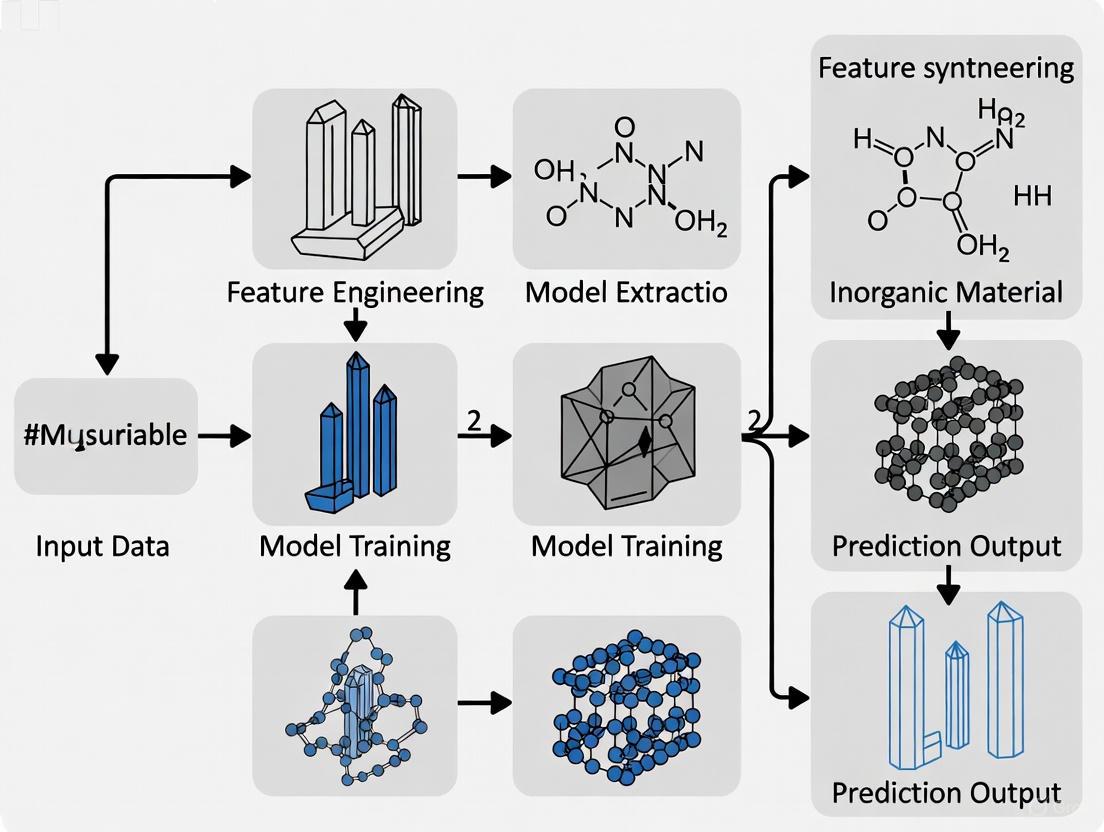
This article provides a comprehensive overview of how machine learning (ML) is revolutionizing the prediction of synthesizable materials, a critical challenge in accelerating the discovery of new functional compounds for...
Machine Learning for Synthesizable Materials Discovery: Bridging the Gap Between Prediction and Experimental Realization
Abstract
This article provides a comprehensive overview of how machine learning (ML) is revolutionizing the prediction of synthesizable materials, a critical challenge in accelerating the discovery of new functional compounds for biomedical and industrial applications. We explore the foundational shift from purely energy-based stability predictions to synthesizability-driven frameworks, detailing key ML methodologies from structural featurization and generative models to synthesizability evaluation. The content covers the application of these models in de-risking experimental synthesis, addresses current bottlenecks like data scarcity and model generalizability, and evaluates model performance through benchmarking and experimental validation. Aimed at researchers, scientists, and drug development professionals, this article synthesizes the current state-of-the-art and future directions for integrating ML into the materials discovery pipeline.
The Synthesizability Challenge: Why Energy Stability Alone Isn't Enough
The discovery of new functional materials is a cornerstone of technological advancement, from developing better battery materials to novel semiconductors. For decades, computational materials science has relied on thermodynamic stability, typically calculated using density functional theory (DFT), as the primary filter for identifying promising new materials. This approach assumes that materials with favorable formation energies—those lying on or near the convex hull of thermodynamic stability—are synthetically accessible. However, a significant and persistent gap exists between computational predictions and experimental realization: many computationally predicted "stable" materials prove impossible to synthesize, while numerous metastable materials are routinely synthesized in laboratories worldwide [1] [2].
This gap emerges because thermodynamic stability represents only one factor influencing whether a material can be successfully synthesized. Experimental synthesizability is governed by a complex interplay of kinetic factors, reaction pathways, precursor selection, and synthetic conditions that thermodynamic calculations alone cannot capture [3] [4]. The critical limitation of energy-based screening is its fundamental inability to identify experimentally realizable metastable materials synthesized through kinetically controlled pathways [1]. This creates a critical bottleneck in materials discovery pipelines, where promising computational predictions fail to translate into laboratory success.
The emergence of machine learning approaches offers promising pathways to bridge this gap. By learning directly from experimental data rather than relying solely on thermodynamic principles, ML models can capture the complex patterns and relationships that dictate synthetic success [2] [5]. This technical guide explores the fundamental limitations of thermodynamic stability predictions, surveys the latest machine learning approaches designed to predict synthesizability, and provides practical methodologies for integrating these tools into materials discovery workflows.
The Fundamental Limitations of Thermodynamic Stability
Theoretical Framework and Practical Shortcomings
Thermodynamic stability assessment typically relies on calculating a material's decomposition energy (ΔHd), defined as the total energy difference between a given compound and its most stable competing phases in a specific chemical space [6]. The convex hull constructed from formation energies of compounds within a phase diagram serves as the reference point—materials with decomposition energies of zero lie on the hull and are considered thermodynamically stable, while those with positive energies are metastable or unstable [6].
Despite its theoretical foundation, this approach suffers from significant practical limitations:
Metastable Materials Synthesis: Many successfully synthesized materials are metastable, possessing positive decomposition energies. Their synthesis is enabled by kinetic stabilization through specific reaction pathways [3] [4]. For example, in Liâ‚‚M(SOâ‚„)â‚‚ compounds, metastable polymorphs are synthesized despite positive formation enthalpies, with vibrational/rotational disorder of SOâ‚„ tetrahedra providing the entropy term that enables their formation [3].
Incomplete Phase Information: Constructing accurate convex hulls requires knowledge of all competing phases in a chemical space, which is often incomplete, especially for unexplored compositional territories [6].
Temperature and Pressure Neglect: Standard convex hull analyses typically consider only zero-temperature, ambient-pressure conditions, ignoring the thermodynamic driving forces available through control of experimental parameters [3].
Kinetic Factors: Thermodynamic approaches cannot account for kinetic barriers that dominate solid-state reactions, including diffusion limitations, nucleation barriers, and intermediate phase formation [2].
Table 1: Quantitative Comparison of Synthesizability Prediction Methods
| Prediction Method | Underlying Principle | Reported Accuracy | Key Limitations |
|---|---|---|---|
| Formation Energy/Convex Hull [2] [6] | Thermodynamic stability | ~50% of synthesized materials captured [2] | Misses metastable phases; ignores kinetics |
| Charge Balancing [2] | Charge neutrality constraint | 37% of known compounds [2] | Over-simplifies bonding environments |
| SynthNN [2] | Composition-based deep learning | 7× higher precision than DFT [2] | No structural information considered |
| CSLLM [4] | Crystal structure-based large language model | 98.6% accuracy [4] | Requires careful dataset construction |
Case Study: Lithium Polyanion Battery Materials
Experimental work on Liâ‚‚M(SOâ‚„)â‚‚ compounds provides compelling evidence for the thermodynamic stability-synthesizability gap. Research demonstrated that both monoclinic (M = Mn, Fe, Co) and orthorhombic (M = Fe, Co, Ni) polymorphs could be synthesized despite positive enthalpies of formation determined through calorimetry [3]. The orthorhombic polymorphs with Fe and Co were found to be energetically less stable than their corresponding monoclinic forms, yet they could be synthesized through ball milling methods [3].
This case study highlights a crucial principle: the entropy term (TΔS) can overcome positive enthalpy of formation in polymorphic systems, enabling metastable phase synthesis through carefully controlled kinetic pathways [3]. Such phenomena cannot be captured by standard thermodynamic stability calculations, underscoring the need for synthesizability-aware prediction frameworks.
Machine Learning Approaches to Bridge the Gap
Composition-Based Models
Composition-based machine learning models predict synthesizability directly from chemical formulas without requiring structural information, making them particularly valuable for exploring new compositional spaces where crystal structures are unknown.
The SynthNN model exemplifies this approach, using a deep learning architecture that leverages the entire space of synthesized inorganic chemical compositions [2]. By reformulating material discovery as a synthesizability classification task, SynthNN identifies synthesizable materials with 7× higher precision than DFT-calculated formation energies [2]. Remarkably, without explicit programming of chemical rules, SynthNN learns principles of charge-balancing, chemical family relationships, and ionicity directly from data [2].
These models typically employ positive-unlabeled (PU) learning frameworks to address the fundamental challenge that only successfully synthesized materials (positive examples) are typically recorded in databases, while unsuccessful synthesis attempts (negative examples) are rarely reported [2] [4]. The Synthesizability Dataset is augmented with artificially generated unsynthesized materials, with the model treating unsynthesized materials as unlabeled data and probabilistically reweighting them according to their likelihood of being synthesizable [2].
Structure-Based Models
Structure-based models offer enhanced predictive power by incorporating crystal structure information alongside composition. The Crystal Synthesis Large Language Models (CSLLM) framework represents a significant advancement, utilizing three specialized LLMs to predict synthesizability, possible synthetic methods, and suitable precursors for arbitrary 3D crystal structures [4].
CSLLM achieves state-of-the-art accuracy (98.6%), significantly outperforming traditional synthesizability screening based on thermodynamic and kinetic stability [4]. The framework uses an efficient text representation for crystal structures that integrates essential crystal information, enabling fine-tuning of LLMs specifically for synthesizability prediction [4].
Another approach integrates symmetry-guided structure derivation with Wyckoff encode-based machine learning models, allowing efficient localization of subspaces likely to yield highly synthesizable structures [1]. Within these promising subspaces, structure-based synthesizability evaluation models fine-tuned using recently synthesized structures are employed alongside ab initio calculations to systematically identify synthesizable candidates [1].
Table 2: Machine Learning Models for Synthesizability Prediction
| Model Name | Input Type | Model Architecture | Key Advantages | Representative Performance |
|---|---|---|---|---|
| SynthNN [2] | Composition | Deep Neural Network | No structural info required; high throughput | Outperforms human experts by 1.5× precision |
| Synthesizability-Driven CSP [1] | Composition & Structure | Wyckoff encode-based ML | Identifies promising subspaces | Reproduced 13 known XSe structures |
| CSLLM [4] | Structure | Large Language Model | Predicts methods & precursors | 98.6% synthesizability accuracy |
| ECSG [6] | Composition | Ensemble ML | Mitigates inductive bias | 0.988 AUC for stability prediction |
Ensemble and Hybrid Approaches
Ensemble methods that combine multiple models with different inductive biases have shown improved performance for synthesizability prediction. The Electron Configuration models with Stacked Generalization (ECSG) framework integrates three base models—Magpie, Roost, and ECCNN—that leverage different domain knowledge: statistical features of elemental properties, interatomic interactions, and electron configurations [6].
This approach mitigates the limitations of individual models by combining their complementary strengths, achieving an Area Under the Curve score of 0.988 in predicting compound stability [6]. The framework demonstrates exceptional efficiency in sample utilization, requiring only one-seventh of the data used by existing models to achieve the same performance [6].
Experimental Protocols and Methodologies
Dataset Construction for Synthesizability Prediction
Curating high-quality datasets is foundational for developing accurate synthesizability prediction models. The following protocol outlines the approach used for CSLLM development [4]:
Positive Example Collection: Select experimentally validated crystal structures from the Inorganic Crystal Structure Database (ICSD). Apply filters for structural integrity (e.g., exclude disordered structures, limit to ≤40 atoms and ≤7 different elements).
Negative Example Generation: Employ a pre-trained PU learning model to generate CLscores for theoretical structures from multiple databases (Materials Project, Computational Materials Database, OQMD, JARVIS). Select structures with the lowest CLscores (e.g., <0.1) as negative examples.
Dataset Balancing: Create a balanced dataset with approximately equal numbers of synthesizable and non-synthesizable structures. Verify that most positive examples have CLscores >0.1 to ensure separation.
Structural Diversity Validation: Visualize dataset coverage using t-SNE to ensure representation across crystal systems (cubic, hexagonal, tetragonal, orthorhombic, monoclinic, triclinic, trigonal) and compositional diversity.
Model Training and Evaluation
The training protocol for synthesizability prediction models typically follows these stages [2] [4]:
Feature Representation:
- For composition-based models: Use learned atom embedding matrices (e.g., atom2vec) optimized alongside other neural network parameters.
- For structure-based models: Develop efficient text representations (e.g., "material strings") that integrate essential crystal information (lattice parameters, composition, atomic coordinates, symmetry).
Positive-Unlabeled Learning: Implement class-weighting for unlabeled examples according to their likelihood of synthesizability. The ratio of artificially generated formulas to synthesized formulas (Nₛyₙₜₕ) is treated as a hyperparameter.
Model Architecture Selection: Choose appropriate architectures based on input type:
- Composition-based: Deep neural networks with atom embedding layers.
- Structure-based: Fine-tuned transformer architectures for LLMs.
Performance Validation: Evaluate using standard metrics (precision, recall, F1-score) with careful interpretation in PU learning context. Conduct head-to-head comparisons against human experts and traditional methods.
Workflow Integration
A synthesizability-driven crystal structure prediction framework integrates multiple components [1]:
Synthesizability Prediction Workflow
Table 3: Essential Resources for Synthesizability-Driven Materials Discovery
| Resource Name | Type | Function/Role | Access |
|---|---|---|---|
| Inorganic Crystal Structure Database (ICSD) [2] [4] | Database | Source of experimentally verified crystal structures for training positive examples | Commercial |
| Materials Project [6] [4] | Database | Source of theoretical structures for negative example generation and validation | Free |
| Matminer [7] | Software Library | Feature generation for materials using published featurizations | Open Source |
| Automatminer [7] | Reference Algorithm | Automated machine learning pipeline for materials property prediction | Open Source |
| CSLLM Framework [4] | Software Tool | Predicts synthesizability, methods, and precursors for crystal structures | Research |
| JARVIS [6] [4] | Database | Source of DFT-computed properties and structures for training | Free |
The gap between thermodynamic stability predictions and experimental synthesizability represents both a fundamental challenge and an opportunity for computational materials science. Traditional energy-based screening methods, while valuable for identifying thermodynamically stable materials, fail to capture the complex kinetic and experimental factors that determine synthetic success.
Machine learning approaches that learn directly from experimental data offer a powerful pathway to bridge this gap. By capturing patterns in successful syntheses that transcend simple thermodynamic considerations, models like SynthNN and CSLLM demonstrate significantly improved precision in identifying synthesizable materials compared to traditional methods [2] [4]. The integration of these synthesizability predictors into materials discovery workflows enables more efficient prioritization of candidates for experimental investigation.
Future advancements will likely come from several directions: improved integration of synthesis conditions and precursor information into predictive models, development of larger and more comprehensive datasets that include failed synthesis attempts, and creation of hybrid models that combine physical principles with data-driven insights. As these technologies mature, they will accelerate the discovery of novel functional materials by providing more reliable guidance on synthetic accessibility, ultimately bridging the critical gap between computational prediction and experimental realization.
The discovery of novel functional materials is fundamental to technological progress across sectors, from clean energy to medicine. However, the traditional process of materials discovery has been bottlenecked by expensive trial-and-error approaches that are slow, resource-intensive, and fundamentally limited in their ability to explore the vastness of chemical space [8]. Before the advent of data-driven methods, material discovery relied heavily on these techniques and on first-principles calculations, such as density functional theory (DFT), which, while accurate, are computationally intensive and slow, especially for exploring large compositional or structural design spaces [5].
The critical first step in discovering any new material is identifying a novel chemical composition that is synthesizable—defined as a material that is synthetically accessible through current capabilities, regardless of whether it has been synthesized yet [2]. This article defines the concept of "synthesizability," contrasts it with related concepts like stability, and details the modern computational and machine-learning methodologies used to predict it, thereby creating a foundational reference for researchers in the field.
Beyond Thermodynamics: A Multi-Faceted Definition of Synthesizability
A common, but often insufficient, proxy for synthesizability is thermodynamic stability. The established computational method for assessing this is calculating a material's formation energy and its distance to the convex hull of stable phases. Materials that lie on this hull (with a formation energy of 0 eV/atom) are considered thermodynamically stable, while those above it are metastable or unstable [8]. However, synthesizability is a broader and more complex property. A material that is thermodynamically stable may still be impossible to synthesize with current methods, while kinetic stabilization or specific reaction pathways can enable the synthesis of metastable materials [2] [9].
Table 1: Key Concepts in Defining Synthesizability
| Term | Definition | Limitations as a Synthesizability Proxy |
|---|---|---|
| Thermodynamic Stability | A material is stable if no set of other phases has a lower combined energy. Determined by calculating the energy above the convex hull. | Does not account for kinetic stabilization or synthesis pathway. Many synthesizable materials are metastable [2]. |
| Charge-Balancing | A heuristic that filters chemical formulas to have a net neutral ionic charge based on common oxidation states. | An inflexible constraint; only ~37% of known synthesized inorganic materials are charge-balanced. Fails for metallic or covalent systems [2]. |
| Synthesizability | A material is synthesizable if it is synthetically accessible through current experimental capabilities, regardless of its prior synthesis status [2]. | The target property, but cannot be defined by a single simple rule. Depends on a complex array of physical and practical factors. |
The decision to synthesize a material depends on a wide range of considerations beyond simple thermodynamics, including the cost of reactants, availability of equipment, and human-perceived importance of the final product [2]. Therefore, synthesizability cannot be predicted based on thermodynamical or kinetic constraints alone.
Traditional Heuristics and Computational Screening
Established Rules and High-Throughput Computation
Before the rise of modern machine learning, researchers relied on chemically intuitive heuristics and high-throughput computational screening.
- Elemental Substitution and Prototype Enumeration: Guided searches involved substituting similar ions in known crystal structures or enumerating known structural prototypes. While this improved efficiency, it fundamentally limited the diversity of candidate materials [8].
- High-Throughput Density Functional Theory (DFT): Projects like the Materials Project, the Open Quantum Materials Database (OQMD), and AFLOWLIB have used high-throughput DFT calculations to screen thousands of candidate materials for thermodynamic stability [8]. This involves a standard workflow of geometry optimization and energy calculation to determine a material's stability.
Table 2: Traditional Computational Screening Methods
| Method | Description | Typical Software/Platform | Key Output |
|---|---|---|---|
| Geometry Optimization | Computes the most stable atomic configuration of a crystal structure by minimizing forces on atoms. | VASP (Vienna Ab initio Simulation Package) [10] | Relaxed crystal structure, total energy. |
| Formation Energy Calculation | Calculates the energy of a compound relative to its constituent elements in their standard states. | VASP, Materials Project workflows [8] [10] | ΔHf (Formation Enthalpy) |
| Convex Hull Construction | Determines the set of thermodynamically stable phases by calculating the lower convex envelope of formation energies for all competing phases in a chemical space. | Materials Project, OQMD [8] | Energy above hull (Ehull) |
| Phonon Calculation | Models atomic vibrations to assess dynamic stability (absence of imaginary frequencies). | VASP, Phonopy [10] | Phonon dispersion spectrum |
| Elastic Constant Calculation | Computes the elastic tensor to evaluate mechanical stability (satisfaction of Born criteria). | VASP [10] | Elastic constants (Cij) |
Experimental Synthesis and Processing Techniques
The ultimate test of synthesizability is successful synthesis in the laboratory. Common synthesis techniques for solid-state and inorganic materials include:
- Solid-State Reaction: Heating powdered precursor elements or compounds at high temperatures to facilitate diffusion and reaction.
- Sol-Gel Process: A wet-chemical technique using a chemical solution (sol) that transitions to a gel network, which is then dried and heated to form a solid [11].
- Chemical Vapor Deposition (CVD): Depositing a solid material from a vapor phase onto a substrate [11].
- Hydrothermal/Solvothermal Synthesis: Using heated solutions in a sealed vessel (autoclave) to create high-pressure conditions for crystallizing materials.
The Machine Learning Paradigm for Synthesizability Prediction
Machine learning (ML) has emerged as a transformative tool to overcome the limitations of traditional methods. ML models can analyze large, diverse datasets to uncover complex, non-linear relationships between a material's composition, structure, and its likelihood of being synthesizable [5].
Key Machine Learning Approaches
A significant advancement in ML-based prediction is the development of models trained directly on the database of all synthesized materials, allowing them to learn the optimal set of descriptors for synthesizability rather than relying on pre-defined proxy metrics [2].
- Positive-Unlabeled (PU) Learning: A major challenge is the lack of confirmed negative examples (proven unsynthesizable materials). PU learning algorithms treat the vast space of unknown materials as unlabeled data and probabilistically reweight them according to their likelihood of being synthesizable. The SynthNN model is a deep learning classifier that uses this approach, trained on data from the Inorganic Crystal Structure Database (ICSD) [2].
- Graph Neural Networks (GNNs): These models represent crystal structures as graphs (atoms as nodes, bonds as edges), making them exceptionally well-suited for learning structure-property relationships. The GNoME (Graph Networks for Materials Exploration) framework has demonstrated that GNNs trained at scale can reach unprecedented levels of generalization, accurately predicting formation energy and stability [8].
- Composition-Based Models: For cases where the crystal structure is unknown, models can predict stability from the chemical formula alone using learned compositional representations like atom2vec [2].
Performance and Validation of ML Models
ML models have demonstrated a remarkable ability to not only predict known outcomes but also to learn underlying chemical principles.
- Performance Benchmarks: In a head-to-head comparison, the SynthNN model identified synthesizable materials with 7x higher precision than using DFT-calculated formation energies alone and outperformed 20 expert materials scientists, achieving 1.5x higher precision and completing the task five orders of magnitude faster [2]. The GNoME project improved the precision of stable predictions (hit rate) to above 80% when structural information was available [8].
- Emergent Chemical Understanding: Remarkably, without any prior chemical knowledge, models like SynthNN learn fundamental chemical principles such as charge-balancing, chemical family relationships, and ionicity from the data itself [2]. They also exhibit emergent generalization, accurately predicting the stability of materials with five or more unique elements—a space notoriously difficult for human intuition to navigate [8].
Case Study: Data-Driven Discovery of MAX Phases
A concrete example of this modern paradigm is the data-driven discovery of novel MAX phases, a family of layered carbides and nitrides with the formula Mn+1AXn [10].
Workflow:
- Database Creation: Researchers created a database of 9,660 potential MAX phase structures with variations in M, A, and X elements (including B, O, P, S, and Si).
- Machine Learning Screening: ML models, trained on structural descriptors and physical properties, screened this vast database to identify promising candidates.
- DFT Validation: The top candidates were validated using DFT calculations to confirm their dynamic (phonon) and mechanical (elastic constants) stability.
- Experimental Synthesis Guidance: The final list of predicted synthesizable structures provides a targeted roadmap for experimental synthesis efforts.
Outcome: This integrated approach successfully predicted 13 synthesizable MAX phase compounds that had not been previously reported, demonstrating the power of ML to efficiently guide discovery in a targeted materials family [10].
Table 3: Key Research Reagents and Computational Tools
| Tool / Resource | Type | Function in Synthesizability Research |
|---|---|---|
| Vienna Ab initio Simulation Package (VASP) | Software | Performs DFT calculations for geometry optimization, energy, and property calculations, serving as the validation step for ML predictions [10]. |
| Inorganic Crystal Structure Database (ICSD) | Database | A comprehensive collection of experimentally reported crystal structures; the primary source of "positive" data for training synthesizability models [2]. |
| Materials Project / OQMD / AFLOW | Database | Curated databases of computationally derived material properties and stability data, used for training and benchmarking ML models [5] [8]. |
| Graph Neural Network (GNN) Models (e.g., GNoME) | ML Model | Learns structure-property relationships by representing crystals as graphs; highly effective for predicting formation energy and stability [8]. |
| Positive-Unlabeled (PU) Learning Algorithms | ML Method | Handles the lack of confirmed negative data by treating unsynthesized materials as unlabeled examples, crucial for realistic synthesizability classification [2]. |
| Evolutionary Algorithms (e.g., USPEX) | Software | Used for crystal structure prediction and phase stability checks, often complementing ML-based searches [10]. |
The definition of a "synthesizable material" is evolving from one based solely on rigid chemical heuristics and thermodynamic rules to a more nuanced, data-driven concept. Modern approaches recognize that synthesizability is a complex probabilistic property that can be learned by machine learning models from the collective history of experimental synthesis. By integrating high-throughput computation, active learning, and advanced models like GNNs, the materials science community is building a future where synthesizability is a predictable constraint, enabling the targeted and efficient discovery of next-generation functional materials.
The paradigm of materials discovery is undergoing a profound shift from traditional trial-and-error approaches to data-driven scientific inquiry. Central to this transformation is the strategic utilization of materials databases as foundational training sets for machine learning (ML) models. These curated repositories provide the structured data necessary for ML algorithms to uncover complex patterns linking material composition, structure, and properties. The Materials Project alone serves over 600,000 registered users and delivers millions of data records daily through its application programming interface (API), fostering data-rich research across materials science [12]. This wealth of computed and experimental data, when properly leveraged, enables predictive models that can significantly accelerate the identification of novel synthesizable materials with targeted properties.
The fundamental challenge in materials informatics lies in navigating the immense combinatorial space of possible materials. Traditional computational methods like density functional theory (DFT) and molecular dynamics (MD) simulations, while accurate, are computationally intensive and impractical for screening vast chemical spaces [5]. Machine learning addresses this limitation by training on existing materials data to establish surrogate models that predict material properties rapidly, redirecting experimental and computational resources toward the most promising candidates [13]. However, the performance and reliability of these models critically depend on the quality, diversity, and structure of the underlying training data, making the understanding of materials databases an essential prerequisite for effective ML implementation in materials science.
Major Materials Databases and Repositories
The materials science community has developed numerous structured databases that collectively capture known and hypothetical materials across different chemical families and structure types. These repositories vary in content origin, material classes covered, and primary application focus. Understanding their distinct characteristics enables researchers to select appropriate data sources for specific ML tasks.
Table 1: Major Materials Databases for ML Training
| Database Name | Content Type | Material Classes | Key Features | Primary Use Cases |
|---|---|---|---|---|
| Materials Project [12] [13] | Computed Properties | Inorganic Materials | Over 200,000 materials with millions of computed properties; Free API access | High-throughput screening, Design algorithms |
| Inorganic Crystal Structure Database (ICSD) [13] [14] | Experimental Structures | Inorganic Crystals | Curated experimental crystal structures; Reference data for validation | Training on experimentally verified structures |
| Cambridge Structural Database (CSD) [13] | Experimental Structures | Organic/Metal-Organic Crystals | Extensive organic and metal-organic crystal data | Molecular materials, MOF research |
| CoRE MOF [13] | Curated Experimental | Metal-Organic Frameworks | Experimentally refined MOF structures; Focus on small-pore regions | Gas separation, Adsorption studies |
| Novel Materials Discovery (NOMAD) [13] [5] | Computed & Experimental | Multiple Classes | Repository for computational materials science data | Developing diverse training sets |
| ToBaCCo [13] | Hypothetical | Metal-Organic Frameworks | In silico generated MOFs; Focus on large-pore regions | Exploring extended chemical space |
These databases collectively provide the foundational data for ML applications, yet they exhibit important distinctions in their coverage of chemical space. For instance, analysis of metal-organic framework databases reveals that experimental MOFs (CoRE-2019) predominantly occupy small-pore regions, while hypothetical databases (ToBaCCo) contain structures mainly in the large-pore region [13]. This distribution bias has significant implications for ML model generalization and must be considered when constructing training sets. Similarly, hypothetical databases often lack diversity in metal chemistry, which can lead to incomplete or skewed predictions regarding the importance of specific elements for target applications [13].
Data Curation and Feature Engineering Methodologies
Expert-Curated Data Workflows
The ME-AI (Materials Expert-Artificial Intelligence) framework demonstrates the critical importance of domain expertise in data curation for materials ML [14]. This approach translates experimental intuition into quantitative descriptors extracted from curated, measurement-based data through a systematic workflow:
- Primary Feature Selection: Domain experts identify chemically meaningful primary features (PFs) including electron affinity, electronegativity, valence electron count, and crystallographic distances [14].
- Expert Labeling: Materials are annotated based on experimental band structure data (56% of database) or chemical logic for related compounds (44% of database) [14].
- Descriptor Discovery: Machine learning models, particularly Gaussian processes with chemistry-aware kernels, uncover emergent descriptors composed of primary features [14].
In the ME-AI implementation for topological semimetals, this workflow utilized 879 square-net compounds described using 12 experimental features, successfully recovering known structural descriptors like the "tolerance factor" while identifying new descriptors related to hypervalency concepts [14]. This demonstrates how expert-guided curation can extract meaningful patterns from relatively small datasets (hundreds to thousands of compounds), overcoming the limitations of purely data-driven approaches.
Feature Encoding and Selection Techniques
Materials data presents unique challenges for feature representation due to the varied nature of material systems, from crystalline inorganic compounds to complex polymer architectures. Effective feature engineering employs several encoding strategies:
- Atomic Descriptors: Fundamental atomic properties including electron affinity, electronegativity, and valence electron counts, often represented using maximum and minimum values across compound elements [14].
- Structural Descriptors: Crystallographic parameters such as lattice parameters, atomic distances, and symmetry information [14] [15].
- Domain Knowledge Descriptors: Expert-derived features such as tolerance factors for perovskite structures or dimensional indices for low-dimensional materials [14] [15].
Feature selection methods are crucial for managing the high dimensionality of materials feature spaces. The SISSO (Sure Independence Screening and Sparsifying Operator) method has emerged as a powerful approach for identifying optimal descriptor combinations from large feature spaces [15]. This method generates numerous mathematical combinations of primary features and screens for the most physically meaningful descriptors, successfully applied to correct perovskite tolerance factors and establish criteria for strong metal-metal interactions [15].
Additional feature selection strategies include:
- Filter Methods: Statistical approaches that evaluate feature relevance independently of the ML model.
- Wrapper Methods: Feature selection wrapped around model training, evaluating subsets based on model performance.
- Embedded Methods: Algorithms that perform feature selection as part of the model training process [15].
Integrated approaches like MIC-SHAP, which combines maximum information coefficient with SHapley Additive exPlanations, have demonstrated effectiveness in selecting optimal feature subsets for predicting properties like solid solution strengthening in high-entropy alloys [15].
Data Curation and Modeling Workflow
Machine Learning Approaches for Materials Data
Multi-Objective Optimization Frameworks
Materials for practical applications must typically satisfy multiple property requirements, often with competing relationships. Multi-objective optimization addresses this challenge by identifying materials that optimally balance these trade-offs. The core concept in multi-objective optimization is the Pareto front - a set of solutions where improvement in one objective necessitates deterioration in another [15].
Machine learning accelerates Pareto front identification through several strategies:
- Pareto Front-Based Strategy: ML models predict multiple properties simultaneously, with optimization algorithms identifying non-dominated solutions across all objectives [16] [15].
- Scalarization Function: Multiple objectives are combined into a single weighted objective function, transforming the problem into single-objective optimization [15].
- Constraint Method: One objective is optimized while treating others as constraints with minimum acceptable values [15].
Benchmark studies have demonstrated that automated machine learning approaches like AutoSklearn, combined with evolutionary optimizers such as CMA-ES, can achieve near Pareto-optimal designs with minimal data requirements [16]. These approaches are particularly valuable for materials design problems where data acquisition is expensive or time-consuming.
Data Modes for Multi-Objective Learning
The structure of training data significantly influences multi-objective ML implementation. Two primary data modes are employed:
- Mode 1: A unified dataset where all samples have the same features and multiple target properties, enabling multi-output models that predict all objectives simultaneously [15].
- Mode 2: Separate datasets for each property, with potentially different samples and features, requiring multiple specialized models for different objectives [15].
The choice between these modes depends on data availability and the relationships between target properties. Mode 1 is preferable when sufficient data exists for all properties across a consistent sample set, while Mode 2 offers flexibility for leveraging all available data, particularly when different descriptors are relevant for different properties.
Experimental Protocols and Case Studies
Case Study: Predictive Models for Topological Materials
The ME-AI framework demonstrates a complete protocol for data-driven discovery of functional materials [14]:
Experimental Protocol:
- Dataset Curation: 879 square-net compounds from the Inorganic Crystal Structure Database (ICSD) with 12 primary features including electron affinity, electronegativity, valence electron count, and crystallographic distances.
- Expert Labeling: Materials classified as topological semimetals (TSMs) or trivial materials based on experimental band structure data (56%) or chemical logic for related compounds (44%).
- Model Training: Dirichlet-based Gaussian process model with chemistry-aware kernel trained to identify emergent descriptors.
- Validation: Model predictions tested on holdout compounds and extended to different material families (rocksalt topological insulators).
Results and Significance: The model successfully recovered the known structural "tolerance factor" descriptor and identified four new emergent descriptors, including one aligned with classical chemical concepts of hypervalency and the Zintl line [14]. Remarkably, the model trained solely on square-net compounds correctly classified topological insulators in rocksalt structures, demonstrating transferability across chemical families. This case highlights how expert-curated experimental data can produce models with strong predictive power and physical interpretability.
Case Study: Fossil Identification via Morphological Traits
Beyond electronic materials, similar principles apply to diverse material classification problems. A study on Czekanowskiales fossils demonstrated how machine learning with carefully encoded morphological traits enables quantitative taxonomic identification [17]:
Experimental Protocol:
- Trait Encoding: Macroscopic and cuticular traits statistically recorded from fossil specimens and encoded using label encoding and one-hot encoding methods.
- Algorithm Comparison: Five supervised learning algorithms (logistic regression, k-nearest neighbors, naive Bayes, classification and regression tree, support vector machine) evaluated for genus and species identification.
- Feature Importance Analysis: Trait significance assessed for different taxonomic levels.
Results and Significance: The study established that macroscopic traits are more important for genus-level identification, while cuticular traits provide greater discrimination at the species level [17]. Classification and regression tree algorithms demonstrated superior performance, with inclusion of cuticular traits significantly improving identification accuracy. This approach demonstrates the value of manual trait encoding for domains with limited training data, where image-based deep learning would require impractically large datasets.
Table 2: Essential Research Reagents and Computational Tools
| Resource Category | Specific Tools/Databases | Function in ML Workflow |
|---|---|---|
| Materials Databases | Materials Project, ICSD, CSD, CoRE MOF | Provide training data and validation references |
| Feature Engineering | SISSO, MIC-SHAP, Domain Knowledge Descriptors | Generate and select optimal feature representations |
| ML Algorithms | Gaussian Processes, AutoSklearn, CART, Ensemble Methods | Build predictive models from materials data |
| Optimization Frameworks | CMA-ES, NSGA-II, MOEA/D | Identify Pareto-optimal material solutions |
| Validation Tools | Independent Test Sets, Cross-Validation, Experimental Synthesis | Verify model predictions and transferability |
Challenges and Future Directions
Despite significant advances, several challenges persist in leveraging materials databases for ML training. Data quality and consistency remain concerns, particularly with experimental data subject to synthesis conditions and measurement protocols [18] [19]. The black-box nature of some complex ML models limits physical interpretability, driving interest in hybrid approaches that combine data-driven learning with physics-based constraints [18] [5].
Future progress depends on developing modular, interoperable AI systems and standardized FAIR (Findable, Accessible, Interoperable, Reusable) data principles [18] [19]. Addressing data quality and integration challenges will resolve issues related to metadata gaps, semantic ontologies, and data infrastructures, especially for small datasets [18]. This will unlock transformative advances in fields like nanocomposites, metal-organic frameworks, and adaptive materials.
Emerging approaches include:
- Hybrid modeling: Combining traditional computational models offering interpretability and physical consistency with AI/ML excelling in speed and complexity handling [18].
- Transfer learning: Applying models trained on one material family to different but related systems, as demonstrated by the ME-AI application to rocksalt structures [14].
- Autonomous experimentation: Integrating ML with robotic laboratories for closed-loop materials synthesis and testing, dramatically accelerating the discovery cycle [5].
As materials databases continue to grow in size and diversity, and ML methodologies become increasingly sophisticated, the partnership between data-driven discovery and fundamental materials understanding will undoubtedly yield novel functional materials addressing critical technological needs across energy, electronics, and sustainability.
The discovery of new functional materials has historically been guided by experimental trial-and-error, a process that is often time-consuming, resource-intensive, and unpredictable. While computational methods, particularly density functional theory (DFT), have revolutionized our ability to predict material properties in silico, a critical gap persists between theoretical prediction and experimental realization [1]. Traditional energy-based crystal structure prediction approaches predominantly identify thermodynamically stable materials, struggling to pinpoint the metastable materials frequently synthesized through kinetically controlled pathways [1]. This disconnect means that thousands of promising computationally predicted compounds may never be synthesized, creating a fundamental bottleneck in materials innovation.
Machine learning (ML) is now enabling a paradigm shift from this haphazard discovery process to a targeted, rationale-driven approach. By learning complex patterns from existing experimental and computational data, ML models can predict not only whether a material is likely to be synthesizable but also the appropriate synthesis conditions and precursors required for its realization [5] [4]. This new paradigm leverages advanced algorithms including graph neural networks, large language models, and generative AI to navigate the vast chemical space efficiently, systematically bridging the gap between computational design and laboratory synthesis that has long hampered the field [1] [20].
Core ML Approaches for Synthesis Prediction
Key Algorithms and Their Applications
The ML landscape for materials discovery encompasses diverse algorithms, each suited to particular aspects of the synthesis prediction challenge. These algorithms learn from materials databases to establish the complex relationships between composition, structure, synthesis conditions, and experimental realizability.
Table 1: Essential Machine Learning Algorithms in Materials Discovery
| Algorithm Category | Specific Models | Primary Applications in Materials Discovery | Key Advantages |
|---|---|---|---|
| Graph Neural Networks (GNNs) | Crystal Graph Convolutional Neural Networks [5] | Property prediction from crystal structure [21] | Naturally encodes atomic bonding and periodicity |
| Ensemble Methods | Random Forest, XGBoost [20] [22] | Synthesis parameter prediction (temperature, time) [5] | Handles small datasets robustly; good interpretability |
| Large Language Models (LLMs) | Fine-tuned LLaMA, ChatGPT [4] | Synthesizability classification, precursor identification [4] | Processes text-based structure representations effectively |
| Deep Generative Models | Generative Adversarial Networks (GANs), Variational Autoencoders (VAEs) [5] | De novo design of novel crystal structures [5] | Enables inverse design of materials with target properties |
Specialized Frameworks for Synthesizability Prediction
Recently, specialized end-to-end frameworks have emerged to tackle the synthesizability challenge comprehensively. The Crystal Synthesis Large Language Model (CSLLM) framework utilizes three specialized LLMs to address distinct aspects of the synthesis problem [4]. The Synthesizability LLM predicts whether an arbitrary 3D crystal structure is synthesizable, achieving a state-of-the-art accuracy of 98.6%, significantly outperforming traditional thermodynamic (74.1%) and kinetic (82.2%) stability assessments [4]. Complementing this, the Method LLM classifies possible synthetic approaches (e.g., solid-state vs. solution) with 91.0% accuracy, while the Precursor LLM identifies suitable solid-state synthesis precursors with 80.2% success rate [4].
Another approach integrates symmetry-guided structure derivation with Wyckoff encode-based ML models to efficiently locate promising subspaces in the materials universe likely to yield highly synthesizable structures [1]. This synthesizability-driven crystal structure prediction framework successfully reproduced 13 experimentally known XSe structures and filtered 92,310 potentially synthesizable candidates from the 554,054 structures predicted by the GNoME database, demonstrating remarkable potential for prioritizing experimental efforts [1].
Quantitative Performance and Validation Metrics
Evaluating ML model performance requires specialized metrics beyond traditional statistical measures. While root-mean-square error (RMSE) and mean absolute error (MAE) provide insights into prediction accuracy, they do not directly indicate a model's capability to discover novel high-performing materials [23].
Table 2: Metrics for Evaluating ML Performance in Materials Discovery
| Metric | Definition | Interpretation | Ideal Use Case |
|---|---|---|---|
| Discovery Precision (DP) | Probability that provided candidates will outperform known materials [24] | Directly measures explorative power | Model selection for discovery campaigns |
| Discovery Yield (DY) | Number of high-performing materials discovered during a campaign [23] | Measures throughput of successful discoveries | Comparing different discovery workflows |
| Acceleration Factor | Speedup relative to random screening [24] | Quantifies efficiency gains | Justifying ML adoption |
| Synthesizability Accuracy | Percentage correctness in classifying synthesizable materials [4] | Measures practical utility for experimental guidance | Evaluating synthesis prediction models |
Forward-holdout validation and k-fold forward cross-validation have emerged as crucial validation techniques specifically designed for assessing explorative prediction power [24]. These methods create validation scenarios where the figure-of-merit of samples exceeds that of the training set, better simulating the real-world discovery context where researchers seek materials that outperform known benchmarks.
Experimental Protocols and Workflows
The "Lab-in-a-Loop" Framework
The integration of ML with experimental research is embodied in the "lab-in-a-loop" framework, which creates a continuous cycle between computation and experimentation [25]. In this paradigm, initial experimental data trains ML models that generate predictions about promising material candidates or optimal synthesis conditions. These predictions are tested experimentally, generating new data that refines and retrains the models, progressively enhancing their accuracy with each iteration [25]. This approach has been successfully implemented in diverse domains including antibody design, small-molecule drug discovery, and the selection of neoantigens for cancer vaccines [25].
Automated Synthesis Prediction for Metal-Organic Frameworks
For metal-organic frameworks (MOFs), a complete ML workflow for inverse synthesis design has been established, encompassing three critical stages [20]:
Automated Data Mining: Natural language processing techniques, specifically ChemicalTagger software, automatically extract synthesis parameters (metal source, linker, solvent, additive, time, temperature) from scientific literature, creating the SynMOF database [20].
Model Training: Multiple ML models, including random forests and neural networks, are trained on the database to predict synthesis conditions for new MOF structures. Input representations include molecular fingerprints of linkers combined with metal oxidation state encodings [20].
Synthesis Prediction: The trained models predict appropriate synthesis conditions for target MOF structures, outperforming human expert predictions in controlled surveys and providing a foundation for autonomous MOF discovery in automated laboratories [20].
ML-Driven Materials Discovery Workflow
Successful implementation of ML-driven materials discovery requires access to specialized computational tools, datasets, and software resources that collectively enable predictive synthesis modeling.
Table 3: Essential Resources for ML-Driven Materials Discovery
| Resource Category | Specific Tools/Databases | Key Function | Access Method |
|---|---|---|---|
| Materials Databases | Materials Project, ICSD, CoRE MOF [26] | Provides training data on known structures and properties | JSON/API, CIF files |
| Property Prediction | P2MAT [22] | Predicts melting points, boiling points from SMILES | Standalone application |
| Synthesizability Frameworks | CSLLM [4] | Predicts synthesizability, methods, and precursors | Web interface |
| MOF Synthesis Prediction | MOF Synthesis Predictor [20] | Recommends MOF synthesis conditions | Web tool (mof-synthesis.aimat.science) |
| Benchmarking Platforms | Matbench [26] | Standardized evaluation of model performance | Python library |
Case Studies and Experimental Validation
Successful Applications Across Material Classes
The ML-driven paradigm has demonstrated remarkable success across diverse material systems. For inorganic crystals, the CSLLM framework was applied to assess the synthesizability of 105,321 theoretical structures, successfully identifying 45,632 synthesizable candidates [4]. These promising materials subsequently had 23 key properties predicted using accurate graph neural network models, creating a comprehensive pipeline from synthesizability assessment to property screening [4].
In a separate study focusing on XSe compounds, a synthesizability-driven crystal structure prediction framework successfully reproduced 13 experimentally known structures and identified three promising HfV₂O₇ candidates exhibiting high synthesizability, presenting viable targets for experimental realization [1]. These candidates are potentially associated with experimentally observed temperature-induced phase transitions, highlighting how ML can guide experimentation toward materials with interesting functional properties [1].
Integration in Drug Discovery Pipelines
The pharmaceutical industry has embraced similar approaches to overcome development bottlenecks. Insilico Medicine's TNIK inhibitor, INS018_055, progressed from target discovery to Phase II clinical trials in approximately 18 months using generative AI integrated with traditional medicinal chemistry—significantly faster than conventional timelines [21]. This acceleration demonstrates the profound impact of AI/ML integration on research and development efficiency, although challenges remain as evidenced by Exscientia's DSP-1181, which was discontinued after Phase I despite a favorable safety profile, highlighting that accelerated discovery does not guarantee clinical success [21].
CSLLM Framework for Synthesis Prediction
Challenges and Future Directions
Despite significant progress, ML-driven materials discovery faces several persistent challenges. Data quality and scarcity remain fundamental limitations, particularly for experimental synthesis data which is often buried in unstructured laboratory notebooks [20]. Model interpretability and explainability continue to present hurdles for widespread adoption, as researchers need to understand the rationale behind ML recommendations to trust and act upon them [21]. Furthermore, the problem of out-of-distribution generalization—where models perform poorly on chemical spaces not represented in training data—requires ongoing attention through techniques like transfer learning and domain adaptation [21].
The future trajectory of the field points toward increased integration of autonomous robotic laboratories capable of executing experiments predicted by ML models with minimal human intervention [5]. The emergence of agentic AI systems that can autonomously navigate entire discovery pipelines represents another frontier, potentially further reducing the interval between hypothesis generation and experimental validation [21]. As these technologies mature, the paradigm of materials discovery will continue shifting from serendipitous observation to engineered design, fundamentally transforming our approach to creating the next generation of functional materials.
The transition from trial-and-error to targeted discovery through machine learning represents a fundamental transformation in materials science and drug development. By leveraging sophisticated algorithms trained on expansive materials databases, researchers can now predict synthesizable materials and their optimal preparation routes with remarkable accuracy before setting foot in the laboratory. Frameworks like CSLLM for inorganic crystals and automated synthesis prediction for MOFs demonstrate the practical implementation of this paradigm, achieving prediction accuracies exceeding 90% in many cases [4] [20]. While challenges surrounding data quality, model interpretability, and clinical translation persist, the continued refinement of ML approaches and their tighter integration with automated experimentation promises to further accelerate the design-discovery-development cycle, ultimately delivering innovative materials and therapeutics to address pressing global challenges.
Core ML Architectures and Workflows for Predicting Synthesizable Materials
In the data-driven paradigm of modern materials science, machine learning (ML) models are only as effective as the data they process. The foundational step of converting a material's atomic structure into a numerical representation—a process termed structural featurization—is therefore critical for the accurate prediction of new synthesizable materials. This process involves creating a structured digital representation that encodes a material's chemical composition, atomic coordinates, and bonding environments into a format digestible by ML algorithms. The central challenge lies in designing representations that are both computationally manageable and rich enough to capture the physical and chemical features that govern a material's stability and properties. The choice of featurization method directly influences an ML model's ability to learn the complex relationships on the potential energy surface, ultimately determining the success of computational predictions in guiding experimental synthesis.
This technical guide provides an in-depth analysis of the predominant featurization schemes used for crystalline and polycrystalline materials, detailing their theoretical underpinnings, implementation protocols, and integration into ML-driven discovery pipelines. By framing these technical details within the broader thesis of predicting synthesizable materials, this review aims to equip researchers with the knowledge to select, implement, and advance featurization techniques that bridge the gap between computational prediction and experimental realization.
Core Featurization Methodologies
The quest to represent atomic structures for machine learning has led to the development of several sophisticated methodologies. These can be broadly categorized into graph-based, image-based, and descriptor-based approaches, each with distinct strengths for capturing different aspects of structural information.
Graph-Based Representations
Graph-based representations conceptualize a crystal structure as a mathematical graph, offering a natural and powerful way to describe atomic connectivity and local environments.
Crystal Graph Convolutional Neural Networks (CGCNN)
The Crystal Graph Convolutional Neural Network (CGCNN) is a seminal framework that considers crystal topology to build undirected multigraphs for efficient property prediction [27]. In this construct, atoms are represented as nodes, and the chemical bonds between them are represented as edges. The node feature vector vi typically includes atomic properties such as element type, number of valence electrons, and atomic radius. The edge feature vector ukij between atom i and its neighboring atom j encodes interatomic relationship information, most critically the distance between the atoms, which is often expanded using a basis function like a Bessel function or Gaussian radial basis functions to facilitate learning.
A critical mathematical operation in graph networks is the message-passing or graph convolution step, which updates node embeddings by aggregating information from neighboring nodes. For a graph convolutional network (GCN), this update for the (l+1)-th layer can be represented as:
h_i^(l+1) = σ( Σ_(j∈N(i)) (1 / √(d_i * d_j)) * h_j^(l) * W^(l) )
where h_i^(l) is the feature vector of node i at layer l, N(i) is the set of neighbors of node i, d_i and d_j are the degrees of nodes i and j respectively, W^(l) is a trainable weight matrix, and σ is a non-linear activation function [28]. This formulation allows each atom to gather information from its local coordination environment, enabling the network to learn from both atomic features and the structure's topology.
Molecular Crystal Graph Networks (MolXtalNet)
For molecular crystals, the MolXtalNet framework extends graph-based learning by featurizing the entire unit cell structure [29]. This approach addresses the dual challenge of capturing both intramolecular bonding (within molecules) and intermolecular interactions (between molecules) that define crystal packing and stability. The model uses deep graph neural networks (DGNNs) where nodes represent atoms, and edges are established between atoms within a specified cutoff distance r_c. These edges are featurized with a spatial embedding function that encodes their relative 3D positions. After multiple message-passing steps, the model aggregates information from all nodes to a single vector representing the entire crystal graph, which can then be used for stability scoring (MolXtalNet-S) or property prediction such as density (MolXtalNet-D) [29].
Polycrystalline Microstructure Graphs
Beyond atomic crystals, graph representations are equally powerful for polycrystalline materials. Here, the graph structure shifts from atoms to grains. Each grain in a microstructure becomes a node, with its feature vector storing physical characteristics such as three Euler angles (for grain orientation), grain size (often as voxel count), and the number of neighboring grains [28]. The adjacency matrix A defines the connectivity, where A_ij = 1 if grain i and grain j are in physical contact (neighbors), and 0 otherwise. The resulting graph G = (F, A), where F is the feature matrix for all grains, allows GNNs to incorporate not only the physical features of individual grains but also their interactions, which critically determine macroscopic material properties like magnetostriction [28].
Table 1: Summary of Graph-Based Featurization Approaches
| Representation Type | Node Definition | Edge Definition | Key Features Encoded | Primary Applications |
|---|---|---|---|---|
| Crystal Graph (CGCNN) | Atoms | Chemical bonds | Interatomic distances, atomic properties | Formation energy, bandgap prediction [27] |
| Molecular Crystal Graph (MolXtalNet) | Atoms | Atoms within cutoff r_c |
Intra- & intermolecular distances, atomic properties | Crystal stability ranking, density prediction [29] |
| Microstructure Graph | Grains | Neighboring grains | Grain orientation, size, neighbor count | Magnetostriction, mechanical properties [28] |
Image and Voxel-Based Representations
Image-based representations render crystal structures into 2D or 3D pixel arrays (voxels), leveraging the powerful pattern recognition capabilities of convolutional neural networks (CNNs).
Diffraction Pattern Images
A highly effective method for global symmetry recognition involves converting a 3D crystal structure into a 2D diffraction pattern image [30]. The process begins by simulating the scattering of an incident plane wave through the crystal. The amplitude Ψ from scattering by N_a atoms of species a at positions x_j^(a) is calculated as:
Ψ(q) = r^(-1) * Σ_a [ f_a(λ,θ) * Σ_(j=1)^(N_a) r_0 * exp(-i q ⋅ x_j^(a)) ]
where q is the scattering wave vector, r_0 is the Thomson scattering length, and f_a(λ,θ) is the x-ray form factor [30]. The intensity I(q) on the detector is then I(q) = A ⋅ Ω(θ) * |Ψ(q)|^2, where Ω(θ) is the solid angle. To create a robust image invariant to orientation, the structure is rotated ±45° about each of the three crystal axes, and the diffraction patterns for these rotations are superimposed into a single RGB image. This representation is exceptionally robust to structural defects like atomic displacements and vacancies, maintaining high classification accuracy even at significant defect concentrations [30].
3D Voxel Grids
For polycrystalline materials, microstructures are often directly represented as 3D voxel arrays. Each voxel is associated with a vector storing the physical features (e.g., crystal orientation) present in that volume [28]. While this raw data format is high-dimensional, CNNs can automatically learn low-dimensional embeddings (feature maps) through convolutional and pooling operations. However, a significant limitation is that these representations typically do not explicitly encode the adjacency relations between grains, which can hinder the model's ability to account for grain boundary interactions that are critical to material properties.
Skeletal Representations
An innovative approach to achieve extreme data compression while retaining topological information is the skeletal representation of microstructures [31]. This method uses skeletonization to reduce a two-phase microstructure to a set of skeletal branches and nodes, achieving a reduction in required variables by two orders of magnitude compared to pixel-based representation. From this skeleton, a suite of morphological and topological descriptors can be seamlessly computed, including the number and length of branches, number of intersections, and domain widths. This descriptor-based representation is sufficient to capture structure-property relationships for tasks like predicting material performance, with the added benefit of significantly reduced computational storage and processing requirements [31].
Geometric and Topological Descriptors
Beyond graphs and images, materials can be featurized using mathematical descriptors that capture specific structural aspects.
Radial Distribution Functions
Radial distribution functions (RDF) and related crystal fingerprinting methods are purely structure-based approaches that model the distribution of interatomic distances within a crystal [29]. These methods exploit the observation that intermolecular distances are similar between atoms in similar environments. While early approaches struggled with the combinatorial explosion of atom-pair combinations and were limited to two-body correlations, modern deep learning models can overcome these limitations by capturing atomic environments in a continuous representation and learning high-order correlations [29].
Smooth Overlap of Atomic Positions (SOAP)
The SOAP descriptor provides a continuous and differentiable representation of local atomic environments by building a density-based fingerprint for each atom using a smooth Gaussian at each atomic position. The resulting descriptor is invariant to rotations, translations, and permutations of like atoms, making it particularly valuable for comparing structural similarity and building ML force fields.
Experimental Protocols and Workflows
Implementing these featurization methods requires careful experimental design. Below are detailed protocols for key applications.
Protocol: Crystal Structure Prediction with SCCOP
The Symmetry-based Combinatorial Crystal Optimization Program (SCCOP) integrates graph featurization with global optimization for crystal structure prediction [27].
- Initial Structure Generation: Generate initial crystal structures using 17 plane space groups, introducing perturbations in the z-direction to account for puckered structures.
- Graph Featurization: Convert each generated structure into a crystal graph using the CGCNN method, creating nodes (atoms) and edges (bonds) with features including atomic properties and interatomic distances.
- Energy Prediction: Use a pre-trained GNN model as a surrogate for DFT to predict the formation energy of each featurized structure.
- Bayesian Optimization: Employ Bayesian optimization to explore the potential energy surface and suggest new candidate structures likely to be at the global minimum.
- Structure Refinement: Apply ML-accelerated simulated annealing to the most promising candidates, followed by a limited number of DFT calculations for final validation and energy evaluation.
- Feature Analysis: Use a feature additive attribution model (e.g., SHAP) on the graph representations to identify which structural features contribute most to the predicted energy and electronic properties.
This workflow has demonstrated a 10-fold speed increase while maintaining accuracy comparable to conventional DFT-based methods like genetic algorithms (GA) and particle-swarm optimization (PSO) [27].
Protocol: Stability Ranking of Molecular Crystals with MolXtalNet-S
For ranking the stability of molecular crystal candidates, the MolXtalNet-S framework provides a rapid assessment [29].
- Data Set Construction: Curate a large and diverse set of known molecular crystal structures from databases like the Cambridge Structural Database (CSD). Generate "fake" decoy structures through random sampling or molecular dynamics to create negative examples.
- Graph Construction: For each crystal (both real and fake), build a molecular graph where nodes are atoms, and edges connect atoms within a specified cutoff distance
r_c. Featurize nodes with atomic properties and edges with spatial embeddings. - Model Training: Train a deep graph neural network (DGNN) to discriminate between stable experimental structures and unstable decoys. The model learns to assign a higher stability score to real structures.
- Validation: Validate the model on blind test sets, such as submissions to the Cambridge Structural Database Blind Tests 5 and 6, to ensure generalizability.
- Deployment: Integrate the trained MolXtalNet-S model into a crystal structure prediction pipeline to rapidly score/filter thousands of candidate structures before passing the most promising ones to more expensive quantum chemistry calculations.
Workflow Visualization: ML-Driven Materials Discovery Pipeline
The following diagram illustrates the integrated role of structural featurization within a complete ML-driven materials discovery pipeline, from initial structure generation to final experimental synthesis.
(Diagram 1: Integrated materials discovery workflow showing the central role of featurization.)
Successful implementation of structural featurization requires both software tools and computational resources. The table below details key components of the research toolkit.
Table 2: Essential Resources for Structural Featurization and ML-Driven Discovery
| Tool/Resource Name | Type | Primary Function | Relevance to Featurization |
|---|---|---|---|
| CGCNN | Software Library | Property Prediction | Implements crystal graph featurization and convolutional networks [27]. |
| SchNet/PhysNet | Deep Learning Model | Molecular & Crystal Property Prediction | DGNN architectures that featurize atoms as nodes and interactions as edges [29]. |
| Dream.3D | Software | Microstructure Generation | Creates synthetic 3D polycrystalline microstructures for graph or voxel-based featurization [28]. |
| Spglib/AFLOW-SYM | Software Library | Symmetry Analysis | Determines space group symmetry; provides input for symmetry-aware featurization [30]. |
| Cambridge Structural Database (CSD) | Data Repository | Experimental Crystal Structures | Primary source of molecular crystal data for training models like MolXtalNet [29]. |
| VASP | Software | DFT Calculations | Provides accurate ground-truth energies for training surrogate ML models [27] [32]. |
| Robotic Synthesis System | Hardware | High-Throughput Experimentation | Automates material synthesis; provides validation for ML predictions [33] [5]. |
Structural featurization forms the indispensable bridge between the physical reality of atomic arrangements and the computational power of machine learning. As this guide has detailed, the choice of representation—from the chemically intuitive crystal graph to the symmetry-sensitive diffraction image—profoundly shapes a model's ability to predict stable, synthesizable materials. The ongoing integration of these featurization techniques within active learning loops and autonomous experimental platforms, such as the CRESt system [33], is poised to further accelerate the discovery cycle. By enabling models to learn directly from structural data while incorporating domain knowledge, these advanced featurization methods are transforming materials discovery from a domain guided by intuition and trial-and-error to one driven by computationally-enlightened design.
Inverse design represents a paradigm shift in materials science and drug development. Traditional design follows a forward path, where a known chemical structure is analyzed to predict its properties. Inverse design, however, starts with a set of desired properties and aims to identify the optimal material or molecular structure that fulfills them [34]. This approach is inherently ill-posed, as multiple structures can potentially satisfy a single set of property requirements, making the search space vast and complex [34]. Machine learning (ML), particularly deep generative models, has emerged as a powerful tool to navigate this complex chemical space efficiently, enabling the prediction of new synthesizable materials by learning the underlying structure-property relationships from data [34] [35].
The application of generative AI for inverse design marks the fourth paradigm in materials innovation, unifying theory, experiment, and computer simulation through data-driven discovery [34]. This review provides an in-depth technical guide to three leading generative modeling frameworks—Generative Adversarial Networks (GANs), Variational Autoencoders (VAEs), and Diffusion Models—focusing on their principles, applications in inverse design, and detailed experimental protocols for their implementation.
Generative Model Architectures: Principles and Comparisons
Variational Autoencoders (VAEs)
VAEs are latent-variable models that learn a probabilistic mapping between a high-dimensional data space (e.g., molecular structures) and a lower-dimensional latent space [36] [37]. The architecture consists of an encoder and a decoder. The encoder transforms input data into parameters (mean and variance) of a Gaussian distribution in the latent space. The decoder then samples from this distribution to reconstruct the original data [36] [37]. This structure forces the model to learn a continuous, organized latent representation of the data, which is ideal for generating novel designs by interpolating within this space.
However, a key limitation is that VAEs often produce blurry or fuzzy outputs because the reconstruction loss (often L1 or L2) tends to average out fine details, leading to low-fidelity samples [38] [37]. They are also susceptible to "posterior collapse," where the decoder ignores the latent variables, resulting in non-diverse and meaningless generated samples [37].
Generative Adversarial Networks (GANs)
GANs employ an adversarial training framework between two neural networks: a generator and a discriminator [39]. The generator creates synthetic data from random noise, while the discriminator evaluates whether its input is real (from the training data) or fake (from the generator) [39]. This adversarial min-max game drives the generator to produce increasingly realistic samples.
GANs are renowned for their ability to generate high-fidelity, sharp images and have been successfully applied to molecular and materials design [37] [40]. Their significant drawbacks include training instability—requiring careful hyperparameter tuning to maintain balance between the generator and discriminator—and mode collapse, where the generator produces a limited diversity of samples [38] [39] [37].
Diffusion Models
Inspired by non-equilibrium thermodynamics, diffusion models learn data generation by reversing a gradual noising process [41] [42]. The forward diffusion process systematically adds Gaussian noise to a data sample over many steps until it becomes pure noise [42]. The model is then trained to perform the reverse process, learning to iteratively denoise a random seed to generate a coherent data sample [42].
Diffusion models excel at producing high-quality, diverse outputs and offer stable training compared to GANs, as they avoid adversarial competition [38] [42]. Their primary disadvantage is slower inference speed, as generation requires multiple denoising steps (sometimes thousands), which is computationally intensive [39] [37]. Recent advancements, such as latent diffusion, perform the diffusion process in a lower-dimensional latent space to improve efficiency [37].
Table 1: Technical Comparison of Generative Models for Inverse Design
| Aspect | Variational Autoencoders (VAEs) | Generative Adversarial Networks (GANs) | Diffusion Models |
|---|---|---|---|
| Core Principle | Probabilistic encoding/decoding to a latent space [36] | Adversarial training between generator & discriminator [39] | Iterative denoising of a noisy input [42] |
| Training Stability | Stable and straightforward [38] | Unstable; prone to mode collapse [38] [39] | Stable and predictable [38] [42] |
| Output Fidelity | Lower; often produces blurry outputs [38] [37] | Very high; can produce sharp, realistic samples [38] [37] | High; detailed and diverse samples [38] [42] |
| Output Diversity | High, due to probabilistic latent space [38] | Can be limited due to mode collapse [38] [39] | Very high; captures complex distributions well [39] [42] |
| Inference Speed | Fast (single forward pass) | Very fast (single forward pass) [39] | Slow (requires multiple iterative steps) [39] [37] |
| Primary Inverse Design Use Case | Exploring a continuous latent space of designs [34] | High-fidelity generation for specific target properties [41] | High-quality, diverse design exploration with strong constraints [41] |
Quantitative Performance Analysis in Inverse Design
The choice of generative model significantly impacts the performance and feasibility of an inverse design pipeline. Quantitative metrics are essential for evaluating models on their ability to generate physically valid, high-performing designs that satisfy constraints.
In the context of topology optimization, a study comparing a conditional cascaded diffusion model (cCDM) against a cGAN with transfer learning demonstrated a critical trade-off based on data availability. The cCDM excelled in capturing finer details, preserving volume fraction constraints, and minimizing compliance errors when a sufficient amount of high-resolution training data (more than 102 designs) was available [41]. However, when high-resolution data was limited (less than 102 samples), the cGAN with transfer learning outperformed the diffusion model, highlighting a break-even point that researchers must consider based on their data resources [41].
Furthermore, pixel-wise performance (e.g., similarity metrics) does not always guarantee optimal physical performance. A model may generate a design that looks correct but violates key physical constraints or has suboptimal compliance, underscoring the need for domain-specific validation [41].
Table 2: Comparative Performance Metrics for Inverse Design Tasks
| Metric | VAEs | GANs | Diffusion Models |
|---|---|---|---|
| Constraint Satisfaction (e.g., Volume Fraction) | Moderate; struggles with fine details [37] | High with sufficient data [41] | Very High; excels with ample data [41] |
| Physical Performance (e.g., Compliance Error) | Higher error due to blurring [37] | Low error with sufficient data [41] | Lowest error with sufficient data [41] |
| Sample Diversity | High [38] | Can be low (mode collapse) [38] [39] | Very High [38] [42] |
| Data Efficiency | Moderate | High; can perform well with limited data via transfer learning [41] | Lower; requires large datasets for best performance [41] |
| Computational Cost (Training & Inference) | Moderate | High training cost, low inference cost [39] | Very High training and inference cost [39] [37] |
Experimental Protocols for Inverse Design
Implementing generative models for inverse design requires a structured workflow. The following protocols outline the key steps for training and evaluating these models, using topology optimization as a representative example.
Protocol 1: Conditional Cascaded Diffusion Model (cCDM) for Super-Resolution Inverse Design
This protocol is adapted from studies using diffusion models to generate high-resolution topology-optimized structures from low-resolution inputs [41].
1. Problem Formulation:
- Objective: Generate a high-resolution (HR) optimal material distribution (e.g., 128x128 pixels) from a low-resolution (LR) input (e.g., 32x32 pixels) and a set of boundary conditions (load, force).
- Conditioning: The model is conditioned on both the LR design and the physical boundary constraints.
2. Data Preparation:
- Generate a paired dataset of LR and HR topology-optimized designs using a traditional method (e.g., Solid Isotropic Material with Penalization - SIMP) [41].
- The dataset should include corresponding physical constraints (e.g., volume fraction, compliance) for each design.
- Pre-process all images to a normalized pixel value range [0, 1].
3. Model Architecture and Training:
- Architecture: Implement a cascaded pipeline of multiple conditional diffusion models, each responsible for upscaling to a progressively higher resolution [41].
- Diffusion Process: Use a Denoising Diffusion Probabilistic Model (DDPM). Define a forward noising process for T steps (e.g., T=1000) with a linear noise schedule [42].
- Network: A U-Net architecture is typically used to predict the noise added at each timestep.
- Conditioning: Integrate LR and boundary condition data into the U-Net via cross-attention or feature concatenation.
- Training Loss: Minimize the mean-squared error (MSE) between the predicted and actual noise across all timesteps.
4. Generation (Sampling):
- Start with a pure noise tensor of the target HR size.
- Iteratively denoise for T steps using the trained model, guided by the LR input and boundary conditions.
- The output is a generated HR design.
5. Validation and Analysis:
- Quantitative: Compute compliance error and volume fraction deviation from the ground-truth HR design and target constraint.
- Qualitative: Visually inspect generated designs for structural coherence and fine details.
Diagram 1: cCDM generation workflow
Protocol 2: Conditional GAN (cGAN) with Transfer Learning for Data-Efficient Inverse Design
This protocol is effective when high-resolution training data is scarce, leveraging knowledge learned from low-resolution data [41] [42].
1. Problem Formulation: (Similar to Protocol 1)
2. Data Preparation:
- Split data into a large LR dataset and a small, paired LR-HR dataset.
- The large LR dataset is used for pre-training.
3. Model Architecture and Training:
- Phase 1 - Pre-training on LR data:
- Train a cGAN on the large LR dataset. The generator (e.g., a U-Net) takes random noise and conditions to produce LR designs.
- The discriminator evaluates whether the generated LR designs are real and match the conditions.
- Phase 2 - Transfer Learning on HR data:
- Take the pre-trained generator and discriminator.
- Add additional upsampling layers to the generator to produce HR outputs.
- Fine-tune the entire model on the small, paired LR-HR dataset with a reduced learning rate.
4. Generation (Sampling):
- The fine-tuned generator produces a HR design from a LR input and conditions in a single forward pass.
5. Validation and Analysis:
- Compare compliance and constraint satisfaction against the cCDM model, particularly noting the performance with limited HR data [41].
Diagram 2: cGAN adversarial training
The Scientist's Toolkit: Research Reagent Solutions
Implementing the aforementioned experimental protocols requires a suite of computational tools and frameworks. The following table details key resources that constitute an essential toolkit for researchers in this field.
Table 3: Essential Research Reagents & Computational Tools
| Tool / Solution | Function / Description | Typical Use Case in Protocol |
|---|---|---|
| PyTorch / TensorFlow | Open-source deep learning frameworks for building and training neural networks. | Core infrastructure for implementing all model architectures (VAE, GAN, Diffusion). |
| Denoising Diffusion Probabilistic Models (DDPM) | A specific, widely-used implementation class of diffusion models [42]. | The foundational algorithm for Protocol 1 (cCDM). |
| U-Net | A convolutional neural network architecture with a symmetric encoder-decoder structure, ideal for image-to-image tasks. | The core network inside the diffusion model for noise prediction (Protocol 1) and often used as the generator in cGANs (Protocol 2) [37]. |
| Conditional GAN (cGAN) | A GAN variant where both generator and discriminator are conditioned on auxiliary information (e.g., class labels, images) [41]. | The core model for Protocol 2, enabling inverse design based on physical constraints. |
| Graph Convolutional Network (GCN) | A neural network designed to work directly on graph-structured data, such as molecular graphs. | Inverse molecular design, mapping material properties to graph structures [34]. |
| High-Throughput Simulation (DFT, FEM) | Computational methods (Density Functional Theory, Finite Element Method) for generating property data. | Creating large-scale, labeled datasets for training generative models [34] [35]. |
| Stable Diffusion | A popular open-source latent diffusion model, often adapted for specialized tasks. | Can be fine-tuned for specific scientific image generation or inverse design tasks [37]. |
| Sanggenon O | Sanggenon O, MF:C40H36O12, MW:708.7 g/mol | Chemical Reagent |
| Pacidamycin 4 | Pacidamycin 4, MF:C38H45N9O11, MW:803.8 g/mol | Chemical Reagent |
Generative models have fundamentally expanded the toolbox for inverse design in materials science and drug development. GANs offer high-fidelity, rapid generation and can be highly effective with limited data via transfer learning. VAEs provide a stable framework for exploring a continuous and interpretable latent space of designs. Diffusion models, while computationally demanding, currently set the benchmark for output quality, diversity, and the ability to satisfy complex, multi-faceted constraints, particularly when ample data is available.
The future of inverse design lies not in a single model dominating, but in selecting the right tool for the problem constraints—be they data availability, computational budget, or required output fidelity. Emerging trends point towards hybrid models that combine the strengths of these architectures, such as the speed of GANs with the stability and quality of diffusion models, promising to further accelerate the discovery of next-generation materials and therapeutics.
The accurate prediction of synthesizability—whether a proposed molecular or material structure can be successfully synthesized—represents a critical bottleneck in accelerating the discovery of new functional materials and therapeutic agents. Traditional approaches that rely on thermodynamic or kinetic stability metrics often fail to reliably distinguish synthesizable from non-synthesizable structures [43]. This technical guide examines the current landscape of machine learning models and scoring functions developed to evaluate synthesizability, providing researchers with a comprehensive overview of methodologies, performance metrics, and implementation frameworks. Within the broader thesis of how machine learning predicts new synthesizable materials, these tools represent a paradigm shift from stability-based heuristics to data-driven predictions that incorporate synthetic pathway feasibility and laboratory constraints.
Classification Models for Synthesizability Prediction
Classification models in synthesizability prediction are designed to output a binary assessment (synthesizable or non-synthesizable) for a given input structure. These models have been developed for both organic molecules and crystalline materials, employing diverse architectural approaches and input representations.
Large Language Models for Crystal Synthesis
The Crystal Synthesis Large Language Models (CSLLM) framework demonstrates how specialized LLMs can be adapted for synthesizability classification of 3D crystal structures [43]. This approach utilizes a text-based representation of crystal structures called "material strings" that encode essential crystallographic information including space group, lattice parameters, and atomic coordinates in Wyckoff positions.
Table 1: Performance of CSLLM Framework Components
| Model Component | Primary Task | Accuracy | Key Innovation |
|---|---|---|---|
| Synthesizability LLM | Binary classification of synthesizability | 98.6% | Material string representation for crystals |
| Method LLM | Synthetic method classification (solid-state/solution) | 91.0% | Predicts appropriate synthesis approach |
| Precursor LLM | Precursor identification | 80.2% | Identifies suitable chemical precursors |
The framework was trained on a balanced dataset of 70,120 synthesizable structures from the Inorganic Crystal Structure Database (ICSD) and 80,000 non-synthesizable structures identified from theoretical databases using a positive-unlabeled learning model [43]. This carefully curated dataset enables the model to achieve exceptional generalization, maintaining 97.9% accuracy even on complex structures with large unit cells that significantly exceed the complexity of its training data.
CASP-Based Synthesizability Classification
Computer-Aided Synthesis Planning (CASP) tools provide another foundation for classification models. These approaches typically use the success or failure of retrosynthetic analysis algorithms to classify synthesizability. A key innovation in this domain is the development of in-house synthesizability scores that account for laboratory-specific constraints, particularly limited building block availability [44].
Research demonstrates that CASP performance remains viable even with dramatically reduced building block inventories. When deployed with only 5,955 in-house building blocks compared to 17.4 million commercial compounds, solvability rates decreased by only 12% for drug-like chemical spaces, though synthesis routes averaged two reaction steps longer [44]. This finding enables practical in-house synthesizability classification for resource-constrained environments.
Scoring Functions for Synthesizability Assessment
Unlike binary classifiers, scoring functions provide continuous metrics that quantify the ease or likelihood of synthesis, enabling comparative analysis and prioritization among candidate structures.
Retrosynthesis-Based Scoring Metrics
Traditional Synthetic Accessibility (SA) scores based on structural features alone have significant limitations, as they cannot guarantee that feasible synthetic routes actually exist [45]. The "round-trip" score represents an advanced metric that addresses this limitation by leveraging the synergistic relationship between retrosynthetic planners and forward reaction predictors [45] [46].
Table 2: Comparison of Synthesizability Scoring Approaches
| Scoring Method | Basis of Evaluation | Advantages | Limitations |
|---|---|---|---|
| Traditional SA Score | Structural complexity & fragment contributions | Fast computation | No guarantee of feasible synthetic routes |
| CASP Success Rate | Binary outcome of retrosynthetic analysis | Directly assesses route existence | Overly lenient; doesn't validate route feasibility |
| Round-Trip Score | Tanimoto similarity between original and reconstructed molecule | Validates entire synthetic pathway | Computationally intensive |
| In-House Synthesizability Score | CASP success with specific building blocks | Reflects practical laboratory constraints | Requires retraining for new building blocks |
The round-trip scoring methodology employs a three-stage process: (1) using retrosynthetic planners to predict synthetic routes for generated molecules, (2) employing forward reaction models to simulate the synthesis starting from the predicted starting materials, and (3) calculating the Tanimoto similarity between the original molecule and the molecule reconstructed through the simulated synthesis pathway [45]. This approach provides a more rigorous assessment of synthesizability by validating that predicted routes can actually reconstruct the target molecule.
Implementation Frameworks
Integrated software platforms facilitate the implementation of synthesizability scoring in practical research workflows. MolScore provides a unified framework that incorporates multiple synthesizability evaluation methods alongside other drug-design-relevant scoring functions [47]. The platform includes three synthetic accessibility measures: structural complexity-based scores, retrosynthesis-based approaches via AiZynthFinder integration, and learned synthesizability scores [47]. This unified approach enables researchers to combine synthesizability assessment with other molecular optimization objectives in a multi-parameter optimization setting.
Experimental Protocols and Validation
Workflow for In-House Synthesizability Assessment
A validated protocol for establishing in-house synthesizability prediction capabilities involves the following steps [44]:
Building Block Inventory Compilation: Create a structured database of available building blocks with standardized chemical representations (e.g., SMILES strings).
CASP Tool Configuration: Deploy retrosynthetic planning software (e.g., AiZynthFinder) configured with the in-house building block database.
Performance Benchmarking: Evaluate CASP performance on reference datasets (e.g., drug-like molecules from ChEMBL) comparing success rates and route lengths between in-house and commercial building blocks.
Training Set Generation: Execute synthesis planning on diverse molecular sets (e.g., 10,000 molecules) to generate labeled training data of synthesizable and non-synthesizable structures.
Model Training: Develop a machine learning model (e.g., neural network) using molecular structure features to predict the CASP-derived synthesizability labels.
Experimental Validation: Synthesize and test selected de novo candidates using CASP-suggested routes to validate the practical utility of predictions.
Protocol for Round-Trip Score Validation
The following methodology details how to implement and validate the round-trip score for assessing synthesizability of molecules generated by drug design models [45]:
Retrosynthetic Planning:
- Input: Target molecules in SMILES format
- Tool: Retrosynthetic planner (e.g., AiZynthFinder)
- Parameters: Set search parameters (e.g., maximum search depth, time limit)
- Output: Predicted synthetic routes with identified starting materials
Forward Reaction Simulation:
- Input: Starting materials and reaction pathway from retrosynthetic planning
- Tool: Forward reaction prediction model (e.g., trained on USPTO data)
- Process: Simulate each reaction step in the proposed synthetic route
- Output: Reconstructed product molecule
Similarity Calculation:
- Representation: Encode both original and reconstructed molecules as molecular fingerprints
- Metric: Calculate Tanimoto similarity between fingerprints
- Threshold: Establish minimum similarity threshold for synthesizability classification
Benchmarking:
- Test Set: Curate diverse molecular sets from generative models
- Comparison: Evaluate against traditional metrics (SA score, CASP success rate)
- Validation: Correlate scores with experimental synthesizability data where available
Table 3: Key Research Reagents and Computational Tools for Synthesizability Evaluation
| Resource Name | Type/Function | Application in Synthesizability Research |
|---|---|---|
| AiZynthFinder | Open-source retrosynthetic planning tool | Generates synthetic routes for target molecules; core of CASP-based evaluation [44] [47] |
| Zinc Database | Catalog of commercially available compounds (~17.4 million) | Source of building blocks for general synthesizability assessment [44] |
| ICSD (Inorganic Crystal Structure Database) | Repository of experimentally characterized inorganic crystals | Source of synthesizable positive examples for training classification models [43] |
| USPTO Dataset | Database of chemical reactions from patent literature | Training data for both retrosynthetic and forward reaction prediction models [45] |
| RDKit | Open-source cheminformatics toolkit | Handles molecule parsing, canonicalization, and fingerprint generation [47] |
| MolScore | Comprehensive scoring and benchmarking framework | Integrates multiple synthesizability scores with other drug design objectives [47] |
| PDBBind | Database of protein-ligand complexes with binding affinity data | Provides structures for developing target-specific scoring functions [48] [49] |
The field of synthesizability evaluation has evolved substantially from simple structural complexity heuristics to sophisticated models that incorporate synthetic pathway feasibility and practical laboratory constraints. Classification models based on large language architectures now achieve remarkable accuracy in predicting crystal synthesizability, while retrosynthesis-based scoring functions provide increasingly realistic assessments of synthetic accessibility for organic molecules. The integration of these tools into unified platforms like MolScore makes them accessible to researchers across materials science and drug discovery. Future advances will likely focus on improving generalization to novel chemical spaces, incorporating more comprehensive reaction condition prediction, and enhancing computational efficiency for high-throughput screening applications. As these models continue to mature, they will play an increasingly central role in bridging the gap between theoretical materials design and practical synthesis.
The discovery of new functional materials is pivotal for technological advancement, yet a significant challenge persists in bridging the gap between theoretical predictions and experimental synthesis. While computational methods can generate millions of candidate structures with promising properties, most remain theoretical constructs without viable synthesis pathways. Within this challenge, crystallographic symmetry has emerged as a powerful guiding principle, offering a structured framework to navigate the vast compositional and structural space of possible materials. Specifically, Wyckoff position encoding and the analysis of group-subgroup relations provide the mathematical foundation for modern symmetry-guided machine learning approaches to materials design.
This technical guide examines how these classical crystallographic concepts are integrated into cutting-edge machine learning frameworks to predict synthesizable materials. By encoding the infinite possibilities of crystal structures into finite, symmetry-aware descriptors, researchers can significantly enhance the efficiency and accuracy of identifying materials that are not only thermodynamically favorable but also synthetically accessible. The integration of these strategies addresses a core problem in materials informatics: reducing the practically infinite design space of possible atomic arrangements to a tractable search problem governed by symmetry principles that inherently reflect stability and synthesizability constraints.
Theoretical Foundations: Wyckoff Sequences and Symmetry Relations
Wyckoff Positions and Combinatorial Descriptors
In crystallography, Wyckoff positions represent sets of symmetry-equivalent sites within a unit cell of a space group. Mathematically, a Wyckoff position consists of all points X for which the site-symmetry groups are conjugate subgroups of the space group [50]. Each Wyckoff position is labeled by a letter (a-z, α) and possesses two fundamental properties:
- Multiplicity (M_i): The number of equivalent sites per unit cell generated by the symmetry operations of the space group.
- Arity (A_i): The number of independent coordinate parameters required to specify a position within the unit cell, representing its coordinational degrees of freedom [50].
The Wyckoff sequence provides a standardized descriptor that encodes the combinatorial properties of a crystal structure. It consists of the space group type number (or Hermann-Mauguin symbol) followed by all Wyckoff letters for each occupied position, presented in reverse alphabetic order and augmented by superscripted frequencies of occurrence when positions are multiply occupied [50]. This sequence serves as a coordinate-free representation of crystal structures, abstracting away specific geometric parameters while preserving essential symmetry information.
Group-Subgroup Relations and Symmetry Breaking
The theoretical framework of group-subgroup relations describes structural phase transitions and symmetry reduction pathways. When a material undergoes a phase transition, its symmetry often decreases, resulting in a subgroup relationship between the high-symmetry and low-symmetry phases. These relations are fundamental for understanding:
- Structural phase transitions and transformation pathways
- Domain formation and twin structures
- Compatible atomic substitutions that preserve symmetry constraints
- Landau theory of continuous phase transitions
The analysis of group-subgroup relations enables researchers to trace symmetry inheritance patterns and identify feasible structural transformations that maintain crystallographic consistency during materials synthesis or processing.
Wyckoff Encoding for Machine Learning Applications
Wyckoff Sequences as Materials Descriptors
Wyckoff sequences transform crystal structures into finite, combinatorial objects suitable for machine learning. This abstraction enables several key advantages for materials informatics:
Table 1: Advantages of Wyckoff Sequence Encoding for Materials ML
| Advantage | Technical Description | Impact on ML Performance |
|---|---|---|
| Dimensionality Reduction | Encodes infinite coordinate space into finite symmetry classes | Reduces feature space complexity and training data requirements |
| Uniqueness | Standardized through crystal structure normalization procedures [50] | Ensures consistent representation across databases |
| Compositional Invariance | Separates symmetry information from specific atomic coordinates | Enables transfer learning across material classes |
| Complexity Quantification | Enables calculation of combinatorial, coordinational, and configurational complexity metrics [50] | Provides physically meaningful features for stability prediction |
The combinatorial nature of Wyckoff sequences makes them particularly valuable for small-data machine learning scenarios common in materials science, where experimental data is often limited and costly to acquire [51].
Implementation in Synthesizability Prediction
Recent advances have demonstrated the practical utility of Wyckoff-aware representations in predicting material synthesizability:
Crystal Synthesis Large Language Models (CSLLM): This framework utilizes specialized LLMs fine-tuned on crystal structure representations to predict synthesizability with 98.6% accuracy, significantly outperforming traditional thermodynamic (74.1%) or kinetic (82.2%) stability metrics [4]. The model uses a text-based "material string" representation that incorporates Wyckoff-derived symmetry information.
Symmetry-Guided Structure Derivation: Integrating symmetry-guided structure derivation with Wyckoff encoding allows for efficient localization of subspaces likely to yield highly synthesizable structures [1]. This approach combines fundamental crystallographic principles with data-driven pattern recognition.
Inverse Design of Self-Assembling Systems: Symmetry-based inverse design methods generate interaction matrices that specify the assembly of complex two-dimensional tilings by exploiting allowed symmetries [52]. This demonstrates how Wyckoff-like concepts extend to nanoscale self-assembly beyond atomic crystals.
The workflow below illustrates how Wyckoff encoding integrates into a complete synthesizability prediction pipeline:
Quantitative Analysis of Wyckoff-Based Complexity Metrics
The information embedded in Wyckoff sequences can be quantified using complexity measures derived from information theory. These metrics provide valuable features for machine learning models predicting synthesizability and stability.
Complexity Measures from Wyckoff Sequences
Shannon entropy-based complexity measures can be calculated from Wyckoff sequences to quantify different aspects of structural complexity [50]:
Table 2: Wyckoff-Derived Complexity Metrics for Materials ML
| Complexity Type | Mathematical Definition | Physical Interpretation |
|---|---|---|
| Combinatorial Complexity | Weighted sum of individual multiplicities (M_i) | Degrees of freedom in site occupancy combinations |
| Coordinational Complexity | Weighted sum of individual arities (A_i) | Degrees of freedom in atomic position parameters |
| Configurational Complexity | Sum of combinatorial and coordinational complexities | Total degrees of freedom in crystal structure description |
| Subdivision Complexity | Shannon entropy based on distinct (M,A) value pairs | Information content in the distribution of Wyckoff types |
These complexity metrics correlate with synthesizability, as overly complex structures often present greater synthetic challenges, while excessively simple structures may lack thermodynamic stability.
Statistical Distribution of Wyckoff Sequences
The combinatorial space of Wyckoff sequences is finite but vast. For individual space groups, the number of possible sequences grows rapidly with sequence length. For example, in space-group type Pmmm (No. 47) with ν = 19 non-fixed sites and φ = 8 fixed ones, the total number of distinct Wyckoff sequences up to length k = 50 is approximately 3.5×10¹⸠[50]. This finite but enormous space necessitates intelligent sampling strategies for effective materials discovery.
Experimental Protocols and Methodologies
Workflow for Wyckoff-Based Synthesizability Prediction
Implementing a complete Wyckoff-aware synthesizability prediction system involves multiple stages:
Stage 1: Data Preparation and Wyckoff Analysis
- Collect crystal structures from authoritative databases (ICSD, Materials Project, OQMD, JARVIS) [4]
- Standardize crystal structures using established algorithms (STRUCTURE TIDY) to ensure consistent Wyckoff sequence assignment [50]
- For each structure, determine the occupied Wyckoff positions and generate the corresponding Wyckoff sequence
- Calculate complexity metrics (combinatorial, coordinational, configurational) from the Wyckoff sequences
Stage 2: Model Training and Validation
- Partition data into synthesizable (positive) and non-synthesizable (negative) examples
- For negative examples, use PU learning with CLscore threshold <0.1 to identify non-synthesizable structures [4]
- Split data into training (70%), validation (15%), and test (15%) sets with stratification by crystal system
- Train machine learning models using Wyckoff-derived features alongside compositional and structural descriptors
- Validate model performance using cross-validation and independent test sets
Stage 3: Prediction and Experimental Guidance
- Apply trained models to screen candidate materials from generative design or high-throughput computations
- Prioritize candidates based on predicted synthesizability scores
- For high-probability candidates, suggest possible synthetic methods (solid-state vs. solution) and precursors using specialized models [4]
Protocol for Symmetry-Guided Inverse Design
For inverse design of novel materials using symmetry principles:
- Select Target Symmetry: Choose desired space group or wallpaper group based on property requirements
- Generate Wyckoff Combinations: Enumerate possible combinations of Wyckoff positions within the selected symmetry group
- Element Placement: Assign chemical elements to Wyckoff positions following coordination environment compatibility
- Structure Relaxation: Perform DFT optimization while preserving the target symmetry constraints
- Stability Assessment: Evaluate thermodynamic stability using formation energy and energy above hull
- Synthesizability Screening: Apply trained Wyckoff-aware synthesizability models to prioritize candidates
This protocol leverages group-subgroup relations to ensure structural plausibility while exploring novel compositions.
Computational Toolkit for Symmetry-Guided Materials Design
Essential Software and Algorithms
Table 3: Research Reagent Solutions for Symmetry-Aware Materials ML
| Tool Category | Specific Solutions | Function in Workflow |
|---|---|---|
| Structure Standardization | STRUCTURE TIDY [50] | Generates unique Wyckoff sequences through crystal structure normalization |
| Symmetry Analysis | SPGLIB, FINDSYM, PLATON | Determines space groups, Wyckoff positions, and group-subgroup relationships |
| Wyckoff Sequence Analysis | Custom combinatorial algorithms [50] | Calculates complexity metrics and enumerates possible Wyckoff sequences |
| Machine Learning Frameworks | PyTorch, TensorFlow, scikit-learn | Implements synthesizability prediction models using symmetry-aware features |
| Large Language Models | Fine-tuned LLaMA, Crystal Synthesis LLM [4] | Processes text-based crystal representations for synthesizability assessment |
| High-Throughput Computation | AFLOW, OQMD, Materials Project | Provides training data and validation sets for model development |
| Ganoderic acid T1 | Ganoderic acid T1, MF:C34H50O7, MW:570.8 g/mol | Chemical Reagent |
| Bad BH3 (mouse) | Bad BH3 (mouse), MF:C133H204N40O38S, MW:3003.4 g/mol | Chemical Reagent |
Implementation of Wyckoff Encoding
The mathematical implementation of Wyckoff encoding involves several computational steps:
- Space Group Determination: Identify the correct space group symmetry from atomic coordinates
- Wyckoff Position Assignment: For each atom in the asymmetric unit, determine the corresponding Wyckoff position
- Sequence Construction: Compile Wyckoff letters in reverse alphabetical order with multiplicity exponents
- Complexity Calculation: Compute Shannon entropy measures based on the distribution of Wyckoff positions
The following diagram illustrates the complete symmetry-guided prediction workflow, integrating Wyckoff analysis with machine learning:
Performance Benchmarks and Validation
Comparative Performance of Synthesizability Prediction Methods
Wyckoff-informed machine learning approaches have demonstrated superior performance compared to traditional stability-based screening methods:
Table 4: Performance Comparison of Synthesizability Prediction Methods
| Prediction Method | Accuracy | Precision | Key Limitations |
|---|---|---|---|
| Charge-Balancing | <37% [2] | Low | Cannot account for metallic bonding, covalent materials, or unusual oxidation states |
| Formation Energy (ΔE < 0) | ~50% [2] | Moderate | Misses kinetically stabilized phases and metastable materials |
| Phonon Stability (no imaginary frequencies) | 82.2% [4] | High | Computationally expensive; excludes some synthesizable metastable phases |
| Positive-Unlabeled Learning (CLscore) | 87.9%-92.9% [4] | High | Requires careful negative example selection |
| Wyckoff-Informed LLM (CSLLM) | 98.6% [4] | Very High | Requires comprehensive training data; computational resource intensive |
The remarkable accuracy of Wyckoff-informed approaches stems from their ability to capture essential symmetry constraints that govern both thermodynamic stability and synthetic accessibility.
Case Study: Successful Experimental Validation
The practical utility of symmetry-guided strategies is demonstrated by successful experimental validation:
Framework Reproduction: A synthesizability-driven crystal structure prediction framework that integrates symmetry-guided structure derivation with Wyckoff encoding successfully reproduced 13 experimentally known XSe (X = Sc, Ti, Mn, Fe, Ni, Cu, Zn) structures [1].
High-Throughput Screening: The same framework filtered 92,310 promising synthesizable structures from 554,054 candidates generated by GNoME, demonstrating scalability to large discovery campaigns [1].
Complex Structure Prediction: Wyckoff-aware models achieved 97.9% prediction accuracy even for complex structures with large unit cells, significantly exceeding the performance of traditional stability-based screening methods [4].
These validation cases confirm that symmetry-guided approaches can successfully bridge the gap between computational prediction and experimental synthesis.
Future Directions and Research Opportunities
The integration of Wyckoff encoding and group-subgroup relations with machine learning represents a rapidly evolving frontier with several promising research directions:
Multi-Scale Symmetry Integration: Developing unified representations that connect atomic-scale symmetry with mesoscale domain structures and defects.
Dynamic Symmetry Analysis: Extending symmetry analysis beyond static structures to include symmetry evolution during phase transitions and synthesis pathways.
Reaction Network Symmetry: Applying symmetry principles to reaction networks and precursor combinations to predict synthetic accessibility.
Explainable AI through Symmetry: Leveraging symmetry principles to interpret machine learning predictions and provide physically meaningful explanations.
Cross-Material Transfer Learning: Using symmetry as a transferable feature to enable knowledge sharing between different material classes (e.g., oxides, chalcogenides, intermetallics).
As these methodologies mature, symmetry-guided strategies are poised to become increasingly central to computational materials discovery, providing a mathematically rigorous foundation for navigating the vast space of possible materials and accelerating the identification of novel, synthesizable functional materials.
Integrating Retrosynthesis and Synthesis Route Planning
The discovery and synthesis of novel functional materials represent a fundamental challenge in chemistry and materials science. While computational methods, particularly machine learning (ML), have significantly accelerated the prediction of materials with desirable properties, a critical bottleneck remains: bridging the gap between theoretical prediction and experimental realization [43]. This whitepaper examines the integration of retrosynthesis prediction and synthesis route planning through advanced ML models, a crucial synergy for transforming digital discoveries into tangible materials. Within the broader thesis of how machine learning predicts new synthesizable materials, this integration represents the essential link that ensures computational designs are practically feasible, addressing one of the most persistent challenges in accelerated materials research and drug development [53] [54].
Core Machine Learning Approaches for Retrosynthesis Prediction
Taxonomy of Retrosynthesis Models
Retrosynthesis planning, the process of deconstructing target molecules into feasible precursor molecules, has seen remarkable advances through deep learning. Existing approaches can be broadly categorized into three paradigms, each with distinct mechanisms and trade-offs [55] [56].
Template-Based Methods: These models rely on reaction templates—expert-defined rules describing transformation patterns—which are matched against target molecules to identify applicable reactions. For example, GLN combines reaction templates with graph embeddings to achieve high prediction accuracy, while RetroComposer composes templates from basic building blocks rather than selecting from a fixed library, achieving state-of-the-art performance in this category. A significant limitation is their confinement to known template libraries, restricting generalization to novel chemistries [56].
Semi-Template-Based Methods: These approaches represent a hybrid strategy, first identifying reaction centers to generate synthons (intermediate structures), which are then completed into reactants. SemiRetro pioneered this framework, and Graph2Edits integrated the two-stage procedure into an end-to-end model, enhancing applicability for complex reactions and improving interpretability. However, handling multicenter reactions remains challenging for these methods [56].
Template-Free Methods: Eliminating the need for pre-defined templates, these models directly generate reactants from products, offering greater flexibility for exploring novel chemical space. Early seq2seq models treated retrosynthesis as a machine translation task using SMILES strings, while subsequent approaches like Graph2SMILES integrated graph representations with sequential decoders. RetroExplainer formulates the task as a molecular assembly process, providing quantitative interpretability through its predictions [55] [56].
Emerging Large-Scale Approaches
The emergence of large language models (LLMs) has inspired data-centric approaches that overcome historical data limitations in chemical science. RSGPT (Retro Synthesis Generative Pre-Trained Transformer) exemplifies this trend, utilizing the LLaMA2 architecture pre-trained on 10 billion synthetically generated reaction datapoints—dramatically exceeding the scale of previously available datasets like USPTO-FULL (approximately 2 million reactions) [56]. This massive pre-training enables the model to autonomously acquire chemical knowledge before fine-tuning on specific reaction classes, achieving a state-of-the-art Top-1 accuracy of 63.4% on the USPTO-50K benchmark [56].
Table 1: Performance Comparison of Retrosynthesis Models on USPTO-50K Dataset
| Model | Type | Top-1 Accuracy (%) | Top-5 Accuracy (%) | Key Innovation |
|---|---|---|---|---|
| RSGPT [56] | Template-Free | 63.4 | - | 10B synthetic data pre-training + RLAIF |
| RetroExplainer [55] | Template-Free | - | - | Interpretable molecular assembly process |
| Graph2Edits [56] | Semi-Template-Based | - | - | End-to-end edit prediction |
| RetroComposer [56] | Template-Based | - | - | Template composition from building blocks |
| GLN [55] | Template-Based | - | - | Template combination with graph embeddings |
Synthesis Route Planning and Evaluation
Multi-Step Synthesis Planning Algorithms
Single-step retrosynthesis prediction must be extended to multi-step pathways to reach commercially available starting materials. This requires specialized search algorithms that navigate the exponentially large chemical space efficiently [57].
Graph-Based Search: Modern approaches represent the search space as a directed graph where molecule and reaction nodes are expanded simultaneously for multiple targets. This format naturally identifies convergent synthetic routes—paths where multiple target molecules share common intermediates—significantly improving synthetic efficiency. Research indicates that over 70% of all reactions in industrial pharmaceutical settings are involved in such convergent synthesis [57].
Search Algorithms: Multiple strategies guide the route exploration. Monte-Carlo Tree Search balances exploration and exploitation of the chemical space. A* search employs a global heuristic to guide the search toward easily synthesizable building blocks, as implemented in Retro*. Self-play approaches train learned policies through simulated experiences, while proof-number search strategically expands the most promising nodes [57].
Quantitative Route Evaluation with RouteScore
Evaluating proposed synthetic routes requires quantifying their practical feasibility and cost. The RouteScore framework provides a comprehensive metric that accounts for manual and automated synthesis steps within combined workflows [53].
The RouteScore equation calculates the cost per amount of target molecule produced:
[ \text{RouteScore} = \frac{\sum{\text{steps}} \left(\text{TTC} \times \sumi ni Ci \times \sumi ni \text{MW}i \right)}{n{\text{Target}}} ]
Where:
- TTC (Total Time Cost) = (\sqrt{tH^2 + tM^2}) (combining human and machine time)
- (n_i): molar quantity of reactant/reagent (i)
- (C_i): cost per mole of reactant/reagent (i)
- (MW_i): molecular weight of reactant/reagent (i)
- (n_{\text{Target}}): moles of target material produced [53]
This metric enables direct comparison between alternative routes, considering labor costs, material expenses, and mass efficiency simultaneously. Applied to pharmaceutical development, RouteScore has demonstrated utility in identifying optimal synthetic pathways for drug molecules like modafinil from multiple literature routes [53].
Table 2: Synthesis Route Evaluation Metrics and Their Significance
| Metric Category | Specific Measures | Research Application | Industrial Relevance |
|---|---|---|---|
| Economic Cost | Starting material cost, Labor cost, Equipment cost | RouteScore framework [53] | Process chemistry optimization, Cost-of-goods assessment |
| Time Efficiency | Synthetic steps, Reaction duration, Purification time | Multi-step planning algorithms [57] | Project timeline acceleration, Rapid library synthesis |
| Material Efficiency | Atom economy, Yield, Step count | Green chemistry metrics [53] | Sustainable synthesis, Waste reduction |
| Strategic Value | Convergent pathways, Common intermediates | Graph-based synthesis planning [57] | Library synthesis, Portfolio management |
Experimental Protocols and Workflows
Retrosynthesis Model Training Protocol
Training robust retrosynthesis models requires careful data curation, model architecture selection, and validation strategies. The following protocol outlines the standard methodology based on recent literature [55] [56]:
Data Preparation
- Source reaction data from established databases (USPTO, ICSD, PubChem, ChEMBL)
- Apply atom-mapping to identify reaction centers and product-reactant relationships
- For template-based methods: extract reaction rules using algorithms like RDChiral
- For large-language models: generate text representations of molecules (SMILES, material strings)
- Split data into training/validation/test sets using scaffold-based splitting to avoid data leakage
Model Training
- For template-based models: Train template selection and applicability models
- For sequence-based models: Implement transformer architectures with SMILES augmentation
- For graph-based models: Utilize Graph Neural Networks (GNNs) or Graph Transformers
- Incorporate multi-task learning for related objectives (reaction condition prediction)
- Apply reinforcement learning from AI feedback (RLAIF) to align model with chemical plausibility
Validation and Testing
- Evaluate using top-k exact match accuracy (k=1,3,5,10)
- Assess validity of generated molecular structures
- Conduct case studies on complex pharmaceutical targets
- Perform ablation studies to determine component contributions
Convergent Route Identification Protocol
Identifying convergent synthetic routes from reaction data enables the development of efficient library synthesis strategies [57]:
Data Extraction and Graph Construction
- Extract documented reactions from Electronic Laboratory Notebooks (ELNs) or public databases
- Process atom-mapped reactions to identify reactants and products
- Construct directed graphs where nodes represent molecules and edges represent reactions
- Connect product nodes to reactant nodes based on reaction data
Convergent Route Analysis
- Identify weakly connected components in the directed graph
- Detect common intermediates as nodes with multiple incoming edges
- Classify terminal nodes (building blocks) and root nodes (target molecules)
- Filter out cyclic syntheses and ambiguous reaction directions
- Validate routes through experimental verification or literature support
Application to Synthesis Planning
- Use identified convergent routes as templates for new target libraries
- Prioritize synthetic strategies that maximize shared intermediates
- Optimize route selection based on StepScore and RouteScore metrics
Visualization of Key Workflows
Retrosynthesis Planning Workflow
Retrosynthesis Planning Workflow
Convergent Synthesis Planning Architecture
Convergent Synthesis Architecture
The Scientist's Toolkit: Research Reagent Solutions
Table 3: Essential Computational Tools and Resources for AI-Driven Synthesis Planning
| Tool/Resource | Type | Primary Function | Application in Research |
|---|---|---|---|
| USPTO Datasets [55] [56] | Reaction Database | Curated chemical reaction data | Training and benchmarking retrosynthesis models (e.g., USPTO-50K, USPTO-FULL) |
| RDChiral [56] | Chemistry Algorithm | Reaction template extraction and application | Generating synthetic reaction data for model pre-training (10B+ reactions in RSGPT) |
| MatSyn25 Dataset [58] | Specialized Database | 2D material synthesis information | AI-assisted synthesis prediction for novel 2D materials (163,240 synthesis processes) |
| CSLLM Framework [43] | LLM Framework | Crystal synthesizability prediction | Predicting synthesizability, methods, and precursors for 3D crystal structures (98.6% accuracy) |
| RouteScore [53] | Evaluation Metric | Quantitative route cost calculation | Comparing manual and automated synthesis routes for cost optimization |
| Graph Neural Networks [55] [54] | ML Architecture | Molecular representation learning | Predicting reaction outcomes and molecular properties in RetroExplainer and material discovery |
| Reinforcement Learning from AI Feedback (RLAIF) [56] | Training Methodology | Model alignment with chemical plausibility | Improving RSGPT performance without human labeling |
| Iodoacetamide-D4 | Iodoacetamide-D4, MF:C2H4INO, MW:188.99 g/mol | Chemical Reagent | Bench Chemicals |
| Prmt5-IN-40 | Prmt5-IN-40, MF:C20H16F5N5O2S, MW:485.4 g/mol | Chemical Reagent | Bench Chemicals |
The integration of retrosynthesis prediction and synthesis route planning represents a paradigm shift in materials discovery and drug development. By leveraging large-scale machine learning approaches—from template-based algorithms to LLMs fine-tuned on billion-scale datasets—researchers can now navigate the complex chemical space with unprecedented efficiency and accuracy. The development of quantitative evaluation metrics like RouteScore and convergent planning algorithms further bridges the gap between computational prediction and practical synthesis, enabling more cost-effective and sustainable research workflows. As these technologies continue to mature, they promise to accelerate the transformation of digital molecular designs into tangible solutions for healthcare, energy, and materials science, fundamentally reshaping the research and development landscape.
The discovery of novel functional materials is a cornerstone of technological advancement, driving innovations in fields ranging from renewable energy to medicine. Traditional discovery methods, reliant on trial-and-error experimentation and computationally intensive simulations, are often slow and resource-limited. This case study examines how machine learning (ML) models are revolutionizing this process by predicting new synthesizable materials. We focus on the specific example of SynCoTrain, a state-of-the-art ML framework designed to predict the synthesizability of materials, thereby addressing a critical bottleneck in materials research. The content is framed within a broader thesis on how ML models leverage data to navigate the vast chemical space and accelerate the transition from theoretical prediction to tangible, synthesizable material.
Modern materials science has entered a data-driven era where machine learning (ML) has become a transformative tool. Traditional methods, such as density functional theory (DFT) and molecular dynamics (MD) simulations, while accurate, are computationally intensive and slow, creating a significant bottleneck for exploring large compositional spaces [5]. Similarly, conventional experimental screening is time-consuming and costly. ML overcomes these challenges by analyzing large, diverse datasets from sources like the Materials Project, OQMD, and AFLOW to reveal complex relationships between a material's composition, structure, and its properties [5].
A pivotal challenge in this pipeline is predicting synthesizability—whether a predicted material can actually be created in a lab. Traditional heuristics, such as stability metrics based on formation energy, offer only partial insights as they often ignore kinetic factors and technological constraints inherent to synthesis [59]. Furthermore, a significant shortage of negative data (documented failed synthesis attempts) in the scientific literature severely limits the training of conventional ML models [59]. This case study explores how next-generation ML frameworks like SynCoTrain are designed to overcome these specific hurdles, enabling the successful discovery of novel functional materials.
Machine Learning Foundations for Materials Discovery
Machine learning applications in materials science leverage a suite of algorithms to predict properties and identify promising candidates.
Key ML Algorithms and Their Applications
ML algorithms are chosen based on the nature of the data and the prediction task. The following table summarizes the core algorithms used in the field.
Table 1: Key Machine Learning Algorithms in Materials Science
| Algorithm Category | Specific Examples | Common Applications in Materials Discovery |
|---|---|---|
| Tree-Based Methods | Gradient Boosting, Random Forest | Predicting mechanical properties (e.g., hardness, strength) and classifying material phases [5]. |
| Kernel Methods | Support Vector Machines (SVM) | Classifying crystalline structures and predicting electronic properties [5]. |
| Neural Networks | Convolutional Neural Networks (CNNs) | Analyzing spectral data and microstructural images [5]. |
| Graph Neural Networks | Graph Neural Networks (GNNs), ALIGNN | Modeling complex crystalline structures by treating atoms as nodes and bonds as edges [5] [59]. |
The Critical Role of Graph Neural Networks
For atomic-scale predictions, Graph Neural Networks (GNNs) are particularly powerful. Frameworks like ALIGNN (Atomistic Line Graph Neural Network) and SchNet are specifically designed to represent crystal structures as graphs, where atoms are nodes and chemical bonds are edges [59]. This representation allows the model to learn directly from the intricate topology of a material, leading to highly accurate predictions of properties such as formation energy and, crucially, synthesizability.
Case Study: SynCoTrain for Synthesizability Prediction
The SynCoTrain framework represents a significant leap forward in addressing the synthesizability challenge.
The Synthesizability Challenge and PU Learning
Predicting synthesizability is a complex task because it is not solely determined by a material's innate stability. Factors such as synthesis route, kinetics, and experimental conditions play a critical role. Moreover, the scarcity of confirmed negative data (i.e., known unsynthesizable materials) makes it difficult to train a standard binary classifier [59].
SynCoTrain addresses this through Positive and Unlabeled (PU) Learning. This approach requires only a set of confirmed positive examples (known synthesizable materials) and a larger set of unlabeled examples (materials with unknown synthesizability). The model learns to identify patterns from the positive data and intelligently infers likely negative examples from the unlabeled set, eliminating the need for a comprehensive set of confirmed negative data [59].
SynCoTrain Framework and Methodology
SynCoTrain employs a semi-supervised, dual-classifier co-training framework. Its methodology can be broken down into the following detailed workflow.
Diagram 1: SynCoTrain Co-training Workflow
The experimental protocol for SynCoTrain involves several critical stages [59]:
- Data Curation and Focus: The model was trained and validated specifically on oxide crystals, a well-characterized material family with extensive experimental data available in public databases. This focus helps manage variability and ensure computational efficiency.
- Model Architecture: Two complementary GNNs are used:
- SchNet: Specializes in modeling quantum interactions between atoms.
- ALIGNN: Works with both the atomic graph and its line graph (representing bond angles), capturing more complex structural relationships.
- The Co-Training Loop: This is the core of the framework.
- Each model (SchNet and ALIGNN) is trained on the initial labeled positive data.
- Each model then predicts labels for the unlabeled data.
- High-confidence predictions from each model are exchanged and added to the other model's training set.
- This iterative process allows the models to "teach" each other, mitigating individual model bias and enhancing generalizability.
- Validation and Performance Metrics: The model's performance was rigorously tested using recall as a key metric. High recall (95-97% achieved) ensures that the model correctly identifies the vast majority of truly synthesizable materials, which is crucial for preventing the premature dismissal of promising candidates in a discovery pipeline [59].
Key Research Reagents and Computational Tools
The following table details the essential "research reagents"—both data and software—that form the foundation of the SynCoTrain experiment and similar ML-driven discovery efforts.
Table 2: Essential Research Reagents and Tools for ML-Driven Materials Discovery
| Item Name | Type | Function / Application |
|---|---|---|
| Oxide Crystals Dataset | Data | A curated set of known synthesizable (positive) and unlabeled materials from public databases, serving as the foundational training data [59]. |
| SchNet | Software (Graph Neural Network) | A deep learning architecture for modeling quantum interactions in molecules and materials; one of the two classifiers in SynCoTrain [59]. |
| ALIGNN | Software (Graph Neural Network) | An atomistic line graph neural network that incorporates bond-angle information; the second classifier in SynCoTrain for enhanced prediction [59]. |
| Positive and Unlabeled (PU) Learning | Algorithmic Framework | A machine learning technique that allows model training without explicit negative data, critical for synthesizability prediction [59]. |
| Co-Training Framework | Algorithmic Architecture | A semi-supervised learning setup where two models iteratively teach each other to improve overall accuracy and reduce bias [59]. |
Broader Applications in Functional Materials Discovery
The principles demonstrated by SynCoTrain are being applied to discover various functional materials. ML models trained on diverse datasets can predict properties critical for advanced applications, enabling the rapid screening of vast chemical spaces.
Table 3: ML Applications in Functional Material Property Prediction
| Material Class | Key Predictable Properties | Target Technologies |
|---|---|---|
| Steels & Alloys | Hardenability, Hardness, Strength | High-performance alloys for automotive and aerospace industries [5]. |
| Thermoelectrics | Thermoelectric Figure of Merit (ZT) | Next-generation energy generators and waste heat recovery systems [5]. |
| Semiconductors & Solar Cells | Bandgap, Efficiency | Advanced electronics and high-efficiency renewable energy technologies [5]. |
| Battery Materials | Ionic Conductivity, Energy Density | Safer, longer-lasting, and faster-charging batteries for electronics and electric vehicles [5]. |
The integration of ML with automated laboratories, or "self-driving labs," is creating a closed-loop discovery system. In these setups, ML models propose promising candidate materials, robotic systems execute high-throughput synthesis, and characterization data is fed back to refine the ML models in real-time [5]. This integration dramatically accelerates the entire research cycle, from initial hypothesis to functional material.
The successful discovery of novel functional materials is increasingly dependent on sophisticated machine learning frameworks that can navigate the complexities of material design and synthesizability. The SynCoTrain case study exemplifies this paradigm shift. By leveraging a dual-classifier co-training framework and PU learning to overcome the critical challenge of negative data scarcity, SynCoTrain provides a robust and scalable solution for predicting synthesizable materials. This approach, alongside broader applications of ML in property prediction and integration with autonomous experimentation, is fundamentally accelerating materials research. It promises to unlock next-generation technologies by providing a faster, more efficient path from computational prediction to synthesized reality.
Overcoming Bottlenecks: Data, Generalizability, and Integration
In the pursuit of new functional materials, a significant bottleneck lies in accurately predicting which computationally designed candidates are synthetically accessible. This challenge is fundamentally a problem of data scarcity: while databases of known, synthesized materials are extensive, data on failures are rarely recorded, and the vast space of unsynthesized but potentially viable materials remains largely unexplored [2]. This creates an ideal application for specialized machine learning paradigms, particularly Positive-Unlabeled (PU) learning, which can leverage limited and imperfect data to make robust predictions.
This technical guide explores how PU learning and related techniques for anomaly detection are being employed to address data scarcity, with a specific focus on predicting the synthesizability of new inorganic crystalline materials. We will detail the core methodologies, present quantitative performance comparisons, and provide practical experimental protocols for researchers in materials science and drug development.
Core Concepts and Theoretical Framework
The Positive-Unlabeled Learning Paradigm
Traditional supervised learning requires a complete set of labeled data, distinguishing between positive and negative examples. In many scientific domains, including materials science, obtaining reliable negative examples is nearly impossible. PU learning directly addresses this by training on a set of confirmed positive examples (e.g., known synthesized materials) and a set of unlabeled examples that may contain both positive and negative instances [60] [2].
The foundational assumption in PU learning is that the unlabeled data distribution is a mixture of the positive (normal) and negative (anomaly) data distributions. The goal is to approximate the positive data distribution from the mixed unlabeled data and the known positive examples, thereby enabling the identification of likely negative examples within the unlabeled set [60]. This framework is exceptionally well-suited for synthesizability prediction, where the positive class consists of materials reported in databases like the Inorganic Crystal Structure Database (ICSD), and the unlabeled set comprises a vast number of hypothetical, computer-generated compositions whose synthesizability is unknown [2].
Reformulating Anomaly Detection with Limited Anomalous Data
A closely related challenge is semi-supervised anomaly detection, where the goal is to identify rare, abnormal events using a dataset that is mostly normal but may be contaminated with a small number of known anomalies. Standard semi-supervised approaches can struggle when the unlabeled data are contaminated with anomalies, weakening the model's ability to distinguish true anomalies [60].
Advanced methods like the Positive-Unlabeled Autoencoder (PUAE) have been developed to handle this. The PUAE integrates PU learning with an anomaly detector like an autoencoder. It approximates the reconstruction errors for normal data using the unlabeled and known anomaly data, allowing the model to be trained to minimize errors for normal data and maximize them for anomaly data, even when the unlabeled set is impure [60]. This capability to handle "contaminated" unlabeled data is critical for real-world applications where clean, fully labeled datasets are a rarity.
PU Learning for Predicting Material Synthesizability
The Synthesizability Prediction Problem
The discovery of new materials is constrained by synthetic accessibility. High-throughput computational screenings can generate billions of candidate compositions, but the majority are often impractical to synthesize in a laboratory due to complex thermodynamic, kinetic, and experimental factors [61] [2]. Traditional proxies for synthesizability, such as charge-balancing or thermodynamic stability calculated from Density-Functional Theory (DFT), have significant limitations. For instance, charge-balancing fails for a large proportion of known ionic compounds, while DFT-based formation energy alone cannot account for kinetic stabilization and only captures about 50% of synthesized materials [2].
SynthNN: A Deep Learning Model for Synthesizability
To overcome these limitations, a deep learning synthesizability model called SynthNN has been developed. SynthNN reformulates material discovery as a PU learning classification task [2].
- Model Architecture and Training: SynthNN uses the atom2vec framework, which represents each chemical formula with a learned atom embedding matrix that is optimized alongside other neural network parameters. This allows the model to learn an optimal representation of chemical formulas directly from the distribution of synthesized materials without pre-defined features like charge balance [2].
- Data Handling: The model is trained on positive examples from the ICSD. The "unsynthesized" or negative class is artificially generated. Recognizing that some of these artificially generated materials could be synthesizable (but are absent from databases or not yet synthesized), SynthNN employs a semi-supervised PU learning approach. It treats unsynthesized materials as unlabeled data and probabilistically reweights them according to their likelihood of being synthesizable [2].
The following table summarizes the quantitative performance of SynthNN against baseline methods, demonstrating its superior precision.
Table 1: Performance Comparison of Synthesizability Prediction Methods [2]
| Method | Description | Key Performance Metric |
|---|---|---|
| Random Guessing | Predictions weighted by class imbalance. | Baseline for comparison. |
| Charge-Balancing | Predicts synthesizable if material is charge-balanced. | Only 37% of known synthesized materials are charge-balanced. |
| DFT Formation Energy | Uses thermodynamic stability as a proxy. | Captures only ~50% of synthesized materials. |
| SynthNN (PU Learning) | Deep learning model trained on ICSD data with PU framework. | 7x higher precision than DFT-based method; outperformed human experts with 1.5x higher precision. |
Experimental Protocol for Synthesizability Prediction
For researchers seeking to implement a similar PU learning approach for synthesizability, the following protocol outlines the key steps based on the SynthNN model.
Step 1: Data Curation
- Positive Data Source: Compile a comprehensive set of known synthesized materials. The Inorganic Crystal Structure Database (ICSD) is the standard source for inorganic crystalline materials [2].
- Unlabeled Data Generation: Create a large set of hypothetical chemical compositions. This can be done through combinatorial enumeration of elements within defined rules (e.g., permissible stoichiometries, element combinations) [2].
Step 2: Data Representation
- Implement the atom2vec or a similar composition-based representation (e.g., Magpie features) [2]. This step converts chemical formulas into numerical vectors suitable for neural network input.
Step 3: Model Training with PU Framework
- Employ a deep neural network classifier (e.g., multi-layer perceptron).
- Use a PU loss function that treats the ICSD data as positives and the generated hypothetical compositions as unlabeled. The loss function should incorporate a class-weighting mechanism to account for the potential presence of synthesizable materials in the unlabeled set [2]. The ratio of generated formulas to synthesized formulas (Nsynth) is a key hyperparameter.
Step 4: Model Validation and Screening
- Validate model performance using hold-out test sets from the ICSD and generated data.
- Integrate the trained model into a computational screening pipeline. The model can score and rank millions of candidate compositions based on their predicted synthesizability, allowing experimental efforts to be focused on the most promising candidates [2].
The workflow for this process is visualized in the following diagram.
Technical Protocols for Anomaly Detection with Limited Data
Beyond materials synthesizability, the challenge of learning from limited anomalous data is pervasive. The following section details specific methodologies for anomaly detection under these constraints.
Positive-Unlabeled Autoencoder (PUAE) for Contaminated Data
The PUAE is designed for situations where a small set of labeled anomalies is available, but the unlabeled data is contaminated with anomalies [60].
- Objective: Train an anomaly detector to minimize anomaly scores for normal data and maximize them for anomaly data, even with a contaminated unlabeled set.
- Architecture: The PUAE is based on a standard autoencoder (or Denoising Autoencoder - DAE) but uses a PU learning loss function.
- Mathematical Foundation: The key innovation is approximating the expected reconstruction error for normal data using the distributions of the unlabeled data and the known anomaly data. The loss function is derived as:
- ( \mathcal{L}{\text{PUAE}} = \pi \mathbb{E}{pP}[\ell(\mathbf{x}; \theta)] + \max\left(0, \mathbb{E}{pU}[\ell(\mathbf{x}; \theta)] - \pi \mathbb{E}{pP}[\ell(\mathbf{x}; \theta)]\right) ) where ( \pi ) is the class prior (the proportion of normal data in the unlabeled set), ( pP ) is the distribution of labeled positive (anomaly) data, ( p_U ) is the distribution of unlabeled data, and ( \ell(\mathbf{x}; \theta) ) is the reconstruction error [60].
Table 2: Comparison of Anomaly Detection Methods in Contaminated Scenarios
| Method | Training Data | Handles Contaminated Unlabeled Data? | Can Detect Unseen Anomalies? |
|---|---|---|---|
| Standard Autoencoder (AE) | Unlabeled data (assumed normal). | No | Yes, but performance is limited. |
| Autoencoding Binary Classifier (ABC) | Unlabeled data + Labeled Anomalies. | No (performance weakens with contamination). | Yes, to some extent. |
| PU Learning Classifier | Unlabeled data + Labeled Anomalies. | Yes | No (only detects seen anomaly types). |
| PUAE (Proposed) | Unlabeled data + Labeled Anomalies. | Yes | Yes (leverages reconstruction error). |
Experimental Protocol for PUAE
Step 1: Data Preparation
- Labeled Anomaly Dataset ((\mathcal{A})): Collect a small, curated set of confirmed anomalies.
- Unlabeled Dataset ((\mathcal{U})): Gather a larger set of data assumed to be mostly normal but acknowledge it may be contaminated with anomalies.
Step 2: Model Selection and Training
- Select a base anomaly detector (e.g., a standard Autoencoder or Deep Support Vector Data Description (DeepSVDD)) that satisfies the requirement of a non-negative, differentiable loss function [60].
- Implement the PUAE loss function as described above.
- Train the model using both datasets (\mathcal{A}) and (\mathcal{U}) to minimize the PUAE loss.
Step 3: Anomaly Scoring
- After training, the reconstruction error (for an AE-based PUAE) or the distance from the center (for a DeepSVDD-based PUAE) is used as the anomaly score. A higher score indicates a higher probability of being an anomaly.
The logical relationship and workflow of the PUAE are detailed below.
The Scientist's Toolkit: Research Reagent Solutions
The following table lists key computational tools and resources essential for conducting research in PU learning and anomaly detection for scientific discovery.
Table 3: Essential Research Tools and Resources
| Tool / Resource | Type | Function in Research |
|---|---|---|
| Inorganic Crystal Structure Database (ICSD) [2] | Data Repository | The primary source of positive examples (synthesized inorganic crystals) for training synthesizability prediction models. |
| atom2vec [2] | Algorithm / Representation | Learns an optimal vector representation of chemical formulas directly from data, eliminating the need for hand-crafted features. |
| Generative Adversarial Network (GAN) / Variational Autoencoder (VAE) [62] [63] | Generative Model | Can be used for data augmentation to generate realistic synthetic data, mitigating data scarcity in the training phase. |
| Autoencoder (AE) [60] [63] | Neural Network Architecture | Serves as a core component for anomaly detection by learning to reconstruct normal data, with high reconstruction error flagging potential anomalies. |
| DINOv2 [64] | Pre-trained Model | Provides powerful, pre-trained feature extractors for visual anomaly detection tasks, improving segmentation and classification performance. |
| CatBoost [65] | Machine Learning Library | A gradient-boosting library effective for tabular data, useful for the final classification step in hybrid anomaly detection pipelines (e.g., PUNet). |
The integration of Positive-Unlabeled learning and advanced anomaly detection techniques represents a paradigm shift in addressing the critical challenge of data scarcity in scientific research. By reformulating the problem of material synthesizability as a PU learning task, models like SynthNN can now reliably identify promising candidates from vast chemical spaces with a precision that surpasses traditional computational methods and even human experts. Simultaneously, methods like the PUAE provide robust frameworks for detecting rare events in the presence of contaminated, unlabeled data. These approaches are not merely incremental improvements but are foundational to enabling more efficient, data-driven pipelines for the discovery of new materials and drugs, ultimately accelerating the pace of scientific innovation.
Enhancing Model Transferability and Out-of-Domain Performance
The application of machine learning (ML) in materials science, particularly for predicting synthesizable new materials, represents a paradigm shift in discovery workflows. However, a significant challenge persists: models often exhibit excellent performance on their training data but fail to generalize to out-of-domain compositions or crystal structures they haven't encountered. This performance gap severely limits their real-world utility, as the ultimate goal is to discover truly novel materials, not just recapitulate known ones. Enhancing model transferability—the ability to maintain predictive accuracy across chemical spaces, structural types, and computational domains—is therefore a critical frontier. This guide examines the core techniques and methodologies enabling ML models to bridge this gap, ensuring that predictions of synthesizability remain robust and reliable when extended to the vast, unexplored regions of materials space.
Core Challenges in Materials Science ML
The pursuit of transferable models in materials science is fraught with unique, domain-specific hurdles that stem from both the nature of the data and the complexity of the target property—synthesizability.
- The Small Data Dilemma: Unlike domains like computer vision or natural language processing, materials science often operates with limited data. The acquisition of high-fidelity experimental or computational data is costly and time-consuming. Consequently, many materials ML models are trained on what is considered "small data," which increases the risk of overfitting and limits the model's ability to learn generalizable patterns that transfer to new domains [51].
- The Synthesizability Prediction Problem: Synthesizability is a complex property influenced by thermodynamic stability, kinetic pathways, precursor choices, and experimental conditions. It cannot be predicted from thermodynamic stability alone, as many metastable materials are synthesizable, and many thermodynamically stable materials remain elusive [66] [2]. This complexity creates a critical gap between theoretical predictions and experimental synthesis. Models must learn these intricate, often hidden, relationships from data.
- Domain Gaps and Dataset Biases: Large-scale materials databases are often generated using diverse computational protocols, such as different exchange-correlation functionals in Density Functional Theory (DFT). Simply combining these datasets introduces significant noise, as the absolute energies and forces are not directly comparable. An ML model trained on one such dataset (e.g., using PBE functional) may perform poorly when applied to data from another domain (e.g., generated with r2SCAN functional), a challenge known as cross-functional transfer [67].
Table 1: Key Challenges in Transferable Models for Materials Science
| Challenge | Description | Impact on Transferability |
|---|---|---|
| Limited Data | Small datasets are common for specific material classes or properties [51]. | Increases overfitting; models fail to learn general rules applicable to new domains. |
| Data Heterogeneity | Training data comes from multiple sources with different computational parameters [67]. | Introduces noise and inconsistency, confusing the model during training. |
| Complex Target | Synthesizability depends on kinetic pathways and experimental history, not just thermodynamics [66]. | Models based on simplistic proxies (e.g., formation energy) fail in real-world predictions. |
| Composition-Structure Gap | Many models predict based on composition alone, but synthesizability is structure-dependent [2]. | Limits accuracy as the same composition can form multiple polymorphs with different synthesizability. |
Technical Frameworks for Enhanced Transferability
Several advanced ML frameworks have been developed specifically to address the challenges of transferability in materials science.
Multi-Task and Multi-Fidelity Learning
This framework involves training a single model on multiple datasets (tasks) simultaneously. The model's parameters are divided into two categories:
- Shared Parameters (θC): These are universal across all tasks and learn fundamental, domain-invariant patterns of atomic interactions.
- Task-Specific Parameters (θT): These are unique to each dataset (e.g., a specific DFT functional) and learn the corrections needed to align the shared model with a particular domain's energy surface.
This approach allows knowledge from large datasets (e.g., from common PBE calculations) to be transferred to smaller, high-fidelity datasets (e.g., from more accurate r2SCAN calculations). The model learns a common underlying potential energy surface (PES) through the shared parameters, while the task-specific parameters act as efficient, localized adapters [67].
Positive-Unlabeled (PU) Learning
A major hurdle in training synthesizability classifiers is the lack of confirmed negative examples (definitively unsynthesizable materials). PU learning addresses this by treating the vast space of hypothetical, unsynthesized materials as "unlabeled" rather than "negative." The model is trained to identify the known "positive" examples (synthesized materials from databases like the ICSD) and probabilistically reweights the unlabeled examples based on their likelihood of being synthesizable. This prevents the model from incorrectly learning that all unsynthesized materials are impossible to make, thereby improving its generalizability to novel, promising candidates [2] [4].
Transfer and Representation Learning
This paradigm involves pre-training a model on a large, general dataset to learn a powerful and transferable representation of materials. This representation, which encodes fundamental chemical and structural principles, can then be fine-tuned on a smaller, specific target task with limited data.
- General and Transferable Deep Learning (GTDL): One implementation maps material compositions onto a 2D grid resembling the periodic table (Periodic Table Representation, PTR). A compact Convolutional Neural Network (CNN) then automatically learns features from this representation. The periodic table structure embeds fundamental chemical periodicity directly into the input, guiding the model to learn more chemically meaningful and transferable features. The feature extractor from a model pre-trained on a large dataset can be directly reused or fine-tuned for a new task, dramatically improving performance on small datasets [68].
- Symbolic Representations: For crystal structures, creating efficient text representations (analogous to SMILES for molecules) is crucial for leveraging language models. These "material strings" compactly encode lattice parameters, space group symmetry, and essential atomic coordinates, filtering out redundant information. This allows models to learn the core structural features that govern synthesizability [4].
Experimental Protocols and Methodologies
Implementing the above frameworks requires careful experimental design. Below are detailed protocols for key methodologies.
Protocol: Multi-Domain Training with a Domain-Bridging Set
This protocol, used to train universal machine learning interatomic potentials (MLIPs), enhances cross-domain generalization [67].
- Data Sourcing and Task Definition: Collect multiple ab initio databases (e.g., QM9, Materials Project, OQMD). Define each unique database (or a group with consistent computational settings) as a separate task, ( T ).
- Model Architecture Setup: Design a neural network architecture (e.g., an Equivariant Graph Neural Network) where the parameters are explicitly partitioned into shared parameters (( \thetaC )) and task-specific parameters (( \thetaT )) for each task ( T ).
- Create Domain-Bridging Set (DBS): Identify or compute a small set (e.g., 0.1% of total data) of atomic configurations that are chemically or structurally relevant to multiple domains. This set acts as an anchor, aligning the potential energy surfaces across different tasks.
- Selective Regularization: During training, apply stronger regularization to the task-specific parameters (( \thetaT )) than to the shared parameters (( \thetaC )). This encourages the model to explain as much variation as possible through the shared, universal parameters and only uses task-specific parameters for essential corrections.
- Joint Optimization: Train the model by minimizing a composite loss function: ( L = \sumT LT(\thetaC, \thetaT) + \lambda \|\thetaT\| ), where ( LT ) is the loss for task ( T ) and ( \lambda ) is a regularization hyperparameter. The DBS is included in the training data for relevant tasks to facilitate alignment.
Protocol: Synthesizability-Driven Crystal Structure Prediction
This protocol integrates symmetry and ML to efficiently identify synthesizable crystal structures for a given composition [66].
Structure Derivation via Group-Subgroup Relations: a. Prototype Database Construction: Extract synthesized structures from the Materials Project database and standardize them by discarding atomic species to restore the highest symmetry, creating a set of prototype structures. b. Symmetry Reduction: For each prototype, use group-subgroup transformation chains (from International Tables for Crystallography) to systematically generate derivative structures with lower symmetry. Filter out conjugate subgroups to avoid redundant structures. c. Element Substitution: Populate the derived Wyckoff positions with atoms from the target composition.
Configuration Space Filtering with Wyckoff Encode: a. Subspace Labeling: Classify all derived structures into distinct configuration subspaces, each labeled by a unique Wyckoff encode—a descriptor of the structure's symmetry and site occupancy. b. Subspace Prioritization: Use a pre-trained machine learning model to predict the probability that each Wyckoff subspace contains synthesizable structures. Select only the most promising subspaces for further analysis, drastically reducing the search space.
Structure Relaxation and Synthesizability Evaluation: a. Ab Initio Relaxation: Perform structural relaxations using DFT on all candidate structures within the selected promising subspaces. b. Final Synthesizability Scoring: Apply a fine-tuned, structure-based synthesizability evaluation model (e.g., a Crystal Synthesis Large Language Model, CSLLM) to the relaxed structures to identify the final candidates with high synthesizability scores [4].
Protocol: Positive-Unlabeled Learning for Synthesizability Classification
This protocol outlines the training of a classifier like SynthNN to predict synthesizability from composition alone [2].
Dataset Curation:
- Positive Examples (P): Extract chemical formulas of experimentally synthesized crystalline inorganic materials from the Inorganic Crystal Structure Database (ICSD).
- Unlabeled Examples (U): Generate a large set of hypothetical chemical formulas that are not present in the ICSD. These are treated as unlabeled, not negative.
Model Training: a. Representation Learning: Use an atom2vec or similar embedding layer to represent each chemical formula as a vector. This allows the model to learn optimal elemental representations directly from the data distribution. b. PU Loss Function: Employ a loss function designed for PU learning, such as a class-weighted cross-entropy loss. This loss function treats all unlabeled examples as a weighted mixture of positive and negative examples, probabilistically reweighting them during training. c. Semi-Supervised Learning: Train a deep neural network classifier on the embedded compositions. The model learns to identify the positive class while cautiously learning from the unlabeled set.
Visualization of Key Workflows
The following diagrams illustrate the logical relationships and workflows of the core methodologies described.
Multi-Task Learning for Transferable Potentials
PU Learning for Synthesizability Prediction
Table 2: Essential Computational Tools and Datasets for Transferable Materials ML
| Resource Name | Type | Primary Function in Research |
|---|---|---|
| Inorganic Crystal Structure Database (ICSD) [2] [4] | Database | The primary source of confirmed positive examples (synthesized crystal structures) for training and benchmarking synthesizability models. |
| Materials Project (MP), OQMD, JARVIS [66] [4] | Database | Sources of hypothetical, unlabeled, or non-synthesizable crystal structures used for training (as negative/unlabeled examples) and high-throughput screening. |
| Domain-Bridging Set (DBS) [67] | Dataset | A small, strategically chosen set of structures that bridge multiple chemical/functional domains, used to align model predictions and enhance cross-domain generalization. |
| Wyckoff Encode [66] | Descriptor | A symmetry-based descriptor used to label and filter crystal structure configuration subspaces, drastically improving the efficiency of synthesizability-driven crystal structure prediction. |
| Positive-Unlabeled (PU) Learning [2] [4] | Algorithm | A class of semi-supervised learning algorithms essential for handling the lack of confirmed negative data in synthesizability classification tasks. |
| Multi-Task Learning Framework [67] | Modeling Framework | A training paradigm that uses shared and task-specific parameters to build a single, unified model that performs accurately across multiple data domains and computational protocols. |
Enhancing the transferability and out-of-domain performance of machine learning models is not merely a technical improvement but a fundamental requirement for their successful application in de novo materials discovery. Frameworks such as multi-task learning with domain-bridging sets, synthesizability-driven crystal structure prediction fueled by symmetry, and robust classification via PU learning are proving to bridge the gap between theoretical prediction and experimental realization. As these methodologies mature, they pave the way for a more reliable, data-driven discovery cycle, where ML models can truly guide researchers toward novel, functional, and synthesizable materials with a high degree of confidence.
The integration of artificial intelligence (AI) and machine learning (ML) is radically transforming the pipeline for discovering new synthesizable materials. From rapid property prediction to the inverse design of novel compounds, these data-driven methods can accelerate research that traditionally relied on trial-and-error or computationally expensive simulations [69] [5]. However, the predictive power of advanced ML models often comes at a cost: interpretability. Many high-performing algorithms function as "black boxes," making accurate predictions without revealing the underlying reasoning [70]. This opacity presents a significant hurdle for scientific adoption, as researchers require models that not only predict but also provide physically interpretable insights into structure-property relationships. The field is now increasingly focused on developing and applying explainable AI (XAI) techniques to bridge this gap, transforming AI from an oracle into a collaborative partner that can generate falsifiable hypotheses and guide fundamental scientific understanding [69] [70].
The Critical Need for Explainability in Scientific AI
In materials science and drug discovery, the cost of a wrong prediction is high, encompassing wasted synthesis effort, misallocated resources, and misguided research directions. Explainable AI addresses several core needs:
- Building Trust and Facilitating Adoption: For experimentalists to trust and act upon an AI's recommendations, they need to understand the rationale behind them. A model that can articulate its reasoning, for instance, by highlighting the role of a specific elemental property, is more likely to be integrated into the scientific workflow [70].
- Guiding Hypothesis Generation and Fundamental Discovery: The primary goal of science is not just prediction but understanding. Explainable models can uncover novel, human-intuitive descriptors that govern material behavior. For example, a model might rediscover a known structural descriptor like the "tolerance factor" for topological semimetals and, more importantly, identify new ones such as "hypervalency," offering fresh avenues for theoretical investigation [14].
- Debugging and Improving Models: Explainability is crucial for model refinement. By understanding how a model makes decisions, researchers can identify when it is relying on spurious correlations or dataset biases rather than physically meaningful relationships, leading to more robust and generalizable algorithms [71].
Key Explainability Techniques and Methodologies
A growing toolkit of techniques is being deployed to open the black box of AI in materials science. The table below summarizes the primary approaches.
Table 1: Key Explainable AI (XAI) Techniques in Materials Discovery
| Technique | Underlying Principle | Primary Application in Materials Science | Key Advantage |
|---|---|---|---|
| SHAP (SHapley Additive exPlanations) [70] | Game theory; distributes the "payout" (prediction) among the "players" (input features). | Interpreting the contribution of each input feature (e.g., elemental composition, process parameter) to a model's final prediction. | Provides a unified, theoretically sound measure of feature importance for any model. |
| Explainable AI Framework (ME-AI) [14] | Dirichlet-based Gaussian process with a chemistry-aware kernel. | Learning quantitative, human-interpretable descriptors from expert-curated experimental data. | Embeds domain knowledge and reveals emergent, physically meaningful descriptors. |
| Multimodal Feedback & Vision Models [33] | Combines data from literature, experiments, and real-time visual monitoring using Large Language Models (LLMs) and Vision Language Models (VLMs). | Providing natural language explanations and hypotheses; monitoring experiments for reproducibility issues. | Creates a collaborative, interactive system that can articulate its observations and reasoning. |
| Data Quality Analysis via Model Gradients [71] | Using the model's own training process to identify anomalies or non-converged calculations in the training dataset. | Discovering and correcting errors in large-scale computational datasets used for training ML models. | Improves the foundational data quality, leading to more reliable and interpretable models. |
Detailed Experimental Protocol: SHAP Analysis for Alloy Design
The application of SHAP analysis in the design of Multiple Principal Element Alloys (MPEAs) at Virginia Tech provides a clear template for implementing XAI [70]. The following protocol details the methodology:
- Objective Definition: The primary goal was to discover a new MPEA composition with superior mechanical strength, specifically targeting properties like hardness and yield strength.
- Model Training: A machine learning model (e.g., a gradient-boosted tree or neural network) is trained on a large dataset of existing MPEAs. The input features (
x) typically include:- Compositional Features: Elemental percentages, atomic radii, electronegativity, valence electron count.
- Processing Parameters: Heat treatment temperatures, cooling rates.
- Structural Features: Crystal structure phase, grain size.
The output (
y) is the target property, such as yield strength or hardness.
- SHAP Value Calculation: For a prediction on a specific candidate material, the SHAP library is used to compute the Shapley value for each input feature. This value quantifies how much each feature moved the model's prediction away from the baseline (average) prediction.
- Interpretation and Insight Generation: The results are analyzed as follows:
- Force Plots: Visualize how each feature pushes the prediction higher or lower for a single sample.
- Summary Plots: Show the global importance of features across the entire dataset and the relationship between a feature's value and its impact on the prediction (e.g., higher electronegativity of a specific element consistently increases predicted strength).
- Dependence Plots: Plot a feature's SHAP value against its actual value to reveal complex, non-linear relationships and potential interactions with other features.
- Validation: The insights gained from SHAP analysis guide the selection of new candidate compositions. These candidates are then synthesized and experimentally tested. The measured properties validate both the model's prediction and the physical interpretability provided by SHAP.
Case Studies in Interpretable Materials AI
Case Study 1: Explainable AI Discovers a New Metallic Alloy
Researchers at Virginia Tech successfully designed a new Multiple Principal Element Alloy (MPEA) composed of eight elements using a data-driven framework powered by explainable AI [70]. The core challenge was navigating the vast compositional space. The ML model suggested promising candidate compositions, but it was the SHAP analysis that provided critical scientific insight. The technique revealed how different elements and their local atomic environments influenced the alloy's properties, such as solid solution strengthening and lattice distortion. This moved the process beyond a black-box optimization to a predictive and insightful process. The resulting alloy, synthesized and validated experimentally, demonstrated a 9.3-fold improvement in power density per dollar compared to a pure palladium benchmark for fuel cell applications [70].
Case Study 2: Bottling Expert Intuition with the ME-AI Framework
The "Materials Expert-Artificial Intelligence" (ME-AI) framework was developed to translate the tacit intuition of experienced materials scientists into quantitative, interpretable descriptors [14]. In one application, researchers curated a dataset of 879 "square-net" compounds, labeled by experts as topological semimetals (TSMs) or trivial materials, and described them using 12 experimentally accessible primary features (e.g., electronegativity, electron affinity, structural distances). The ME-AI model, based on a Dirichlet-based Gaussian process, was tasked with finding descriptors that predict TSMs. Impressively, the model not only recovered the known expert-derived structural descriptor (the "tolerance factor") but also identified new emergent descriptors. One key finding was a purely atomistic descriptor aligned with the classical chemical concept of hypervalency, providing a new chemical lever for controlling topological properties. Furthermore, the model demonstrated strong transfer learning, successfully identifying topological insulators in a different crystal structure (rocksalt) despite being trained only on square-net data [14].
Case Study 3: The CRESt Platform - A Multimodal Assistant
MIT's "Copilot for Real-world Experimental Scientists" (CRESt) platform represents a holistic approach to explainability within an autonomous research system [33]. CRESt integrates information from diverse sources—scientific literature, chemical compositions, microstructural images, and human feedback—to plan and optimize experiments. Its explainability features are multi-faceted:
- Natural Language Interaction: Researchers can converse with CRESt, which explains its actions and presents hypotheses in natural language, making its decision-making process transparent.
- Literature Reasoning: The system can cite insights from previous literature to justify its experimental designs.
- Visual Monitoring and Debugging: Using cameras and vision language models, CRESt monitors experiments in real-time, detects issues (e.g., a misaligned sample), and suggests corrections, explaining the source of irreproducibility [33].
This platform exemplifies the shift towards AI as a collaborative "assistant" rather than an inscrutable oracle.
Implementing explainable AI requires a combination of software tools, data resources, and computational infrastructure. The following table details key "research reagent solutions" for building physically interpretable ML models for materials discovery.
Table 2: Essential Toolkit for Explainable AI in Materials Research
| Tool/Resource Name | Type | Primary Function in Explainable AI | Relevance to Materials Science |
|---|---|---|---|
| SHAP (SHapley Additive exPlanations) | Software Library | Post-hoc model interpretation for any ML model. | Critical for interpreting feature importance in property prediction models for alloys, catalysts, etc. [70]. |
| ME-AI Framework | Computational Framework | Translates expert intuition into quantitative descriptors using Gaussian processes. | Ideal for deriving new, interpretable design rules from curated experimental data [14]. |
| CRESt-like System | Integrated Platform | Provides multimodal explanations combining literature, data, and visual feedback. | Aims to create a fully interpretable, self-driving lab for closed-loop materials discovery [33]. |
| Large Language Models (LLMs) | Foundational Model | Enables natural language interaction and hypothesis generation from textual data. | Can parse scientific literature to provide context and explanations for AI-driven recommendations [33] [72]. |
| Vision Language Models (VLMs) | Foundational Model | Interprets and describes visual data from experiments. | Used for real-time monitoring of synthesis and characterization (e.g., SEM images) to explain irreproducibility [33]. |
| Curated Experimental Databases (e.g., ICSD) | Data Resource | Provides high-quality, structured data for training interpretable models. | The quality of input data directly impacts the physical meaningfulness of derived insights [14]. |
Integrated Workflow for Explainable AI-Driven Discovery
The following diagram synthesizes the key methodologies from the case studies into a unified workflow for explainable, AI-accelerated materials discovery.
Figure 1: An integrated workflow for explainable AI-driven materials discovery, synthesizing methodologies from documented case studies. The process is a closed loop, where human expert validation and AI-driven analysis interact continuously to refine physical understanding and design new candidates.
Overcoming the explainability hurdle is not merely a technical challenge but a fundamental prerequisite for the widespread adoption of AI in scientific discovery. The progression from opaque black-box models towards physically interpretable AI, as demonstrated by techniques like SHAP, the ME-AI framework, and multimodal platforms like CRESt, marks a pivotal shift. These approaches are beginning to transform AI from a pure prediction engine into a generative partner for hypothesis formation and fundamental insight. The future of accelerated materials discovery lies in the development of robust, transparent, and collaborative AI systems that can not only predict the next best experiment but also illuminate the underlying physical and chemical principles that govern material behavior, thereby closing the loop between prediction, synthesis, and understanding.
The discovery and development of new synthesizable materials are critical for advancements in energy, electronics, and medicine. Traditional material discovery has heavily relied on iterative physical experiments, which are often resource-intensive and time-consuming [73]. Conversely, purely data-driven machine learning (ML) models, while efficient, often suffer from limited generalization and a lack of physical consistency, resulting in poor performance in real-world applications [74]. This gap necessitates a hybrid paradigm that integrates computational power with fundamental physical principles.
Physics-informed machine learning (PIML) emerges as a solution, bridging the gap between physics-based simulations and data-driven models [74]. By embedding domain knowledge into ML frameworks, PIML enhances predictive accuracy, ensures physical plausibility, and accelerates the reliable discovery of novel materials. This guide explores the core methodologies, experimental protocols, and practical tools for implementing these hybrid approaches in materials science research, with a focus on predicting synthesizable materials.
Core Methodologies of Hybrid Modeling
Integrating data-driven models with physical knowledge can be achieved through several technical architectures. The choice of methodology depends on the specific problem, the type and amount of available data, and the nature of the physical laws governing the system.
Table 1: Comparison of Hybrid Modeling Approaches in Materials Science
| Methodology | Core Principle | Key Advantage | Example Application in Materials Science |
|---|---|---|---|
| Physics-Informed Neural Networks (PINNs) | Embed physical laws (e.g., PDEs) directly into the loss function of a neural network. | Ensures model outputs are physically consistent, even in data-sparse regions. | Predicting stress-strain fields in composite materials. |
| Hybrid Gaussian Process & OLS Framework | Combines Ordinary Least Squares (OLS) for global trend estimation with Gaussian Process (GP) regression for local uncertainty. | Balances interpretability with flexible, data-efficient exploration of parameter spaces. | Optimizing material synthesis conditions (e.g., growth rate) [75]. |
| Graph-Embedded Property Prediction | Uses Graph Neural Networks (GNNs) to model material structures, integrating physical priors into the graph representation. | Naturally handles complex, non-Euclidean material structures like crystals. | Predicting electronic structure or thermodynamic stability of crystals [73]. |
| Generative Model with Physical Constraints | Uses generative models (e.g., VAEs, GANs) to propose new materials, guided by reinforcement learning and physical rules. | Actively explores the material design space for novel, physically-realistic candidates. | De novo design of synthesizable 2D materials with target properties [73]. |
A Closer Look at Key Techniques
- Graph-Embedded Material Property Prediction: This approach represents a material's crystal structure as a graph, where atoms are nodes and bonds are edges. Graph Neural Networks (GNNs) then learn from these representations, and by embedding domain-specific priors (e.g., known symmetry operations or thermodynamic rules), the model significantly improves prediction accuracy while maintaining physical interpretability [73].
- The Hybrid OLS and GP Framework: This method is particularly powerful for experimental optimization. OLS regression first captures the global, often nonlinear, trends in the experimental data (e.g., the effect of temperature and nutrient concentration on diatom growth). A Gaussian Process model is then trained on the residuals of the OLS model. The GP excels at identifying regions of high uncertainty and complex local interactions, allowing for adaptive sampling via acquisition functions like Expected Improvement (EI). This combined approach efficiently locates optimal experimental conditions with fewer trials [75].
Experimental Protocols for Validation
Validating a hybrid model requires demonstrating its efficacy against purely data-driven or physics-based models on a real-world task. The following protocol outlines a benchmark experiment for optimizing material synthesis conditions.
Protocol: Optimizing 2D Material Synthesis using a Hybrid ML Approach
Objective: To demonstrate that a hybrid ML model can identify the optimal synthesis parameters for a two-dimensional (2D) material more efficiently than a traditional one-factor-at-a-time approach.
Background: The synthesis of 2D materials via methods like Chemical Vapor Deposition (CVD) is influenced by multiple parameters such as temperature, precursor concentration, pressure, and reaction time. Statistically designed experiments and AI-assisted optimization have been used to systematically correlate these parameters with final material properties like crystallite size and layer number [76].
Materials and Datasets:
- Input Parameters: Synthesis conditions (e.g., temperature, precursor concentration, pressure, time).
- Target Output: Material property or a metric of synthesis success (e.g., photoluminescence intensity, crystal size).
- Data Source: The MatSyn25 dataset, a large-scale open dataset containing 163,240 pieces of synthesis process information for 2D materials extracted from high-quality research articles, can serve as a valuable benchmark and training resource [58].
Computational Methods:
- Hybrid Model: A combination of OLS for global surface estimation and Gaussian Process (GP) regression with a Matern kernel for uncertainty modeling [75].
- Acquisition Function: Expected Improvement (EI) to identify the most promising untested conditions.
- Diversity Sampling: K-means clustering applied to top EI candidates to ensure each experimental batch explores diverse regions of the parameter space.
Procedure:
- Initialization: Start with a small, space-filling set of initial data points (e.g., 5 synthesis experiments).
- Model Training:
- Train an OLS model on the available data, including second-order polynomial terms to capture nonlinearities.
- Calculate the residuals between the OLS predictions and the actual results.
- Train a GP model on these residuals. The combined prediction for a new point is then the OLS prediction plus the GP prediction.
- Candidate Selection:
- Evaluate the Expected Improvement (EI) across a grid of potential synthesis conditions.
- Select the top N points (e.g., 20) with the highest EI.
- Apply K-means clustering to these N points and select one representative point from each of the K clusters (where K is the batch size, e.g., 5) for the next round of experimentation.
- Iteration: Conduct the new batch of (virtual or physical) experiments, add the results to the training dataset, and repeat steps 2-4 until a convergence criterion is met (e.g., the predicted performance is within 0.01% of the known maximum or the EI falls below a threshold) [75].
Expected Outcome: This hybrid framework has been shown to locate optimal growth conditions in only 25 virtual experiments, matching the outcome of a full-factorial design study, thereby significantly reducing the experimental burden [75].
The workflow for this protocol is logically structured as follows:
The Scientist's Toolkit: Essential Research Reagents & Solutions
Implementing hybrid models requires a suite of computational and data resources. The following table details key components for building and validating such models in materials science.
Table 2: Essential Research Reagents & Solutions for Hybrid Material Science Research
| Tool / Resource | Type | Function & Application | Reference |
|---|---|---|---|
| MatSyn25 Dataset | Dataset | A large-scale, open dataset of 2D material synthesis processes; used for training and benchmarking models that predict synthesis pathways. | [58] |
| Alexandria Database | Dataset | An open database of >5 million DFT calculations; provides high-quality data for training ML models on material properties. | [77] |
| Graph Neural Networks (GNNs) | Computational Model | Learns from graph-based representations of crystal structures; core to structure-property mapping. | [73] |
| Gaussian Process (GP) Regression | Computational Model | Provides uncertainty quantification and flexible, non-parametric modeling; crucial for active learning loops. | [75] |
| Physics-Guided Constraint Mechanism | Software Logic | Embeds domain knowledge (e.g., thermodynamic laws) as constraints in generative models to ensure realistic outputs. | [73] |
| Viz Palette Tool | Validation Tool | Online tool to test color palette accessibility for data visualizations, ensuring interpretability for all readers. | [78] |
Visualization and Accessibility in Scientific Communication
Effective communication of results is paramount. The complex data and relationships generated by hybrid models must be presented clearly and accessibly.
- Color Palette Selection for Data Visualization: The choice of color in charts and graphs is a critical tool for data storytelling. To ensure accessibility for individuals with color vision deficiencies (CVD), which affect approximately 1 in 12 men and 1 in 200 women, carefully selected color palettes are essential [78]. Avoid relying solely on hue (e.g., red vs. green) to convey information; instead, leverage differences in saturation and lightness to create sufficient contrast. Tools like Viz Palette allow researchers to input color codes and simulate how their charts will appear to users with various types of CVD, enabling adjustments for clarity [78].
- Optimal Accessible Color Sequences: Research has been conducted to develop color sequences that balance aesthetics with accessibility. Optimal sequences enforce a minimum perceptual distance between colors for individuals with CVD, a minimum lightness distance for grayscale legibility, and are derived from data-driven aesthetic-preference models [79]. Using such predefined, accessible sequences as defaults in plotting codes (e.g., for scatter plots and line plots) is a best practice for inclusive science communication.
The relationship between model development and accessible communication is a continuous cycle:
The integration of data-driven models with physical knowledge represents a paradigm shift in the prediction and discovery of synthesizable materials. Hybrid approaches, such as physics-informed machine learning and frameworks combining OLS with Gaussian Processes, address the critical limitations of purely theoretical or purely data-driven methods. They enhance predictive accuracy, embed physical interpretability, and dramatically increase the efficiency of experimental workflows, as demonstrated in protocols for optimizing material synthesis.
As the field progresses, the availability of large, high-quality datasets like MatSyn25 and Alexandria will be crucial for training robust models. Concurrently, a commitment to accessible visualization ensures that the insights from these advanced models are communicated effectively and inclusively. By adopting these hybrid approaches, researchers and scientists are equipped to accelerate the reliable design of next-generation functional materials, marking a significant leap forward for materials science and drug development.
The application of machine learning (ML) to predict new synthesizable materials represents a paradigm shift in materials science and drug discovery. However, a significant challenge persists: models trained on existing data often fail to generalize effectively, particularly when tasked with discovering materials possessing out-of-distribution (OOD) property values or novel chemical structures. This whitepaper details how an integrated framework of Human-in-the-Loop (HITL) and Active Learning (AL) directly addresses this core challenge. By strategically leveraging human expertise to guide data acquisition and model refinement, this approach enables more efficient navigation of the vast chemical space. We present technical methodologies, quantitative performance data, and practical experimental protocols that demonstrate how HITL-AL systems enhance the predictive accuracy for target properties and significantly increase the probability of discovering viable, high-performing materials and drug candidates.
The central goal of computational materials research is to inverse-design novel compounds with targeted, and often extreme, properties. Machine learning models facilitate this by learning quantitative structure-property relationships (QSPR) or structure-activity relationships (QSAR) from existing data [80] [5]. Nevertheless, the pursuit of high-performing, synthesizable materials inherently involves extrapolation. Models are required to make accurate predictions for regions of chemical space that are poorly represented in their training data, a task at which conventional ML models often falter [81].
The core problem is twofold. First, optimizing generative models against imperfect property predictors can lead to molecules with artificially high predicted scores that fail upon experimental validation, a phenomenon known as "model collapse" in generative AI [80] [82]. Second, there is the challenge of Out-of-Distribution (OOD) Property Prediction. Discovering high-performance materials requires identifying candidates with property values that fall outside the known distribution of the training data. Classical ML models face significant difficulties in extrapolating through regression to these unknown ranges [81].
Addressing these limitations through brute-force data generation is often impractical due to the prohibitive cost and time associated with wet-lab experiments or high-fidelity simulations [83]. The framework of Human-in-the-Loop Active Learning presents a targeted, efficient solution to this data crisis by closing the iterative loop between computational prediction and expert knowledge.
Fundamental Concepts
Active Learning and Adaptive Sampling
Active Learning is an experimental strategy designed to minimize the number of experiments required to maximize a model's predictive performance. Instead of learning from a static dataset, an AL system iteratively selects the most informative data points for which to obtain labels, thereby expanding its applicability domain most efficiently [80] [83].
The process relies on a surrogate model (e.g., a Gaussian Process or a Neural Network) and a utility or acquisition function. The acquisition function quantifies the potential value of acquiring the label for a specific unlabeled data point. The optimal point, as determined by maximizing this function, is then selected for the next experiment [83]. Key utility functions include:
- Expected Improvement (EI): Seeks points that are expected to improve upon the current best candidate.
- Uncertainty Sampling: Selects points where the model's predictive uncertainty is highest.
- Expected Predictive Information Gain (EPIG): A prediction-oriented criterion that favors acquiring molecules most informative for improving predictive accuracy in specific target regions, such as the top-N ranked molecules [80].
The Human-in-the-Loop Paradigm
Human-in-the-Loop systems formally integrate human expertise into the ML workflow. In the context of materials discovery, the "human" is typically a domain expert, such as a chemist or materials scientist, whose knowledge is used to guide the learning process [84].
The roles of the human expert include:
- Providing Preference Feedback: Comparing pairs of candidates (e.g., molecules or phase maps) and indicating a preference, which is often more reliable than requesting absolute scores [85] [84].
- Refuting or Confirming Predictions: Evaluating ML-generated candidates and approving or refuting their predicted properties, with the option to specify a confidence level [80].
- Defining Regions of Interest: Guiding autonomous exploration by specifying areas in the search space (e.g., compositional ranges) that are priortized based on theoretical knowledge or intuition [84].
This feedback is integrated into the model, often through probabilistic priors, to refine subsequent predictions and generation cycles [84].
Integrated HITL-AL Methodologies
The synergy between AL and HITL creates a powerful, adaptive framework for targeted materials discovery. The following workflow and diagram illustrate this integrated process.
The Integrated Workflow
Diagram 1: HITL-AL for Materials Discovery. This workflow integrates active learning with human expertise for iterative model refinement.
The process begins with an initial dataset and a surrogate model predicting the target property. A generative AI agent then proposes new candidate materials. The core AL step employs a query strategy (e.g., EPIG) to identify the most informative candidates from the generated pool. These candidates are presented to a human expert for feedback, which can include validating predictions or providing preference judgments. The validated candidates undergo experimental testing, and the results are used to update both the dataset and the surrogate model, closing the iterative loop until performance targets are met [80] [84].
Technical Protocol: Implementing an HITL-AL Cycle
The following provides a detailed methodology for implementing a single HITL-AL cycle, adaptable for either computational or experimental validation.
Objective: Refine a target property predictor ( f_{\boldsymbol{\theta}} ) to improve the success rate of a generative agent in discovering molecules with a desired property profile.
Initial Requirements:
- Initial Labeled Dataset (( \mathcal{D}_0 )): A set of molecules with associated target property values.
- Pre-trained Surrogate Model: A QSAR/QSPR model trained on ( \mathcal{D}_0 ).
- Generative Agent: An AI model (e.g., RNN, GAN, VAE) capable of generating novel molecular structures.
- Oracle/Human Expert: Access to an experimental assay or a domain expert for labeling.
Procedure:
- Candidate Generation: The generative agent produces a large pool of candidate molecules ( \mathcal{C} ) by optimizing the scoring function ( s(\mathbf{x}) ) that incorporates the current surrogate model ( f_{\boldsymbol{\theta}} ) [80].
- Informatics-Based Prioritization: Apply the Expected Predictive Information Gain (EPIG) acquisition function to rank candidates in ( \mathcal{C} ). EPIG selects molecules expected to provide the greatest reduction in predictive uncertainty for the top of the ranked list [80].
- Human Expert Feedback: Present the top-( k ) candidates from the EPIG-ranked list to the human expert. The expert provides one of two types of feedback:
- Binary Validation: Confirm or refute whether the candidate meets the target property threshold [80].
- Preference Feedback: Given a pair of candidates ( (x{t,1}, x{t,2}) ), indicate which is preferred [85]. The probability of preference can be modeled using the Bradley-Terry-Luce model: ( \mathbb{P}(x1 \succ x2) = \sigma(u(x1) - u(x2)) ), where ( \sigma ) is the logistic function and ( u ) is the latent utility [85].
- Data Augmentation and Model Retraining: Incorporate the expert-validated data (with labels now considered ground truth) into the training dataset: ( \mathcal{D}i = \mathcal{D}{i-1} \cup {(\mathbf{x}{\text{new}}, y{\text{expert}})} ). Retrain or fine-tune the surrogate model ( f{\boldsymbol{\theta}} ) on the updated ( \mathcal{D}i ).
- Iteration: Repeat steps 1-4 until a stopping criterion is met (e.g., budget exhausted, performance plateaus, or a candidate successfully validates experimentally).
Experimental Validation & Case Studies
Empirical studies demonstrate the efficacy of the HITL-AL framework in both simulated and real-world settings. The quantitative outcomes are summarized in the table below.
Table 1: Quantitative Performance of HITL-AL and OOD Prediction Methods
| Application Domain | Method / Model | Key Performance Metric | Result / Improvement |
|---|---|---|---|
| Goal-Oriented Molecule Generation [80] | HITL-AL with EPIG | Alignment with oracle; Drug-likeness | Refined predictors showed better alignment with oracle assessments; Improved drug-likeness of top-ranking molecules. |
| OOD Property Prediction (Solids & Molecules) [81] | Bilinear Transduction (MatEx) | OOD Mean Absolute Error (MAE); Recall of top candidates | Improved extrapolative precision by 1.8x for materials, 1.5x for molecules; Boosted recall of high-performers by up to 3x. |
| User-Friendly ML Tool [86] | ChemXploreML | Prediction Accuracy | Achieved high accuracy scores (e.g., up to 93% for critical temperature) for key molecular properties. |
Case Study: Autonomous Materials Phase Mapping
In autonomous materials exploration for phase mapping, HITL has been successfully integrated using probabilistic priors. Users can provide input by indicating potential phase boundaries or regions of interest along with their associated uncertainty. This input is formally integrated into a Bayesian autonomous system as a probabilistic prior. The result is a posterior distribution over potential phase maps that incorporates both the experimental data and human domain knowledge. This approach has been shown to demonstrably improve phase-mapping performance when provided with appropriate human guidance [84].
Case Study: Addressing Model Collapse with Synthetic Data and HITL
A pressing concern in generative AI for science is model collapse, where models trained on their own outputs progressively degrade. A combined strategy of synthetic data and HITL review offers a solution. Synthetic data can be generated to fill gaps and represent true underlying distributions, providing a "fresh" source of information. This is reinforced by a Human-in-the-Loop review process, where experts validate the quality and relevance of synthetic datasets, ensuring ground truth integrity and preventing the accumulation of AI-generated artifacts [82].
The Scientist's Toolkit: Research Reagents & Solutions
Successfully implementing an HITL-AL system requires both computational and experimental components. The following table details key resources.
Table 2: Essential Research Reagents and Solutions
| Item | Function in HITL-AL Workflow |
|---|---|
| High-Throughput Computational Databases (e.g., Materials Project, AFLOW) [81] [5] | Provide initial training data for surrogate models; Serve as sources of candidate materials for virtual screening. |
| Molecular Embedders (e.g., Mol2Vec, VICGAE) [86] | Translate molecular structures into a numerical representation (vectors) that computers can process, which is a critical first step for any ML model. |
| Surrogate Model Algorithms (e.g., Graph Neural Networks, Random Forest, Bilinear Transduction) [81] [5] | Act as the core QSPR/QSAR predictors; Their predictive uncertainty is often the driver for active learning acquisition functions. |
| Generative Agents (e.g., RNNs, GANs, VAEs, Diffusion Models) [80] [5] | Propose novel candidate molecules or materials by exploring the chemical space defined by the scoring function. |
| Human Feedback Interface (e.g., Metis UI) [80] | A user-friendly platform that allows domain experts to efficiently provide preference judgments or validate candidate predictions. |
The integration of Human-in-the-Loop feedback with Active Learning provides a robust and efficient framework for overcoming the most significant hurdles in computational materials discovery and drug development. This approach directly confronts the challenges of model generalizability, OOD prediction, and the high cost of data generation. By strategically using human expertise to guide data acquisition, HITL-AL systems ensure that experimental resources are allocated to the most informative candidates, dramatically accelerating the discovery cycle.
The future of this field lies in the continued formalization of human input and its seamless integration into autonomous systems. This includes developing more sophisticated preference feedback models, creating standardized interfaces for expert collaboration, and further leveraging synthetic data generation validated by human experts to combat data scarcity and model collapse. As these methodologies mature, they will become an indispensable component of the materials scientist's and drug developer's toolkit, enabling the rapid and targeted discovery of the next generation of functional materials and therapeutics.
Benchmarking Performance and Validating Predictions
The acceleration of materials discovery represents a critical frontier in technological advancement, with machine learning (ML) emerging as a transformative tool. However, the rapid proliferation of ML models has created a pressing need for standardized evaluation methods to compare their performance objectively. Without community-agreed-upon benchmarks, assessing the true capability of new algorithms for predicting materials properties—including the key challenge of identifying synthesizable materials—becomes fraught with inconsistencies and biases. MatBench addresses this fundamental need by providing a curated suite of testing tasks designed to mirror real-world materials prediction challenges, thereby establishing a common framework for progress in the field [7].
Framed within a broader thesis on how machine learning models predict new synthesizable materials, MatBench's role is to provide the rigorous, standardized testing ground that separates truly generalizable predictive algorithms from those that are overfitted to specific datasets. By offering a diverse collection of tasks ranging from small experimental datasets to large computationally-derived repositories, MatBench enables researchers to evaluate whether their models can reliably accelerate the discovery of materials that can be successfully synthesized and deployed [7] [87].
The MatBench Framework: Design and Architecture
Core Design Principles
MatBench was consciously designed to overcome critical limitations in materials informatics, where the absence of standardized evaluation had hindered reproducible comparison of ML algorithms. Its architecture incorporates several key principles to ensure robust benchmarking [7]:
Mitigation of Bias: The framework specifically addresses model selection bias (where tuning hyperparameters on test data inflates performance) and sample selection bias (where arbitrary hold-out sets favor certain models) through consistent nested cross-validation procedures [7].
Task Diversity: Rather than a single test, MatBench employs a suite of tasks, acknowledging that materials ML algorithms often exhibit specialized strengths across different problem types and data regimes [7].
Real-World Relevance: Tasks are curated to reflect authentic materials discovery challenges, spanning both computational and experimental data sources across multiple materials property domains [88].
Technical Architecture and Components
The MatBench ecosystem consists of interconnected components that support comprehensive benchmarking:
Datasets: MatBench v0.1 contains 13 supervised ML tasks derived from 10 distinct data sources, with sample sizes ranging from 312 to 132,752 entries. These datasets encompass both composition-only and structure-aware prediction tasks, including optical, thermal, electronic, thermodynamic, tensile, and elastic properties. The data undergoes pre-processing to remove unphysical computed results and task-irrelevant experimental measurements, ensuring consistency across model evaluations [7].
Evaluation Methodology: A standardized nested cross-validation (NCV) procedure is implemented across all tasks. This approach provides a more reliable estimate of generalization error compared to single train-test splits by incorporating an inner loop for model selection and hyperparameter tuning within an outer loop for error estimation [7].
Leaderboard System: The framework maintains a public leaderboard where researchers can submit their model performances, fostering transparency and healthy competition. This includes detailed citation information, statistical analysis of submissions, and per-task leaderboards for specialized algorithms [88].
Table 1: MatBench Dataset Characteristics and Tasks
| Task Category | Sample Size Range | Data Types | Example Properties | Input Modalities |
|---|---|---|---|---|
| Electronic Properties | 1,044 - 10,000+ | Computational & Experimental | Metallicity, Band Gap | Composition, Crystal Structure |
| Thermal Properties | 312 - 1,000+ | Computational | Phonon Spectra | Composition, Crystal Structure |
| Mechanical Properties | 1,000 - 10,000+ | Experimental & Computational | Elasticity, Strength | Composition, Crystal Structure |
| Thermodynamic Properties | 4,000 - 132,752 | Computational | Formation Energy, Stability | Composition, Crystal Structure |
MatBench in Practice: Workflows and Protocols
Benchmarking Workflow
The following diagram illustrates the standardized workflow for evaluating ML models using the MatBench framework:
Experimental Protocol for Model Evaluation
To ensure consistent and reproducible benchmarking, MatBench specifies detailed experimental protocols:
Data Splitting Procedure: The nested cross-validation approach employs an outer loop with 5 folds for estimating generalization error, with each outer fold containing an inner loop of 5 folds for model selection. This creates 25 total training/validation combinations for robust performance estimation [7].
Performance Metrics: Tasks employ appropriate regression metrics (MAE, RMSE, R²) or classification metrics (F1 score, accuracy, precision-recall) based on the nature of the prediction task. For discovery-focused applications, classification metrics near decision boundaries (e.g., stability thresholds) are prioritized over global regression metrics [87] [89].
Validation Against Reference: Models are compared against the Automatminer reference algorithm, which provides a robust baseline. Automatminer automatically performs featurization using Matminer's library of published materials descriptors, feature reduction, and model selection without human intervention [7] [88].
Key Tools and Computational Reagents
The MatBench ecosystem is supported by specialized software tools that function as essential "research reagents" for materials informatics:
Table 2: Essential Research Reagents for MatBench Benchmarking
| Tool Name | Function | Application in Workflow |
|---|---|---|
| Matminer | Automated featurization | Generates materials descriptors from compositions and crystal structures using published literature methods [88] |
| Automatminer | Automated machine learning pipeline | Provides reference benchmark performance; performs automatic feature selection, preprocessing, and model optimization [7] [88] |
| Matbench-genmetrics | Generative model evaluation | Extends benchmarking to generative models using validity, coverage, novelty, and uniqueness metrics [90] |
| Matbench Discovery | Stability prediction framework | Specialized framework for evaluating ML models on crystal stability prediction from unrelaxed structures [87] [89] |
Advanced Applications: MatBench for Materials Discovery
The MatBench Discovery Extension
The MatBench framework has evolved to address specialized challenges in materials discovery, particularly through the Matbench Discovery extension. This specialized benchmark focuses specifically on evaluating ML models for predicting thermodynamic stability of inorganic crystals—a critical capability for identifying synthesizable materials [87] [89].
Matbench Discovery introduces several key innovations tailored to the discovery context:
Prospective Benchmarking: Unlike retrospective splits that may not reflect real-world performance, Matbench Discovery uses time-based splits that simulate actual discovery campaigns, creating a realistic covariate shift between training and test distributions [87].
Relevant Targets: The benchmark uses the distance to the convex hull (Ehull) as the target property rather than formation energy alone, as Ehull directly indicates thermodynamic stability relative to competing phases [89].
Structure Relaxation Handling: To avoid circular dependencies where relaxed structures (which require DFT calculations) are used as input to models meant to replace DFT, the benchmark emphasizes models that can predict stability from unrelaxed structures [89].
The following diagram illustrates the specialized workflow for stability prediction benchmarking:
Performance Insights from Discovery Benchmarking
Matbench Discovery has yielded critical insights into the relative performance of different ML methodologies for materials discovery:
Universal Interatomic Potentials (UIPs) Emerge as Top Performers: In systematic evaluations, UIPs consistently achieved the highest F1 scores (0.57-0.82) for thermodynamic stability prediction and demonstrated discovery acceleration factors (DAF) of up to 6x compared to random selection [87] [89].
Methodology Ranking: The benchmark established a performance hierarchy: EquiformerV2 + DeNS > Orb > SevenNet > MACE > CHGNet > M3GNet > ALIGNN > MEGNet > CGCNN > CGCNN+P > Wrenformer > BOWSR > Voronoi fingerprint random forest [87].
Regression-Classfication Misalignment: The benchmarking revealed that accurate regressors can still produce high false-positive rates near the stability decision boundary (0 eV/atom above convex hull), highlighting the importance of task-relevant classification metrics over traditional regression metrics [89].
Table 3: Matbench Discovery Performance Metrics by Methodology
| Methodology Category | Best F1 Score | Discovery Acceleration Factor | Key Advantages |
|---|---|---|---|
| Universal Interatomic Potentials | 0.57 - 0.82 | Up to 6x | Direct energy prediction; Force information |
| Graph Neural Networks | 0.45 - 0.75 | 3x - 5x | Structure-aware representations |
| One-Shot Predictors | 0.40 - 0.65 | 2x - 4x | Computational efficiency |
| Random Forests | 0.35 - 0.55 | 1.5x - 3x | Interpretability; Strong on small data |
Impact and Future Directions
MatBench has established itself as a critical infrastructure component for the materials informatics community, providing the standardized evaluation framework necessary for meaningful algorithmic progress. By offering diverse, pre-processed datasets with consistent evaluation protocols, it has enabled rigorous comparison of emerging ML approaches and revealed fundamental insights about their relative strengths across different data regimes and prediction tasks [7] [87].
The framework's evolution toward specialized benchmarks like Matbench Discovery and matbench-genmetrics demonstrates how benchmarking must adapt to address specific challenges in the materials discovery pipeline. Future directions will likely include greater emphasis on generative models for crystal structure prediction [90], more sophisticated treatment of synthesizability beyond thermodynamic stability [91], and increased integration of experimental data with computational predictions [14].
As ML continues to transform materials science, MatBench's role as a community standard ensures that progress can be measured objectively, methodologies can be compared fairly, and resources can be directed toward the most promising approaches for accelerating the discovery of synthesizable materials with tailored properties.
Comparative Analysis of ML Models vs. Traditional DFT Calculations
The discovery of new synthesizable materials is a cornerstone for technological progress, from developing next-generation batteries to more powerful semiconductors. For decades, Density Functional Theory (DFT) has been the computational workhorse for predicting material properties and stability in silico. However, its profound computational cost and scaling limitations have constrained the pace of discovery [92]. The emergence of Machine Learning (ML) models represents a paradigm shift, offering the potential to bypass these bottlenecks and systematically explore the vast, uncharted spaces of possible materials. This whitepaper provides a comparative analysis of these methodologies, framing them within the broader thesis of how machine learning predicts new synthesizable materials. It details the technical mechanisms, performance metrics, and experimental protocols that underpin this transformative approach, providing researchers with a guide to the current state of the art.
Methodological Foundations: A Tale of Two Paradigms
Traditional DFT Calculations
DFT approximates the quantum mechanical many-body problem to compute electronic structures, thereby enabling the prediction of a material's total energy and derived properties. Its primary strength lies in its first-principles nature, requiring no experimental input.
- Key Workflow: The process involves defining a crystal structure, solving the Kohn-Sham equations iteratively until self-consistency is achieved, and finally, using the converged electron density to calculate the total energy and other properties.
- Inherent Limitations: The computational cost of DFT scales cubically with the number of atoms (O(N³)), practically limiting system sizes to around 1,000 atoms [92]. More critically for materials discovery, DFT suffers from systematic errors in its exchange-correlation functionals, leading to inaccuracies in predicting key properties like formation enthalpies. For phase stability calculations, this intrinsic energy resolution error can limit predictive accuracy [93].
Machine Learning Models
ML models for materials science learn the mapping from a material's composition and/or structure to its properties from existing data, bypassing the need for directly solving the Schrödinger equation.
- Data-Driven Approach: These models are typically trained on vast datasets generated by DFT calculations and experimental results, such as those from the Materials Project [8] [94].
- Model Architectures: Graph Neural Networks (GNNs) are particularly adept, representing crystals as graphs with atoms as nodes and bonds as edges [8] [95]. For composition-based prediction without full structural data, other deep learning models are used [8].
- Core Workflows: Two primary ML-driven discovery frameworks have emerged:
- Structure-based Discovery: Starts with candidate crystal structures, which are then filtered by a GNN model before final DFT verification [8].
- Composition-based Discovery: Begins with a chemical formula, uses an ML model to predict stability, and then employs ab initio random structure searching (AIRSS) to find viable structures [8].
The following diagram illustrates the logical relationship and iterative feedback loop between these methodologies within a modern materials discovery pipeline.
Quantitative Performance Comparison
The efficacy of ML models versus traditional DFT is best illustrated through direct, quantifiable metrics across key dimensions such as prediction accuracy, computational speed, and discovery throughput.
Table 1: Performance Metrics of ML Models vs. Traditional DFT
| Metric | Traditional DFT | Machine Learning (GNoME) | Context & Implications |
|---|---|---|---|
| Prediction Error | N/A (Reference) | ~11 meV/atom [8] | MAE on relaxed structures; approaching chemical accuracy for stability. |
| Stability Prediction "Hit Rate" | ~1% (composition-only) [8] | >80% (with structure)~33% (composition-only) [8] | Precision in predicting experimentally viable, stable crystals. |
| Stable Materials Discovered | ~48,000 (prior to GNoME) [8] | 2.2 million candidates380,000 stable [8] [94] | ML has expanded known stable materials by almost an order of magnitude. |
| Discovery Efficiency | ~800 years of equivalent knowledge [94] | Achieved in a single project [94] | Demonstrates an unprecedented acceleration in the pace of discovery. |
Table 2: Analysis of Relative Advantages and Limitations
| Aspect | Traditional DFT | Machine Learning Models |
|---|---|---|
| Computational Cost | High (O(N³) scaling) | Very low after training (orders of magnitude faster) |
| System Size Limit | Small (~1,000 atoms) | Large (effectively unlimited) |
| Accuracy & Transferability | Systematically approximate but broadly transferable | Highly accurate within training domain; can extrapolate with scale [8] |
| Data Dependencies | None | Requires large, high-quality datasets |
| Physical Insights | High (provides electronic structure) | Lower (often "black box") |
| Ideal Use Case | Precise property calculation for small systems; generating training data | High-throughput screening; exploring vast chemical spaces; large-scale MD |
Experimental Protocols and Workflows
Active Learning for Materials Discovery (The GNoME Protocol)
The Graph Networks for Materials Exploration (GNoME) project exemplifies a state-of-the-art ML-driven discovery pipeline, which uses active learning to create a virtuous cycle of self-improvement [8] [94].
- Initial Model Training: A GNN model is initially trained on a stable crystal structures from databases like the Materials Project.
- Candidate Generation:
- ML Screening: The GNoME model predicts the decomposition energy (stability) of all candidates. Only the most promising candidates are selected for further computation.
- DFT Verification: The selected candidates are evaluated using high-throughput DFT calculations with standardized settings (e.g., in VASP). This step verifies model predictions and provides ground-truth data.
- Iterative Retraining: The new DFT-verified data is incorporated into the training set, and the model is retrained. This active learning loop significantly improves the model's accuracy and discovery rate over multiple rounds [8].
ML-Guided Correction of DFT Thermodynamics
A specialized protocol uses ML not to replace DFT, but to correct its systematic errors, particularly for formation enthalpies and phase stability [93].
- Data Curation: A dataset of binary and ternary alloys with both DFT-calculated and experimentally measured formation enthalpies is assembled.
- Feature Engineering: Each material is characterized using a structured set of input features, including elemental concentrations, atomic numbers, and interaction terms [93].
- Model Training: A neural network model (e.g., a multilayer perceptron) is trained to predict the discrepancy (error) between the DFT-calculated and experimental enthalpies.
- Application: For a new material, the standard DFT formation enthalpy is first calculated. The trained ML model then predicts the correction, which is added to the DFT value to yield a more accurate, corrected enthalpy.
Modern computational materials discovery relies on a suite of key databases, software tools, and computational resources that act as the "reagents" for in silico research.
Table 3: Essential Resources for Computational Materials Discovery
| Resource Name | Type | Primary Function | Relevance to ML/DFT |
|---|---|---|---|
| Materials Project (MP) [96] [8] | Database | Repository of computed crystal structures and properties. | Foundational data source for training ML models; benchmark for discovery. |
| Graph Networks for Materials Exploration (GNoME) [8] [94] | ML Model / Database | A deep learning tool and its massive output of predicted crystals. | Provides 380,000+ new stable crystal structures for community screening. |
| Vienna Ab initio Simulation Package (VASP) [8] | Software | A package for performing DFT calculations. | The "gold standard" for verifying ML predictions and generating training data. |
| GNoME GNN Architecture [8] | ML Model | A state-of-the-art graph neural network. | Accurately predicts crystal energy and stability from structure/composition. |
| EMFF-2025 [97] | ML Potential | A general neural network potential for energetic materials. | Enables molecular dynamics simulations of complex reactions at DFT-level accuracy. |
| CrysCo Hybrid Framework [95] | ML Model | A hybrid Transformer-Graph model for property prediction. | Predicts energy-related and data-scarce mechanical properties with high accuracy. |
The comparative analysis reveals that machine learning and traditional DFT calculations are not merely in competition but are increasingly synergistic. DFT remains the indispensable source of high-fidelity data and final verification, while ML acts as a powerful force multiplier, overcoming DFT's scaling limitations to explore material spaces at an unprecedented scale and speed. The proof of this paradigm is in the outcomes: the discovery of 380,000 stable materials by GNoME represents a landmark achievement that was computationally infeasible with traditional approaches alone [8] [94]. The future of materials discovery lies in tightly integrated workflows where ML models guide DFT calculations, and DFT results, in turn, refine the models through active learning. This human-AI collaboration, powered by robust computational protocols and resources, is poised to systematically unlock a new era of synthesizable, functional materials for the technologies of tomorrow.
The application of machine learning (ML) to predict new synthesizable materials represents a paradigm shift in materials science, moving beyond traditional trial-and-error approaches. However, the true efficacy of these models is not determined by a single factor but by a triad of critical metrics: accuracy, computational cost, and experimental hit rates. Accuracy ensures predictions are physically meaningful and reliable. Computational cost determines the feasibility of exploring vast chemical spaces. Finally, the experimental hit rate—the proportion of computationally recommended candidates successfully synthesized and validated—is the ultimate measure of real-world impact. This guide details the methodologies and metrics essential for evaluating ML-driven materials discovery, providing researchers with a framework for rigorous model assessment.
Quantifying Predictive Accuracy
Predictive accuracy in materials discovery extends beyond simple error metrics; it encompasses a model's ability to identify stable, synthesizable materials and correctly forecast their properties.
Accuracy Metrics for Classification and Regression
For ML models predicting continuous properties (e.g., formation energy, band gap), standard regression metrics include Mean Absolute Error (MAE) and Root Mean Square Error (RMSE). A lower MAE/RMSE indicates higher prediction accuracy. For classification tasks, such as distinguishing between synthesizable and non-synthesizable materials, accuracy, precision, and recall are fundamental. A notable example is the Crystal Synthesis Large Language Model (CSLLM), which achieves a state-of-the-art accuracy of 98.6% in predicting the synthesizability of arbitrary 3D crystal structures [43].
However, traditional metrics like MAE can be insufficient for evaluating a model's explorative power. The Discovery Precision (DP) metric was developed specifically to evaluate the probability that a model can recommend candidates whose actual Figure of Merit (FOM) surpasses that of all known materials [24].
Table 1: Key Metrics for Evaluating Predictive Accuracy in Materials Discovery
| Metric | Description | Ideal Value | Application Example |
|---|---|---|---|
| Mean Absolute Error (MAE) | Average magnitude of errors between predicted and actual values [98]. | Closer to 0 | GNoME models achieved 11 meV/atom for energy prediction [8]. |
| Accuracy | Proportion of correct predictions among total predictions [43]. | Closer to 100% | CSLLM achieved 98.6% accuracy in synthesizability classification [43]. |
| Discovery Precision (DP) | Probability that a recommended candidate's actual property outperforms known materials [24]. | Closer to 100% | Evaluates model's ability to discover materials with superior properties, not just low error [24]. |
| Precision/Recall | Precision: Proportion of true positives among all positive predictions. Recall: Proportion of actual positives correctly identified [24]. | Context-dependent | Critical for evaluating binary classifiers, e.g., synthesizable vs. non-synthesizable. |
Methodologies for Robust Validation
Standard k-fold cross-validation can overestimate a model's performance for materials discovery because training and test sets often share similar distributions, failing to test true extrapolation [24]. More robust validation methods are required:
- Forward-holdout (FH) Validation: The training set is composed of materials with lower FOM values, while the validation set contains materials with higher FOMs. This directly tests the model's ability to extrapolate to superior materials [24].
- k-fold Forward Cross-Validation (FCV): An extension of FH that performs multiple validation rounds to provide a more stable estimate of look-ahead error [24].
- Leave-One-Cluster-Out Cross-Validation (LOCO CV): The dataset is clustered, and each cluster is held out as a test set. This helps assess a model's performance on structurally or compositionally distinct materials not seen during training [24].
Evaluating Computational Cost
The computational cost of ML-driven discovery encompasses the expenses of data generation, model training, and inference, which directly impact the scalability and practicality of the research.
Key Cost Factors and Benchmarks
The primary computational costs lie in generating training data via first-principles calculations like Density Functional Theory (DFT) and running ML models for inference. DFT calculations scale cubically with the number of atoms, making them prohibitive for large systems [99]. ML interatomic potentials (MLIPs) offer a favorable trade-off, providing near-DFT accuracy at a fraction of the cost, enabling large-scale molecular dynamics simulations [99].
Significant accelerations are achieved through specialized hardware and software. The NVIDIA Batched Geometry Relaxation NIM, which runs batches of relaxation simulations in parallel on GPUs, demonstrated speedups of ~25x to ~800x for different material systems compared to CPU-based simulations [99]. Furthermore, scaled models like GNoME have improved the efficiency of stable materials discovery by an order of magnitude, with hit rates for stable predictions increasing from less than 6% to over 80% for structural frameworks through active learning [8].
Table 2: Computational Cost and Efficiency Benchmarks
| Method/Model | Computational Cost/Requirement | Efficiency/Speedup | Key Application Context |
|---|---|---|---|
| Density Functional Theory (DFT) | Scales cubically with atom count; ~weeks for 1000+ atom systems [99]. | Baseline (1x) | High-fidelity data generation and final candidate validation. |
| Machine Learning Interatomic Potentials (MLIPs) | Lower cost than DFT; inference speed critical [99]. | Near-DFT accuracy at a fraction of the cost [99]. | High-throughput screening and large-scale molecular dynamics. |
| NVIDIA Batched Geometry Relaxation NIM | GPU-accelerated batching of relaxation simulations [99]. | 25x to 800x speedup over CPU [99]. | High-throughput stability screening of millions of candidates. |
| GNoME (Active Learning) | Iterative cycles of model prediction and DFT verification [8]. | Increased discovery hit rate from <6% to >80% [8]. | Exploration of vast chemical spaces to identify stable crystals. |
Data Efficiency through Active Learning
Active Learning (AL) is a critical strategy for optimizing computational cost. Instead of randomly selecting candidates for expensive DFT validation or experimental synthesis, AL uses acquisition functions to select the most "informative" candidates, maximizing knowledge gain per experiment [98].
Benchmarking studies show that uncertainty-driven (e.g., LCMD, Tree-based-R) and diversity-hybrid (e.g., RD-GS) AL strategies significantly outperform random sampling, especially in the early, data-scarce stages of a discovery campaign [98]. One study demonstrated that an AL scheme could achieve performance parity with full-data baselines while using only 30% of the data, equivalent to a 70-95% savings in computational resources [98].
Measuring Experimental Hit Rates
The experimental hit rate is the most decisive metric, bridging the gap between computational prediction and tangible material realization.
Defining and Quantifying Experimental Success
The hit rate, or precision, is simply the fraction of computationally recommended candidates that are successfully synthesized and confirmed to possess the predicted structure and key properties. The GNoME project exemplifies success at scale: their models discovered over 2.2 million stable crystal structures, and 736 of these had already been independently experimentally realized at the time of publication, providing a concrete validation of their predictions [8].
Another critical measure is synthesizability, which goes beyond thermodynamic stability. The CSLLM framework accurately predicts synthesizability, possible synthetic methods (e.g., solid-state or solution), and suitable precursors, with its Method and Precursor LLMs exceeding 90% and 80% accuracy, respectively [43]. This directly informs experimental planning and increases the likelihood of a high hit rate.
Protocols for Experimental Validation
A robust experimental protocol is essential for fair evaluation.
- Candidate Recommendation: The ML model provides a shortlist of candidate materials predicted to be stable and possess target properties. For example, GNoME uses graph networks to predict decomposition energy and rank candidates [8].
- Synthesis Planning: Models like CSLLM can suggest viable synthetic routes and precursors, which experimentalists use to design synthesis protocols [43].
- Lab Synthesis & Characterization: Candidates are synthesized in the lab (e.g., using solid-state reaction or solution methods). The resulting products are characterized using techniques like X-ray diffraction (XRD) to determine crystal structure and other methods to measure functional properties.
- Hit Confirmation: A candidate is a "hit" if its experimentally determined crystal structure matches the prediction and its key property (e.g., ionic conductivity, band gap) meets or exceeds the target. The hit rate is calculated as (Number of Hits) / (Total Number of Candidates Synthesized).
Integrated Workflow for Model Evaluation
The following diagram synthesizes the key metrics and processes into a unified view of the ML-driven materials discovery and evaluation workflow.
Diagram Title: Integrated Workflow for ML-Driven Materials Discovery
This workflow highlights the continuous feedback loop where a low experimental hit rate triggers a new cycle of active learning, using the experimental "failures" to improve the model for subsequent iterations [98].
The following table catalogs key computational tools and data resources that form the modern materials scientist's toolkit for executing the discovery workflow.
Table 3: Essential Tools and Resources for AI-Driven Materials Discovery
| Tool/Resource Name | Type | Primary Function | Relevance to Metrics |
|---|---|---|---|
| CSLLM Framework [43] | Large Language Model | Predicts crystal synthesizability, synthesis methods, and precursors. | Directly improves Accuracy and Experimental Hit Rate. |
| GNoME Models [8] | Graph Neural Network (GNN) | Predicts crystal stability and properties at scale. | High discovery Hit Rate; efficient exploration lowers Computational Cost. |
| NVIDIA ALCHEMI NIM [99] | Accelerated Microservice | Batched geometry relaxation for high-throughput stability screening. | Drastically reduces Computational Cost (25-800x speedup). |
| Materials Project [96] [8] | Database | Repository of computed material properties for training and benchmarking. | Provides data for model training; baseline for stability (Accuracy). |
| MS25 Data Set [100] | Benchmark Data Set | Curated data for evaluating Machine Learning Interatomic Potentials (MLIPs). | Standardized testing for model Accuracy and transferability. |
| AutoML & Active Learning [98] | Methodology | Automates model selection and optimizes data acquisition. | Maximizes data efficiency, reducing Computational Cost of labeling/synthesis. |
The process of materials discovery has been fundamentally transformed by machine learning (ML) and high-throughput computational screening, generating millions of candidate materials with promising predicted properties [101] [4]. However, a significant bottleneck has emerged: the experimental validation of these computational predictions. This gap between digital design and physical realization represents a critical challenge in materials science. The journey from a theoretically stable compound to a synthesizable material is complex, influenced by kinetic barriers, precursor selection, and reaction conditions that are often poorly captured by simulations alone [102] [4]. Autonomous laboratories represent a paradigm shift, merging robotics, artificial intelligence, and automated experimentation to create a closed-loop system that can rapidly test computational hypotheses and refine predictive models through direct experimental feedback [102] [103]. This technical guide examines the integrated workflow from ML prediction to experimental validation, focusing on the methodologies, protocols, and infrastructure required to accelerate the translation of virtual materials into real-world applications.
Machine Learning Approaches for Predicting Synthesizability
Thermodynamic and Kinetic Stability Screening
Traditional computational approaches for identifying synthesizable materials primarily rely on thermodynamic and kinetic stability assessments calculated through density functional theory (DFT). These methods evaluate a material's tendency to form and persist by analyzing its energy landscape.
Table 1: Traditional Computational Stability Screening Methods
| Screening Method | Description | Typical Threshold | Limitations |
|---|---|---|---|
| Energy Above Convex Hull | Measures thermodynamic stability relative to competing phases [4] | < 0.1 eV/atom [4] | Does not guarantee synthesizability; many metastable materials can be synthesized |
| Phonon Spectrum Analysis | Assesses dynamic stability through vibration modes [4] | No imaginary frequencies [4] | Computationally expensive; materials with imaginary frequencies are sometimes synthesizable |
Advanced Machine Learning Models
Beyond traditional DFT-based methods, specialized ML models have been developed to directly predict synthesizability by learning from patterns in experimental materials databases.
Table 2: Machine Learning Models for Synthesizability Prediction
| Model Type | Key Features | Reported Accuracy | Applications |
|---|---|---|---|
| Crystal Synthesis LLM (CSLLM) | Uses text representation of crystal structures; predicts synthesizability, methods, and precursors [4] | 98.6% accuracy [4] | 3D crystal structures; identified 45,632 synthesizable materials from 105,321 candidates [4] |
| Positive-Unlabeled (PU) Learning | Learns from positive (synthesized) and unlabeled data to identify non-synthesizable materials [4] | 87.9% accuracy for 3D crystals [4] | Screening theoretical databases for synthesizable candidates |
| Universal Interatomic Potentials | Physics-informed ML potentials for rapid energy calculations [89] | Superior to coordinate-free predictors [89] | High-throughput pre-screening of thermodynamic stability |
Autonomous Laboratories: Experimental Validation at Scale
Architecture of Self-Driving Labs
Autonomous laboratories represent the physical infrastructure that closes the loop between computational prediction and experimental validation. The A-Lab, demonstrated by the Ceder group, provides a comprehensive example of this integrated approach [102] [103]. This system combines robotic materials handling, automated synthesis, and AI-driven characterization to execute and interpret experiments without human intervention. The lab operates through three integrated stations for sample preparation, heating, and characterization, with robotic arms transferring samples and labware between them [102]. This architecture enables continuous operation, as demonstrated by a 17-day run that synthesized 41 novel compounds from 58 targets [102].
Key Methodologies and Experimental Protocols
The experimental workflow in autonomous labs incorporates several advanced methodologies:
1. Synthesis Recipe Generation: Initial synthesis recipes are generated using natural language models trained on historical data from literature, mimicking a human researcher's approach of basing new syntheses on analogous known materials [102]. A second ML model proposes optimal heating temperatures based on literature data [102].
2. Active Learning Optimization: When initial recipes fail to produce >50% target yield, the A-Lab employs the Autonomous Reaction Route Optimization with Solid-State Synthesis (ARROWS3) algorithm. This approach integrates ab initio computed reaction energies with observed synthesis outcomes to predict improved solid-state reaction pathways [102]. The system prioritizes reaction intermediates with large driving forces to form the target material, avoiding kinetic traps.
3. Automated Characterization and Analysis: Synthesis products are characterized by X-ray diffraction (XRD), with probabilistic ML models analyzing patterns to identify phases and determine weight fractions [102]. For novel materials without experimental reference patterns, diffraction patterns are simulated from computed structures and corrected to reduce DFT errors [102]. Automated Rietveld refinement confirms phase identification.
Diagram 1: Autonomous Lab Workflow (63 characters)
Integrated Workflow: From Prediction to Validation
The complete materials discovery pipeline represents a tight integration of computational and experimental approaches. The workflow begins with large-scale ab initio phase stability data from resources like the Materials Project, which identifies promising candidate materials [102]. ML models then screen these candidates for synthesizability, followed by robotic execution of synthesis experiments planned using historical data and analogy reasoning [102]. Characterization data feeds back into the system to refine predictions and guide subsequent experiments, creating a continuous discovery loop.
Diagram 2: A-Lab Active Learning Cycle (62 characters)
Research Reagent Solutions and Experimental Materials
Table 3: Essential Resources for Autonomous Materials Synthesis
| Resource/Equipment | Function | Implementation in A-Lab |
|---|---|---|
| Precursor Powders | Starting materials for solid-state reactions | Automated dispensing and mixing of oxide and phosphate precursors [102] |
| Robotic Arms | Sample transfer between workstations | Transfer samples from preparation to furnaces and to characterization [102] |
| Box Furnaces | High-temperature heating | Four furnaces for parallel synthesis under varied conditions [102] |
| X-ray Diffractometer | Phase characterization | Automated measurement of synthesis products [102] |
| Alumina Crucibles | Sample containers for heating | Standardized containers for solid-state reactions [102] |
Table 4: Computational Resources for Materials Discovery
| Resource | Type | Application |
|---|---|---|
| Materials Project | DFT database [102] [89] | Source of phase stability data for target identification [102] |
| Inorganic Crystal Structure Database (ICSD) | Experimental structures [102] [4] | Training data for ML models [102] [4] |
| Matbench Discovery | Evaluation framework [89] | Benchmarking ML energy models for stability prediction [89] |
| Vienna Ab Initio Simulation Package (VASP) | DFT software [10] | First-principles calculations for formation energies [10] |
Experimental Protocols and Methodologies
High-Throughput DFT Calculation Protocol
The computational foundation of materials discovery relies on consistent, high-quality DFT calculations. The following protocol, adapted from MAX phase discovery research, provides a standardized approach [10]:
- Calculation Parameters: Use the Perdew-Burke-Ernzerhof (PBE) functional within the generalized gradient approximation (GGA) and projector augmented wave (PAW) potentials as implemented in VASP [10].
- Convergence Settings: Apply a cutoff energy of 520 eV for expanding wave functions and a conjugate gradient method for structural optimization until forces on atoms are less than 0.01 eV/Ã… [10].
- k-point Sampling: Use a k-point density of 30/ų with a Γ-centered grid for Brillouin zone integration [10].
- Stability Assessment: Calculate formation enthalpy relative to competing phases and perform dynamic stability assessment through phonon calculations using the finite displacement method [10].
- Mechanical Stability: Compute elastic constants to validate mechanical stability against Born stability criteria [10].
Autonomous Synthesis and Characterization Protocol
The experimental workflow for autonomous validation follows this methodology, demonstrated by the A-Lab's operation [102]:
- Target Selection: Identify air-stable target materials predicted to be on or near (<10 meV/atom) the convex hull of stable phases, cross-referenced between Materials Project and analogous databases [102].
- Precursor Selection: Generate up to five initial synthesis recipes using ML models that assess target similarity through natural language processing of literature data [102].
- Automated Synthesis:
- Dispense and mix precursor powders using robotic systems
- Transfer mixtures to alumina crucibles
- Load crucibles into box furnaces using robotic arms
- Execute heating protocols with ML-proposed temperatures [102]
- Characterization and Analysis:
- Grind cooled samples into fine powder using automated systems
- Perform XRD measurements
- Analyze patterns using probabilistic ML models trained on ICSD data
- Confirm phase identification through automated Rietveld refinement [102]
- Active Learning Cycle: For failed syntheses (<50% target yield), use ARROWS3 algorithm to propose improved recipes based on observed reaction pathways and calculated driving forces [102].
Performance Metrics and Validation
The effectiveness of the virtual-to-real pipeline is quantified through both computational accuracy and experimental success metrics. The A-Lab achieved a 71% success rate (41 of 58 targets synthesized) during continuous operation, demonstrating the predictive power of integrated computational-experimental approaches [102]. This success rate could potentially be improved to 78% with enhancements to both decision-making algorithms and computational techniques [102]. For synthesizability prediction, the CSLLM framework achieves 98.6% accuracy, significantly outperforming traditional thermodynamic (74.1%) and kinetic (82.2%) stability screening methods [4].
Critical to this validation is the proper benchmarking of ML models using frameworks like Matbench Discovery, which addresses the disconnect between thermodynamic stability and actual synthesizability, and between retrospective and prospective benchmarking [89]. This emphasizes the importance of evaluating models based on classification performance near decision boundaries rather than regression accuracy alone, as accurate regressors can still produce high false-positive rates near the stability threshold [89].
The integration of machine learning prediction with autonomous experimental validation represents a transformative advance in materials discovery. By closing the loop between computation and experiment, these integrated systems dramatically accelerate the translation of virtual materials into physical reality. The demonstrated success of platforms like the A-Lab in synthesizing novel compounds from computationally predicted targets provides a compelling validation of this approach [102]. As these technologies mature, continued development of robust benchmarking frameworks [89], specialized ML models for synthesizability prediction [4], and scalable robotic infrastructure [104] will be essential for realizing the full potential of autonomous materials discovery. This integrated paradigm promises to reduce the timeline for materials development from years to weeks, fundamentally transforming our approach to creating the next generation of functional materials.
Assessing the Synthesizability of Large-Scale Candidate Sets (e.g., GNoME)
Modern computational materials discovery has been revolutionized by deep learning approaches that can predict millions of potentially stable crystal structures, with initiatives like the Graph Networks for Materials Exploration (GNoME) project discovering over 2.2 million new crystals—an order-of-magnitude expansion of known stable materials [94] [8]. However, this abundance creates a critical bottleneck: most computationally stable materials are not experimentally synthesizable under practical laboratory conditions [105] [66]. The core challenge stems from the fundamental difference between thermodynamic stability—calculated at zero Kelvin using density functional theory (DFT)—and practical synthesizability, which involves finite-temperature effects, kinetic barriers, precursor availability, and experimental pathway dependencies [105].
This guide examines machine learning approaches for prioritizing which computationally predicted materials to target for experimental synthesis, addressing the critical gap between theoretical prediction and experimental realization that currently limits the impact of large-scale discovery efforts [66].
Core Methodological Approaches
Integrated Compositional and Structural Models
Leading synthesizability prediction frameworks now integrate complementary signals from both composition and crystal structure, as each provides distinct information relevant to experimental realization [105].
Compositional models typically operate on stoichiometry or engineered composition descriptors, capturing aspects governed by elemental chemistry, precursor availability, redox constraints, and volatility [105]. These models often use fine-tuned compositional transformers like MT-Encoder, which can be trained on known synthesized compositions from databases like the Materials Project [105].
Structural models leverage graph neural networks (GNNs) that represent crystal structures as graphs with atoms as nodes and bonds as edges [105] [8]. These models capture local coordination environments, motif stability, and packing arrangements that influence synthetic accessibility. The GNoME project utilized structural GNNs that demonstrated emergent generalization to structures with five or more unique elements despite being trained primarily on simpler systems [8].
In practice, these complementary approaches are combined through rank-average ensembles (Borda fusion), where probabilities from composition and structure models are converted to ranks and aggregated to produce enhanced synthesizability rankings across candidate materials [105].
Synthesizability-Driven Crystal Structure Prediction
A emerging paradigm shift moves from energy-driven to synthesizability-driven crystal structure prediction (CSP) [66]. This approach integrates symmetry-guided structure derivation with machine learning models to efficiently identify subspaces likely to yield synthesizable structures.
The methodology employs a Wyckoff encode-based machine learning model that classifies structures into distinct configuration subspaces labeled by their Wyckoff positions [66]. This "divide-and-conquer" strategy focuses computational resources on promising regions of the configuration space rather than exhaustively searching the entire potential energy surface. The approach has demonstrated practical utility, successfully reproducing 13 experimentally known XSe structures and identifying 92,310 potentially synthesizable candidates from the 554,054 GNoME-predicted structures [66].
Performance and Scaling Laws
Current state-of-the-art models demonstrate significantly improved performance through scaled training and active learning. The GNoME project reported that final ensemble models achieved above 80% precision for stable structure prediction and above 33% precision for composition-only stability prediction—a substantial improvement from initial hit rates below 6% and 3%, respectively [8]. These models also show emergent out-of-distribution generalization, accurately predicting structures with five or more unique elements despite this complexity being underrepresented in training data [8].
Table 1: Key Metrics for Synthesizability Prediction Models
| Model Type | Precision/ Hit Rate | Training Data Scale | Key Innovations |
|---|---|---|---|
| GNoME Structural | >80% [8] | 69,000+ materials through active learning [8] | Graph neural networks with symmetry-aware substitutions [8] |
| GNoME Compositional | >33% [8] | 69,000+ materials through active learning [8] | Active learning with random structure search [8] |
| Unified Synthesizability Score | 7/16 successful syntheses in validation [105] | 49,318 synthesizable & 129,306 unsynthesizable compositions [105] | Rank-average ensemble of composition & structure models [105] |
| Wyckoff Encode-Based CSP | Identified 92,310 synthesizable from 554,054 GNoME candidates [66] | 13,426 prototype structures [66] | Symmetry-guided structure derivation [66] |
Experimental Validation and Synthesis Planning
Retrosynthetic Planning and Pathway Prediction
Identifying promising candidates is only the first step—predicting viable synthesis pathways is equally crucial. Modern pipelines incorporate retrosynthetic planning models like Retro-Rank-In for precursor suggestion and SyntMTE for predicting calcination temperatures [105]. These models are trained on literature-mined corpora of solid-state synthesis recipes and can balance reactions and compute corresponding precursor quantities [105].
The CRESt (Copilot for Real-world Experimental Scientists) platform exemplifies this integrated approach, using multimodal feedback including literature insights, experimental data, and human feedback to optimize materials recipes and plan experiments [33]. The system can include up to 20 precursor molecules and substrates in its recipes and uses both literature knowledge and current experimental results to suggest further experiments [33].
High-Throughput Experimental Validation
Robotic laboratories now enable high-throughput validation of synthesizability predictions. In one implementation, researchers selected 24 targets from approximately 500 highly synthesizable candidates predicted by their model [105]. These were synthesized in batches of 12 using a Thermo Scientific Thermolyne Benchtop Muffle Furnace in an automated solid-state laboratory [105]. Of the 16 successfully characterized samples, seven matched the target structure, including one completely novel and one previously unreported structure [105].
The CRESt platform demonstrates even larger-scale validation, having explored more than 900 chemistries and conducted 3,500 electrochemical tests over three months, leading to the discovery of a catalyst material with a 9.3-fold improvement in power density per dollar over pure palladium [33].
Diagram 1: Integrated synthesizability assessment and validation workflow, showing the pipeline from computational prediction through experimental validation with active learning feedback loops.
Essential Research Reagents and Computational Tools
Table 2: Essential Research Toolkit for Synthesizability Assessment
| Tool/Category | Specific Examples | Function/Role |
|---|---|---|
| Materials Databases | Materials Project [105], GNoME Database [94] [8], ICSD [105] | Source of known and predicted structures for training and benchmarking |
| Compositional Models | MT-Encoder [105], Composition-only classifiers [66] | Predict synthesizability from stoichiometry and elemental properties |
| Structural Models | Graph Neural Networks (GNNs) [105] [8], JMP model [105] | Analyze crystal structure graphs to assess stability and synthesizability |
| Synthesis Planning | Retro-Rank-In [105], SyntMTE [105] | Suggest precursors and predict synthesis temperatures |
| Validation Equipment | Automated XRD [105], Robotic labs [33], Thermolyne Muffle Furnace [105] | High-throughput synthesis and characterization |
| Specialized Frameworks | Wyckoff encode models [66], CRESt platform [33] | Specialized approaches for synthesizability-driven CSP and experimentation |
Implementation Considerations and Best Practices
Data Curation and Model Training
Effective synthesizability models require careful data curation to avoid inheriting artifacts from experimental databases. A recommended approach uses the Materials Project's "theoretical" field as labels, where compositions are labeled as synthesizable (y=1) if any polymorph has experimental entries in ICSD, and unsynthesizable (y=0) if all polymorphs are theoretical [105]. This approach yielded 49,318 synthesizable and 129,306 unsynthesizable compositions in one implementation [105].
Training typically involves fine-tuning pretrained models rather than training from scratch. For example, compositional MT-Encoder transformers and structural JMP models can be fine-tuned on synthesizability classification tasks using binary cross-entropy loss with early stopping on validation AUPRC [105]. Training is computationally intensive, often requiring NVIDIA H200 clusters for efficient processing of millions of candidates [105].
Active Learning Implementation
Active learning dramatically improves model performance through iterative refinement. The GNoME project demonstrated this through six rounds of active learning, where candidate structures filtered by the model were evaluated using DFT calculations, and the results were incorporated into subsequent training cycles [8]. This process improved the hit rate for structural predictions from under 6% to over 80% [8].
Diagram 2: Active learning cycle for synthesizability models, showing the iterative process of model training, candidate generation, DFT validation, and training set expansion that enables continuous performance improvement.
Practical Screening Workflows
For researchers screening large candidate sets, a practical workflow involves:
- Initial pool screening: Filter millions of computational structures using ensemble synthesizability scores [105]
- Focus on high-probability candidates: Apply thresholds (e.g., 0.95 rank-average) to identify highly synthesizable materials [105]
- Practical constraints application: Remove compounds containing problematic elements (platinoid group), non-oxides, or toxic compounds [105]
- Novelty assessment: Use web-searching LLMs and expert judgment to remove likely previously synthesized targets [105]
- Batch experimentation: Select final targets based on recipe similarity to enable parallel synthesis [105]
This workflow successfully reduced 4.4 million computational structures to 80 targeted candidates for experimental testing [105].
Assessing the synthesizability of large-scale candidate sets represents a critical bridge between computational materials discovery and experimental realization. The integration of compositional and structural models through ensemble methods, combined with synthesizability-driven crystal structure prediction and automated experimental validation, has demonstrated promising results—successfully guiding the synthesis of novel materials that would otherwise be lost in the vast space of computationally predicted structures [105] [66].
As these methods continue to evolve, several trends are emerging: increased use of multimodal data integration [33], development of more sophisticated symmetry-aware generation approaches [66], and tighter coupling between prediction and automated synthesis platforms [105] [33]. These advances promise to further close the gap between computational prediction and experimental synthesis, ultimately fulfilling the promise of machine-learning-accelerated materials discovery.
Conclusion
Machine learning has firmly established a new paradigm for predicting synthesizable materials, effectively bridging the long-standing gap between computational design and experimental realization. By moving beyond thermodynamic stability to incorporate structural, chemical, and symmetry-derived features, ML models like those using Wyckoff encoding and deep learning on 3D structural images are systematically identifying promising candidates from vast chemical spaces. The integration of generative models with synthesizability scoring and retrosynthesis planning is creating a powerful, closed-loop discovery pipeline. However, challenges in data quality, model interpretability, and generalizability remain. Future progress hinges on developing more robust foundation models, creating open-access datasets that include negative results, and tighter integration with autonomous laboratories for rapid validation. For biomedical research, these advancements promise to dramatically accelerate the discovery of novel drug candidates, delivery materials, and diagnostic agents, ultimately shortening the development timeline from concept to clinic.
References
- 1. Machine-Learning-Assisted Prediction of Synthesizable ... [https://www.arxiv.org/abs/2505.09161]
- 2. Predicting the synthesizability of crystalline inorganic ... [https://www.nature.com/articles/s41524-023-01114-4]
- 3. Thermodynamic stability and correlation with synthesis ... [https://asu.elsevierpure.com/en/publications/thermodynamic-stability-and-correlation-with-synthesis-conditions]
- 4. Accurate prediction of synthesizability and precursors of 3D ... [https://pmc.ncbi.nlm.nih.gov/articles/PMC12264133/]
- 5. Machine Learning-Driven Materials Discovery [https://www.sciencedirect.com/science/article/abs/pii/S235221432500139X]
- 6. Predicting thermodynamic stability of inorganic compounds ... [https://www.nature.com/articles/s41467-024-55525-y]
- 7. the Matbench test set and Automatminer reference algorithm [https://www.nature.com/articles/s41524-020-00406-3]
- 8. Scaling deep learning for materials discovery [https://www.nature.com/articles/s41586-023-06735-9]
- 9. Synthesis and Manufacturing: Creating and Exploiting New ... [https://www.ncbi.nlm.nih.gov/books/NBK207669/]
- 10. Data-driven discovery of novel synthesizable MAX phase ... [https://www.sciencedirect.com/science/article/abs/pii/S2352940725003117]
- 11. Synthesis and Processing [https://dmse.mit.edu/research-impact/materials-research-type/synthesis-processing/]
- 12. Fueling the Era of Data-Driven Materials Design and ... [https://engineering.nyu.edu/events/2025/11/21/fueling-era-data-driven-materials-design-and-synthesis]
- 13. The Role of Machine Learning in the Understanding ... [https://pmc.ncbi.nlm.nih.gov/articles/PMC7716341/]
- 14. Materials Expert-Artificial Intelligence for materials discovery [https://www.nature.com/articles/s43246-025-00928-7]
- 15. Multi-objective optimization in machine learning assisted ... [https://www.oaepublish.com/articles/jmi.2024.108]
- 16. Machine learning for multi-objective materials design ... [https://www.sciencedirect.com/science/article/pii/S0927025624006530]
- 17. Quantitative Analysis by Machine Learning [https://palaeo-electronica.org/content/2024/5126-quantitative-analysis-by-machine-learning]
- 18. Materials informatics: A review of AI and machine learning ... [https://www.sciencedirect.com/science/article/pii/S2352492825020379]
- 19. materials-informatics-a-review-of-ai-and-machine-learning- ... [https://www.bohrium.com/paper-details/materials-informatics-a-review-of-ai-and-machine-learning-tools-platforms-data-repositories-and-applications-to-architectured-porous-materials/1160479269290246151-2190]
- 20. MOF Synthesis Prediction Enabled by Automatic Data Mining ... [https://pmc.ncbi.nlm.nih.gov/articles/PMC9310626/]
- 21. Artificial Intelligence in Small-Molecule Drug Discovery [https://pmc.ncbi.nlm.nih.gov/articles/PMC12472608/]
- 22. P2MAT: A machine learning (ML) driven software for ... [https://chemrxiv.org/engage/chemrxiv/article-details/67578bf57be152b1d0748709]
- 23. Quantifying the Performance of Machine Learning Models ... [https://citrine.io/quantifying-the-performance-of-machine-learning-models-in-materials-discovery/]
- 24. Discovery Precision: An effective metric for evaluating ... [https://www.sciencedirect.com/science/article/pii/S0927025623007322]
- 25. AI and machine learning: Revolutionising drug discovery ... [https://www.roche.com/stories/ai-revolutionising-drug-discovery-and-transforming-patient-care]
- 26. blaiszik/awesome-matchem-datasets [https://github.com/blaiszik/awesome-matchem-datasets]
- 27. Graph deep learning accelerated efficient crystal structure search and feature extraction | npj Computational Materials [https://www.nature.com/articles/s41524-023-01122-4]
- 28. Graph neural networks for an accurate and interpretable prediction of the properties of polycrystalline materials | npj Computational Materials [https://www.nature.com/articles/s41524-021-00574-w]
- 29. Geometric Deep Learning for Molecular Crystal Structure Prediction - PMC [https://pmc.ncbi.nlm.nih.gov/articles/PMC10373482/]
- 30. Insightful classification of crystal structures using deep learning - PMC [https://pmc.ncbi.nlm.nih.gov/articles/PMC6050314/]
- 31. Skeletal-based microstructure representation and featurization through descriptors - ScienceDirect [https://www.sciencedirect.com/science/article/abs/pii/S0927025622003998]
- 32. Machine learning assisted crystal structure prediction made simple [https://www.oaepublish.com/articles/jmi.2024.18]
- 33. AI system learns from many types of scientific information ... [https://news.mit.edu/2025/ai-system-learns-many-types-scientific-information-and-runs-experiments-discovering-new-materials-0925]
- 34. Inverse Design of Materials by Machine Learning [https://www.mdpi.com/1996-1944/15/5/1811]
- 35. Machine Learning-Based Methods for Materials Inverse ... [https://www.sciencedirect.com/org/science/article/pii/S1546221825001626]
- 36. Synthetic Scientific Image Generation with VAE, GAN, and ... [https://pmc.ncbi.nlm.nih.gov/articles/PMC12387873/]
- 37. Comparative Analysis of Generative Models: Enhancing Image Synthesis with VAEs, GANs, and Stable Diffusion [https://arxiv.org/html/2408.08751v1]
- 38. Comparing Diffusion, GAN, and VAE Techniques - Generative AI Lab [https://generativeailab.org/l/generative-ai/a-tale-of-three-generative-models-comparing-diffusion-gan-and-vae-techniques/569/]
- 39. GANs vs. Diffusion Models: A Comparative Analysis [https://www.sapien.io/blog/gans-vs-diffusion-models-a-comparative-analysis]
- 40. Diffusion Models vs GANs: Who's Winning the AI Image ... [https://vasundhara.io/blogs/diffusion-models-vs-gans-who-is-winningg-thhe-ai-image-race-in-2025]
- 41. Inverse Design With Conditional Cascaded Diffusion Models [https://arxiv.org/html/2408.08526]
- 42. What Makes Diffusion Models the Next Big Thing in AI - PrajnaAI [https://prajnaaiwisdom.medium.com/what-makes-diffusion-models-the-next-big-thing-in-ai-2e13ca1552c7]
- 43. Accurate prediction of synthesizability and precursors of 3D ... [https://www.nature.com/articles/s41467-025-61778-y]
- 44. Generate what you can make: achieving in-house ... [https://jcheminf.biomedcentral.com/articles/10.1186/s13321-024-00910-4]
- 45. Evaluating Molecule Synthesizability via Retrosynthetic ... [https://arxiv.org/html/2411.08306v2]
- 46. Evaluating Molecule Synthesizability via Retrosynthetic ... [https://arxiv.org/abs/2411.08306]
- 47. MolScore: a scoring, evaluation and benchmarking framework ... [https://pmc.ncbi.nlm.nih.gov/articles/PMC11141043/]
- 48. Machine Learning Scoring Functions for Drug Discovery ... [https://pmc.ncbi.nlm.nih.gov/articles/PMC9966217/]
- 49. New machine learning and physics-based scoring ... [https://www.nature.com/articles/s41598-021-82410-1]
- 50. On the combinatorics of crystal structures. II. Number of ... [https://journals.iucr.org/paper?uv5014]
- 51. Small data machine learning in materials science [https://www.nature.com/articles/s41524-023-01000-z]
- 52. Symmetry-Guided Inverse Design of Self-Assembling ... [https://pmc.ncbi.nlm.nih.gov/articles/PMC11271658/]
- 53. Routescore: Punching the Ticket to More Efficient Materials ... [https://pmc.ncbi.nlm.nih.gov/articles/PMC8796309/]
- 54. Predicting & synthesizing ultra-hard materials [https://communities.springernature.com/posts/predicting-synthesizing-ultra-hard-materials]
- 55. Retrosynthesis prediction with an interpretable deep- ... [https://www.nature.com/articles/s41467-023-41698-5]
- 56. RSGPT: a generative transformer model for retrosynthesis ... [https://www.nature.com/articles/s41467-025-62308-6]
- 57. Improving route development using convergent retrosynthesis ... [https://jcheminf.biomedcentral.com/articles/10.1186/s13321-025-00953-1]
- 58. Material Synthesis 2025 (MatSyn25) Dataset for 2D Materials [https://arxiv.org/abs/2510.00776]
- 59. Advancing Material Discovery with SynCoTrain - Simple Science [https://scisimple.com/en/articles/2025-05-14-advancing-material-discovery-with-syncotrain--a376jv6]
- 60. Deep Positive - Unlabeled for Contaminated... Anomaly Detection [https://arxiv.org/html/2405.18929v1]
- 61. Synthesizability of materials stoichiometry using semi- ... [https://www.sciencedirect.com/science/article/pii/S2590238524002273]
- 62. Machine Learning for Synthetic Data Generation: A Review [https://arxiv.org/html/2302.04062v9]
- 63. Enhancing biomechanical machine learning with limited data [https://www.frontiersin.org/journals/bioengineering-and-biotechnology/articles/10.3389/fbioe.2024.1350135/full]
- 64. A Training-free Anomaly Classification and Segmentation ... [https://arxiv.org/html/2505.19750v1]
- 65. CMC | PUNet: A Semi-Supervised Anomaly Model for... Detection [https://www.techscience.com/cmc/v81n1/58316]
- 66. Machine-Learning-Assisted Prediction of Synthesizable ... [https://arxiv.org/html/2505.09161v1]
- 67. Optimizing Cross-Domain Transfer for Universal Machine ... [https://arxiv.org/html/2510.11241v1]
- 68. A general and transferable deep learning framework for ... [https://www.nature.com/articles/s41524-020-00488-z]
- 69. Advancing materials discovery through artificial intelligence [https://www.sciencedirect.com/science/article/pii/S2352940725003981]
- 70. Researchers develop new metallic materials using data- ... [https://www.sciencedaily.com/releases/2025/05/250515132447.htm]
- 71. Machine learning model predicts magnetic properties of ... [https://www.cheme.engineering.cmu.edu/news/2025/07/07-kitchin-magnetism.html]
- 72. Foundation models for materials discovery – current state ... [https://www.nature.com/articles/s41524-025-01538-0]
- 73. Digitized material design and performance prediction ... [https://www.frontiersin.org/journals/materials/articles/10.3389/fmats.2025.1599439/full]
- 74. Physics-informed machine learning for building ... [https://www.sciencedirect.com/science/article/pii/S2666792425000174]
- 75. A Simple Yet Powerful Hybrid Machine Learning Approach ... [https://www.mdpi.com/2504-4990/7/3/60]
- 76. Statistics in enabling 2D materials: Optimization, predictive ... [https://www.sciencedirect.com/science/article/pii/S2542529325001701]
- 77. Improving machine-learning models in materials science ... [https://www.sciencedirect.com/science/article/pii/S2542529324002360]
- 78. Best Color Palettes for Scientific Figures and Data ... [https://www.simplifiedsciencepublishing.com/resources/best-color-palettes-for-scientific-figures-and-data-visualizations]
- 79. Accessible Color Sequences for Data Visualization [https://arxiv.org/html/2107.02270v3]
- 80. Human-in-the-loop active learning for goal-oriented molecule ... [https://jcheminf.biomedcentral.com/articles/10.1186/s13321-024-00924-y]
- 81. Out-of-Distribution Property Prediction in Materials and ... [https://www.nature.com/articles/s41524-025-01808-x]
- 82. Why Synthetic Data Is Taking Over in 2025: Solving AI's Data ... [https://humansintheloop.org/why-synthetic-data-is-taking-over-in-2025-solving-ais-data-crisis/]
- 83. Active learning in materials science with emphasis on ... [https://www.nature.com/articles/s41524-019-0153-8]
- 84. Human-in-the-loop for Bayesian autonomous materials ... [https://www.sciencedirect.com/science/article/pii/S2590238524000067]
- 85. Prompt Optimization with Human Feedback [https://arxiv.org/html/2405.17346v1]
- 86. New machine-learning application to help researchers ... [https://news.mit.edu/2025/chemxploreml-app-helps-predict-chemical-properties-0724]
- 87. Matbench Discovery A framework to evaluate machine ... [https://arxiv.org/html/2308.14920v3]
- 88. MatBench [https://docs.materialsproject.org/services/ml-and-ai-applications/matbench]
- 89. A framework to evaluate machine learning crystal stability ... [https://www.nature.com/articles/s42256-025-01055-1]
- 90. matbench-genmetrics: A Python library for benchmarking ... [http://www.tri.global/research/matbench-genmetrics-python-library-benchmarking-crystal-structure-generative-models-using]
- 91. Penn Engineers: New Machine Learning Approach Predicts ... [https://www.seas.upenn.edu/stories/penn-engineers-new-machine-learning-approach-predicts-which-2d-materials-can-be-synthesized-dcaf4079193/]
- 92. Scaling up system size in materials simulation [https://www.nature.com/articles/s43588-021-00034-x]
- 93. Machine learning for improved density functional theory ... [https://www.nature.com/articles/s41598-025-02088-7]
- 94. Millions of new materials discovered with deep learning [https://deepmind.google/blog/millions-of-new-materials-discovered-with-deep-learning/]
- 95. Accelerating materials property prediction via a hybrid ... [https://www.nature.com/articles/s41524-024-01472-7]
- 96. Machine Learning Tools Accelerate Materials Discovery [https://semiengineering.com/machine-learning-tools-accelerate-materials-discovery/]
- 97. EMFF-2025: a general neural network potential for ... [https://www.nature.com/articles/s41524-025-01809-w]
- 98. A comprehensive benchmark of active learning strategies ... [https://www.nature.com/articles/s41598-025-24613-4]
- 99. Revolutionizing AI-Driven Material Discovery Using NVIDIA ... [https://developer.nvidia.com/blog/revolutionizing-ai-driven-material-discovery-using-nvidia-alchemi/]
- 100. MS25: Materials Science-Focused Benchmark Data Set for ... [https://pubmed.ncbi.nlm.nih.gov/40742204/]
- 101. Machine Learning - Driven Materials Discovery: Unlocking ... [https://arxiv.org/abs/2503.18975]
- 102. An autonomous laboratory for the accelerated synthesis of ... [https://www.nature.com/articles/s41586-023-06734-w]
- 103. Autonomous experimentation for accelerated materials ... [https://ceder.berkeley.edu/research-areas/autonomous-experimentation-for-accelerated-materials-discovery/]
- 104. Scaling Materials Discovery with Self-Driving Labs [https://ifp.org/scaling-materials-discovery-with-self-driving-labs/]
- 105. A Synthesizability-Guided Pipeline for Materials Discovery [https://arxiv.org/html/2511.01790v1]